Vue normale

  • ✇Euromaidan Press
  • Up to 60 railcars: Belarus wires a border base to take in military trains
    Belarus is fitting a new base near its border with Ukraine to receive heavy military hardware by rail, according to Radio Svaboda, the Belarus service of Radio Free Europe/Radio Liberty. On paper it is a training ground—but the leaked design documents describe a site built to unload trainloads of vehicles. The work is moving ahead even as Belarusian commanders have begun saying there is no real threat from the West. Belarus keeps adding permanent military infrastructure
     

Up to 60 railcars: Belarus wires a border base to take in military trains

27 août 2026 à 04:22

An illustrative image. Railway tracks

Belarus is fitting a new base near its border with Ukraine to receive heavy military hardware by rail, according to Radio Svaboda, the Belarus service of Radio Free Europe/Radio Liberty. On paper it is a training ground—but the leaked design documents describe a site built to unload trainloads of vehicles. The work is moving ahead even as Belarusian commanders have begun saying there is no real threat from the West.

Belarus keeps adding permanent military infrastructure on its Ukrainian frontier even as its own commanders now drop the Western-threat case behind it.

A rail line sized for military trains

Construction is under way near the village of Yakimaŭka in Homiel Oblast, the part of Belarus that runs along Ukraine's northern edge. Radio Svaboda reported that the new rail infrastructure is designed to receive military trains. The finding rests on project documents obtained by a community of Belarusian railway workers.

The papers describe a separate access track sized for up to 60 railcars and a cargo platform with a ramp for unloading wheeled and tracked vehicles. A state military-design institute, Vaenpraekt, is listed as the client.

A base for a new assault brigade

The papers pin the range only to Homiel Oblast, but Radio Svaboda links it to a wider military complex built near Homiel since late 2023. That complex is the planned home of the 37th separate air-assault brigade of Belarus's Special Operations Forces. Cadastral maps split it into an eastern "military town" and a western "training-tactical field."

Alyaksandr Lukashenka's government created the brigade in 2025 to strengthen the country's southern sector, ostensibly against a threat from Ukraine. Part of the military town was reported finished in June 2026, and crews have since moved to the rail tracks.

Belarus drops its own threat talk

For months, Belarusian officials have claimed the West was preparing to attack. In June 2026, the Minister of Defense of Belarus Viktar Khrenin pressed the line at a meeting of defense ministers from the Russia-led Collective Security Treaty Organization (CSTO) in Moscow, and again at an "anti-fascist congress" in Minsk, where he accused Europeans of a "Nazi mentality."

Khrenin told Lukashenka the situation around Belarus was calm, with no sign that neighbors were preparing to act. On 16 August, the commander of Belarus's air force and air defense, Andrei Lukyanovich, said there was no external threat and that operational contacts with Latvia, Lithuania, and Poland were ongoing.

Ukraine has wrecked more than 100,000 Russian vehicles by hitting the roads, and this new drone is built exactly for that job

26 août 2026 à 01:15

The new fixed-wing Baton. Source: The Technological Forces of Ukraine

The Technological Forces of Ukraine have presented a strike drone built to cut Russian logistics. The new fixed-wing Baton is designed to hit firing positions, supply routes, and other targets at tactical depth, out to 90 kilometers, according to the association's announcement.

Everything Russian troops eat, fire, and drive reaches them by road and train. Ukraine has pushed cumulative Russian motor-transport losses past 100,000 vehicles by working that ground, destroying 483 in a single day on 29 May, the highest daily figure since February 2022. Baton is built for that band.

The numbers come from the association

Baton carries three kilograms over a stated range of up to 90 kilometers, stays airborne for 50 minutes, and cruises at 105 kilometers per hour, with a maximum of 140 kilometers per hour, according to the announcement. Its working altitude ranges from 150 to 500 meters, with a ceiling of 1,500 meters.

Eight airframes fit in one pickup, launch comes from a catapult under ground-station control, and preparation takes about 15 minutes, the association said.

Autonomy takes over at two kilometers

The drone locks onto a target and flies to it automatically from up to 2 kilometers away and at altitudes up to 500 meters, the association said. That final stretch is where Russian jamming would otherwise break the link.

Depending on the version, it carries analog or digital video, communicates over LTE or Starlink, and navigates a route autonomously with real-time positioning, according to the announcement.

Two figures do not sit together

Fifty minutes at the stated cruising speed covers roughly 87 kilometers. The 90-kilometer range is therefore a one-way distance at near-full endurance rather than an operating radius.

Earlier, a Ukrainian drone maker pitched a weapon that functions like a mortar, rather than a drone. F-Drones unveiled the F5, a compact five-inch strike FPV built for assault units working treelines, built-up areas, and position support at short range.

  • ✇Euromaidan Press
  • Ukraine destroys depot that occupiers filled with generators, after Russian state TV filmed them
    Russian propagandists filmed the target for Ukraine themselves. Operators of Ukraine's 422nd Separate Unmanned Systems Regiment "Luftwaffe", part of the 17th Army Corps, have destroyed a Russian logistics hub that occupation forces had set up inside a former Epicentr hardware store in occupied Melitopol, regiment commander Major Mykola Kolesnyk told Army TV. Melitopol sits on Russia's land corridor to occupied Crimea. The city was occupied on the second day of Russia's
     

Ukraine destroys depot that occupiers filled with generators, after Russian state TV filmed them

25 août 2026 à 09:41

An explosion. Credit: UkrInform

Russian propagandists filmed the target for Ukraine themselves. Operators of Ukraine's 422nd Separate Unmanned Systems Regiment "Luftwaffe", part of the 17th Army Corps, have destroyed a Russian logistics hub that occupation forces had set up inside a former Epicentr hardware store in occupied Melitopol, regiment commander Major Mykola Kolesnyk told Army TV.

Melitopol sits on Russia's land corridor to occupied Crimea. The city was occupied on the second day of Russia's full-scale war in 2022.

Russian occupation forces had moved a large consignment of generators and other equipment into the building for military use. Russian state television broadcast footage of the delivery.

Propaganda footage exposed the shipment

The video gave the regiment its confirmation. Russian channels posted footage showing many generators that had not been there before, Kolesnyk said, that had been brought in deliberately.

"The hub was used, above all, to supply the people fighting directly against us, as their forward positions are not far from there. Calling it a civilian facility would be a considerable stretch, because this really was a hub whose services were used directly by Russian troops," Kolesnyk explained.

Operators tracked the target before striking

The regiment watched the site before hitting it, and no civilian was harmed, according to Kolesnyk. He set the operation against the Russian strike on Kryvyi Rih on 21 August, when two waves of drones, half an hour apart, killed 16 people and injured 130, including 23 children.

The UN Human Rights Monitoring Mission in Ukraine visited the site and a hospital and said the shopping center was operational and full of civilians when it was struck, and that the attack appears to breach international humanitarian law.

Generators feed the drone war

The hub's destruction will narrow Russian capacity to equip shelters, Kolesnyk said. The generators mattered for a more specific reason.

"A generator is what makes it possible to charge batteries for the unmanned component that then flies at us. So it is an absolutely legitimate target, and I am sure we will not stop here," the commander added.

A logistics hub in occupied Melitopol just got hit right after Russia stocked it with generators for its army

Anything feeding Russia's war machine is a legitimate target, and this was one
🎥 22nd Unmanned Systems Regiment "Luftwaffe" pic.twitter.com/B9UjZlJJTj

— Euromaidan Press (@EuromaidanPress) August 25, 2026

  • ✇Euromaidan Press
  • One Russian warehouse smolders near Kazakhstan while a bigger fire rages near St. Petersburg
    Ukrainian drones struck a logistics complex belonging to Russian online retailer Ozon in Orenburg on 23 August, the second Ozon warehouse hit in two days, monitoring Telegram channels reported. The site sits about 1,200 km from the war zone, near Russia's border with Kazakhstan. Hours earlier, a large fire tore through a separate warehouse outside St. Petersburg, roughly 900 km north of Ukraine, though local authorities declared no drone or missile threat. Kyiv's long-r
     

One Russian warehouse smolders near Kazakhstan while a bigger fire rages near St. Petersburg

23 août 2026 à 07:38

one russian warehouse smolders near kazakhstan while bigger fire rages st petersburg · post ukrainian drone over ozon logistics complex orenburg russia 23 2026 fp-1 hitting ozone exilenova ukraine news

Ukrainian drones struck a logistics complex belonging to Russian online retailer Ozon in Orenburg on 23 August, the second Ozon warehouse hit in two days, monitoring Telegram channels reported. The site sits about 1,200 km from the war zone, near Russia's border with Kazakhstan. Hours earlier, a large fire tore through a separate warehouse outside St. Petersburg, roughly 900 km north of Ukraine, though local authorities declared no drone or missile threat.

Kyiv's long-range drone program has pushed its reach ever deeper into the Russian rear, turning fuel depots, factories, and delivery hubs far behind the lines into routine targets, and retail networks have drawn special attention because their warehouses double as arteries for the wider war economy. Each strike this far inside Russia forces Moscow to stretch air defenses across a country too vast to shield everywhere at once. Disrupted e-commerce warehouses also add to pressure already showing at the pumps, where fuel shortages have brought rationing to major cities.

Drones hit Russia's biggest Ozon warehouse

Ukrainian monitoring channel Exilenova+ published video of the strike moment, after which a fire took hold on the site. Independent Russian outlet Astra analyzed eyewitness footage showing an emergency vehicle racing toward the depot. The complex spans more than 200,000 m² and was designed to hold over 31 million items, ranking among Ozon's biggest in Russia.

one russian warehouse smolders near kazakhstan while bigger fire rages st petersburg · post smoke rising over ozon logistics complex orenburg russia 23 2026 заявлено як задимлення на території складу
Smoke rising over the Ozon logistics complex in Orenburg, Russia, 23 August 2026. Photo: Exilenova+

The warehouse stands inside the city's special economic zone, a tax-favored industrial park on the eastern edge of European Russia. The first phase opened in August 2024, and a second building followed in 2025.

Orenburg mayor Albert Yumadilov claimed several drones were downed over the special economic zone and that debris fell on the Ozon complex, starting a fire that crews quickly put out with no one hurt. 

Ozon confirmed the strike, saying it evacuated more than 300 workers, pulled its goods from the marketplace and stopped taking new deliveries while the site sat idle. 

A second fire near St. Petersburg, with no air-raid alert

Overnight, a large blaze hit a warehouse in the Kolpino area south of St. Petersburg. Astra established that the warehouse stood about 350 m from an Ozon site, and witnesses said they heard no drones or air defense. Ukrainian Telegram channel Exile+ identified the burning facility as a storage warehouse run by Logistera.

one russian warehouse smolders near kazakhstan while bigger fire rages st petersburg · post large complex kolpino area russia 23 2026 saint astra ukraine news ukrainian reports
A large fire at a warehouse complex in the Kolpino area of St. Petersburg, Russia, 23 August 2026. Photo: Astra

Part of a widening campaign on Russian marketplace logistics

The Orenburg hit followed the first-ever Ozon strike a day earlier, at a warehouse in Chapaevsk, Samara Oblast. Before turning to Ozon, Ukrainian drones had struck more than 10 warehouses belonging to the larger Russian marketplace Wildberries. Such marketplace hubs move not only consumer goods but dual-use items like electronics and drone components that can reach Russia's military.

  • ✇Euromaidan Press
  • Operation Hell-2: Azov says it burned 4,221 tons of Russian fuel in occupied Donetsk Oblast
    The 1st Corps of Ukraine's National Guard, known as Azov, says it destroyed 67 Russian fuel tanks holding 4,221 tons of fuel in occupied Donetsk Oblast, in an operation it named Hell-2. The unit released video of the strikes on 17 August, saying it had spent a month tracking where Russian forces moved and stored the fuel before hitting it. Fuel is the blood of Russia's war, which is why its forces increasingly hide storage sites and route deliveries through improvised l
     

Operation Hell-2: Azov says it burned 4,221 tons of Russian fuel in occupied Donetsk Oblast

18 août 2026 à 11:27

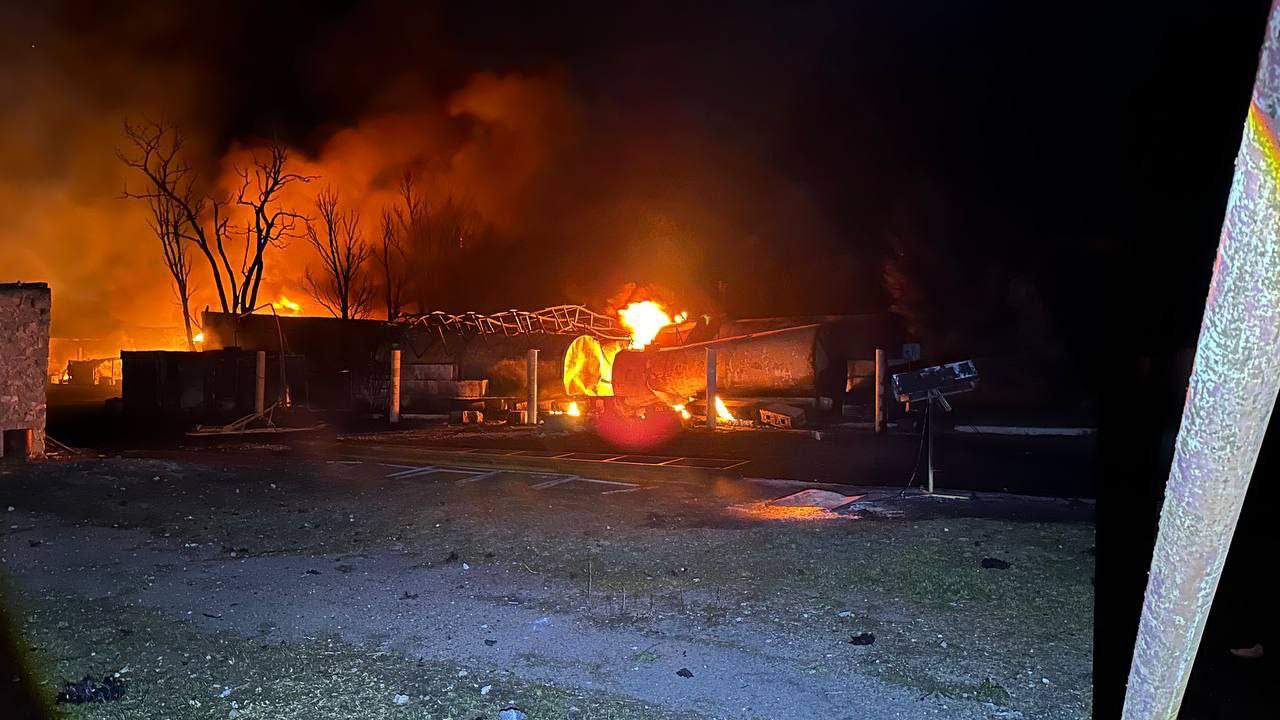
Aftermath of a strike on Russian fuel infrastructure during the Hell-2 operation in occupied Donetsk Oblast. 2026. Screenshot: National Guard of Ukraine

The 1st Corps of Ukraine's National Guard, known as Azov, says it destroyed 67 Russian fuel tanks holding 4,221 tons of fuel in occupied Donetsk Oblast, in an operation it named Hell-2. The unit released video of the strikes on 17 August, saying it had spent a month tracking where Russian forces moved and stored the fuel before hitting it.

Fuel is the blood of Russia's war, which is why its forces increasingly hide storage sites and route deliveries through improvised logistics hubs. Strikes on those hubs strip Russian units of what they need to move, supply, and fight. There have already been cases of Russian forces concealing fuel in grain trucks in occupied territories.

Azov warned the Russian forces before the strike

Azov says it flagged the fuel sites a month before hitting them, and struck when the Russians kept using them anyway.

“A month ago, we warned the occupier: ‘Azov sees your movements and will strike at the right moment.’ But some units of the Russian Armed Forces continued to store fuel in occupied Donetsk Oblast,” Azov said.

1 корпус НГУ «Азов» карає окупантів за спроби перевезення і зберігання військових вантажів. Задіяні у зберіганні та постачанні палива об’єкти росіян залишаються лише на картах, у реальності на їхньому місці – випалена земля. pic.twitter.com/FGgdn4J34k

— НГУ (@ng_ukraine) August 17, 2026

Azov emphasizes that it does not attack civilian gas stations or civilians. The operation targeted facilities used to supply Russian occupation forces. At the same time, according to Azov fighters, Russian military infrastructure remains a legitimate target.

The Russians didn’t get the message the first time

Hell-2 is likely a follow-up to the Hell operation, during which the first series of strikes, Azov also targeted the fuel logistics of Russian forces in occupied Donetsk Oblast.

On 12 July, Azov reported striking a secret Russian fuel base in Novoamvrosiivka. Drone operators from the 1st Azov Corps of the National Guard conducted reconnaissance and used Hornet drones to strike the facility. The strikes damaged fuel tanks and the base’s infrastructure and blocked the railway track.

According to the report, the Russians used the facility as a logistics hub to supply their occupation forces. After the strike, they were forced to abandon the base and move their logistics operations from the occupied territory into Russia.

  • ✇Euromaidan Press
  • Ukraine has knocked out seven of Russia’s 10 biggest warehouses as its air defenses fall short, ISW says
    Ukraine has knocked out seven of the 10 largest logistics hubs run by Russia's biggest online retailer, the US-based Institute for the Study of War assessed. The strikes are part of a campaign to wear down Russia's defense industry and the dual-use supply lines that feed its war. The newest raids hit two warehouses near Moscow overnight. Ukraine has pushed its long-range drone war deep into Russia, hunting the oil, freight, and factory sites that keep Moscow's invasion
     

Ukraine has knocked out seven of Russia’s 10 biggest warehouses as its air defenses fall short, ISW says

17 août 2026 à 09:15

ukraine has knocked out seven russia's 10 biggest warehouses its air defenses fall short isw says · post ukrainian strikes targeting russian wildberries between 17 16 2026 ukrainian-strikes-targeting-russian-wildberries-warehouses-between-july-17-and-august-16-2026 news reports

Ukraine has knocked out seven of the 10 largest logistics hubs run by Russia's biggest online retailer, the US-based Institute for the Study of War assessed. The strikes are part of a campaign to wear down Russia's defense industry and the dual-use supply lines that feed its war. The newest raids hit two warehouses near Moscow overnight.

Ukraine has pushed its long-range drone war deep into Russia, hunting the oil, freight, and factory sites that keep Moscow's invasion supplied. Each strike that lands far from the front tests how much of its own territory Russia can actually defend. ISW assessed that the campaign is squeezing both Russia's economy and its overstretched air defenses, with no sign the retailer's biggest depots are getting any safer.

Two hubs near Moscow burned overnight

On 15-16 August, Ukrainian drones struck Wildberries' single largest hub, a 250,000-square-meter depot in the Koledino Industrial Park in Podolsk, Moscow Oblast. Ukraine's Defense Ministry reported the hit, about 420 kilometers from the border.

Wildberries warehouse burning in Russia's Koledino following a Ukrainian drone strike, 16 August 2026. Photo: Exilenova+
Explore further

“One of the most massive” Ukrainian drone attacks hits Moscow Oblast: two major warehouses ablaze

Wildberries confirmed the fire and said it had to reorganize its supply chains. Moscow Oblast Governor Andrei Vorobyov acknowledged the strike, and geolocated footage showed the depot ablaze.

Drones also hit a second warehouse the same night, in Domodedovo, roughly 430 kilometers from the border. Footage showed a fire at the Severnoye Domodedovo complex.

Why the warehouses are targets

Ukrainian officials say Wildberries helps supply the Russian military, moving drone components and navigation gear. Kyiv folded the retailer into a deep-strike campaign that began in mid-July.

The company is Russia's answer to Amazon, its largest online marketplace. Its sprawling depots make broad, hard-to-defend targets.

Wildberries warehouse burning in Russia's Koledino following a Ukrainian drone strike, 16 August 2026. Screenshot from video: bayraktar_1love

The damage keeps growing

By early August, the strikes had destroyed at least 1.18 million square meters of Wildberries storage, about a fifth of its capacity, ISW noted. The toll has climbed since.

The losses ripple outward to independent sellers who rent space in the hubs. Many have watched their stock burn with no compensation.

  • ✇Euromaidan Press
  • “One of the most massive” Ukrainian drone attacks hits Moscow Oblast: two major warehouses ablaze
    A drone hit a major Wildberries warehouse at Koledino near Moscow overnight on 16 August 2026 and set it ablaze, Moscow Oblast Governor Andrey Vorobyov said. Vorobyov described the overnight swarm as “one of the most massive drone attacks in recent times.” It comes amid an expanding Ukrainian campaign against Wildberries, Russia's largest online retailer with a vast network of warehouses and logistics centers, that has reached warehouses from Moscow Oblast to the Urals.
     

“One of the most massive” Ukrainian drone attacks hits Moscow Oblast: two major warehouses ablaze

16 août 2026 à 08:15

Wildberries warehouse burning in Russia's Koledino following a Ukrainian drone strike, 16 August 2026. Photo: Exilenova+

A drone hit a major Wildberries warehouse at Koledino near Moscow overnight on 16 August 2026 and set it ablaze, Moscow Oblast Governor Andrey Vorobyov said. Vorobyov described the overnight swarm as “one of the most massive drone attacks in recent times.”

It comes amid an expanding Ukrainian campaign against Wildberries, Russia's largest online retailer with a vast network of warehouses and logistics centers, that has reached warehouses from Moscow Oblast to the Urals. Ukrainian authorities say Wildberries facilities are used to supply components for Russian drone production and navigation equipment, making them part of Russia’s wartime logistics network.

The Koledino fire puts a major part of Wildberries’ storage and sorting capacity at risk. At about 250,000 square meters, the complex is one of the retailer’s largest logistics hubs. Ukrainian sources say the marketplace has moved drone parts and other military-linked goods. Wildberries denies supporting Russia’s military. 

Wildberries’ parent company, RWB, confirmed the fire, saying workers had been evacuated and deliveries rerouted. 

Unlike the 28 July fire at Koledino industrial park, the latest blaze was confirmed at Wildberries’ own Koledino warehouse. Initial reports in July had also pointed to Wildberries, but open-source investigators later identified the burning building as a neighboring warehouse run by a third-party logistics company.

The entire Wildberries logistics hub in Koledino, Moscow Oblast, is engulfed in flames following today’s attack.

The complex covers around 250,000 m² and has long been one of Wildberries’ largest and most important logistics centers. https://t.co/qqrrsLFB3Y pic.twitter.com/YivkijfyeT

— Special Kherson Cat 🐈🇺🇦 (@bayraktar_1love) August 16, 2026

A second fire broke out at Warehouse No. 15 in MLP Severnoye Domodedovo, a multimodal logistics complex near one of Moscow’s main airports. Vorobyov said the warehouse stores medications.

Vorobyov claimed an 83-year-old man was killed after a drone fell on a private home in the Ramenskoye district, while at least six other people were injured across the region.

Moscow Mayor Sergei Sobyanin claimed that Russian air defenses destroyed 201 drones approaching the region.

Ukraine confirms Wildberries warehouse was targeted

Ukraine’s Defense Ministry confirmed that the Wildberries logistics hub in the Koledino industrial park was put out of operation during the overnight drone attack.

The ministry said the facility, which covered 250,000 square meters, was Wildberries’ largest warehouse by area. It also said Ukraine has now disabled seven of the company’s 10 largest logistics centers.

Ukraine’s campaign against Wildberries keeps growing

Ukraine’s campaign against Wildberries began on 18 July 2026, when drones struck warehouses in Elektrostal and Kotovsk. Reported attacks have since reached the retailer’s sites across Russia, including a newly opened hub near Voronezh and a warehouse in Tver targeted three times in two weeks.

By 14 August, Agentstvo had counted fires at more than 20 Wildberries sites. The sustained attacks had already prompted Wildberries to prohibit warehouse workers from bringing smartphones to work, citing concerns that photos and videos taken during drone alerts could pose a security risk. 

The effects on Russia’s economy

The number and geographic spread of Ukraine’s strikes have put sustained pressure on the retailer’s nationwide warehouse network and Russia’s economy at large. 

Earlier fires destroyed goods belonging to independent sellers, The Moscow Times reported. Wildberries said it was considering compensation, although its contracts do not require the company to cover losses caused by drone attacks. 

In response to Ukraine’s strikes, the company has also reportedly sought additional storage in Kazakhstan, giving local warehouse operators greater leverage as it tries to replace capacity lost in Russia.

The physical disruption was followed on 15 August by a Ukrainian cyberattack targeting Wildberries’ payment and customer service systems. The hackers said customers could not make payments or reach the company through its main online support channel. 

First warehouses burned, now payment system is down: Ukraine launches dual campaign against Russia’s largest marketplace that reportedly moves drone parts

15 août 2026 à 06:34

russian refinery makes jet fuel moscow's warplanes—and ukraine keeps setting fire · post black smoke rises over burning wildberries logistics complex leningrad oblast after ukrainian drone strike 4 2026 5445360929345313906

Ukraine has hit Russia's biggest marketplace in cyberspace as well as with drones. Cyber specialists disrupted Wildberries' operations across Russia, Ukraine's Defense Ministry's Main Intelligence Directorate (HUR) reports.

Ukraine says that Wildberries is not ordinary commerce but a piece of Russia's war logistics. According to the military command, the network moves military-related goods, and President Zelenskyy has said Russia uses the platform to bring in sanctioned drone components, which is why Ukraine has spent weeks burning its warehouses and now strikes its servers.

HUR reports that on 10 and 11 August, specialists from the Cyber Corps community attacked Wildberries' digital infrastructure, causing failures in its payment and customer service systems.

The attack hit payments and support

The disruption struck where customers feel it. Because of the problems with the payment infrastructure, users complained they could not complete certain transactions.

For a platform whose whole value is the frictionless movement of goods and money, a payment system that will not process transactions is a direct hit to the business.

The strain spread to customer service. At the same time, the load on the support service rose, causing failures in the contact centers, so the attack degraded both the ability to pay and the ability to get help across Russia.

It pairs with the warehouse strikes

In July, Ukrainian drones destroyed eight Wildberries warehouses, about 15.4% of the marketplace's storage.

Pairing strikes on physical infrastructure with Ukrainian cyber operations strengthens the pressure on the company, HUR assessed.

The logic is to squeeze the same target from two directions at once: burn the warehouses that store the goods, then disable the systems that move them to customers, so damage in one domain amplifies damage in the other.

Earlier, Ukraine hit the Progress Rocket Space Center in Samara, which builds Soyuz-2 rockets used to launch Rassvet, Russia’s planned alternative to Starlink.

  • ✇Euromaidan Press
  • Armor can barely reach Ukraine’s front now—so robots drive and soldiers walk
    Drones have pushed armored vehicles off the roads to Ukraine's front line, a Ukrainian brigade commander told RBC-Ukraine. Denys Perch, who commands the 107th Territorial Defense Brigade, says the drone-saturated belt has grown so deep that pickups no longer reach forward positions. The one enemy weapon his jammers can't touch is the fiber-optic drone. The war has become a contest over who can pull people off the battlefield fastest, as cheap drones make any human movem
     

Armor can barely reach Ukraine’s front now—so robots drive and soldiers walk

14 août 2026 à 07:02

A Russian tank destroyed in Kharkiv Oblast, Ukraine

Drones have pushed armored vehicles off the roads to Ukraine's front line, a Ukrainian brigade commander told RBC-Ukraine. Denys Perch, who commands the 107th Territorial Defense Brigade, says the drone-saturated belt has grown so deep that pickups no longer reach forward positions. The one enemy weapon his jammers can't touch is the fiber-optic drone.

The war has become a contest over who can pull people off the battlefield fastest, as cheap drones make any human movement near the front a target. Ukraine keeps out-inventing Russia at the front, but Russia copies each advance and floods the line with it at state scale.

When armor becomes the target

Until recently, armored vehicles still drove supplies to logistics hubs near the front. That is now almost impossible. Perch says that when a large, armored machine appears, Russian forces treat it as a prize target and swarm it with dozens of drones and munitions. Perch would sooner park his armor than seat soldiers inside it.

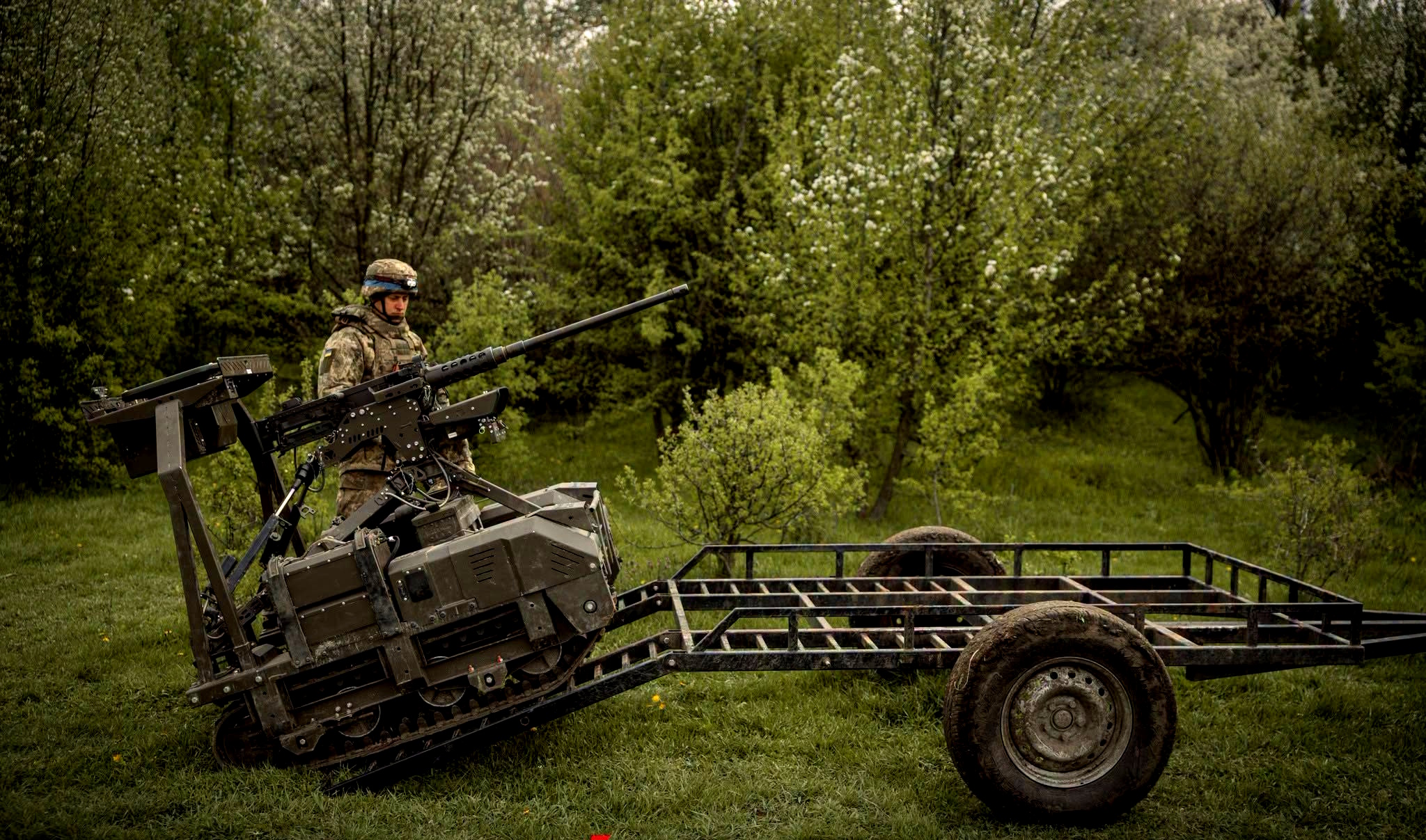
A Ravlyk UGV from Ukrainian Unmanned Technologies displayed at Eurosatory 2026, here mounting twin anti-tank launchers from Ukroboronprom. (Photo: Ukrainian Unmanned Technologies)
Explore further

This Ukrainian UGV, beloved by Ukrainian intel, is now winning over NATO countries and global defense giants

A kill zone that keeps widening

On the busiest sectors, Perch says, the kill zone—the drone-ruled strip around the contact line—now runs 15 to 20 kilometers deep. Some positions take three days to reach on foot. Where troops once drove most of the way and walked the last stretch, they now walk it all.

Robots take the drive

Under Perch, the brigade climbed, by his account, from around 22nd to third among Ukraine's Territorial Defense forces on the military's strike-results leaderboard, the home-guard units now fighting on the front. Ground robots—unmanned ground vehicles (UGVs)—do the work that armor cannot. They haul supplies and evacuate the wounded, though the robot often can't be brought back. His brigade runs over 1,500 logistics missions a month by heavy bomber drones alone, and still more by first-person-view (FPV) drones and robots. Russia hunts those bombers, he says, with interceptors that scramble the moment they hear one take off, so his crews mix high and low flight to slip past. Perch expects robots to move from supply runs into combat, hitting Russian troops in their rear.

A ground robotic system. The Ukrainian Defense Ministry
Explore further

Ukraine wants robots doing 100% of frontline logistics. In June, they ran nearly 17,000 supply and evacuation runs

The drone his jammers can't touch

Both armies now field fiber-optic drones—machines guided by a hair-thin glass thread instead of radio. No signal means nothing to jam. Ukraine learned to block radio and digital drones, cutting their controls and video, Perch said. The glass-fiber ones his electronic warfare cannot reach, because there is no radio link to attack. His brigade still has no counter to them, Perch said, and he wants a technical fix that stops them.

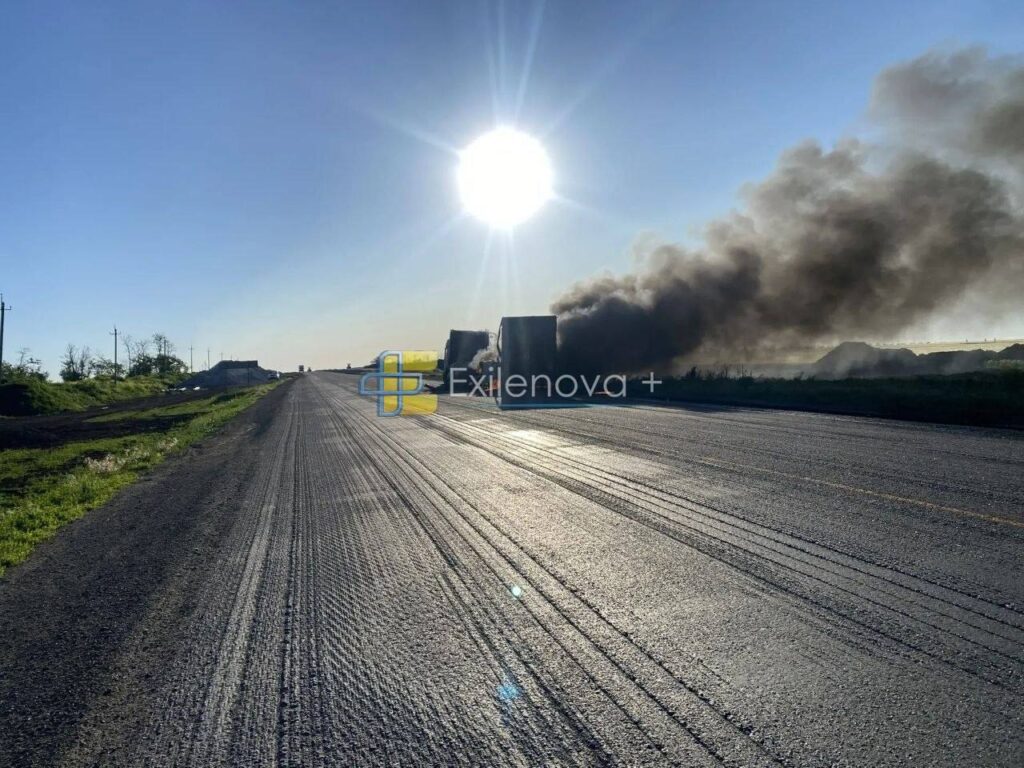
Russian electric locomotive was named target of Ukrainian partisan operation. It carried military supplies toward Kharkiv front

10 août 2026 à 01:09

An explosion. Credit: UkrInform

Ukrainian partisans say they crippled a locomotive moving Russian military supplies to the front. Agents of the ATESH movement carried out a sabotage operation near Voronezh, destroying the cab of an electric locomotive used to support military transport, ATESH reported.

Disabling a single locomotive cripples the entire supply line. The locomotive was supposed to continue its journey toward the Kupiansk direction, and after the cab was damaged, operating the machine at its former pace became impossible, disrupting the schedule for forming and dispatching the next trains.

The target was a rail supply line to the front

ATESH said the sabotage hit a link in Russia's military logistics chain. The locomotive was part of the rail transport that moves Russian military cargo, and it was bound for the Kupiansk direction, one of the active sectors of the front in Kharkiv Oblast.

Russia depends heavily on railways to supply its forces. Its army moves ammunition, fuel, weapons, and heavy equipment to the front largely by rail, so the locomotives and the lines they run on are critical arteries of its war effort. A partisan network can reach them behind the front lines at a vulnerable point.

One damaged locomotive slows the whole chain

ATESH framed the value of the strike in terms of the cascade it sets off. The loss of even one link in the mainline causes delays in the delivery of ammunition, fuel, weapons, and heavy equipment.

Those delays compound at the front. When rear supply operations are interrupted, units lose combat effectiveness and suffer significant personnel losses, ATESH said, casting a single sabotaged locomotive as a blow that reaches the soldiers, depending on what it was carrying.

The strike fits ATESH's partisan campaign

Euromaidan Press cannot independently verify the Voronezh sabotage, which is ATESH's own account. But rail sabotage is a documented feature of the war behind Russian lines, and the movement's focus on the logistics that feed the front reflects a real vulnerability in an army that runs on rail.

  • ✇Euromaidan Press
  • Bosch is second German brand in one night to lose its Ukraine warehouse to Russian strike
    Russia destroyed a Bosch warehouse in Ukraine overnight into 5 August, the German manufacturer said. The strike wiped out its stock of household goods and industrial technology. No Bosch employee or worker for its logistics partner was injured. The strike was part of Russia's intensified attacks on the warehouses and distribution centers that supply Ukraine. Destroying these facilities eliminates stored goods and disrupts the delivery of food, parcels, equipment, and ot
     

Bosch is second German brand in one night to lose its Ukraine warehouse to Russian strike

7 août 2026 à 07:22

Russia destroyed a Bosch warehouse in Ukraine overnight into 5 August, the German manufacturer said. The strike wiped out its stock of household goods and industrial technology. No Bosch employee or worker for its logistics partner was injured.

The strike was part of Russia's intensified attacks on the warehouses and distribution centers that supply Ukraine. Destroying these facilities eliminates stored goods and disrupts the delivery of food, parcels, equipment, and other essential products. Recent attacks have hit both Ukrainian companies and international brands operating in the country.

Bosch said the warehouse premises belonged to its logistics partner. The company's preliminary assessment found that all Bosch products stored there had been destroyed. It did not disclose the location.

Bosch and its logistics partner are now assessing the damage. They are also seeking ways to maintain operations and meet commitments to customers and business partners.

Russia launches anti-ship missiles on stocks

The Bosch loss came during the same overnight barrage that devastated warehouses and production sites across Kyiv and the surrounding region. Russian strikes destroyed facilities used by Rozetka, Nova Poshta, and Epicentr. The three companies distribute parcels, household goods, and construction supplies across Ukraine.

That attack killed 17 people and wounded 44. Ukraine intercepted none of the 24 ballistic missiles or four anti-ship missiles Russia launched, according to Ukrainian officials.

Ukraine is looking for ways to protect its businesses

The same night, a strike burned down the central Ukraine warehouse of German automotive-products maker Liqui Moly. All employees escaped injury, and the company said it would continue operating.

Russia's overnight barrage burned down the Ukrainian warehouse of a German household brand, Liqui Moly. Source: Liqui Moly

Two nights earlier, a Russian drone attack outside Dnipro set food warehouses ablaze. On 1 August, another Russian drone hit a Rozetka warehouse where 270 people were working, killing one employee.

The campaign comes as Russia launches more missiles than Ukraine can reliably stop. Moscow fired 376 missiles in July, including 126 ballistic weapons, Euromaidan Press previously reported.

Ukrainian presidential adviser Serhii Beskrestnov said Russia had intensified attacks on warehouses and production sites. He warned businesses to disperse their stocks. Russia can sustain about 100 ballistic-missile launches a month and locate commercial targets using cheap local informants, he said.

German brand sold in 150 countries just lost its Ukraine warehouse to a Russian strike. It says it won’t stop operating

5 août 2026 à 15:42

Russia's overnight barrage burned down the Ukrainian warehouse of a German household brand, Liqui Moly. Source: Liqui Moly

Russia's overnight barrage burned down the Ukrainian warehouse of a German household brand. The strike on the night of 5 August destroyed the central warehouse of Liqui Moly Ukraine, which supplies motor oils, lubricants, and automotive chemicals, the company reported on Facebook.

The strike hit a foreign company's civilian supply hub, part of a widening campaign against Ukraine's warehouses.

"This night, as a result of an enemy strike, our central product warehouse in Ukraine was completely destroyed by fire," Liqui Moly said, adding that all employees were safe and no one was hurt.

Founded in 1957, Liqui Moly develops and produces its motor oils and additives in Germany, where it has been named the best brand in the lubricants category for years, and sells its products in about 150 countries. Its Ukraine warehouse is the local distribution center for a global consumer brand, the kind of ordinary commercial infrastructure now being hit.

The company plans to keep operating

Liqui Moly said the loss will not stop its business. Despite significant material damage, the distributor does not plan to halt operations and is already working to restore supplies, rebuild its logistics processes, and launch new delivery routes.

That response mirrors what Russia's warehouse campaign is forcing on businesses across Ukraine: decentralizing storage and rerouting deliveries to survive.

The strike fits a documented campaign

Hitting a motor oil warehouse continues Russia's pattern of striking civilian storage and logistics. Presidential adviser Serhii Beskrestnov has said Russia has intensified attacks on warehouses and production sites, including food, retail, and construction materials, and that this trend will hold.

Russia finds such targets cheaply, Beskrestnov has said, through local informants paid to watch trucks and stock rather than through satellites. A distribution warehouse for a consumer brand is exactly the sort of soft, easily-located civilian target that a campaign hits, damaging the supply of ordinary goods while endangering the workers inside.

  • ✇Euromaidan Press
  • For under $120, Russia can get Ukrainian warehouse bombed. Here’s how it finds its targets
    Russia has the ballistic missiles to keep hitting Ukraine every month at the current pace. Russia can launch about 100 ballistic missiles at Ukraine each month, technology specialist and presidential adviser Serhii "Flash" Beskrestnov said on 5 August. The estimate sets the scale of a threat that Ukraine's air defenses cannot fully answer. The current density is higher because Russia wants a demonstrative reaction and is attacking partly from reserves, but going for
     

For under $120, Russia can get Ukrainian warehouse bombed. Here’s how it finds its targets

5 août 2026 à 12:10

Presidential adviser on defense technology development Serhii "Flash" Beskrestnov at the test range of new electronic warfare means against jet-powered Shaheds. Source: Serhii "Flash" Beskrestnov

Russia has the ballistic missiles to keep hitting Ukraine every month at the current pace. Russia can launch about 100 ballistic missiles at Ukraine each month, technology specialist and presidential adviser Serhii "Flash" Beskrestnov said on 5 August.

The estimate sets the scale of a threat that Ukraine's air defenses cannot fully answer.

The current density is higher because Russia wants a demonstrative reaction and is attacking partly from reserves, but going forward, the attacks will run at around 100 ballistic missiles a month, Beskrestnov said.

Against a weapon that only the Patriot reliably stops, and with Ukraine short of Patriot interceptors, roughly 100 ballistic missiles a month is a sustained lethal pressure the country will have to endure.

The target is Ukraine's warehouses

Beskrestnov said Russia has intensified strikes on a specific set of civilian targets. Moscow has stepped up attacks on various warehouses and production sites, including those for food products, construction materials, and retail, and this trend will continue for now.

The pattern matches recent strikes. Russia has hit the warehouses of the retailer Rozetka, killing a worker, and food storage across the country, part of a campaign against the civilian logistics that keep daily life supplied, which has forced businesses to decentralize storage and reroute deliveries.

Russia finds the targets with cheap informants

The chilling part is how easily Russia locates these warehouses. It takes little effort because warehouse data is completely open and requires no satellites or intelligence channels, Beskrestnov said.

"A person is hired, a traitor for a few thousand hryvnia, who watches what happens at the warehouse, the movement of trucks, the volume. Then this information reaches Russia, and a decision is made about a strike," he explained.

He said his own house was targeted the same way in April, when he had just returned from a work trip and was wounded in the strike.

His advice to businesses

Beskrestnov urged businesses to adapt. He advised entrepreneurs to diversify storage, avoid concentrating large quantities of goods and vehicles in one place, and, where possible, seek subleased small warehouse spaces.

Spreading stock across many small sites makes each one a poorer target, not worth a ballistic missile, and denies the local informants an easy, high-value warehouse to point Russia toward. It is a war-economy adaptation forced on Ukrainian business by a bombing campaign that now reaches the supply chain itself, as Beskrestnov suggested.

  • ✇Euromaidan Press
  • A Russian warehouse built to hold 120 million items is burning east of Moscow region
    Ukrainian drones set fire to one of the largest warehouses of Russia's biggest online retailer on the morning of 3 August, according to the Ukrainian monitoring Telegram channel Exilenova+ and local authorities. The strike hit a Wildberries logistics hub in Russia's Vladimir Oblast, hundreds of kilometers from Ukraine, and touched off a fire that Russian officials and the company confirmed.  It widened a two-week Ukrainian campaign against the retail network that helps
     

A Russian warehouse built to hold 120 million items is burning east of Moscow region

3 août 2026 à 04:25

russian warehouse built hold 120 million items burning east moscow region · post smoke drifts over warehouses khryastovo vladimir oblast russia following ukrainian fp-1 drone strike wildberries logistics hub 3

Ukrainian drones set fire to one of the largest warehouses of Russia's biggest online retailer on the morning of 3 August, according to the Ukrainian monitoring Telegram channel Exilenova+ and local authorities. The strike hit a Wildberries logistics hub in Russia's Vladimir Oblast, hundreds of kilometers from Ukraine, and touched off a fire that Russian officials and the company confirmed. 

It widened a two-week Ukrainian campaign against the retail network that helps keep Russia's war economy running. For the first years of its invasion, Russia treated its interior as a safe rear. Ukraine's long-range drones have turned that rear into a target set, striking the fuel and freight networks hundreds of kilometers from the front that keep the war supplied.

Ukrainian drones burned a hub built to hold 120 million items

Ukrainian FP-1 attack drones struck the Wildberries logistics center in the village of Khryastovo, in Vladimir Oblast's Sobinsky district, on the morning of 3 August. Exilenova+ began reporting an ongoing attack around 07:00 local time, then geolocated videos and photos of the fire. The site sits about 580 kilometers from Ukraine's border.

The complex is one of Wildberries' largest. It spans 171,900 square meters and moves goods between the Moscow region and central, northwestern, and northern parts of European Russia. Built for more than 120 million items, it was meant to reach roughly 175,000 square meters at full capacity.

russian warehouse built hold 120 million items burning east moscow region · post column black smoke towers over khryastovo vladimir oblast russia seen roadside after ukrainian drone strike set wildberries
A column of black smoke towers over Khryastovo, Vladimir Oblast, Russia, seen from a roadside after a Ukrainian drone strike set a Wildberries logistics center ablaze, 3 August 2026. Photo: Exilenova+

Footage captured the moment an FP-1 drone slammed into the warehouse. The smoke rose over the site and was visible for tens of kilometers. The Ukrainian firm Fire Point, which makes the FP-1 long-range strike drone, said Ukraine's Defense Forces hit the hub with its drones. Vladimir Oblast Governor Alexander Avdeyev confirmed the strike.

Vladimir's Wildberries ablaze

This morning, drones struck another warehouse of Russia's e-commerce giant in Khryastovo, Vladimir Oblast, about 150 km east of Moscow and 580 km northeast of Ukraine.

📹Exilenova+ pic.twitter.com/CPCO1WKoME

— Euromaidan Press (@EuromaidanPress) August 3, 2026

Wildberries also confirmed a fire at the logistics center and said it had moved order intake and shipping to other sites. The Russian news Telegram channel Astra reported that one of Wildberries' largest warehouses in Vladimir Oblast halted operations after the attack and fire.

The strike extends a campaign against Russia's Amazon clone

Ukraine has spent two weeks burning the warehouses of Wildberries, Russia's biggest online retailer and its answer to Amazon. The campaign began on 18 July with strikes on hubs in Elektrostal near Moscow and Kotovsk in Tambov Oblast.

The day before the Khryastovo strike, on 2 August, Ukrainian drones hit another Wildberries hub in Samara Oblast. Ukrainian drones destroyed eight of the retailer's warehouses in July, about 15.4% of its storage, and later raids hit sites in Volgograd and Tatarstan.

  • ✇The Kyiv Independent
  • Russian military, industrial sites allegedly targeted in Ukrainian strikes on occupied Donetsk, Luhansk
    Editor's note: This is a developing story and is being updated.Ukrainian forces reportedly struck a Russian logistics hub and an oil depot in Russian-occupied Luhansk and a military base in occupied Donetsk on June 30 and July 1, with fires breaking out in the two cities."Russian logistics in temporarily occupied Luhansk are burning," head of Ukraine's Center for Countering Disinformation Andrii Kovalenko said.The drone attack was reported by the local media, publishing what appear to be videos
     

Russian military, industrial sites allegedly targeted in Ukrainian strikes on occupied Donetsk, Luhansk

30 juin 2025 à 22:08
Russian military, industrial sites allegedly targeted in Ukrainian strikes on occupied Donetsk, Luhansk

Editor's note: This is a developing story and is being updated.

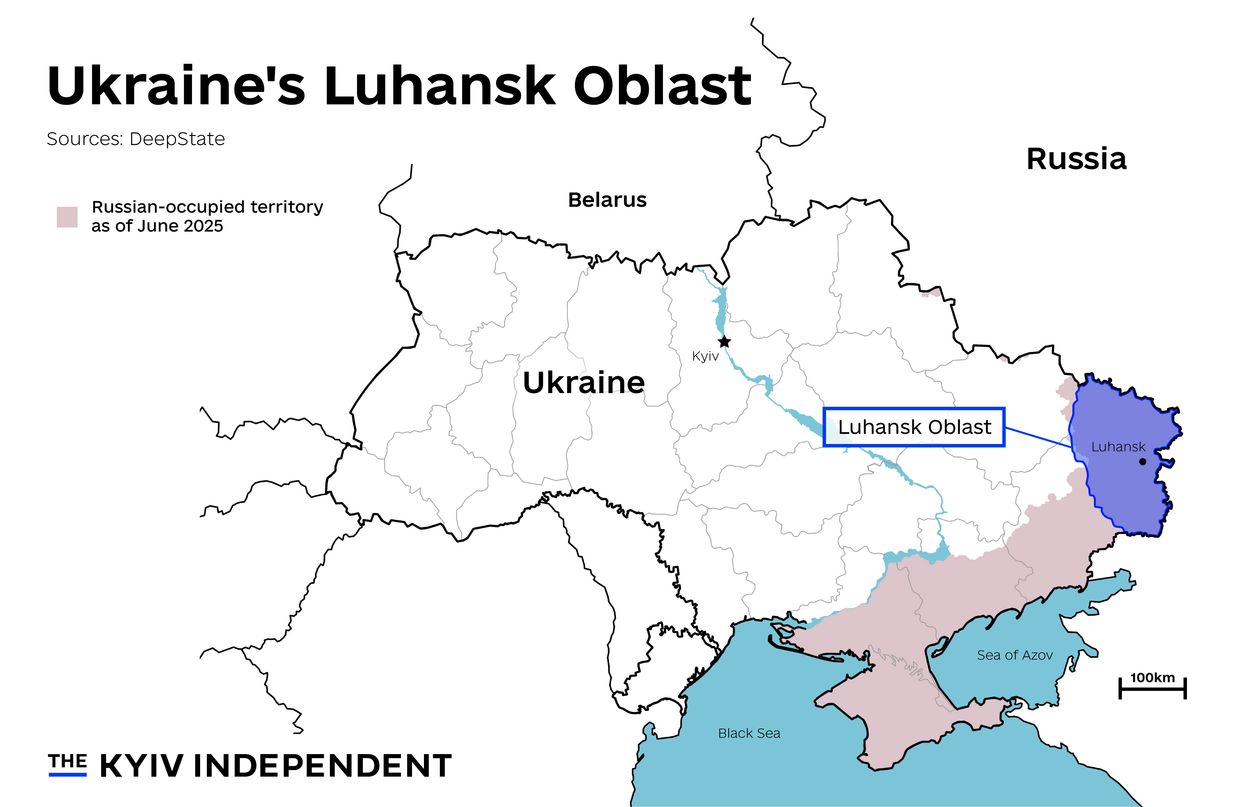
Ukrainian forces reportedly struck a Russian logistics hub and an oil depot in Russian-occupied Luhansk and a military base in occupied Donetsk on June 30 and July 1, with fires breaking out in the two cities.

"Russian logistics in temporarily occupied Luhansk are burning," head of Ukraine's Center for Countering Disinformation Andrii Kovalenko said.

The drone attack was reported by the local media, publishing what appear to be videos of the burning logistics hub and the sound of drones.

Leonid Pasechnik, head of the Russian occupation authorities in Luhansk Oblast, reported that air defenses shot down 35 of the 40 drones over Luhansk Oblast. Drone wreckage fell on the premises of an oil depot, and a woman was injured, Pasechnik claimed.

Russian military, industrial sites allegedly targeted in Ukrainian strikes on occupied Donetsk, Luhansk
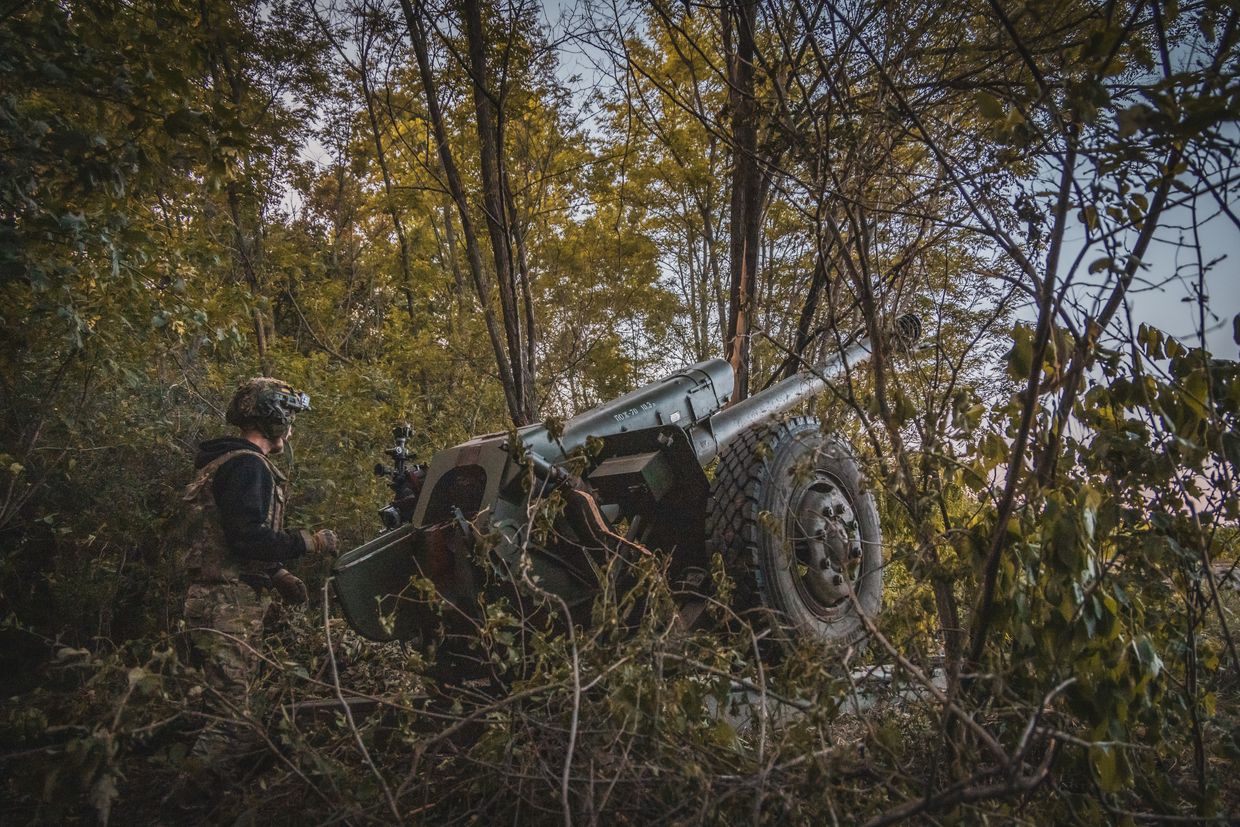
Ukraine's Luhansk Oblast (Nizar al-Rifai/The Kyiv Independent)

Overnight Ukrainian attacks were also reported in occupied Donetsk, with Telegram news channels sharing apparent footage of damaged buildings and fires in the city.

Denis Pushilin, the head of the Russian occupation authorities in Donetsk Oblast, claimed that one person was killed and three were injured in the attack. Ukrainian news channel Supernova+ reported that the attack targeted the headquarters of Russia’s 8th Combined Arms Army.

The Ukrainian military has not commented on the claims, which could not be independently verified.

Videos from occupied Donetsk after Ukrainian strike on the evening of June 30. Ukrainian analysts and media report a military facility was hit, while the “DPR” head says a woman was killed and three civilians injured

“It appears the Donetsk Institute of Non-Ferrous Metals… pic.twitter.com/evPG9eajl0

— ASTRA (@ASTRA_PRESS) July 1, 2025

Ukraine's military regularly strikes military targets in Russian-occupied territories and deep within Russia in an attempt to diminish Moscow's fighting power as it continues its war against Ukraine.

Ukraine's military intelligence (HUR) destroyed three Russian air defense systems using drones in the occupied Zaporizhzhia Oblast on June 14.

"Strike drone masters of the Department of Active Operations of the HUR of the Ukrainian defense ministry discovered and destroyed expensive air defense systems of the Russian invaders in the temporarily occupied territory of the Zaporizhzhia region," HUR reported in a post to Telegram.

A Russian Buk-M3, a Pantsyr S1, and a 9S19 Imbir radar from the S-300V air defense system were destroyed in the Ukrainian drone attack.

Ukraine war latest: Ukrainian forces push Russian army away from Sumy
Key developments on June 30: * Ukrainian forces push Russian army away from Sumy, General Staff says * Ukrainian military again denies reports on Russian troops entering Dnipropetrovsk Oblast * After months of stalling, Russia blames Ukraine, US for slow pace of peace talks * Germany vows to pursue ‘every path’ to boost Ukraine’s
Russian military, industrial sites allegedly targeted in Ukrainian strikes on occupied Donetsk, LuhanskThe Kyiv IndependentThe Kyiv Independent news desk
Russian military, industrial sites allegedly targeted in Ukrainian strikes on occupied Donetsk, Luhansk
❌