Vue normale

  • ✇Euromaidan Press
  • Second Russian MiG-29 in two days: Ukraine’s drones worked over Millerovo airbase
    Ukrainian drones worked over dozens of Russian military and industrial sites overnight on 24 August, reaching from occupied Ukraine and the Black Sea to southern Russia, the commander of Ukraine's Unmanned Systems Forces (SBS) reported. The night's targets included a fighter jet at a Russian airbase, air-defense radars, fuel and propellant facilities, and vessels of Russia's sanctions-evading shadow fleet. A fuller breakdown released later in the day named the site of e
     

Second Russian MiG-29 in two days: Ukraine’s drones worked over Millerovo airbase

24 août 2026 à 14:36

second russian mig-29 two days ukraine's drones worked over millerovo airbase · post fighter jet beside shelter rostov oblast russia ukrainian drone's sights 24 2026 telegram madyar ukraine news reports

Ukrainian drones worked over dozens of Russian military and industrial sites overnight on 24 August, reaching from occupied Ukraine and the Black Sea to southern Russia, the commander of Ukraine's Unmanned Systems Forces (SBS) reportedThe night's targets included a fighter jet at a Russian airbase, air-defense radars, fuel and propellant facilities, and vessels of Russia's sanctions-evading shadow fleet. A fuller breakdown released later in the day named the site of each strike and the unit that carried it out. Footage released with the breakdown shows the strikes.

Ukraine has been running mid-range strikes across the belt from occupied Crimea to Rostov Oblast for months, taking out the radars, missile batteries, and the aircraft that fly air-defense patrols over it — a rolling effort to thin the cover that meets every deeper Ukrainian strike.

A fighter jet and a decoy at the same airbase

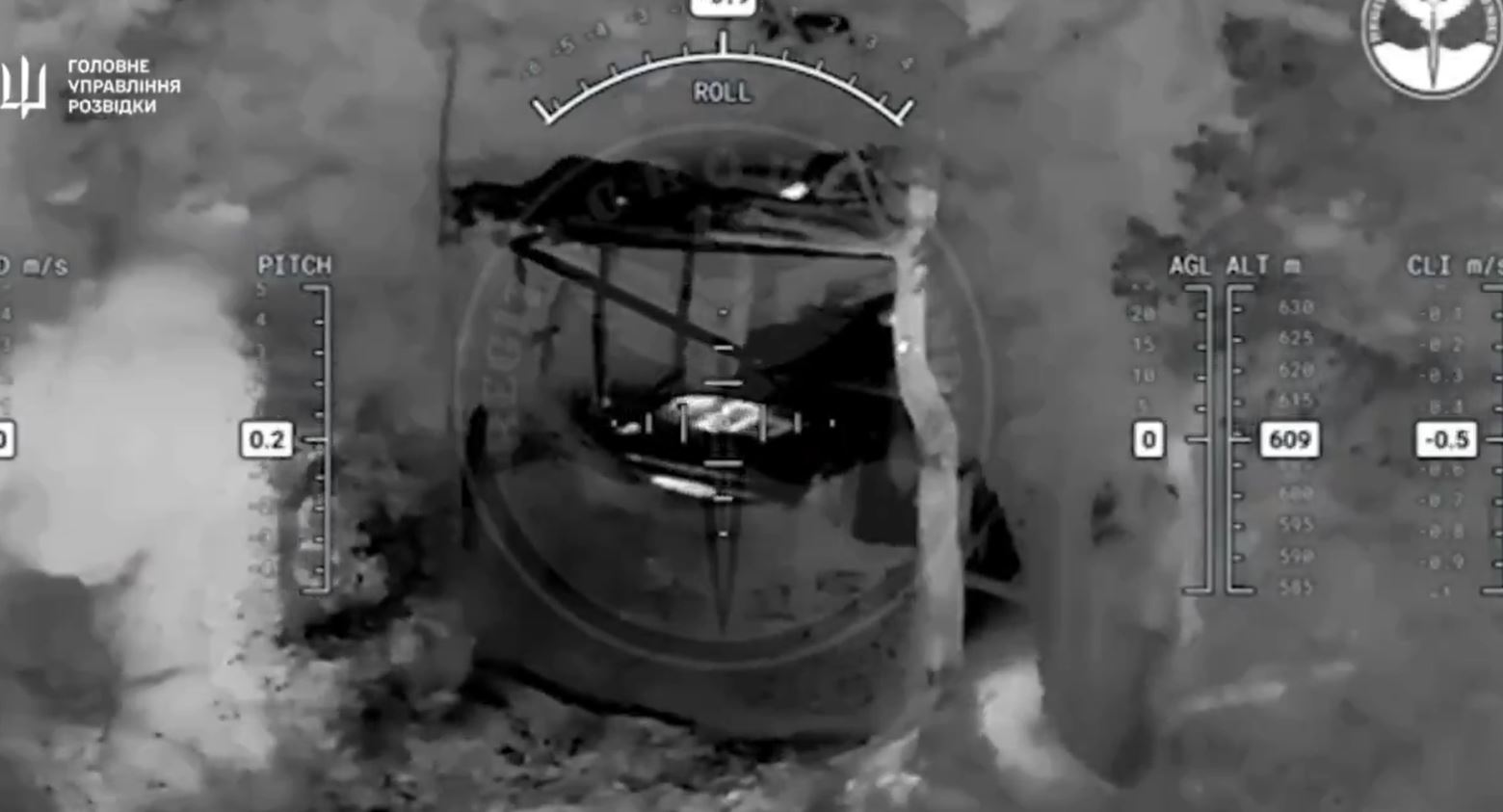
Robert Brovdi, callsign Madyar, said his crews hit 66 targets in the operational depth of the Russian rear. Among them was a MiG-29 at Dolotinka, on the grounds of the Millerovo airbase in Rostov Oblast. The 1st Separate Center of the SBS carried out that strike.

second russian mig-29 two days ukraine's drones worked over millerovo airbase · post ka-52 helicopter mockup rostov oblast russia ukrainian drone's sights 24 2026 heli ukraine news reports
A Ka-52 helicopter mockup at Millerovo airbase in Rostov Oblast, Russia, in a Ukrainian drone's sights, 24 August 2026. Photo: Telegram/Robert Brovdi

The same unit hit a mockup of a Ka-52 Alligator attack helicopter at the same location. Russia uses such decoys to draw drones away from real aircraft.

two russian fighters one spy drone hit kranodar radars anti-air systems elsewhere—ukraine forces · post combat aircraft ukrainian drone's sights vityazevo airfield krasnodar krai russia 23 2026 su-33 video sbs
Explore further

Ukraine’s drones hit two Russian fighters and a spy drone—and blinded radars from occupied Crimea to Rostov

It was the third Russian fighter jet Ukrainian drones reached in two days. Crews struck another MiG-29, a jet SBS identified as a Su-33 and Militarnyi assessed as a Su-30SM, and an Orion strike-reconnaissance drone at Vityazevo in Krasnodar Krai on 23 August. Ukrainian drones have caught a MiG-29 on a Russian airfield before, at Kursk in July.

Four radars, from Rostov Oblast to occupied Crimea

Crews hit four radar systems overnight. Two Kasta-2E2 sets went down at Geraskin and Karaichev in Rostov Oblast, and a Nebo-SV at Gukovo in the same oblast. All three fell to the 1st Separate Center.

The fourth, an ST-68, stood at Rozdolne in occupied Crimea. The 9th Kairos battalion of the 414th Madyar's Birds brigade struck it.

The radar work is part of a campaign against Russian sensors and launchers that has run for months without a pause.

Rocket propellant, fuel, and two ships

The 1st Separate Center struck the Kamensky Combine at Kamensk-Shakhtinsky in Rostov Oblast, a plant producing solid rocket fuel, according to SBS. The 9th Kairos battalion hit a fuel tank at Yeysk in Krasnodar Krai. In occupied Luhansk Oblast, the 20th K-2 brigade struck a fuel depot belonging to the 106th material support brigade of Russia's 41st Army at Dovzhansk. 

Brovdi also said his crews hit and destroyed two shadow-fleet vessels, a tanker and a bulk carrier, in the Black Sea. No independent account of either loss has appeared.

A drone school, relays, and a base in occupied Kherson Oblast

In occupied Kherson Oblast, Ukrainian crews destroyed the quarters of a Russian National Guard rapid-response unit and hit two relay stations for Geran attack drones, according to the SBS breakdown.

second russian mig-29 two days ukraine's drones worked over millerovo airbase · post explosions base national guard rapid-response unit strilkove occupied kherson oblast 24 2026 - seen ukraine news ukrainian
Explosions at the base of a Russian National Guard rapid-response unit in Strilkove, occupied Kherson Oblast, 24 August 2026. Photo: Telegram/Robert Brovdi

They also struck a shelter for a Zala reconnaissance drone crew in occupied Crimea, a drone school in occupied Zaporizhzhia Oblast, and a drone laboratory in occupied Donetsk Oblast.

Brovdi also reported 11 Russian rear deployment points burning across occupied Zaporizhzhia, Donetsk, and Luhansk oblasts, along with strikes on energy nodes in occupied territory.

Ukraine’s drones hit two Russian fighters and a spy drone—and blinded radars from occupied Crimea to Rostov

23 août 2026 à 12:36

two russian fighters one spy drone hit kranodar radars anti-air systems elsewhere—ukraine forces · post combat aircraft ukrainian drone's sights vityazevo airfield krasnodar krai russia 23 2026 su-33 video sbs

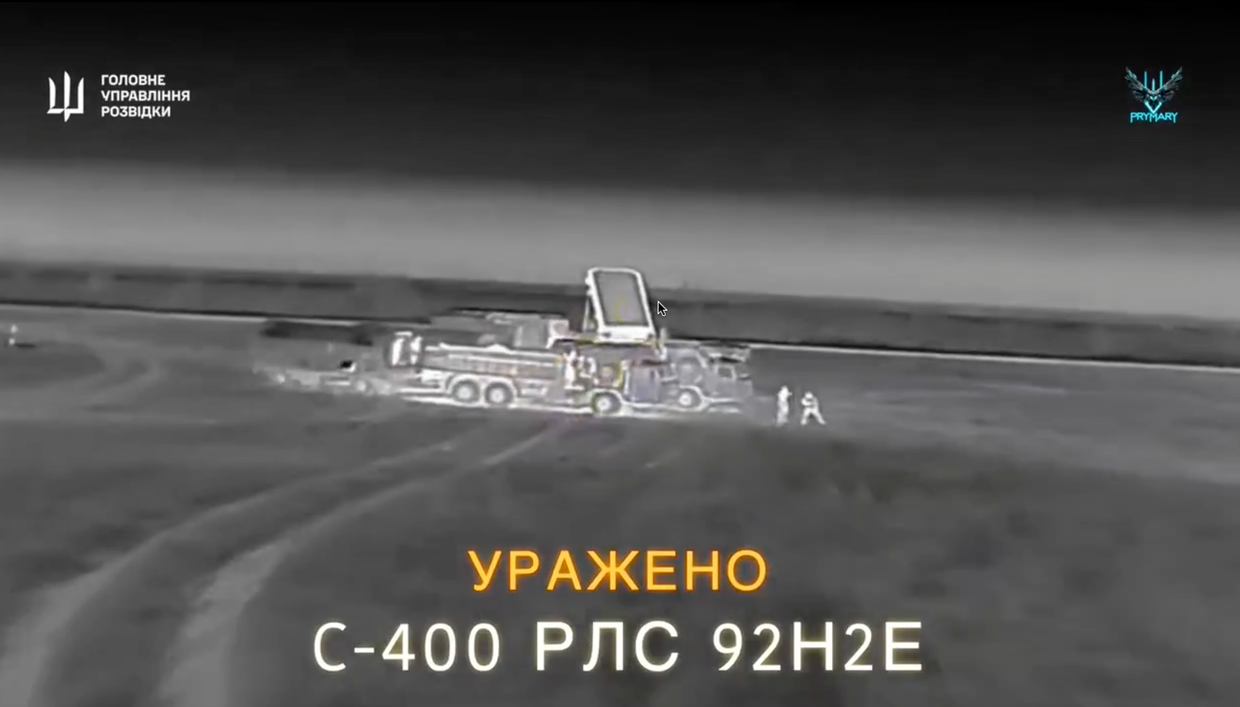
Ukraine's drones hit three Russian aircraft and eleven air-defense targets in one day, its Unmanned Systems Forces reported on 23 August. The strikes reached from occupied Crimea to airbases hundreds of kilometers inside Russia. They pushed the force's August count of struck Russian air-defense assets to 20, the latest run in a Ukrainian campaign against Russia's radars and launchers that has not paused for months.

Russia leans on a layered net of radars and mobile launchers to keep Ukrainian drones and missiles away from its airfields, fuel plants, and occupied land, so every set burned off that net widens the corridors its long-range weapons fly through. With its S-400 battery caught in the open again and jets chased off Crimea still within reach, Russia has shrinking safe ground for the aircraft and air defenses covering its south — a squeeze already visible when Ukraine caught a fighter and its protecting launcher on the same airfield weeks earlier.

A one-day sweep of 14 targets

The Unmanned Systems Forces (SBS) commander, Robert Brovdi, callsign Madyar, put the 23 August haul at 14 targets. They included two fighter jets, a strike-reconnaissance drone, eight radar systems, a Tor and a Pantsir short-range launcher, and a position of an S-400 — a Russian long-range air-defense system.

Eleven of the 14 fell in Rostov Oblast and Krasnodar Krai in southern Russia. The other three were in occupied Crimea. 

two russian fighters one spy drone hit kranodar radars anti-air systems elsewhere—ukraine forces · post aftermath strike combat aircraft seen another ukrainian vityazevo airfield krasnodar krai russia 23 2026 дорозвідка
Aftermath of the strike on a Russian combat aircraft as seen from another Ukrainian drone at Vityazevo airfield in Krasnodar Krai, Russia, 23 August 2026. Screenshot: SBS

Jets that fled Crimea, caught on the mainland

The three aircraft were struck at Vityazevo, a Krasnodar Krai airfield about 300 km from the front line, the 1st Separate Center of the Unmanned Systems Forces said. Militarnyi assessed that the jet SBS called a Su-33 was likely a two-seat Su-30SM, judging by its cockpit hump.

two russian fighters one spy drone hit kranodar radars anti-air systems elsewhere—ukraine forces · post ukrainian strikes su-30sm fighter mig-29 orion strike-reconnaissance vityazevo airfield krasnodar krai russia 23 2026 airfield's
Ukrainian drone strikes on a Su-30SM fighter, a MiG-29 fighter, and an Orion strike-reconnaissance drone at the Vityazevo airfield in Krasnodar Krai, Russia, 23 August 2026, with the airfield's location marked on the map. Collage: Militarnyi

Russia flies the Su-30 from its southern bases to attack Odesa and Mykolaiv oblasts, to hunt Ukrainian sea drones, and to patrol occupied territory. The struck jet likely belonged to a naval aviation regiment pushed off Crimea by repeated Ukrainian strikes on the peninsula.

two russian fighters one spy drone hit kranodar radars anti-air systems elsewhere—ukraine forces · post strike podlyot radar holovativka rostov oblast russia 23 2026 sbs ukraine news ukrainian reports
A strike on a Russian Podlyot radar at Holovativka in Rostov Oblast, Russia, 23 August 2026. Screenshot: SBS

Based on the SBS footage, Militarnyi says one drone could not hit the fighter cleanly. It exploded beside the aircraft and set off a fire that Russian crews tried to put out — a near miss, but enough to sideline the jet for a long stretch. A second drone then found the MiG-29 fighter jet and scored a direct hit, starting a large fire. A third caught the Orion, a strike-reconnaissance drone Russia uses to launch small cruise missiles and to track Ukrainian naval drones in the Black Sea.

Radars, launchers, and an S-400 on the coast

The air-defense targets ran across three regions. In occupied Crimea, crews hit a Nebo-U long-range radar at Sevastopol, the ST-68 at Yevpatoria some 30 km from the front, and a 36D6M at Uiutne. In Rostov Oblast and Krasnodar Krai they knocked out more radars, including two Kasta-2E2 sets and two Podlyot radars, plus the Tor at Pudovy and the Pantsir at Yeysk.

The 413th Reid regiment of the SBS reported hitting the S-400 position near Gelendzhik on the Krasnodar coast — the same stretch where drone crews have caught the system out in the open before.

two russian fighters one spy drone hit kranodar radars anti-air systems elsewhere—ukraine forces · post enhanced colorized frame thermal footage view ukrainian closing st-68 radar moments before impact yevpatoria occupied
Enhanced and colorized frame from the drone thermal footage showing the view from a Ukrainian drone closing on a Russian ST-68 radar moments before impact at Yevpatoria in occupied Crimea, 23 August 2026. Screenshot: Ukraine's Unmanned Systems Forces (SBS)

An August of hunting Russia's air shield

A battlefield video counter run by the force reached 20 Russian air-defense assets struck through August. The month's work extended a campaign that has steadily burned through the sensors and launchers guarding Russian airfields and occupied territory. 

Ukraine says it hit an Iskander launcher near the border—part of a dedicated hunt for Russia’s ballistic launch sites

23 août 2026 à 06:44

ukraine says hit iskander launcher near border—part dedicated hunt russia’s ballistic launch sites · post russian missile under ukrainian drone attack taganrog russia 30 2026 1st separate center unmanned systems

Ukraine has struck a Russian Iskander launcher near its border as part of a dedicated operation against nearby ballistic-missile launch positions, Ukrainian President Volodymyr Zelenskyy told journalists, according to Ukrinform

Russia continues using ballistic missiles against Ukrainian cities while Ukraine has rationed Patriot interceptors and warned of acute shortages, pushing Kyiv to combine interception with strikes on the systems and positions used to launch those missiles.

President says Ukraine hit an Iskander launcher

President Zelenskyy described the strike as a success but said the sensitivity of the operation prevented him from providing many details.

We struck an Iskander launcher near our borders,” he said. “I am grateful to our warriors who are carrying this out. This is our operation to hunt their systems positioned nearby.”

The president, however, didn't disclose where the launcher was located or what weapon Ukrainian forces used to hit it.

Zelenskyy said strikes on launchers are one way Ukraine is trying to counter Russian ballistic attacks when anti-ballistic interceptor stocks are limited.

When our anti-ballistic missile stocks are at a minimum, there is another tactic. It is more difficult, and we developed it,” he said. “It is hunting their nearby positions from which ballistic missiles are launched.

He described the effort as a separate program and operation. Euromaidan Press could not independently verify the reported strike.

Russian Iskander-M missile system, 2020. Illustrative photo. Photo from Russian government sources via Militarnyi

Ukraine has already targeted Russian ballistic missile infrastructure in several operations this year. In April, Ukrainian drone forces reported strikes on two bases linked to Iskander systems in occupied Crimea.

On 30 May, Ukraine’s Unmanned Systems Forces said they destroyed an Iskander system at a launch position near Taganrog in Russia’s Rostov Oblast.

Ukrainian President Volodymyr Zelenskyy, 7 July 2026. Photo: Zelenskyy / Telegram
Explore further

5% of US Patriot stocks gets Ukraine through winter, 10% ends the ballistic threat — and Zelenskyy has just 1%, he tells CNN

SpaceX rejected Ukraine’s request to use Starlink inside Russia

The launcher strike comes as Ukraine is also looking for better ways to operate long-range drones against military targets in Russia. Zelenskyy said SpaceX ultimately refused to let Ukraine use Starlink inside Russia because of escalation concerns.

Kyiv had wanted Starlink to work over Russian territory for defense operations, including drone strikes on Russian ballistic-missile launchers near the border. The Defense Ministry asked him in the first half of 2026 to raise the issue with US President Donald Trump, Zelenskyy said. Zelenskyy said Trump relayed that decision to him at a later meeting. Ukraine continues discussing the issue with the US side.

Ukraine and European partners are separately developing the FREYJA anti-ballistic system, with Kyiv seeking a prototype capable of demonstrating practical results by mid-2027. The project is intended to combine Ukrainian missile technology with European radars, sensors, and command systems.

Ukraine hits major Russian refinery and Black Sea oil terminal as drones strike substation powering occupied Crimea

20 août 2026 à 08:01

Distant refinery structures silhouetted beneath a cloudy sky, with several gray plumes rising above the industrial complex.

Ukraine’s Defense Forces struck a major oil refinery and a Black Sea oil terminal on 19 August and overnight into 20 August, Ukraine’s General Staff reported. Drones also hit a key mainland electricity hub supplying occupied Crimea, Militarnyi reported after analyzing NASA satellite data.

Together, the reported strikes put three parts of Russia’s war machine under attack within hours: fuel production, Black Sea oil exports, and the mainland electricity bridge to occupied Crimea. They continue a deep-strike campaign intended to disrupt fuel supplies and logistics supporting Russia's invasion

A major refinery deep inside Russia

Ukraine struck the TANECO refinery in Nizhnekamsk, in the Russian republic of Tatarstan, where the General Staff reported a fire at the production site. Militarnyi had earlier identified the same facility from eyewitness footage showing a drone reaching the city’s industrial zone despite Russian air-defense fire.

Ukrainian attack drones swarmed Russia’s Nizhnekamsk Oil Refinery this morning, scoring multiple hits and setting the plant on fire.

Seen here, a Ukrainian Fire Point FP-1 maneuvers and then dives into one of the already-burning Russian refinery’s process units. pic.twitter.com/3v9AjEZFs5

— OSINTtechnical (@Osinttechnical) August 20, 2026

Owned by Tatneft, TANECO is one of Russia’s newest, largest, and most technologically advanced refineries. It can process more than 16 million tons of crude annually and produces gasoline, diesel, aviation fuel, marine fuel, and other petroleum products.

Neither the General Staff nor the available imagery established whether processing equipment was damaged or production stopped.

A Black Sea terminal moving about 20 million tons a year

Ukraine also hit the Tamanneftegaz oil and gas terminal in the village of Volna, Krasnodar Krai, where the General Staff reported another fire. Militarnyi found a corresponding fire in NASA Fire Information for Resource Management System (FIRMS) data and assessed that storage tanks were likely burning.

Taman Peninsula with FIRMS data showing 20 August  Ukrainian strikes
Thermal anomalies on NASA FIRMS from left to right: Tamanneftegaz terminal and Taman 500-kilovolt substation. Source: NASA FIRMS

Militarnyi described Tamanneftegaz as southern Russia’s largest private oil terminal. The complex can handle about 19.9 million tons annually, while its tank farm held more than 1 million cubic meters before Ukrainian attacks began.

The Tamanneftegaz terminal receives, stores, and loads petroleum products onto tankers, making it an important link in Russia’s Black Sea exports. Drones previously hit three tanks and pipelines there on 30 July.

The mainland electricity gateway to occupied Crimea

Drones hit the Taman 500-kilovolt substation in Krasnodar Krai, where NASA satellite data recorded a fire, Militarnyi reported. All four lines of Russia’s power bridge across the Kerch Strait pass through this high-voltage hub, making it the principal mainland gateway for electricity sent to occupied Crimea, Militarnyi reported.

⚠ Confirmed: Metrics show a sudden decline in internet connectivity across Russian-controlled Crimea with high impact to Sevastopol and Simferopol corresponding to a power blackout after overnight Ukrainian drone attacks targeting energy infrastructure 🔌 pic.twitter.com/dqCXzTDcWO

— NetBlocks (@netblocks) August 20, 2026

Power failed in Simferopol, Sevastopol, Kerch, Feodosia, and Yalta around 1:45 a.m., according to Suspilne Crimea. Electric transport stopped in several cities. Sevastopol’s occupation chief said restrictions were lifted after about 90 minutes, although the grid remained unstable and some nearby settlements still lacked electricity. Social facilities in Sevastopol switched to backup power.

Crimean Wind also reported explosions near the Kafa and Malorechenske substations inside Crimea, Suspilne Crimea reported. The available evidence therefore does not establish that the Taman strike alone caused the outages.

Ukraine’s sustained long-range strike campaign

Ukraine's long-range strikes on Russian targets have ramped up in recent months. One day earlier, drones hit a key crude-processing unit at the Bashneft-UNPZ refinery in Ufa, Militarnyi reported. Ukraine had also struck TANECO on 10 August and both Nizhnekamsk refineries on 12 June, Suspilne reported.

Euromaidan Press reported that Ukrainian deep strikes hit 18 Russian oil and gas facilities in May, making it the heaviest month of 2026 at that point. On 6 August, drones attacked a top-five refinery in Yaroslavl for the seventh time this year. Five days later, they reached Orsk, about 1,500 kilometers from Ukraine.

Ukraine hit ground-control station for rare drone that fires Russia’s Banderol, missile hitting 650 km/h with 114-kg warhead

17 août 2026 à 12:23

ISW: Russia deploys ship-based Orion drones as Ukraine cripples Black Sea fleet

Ukraine went after the sites and systems Russia uses to launch and steer its most powerful attack drones. On the night of 17 August 2026, Ukraine's Defense Forces struck a series of important Russian military targets, hitting drone storage, launch, and control infrastructure across occupied Crimea and Kherson Oblast, the General Staff reported.

The strikes target the infrastructure behind Russia's drone attacks, not just the drones themselves. By hitting storage sites, control stations, and relay points, Ukraine degrades Russia's ability to launch and guide the Shaheds, reaching the launch and command nodes rather than intercepting drones one by one in the air.

The Shahed site and the Orion control station

The first strike hit a Shahed base. Ukraine struck a storage, preparation, and launch site for attack drones near Hvardiiske in occupied Crimea, with a fire recorded at the site, the General Staff said.

The second hit the launch platform for one of Russia's newer drone missiles. Ukraine struck the ground-control station of an Orion drone at Novofedorivka in occupied Crimea. The Orion is a large Kronshtadt strike-reconnaissance drone and the aerial launch platform for the jet-powered S8000 "Banderol" cruise missile, which Russia fires from Crimea at Odesa.

It flies at 520-560 km/h cruise speed and up to 650 km/h maximum, has a range up to 500 km, and carries a 114.3-kg fragmentation-high-explosive warhead.

Until Russia developed a ground launcher, the rare Orion, with only nine lost in the whole war, was the only way to fire a Banderol.

The relay points that extend the drones' reach

Ukraine also hit the relays that guide Russian drones. It struck a ground system for controlling Geran and Gerbera attack drones at Olenivka in occupied Crimea, and a communication and power point for a drone relay on the Tendra Spit in Kherson Oblast.

Those relays matter because they extend range. Russia uses ground relay stations to guide its drones farther than a direct signal reaches, so destroying them shortens how deep the Shaheds can be steered into Ukraine. The degree of damage is being clarified.

Former Ukrainian submarine commander who deserted to Russia in 2014 was killed by bomb 12 years later. Suspect reportedly worked as escort

16 août 2026 à 11:47

Margarita Reut, who reportedly killed Robert Shageev, a former Ukrainian Navy officer. Source: Sternenko

A man killed by a bomb in occupied Sevastopol was likely a Ukrainian naval officer who had switched sides to Russia. The Insider has identified the victim of a 13 August explosion in Sevastopol as Robert Shageev, a former Ukrainian Navy officer, the journalists reported.

The killing reportedly struck a man whose career embodied the choice between homeland and working with enemy forces during the annexation of Crimea in 2014.

Robert Shageev commanded the Ukrainian submarine Zaporizhzhia, which was blockaded in Sevastopol's Striletska Bay when Russian forces seized the peninsula, and he deserted the Ukrainian Navy to serve in the Russian fleet, The Insider writes.

The bombing

The explosion was likely a targeted attack. An improvised bomb was placed in a bin next to a bench on Stoletova Avenue in Sevastopol and detonated as a man passed by on the afternoon of 13 August, and he died of his injuries, according to Telegram channels.

Russian authorities confirmed a death without naming Shageev. The FSB confirmed only that a soldier of Russia's Defense Ministry was killed, according to Russian state media. That Shageev was the victim was first claimed by pro-Russian bloggers before The Insider's identification, and the claim has not been officially confirmed.

A suspect was detained

Russian authorities said they detained a suspect. The FSB reported detaining a suspected woman, and a court in Sevastopol later said she had been sent to pre-trial detention, without disclosing her identity, according to The Insider.

Meanwhile, pro-Russian Telegram channels and a Crimean informant claim the detained woman is a 32-year-old. Crimean informer Alexander Talipov, as well as Telegram channels linked to Russian security forces, claim that the detainee is 32-year-old Margarita Reut. Last year, she was fined for "discrediting the Russian army".

According to the New York Post, the Russian citizen appeared on escort websites and also worked as a biologist, producing vaginal suppositories with a floral scent.

The identification comes from Russian sources and has not been verified. Ukraine has not commented on the killing, and no party has claimed responsibility.

Targeted killings and sabotage have recurred in occupied Crimea and Russia through the war. Collaborators, occupation officials, and defectors have been killed in bombings and shootings, some claimed by Ukrainian intelligence or partisans, many never definitively attributed.

One alternative to air defense: Ukraine strikes Russian Bastion system used to attack Ukrainian cities from Crimea

16 août 2026 à 10:38

Smoke rises from a Russian Bastion missile system position in occupied Crimea after a Ukrainian strike on 16 August 2026. Screenshot from video: Ukrainian Navy

Ukraine’s Navy said its forces struck the launch positions and deployment site of a Russian Bastion coastal missile system in occupied Crimea overnight on 16 August, reportedly inflicting significant losses in equipment and personnel.

Russia has regularly used Crimea as a launch platform for strikes against Ukraine, making its missile systems there a priority target for Ukrainian forces seeking to reduce Russia’s ability to attack Ukrainian territory.

The Navy said the final Russian losses were still being assessed and did not provide details on the weapons or personnel destroyed.

Bastion systems used to strike Ukraine

The Bastion is a costly and scarce Russian coastal missile system that can launch P-800 Oniks cruise missiles. Russia has used Oniks missiles launched from occupied Crimea to attack targets across southern and other regions of Ukraine.

Oniks is a supersonic anti-ship cruise missile that Russia has adapted for strikes against ground targets in Ukraine, including Odesa Oblast. The missile can travel at more than 3,000 km/h, making it difficult for air defenses to intercept. Its standard range is about 300 kilometers, while upgraded variants can reportedly reach up to 800 kilometers and carry a 300-kilogram warhead. Russia launches ground attacks with Oniks from mobile Bastion systems based in occupied Crimea.

The Navy also said Russia uses Bastion systems to launch Zircon hypersonic missiles against Ukraine.

The Zircon is a newer hypersonic cruise missile designed to reach speeds of roughly Mach 5–9. Russia has used it against Ukrainian cities, including Kyiv, with launches previously reported from Bastion systems in occupied Crimea. Its officially claimed range exceeds 1,000 kilometers, although analysts question that figure; Ukrainian analysts have estimated a lower effective range.

Bastion launchers in Crimea are a particularly important target for Ukraine: they give Russia a mobile platform for striking targets across southern Ukraine and, with Zircon, deep into the country. Ukraine’s air defenses have struggled to intercept these missiles, making strikes on the launchers an important way to reduce the threat before the missiles are fired.

The Ukrainian Navy said the strike was part of ongoing efforts to reduce Russia’s combat potential in the Black Sea region.

Several Ukrainian strikes recorded overnight

The Crimea strike came amid a broader wave of Ukrainian attacks on Russian military, industrial, and logistics targets overnight on 16 August.

Ukraine’s General Staff reported a strike on the Kamensky Combine in Russia’s Rostov Oblast, where a fire was recorded. The plant produces solid rocket fuel for Russia’s Uragan, Smerch, and Tornado-S multiple-launch rocket systems, as well as components for other missile and aviation weapons.

In Moscow Oblast, a Ukrainian drone struck a 250,000-square-meter Wildberries warehouse in Koledino, while another fire was reported at the Severnoye Domodedovo logistics complex. Ukraine’s Defense Ministry later confirmed the Wildberries facility had been put out of operation, saying it was the retailer’s largest warehouse by area.

The General Staff also confirmed the results of two earlier strikes. It said the ZapSibNeftekhim petrochemical complex in Tobolsk was shut down after its central gas-fractionation unit was struck on 10 August, while an 11 August strike damaged several processing units at the Orsknaftaorgsyntez refinery in Orenburg Oblast.

The strikes show the expanding reach of Ukraine’s campaign against the military and industrial infrastructure supporting Russia’s war, from missile systems and rocket-fuel production to oil, petrochemical, and logistics facilities.

  • ✇Euromaidan Press
  • Russia plans to remove border zones separating Russia from occupied Ukrainian territories
    Russia’s Federal Security Service (FSB) plans to abolish special border zones along several boundaries with Ukrainian territories occupied by Russia, according to draft orders reviewed by the Russian outlet Agentstvo. The proposed changes would remove restrictions that currently treat movement between Russia and occupied parts of Ukraine much like crossing an international border. The FSB says the move follows Russia’s claimed incorporation of the occupied Ukrainian ter
     

Russia plans to remove border zones separating Russia from occupied Ukrainian territories

14 août 2026 à 15:58

Map of Ukraine, with Russian-occupied territory marked in red, 14 August 2026. Map: DeepState

Russia’s Federal Security Service (FSB) plans to abolish special border zones along several boundaries with Ukrainian territories occupied by Russia, according to draft orders reviewed by the Russian outlet Agentstvo.

The proposed changes would remove restrictions that currently treat movement between Russia and occupied parts of Ukraine much like crossing an international border. The FSB says the move follows Russia’s claimed incorporation of the occupied Ukrainian territories into Russia.

FSB seeks to remove border zones

The draft orders, as reported by Ukrainska Pravda, would invalidate previous FSB orders establishing border zones along the boundaries between Russia’s Rostov and Voronezh oblasts and the occupied territories of Ukraine.

A similar change is planned for occupied Crimea, where the current border zone along the boundary with occupied Kherson Oblast would be abolished.

The existing rules effectively impose additional controls on people entering and leaving the occupied territories, making movement subject to procedures similar to those used at Russia’s state border.

In the draft orders, the FSB justifies the changes by referring to the alleged “admission into the Russian Federation” of the occupied parts of Donetsk, Luhansk, and Kherson oblasts.

Russia illegally claimed to annex those territories, along with Zaporizhzhia Oblast, in September 2022. The move has been rejected by Ukraine and the international community, and Russia does not control all of the territory it claims to have annexed.

Border zone would remain around Crimea's islands

The FSB proposal would not completely eliminate the border zone in occupied Crimea.

A restricted zone would remain “within the boundaries of the Black Sea islands belonging to the Russian Federation,” according to the draft. The FSB’s regional directorate would determine where and when people could enter the zone and would install warning signs.

The proposed changes would remove the existing border zones along Russia’s boundaries with occupied Ukrainian territories, while retaining a border zone around certain Black Sea islands in occupied Crimea.

Russia treats occupied territory as part of its territory

The planned changes reflect Moscow’s effort to incorporate occupied Ukrainian territories into Russia’s administrative and legal system.

In September 2022, Russian President Vladimir Putin signed so-called “accession treaties” claiming to incorporate Donetsk, Luhansk, Kherson, and Zaporizhzhia oblasts into Russia. Russia’s parliament subsequently approved the claims.

The treaties purported to define the boundaries of the annexed territories according to the borders they had on the day Russia claimed to admit them into the Russian Federation, despite Russia not controlling the entirety of those regions.

Russia previously used similar measures to formalize its control over occupied Crimea after illegally annexing the peninsula in 2014.

“Responsibility is inevitable”: Zelenskyy warns Russian collaborators in occupied territories after explosion kills defector

14 août 2026 à 12:13

Ukrainian President Volodymyr Zelenskyy, 8 August 2026. Photo: Zelenskyy on Telegram

Ukrainian President Volodymyr Zelenskyy said Ukrainian special services are conducting targeted operations against collaborators in Russian-occupied territories who assist Russia’s attacks against Ukraine and Ukrainians.

Speaking after a meeting of Ukraine’s top military leadership on 14 August, Zelenskyy said he received a separate briefing from Ukraine’s special services on the progress of these operations.

He specifically mentioned occupied Sevastopol, where Ukrainian officials have previously accused local collaborators of supporting Russia’s military operations.

“Responsibility for collaborators is inevitable,” Zelenskyy said.

Operations target those helping Russia

Zelenskyy did not identify the individuals targeted or provide operational details, saying only that the special services had reported on the implementation of “targeted operations” against collaborators in occupied territories.

He said the targets include people who participate in Russian attacks against Ukraine and Ukrainians.

The comments signal that Ukraine is continuing to pursue individuals in occupied territory who assist Russian forces, including through intelligence, military support, or other forms of cooperation.

Sevastopol explosion on 13 August

The statement comes shortly after an explosion in occupied Sevastopol on 13 August killed a Russian military officer.

Russian and Ukrainian sources have circulated claims that the victim was Robert Shageyev, reportedly a former Ukrainian Navy officer who joined Russia after the occupation of Crimea and later served in Russia’s Black Sea Fleet. 

His identity and the circumstances of the explosion have not been officially confirmed by Ukrainian authorities.

Russian sources had suggested Ukrainian involvement in the incident, but Ukraine has not publicly claimed responsibility.

Sevastopol
Explore further

Man killed in explosion in occupied Sevastopol, Russian sources report

Ukraine prepares for Russia’s next moves

The discussion of operations against collaborators was part of a broader meeting focused on Ukraine’s military preparations for the coming months.

Zelenskyy said the main issue was securing funding for Ukraine’s defense and security forces through the fall and winter. Officials identified funding gaps and additional requirements for expanding production of advanced weapons.

Among the priorities are faster production of Ukrainian strike weapons and new defensive systems, including jet-powered interceptor drones designed to counter Russian aerial threats.

Ukrainian intelligence also provided updated information about Russia’s plans, according to Zelenskyy. He said Ukraine is preparing countermeasures, including asymmetric responses.

The meeting also covered the effectiveness of Ukraine’s long-range and medium-range sanctions against Russia. Zelenskyy said the existing sanctions plan is being implemented and that priorities are being adjusted to ensure Ukraine has the capabilities needed to achieve its objectives.

  • ✇Euromaidan Press
  • NASA shows Crimea as Russian on a map during its eclipse broadcast
    On the evening of 12 August 2026, NASA displayed a map on which Crimea was marked as Russian. It happened during the live broadcast of a total solar eclipse: on the graphic, the peninsula was separated from mainland Ukraine by a border line and presented as part of Russia. Crimea is a Ukrainian region that Russia occupied after its illegal annexation in 2014. Ukraine and the overwhelming majority of the world's states do not recognize that annexation, and no cartog
     

NASA shows Crimea as Russian on a map during its eclipse broadcast

14 août 2026 à 04:01

During the eclipse broadcast, NASA depicted Crimea as Russian on 12 August 2026. Photo: Screenshot from NASA's broadcast

On the evening of 12 August 2026, NASA displayed a map on which Crimea was marked as Russian. It happened during the live broadcast of a total solar eclipse: on the graphic, the peninsula was separated from mainland Ukraine by a border line and presented as part of Russia.

Crimea is a Ukrainian region that Russia occupied after its illegal annexation in 2014. Ukraine and the overwhelming majority of the world's states do not recognize that annexation, and no cartographic error changes the peninsula's status under international law. Each uncorrected map treats as ordinary what international law still calls an illegal occupation.

What happened during the broadcast

The US agency streamed the total eclipse, whose path crossed Greenland, Iceland, and Spain, live to a global audience. The error appeared on one of the visibility maps NASA showed during the broadcast: on it, Russia's border was drawn along the land boundary between mainland Ukraine and the peninsula, creating the impression that Crimea belongs to Russia.

Additional images from the August 12 Solar Eclipse are on our Flickr feed. Check them out! A few more frames may be added later too. 📷 https://t.co/CwbEoWw3Eq pic.twitter.com/mZRukcYnZd

— NASA HQ PHOTO (@nasahqphoto) August 12, 2026

Not the only case

In December 2024, FIFA eventually apologized for a map it displayed during the qualifying draw for the 2026 World Cup that left occupied Crimea outside Ukraine's borders. The graphic was meant to show pairs of teams that cannot be drawn against each other for geopolitical reasons, among them Spain and Gibraltar, Kosovo and Serbia, and Ukraine and Belarus. It marked out Ukraine but drew the country without the peninsula. Ukraine's Foreign Ministry spokesman Heorhii Tykhyi objected, Kyiv called the omission an unacceptable error, and football's world governing body pulled the image.

On 24 September 2024, the British broadcaster Sky News published an investigation into a scheme for supplying sanctioned goods to Russia through third countries, Georgia among them. The report was accompanied by three maps of vehicle-transport routes into Russia, on each of which Crimea was marked as Russian territory, Detector Media reports. The maps have since been edited, and Crimea is now marked as part of Ukraine.

The Polish broadcaster TVN showed a map of Ukraine on which occupied Crimea was marked in a separate color during the entertainment show The Floor. The episode aired on Polish television, and the broadcaster published its video on its website in 2025.

Map of Ukraine without Crimea aired on Polish TV channel TVN during The Floor. Photo: Screenshot from the TVN website

Behind Putin's sacred Crimea stood Sevastopol's airfields

Explaining the annexation, Putin spoke not of the military but of sacred things. In his December 2014 address to the Federal Assembly, he called Crimea a place of "enormous civilizational and sacral significance," comparing the peninsula to the Temple Mount in Jerusalem. Europe rejected that mythology: just ten days after the sham referendum, the UN General Assembly passed Resolution 68/262 by a vote of 100 to 11 and declared the annexation illegal.

Putin arrived in annexed Sevastopol, where he took part in a ceremony marking the launch of the Balaklava Thermal Power Plant. 18 March 2019. Photo: TASS

But behind Moscow's "spiritual" rhetoric lay a different purpose for Crimea. Sevastopol, its airfields, and its logistics turned the peninsula into a springboard for the 2022 invasion, and it is largely for this reason that Ukraine's forces are now focused on striking Crimea. Robert "Madyar" Brovdi, commander of the Unmanned Systems Forces on 10 August said that the strikes are the first phase of a campaign meant to render the peninsula unusable for Russian troops.

"Crimea is one of the key conceptual pillars on the path to ending the war," Madyar told the Associated Press.

  • ✇Euromaidan Press
  • Blackout and a blinded radar: Ukraine hits Russian military infrastructure across Crimea and beyond
    Ukraine’s Defense Forces struck a Russian Nebo-U long-range radar in occupied Sevastopol and several other military targets in Russia and occupied Ukrainian territories during a series of overnight attacks on 13 August, the General Staff of Ukraine’s Armed Forces reported. The strikes are part of Ukraine’s broader “Middle-Strike” campaign, which targets Russian military infrastructure beyond the immediate front line. Nebo-U radar hit in Sevastopol The most signifi
     

Blackout and a blinded radar: Ukraine hits Russian military infrastructure across Crimea and beyond

13 août 2026 à 12:06

Russian Nebo-U radar station. Photo: Russian media

Ukraine’s Defense Forces struck a Russian Nebo-U long-range radar in occupied Sevastopol and several other military targets in Russia and occupied Ukrainian territories during a series of overnight attacks on 13 August, the General Staff of Ukraine’s Armed Forces reported.

The strikes are part of Ukraine’s broader “Middle-Strike” campaign, which targets Russian military infrastructure beyond the immediate front line.

Nebo-U radar hit in Sevastopol

The most significant overnight target was a Russian Nebo-U radar station in Sevastopol, occupied Crimea.

The Nebo-U is a Russian long-range, three-coordinate radar operating in the meter wavelength range. It is designed to detect and track airborne targets, including aircraft, cruise missiles, and ballistic missiles.

The General Staff said disabling the radar weakens Russia’s ability to detect and track incoming aircraft, cruise missiles, and ballistic missiles, potentially making it harder for Russian forces to detect future Ukrainian strikes and giving Ukrainian weapons a better chance of reaching their targets.

The Nebo-U is estimated to cost around $100 million, making it a high-value Russian surveillance system.

The radar strike supposedly came during a broader Ukrainian drone attack on Sevastopol that also damaged energy infrastructure, according to Russian occupation authorities. The attack caused a citywide blackout before power was later restored through a temporary setup. Ukrainian drones also reportedly targeted the Balaklava power plant, one of Crimea’s two main power stations.

Earlier strikes hit Crimean military infrastructure

The General Staff also reported strikes on Russian military infrastructure in occupied Crimea on 12 August, including a control tower at the Saky airfield.

Ukrainian forces also struck a communications relay near Chornomorske used to control Russian Geran and Gerbera strike drones, according to the General Staff. It said the strikes weaken Russia’s ability to operate the military airfield and control its attack drones.

Russian logistics and supply sites targeted

Ukrainian forces also struck a Russian drone control center near Myrne in occupied Zaporizhzhia Oblast, a fuel and lubricants depot near Dovzhansk in occupied Luhansk Oblast, and an ammunition depot near Novyi Hai in occupied Zaporizhzhia Oblast.

Another strike hit a Russian logistics and equipment depot near Kalanchak in occupied Kherson Oblast.

The General Staff said these strikes disrupt Russian logistics and reduce the military’s ability to accumulate and use ammunition, equipment, and personnel.

Strike reported inside Russia

Ukraine also reported striking a Russian personnel concentration area near Butyrky in Russia’s Belgorod Oblast.

The General Staff did not provide details on the weapons used, the scale of damage, or possible casualties at the individual sites.

The latest report is part of Ukraine’s continued campaign to strike Russian military infrastructure beyond the battlefield. The “Middle-Strike” concept focuses on targets that support Russia’s ability to conduct and sustain combat operations, including command, logistics, air defense, and other military facilities.

The General Staff said Ukrainian forces continue to carry out strikes against key Russian military targets.

  • ✇Euromaidan Press
  • Man killed in explosion in occupied Sevastopol, Russian sources report
    A man was killed in an explosion in occupied Sevastopol on the morning of 13 August, according to the Russian outlet ASTRA and the local Telegram channel Emergency/Sevastopol. The man's identity has not been officially confirmed, but Russian and Ukrainian Telegram channels are circulating claims that he is Robert Shahieiev, deputy commander of the 4th separate submarine brigade of Russia's Black Sea Fleet — a former Ukrainian Navy officer who sided with Russia after the
     

Man killed in explosion in occupied Sevastopol, Russian sources report

13 août 2026 à 06:31

Sevastopol

A man was killed in an explosion in occupied Sevastopol on the morning of 13 August, according to the Russian outlet ASTRA and the local Telegram channel Emergency/Sevastopol.

The man's identity has not been officially confirmed, but Russian and Ukrainian Telegram channels are circulating claims that he is Robert Shahieiev, deputy commander of the 4th separate submarine brigade of Russia's Black Sea Fleet — a former Ukrainian Navy officer who sided with Russia after the occupation of Crimea.

What happened

According to preliminary information from Russian sources, the man was walking down a set of stairs with a friend when the explosion occurred. He died of his injuries at the scene. The device is believed to have been planted in a trash bin next to a bench, per preliminary reports cited by Ukrainska Pravda.

The Russian Telegram channel "Baza" reported that the blast took place in a park behind a residential block on Stoletovsky Avenue and that forensic investigators were working at the scene. The channel said local residents were being urged to stay alert and avoid approaching suspicious objects.

Some witnesses initially believed a drone had struck a nearby building because of how loud the blast was, according to accounts circulating on Telegram.

Unverified claim about a suspect

The pro-Kremlin channel Mash claimed a woman carrying a backpack may have been involved, alleging she stood between two residential buildings — numbers 28 and 30 — and watched the man before the explosion. Ukrainska Pravda noted this claim has not been confirmed.

No source has provided official confirmation of the victim's identity or a motive for the attack.

  • ✇Euromaidan Press
  • Ukrainian drones black out occupied Sevastopol and hit the Balaklava power plant
    A large-scale Ukrainian drone attack cut electricity across occupied Sevastopol overnight on 13 August, with power later restored on a temporary scheme after strikes damaged the city's energy infrastructure, the Russian-installed head of the city wrote on his Telegram channel. The blackout is the latest blow in Ukraine's months-long campaign to isolate occupied Crimea by degrading the fuel, power, and transport networks Russia relies on to hold the peninsula. Sevastopol
     

Ukrainian drones black out occupied Sevastopol and hit the Balaklava power plant

13 août 2026 à 05:20

A large-scale Ukrainian drone attack cut electricity across occupied Sevastopol overnight on 13 August, with power later restored on a temporary scheme after strikes damaged the city's energy infrastructure, the Russian-installed head of the city wrote on his Telegram channel.

The blackout is the latest blow in Ukraine's months-long campaign to isolate occupied Crimea by degrading the fuel, power, and transport networks Russia relies on to hold the peninsula. Sevastopol — the former main base of Russia's Black Sea Fleet — has lost power repeatedly since early June, when Ukraine sharply escalated strikes on Crimean energy sites.

What was hit

Drones headed toward the Balaklava thermal power plant, one of the peninsula's two main power stations, while mobile fire groups worked over Sevastopol, the monitoring channel Crimean Wind reported. Witnesses described an explosion and the loss of electricity across the city.

A fire also broke out at a large water-supply facility near the village of Shturmove, south of Sevastopol, around the time of the strike on Balaklava, the same channel said. The cause has not been established. The site houses the city's No. 3 hydro unit, which supplies Sevastopol's water.

Elsewhere on the peninsula, gunfire was reported near the Tavriiska thermal power plant, and Russian air defense operated near the Gvardiiske airfield.

A grid already rationing power

Russia closed the Crimean Bridge to road traffic during the attack, the crossing's occupation-run information channel reported.

The outage lands on a grid already under strain. Sevastopol last went fully dark on 27 July, and in July the occupation authorities imposed a rolling blackout schedule that left residents with about six hours of electricity a day. Since early June, Ukrainian strikes have repeatedly cut power across Crimea, with some districts dark for a week or more, alongside disruptions to water and mobile coverage.

The isolation campaign

Ukrainian officials have described the strikes as stages of a plan to cut occupied Crimea off from mainland Russia. Beyond power plants, Ukraine has hit the fuel tankers supplying the peninsula, the bridges and rail links feeding it, and Russian vessels — leaving Crimea rationing petrol and, at times, short of food.

Ukraine's military had not publicly claimed the 13 August strike as of publication.

  • ✇Euromaidan Press
  • Russia steers its long-range drones from ground towers—Kyiv says it hit one in occupied Crimea
    Ukraine struck a Russian drone-control relay station and two other military targets in occupied Crimea and the occupied south overnight on 12 August, its General Staff said. Explosions rolled across the peninsula through the night, Sevastopol declared repeated air-raid alerts, and towns across occupied Crimea lost power, according to Ukrainian monitoring channels and Russian occupation authorities.  Russia launches its attack drones at Ukraine from sites inside Russia a
     

Russia steers its long-range drones from ground towers—Kyiv says it hit one in occupied Crimea

12 août 2026 à 12:14

russia steers its long-range drones ground towers—kyiv says hit one occupied crimea · post nasa firms satellite data shows fire about 6 km east olenivka chornomorske raion 12 2026 ukraine

Ukraine struck a Russian drone-control relay station and two other military targets in occupied Crimea and the occupied south overnight on 12 August, its General Staff said. Explosions rolled across the peninsula through the night, Sevastopol declared repeated air-raid alerts, and towns across occupied Crimea lost power, according to Ukrainian monitoring channels and Russian occupation authorities. 

Russia launches its attack drones at Ukraine from sites inside Russia and across occupied territory every day, and relay stations let it steer those drones over long distances. Occupied Crimea is the logistical spine of Russia's hold on southern Ukraine, the funnel through which fuel, ammunition, and reinforcements reach the front, and its fixed airfields, power plants, and control stations sit within reach of Ukraine's growing long-range arsenal.

What the General Staff says was hit

Ukraine's Defense Forces struck three targets overnight, the General Staff reported. The first was a ground relay station used to control Geran and Gerbera attack drones near Olenivka in occupied Crimea. The others were a Russian repair unit near Mariupol in Donetsk Oblast and a staging point for an enemy drone unit near Marivka in Luhansk Oblast.

Hitting these sites weakens Russia's ability to command its attack drones, keep its military vehicles running, and sustain its units, the General Staff said. 

Occupied Crimea has three villages named Olenivka, and the General Staff did not say which one it meant. The likeliest is in the Yevpatoria district, at the tip of the Tarkhankut peninsula—Crimea's westernmost cape and its closest point across the Black Sea to mainland Ukraine's Odesa Oblast, a frequent target of Russian drones launched from the peninsula.

Euromaidan Press could not independently verify the strikes and damage.

A photo shared by Robert “Madyar” Brovdi shows the Russian ferry “Maria” before it was struck in Ukrainian drone operations, with the damaged “Panagia” ferry visible to the right. Photo: Robert "Madyar" Brovdi
Explore further

Ukraine’s Crimea campaign could strike seven times more targets with faster funding, Brovdi says

Russia flies these drones through a chain of ground repeaters, often mounted on mobile-operator towers or similar tall structures, boost the control signal so operators inside Russia can steer Geran and Gerbera drones over Ukraine from hundreds of kilometers away. Kyiv has dismantled similar relay networks before, including one Russia had built on towers and rooftops in Belarus.

Explosions and blackouts across occupied Crimea

Sevastopol declared three air-raid alerts, and the Russian-installed governor Mikhail Razvozhaev claimed Russian forces downed more than 30 drones, with the heaviest activity over the Balaklava district and no one hurt.

The Ukrainian monitoring channel Krymsky Veter reported explosions in Feodosia and Kerch, and drones close to the Kacha and Belbek airfields. Residents reported air-defense activity near major cities.

The channel said explosions sounded near the Balaklava thermal power plant, a mobile gas-turbine station, and a substation in Sevastopol. Power cut out across parts of occupied Crimea, leaving Sevastopol, Simferopol, and several more cities and districts without electricity.

sea drones jet neptune missiles hit one russian port single night · post fire burns novorossiysk early hours 12 2026 пожежа у новоросійську ніч проти серпня фото exilenova+ ukraine news
Explore further

Sea drones, jet drones, and Neptune missiles hit one Russian port in a single night

After the attack, Krymsky Veter's monitoring group reported two large fires near Sevastopol, citing satellite data. One sat by a road junction near the village of Pervomaiske under Balaklava, where a bridge crosses the railway. The other burned near one of the local beaches. The group also logged an already-extinguished fire in the Inzhyr tract that had been reported the day before.

The same night, Ukraine also struck Russia's naval base at Novorossiysk, the fleet's main Black Sea base since late 2023.

Part of the campaign to isolate Crimea

The overnight strikes fit Ukraine's months-long effort to cut occupied Crimea off from the forces and supplies that sustain it. Ukrainian drones have severed road and rail links to the peninsula, left it rationing fuel under rolling blackouts, and pushed the campaign onto the sea by hunting the tankers that supply it. 

  • ✇Euromaidan Press
  • Ukraine’s Crimea campaign could strike seven times more targets with faster funding, Brovdi says
    Ukraine's Crimea campaign aims to make the occupied peninsula unusable to Russian forces, its drone-forces commander told The Associated Press. Russia annexed Crimea in 2014. The campaign is only the first phase, said Maj. Robert "Madyar" Brovdi. His units could strike seven times more military targets with faster Western funding, he said. The constraint is financing, not factory output. Brovdi put his forces at 14 percent of the strength a full-capacity operation would
     

Ukraine’s Crimea campaign could strike seven times more targets with faster funding, Brovdi says

10 août 2026 à 07:47

A photo shared by Robert “Madyar” Brovdi shows the Russian ferry “Maria” before it was struck in Ukrainian drone operations, with the damaged “Panagia” ferry visible to the right. Photo: Robert "Madyar" Brovdi

Ukraine's Crimea campaign aims to make the occupied peninsula unusable to Russian forces, its drone-forces commander told The Associated Press. Russia annexed Crimea in 2014. The campaign is only the first phase, said Maj. Robert "Madyar" Brovdi. His units could strike seven times more military targets with faster Western funding, he said.

The constraint is financing, not factory output. Brovdi put his forces at 14 percent of the strength a full-capacity operation would require. He traced the gap to the timing of allied money, not to Ukraine's drone production. "It's not that the production capacity of Ukrainian manufacturers doesn't allow us to make the necessary quantities" of drones, he said. He added: "It's the banal problem of untimely financing, which our partners do allocate, but which moves significantly slower than our plans."

Even so, Brovdi framed the peninsula as decisive. "Crimea falls within the key conceptual pillars on the path to ending the war," he said.

What the Crimea campaign has hit

The summer strikes have hit rail bridges, oil depots, and power infrastructure. These aim to cut supply lines and blind Russian air defenses as drones approach. To pry open a "window" for those drones, the force destroyed more than 300 air defense assets in recent months. Those included surface-to-air systems, radar stations, and electronic-warfare equipment.

Where Starlink connectivity reaches, an average of three drones can now destroy even a heavily defended target, Brovdi said. In turn, his crews match the munitions to each aim. One mix suits a bridge pier; another fits a fuel truck or a moving train. Even so, his forces avoid civilian infrastructure, he added. Still, strikes on the power grid have cut electricity for residents. Brovdi said he has twice publicly apologized to Ukrainians living in Crimea.

He also pointed to one measure of progress. Across four recent large-scale Russian barrages from the peninsula, launch sites fired only five missiles in total. He credited that drop, however, to the destruction of Russian air defenses. The AP could not independently verify the claim.

Forcing Russia off the peninsula

Much of Russia's Soviet-era air defense runs on the power grid. That is one reason Crimea's electricity network keeps drawing fire. As a result, losing power leaves Russian soldiers "blind," Brovdi said, with only machine guns and rifles.

Meanwhile, Ukraine is working to dismantle Crimea's role as a naval base. "Creating conditions that make it impossible for any kind of military capability … to remain there will make Crimea uninteresting … as a military staging ground," he said.

The offensive began in late June. Two weeks in, Ukrainian intelligence indicated Russia had ordered its military commands and security services off the peninsula, Brovdi said. In addition, a covert order called for removing secret archives and artworks. The AP could not independently verify the account.

Russian countermeasures and the missile threat

Russia is pushing back against the Crimea campaign. It is installing jamming systems that will degrade Starlink to some degree, Brovdi said. Russia is also building its own satellite network to rival the service. "This is a risk for the entire planet," he said, "because a dictatorship will gain access to information across the whole globe."

Other threats are mounting as well. Jet-powered Shahed drones are harder for Ukraine to shoot down. Their concentration has risen two and a half times in recent weeks, he said. Moreover, Russia can now fire a simultaneous salvo of 77 ballistic missiles and plans to raise that to 200. As a result, the danger is pressing. Ukraine is short of interceptors for the US-made Patriot, its only defense against ballistic missiles.

"Even if they only manage half of that, it will all be flying at us," Brovdi said. The only way to bring the number down is to hit every facility that builds the missiles, he added. That, he said, is why Ukraine's long-range strikes inside Russia matter.

Wildberries in the crosshairs

One civilian-facing target Brovdi named was Wildberries, Russia's largest online marketplace. Many call it the country's answer to Amazon. "Wildberries is, first of all, a supply platform—it's the war's quartermaster," he said. The company also runs a dedicated section selling goods for Russia's military, he noted.

For now, these strikes aim to make ordinary Russians feel the war directly. He declined to give a timeline. Instead, the strikes will continue "until it becomes impossible for it to recover quickly," he said.

Finally, he cast the retailer as a pressure point on morale. "Ultimately, Wildberries is, forgive the expression, a consumer gambling addiction," he said, comparing lost access to restrictions on social media. "It turned out to be a sensitive sensor of the comfort of Russia's massive population—people who consider themselves completely untouched by the actions of the aggressor country."

Drones strike Russian oblasts overnight: thick smoke over a Nizhnekamsk refinery as Crimea’s Krasnoperekopsk industrial zone burns

10 août 2026 à 06:03

makiivka

Drones struck several Russian oblasts overnight into 10 August. A probable strike hit a Nizhnekamsk refinery in the Republic of Tatarstan, while fires spread across occupied Crimea. Local Telegram channels and Ukrainian monitoring groups reported the attacks. Kyiv has not claimed them, and the damage stays unverified.

Thick smoke over the Nizhnekamsk refinery cluster

Residents of Nizhnekamsk reported explosions on the morning of 10 August. Footage online showed drones crossing the city, with dense black smoke above one district, local channels said. Which Nizhnekamsk refinery took the hit stayed unclear. The city hosts two major plants — the TAIF-NK and TANECO complexes.

TAIF-NK processes 7.3 million tons of crude and 1 million tons of gas condensate a year. Its 49 products include AI-92 and AI-95 gasoline, diesel, and jet fuel. TANECO belongs to the Tatneft group. It ranks among Russia's largest and most advanced refineries. Its design capacity exceeds 16 million tons of crude a year.

Ukraine's Defense Forces struck both TANECO and TAIF-NK on 12 June, the General Staff confirmed. Ukrainian units hit the same cluster again in July.

Fires flare in occupied Crimea's Krasnoperekopsk

Explosions rocked Krasnoperekopsk — known in Ukrainian as Yany Kapu — overnight. Numerous fires burned by morning, the monitoring channel Crimean Wind reported. Around 7 blasts sounded between 2 and 3 a.m. Subscribers described a fire behind the railway station in the industrial area.

By the morning of 10 August, NASA's FIRMS satellite system flagged multiple heat signatures there, Crimean Wind said. The hotspots clustered in the town's southern industrial zone. Russian forces store and repair equipment in the area, the channel added.

Drones also crossed Sevastopol. Residents heard aircraft and gunfire near the Balaklava thermal power plant. The Russian-installed governor, Mikhail Razvozhaev, claimed 15 drones fell, mostly over the sea. He admitted, though, that falling debris ignited a forest fire near Inzhir beach and forced a campsite evacuation. A blast in Simferopol briefly cut power around 4 am before supply returned.

Moscow and Rostov cite downed drones

In the capital, Mayor Sergei Sobyanin said air defenses downed 13 drones approaching Moscow overnight. He gave no details on any consequences. Over Rostov Oblast, Governor Yuri Slyusar said more than 70 drones destroyed. Information on casualties and damage was still coming in, he said.

Both counts reflect Russian air-defense claims rather than independently confirmed strikes.

Overnight, Russia's aviation authority Rosaviatsia restricted takeoffs and landings at Begishevo airport in Nizhnekamsk. The curbs also covered 14 other airports, among them Kazan, Ufa, Samara, and Moscow's Domodedovo and Vnukovo.

  • ✇Euromaidan Press
  • Russia is squeezing independent gas stations out of its fuel market
    Russia can’t refine its way out of its fuel crisis, so it is changing who controls the already existing fuel. Months of Ukrainian drone strikes on refineries have driven shortages and rationing across much of the country. The government’s answer isn’t more fuel—it is a different market.Faced with the shortage, the Kremlin had options. In June, analysts urged it to raise the exchange quota to push more fuel onto the open market and toward the regions running dry. The gov
     

Russia is squeezing independent gas stations out of its fuel market

7 août 2026 à 10:01

a dry pump at a russian gas station, july 2026

Russia can’t refine its way out of its fuel crisis, so it is changing who controls the already existing fuel. Months of Ukrainian drone strikes on refineries have driven shortages and rationing across much of the country. The government’s answer isn’t more fuel—it is a different market.

Faced with the shortage, the Kremlin had options. In June, analysts urged it to raise the exchange quota to push more fuel onto the open market and toward the regions running dry.

The government’s answer isn’t more fuel—it is a different market.

It did the opposite. The mandatory share of gasoline that producers must sell on the open exchange was cut from 15% to 10%, with the majors pushing for 2%, and the exchange was closed to anyone but buyers who will use the fuel themselves, shutting out traders who bought to resell.

That choice adds no fuel. It moves distribution off the exchange that set prices for a decade and into direct contracts between the big producers and the buyers they pick—handing the majors the chain from refinery to pump. Part of the package came straight from proposals Rosneft head Igor Sechin sent to President Vladimir Putin.

Winners and losers

The winners are the big, vertically integrated oil companies, which refine up to three-quarters of Russia’s oil. Direct deals let them keep the margin that once went to middlemen and choose who gets supplied; drop the quota to 2%, and about 5 million tonnes of gasoline a year move into their private channels.

The losers are the independent stations—60% to 72% of Russia’s roughly 25,000 gas stations, depending on who’s counting, and now unable to buy at the exchange price.

Alexander Moiseev, who owns the Kostroma Fuel Company, has been hauling gasoline from Surgut, 2,000 kilometers away, at 118 rubles a liter ($1.45) with freight, because the majors won’t sell to him wholesale. He works on a minimal markup. Rosneft, meanwhile, has multiplied sales at its own pumps.

What stabilization there is has been narrow. Prices eased mainly where supply was steered—Moscow, St. Petersburg, the big cities—while regions thick with independent gas stations stayed short, independent analyst Kirill Rodionov told Kommersant.

None of this is hidden. Facing the crunch, the government also let refiners sell banned Euro-2 gasoline again; online marketplaces pulled fuel listings; and Deputy Prime Minister Alexander Novak called the market “challenging but under control.”

In occupied Crimea it goes furthest: this week, the occupation authorities announced fuel sales were stabilizing, even as they capped each car at 20 liters and fixed the price of AI-92, the Crimean Tatar Resource Center reported.

cars queue at an atan fuel station in occupied sevastopol in july 2026
Explore further

Occupied Sevastopol puts fuel back on open sale—then caps every car at 20 liters

handwritten fuel prices in sevastopol, 27 june 2026
Fuel prices written by hand at a Sevastopol filling station, 27 June 2026—changed manually as often as prices shift. Sales were restricted to holders of QR codes issued the previous day; resellers charged 350 rubles ($4.53) per liter for AI-95 outside. Photo: Nishebrodushka / Pikabu

The market goes dark

As the exchange shrinks, its prices no longer reflect the market, and the state publishes less information on output, stocks, and regional supply. The people who most need to see where Russia’s fuel balance is breaking—regulators at home, and the sanctions monitors and energy analysts abroad who read that data—are left with less to look at, market participants told Kommersant. The market is going dark.

Whether the change sticks is contested. Some read the cuts as a passing emergency. Others expect the market to keep sliding toward closed, bilateral deals—less transparent, harder for newcomers, the independent stations ever more tied to the majors, Viktoria Trifonova, Senior Analyst at Yakov & Partners, told Kommersant. The state has reached for limits, subsidies, and hands-on redistribution ever since the 2018 price crisis.

Keeping the independent gas station chains alive was never the goal, NEFT Research’s Dmitry Prokofiev wrote in Kommersant—it was to keep fuel flowing to the big cities of European Russia and, above all, to the priority government sector.

Russia covered its Pantsir-S1 in camouflage. Ukraine’s naval platforms delivered the drones that burned it

7 août 2026 à 06:29

russia hid its pantsir under camouflage nets crimea · post russian pantsir-s1 air defense system covered occupied seen through drone targeting crosshairs moments before strike hur's group 13 early 2026

Ukraine's Main Directorate of Intelligence (HUR) destroyed a Pantsir-S1 air defense system worth an estimated $15 million and a military crane in occupied Crimea, HUR reported. The agency's Group 13 used maritime drones as drone carriers to deliver the strikes on ground targets. Separately, monitoring channels reported explosions across the peninsula from Kerch to Sevastopol overnight on 7 August, hitting the airfield Russia uses to launch Shaheds at Ukrainian cities.

The strikes on air defense run alongside a broader isolation campaign. Ukraine's drones have hit 201 shadow fleet vessels in three weeks, the Kerch Strait supply route is blocked indefinitely, and Ukraine's defense minister said the drone campaign is turning Crimea into an island. Earlier this week, the SBU damaged two FSB coast guard ships in Kerch that had been guarding the Crimean Bridge.

FPV drones launched from Magura platforms destroy air defense

HUR's Group 13 used Magura naval platforms as floating carriers for FPV drones. The drones flew from the platforms to strike a camouflaged Pantsir-S1 and a military crane on land, the agency's video shows. HUR estimated the destroyed air defense system at $15 million.

HUR did not specify the exact location but said the operation took place in early August 2026. The Pantsir-S1 is a short-range gun-and-missile system Russia deploys to protect higher-value assets such as S-400 batteries and command posts. Each one destroyed leaves a gap in the layered coverage Russia relies on over the peninsula.

The agency noted that Group 13 operators recently struck a Podlyot radar control vehicle and a Parol-4 radar interrogator in Crimea as well.

The Pantsir kill adds to a months-long campaign that has destroyed nearly 200 Russian air defense assets in the first half of 2026 alone by the Unmanned Systems Forces.

Overnight strikes sweep peninsula from Kerch to Sevastopol

Separately, overnight on 7 August, Ukraine struck at least six locations across occupied Crimea.

Monitoring Telegram channel Krymsky Veter reported explosions and gunfire in Kerch at 02:38. Near Alushta, four strong explosions were heard in the village of Malorichenske close to a large power substation. In Sevastopol, mobile fire groups engaged targets without an air-raid alert, and residents reported a powerful explosion near Cape Fiolent.

two russian radars destroyed crimea one ukrainian sea drone never touched shore · post parol-4 radar interrogator part friend-or-foe identification system seen fpv moments before strike occupied late 2026 video
Explore further

Ukraine’s sea drone that never touched the shore struck two Russian radars in occupied Crimea

The heaviest strikes hit the Hvardiiske military airfield, which Russia uses to launch Shahed attack drones against Ukrainian cities. Hits landed in two waves, from 03:30 to 03:39 and from 04:34 to 04:47. A fuel and lubricants depot caught fire, and small-arms ammunition began detonating, Krymsky Veter reported. Residents described two fire sites visible for kilometers. The Crimean Bridge was temporarily closed during the strikes.

In Feodosia, initial reports of a strike on the oil depot were corrected: the hit likely landed on a concentration of Russian military equipment at the former 13th military compound on the Kerch Highway. Krymsky Veter noted the same compound was struck on 22 June. A vessel also burned at sea off Gelendzhik overnight.

No official confirmation of the strikes' results has been issued. 

  • ✇Euromaidan Press
  • Occupied Sevastopol puts fuel back on open sale—then caps every car at 20 liters
    Occupation officials in Sevastopol and occupied Crimea are telling residents the fuel crisis is easing—and this week they resumed “free sale” at a handful of named stations. From 6 August, every grade would again be sold openly on the TES network, occupation governor Mikhail Razvozhaev said, and AI-92, he noted, has been cut and fixed at no more than 100 rubles per liter ($1.23).The catch is in the same announcement: no more than 20 liters per car, volumes the governor him
     

Occupied Sevastopol puts fuel back on open sale—then caps every car at 20 liters

7 août 2026 à 05:54

cars queue at an atan fuel station in occupied sevastopol in july 2026

Occupation officials in Sevastopol and occupied Crimea are telling residents the fuel crisis is easing—and this week they resumed “free sale” at a handful of named stations. From 6 August, every grade would again be sold openly on the TES network, occupation governor Mikhail Razvozhaev said, and AI-92, he noted, has been cut and fixed at no more than 100 rubles per liter ($1.23).

The catch is in the same announcement: no more than 20 liters per car, volumes the governor himself called small, and—at ATAN’s seven stations the same day—no filling canisters.

Crimea is caught in a shortage that now stretches across Russia, from filling stations to farms.

In occupied Crimea, the ATAN network capped diesel at 30 liters per customer and charged 119 rubles per liter ($1.46), the Crimean Tatar Resource Center reported.

Occupation authorities blame logistics and promise the caps will loosen and prices will fall once supply stabilizes. But shortages, high prices, and rationing show that the peninsula’s supply problems are far from solved, the center said. Crimea is caught in a shortage that now stretches across Russia, from filling stations to farms.

first pumps harvest now commute—russia's fuel shortage keeps finding new victims · post tram vladivostok russia 2024 vladivostok1ru lines ukraine news ukrainian reports
Explore further

First the pumps, then the harvest, now the commute—Russia’s fuel shortage keeps finding new victims

None of this is new. Sevastopol restricted fuel sales on 22 May, Crimea on 29 May, and for weeks drivers have been buying by QR code. Through the summer, Ukraine’s drone campaign has been draining the seaborne lifeline that feeds the peninsula. The worsening supply of fuel, power, and water is a natural consequence of the war and the occupation, Ukraine’s military intelligence said.

  • ✇Euromaidan Press
  • Ukraine’s sea drone that never touched the shore struck two Russian radars in occupied Crimea
    Ukraine's military intelligence turned its newest sea drones into carriers for FPV strike drones and knocked out two Russian radar targets in occupied Crimea, according to Ukraine's Main Directorate of Intelligence (HUR). The strike let its uncrewed boats reach Russian targets on land, a move the unit called a shift of the war to a new plane. HUR released footage of the operation on 3 August. Ukraine has no significant navy now, so it built a fleet of uncrewed boats to cont
     

Ukraine’s sea drone that never touched the shore struck two Russian radars in occupied Crimea

3 août 2026 à 07:57

two russian radars destroyed crimea one ukrainian sea drone never touched shore · post parol-4 radar interrogator part friend-or-foe identification system seen fpv moments before strike occupied late 2026 video

Ukraine's military intelligence turned its newest sea drones into carriers for FPV strike drones and knocked out two Russian radar targets in occupied Crimea, according to Ukraine's Main Directorate of Intelligence (HUR). The strike let its uncrewed boats reach Russian targets on land, a move the unit called a shift of the war to a new plane. HUR released footage of the operation on 3 August.

Ukraine has no significant navy now, so it built a fleet of uncrewed boats to contest a sea Russia once dominated. That improvised force keeps taking on new roles, growing from a way to sink ships into a tool that reaches the occupied peninsula itself. The radar strikes fit a wider push to raise the cost of Russia's hold on Crimea. Ukraine's forces kept hitting Russian depots and other military sites across the peninsula in early August. Every radar Ukraine burns thins the sensors Russia relies on to see and defend Crimea. 

Sea drones that launched FPV drones onto land

HUR's special unit Group 13 ran the operation in occupied Crimea in late July 2026, the agency reported. The operators used the newest versions of Magura naval platforms, this time set up as FPV-drone carriers, to hit Russian ground targets on the peninsula. It was the first operation to show the newest Magura's effectiveness.

two russian radars destroyed crimea one ukrainian sea drone never touched shore · post control vehicle podlyot radar complex seen fpv moments before strike occupied late 2026 video ukraine's defense
A control vehicle from a Russian Podlyot radar complex, seen from a Ukrainian FPV drone moments before the strike in occupied Crimea, late July 2026. Screenshot from video: Ukraine's Defense Intelligence (HUR)

The aerial FPV drones struck a control vehicle from a Russian Podlyot radar system. They also hit a Parol-4 radar interrogator, part of the system Russian forces use to tell friendly aircraft from hostile ones.

The footage opens with a Russian projectile fired from the Crimean coast. It streaks past a Ukrainian naval drone and misses. After a cut, a naval drone fires anti-air missiles. The video then shows an FPV aerial drone launching from a naval drone. Two FPV drones then dive into the two radar targets.

The Maguras that hunted ships now threaten land

The Group 13 commander, callsign Thirteenth, framed the strikes as a turn in the war. 

"From now on our Maguras threaten the Russian occupiers on land too, a fundamental shift of the fight to another plane," he said. 

At sea, Group 13 has destroyed nine Russian ships and damaged five, HUR says. It has also destroyed three enemy helicopters and damaged one, and destroyed two Russian fighter jets.

The Maguras began as kamikaze boats that were among the Ukrainian weapons that pushed Russia's Black Sea Fleet out of the northwestern sea, then grew into multi-role platforms that even downed Russian jets.
  • ✇The Kyiv Independent
  • Russia's Black Sea Fleet shrinks presence in key Crimean bay, Ukrainian partisans say
    Striletska Bay near Sevastopol, once a key base for Russian warships in occupied Crimea, is now nearly empty and used primarily for mooring tugboats and small patrol craft, the Atesh partisan group reported on July 8.According to the group, Russia now uses the bay mainly for maintenance work and rare anti-sabotage defense drills, having pulled most major vessels from the area. "Recently, the bay has been practically empty... The degradation of the occupation fleet in Sevastopol is becoming incre
     

Russia's Black Sea Fleet shrinks presence in key Crimean bay, Ukrainian partisans say

8 juillet 2025 à 02:56
Russia's Black Sea Fleet shrinks presence in key Crimean bay, Ukrainian partisans say

Striletska Bay near Sevastopol, once a key base for Russian warships in occupied Crimea, is now nearly empty and used primarily for mooring tugboats and small patrol craft, the Atesh partisan group reported on July 8.

According to the group, Russia now uses the bay mainly for maintenance work and rare anti-sabotage defense drills, having pulled most major vessels from the area.

"Recently, the bay has been practically empty... The degradation of the occupation fleet in Sevastopol is becoming increasingly obvious. Striletska Bay, which previously housed a large number of combat vessels, is now idle." Atesh said.

The remaining combat units are periodically rotated and redeployed in an apparent effort to avoid detection by Ukrainian reconnaissance.

"Every object is under control — no ship will go unnoticed," Atesh said, adding that all ship movements are being tracked and shared with the Ukrainian Armed Forces.

Sevastopol has served as the base for Russia's Black Sea Fleet since the illegal annexation of Crimea in 2014. Repeated Ukrainian attacks using naval drones, missiles, and long-range drones have forced the Kremlin to reduce its naval presence in occupied Crimea.

Ukraine has destroyed several Russian vessels, including the Caesar Kunikov landing ship, the Sergei Kotov patrol ship, the Ivanovets missile corvette, and multiple high-speed landing crafts.

The shrinking Russian presence in Sevastopol comes as Ukraine steps up drone attacks against other Black Sea Fleet locations. On July 6, drones struck the fleet's facilities in Novorossiysk, Krasnodar Krai, a key port east of Crimea across the Kerch Strait.

‘They have to be able to defend themselves’ — Trump says US will send additional weapons shipments to Ukraine, criticizes Putin
“They’re getting hit very hard. We’re gonna have to send more weapons, your defensive weapons primarily,” U.S. President Donald Trump said.
Russia's Black Sea Fleet shrinks presence in key Crimean bay, Ukrainian partisans sayThe Kyiv IndependentVolodymyr Ivanyshyn
Russia's Black Sea Fleet shrinks presence in key Crimean bay, Ukrainian partisans say
  • ✇The Kyiv Independent
  • Ukrainian bank wins $1.5 billion appeal against Russia over lost Crimea assets
    Ukraine’s Oschadbank won an appeal against Russia on July 1 after the Paris appeals court rejected Moscow’s challenge to a 2018 arbitration ruling ordering compensation for losses due to Russia's annexation of Crimea, the bank announced in a press release on July 3.The Paris Court of Appeal upheld the November 2018 arbitration tribunal decision requiring Russia to compensate Oschadbank for damages incurred when Moscow annexed the Ukrainian peninsula in 2014.The ruling orders Russia to pay more t
     

Ukrainian bank wins $1.5 billion appeal against Russia over lost Crimea assets

3 juillet 2025 à 13:35
Ukrainian bank wins $1.5 billion appeal against Russia over lost Crimea assets

Ukraine’s Oschadbank won an appeal against Russia on July 1 after the Paris appeals court rejected Moscow’s challenge to a 2018 arbitration ruling ordering compensation for losses due to Russia's annexation of Crimea, the bank announced in a press release on July 3.

The Paris Court of Appeal upheld the November 2018 arbitration tribunal decision requiring Russia to compensate Oschadbank for damages incurred when Moscow annexed the Ukrainian peninsula in 2014.

The ruling orders Russia to pay more than $1.5 billion in damages and an additional 300,000 euros ($330,000) in legal costs to Ukraine's largest state-owned bank, according to a press release.

"The victory proves that efforts to force the aggressor state to answer legally for damages caused by the occupation of part of Ukraine's territory have good prospects," said Rosa Tapanova, a member of Oschadbank's supervisory board.

Oschadbank Chairman Serhii Naumov said it's the first Ukrainian bank to win such a case against Russia.

The decision follows Oschadbank's recent seizure of over 87 million euros ($102 million) in Russian assets in France as part of its campaign to recover war-related losses. The bank has been pursuing Russian assets across multiple jurisdictions to enforce the arbitration award.

"We understand that the Russian Federation will never voluntarily comply with the court's decision, and we are prepared for a long struggle," said Arsen Miliutin, deputy chairman of Oschadbank's management board.

"At the same time, we are confident that we will win, and Russia will pay not only the amount of damages caused, but also interest for all this time."

The Oschadbank victory adds to a growing list of Ukrainian legal wins against Russia. On June 23, Naftogaz CEO Serhii Koretskyi announced that an international arbitration tribunal in Switzerland had ordered Russia's Gazprom to pay the Ukrainian state energy company $1.37 billion after the Russian firm stopped fulfilling contract obligations in May 2022.

As Trump ‘loses interest’ in Ukraine, Kyiv scrambles to clarify extent of U.S. military aid pause
When the U.S. Department of Defense (DOD) halted the transfer of critical air defense missiles and other weapons to Ukraine, Kyiv and its partners were caught off-guard and are now left scrambling for clarity on the scope and length of the Trump administration’s decision. The White House confirmed the halt after a July 1 report by Politico said shipments were paused due to concerns over the size of domestic stockpiles. The decision “was made to put America’s interests first following a DOD rev
Ukrainian bank wins $1.5 billion appeal against Russia over lost Crimea assetsThe Kyiv IndependentAndrea Januta
Ukrainian bank wins $1.5 billion appeal against Russia over lost Crimea assets
  • ✇The Kyiv Independent
  • Russia reportedly closes Crimean Bridge amid explosions in Kerch
    Editor's note: The story was updated with comments made by Russia's Defense Ministry. The Crimean Bridge was temporarily closed late on June 29 following reports of explosions and active air defense fire in the city of Kerch, according to local Telegram channels.Witnesses reported hearing multiple blasts and observing Russian air defense systems in action. "Explosions heard in Kerch, Russian air defense is firing, and the lighting on the Crimean Bridge has been turned off," the Crimean Wind Tele
     

Russia reportedly closes Crimean Bridge amid explosions in Kerch

30 juin 2025 à 03:08
Russia reportedly closes Crimean Bridge amid explosions in Kerch

Editor's note: The story was updated with comments made by Russia's Defense Ministry.

The Crimean Bridge was temporarily closed late on June 29 following reports of explosions and active air defense fire in the city of Kerch, according to local Telegram channels.

Witnesses reported hearing multiple blasts and observing Russian air defense systems in action. "Explosions heard in Kerch, Russian air defense is firing, and the lighting on the Crimean Bridge has been turned off," the Crimean Wind Telegram channel reported.

Ukraine has frequently targeted the Crimean Bridge over the course of the Russian full-scale invasion. Constructed after Russia's illegal occupation of Crimea in 2014, it is a critical supply and transport route for Russian forces to the occupied Ukrainian territories.

Russia reportedly closes Crimean Bridge amid explosions in Kerch
A map showing Russian control over Crimea and Ukrainian land on the Black Sea coast. (Nizar al-Rifai/The Kyiv Independent)

Traffic on the bridge was briefly halted, though it remains unclear whether the closure was precautionary or due to damage. Traffic reportedly resumed just over an hour later.

Russia's Defense Ministry said on June 30 that its air defense systems shot down five Ukrainian drones overnight over the Sea of Azov. It did not report any damage in Kerch or to the Crimean Bridge.

The incident follows a series of Ukrainian attacks on the Crimean Bridge. On June 3, Ukraine's Security Service (SBU) confirmed it had carried out a third strike targeting the bridge, detonating 1,100 kilograms of explosives beneath its underwater supports.

"God loves the Trinity, and the SBU always brings what is conceived to the end and never repeats itself," SBU Chief Vasyl Malyuk said in a statement at the time. The operation, he added, had been planned over several months and caused "severe" damage to the bridge's foundations without harming civilians.

Russian media later claimed a Ukrainian intelligence agent involved in preparing the explosive had been detained by the Federal Security Service (FSB).

The bridge, also known as the Kerch Bridge, previously suffered damage in Ukrainian attacks in October 2022 and July 2023. Despite these strikes, Russia has worked to maintain the bridge's operational status due to its strategic and symbolic importance.

China unveils its new ‘graphite bomb’ — here’s how they work
China’s state TV broadcaster has revealed details of a new “graphite bomb” that can cause a “complete loss of electricity” across an area of 10,000 square meters, or knock out entire power stations, the South China Morning Post reported on June 29. An animated video released by China’s CCTV showed a missile being launched from a ground-based launcher and then flying to a target where it releases 90 small submunitions. They then bounce on the ground before exploding amid a mock-up of an electri
Russia reportedly closes Crimean Bridge amid explosions in KerchThe Kyiv IndependentChris York
Russia reportedly closes Crimean Bridge amid explosions in Kerch
  • ✇The Kyiv Independent
  • Ukrainian drone strike on Crimea air base destroys 3 Russian helicopters, SBU claims
    Editor's note: The previously published footage, provided by an SBU source, was allegedly related to a different operation and was deleted after the mistake was identified.Drones operated by the Security Service of Ukraine (SBU) struck the Kirovske military airfield in occupied Crimea overnight on June 28, the SBU told the Kyiv Independent.The attack destroyed Mi-8, Mi-26 and Mi-28 attack helicopters, and a Pantsyr-S1 self-propelled anti-aircraft missile and gun system, the SBU claimed.According
     

Ukrainian drone strike on Crimea air base destroys 3 Russian helicopters, SBU claims

28 juin 2025 à 08:37
Ukrainian drone strike on Crimea air base destroys 3 Russian helicopters, SBU claims

Editor's note: The previously published footage, provided by an SBU source, was allegedly related to a different operation and was deleted after the mistake was identified.

Drones operated by the Security Service of Ukraine (SBU) struck the Kirovske military airfield in occupied Crimea overnight on June 28, the SBU told the Kyiv Independent.

The attack destroyed Mi-8, Mi-26 and Mi-28 attack helicopters, and a Pantsyr-S1 self-propelled anti-aircraft missile and gun system, the SBU claimed.

According to the SBU, Ukraine targeted Russian aviation, air defense systems, as well as ammunition, reconnaissance and attack drones storage facilities.

Secondary explosions were heard at the airfield during the night.

The Kyiv Independent could not verify these claims.

As Russia intensifies aerial attacks on Ukraine and the civilian death toll climbs, Ukraine has stepped up its drone attacks on Russian territory too.

Earlier on June 27, Ukrainian drones struck four Su-34 fighter jets at the Marinovka airfield in Russia's Volgograd Oblast, according to the military.

Preliminary reports indicate that two Russian fighter jets were destroyed in the June 27 attack, and the other two were damaged. Russia uses the aircraft to bomb Ukraine.

Since the start of its full-scale war in February 2022, Russia has lost 420 airplanes and 337 helicopters, Ukraine's General Staff said in its latest update on June 28. The Kyiv Independent could not verify these figures.

Ukraine war latest: Ukrainian drones reportedly strike 4 fighter jets in Russia
Key developments on June 27: * Ukraine war latest: Ukrainian drones reportedly strike 4 fighter jets in Russia * North Korea deployed 20% of Kim’s elite ‘personal reserve’ to fight against Ukraine in Russia, Umerov says * Pro-Palestinian activists reportedly destroy military equipment intended for Ukraine * Zelensky signs decree to synchronize Russia sanctions
Ukrainian drone strike on Crimea air base destroys 3 Russian helicopters, SBU claimsThe Kyiv IndependentThe Kyiv Independent news desk
Ukrainian drone strike on Crimea air base destroys 3 Russian helicopters, SBU claims
  • ✇The Kyiv Independent
  • Ukrainian drones strike Russian S-400 air defense system in occupied Crimea, HUR says
    Ukrainian drones struck air defense equipment in Russian-occupied Crimea, damaging radar units and components of the S-400 Triumph system, Ukraine's military intelligence agency (HUR) claimed on June 26. The drone strike was carried out by the agency's "Ghosts" unit, HUR said. Video footage of the operation published on HUR's official Telegram channel shows the trajectory of multiple drones as they approach and hit their targets. The attack damaged "critical and expensive components" of Russia's
     

Ukrainian drones strike Russian S-400 air defense system in occupied Crimea, HUR says

26 juin 2025 à 16:22
Ukrainian drones strike Russian S-400 air defense system in occupied Crimea, HUR says

Ukrainian drones struck air defense equipment in Russian-occupied Crimea, damaging radar units and components of the S-400 Triumph system, Ukraine's military intelligence agency (HUR) claimed on June 26.

The drone strike was carried out by the agency's "Ghosts" unit, HUR said. Video footage of the operation published on HUR's official Telegram channel shows the trajectory of multiple drones as they approach and hit their targets.

The attack damaged "critical and expensive components" of Russia's S-400 Triumph air defense system, including two 92N2E multifunctional control radars, two 91N6E detection radars, and an S-400 launcher, according to HUR.

"Radars are the 'eyes' of the enemy's air defense system. Without them, anti-aircraft systems become combat ineffective," HUR wrote.

The Kyiv Independent could not verify these claims.

0:00
/
Video footage of an alleged Ukrainian drone strike on a Russian S-400 air defense radar system in occupied Crimea, June 2025. (Ukraine's military intelligence agency / Telegram) 

Earlier this month, the Atesh partisan group reported that a Ukrainian drone attack hit Russian military facilities near Simferopol. The group claimed on June 13 that Ukrainian drone attacks likely hit a Russian air defense system.

Ukraine has previously carried out successful attacks on S-400 radar systems in Crimea and other regions, including Russia's Belgorod Oblast. Kyiv regularly launches strikes on military and industrial targets in both Russia and Russian-occupied regions of Ukraine.

Russia has illegally occupied Crimea since 2014, transforming the peninsula into a heavily militarized stronghold. Moscow uses the region to support its war in Ukraine, launching missiles from the Black Sea and exploiting the peninsula as a key logistics and transport hub.

The Kerch Airport in Crimea has also been repurposed from civilian to military use, with Moscow-backed proxies transferring part of the airport's land to the Russian Defense Ministry in spring 2025, according to an investigation by Radio Liberty/Radio Free Europe.

Ukrainian drones strike Russian S-400 air defense system in occupied Crimea, HUR says
Ukraine's Autonomous Republic of Crimea (Nizar al-Rifai/The Kyiv Independent)

Ukraine war latest: Russia’s advance in Sumy Oblast ‘halted’; Kyiv, Moscow carry out POW swap
Key developments on June 26: * “50,000 Russian troops pinned down” — Ukraine halts advance in Sumy Oblast, summer offensive “faltering,” Syrskyi says * Ukraine, Russia conduct new POW swap under Istanbul deal * North Korea likely to send more troops to Russia by August, South Korea says * Explosions reported in Moscow, Russia
Ukrainian drones strike Russian S-400 air defense system in occupied Crimea, HUR saysThe Kyiv IndependentThe Kyiv Independent news desk
Ukrainian drones strike Russian S-400 air defense system in occupied Crimea, HUR says
  • ✇The Kyiv Independent
  • Lion attacks collaborator at safari park in Russian-occupied Crimea
    A lion has attacked collaborator Oleg Zubkov at the Taigan Safari Park he founded in Russian-occupied Crimea, the Crimean Wind Telegram channel reported on June 22.Zubkov is a businessman who renounced his Ukrainian citizenship and began cooperating with the Russian authorities following Moscow's illegal annexation of Crimea in 2014He also smuggled animals from zoos in the partially occupied Zaporizhzhia and Kherson oblasts after the full-scale invasion of Ukraine in 2022.During an evening feedi
     

Lion attacks collaborator at safari park in Russian-occupied Crimea

23 juin 2025 à 10:18
Lion attacks collaborator at safari park in Russian-occupied Crimea

A lion has attacked collaborator Oleg Zubkov at the Taigan Safari Park he founded in Russian-occupied Crimea, the Crimean Wind Telegram channel reported on June 22.

Zubkov is a businessman who renounced his Ukrainian citizenship and began cooperating with the Russian authorities following Moscow's illegal annexation of Crimea in 2014

He also smuggled animals from zoos in the partially occupied Zaporizhzhia and Kherson oblasts after the full-scale invasion of Ukraine in 2022.

During an evening feeding, Zubkov was attacked by a lion which tore his trachea, neck, and chest muscles with its claws. He managed to leave the lion's enclosure but then lost consciousness.

As a result of the attack, Zubkov lost a significant amount of blood and was transported by helicopter to a hospital in Simferopol, Crimea.

Zubkov regained consciousness on June 23 after surgery, and his condition is described as stable.

This is not the first time lions at the Taigan Safari Park have attacked its staff. In 2024, three lions killed Leokadia Perevalova while she was cleaning an enclosure. Perevalova had worked at the park for 17 years.

Russia pulls its scientists out of Iranian nuclear plant, as Israeli strikes threaten decades of collaboration
Israel’s strikes on Iranian nuclear facilities have alarmed none more than Russia, the country that first brought nuclear power to Iran in defiance of Western objections. We’re “millimeters from catastrophe,” said Kremlin spokeswoman Maria Zakharova on June 18 in response to a bombing campaign that Israel launched against Iran on June 13. Decades of conflict with the West have united Iran and Russia, despite a cultural gulf between the two nations that dwarfs the Caspian Sea that physically di
Lion attacks collaborator at safari park in Russian-occupied CrimeaThe Kyiv IndependentKollen Post
Lion attacks collaborator at safari park in Russian-occupied Crimea
  • ✇The Kyiv Independent
  • Ukrainian journalist Vladyslav Yesypenko released after four years of Russian detention
    Ukrainian journalist Vladyslav Yesypenko was released on June 20 after more than four years of detention in Russian-occupied Crimea, Radio Free Europe/Radio Liberty reported.Yesypenko, a freelance contributor to Crimea.Realities, a regional project of RFE/RL's Ukrainian Service, reported on various issues in Crimea before being detained by Russia’s FSB in March 2021.He was accused of espionage and possession of explosives, charges he denied, and later sentenced to five years in prison by a Russi
     

Ukrainian journalist Vladyslav Yesypenko released after four years of Russian detention

22 juin 2025 à 16:14
Ukrainian journalist Vladyslav Yesypenko released after four years of Russian detention

Ukrainian journalist Vladyslav Yesypenko was released on June 20 after more than four years of detention in Russian-occupied Crimea, Radio Free Europe/Radio Liberty reported.

Yesypenko, a freelance contributor to Crimea.Realities, a regional project of RFE/RL's Ukrainian Service, reported on various issues in Crimea before being detained by Russia’s FSB in March 2021.

He was accused of espionage and possession of explosives, charges he denied, and later sentenced to five years in prison by a Russian-controlled court.

Yesypenko said he was tortured, including with electric shocks, to force a confession, and was denied access to independent lawyers for nearly a month after his arrest.

RFE/RL welcomed his release, thanking the U.S. and Ukrainian governments for their efforts. Yesypenko has since left Russian-occupied Crimea.

“Vlad was arbitrarily punished for a crime he didn’t commit… he paid too high a price for telling the truth about occupied Crimea,” said RFE/RL President Steven Kapus.

During his imprisonment, Yesypenko became a symbol of press freedom, receiving several prestigious awards, including the Free Media Award and PEN America’s Freedom to Write Award.

His case drew support from human rights groups, the National Union of Journalists of Ukraine, and international advocates for media freedom.

Russia invaded and unlawfully annexed Crimea in 2014, cracking down violently on any opposition to its regime.

Following Russia's full-scale invasion of Ukraine in February 2022, the Kremlin toughened its grip on dissent, passing laws in March 2022 that prohibit what authorities label as "false" criticism of Russia's war.

Crimean Tatar freed from Russian captivity: ‘Recognizing Russia’s control of Crimea would legitimize crime’
For nearly two years in Russian captivity, Leniie Umerova clung to a single hope: that one day, she would return home — to Crimea. “I thought about Crimea all the time,” Umerova told the Kyiv Independent. “I dreamed of going there without the permission of the occupying forces, without going through
Ukrainian journalist Vladyslav Yesypenko released after four years of Russian detentionThe Kyiv IndependentDaria Shulzhenko
Ukrainian journalist Vladyslav Yesypenko released after four years of Russian detention
  • ✇The Kyiv Independent
  • Dutch parliament recognizes Soviet 1944 deportation of Crimean Tatars as genocide
    The lower house of the Dutch parliament on June 19 officially recognized the 1944 mass deportation of Crimean Tatars by the Soviet Union as genocide, according to a statement from the parliamentary press service.The motion cited precedent from other countries that have recognized the forced deportations as genocide, including Poland, the Czech Republic, Canada, Latvia, Lithuania, and Ukraine.In the adopted text, Dutch lawmakers declared that the Soviet-led deportation of Crimean Tatars, which to
     

Dutch parliament recognizes Soviet 1944 deportation of Crimean Tatars as genocide

20 juin 2025 à 03:14
Dutch parliament recognizes Soviet 1944 deportation of Crimean Tatars as genocide

The lower house of the Dutch parliament on June 19 officially recognized the 1944 mass deportation of Crimean Tatars by the Soviet Union as genocide, according to a statement from the parliamentary press service.

The motion cited precedent from other countries that have recognized the forced deportations as genocide, including Poland, the Czech Republic, Canada, Latvia, Lithuania, and Ukraine.

In the adopted text, Dutch lawmakers declared that the Soviet-led deportation of Crimean Tatars, which took place between May 18 and 21, 1944, constitutes genocide by contemporary legal and historical definitions.

The 1944 deportation was carried out under direct orders from Soviet dictator Joseph Stalin, who labeled the entire Crimean Tatar population as traitors following the peninsula's liberation from Nazi occupation.

Over 190,000 Tatars were forcibly removed from Crimea in a matter of days, though some estimates place the number closer to 430,000, and sent to remote areas in Central Asia, mainly Uzbekistan, in brutal conditions that led to mass deaths.

The document pointed to the ongoing repression of Crimean Tatars under Russian occupation since 2014. It said that "many Crimean Tatars have been unjustly imprisoned, subjected to torture by the Russian Federation, or forcibly disappeared," and added that "Russia has likely continued a policy of genocide against Crimean Tatars."

Foreign Minister Andrii Sybiha welcomed the decision, calling it "a powerful gesture of solidarity with the Crimean Tatar people, who are still facing persecution under Russia’s temporary occupation of the Ukrainian Crimea peninsula."

Sybiha noted that the Netherlands is now the seventh country to formally recognize the deportation as genocide and urged other nations to follow suit.

"Recognizing this historical injustice is critical not only for establishing truth and justice, but also for preventing future atrocities," the minister wrote.

Ukraine's parliament recognized the deportation as genocide in 2015 and established May 18 as the official Day of Remembrance for the Victims of the Genocide of the Crimean Tatar People.

Who are the Crimean Tatars?
Crimean Tatars are one of Ukraine’s indigenous peoples who have been central to Crimea’s history for many centuries.
Dutch parliament recognizes Soviet 1944 deportation of Crimean Tatars as genocideThe Kyiv IndependentAnastasiia Lapatina
Dutch parliament recognizes Soviet 1944 deportation of Crimean Tatars as genocide
  • ✇The Kyiv Independent
  • Russian military equipment reportedly hit in Ukrainian drone attack against Crimea
    Editor's note: The story is being updated.Explosions could be heard across Crimea early on June 13, including in Sevastopol and Simferopol, the Crimean Wind Telegram channel reported amid Russian claims of Ukrainian drone attacks.Atesh partisans reported "precise hits" against Russian military facilities near Simferopol."Our agents report that due to the negligence of the (Russian) command, valuable equipment was damaged, probably an air defense missile system," the group said on Telegram."There
     

Russian military equipment reportedly hit in Ukrainian drone attack against Crimea

13 juin 2025 à 05:10
Russian military equipment reportedly hit in Ukrainian drone attack against Crimea

Editor's note: The story is being updated.

Explosions could be heard across Crimea early on June 13, including in Sevastopol and Simferopol, the Crimean Wind Telegram channel reported amid Russian claims of Ukrainian drone attacks.

Atesh partisans reported "precise hits" against Russian military facilities near Simferopol.

"Our agents report that due to the negligence of the (Russian) command, valuable equipment was damaged, probably an air defense missile system," the group said on Telegram.

"There are also losses among the troops," Atesh said, adding that the exact numbers are difficult to establish.

The pro-Ukrainian Crimean Wind Telegram channel reported a hit in Simferopol, Crimea's capital, sharing a photo of a plume of smoke rising in the vicinity of a local power station and of the village of Perevalne. Blasts in Yevpatoriia, Saki, Fedosia, and elsewhere were also reported.

Russia's Defense Ministry claimed its air defenses shot down 125 Ukrainian drones overnight on June 13, including 70 over Crimea and seven over the Black Sea. Russian officials did not comment on possible damage.

The Kyiv Independent could not verify the claims. Ukraine has not commented on the alleged attacks.

Russia has illegally occupied Crimea since 2014, transforming the peninsula into a heavily militarized stronghold to support its war against Ukraine.

Ukrainian forces have repeatedly targeted the peninsula with missiles and drones since the outbreak of the full-scale war in 2022. Most recently, Ukrainian drones attacked an ammunition depot used by Russia's 126th Coastal Defense Brigade near the village of Perevalne.

As Russian losses in Ukraine hit 1 million, Putin’s war economy heads toward breaking point
Russian losses in Ukraine hit a massive, and grim milestone on June 12 — 1 million Russian soldiers killed or wounded during the 39-month-long full-scale war, according to figures from Kyiv. Although hugely symbolic, the number is unlikely to prompt a change in tactics from Moscow as it gears up for
Russian military equipment reportedly hit in Ukrainian drone attack against CrimeaThe Kyiv IndependentChris York
Russian military equipment reportedly hit in Ukrainian drone attack against Crimea
  • ✇The Kyiv Independent
  • Russia converts Kerch Airport in Crimea into military base, investigation shows
    Kerch Airport in occupied Crimea is being repurposed from civilian to military use, according to a June 12 investigation by Radio Free Europe/Radio Liberty's Schemes project, citing satellite imagery and Russian real estate registry data.On March 4, 2025, the Russian-backed authorities officially transferred part of the airport's land to Russia's Defense Ministry for indefinite use, according to the investigation. Russia illegally annexed Crimea in 2014 after a discredited referendum under milit
     

Russia converts Kerch Airport in Crimea into military base, investigation shows

12 juin 2025 à 12:27
Russia converts Kerch Airport in Crimea into military base, investigation shows

Kerch Airport in occupied Crimea is being repurposed from civilian to military use, according to a June 12 investigation by Radio Free Europe/Radio Liberty's Schemes project, citing satellite imagery and Russian real estate registry data.

On March 4, 2025, the Russian-backed authorities officially transferred part of the airport's land to Russia's Defense Ministry for indefinite use, according to the investigation.

Russia illegally annexed Crimea in 2014 after a discredited referendum under military occupation. Since then, the peninsula has become a heavily militarized zone.

Satellite images from the Planet Labs imaging company show ongoing construction at the site, including the installation of protective and camouflage structures around the runway.

The changes suggest the airport is being converted into a military facility capable of supporting drone operations or housing short-range air defense systems such as the Pantsir-S1 or Tor-M2, according to aviation expert Anatoly Khrapchinsky.

The new runway will be suitable for drone launches, Khrapchinsky noted.

Kerch Airport has not hosted regular commercial flights since 2007 and was previously used as a truck holding area for freight vehicles crossing the nearby ferry. That function was relocated in March 2025, officially as part of a "reorganization."

The city of Kerch, situated near the strategic Kerch Strait, lies just across from Russia's Krasnodar Krai and is home to the crucial Crimean Bridge, built after Russia's illegal annexation of the peninsula in 2014.

Germany to supply new Iris-T air defense systems to Ukraine, rules out Taurus missiles
Germany will deliver new IRIS-T air defense systems to Ukraine under a three-year supply plan, President Volodymyr Zelensky said during a joint press conference with German Defense Minister Boris Pistorius, who said Berlin has no plans to provide Taurus long-range missiles.
Russia converts Kerch Airport in Crimea into military base, investigation showsThe Kyiv IndependentTim Zadorozhnyy
Russia converts Kerch Airport in Crimea into military base, investigation shows
❌