 Connexion
From Warsaw to New York, Ukrainians will form human chains on Independence Day
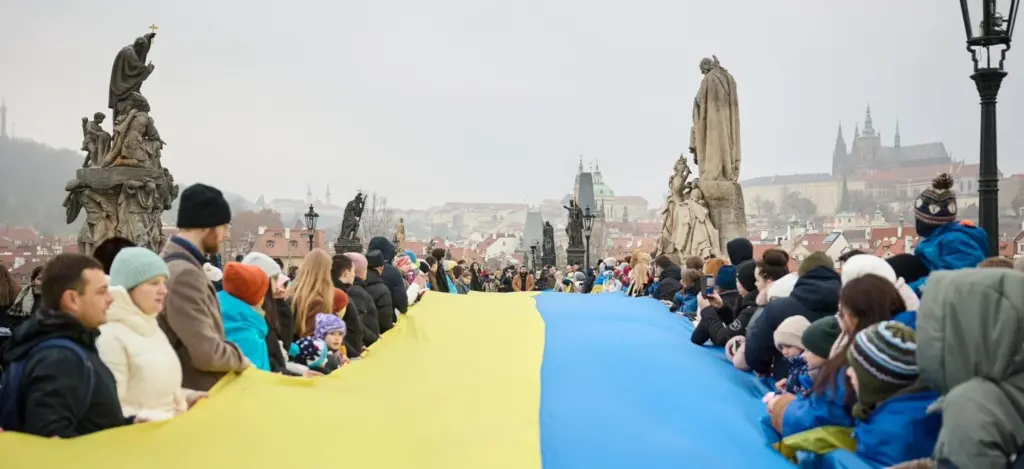
Ukrainians and supporters will form human chains in cities abroad at 19:00 (7 p.m.) on 24 August 2026 to mark Independence Day, Ukraine’s Mission to the European Union announced on 20 August.
Russia’s invasion has driven more than 5.6 million Ukrainians to seek refugee or other international protection abroad, according to the UN Refugee Agency. The human chains will help displaced Ukrainians and established diaspora communities show that Ukraine still needs their host countries’ support, the organizers say. Participants follow in the footsteps of Ukrainians in the Soviet era who formed human chains to demonstrate their desire for independence.
The 2026 Chain of Unity campaign website listed 55,600 participants on 22 August. Ukrainians and their supporters will gather on central streets and squares in Warsaw, London, Berlin, Rome, Toronto, New York, and other cities, where they will hold hands in local chains.
An interactive map allows people to find, join, or organize a local chain. Ukraine’s Cultural and Foreign Ministries support the action, which is being held only outside the country.
Ukrainians abroad will use Independence Day in other ways to draw attention to Ukraine’s wartime needs. Ukrainian community groups have organized rallies in 11 cities across 10 countries, calling on European governments to use Russian central bank reserves frozen under sanctions to fund Ukraine.
Why human chains still matter to Ukraine
Human chains became a powerful symbol of Ukrainian unity as Soviet rule weakened and the independence movement moved into the open.
On 21 January 1990, hundreds of thousands of Ukrainians formed the nearly 700-kilometer “Ukrainian Wave” from Ivano-Frankivsk through Lviv to Kyiv. It became late-Soviet Ukraine’s largest public demonstration and helped build momentum for independence the following year.
The pro-independence People’s Movement of Ukraine (Rukh) spent five months organizing the chain. When gaps appeared, organizers bused volunteers from Lviv and Ivano-Frankivsk to fill them, while participants supplied their own fuel.
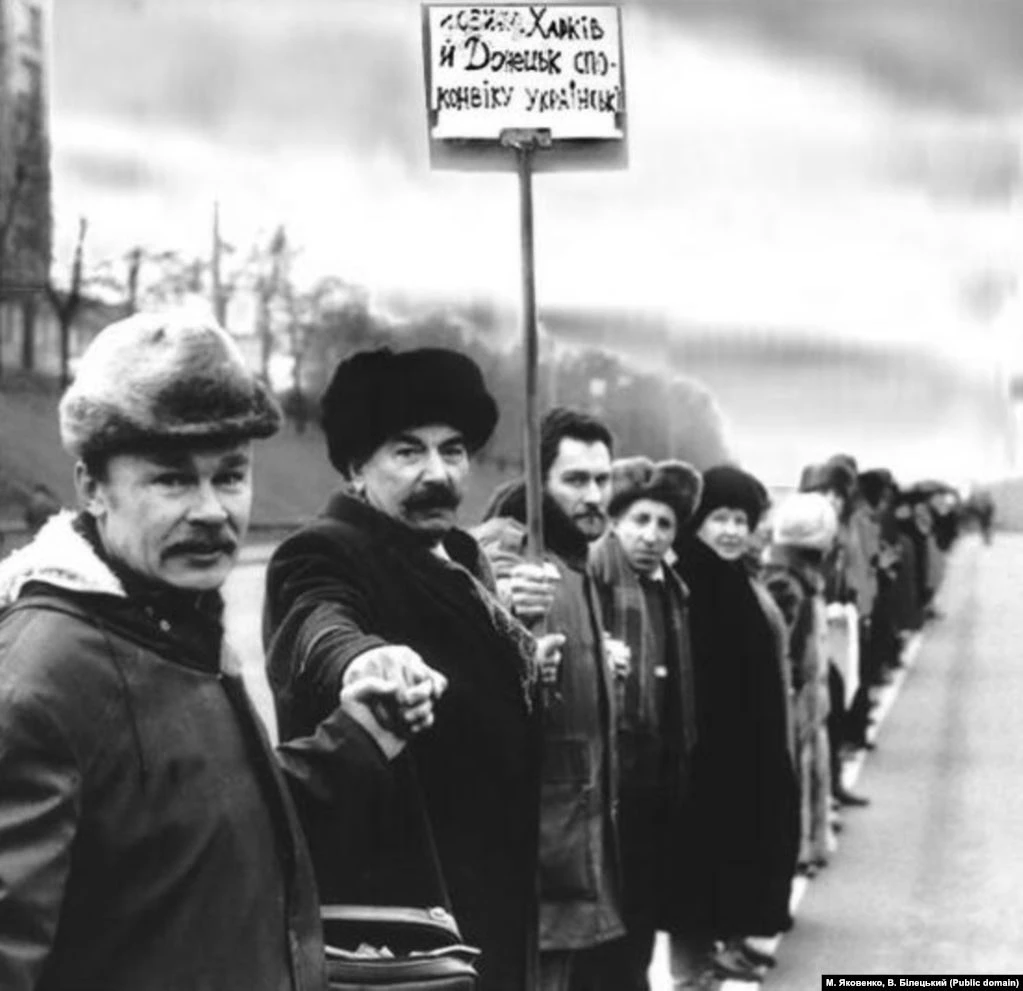
The 1990 chain marked the anniversary of the 1919 union of the Ukrainian People’s Republic and Western Ukrainian People’s Republic, two Ukrainian states that emerged after World War I. By joining hands across regions while their country remained part of the Soviet Union, participants showed broad support for restoring Ukraine's sovereignty and unity.
After 1991, Ukrainians kept the tradition on Unity Day, the 22 January holiday marking that union. They often joined hands across Dnipro bridges to symbolize east-west unity. This year’s action takes the gesture abroad: refugees, established Ukrainian communities, and supporters are using it to show they remain part of one nation.