Vue normale

Retired Valencia official came to Ukraine to repay debt from Franco’s time. Russia has held him since 2022, and now his Kherson apartment has burned
26 août 2026 à 02:19

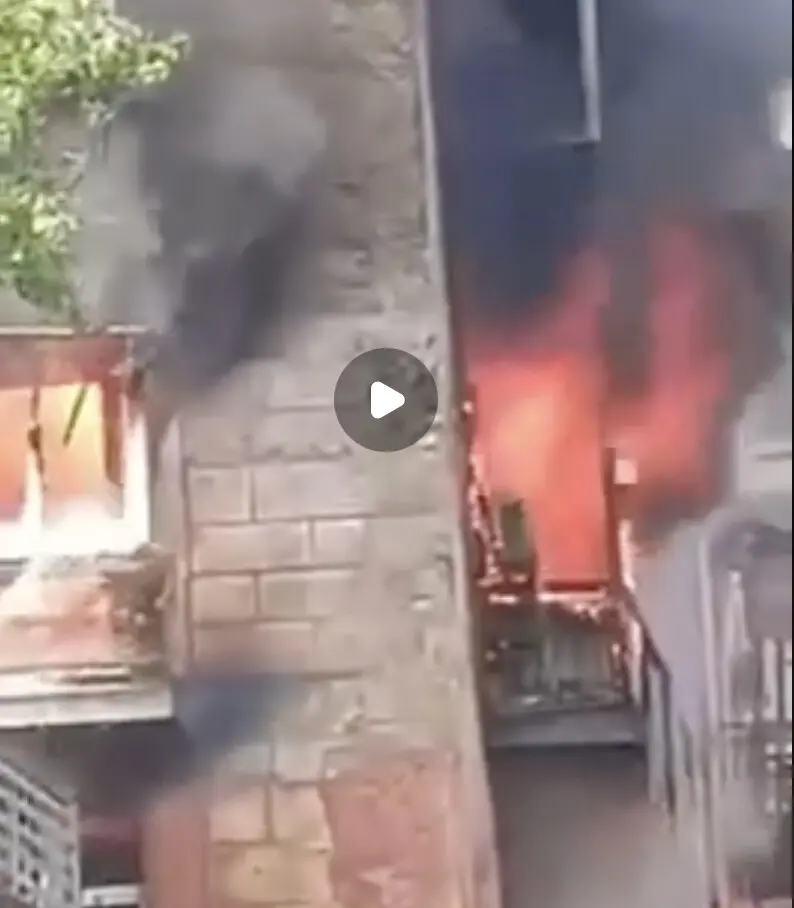
Screenshot from a video provided by Tetiana Marina, his civilian wife. Source: ZMINA

Fire has destroyed the Kherson apartment of Mariano García Calatayud, the Spanish volunteer, who was abducted by Russian forces during the occupation of the city in 2022. His partner, Tetiana Marina, told ZMINA she received two videos from neighbors that morning, the first showing her apartment alight and the second showing the fire spreading through the building.

Calatayud is one case in a system of civilian captivity that Russia does not acknowledge. Ukraine's ombudsman estimates Russia holds up to 20,000 Ukrainian civilians, with confirmed identities for only a fraction. Russia has never charged Calatayud with a crime, never allowed him a lawyer or contact with his family, and for more than three and a half years has declined to confirm it holds him at all.

The building stands at the start of Yevropeiska Street, formerly Suvorova, roughly 500 to 700 meters from the Dnipro, Marina said. Police have recorded the damage. She does not know what caused the fire and suspects a Russian drone.

The videos showed the fire spreading

"In the first, I saw clearly that only my apartment was engulfed. In the second, I saw that all the apartments in the video had burned," Marina said.

She is still trying to reach a neighbor, Iryna, who had been sleeping in a bomb shelter because of the shelling.

  • "I still do not know what happened, but everything burned. It does look like a drone," she said.
A moral debt brought him to Ukraine

Calatayud ran the road construction department at Valencia city hall before retiring. He moved to Ukraine in 2014, collected humanitarian aid from several countries and delivered it to Marinka and Krasnohorivka in Donetsk Oblast, and worked with orphanages.

Marina explained his reason to Radio Free Europe/Radio Liberty. Under Franco, many children of repressed Spaniards were sent to Ukraine, to Odesa. His mother's family was among the repressed.

"That is why he went to Ukraine in 2014, to, as he put it, repay a debt to Ukraine," she said.

When Russian forces took Kherson, he stayed. He could have left for Spain, but did not.

Russia stopped acknowledging him

On 19 March 2022, Calatayud attended a pro-Ukrainian rally. Two men in balaclavas seized him at his own entrance, handcuffed him, put him in a dark blue minibus, and drove him to the occupation administration, Marina said.

He was held in Simferopol pre-trial detention center No. 2. According to other civilian hostages, he was beaten and subjected to electric shocks while in detention. They also described inhumane conditions and a lack of proper medical care. He suffered a heart attack in custody.

In December 2023, Russia reported Calatayud's transfer to Kherson Oblast, the Media Initiative for Human Rights reported. Spain proposed exchanging him for a Russian prisoner of war, and Russia refused. The Red Cross is searching for him in penal colonies, including in Siberia.

Russian military bloggers listed him in a database of foreign fighters, claiming he had joined Kherson's territorial defense. He never carried a weapon in the city, his wife said.

Russia set target specific target for military recruits in 2026: in Arkhangelsk Oblast, man was sent to front after being detained for drinking on street

25 août 2026 à 08:22

greece blocked gas ban france italy softened entry ban—now brussels tries 1600 companies helping russia's war · post russian soldiers military parade 9 2025 moscow russia kremlinru victory_day_parade_2025_at_red_square ukraine news

Russia is ramping up a campaign of covert mobilization to recruit troops for its war against Ukraine. Over the past month and a half, residents of at least 17 Russian regions have complained of forcible detention, beatings, and coercion into signing contracts with the Russian Defense Ministry, the independent outlet Verstka reported, citing three legal-aid organizations.

Russia recruited 403,000 soldiers in 2025 and set a target of 409,000 for 2026, Ukraine's military intelligence chief Kyrylo Budanov said. Since April, Russian companies have been ordered to nominate two to five employees each for military service.

The School of the Conscript recorded 11 complaints in July and August. Five came from Udmurtia, one each from Primorye, Irkutsk, Ryazan, and Arkhangelsk oblasts, one from Buryatia, and one from the temporarily occupied territories of Donetsk Oblast.

The victims share a profile

The men targeted are not chosen at random. In most appeals, complainants say the victims are men with alcohol, drug, or mental health problems, older or physically disabled men, men living alone, and men with pending legal trouble, said Timofey Vaskin, who heads the legal department at the School of the Conscript.

Four cases show the method

Idite Lesom documented how the coercion works in practice. In Novorossiysk, a man was taken to a police station, beaten, had drugs planted on him, and was made to sign a contract.

In Arkhangelsk Oblast, a man detained for drinking on the street was sent to the front. In Omsk, a man was taken from his workplace, held, and had the contract signed for him. In Udmurtia, a man was removed from a psychiatric register and sent to Donetsk Oblast.

Recruiters work from state records

The targeting runs on official data. Authorities know who carries debts, who is under investigation, and who has recently lost a driver's license, and those are the people they pursue, said Idite Lesom's director, Grigory Sverdlin.

Volunteers are getting harder to find, which is why the pressure is increasing, he added. Call to Conscience advised men in affected regions to grant relatives the power of attorney to represent them at enlistment offices, avoid drinking alone, and refuse to sign a contract under any circumstances.

  • ✇Euromaidan Press
  • Ukraine still hands Kremlin opponents back to Russia—even now
    Ukraine condemns Russia for jailing people on fabricated terrorism charges. Yet, its own security services keep sending Kremlin opponents back to Moscow, human rights defender Borys Zakharov said in an interview with Ukrainian outlet Texty.org.ua. The handovers are not a relic of a friendlier past. They slowed after Russia's full-scale invasion in 2022, then resumed; the transfers now run through third countries, Zakharov says, and at least one has ridden the prisoner s
     

Ukraine still hands Kremlin opponents back to Russia—even now

15 août 2026 à 15:14

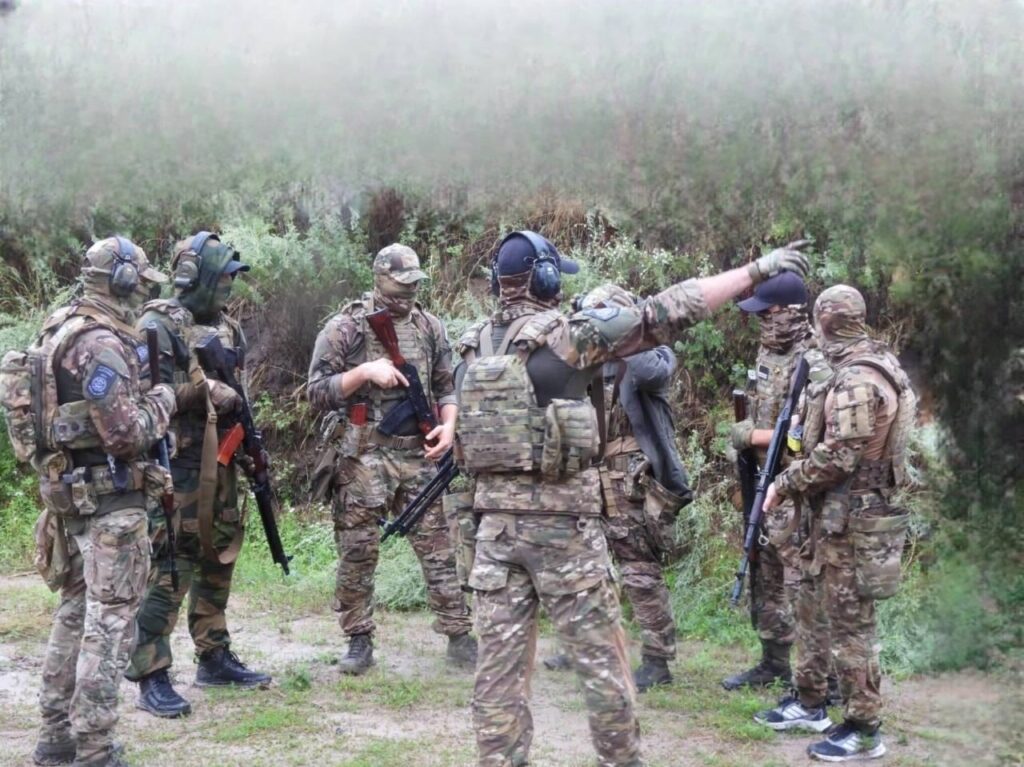
Chechen volunteers fighting on Ukraine’s side during training.

Ukraine condemns Russia for jailing people on fabricated terrorism charges. Yet, its own security services keep sending Kremlin opponents back to Moscow, human rights defender Borys Zakharov said in an interview with Ukrainian outlet Texty.org.ua.

The handovers are not a relic of a friendlier past. They slowed after Russia's full-scale invasion in 2022, then resumed; the transfers now run through third countries, Zakharov says, and at least one has ridden the prisoner swaps that bring Ukraine's captured soldiers home. Ukraine is returning the exact people who bet their lives on it; at the moment, it presents itself to the world as the rule-of-law side of this war.

A double standard, few in Kyiv discuss

Zakharov directs the charitable foundation Human and Law, which defends people fleeing authoritarian states. Russia prosecutes captured Ukrainians on invented terrorism charges, and Kyiv rightly calls it a sham. But when Chechens, Ingush, and other North Caucasians ask Ukraine for protection, officials sometimes brand them criminals and send them back—men who often fled two brutal Chechen wars and the crackdowns after them, and some of whom later fought Russia in volunteer units.

"We say: yes, they are criminals. We hand them over to Russia to die," Zakharov said.

International law forbids this. The principle of non-refoulement bars any state from returning a person to a country where they face death, persecution, or torture. Zakharov says Ukraine's migration authorities often skip that risk assessment entirely.

The cases the West never heard about

Take Timur Tumgoev, an Ingush volunteer fighter whom Ukraine extradited in September 2018. A Russian court sentenced him to 18 years on terrorism charges, his defenders call fabricated. Zakharov says he was tortured so badly that he can barely move.

Timur Tumgoev
Timur Tumgoev. Photo: North Caucasus Service

Others escaped by luck. Ukraine nearly removed Zelimkhan Belkharoev, a wrestler, in 2016 despite an emergency order from the European Court of Human Rights, Zakharov says; a deputy justice minister intervened in time. Adam Osmayev, a Chechen battalion commander whose wife Amina Okueva was killed in a 2017 assassination attempt, was saved the same way years earlier.

Why did it not stop after 2022

The war did not end the handovers—it rerouted them. Direct extraditions paused; the transfers now run through Belarus, Moldova, and Turkiye, Zakharov says.

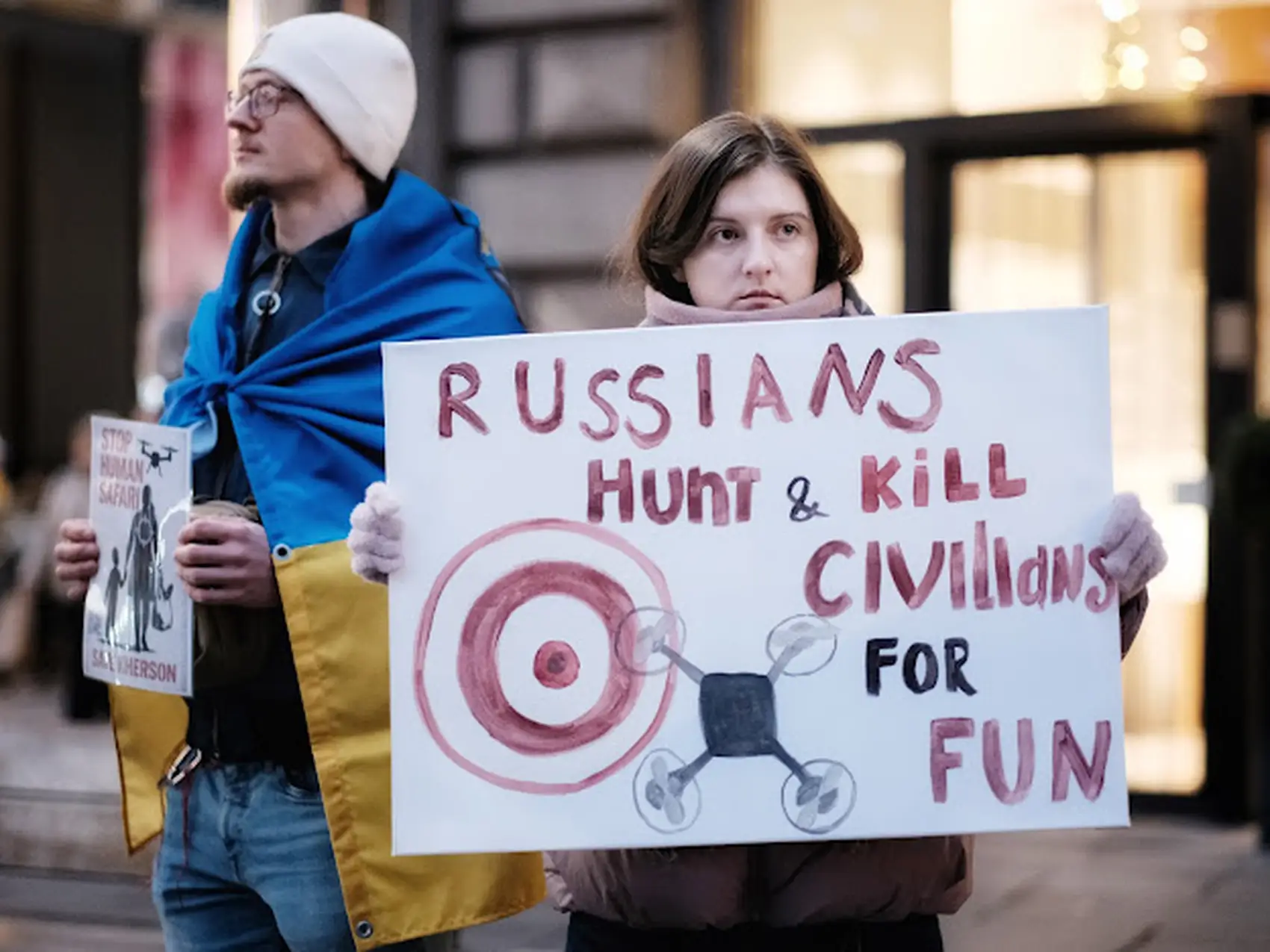
Russia hunts kills protest targets civilians with drones stop human safari save kherson
Explore further

Russia hunted civilians by drone in Kherson. Victims are suing the US firm they say helped connect the attackers

Zakharov says Zaur Shogentsukov, a Kabardian who crossed from Belarus to join Ukraine's forces, allegedly failed a polygraph test with the Security Service of Ukraine (SBU) and was pushed back into Belarus under a readmission deal. His tortured body later came back to his family in Nalchik, he says.

Alexey Gerasimov, a student from Russia's Chuvash region who reportedly backed his homeland's independence, slipped into Ukraine in 2024 to join the Sibir Battalion, a unit of Russian volunteers. He ended up in one of the large prisoner exchanges that followed the May 2025 Istanbul talks, and Ukraine delivered him to Russia, where he now faces terrorism charges—the independent Russian outlet Verstka reported in an investigation carried by Novaya Gazeta Europe.

Ella Skybenko, the Eastern Europe and Central Asia Senior Researcher at the Business & Human Rights Resource Centre, at the B4Ukraine. Source: B4Ukraine
Explore further

Russia stops war only for one reason — and Ukrainians feel betrayed that Europe won’t act on it: Human rights expert names it

The most recent case is still unfolding. Aslan Khakimov, a Russian engineer who fled the Federal Security Service (FSB) in 2015 and spent years building robots for Ukraine's army, has sat in a migration facility since April 2026, accused of financing terrorism and facing deportation.

The most recent case is still unfolding. Aslan Khakimov, a Russian engineer who fled the Federal Security Service (FSB) in 2015 and spent years building ground robotic systems for Ukraine's army, entered on forged documents and lived for a decade under a false identity, Ruslan Puptaiev—the illegal stay Ukraine's migration service cites for the deportation order it issued in April 2026. Russia has separately convicted him in absentia of terrorism, a charge his defenders call fabricated. His supporters argue that returning him would be a death sentence.

Ukraine's services frame these as wartime security decisions, and infiltration is a genuine risk. But non-refoulement admits no wartime exception: even a proven spy is not a country's to send to his death.

The money question

Zakharov offers a blunter explanation for at least some cases: money. In the Tumgoev handover, he says, the man's family was quietly invited to outbid Moscow—to top the sum Russian handlers allegedly pay SBU officers for each person delivered.

"Totalitarian regimes spare no money persecuting their opponents," he said.

Ukraine's security service has not confirmed his account, and the allegation rests solely on his testimony.

Russia, for its part, has already shown its games in these exchanges, at times swapping in people with no link to the war. As Kyiv negotiates ever-larger exchanges to free its own soldiers, the same machinery can carry the Russians and Caucasians who fought for Ukraine the other way — a propaganda gift to Moscow and a warning to the next would-be defector that Ukraine's protection may not hold. For a state that anchors its whole cause in the rule of law, that is a debt that keeps compounding.

  • ✇The Kyiv Independent
  • In landmark ruling, same-sex couple recognized as family by Ukrainian court
    Kyiv's Desniansky District Court has formally recognized a same-sex couple as a family, marking the first legal precedent of its kind in Ukraine, human rights organization Insight LGBTQ announced on July 3.Ukraine does not currently recognize same-sex marriages or partnerships, and this court ruling may serve as a critical legal milestone in expanding rights for LGBTQ families.The case involves Zoryan Kis, first secretary of Ukraine's Embassy in Israel, and his partner Tymur Levchuk, who have li
     

In landmark ruling, same-sex couple recognized as family by Ukrainian court

3 juillet 2025 à 13:56
In landmark ruling, same-sex couple recognized as family by Ukrainian court

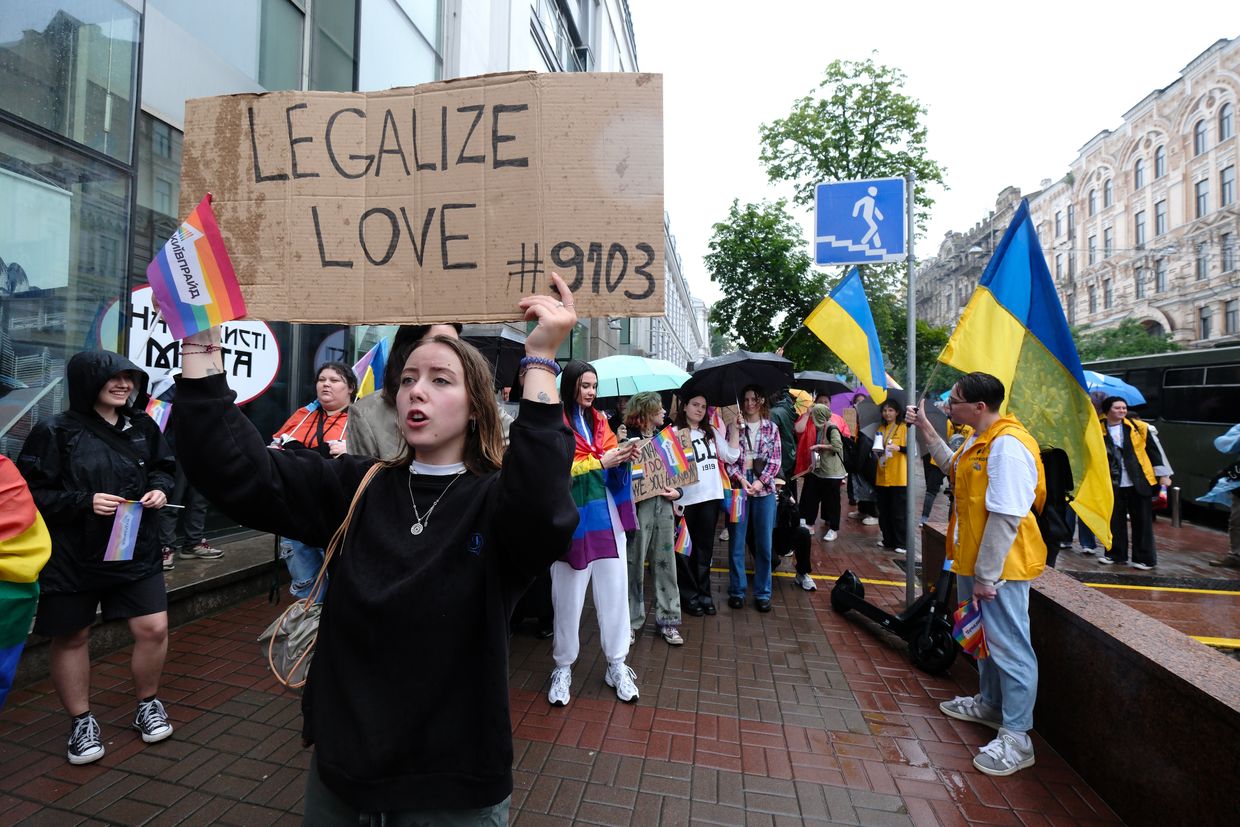
Kyiv's Desniansky District Court has formally recognized a same-sex couple as a family, marking the first legal precedent of its kind in Ukraine, human rights organization Insight LGBTQ announced on July 3.

Ukraine does not currently recognize same-sex marriages or partnerships, and this court ruling may serve as a critical legal milestone in expanding rights for LGBTQ families.

The case involves Zoryan Kis, first secretary of Ukraine's Embassy in Israel, and his partner Tymur Levchuk, who have lived together since 2013 and were married in the U.S. in 2021.

The court ruled on June 10 that their relationship constitutes a de facto marriage, establishing them as a family under Ukrainian law.

The ruling comes after Ukraine's Foreign Ministry refused to acknowledge Levchuk as Kis' family member, denying him spousal rights to accompany Kis on his diplomatic posting to Israel. In response, the couple filed a legal complaint in September 2024.

In its decision, the court cited both the Ukrainian Constitution and precedents from the European Court of Human Rights (ECHR), which requires states to ensure legal recognition and protection for same-sex families.

Evidence considered by the court included shared finances, property, witness testimony, joint travel records, photographs, correspondence, and other documents establishing a long-term domestic partnership.

"A very big and important step toward marriage equality in Ukraine, and a small victory in our struggle for 'simple family happiness' for Ukrainian diplomats," Kis wrote on Facebook.

"Now we have a court ruling that confirms the feelings Tymur Levchuk and I have for each other," he added, thanking the judge who heard the case.

Public support for LGBTQ rights in Ukraine has grown in recent years, particularly since the start of Russia's full-scale invasion. According to a 2024 poll by the Kyiv International Institute of Sociology, 70% of Ukrainians believe LGBTQ citizens should have equal rights.

Despite shifting public opinion, legislative progress remains slow. A draft law recognizing civil partnerships, introduced by Holos party lawmaker Inna Sovsun in March 2023, has not advanced in parliament due to a lack of approval from the Legal Policy Committee.

The proposed bill would legalize civil partnerships for both same-sex and heterosexual couples, offering them inheritance, medical, and property rights, but not the full status of marriage.

As Trump ‘loses interest’ in Ukraine, Kyiv scrambles to clarify extent of U.S. military aid pause
When the U.S. Department of Defense (DOD) halted the transfer of critical air defense missiles and other weapons to Ukraine, Kyiv and its partners were caught off-guard and are now left scrambling for clarity on the scope and length of the Trump administration’s decision. The White House confirmed the halt after a July 1 report by Politico said shipments were paused due to concerns over the size of domestic stockpiles. The decision “was made to put America’s interests first following a DOD rev
In landmark ruling, same-sex couple recognized as family by Ukrainian courtThe Kyiv IndependentAndrea Januta
In landmark ruling, same-sex couple recognized as family by Ukrainian court
  • ✇The Kyiv Independent
  • Ukrainian journalist Vladyslav Yesypenko released after four years of Russian detention
    Ukrainian journalist Vladyslav Yesypenko was released on June 20 after more than four years of detention in Russian-occupied Crimea, Radio Free Europe/Radio Liberty reported.Yesypenko, a freelance contributor to Crimea.Realities, a regional project of RFE/RL's Ukrainian Service, reported on various issues in Crimea before being detained by Russia’s FSB in March 2021.He was accused of espionage and possession of explosives, charges he denied, and later sentenced to five years in prison by a Russi
     

Ukrainian journalist Vladyslav Yesypenko released after four years of Russian detention

22 juin 2025 à 16:14
Ukrainian journalist Vladyslav Yesypenko released after four years of Russian detention

Ukrainian journalist Vladyslav Yesypenko was released on June 20 after more than four years of detention in Russian-occupied Crimea, Radio Free Europe/Radio Liberty reported.

Yesypenko, a freelance contributor to Crimea.Realities, a regional project of RFE/RL's Ukrainian Service, reported on various issues in Crimea before being detained by Russia’s FSB in March 2021.

He was accused of espionage and possession of explosives, charges he denied, and later sentenced to five years in prison by a Russian-controlled court.

Yesypenko said he was tortured, including with electric shocks, to force a confession, and was denied access to independent lawyers for nearly a month after his arrest.

RFE/RL welcomed his release, thanking the U.S. and Ukrainian governments for their efforts. Yesypenko has since left Russian-occupied Crimea.

“Vlad was arbitrarily punished for a crime he didn’t commit… he paid too high a price for telling the truth about occupied Crimea,” said RFE/RL President Steven Kapus.

During his imprisonment, Yesypenko became a symbol of press freedom, receiving several prestigious awards, including the Free Media Award and PEN America’s Freedom to Write Award.

His case drew support from human rights groups, the National Union of Journalists of Ukraine, and international advocates for media freedom.

Russia invaded and unlawfully annexed Crimea in 2014, cracking down violently on any opposition to its regime.

Following Russia's full-scale invasion of Ukraine in February 2022, the Kremlin toughened its grip on dissent, passing laws in March 2022 that prohibit what authorities label as "false" criticism of Russia's war.

Crimean Tatar freed from Russian captivity: ‘Recognizing Russia’s control of Crimea would legitimize crime’
For nearly two years in Russian captivity, Leniie Umerova clung to a single hope: that one day, she would return home — to Crimea. “I thought about Crimea all the time,” Umerova told the Kyiv Independent. “I dreamed of going there without the permission of the occupying forces, without going through
Ukrainian journalist Vladyslav Yesypenko released after four years of Russian detentionThe Kyiv IndependentDaria Shulzhenko
Ukrainian journalist Vladyslav Yesypenko released after four years of Russian detention
❌