Vue normale

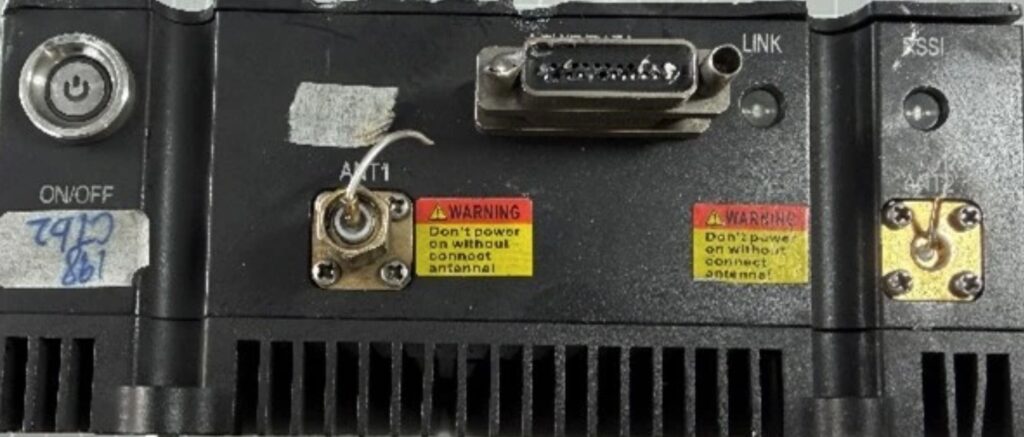
Russia’s new jet Shaheds run on turbojets from one Chinese company. It deleted them from its English website

27 août 2026 à 01:12

Geran-4" is an evolution of the earlier "Geran-3" model

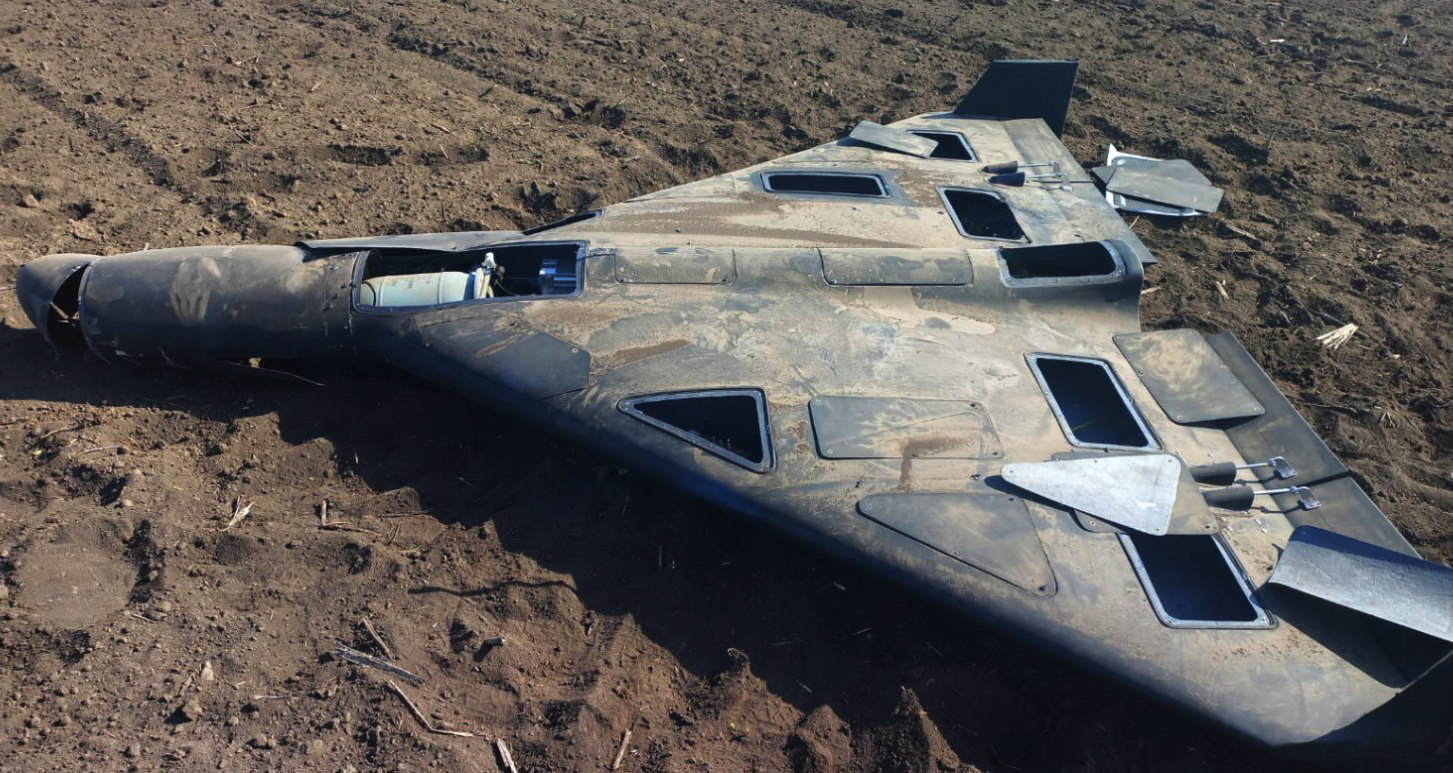
China is helping Russia build a faster Shahed. Russia has begun using upgraded Shahed drones with Chinese-made turbojet engines that fly at speeds close to three times those of earlier versions, the Wall Street Journal reported.

The Shahed jet is designed to beat Ukraine's air defenses. Ukrainian interceptors have downed about 90 percent of the older piston-engine drones, which cruise at roughly 180 kilometers per hour, so Russia switched to the jet-powered Geran-4, which cruises at around 500 kilometers per hour.

The engines come from one Shenzhen firm

The turbojets come from Telefly Telecommunications Equipment, founded in Shenzhen in 2010. The company chiefly makes computer hardware and communications equipment, but also sells its own line of micro-turbojets for drones.

China has long been the main clearinghouse for Shahed parts, including engine components, servomotors, and gyroscopes, the newspaper reported.

The company scrubbed its own website

After Ukraine publicized the discovery of Telefly engines in Russian drones, the turbojet section disappeared from the English-language pages of the company's website. The pages in Chinese and other languages still carry them.

China's foreign ministry, which did not respond either, has previously said it strictly regulates exports of dual-use components and rejects unilateral US sanctions on such trade.

Western parts fade as Chinese parts arrive

Downed Shaheds once carried microcontrollers from Texas Instruments in the US and linear regulators from STMicroelectronics, which the newspaper lists as being based in Switzerland. Over time, the Western components are disappearing even as the drones gain better navigation and attack systems, because US Treasury investigations found nearly all the Western parts were being diverted through Chinese intermediaries, often shell companies in Hong Kong.

Ukrainian government researcher Colonel Oleksandr Zaruba said in June that Shaheds now hold more antennas, modems, and SIM cards to correct their flight paths through local mobile networks, and that the components increasingly come from China.

Ukraine finds American Nvidia Jetson micro-computer in Russia’s new missile that can’t reportedly tell truck from a bus with children

12 août 2026 à 12:03

The image shows a Russian missile. Source: HUR

An American AI computer has turned up inside Russia's newest cruise missile. Ukrainian specialists has found an Nvidia Jetson micro-computer in Russia's new S-71 "Monokhrom" cruise missile, the Defense Ministry's Main Intelligence Directorate (HUR) reports.

S-71M “Monokhrom is the first fully autonomous long-range strike system designed to engage not only stationary but also moving targets. The system is designed to independently decide whether to destroy a target based on threat priorities. A significant problem for such autonomous systems is determining exactly what they are attacking — a military truck or a bus carrying children.

The discovery is the latest evidence that Russia's newest weapons still run on Western technology. Ukraine has already documented hundreds of foreign components in Russian missiles and drones reaching Moscow despite sanctions.

The AI chip is the standout find

The use of the Nvidia Jetson may indicate the application of AI technologies in the missile. This capability would let the weapon process visual or sensor data onboard to identify targets or navigate, functions that depend on exactly the kind of compact AI computing it provides.

The chip sits among many foreign parts. In total, 35 electronic components used by Russia in the missile were identified, making Monokhrom another Russian weapon built substantially from foreign electronics.

The same parts show up across Russia's arsenal

HUR's analysis linked the missile to Russia's wider weapons program. The identified components included parts of a passive radar seeker that Russia has begun installing on Geran-2 drones to detect and strike Ukrainian air-defense systems and radars.

Other finds tied the missile to Russia's newest strike systems. They included a Chinese Honpho TS130C-01 camera from the jet-powered Geran-4 drone and components of the active homing seeker of the Kh-47M2 Kinzhal aeroballistic missile.

The finding sharpens the sanctions case

HUR framed the discovery as an argument for tighter enforcement.

"The discovery of an Nvidia Jetson in a new Russian missile once again demonstrates the need to strengthen sanctions pressure and coordinate the efforts of the civilized world," HUR said.

HUR specialists and Ukrainian research institutions continue to study Russian weapons and trace the origin of their electronic components to strengthen measures to block them.

Forged end-user certificates through eight countries: how one network kept European tech flowing into Russian missiles

10 août 2026 à 16:38

Vienna, the capital of Austria. Credit: UkrInform

Austria has broken up a smuggling network feeding European technology into Russia's missile production. Austria's DSN counterintelligence service has exposed an international scheme that supplied high-tech industrial equipment to defense-industry enterprises linked to the Russian state corporation Rostec, circumventing EU sanctions, Austria's Interior Ministry reported.

The case is one strand of the vast evasion effort keeping Western parts in Russian weapons. Ukraine has documented that Russian missiles like the Iskander still contain hundreds of foreign components reaching Russia through third countries despite sanctions. The Austrian network is one of the channels that made that possible, routing European machinery to Russian arms makers through a web of front companies.

How the network worked

The smugglers hid the real destination behind a chain of countries. To conceal the supply routes, the suspects used a network of companies in Turkiye, the UAE, Hong Kong, Belarus, Kyrgyzstan, South Korea, Poland, and Lithuania, providing European manufacturers with forged end-user certificates claiming the goods would remain in third countries.

The equipment went to Russian weapons production. According to a preliminary investigation, it was used to make engines for cruise missiles and combat aircraft, among other military hardware, according to the ministry.

"It is unacceptable that high-precision European technologies find their way through roundabout paths into the production of cruise missiles and air-defense systems," Interior Ministry State Secretary Jörg Leichtfried said.

The scale and the arrests

The trade ran for years and moved millions. Purchases of industrial goods for Russian military users date back to 2019, and after sanctions tightened, the routes were redirected through third countries, primarily Hong Kong and Turkiye, with confirmed deliveries to Russian defense firms worth nearly $3.9 million since 2022.

The arrests followed searches. On 20 August 2025, police searched four sites and seized about 40 data carriers. On 13 May 2026, they detained a 28-year-old Belarusian citizen, a company director and co-owner, seizing sanctioned CNC machines and tools worth nearly $164,000. The suspect is in custody.

Part of a wider fight

DSN framed the bust as one battle in a continuous effort. The case shows the lengths to which international networks go to circumvent sanctions, DSN director Sylvia Mayer said.

The bust is a rare visible enforcement action against a problem Ukraine names constantly: that Russia's weapons still run on Western technology, reaching its factories through exactly this kind of third-country laundering. Each dismantled network closes one route, but demand keeps opening others.

  • ✇Euromaidan Press
  • Russia lowered its 2030 electronics-independence target from 80% to 59%
    Russia has lowered its benchmark for technological independence. A revised government target now requires domestic hardware to make up 58.7% of state technology projects by 2030—down from the 80% Moscow had long promised—a reduction proposed by Russia’s own Ministry of Industry and Trade and set by a decree signed in July 2026 by Prime Minister Mikhail Mishustin. Funding collapsed as deadlines slipped The scale of the retreat was laid out by Ukraine’s Foreign Intelli
     

Russia lowered its 2030 electronics-independence target from 80% to 59%

31 juillet 2026 à 10:11

russian irtysh server processor

Russia has lowered its benchmark for technological independence. A revised government target now requires domestic hardware to make up 58.7% of state technology projects by 2030—down from the 80% Moscow had long promised—a reduction proposed by Russia’s own Ministry of Industry and Trade and set by a decree signed in July 2026 by Prime Minister Mikhail Mishustin.

Funding collapsed as deadlines slipped

The scale of the retreat was laid out by Ukraine’s Foreign Intelligence Service, which called the downgrade a capitulation to reality. Funding for the flagship state program collapsed roughly fivefold, from $338.4 million in 2024 to $62.6 million in 2026, and the broader electronics-engineering development program faces a $422.7 million shortfall for 2026–2028, the service said.

Several microelectronics-equipment projects were canceled outright, and deadlines for domestic processors and modems have slipped to 2032. The “Irtysh” processor Moscow presented as a homegrown design for critical infrastructure is, by the service’s account, effectively a copy of China’s Loongson chip, and the Kurchatov Institute missed its deadline to build replacements for Intel, Marvell, Broadcom, and Integrated Device Technology parts.

Russian specialists themselves say localizing more than 60% is impossible without domestic production of chips at 28 nanometers and below, which sanctions and the loss of Western tooling put out of reach.

The GRU buys abroad what Russia cannot make

What Russia cannot build, it increasingly smuggles. Estonia’s Foreign Intelligence Service reported in February 2026 that Russian military intelligence—the GRU—takes an active role in acquiring sanctioned dual-use goods, running import-export front companies to route Western and Asian components home.

One such firm, Moscow-registered Neptun Ko, is directed by an identified GRU officer, Aleksandr Matrossov, and moved more than €500,000 ($540,000) worth of critical semiconductors to Russia’s defense industry through a Chinese intermediary in the first year of the full-scale war, the Estonian service found.

yevgeniy pluzhnik in kuala lumpur
Explore further

Russian businessman runs Hong Kong pipeline feeding European electronics to Kremlin’s weapons labs

Every chip Russia’s factories cannot make is one it must source abroad, through the third-country sanctions loopholes that still route Western components into Russian missiles and drones—which is where the practical fight over Russia’s electronics now lies, whatever share Moscow prints as its goal for 2030.

  • ✇Euromaidan Press
  • An EU candidate’s port received 145 ships from occupied Ukraine in six months
    Western sanctions and Ukrainian drones are squeezing Russia’s Black Sea trade in looted goods, but they are not stopping it. The networks are finding new routes—and one of them now runs through Georgia, a country that one day hopes to join the European Union.A new study finds that ships arriving from Russian-occupied Ukrainian ports are turning up at Georgia’s port of Poti far more often than they used to. The same links that allow Russia to profit give Europe leverage
     

An EU candidate’s port received 145 ships from occupied Ukraine in six months

31 juillet 2026 à 05:58

poti port in georgia

Western sanctions and Ukrainian drones are squeezing Russia’s Black Sea trade in looted goods, but they are not stopping it. The networks are finding new routes—and one of them now runs through Georgia, a country that one day hopes to join the European Union.

A new study finds that ships arriving from Russian-occupied Ukrainian ports are turning up at Georgia’s port of Poti far more often than they used to.

The same links that allow Russia to profit give Europe leverage to disrupt those networks.

The numbers climb steeply: 22 visits in the second half of 2023, 68 in 2024, and 145 in the first half of 2025 alone—on course, the study estimates, to nearly five times the 2024 total. Türkiye’s ports still take most of this traffic, but Poti is rising fastest.

The increase has tracked the Georgian Dream government’s drift toward Moscow since a disputed October 2024 election, a slide the European Parliament condemned as evidence of state capture. The authors caution that they cannot yet prove the shift is the result of deliberate policy.

A $120 billion pipeline that reaches into Europe

The study, which maps how Russia sustains and profits from its war on Ukraine, was produced by the Serious Organised Crime and Anti-Corruption Evidence Programme at the University of Birmingham and funded by the British government.

It follows goods moving through Black Sea shipping—worth about $120 billion a year—with military supplies flowing in and grain, coal, metal, and kaolin clay stripped from occupied territory flowing out, alongside oil sold above the price cap set by the Group of Seven in 2022. The study’s authors, Olivia Allison and Joshua Coyle, argue this trade is not a by-product of the war but an essential part of it, and one that reaches deep into European business.

The rerouting is happening under mounting pressure. Ukraine has spent 2026 hunting Russia’s Black Sea tankers and cargo ships, hitting 201 vessels in three weeks this July, according to the commander of its drone forces, Robert Brovdi, while the European Union and others tighten sanctions on the ports and ships involved.

ukraine's spy service navy team up strike two russian crude tankers black sea · post shadow-fleet tanker marked 137th vessel struck 6–16 2026 operation sight ukrainian drone sbs video oil
Explore further

Ukraine hits 201 Russian shadow fleet ships in three weeks. Commander says Crimea’s supply route is now blocked indefinitely

Grain is at the center of the trade. Investigators have documented Russia plundering the harvest in occupied Kherson and Zaporizhzhia, relabeling it as Russian, and selling it on to buyers in the Middle East and Africa. Ukrainian authorities have been tracking multiple ships carrying that grain to Israel, Egypt, and Algeria.

The upheaval reaches the top of Russia’s own grain business. In January 2025, a Russian court handed Rodnye Polya—for years the country’s largest grain exporter—to the state, ruling that its owner, Petr Khodykin, could not legally hold a strategic asset because he was a citizen of both Saint Kitts and Nevis and Russia.

The seizure did not prove a windfall. After an earlier auction drew no bids, the state sold the company in July 2026 for 11.7 billion roubles (about $150 million)—a small fraction of its former annual revenue—to a little-known firm that, as Kommersant reported, was acting for a grain holding part-owned by the sovereign wealth fund of Oman.

A vulnerability that runs both ways

On both ends of the trade, the study argues, are European companies. One Turkish port that receives ships arriving straight from occupied Crimea is run by a firm with a Dutch parent and a Taiwanese ultimate owner. Vessels in the trade, meanwhile, have been repaired in European Union shipyards and fitted with European-made cranes.

That overlap, the authors write, cuts both ways: the same links that allow Russia to profit give Europe leverage to disrupt those networks. The bloc’s newest sanctions package has begun to use it, targeting the shadow fleet, banks, and firms selling stolen Ukrainian grain.

eu's 21st russia sanctions package target shadow fleet banks firms selling stolen ukrainian grain—politico · post russian vessel deyna boarded french navy forces mediterranean 20 2026 hd2nuouxmaa-5_h ukraine news reports
Explore further

EU’s 21st Russia sanctions package will target the shadow fleet, banks, and firms selling stolen Ukrainian grain—Politico

Whether Georgia’s opening ports reflect a deliberate choice or simply the path of least resistance, the researchers do not say. Their data show only that the traffic keeps growing.

  • ✇Euromaidan Press
  • Europe deepens trade with India while Western parts keep reaching Russia’s weapons
    An Iskander missile that Russia fired at Kyiv Oblast on 10 July was built from more than 140 foreign parts, 62 of them American, and at least 20 were made in 2025—components that cleared every Western control and reached a Russian assembly line within about a year, Euromaidan Press reported.Without those parts, Ukraine’s presidential sanctions commissioner Vladyslav Vlasiuk said, Russia could not build the weapon.
     

Europe deepens trade with India while Western parts keep reaching Russia’s weapons

30 juillet 2026 à 10:31

tele2 sim cards recovered in downed russian drones

An Iskander missile that Russia fired at Kyiv Oblast on 10 July was built from more than 140 foreign parts, 62 of them American, and at least 20 were made in 2025—components that cleared every Western control and reached a Russian assembly line within about a year, Euromaidan Press reported.

Without those parts, Ukraine’s presidential sanctions commissioner Vladyslav Vlasiuk said, Russia could not build the weapon.

Aftermath of a Russian ballistic missile attack on Bucha district in Kyiv Oblast, Ukraine, 24 July 2026. Photo: Zelenskyy
Explore further

62 of the 140 foreign parts in this Russian missile were American. Ukraine wants that gap closed

A paradox runs through Europe’s answer to that problem. The EU is preparing to blacklist more than 1,600 companies for helping Russia’s war industry, its largest single batch of corporate designations, Bloomberg reported, while at the same time deepening trade with India, a country the same Western parts move through on their way to Russia.

And closing that gap will matter even after the war ends: a new study of Russia’s arms makers finds they will keep producing weapons at wartime speed—and keep needing imported parts to do it—whether or not the fighting stops.

Ukraine has been pulling the same finding out of downed Russian drones and missiles for two years—Indian electronics in Shahed drones among them.

eu and indian officials meet in brussels on 15 july 2026 to deepen cooperation on trade, tech and supply chains
EU and Indian officials meet in Brussels on 15 July 2026 to deepen cooperation on trade, technology, and supply chains. From left: Jitin Prasada, Maroš Šefčovič, Subrahmanyam Jaishankar, Henna Virkkunen, Piyush Goyal, and Ekaterina Zaharieva. Photo: Xavier Lejeune / European Union, 2026.

The India route grew before the trade deals arrived

A 29 July report by the strategic intelligence company Strider put a number on the wider channel: more than 50,000 sensitive goods, or goods with potential dual-use applications, reached Russian defense companies through Indian supply chains after the full-scale invasion.

The security intelligence firm compared totals from 2019 to 2021 with those from 2022 through the first quarter of 2025. Since the invasion, sensitive exports from India to Russia have multiplied several times over—and the sharpest jumps come from the countries deepening their own trade with India.

Swedish-origin goods rose almost sixfold. British, Swiss, and French exports of the same kind roughly doubled or more. The pattern extends beyond Europe: American-origin goods more than five times over, Australian goods even faster. German trade was the exception, falling by more than a third—though Germany still ships more of these goods through India than anyone.

Without those parts, Ukraine’s presidential sanctions commissioner Vladyslav Vlasiuk said, Russia could not build the weapon.

French carbon fiber—used in aircraft, drones, and missiles—reached Polymer Company LLC in Russia through India in 2025, according to Strider. The Russian government has designated the firm part of its military-industrial complex, and it supplies several restricted entities.

None of this shows that a part in the 10 July Iskander passed through India. It shows Western goods moving through the country where Britain’s trade deal took effect on 15 July and where the EU is targeting entry into force in 2027. Those deals expand legitimate commerce, not evasion.

Strider’s warning concerns what happens after Western goods enter long, opaque supply chains, and the report urged end-use monitoring to be written into the agreements themselves.

eu commission president ursula von der leyen presents the 21st sanctions package
European Commission President Ursula von der Leyen presents the proposed 21st sanctions package against Russia in Brussels on 9 June 2026. The EU adopted the package on 23 July. Photo: Dati Bendo / European Union, 2026.

Brussels is preparing 1,600 more names

The blacklist Brussels is drafting would target companies rather than whole industries, reaching corners of Russia’s military supply chain that earlier rounds missed.

The firms have a combined annual turnover of more than $20 billion and employ more than a quarter of a million people. If members approve it, the number of EU-sanctioned entities would jump by half. Foreign ministers are expected to take it up in October.

The bloc’s 21st package, adopted on 23 July, had already tightened dual-use export curbs on dozens of firms, some outside the EU. Six days later, the firm published the scale of one route around exactly those curbs.

votki
A production hall at Russia’s Votkinsk Plant in Udmurtia, one of the addresses identified as a destination for sanctioned goods. Photo: Delovaya Reputatsiya, 2021.

Russia plans to keep producing

That is why the flow of parts outlasts the war. A 14 July study of five major Russian defense manufacturers found them still dependent on imported components despite sanctions, corruption, labor shortages, and inflated costs—and likely to hold high output in select weapons while slowly rebuilding reserves.

Its sharpest warning is about time: Russia’s arms industry will probably stay on a wartime footing even if the shooting in Ukraine stops, while Western industry is unlikely to mobilize on that scale until a major war is already underway.

The Iskander compresses that long problem into a single year. At least 20 of its foreign parts were made in 2025, fitted into the missile, and fired at Kyiv Oblast on 10 July 2026.

❌