Vue normale

  • ✇Euromaidan Press
  • Russia is squeezing independent gas stations out of its fuel market
    Russia can’t refine its way out of its fuel crisis, so it is changing who controls the already existing fuel. Months of Ukrainian drone strikes on refineries have driven shortages and rationing across much of the country. The government’s answer isn’t more fuel—it is a different market.Faced with the shortage, the Kremlin had options. In June, analysts urged it to raise the exchange quota to push more fuel onto the open market and toward the regions running dry. The gov
     

Russia is squeezing independent gas stations out of its fuel market

7 août 2026 à 10:01

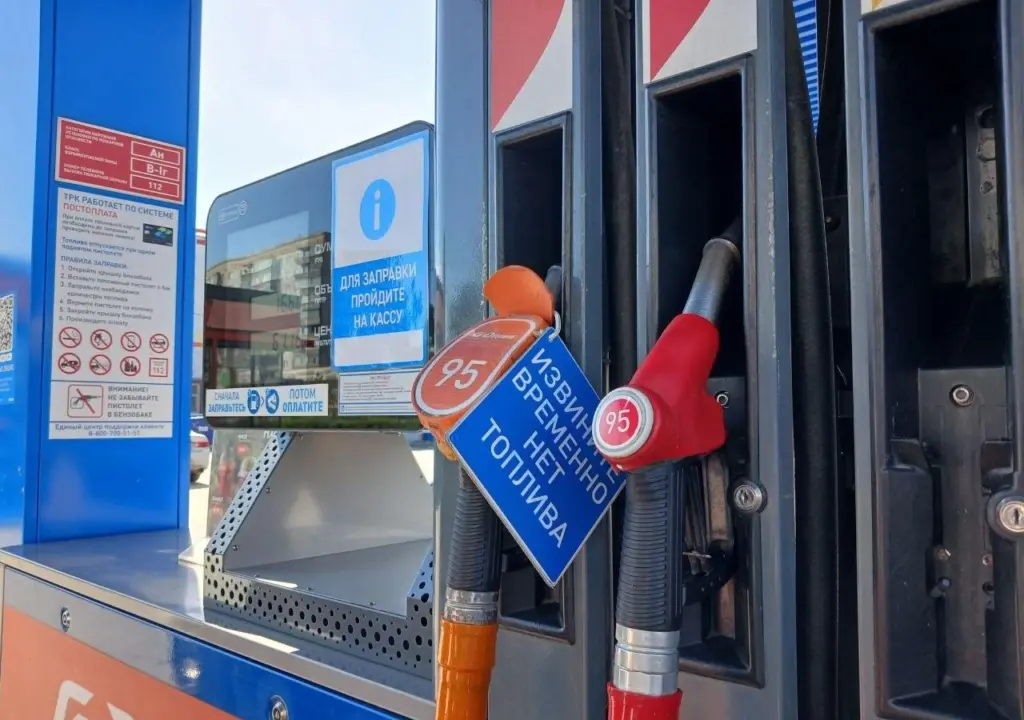
a dry pump at a russian gas station, july 2026

Russia can’t refine its way out of its fuel crisis, so it is changing who controls the already existing fuel. Months of Ukrainian drone strikes on refineries have driven shortages and rationing across much of the country. The government’s answer isn’t more fuel—it is a different market.

Faced with the shortage, the Kremlin had options. In June, analysts urged it to raise the exchange quota to push more fuel onto the open market and toward the regions running dry.

The government’s answer isn’t more fuel—it is a different market.

It did the opposite. The mandatory share of gasoline that producers must sell on the open exchange was cut from 15% to 10%, with the majors pushing for 2%, and the exchange was closed to anyone but buyers who will use the fuel themselves, shutting out traders who bought to resell.

That choice adds no fuel. It moves distribution off the exchange that set prices for a decade and into direct contracts between the big producers and the buyers they pick—handing the majors the chain from refinery to pump. Part of the package came straight from proposals Rosneft head Igor Sechin sent to President Vladimir Putin.

Winners and losers

The winners are the big, vertically integrated oil companies, which refine up to three-quarters of Russia’s oil. Direct deals let them keep the margin that once went to middlemen and choose who gets supplied; drop the quota to 2%, and about 5 million tonnes of gasoline a year move into their private channels.

The losers are the independent stations—60% to 72% of Russia’s roughly 25,000 gas stations, depending on who’s counting, and now unable to buy at the exchange price.

Alexander Moiseev, who owns the Kostroma Fuel Company, has been hauling gasoline from Surgut, 2,000 kilometers away, at 118 rubles a liter ($1.45) with freight, because the majors won’t sell to him wholesale. He works on a minimal markup. Rosneft, meanwhile, has multiplied sales at its own pumps.

What stabilization there is has been narrow. Prices eased mainly where supply was steered—Moscow, St. Petersburg, the big cities—while regions thick with independent gas stations stayed short, independent analyst Kirill Rodionov told Kommersant.

None of this is hidden. Facing the crunch, the government also let refiners sell banned Euro-2 gasoline again; online marketplaces pulled fuel listings; and Deputy Prime Minister Alexander Novak called the market “challenging but under control.”

In occupied Crimea it goes furthest: this week, the occupation authorities announced fuel sales were stabilizing, even as they capped each car at 20 liters and fixed the price of AI-92, the Crimean Tatar Resource Center reported.
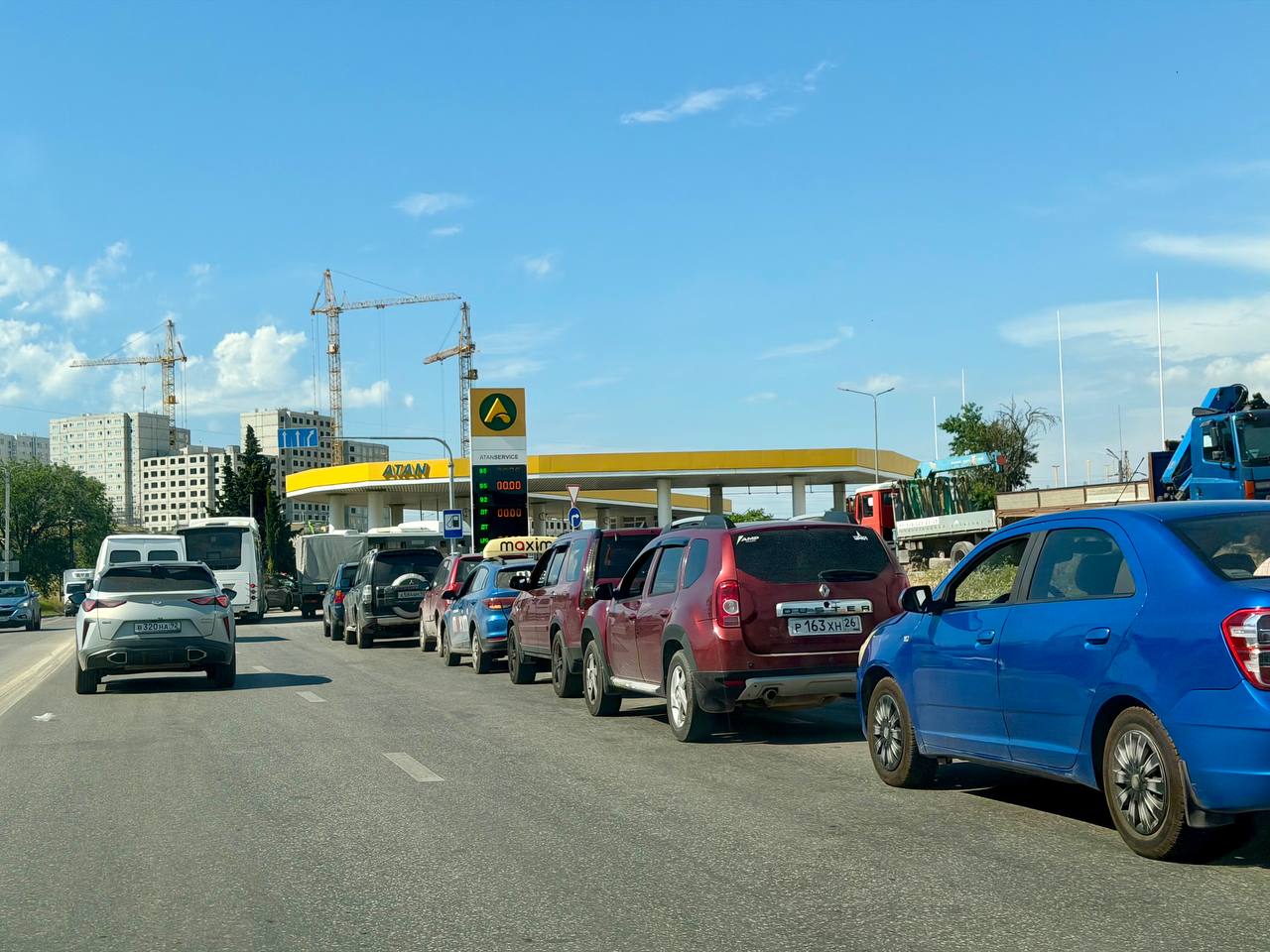
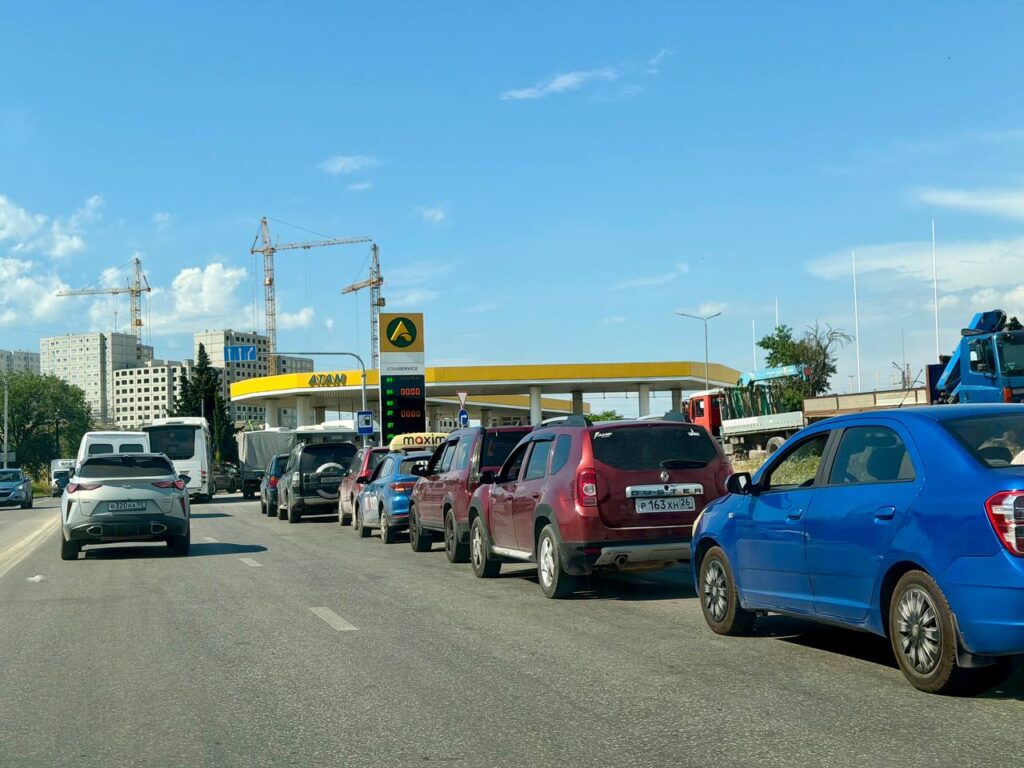
cars queue at an atan fuel station in occupied sevastopol in july 2026
Explore further

Occupied Sevastopol puts fuel back on open sale—then caps every car at 20 liters

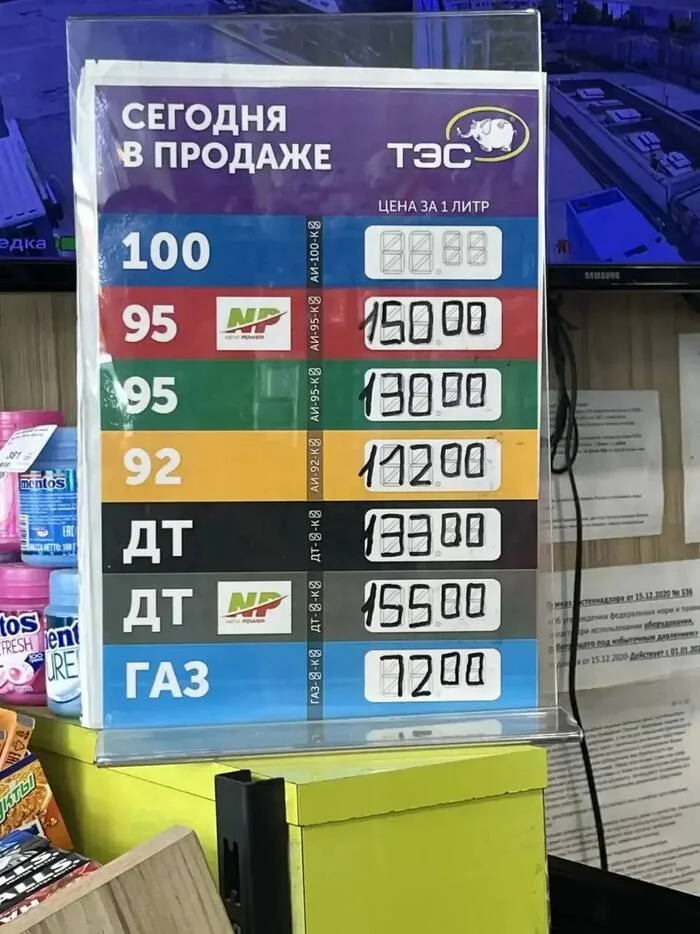
handwritten fuel prices in sevastopol, 27 june 2026
Fuel prices written by hand at a Sevastopol filling station, 27 June 2026—changed manually as often as prices shift. Sales were restricted to holders of QR codes issued the previous day; resellers charged 350 rubles ($4.53) per liter for AI-95 outside. Photo: Nishebrodushka / Pikabu

The market goes dark

As the exchange shrinks, its prices no longer reflect the market, and the state publishes less information on output, stocks, and regional supply. The people who most need to see where Russia’s fuel balance is breaking—regulators at home, and the sanctions monitors and energy analysts abroad who read that data—are left with less to look at, market participants told Kommersant. The market is going dark.

Whether the change sticks is contested. Some read the cuts as a passing emergency. Others expect the market to keep sliding toward closed, bilateral deals—less transparent, harder for newcomers, the independent stations ever more tied to the majors, Viktoria Trifonova, Senior Analyst at Yakov & Partners, told Kommersant. The state has reached for limits, subsidies, and hands-on redistribution ever since the 2018 price crisis.

Keeping the independent gas station chains alive was never the goal, NEFT Research’s Dmitry Prokofiev wrote in Kommersant—it was to keep fuel flowing to the big cities of European Russia and, above all, to the priority government sector.
  • ✇Euromaidan Press
  • Occupied Sevastopol puts fuel back on open sale—then caps every car at 20 liters
    Occupation officials in Sevastopol and occupied Crimea are telling residents the fuel crisis is easing—and this week they resumed “free sale” at a handful of named stations. From 6 August, every grade would again be sold openly on the TES network, occupation governor Mikhail Razvozhaev said, and AI-92, he noted, has been cut and fixed at no more than 100 rubles per liter ($1.23).The catch is in the same announcement: no more than 20 liters per car, volumes the governor him
     

Occupied Sevastopol puts fuel back on open sale—then caps every car at 20 liters

7 août 2026 à 05:54

cars queue at an atan fuel station in occupied sevastopol in july 2026

Occupation officials in Sevastopol and occupied Crimea are telling residents the fuel crisis is easing—and this week they resumed “free sale” at a handful of named stations. From 6 August, every grade would again be sold openly on the TES network, occupation governor Mikhail Razvozhaev said, and AI-92, he noted, has been cut and fixed at no more than 100 rubles per liter ($1.23).

The catch is in the same announcement: no more than 20 liters per car, volumes the governor himself called small, and—at ATAN’s seven stations the same day—no filling canisters.

Crimea is caught in a shortage that now stretches across Russia, from filling stations to farms.

In occupied Crimea, the ATAN network capped diesel at 30 liters per customer and charged 119 rubles per liter ($1.46), the Crimean Tatar Resource Center reported.

Occupation authorities blame logistics and promise the caps will loosen and prices will fall once supply stabilizes. But shortages, high prices, and rationing show that the peninsula’s supply problems are far from solved, the center said. Crimea is caught in a shortage that now stretches across Russia, from filling stations to farms.

first pumps harvest now commute—russia's fuel shortage keeps finding new victims · post tram vladivostok russia 2024 vladivostok1ru lines ukraine news ukrainian reports
Explore further

First the pumps, then the harvest, now the commute—Russia’s fuel shortage keeps finding new victims

None of this is new. Sevastopol restricted fuel sales on 22 May, Crimea on 29 May, and for weeks drivers have been buying by QR code. Through the summer, Ukraine’s drone campaign has been draining the seaborne lifeline that feeds the peninsula. The worsening supply of fuel, power, and water is a natural consequence of the war and the occupation, Ukraine’s military intelligence said.

  • ✇Euromaidan Press
  • Ukraine’s drones force oil-giant Russia to import gasoline—now from Morocco
    Ukrainian drone strikes have forced Russia to import gasoline—shipping cargoes from as far as Morocco to an Arctic port—and to pay for the damage twice over. Moscow now subsidizes both the refineries the drones keep setting on fire and the foreign fuel replacing what those refineries can no longer produce. Ukraine’s drones have forced Moscow to subsidize both the refineries they keep setting on fire and the foreign gasoline. Russia caps fuel prices at home below what
     

Ukraine’s drones force oil-giant Russia to import gasoline—now from Morocco

6 août 2026 à 06:33

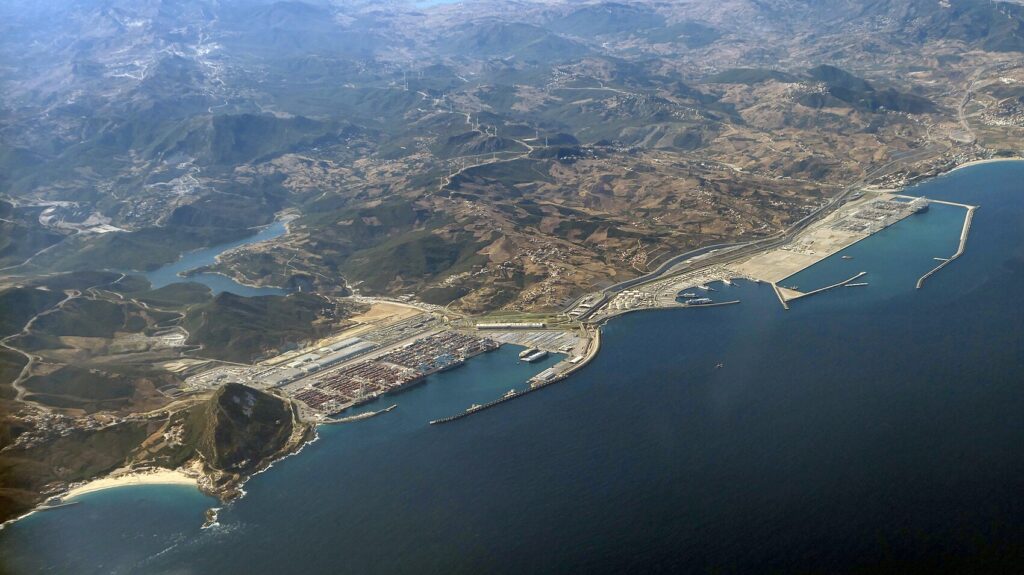
tanger med, the cargo port of tangier in morocco

Ukrainian drone strikes have forced Russia to import gasoline—shipping cargoes from as far as Morocco to an Arctic port—and to pay for the damage twice over. Moscow now subsidizes both the refineries the drones keep setting on fire and the foreign fuel replacing what those refineries can no longer produce.

Ukraine’s drones have forced Moscow to subsidize both the refineries they keep setting on fire and the foreign gasoline.

Russia caps fuel prices at home below what refiners could earn abroad, and the budget pays them the difference—so they keep supplying the domestic market rather than exporting everything. The payments, together with related reimbursements, reached 1.221 trillion rubles ($15 billion) from April through July, Finance Ministry data show—close to the full annual budget of Moscow Oblast, the region ringing the capital.

Those monthly payments have roughly halved since spring, to about 190 billion rubles ($2.4 billion) in July, as lower oil prices narrowed the gap the subsidy fills.

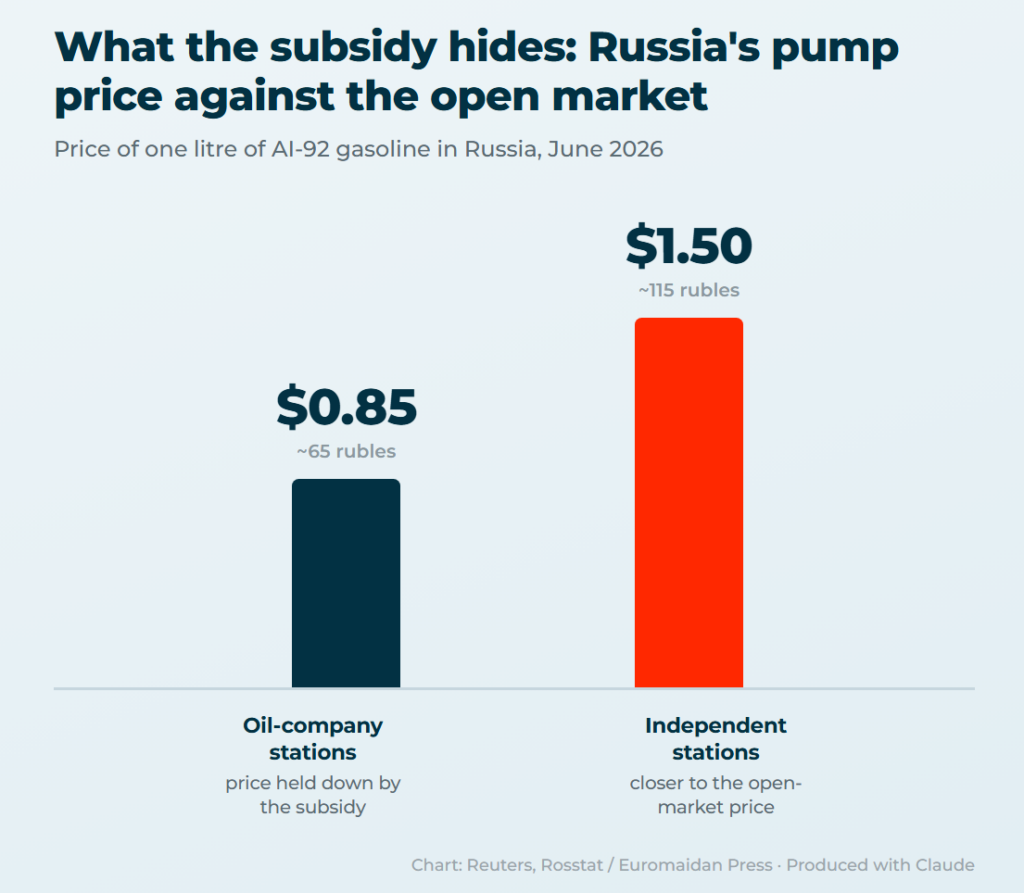
gas price comparison in russia summer 2026
In June 2026, oil-company stations sold a liter of AI-92 gasoline for about 65 rubles ($0.85); independent stations charged upward of 115 rubles ($1.50). The gap is what the subsidy hides. Chart: Reuters, Rosstat / Euromaidan Press

Russia cannot keep its refineries running

Russian crude processing fell to 3.6 million barrels a day in July, its lowest since 2002 and roughly a third below the seasonal norm. Ukraine has hit at least 24 of Russia’s 34 largest refineries in some 50 strikes.

Fuel shortages and rationing now affect 50 million people—about a third of Russia’s population—according to a Financial Times analysis. Russia runs the world’s third-largest oil-refining industry, so the lost output has tightened diesel and gasoline supply beyond its borders. With less capacity to refine at home, Russia has had to export more raw crude and less high-value fuel.

With its refineries down, Moscow is now paying a second subsidy—this time to the importers bringing gasoline in. Gasoline is arriving by rail from Belarus and Kazakhstan and by sea from India and, in mid-July, Morocco: a cargo loaded at the port of Tangier and discharged at Murmansk, on the Arctic coast.

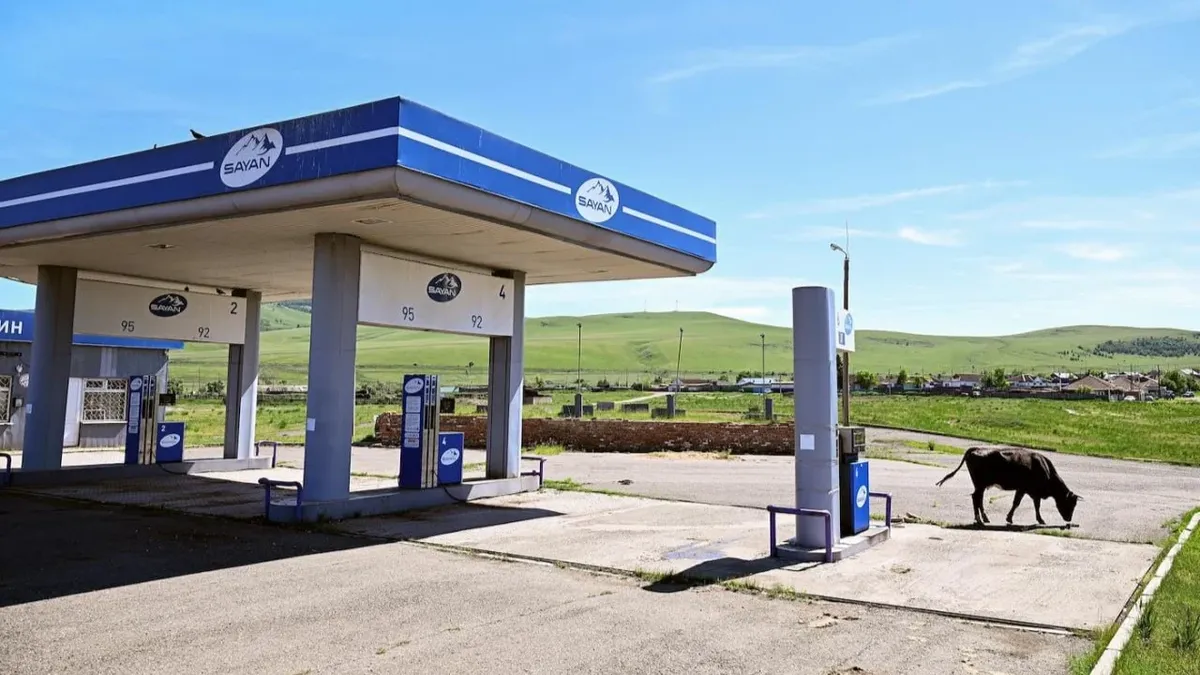
a cow grazes by an idle sayanneft gas station in russia amid nationwide fuel crisis
Explore further

Why Russia is importing gasoline made from its own oil

Ukraine has already named the import route as a target. In early July, presidential sanctions commissioner Vladyslav Vlasiuk called Russia’s new reliance on imported fuel a fresh vulnerability and said Kyiv had raised a response with the European Commission—though the EU’s next sanctions package, now in preparation, is so far built mainly around other measures.

A country that ships crude out of the Arctic is now shipping gasoline in through it.

  • ✇Euromaidan Press
  • Seventh time this year: Ukrainian drones torch a top-five Russian refinery in Yaroslavl
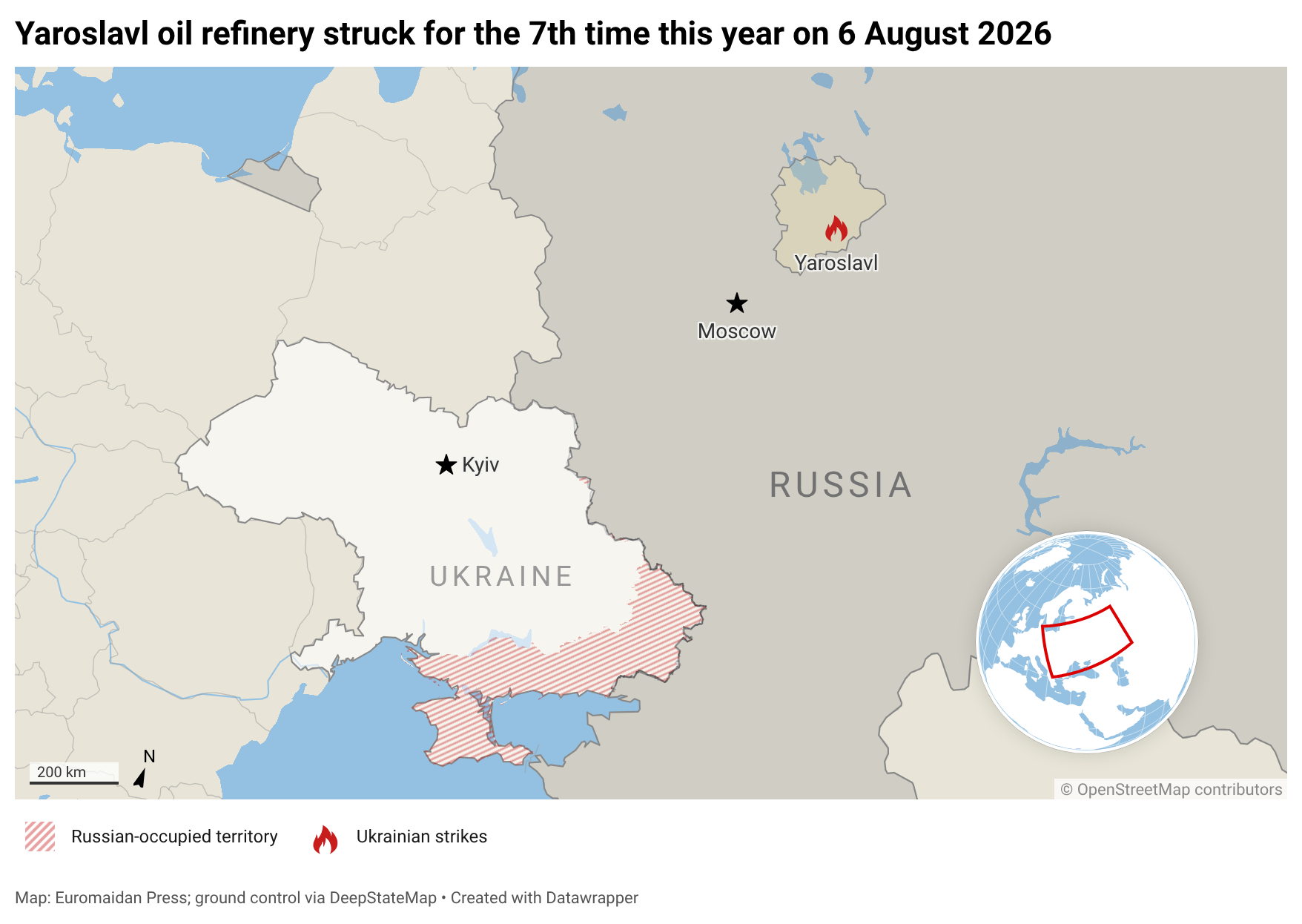
    Ukrainian drones struck one of Russia's five largest oil refineries in Yaroslavl on the morning of 6 August, setting off several fires across the site, monitoring channels reported. Open-source analysts placed the blazes on the refinery grounds, while the region's governor claimed his air defenses downed the entire raid. The strike continued a months-long campaign that has pushed Russian oil refining to its lowest level in more than two decades. Ukraine has turned long-
     

Seventh time this year: Ukrainian drones torch a top-five Russian refinery in Yaroslavl

6 août 2026 à 03:43

seventh time year ukrainian drones torch top-five russian refinery yaroslavl · post black smoke billows over slavneft-yanos oil after drone strike russia 6 2026 least 4 fires telegram ukraine context

Ukrainian drones struck one of Russia's five largest oil refineries in Yaroslavl on the morning of 6 August, setting off several fires across the site, monitoring channels reported. Open-source analysts placed the blazes on the refinery grounds, while the region's governor claimed his air defenses downed the entire raid. The strike continued a months-long campaign that has pushed Russian oil refining to its lowest level in more than two decades.

Ukraine has turned long-range drones into an economic weapon in 2026, hitting the refineries and export terminals that bankroll Russia's war. The damage has reached ordinary Russians, with fuel shortages spreading from city pumps to farms and buses. A parallel campaign that started last month targets warehouses of Russia's largest online retailer.

Fires break out across the refinery

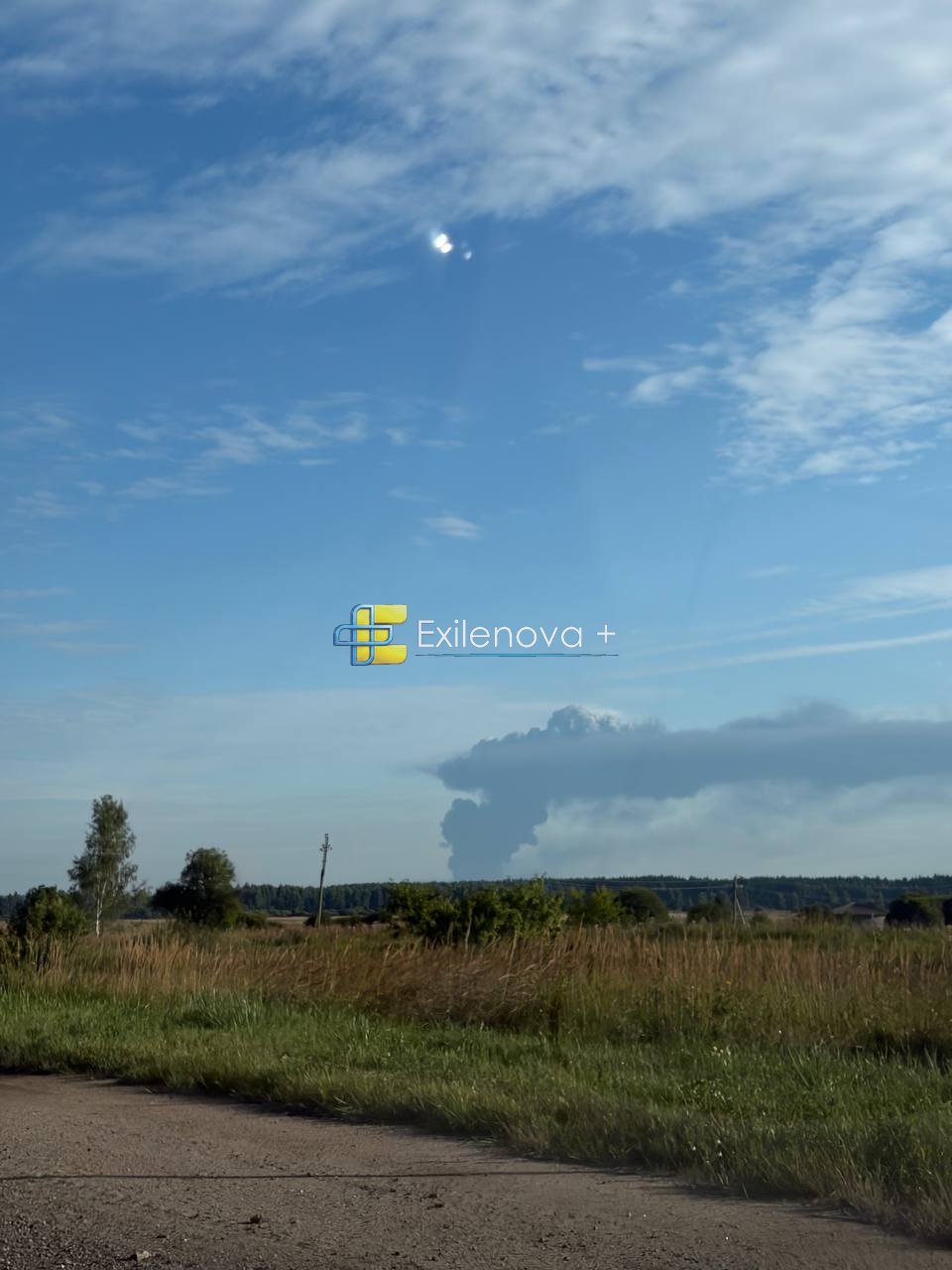
Ukrainian monitoring Telegram channel Exilenova+ first reported the attack around 4:00, later sharing footage that showed thick black smoke rising from several points on the site. Fire Point, the Ukrainian company that builds the FP-1 long-range drone, said Ukraine's Defense Forces hit the plant with the domestically made FP-1s. Open-source analysts geolocated one blaze to the refinery grounds. Astra, a Russian news Telegram channel, reported one fire on the plant's territory and a second it had not yet located.

Ukraine struck another Wildberries warehouse this morning, the 15th such facility hit in just 18 days

Thirteen of those fifteen warehouses have burned so far, a pace that turns Russia's largest online retailer into a recurring target list
📷 Exilenova+ pic.twitter.com/cGOvsmkR6L

— Euromaidan Press (@EuromaidanPress) August 4, 2026

One of Russia's biggest refineries

Slavneft-YANOS, also called the Novo-Yaroslavl refinery, ranks among Russia's five largest and is the biggest in the country's central regions. It processes about 15 million tonnes of crude a year into gasoline, diesel, aviation kerosene, jet fuel, lubricants, and bitumen. Rosneft and Gazprom jointly control 99.7% of its parent company, Slavneft. The plant's fuel feeds central Russian industry, airports, the Northern Railway, and military sites. It sits more than 700 kilometers from Ukraine's border.

Russia claims it downed every drone in the region

Yaroslavl Governor Mikhail Yevraev first reported the region was under drone attack around 3:00 and closed the highway toward Moscow. He later claimed the region had repelled its most massive drone raid, downing all 88 drones with no casualties. Yevraev stated that a detached house burned, windows were shattered in several apartment blocks, and residents' cars were damaged. 

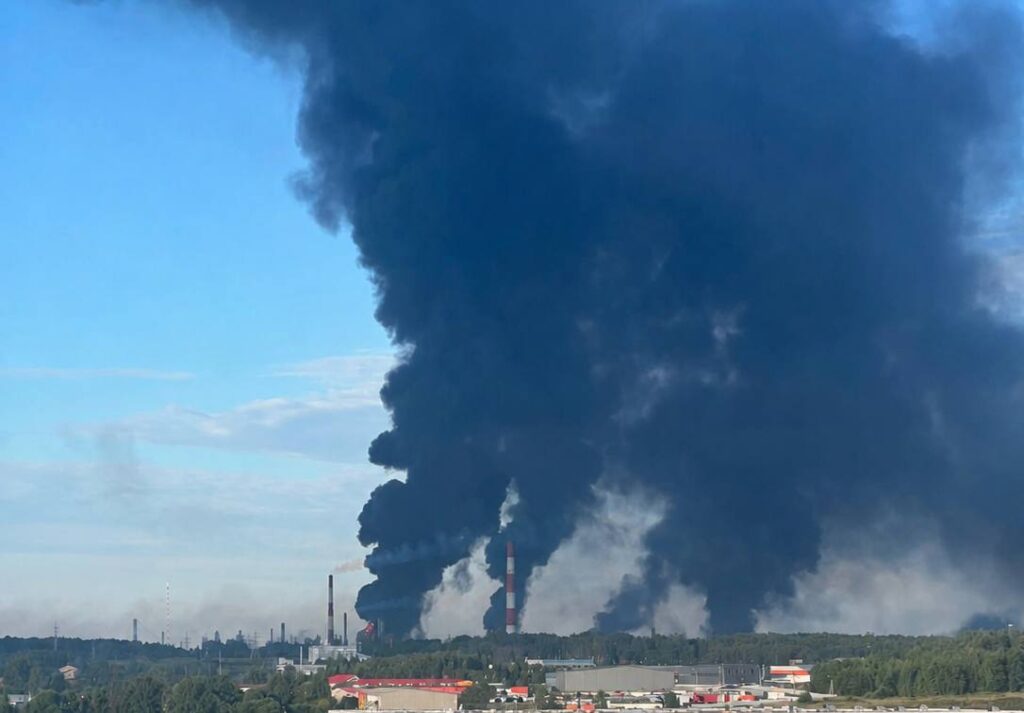
seventh time year ukrainian drones torch top-five russian refinery yaroslavl · post column smoke burning slavneft-yanos seen outside russia 6 2026 exilenova 5161475930520751580 ukraine news reports
A column of smoke from the burning Slavneft-YANOS refinery seen from outside Yaroslavl, Russia, 6 August 2026. Photo: Exilenova+

Russia's Defense Ministry claimed it destroyed 605 drones over several regions overnight.

The plant has burned repeatedly in 2026, catching fire on 28 March, 26 April, 8 and 22 May, and 6 and 16 July before the latest hit. That made 6 August the seventh strike on the refinery this year. In the 16 July attack, an FP-1 struck the plant's tank farm.

Russia's refining in retreat

Ukraine has sharply expanded its FP-1 deep strikes on refineries this year, knocking out around 26 plants. By late July, only eight had fully restarted and at least 11 partly. Seven refineries stayed idle. Russian refining fell to 3.6 million barrels a day, its lowest since May 2002. 

Earlier, Moscow banned fuel exports, boosted gasoline imports from Belarus 25-fold, and turned to India and Morocco. It also let refiners sell Euro-2 gasoline, a grade banned in Russia since 2013, through 1 July 2027.

❌