
❌

Vue normale

Ukraine’s Zelenskyy welcomes Student List’s win in Serbia and says Kyiv is “ready to keep increasing cooperation”

26 octobre 2026 à 15:01

Ukrainian President Volodymyr Zelenskyy, 20 October 2026. Photo: Zelenskyy / Telegram

For 14 years, Serbia’s government kept the country close to Moscow. Now, the opposition “Student List” has won the country’s snap parliamentary election, and President Volodymyr Zelenskyy says Ukraine is ready to deepen its cooperation with Serbia, welcoming the result as “a new page” in a post on X.

The win could end the 14-year rule of President Aleksandar Vučić’s political force and weaken Moscow’s position in the Balkans. Serbia has remained an important Kremlin partner in Europe since Russia’s full-scale invasion of Ukraine, and Belgrade never joined the EU's sanctions against Moscow.

“A new page”

In his post, written in Ukrainian, Zelenskyy said that "changes have taken place in Serbia, the victory of the Student List, and this is clearly a new page in the history of the country and its people."

“We wish Serbia success, real development, and warm relations with the European community,” he wrote.

He said Ukraine was grateful to Serbia “for the respect shown to our people and our state, our independence,” and added: “We are ready to keep increasing our cooperation, and may all the good hopes of the people of Serbia come true.”

But the winners rule out sanctions on Russia

Vučić had earlier predicted that a new government could impose restrictions on Moscow by March or April, according to Novosti. The Student List says otherwise: it has no plans to align with the EU or to sanction Russia over the war in Ukraine, according to Reuters.

Its candidates frame Serbia’s reliance on Russian gas, with Gazprom as the largest supplier at around 2.2 billion cubic meters a year at below-market prices, as an acute economic dependency rather than a geopolitical alignment.

The movement’s top candidates have also said a future government would end all arms exports to war zones, including sales to Western intermediaries who pass weapons to Ukraine. Around €800 million worth of Serbian ammunition has reached Ukraine through that route since 2022.
Russia quietly grows fleet that funds its war: one shell firm in Marshall Islands buys two gas tankers from Chinese and Greek owners

10 octobre 2026 à 11:11

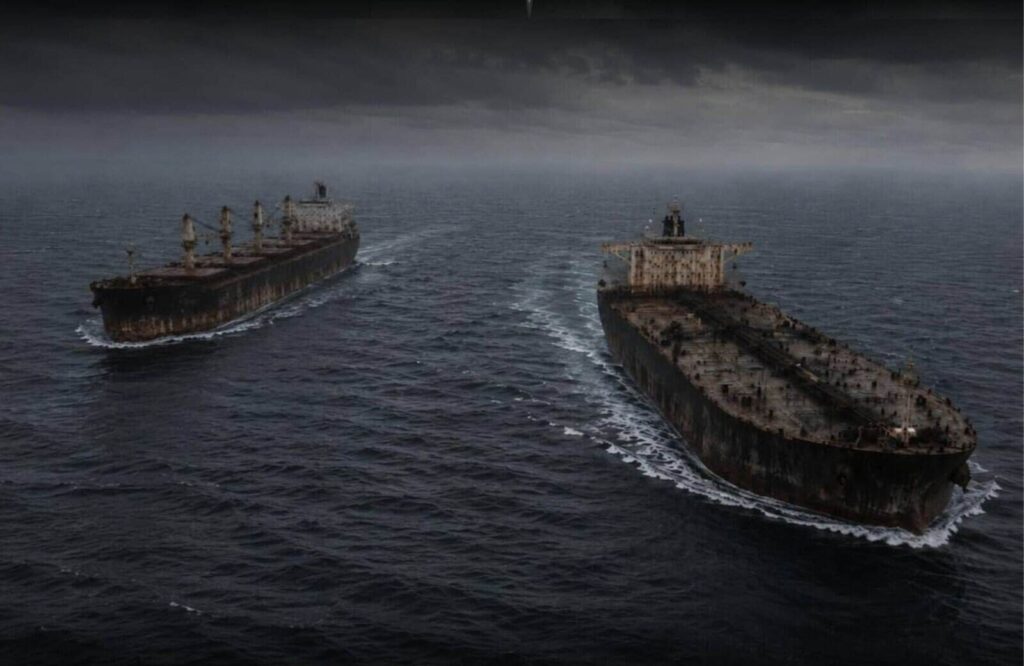
Two weathered cargo ships sail across a dark sea beneath heavy storm clouds.

Ukraine has published data on 20 vessels that carry Russian oil and liquefied natural gas or refuel the sanctioned fleet, parts of the logistics network the Kremlin uses to fund its war, Ukraine's Defense Intelligence reports. All 20 are under British or Ukrainian sanctions, and only one faces US restrictions.

Russia’s shadow fleet runs on roughly 500 aging ships of uncertain ownership that dodge sanctions and keep oil money flowing. That seaborne oil trade is worth more than 80 billion euros a year.

The headline vessel is the Russian ship Portovyy, an LNG carrier and floating gas store owned by the sanctioned Gazprom since 2021, according to the agency. On 15 August 2026, it left the Gulf of Finland with Russian LNG for the first time since November 2021, sailing the Northern Sea Route to the Chinese port of Beihai to unload.

Portovyy is now at the Zhoushan Huafeng Shipyard in China, which has been set as the site for its maintenance, intelligence says, an example of the foreign yards Kyiv wants closed to the sanctioned fleet.

Russia buys up gas carriers through shells

Two more gas carriers show how Moscow expanded the fleet in spring 2026 through front companies, intelligence said. The Avacha, once owned by China’s Jovo Energy, was bought by the little-known Tudor Maritime of the Marshall Islands, took the Russian flag in June, and now ships gas from the Arctic LNG 2 project to Beihai.

The Chaivo, formerly owned by Greece’s Maran Gas Maritime, was also bought by Tudor Maritime and moved under the Russian flag in July. Now it carries cargo to Beihai from a floating gas storage facility off Kamchatka, intelligence says.

A call to close the loopholes

Intelligence urged partners to act together: tighten control over sales of commercially owned ships, block servicing of the sanctioned fleet at foreign yards, and cut off the energy revenue that Russia turns into weapons against civilians.

Russia is building ice-class ships at home and, at the same time, widening its shadow fleet through offshore networks. The UK Foreign Office made the same point on 1 October, saying Moscow is assembling a new shadow fleet to keep its gas revenues flowing.

Drone attack forces Yandex to shut down its data center on the grounds of a sanctioned Russian machine-tool plant

8 octobre 2026 à 08:28

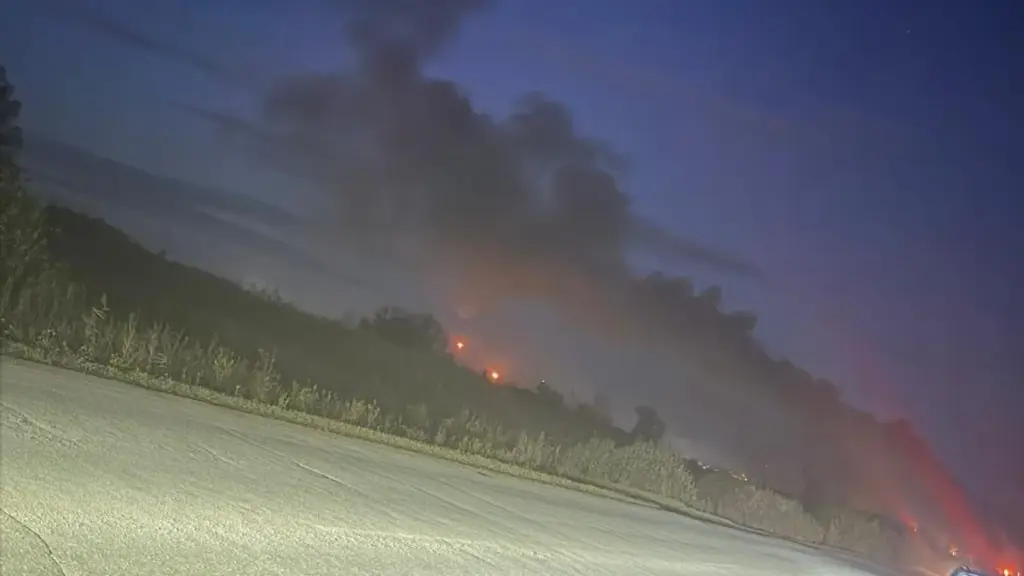
Smoke over Salavat following an attack on the night of October 8.

A drone attack overnight on 8 October caused a fire that hit part of Yandex's data center in Sasovo, Ryazan Oblast, about 580 km from Ukraine, and the site is fully stopped, the Russian tech company told Russian media. The data center sits on the grounds of Sasta, a sanctioned machine-tool plant, Russian outlet Astra said, citing Wikimapia data. Astra's OSINT analyst found from eyewitness footage that the fire hit the plant.

Since late September, Russia has been striking data centers in Kyiv that keep Ukraine's internet and online services running. Now a drone attack has stopped one of the data centers that Russia's largest tech company relies on.

Fires reported at a refinery in Salavat and a machine-tool plant in Sasovo after overnight attacks on 8 October 2026.
Fires reported at a refinery in Salavat and a machine-tool plant in Sasovo after overnight attacks on 8 October 2026. Map: Euromaidan Press

Yandex counts the damage

Yandex warned that some services may be unavailable, while its core services kept running and no one was hurt. Ryazan Oblast Governor Pavel Malkov claimed two drones were downed, a roof caught fire at an enterprise in the Sasovo district, and windows were blown out in several homes.

The power failure took down a wide range of Yandex Cloud infrastructure, including computing capacity, networks, data storage, databases, Kubernetes, cloud services, AI, and security and monitoring systems, Ukrainian outlet ZN.ua reported, citing Exilenova+.

Ukrainian monitoring channel Exilenova+ reported that the plant was hit, without naming an attacker. The channel said Sasta, which claims a place on Russia's register of defense-industry companies, makes computer-controlled machine tools, including five-axis machining centers, and previously supplied the Tactical Missiles Corporation (KTRV) and Roscosmos. The plant's value to the arms industry lies in machines that cut precision parts, not in finished weapons, the channel said.

Citing Exilenova+, Militarnyi reported that Ukraine's Defense Forces hit the plant. It also linked Sasta to Iskander missile supply chains. No source has said whether the plant or the data center was the target, and no Ukrainian official has claimed the Sasovo strike. Sasta has been under US sanctions since November 2023, UK sanctions since February 2024, and Ukrainian sanctions since April 2025, a sanctions database shows.

Salavat: Kyiv reports a hit

Ukrainian forces hit the Gazprom Neftekhim Salavat complex in Bashkortostan, about 1,380 km from the front line, causing a fire, Ukraine's General Staff said. It said the complex processes up to 10 million metric tons of hydrocarbons a year and serves Russia's armed forces. Its key unit, the ELOU-AVT-6 primary oil refining unit launched in 2012, can process 6 million metric tons a year, Militarnyi reported. Astra's analyst placed the fire a few kilometers outside Salavat, possibly near the refinery.

Salavat oil refinery moment of attack pic.twitter.com/bUxuRshSK1

— Exilenova+ (@Exilenova_plus) October 8, 2026

Salavat Mayor Marat Zagidullin claimed that debris from several drones fell in the industrial zone that morning and started a fire.

"The enterprise continues to work," he said.

Astra noted earlier hits on the complex on 24 September 2025, on 14 July 2026, when refining fully stopped, and on 13 August 2026.

Russia's strikes on Ukraine's data centers

Russia has repeatedly hit data centers in Kyiv since 23 September. Strikes hit the COSMONOVA data center twice, the second time knocking it out, and the Parkovyi data center stopped working completely on 1 October after a series of strikes. In early October, Russia destroyed the dline.ua data center in Kyiv.

❌