Vue normale

  • ✇Euromaidan Press
  • Second Russian MiG-29 in two days: Ukraine’s drones worked over Millerovo airbase
    Ukrainian drones worked over dozens of Russian military and industrial sites overnight on 24 August, reaching from occupied Ukraine and the Black Sea to southern Russia, the commander of Ukraine's Unmanned Systems Forces (SBS) reported. The night's targets included a fighter jet at a Russian airbase, air-defense radars, fuel and propellant facilities, and vessels of Russia's sanctions-evading shadow fleet. A fuller breakdown released later in the day named the site of e
     

Second Russian MiG-29 in two days: Ukraine’s drones worked over Millerovo airbase

24 août 2026 à 14:36

second russian mig-29 two days ukraine's drones worked over millerovo airbase · post fighter jet beside shelter rostov oblast russia ukrainian drone's sights 24 2026 telegram madyar ukraine news reports

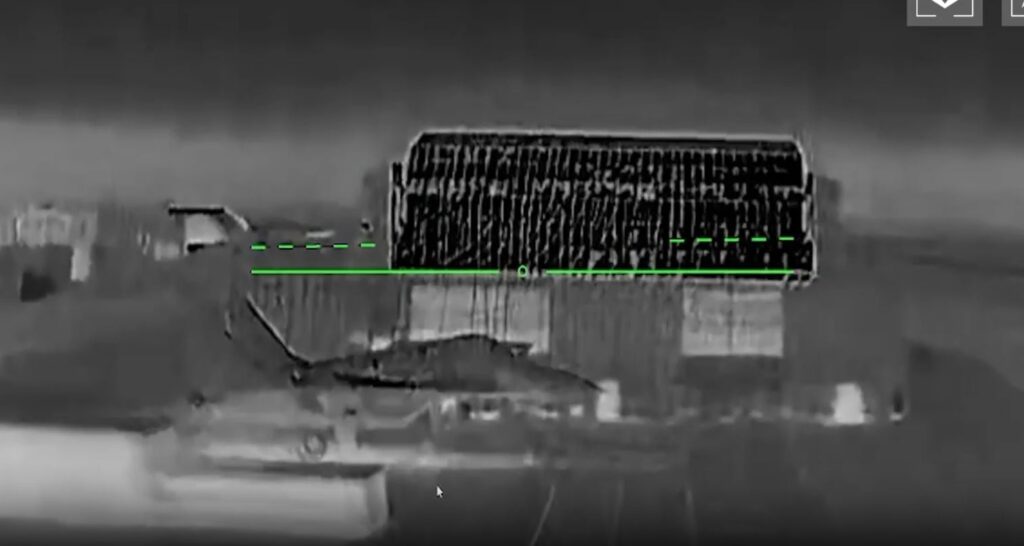
Ukrainian drones worked over dozens of Russian military and industrial sites overnight on 24 August, reaching from occupied Ukraine and the Black Sea to southern Russia, the commander of Ukraine's Unmanned Systems Forces (SBS) reportedThe night's targets included a fighter jet at a Russian airbase, air-defense radars, fuel and propellant facilities, and vessels of Russia's sanctions-evading shadow fleet. A fuller breakdown released later in the day named the site of each strike and the unit that carried it out. Footage released with the breakdown shows the strikes.

Ukraine has been running mid-range strikes across the belt from occupied Crimea to Rostov Oblast for months, taking out the radars, missile batteries, and the aircraft that fly air-defense patrols over it — a rolling effort to thin the cover that meets every deeper Ukrainian strike.

A fighter jet and a decoy at the same airbase

Robert Brovdi, callsign Madyar, said his crews hit 66 targets in the operational depth of the Russian rear. Among them was a MiG-29 at Dolotinka, on the grounds of the Millerovo airbase in Rostov Oblast. The 1st Separate Center of the SBS carried out that strike.
second russian mig-29 two days ukraine's drones worked over millerovo airbase · post ka-52 helicopter mockup rostov oblast russia ukrainian drone's sights 24 2026 heli ukraine news reports
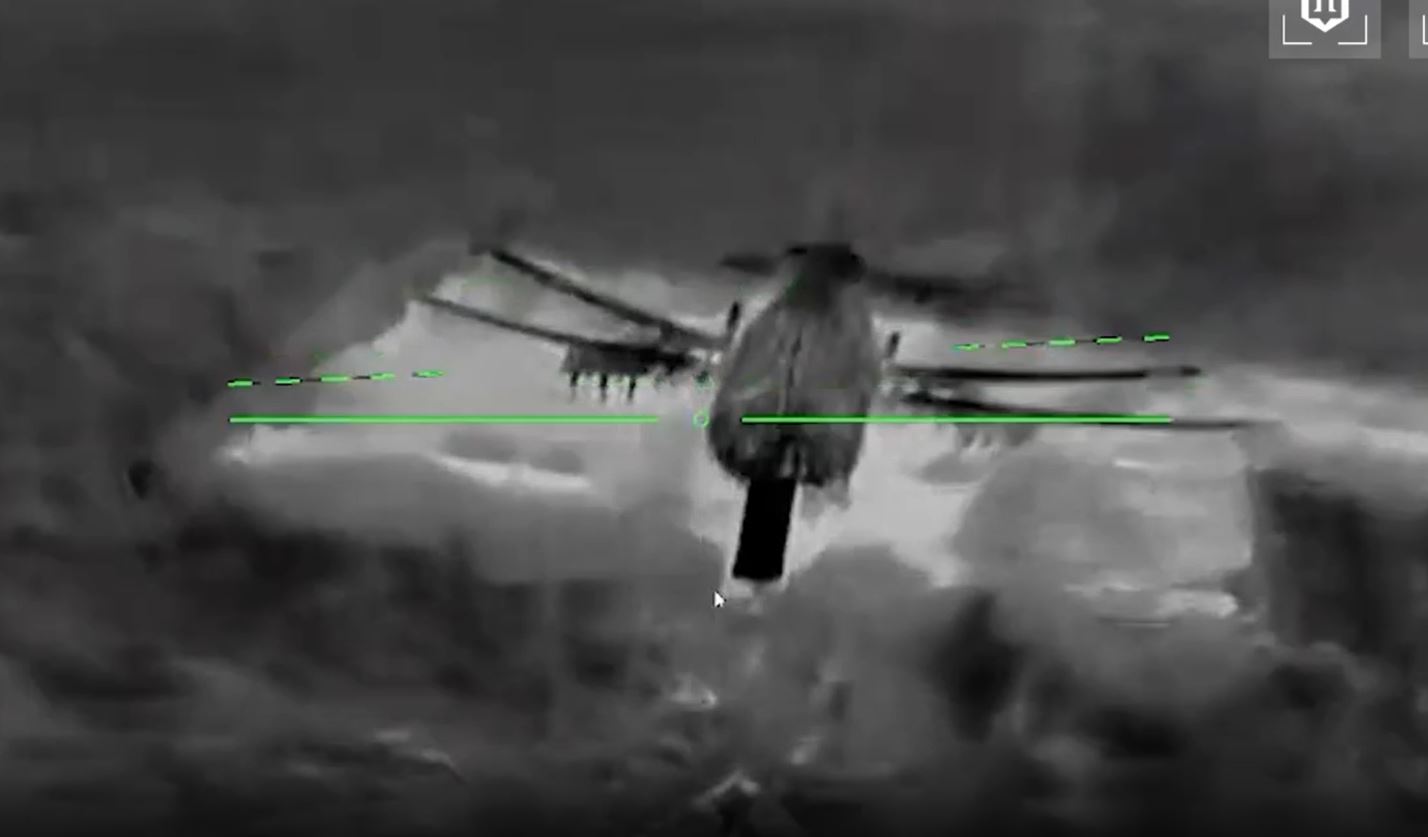
A Ka-52 helicopter mockup at Millerovo airbase in Rostov Oblast, Russia, in a Ukrainian drone's sights, 24 August 2026. Photo: Telegram/Robert Brovdi

The same unit hit a mockup of a Ka-52 Alligator attack helicopter at the same location. Russia uses such decoys to draw drones away from real aircraft.
two russian fighters one spy drone hit kranodar radars anti-air systems elsewhere—ukraine forces · post combat aircraft ukrainian drone's sights vityazevo airfield krasnodar krai russia 23 2026 su-33 video sbs
Explore further

Ukraine’s drones hit two Russian fighters and a spy drone—and blinded radars from occupied Crimea to Rostov

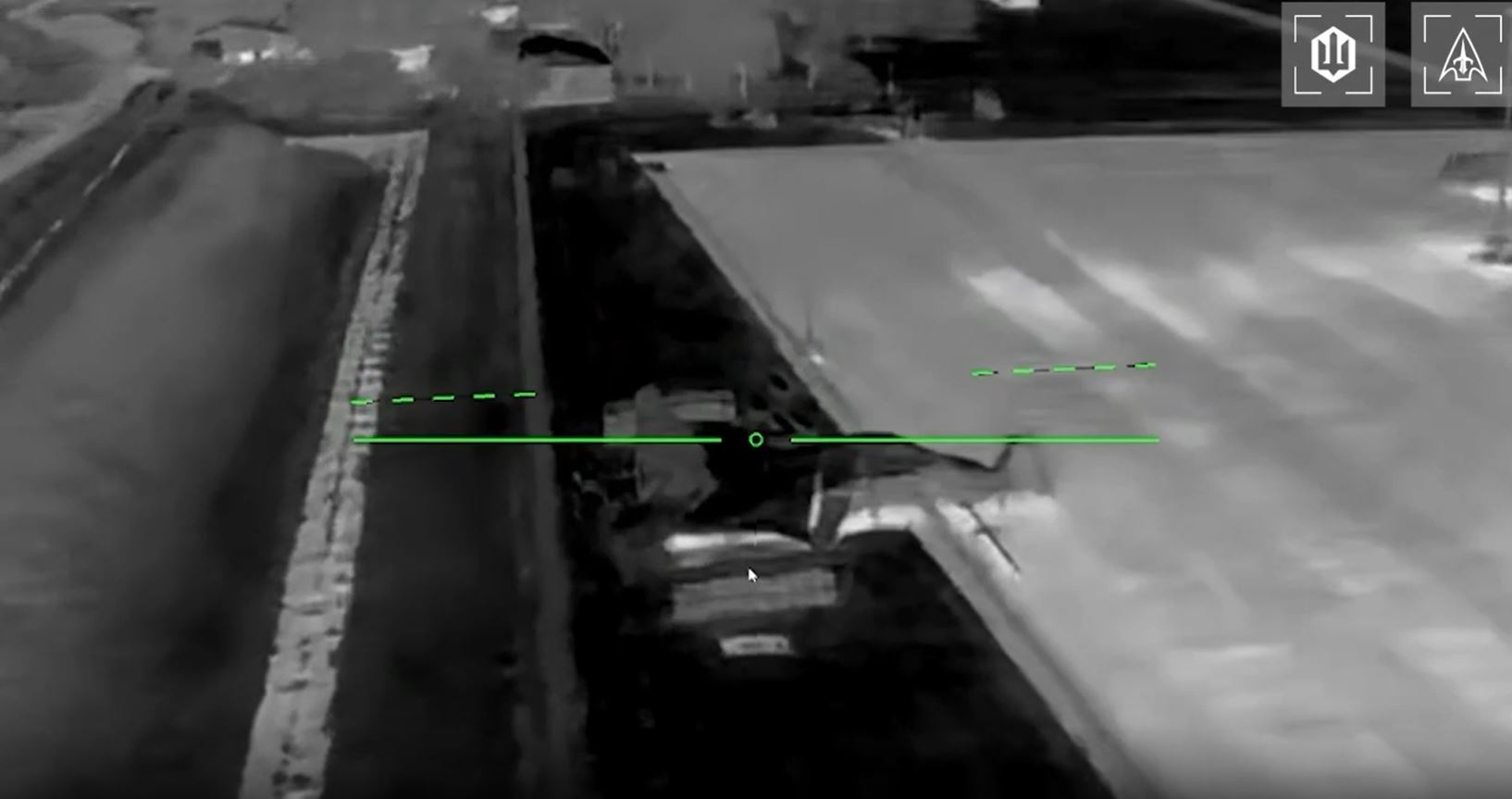
It was the third Russian fighter jet Ukrainian drones reached in two days. Crews struck another MiG-29, a jet SBS identified as a Su-33 and Militarnyi assessed as a Su-30SM, and an Orion strike-reconnaissance drone at Vityazevo in Krasnodar Krai on 23 August. Ukrainian drones have caught a MiG-29 on a Russian airfield before, at Kursk in July.

Four radars, from Rostov Oblast to occupied Crimea

Crews hit four radar systems overnight. Two Kasta-2E2 sets went down at Geraskin and Karaichev in Rostov Oblast, and a Nebo-SV at Gukovo in the same oblast. All three fell to the 1st Separate Center.

The fourth, an ST-68, stood at Rozdolne in occupied Crimea. The 9th Kairos battalion of the 414th Madyar's Birds brigade struck it.

The radar work is part of a campaign against Russian sensors and launchers that has run for months without a pause.

Rocket propellant, fuel, and two ships

The 1st Separate Center struck the Kamensky Combine at Kamensk-Shakhtinsky in Rostov Oblast, a plant producing solid rocket fuel, according to SBS. The 9th Kairos battalion hit a fuel tank at Yeysk in Krasnodar Krai. In occupied Luhansk Oblast, the 20th K-2 brigade struck a fuel depot belonging to the 106th material support brigade of Russia's 41st Army at Dovzhansk. 

Brovdi also said his crews hit and destroyed two shadow-fleet vessels, a tanker and a bulk carrier, in the Black Sea. No independent account of either loss has appeared.

A drone school, relays, and a base in occupied Kherson Oblast

In occupied Kherson Oblast, Ukrainian crews destroyed the quarters of a Russian National Guard rapid-response unit and hit two relay stations for Geran attack drones, according to the SBS breakdown.

second russian mig-29 two days ukraine's drones worked over millerovo airbase · post explosions base national guard rapid-response unit strilkove occupied kherson oblast 24 2026 - seen ukraine news ukrainian
Explosions at the base of a Russian National Guard rapid-response unit in Strilkove, occupied Kherson Oblast, 24 August 2026. Photo: Telegram/Robert Brovdi

They also struck a shelter for a Zala reconnaissance drone crew in occupied Crimea, a drone school in occupied Zaporizhzhia Oblast, and a drone laboratory in occupied Donetsk Oblast.

Brovdi also reported 11 Russian rear deployment points burning across occupied Zaporizhzhia, Donetsk, and Luhansk oblasts, along with strikes on energy nodes in occupied territory.

  • ✇Euromaidan Press
  • Ukraine: 18 of 26 Russian oil and stolen-grain ships face no sanctions
    On 14 August, Ukraine's Military Intelligence (HUR) published data on 26 vessels via its War&Sanctions portal, noting that 18 ships face no sanctions from any of Ukraine's partner countries. The agency said the ships carry Russian oil, liquefied natural gas (LNG), or agricultural products from occupied Ukraine. Euromaidan Press could not independently verify HUR’s vessel records. Russia relies on maritime trade both to fund its war through energy exports and to s
     

Ukraine: 18 of 26 Russian oil and stolen-grain ships face no sanctions

14 août 2026 à 12:40

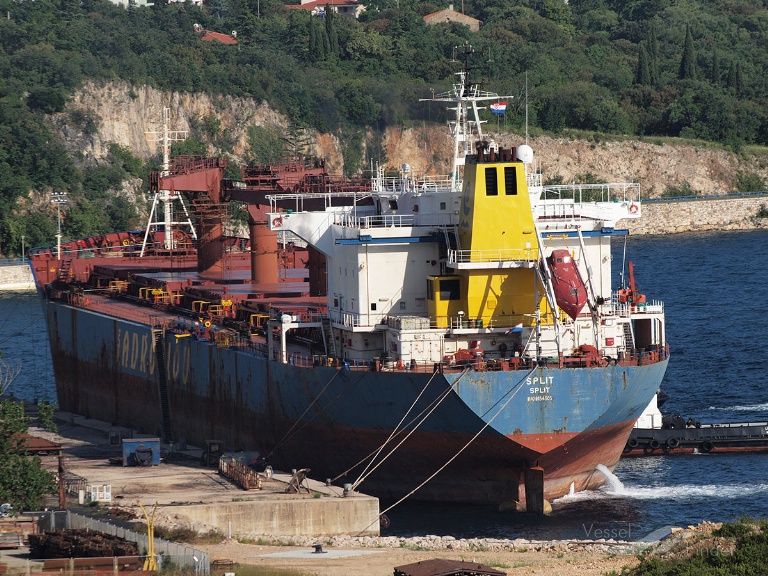
The bulk carrier now named LAMAR S, with SPLIT painted on its stern, moored beside a concrete quay near a wooded coastline.

On 14 August, Ukraine's Military Intelligence (HUR) published data on 26 vessels via its War&Sanctions portal, noting that 18 ships face no sanctions from any of Ukraine's partner countries.

The agency said the ships carry Russian oil, liquefied natural gas (LNG), or agricultural products from occupied Ukraine. Euromaidan Press could not independently verify HUR’s vessel records.

Russia relies on maritime trade both to fund its war through energy exports and to sell crops taken from occupied Ukraine. Kyiv began building a dedicated system against Russia’s shadow grain fleet in April, modeled on its oil-fleet campaign. A US bill introduced this week would also target vessels, owners, insurers, and ports involved in sanctions evasion. HUR’s new list shows how many ships remain outside those restrictions.

Russia’s grain shadow fleet

HUR divided the 26 vessels into three groups:

  • oil tankers serving Lukoil, Rosneft, Surgutneftegas, Novatek, Tatneft, and Gazprom;
  • dry-cargo ships using the occupied ports of Berdiansk, Sevastopol, Kerch, and Feodosia;
  • LNG carriers moving gas from the sanctioned SAAM FSU floating storage unit, which holds LNG from the sanctioned Arctic LNG 2 project.

HUR highlighted three of the 18 vessels that are not facing partner sanctions. The bulk carrier LAMAR S repeatedly loaded wheat at the Avlita terminal in occupied Sevastopol in 2026 for delivery abroad, including to Syria, the agency said.

NAYA FALCON carried baking soda and granulated wheat bran from occupied Sevastopol to Egypt and Cyprus, HUR said. The agency linked the oil tanker GREGAL to UAE-based Cymare Navigation FZC, which it described as affiliated with Sovcomflot, Russia’s state-controlled shipping company.

Russia steals grain while striking Ukraine’s exports

Crops taken from occupied land are sold abroad as Russian produce, while Russia's attacks leave Ukraine’s legitimate harvest with fewer routes to market.

Ukraine’s Foreign Intelligence Service said Russia sold more than 2 million tons of grain from occupied Ukraine as Russian produce in 2025. The agency said ship-to-ship transfers at Kavkaz helped conceal its origin.

Meanwhile, Russian attacks have squeezed Ukraine’s legitimate grain trade. Strikes on civilian ships brought the Black Sea corridor to a near standstill during the July harvest peak. Ten people died when Russian missiles hit the grain-laden Golden Leo on 19 July.

HUR called on Ukraine and its partners to synchronize sanctions and detain vessels that violate restrictions. It said the measures could curb Russia’s maritime logistics and war funding.

A 141-meter ship mysteriously “disappeared” in the Black Sea near Novorossiysk, while Russian authorities are keeping the incident under wraps

12 août 2026 à 10:34

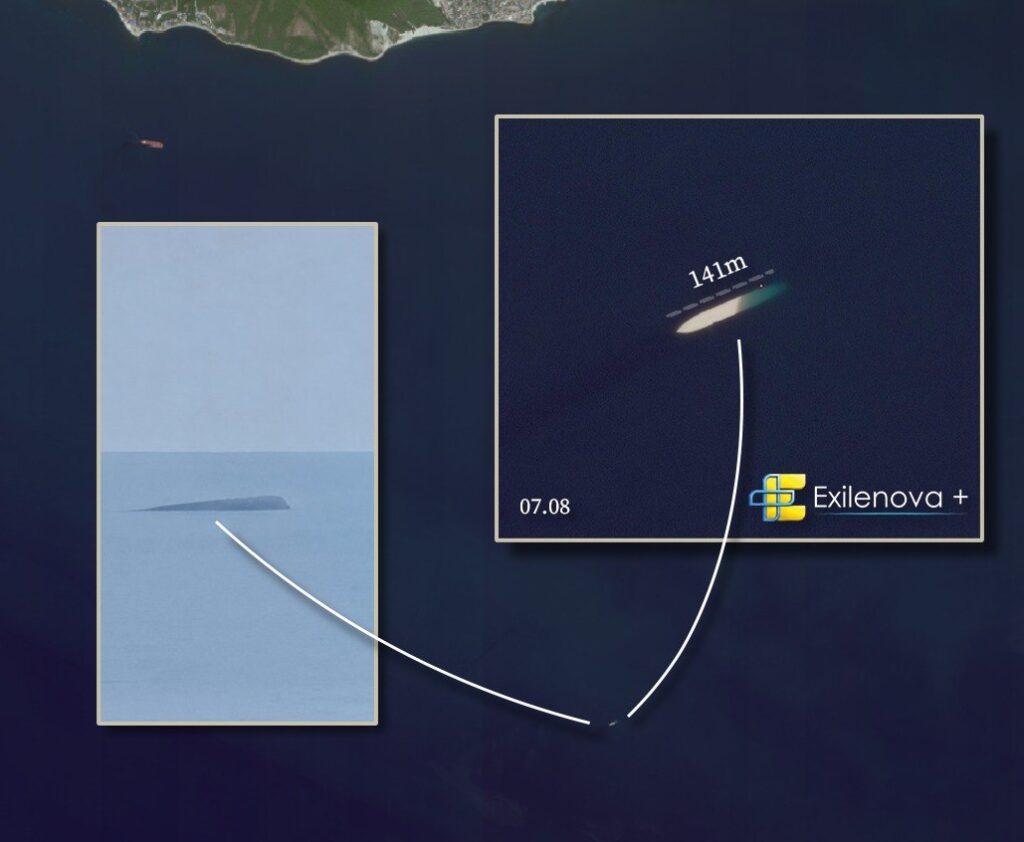
Sunken vessel near Novorossiysk. August 2026. Source: Exilenova+

Overnight on 7 August, a vessel was possibly sunk in the Black Sea near Novorossiysk, the Ukrainian monitoring channel Exilenova+ reports. The project, which spotted the ship in satellite imagery, suggests it may have been carrying military cargo.

Russia has a practice of concealing its fleet losses. Moscow tries to mask the scale of the problem in various ways: it classifies sinkings as accidents, downplays the number of casualties, or stays completely silent about vessel losses. Russia acknowledges fleet losses only when it happens accidentally or when concealing the sinking or damage is no longer possible. The 141-meter vessel, which had no foreign owner to demand explanations, has received none.

Russian officials have not commented on the sinking, Exilenova+ says.

"The news passed quite modestly, but there is a nuance. Russia's 'official' authorities have not reported about any sunken vessel. It just sank. It is not ruled out that the ship was carrying military cargo for Russia's armed forces. Otherwise, why pretend nothing happened?" Exilenova+ wrote.

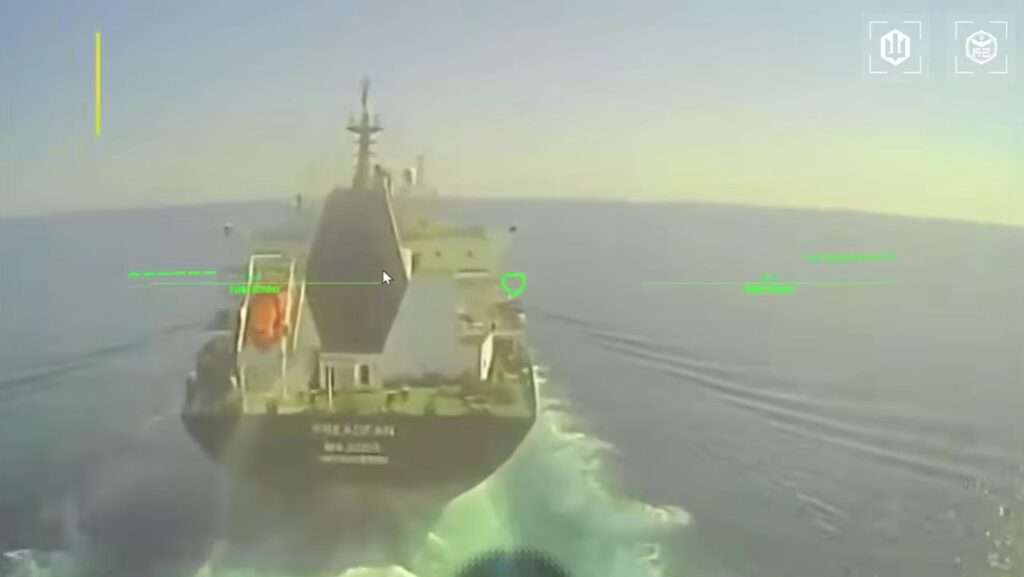
Russian shadow fleet vessel struck by a drone operated by the Unmanned Systems Forces of the Armed Forces of Ukraine. Photo: Screenshot from a video by Robert “Madyar” Brovdi

The vessel was approximately 141 meters long, suggesting a displacement of roughly 10,000 tonnes, according to the Ukrainian outlet Militarnyi.

The strikes that may have caused the sinking

Over 48 hours on 6-7 August, the Unmanned Systems Forces (SBS) struck 102 enemy targets, SBS Commander Robert “Madyar” Brovdi reported. In the same post, he noted that the targets included six shadow fleet vessels in the Black and Azov Seas: two tankers and four dry cargo ships. The SBS also reported striking three units of Russia's fleet on 7 August alone.

"It is entirely possible that the vessel that sank near Novorossiysk is among those struck in those days”, Militarnyi suggests.

Novorossiysk under fire again on 12 August

Just hours after the news of the earlier reported sinking surfaced publicly, Novorossiysk came under attack. Overnight on 12 August, Ukraine's defense forces conducted what President Zelenskyy called a "unique operation" against the naval base, using Palianytsia jet drones, Neptune missiles, and unmanned naval systems.

Novorossiysk became Russia's primary Black Sea naval hub after Ukrainian strikes forced the fleet out of Sevastopol.

  • ✇The Kyiv Independent
  • After airport chaos, tanker blast, Putin fires Russian transport minister
    Russian President Vladimir Putin dismissed Transport Minister Roman Starovoit on July 7, following a series of high-profile disruptions to Russia's aviation and shipping sectors.The official decree was published on Russia's legal information portal. No reason was given, but Starovoit's departure comes after nearly 300 flights were grounded at major Russian airports on July 5–6 due to security threats from Ukrainian drone attacks.Adding to the turmoil, an explosion aboard the Eco Wizard tanker at
     

After airport chaos, tanker blast, Putin fires Russian transport minister

7 juillet 2025 à 03:45
After airport chaos, tanker blast, Putin fires Russian transport minister

Russian President Vladimir Putin dismissed Transport Minister Roman Starovoit on July 7, following a series of high-profile disruptions to Russia's aviation and shipping sectors.

The official decree was published on Russia's legal information portal. No reason was given, but Starovoit's departure comes after nearly 300 flights were grounded at major Russian airports on July 5–6 due to security threats from Ukrainian drone attacks.

Adding to the turmoil, an explosion aboard the Eco Wizard tanker at the Ust-Luga port in Leningrad Oblast caused an ammonia leak on July 6, prompting an emergency response.

Starovoit, sanctioned by Ukraine and Western countries for his role in the war against Ukraine, had served as governor of Russia's Kursk Oblast before being appointed transport minister in May 2024.

According to the Russian state-controlled newspaper Vedomosti, Deputy Transport Minister Andrei Nikitin, a former Novgorod Oblast governor, is a leading candidate to replace Starovoit.

On July 6, the Russian Federal Aviation Agency confirmed that 287 flights were delayed or canceled at Moscow's Sheremetyevo Airport, St. Petersburg's Pulkovo Airport, and Nizhny Novgorod's Strigino Airport due to safety concerns from drone activity.

Kyiv's drone campaign, which has increasingly disrupted civilian air travel in Russia, is part of Ukraine's broader strategy to undermine Russia's logistics far beyond the front line.

Russian authorities said the ammonia leak at Ust-Luga was "minor," but the pro-Kremlin Telegram channel, Baza, reported that an unexplained explosion preceded the incident.

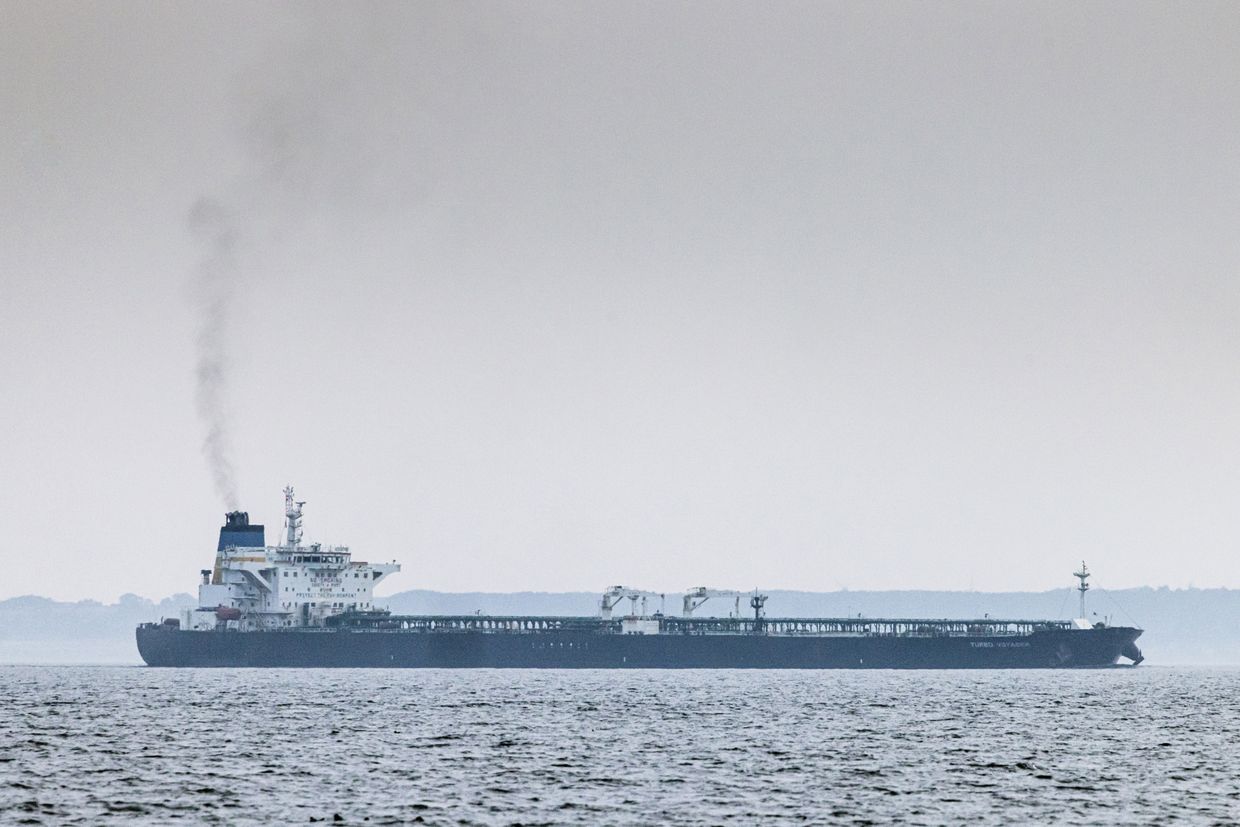
The Eco Wizard tanker is believed to be part of Russia's "shadow fleet" — a network of vessels used to bypass international sanctions on Russian oil and chemical exports. Five tankers have been damaged by explosions at Russian ports since the start of 2025.

The Kremlin has not made a formal statement on the minister's dismissal.

Death of top Russian oil executive fuels fresh scrutiny of elite’s ‘window falls’
The unexplained death of a top Russian oil executive on July 4 is fueling renewed scrutiny over the rising number of high-profile Russian officials and businessmen who have died under mysterious circumstances, specifically, have fallen out of windows. Andrei Badalov, vice president of Transneft, Russia’s largest state-controlled pipeline transport company,
After airport chaos, tanker blast, Putin fires Russian transport ministerThe Kyiv IndependentTim Zadorozhnyy
After airport chaos, tanker blast, Putin fires Russian transport minister
  • ✇The Kyiv Independent
  • Explosion damages tanker in Russian port, marking 6th mysterious blast this year
    An explosion aboard the Eco Wizard tanker in Russia's Ust-Luga port caused an ammonia leak and is under investigation, the Russian Transportation Ministry announced on July 6. Explosions have damaged five tankers at Russian ports since the beginning of the year. The Russian Transportation Ministry alleged that "a minor leak of liquid ammonia" occurred at the Ust-Luga seaport in Leningrad Oblast due to "an incident" while unloading and loading the Eco Wizard tanker. According to the Russian Teleg
     

Explosion damages tanker in Russian port, marking 6th mysterious blast this year

6 juillet 2025 à 13:12
Explosion damages tanker in Russian port, marking 6th mysterious blast this year

An explosion aboard the Eco Wizard tanker in Russia's Ust-Luga port caused an ammonia leak and is under investigation, the Russian Transportation Ministry announced on July 6.

Explosions have damaged five tankers at Russian ports since the beginning of the year.

The Russian Transportation Ministry alleged that "a minor leak of liquid ammonia" occurred at the Ust-Luga seaport in Leningrad Oblast due to "an incident" while unloading and loading the Eco Wizard tanker.

According to the Russian Telegram news channel Baza, "an explosion of an unknown nature" preceded the leak.

The ship's 23-person crew was evacuated and port emergency services are working on site to eliminate the consequences. Loading operations were stopped and emergency rescue services put on high alert. Russian Transportation Minister Roman Starovoit held a meeting on the incident and a diving inspection of the vessel is planned.

No casualties have been reported.

The Eco Wizard tanker arrived in Ust-Luga from Antwerp, Belgium on July 3, according to ship-tracking data from VesselFinder. The vessel was built in 2024 to transport liquefied petroleum gas (LPG) and flies the flag of the Marshall Islands.

The vessel is suspected to belong to Russia's "shadow fleet," a group of tankers Moscow uses to circumvent sanctions.

A week prior to the Eco Wizard explosion, a blast occurred on the shadow fleet tanker Vilamoura shortly after it visited Russian ports. The ship was carrying 1 million barrels of oil at the time of the explosion.

The Eco Wizard is the sixth tanker linked to Russia to have suffered an explosion since the start of this year.

Ukraine war latest: Drones attack Russia’s Black Sea Fleet; Russian pipelines explode in country’s Far East, HUR says
Key developments on July 5-6: * Drones reportedly attack Russia’s Black Sea fleet * Pipelines supplying Russian military explode in Russia’s Far East, HUR source says * Ukrainian drone strike on Russian airfield hits bomb depot, aircraft * Ukraine hits Russian electronic warfare facility making Shahed, Iskander components, General Staff says * Ukraine’s army chief warns of new Russian offensives in northeast as he visits Kharkiv Oblast front Drones attacked Russia’s Black Sea Fleet at the
Explosion damages tanker in Russian port, marking 6th mysterious blast this yearThe Kyiv IndependentThe Kyiv Independent news desk
Explosion damages tanker in Russian port, marking 6th mysterious blast this year
  • ✇The Kyiv Independent
  • Russia reviving efforts to expand LNG exports after US sanctions, Bloomberg reports
    Russia is making another attempt to expand its exports of liquefied natural gas (LNG) after U.S. sanctions disrupted production at its flagship Arctic LNG 2 plant, Bloomberg reported on June 28. Arctic LNG 2, owned by the Russian company Novatek, was envisaged as Russia's largest LNG plant and aimed to produce almost 20 million metric tons of LNG per year. The U.S. State Department targeted the Arctic LNG 2 project with sanctions in 2024. An LNG vessel has reportedly docked at the Arctic LNG 2 f
     

Russia reviving efforts to expand LNG exports after US sanctions, Bloomberg reports

28 juin 2025 à 23:09
Russia reviving efforts to expand LNG exports after US sanctions, Bloomberg reports

Russia is making another attempt to expand its exports of liquefied natural gas (LNG) after U.S. sanctions disrupted production at its flagship Arctic LNG 2 plant, Bloomberg reported on June 28.

Arctic LNG 2, owned by the Russian company Novatek, was envisaged as Russia's largest LNG plant and aimed to produce almost 20 million metric tons of LNG per year. The U.S. State Department targeted the Arctic LNG 2 project with sanctions in 2024.

An LNG vessel has reportedly docked at the Arctic LNG 2 facility for the first time since October, according to ship-tracking data and satellite images analyzed by Bloomberg. Data suggests that at least 13 vessels of Russia's "shadow fleet" have been assembled to potentially serve Arctic LNG 2.

These include four ice-class vessels, including the one currently docked at Arctic LNG 2. Three others are idling in the Barents Sea, along with three traditional LNG vessels. Two more vessels are being repaired in China and another two are idled in the Gulf of Finland. One ship is located near a floating storage facility in Russia's Far East.

While pipeline shipments of Russian gas to Europe have declined sharply since the full-scale invasion of Ukraine, Russia's shadow fleet — a group of aging oil tankers used to circumvent global sanctions — continues to grow.

Moscow now has more vessels at its disposal than it did last year, according to Malte Humpert, founder of the Arctic Institute think tank.

"If (Russia) can find buyers, this small fleet should be sufficient to lift cargoes," Humpert told Bloomberg.

Finding buyers may present a difficulty, due to wariness about sanctions violations. Former U.S. President Joe Biden sanctioned ships and companies connected with exports from Arctic LNG 2 in 2024, thought it is not yet clear if U.S. President Donald Trump will enforce sanctions as strictly.

Representatives of Arctic LNG 2 have continued to search for buyers in China and India, but have not yet made any sales, traders familiar with the matter told Bloomberg.

Arctic LNG 2 cut production from its gas fields to almost zero in November 2024, after halting liquefaction the previous month due to Western sanctions. The U.S. sanctioned two vessels and two entities connected to Arctic LNG 2 in September 2024, after previously targeting the project in a sweeping round of sanctions late August.

The August sanctions likely forced Novatek to scale back its operations at the facility. Novatek itself was sanctioned after the outbreak of the full-scale war in 2022.

Despite escalating war plans, Putin claims Russia will cut military spending starting in 2026
Russian President Vladimir Putin claimed on June 27 that Moscow plans to cut its military expenditure beginning next year, in a rebuke of NATO members’ plans to increase defense spending to 5% of GDP.
Russia reviving efforts to expand LNG exports after US sanctions, Bloomberg reportsThe Kyiv IndependentDmytro Basmat
Russia reviving efforts to expand LNG exports after US sanctions, Bloomberg reports

  • ✇The Kyiv Independent
  • For the first time, Australia sanctions Russian shadow fleet oil tankers
    Australia has, for the first time, imposed sanctions on Russia's so-called "shadow fleet" of oil tankers, targeting 60 vessels used to circumvent international sanctions and sustain the Kremlin's war effort in Ukraine, the Australian government said on June 18.The move aligns Canberra with similar measures introduced by the United Kingdom, Canada, and the European Union. Australia's Foreign Ministry said the sanctioned vessels operate under "deceptive practices, including flag-hopping, disabling
     

For the first time, Australia sanctions Russian shadow fleet oil tankers

18 juin 2025 à 08:20
For the first time, Australia sanctions Russian shadow fleet oil tankers

Australia has, for the first time, imposed sanctions on Russia's so-called "shadow fleet" of oil tankers, targeting 60 vessels used to circumvent international sanctions and sustain the Kremlin's war effort in Ukraine, the Australian government said on June 18.

The move aligns Canberra with similar measures introduced by the United Kingdom, Canada, and the European Union.

Australia's Foreign Ministry said the sanctioned vessels operate under "deceptive practices, including flag-hopping, disabling tracking systems and operating with inadequate insurance," enabling illicit Russian oil trade that undermines international sanctions.

"Russia uses these vessels to circumvent international sanctions and sustain its illegal and immoral war against Ukraine," the ministry said in a statement.

With this move, Australia has now sanctioned more than 1,400 Russian individuals and entities since Moscow's full-scale invasion of Ukraine began in February 2022, the government said.

The step comes amid the continued operation of Russia's shadow fleet. According to a recent study by the Kyiv School of Economics (KSE), Russia currently operates 435 tankers outside the control of Western regulators to evade sanctions such as the G7-EU price cap on Russian oil.

These vessels are typically un- or underinsured and pose a rising environmental risk due to their age and operational opacity.

KSE estimates that as of April 2024, 83% of Russia's crude oil and 46% of its petroleum product exports were shipped using shadow fleet tankers. The study warns that this undermines the effectiveness of Western sanctions and increases the likelihood of maritime disasters, as many of these ships fall outside international safety and insurance standards.

The EU formally adopted its 17th sanctions package against Russia in May, sanctioning nearly 200 vessels tied to the shadow fleet. EU foreign policy chief Kaja Kallas said the new measures also target hybrid threats and human rights violations, with more sanctions under consideration.

Some EU member states and observers have criticized the package for lacking stronger provisions to disrupt Russia's sanction evasion schemes.

Now, the EU seeks to approve its 18th sanctions package, which will add 77 more shadow fleet vessels to comply with the cap to prevent Russia from circumventing sanctions and propose imposing a ban on imports of petroleum products made from Russian oil.

The United States has signaled reluctance to pursue additional sanctions despite Moscow's continued aggression in Ukraine and rejection of ceasefire proposals supported by Western allies.

Putin ‘cannot be trusted’ as mediator, Kallas says, urges EU to tighten Russian oil cap after deadly Kyiv strike
EU High Representative Kaja Kallas urged the European Union to press forward with lowering the oil price cap on Russian crude, even without U.S. support, warning that Middle East tensions could otherwise drive prices up and boost Russia’s revenues.
For the first time, Australia sanctions Russian shadow fleet oil tankersThe Kyiv IndependentAnna Fratsyvir
For the first time, Australia sanctions Russian shadow fleet oil tankers
  • ✇The Kyiv Independent
  • Russia evading oil sanctions with illegal transfers near Greece, Cyprus, HUR says
    An uninsured Russian Aframax-class tanker has been illegally conducting ship-to-ship oil transfers in international waters near Greece and Cyprus since July 2024, Ukraine's military intelligence (HUR) reported on June 16.According to the agency, the vessel, operating without Western insurance, is part of Russia's expanding shadow fleet used to bypass G7 and EU sanctions on Russian oil exports. HUR said such transfers "pose an environmental threat, allow the aggressor to conceal the origin of oil
     

Russia evading oil sanctions with illegal transfers near Greece, Cyprus, HUR says

16 juin 2025 à 02:57
Russia evading oil sanctions with illegal transfers near Greece, Cyprus, HUR says

An uninsured Russian Aframax-class tanker has been illegally conducting ship-to-ship oil transfers in international waters near Greece and Cyprus since July 2024, Ukraine's military intelligence (HUR) reported on June 16.

According to the agency, the vessel, operating without Western insurance, is part of Russia's expanding shadow fleet used to bypass G7 and EU sanctions on Russian oil exports.

HUR said such transfers "pose an environmental threat, allow the aggressor to conceal the origin of oil, evade international control, and ensure its supply to third countries in circumvention of sanctions."

Ukraine has identified the tanker as IMO 9247443 and listed it on the War&Sanctions platform, along with 159 other tankers allegedly belonging to Russia's shadow fleet and 55 captains involved in sanction-busting operations.

Despite price caps and Western restrictions, Russia continues to profit from oil and gas exports, which remain a vital revenue source. According to HUR estimates, roughly one-third of those profits are expected to fund Russia's war against Ukraine in 2025.

In May, the EU approved its 17th sanctions package, targeting nearly 200 shadow fleet vessels. The U.S. Treasury had earlier sanctioned over 180 tankers, which together accounted for nearly half of Russia's offshore oil shipments.

While the Biden administration ramped up pressure on Russia's oil trade early in 2024, U.S. President Donald Trump has since declined to impose new sanctions, despite Moscow's continued refusal to agree to a ceasefire.

EU leaders call for tougher sanctions on Russia at G7 summit
“To achieve peaceful strength we must put more pressure on Russia to secure a real ceasefire, to bring Russia to the negotiating table, and to end this war. Sanctions are critical to that end,” European Commission President Ursula von der Leyen said.
Russia evading oil sanctions with illegal transfers near Greece, Cyprus, HUR saysThe Kyiv IndependentAbbey Fenbert
Russia evading oil sanctions with illegal transfers near Greece, Cyprus, HUR says
❌