Vue normale

Iskander Russia fired at Kyiv Oblast in July held 62 American parts. Ukraine has now named more than 100 Russian ballistics producers and wants its allies to sanction all of them

26 août 2026 à 18:02

two children pulled rubble alive three did survive—one village near kryvyi rih after russian missile attack · post residential building burns strike lviv 30 2026 у львові після обстрілу горить

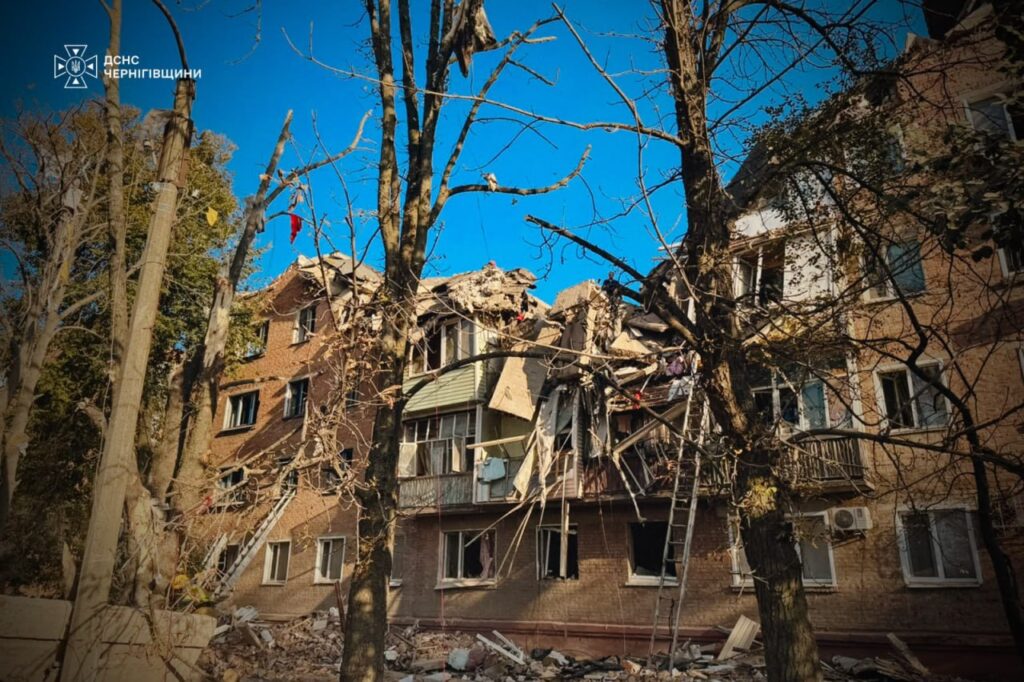
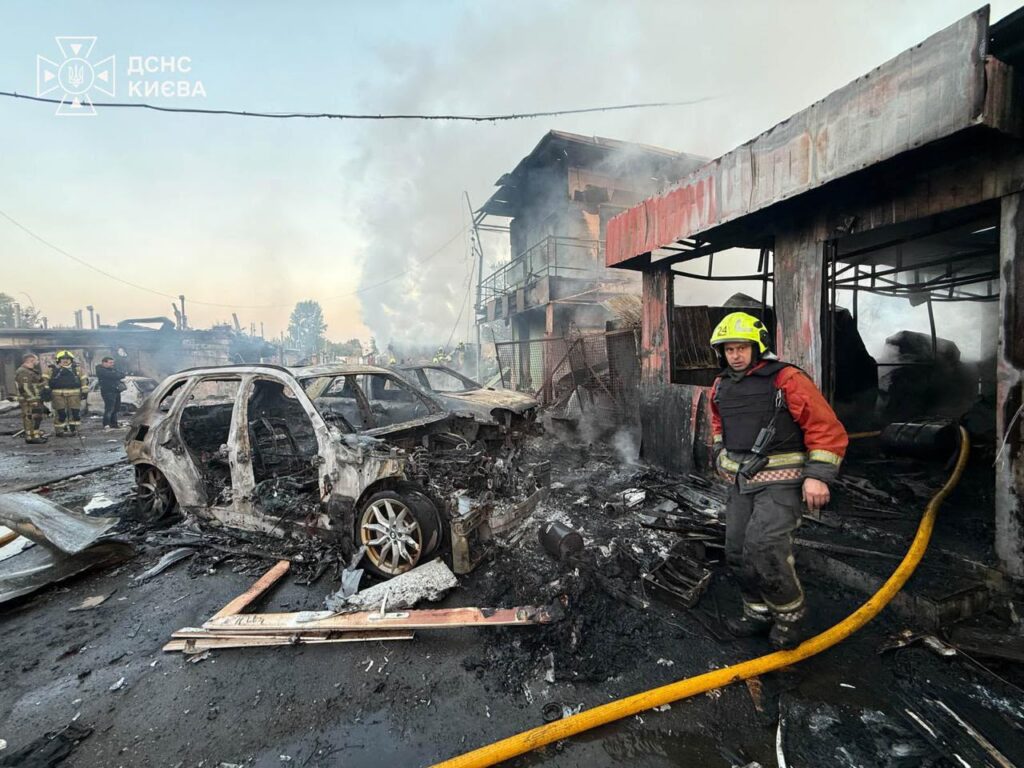
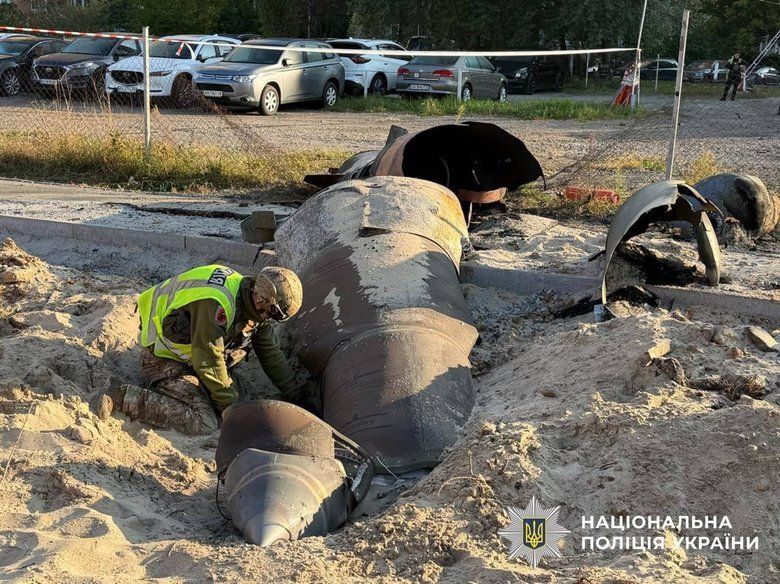
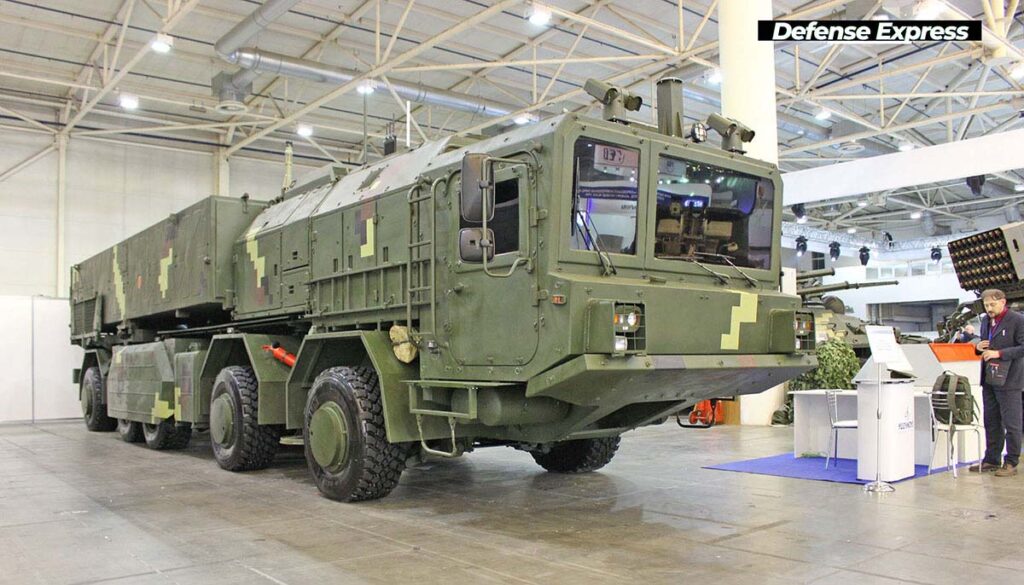
Ukraine has drawn up a list of those who build Russia's ballistic missiles and wants all of them sanctioned by its allies. Kyiv is asking partners to impose sanctions on more than 100 Russian ballistics producers, presidential sanctions commissioner Vladyslav Vlasiuk said at a press conference in Kyiv, according to Ukrinform.

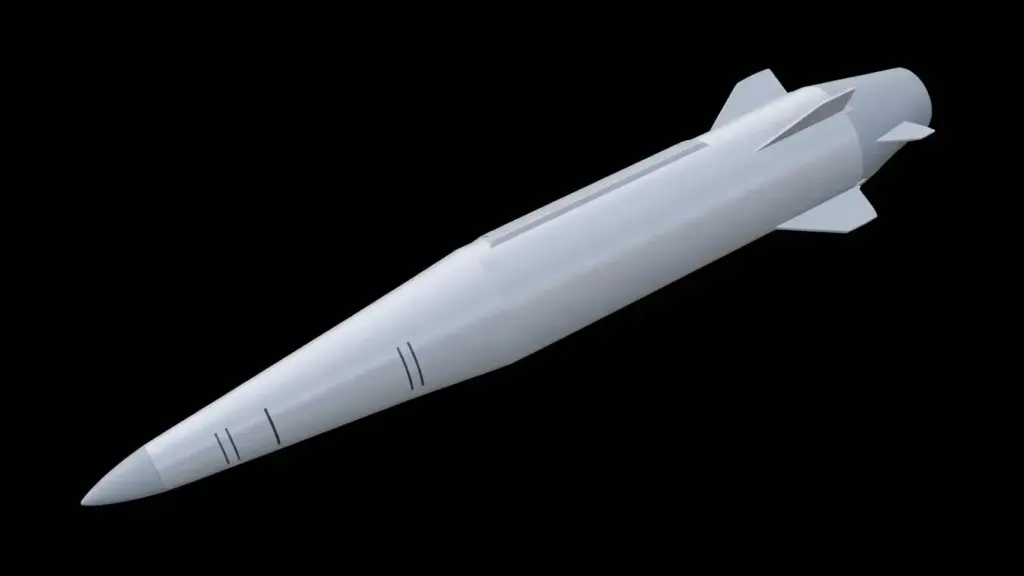
The demand rests on physical evidence. An Iskander that Russia fired at Kyiv Oblast on 10 July held more than 140 foreign components, 62 of them American, alongside parts from Switzerland, Germany, Taiwan, China, and Japan, Vlasiuk reported in July. Most were made recently, which means the parts are still reaching Russia. Naming the factories is Ukraine's attempt to close the gap at the production end rather than chase each shipment.

The plan runs on synchronization

The commissioner laid out several parts of the plan at the press conference. The first is getting the same producers sanctioned everywhere at once, so a firm blocked in one country cannot operate through another. He said the files were handed to partners a few weeks ago, and Ukrainian specialists expect to identify every producer on allied lists by September or October.

The plan also covers what Vlasiuk called kinetic sanctions, meaning strikes on Russian defense-industry sites. He named the Kamensky Combine, which makes components for rocket fuel, as one such target.

The critical parts are still foreign

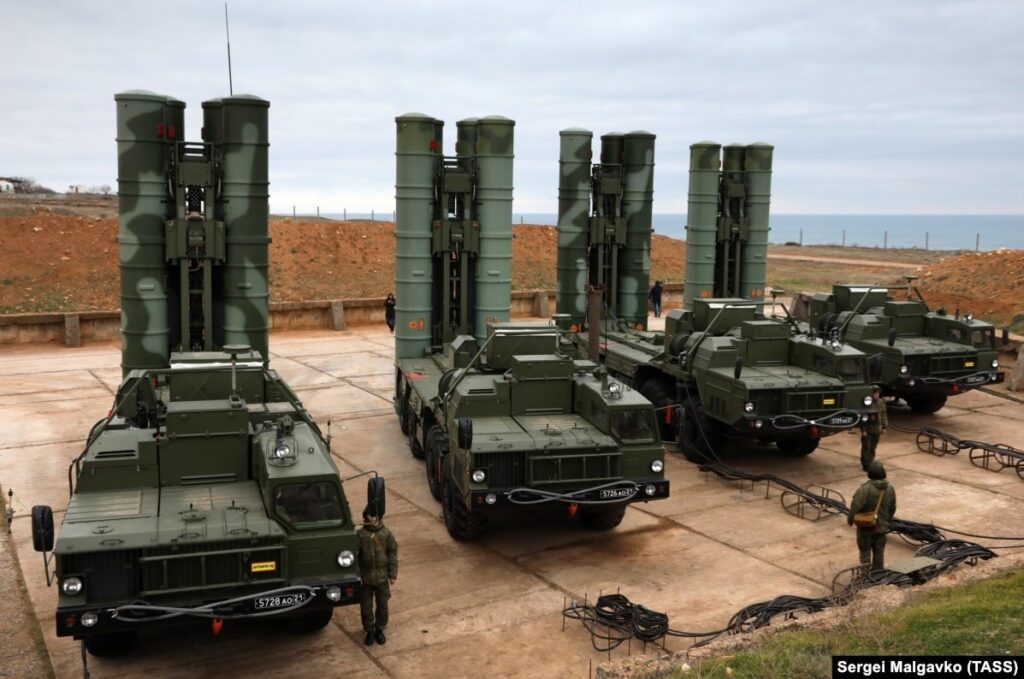
Ukraine keeps finding Western microelectronics in identified Russian ballistics, including Iskander-M missiles and those used by the S-400 system, with parts traced to the US, Japan, Germany, Taiwan, France, Britain, and Switzerland. The most sensitive elements are the Kometa satellite navigation system and autonomous inertial guidance units, which run on American, Swiss, and French microelectronics.

Ballistics is the most demanding product for quality and precision, Vlasiuk said, which is why those two systems are the chokepoint.

Ukraine wants smaller packages, sooner

The commissioner asked partners to adopt more stringent export controls, up to licensing or banning the export of sensitive components to third countries that help Russia evade sanctions. Ukraine has also compiled a list of more than 10 critical materials, including ammonium perchlorate, aluminum powder, and tungsten, as well as the numerically controlled machine tools Russia needs to build the missiles.

The EU has already begun work on a large 22nd sanctions package. Ukraine is urging it not to wait, asking instead for an interim ballistics package in September and another in October, moving in small steps as Ukraine, Britain, and Canada already do.

“You wanted our land. You lost your refineries and your fleet.”—Ukraine’s anniversary message to Russia

24 août 2026 à 07:30

wanted land lost refineries fleet—ukraine's anniversary message russia · post ukrainian president volodymyr zelenskyy delivers independence day address front st michael's golden-domed monastery kyiv 24 2026 presidentgovua download ukraine news

Ukraine celebrated 35 years of independence on 24 August, and Ukrainian President Volodymyr Zelenskyy marked the day with an address listing what the invasion has cost Russia, published by the President's Office. He said Putin is mortal and out of time to understand Ukraine, and said Ukraine will not hand over Donbas or save the Kremlin half a million soldiers. He also asked partners for sanctions and weapons strong enough to force an end to the war.

Russia has been invading Ukraine since 2014 and fighting a full-scale war on it since 2022, and Ukraine now supplies a growing share of the missiles and drones it fights back with, while the air defense shielding its cities still hangs on decisions taken in Washington and European capitals—which is what makes a holiday speech a statement of what Kyiv will not trade and what it needs built or delivered next.

The losses he read back to Moscow

President Zelenskyy turned from his own citizens to Russia partway through the speech. 

"You wanted to take all our Ukraine, all our land; instead, you lost your oil refineries, your fleet, your profits, your entire generation that you sent into the meat grinder," he said. 

A country that wanted Ukraine erased from the map, he added, is now absent from the international agenda of the future civilization.

For five years now, Russia has tried to exhaust and break Ukrainians — cutting light and heat, destroying homes, Kyiv Mayor Klitschko said on Ukraine's 35th Independence Day

"The aggressor failed to understand one fundamental thing: above all else, Ukrainians love freedom," he… pic.twitter.com/NvVVKSKIK1

— Euromaidan Press (@EuromaidanPress) August 24, 2026

He set Moscow's self-image against its filling stations. 

"For 27 years, the head of Russia has talked about greatness, while Russia is standing in lines for gasoline," Zelenskyy said. 

Moscow and St. Petersburg brought back gasoline rationing this month, and Rosneft capped fills at every station in the country.

On the Russian leader he was blunt. 

"Putin hopes that we are tired. But we know that he is mortal," he said, adding that Putin never understood Ukraine and now will not have the time to.

A fifth Independence Day at war

Before the holiday, Russian ballistic missiles hit Kyiv and its main airport hub twice in 24 hours. A solution to Russian ballistic terror must be found, Zelenskyy said, and that gamble must not pay off. 

Russia does not want peace, it wants mobilization, the president said. Ukraine will not let Moscow seize the initiative or convince Europe that surrendering Donbas ends the war. Russia keeps pushing back the dates for taking all of Donetsk Oblast and will keep pushing them back, he said.

The president called Ukraine's defense industry a giant that forges independence around the clock, and demanded more from it. Mid-range strikes cut Russian logistics and long-range weapons cut Russian profits, he said, listing Moscow, Tuapse, Tula, Ryazan, Olenya, and Omsk among the places already hit. 

two russian fighters one spy drone hit kranodar radars anti-air systems elsewhere—ukraine forces · post combat aircraft ukrainian drone's sights vityazevo airfield krasnodar krai russia 23 2026 su-33 video sbs
Explore further

Ukraine’s drones hit two Russian fighters and a spy drone—and blinded radars from occupied Crimea to Rostov

Ukraine's home-built Flamingo cruise missiles should stop being a rare species and arrive en masse: "They must 'winter' in Russia," Zelenskyy noted. 

Previously, Flamingos have hit defense plants more than 1,000 km from the border, though they still appear in strikes in small numbers.

"China should no longer remain silent"

Ukraine is not asking anyone to fight for it, the president said — only for everything needed to stop the war before Putin starts the next one. He wants sanctions that make Russians howl and Moscow at a negotiating table, and said Washington has lost its illusions about Russian intentions. Europe must be Europe, he said: united, ambitious, brave. 

"China should no longer remain silent," he added, saying Beijing must cool the ardor of someone who puts on a sailor's uniform and cap and talks about a nuclear strike—a description that fits Putin.

Ukraine says it hit an Iskander launcher near the border—part of a dedicated hunt for Russia’s ballistic launch sites

23 août 2026 à 06:44

ukraine says hit iskander launcher near border—part dedicated hunt russia’s ballistic launch sites · post russian missile under ukrainian drone attack taganrog russia 30 2026 1st separate center unmanned systems

Ukraine has struck a Russian Iskander launcher near its border as part of a dedicated operation against nearby ballistic-missile launch positions, Ukrainian President Volodymyr Zelenskyy told journalists, according to Ukrinform

Russia continues using ballistic missiles against Ukrainian cities while Ukraine has rationed Patriot interceptors and warned of acute shortages, pushing Kyiv to combine interception with strikes on the systems and positions used to launch those missiles.

President says Ukraine hit an Iskander launcher

President Zelenskyy described the strike as a success but said the sensitivity of the operation prevented him from providing many details.

We struck an Iskander launcher near our borders,” he said. “I am grateful to our warriors who are carrying this out. This is our operation to hunt their systems positioned nearby.”

The president, however, didn't disclose where the launcher was located or what weapon Ukrainian forces used to hit it.

Zelenskyy said strikes on launchers are one way Ukraine is trying to counter Russian ballistic attacks when anti-ballistic interceptor stocks are limited.

When our anti-ballistic missile stocks are at a minimum, there is another tactic. It is more difficult, and we developed it,” he said. “It is hunting their nearby positions from which ballistic missiles are launched.

He described the effort as a separate program and operation. Euromaidan Press could not independently verify the reported strike.

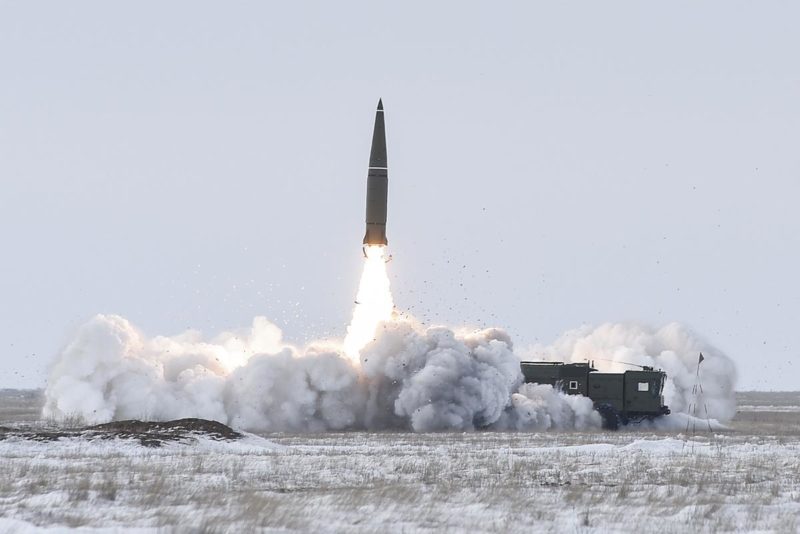
Russian Iskander-M missile system, 2020. Illustrative photo. Photo from Russian government sources via Militarnyi

Ukraine has already targeted Russian ballistic missile infrastructure in several operations this year. In April, Ukrainian drone forces reported strikes on two bases linked to Iskander systems in occupied Crimea.

On 30 May, Ukraine’s Unmanned Systems Forces said they destroyed an Iskander system at a launch position near Taganrog in Russia’s Rostov Oblast.

Ukrainian President Volodymyr Zelenskyy, 7 July 2026. Photo: Zelenskyy / Telegram
Explore further

5% of US Patriot stocks gets Ukraine through winter, 10% ends the ballistic threat — and Zelenskyy has just 1%, he tells CNN

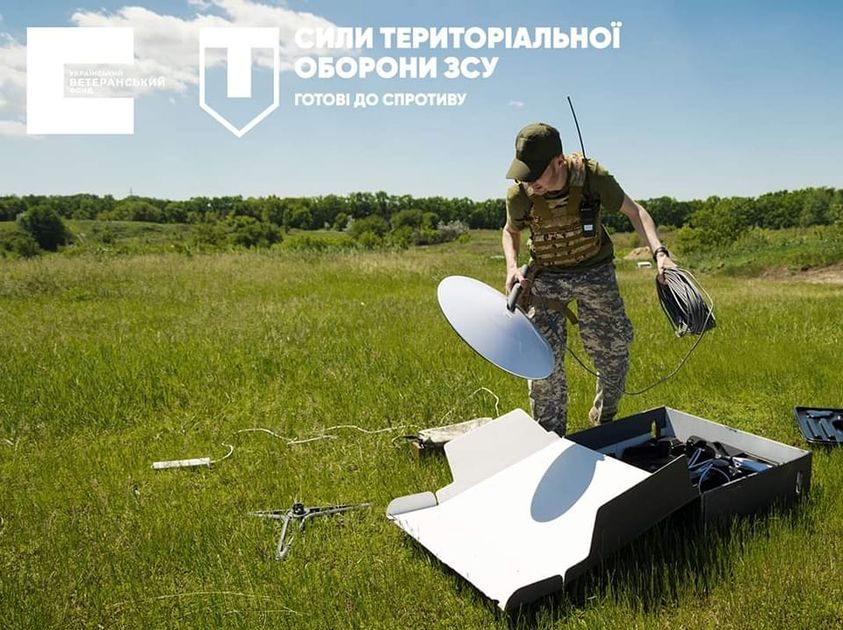
SpaceX rejected Ukraine’s request to use Starlink inside Russia

The launcher strike comes as Ukraine is also looking for better ways to operate long-range drones against military targets in Russia. Zelenskyy said SpaceX ultimately refused to let Ukraine use Starlink inside Russia because of escalation concerns.

Kyiv had wanted Starlink to work over Russian territory for defense operations, including drone strikes on Russian ballistic-missile launchers near the border. The Defense Ministry asked him in the first half of 2026 to raise the issue with US President Donald Trump, Zelenskyy said. Zelenskyy said Trump relayed that decision to him at a later meeting. Ukraine continues discussing the issue with the US side.

Ukraine and European partners are separately developing the FREYJA anti-ballistic system, with Kyiv seeking a prototype capable of demonstrating practical results by mid-2027. The project is intended to combine Ukrainian missile technology with European radars, sensors, and command systems.

Russia struck Kyiv and Boryspil, its main airport hub, twice in 24 hours with ballistics Ukraine can’t stop without US Patriots, days before Independence Day

22 août 2026 à 07:51

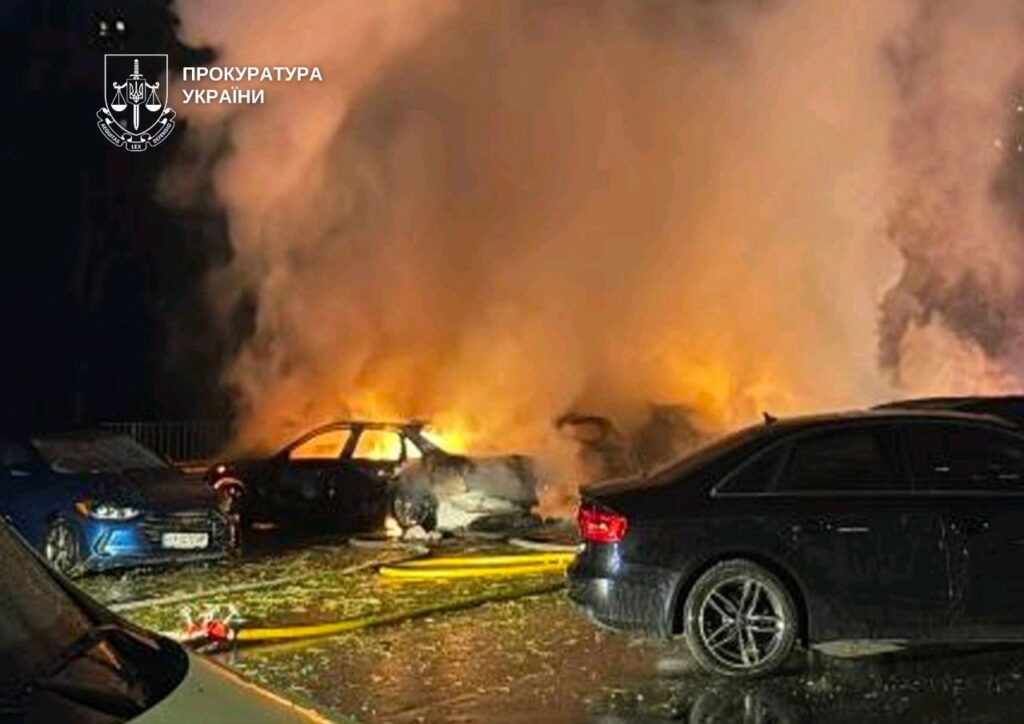
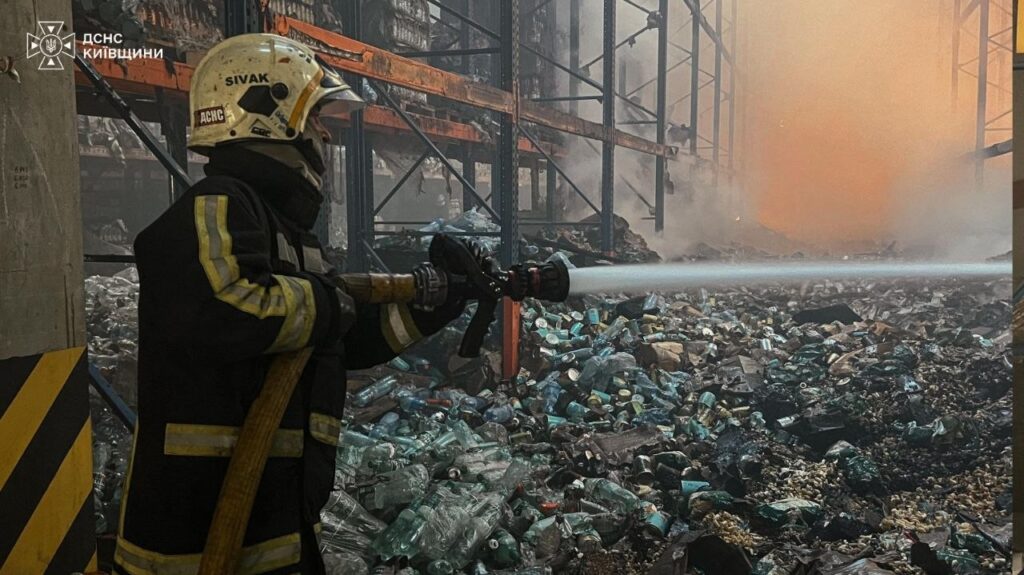
Ukrainian firefighters are extinguishing fire that errupted after a Russian ballistic missile attack on Kyiv Oblast on 22 August 2026. Source: The State Emergency Service

Russia has struck Kyiv and its suburbs with ballistic missiles for a second consecutive day, killing civilians. Meanwhile, Ukraine lacks enough interceptors to stop them because deliveries from the US have halted.

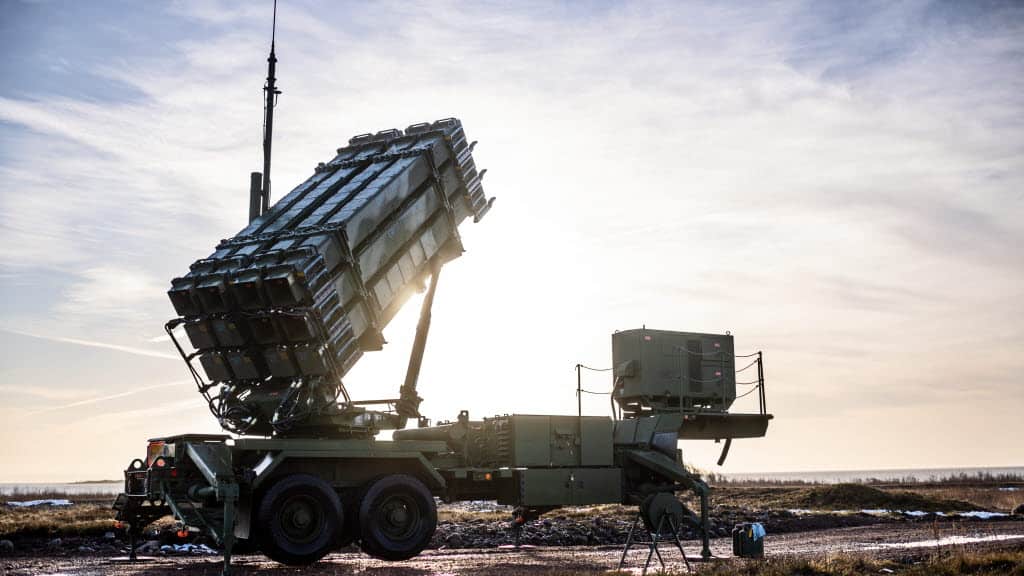
The strikes land at a moment when Ukraine's ability to shoot ballistic missiles down has been cut off at the source. Ukraine intercepts ballistic missiles mainly with US-made Patriot systems. During the recent Oval Office meeting, President Donald Trump declined President Volodymyr Zelenskyy's request for hundreds of additional Patriot interceptors, according to the Financial Times.

At the same time, when Ukraine sought to destroy Russia's ballistic launchers on Russian territory, US billionaire Elon Musk did not allow Ukraine to use Starlink to guide strikes on those launchers, The Atlantic reported. Ukraine can neither shoot the missiles down at the rate it needs nor freely strike the launchers that fire them.

A railway worker was killed in Kyiv

The overnight attack hit Ukraine's railway. On the night of 22 August, a Russian ballistic missile struck a railway enterprise in Kyiv's Darnytsia area, killing a Ukrzaliznytsia worker, the railway's board chairman Oleksandr Pertsovskyi said.

He described a strike timed to the threat.

"In Darnytsia, ballistic strikes hit one of the railway enterprises, at the same moment as, or even a second before, the ballistic threat appeared. One of our workers, a foreman, was killed on the spot. The rest we managed to evacuate quickly after the first strike," Pertsovskyi reported.

Russia launched about six ballistic missiles, with launches recorded from three directions, Kursk, Bryansk, and Millerovo, according to monitoring channels.

A morning strike on Boryspil killed two civilians

Russia struck again in daylight. In the morning, six to eight ballistic missiles attacked the Boryspil area in the Kyiv agglomeration, likely with cluster warheads, according to monitoring channels. Boryspil city is home to the Boryspil International Airport, Ukraine’s main and largest international passenger airport.

The strike killed civilians and hit infrastructure. Two civilians, a man and a woman, were killed, and the number of wounded rose to eight, including a child, with the daytime strike hitting a truck parking lot along with warehouses, a fuel station, a private household, and vehicles. Two trucks caught fire, and a blaze spread across 700 square meters of open ground, the State Emergency Service (DSNS) said.

The strikes come days before Independence Day

The attacks landed two days before Ukraine marks its Independence Day. The Security Service (SBU) has already urged citizens to be especially vigilant before and during the 24 August holiday because of the threat of attacks, warning that in wartime, Russia may use mass events for strikes, provocations, sabotage, cyberattacks, and other crimes.

The service has also warned against recruitment. It reminded Ukrainians not to publish photos or videos of military objects, critical infrastructure, checkpoints, or air-defense systems, nor to share information on the consequences of strikes or the movement of Ukrainian forces.

Russian special services may try to recruit Ukrainians to prepare attacks and sabotage, the SBU said, urging anyone offered money for arson, property damage, planting unknown objects, or collecting information on military sites to report it immediately.

  • ✇Euromaidan Press
  • Russia’s North Korean missiles could threaten Kyiv and six other regions, ISW says
    Russia is deploying six launchers for North Korean ballistic missiles in Voronezh Oblast, the Institute for the Study of War (ISW) reported on 20 August. The assessment cited Ukraine’s military intelligence agency (HUR). Russia has already used North Korean missiles in deadly strikes across Ukraine, and Pyongyang is supplying more of them. From Voronezh Oblast, the weapons could threaten Kyiv and six other regions, adding to the ballistic arsenal Moscow can use in mass
     

Russia’s North Korean missiles could threaten Kyiv and six other regions, ISW says

21 août 2026 à 17:13

North Korean leader Kim Jong-un crouches in a grassy field while two uniformed military officers stand behind him.

Russia is deploying six launchers for North Korean ballistic missiles in Voronezh Oblast, the Institute for the Study of War (ISW) reported on 20 August. The assessment cited Ukraine’s military intelligence agency (HUR).

Russia has already used North Korean missiles in deadly strikes across Ukraine, and Pyongyang is supplying more of them. From Voronezh Oblast, the weapons could threaten Kyiv and six other regions, adding to the ballistic arsenal Moscow can use in mass attacks intended to overwhelm Ukrainian air defenses.

Six launchers expand Russia’s missile threat

The North Korean missiles could reach Kyiv, Sumy, Kharkiv, Chernihiv, Poltava, Dnipropetrovsk, and Zaporizhzhia oblasts, ISW said.

The unit may eventually field 120 missiles. HUR said North Korea had transferred around 50 KN-23, KN-24, and upgraded KN-30 ballistic missiles to Russia by July.

The KN-30 can carry a 2,500-kilogram warhead, though ISW has seen no evidence of Russia using it against Ukraine. Other North Korean missiles have larger warheads than Russia’s Iskander-M but are less accurate, Ukrainian military expert Anatolii Khrapchynskyi said.

Those missiles could join Russia’s combined attacks. ISW expects Moscow to stockpile ballistic and cruise missiles for several days before launching large barrages intended to overwhelm Ukraine’s air defenses.

ISW pointed to the 19–20 August attack as the latest example of that pattern. The barrage lasted nearly nine hours and killed at least 15 people in Kyiv. Ukraine’s Air Force said it intercepted most drones and cruise missiles, but no longer routinely reports how many ballistic missiles Russia launches or Ukraine intercepts.

North Korean missiles have already killed civilians

Preliminary evidence indicated that Russia used a North Korean ballistic missile in a 30 July strike on Radushne, Dnipropetrovsk Oblast, that killed five members of one family.

On 10 August, a North Korean missile killed seven Zaporizhstal steelworkers and injured 21 others in Zaporizhzhia, Ukrainian officials said. The workers were heading to a shelter when the missile struck.

Ballistic missiles travel at high speed and leave civilians little time to seek cover. They are also harder to intercept than drones or cruise missiles, while Ukraine has limited supplies of the Patriot interceptors used against them.

  • ✇Euromaidan Press
  • Kyiv is asking Musk to let it strike inside Russia. Its best line to Musk is gone
    Ukraine is asking Elon Musk to let it arm deep-strike drones with his Starlink network and turn them on Russian ballistic-missile launchers far inside Russia, the Financial Times reported. The plan needs Musk's approval — and US President Donald Trump was cool to the idea when Ukrainian President Volodymyr Zelenskyy raised it at the White House on 28 July, with people present expecting Musk to refuse. Kyiv is chasing the workaround because its air defenses are stretched
     

Kyiv is asking Musk to let it strike inside Russia. Its best line to Musk is gone

21 août 2026 à 12:10

kyiv asking musk let strike inside russia its best line gone · post elon 2026 world economic forum / ciaran mccrickard wef ukraine news ukrainian reports

Ukraine is asking Elon Musk to let it arm deep-strike drones with his Starlink network and turn them on Russian ballistic-missile launchers far inside Russia, the Financial Times reported. The plan needs Musk's approval — and US President Donald Trump was cool to the idea when Ukrainian President Volodymyr Zelenskyy raised it at the White House on 28 July, with people present expecting Musk to refuse.

Kyiv is chasing the workaround because its air defenses are stretched: Russia keeps escalating its missile and drone strikes, and Ukraine is running low on the Patriot interceptors that are its only dependable answer to Russian ballistic missiles. As Russia builds more missiles and drones, Ukraine's interceptor needs run into the hundreds before the year is out.

At the meeting, FT reported, Zelenskyy pressed Trump to lobby Musk for permission to fly Starlink-linked drones across the Russian border. He capped the pitch at 200 km into Russia — far enough to reach launch sites, command posts, and other targets on the calculation that a shallower limit might make Musk likelier to agree.

Starlink could extend Ukrainian drone strikes

Riding SpaceX's satellites, Starlink drones hold a steadier link to their pilots at long range than ordinary radio allows, and they shrug off the jamming that grounds other drones. The drones have already shown their worth in the fighting at home, and Vienna-based military analyst Franz-Stefan Gady said that across the border they "could be very useful in hunting" Russian launchers, FT wrote.

Kyiv's best channel to Musk has also just closed: Zelenskyy recently fired his defense minister, Mykhailo Fedorov, who had a direct line to the billionaire.

mykhailo fedorov during an interview in june 2026
Mykhailo Fedorov during a June interview, a month before his dismissal, in which he described leaks and private-company influence inside the defense ministry. Photo: screenshot from PRESSING / Army-Media of Ukraine's Defense Forces

Speaking to a Ukrainian podcast on 6 August, Fedorov said that even with a channel to Musk still open after his firing, he had made no progress on cross-border Starlink use—"a difficult task right now."

A column of protesters demanding reinstatement of Mykhailo Fedorov as Defense MInister walks in vul. Khreschatyk in Kyiv, 1 August 2026. Photo: Serge Kostezh/Kyivpost
Explore further

The Fedorov protesters lost. But they backed a man for what he built, not what he promised—and that may be new in Ukraine.

Musk’s Starlink decisions have affected both sides in the Russo-Ukrainian war

Musk has backed Ukraine's heavy dependence on Starlink for military command and comms. In 2022, Musk declined to extend Starlink coverage for Ukrainian troops mid-operation near occupied Crimea, citing his fear of triggering a nuclear escalation.

He has also acted against Moscow: in February, at Fedorov's direct request, Musk shut down the Starlink terminals that Russian forces had been operating illicitly against Ukraine.

Now, Musk answered Fedorov's Monday post with a line about "trying to do the right thing" and wanting peace — and said nothing about the Starlink ask.

Ukraine’s biggest weakness against Russia isn’t interceptor shortage, analyst argues. It’s what happens before missiles even launch

21 août 2026 à 07:52

Aftermath of a massive Russian ballistic missile attack in Kyiv's Lukianivka district, 19 July 2026. Photo: Suspilne

Ukraine’s failure to anticipate and prepare for Russian threats is a bigger problem than the shortage of air defenses, says Oleksandr Kovalenko of the Information Resistance group. Russia, meanwhile, has demonstrated its ability to develop and execute medium-term plans for terror operations that can take years to prepare, according to Obozrevatel.

Russian forces adapt almost every month to new challenges and opportunities, scaling up their attacks. The use of jet-powered Banderol drone missiles is one example.

Russia is now employing a “tactical adaptive distribution” approach, flexibly redirecting missiles and strike drones toward different regions and rear cities depending on Ukrainian air-defense capabilities.

The main difference

The key change in Russia’s 2026 campaign against Ukraine’s rear areas has been the growing use of jet-powered drones based on the Iranian Shahed-238 and Karrar, which Russia has localized as Geran-3/4/5.

Russia first used a jet-powered kamikaze drone against Ukraine in January 2024. These weapons have been continuously upgraded over the past two years.

Ukraine, however, failed to adequately anticipate the threat and now lacks an effective, low-cost way to intercept Geran-3/4/5 drones, Kovalenko says. Russian forces used more than 1,400 jet-powered drones in the first half of 2026 alone, compared with 180 throughout all of 2025.

“It is possible that the facility in Alabuga, Tatarstan, could eventually be fully converted to producing jet-powered kamikaze drones as part of this strategy,” the analyst said.

What comes next: strikes on Kyiv to exert psychological pressure

A significant share of Russia’s new hard-to-intercept weapon variants appears to be concentrated for strikes on Kyiv.

Russian forces are seeking to exploit Ukraine’s acute shortage of Patriot and SAMP/T interceptors, using the opportunity to intensify their campaign of terror. Russia has previously used similar tactics to exert psychological pressure on civilians and disrupt economic activity in regions including Kharkiv and Odesa.

The same approach could increasingly be directed at the capital, particularly ahead of and during Ukraine’s Independence Day.

  • ✇Euromaidan Press
  • Russia stops mass-producing Kinzhals amid accuracy problems, but 50 missiles remain ready for Ukraine
    Russia suspended mass production of its Kinzhal air-launched ballistic missiles in April, but still has around 50 in its arsenal, according to Ukraine’s Defense Intelligence Directorate (HUR), Ukrainska Pravda reported. Russia has repeatedly used Kinzhal air-launched ballistic missiles to strike targets across Ukraine, including during major attacks on Kyiv and other Ukrainian cities. The missile is launched from aircraft and travels at high speed, making it particularl
     

Russia stops mass-producing Kinzhals amid accuracy problems, but 50 missiles remain ready for Ukraine

20 août 2026 à 06:59

hits harm russia’s 5 hypersonic kinzhal strike ukraine bomber base fails russia's kh-47m2 air-launched ballistic missile attached mig-31k during 2018 victory day parade moscow kremlinru 1750px-2018_moscow_victory_day_parade_66 evening russia launched two

Russia suspended mass production of its Kinzhal air-launched ballistic missiles in April, but still has around 50 in its arsenal, according to Ukraine’s Defense Intelligence Directorate (HUR), Ukrainska Pravda reported.

Russia has repeatedly used Kinzhal air-launched ballistic missiles to strike targets across Ukraine, including during major attacks on Kyiv and other Ukrainian cities. The missile is launched from aircraft and travels at high speed, making it particularly difficult for Ukraine to defend against.

Ukrainska Pravda reported the figures on 20 August, citing HUR data as of July. The intelligence agency said Russia has suspended mass production of the Kinzhal in part because of accuracy problems with the missile. Moscow is instead redirecting production resources toward other ballistic and cruise missiles that can be produced and used more reliably.

Russia shifts production toward other missiles

According to HUR, Russia has redirected rocket fuel, funding, and components toward producing more accurate ballistic and cruise missiles.

The shift is helping Moscow increase production of missiles for the Iskander-M system, HUR said.

“Redirecting production resources towards missile systems enables Russia to maintain the required production rates and ensure the regular use of missiles against Ukraine,” the agency said, as quoted by Ukrainska Pravda.

The production shift suggests Russia is prioritizing missile types it can produce and use more efficiently, rather than maintaining mass Kinzhal production.

all 20+ russian kinzhal hypersonic missiles targeting kyiv intercepted patriot since may 2023 russia's mig-31k aircraft carrying missile illustrative mounted mig-31
Explore further

Putin’s Mach-10 wonder weapon misses by 30 meters. Russia stopped building it in April.

Russia has sharply increased its use of ballistic missiles against Kyiv and other Ukrainian cities in recent months, adding heavier ballistic barrages to its large-scale drone and cruise missile attacks. The escalation has put greater pressure on Ukraine’s air defenses, particularly because ballistic missiles are harder to intercept and can reach their targets within minutes.

Kinzhal remains in Russian arsenal despite production halt

The suspension of mass production does not mean Russia has stopped using Kinzhal missiles, according to HUR.

HUR said Russia still had around 50 Kinzhals as of July, while also holding around 50 North Korean KN-23-series ballistic missiles, including KN-24 and KN-30 variants.

The intelligence agency also said the Kinzhal is undergoing further development to improve issues with its accuracy.

‼ Russian voenkors publishes satellite images from the Starokostiantyniv area!

🚀⚠ The photo shows craters from missiles that did not reach their targets. In some cases, the Kinzhals' deviation was up to 144 meters. pic.twitter.com/qvameRj5t8

— MAKS 26 🇺🇦👀 (@Maks_NAFO_FELLA) November 10, 2025

This means that while Russia has paused mass production, it retains a substantial reserve of Kinzhals that can still be used against Ukraine.

HUR's assessment also highlights a key limitation of the Kinzhal: despite being a high-speed air-launched ballistic missile, it has faced accuracy problems. Russia is therefore shifting production capacity toward missile systems it considers more reliable and easier to produce at scale.

14 killed as Russia unleashes massive overnight barrage on unprotected Kyiv, striking homes, hospital, school and railway infrastructure

20 août 2026 à 04:47

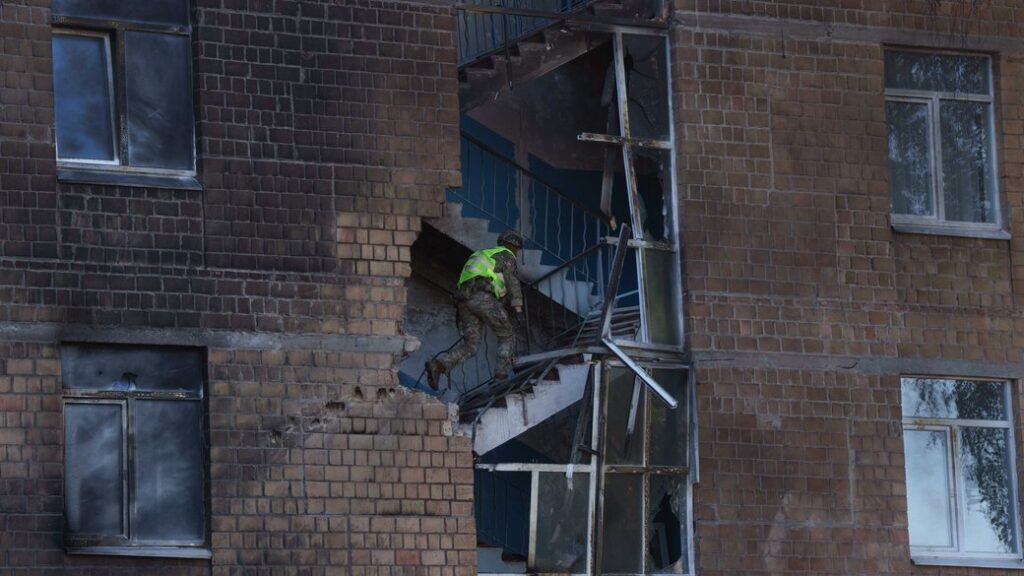
Apartment building damaged from a massive Russian aerial attack on Kyiv, Ukraine, 20 August 2026. Photo: Ukraine's State Emergency Service

Editor's note: This is a developing story.

Russia launched a massive overnight missile and drone attack targeting Kyiv and the surrounding region, killing 14 people and injuring more than 40, Ukrainian authorities said on 20 August.

The attack involved ballistic and cruise missiles alongside hundreds of drones. Ukraine’s Air Force said the main direction of the attack was Kyiv Oblast, with strikes and debris recorded at multiple locations. Several explosions were heard in the capital around midnight on 20 August, according to Euromaidan Press reporters in the city.

Residential building hit in Kyiv

In Kyiv, strikes, damage, and fires were reported in the Sviatoshynskyi, Darnytskyi, and Solomianskyi districts.

In Solomianskyi district, the upper two floors of a nine-story residential building were destroyed, with a fire breaking out across the seventh through ninth floors. 

People were trapped in two residential buildings and a school bomb shelter, prompting emergency crews to carry out rescue operations.

Thirteen people have now been confirmed killed in Kyiv, including a woman whose body was discovered by rescuers in Solomianskyi district, Interior Minister Ivan Vyhivskyi said.

Ukrainian President Volodymyr Zelenskyy said a children's hospital and a school were also damaged in the capital.

Kyiv Mayor Vitali Klitschko said the city would observe 21 August as a day of mourning, with entertainment events banned and flags lowered.

Death toll from Russia's missile attack on Kyiv city and Oblast climbs to 14

Ukraine's Interior Minister Ivan Vyhivskyi says another woman's body was found in Solomianskyi. More than 40 were wounded. The strikes damaged about 20 residential buildings, a school, a children's… pic.twitter.com/3wicnc5lni

— Euromaidan Press (@EuromaidanPress) August 20, 2026

Fires and damage across Kyiv

Around 20 residential buildings in Kyiv were significantly damaged, along with a school, children's hospital, and kindergarten, Vyhivskyi said.

In Sviatoshynskyi district, Russian strikes hit an industrial site and sparked fires at warehouses covering 500 and 1,000 square meters. Another warehouse also caught fire.

In Darnytskyi district, a non-residential site was hit, causing fires across warehouses and vehicles covering about 1,000 square meters. Rescuers saved one person and handed them over to medics.

Other locations saw damage to residential buildings, a medical facility, cars, garages, and stores.

More than 600 rescuers and police officers have been involved in clearing the aftermath since overnight. Emergency crews are currently working at two sites in Kyiv and three more in Boryspil and Brovary districts.

Rescuers are using specialized equipment and robotic systems to clear the rubble and check whether anyone remains trapped.

Police have set up assistance centers at the attack sites to register reports of damaged or destroyed property. More than 200 reports have already been processed in Kyiv, while psychologists are assisting people who lost relatives or their homes.

Russia's overnight missile attack killed at least 12 people in Kyiv and injured 34.

Russia pounded Kyiv and its surrounding region for hours into 20 August with dozens of ballistic missiles, Kalibr cruise missiles, and jet-powered Shahed drones.

The strikes killed at least 12… pic.twitter.com/UxPYdi6JY1

— Euromaidan Press (@EuromaidanPress) August 20, 2026

Kyiv Oblast casualties

The attack also hit Kyiv Oblast. One man was killed in Brovary district and another was injured.

In Boryspil district, six people were injured, four of whom were hospitalized. The attack damaged 14 private homes, four warehouses, a gas station, an apartment building, and eight vehicles.

Vyhivskyi said fires also engulfed warehouses storing household goods in Kyiv Oblast. Firefighters are working to contain the blaze, with aviation also deployed.

Russian attack leaves Kyiv and six oblasts with power outages

Ukrenergo says outages hit Kyiv and Kyiv, Donetsk, Odesa, Zaporizhzhia, Dnipropetrovsk, and Kharkiv oblasts. Ukrainians are asked to limit powerful appliances from 18:00–22:00.

The occupied Zaporizhzhia nuclear… pic.twitter.com/hlVz3CWyS5

— Euromaidan Press (@EuromaidanPress) August 20, 2026

Zelenskyy calls for stronger ballistic missile defenses

Zelenskyy said Russia’s growing investment in ballistic missiles requires a stronger international response and more air defense for Ukraine.

He said Ukraine is working daily on its FREYJA interceptor program, but stressed that Patriot interceptors remain irreplaceable and are needed every day to protect Ukrainian cities from Russian ballistic missile attacks.

“Every additional missile saves the lives of our people,” Zelenskyy said, thanking those working to provide Ukraine with additional air defense capabilities.

Russia spent months preparing its missiles. Zelenskyy says Ukraine still lacks enough interceptors to stop them

Russia combined different ballistic missiles, cruise missiles, and drones in its overnight attack to maximize damage to civilian infrastructure, President Volodymyr… pic.twitter.com/4iaRPs7dLC

— Euromaidan Press (@EuromaidanPress) August 20, 2026

Hundreds of aerial targets launched

Ukraine's Air Force said Russia launched 168 Shahed-type attack drones, Gerbera decoy drones, and other drones, along with 36 Kh-101, Iskander-K, and Kh-59 cruise missiles, eight Kalibr missiles, two Banderyl-type loitering munitions, and ballistic missiles including Oniks, Zircon, Iskander-M, and S-400 missiles.

As of 9:30 a.m., Ukrainian air defenses had shot down or suppressed 31 cruise missiles, all eight Kalibr missiles, both loitering munitions, and 145 drones, according to the Air Force.

The Air Force reported impacts at 28 locations and debris from intercepted targets at two others. 

The attack continued into the late morning, with air raid sirens still active and several Russian drones still in Ukrainian airspace.

Ukraine is under a massive Russian attack right now: Russia's Kalibr missiles were launched from the Novorossiysk port

The warhead of the Kalibr family of cruise missiles typically weighs 450 kg
🎥Exilenova+ pic.twitter.com/DBgfRX7xhB

— Euromaidan Press (@EuromaidanPress) August 19, 2026
Kalibr missile launch black sea
Explore further

Russia hit Kyiv with ballistic and hypersonic missiles overnight, damaging a children’s hospital, with people trapped in a shelter

Rail traffic disrupted

Russia's strikes also disrupted rail traffic around Kyiv after railway infrastructure was damaged. Several suburban and regional trains between Kyiv and Nizhyn were rerouted or canceled.

Strikes reported in other regions

Zelenskyy said the attack also caused damage in Odesa and Chernihiv oblasts.

In Odesa Oblast, Russian drones targeted a border crossing with Moldova, while strikes in Chernihiv Oblast damaged gas infrastructure.

Russia strikes food trucks in Odesa Oblast

The attack ignited two trailers carrying food. Ukrainian firefighters extinguished the blaze, the State Emergency Service reported. No one was killed or injured.

📷 DSNS pic.twitter.com/pzt0PnKGsw

— Euromaidan Press (@EuromaidanPress) August 20, 2026

Russia hit Kyiv with ballistic and hypersonic missiles overnight, damaging a children’s hospital, with people trapped in a shelter

19 août 2026 à 18:26

Kalibr missile launch black sea

Russia has launched another massed missile attack on Kyiv in the early hours of 20 August. Russian forces struck the capital with ballistic and Zircon hypersonic missiles, with loud explosions heard across the city and region, according to Ukraine's monitoring channel Yeradar.

The strike is the latest in Russia's campaign of massed missile attacks on Kyiv. Russia has repeatedly hit the capital with ballistic and hypersonic weapons that Ukraine struggles to intercept for lack of Patriot missiles, killing civilians in their homes.

As of 1 AM, Russian Kalibr cruise missiles are approaching Ukrainian cities from Novorossiysk.

Ukraine is under a massive Russian attack right now: Russia's Kalibr missiles were launched from the Novorossiysk port

The warhead of the Kalibr family of cruise missiles typically weighs 450 kg
🎥Exilenova+ pic.twitter.com/DBgfRX7xhB

— Euromaidan Press (@EuromaidanPress) August 19, 2026

Earlier, Ukraine's Defense Ministry said that Russia went back to using imported electronics for its Kalibr cruise missiles’ guidance system after failing to replace them with homemade alternatives.

The ship-launched missile’s homing boards “are made up of more than 80–90% foreign-made components," the Ukrainian authorities reported.

The confirmed toll so far

Casualties were mounting as the attack went on. As of the latest update, one person was killed and three wounded in the attack, the Kyiv City Military Administration said, with information still being clarified.

The strikes hit across several districts. A children's hospital was damaged in the Solomianskyi district, where people were reported to be trapped in a shelter, and a five-story residential building was hit. Warehouses burned in the Sviatoshynskyi district, and non-residential buildings were struck in Darnytskyi, Kyiv Mayor Vitali Klitschko reported.

The attack was still developing

Ukraine's air defenses were engaging an ongoing threat. The Air Force had warned of ballistic weapons approaching from the north and northeast, and monitoring channels reported Russian Tu-95MS strategic bombers taking off, which typically precede cruise-missile launches.

"Explosions in the capital. Kyiv is under ballistic attack. Stay in shelters," Klitschko wrote as the strikes continued.

With the attack unfolding as officials reported it, the full toll and damage were not yet known; the figures provided were preliminary.

  • ✇Euromaidan Press
  • North Korean ballistic missile kills 7 steelworkers on their way to shelter, shuts down Zaporizhstal plant
    A Russian ballistic strike on Zaporizhzhia, Ukraine, killed seven employees of the Zaporizhstal steel plant and injured 21 others, Ukrainian steelmaker Metinvest, the plant’s majority owner, said on 11 August. The workers were on their way to a shelter after an air raid alert was announced when the strike hit the industrial site, according to the company.  Metinvest said the attack also damaged energy facilities and infrastructure, as well as the main and auxiliary f
     

North Korean ballistic missile kills 7 steelworkers on their way to shelter, shuts down Zaporizhstal plant

11 août 2026 à 11:44

Inside the Zaporizhstal steel plant. Photo: Zaporizhstal on Facebook

A Russian ballistic strike on Zaporizhzhia, Ukraine, killed seven employees of the Zaporizhstal steel plant and injured 21 others, Ukrainian steelmaker Metinvest, the plant’s majority owner, said on 11 August.

The workers were on their way to a shelter after an air raid alert was announced when the strike hit the industrial site, according to the company. 

Metinvest said the attack also damaged energy facilities and infrastructure, as well as the main and auxiliary facilities of the plant’s coke and blast-furnace operations.

Russia’s ballistic missile strikes leave very little time between threat detection and impact for people to react and reach shelter. Several people have been killed from strikes across the country while on their way to bomb shelters. 

Zaporizhstal shuts down after strike

Metinvest said Zaporizhstal has been completely shut down following the attack, while its other production sites in the city are operating at reduced capacity.

Company specialists are assessing the damage and determining the scope and timeline of repairs. Emergency and restoration work is already underway, according to the statement.

The company said its Zaporizhzhia facilities are civilian industrial sites that employ tens of thousands of people and produce steelmaking and coke-chemical products.

Metinvest said it is providing medical assistance and support to the 21 injured employees and staying in contact with the families of those killed and wounded.

The company's facilities will fly flags at half-mast on 11 and 12 August in mourning for the seven Zaporizhstal workers killed in the attack.

North Korean missiles used against Zaporizhzhia

Ukrainian President Volodymyr Zelenskyy said Zaporizhzhia was targeted overnight with North Korean ballistic missiles, Russian Zircon missiles and guided aerial bombs.

Zelenskyy said the attack was designed to cause maximum damage to civilian infrastructure.

Ukraine's military intelligence said on 5 August that a North Korean missile unit had begun deploying to western Russia, potentially adding up to 120 ballistic missiles and six launchers to Russia's arsenal.

According to Ukrainian intelligence representative Andrii Cherniak, North Korea has supplied Russia with around 150 KN-23 and KN-24 missiles since late 2023, including a recent batch of 40 missiles.

The missiles have been linked to attacks with high civilian casualties, including a July strike on Radushne in Dnipropetrovsk Oblast that killed an entire family.

Ballistic threat is growing

The strike comes as Russia has increasingly relied on ballistic missiles in attacks on Ukrainian cities. Unlike drones and cruise missiles, ballistic missiles travel at very high speeds and are much harder for Ukraine to intercept, particularly because Kyiv has a limited supply of the advanced air defense interceptors needed to counter them, mainly US-made Patriot systems.

Ukraine has reported that most ballistic missiles launched in recent mass attacks have penetrated its air defenses, contributing to severe destruction and civilian casualties.

  • ✇Euromaidan Press
  • Reuters: The Patriot deal Trump denied is quietly still alive
    US negotiators have quietly kept a deal to let Ukraine help build Patriot interceptor missiles alive, even after US President Donald Trump publicly cast doubt on it, Reuters reported. Four people familiar with the talks said Washington never ordered them stopped. Ukraine, running low on air defenses, urgently wants the missiles to blunt Russia's growing ballistic strikes. Russian daily drone attacks forced Kyiv to chase air defense from every direction at once, includin
     

Reuters: The Patriot deal Trump denied is quietly still alive

6 août 2026 à 09:07

nato send ukraine $5 billion weapons year’s end — focus air defense · post american patriot missile systems patriots final weeks 2025 set receive large batch us-supplied worth about deputy

US negotiators have quietly kept a deal to let Ukraine help build Patriot interceptor missiles alive, even after US President Donald Trump publicly cast doubt on it, Reuters reported. Four people familiar with the talks said Washington never ordered them stopped. Ukraine, running low on air defenses, urgently wants the missiles to blunt Russia's growing ballistic strikes.

Russian daily drone attacks forced Kyiv to chase air defense from every direction at once, including home-grown interceptors. But this year, Moscow has increasingly turned to ballistic missiles, the hardest weapons for Ukraine to stop. US-supplied PAC-3 interceptors fired by Patriot systems are among the few weapons that can reliably shoot them down, and Ukraine has now run out.

President Donald Trump greets Ukraine's President Volodymyr Zelenskyy at his Mar-a-Lago club, Sunday, Dec. 28, 2025, in Palm Beach, Fla. AP Photo/Alex Brandon/Eastnews

The talks Trump seemed to kill

Last week, Trump appeared to reverse course, telling reporters the US had not agreed to let Ukraine build Patriots and must be "very careful about letting somebody build them." 

According to Reuters, two sources tied that to a tense White House meeting with Zelenskyy. Yet the negotiations pressed on. 

"No order was given to halt the discussions," one source said, adding that talks continued with US arms makers and military officials.

Matthew Whitaker, Washington's envoy to NATO, is leading the drive for a deal. He visited Kyiv last month to weigh options with Ukrainian officials and weapons executives. His spokesperson framed the trip around drone collaboration that would benefit US forces, without naming the Patriot plan. 

A senior administration official told Reuters that any agreement must protect US technology. 

nato send ukraine $5 billion weapons year’s end — focus air defense · post american patriot missile systems patriots final weeks 2025 set receive large batch us-supplied worth about deputy

Reuters: The Patriot deal Trump denied is quietly still alive

What Ukraine could build

The options include making Patriot components in Ukraine and shipping them to Germany for final assembly, the sources said. A US official called that the most feasible route. Germany already produces an older Patriot model, and the advanced PAC-3, the newest Patriot interceptor, is expected to follow.

Ukraine could instead join an existing US-European Patriot program, or build a cheaper version of the PAC-3. 

It might also tap Lockheed Martin's new lower-cost interceptor, the PAC-3 ACE, unveiled last month.

A promise made, then pulled back

During a meeting with Zelenskyy in Ankara last month, Trump said the US would license Ukraine to make PAC-3s. His later reversal caught many off guard, including Zelenskyy. In a follow-up call, US Vice President JD Vance assured him that deals between presidents would hold, one source said.

nato send ukraine $5 billion weapons year’s end — focus air defense · post american patriot missile systems patriots final weeks 2025 set receive large batch us-supplied worth about deputy
Explore further

Reuters: The Patriot deal Trump denied is quietly still alive

Ukraine's clock is running

Even with a deal, Ukraine would not receive newly built interceptors for a year or more. So Kyiv is urging allies to hand over some of theirs and exploring swaps to get missiles sooner. 

Earlier, Zelenskyy warned that Ukraine had run out of Patriots. That day, it intercepted just one of 27 ballistic missiles Russia fired. 

Global stocks of high-end interceptors have shrunk since the Iran war, with Patriots once bound for Ukraine diverted to US forces and Gulf allies.

  • ✇Euromaidan Press
  • Double-tap strike kills 20-year-old Hospitaller volunteer in Kyiv
    On 1 August, 20-year-old fourth-year psychology student Vitalina Yarovenko was killed in a double-tap strike while helping victims in Kyiv. She was a volunteer paramedic with the Hospitallers medical volunteer battalion. After completing her training, she was preparing to officially join the battalion, said Nataliia Chykhachova, head of the Hospitallers' patronage service. Kyiv bid farewell to the volunteer on 4 August. Every day, Russia fires drones and missile
     

Double-tap strike kills 20-year-old Hospitaller volunteer in Kyiv

6 août 2026 à 08:46

20-year-old fourth-year psychology student Vitalina Yarovenko was killed in a double-tap strike while helping victims in Kyiv on 1 August 2026. Photo: Vitalina Yarovenko/Facebook

On 1 August, 20-year-old fourth-year psychology student Vitalina Yarovenko was killed in a double-tap strike while helping victims in Kyiv. She was a volunteer paramedic with the Hospitallers medical volunteer battalion. After completing her training, she was preparing to officially join the battalion, said Nataliia Chykhachova, head of the Hospitallers' patronage service. Kyiv bid farewell to the volunteer on 4 August.

Every day, Russia fires drones and missiles, targeting Ukrainian cities. Overnight into 1 August, Russia attacked Kyiv with ballistic missiles, killing nine people and injuring more than 30 others, Kyiv Mayor Vitali Klitschko said. Vitalina and a group of volunteer paramedics were on their way to rescue people after a strike on Zdolbunivska Street in Kyiv's Darnytskyi district. The second strike took Vitalina's life as they were getting out of their vehicle, said Oleksandr Kostiuk, head of military training at the National University of Kyiv-Mohyla Academy. The Russian troops often employ the double-tap tactic, targeting the first responders.

The aftermath of Russia's overnight strike on Kyiv on 1 August. Photo: Ivan Vyhivskyi/Facebook

Vitalina was killed alongside 25-year-old paramedic Yeva Roiter, while their driver remains in critical condition.

Farewell ceremony

Several hundred people gathered in central Kyiv. Most of them were dressed in white and held white flowers at the request of Vitalina's mother. Some knew the young woman personally, while others had never met her but decided to come. The farewell ceremony began at St. Michael's Golden-Domed Cathedral and continued at Maidan Nezalezhnosti (Independence Square). Vitalina was buried near the Alley of Heroes at Berkovetske Cemetery.

People gather to pay their respects to 20-year-old volunteer Vitalina Yarovenko, who was killed in a Russian double-tap strike on Kyiv. Independence Square, Kyiv, 4 Aug. 2026. Photo: Serhii Okuniev/NV

"I begged, I did not want a hero at home, I wanted my child at home. But it was her choice. Vitalina had always been a very brave girl. At the age of 20, I wrote that I once held her in my arms, and now she firmly holds the world. I wanted her to keep holding this world for a very long time. But, perhaps, now she will hold it from heaven," Vitalina's mother, Natalia Koretska-Yarovenko, shared during the farewell ceremony.

People gather to pay their respects to 20-year-old volunteer Vitalina Yarovenko, who was killed in a Russian double-tap strike on Kyiv. Independence Square, Kyiv, 4 Aug. 2026. Photo: Serhii Nuzhnenko/RadioSvoboda.org (RFE/RL)

Vitalina Yarovenko

During the farewell ceremony, people recalled that during her school years, Vitalina led an active life. She took part in environmental initiatives, practiced athletics, and competed in sports competitions. In the eighth grade, she decided that she would become a psychologist. Vitalina fulfilled that dream, and while studying at university, she returned to her former school to hold workshops for children.

20-year-old fourth-year psychology student Vitalina Yarovenko was killed in a double-tap strike while helping victims in Kyiv on 1 August 2026. Photo: llunulla/Instagram

After the full-scale invasion, Vitalina tried to help the military. She visited soldiers in hospitals and launched more than 30 fundraising campaigns. She also conducted military training courses at her university and joined the Hospitallers, helping people at the sites of Russian strikes in Kyiv as part of the battalion.

"She truly was a friend of the Hospitallers and had our shoulder patch, which not everyone has. She was going to complete the training and officially join our ranks. But she did not manage to," Chykhachova said.

As an act of revenge, soldiers on the front line have been writing "For Vitalina" on their UAVs. One such photograph was shared in the comments under a post by freelance presidential adviser Serhii Flesh by the Lava Unmanned Systems Regiment of the Khartiia 2nd Corps of the National Guard of Ukraine.

A UAV bearing the inscription "For Vitalina!!!" Photo: Lava Unmanned Systems Regiment of the National Guard of Ukraine's 2nd Khartiia Corps/Facebook

Deliberately striking medics as they reach the wounded — the "double-tap" — is widely assessed as a likely war crime under the Geneva Conventions, which protect medical personnel, including volunteer paramedics.

Shortage of Patriot missiles from allies and intensified Russia’s attacks made July deadliest month for Ukrainian civilians since April 2022

6 août 2026 à 02:08

Ukrainian rescuers are working at the Russian strike on 4 August 2026, in Donetsk Oblast. Source: The State Emergency Service of Ukraine

Russia's escalating strikes made July the deadliest month for Ukrainian civilians in more than three years. More civilians were killed in Ukraine in July than in any month since April 2022, driven by intensified Russian attacks using ballistic missiles and long-range drones, the UN human rights office in Ukraine reports.

The record is the human cost of a shortage of interceptors for ballistic missiles amid the US war with Iran. However, Ukrainian President Volodymyr Zelenskyy has said the cut in interceptor supplies from partners may be a political attempt to make Ukraine more compliant, a claim he made after the same overnight attack that killed at least 17 civilians, mainly in Kyiv and the surrounding region.

The month's toll came from strikes on cities

The July deaths clustered around attacks on populated areas. Beyond the Kyiv strike, air and drone attacks hit Kramatorsk, Kherson, and Zaporizhzhia, killing and wounding dozens and destroying homes, schools, public transport, water systems, and humanitarian warehouses, according to the UN.

The targets read as the fabric of civilian life. Water systems, schools, and aid depots are not military objects, and their destruction alongside the deaths is what the UN monitoring mission records when it documents the effect of Russia's long-range strikes on the civilian population.

The half-year figures show a steep climb

The July record sits atop a sharply rising trend. In the first half of 2026, the UN monitoring mission confirmed 1,396 Ukrainian civilians killed and 7,978 wounded.

Those numbers are climbing fast. The first-half toll is 37% higher than the same period in 2025 and 114% higher than the year before, as Russia intensifies its long-range strikes. Civilian deaths have more than doubled in two years, a direct measure of what the shift to massed ballistic and jet-powered drone attacks has done to the people beneath them.

Russia reported its own civilian deaths

The UN also noted casualties on the Russian side. According to Russian local authorities, Ukrainian long-range drone retaliation strikes on several Russian cities this week reportedly killed at least 12 people.

The scale is asymmetric and the cause singular: it is Russia's war on Ukraine, and its intensifying strikes on Ukrainian cities, that made July the deadliest month for civilians since the war's first spring.

  • ✇Euromaidan Press
  • Why can’t Ukraine just blow up Russian launchers firing ballistic missiles at its cities?
    There is a reason Ukraine cannot simply blow up the launchers firing ballistic missiles at its cities. Russia's Iskander launchers are extremely hard to catch, and interfering with the missiles' production is nearly as difficult, presidential adviser Serhii "Flash" Beskrestnov said on the national telethon, according to UNIAN. The launchers survive by never staying still or coming within reach. Iskander launchers head to their firing positions only when a combat task is
     

Why can’t Ukraine just blow up Russian launchers firing ballistic missiles at its cities?

5 août 2026 à 15:54

ukrainian intelligence russia’s advanced missile arsenal shrinks nearly 50% since russia's iskander-m its mobile launcher iskander domestic pyongyang-supplied kn-23 ballistic stockpile has dropped 580 300 told liga report does mention

There is a reason Ukraine cannot simply blow up the launchers firing ballistic missiles at its cities. Russia's Iskander launchers are extremely hard to catch, and interfering with the missiles' production is nearly as difficult, presidential adviser Serhii "Flash" Beskrestnov said on the national telethon, according to UNIAN.

The launchers survive by never staying still or coming within reach. Iskander launchers head to their firing positions only when a combat task is set, sometimes moving along forest roads for five hours to avoid detection by satellites, then deploying fast, firing, and fleeing.

They launch from 140 to 150 kilometers behind the front line, which is why catching one on the march or at its firing position is so hard.

The launcher is a fleeting target

Beskrestnov described a weapon designed to be gone before it can be hit.

"The deployment of the Iskander happens very quickly. Then the launch. The Iskander fires and then flees the position," he said.

The forest-road approach and the 140- to 150-kilometer standoff are deliberate. By staying beyond HIMARS' range and moving under tree cover to evade satellites, the launcher gives Ukraine almost no window to detect, target, and strike it before it fires and moves on.

Attacking the factories is hard too

Ukraine's other option, hitting production, faces its own obstacles. The missiles are made deep underground, where they are not easy to attack, Beskrestnov said.

He also claimed sanctions do not work well against the Iskander because it is "probably the only product made 100% from Russian resources and Russian electronics." That claim sits awkwardly against Ukraine's own documented findings.

Ukraine's sanctions commissioner, Vladyslav Vlasiuk, reported that an Iskander fired at Kyiv Oblast on 10 July held more than 140 foreign components, 62 of them American. Meanwhile, Ukraine's Defense Intelligence has said that without foreign parts, Russia cannot build the missile at all. Ukraine has repeatedly struck the plants making Iskander components, precisely because those production nodes are vulnerable.

The interception gap makes it worse

The launcher problem compounds the shortage of defenses against the missiles themselves. With Ukraine short of the Patriot interceptors that are the only reliable defense against Iskander ballistic missiles, and the launchers nearly impossible to catch, Russia can keep firing them at a pace Ukraine cannot fully answer, striking cities from safe forest positions deep behind the front.

  • ✇Euromaidan Press
  • For under $120, Russia can get Ukrainian warehouse bombed. Here’s how it finds its targets
    Russia has the ballistic missiles to keep hitting Ukraine every month at the current pace. Russia can launch about 100 ballistic missiles at Ukraine each month, technology specialist and presidential adviser Serhii "Flash" Beskrestnov said on 5 August. The estimate sets the scale of a threat that Ukraine's air defenses cannot fully answer. The current density is higher because Russia wants a demonstrative reaction and is attacking partly from reserves, but going for
     

For under $120, Russia can get Ukrainian warehouse bombed. Here’s how it finds its targets

5 août 2026 à 12:10

Presidential adviser on defense technology development Serhii "Flash" Beskrestnov at the test range of new electronic warfare means against jet-powered Shaheds. Source: Serhii "Flash" Beskrestnov

Russia has the ballistic missiles to keep hitting Ukraine every month at the current pace. Russia can launch about 100 ballistic missiles at Ukraine each month, technology specialist and presidential adviser Serhii "Flash" Beskrestnov said on 5 August.

The estimate sets the scale of a threat that Ukraine's air defenses cannot fully answer.

The current density is higher because Russia wants a demonstrative reaction and is attacking partly from reserves, but going forward, the attacks will run at around 100 ballistic missiles a month, Beskrestnov said.

Against a weapon that only the Patriot reliably stops, and with Ukraine short of Patriot interceptors, roughly 100 ballistic missiles a month is a sustained lethal pressure the country will have to endure.

The target is Ukraine's warehouses

Beskrestnov said Russia has intensified strikes on a specific set of civilian targets. Moscow has stepped up attacks on various warehouses and production sites, including those for food products, construction materials, and retail, and this trend will continue for now.

The pattern matches recent strikes. Russia has hit the warehouses of the retailer Rozetka, killing a worker, and food storage across the country, part of a campaign against the civilian logistics that keep daily life supplied, which has forced businesses to decentralize storage and reroute deliveries.

Russia finds the targets with cheap informants

The chilling part is how easily Russia locates these warehouses. It takes little effort because warehouse data is completely open and requires no satellites or intelligence channels, Beskrestnov said.

"A person is hired, a traitor for a few thousand hryvnia, who watches what happens at the warehouse, the movement of trucks, the volume. Then this information reaches Russia, and a decision is made about a strike," he explained.

He said his own house was targeted the same way in April, when he had just returned from a work trip and was wounded in the strike.

His advice to businesses

Beskrestnov urged businesses to adapt. He advised entrepreneurs to diversify storage, avoid concentrating large quantities of goods and vehicles in one place, and, where possible, seek subleased small warehouse spaces.

Spreading stock across many small sites makes each one a poorer target, not worth a ballistic missile, and denies the local informants an easy, high-value warehouse to point Russia toward. It is a war-economy adaptation forced on Ukrainian business by a bombing campaign that now reaches the supply chain itself, as Beskrestnov suggested.

Russia destroys the warehouses of Ukraine’s biggest retailers and parcel carrier in overnight Kyiv barrage

5 août 2026 à 08:36

Flames and thick smoke rise from the roof of an Epicentr facility following a Russian missile attack on 5 August 2026.

Russia's overnight missile-and-drone barrage on Kyiv and its surrounding region on 5 August destroyed the warehouses and production sites of several of Ukraine's largest retail and logistics companies, killed 17 people and wounded 44 more, and laid bare the country's dwindling ability to intercept ballistic missiles, according to Ukrainian officials.

Russia's main target on 5 August: Ukraine's warehouses

Russia has spent this year pushing its air war toward the ballistic missiles that Ukrainian defenses struggle most to stop, launching more of them than Ukraine can shoot down while its Patriot interceptor stocks run dry, and pairing them with drone waves that keep reaching homes, transit and the warehouses that feed the country.

Three Russian ballistic missiles destroyed the largest distribution center operated by Rozetka, Ukraine’s biggest online retailer, near Kyiv overnight on 5 August. Rozetka co-founder Iryna Chechotkina said the warehouse had processed more than 100,000 online orders each day and was beyond repair.

By dawn, the attack had torn through the civilian logistics network moving parcels, groceries, household goods and construction materials across the capital and its suburbs. At least 17 people were killed and 44 injured in the broader barrage, according to President Volodymyr Zelenskyy.

Russia launched a massed missile and drone attack on Kyiv and Kyiv Oblast overnight, killing 14 people and injuring 27.

Fires burned across three raions. A residential building collapsed in Kyiv's Holosiivskyi district, where rescuers are searching for people under the rubble…

— Euromaidan Press (@EuromaidanPress) August 5, 2026

In its 5 August 2026 strikes, Russia destroyed a sorting center owned by Nova Poshta, Ukraine’s largest private parcel carrier, as well as major facilities operated by Epicentr, the country’s largest home-improvement retailer. Sites belonging to Novus and Fozzy Group, two major Ukrainian grocery retailers, were also damaged.

Nova Poshta said cluster munitions—bombs that scatter smaller explosives across a wide area—destroyed its Kyiv sorting center. Three people were killed and eight injured. Two of those killed were drivers for a partner carrier, while the third worked for a contractor.

Debris covers the grounds of a Nova Poshta sorting center in Kyiv after a Russian strike on 5 August 2026. Source: Kyiv24 via Censor.NET.

Epicentr lost two major warehouse complexes and much of its ceramic-tile production. One employee was killed, and three were hospitalized at the company’s complex in Kalynivka. Its logistics center on Kyiv’s Viskozna Street burned completely, while another Russian missile destroyed the factory's kilns.

During a separate overnight attack on 3-4 August, a Russian drone destroyed a Biosphere warehouse storing household and personal-care products in Dnipro, although all employees reached shelter and no one was injured.

Fire engulfs a warehouse complex in Dnipro after a Russian drone strike overnight on 3–4 August 2026. The complex included a 20,000-square-meter warehouse operated by Biosphere. Source: screenshot from a video posted by Andriy Zdesenko, Biosphere’s founder and CEO, on Facebook

The Kyiv attack extended beyond commercial facilities. Russia's attack killed eight people waiting for a delayed train at Kvitneva station, a commuter stop near Brovary, east of Kyiv. Missiles also hit homes and offices, damaged an ambulance and caused an ammonia leak at a non-residential site.

8 Passengers waiting for a delayed train were killed at "Kvitneva" station in Kyiv Oblast

Radio Svoboda published footage from the "Kvitneva" station in the Kyiv Oblast, where 8 people were killed as a result of a Russian missile strike.

According to Volodymyr Bihun, head of… pic.twitter.com/5ShA7Pdbot

— UkraineWorld (@ukraine_world) August 5, 2026

An earlier Euromaidan Press report detailed the destruction across Kyiv and the surrounding region.

Why Ukraine intercepted none of the missiles

Russia launched 24 ballistic missiles and four Zircon and Oniks anti-ship missiles, high-speed weapons designed primarily to strike naval targets but also used against Ukrainian cities.

Ukraine intercepted none of the 28, the Ukrainian Air Force said. Air defenses shot down or electronically disabled 98 of the 115 accompanying drones.

Missiles and 17 drones struck 26 locations, while debris fell at another six.

Zelenskyy said ballistic-missile interceptors could have saved those killed. Ukraine’s stocks of Patriot missiles, its only reliable defense against Russian ballistic weapons, are critically depleted

A global interceptor shortage means manufacturers cannot produce advanced air-defense missiles fast enough to meet demand.

Russia exploited the same gap on 1 August 2026, when it fired 27 ballistic missiles at Kyiv and Ukraine intercepted only one.

Moscow may point to recent Ukrainian strikes on Wildberries logistics centers to frame its attacks as retaliation. Ukrainian officials say the Russian retailer transports military goods, including drone components and navigation equipment. The Kremlin denies that Wildberries carries military cargo.

Ukraine’s acting Foreign Minister Andrii Sybiha rejected any comparison between the attacks. "Russian attacks cannot be justified by anything, including any actions by Ukraine," he said.

  • ✇Euromaidan Press
  • North Korean missile unit deploys to Russia for ballistic strikes on Ukraine, Kyiv says
    A North Korean missile unit has begun deploying to western Russia and could soon operate up to 120 ballistic missiles and six launchers for strikes against Ukraine, according to Ukraine's military intelligence agency, Reuters reports. Russia has sharply increased its use of ballistic missiles against Ukraine in recent months. Unlike drones and cruise missiles, ballistic missiles are much harder to intercept, and most launched in recent barrages have penetrated Ukraine's
     

North Korean missile unit deploys to Russia for ballistic strikes on Ukraine, Kyiv says

5 août 2026 à 06:52

North Korean leader Kim Jong-un speaks at the opening of a memorial in Pyongyang, with Russia's Defense Minister Andrei Belousov and State Duma Speaker Vyacheslav Volodin seated behind him. April 2026. Illustrative photo: KCNA

A North Korean missile unit has begun deploying to western Russia and could soon operate up to 120 ballistic missiles and six launchers for strikes against Ukraine, according to Ukraine's military intelligence agency, Reuters reports.

Russia has sharply increased its use of ballistic missiles against Ukraine in recent months. Unlike drones and cruise missiles, ballistic missiles are much harder to intercept, and most launched in recent barrages have penetrated Ukraine's air defenses, causing widespread destruction and high civilian casualties.

North Korean missile unit deploying to Russia

Andrii Cherniak, a representative of Ukraine's Main Directorate of Intelligence (HUR), told Reuters that around 90 North Korean personnel are expected to be stationed in Russia's Voronezh Oblast within the Russian military's 112th Missile Brigade.

According to Cherniak, Pyongyang has already delivered another batch of 40 KN-23 and KN-24 ballistic missiles to Russia along with personnel. He said the final structure of the deployment and the total number of missiles are expected to be decided during high-level talks between Moscow and Pyongyang next month.

Reuters said it could not independently verify the intelligence assessment. Russia's Defense Ministry and North Korea's mission to the United Nations did not immediately respond to requests for comment.

Ballistic missile threat grows

The reported deployment comes as Russia increasingly relies on ballistic missiles, which are far more difficult for Ukraine to intercept than drones or cruise missiles.

Ukraine has warned for months that shortages of Patriot interceptor missiles leave it vulnerable to ballistic attacks. Last week, Russia launched what Ukrainian officials identified as the first North Korean ballistic missiles used against Ukraine since August 2025.

According to Cherniak, Russia has already received about 150 KN-23 and KN-24 missiles from North Korea since late 2023. The latest shipment of 40 missiles was reportedly used in last week's attacks.

Cherniak said North Korean KN-23 and KN-24 missiles carry larger warheads and have greater range than Russia's Iskander ballistic missiles, although they are less accurate and have been associated with strikes causing high civilian casualties, including last week's strike on the village of Radushne in Dnipropetrovsk Oblast that killed an entire family.

Rescuers search through rubble in the aftermath of a Russian ballistic missile attack on Radushne, Dnipropetrovsk Oblast, Ukraine, 30 July 2026. Photo: Ukraine's State Emergency Service

Rob Lee, a senior fellow at the Foreign Policy Research Institute, told Reuters that additional North Korean ballistic missiles would pose a significant challenge for Ukraine because ballistic missile defense remains one of Kyiv's greatest vulnerabilities.

The report comes as Russia continues to intensify its ballistic missile attacks on Ukraine. Overnight on 5 August, a combined missile and drone barrage on Kyiv and Kyiv Oblast killed at least 16 people, marking the third mass strike on the capital in a week.

Expanding military cooperation

The reported missile unit deployment would mark another step in the rapidly expanding military partnership between Moscow and Pyongyang since Russia launched its full-scale invasion of Ukraine in 2022.

North Korea has already supplied Russia with millions of artillery shells and, according to Ukrainian officials, deployed about 14,000 troops to Russia's Kursk Oblast in 2024. Ukrainian President Volodymyr Zelenskyy said last month that Russia was preparing to receive an additional 30,000 North Korean troops in Voronezh Oblast.

Cherniak told Reuters that about 9,500 North Korean soldiers remain in Russia's Kursk Oblast but are not currently participating directly in combat operations against Ukraine.

Ukraine has intercepted 445,000 Russian aerial targets since 2022, but cracks in the shield are starting to widen

4 août 2026 à 10:36

Ukraine's Air Force says air defenses have intercepted over 445,000 Russian missiles and drones since February 2022. Screenshot from video: Ukraine's Air Force

Ukraine's Air Force says its air defenses have destroyed more than 445,000 Russian aerial targets since the start of Russia's full-scale invasion in 2022, according to figures released on 2 August.

The numbers come as Russia is reshaping much of its aerial campaign around ballistic missiles, exposing one of the few remaining vulnerabilities in Ukraine's air defense network despite its continued success against drones and cruise missiles.

The statistics were published in a statement marking more than four and a half years of resistance since Russia launched its all-out invasion on 24 February 2022. The Air Force said its personnel preserved Ukraine's air defense network under sustained missile and air attacks from the opening hours of the war, preventing Russia from achieving its initial objective of subjugating the country.

The statement paid tribute to fighter pilots, air defense missile units, radar troops, drone operators, communications specialists, and support personnel involved in defending Ukraine's airspace.

More than 65,000 Shaheds intercepted

According to the Air Force, Ukraine's air defenses have destroyed more than 445,000 aerial targets since February 2022, including:

  • 91 Kh-47M2 Kinzhal aeroballistic missiles
  • 794 Kalibr cruise missiles
  • 2,809 Kh-101/Kh-555/Kh-55 cruise missiles
  • 13 Kh-22/32 cruise missiles
  • 12 Oniks anti-ship missiles
  • 294 Iskander-K cruise missiles
  • 346 Iskander-M and North Korean KN-23 ballistic missiles
  • 12 Zircon anti-ship missiles
  • 622 guided air-launched missiles
  • More than 70 missiles of other types
  • 65,618 Shahed attack drones
  • 20,286 reconnaissance drones
  • 10,604 Lancet loitering munitions
  • 342,585 drones of other types

Ukraine's Air Force says it has destroyed more than 445,000 Russian aerial targets since the start of the full-scale invasion, including more than 65,000 Shahed attack drones, hundreds of ballistic and cruise missiles, and tens of thousands of reconnaissance and attack UAVs.

The… pic.twitter.com/DzB9sBqgQb

— Euromaidan Press (@EuromaidanPress) August 4, 2026

Air Force reports more than 38,000 combat sorties

The Air Force said Ukrainian military aviation carried out 38,367 sorties between 2022 and 2026, including 12,280 strike and close air support missions and 21,524 fighter cover missions.

It added that aircraft from Ukraine's Defense Forces have destroyed more than 12,000 aerial targets during the full-scale war while striking Russian command posts, logistics facilities, and concentrations of troops and military equipment.

The statement also honored fallen service members and thanked those who continue defending Ukraine's skies.

Russia's ballistic missile attacks rise, breaking through Ukraine’s proven air defenses

The figures come as Russia increasingly turns to using ballistic missiles against Ukrainian cities, which are among the most difficult threats for Ukraine's air defenses to intercept.

Russia launched 126 ballistic missiles against Ukraine in July, the highest monthly total recorded this year. The attacks included Iskander-M missiles, North Korean KN-23 ballistic missiles, and S-300 and S-400 air defense missiles repurposed for ground strikes.

The shift is exposing a growing vulnerability in Ukraine's air defense network. Unlike drones and cruise missiles, ballistic missiles can only be reliably intercepted by a limited number of advanced systems, primarily the US-made Patriot with PAC-3 interceptors, which remain in short supply in the country. 

Ukraine has urged international partners to provide more of these interceptors, but these efforts have not led to any major supply breakthroughs and have so far not made a significant difference.

The trend towards ballistic missile use suggests Russia is increasingly exploiting one of the few remaining gaps in Ukraine's air defense shield.

While Ukraine continues to destroy large numbers of drones and cruise missiles, the growing use of ballistic missiles is placing mounting pressure on its most limited and hardest-to-replace interceptor stocks, all while causing mass civilian casualties and major damage to cities across the country.

Zelenskyy names one of the worst consequenceses of Russia’s war. This threat is about to grow everywhere in the world

3 août 2026 à 18:38

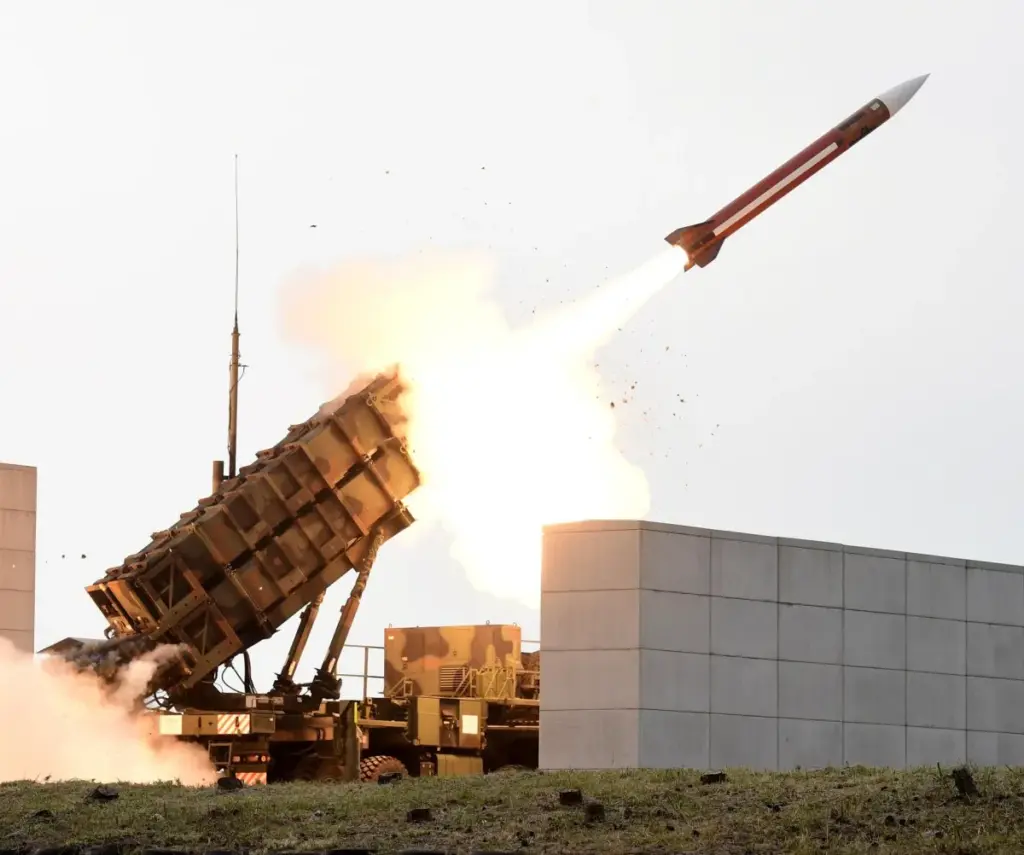
Patriot anti-aircraft missile system launchers

One of the worst consequences of Russia's war, and of Iran's tactics, is that potential aggressors worldwide now see how much damage ballistic missiles can do to human life. So the global ballistic threat will grow, and anti-ballistic defenses must grow with it, Ukrainian President Volodymyr Zelenskyy says, according to UNIAN.

Ukraine has put a number on the shield it wants to build itself against ballistic missiles: 100 systems. These systems are planned to be built as part of its FREYJA anti-ballistic project.

Zelenskyy frames the project as an answer to a threat spreading beyond Ukraine.

FREYJA is Ukraine's own interceptor, recycling a Soviet S-300 missile with a German seeker at roughly $700,000 per shot, a fraction of a $3.8 million Patriot, though its maker, Fire Point, does not target a first ballistic intercept until late 2027.

FREYJA as a shared European system

Zelenskyy pitches the Ukrainian project as Europe's future shield.

"Our FREYJA can become a common system for Europe that provides integrated protection. FREYJA will be fast to produce and tested by war," he said, offering to share all the know-how with partners if the system proves itself.

The project already has a coalition. Ten nations joined the European Anti-Ballistic Coalition in July, per Euromaidan Press, with Ukraine contributing the missile and partners supplying radars, command systems, and components Ukraine does not make.

The shield is a bet against a shortage

The 100-systems goal collides with the interceptor shortage that FREYJA is meant to solve. FREYJA has three tracks, including a transatlantic dimension and Ukraine's relationship with the US, Zelenskyy said, without disclosing details, and Ukraine needs both funding and certain components to build it.

In the meantime, Ukraine leans on the countries that already have Patriots. While Ukraine builds FREYJA and runs short on its current anti-ballistic systems, those partners that lack the production Ukraine needs but hold Patriot missiles today can invest those interceptors into Ukraine's defense, Zelenskyy said, welcoming them into the anti-ballistic coalition. The 100-system shield is the long game, while the borrowed Patriots are what keep Ukrainian skies covered until it exists.

❌