Vue normale

  • ✇Euromaidan Press
  • Russia builds and expands at least 10 drone bases. Some could put Warsaw in range – Telegraph
    Russia has built or expanded at least 10 drone bases along its borders with Ukraine and Belarus, creating launch capacity for newer jet-powered attack drones, the most powerful of which could reach Warsaw, The Telegraph reported on 16 August 2026. The network expands Russia’s capacity for mass drone attacks on Ukraine, while some sites could later threaten NATO. The findings come as Russia is also expanding bases and other military infrastructure along NATO’s northern a
     

Russia builds and expands at least 10 drone bases. Some could put Warsaw in range – Telegraph

17 août 2026 à 09:07

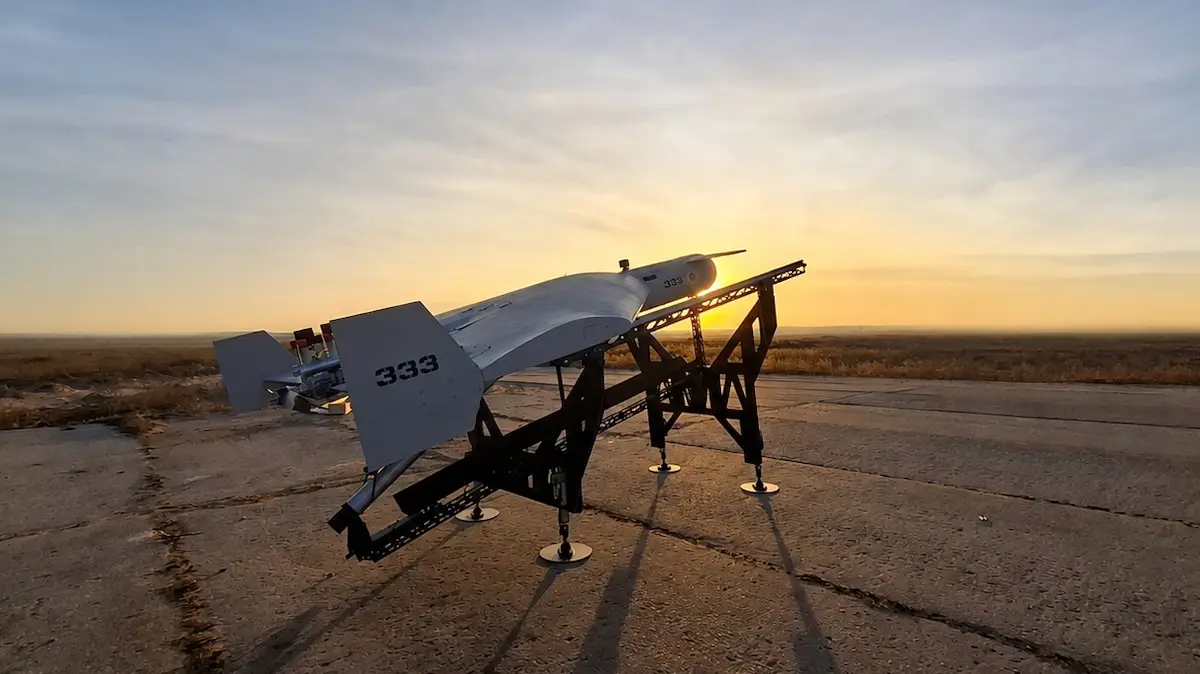
Diagram of a black Geran-4 jet-powered UAV with callouts identifying its tracker and Svekla electronic unit.

Russia has built or expanded at least 10 drone bases along its borders with Ukraine and Belarus, creating launch capacity for newer jet-powered attack drones, the most powerful of which could reach Warsaw, The Telegraph reported on 16 August 2026.

The network expands Russia’s capacity for mass drone attacks on Ukraine, while some sites could later threaten NATO. The findings come as Russia is also expanding bases and other military infrastructure along NATO’s northern and Baltic borders. The Telegraph found no evidence that Moscow is planning such an attack.

Seven of the 10 sites were used during recent bombardments of Kyiv, tracking data cited by The Telegraph showed. Using leaked documents, satellite imagery, and DroneSec's analysis, the newspaper identified at least 59 launch rails—tracks that launch fixed-wing drones without runways.

Around 20 appeared long enough for Russia’s latest long-range models, while one base could reportedly store over 1,000 drones.

Leaked Ukrainian documents cited by The Telegraph say the jet-powered Geran-4 and Geran-5 can carry 90-kilogram warheads. However, Ukrainian military intelligence puts the Geran-4’s range at up to 450 kilometers, while the larger Geran-5 has a stated range of up to 1,000 kilometers — enough to reach Warsaw from several of the new sites.

DroneSec founder Mike Monnik said expanded launch capacity and harder-to-intercept technology together increase pressure on Ukrainian air defenses.

Russia builds military infrastructure along NATO’s northern flank

Russia is also expanding military infrastructure elsewhere along NATO’s borders. A Nordic-Baltic investigation identified new or expanded infrastructure from Norway to Kaliningrad, with potential capacity for up to 115,000 personnel.

Satellite imagery showed new barracks, ammunition warehouses, and expanded bases near NATO’s northern and Baltic members.

The Institute for the Study of War, a US-based think tank, assessed that the construction likely supports future Russian operations against NATO rather than an imminent attack. Most Russian combat power remains committed to Ukraine, it said.

Other drone hubs support rapid Russian attacks

Russia has already built comparable hubs for attacks on Ukraine. Satellite imagery analyzed by the open-source intelligence group Strategic Aviation of Russia showed 10 additional launchers under construction at Tsymbulova in Oryol Oblast, following the start of work on 22 April 2026.

At occupied Donetsk Airport, the group identified enlarged launch pads, roads to a Geran and Gerbera drone warehouse, and the apparent construction of another storage building.

Ukraine’s Security Service (SBU) said it struck Shahed storage and launch sites at Primorsko-Akhtarsk on 2 August 2025. Ukraine’s Unmanned Systems Forces commander Robert "Madyar" Brovdi reported hitting drone logistics, warhead-storage, and preparation facilities at Donetsk Airport on 30 December 2025.

  • ✇Euromaidan Press
  • Ukraine may have just lost its first Swedish assault boat—to a Russian jet drone
    Sweden and its neighbors gave Ukraine the fast assault boats that carry raiders to Russian-held beaches Russia is now hunting those boats with Geran-4 jet drones One of the two boats hit this month may be the first CB-90 Ukraine has lost On or around 12 August, a Russian Geran-4 attack drone found a Ukrainian navy CB-90 in the waters off the Kinburn Spit and attacked it. Three days later, another Geran-4 went after a Ukrainian tugboat in the same waters. If th
     

Ukraine may have just lost its first Swedish assault boat—to a Russian jet drone

Par : David Axe
17 août 2026 à 08:48

Ukrainian Navy CB90 assault boats sailing Black Sea patrol operations coastal defense against Russian drones

  • Sweden and its neighbors gave Ukraine the fast assault boats that carry raiders to Russian-held beaches
  • Russia is now hunting those boats with Geran-4 jet drones
  • One of the two boats hit this month may be the first CB-90 Ukraine has lost

On or around 12 August, a Russian Geran-4 attack drone found a Ukrainian navy CB-90 in the waters off the Kinburn Spit and attacked it. Three days later, another Geran-4 went after a Ukrainian tugboat in the same waters. If the CB-90 sank, it may be the first one the Ukrainian navy has lost.

The CB-90 is a Swedish design and a Swedish gift, and it is the reason Ukraine can raid the spit at all. Fifteen meters long, armored against small arms, gun-armed and capable of around 40 knots, it can put 21 troops—or a ton of machinery—onto a hostile beach and be gone before the defenders react. Sweden has supplied most of the more than 38 in Ukrainian service; Norway, the Netherlands and the Ukrainian billionaire Rinat Akhmetov's Steel Front initiative supplied the rest. Swedish instructors trained the crews.

Russia has now answered Ukraine's raids, and it is aiming at the boats rather than the raiders. The Geran-4s doing the hunting are jet-propelled, AI-assisted and fast enough to outrun most of what Ukraine can shoot back with. If the campaign continues, it could close the approach that has made the raids possible.

What that approach makes possible is worth spelling out. In July, unmanned boats belonging to the Ukrainian Territorial Defense Forces landed at least one gun-armed unmanned ground vehicle on the Kinburn Spit, the westernmost Russian outpost in occupied Ukraine. As aerial drones watched, the UGV opened fire on a nearby Russian installation. No Ukrainian was anywhere near the beach.

Russian forces on the Kinburn Spit can monitor Ukrainian maritime traffic, making the narrow sandy spit a key outpost in the ongoing battle for the Black Sea's most important sea lanes. Ukrainian forces are determined to dislodge Russian forces from the spit. The Russians are determined to cling to their sandy outpost.

Минобороны России опубликовало видео поражения украинского патрульного катера CB-90 беспилотным летательным аппаратом «Герань-4 сикер» близ Очакова 12 августа 2026 года.

📷Геопривязка (https://t.co/oFm8LyBAdt) pic.twitter.com/SgQnTRerm9

— Lost Armour (@lostarmour) August 12, 2026

The Geran attacks are helping. The 12 August Geran raid targeted the CB-90. The 15 August Geran raid targeted the tugboat. It's unclear how much damage the Gerans inflicted, but it's worth noting that the CB-90 is just 15 m long; a tugboat might be slightly longer. A Geran's warhead weighs as much as 90 kg—probably enough to sink such a small vessel or burn it down to the keel.

The Ukrainian navy has only a few large warships, and they're all donated minehunters that have been waiting out the current wider war in the relative safety of European waters. The bulk of the Ukrainian fleet is made up of small patrol boats, auxiliaries such as tugs, and several types of unmanned surface vessels. These vessels defend waterways and ports and, more rarely, support offensive operations.

A Russian Gerbera drone struck a tugboat of the Ukrainian Navy in the Dniprovska Gulf, opposite Russian positions on the Kinburn Spit. pic.twitter.com/Arnwts6BEL

— AMK Mapping 🇳🇿 (@AMK_Mapping_) August 15, 2026

Spit raids

The July robot landing was one episode in a long Ukrainian raiding campaign along the spit—the kind of operation the Geran-4s are now trying to spoil.

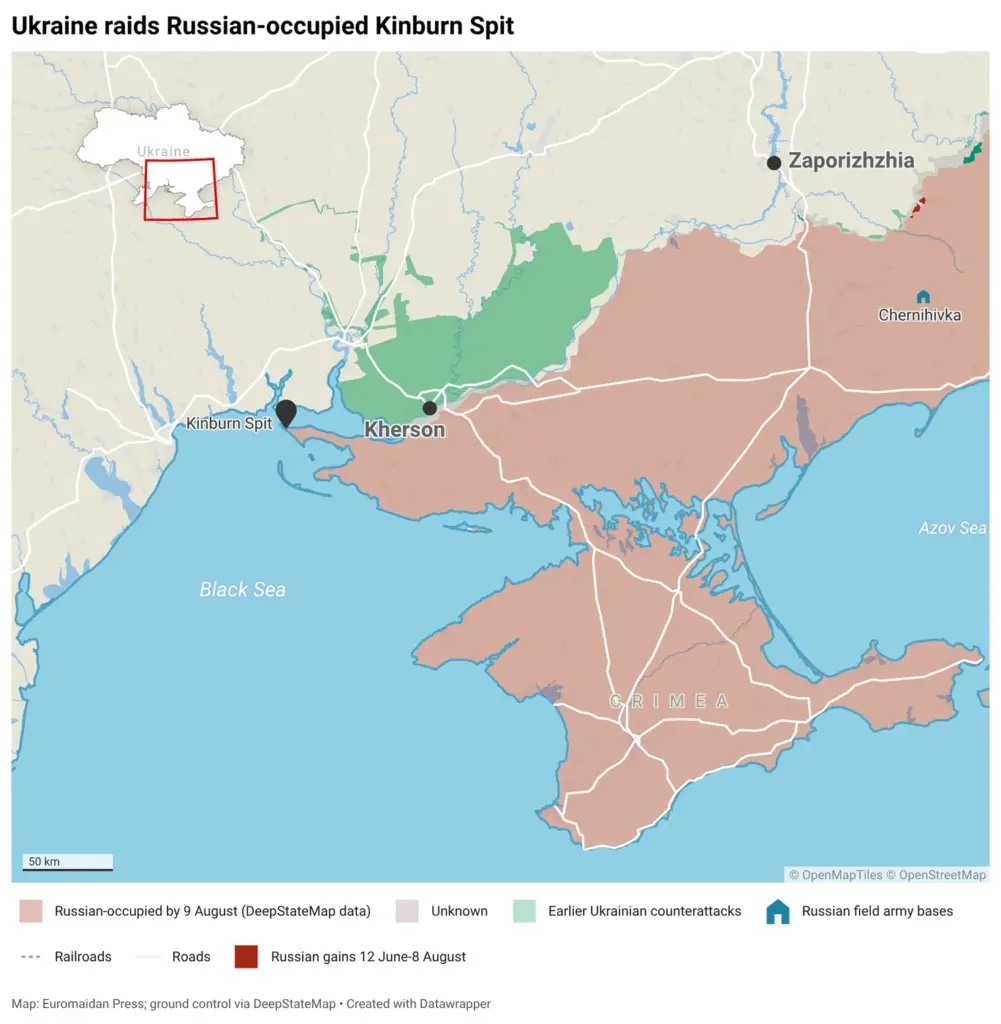
Location of Kinburn Spit. Map: Euromaidan Press

The Geran strikes on Ukrainian boats could blunt these raids and help the Russians maintain their tenuous hold on the Kinburn Spit. The Russian strikes are part of a wider maritime campaign. Shortly after Ukrainian drone units began targeting the unregistered cargo ships and tankers belonging to Russia's shadow fleet, Russian drone and missile units retaliated—with devastating attacks on Ukrainian ports and the ships sailing to and from these ports in support of Ukraine's lucrative grain exports.

The Ukrainian attacks on the shadow fleet damaged hundreds of ships and effectively ground Russian Black Sea trade to a halt. But Russian attacks on Ukrainian ports effectively ground Ukrainian Black Sea trade to a halt, too.

The MICH 2000 drone can fly up to 2,000 km and carry a warhead weighing up to 60kg. Photo courtesy of the manufacturer
Explore further

Ukraine’s new Tu-95 killer is a $48,000 copy of a drone China refused to sell

The new jet-propelled Geran-4s with their AI-assisted targeting were central to the effort. Their 500 km/h top speed makes them hard to shoot down. And the AI makes jamming far less useful than it used to be: the operator locks the drone onto a target, and from there the machine vision flies the attack, holding the lock even if Ukrainian electronic warfare severs the radio link in the final seconds.

That makes the CB-90s valuable targets. Armed with guns and armored against enemy small arms fire, they're perfect for raiding far-flung enemy outposts such as those on the Kinburn Spit. But they're vulnerable to drone attack—and each one is irreplaceable in the sense that matters, since Ukraine cannot build them and has to wait for the next donation.

Ukrainian forces aren't powerless to stop the Russians from spoiling Ukrainian raids on the spit. Geran-4s might be too fast for Ukrainian gun teams, armed light aircraft, and cheap interceptor drones, but they're not too fast for supersonic Ukrainian air force MiG-29 fighters.

Several of the MiGs patrol over the western Black Sea. One crashed recently, but others remain.

  • ✇Euromaidan Press
  • Russia builds 3,000 jet drones monthly to counter Ukrainian interceptors, HUR says
    Russia has ceased producing its Geran-3 jet-powered attack drone, Ukraine’s Military Intelligence (HUR) told the Ukrainian defense outlet Militarnyi. The agency estimates Russian industry now makes about 3,000 newer Geran-4 and Geran-5 drones per month. Russia is shifting toward faster jet drones as Ukraine’s low-cost interceptors have become more effective against slower Shaheds. The Geran-4 and Geran-5 leave defenders less time to react, requiring faster interceptors
     

Russia builds 3,000 jet drones monthly to counter Ukrainian interceptors, HUR says

12 août 2026 à 14:02

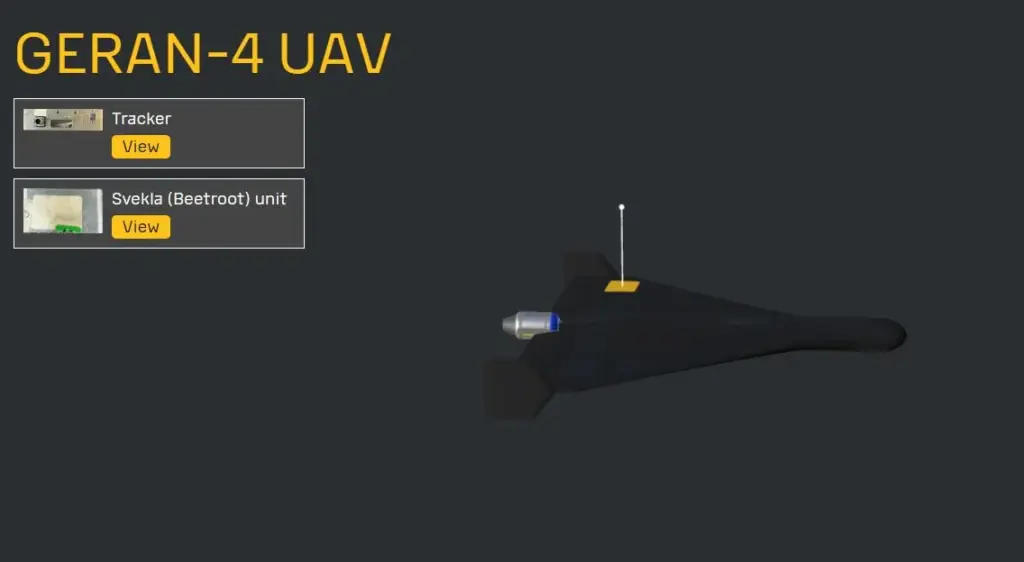
3D model of a Russian Geran-4 jet-powered attack drone, shown from above with its tracker and navigation unit listed beside it.

Russia has ceased producing its Geran-3 jet-powered attack drone, Ukraine’s Military Intelligence (HUR) told the Ukrainian defense outlet Militarnyi. The agency estimates Russian industry now makes about 3,000 newer Geran-4 and Geran-5 drones per month.

Russia is shifting toward faster jet drones as Ukraine’s low-cost interceptors have become more effective against slower Shaheds. The Geran-4 and Geran-5 leave defenders less time to react, requiring faster interceptors or short-range air defenses. At the reported production rate, these newer Geran models, previously used in limited numbers, could become a regular feature of Russian attacks.

HUR said Russia has established serial assembly of the two newer models at the Alabuga complex in Tatarstan, with other Russian companies supplying components. The agency also said Russia’s Defense Ministry wants to expand Alabuga’s capacity. Construction began in May. Satellite imagery showed large-scale work by early July 2026, although the purpose of the new buildings remains unknown.

From Geran-3 to newer jet drones

Russia first used Geran-3 drones in large numbers during a combined nighttime attack on Ukraine on 30 July 2025. At least eight flew alongside propeller-driven Shaheds and decoys. The model retained the Geran-2 airframe but replaced its piston engine with a Chinese Telefly JT80 turbojet. HUR gave it a speed of 300–370 kilometers per hour and a range of up to 1,000 kilometers.

In May, then-Defense Ministry adviser Serhii “Flash” Beskrestnov said Ukrainian defenses stopped 95% of incoming Shaheds during the most recent documented strike and predicted Moscow would produce more jet-powered Geran variants.

The newer Geran-4 has a more robust airframe than the Geran-3 and is designed for high-speed flight and maneuvers. It can reach 500 kilometers per hour.

The larger Geran-5 carries a roughly 90-kilogram warhead and has a stated range of up to 1,000 kilometers. HUR has said Russia may equip it with R-73 air-to-air missiles, potentially threatening aircraft sent to intercept it.

The Chinese engines that Russia itself can't build

The Geran line combines Iranian designs, Russian assembly, and imported technology. HUR described the Geran-3 as a localized version of Iran’s Shahed-238. It found 45 foreign components inside, including parts from the United States, China, Switzerland, Germany, Britain, and Japan.

Russia depends on China for the turbojet engines in newer Geran models. HUR deputy chief Vadym Skibitskyi told RBC-Ukraine that Russia remains fully dependent on Chinese turbojet engines for the Geran-4 and Geran-5. Each costs about $35,000–$40,000, he said.

A Chinese XK-F358 mesh radio recovered from a Geran-5 also helps Russian drones resist jamming. Its manufacturer remains outside the US, EU, UK, and Ukrainian sanctions, according to a review by Euromaidan Press.

“They hit what was in parking lot”: Russian drone operator adapted strike on Ukraine’s largest online retailer’s warehouse in real time

1 août 2026 à 15:01

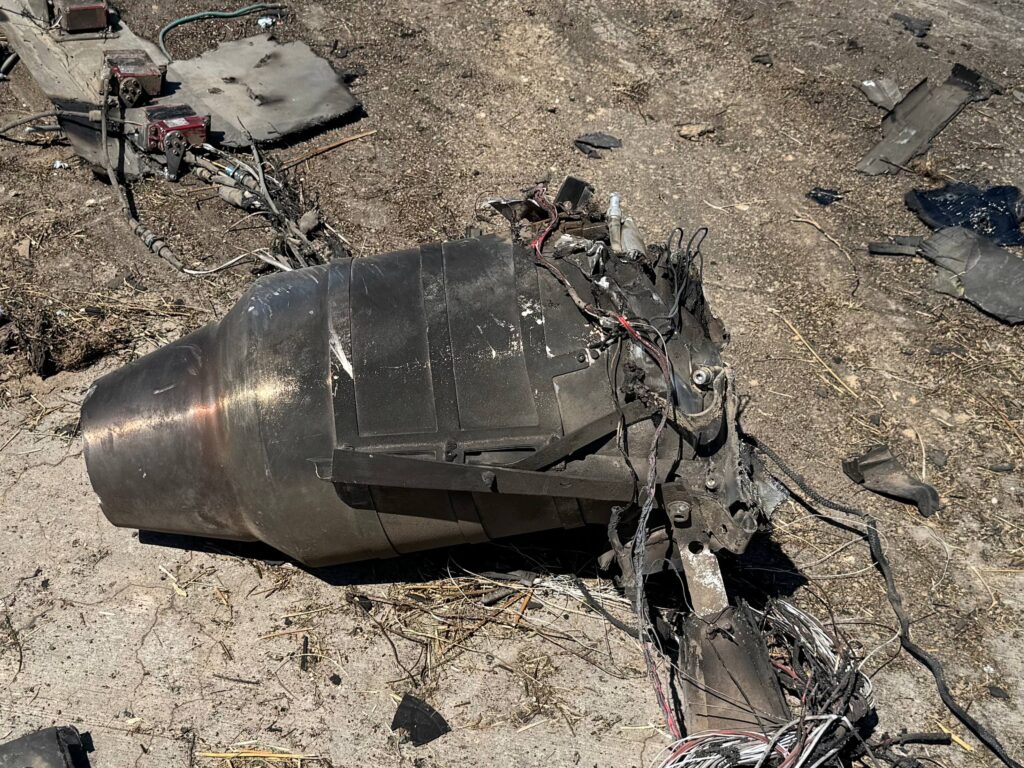
The image shows a fragment of a Russian drone Geran-4 in Kyiv Oblast. Source: Serhii "Flash" Beskrestnov

Russia killed a warehouse worker at Ukraine's largest online retailer with a guided jet-powered drone. On the morning of 1 August, Russia struck a Rozetka building where 270 people were working at the time with a jet-powered Shahed, targeting company employee Volodymyr Melnychenko and hospitalizing seven others, co-owner Iryna Chechotkina said.

Hitting Rozetka extends a Russian pattern of striking the retail and delivery infrastructure that Ukrainians depend on. Russia has repeatedly struck the sorting centers of Nova Poshta and Ukrposhta, and now the warehouses of Ukraine's largest online store.

The operator aimed at the parking lot

The strike was guided and deliberate, not a stray. Presidential adviser Serhii "Flash" Beskrestnov said the target was minibusses parked at the warehouse, which were hit by a jet-powered Geran-4 drone whose operator clearly saw where he was aiming, so there was no error in the strike.

Beskrestnov says the warehouse itself was not the point

The warehouse held nothing worth a missile, and Russia knew it, Beskrestnov stated. The expert, who has tracked Russia's drone tactics throughout, said large warehouses hold no goods, that Russian agents watching the sites know this, and that the decision to launch jet-Shahed strikes is made at a lower level than the choice of targets for ballistic missiles.

Wider perspective

Earlier this month, Ukraine expanded its deep-strike campaign from primarily targeting oil refineries and fuel depots in Russia to also targeting Wildberries' warehouses, Russia's largest e-marketplace. The campaign aims at undermining Russia's wartime economy that sustains the ongoing invasion of Ukraine.

Ukrainian drones have already destroyed eight warehouses of Wildberries in July, about 15.4% of its storage, according to Euromaidan Press reporting. That campaign was itself Ukraine's answer to years of Russian strikes on Nova Poshta and Ukrposhta depots. The Center for Countering Disinformation said on 27 July that the marketplace was selling goods for the Russian military.

❌