❌

Vue normale

Guns fall silent around Russian-occupied Oleshky so its starving residents can get aid, but Russia’s guarantees remain secret
27 octobre 2026 à 06:40

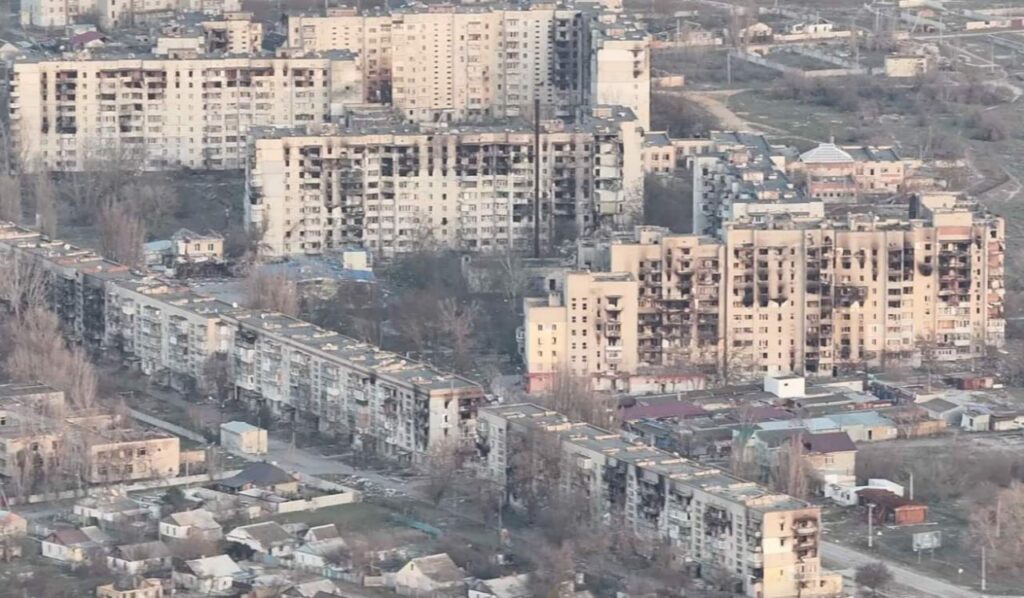
Oleshky, Kherson Oblast, has been under Russian occupation since 2022, following Russia’s capture of the city during the initial phase of its full-scale invasion of Ukraine.

A ceasefire around Russian-occupied Oleshky in Kherson Oblast took effect at 03:00 on 27 October Kyiv time, and both sides were complying with the agreements, Ukraine’s human rights ombudsman Dmytro Lubinets said. Russia’s Defense Ministry reported that its forces had stopped firing on the Kherson axis at 04:00 Moscow time, at the same moment.

Russia has kept Oleshky cut off for months. In June, the UN Human Rights Monitoring Mission in Ukraine documented worsening shortages of food, medicine, and medical care there and in neighboring Hola Prystan. As of 8 October, Lubinets’ office still saw no practical breakthrough toward an organized evacuation, with 358 residents verified as needing help to leave. The ceasefire is the first step that has to hold before aid can go in and residents can leave, an operation Marc Beckman, the first lady’s chief adviser, expects to take five to seven days.

By 09:00 on 27 October, Russian forces were still observing the ceasefire, according to Pavlo Drohal, spokesperson for Ukraine’s 30th Marine Corps. Kyrylo Budanov, head of the Presidential Office, announced that the mission had begun and that Lubinets had gone to the site to coordinate it.

Ceasefire brought forward by two days

The White House announced on 23 October that First Lady Melania Trump had secured a localized ceasefire, set to begin on 29 October. The same evening, Russia’s chief of General Staff Valery Gerasimov announced a ceasefire on the Kherson axis from 27 October, with engineering reconnaissance and a secured route for a humanitarian convoy. Ukraine’s General Staff followed, introducing a ceasefire in a designated area from the same hour.

Beckman told Ukrinform on 26 October that Russia had moved the ceasefire two days earlier and extended it beyond Oleshky into Kherson Oblast. Lubinets said on 23 October that the mission should effectively begin on 29 October, after demining, adding that the date was not a matter of principle for either side.
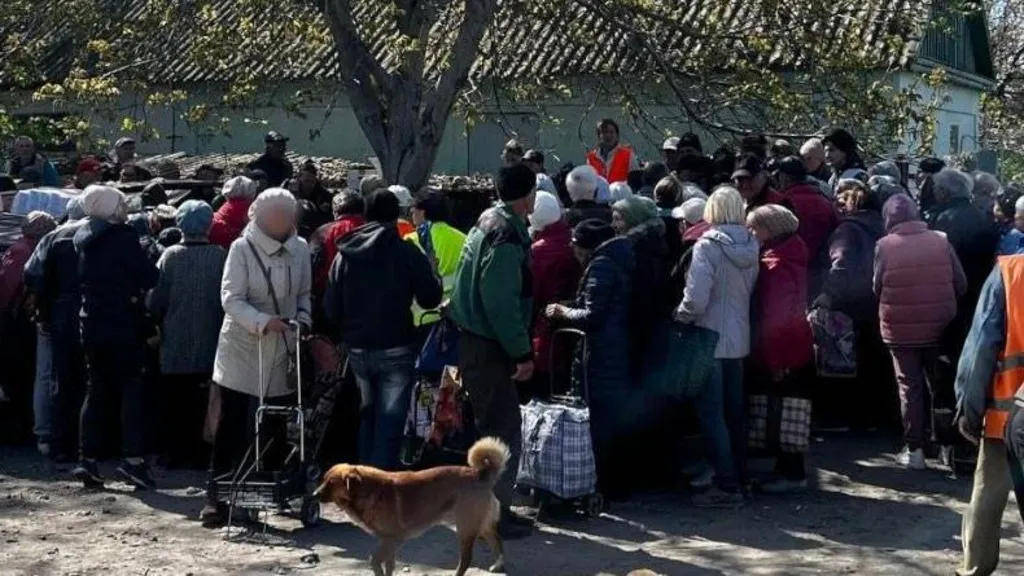
People in Oleshky wait for food supplies
People in Oleshky wait for food supplies. Photo: BBC

A day after the announcement, Lubinets and his Russian counterpart Yana Lantratova, who lead the two negotiating groups, confirmed the timing in an online meeting, he said. According to Lubinets, the agreement covers demining the road to Oleshky, delivering food, water, medicine, and hospital equipment, and safe movement for civilians.

Newsmax to document the operation

Meanwhile, Melania Trump said she had secured an “impartial American media organization” to accompany the Russian and Ukrainian teams. Beckman named it as Newsmax. He said he had worked directly with the channel’s owner, and that its journalists would record testimony as what he called neutral American observers.

Residents could leave for Ukraine or Russia, or stay, Beckman said. He added that Russia had assured Kyiv and Washington it would respect their choice of destination. Both governments asked him not to disclose what guarantees Russia gave or how violations would be handled, he said. He expects the operation to take five to seven days after 29 October, with an extension possible if both sides agree.

Diplomat doubts the truce will move peace talks

At the same time, Kostiantyn Yelisieiev, Ukraine’s ambassador to the EU in 2010–2015, told Radio NV the truce became possible only through the personal involvement of Donald and Melania Trump. The US president, he said, sees it as a way to show Americans he is bringing peace closer. He said he expects Russia to attempt provocations aimed at pushing residents toward the Russian side.

Yelisieiev said he does not share the optimism of those who think Oleshky could push the wider peace process forward. He compared it to the Black Sea grain corridor, a one-off arrangement that no longer works. He warned of a “diplomatic smokescreen”: Russia imitates negotiations while it keeps fighting, hoping Ukraine and its partners weaken over time.

Ukrainian drone delivering aid to occupied Oleshky on the night of 4 October
Ukrainian drone delivering aid to occupied Oleshky on the night of 4 October. Screenshot from video: Ivan Vyhivskyi / Facebook

A town under blockade

Oleshky lies on the left bank of the Dnipro, about 4 km from Kherson, and has been occupied since February 2022, Radio Svoboda reported. The White House says it had about 24,000 residents before the war and estimates 1,700 to 2,000 remain, mostly elderly, including about 50 children. Russian troops have also seized food dropped by Ukrainian drones, a local official said.

Ukraine-NATO AI built to forecast Russia’s front-line drone attacks from past data and weather is ready to plug into the army

14 octobre 2026 à 08:07

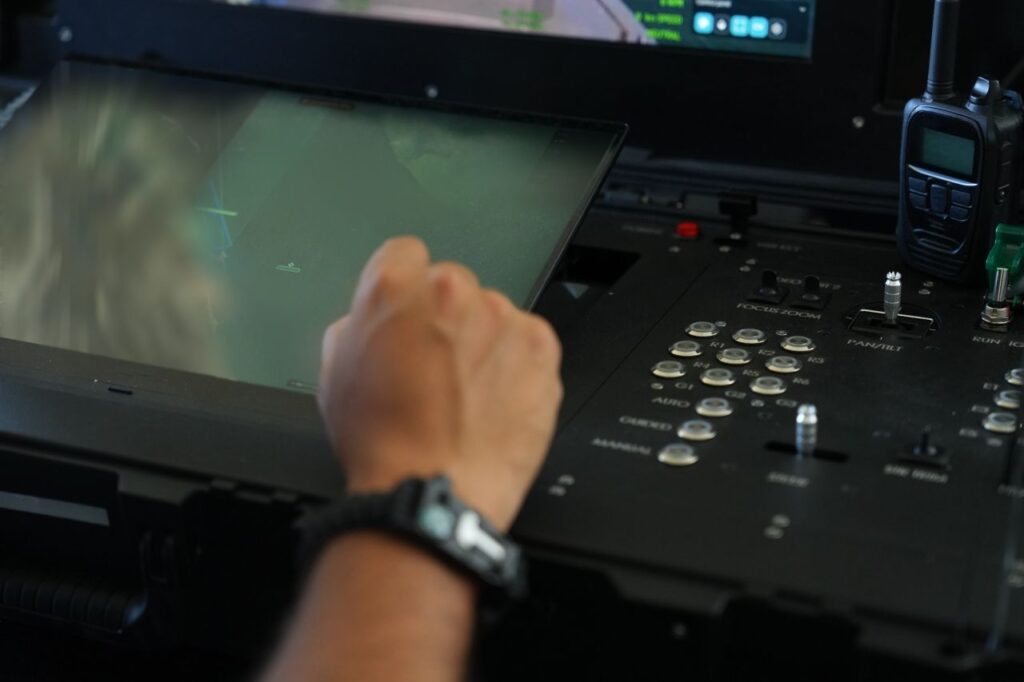
UFORCE drone control station. September 2026.

Ukraine and NATO have unveiled two artificial intelligence (AI) tools in Vilnius, Lithuania, Ukraine’s Defense Ministry reported on 13 October. One forecasts Russian drone attacks near the front and is ready to join the Armed Forces’ situational awareness systems. The other helps plan artillery fire and is still in testing.

A forecast of where, when, and which drones will fly targets the main source of losses near the front. In March, Ukraine’s military put the share of front-line casualties caused by FPV drones at up to 80%. In May, Ukraine’s drone forces commander Robert Brovdi said Russia was copying Ukraine’s model to grow its drone forces. A month earlier, Presidential Office head Kyrylo Budanov wrote that adding more drones no longer fundamentally changes the battlefield. The next stage, he said, is full integration of AI.

Forecasting Russian drone attacks

The NATO-Ukraine Joint Analysis, Training and Education Center (JATEC) presented both at a three-day seminar in the Lithuanian capital. NATO’s Allied Command Transformation and Ukraine’s Armed Forces built the tools with JATEC’s support.

“The solution has already been validated using real-world datasets. It has been refined and is ready for integration into the Armed Forces of Ukraine's situational awareness systems,” the ministry said.

Model No. 13 works from past data, weather, and the current battlefield situation. The ministry said it can identify the intensity of attacks, the areas, the time windows, and the types of drones with a high probability.

Ranking artillery options

Model No. 32 is a decision-support module. It tests whether artillery plans can be generated automatically. It weighs the mission’s requirements and current operational data, including available weapons, ammunition, firing positions, and constraints.

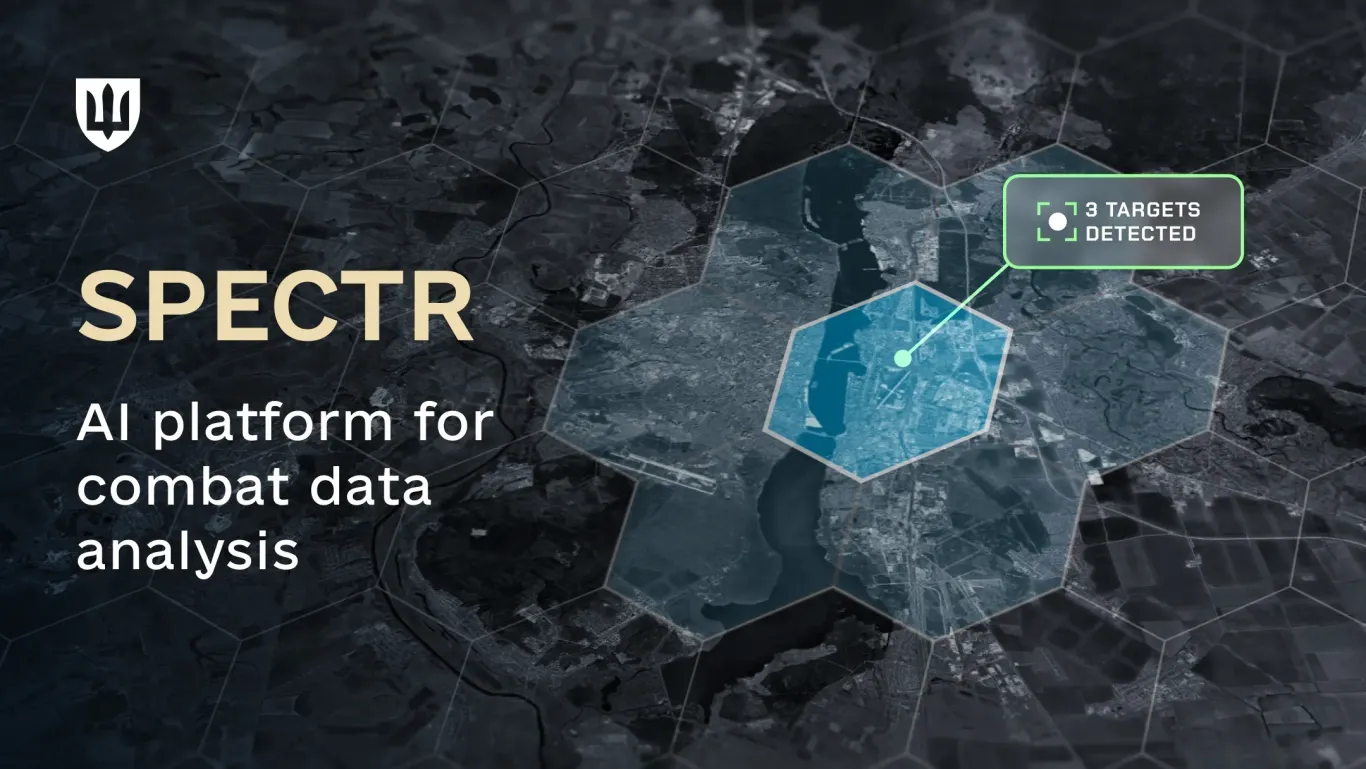
SPECTR.
Explore further

Ukraine’s new military AI does more than watch the battlefield—it helps commanders plan what comes next

First, it applies logistics, ballistics, and impact-zone parameters to throw out unworkable options. Then it scores and ranks the rest. That means less hand-based comparison, faster decisions, and a more efficient fire loop, the ministry said. The prototype is now with the Ukrainian military for trials. If the trials succeed and it is validated, it could be expanded to other units that strike Russian forces.

  • ✇Euromaidan Press
  • Ukraine warns of “a new type of humanitarian crisis” as Russia aims at its biggest cities
    Ukraine is drafting crisis scenarios for November to March as Russian strikes target the country’s biggest cities, Head of the Presidential Office Kyrylo Budanov said on 13 October after chairing a meeting with donor-country diplomats and humanitarian organizations. His deputy Iryna Vereshchuk warned the same day that this winter may bring a new type of humanitarian crisis. She asked donors to be ready with fast extra funding. Russia has struck Ukraine’s grid deep into winter before: la
     

Ukraine warns of “a new type of humanitarian crisis” as Russia aims at its biggest cities

14 octobre 2026 à 06:32

kyiv strike

Ukraine is drafting crisis scenarios for November to March as Russian strikes target the country’s biggest cities, Head of the Presidential Office Kyrylo Budanov said on 13 October after chairing a meeting with donor-country diplomats and humanitarian organizations. His deputy Iryna Vereshchuk warned the same day that this winter may bring a new type of humanitarian crisis. She asked donors to be ready with fast extra funding.

Russia has struck Ukraine’s grid deep into winter before: last February, it launched more than 500 missiles and drones as temperatures fell below −20°C. Strikes have continued despite a US-announced energy truce Moscow has not confirmed. Kyiv now wants donors ready to pay for the humanitarian fallout in advance.

Crisis scenarios for November to March

The core task is clear crisis scenarios and synchronized response plans for that period, Budanov wrote. The government is building a baseline threat scenario through the State Emergency Service, while the military and intelligence will provide a risk assessment.

“The available resource must be concentrated where people will have the hardest time,” Budanov wrote.

Ukraine, he added, must hold its rear as reliably as the Defense Forces hold the front line.

What officials mean by a new type of crisis

A war of rear areas is underway, Vereshchuk wrote. Russia is changing tactics in an attempt to deepen the humanitarian crisis, especially in Kyiv, Kharkiv, Odesa, and Dnipro, she added.

Vereshchuk did not define what makes the crisis new, but she tied her warning to the big cities.

“This winter, it is the big cities that may become the testing ground of our national resilience,” she wrote.

Humanitarian organizations must adapt their plans to protect and support civilians, Vereshchuk wrote. Donors, she said, must be ready to provide additional crisis-response funding quickly.

The capital lags behind

Ukrainian President Volodymyr Zelenskyy wrote on 13 October that even border and frontline oblasts were ahead of Kyiv on resilience plans as of mid-October. Even single hits by Shahed attack drones can cut power and water across much of the capital, he noted. He also began consultations on urgent security and management steps to fix the situation in the city.

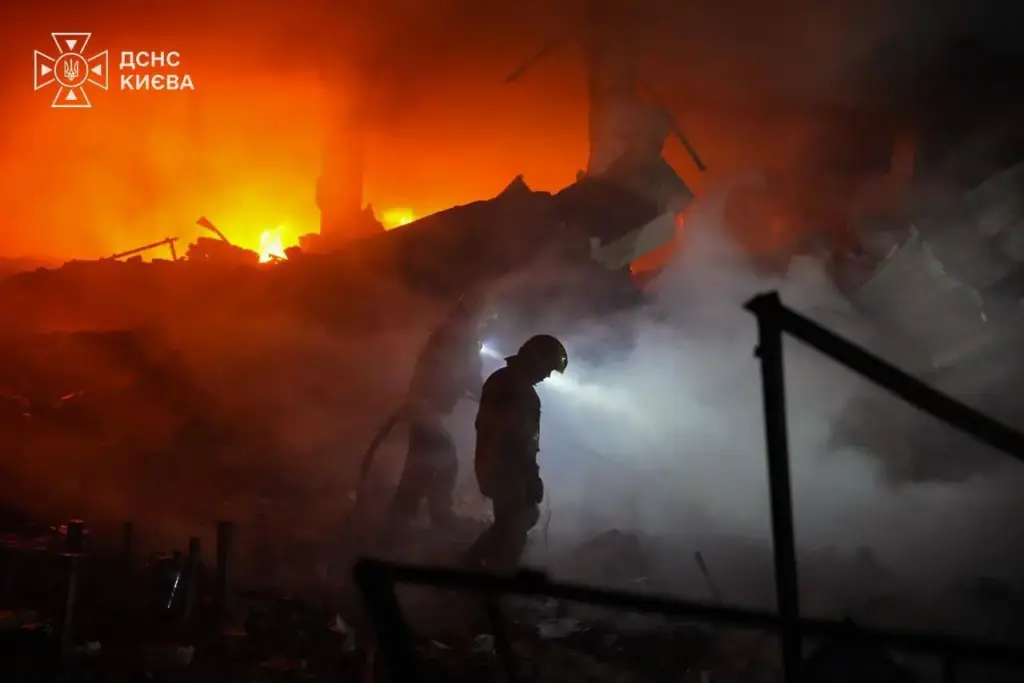
Aftermath of the Russian attack on Kyiv overnight into 14 October 2026
Explore further

Three days after Washington announced an energy ceasefire, Russia fires 39 ballistic missiles at Ukraine’s grid

Russia carried out more than 200 strikes on Ukraine’s power generation and transmission in the week to 11 October, Zelenskyy said. Overnight on 14 October, Russia fired 39 ballistic missiles and more than 120 drones at energy and critical infrastructure. The barrage left at least 600,000 people without power, Zelenskyy said.

  • ✇The Kyiv Independent
  • Zelensky's top adviser behind bid to replace prime minister, spy chief, sources tell Economist
    Andriy Yermak, head of Ukraine's Presidential Office, has been leading campaigns to supplant three top officials in the Ukrainian government, the Economist reported on July 6, citing multiple anonymous officials. The story follows a corruption probe into Deputy Prime Minister Oleksii Chernyshov, the highest-ranking official in Ukrainian history to face such charges while still in office. According to the Economist's sources, Yermak was a driving force behind the investigation.Yermak, President V
     

Zelensky's top adviser behind bid to replace prime minister, spy chief, sources tell Economist

6 juillet 2025 à 15:06
Zelensky's top adviser behind bid to replace prime minister, spy chief, sources tell Economist

Andriy Yermak, head of Ukraine's Presidential Office, has been leading campaigns to supplant three top officials in the Ukrainian government, the Economist reported on July 6, citing multiple anonymous officials.

The story follows a corruption probe into Deputy Prime Minister Oleksii Chernyshov, the highest-ranking official in Ukrainian history to face such charges while still in office. According to the Economist's sources, Yermak was a driving force behind the investigation.

Yermak, President Volodymyr Zelensky's close friend and chief adviser, spurred on the Chernyshov probe while also renewing attempts to replace Kyrylo Budanov, head of Ukraine's military intelligence agency (HUR) , and Prime Ministery Denys Shmyhal, three unnamed officials told the Economist.

There is no evidence that Yermak ordered an investigation into Chernyshov, the Economist reports, but officials told the outlet that he influenced the case by allowing it to progress while freezing other investigations.

Chernyshov ran afoul of Yermak by offering himself as an alternative liaison to Washington, the officials claimed. His removal would also reportedly clear the way for Deputy Prime Minister Yuliia Svyrydenko, a Yermak protege, to assume the role of Prime Minister in the event of Shmyhal's dismissal.

Rumors of a government reshuffle unseating Shmyhal have circulated for months. Ukrainian media reported last summer that Zelensky was considering replacing the prime minister with Svyrydenko. While several key officials were replaced in a reshuffle in September 2024, Shmyhal kept his post.

Chernyshov, too, has said he will not step down from his role as deputy prime minister despite the ongoing corruption probe.  

Reports of imminent dismissal have also periodically surrounded Budanov, Ukraine's spy chief. Budanov has rejected such rumors as "Russian propaganda" in the past.

Sources told the Economist that Yermak was leading another effort to oust Budanov in June 2025. According to the outlet, warnings from the White House not to fire Budanov may have helped secure his position.

Politico reported in June that U.S. officials, particularly those working in the Trump administration, found Yermak's diplomatic style abrasive and off-putting, potentially risking U.S.-Ukrainian relations at a critical time.

Ukraine imposes sanctions on Russian financial, cryptocurrency schemes
Restrictions were imposed on 60 legal entities and 73 Russian citizens.
Zelensky's top adviser behind bid to replace prime minister, spy chief, sources tell EconomistThe Kyiv IndependentKateryna Hodunova
Zelensky's top adviser behind bid to replace prime minister, spy chief, sources tell Economist

  • ✇The Kyiv Independent
  • North Korea already using Russian Pantsir missiles to defend Pyongyang, Ukraine's intelligence chief says
    North Korea is already using Russia Pantsir S-1 air defense systems in Pyongyang, Kyrylo Budanov, head of Ukraine's military intelligence (HUR), said in an interview with Hromadske Radio on July 1. The arrival of Pantsir missiles is another sign that North Korea is improving its weapons technology and military might through cooperation with Russia. The two nations signed a defense treaty in June 2024, and North Korea has supplied arms and troops to Moscow in exchange for training and advanced mi
     

North Korea already using Russian Pantsir missiles to defend Pyongyang, Ukraine's intelligence chief says

1 juillet 2025 à 16:15
North Korea already using Russian Pantsir missiles to defend Pyongyang, Ukraine's intelligence chief says

North Korea is already using Russia Pantsir S-1 air defense systems in Pyongyang, Kyrylo Budanov, head of Ukraine's military intelligence (HUR), said in an interview with Hromadske Radio on July 1.

The arrival of Pantsir missiles is another sign that North Korea is improving its weapons technology and military might through cooperation with Russia. The two nations signed a defense treaty in June 2024, and North Korea has supplied arms and troops to Moscow in exchange for training and advanced military technology.

"I can tell you that, for example, the first Pantsir S-1 installations have already appeared in Pyongyang," Budanov told Hromadske Radio.

"They are already on combat duty there, guarding their capital. And the Russians are retraining Korean personnel, and soon the Koreans will be working autonomously on this technology."

The Pansir S-1 is the same air defense system Russia uses to guard its military-industrial facilities. It carries an estimated price tag of around $15 million.

North Korea is "currently significantly increasing its military power" through direct cooperation with Russia, Budanov said. It benefits from Russia's ongoing technology transfers and the "real combat experience" personnel gained by fighting alongside Russian troops against Ukraine.  

Budanov also said Ukraine expects "a significant increase" in the number of North Korean citizens in Russia. Some of these citizens will sign up for the Russian military, making it seem less like an official transfer of North Korean personnel and more like voluntary registration from invidivual citizens.

The day before Budanov's comments, North Korean leader Kim Jong Un publicly honored his country's soldiers who were killed fighting in Russia's war against Ukraine. The ceremony coincided with a visit by Russian Culture Minister Olga Lyubimova, illustrating the deepening military alliance between Moscow and Pyongyang continues.

Russia has also reportedly provided North Korea with advanced electronic warfare systems, helped the country build modern warships, and improved its KN-23 ballistic missiles.

In June, Budanov said that Moscow has agreed to assist Pyongyang in mass-producing Shahed-type attack drones.

Russia-Iran alliance wavers as Tehran suffers major blows
Tehran, Russia’s main ally in the Middle East, has been dealt a heavy blow as Israel dismantled its network of proxies and then struck targets in Iran. The recent Iranian-Israeli war, which ended with a ceasefire on June 24, showed that the regional balance of power has shifted in Israel’s favor. This could have a major impact on Russian-Iranian relations as Moscow will have to recalibrate its approach to the region. Russian-Iranian cooperation is likely to continue but Iran’s ability to help
North Korea already using Russian Pantsir missiles to defend Pyongyang, Ukraine's intelligence chief saysThe Kyiv IndependentOleg Sukhov
North Korea already using Russian Pantsir missiles to defend Pyongyang, Ukraine's intelligence chief says

  • ✇The Kyiv Independent
  • Ukraine has evidence Russia prepares military operations in Europe, Zelensky says
    Ukrainian intelligence has proof that Russia is preparing new military operations in Europe, said President Volodymyr Zelensky on June 22 after a report from military intelligence (HUR) chief Kyrylo Budanov."We are observing a continued intellectual decline within the Russian leadership and have evidence that they are preparing new military operations on European territory," Zelensky said on X.Zelensky added that Ukraine will inform foreign partners regarding the information obtained by intellig
     

Ukraine has evidence Russia prepares military operations in Europe, Zelensky says

22 juin 2025 à 10:29
Ukraine has evidence Russia prepares military operations in Europe, Zelensky says

Ukrainian intelligence has proof that Russia is preparing new military operations in Europe, said President Volodymyr Zelensky on June 22 after a report from military intelligence (HUR) chief Kyrylo Budanov.

"We are observing a continued intellectual decline within the Russian leadership and have evidence that they are preparing new military operations on European territory," Zelensky said on X.

Zelensky added that Ukraine will inform foreign partners regarding the information obtained by intelligence. The statement follows earlier warnings by Kyiv that Russia may be preparing aggression beyond Ukraine's borders.

The president did not provide further details on the planned Russian operations, their dates, or countries that might be targeted.

"We are preparing joint decisions for defense, in particular with the United Kingdom and the European Union," Zelensky wrote.

Zelensky confirmed that Ukraine will continue its efforts to weaken Russia's army.

"We’re aware of... (Russia's) key vulnerabilities and will strike accordingly to defend our state and people, as well as to significantly reduce Russia’s capacity for aggression," the president said.

Since its full-scale invasion of Ukraine in 2022, Russia has ramped up sabotage operations across Europe, aiming to destabilize the security situation in countries supporting Kyiv against Russian aggression.

Ukrainian foreign intelligence warned in May that Russia would be able to restore its combat capabilities and launch aggression against Europe between two and four years after hostilities in Ukraine ended.

Foreign officials and EU diplomats have increasingly called for the preparation for a potential full-scale conflict between NATO and Russia. On June 2, the United Kingdom announced its largest defense spending increase since the Cold War in the face of "the war in Europe," according to U.K. Prime Minister Keir Starmer.

Russia ‘afraid to admit’ scale of losses, trying to hide by dumping soldiers’ bodies on Ukraine, Zelensky says
Ukrainian authorities have confirmed that at least 20 of the bodies Russia returned as Ukrainian were actually Russian soldiers, President Volodymyr Zelensky said.
Ukraine has evidence Russia prepares military operations in Europe, Zelensky saysThe Kyiv IndependentTim Zadorozhnyy
Ukraine has evidence Russia prepares military operations in Europe, Zelensky says
❌