Given the challenges in forecasting and detecting such calamities, researchers advised banning construction on floodplains and marking out clear evacuation routes.
Given the challenges in forecasting and detecting such calamities, researchers advised banning construction on floodplains and marking out clear evacuation routes.
The widened channel of the Bhote Koshi River in Nepal on Thursday after the flash flooding. Most monitoring and early-warning systems for glacial hazards focus on a specific area of risk.
Given the challenges in forecasting and detecting such calamities, researchers advised banning construction on floodplains and marking out clear evacuation routes.
Given the challenges in forecasting and detecting such calamities, researchers advised banning construction on floodplains and marking out clear evacuation routes.
The widened channel of the Bhote Koshi River in Nepal on Thursday after the flash flooding. Most monitoring and early-warning systems for glacial hazards focus on a specific area of risk.
The deadly Himalayan torrent damaged roads and dozens of bridges. The devastation was impeding the search for survivors and relief deliveries, aid groups said.
The deadly Himalayan torrent damaged roads and dozens of bridges. The devastation was impeding the search for survivors and relief deliveries, aid groups said.
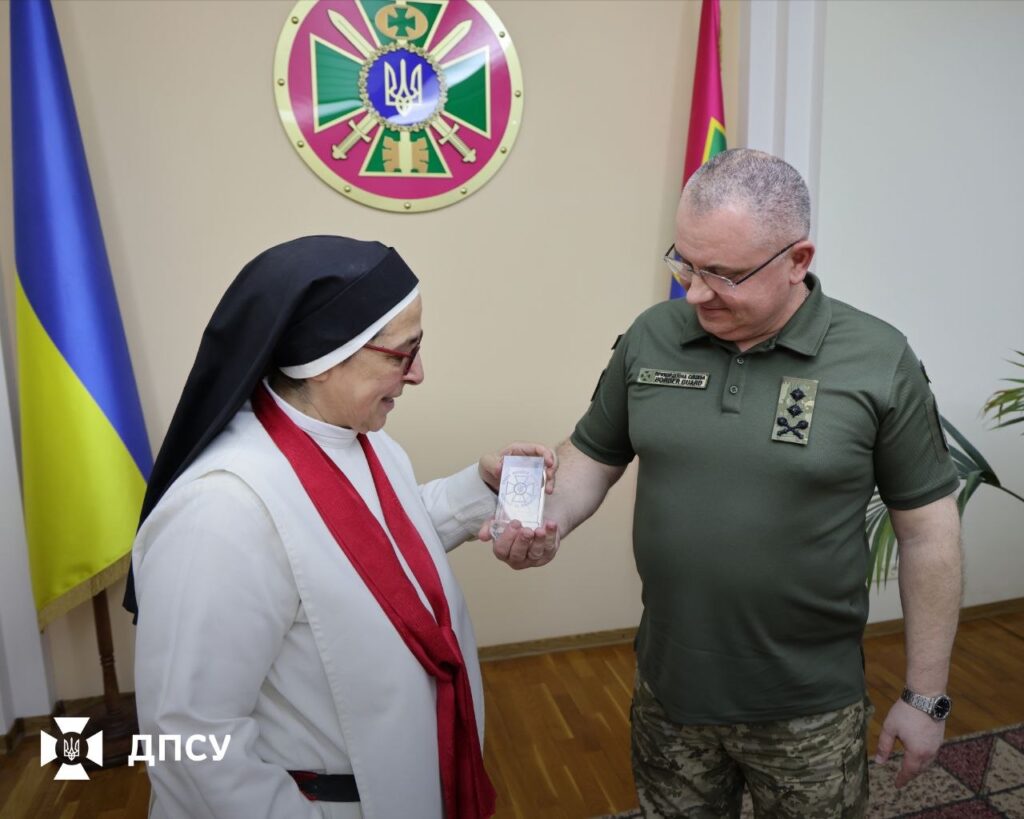
A delegation from the Spanish Santa Clara Convent Foundation, with Sister Lucía Caram, visited Ukraine on its most important day. It handed an ambulance, a pickup, and five cars to the 11th Border Detachment, the "Forpost" brigade holding one of the hardest sectors in Kharkiv Oblast, the State Border Guard Service reported.
The vehicles are the visible part of a medical channel. Sister Lucía Caram, based in Manresa, delivered its 45th convoy to Kyiv this week, according
A delegation from the Spanish Santa Clara Convent Foundation, with Sister Lucía Caram, visited Ukraine on its most important day. It handed an ambulance, a pickup, and five cars to the 11th Border Detachment, the "Forpost" brigade holding one of the hardest sectors in Kharkiv Oblast, the State Border Guard Service reported.
The vehicles are the visible part of a medical channel. Sister Lucía Caram, based in Manresa, delivered its 45th convoy to Kyiv this week, according to Atalayar.
The surgery program moves to its next stage
Acting Border Guard Service head Major General Valerii Vavryniuk met the delegation alongside a simultaneous video call with Spanish Defense Minister Margarita Robles.
Two commitments came out of it. The border service is to continue rehabilitating severely wounded border guards in Spanish medical facilities, and to begin advanced training for its own surgeons in reconstructive surgery.
Housing came up as well
Caram raised an initiative by the HANSEN Ukrainian Mission, which offered partnership support in housing families who lost their homes to fighting in the east.
The two sides also discussed rehabilitation more broadly for border guards wounded in combat. Vavryniuk thanked Caram and Spain for the aid programs.
Catalan business pays for the convoys
Before the meeting, Caram and the head of the 10th Mobile Border Detachment laid flowers at the Nebesnyi Dozor monument in Kyiv's Darnytskyi district. She also attended Ukraine's National Prayer Breakfast, the annual interfaith event bringing together political, religious, and civic figures.
Earlier, Robles announced Spain would transfer 100 VAMTAC armored tactical vehicles to Ukraine, along with a batch of 155 mm artillery shells.
In March, Spanish Prime Minister Pedro Sánchez announced a new €1 billion military aid package for Ukraine for 2026. Part of the aid, financed through the EU SAFE instrument, was intended to support the development of joint production within Ukraine’s defense industry.
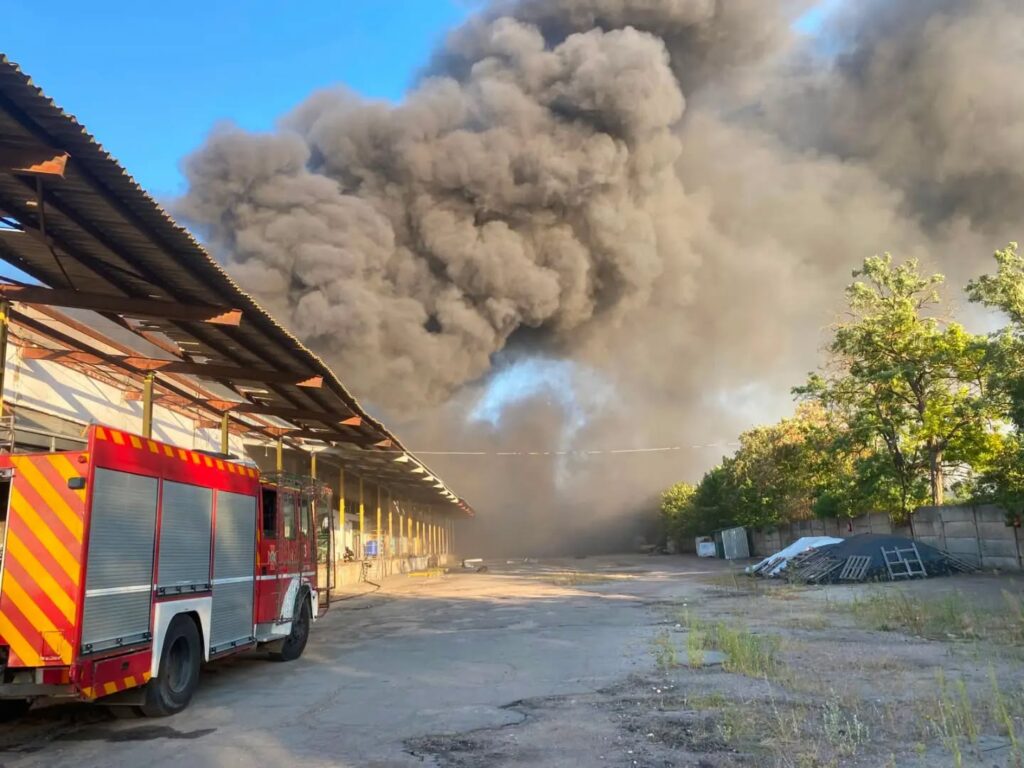
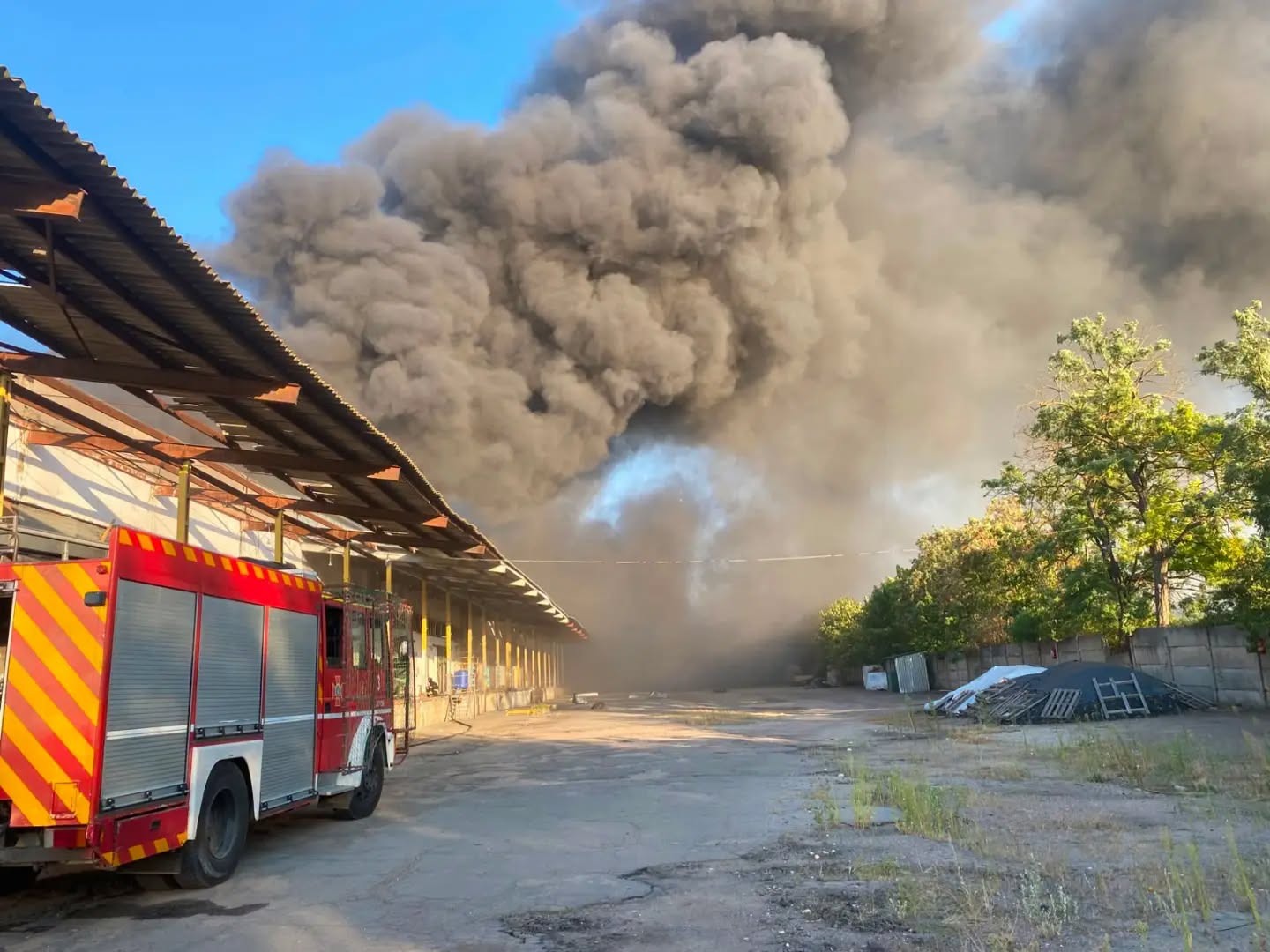
Humanitarian supplies stored for the coming winter in Kherson burned in a Russian drone attack, the Ukrainian Red Cross said. The fire at the organization's warehouse also took stock kept for emergency repairs after Russian strikes. The attack injured no staff or volunteers, and Red Cross teams keep working in Kherson and Kherson Oblast.
The war grinds on with daily Russian strikes on cities far behind the front, wearing civilians down while Russia's ground gains stay s
Humanitarian supplies stored for the coming winter in Kherson burned in a Russian drone attack, the Ukrainian Red Cross said. The fire at the organization's warehouse also took stock kept for emergency repairs after Russian strikes. The attack injured no staff or volunteers, and Red Cross teams keep working in Kherson and Kherson Oblast.
The war grinds on with daily Russian strikes on cities far behind the front, wearing civilians down while Russia's ground gains stay slow and costly, and humanitarian stock is one of the things that campaign consumes.
Winter equipment, medical supplies, and blankets among the burned stock
The attack occurred on the evening of 23 August. The fire damaged or destroyed aid worth almost UAH 28 million ($626,000), the Red Cross said. Part of the stock was equipment and materials for the autumn and winter period. Another part was held for fast response after Russian shelling, including materials for temporarily covering damaged buildings. The warehouse also stored medical supplies, blankets, hygiene kits, and equipment for supplying water and electricity.
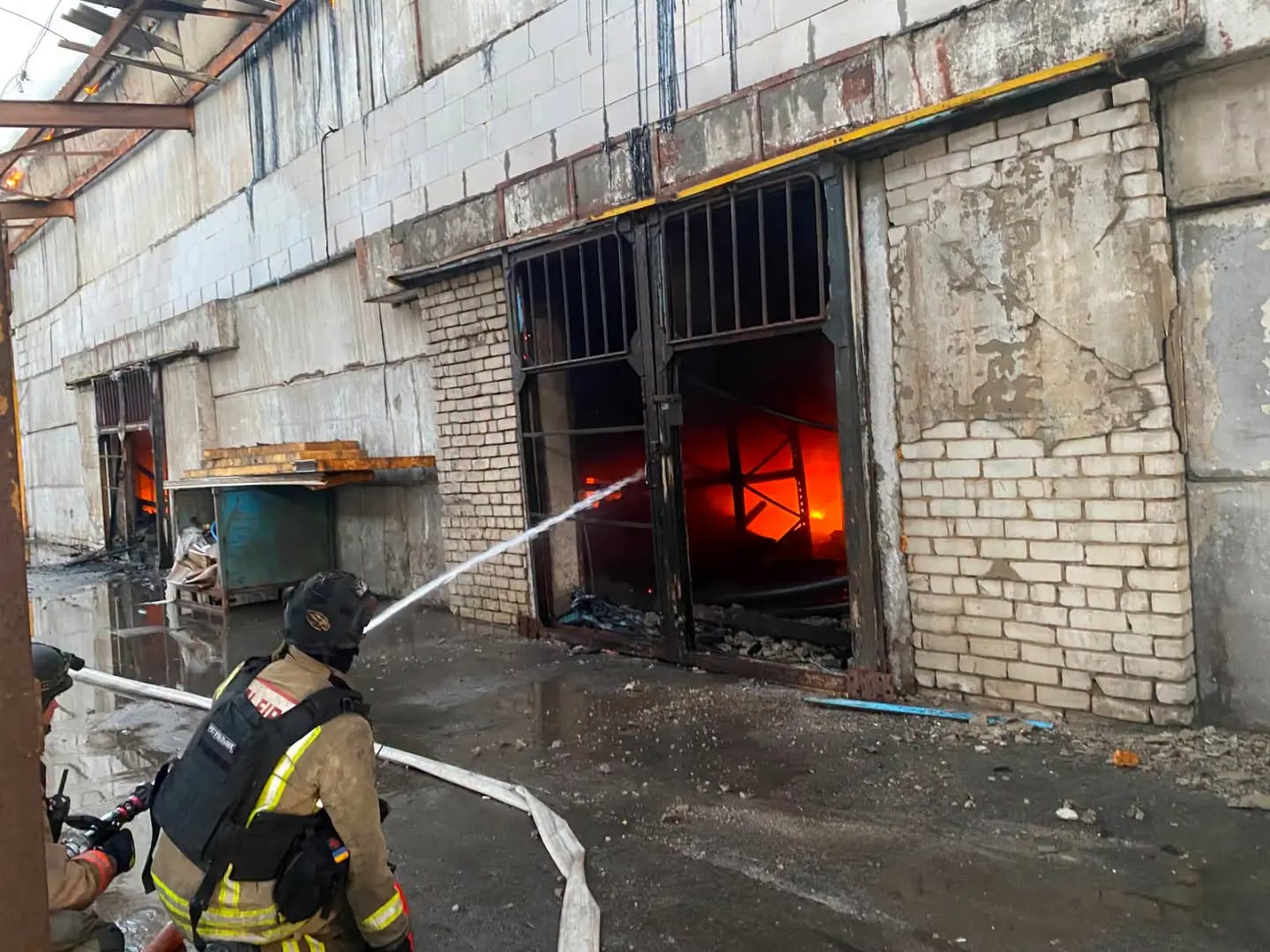
A firefighter directing water into the burning Ukrainian Red Cross warehouse, Kherson, 23 August 2026. Photo: Ukrainian Red Cross
Kherson and the de-occupied part of Kherson Oblast come under Russian attack every day with various weapons. Authorities there report civilian casualties and damage daily. Ukrainian prosecutors have documented more than 11,000 small-drone attacks on civilians since 2024, with nearly half of the cases in Kherson Oblast.
Aid the Ukrainian Red Cross stockpiled for winter in Kherson burned in a Russian drone attack
Aid stores keep burning across Ukraine
In early August, the Ukrainian Red Cross said Russian forces had subjected its facilities to "unprecedented attacks" in July, which hurt its ability to respond quickly and deliver aid to people. A massive Russian attack on Kyiv damaged one of its warehouse complexes, burning 320,000 units of humanitarian cargo and hospital equipment worth more than $1.77 million. Russian forces destroyed a Red Cross humanitarian aid warehouse in Kherson on 20 December 2023.
Fire burning inside the Ukrainian Red Cross warehouse, with rubble outside the building, Kherson, 23 August 2026. Photo: Ukrainian Red Cross
Other aid stores have burned this summer, among them a World Health Organization medical warehouse in Dnipro and a Kyiv Oblast warehouse holding HIV-prevention supplies.
The European Commission approved €6.1 billion ($7.12 billion) in new defense procurement for Ukraine on 24 August, covering air and missile defense systems, missiles, ammunition, and radars. European Commission President Ursula von der Leyen announced the decision as Ukraine marked its Independence Day.
Russia's intensifying missile campaign has outpaced what Ukraine's partners can supply, and Europe is now financing the systems its own industry can build while the scar
The European Commission approved €6.1 billion ($7.12 billion) in new defense procurement for Ukraine on 24 August, covering air and missile defense systems, missiles, ammunition, and radars. European Commission President Ursula von der Leyenannounced the decision as Ukraine marked its Independence Day.
Russia's intensifying missile campaign has outpaced what Ukraine's partners can supply, and Europe is now financing the systems its own industry can build while the scarcest interceptors stay in American hands.
How the €90 billion loan pays out
The funding is part of the EU's €90 billion ($105 billion) Ukraine Support Loan for 2026-27, with €60 billion allocated to defense and €30 billion for budgetary support. The new package comes on top of €16 billion in previously approved defense procurement. Reuters put the disbursed total at €8.35 billion.
On 30 June, the European Commission disbursed €3.9 billion as the first payment under a first tranche of around €6 billion dedicated to drone procurement. On 15 July, it disbursed €1.1 billion, and on 30 July another €3.47 billion for drones, missiles, air defense, and Gripen fighter jets. The Commission's own three defense-window payments add to €8.47 billion.
Most of the buying will be from EU defense companies, and the Commission said deliveries will mean drawing down stockpiles, reprioritizing orders, and raising production. Under the mechanism, Ukraine submits signed contracts with defense companies, and the Commission reviews them before releasing funds.
Interceptor deliveries are falling as strikes rise
Air defense is among Ukraine’s most urgent military needs as Russia steps up its aerial campaign. The European Commission said Ukraine faced 376 missile strikes in July alone.
Kyiv has repeatedly warned of shortages of interceptors, particularly for ballistic missiles. The shortfall traces to Washington: since the United States went to war with Iran, it faces its own Patriot shortage and has resisted releasing large numbers to Ukraine.
Ukrainian President Volodymyr Zelenskyy released figures ahead of the Independence Day meeting that show the scale: Ukraine received 675 Patriot interceptors in 2023 and 364 in 2025, while 264 are projected for 2026, against a request for at least 300 for the winter, according to Kyiv Post.
Allies gather in Kyiv with missiles on the table
The announcement coincided with a hybrid meeting of the Coalition of the Willing in Kyiv. British Prime Minister Andy Burnham, German Chancellor Friedrich Merz, and French President Emmanuel Macron co-chaired the meeting, with Macron joining by videoconference, the Élysée Palace said. European Council President António Costa also took part, and NATO was represented by Deputy Secretary General Radmila Šekerinska.
Britain agreed to let defense firm MBDA release classified information on UK components of the long-range SCALP missile so Ukraine and France can set up local assembly lines, the UK government said. The EU decision followed Norway's pledge on 23 August to provide Ukraine with about $9 billion in support in 2027, including military, humanitarian, and financial assistance. Nordic and Baltic leaders announced the pledge during a visit to Kyiv.
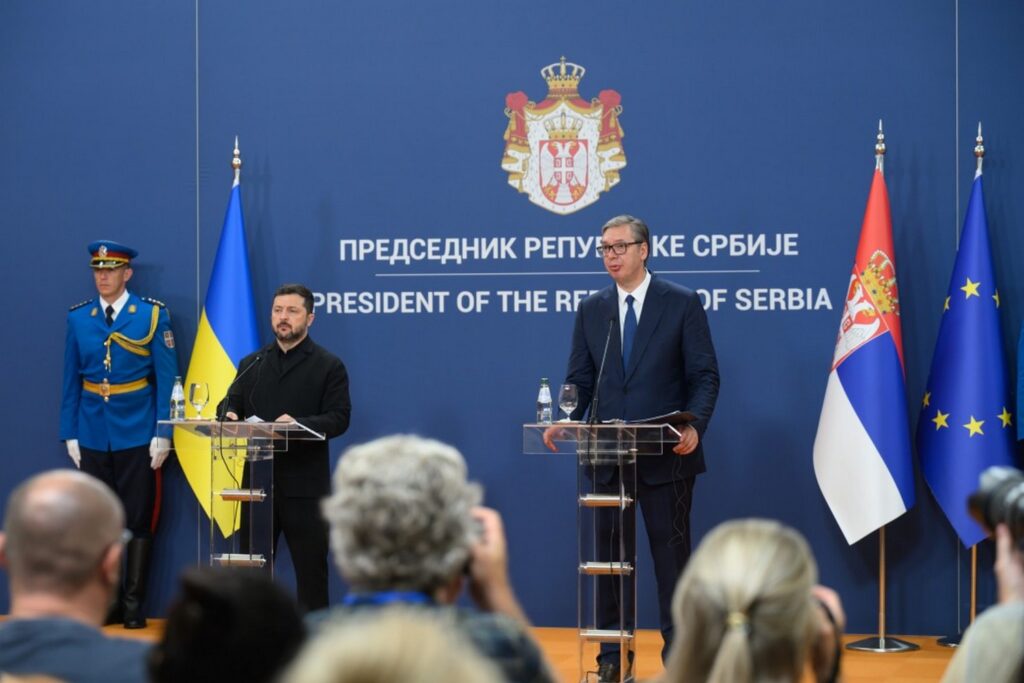
Ukrainian President Volodymyr Zelenskyy made his first official visit to Serbia, meeting Serbian President Aleksandar Vučić in Belgrade on 8 August 2026, according to Ukraine's Presidential Office. The two agreed to deepen trade and energy cooperation, and Serbia pledged fresh humanitarian aid and help rebuilding a war-hit Ukrainian city.
The visit drew attention because Serbia remains one of the few European states still close to Moscow. At the same time, Serbia is its
Ukrainian President Volodymyr Zelenskyy made his first official visit to Serbia, meeting Serbian President Aleksandar Vučić in Belgrade on 8 August 2026, according to Ukraine's Presidential Office. The two agreed to deepen trade and energy cooperation, and Serbia pledged fresh humanitarian aid and help rebuilding a war-hit Ukrainian city.
The visit drew attention because Serbia remains one of the few European states still close to Moscow. At the same time, Serbia is itself seeking EU membership and backs Ukraine with financial and humanitarian aid, though it provides no direct military support.
Much of the Western Balkans has spent years in the EU's waiting room, a gap Moscow has long worked to hold open through energy leverage and cultural ties. The visit comes amid Russia's ongoing full-scale invasion of Ukraine, while Moscow keeps trying to undermine support for Ukraine in Europe.
A first visit, and a message to two capitals
Zelenskyy arrived in Belgrade on Friday, 7 August, and the next day received an honor guard welcome, then met Vučić at the Presidential Palace. It was his first official trip to Serbia since he became president in 2019. Ukraine's First Lady had made her own first trip to Belgrade in May 2024.
Serbia is a candidate for accession to the EU, and so is Ukraine. Belgrade also keeps close ties with Moscow and still refuses to sanction it, relying on Russia for most of its energy. Thus the reception sent a signal to both Brussels and Moscow.
Vučić said Serbia upholds the UN Charter and the territorial integrity of every UN member, including Ukraine. At the joint news conference, Zelenskyy tied that to Crimea belonging to Ukraine, and he said Ukraine's stance against recognizing Kosovo's unilateral independence stays unchanged. Russia has occupied the Crimean peninsula since 2014.
Explore further
Serbia’s Vučić says Russian-owned Serbian refinery to fire up again mid-month
Aid for the winter and a city to rebuild
Zelenskyy thanked Serbia for a new humanitarian package in the medical and energy sectors, his office said. Belgrade offered to help rebuild one war-damaged Ukrainian city, which neither side named. The two leaders discussed the coming winter, when Ukraine's power system faces heavy Russian strikes. Serbia has sent Ukraine generators and financial support before.
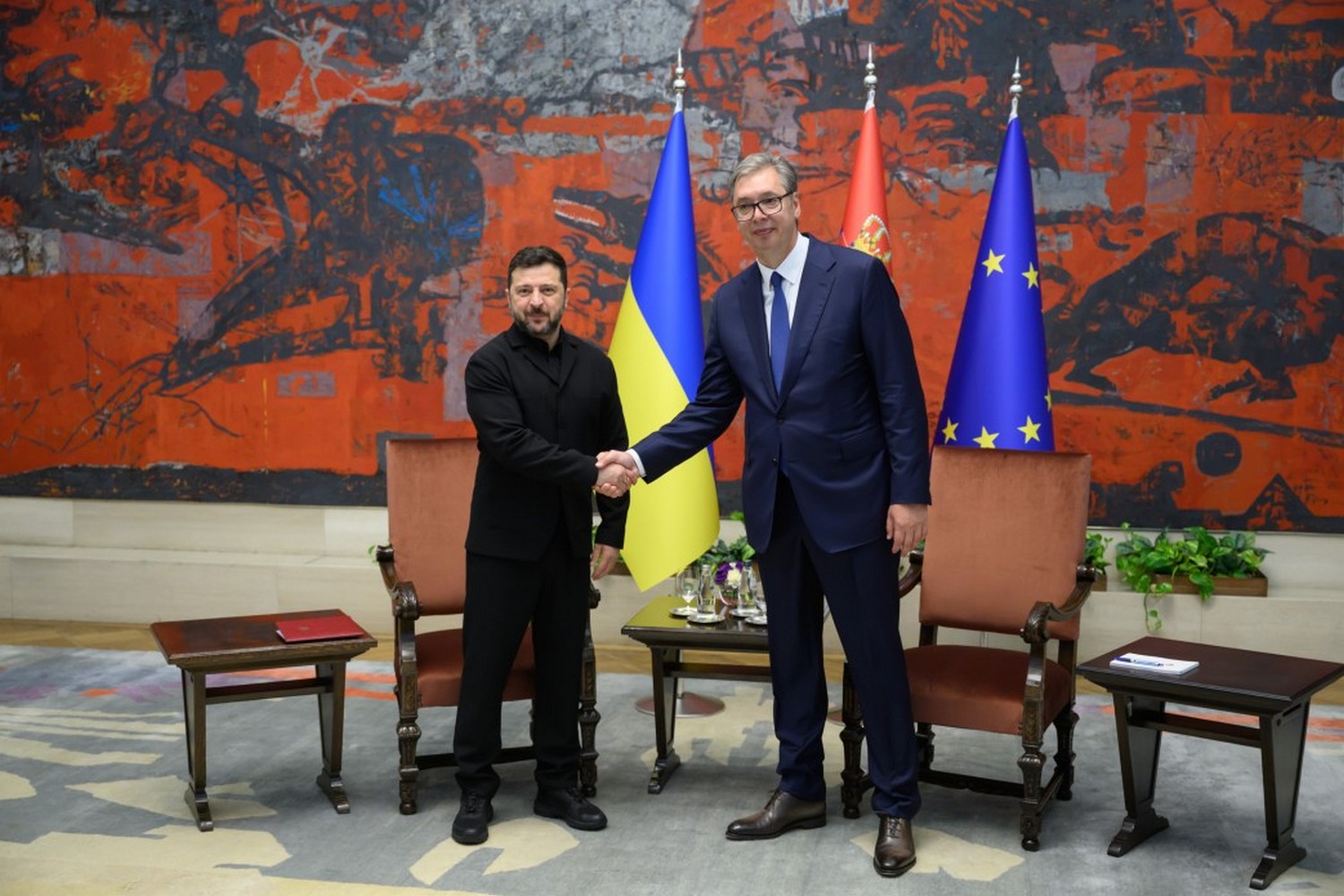
Ukrainian President Volodymyr Zelenskyy (left) and Serbian President Aleksandar Vučić shake hands in Belgrade, 8 August 2026. Photo: president.gov.ua
The leaders discussed infrastructure, ports, railways, and food security, and Serbia showed interest in Ukraine's railway experience. They want to finalize a free-trade agreement between the two countries by the end of 2026. Trade reached about $346 million in the first half of 2026, after $442 million for all of last year, according to Zelenskyy's office. In the presidents' presence, Ukraine's food-safety service and Serbia's agriculture ministry signed a cooperation memorandum on animal health and food safety.
Explore further
Serbian President: Serbia accidentally supported European resolution on Ukraine at the UN
An EU path, and Vučić's doubts
Zelenskyy noted that Ukraine would welcome a faster EU path for Serbia. Vučić said Serbia backs Ukraine's European course and will not block it, but he doubted Serbia could join soon, "for many political reasons."
He said not everyone in the EU views membership for Ukraine or the Western Balkans positively.
"For us they'll find Croats, Bulgarians, Dutch, and for Ukraine they'll find someone else," he said, suggesting that for any candidate, some existing EU member can always be found to object to its accession.
The government turned to the world to respond to twin quakes. But years of shrinking budgets and political repression weakened its ability to rescue countless people trapped in rubble.
The government turned to the world to respond to twin quakes. But years of shrinking budgets and political repression weakened its ability to rescue countless people trapped in rubble.
Dozens of volunteers and family members searched for survivors in a building at a public housing complex in Caraballeda, La Guaira state, that collapsed during back-to-back earthquakes on June 24.

 Connexion