Trump Administration to Target Visas of Up To 200,000 Foreign Citizens Applying for Asylum

© Oliver Contreras/Agence France-Presse — Getty Images


© Oliver Contreras/Agence France-Presse — Getty Images


© Oliver Contreras/Agence France-Presse — Getty Images


© Meridith Kohut for The New York Times


© Ettore Chiereguini/Associated Press


© Anna Watts for The New York Times

The US is engaged in a lawless quest to protect American and Israeli officials
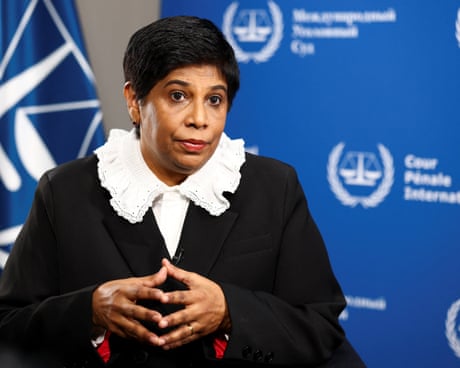
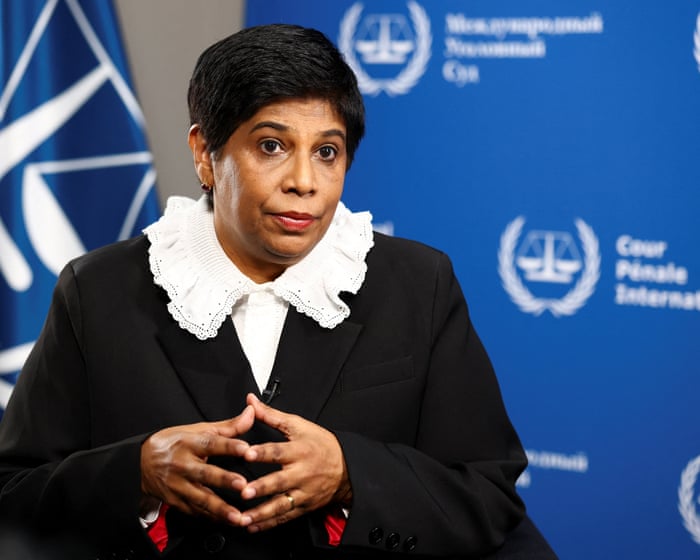
The Trump administration has taken another step in its crusade against the international criminal court by imposing sanctions on two more senior ICC officials. The growing number of sanctioned jurists – now 13 – does not change the lawless nature of this quest.
Donald Trump and his henchman, Marco Rubio, want to make the world safe for US and Israeli war criminals. No one should let them.
Continue reading...
© Photograph: Kevin Lamarque/Reuters

© Photograph: Kevin Lamarque/Reuters

© Photograph: Kevin Lamarque/Reuters

Trump administration put sanctions on the international criminal court’s president and a senior trial lawyer
The international criminal court on Wednesday condemned the latest US sanctions targeting senior ICC staff, including its president, as a “flagrant attack” on the global tribunal’s independence and vowed to continue seeking justice for atrocities around the world.
The state department announced on Tuesday that it had hit the ICC president, Tomoko Akane, a Japanese national, and ICC senior trial lawyer Abdoulaye Seye, who is from Senegal, with sanctions that freeze any assets they have in US jurisdictions or come into contact with the US financial system.
Continue reading...
© Photograph: Piroschka Van De Wouw/Reuters

© Photograph: Piroschka Van De Wouw/Reuters

© Photograph: Piroschka Van De Wouw/Reuters

Marco Rubio targets ICC’s Tomoko Akane and Abdoulaye Seye, who was investigating Israeli war crimes in Gaza
The US has sanctioned the president of the international criminal court (ICC) and a prosecutor tasked with investigating crimes committed by Israel during its war on Gaza.
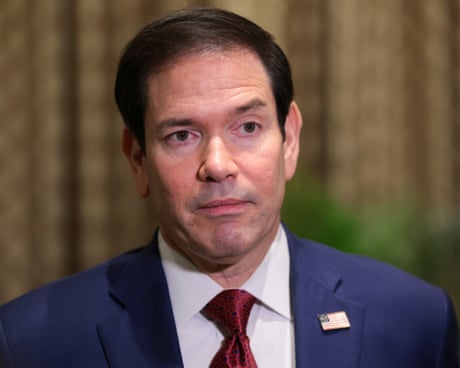
The new sanctions designations were unveiled by Marco Rubio, the US secretary of state, who called the Hague-based ICC a “corrupt and fatally politicized supranational court that has maliciously abused its authority and exceeded its mandate”, in a statement.
Continue reading...
© Photograph: Dursun Aydemir/Anadolu via Getty Images

© Photograph: Dursun Aydemir/Anadolu via Getty Images

© Photograph: Dursun Aydemir/Anadolu via Getty Images


© Kenny Holston/The New York Times

As chief US diplomat, Rubio could do great good. His pandering and neglect are a disgrace we shouldn’t ignore
Viewed from the state department in Washington DC, the world is on fire – but record heatwaves are not to blame. The unresolved Iran war has badly burned Donald Trump. His military campaign conclusively failed, energy and food prices are still rising, and a Republican rout in November’s midterm elections looms. Humiliatingly, Israel this week flatly rejected his latest Gaza peace proposals, days after Trump congratulated himself on a “historic breakthrough”. In Europe, Russia’s attacks on Nato allies grow increasingly brazen, threatening a wider escalation. The Ukraine war, which Trump vowed to end, is now well into its fifth year, with civilians on both sides caught in the killing fields. And these are just the bigger firestorms. There are plenty more.
Rarely has the need for effective, professional diplomacy been more pressing. So step forward Marco Rubio, US secretary of state and chief American diplomat. These are challenges that, if successfully tackled, could propel the 55-year-old son of Cuban immigrants and the former US senator for Florida into pole position in the 2028 Republican presidential nomination race. Here is a chance for Rubio to defy critics who dismiss him as a lickspittle and Trump dogsbody, and transform himself into respected global statesman. His boss mocked him as “little Marco” and a “loser” when they were election rivals in 2016. (Rubio called him a conman.) Now is Rubio’s opportunity to go big, be brave and prove he’s a winner.
Continue reading...
© Photograph: Giuseppe Lami/EPA

© Photograph: Giuseppe Lami/EPA

© Photograph: Giuseppe Lami/EPA


© Henry Romero/Reuters


© Doug Mills/The New York Times


© Adriana Loureiro Fernandez for The New York Times


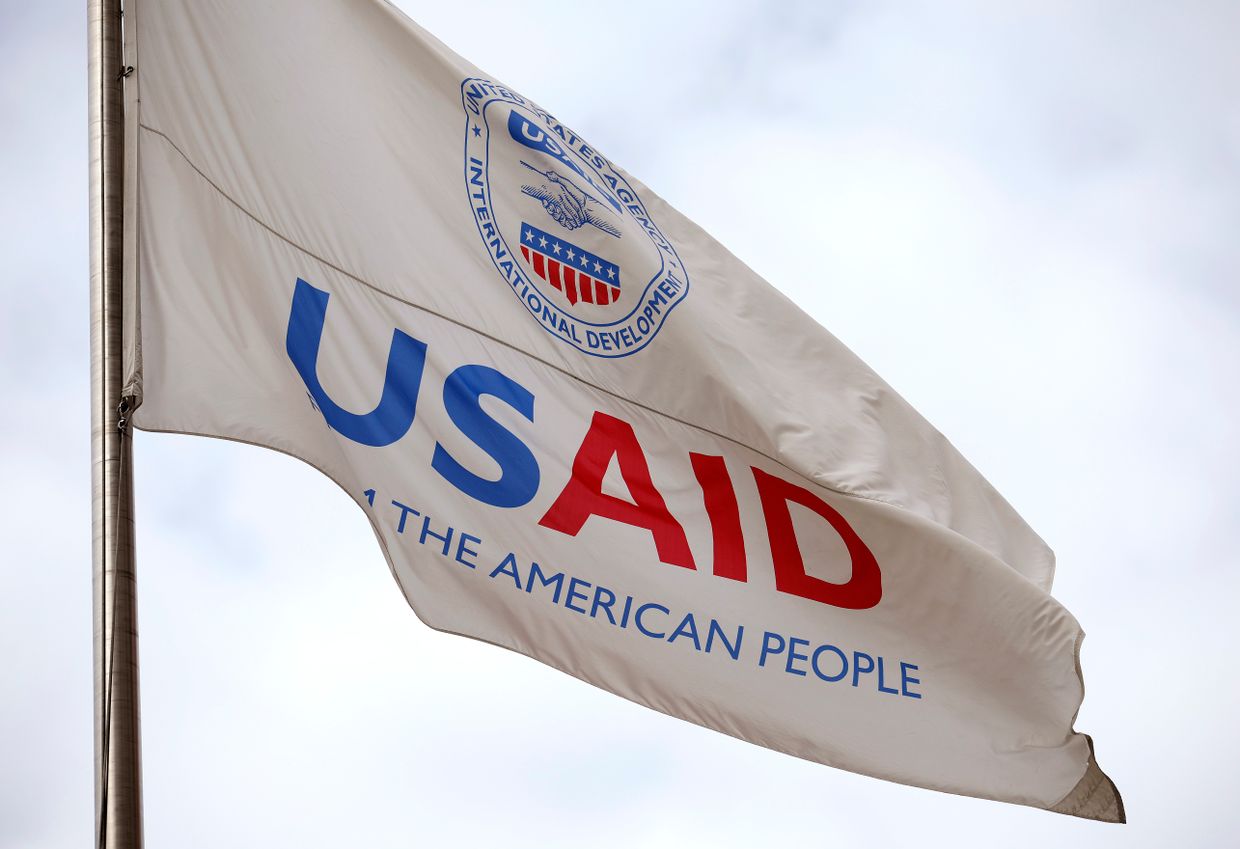
USAID officially stopped implementing foreign assistance as of July 1, as the Trump administration seeks to realign international aid with its policies, U.S. Secretary of State Marco Rubio announced.
"Foreign assistance programs that align with administration policies — and which advance American interests — will be administered by the State Department," Rubio said in a statement on Substack.
The Trump administration has set its sights on the U.S.'s chief foreign aid agency, accusing it — despite little evidence — of fraud and of promoting a "liberal" or "leftist" agenda. Roughly 83% of USAID's programs, or around 5,200 contracts, were terminated in March, and thousands of workers were laid off.
Founded in 1961, USAID has played a crucial role in humanitarian relief worldwide and has overseen thousands of programs supporting democracy-building, human rights, and economic development.
"USAID had decades and a near-infinite taxpayer budget to advance American influence, promote economic development worldwide, and allow billions to stand on their own two feet," Rubio said.
"Beyond creating a globe-spanning NGO industrial complex at taxpayer expense, USAID has little to show since the end of the Cold War."
Contradicting Rubio's comments, experts and former U.S. officials have criticized the decision and pointed to potentially devastating humanitarian consequences. Research by The Lancet estimated that USAID funding cuts could result in 14 million deaths by 2030, including 4.5 million children younger than 5.
"We will not apologize for recognizing America's longstanding commitment to life-saving humanitarian aid and promotion of economic development abroad must be in furtherance of an America First foreign policy," Rubio said.
The chief U.S. diplomat presented the step as part of President Donald Trump's broader policies aimed at requiring international allies and partners to pay a greater share for projects around the world.
"Americans should not pay taxes to fund failed governments in faraway lands. Moving forward, our assistance will be targeted and time limited. We will favor those nations that have demonstrated both the ability and willingness to help themselves," Rubio said.
Since the start of Russia’s full-scale invasion, USAID has provided $2.6 billion in humanitarian aid to Ukraine, as well as $5 billion in development assistance and more than $30 billion in direct budget support to Kyiv.


United States Secretary of State Marco Rubio surprised NATO allies this week with conflicting messages on Russia sanctions, delivering a tougher stance in private than in his public remarks, Politico reported on June 25.
Rubio met with NATO foreign ministers on June 25 during a private dinner at the alliance's annual summit. According to sources who spoke with Politico, Rubio acknowledged that Russia was the main obstacle preventing peace talks to end the war in Ukraine.
He reportedly said the U.S. Senate would likely consider new sanctions legislation after completing work on President Donald Trump's spending bill.
However, just hours later, Rubio softened his position on Russia during an exclusive interview with Politico, calling for a more cautious approach.
"If we did what everybody here wants us to do, and that is come in and crush them with more sanctions, we probably lose our ability to talk to them about the ceasefire and then who's talking to them?" Rubio said.

He also added that Trump would know the "time and place" to change course.
When asked about the apparent shift in tone, a senior U.S. official insisted Rubio's messaging has remained consistent in conversations with allies.
"The secretary has been very consistent in meeting and calls with his counterparts on three key point," the official said.
"One is that the president believes strongly that the only way this war ends is through negotiations; second, as soon as the U.S. imposes new sanctions on Russia the opportunity for the U.S. to be involved in those negotiations closes; and third, that the Senate, in America anyway, is an independent body that at some point is going to move on those sanctions,."
At the NATO dinner, Rubio reportedly faced criticism from Polish Foreign Minister Radoslaw Sikorski, who claimed that Russian President Vladimir Putin was disrespecting Trump by violating the ceasefire.
It has been more than 100 days since Ukraine agreed to a U.S.-backed complete ceasefire, while Russia continues to reject it.
Sikorski also reportedly denounced Moscow's repeated attacks on Kyiv and other Ukrainian cities, which have intensified in recent weeks, saying such strikes "should not come for free" — implying that the U.S. and Europe should do more to support Ukraine.
Meanwhile, Rubio has delivered different messages in public and behind closed doors. Despite the shifting rhetoric, Baltic and Nordic countries reportedly view him as a pragmatic ally within the Trump administration — one who has a realistic understanding of the threats posed by Russia and China, according to a second European official cited by POLITICO.


U.S. Secretary of State Marco Rubio said in an interview with Politico on June 25 that U.S. President Donald Trump will resist European pressure to escalate sanctions on Russia, arguing that doing so could close the door to potential peace negotiations with Moscow.
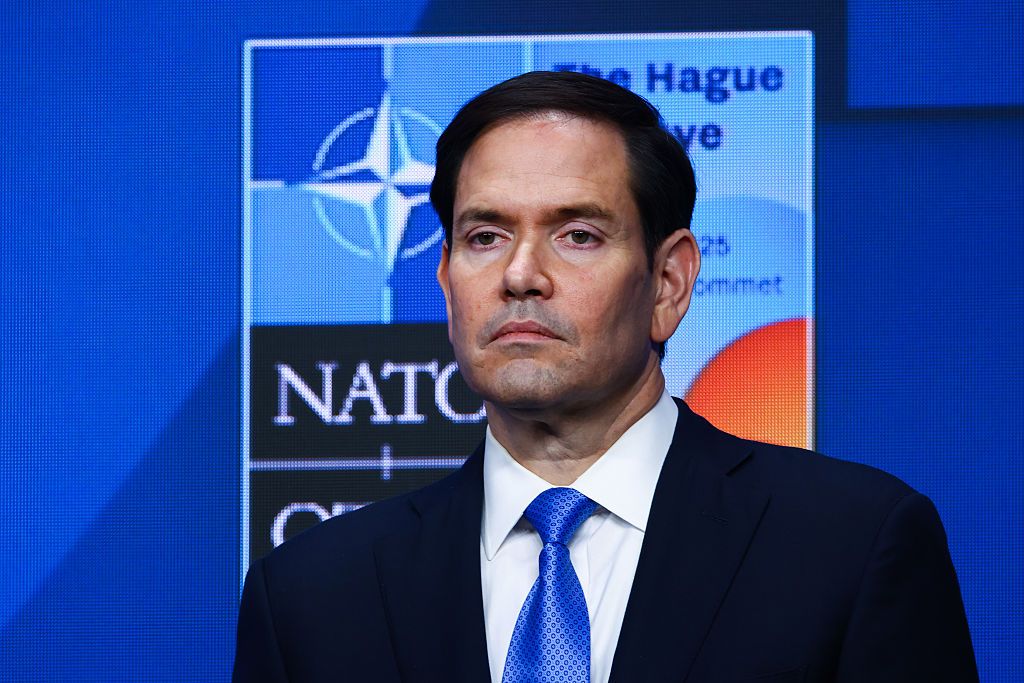
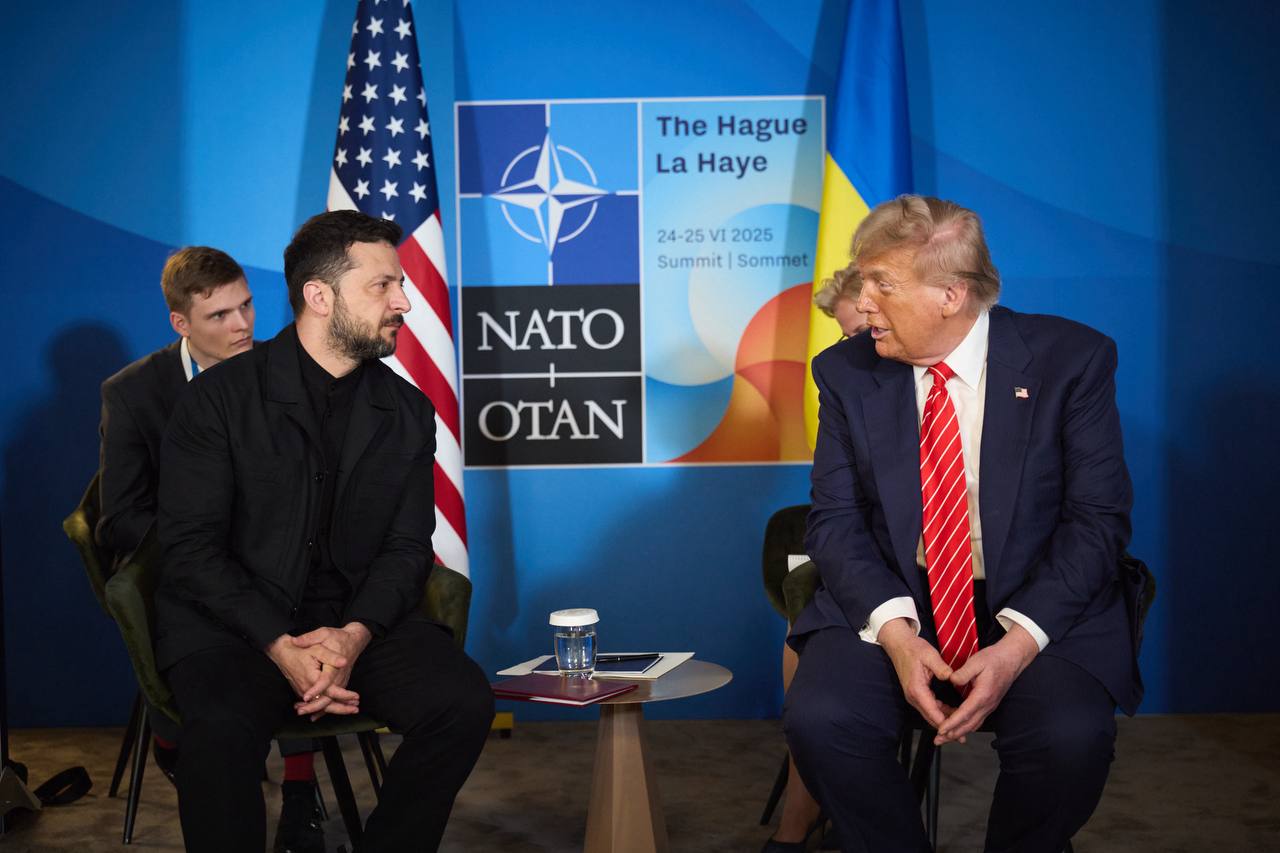
Speaking with Politico on the sidelines of the NATO summit in The Hague, Rubio said Trump wants to keep open a diplomatic channel with Russian President Vladimir Putin, despite growing frustration from European leaders and President Volodymyr Zelensky over Russia's refusal to agree to a ceasefire.
"If we did what everybody here wants us to do, and that is come in and crush them with more sanctions, we probably lose our ability to talk to them about the ceasefire and then who's talking to them?" Rubio said.
Rubio acknowledged that Russia appears committed to pursuing its objectives by force.
"Our sense of it is that the Russians are going to try to achieve on the battlefield what they've demanded at the negotiating table, which is certain territories, administrative lines, and the like," he said. "We think it’s going to be a lot harder for them to achieve that than they think it's going to be."
Rubio added that Trump "will know the right time and place" for additional sanctions, but emphasized that imposing them too soon could signal that the U.S. has given up on a negotiated resolution.
Previously, Trump said he had refrained from imposing new sanctions on Russia because he believed a peace deal with Moscow might be within reach, warning he did not want to jeopardize negotiations by acting prematurely.
Speaking after two rounds of peace talks in Istanbul between Moscow and Kyiv that led to no ceasefire, Trump on June 5 declined to say when additional sanctions on Russia might be imposed, only noting there is a deadline "in (his) brain."
"If he (Trump) does it, you're almost admitting that this is not going to be negotiated anytime soon," he said. "We're going to continue to engage. In the sense that if there's an opportunity for us to make a difference and get them to the table, we're going to take it."
Zelensky and several European leaders are expected to ask Trump during meetings at the summit to increase economic pressure on Moscow.
It has been more than 100 days, since Ukraine agreed to a U.S.-backed complete ceasefire, while Russia continues to reject it. Moscow continues pushing maximalist demands while intensifying attacks across Ukrainian cities.