Vue normale

  • ✇Euromaidan Press
  • Sofia gets seven minehunters from Belgium and the Netherlands for a sea Russia mined

    Bulgaria will add seven minehunter ships to its navy under two agreements with Belgium and the Netherlands, Reuters reported. Parliament cleared the acquisition on 26 August, and the vessels are meant for a sea where mines have drifted since Russia invaded Ukraine. They will work within a three-country task force whose mission widened this summer beyond mine clearance. Russia's invasion turned the Black Sea into hostile water for civilian shipping: mines drift out of th
     

Sofia gets seven minehunters from Belgium and the Netherlands for a sea Russia mined

28 août 2026 à 09:20

bulgaria's new government plans halt weapons supplies ukraine · post bulgarian defense minister dimitar stoyanov council ministers sofia fakti db news ukrainian reports

Bulgaria will add seven minehunter ships to its navy under two agreements with Belgium and the Netherlands, Reuters reported. Parliament cleared the acquisition on 26 August, and the vessels are meant for a sea where mines have drifted since Russia invaded Ukraine. They will work within a three-country task force whose mission widened this summer beyond mine clearance.

Russia's invasion turned the Black Sea into hostile water for civilian shipping: mines drift out of the fighting, strikes fall on port after port, and grain leaves through whatever routes are still open. Mine clearance is the slow work that keeps those lanes usable at all, and every hull committed to it widens the area the navies bordering that sea can actually cover.

What parliament approved

Three of the hulls come through a sale the Netherlands agreed with Sofia, and they carry the gear for locating mines and mine-like objects and blowing them up. The remaining four arrive under a three-way handover deal signed by the two donor countries and the recipient, according to Reuters.

Before the three sale ships change hands, the Dutch will put their systems back in working order and raise how much they can do at sea. The bill for the yard work on all seven, up to the level the alliance requires, falls to the buyer. Alongside the ships, a signed memorandum provides for training the crews and supplying spares and extra kit.
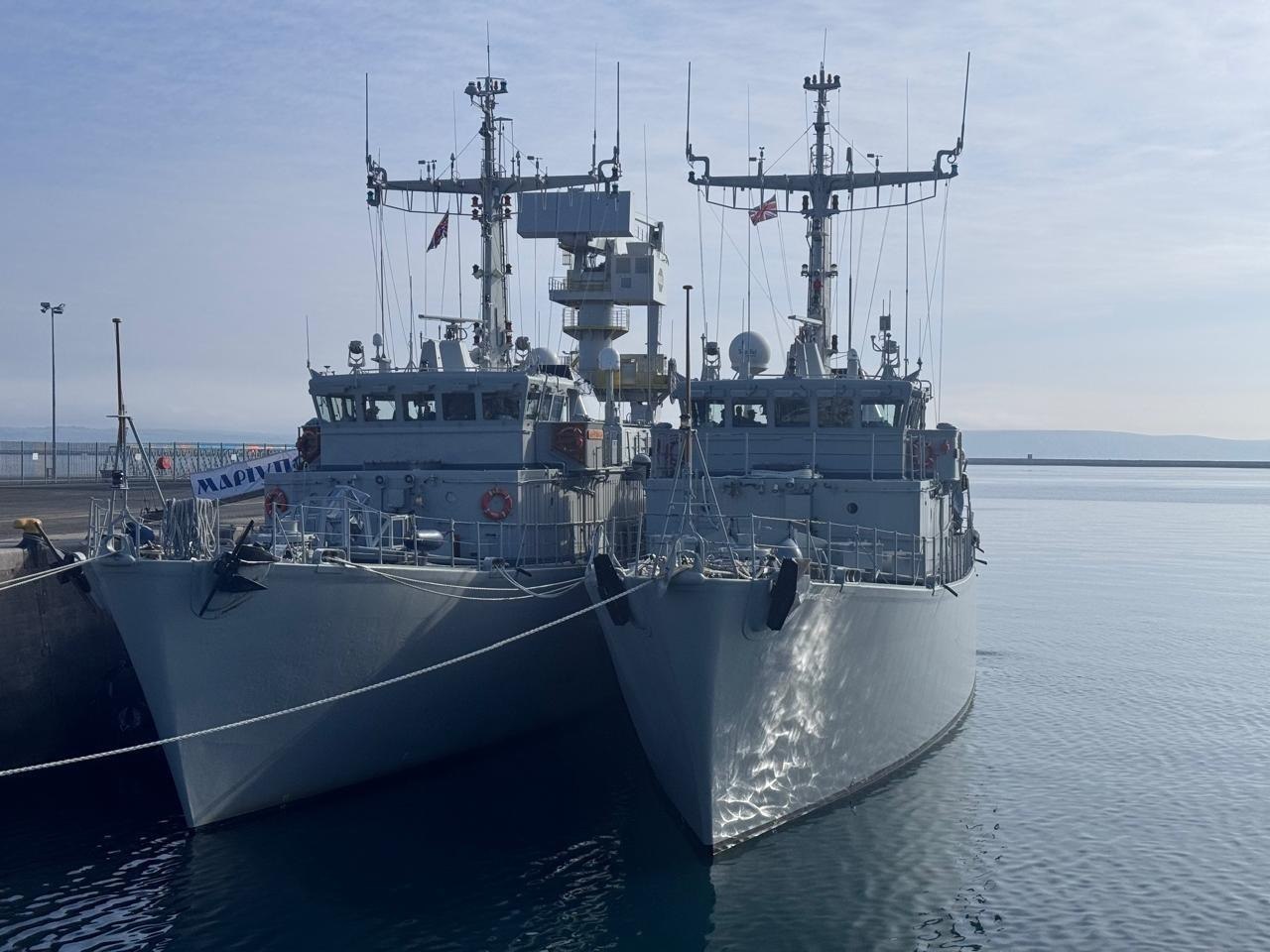
Ukrainian minehunters Mariupol and Melitopol. Both ships are named after Ukrainian cities that Russia now occupies. Credit: ArmyInform

Belgium and the Netherlands, together with the UK, handed Ukraine five mine countermeasure vessels in April, described at the time as the core of a future large-scale Black Sea clearance operation. 

A task force that grew

Bulgaria, Romania, and Türkiye signed the agreement creating a joint Mine Countermeasures Task Group in January 2024, and the group began work that summer. Three other states hold coastline on the same sea: Georgia, Russia, and Ukraine.

"Bulgaria is part of the mine countermeasures group established together with our colleagues from Türkiye and Romania, and it is working in excellent coordination to clear the maritime areas of the three countries," Bulgarian Defense Minister Dimitar Stoyanov said.

At a NATO summit in July, the three agreed to expand the force so it also protects critical infrastructure. Romania's national defense strategy had already flagged risks to Black Sea infrastructure.

Moldova is investing in air defense against the Russian drones crossing from Ukraine—Romania shoots down the ones that reach it

28 août 2026 à 08:37

romania's jets shoot down bulgaria's navy blows up moldova only now funding air defense russia hits ukraine · post moldovan president maia sandu kyiv anniversary chernobyl nuclear disaster 26 2026

Moldova will invest in air defense after repeated Russian drone incursions, Moldovan President Maia Sandu said, RFE/RL reported. She spoke at the country's independence celebrations on 27 August alongside the Ukrainian and Romanian presidents, hours after another group of drones entered Moldovan airspace during Russian strikes on Ukraine. The Institute for the Study of War (ISW) says the crossings show Putin continuing to normalize the threat that Russia's strikes on western Ukraine pose to European states.

Russia's drones and missiles have worked the southwestern edge of Ukraine all summer, hitting the Danube ports and later the crossings that tie the region to the European Union, and the machines regularly stray past the borders—aerial drones into the airspace next door, sea drones into Black Sea waters and onto the beaches. Romania's fighter jets and Bulgaria's navy now destroy what reaches them, while a neutral country with no alliance behind it and no way to shoot anything down is assembling that capability.

"We cannot be intimidated"

Russian drones have violated the airspace of Moldova and Romania dozens of times, Sandu noted. She met Romanian President Nicușor Dan and Ukrainian President Volodymyr Zelenskyy in Chișinău for the anniversary.

"And today, on the eve of our holiday, Russian drones invaded our airspace with the obvious aim of intimidating us. And now I want to say clearly, in the presence of our friends—we cannot be intimidated. We are investing in air defense in order to have the capability to protect our people and infrastructure," she said.

Sandu also called on every country of the free world to help Ukraine, and specifically to strengthen its air defense before winter. While Ukraine fights in the east, she said, Moldova can sleep calmly. Russian drones have breached Moldovan airspace repeatedly before this month.

Ukrainian President Volodymyr Zelenskyy, Moldovan President Maia Sandu, and Romanian President Nicușor Dan at a joint press conference in Chișinău, Moldova, 27 August 2026. Photo: Moldova 1

Five drones from the Ukrainian border

Moldova's Defense Ministry reported five unidentified drones entering Moldovan airspace from various points along the border area with Ukraine in Odesa Oblast early on 27 August, the day after a single drone crossed the border and left minutes later. The five crossings ran from 03:56 to 06:02, and each drone flew over the country briefly before turning back toward Ukraine, following Russian air attacks there, the ministry said.

ISW says these incidents show that Putin continues to normalize the threat that Russia's strike campaign against the westernmost parts of Ukraine poses to European states, including Moldova and eastern NATO members. The crossings also show the Kremlin accepting the risk that its war can damage other states. 

twelve kilometers war drone blast set moldovan field alight · post fragments police preliminarily identified parts combat recovered near crocmaz moldova's ștefan vodă district 9 2026 debris same ukraine news
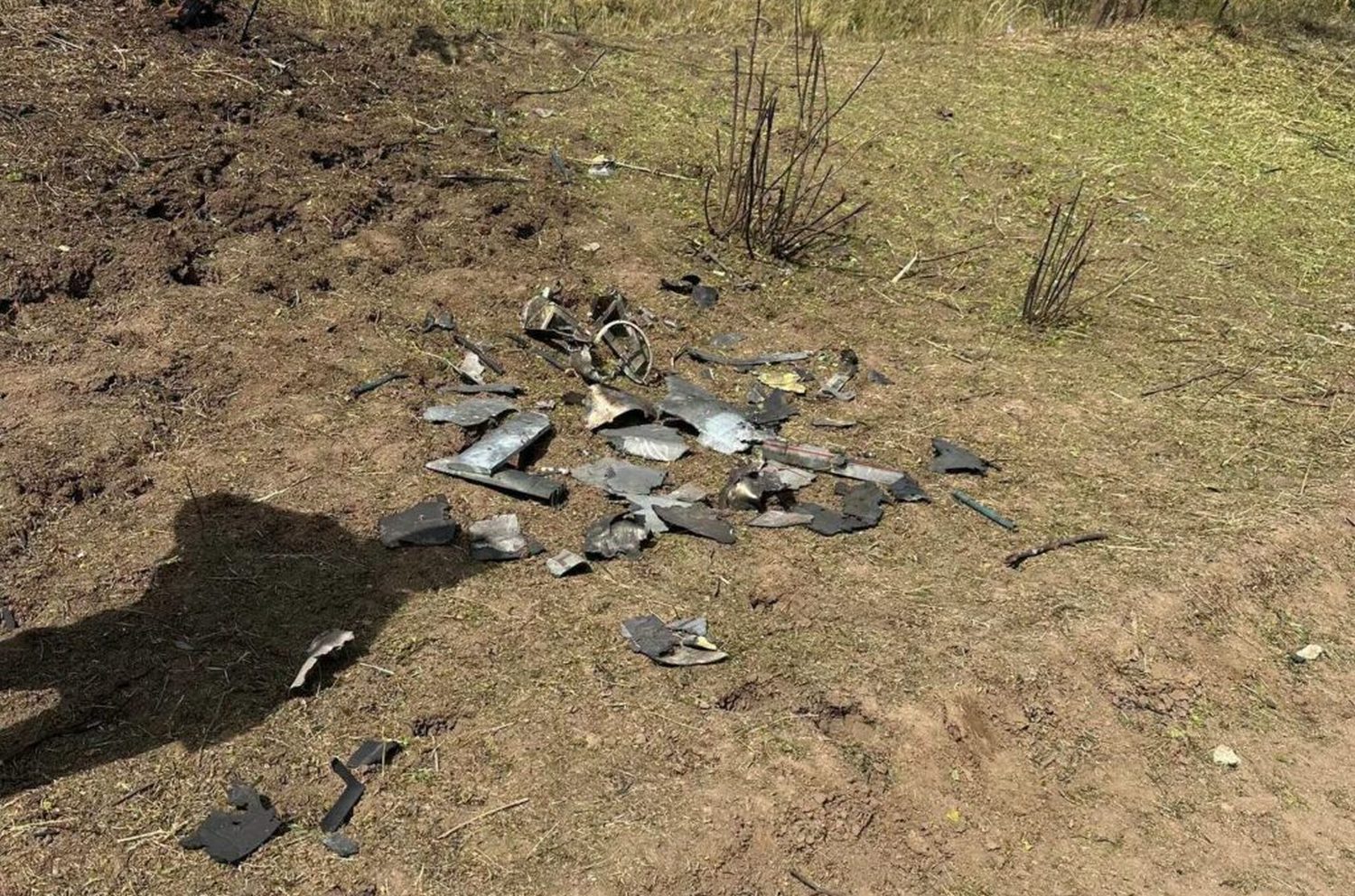
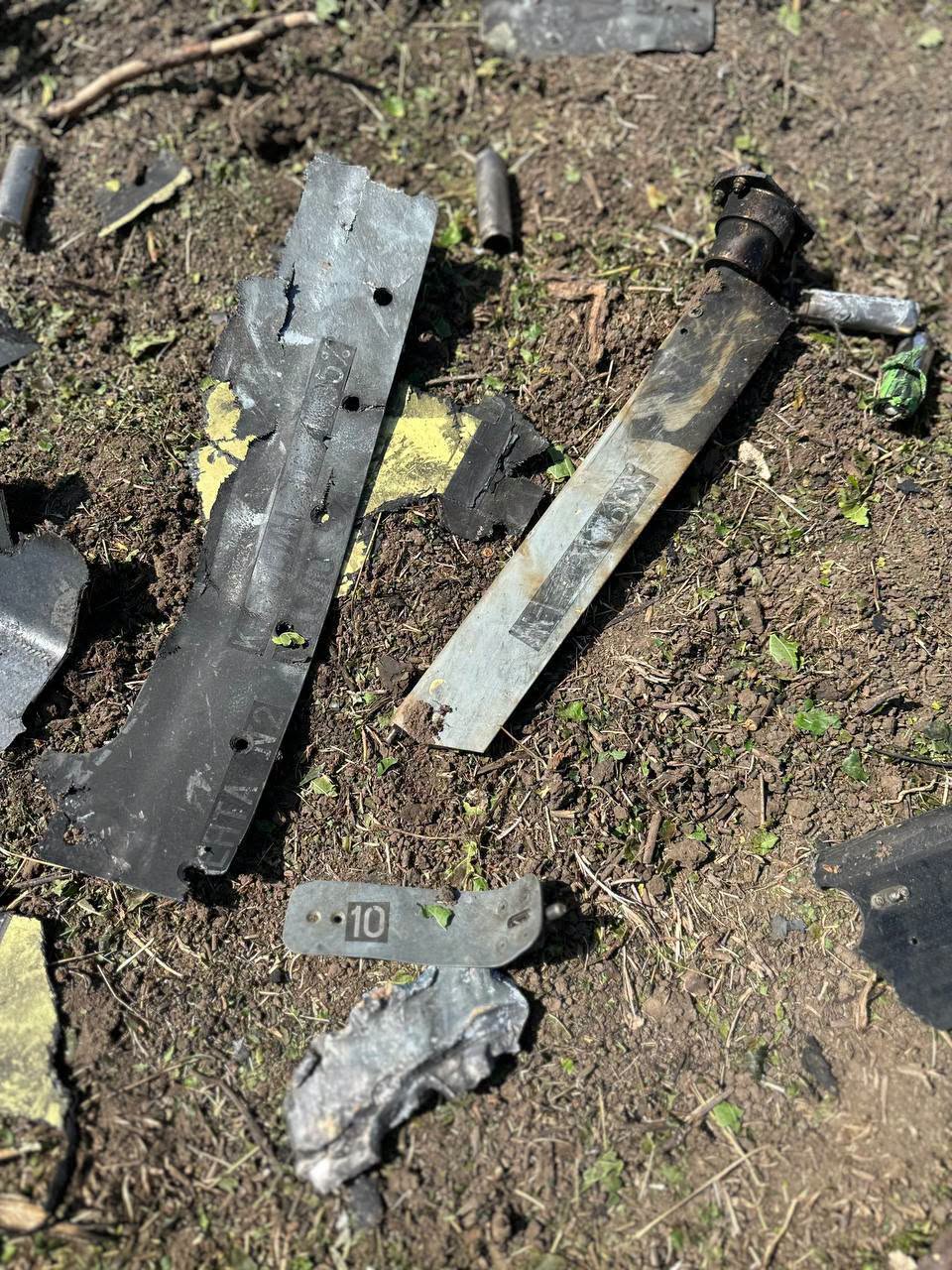
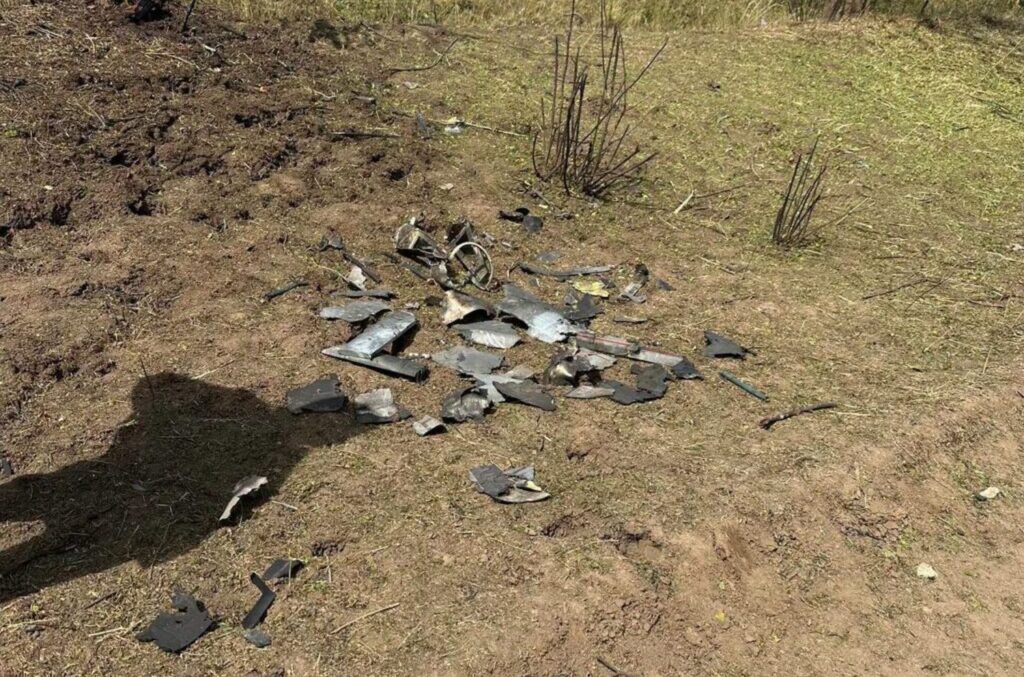
Fragments police preliminarily identified as parts of a combat drone, recovered near Crocmaz in Moldova's Ștefan Vodă district, 9 August 2026. Photo: Consiliul Raional Ștefan Vodă/Facebook

Moldova is not in NATO or the EU, and it is a neutral state. Russian drones have crossed its airspace illegally around 70 times since the start of the full-scale war, Moldova's National Army says. Defense Minister Anatolie Nosatîi called the situation extremely serious after one incursion this month halted air traffic over the country for 15 minutes, and said the army needs modernizing.

Romania shoots, Bulgaria clears up

Unlike Moldova, the NATO members in the region act on what reaches them. Romania intercepts what crosses in, and Bulgaria destroys what drifts to its coast:

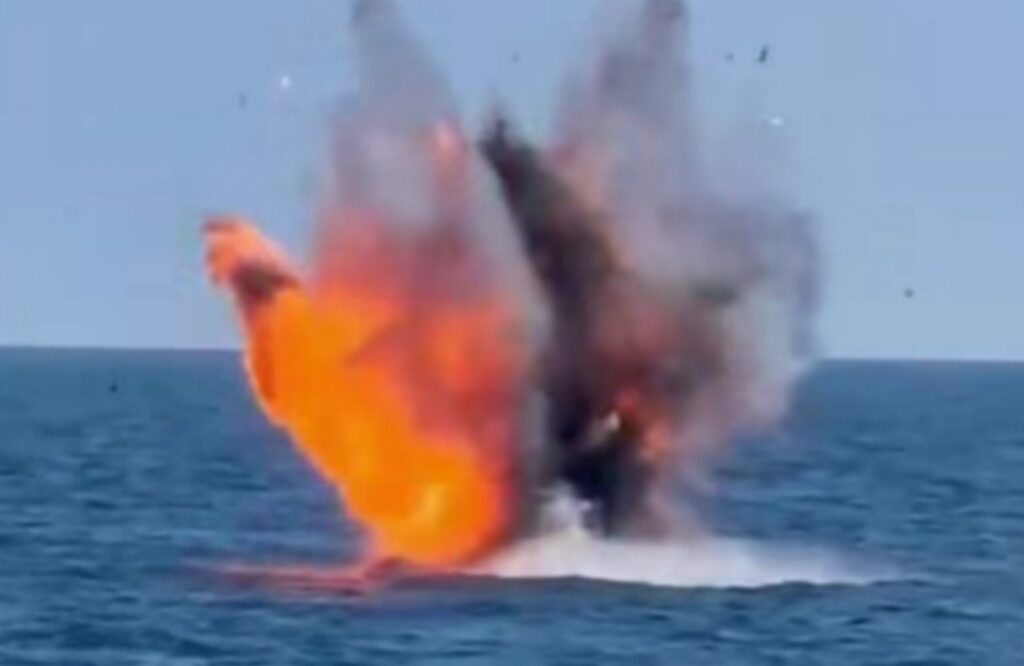
  • 26 June: Bulgaria's navy destroyed a drifting drone seven nautical miles off Kranevo.
  • 21 July: Bulgarian, Romanian, and Turkish ships destroyed a drifting drone 21 nautical miles off Ahtopol.
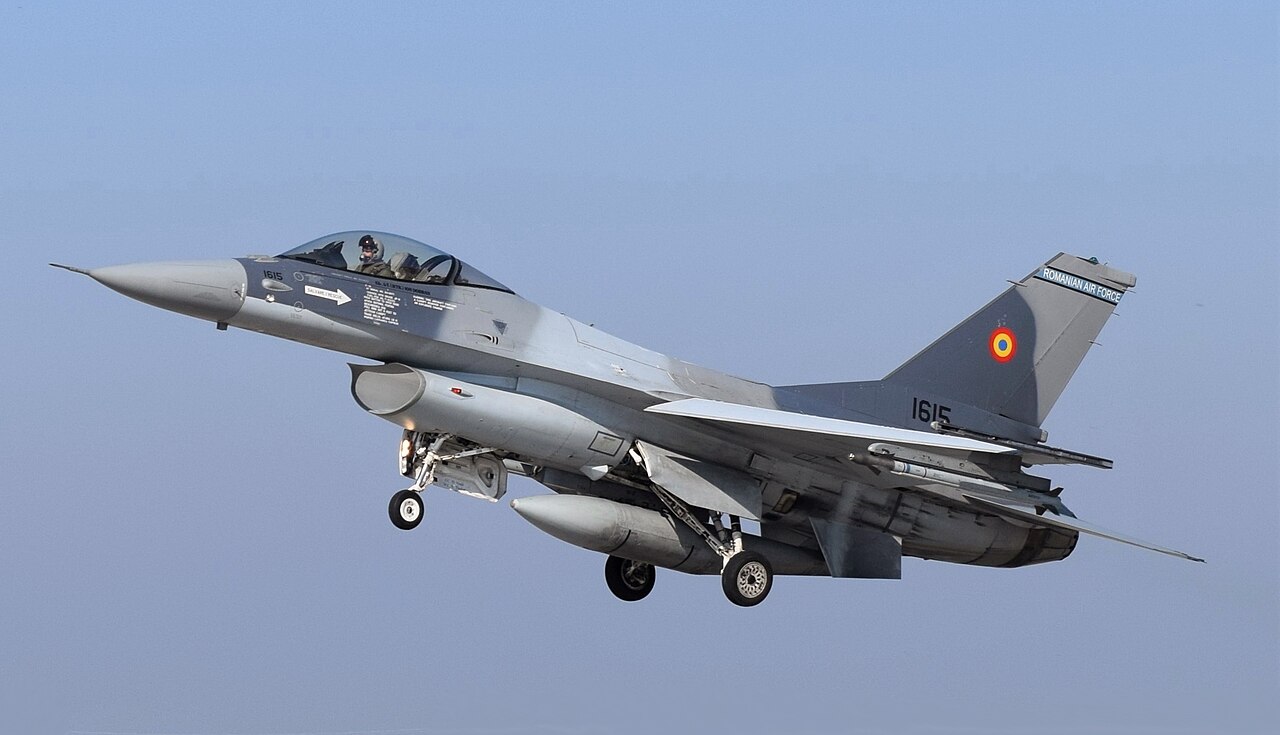
  • 24–26 July: Romanian F-16s downed three drones, the country's first shootdowns at home.
  • Early August: Romanian jets scrambled before Ukraine shot the drone down.
  • 16 August: a Spanish F/A-18 downed a drone north of Galați, the fourth over Romania this year, the Defense Ministry said.
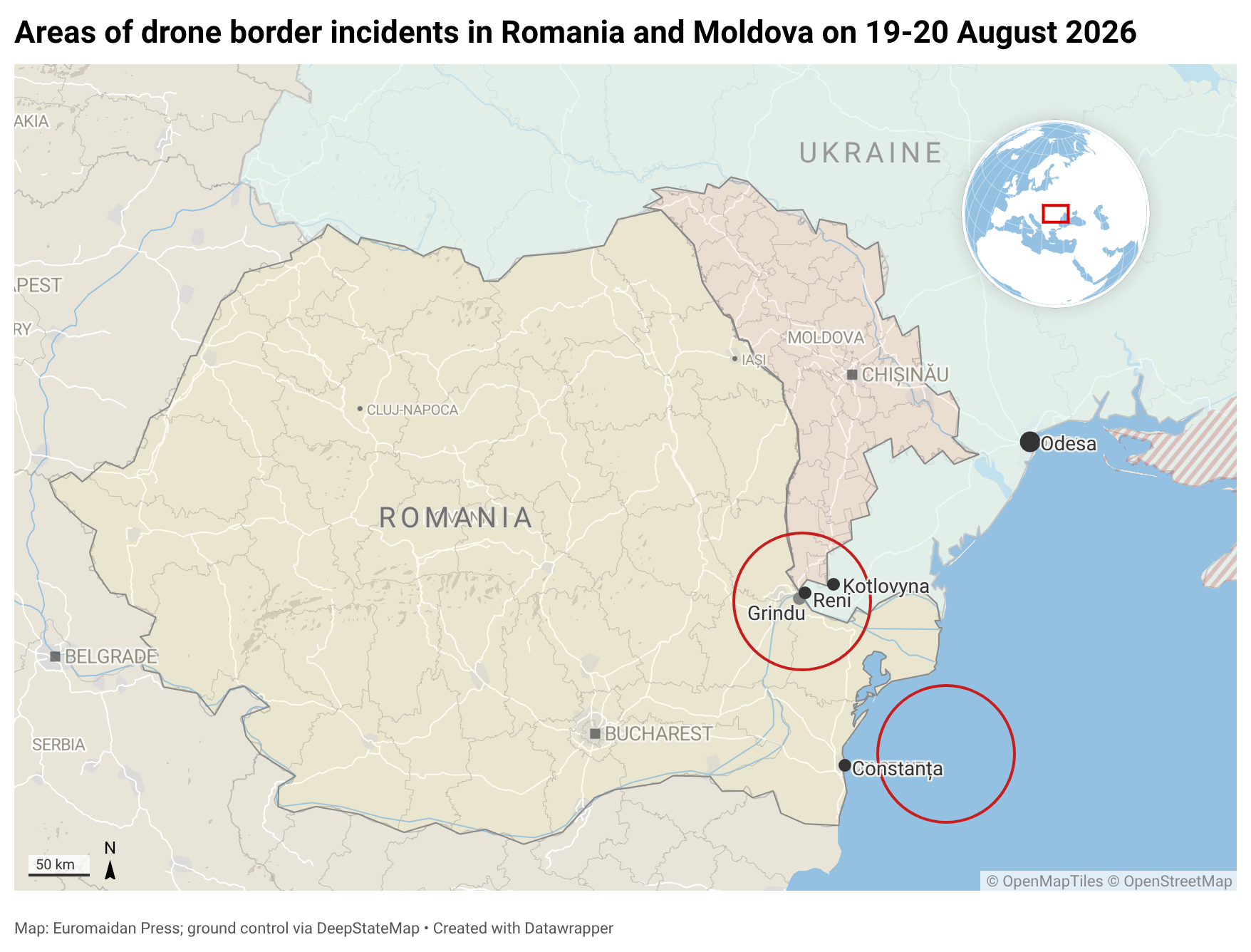
  • 20 August: a Romanian F-16 destroyed an explosive-laden sea drone with its cannon near an offshore gas platform. President Nicușor Dan blamed Russia.
  • 22 August: two more drone wrecks turned up on Bulgarian beaches, one of them a Russian decoy without a warhead.
  • ✇Euromaidan Press
  • No GPS, no landmarks—how Ukraine’s drones hunt Russian spy drones far out over the Black Sea
    Ukraine is building a sea-facing layer of air defense along its southern coast, Kyrylo Liukov, head of the unmanned technologies department at the Serhii Prytula Foundation, wrote in a column for RBC-Ukraine. Winged interceptors now reach the Russian spy drones that guide strikes in the south. Russia's nightly drone strikes on Ukrainian cities have turned air defense into a race to close every corridor Russia can fly through, over land first and now over the open sea. K
     

No GPS, no landmarks—how Ukraine’s drones hunt Russian spy drones far out over the Black Sea

24 août 2026 à 08:58

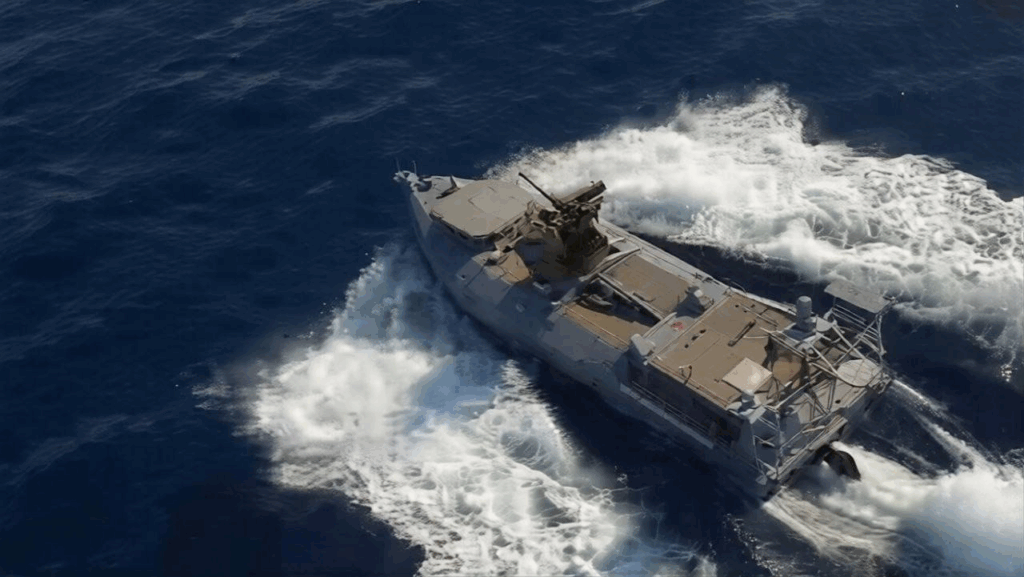
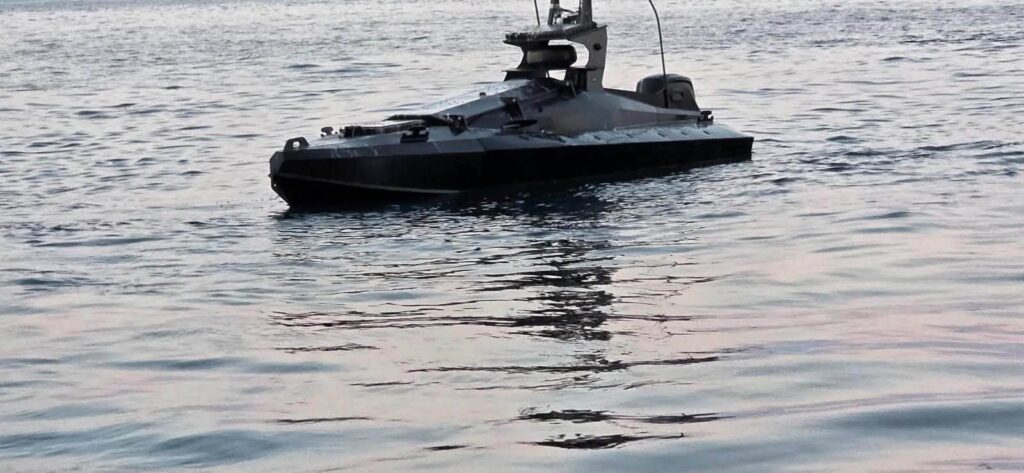
Ukraine sea drone USV machine gun naval

Ukraine is building a sea-facing layer of air defense along its southern coast, Kyrylo Liukov, head of the unmanned technologies department at the Serhii Prytula Foundation, wrote in a column for RBC-Ukraine. Winged interceptors now reach the Russian spy drones that guide strikes in the south.

Russia's nightly drone strikes on Ukrainian cities have turned air defense into a race to close every corridor Russia can fly through, over land first and now over the open sea. Kyiv does it with cheap interceptors rather than costly missiles, and keeps having to chase Russian workarounds. The sea was the stretch air defense could not reach, and it is where Russia keeps the spotters that make its Shahed swarms steerable.

Land and sea are two different fights

Defending the sky over land and over open water are two different problems, Liukov wrote. Multirotor copters are fast and simple to launch near the coast, but past roughly 25 km offshore, a multirotor is almost useless. Russia builds its mission routes so that drones cross dozens of kilometers over sea before they turn toward Ukrainian targets. Fixed-wing drones close the gap. Built like gliders, they loiter for over an hour and hold a link at 40 km and beyond, helped by an open radio horizon that land's terrain and buildings deny them.

Recon drones are the priority target for a reason. Beyond spotting and confirming hits, they work as relays in a MESH network for a group of strike drones. In that setup, Russian crews can steer Shaheds by hand right up to the moment of impact, Liukov wrote.

Southern units recently set three distance records with foundation-supplied interceptors. The 18th aviation commandant's office of Air Command South downed a Russian Orlan-30 reconnaissance drone 110 km out. It used a Wovkulaka Spitfire interceptor, the longest kill on record for that system.

The 12th Separate Special Purpose Center set the other two, flying a system from the miltech company TechnoTaras: an Orlan downed at 86 km, and a 145 km hunt measured from the takeoff point that held a stable digital link the whole way, Liukov wrote. That leaves Russia's drones exposed much farther from shore than its planners assume, he added—and if such results become routine, Russia has to pull its transit routes farther out still.

The Maiachnia beacon line

A less obvious problem was navigation, not shooting. A drone flying without GPS steers by landmarks, and over open sea, there are none. Late last year, the foundation, the 12th Separate Special Purpose Center, and TechnoTaras launched a project called Maiachnia. It strings radio beacons on the Skyline system along the coast from Ochakiv to Izmail. The beacons work on their own and keep backup power, tied to a central network that operators can adjust remotely. An operator can then track the drone even under GPS jamming, bad weather, or a temporary loss of link, and bring it home. More than five southern units now fly the foundation's winged drones.

The real stakes sit offshore—the southern ports and the Black Sea grain corridor that Russian drones threaten and that land-based copters can barely reach. Keeping Russian drones farther offshore would buy room there. But Russia is scaling up a faster, jet-powered Shahed, and the interceptor answer to it is early—so the offshore edge just won will have to be defended again.

  • ✇Euromaidan Press
  • Romania destroys a sea drone and finds aerial drone debris on its soil amid Russia’s attack on Ukraine
    Romania destroyed an explosives-laden maritime drone near its critical Neptun Deep gas platform and recovered debris from a separate aerial drone that crashed on its soil, the Romanian Defense Ministry reported. The incidents came during a major Russian attack on Ukraine on 20 August that killed 14 people in Kyiv city and oblast, caused incidents in Moldova, and triggered air defense activation in Poland. Russia's war against Ukraine has turned the Black Sea and the air
     

Romania destroys a sea drone and finds aerial drone debris on its soil amid Russia’s attack on Ukraine

20 août 2026 à 09:58

romania destroyed explosives-laden sea drone near its gas platform recovered aerial debris soil amid russian attack ukraine · post maritime spotted romania's exclusive economic zone neptun deep 20 2026 radu

Romania destroyed an explosives-laden maritime drone near its critical Neptun Deep gas platform and recovered debris from a separate aerial drone that crashed on its soil, the Romanian Defense Ministry reported. The incidents came during a major Russian attack on Ukraine on 20 August that killed 14 people in Kyiv city and oblast, caused incidents in Moldova, and triggered air defense activation in Poland.

Russia's war against Ukraine has turned the Black Sea and the airspace above NATO's eastern flank into a recurring security problem. Romanian forces have now destroyed five drones over or near its territory this year, while more than 150 mines have drifted across Black Sea trade lanes since the full-scale invasion began.

F-16 fires cannon at sea drone near gas platform

A commercial vessel spotted a drifting maritime drone near the Neptun Alpha production platform, approximately 80 nautical miles east of Constanța, at around 06:28, the Defense Ministry said. Two Romanian F-16s scrambled with orders to fire. One engaged the target with its onboard cannon—the first time Romania used a cannon against a drone and the first engagement against a maritime drone. All previous shootdowns used air-to-air missiles against aerial drones.

The country's Defense Minister Radu Miruță said the drone was carrying explosives and was spotted just hundreds of meters from the platform where several hundred people work. Through a recently established direct communication channel, Ukraine confirmed the drone was not of Ukrainian origin. President Nicușor Dan directly blamed Russia, condemning "the intensification of these types of irresponsible incidents on the part of the Russian Federation."

The engagement came nine days after Romanian navy divers destroyed two Gerbera-type drones drifting near the same platform by controlled detonation.

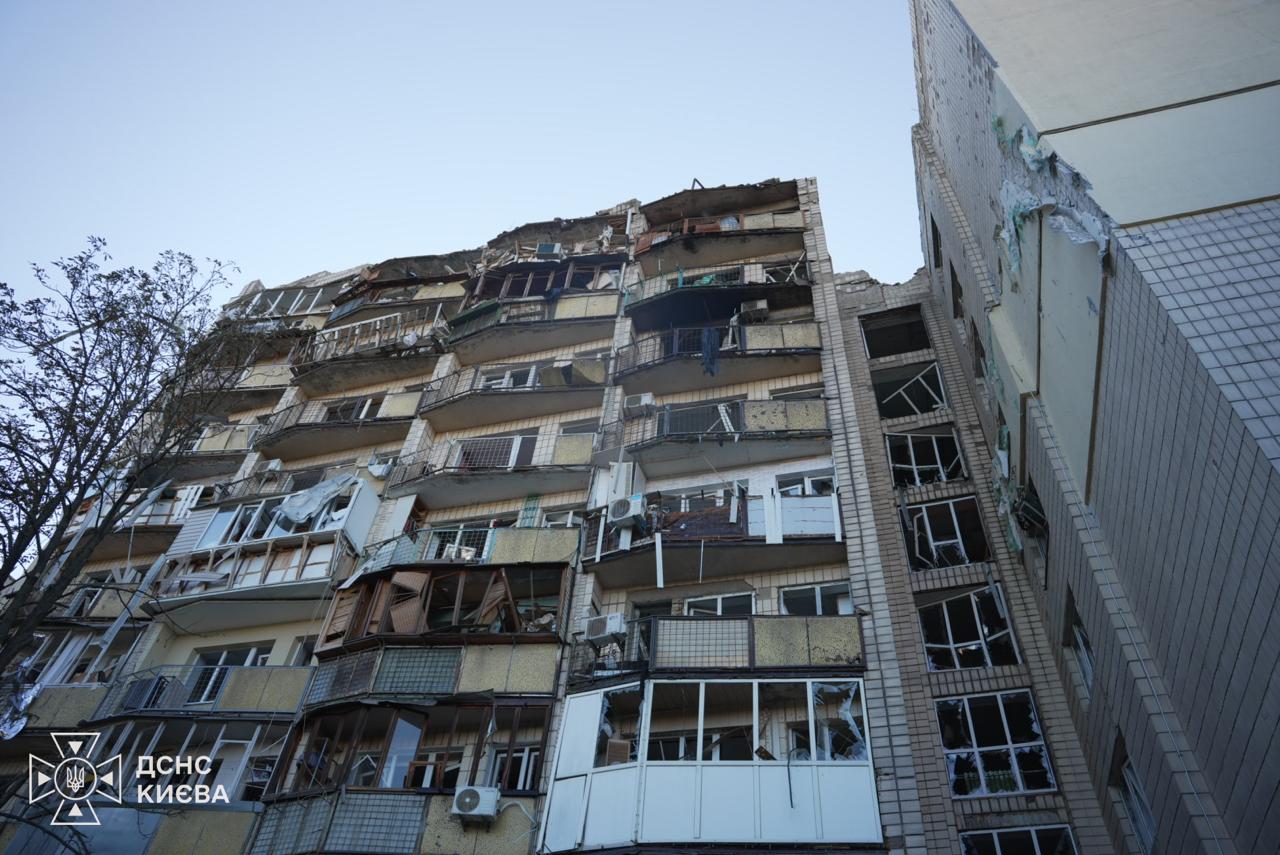
Apartment building damaged from a massive Russian aerial attack on Kyiv, Ukraine, 20 August 2026. Photo: Ukraine's State Emergency Service
Explore further

14 killed as Russia unleashes massive overnight barrage on unprotected Kyiv, striking homes, hospital, school and railway infrastructure

Aerial drone crashes in Romania's Tulcea County

Earlier overnight, Romanian radar detected aerial targets near the Ukrainian border at 02:23, the Defense Ministry said. Two Spanish F-18s from NATO's air policing mission and a Romanian IAR-330 SOCAT helicopter scrambled. At 03:21, a drone crossed into Romanian airspace 13 km east of Galați and crashed three minutes later near the village of Grindu in Tulcea County. No casualties or damage were reported. The fragments posed no explosive hazard.

The crash came four days after a Spanish F-18 shot down another drone over Romanian airspace, Euronews reported. Romanian F-16s intercepted three Russian drones in July.

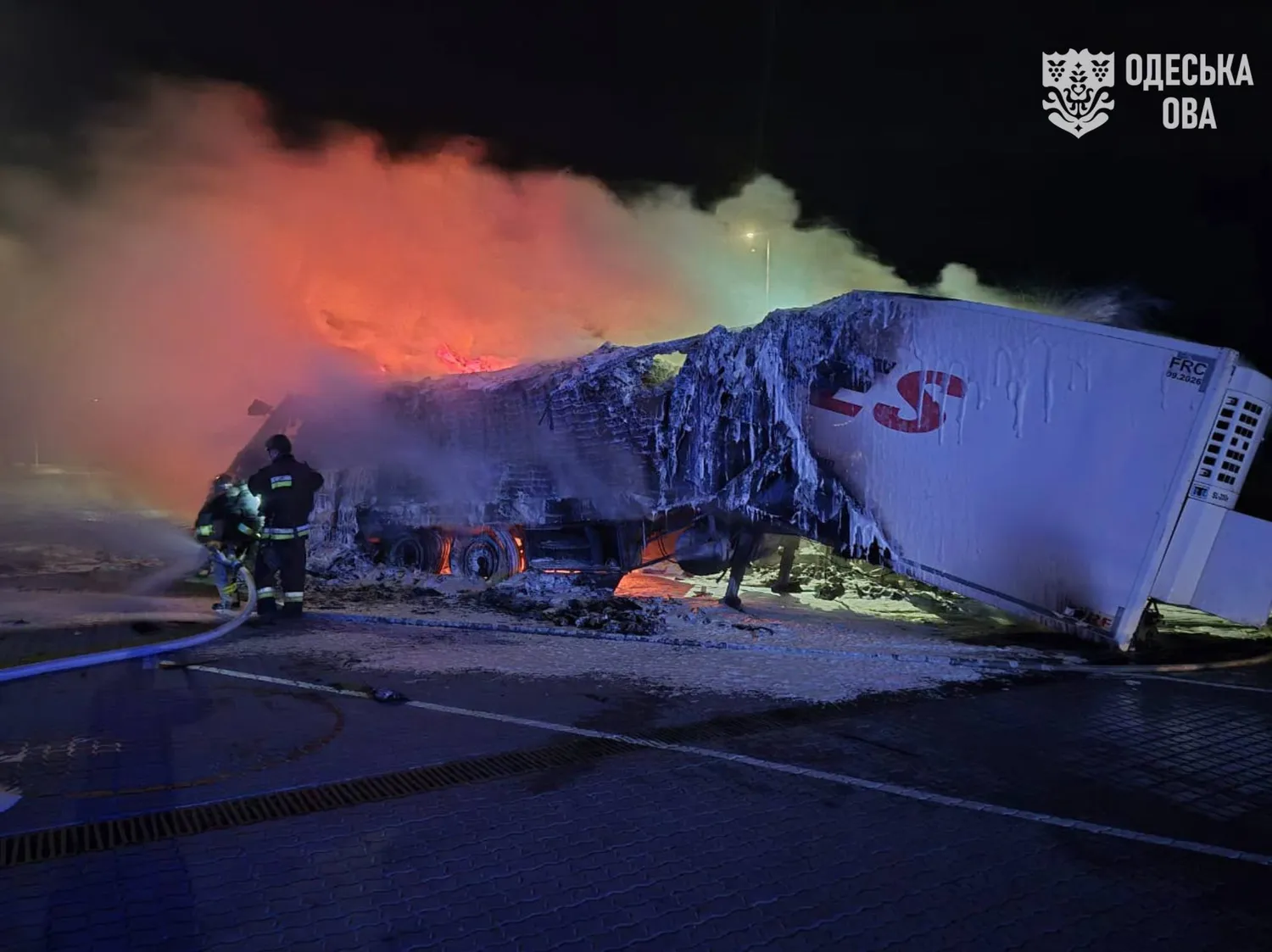
Firefighters stand beside two burned truck trailers covered in ice as smoke and orange firelight fill the night sky.
Explore further

Russian Shaheds hit near Moldova-border crossing, burn food cargo, and black out 13,000 in Odesa Oblast

Poland activates defenses, Moldova hit by drone spillover

Poland's Operational Command activated military aircraft and ground-based air defense systems during the Russian attack as a preventive measure. The Netherlands provided air defense support. No breach of Polish airspace was recorded.

Moldova faced multiple incidents. At 03:16, the country's National Army detected what was preliminarily identified as a Shahed-136/Geran-2 drone crossing from Ukraine near Kotlovyna in Odesa Oblast into Moldova's Gagauzia region. It returned to Ukrainian airspace six minutes later, public broadcaster Moldova1 said.

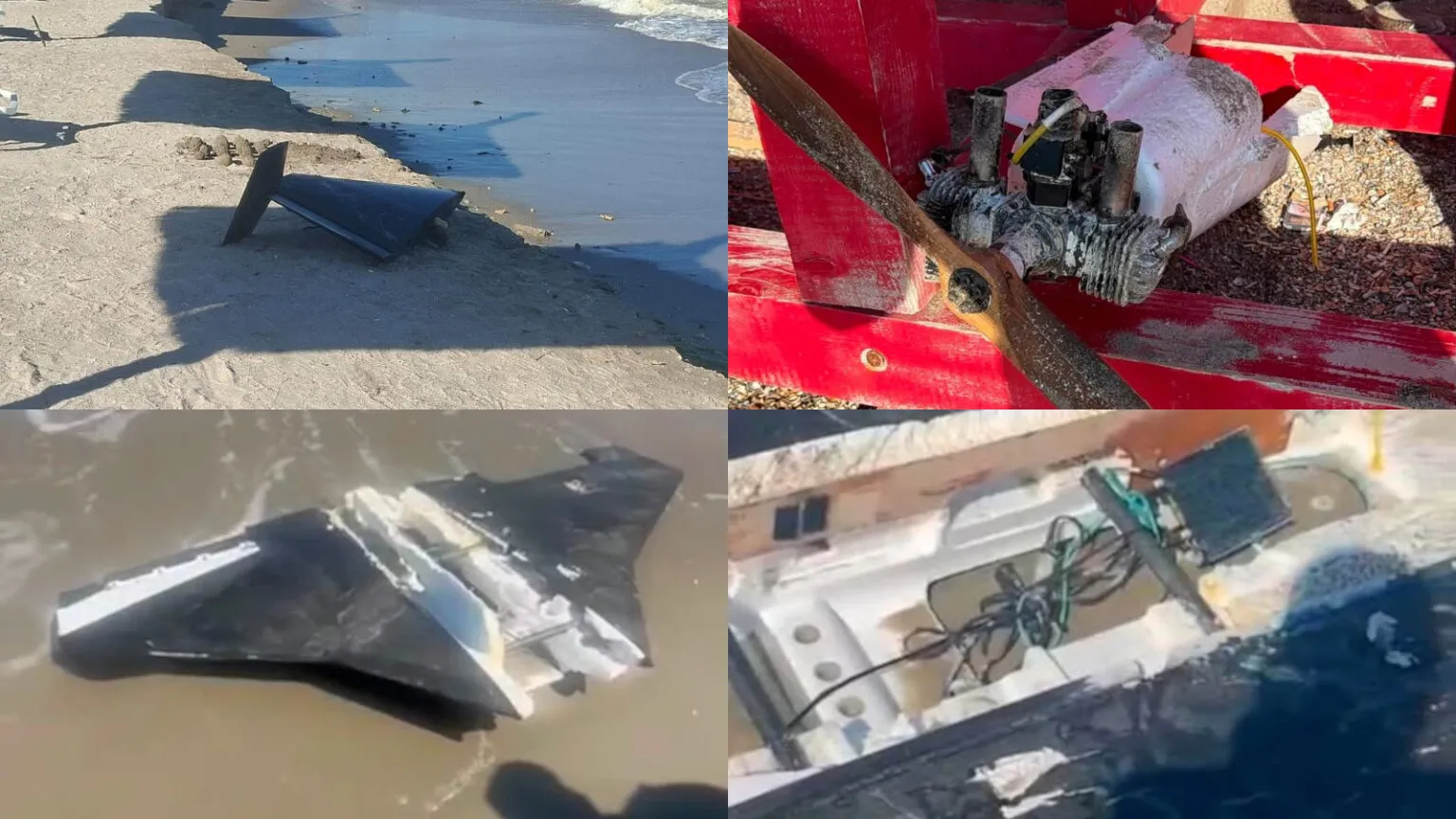
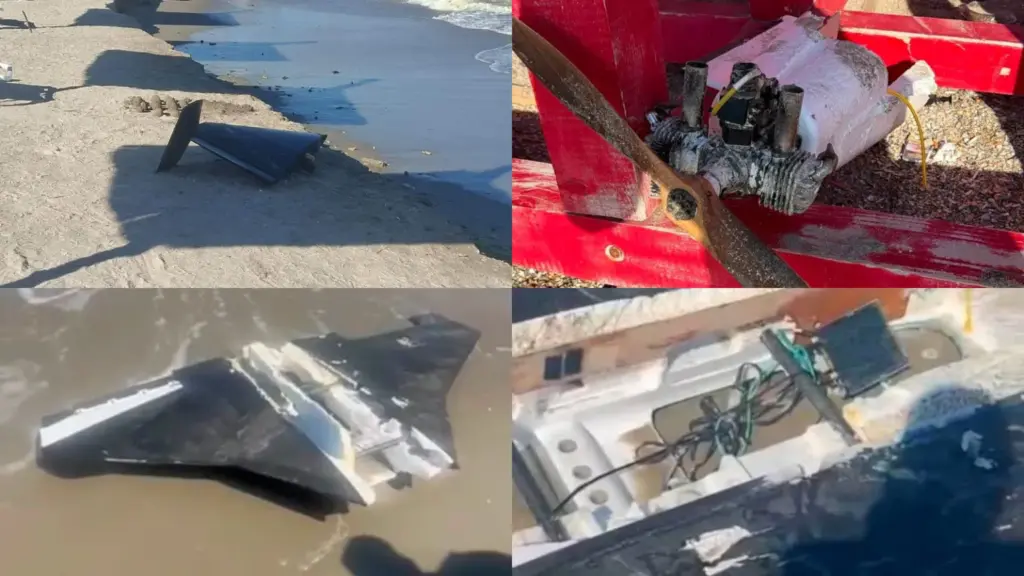
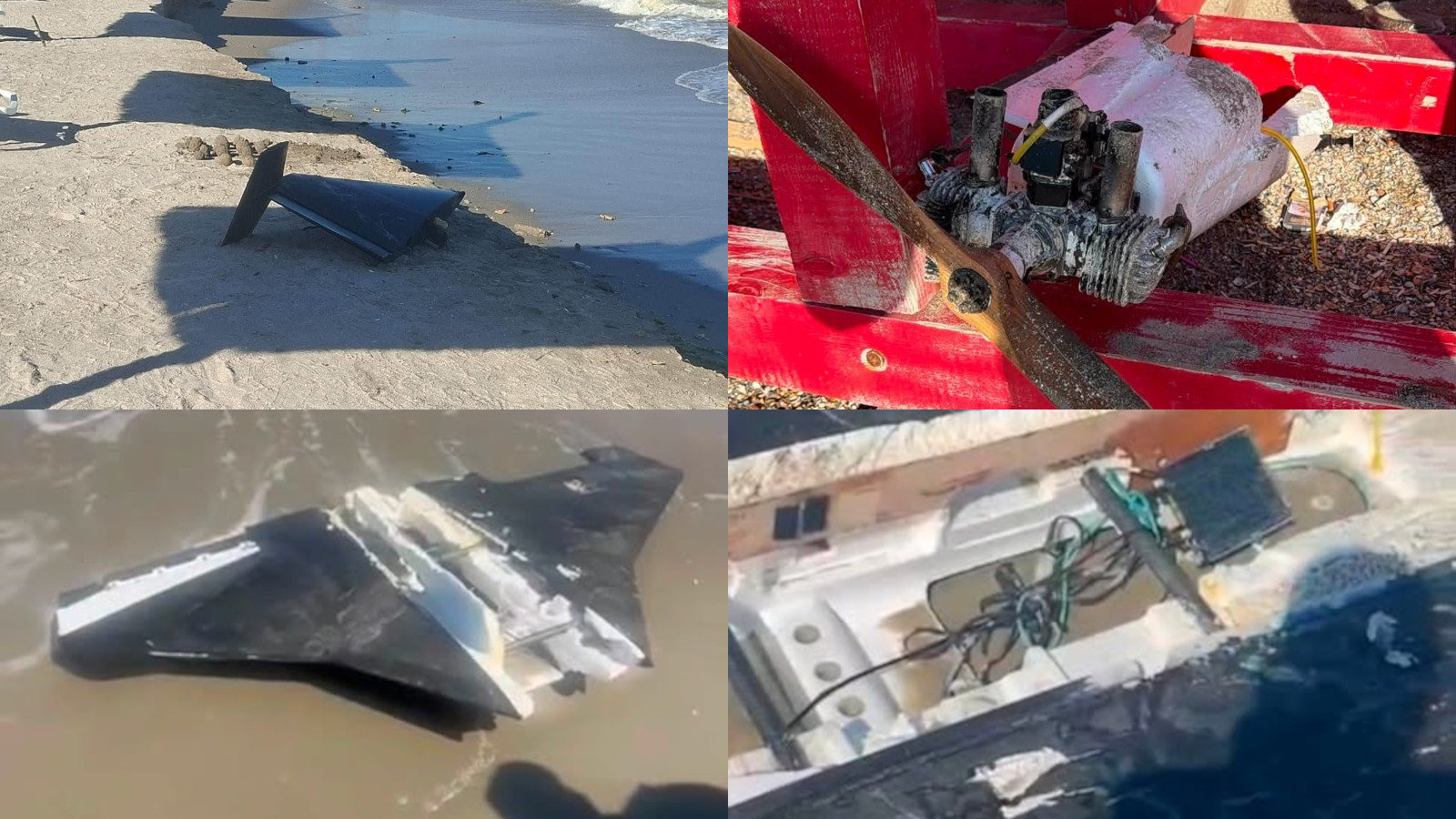
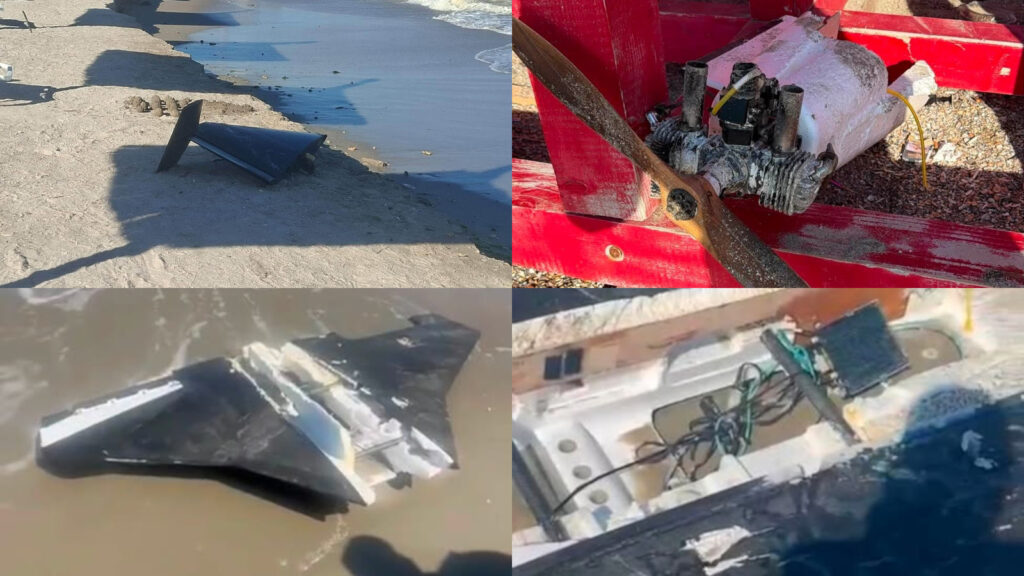
Four-image collage showing drone wreckage found on Romania’s coast and in nearby waters, including wing fragments, an engine and propeller, and exposed electronics.
Explore further

Russian drone attacks on Ukraine’s Danube ports hit recent high, Romania says

Separately, an explosion at a truck parking lot on Ukrainian territory about 150 meters from the Giurgiulești-Reni border crossing at around 03:45 sparked a fire that spread onto Moldovan soil, Newsmaker reported. Border police found drone fragments in a crater approximately 1 km inside Moldovan territory. 

  • ✇Euromaidan Press
  • Greek-run tanker carrying Russian oil hit off Russia’s Black Sea coast, Bloomberg reports
    The Greek-run oil tanker Skiros was attacked near Novorossiysk on 16 August 2026 after loading Russian crude at the Caspian Pipeline Consortium (CPC) terminal, Bloomberg reported.The Suezmax-class vessel can carry about 1 million barrels. Bloomberg identified no attacker and provided no information about damage. Skiros’s Athens-based manager told the outlet that no one was injured and no pollution occurred. CPC primarily exports Kazakh oil and carries more than two-thir
     

Greek-run tanker carrying Russian oil hit off Russia’s Black Sea coast, Bloomberg reports

18 août 2026 à 10:28

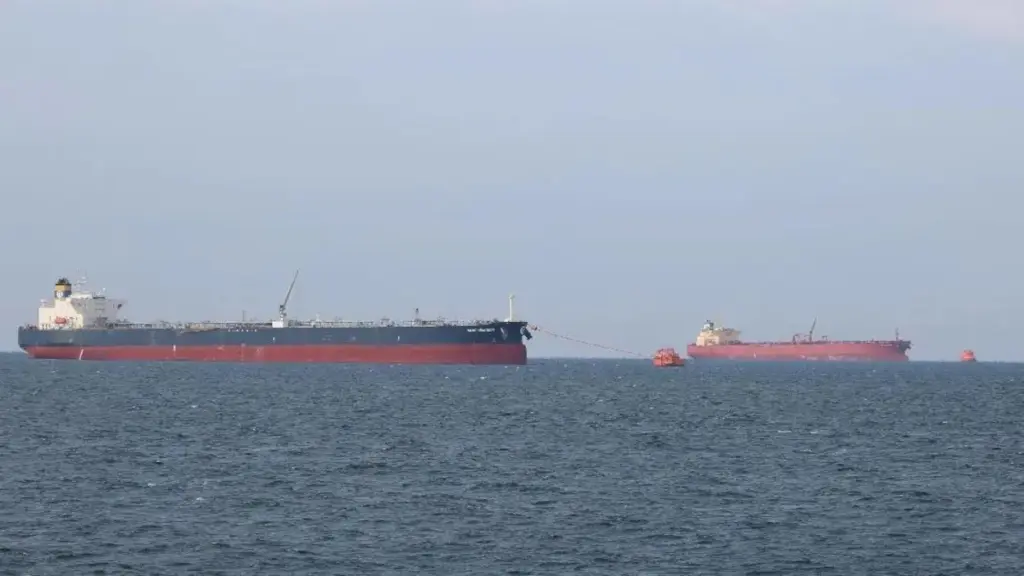
Two oil tankers and several support vessels at the Caspian Pipeline Consortium terminal near Novorossiysk.

The Greek-run oil tanker Skiros was attacked near Novorossiysk on 16 August 2026 after loading Russian crude at the Caspian Pipeline Consortium (CPC) terminal, Bloomberg reported.

The Suezmax-class vessel can carry about 1 million barrels. Bloomberg identified no attacker and provided no information about damage. Skiros’s Athens-based manager told the outlet that no one was injured and no pollution occurred.

CPC primarily exports Kazakh oil and carries more than two-thirds of Kazakhstan’s oil exports. Its shipments recently accounted for almost 2% of the global oil supply. Russian crude typically makes up only 5% to 10% of CPC exports.


Earlier in August, Ukraine agreed not to attack CPC infrastructure or non-Russian ships bound for the terminal if they were not under Ukrainian sanctions and did not carry Russian cargo. Because Skiros carried Russian crude, the protection did not apply to it under the terms Bloomberg described.

Following the July attacks, CPC considered suspending operations due to environmental and safety risks but decided to continue operations, Bloomberg reported.

The Skiros attack ended an almost three-week lull in attacks on ships using the terminal. Bloomberg did not say whether it disrupted oil loading, and CPC declined to comment.

Earlier attacks cut Kazakhstan’s oil production

Earlier attacks suspended loading at the terminal. Kazakhstan’s Energy Ministry confirmed a temporary reduction in oil production to prevent storage facilities from reaching capacity, while Reuters reported CPC loadings fell by a fifth in July.

The disruption also increased shipping and war-risk insurance costs as some operators became reluctant to call at the terminal, The Financial Times reported.

Commander of Ukraine’s Unmanned Systems Forces, Robert “Madyar” Brovdi. Photo: Madyar

Paralysis of the logistics

Ukraine has not claimed responsibility for the Skiros attack, and Bloomberg did not identify an attacker. In a separate operation in July, the SBU and Navy acknowledged striking sanctioned Russian oil tankers Louise 1 and Banda with Mamai sea drones.

Robert “Madyar” Brovdi, commander of Ukraine’s Unmanned Systems Forces, later described the wider objective as the “paralysis of the logistics” of oil, fuel, and cargo that bypasses sanctions.

  • ✇Euromaidan Press
  • Russian drone attacks on Ukraine’s Danube ports hit recent high, Romania says
    Romania detected more than 100 drones involved in seven attacks on Ukraine’s Danube ports in recent days, interim Romanian Defense Minister Radu Miruță told Romanian channel Digi24 on 17 August 2026. He said the attacks were the most intense recorded recently and that Ukrainian forces destroyed most of the drones “a few dozen meters from Romanian airspace.” Russia’s growing attacks on Ukraine’s Danube ports put a key export route at risk as Kyiv seeks other outlets whil
     

Russian drone attacks on Ukraine’s Danube ports hit recent high, Romania says

18 août 2026 à 05:49

Four-image collage showing drone wreckage found on Romania’s coast and in nearby waters, including wing fragments, an engine and propeller, and exposed electronics.

Romania detected more than 100 drones involved in seven attacks on Ukraine’s Danube ports in recent days, interim Romanian Defense Minister Radu Miruță told Romanian channel Digi24 on 17 August 2026. He said the attacks were the most intense recorded recently and that Ukrainian forces destroyed most of the drones “a few dozen meters from Romanian airspace.”

Russia’s growing attacks on Ukraine’s Danube ports put a key export route at risk as Kyiv seeks other outlets while its Black Sea ports are under attack. They also put Ukraine's southern border region under pressure as Kyiv develops trade links with Moldova and Romania, and NATO routes more military aid through Romania.

The latest drone swarms remained over Ukraine, and officials found no indication that Romania’s threat level had risen, Miruță stated. The Romanian military nevertheless remained on alert as attacks intensified across the Danube.

Ukraine looks south for trade and military aid

With Russia hitting its ports, Ukraine is turning to Romania and Moldova to keep trade moving. Kyiv and Chișinău are discussing a rail link through Moldova to Romania’s Constanța port, though Ukraine estimates it could carry only about 10% of its grain exports.

The rail proposal comes as Russian port strikes have cut monthly agricultural exports by 20–30% and left up to 10 million tons of grain in storage without buyers, Agriculture Minister Taras Vysotskyi has said.

Drone debris washed ashore in Romania after Russian attacks on Ukraine, 13-14 August 2026. Photos: Radu Miruță
Explore further

More than 100 drones detected near Romania in four days, NATO jets scrambled seven times

NATO said in December that a second aid hub in Romania would begin operating in January. It was designed to supplement the main center in Rzeszów, Poland, and route supplies toward Ukraine’s southern and eastern fronts.

Romania faces repeated drone incursions

Russian drones targeting Ukraine have repeatedly entered Romania as Moscow attacks Ukrainian ports across the Danube. More than 40 such incursions had been recorded by early June, Romanian Foreign Minister Oana Țoiu said.

The most serious occurred on 29 May, when a drone hit an apartment building in Galați. Two people were injured, and about 70 residents fled or were evacuated.

Vladimir Putin suggested that the aircraft might have been Ukrainian, but Romania’s forensic investigation later identified it as a Russian-built Geran-2.

Romanian forces later shot down three drones in 72 hours in July, while Miruță said Spanish pilots and Romanian troops destroyed a fourth on 16 August.

Debris from drones intercepted over Ukraine has also washed onto Romania’s coast, prompting temporary access restrictions while specialists checked for explosives.

Bucharest is buying low-altitude radars and ground interceptors through the EU’s SAFE program. Miruță said drones often fly at 70 to 150 meters, and ground systems would be cheaper to use than fighter-launched missiles.

  • ✇Euromaidan Press
  • Russia’s latest strike on Ukraine’s most important trade route: Togo-flagged civilian ship hit in Odesa
    Russia struck Odesa's port again and hit a foreign civilian ship. Russian forces attacked port infrastructure in Odesa Oblast overnight, damaging a civilian vessel flying the flag of Togo, Oleh Kiper, the head of the regional military administration, reported. The strike hit neutral commercial shipping at a port that Russia has repeatedly attacked. Odesa is Ukraine's main gateway for seaborne trade, and Russia has struck its port infrastructure throughout the war, endan
     

Russia’s latest strike on Ukraine’s most important trade route: Togo-flagged civilian ship hit in Odesa

17 août 2026 à 15:01

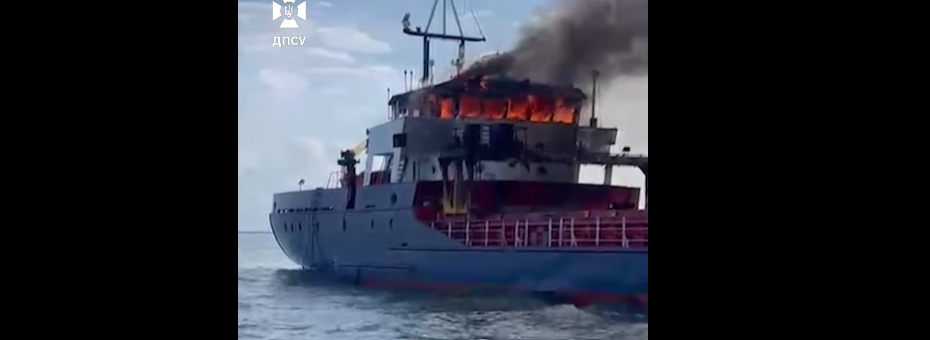
A Russian Shahed drone struck a Palau-flagged vessel carrying corn twice as it left a port in Odesa Oblast, setting it on fire. Source: Ukraine's State Border Guard Service

Russia struck Odesa's port again and hit a foreign civilian ship. Russian forces attacked port infrastructure in Odesa Oblast overnight, damaging a civilian vessel flying the flag of Togo, Oleh Kiper, the head of the regional military administration, reported.

The strike hit neutral commercial shipping at a port that Russia has repeatedly attacked. Odesa is Ukraine's main gateway for seaborne trade, and Russia has struck its port infrastructure throughout the war, endangering the foreign-flagged merchant ships that dock there to move Ukrainian grain and cargo.

Four people were injured

The strike caused casualties among those at the port. Four people were injured, three of them hospitalized and one in serious condition, and all are receiving the necessary medical care, Kiper said.

Fires broke out as a result of the strike and have now been fully extinguished, Kiper said.

The target was Ukraine's trade gateway

Hitting a foreign merchant ship strikes at the heart of Ukraine's economic lifeline. Odesa's ports are how Ukraine ships its grain and imports to the world, and the foreign-flagged vessels that call there are civilian commercial traffic, not military targets.

Earlier, Ukraine’s Agriculture Ministry cut its forecast for agricultural exports in 2026–2027 by 54% after Russia's strikes on the port. The ministry now expects 29.6 million tons of agricultural exports, down from 64.4 million. Its wheat export forecast fell by 53%, from 17.6 million tons to 8.3 million tons.

The scale of the crisis triggered by Russia

In July alone, Russian strikes damaged 28 vessels traveling to or from the ports of Greater Odesa, roughly 11–12% of maritime traffic, killing 21 sailors and injuring 34, according to Andrii Klymenko of the Black Sea Strategic Studies Institute’s monitoring group.

Land and river routes cannot make up the difference. Low water levels are limiting the Danube's capacity, and there is no full substitute for Ukraine’s deep-water ports in the medium term. If the delays continue, he said, Ukraine may have to store an additional 10–12 million metric tons of grain it cannot export.

  • ✇Euromaidan Press
  • More than 100 drones detected near Romania in four days, NATO jets scrambled seven times
    More than 100 drones were detected near Romania over the past 96 hours, with NATO fighter jets scrambled seven times in response to the increased aerial activity, Romanian Defense Minister Radu Miruță said, according to Antena 3 CNN. The figures come as Romania faces a growing number of drone incidents linked to Russia’s war against Ukraine. Romanian forces have recently shifted from monitoring and escorting drones to actively destroying those that enter Romanian airspa
     

More than 100 drones detected near Romania in four days, NATO jets scrambled seven times

14 août 2026 à 16:42

Drone debris washed ashore in Romania after Russian attacks on Ukraine, 13-14 August 2026. Photos: Radu Miruță

More than 100 drones were detected near Romania over the past 96 hours, with NATO fighter jets scrambled seven times in response to the increased aerial activity, Romanian Defense Minister Radu Miruță said, according to Antena 3 CNN.

The figures come as Romania faces a growing number of drone incidents linked to Russia’s war against Ukraine. Romanian forces have recently shifted from monitoring and escorting drones to actively destroying those that enter Romanian airspace, while NATO aircraft are increasingly being called on to respond to aerial threats along the alliance’s eastern flank.

NATO aircraft repeatedly activated

According to Miruță, Romanian authorities detected more than 100 drones in the vicinity of Romanian territory during the four-day period. NATO fighter jets participating in air-policing missions were activated seven times.

Miruță did not report how many of the detected drones entered Romanian airspace, nor how many were identified as Russian or Ukrainian.

Miruță said most of the drones were destroyed by Ukrainian air defenses outside Romania, but close enough for their debris to reach Romanian shores.

“[Russia’s war in Ukraine] is a real war, with real consequences. That is why we are taking every measure we can to limit the indirect consequences that are also being felt here,” Miruță wrote on Facebook.

The report comes shortly after Romania destroyed two Russian Gerbera-type drones that were found drifting in the Black Sea near the Neptun Deep offshore gas project on 11 August. Romanian military divers carried out controlled detonations after Ukraine confirmed the drones were not Ukrainian.

Romania has begun shooting down drones

The latest figures follow a significant change in Romania’s response to drone incursions.

In late July, Romanian F-16s shot down three drones over Romanian territory and territorial waters in three consecutive days. One of the drones was identified as a Russian Shahed-type attack drone, while investigations were conducted into the others.

The July incidents marked a shift from Romania’s previous approach of tracking or escorting drones that crossed into its airspace during Russian attacks on Ukraine. Four of the five drones shot down in EU and NATO countries at that point had been neutralized by Romanian military pilots, according to Miruță.

Romanian President Nicușor Dan called the repeated violations of Romanian airspace “inadmissible and intolerable” and Bucharest prepared a diplomatic protest to Moscow after one of the downed drones was identified as Russian.

romania knocks third drone its sky 72 hours · post romanian air force f-16 fighting falcon fighter jet lands borcea base 2023 dvidshubnet romanian_f-16_fighting_falcon_lands_at_borcea_air_base_romania ukraine news ukrainian reports
Explore further

Romania knocks a third Russian drone from its sky in 72 hours

Drone war reaches beyond Ukraine

Romania has repeatedly dealt with drones crossing its border during Russian attacks on Ukrainian territory, particularly in the vicinity of Ukrainian ports on the Danube and the Black Sea.

In June, a Ukrainian sea drone that had lost control, which Kyiv attributed to Russian electronic warfare, exploded near an oil terminal in the Romanian port of Constanța. No one was injured, but more than 1,000 people were evacuated from the area as a precaution.

The incidents have also extended beyond Romania. On 14 August, NATO fighter jets shot down a foreign drone after it entered Latvian airspace. Latvia said the drone had entered its airspace as a result of Russian electronic warfare activity.

The repeated incidents have made drone activity around NATO’s eastern border an increasingly regular consequence of Russia’s war against Ukraine.

  • ✇Euromaidan Press
  • Reuters: Russia dismisses Black Sea ceasefire idea after Ukraine’s offer
    Russia dismissed the idea of a Black Sea ceasefire on 14 August, Reuters reported, a day after the agency disclosed that Ukraine had proposed a mutual halt to attacks on civilian targets there. Russian Foreign Ministry spokesperson Maria Zakharova said Moscow saw no grounds for measures that would give Kyiv a temporary reprieve. Russia’s dismissal comes after its strikes drove shipowners from Odesa as Ukraine’s wheat harvest peaked. More than 90% of Ukraine’s farm e
     

Reuters: Russia dismisses Black Sea ceasefire idea after Ukraine’s offer

14 août 2026 à 07:35

Smoke rises from the burned and heavily damaged superstructure of the Golden Leo cargo ship at sea.

Russia dismissed the idea of a Black Sea ceasefire on 14 August, Reuters reported, a day after the agency disclosed that Ukraine had proposed a mutual halt to attacks on civilian targets there.

Russian Foreign Ministry spokesperson Maria Zakharova said Moscow saw no grounds for measures that would give Kyiv a temporary reprieve.

Russia’s dismissal comes after its strikes drove shipowners from Odesa as Ukraine’s wheat harvest peaked. More than 90% of Ukraine’s farm exports leave through three deepwater Odesa ports. Reuters reported that Ukraine’s 12 August operation at Novorossiysk targeted a naval base and warships, although nearby grain terminals also suspended operations.

Russian forces, by contrast, have repeatedly struck foreign-flagged ships and Ukrainian port infrastructure. The disruption is stranding Ukrainian crops and raising concerns over global food supplies.
Zakharova accused Ukraine of deliberately destabilizing civilian shipping but did not mention Russia’s attacks, Reuters said. She was responding to Turkish Foreign Minister Hakan Fidan, who said Ankara had proposed a Black Sea moratorium to both sides.

Zakharova also said Moscow had received no formal proposal from Türkiye and ruled out reviving the 2022–23 Black Sea grain deal, calling it one-sided.

Ukraine’s harvest has nowhere to go

Reuters said Ukraine’s grain exports had fallen 76% year on year so far in August. Ukraine’s Agriculture Ministry projects agricultural exports could nearly halve, from 64.4 million to 29.6 million tonnes. It expects silos to fill by October as grain backs up.

World Grain, citing the US Department of Agriculture’s Foreign Agricultural Service, reported that corn exports could fall 39% and wheat exports 26%. The US agency expects unsold corn stocks to rise more than tenfold.

The ministry has asked the EU for €220 million to subsidize farm loans and help producers finance autumn sowing. Reuters separately reported, citing unnamed sources in both countries, that Kyiv and Chisinau were discussing a rail route to Romania’s Constanța port. Kyiv estimates it could carry only 10% of Ukrainian grain exports.

Ukrainian grain
Explore further

Ukraine and Moldova discuss rail corridor for grain amid Russian Black Sea attacks

Russia turns ports into targets

After Russia refused to extend the UN- and Türkiye-brokered grain deal in 2023, Ukraine opened its own maritime corridor. It remained operational until this summer’s escalation.

Russian forces repeatedly struck foreign-flagged vessels in July. On 19 July, Russian missiles hit the Guinea-Bissau-flagged, Turkish-owned Golden Leo as it left Odesa carrying corn. The attack killed 10 people, Ukraine’s Navy and Sea Ports Authority said. Ag Bull Trading reported that the attacks brought the corridor to its first full stop since it opened in August 2023.

Russia’s dismissal leaves Ukraine’s corridor officially open while Russian attacks continue to drive shipowners away.

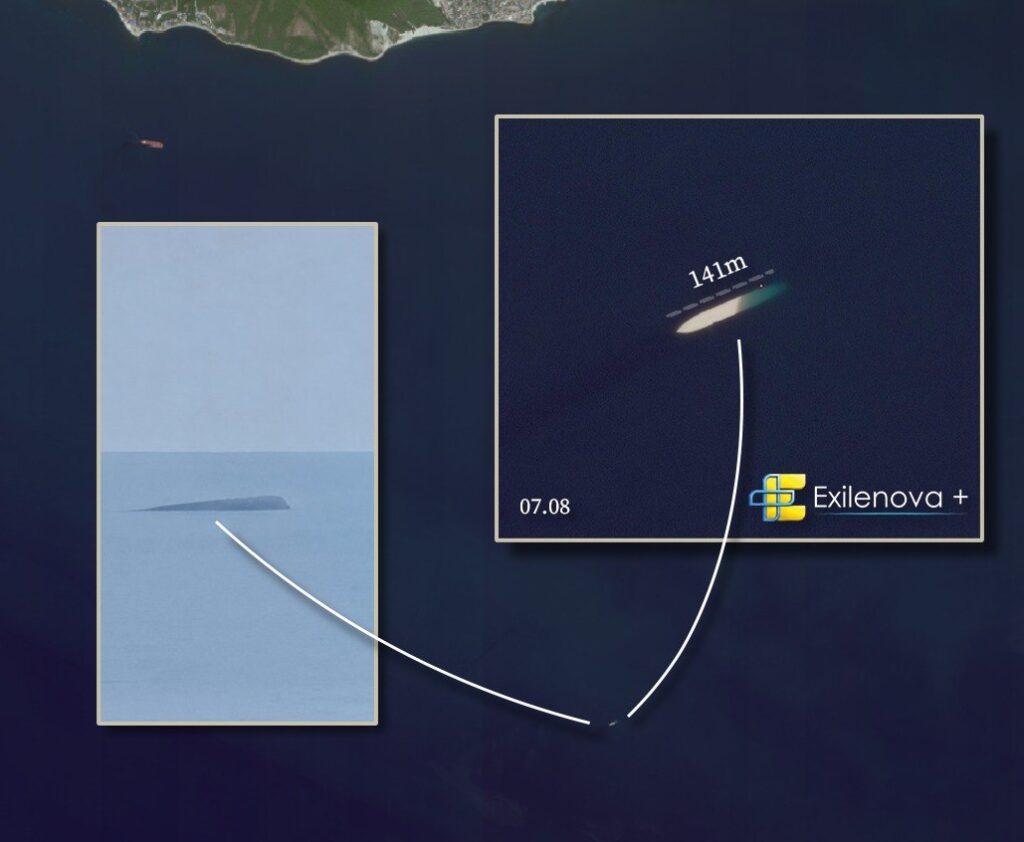
A 141-meter ship mysteriously “disappeared” in the Black Sea near Novorossiysk, while Russian authorities are keeping the incident under wraps

12 août 2026 à 10:34

Sunken vessel near Novorossiysk. August 2026. Source: Exilenova+

Overnight on 7 August, a vessel was possibly sunk in the Black Sea near Novorossiysk, the Ukrainian monitoring channel Exilenova+ reports. The project, which spotted the ship in satellite imagery, suggests it may have been carrying military cargo.

Russia has a practice of concealing its fleet losses. Moscow tries to mask the scale of the problem in various ways: it classifies sinkings as accidents, downplays the number of casualties, or stays completely silent about vessel losses. Russia acknowledges fleet losses only when it happens accidentally or when concealing the sinking or damage is no longer possible. The 141-meter vessel, which had no foreign owner to demand explanations, has received none.

Russian officials have not commented on the sinking, Exilenova+ says.

"The news passed quite modestly, but there is a nuance. Russia's 'official' authorities have not reported about any sunken vessel. It just sank. It is not ruled out that the ship was carrying military cargo for Russia's armed forces. Otherwise, why pretend nothing happened?" Exilenova+ wrote.

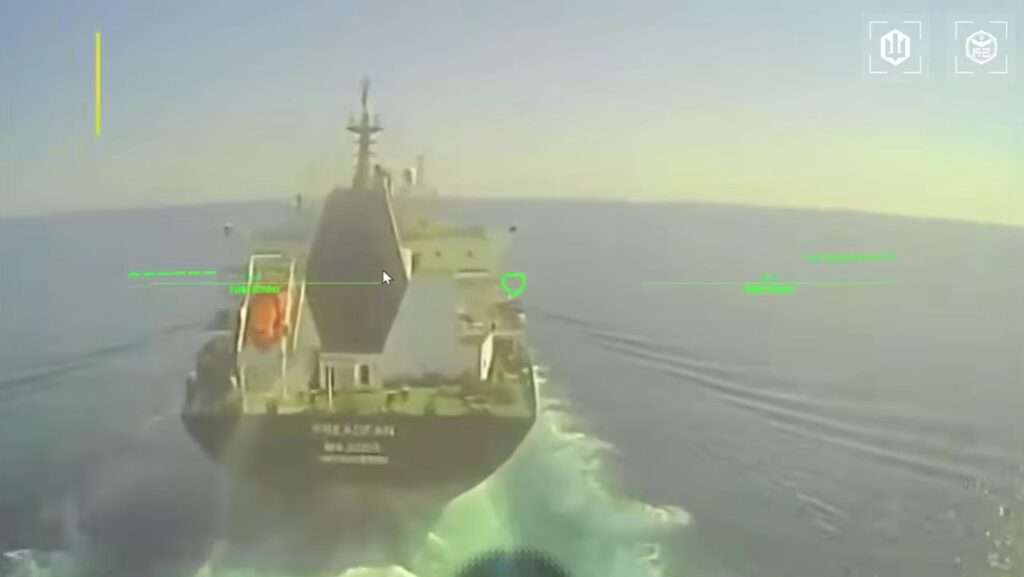
Russian shadow fleet vessel struck by a drone operated by the Unmanned Systems Forces of the Armed Forces of Ukraine. Photo: Screenshot from a video by Robert “Madyar” Brovdi

The vessel was approximately 141 meters long, suggesting a displacement of roughly 10,000 tonnes, according to the Ukrainian outlet Militarnyi.

The strikes that may have caused the sinking

Over 48 hours on 6-7 August, the Unmanned Systems Forces (SBS) struck 102 enemy targets, SBS Commander Robert “Madyar” Brovdi reported. In the same post, he noted that the targets included six shadow fleet vessels in the Black and Azov Seas: two tankers and four dry cargo ships. The SBS also reported striking three units of Russia's fleet on 7 August alone.

"It is entirely possible that the vessel that sank near Novorossiysk is among those struck in those days”, Militarnyi suggests.

Novorossiysk under fire again on 12 August

Just hours after the news of the earlier reported sinking surfaced publicly, Novorossiysk came under attack. Overnight on 12 August, Ukraine's defense forces conducted what President Zelenskyy called a "unique operation" against the naval base, using Palianytsia jet drones, Neptune missiles, and unmanned naval systems.

Novorossiysk became Russia's primary Black Sea naval hub after Ukrainian strikes forced the fleet out of Sevastopol.

  • ✇Euromaidan Press
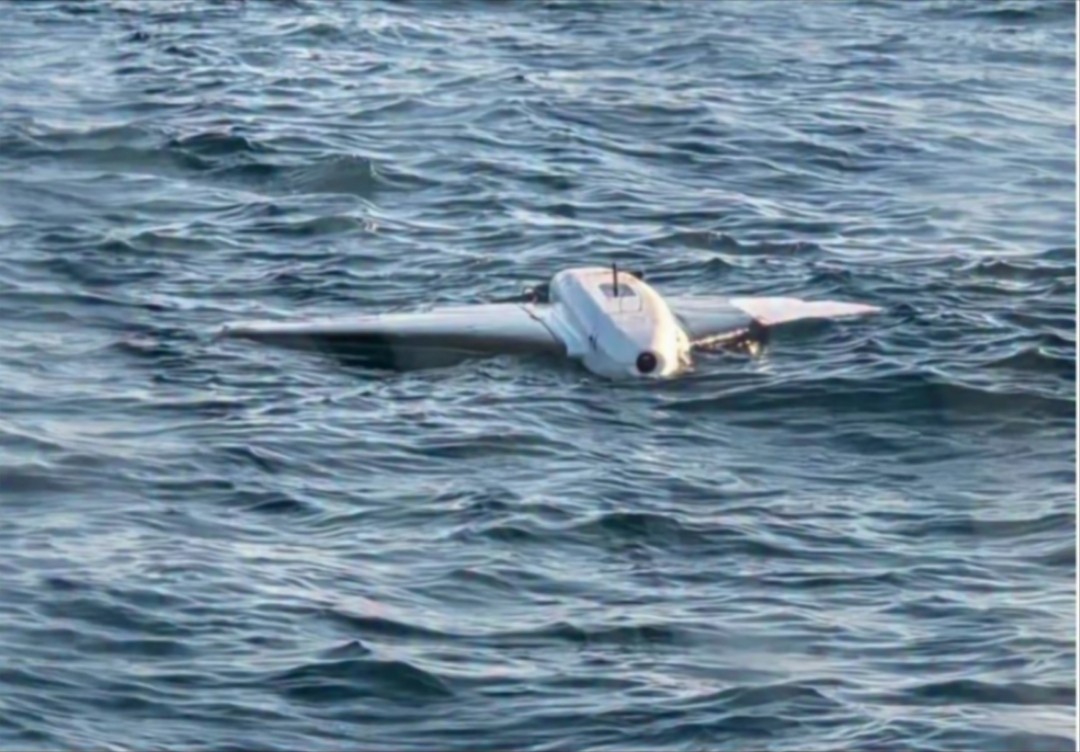
  • Romania found two Russian drones bobbing in its sea—and didn’t wait to ask questions
    Russia's war drifted into Romania's Black Sea waters again, and this time the country's military blew the intruders up, acting Defense Minister Radu Miruță said. A vessel near an offshore gas field spotted two floating Russian drones, and army bomb-disposal divers destroyed them. Ukraine confirmed the aircraft were not its own. Wreckage from the air war over Ukraine now keeps turning up on the land and in the waters of nearby NATO states, dragging their forces into a fi
     

Romania found two Russian drones bobbing in its sea—and didn’t wait to ask questions

12 août 2026 à 03:39

romania found two russian drones bobbing its sea—and didn't wait ask questions · post floating aircraft joined run uncrewed systems drifting neighboring countries' land waters знищення дрейфуючого дрона в чорному

Russia's war drifted into Romania's Black Sea waters again, and this time the country's military blew the intruders up, acting Defense Minister Radu Miruță saidA vessel near an offshore gas field spotted two floating Russian drones, and army bomb-disposal divers destroyed them. Ukraine confirmed the aircraft were not its own.

Wreckage from the air war over Ukraine now keeps turning up on the land and in the waters of nearby NATO states, dragging their forces into a fight they never joined.

A ship raised the alarm

Miruță announced the operation on Facebook, sharing a video. Crews working near the gas platform first noticed the drones in the water. Miruță identified both as Gerberas. A coast guard vessel carrying Romanian army sappers then sailed to the scene. The divers found two uncrewed aircraft adrift, along with several other fragments.

The drones lay in Romania's exclusive economic zone, roughly 90 nautical miles (about 167 km) east of Constanța, Militarnyi reported. Miruță said Romania's Defense Ministry then contacted Kyiv: 

"The Ministry of National Defense contacted the Ukrainian partners, who confirmed the systems do not belong to them."

romania found two russian drones bobbing its sea—and didn't wait ask questions · post one drifting spotted black sea before destruction 11 2026 один з виявлених дронів у чорному морі
One of the drifting Russian drones spotted in the Black Sea before its destruction, 11 August 2026. Photo: Romanian Defense Ministry

To protect the shipping route and the work around the platform, the military destroyed the drones in a controlled blast, Suspilne relayed.

Russia designed the Gerbera as a decoy. The cheap foam aircraft forces Ukrainian air defenses to waste time and interceptors, and helps Russian crews locate those defenses. Later, Russia fitted some Gerberas with warheads, turning the decoy into a strike drone. The same model can also carry smaller attack drones or gather intelligence.

Custom Code

The attack on Ukraine

Ukraine's Air Force reported that last night Russia hit Ukraine with an Iskander-M ballistic missile, a Kh-31P anti-radar missile, and Kh-35 guided missiles, plus 138 Shahed-type strike drones — among them jet-powered ones, Gerberas, and Parodiya decoys — fired from several sites inside Russia and from occupied territory. 

The main targets were Sumy Oblast in the northeast and Odesa Oblast, Ukraine's Black Sea coastal region that lies northeast of Romania's shore. By morning, air defenses had downed or suppressed 112 of the drones, though strikes hit 16 locations.
romania knocks third drone its sky 72 hours · post romanian air force f-16 fighting falcon fighter jet lands borcea base 2023 dvidshubnet romanian_f-16_fighting_falcon_lands_at_borcea_air_base_romania ukraine news ukrainian reports
Explore further

Romania knocks a third Russian drone from its sky in 72 hours

Adrift far from any front

The drones surfaced far from any battlefield. Russian uncrewed aircraft have repeatedly drifted into neighboring states during Moscow's attacks on Ukraine. Romania itself has shifted from escorting stray drones to shooting them down.

Neptun Deep is Romania's largest offshore gas project, due to start production in 2027. Bucharest is counting on the field to cut its reliance on outside supply and to feed neighbors that still lean on Russia. The two drones drifted into the waters around it.

  • ✇Euromaidan Press
  • Twelve kilometers from the war, a drone blast set a Moldovan field alight
    A combat drone exploded near a village on Moldova's border with Ukraine on 9 August, sparking a grass fire but hurting no one, Moldovan police said. Investigators recovered fragments and will examine them to establish the drone's type and origin. It was one of two blasts the war pushed across Europe's borders in two days, with Bulgaria fielding a separate drone explosion and summoning Ukraine's ambassador. Russia's mass strikes keep driving drones and missiles across Uk
     

Twelve kilometers from the war, a drone blast set a Moldovan field alight

9 août 2026 à 12:27

twelve kilometers war drone blast set moldovan field alight · post fragments police preliminarily identified parts combat recovered near crocmaz moldova's ștefan vodă district 9 2026 debris same ukraine news

A combat drone exploded near a village on Moldova's border with Ukraine on 9 August, sparking a grass fire but hurting no one, Moldovan police said. Investigators recovered fragments and will examine them to establish the drone's type and origin. It was one of two blasts the war pushed across Europe's borders in two days, with Bulgaria fielding a separate drone explosion and summoning Ukraine's ambassador.

Russia's mass strikes keep driving drones and missiles across Ukraine's borders into EU and NATO states, and Russian jamming can knock Ukraine's own drones off course into the same skies—so every crash starts with one question: whose weapon was it.

A drone down in a Moldovan field

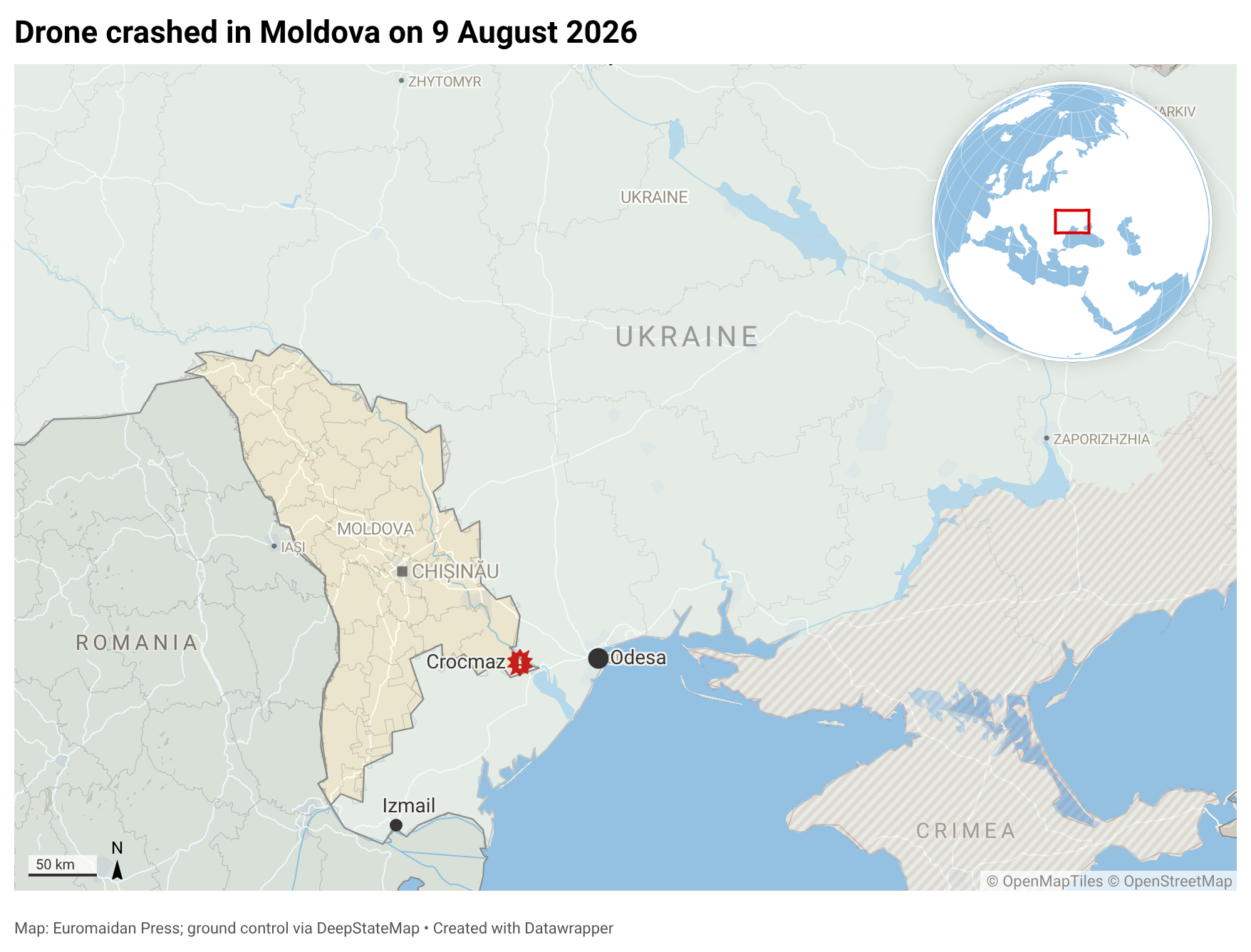
The blast rang out around 13:20 near Crocmaz, in Moldova's Ștefan Vodă district in the southeast, and set dry grass alight, NewsMaker reported. The village lies on the Dniester, upstream of Ukraine's Dniester estuary.

twelve kilometers war drone blast set moldovan field alight · post near crocmaz moldova's ștefan vodă district where exploded dry grass 9 2026 crash site same ukraine news ukrainian reports
The field near Crocmaz, in Moldova's Ștefan Vodă district, where a drone exploded and set dry grass alight, 9 August 2026. Photo: Consiliul Raional Ștefan Vodă/Facebook

Firefighters and patrols confirmed no civilians were hurt and no homes were damaged. Police found fragments that they preliminarily identified as parts of a combat drone. Those pieces will undergo a ballistic-technical examination to determine the drone's exact type, its affiliation, and how it fell. Crocmaz sits right on the Ukrainian border. The district council posted photos of the object and told residents to avoid the cordoned area and report any fragments to the 112 line.

twelve kilometers war drone blast set moldovan field alight · post debris exploded near crocmaz moldova's ștefan vodă district close ukraine border 9 2026 moldova fb consiliul raional news ukrainian
Debris from a drone that exploded near Crocmaz in Moldova's Ștefan Vodă district, close to the Ukraine border, 9 August 2026. Photo: Consiliul Raional Ștefan Vodă/Facebook

The blast came amid an assault on Odesa

The drone fell hours after Russia hit Odesa with missiles and drones overnight on 9 August. Much of Moldova's eastern border runs along Odesa Oblast, so wreckage from the war often drifts across. Russian drones have crashed on Moldovan soil during such attacks before. Whether this one was Russian or something else is for the examination to show.

A parallel case in Bulgaria

Also today, Bulgaria's Foreign Ministry summoned Ukraine's ambassador, Olesia Ilashchuk, over a drone that exploded on 8 August near the Romanian border, by a Trans-Balkan gas pipeline compressor station, Bulgarian National Television reported. Its defense bloc said the drone was likely a Ukrainian decoy, with no sign it was launched on purpose. 

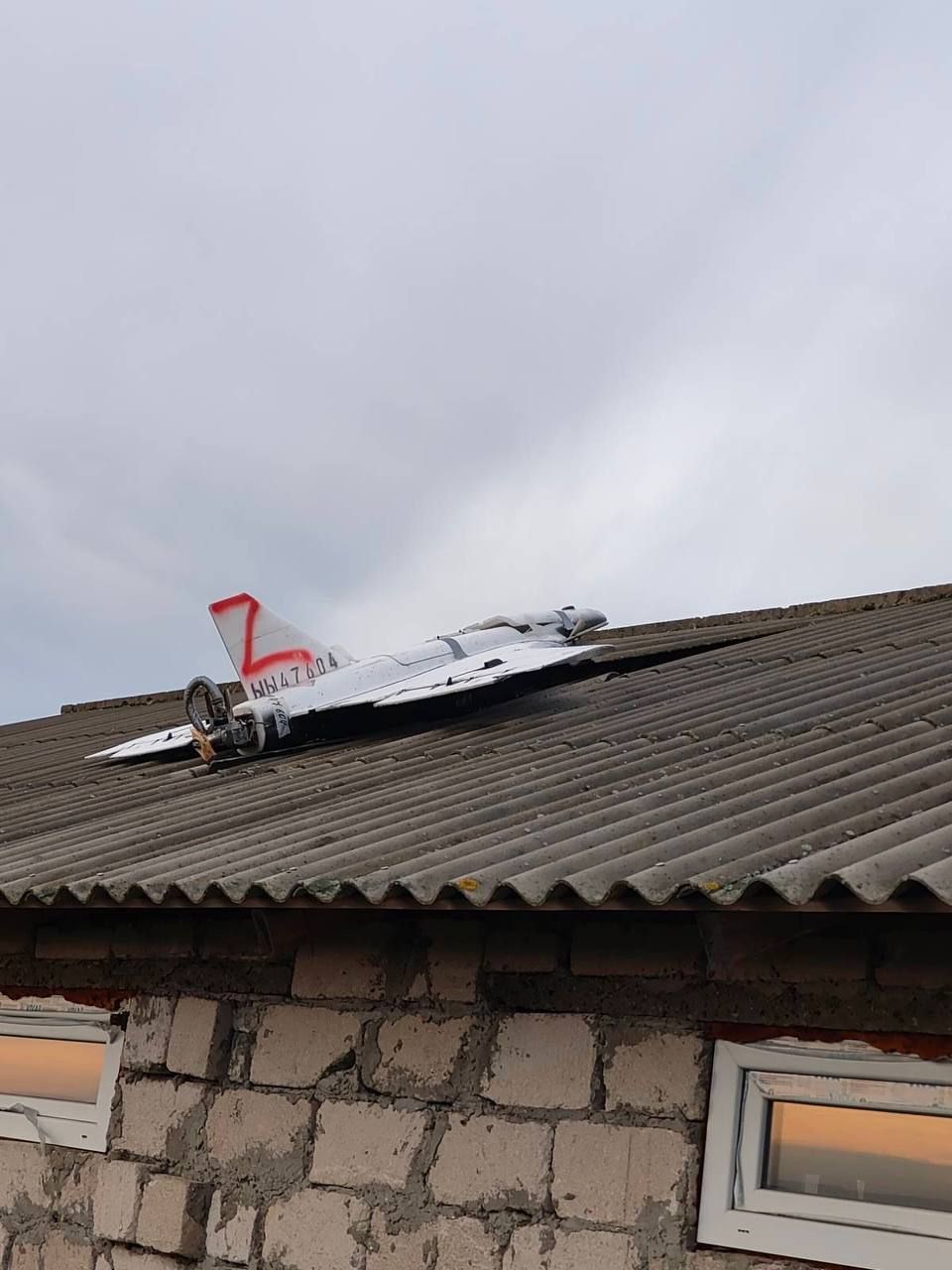
russia’s drones violated airspace moldova romania — one fell straight onto civilian roof · post russian drone seen resting building cuhureștii de jos florești district 25 2025 20251125112001-7146 ukraine news
Explore further

Russia’s drones violated the airspace of Moldova and Romania — one fell straight onto a civilian roof (MAP)

  • ✇Euromaidan Press
  • Russia wanted Novorossiysk to be its main export gateway—Ukraine turned it into a chokepoint
    Ukrainian aerial- and sea-drone attacks have turned Russia's busiest seaport into a place cargo ships increasingly refuse to sail, choking both imports from China and exports of grain and oil, according to The Moscow Times. Logistics and trade executives describe a route to Novorossiysk grown too risky to use, and a Russian grain-industry group warns the Black Sea export corridors could shut down entirely. The strikes that once spared container ships have now reached th
     

Russia wanted Novorossiysk to be its main export gateway—Ukraine turned it into a chokepoint

4 août 2026 à 03:28

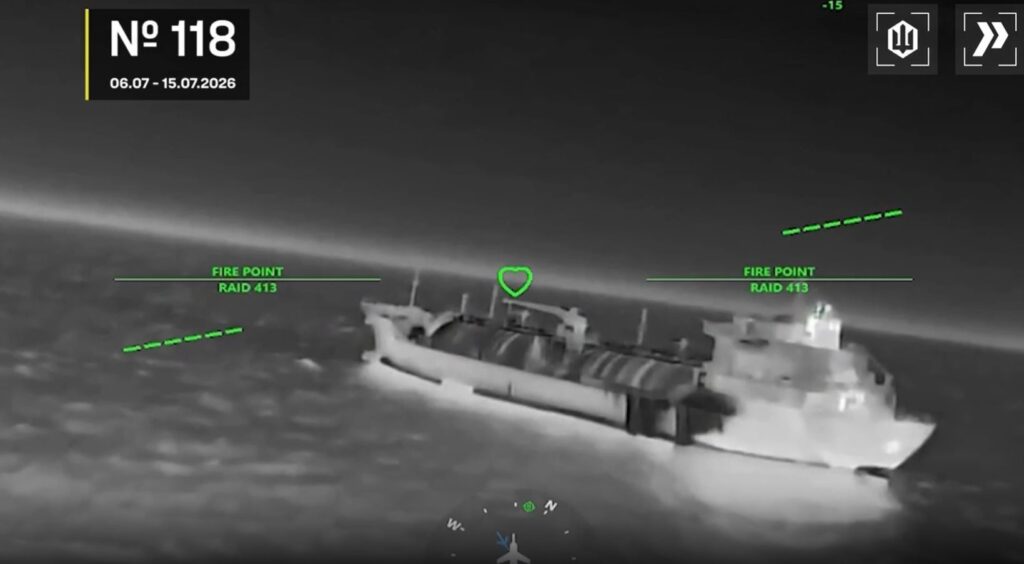
russia wanted novorossiysk its main export gateway—ukraine turned chokepoint · post russian gas carrier thermal sight ukrainian drone during strikes black sea marked 118th vessel hit 6–15 2026 operation sbs

Ukrainian aerial- and sea-drone attacks have turned Russia's busiest seaport into a place cargo ships increasingly refuse to sail, choking both imports from China and exports of grain and oilaccording to The Moscow Times. Logistics and trade executives describe a route to Novorossiysk grown too risky to use, and a Russian grain-industry group warns the Black Sea export corridors could shut down entirely. The strikes that once spared container ships have now reached them too.

Ukraine has spent 2026 forcing Russia to defend a maritime supply chain it once treated as low-risk, turning the sea into one of the war's contested fronts. The longer the southern sea approaches stay dangerous, the more of Russia's oil and grain earnings, the money that pays for the war, end up stuck at sea instead of being sold.

The China route importers are told to skip

"On the China–Novorossiysk route everything is now difficult, the delays are huge," one importer told The Moscow Times. 

Freight forwarders now tell clients to avoid the route outright, three colleagues said. Aerial drones and unmanned boats make the approaches too unpredictable. Earlier strikes fell mostly on grain carriers and oil tankers. Ukrainian drones hit a container ship carrying imports in late July. Then, overnight on 1 August, a sea drone sank the FESCO vessel Yanina about 130 miles offshore. The crew got out. The cargo did not.

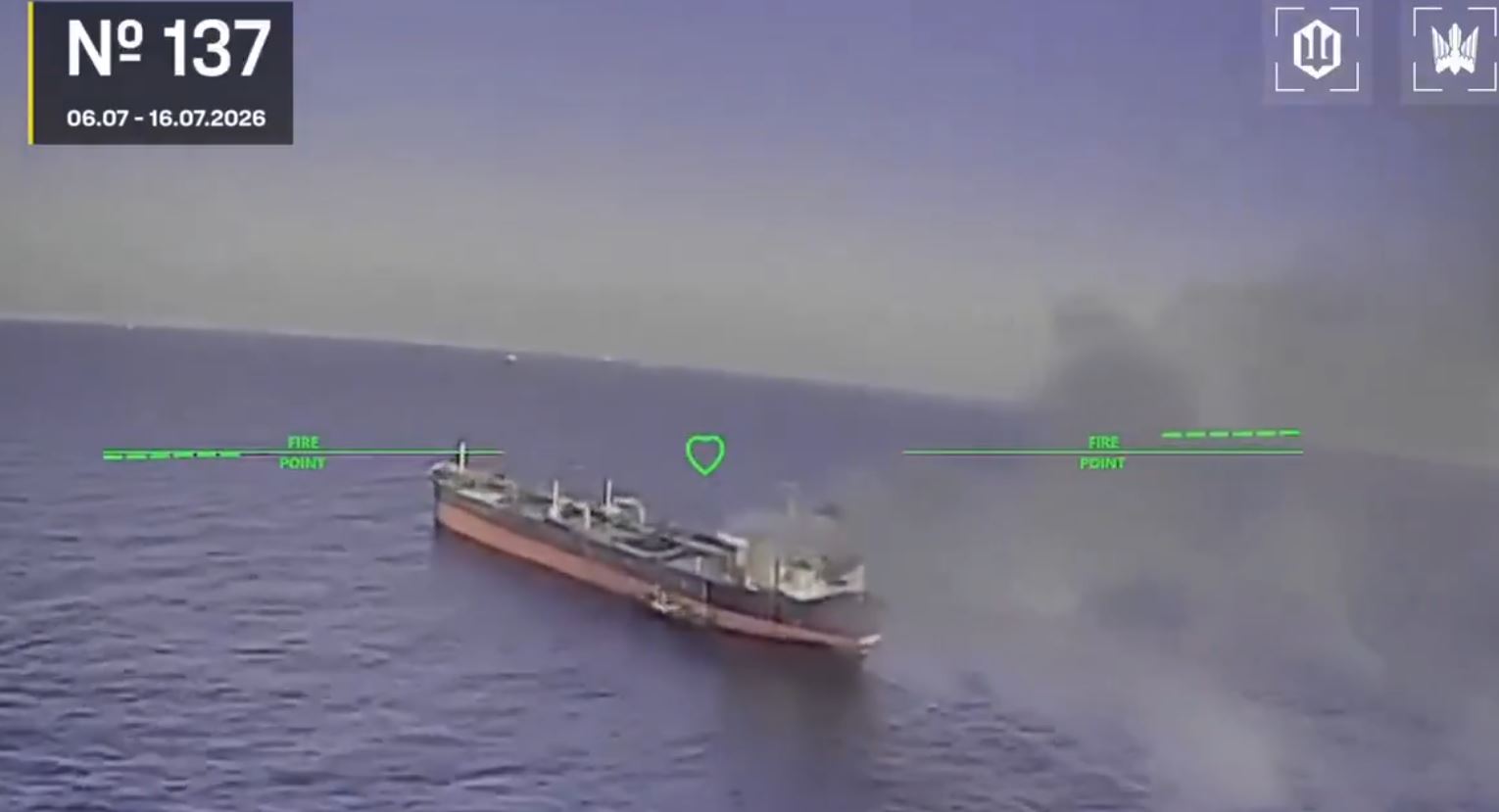
ukraine's spy service navy team up strike two russian crude tankers black sea · post shadow-fleet tanker marked 137th vessel struck 6–16 2026 operation sight ukrainian drone sbs video oil
Explore further

Ukraine hits 201 Russian shadow fleet ships in three weeks. Commander says Crimea’s supply route is now blocked indefinitely

Sailings drop as the campaign widens

Large-ship sailings from Novorossiysk fell 38% in July, the Moscow Times says, citing ship-tracking data, with tanker runs down by half. 

"But now the situation will get worse, because container ships have also become a target," a logistics manager told the publication. 

116 russian ships nine days one big export tanker needs 12–15 small ones fill ukraine burning · post several vessels once thermal sight ukrainian drone over sea azov 13–14 2026
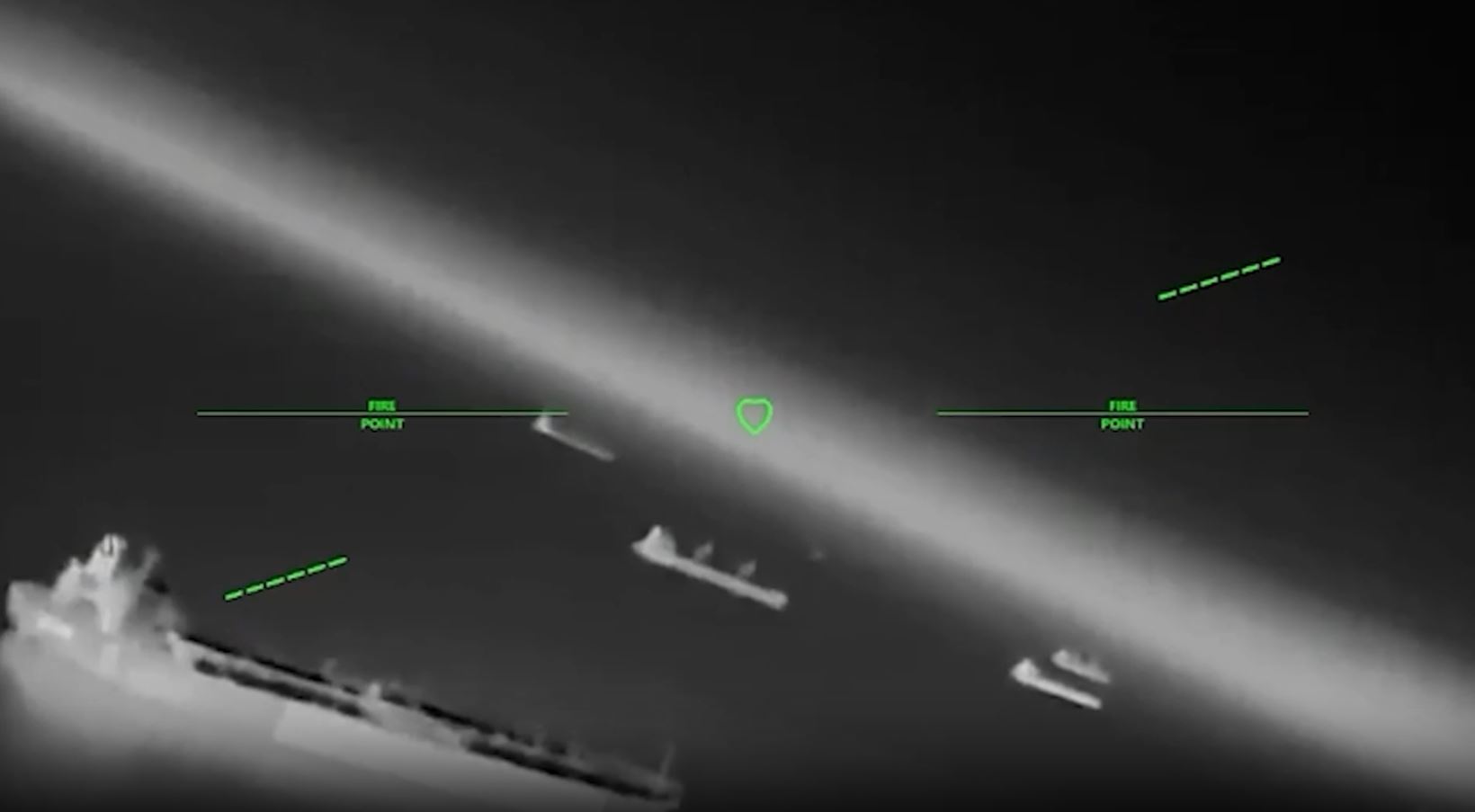
Several Russian vessels at once in the thermal sight of a Ukrainian drone over the Sea of Azov, 13–14 July 2026. Screenshot from video: Unmanned Systems Forces

This is one edge of a wider Ukrainian drone campaign against Russian shipping, codenamed MoLoChKa. The name is an acronym for "Moscow will fall through Crimea." Its own public scoreboard counts 206 vessels hit in July by the Unmanned Systems Forces (SBS) alone, with another logged in August. The SBS have mostly burned the small tankers and support ships that keep Russia's sanctioned shadow fleet moving.

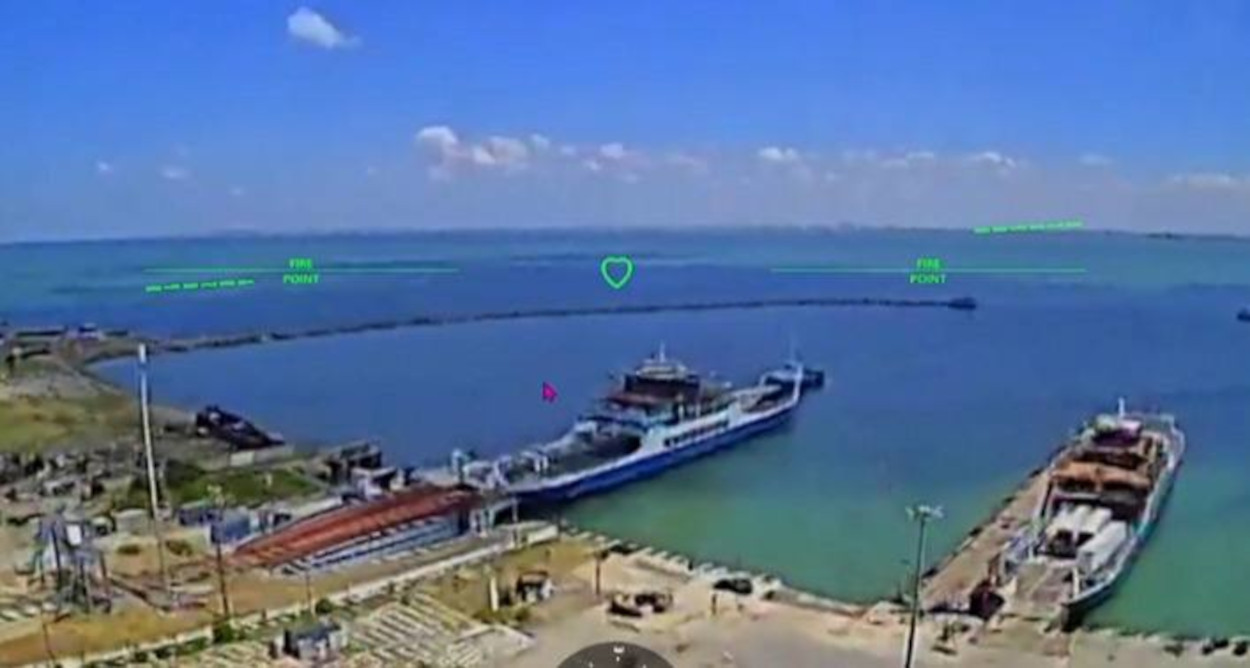
A photo shared by Robert “Madyar” Brovdi shows the Russian ferry “Maria” before it was struck in Ukrainian drone operations, with the damaged “Panagia” ferry visible to the right. Photo: Robert "Madyar" Brovdi
Explore further

Ukrainian drones slash Kerch ferry crossing capacity by 75%, as daily strikes continue on Russian vessels and occupation energy infrastructure

What Russia stands to lose

Novorossiysk carries every fifth ton of Russia's seaborne exports: Urals oil, Kazakh crude, wheat for Egypt, and fertilizer for Asia and Africa

Attacks across the Azov–Black Sea region could cost Russia up to 30–35 million tons of wheat exports this season, a grain-exporters' union estimated. That would gut a harvest analysts expected to top 44-45 million tons. 

"Systematic attacks that began in July could soon lead to the complete blocking of the export corridors of the Black Sea basin," the union said. 

Ukraine's drones had already cut into Russia's seaborne grain trade this summer, and repeated hits on the port's main oil terminal have dented crude loadings. Russia keeps pouring money into the port, building a new terminal worth 120.7 billion rubles (about $1.5 billion), even as ships stay away, The Moscow Times said.

  • ✇Euromaidan Press
  • Ukraine’s sea drone that never touched the shore struck two Russian radars in occupied Crimea
    Ukraine's military intelligence turned its newest sea drones into carriers for FPV strike drones and knocked out two Russian radar targets in occupied Crimea, according to Ukraine's Main Directorate of Intelligence (HUR). The strike let its uncrewed boats reach Russian targets on land, a move the unit called a shift of the war to a new plane. HUR released footage of the operation on 3 August. Ukraine has no significant navy now, so it built a fleet of uncrewed boats to cont
     

Ukraine’s sea drone that never touched the shore struck two Russian radars in occupied Crimea

3 août 2026 à 07:57

two russian radars destroyed crimea one ukrainian sea drone never touched shore · post parol-4 radar interrogator part friend-or-foe identification system seen fpv moments before strike occupied late 2026 video

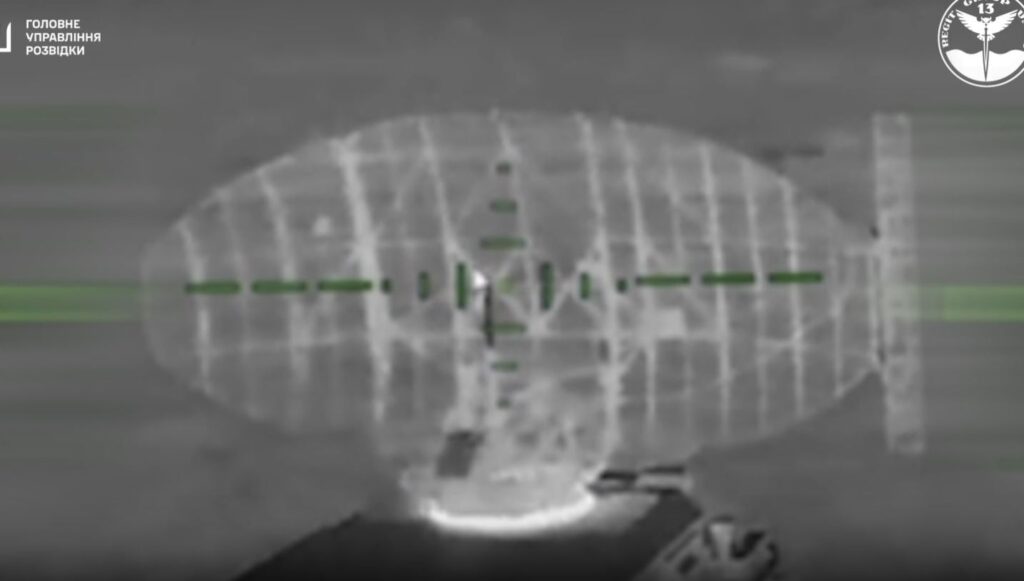
Ukraine's military intelligence turned its newest sea drones into carriers for FPV strike drones and knocked out two Russian radar targets in occupied Crimea, according to Ukraine's Main Directorate of Intelligence (HUR). The strike let its uncrewed boats reach Russian targets on land, a move the unit called a shift of the war to a new plane. HUR released footage of the operation on 3 August.

Ukraine has no significant navy now, so it built a fleet of uncrewed boats to contest a sea Russia once dominated. That improvised force keeps taking on new roles, growing from a way to sink ships into a tool that reaches the occupied peninsula itself. The radar strikes fit a wider push to raise the cost of Russia's hold on Crimea. Ukraine's forces kept hitting Russian depots and other military sites across the peninsula in early August. Every radar Ukraine burns thins the sensors Russia relies on to see and defend Crimea. 

Sea drones that launched FPV drones onto land

HUR's special unit Group 13 ran the operation in occupied Crimea in late July 2026, the agency reported. The operators used the newest versions of Magura naval platforms, this time set up as FPV-drone carriers, to hit Russian ground targets on the peninsula. It was the first operation to show the newest Magura's effectiveness.

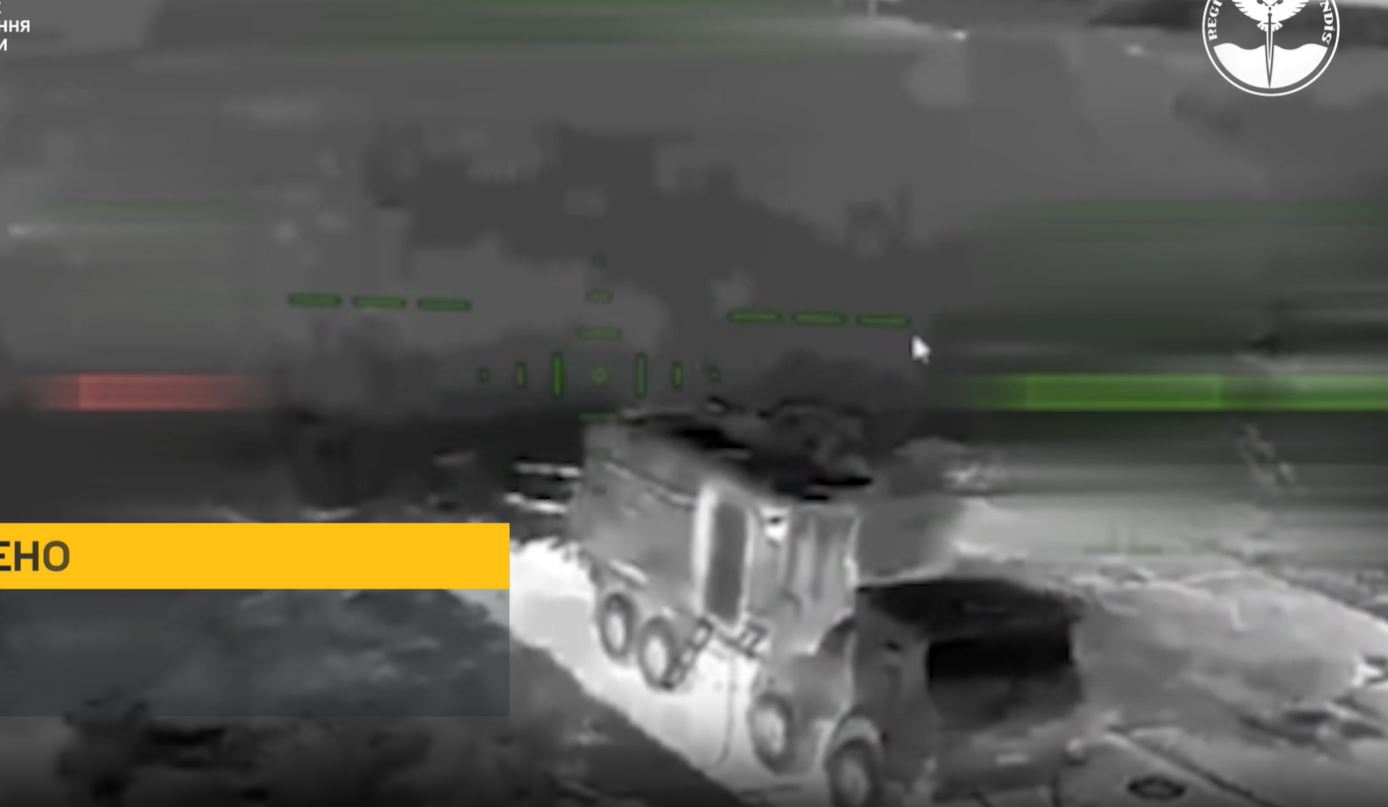
two russian radars destroyed crimea one ukrainian sea drone never touched shore · post control vehicle podlyot radar complex seen fpv moments before strike occupied late 2026 video ukraine's defense
A control vehicle from a Russian Podlyot radar complex, seen from a Ukrainian FPV drone moments before the strike in occupied Crimea, late July 2026. Screenshot from video: Ukraine's Defense Intelligence (HUR)

The aerial FPV drones struck a control vehicle from a Russian Podlyot radar system. They also hit a Parol-4 radar interrogator, part of the system Russian forces use to tell friendly aircraft from hostile ones.

The footage opens with a Russian projectile fired from the Crimean coast. It streaks past a Ukrainian naval drone and misses. After a cut, a naval drone fires anti-air missiles. The video then shows an FPV aerial drone launching from a naval drone. Two FPV drones then dive into the two radar targets.

The Maguras that hunted ships now threaten land

The Group 13 commander, callsign Thirteenth, framed the strikes as a turn in the war. 

"From now on our Maguras threaten the Russian occupiers on land too, a fundamental shift of the fight to another plane," he said. 

At sea, Group 13 has destroyed nine Russian ships and damaged five, HUR says. It has also destroyed three enemy helicopters and damaged one, and destroyed two Russian fighter jets.

The Maguras began as kamikaze boats that were among the Ukrainian weapons that pushed Russia's Black Sea Fleet out of the northwestern sea, then grew into multi-role platforms that even downed Russian jets.
  • ✇The Kyiv Independent
  • Netherlands, Belgium hand over 2 minehunters to boost Ukraine’s naval defenses
    The Netherlands and Belgium have delivered two minehunter vessels to Ukraine to support maritime security in the Black Sea, Dutch Defense Minister Ruben Brekelmans announced on June 26."The Netherlands and Belgium are transferring two minehunters to Ukraine. A vital contribution to Black Sea security, and key to safeguarding trade routes and global food supply," Brekelmans said on X. He added that Ukrainian crews and technicians were trained "in record time." According to the Dutch Defense Minis
     

Netherlands, Belgium hand over 2 minehunters to boost Ukraine’s naval defenses

27 juin 2025 à 00:50
Netherlands, Belgium hand over 2 minehunters to boost Ukraine’s naval defenses

The Netherlands and Belgium have delivered two minehunter vessels to Ukraine to support maritime security in the Black Sea, Dutch Defense Minister Ruben Brekelmans announced on June 26.

"The Netherlands and Belgium are transferring two minehunters to Ukraine. A vital contribution to Black Sea security, and key to safeguarding trade routes and global food supply," Brekelmans said on X. He added that Ukrainian crews and technicians were trained "in record time."

According to the Dutch Defense Ministry, the vessels involved are the Belgian ship BNS Narcis and the Dutch Zr.Ms. Vlaardingen. The official handover ceremony took place earlier in Zeebrugge, Belgium, but was disclosed only later due to security concerns.

"The major ports of Odesa and the Black Sea shipping lanes are the lifeblood of the Ukrainian economy," Brekelmans said. "And (they are) under constant threat. Ukraine may not win the war at sea, but it can certainly lose the war there. We simply cannot let that happen. That is why it is so important for maritime security and free passage that Ukraine can use minehunters."

Since Russia's full-scale invasion of Ukraine began in February 2022, the Netherlands has provided Kyiv with a combined 8.4 billion euros ($9.4 billion) in support, according to the Kiel Institute for the World Economy while Belgium has allocated over two billion euros (about $2.2 billion) in support, including military, financial, and humanitarian assistance.

Putin under pressure to declare war on Ukraine, but experts say Russia isn’t ready
Despite suffering over 1 million casualties, pounding Ukrainian cities nightly with missiles and drones, and committing countless war crimes, one startling fact about Russia’s full-scale invasion remains — Moscow has yet to officially declare war on Ukraine. In February 2022, Russian President Vladimir Putin described what he believed was going to be a swift victory and the capture of Kyiv within days as a “special military operation.” Nearly three-and-a-half years later, the Kremlin is stuck
Netherlands, Belgium hand over 2 minehunters to boost Ukraine’s naval defensesThe Kyiv IndependentChris York
Netherlands, Belgium hand over 2 minehunters to boost Ukraine’s naval defenses

❌