President Volodymyr Zelensky on June 20 condemned Russia's attempts to advance in Sumy Oblast, as Moscow intensifies its rhetoric of maximalist demands toward Ukraine."The Russians had various plans and intentions there — absolutely insane, as usual. We are holding them back and eliminating these killers, defending our Sumy Oblast," Zelensky said in his evening address.Russian President Vladimir Putin, earlier on June 20, claimed that "all of Ukraine" belonged to Russia, citing the Kremlin's pro
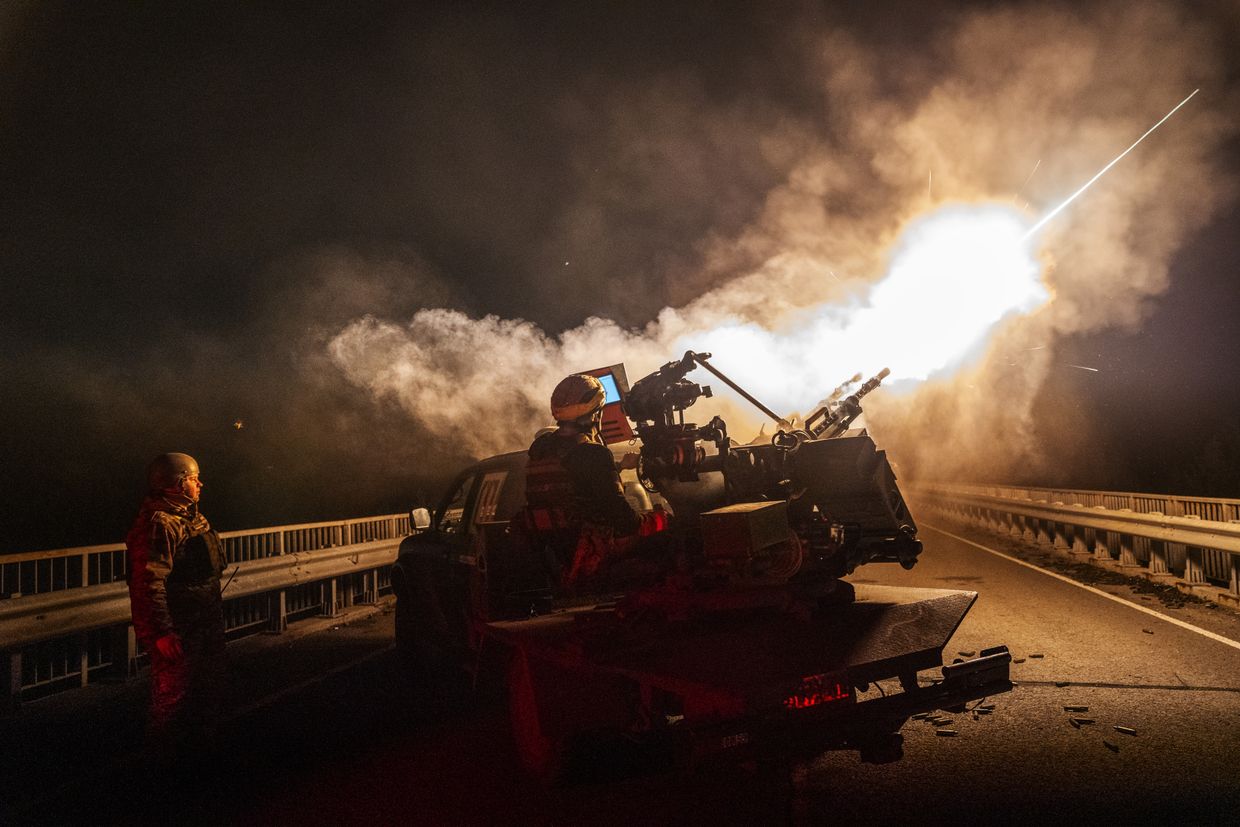
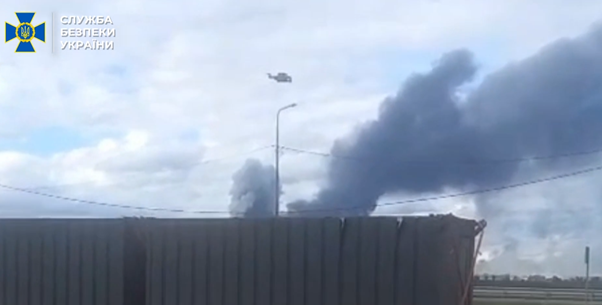
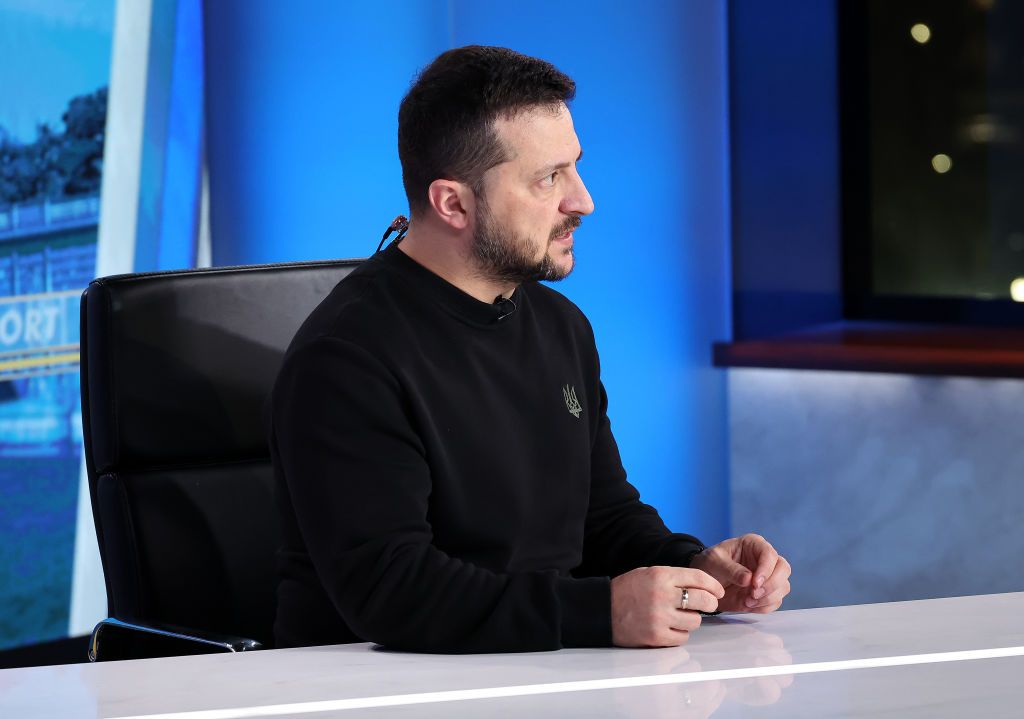
President Volodymyr Zelensky on June 20 condemned Russia's attempts to advance in Sumy Oblast, as Moscow intensifies its rhetoric of maximalist demands toward Ukraine.
"The Russians had various plans and intentions there — absolutely insane, as usual. We are holding them back and eliminating these killers, defending our Sumy Oblast," Zelensky said in his evening address.
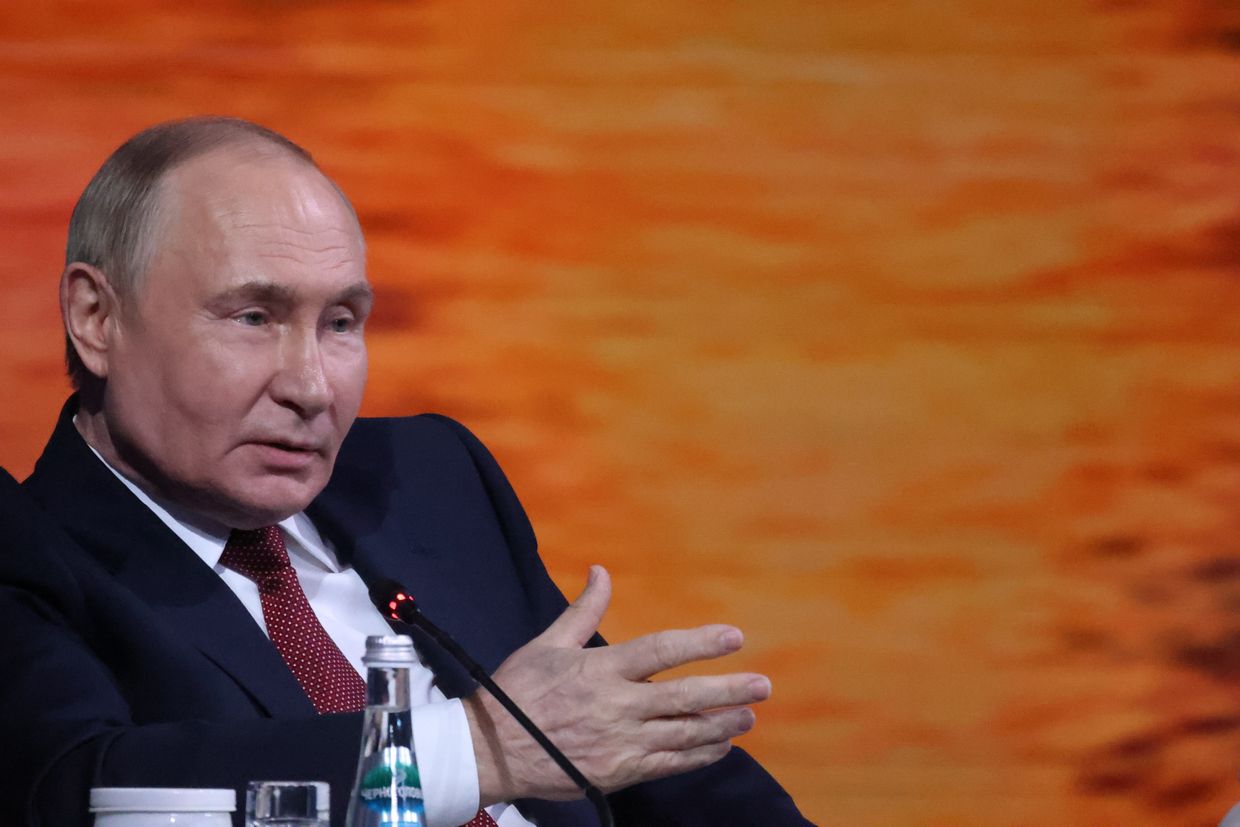
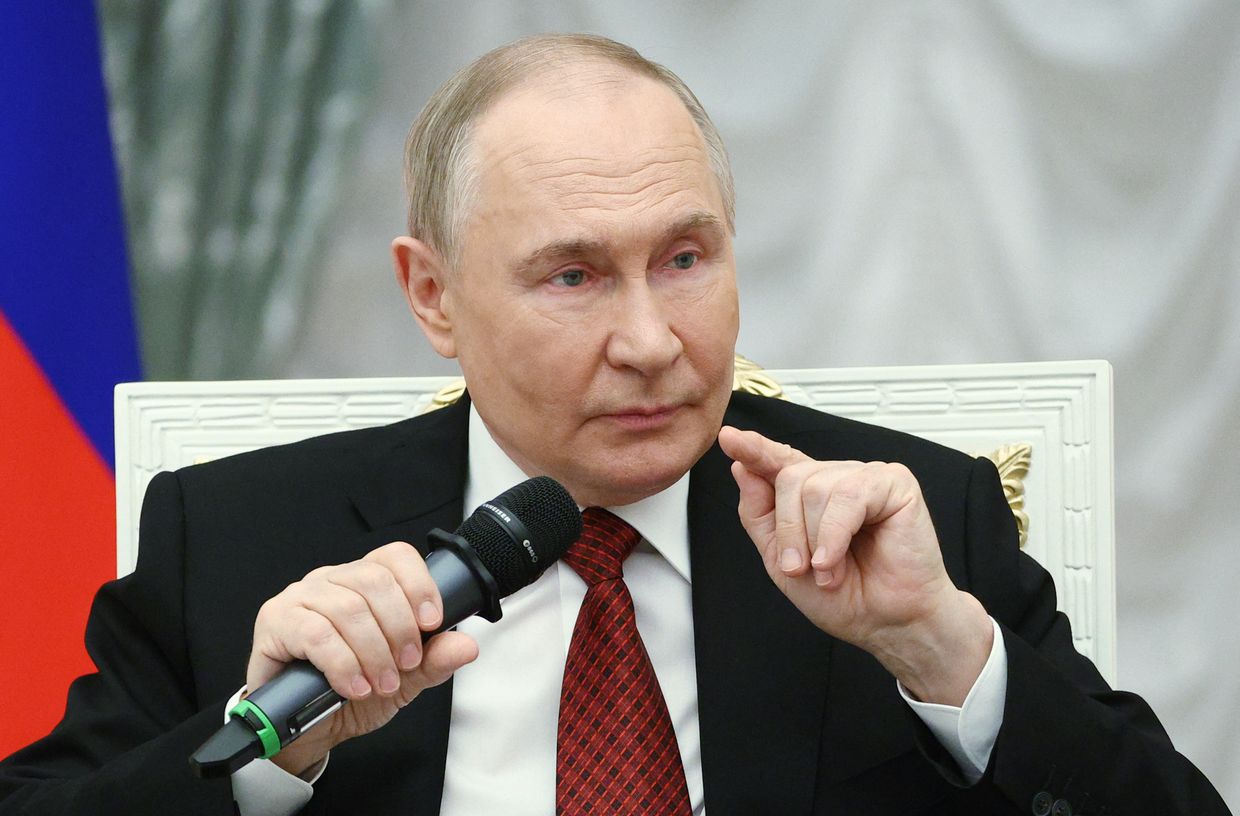
Russian President Vladimir Putin, earlier on June 20, claimed that "all of Ukraine" belonged to Russia, citing the Kremlin's propaganda talking points. Moscow regularly claims that Russians and Ukrainians are "one people."
Putin singled out Sumy, saying that "the city of Sumy is next, the regional center. We don't have a task to take Sumy, but I don't rule it out."
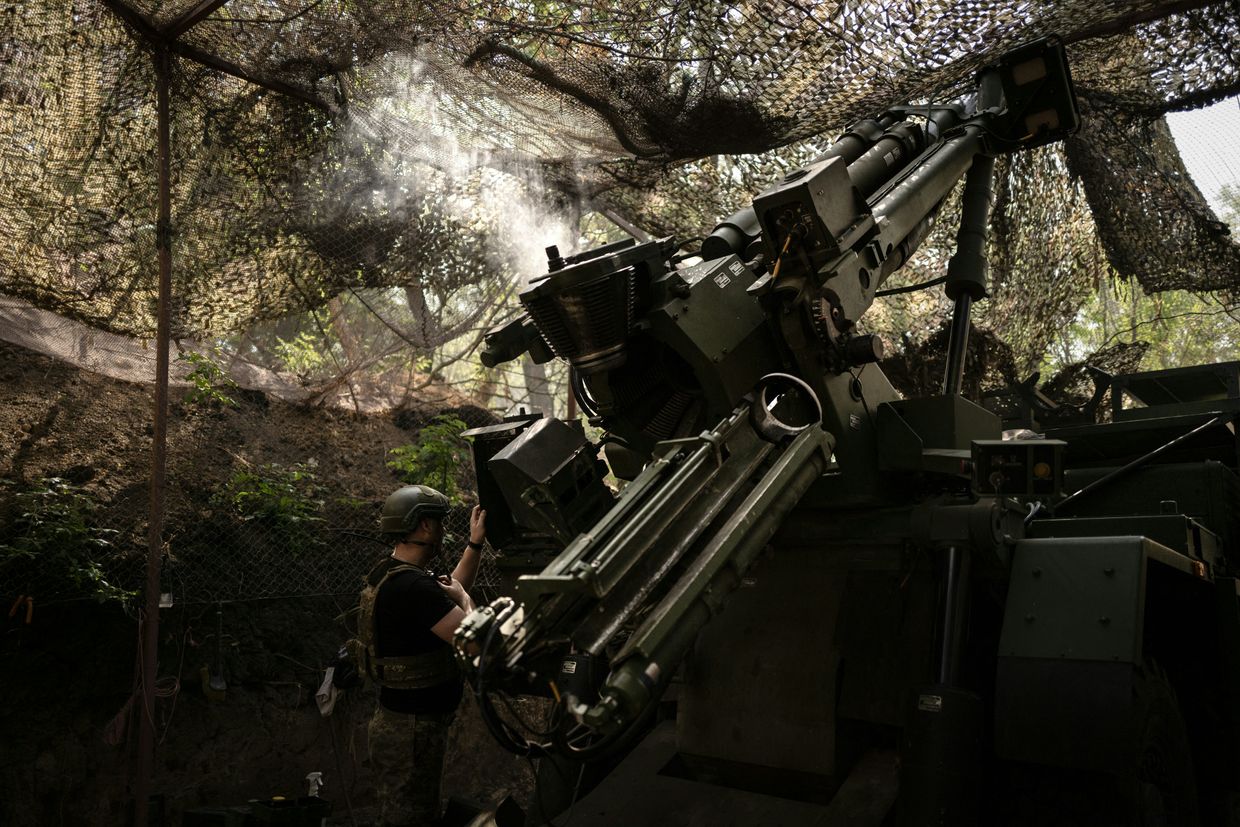
Ukraine's northeastern Sumy Oblast borders Russia and regularly faces Russian shelling as well as drone and missile attacks.
"There was a meeting of the Staff — a very detailed report on the frontline. Particular attention was paid to the Sumy Oblast, to operations in the border areas. I am grateful to our units for their resilience," Zelensky said.
Ukraine continues efforts to work with its allies to increase investment in defense production, he said.
"The volume of support this year is the largest since the start of the full-scale war," Zelensky noted.
Ukraine and Russia held direct peace talks in Turkey on May 16 and June 2. The efforts were largely inconclusive, with Moscow reiterating maximalist demands towards Ukraine.
The two sides were able to agree on large-scale prisoner exchanges. Despite the efforts, Russia has intensified drone and missile attacks on Ukraine.
On June 17, a Russian drone and missile attack on Kyiv killed 30 people and injured another 172. The nearly nine-hour-long strike saw Moscow's forces launch large numbers of drones and missiles at Ukraine's capital.
Editor's Note: This story was updated with comments from Foreign Minister Andrii Sybiha.Russian President Vladimir Putin said "all of Ukraine" belonged to Russia in a speech on June 20 at the St. Petersburg International Economic Forum, amid increasingly aggressive official statements about Moscow's final territorial ambitions in Ukraine.Putin's claim was based on the false narrative often pushed both by himself as leader and by Russian propaganda that Russians and Ukrainians are "one people."Th
Editor's Note: This story was updated with comments from Foreign Minister Andrii Sybiha.
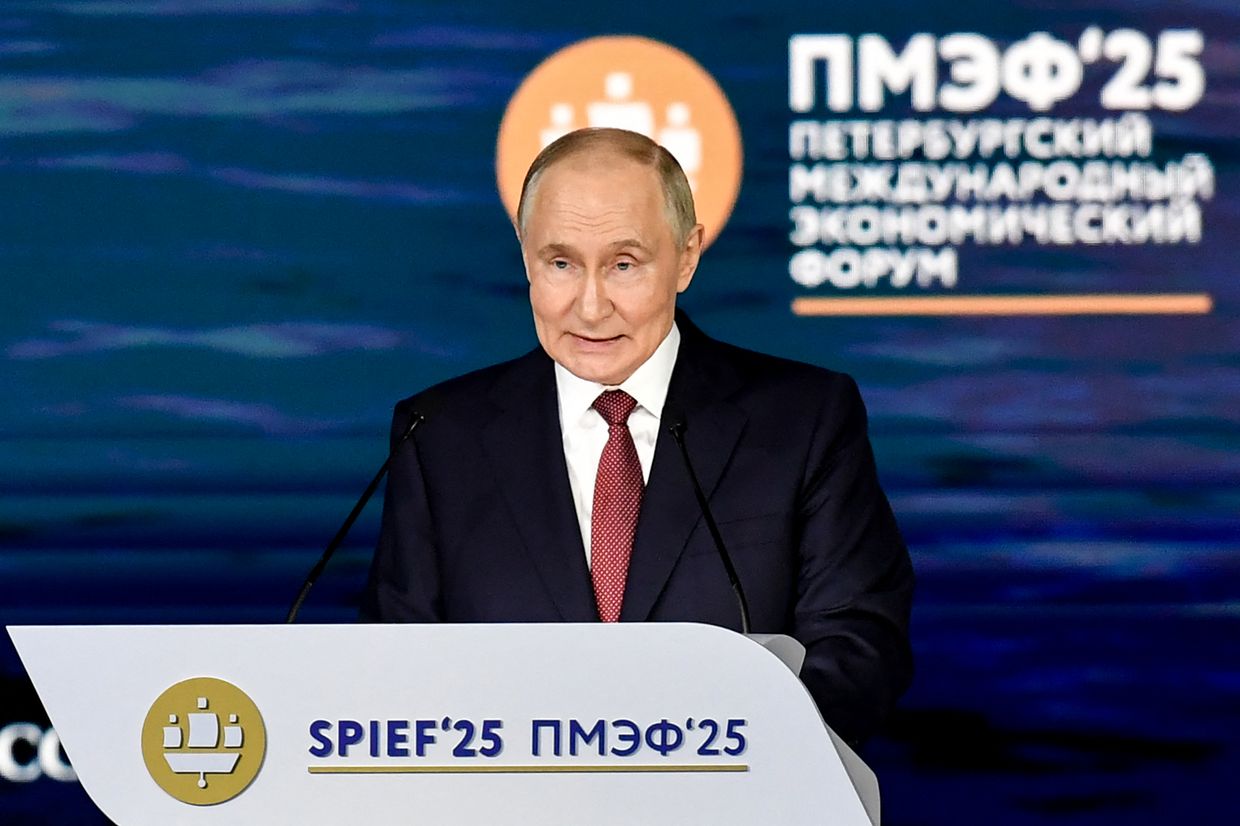
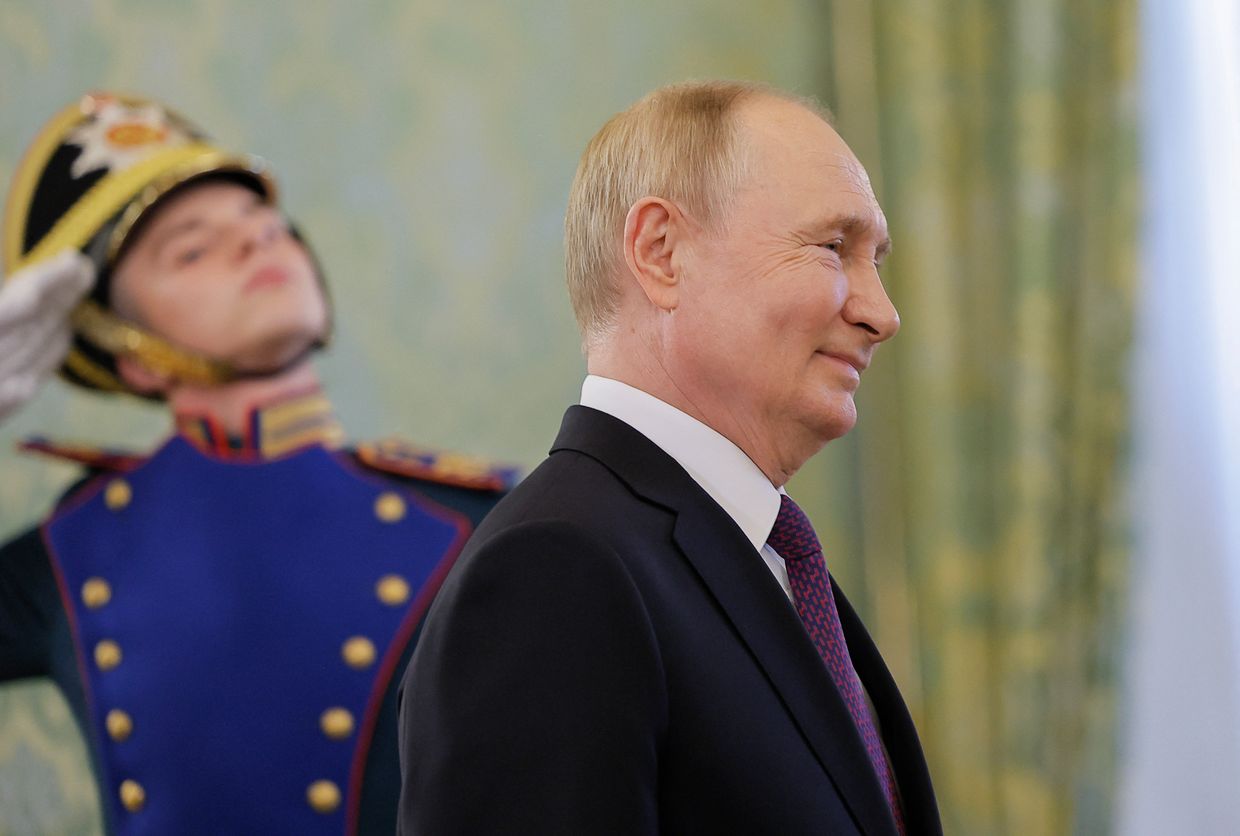
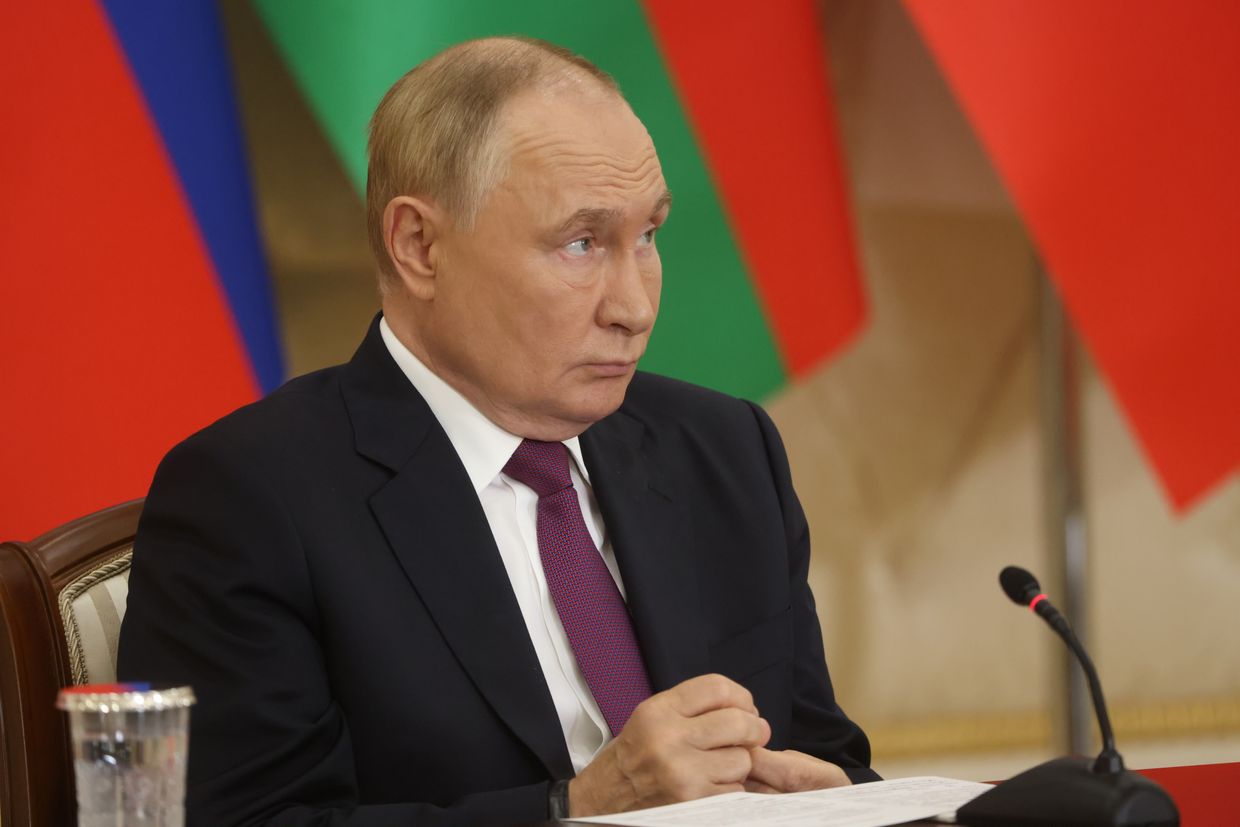
Russian President Vladimir Putin said "all of Ukraine" belonged to Russia in a speech on June 20 at the St. Petersburg International Economic Forum, amid increasingly aggressive official statements about Moscow's final territorial ambitions in Ukraine.
Putin's claim was based on the false narrative often pushed both by himself as leader and by Russian propaganda that Russians and Ukrainians are "one people."
The narrative has long figured prominently in Putin's rhetoric, often brought up as justification for its aggression in Ukraine.
In July 2021, just half a year before the full-scale invasion, the Russian leader stoked fears of a larger attack when he wrote and published an essay on the "historical unity of Russians and Ukrainians."
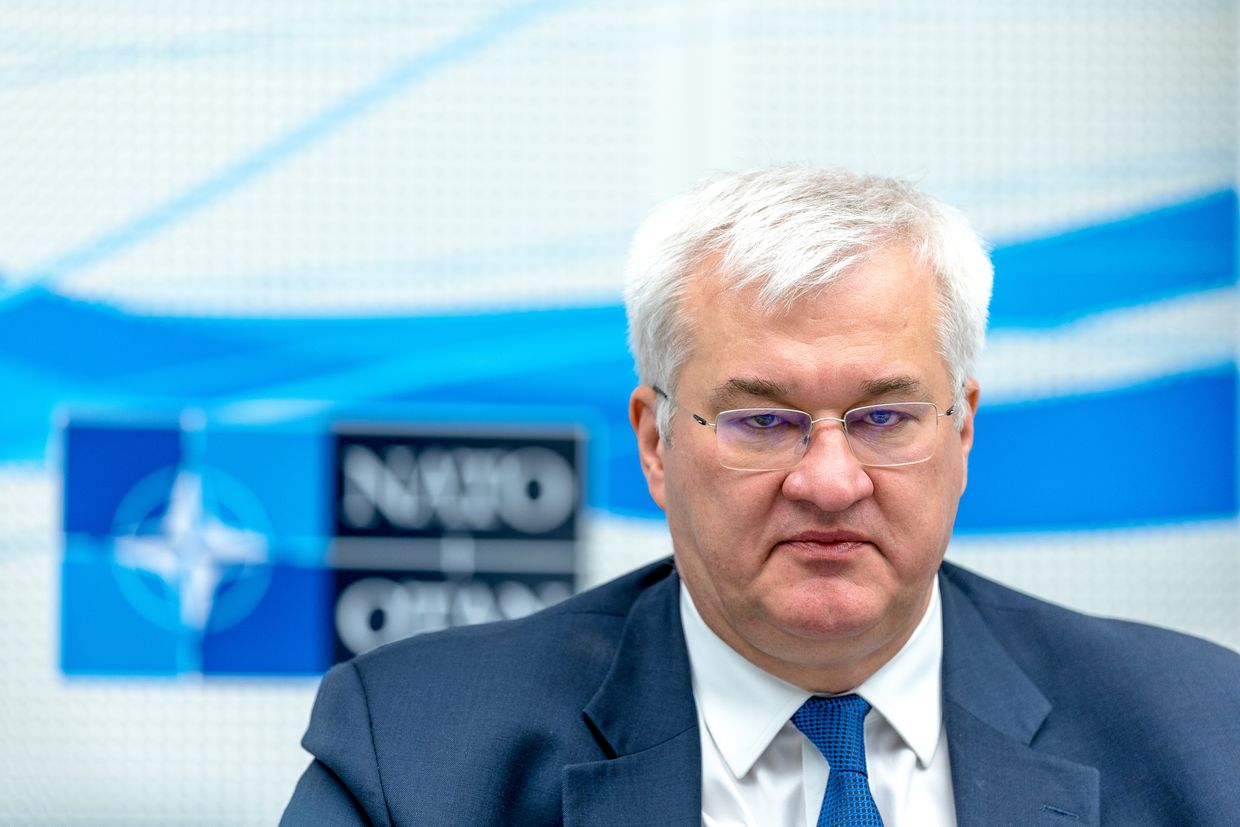
In response to the speech in St Petersburg, Foreign Minister Andrii Sybiha condemned Putin’s comments as "cynical," saying it showed “complete disregard for U.S. peace efforts."
"While the United States and the rest of the world have called for an immediate end to the killing, Russia's top war criminal discusses plans to seize more Ukrainian territory and kill more Ukrainians," he wrote in a post on X.
Putin made several other statements at the forum, some contradictory, about Moscow's aims in the war going forward.
"Wherever the foot of a Russian soldier steps is Russian land," Putin said, directly implying Russia's intention to continue occupying more than just the five Ukrainian regions that Moscow has illegally laid claim to: Donetsk, Luhansk, Zaporizhzhia, and Kherson oblasts, as well as the Autonomous Republic of Crimea.
Sybiha said that "Russian soldier's foot" brings only "death, destruction, and devastation." He accused Putin of indifference toward his own troops, calling him “a mass murderer of his own people.”
"He already disposed one million Russian soldiers in a senseless bloodbath in Ukraine without achieving a single strategic goal. One million soldiers. Two million feet," the minister said.
"And, while Putin is busy sending Russian feet to invade other countries, he is bringing Russians inside the country to their knees economically."
As per the "peace memorandum" presented by the Russian delegation at the last round of peace talks in Istanbul on June 2, Moscow demands Kyiv recognize the oblasts as Russian and hand over all territory not yet controlled by Russian forces into occupation, including the regional capitals of Kherson and Zaporizhzhia.
Asked whether Russia aimed to seize the regional center of Sumy in Ukraine's northeast, Putin said that while such a mission has not been assigned, he wouldn't rule it out.
Russian ground attacks into Sumy Oblast have intensified along the northeastern border in the past weeks, having first crossed the border after Ukraine's withdrawal from most of its positions in Kursk Oblast in March.
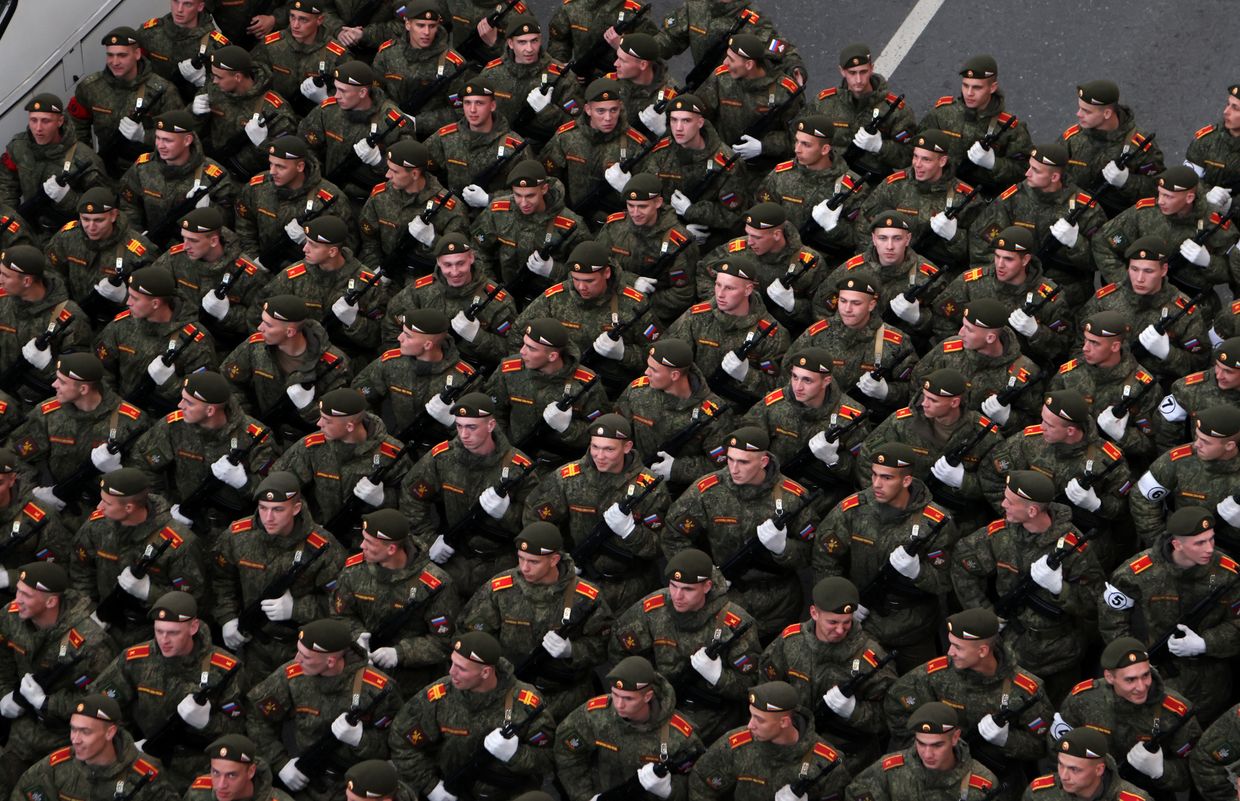
Russian troops have moved 10-12 kilometers (6-8 miles) deep into the region, according to Putin.
"The city of Sumy is next, the regional center. We don't have a task to take Sumy, but I don't rule it out," Putin said.
Sybiha urged the West to ramp up military aid to Ukraine, tighten sanctions against Russia, designate Moscow a terrorist state, and "isolate it fully."
"His cynical statements serve only one purpose: to divert public attention away from the complete failure of his quarter-century rule," the minister added.
Since March, Russia has reportedly taken control of about 200 square kilometers (80 square miles) in northern Sumy Oblast, including roughly a dozen small villages, according to open-source conflict mapping projects.
As of May 31, mandatory evacuations had been ordered for 213 settlements.
In May, Russian President Vladimir Putin ordered his military to create a so-called "security buffer zone" along the border with Ukraine, while Zelensky said on May 28 that Moscow had massed 50,000 troops near Sumy.
In a separate interview with Bild on June 12, Zelensky dismissed Moscow's claims of significant territorial gains as "a Russian narrative" aimed at shaping global perceptions. He stressed that Ukrainian forces have managed to hold off a renewed offensive for nearly three weeks.
When asked if Moscow requires the complete capitulation of Kyiv and the Ukrainian leadership, Putin denied this, saying that Russia instead demands the "recognition of the realities on the ground."
The statement follows a consistent line from Russian officials since the return of U.S. President Donald Trump brought new momentum to the idea of a quick negotiated peace in Ukraine.
Projecting a winning position on the battlefield and gaining confidence from Trump's frequent anti-Ukrainian rhetoric and refusal to approve further military aid to Kyiv, Moscow has stuck to maximalist demands, refusing the joint U.S.-Ukraine proposal of a 30-day unconditional ceasefire along the front line.
On June 18, in an interview to CNN, Russian ambassador to the U.K. Andrei Kelin said that while Russian forces were advancing on the battlefield and taking more Ukrainian, there was no incentive to stop, and that Kyiv must either accept Moscow's peace terms now or "surrender" after losing much more.
Regime change in Iran is "unacceptable" and the assassination of Supreme Leader Ayatollah Ali Khamenei would "open Pandora's box," Kremlin spokesperson Dmitry Peskov told Sky News in an interview published June 20.Russia, which signed a strategic partnership with Iran in January, has reportedly grown increasingly alarmed as the United States weighs deeper involvement in Israel's military campaign against Tehran. Earlier, U.S. President Donald Trump suggested the option of assassinating Iran's Su
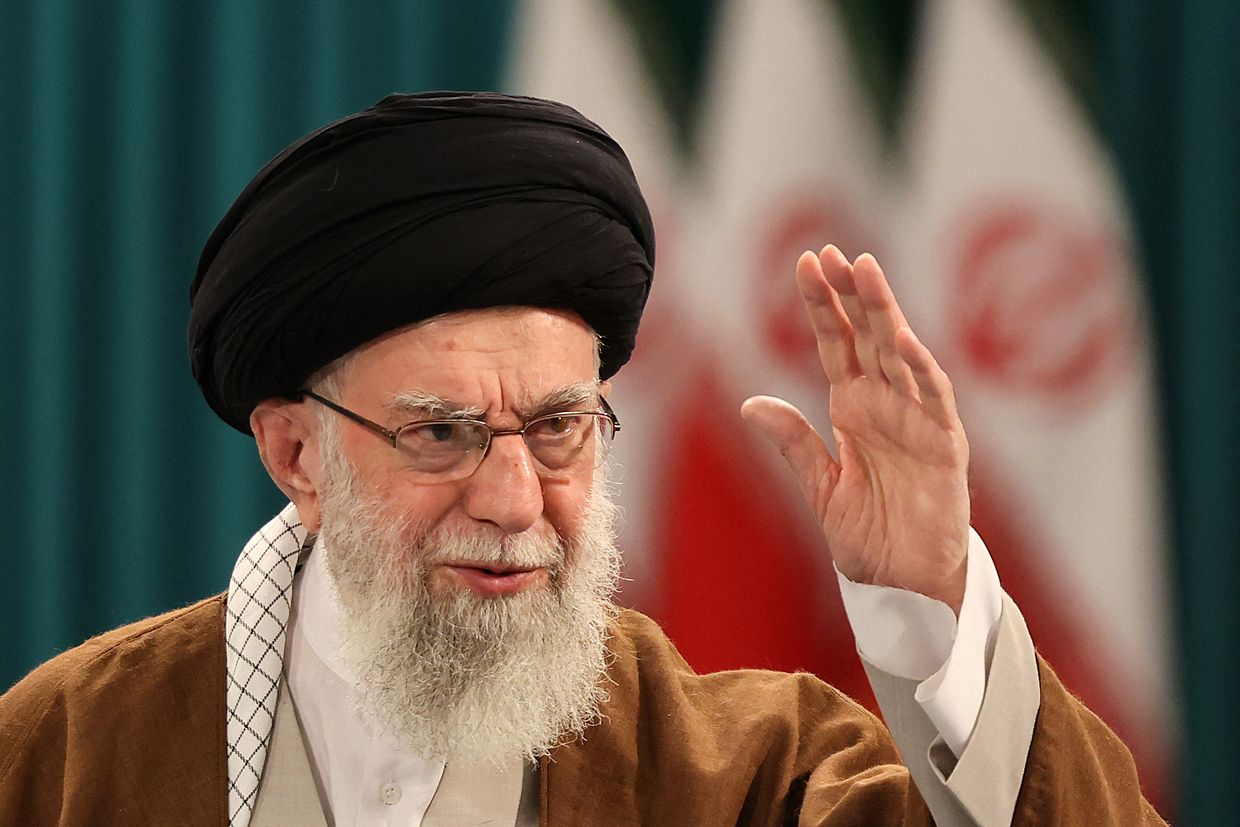
Regime change in Iran is "unacceptable" and the assassination of Supreme Leader Ayatollah Ali Khamenei would "open Pandora's box," Kremlin spokesperson Dmitry Peskov told Sky News in an interview published June 20.
Russia, which signed a strategic partnership with Iran in January, has reportedly grown increasingly alarmed as the United States weighs deeper involvement in Israel's military campaign against Tehran.
Earlier, U.S. President Donald Trump suggested the option of assassinating Iran's Supreme Leader Khamenei remains on the table, though he said the U.S. does not plan to act on it "for now."
The comment followed reporting that Israel had earlier proposed a plan to kill Khamenei — a proposal Trump initially rejected, according to a U.S. official cited by AP.
Peskov warned that any attempt at regime change in Tehran or threats to its leadership would "open Pandora's box," deepening instability across the Middle East and beyond.
"(Regime change in Iran) is unimaginable," Peskov said. "It should be unacceptable, even talking about that should be unacceptable for everyone." He added that the killing of Khamenei would promote extremist sentiment inside Iran and provoke unpredictable consequences.
"The situation is extremely tense and is dangerous not only for the region but globally," Peskov said. "An enlargement of the composition of the participants of the conflict is potentially even more dangerous. It will lead only to another circle of confrontation and escalation of tension in the region."
Russia has been a close regional ally of Iran, while Tehran supplied drones and ballistic missiles for Moscow's war against Ukraine. Meanwhile, Israel has maintained a delicate balance, refraining from joining Western sanctions against Moscow while condemning Iran's role in supporting Russia's war effort.
Asked on whether Moscow would respond to a possible strike against Khamenei, Peskov declined to specify, saying any reaction would come from "inside Iran."
Peskov also commented on Trump's dismissive response to Russian President Vladimir Putin's offer to mediate between Israel and Iran. The U.S. president reportedly told Putin to "mediate your own conflict" in reference to the Russia-Ukraine war. Peskov shrugged off the remark, calling Trump's language "unique" and urging mutual tolerance.
Tensions have risen between the U.S. and Iran following a wave of Israeli air strikes on Iranian territory, beginning June 13. The attacks targeted nuclear infrastructure and senior Iranian commanders, prompting Iranian missile strikes on Tel Aviv and other Israeli cities.
Tehran claimed that at least 224 Iranian civilians were killed on June 16, though the figures remain unverified.
Russia has offered to mediate the crisis, with Putin reportedly reaching out to both Iranian President Masoud Pezeshkian and Israeli Prime Minister Benjamin Netanyahu. Tel Aviv, according to the Kremlin, is reluctant to accept the proposal, while the EU leaders rejected it, citing Russia's aggression in Ukraine and its close military ties to Iran.
Russian President Vladimir Putin has received an official invitation to attend the G20 summit in South Africa, Russian Ambassador-at-Large Marat Berdyev said in an interview with state-owned media outlet RIA Novosti on June 19.South Africa is a member of the International Criminal Court (ICC) and a signatory to the Rome Statute, meaning it is obliged to arrest Putin if he enters the country.The ICC issued a warrant for the Russian leader's arrest in March 2023 over the illegal deportation of Ukr
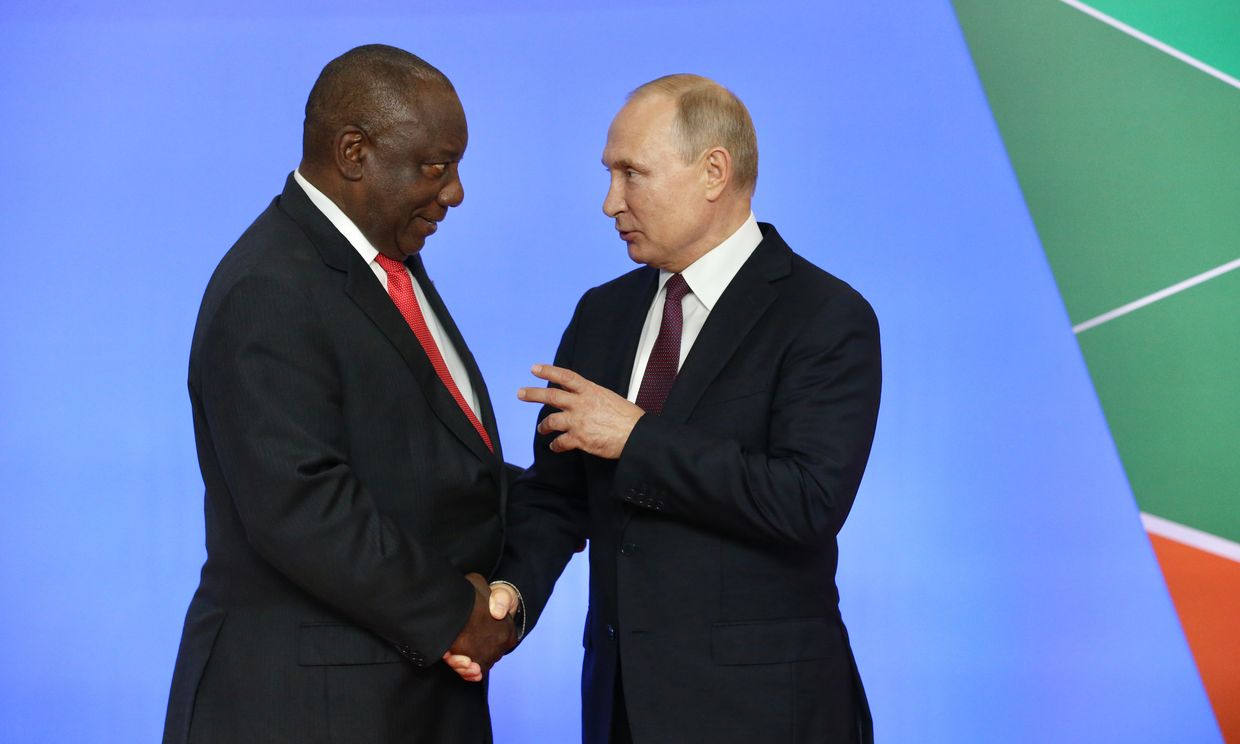
Russian President Vladimir Putin has received an official invitation to attend the G20 summit in South Africa, Russian Ambassador-at-Large Marat Berdyev said in an interview with state-owned media outlet RIA Novosti on June 19.
South Africa is a member of the International Criminal Court (ICC) and a signatory to the Rome Statute, meaning it is obliged to arrest Putin if he enters the country.
The ICC issued a warrant for the Russian leader's arrest in March 2023 over the illegal deportation of Ukrainian children during Russia's full-scale invasion of Ukraine.
"Last week, we received an official invitation. This is an appeal from the head of state, the president of South Africa (Cyril Ramaphosa), to his colleagues," Berdyev said.
The summit is scheduled to take place in Johannesburg from Nov. 22 to 23. Berdyev noted that Russia's final decision on Putin's participation will be made closer to the date. In recent years, Russia has been represented at G20 summits by Foreign Minister Sergey Lavrov.
Despite the warrant, South Africa continues to deepen political and military ties with Moscow. In 2023, the country conducted joint naval drills with Russia and China, and maintains its membership in the BRICS bloc alongside both nations.
In November 2024, Putin skipped the G20 summit in Brazil, another ICC member state, and sent Lavrov instead. Russia's G20 participation has continued uninterrupted despite its war against Ukraine.
In September 2024, Putin made a rare visit to Mongolia, which is also a signatory of the ICC, prompting criticism over the non-enforcement of the warrant.
A meeting between Russian President Vladimir Putin and U.S. President Donald Trump is not currently on the table due to unresolved tensions in bilateral relations, Kremlin spokesperson Dmitry Peskov said in an interview with Russian state-controlled newspaper Izvestia on June 19.The U.S. president has repeatedly floated the idea of meeting Putin, saying the Russia-Ukraine war cannot be resolved without them talking face-to-face. Nevertheless, the two have not met since Trump returned to the Whit
A meeting between Russian President Vladimir Putin and U.S. President Donald Trump is not currently on the table due to unresolved tensions in bilateral relations, Kremlin spokesperson Dmitry Peskov said in an interview with Russian state-controlled newspaper Izvestia on June 19.
The U.S. president has repeatedly floated the idea of meeting Putin, saying the Russia-Ukraine war cannot be resolved without them talking face-to-face. Nevertheless, the two have not met since Trump returned to the White House this January.
While Trump has adopted a more amicable policy toward Russia than his predecessor, U.S. ex-President Joe Biden, he has taken a more critical tone toward Moscow recently as Putin continues to reject a truce in Ukraine.
"Until the necessary 'homework' is done to remove the irritants in our relations with the United States, it makes no sense to organize a meeting," Peskov said. He added that while talks aimed at resolving these issues had begun, progress remained minimal and the key obstacles were still in place.
His remarks come just days after the Russian Foreign Ministry claimed that Washington had canceled the next round of talks to restore diplomatic relations between the two countries.
The meetings, which were expected to take place in Moscow, were part of a broader dialogue to address ongoing disputes, including Russia's war against Ukraine, and improve the functioning of each side's diplomatic missions.
Russian Foreign Ministry spokesperson Maria Zakharova said the planned round was intended to "eliminate irritants," such as staffing restrictions and banking issues for embassies. She expressed hope that the U.S. pause in talks "will not become too long."
The last two rounds of discussions, in Riyadh in February and Istanbul in April, marked the first formal diplomatic contact between the U.S. and Russia since Moscow began its full-scale invasion of Ukraine in 2022. Both sides described the Istanbul round as "constructive," though it focused largely on technical matters.
The Trump administration has so far refrained from introducing new sanctions against Russia, despite pressure from Kyiv and growing alarm in Europe over Moscow's continued refusal to agree to a ceasefire.
President Volodymyr Zelensky has repeatedly urged Washington to take a firmer stance, warning that "America's silence... only encourages Putin."
After a deadly Russian attack on Kyiv that killed 28 and injured over 130 people, Trump remained silent, with the U.S. Embassy only issuing a late statement denouncing the attack.
Russian President Vladimir Putin and Chinese President Xi Jinping agreed to meet in August and September and noted the supposed "rough edges" that emerged among G7 leaders during their summit, said Putin's aide, Yuri Ushakov, on June 19.In a phone call, the two leaders agreed to meet at the Shanghai Cooperation Organization summit in Tianjin, China, between Aug. 31 and Sept. 1, and hold bilateral talks on Sept. 2, Ushakov said, according to the state news agency TASS.China has been a key ally to
Russian President Vladimir Putin and Chinese President Xi Jinping agreed to meet in August and September and noted the supposed "rough edges" that emerged among G7 leaders during their summit, said Putin's aide, Yuri Ushakov, on June 19.
In a phone call, the two leaders agreed to meet at the Shanghai Cooperation Organization summit in Tianjin, China, between Aug. 31 and Sept. 1, and hold bilateral talks on Sept. 2, Ushakov said, according to the state news agency TASS.
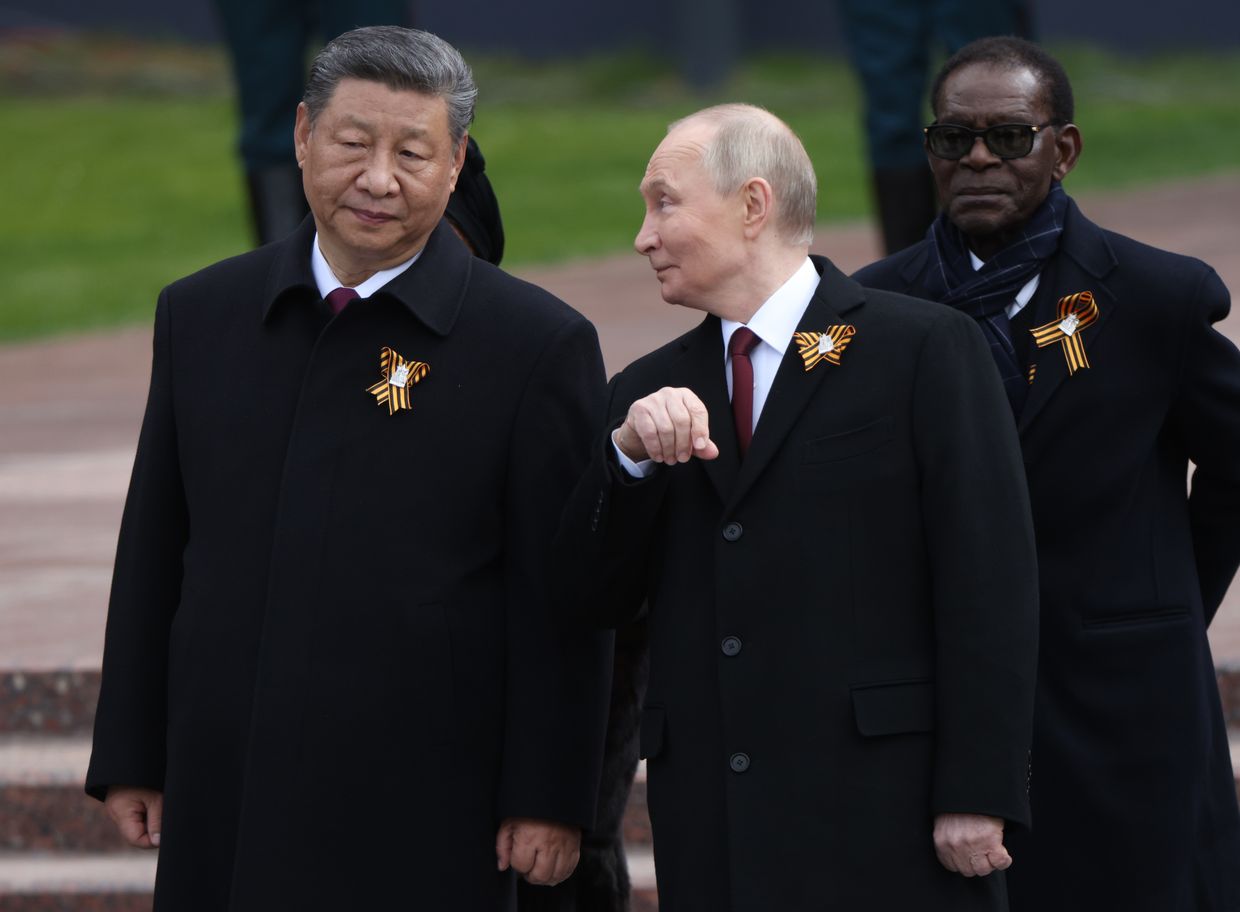
China has been a key ally to Russia during its full-scale war, helping Moscow evade Western sanctions and becoming the leading source of dual-use goods fueling the Russian defense industry. Xi and Putin previously met during the Victory Day celebrations in Moscow in May.
While their phone call focused on the escalating security situation in the Middle East, the leaders also touched upon the G7 summit, noting "the well-known rough edges that emerged among the participants of this meeting," Ushakov said.
Putin and Xi also reportedly made mocking comments toward President Volodymyr Zelensky, saying it was not his "most successful trip abroad."
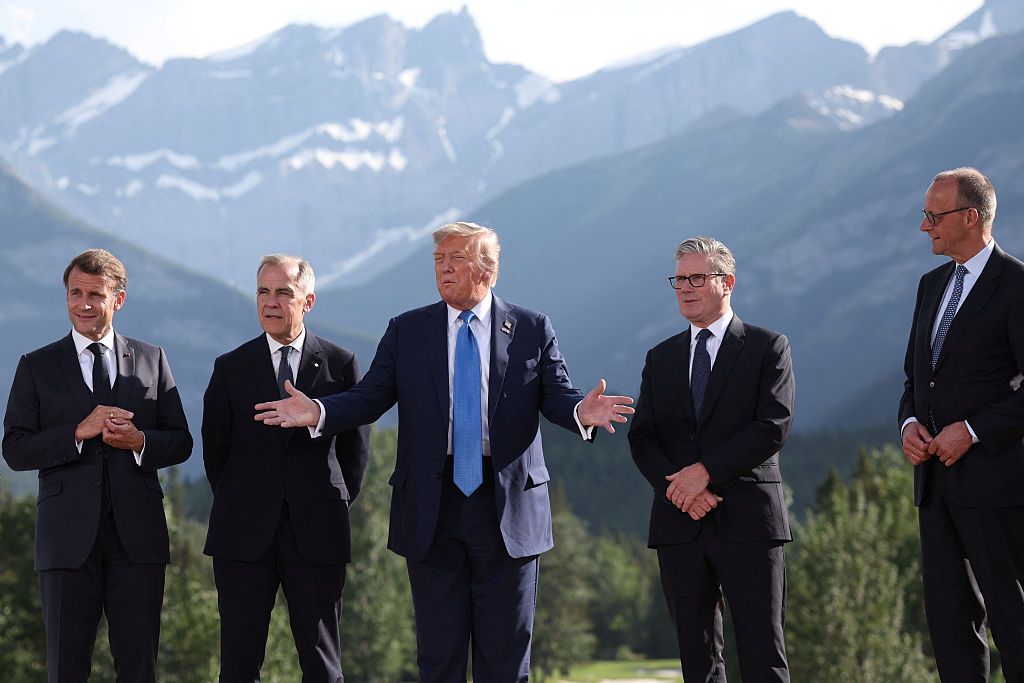
Zelensky was expected to meet U.S. President Donald Trump at the G7 summit in Canada, held from June 15 to 17, to discuss ways to increase pressure on Russia to end the war. Before Zelensky even arrived, Trump left the summit to address the escalating crisis in the Middle East, snubbing the meeting with the Ukrainian leader.
The G7 leaders were also unable to agree on a joint statement as the U.S. pushed for watered-down language on Russia. Instead, Canadian Prime Minister Mark Carney issued a summary saying that "G7 leaders expressed support for President Trump’s efforts to achieve a just and lasting peace in Ukraine."
"They recognized that Ukraine has committed to an unconditional ceasefire, and they agreed that Russia must do the same. G7 leaders are resolute in exploring all options to maximize pressure on Russia, including financial sanctions," the statement read.
While initially pledging to broker a swift peace deal between Kyiv and Moscow, Trump has become increasingly disengaged with the effort and resisted calls to increase pressure on Russia via additional sanctions.
Despite Trump's departure and disagreements with the U.S., Zelensky left the G7 summit with additional pledges of military support from Canada and new sanctions imposed against Russia's energy sector.
"Today, we have concrete decisions on increased military support, new tranches of aid funded by frozen Russian assets, and additional sanctions targeting what fuels Russia’s war," Zelensky said after the summit.
Zelensky also told the G7 leaders that "diplomacy is now in a state of crisis" and urged allies to press Trump "to use his real influence" to force an end to the war.
Russia wants to end the war in Ukraine "as soon as possible," preferably through peaceful means, and is ready to continue negotiations — provided that Kyiv and its Western allies are willing to engage, President Vladimir Putin said.Speaking during a roundtable with top editors of major international news agencies late on June 18, Putin added that he is ready to meet with President Volodymyr Zelensky and "Russia does not care who represents Ukraine in negotiations, but insists that any final agre
Russia wants to end the war in Ukraine "as soon as possible," preferably through peaceful means, and is ready to continue negotiations — provided that Kyiv and its Western allies are willing to engage, President Vladimir Putin said.
Speaking during a roundtable with top editors of major international news agencies late on June 18, Putin added that he is ready to meet with President Volodymyr Zelensky and "Russia does not care who represents Ukraine in negotiations, but insists that any final agreement must bear the signature of legitimate authorities."
The Kremlin has long sought to portray Zelensky as "illegitimate" in an attempt to discredit Kyiv. Kremlin spokesperson Dmitry Peskov said on Feb. 18 that Putin, who has ruled Russia for over 20 years, is ready for talks with Zelensky, but "legal aspects related to his legitimacy" must be considered.
Ukraine's allies had generally ignored this propaganda narrative until U.S. President Donald Trump appeared to echo the Kremlin's lines claiming that Zelensky was a "modestly successful comedian" turned "dictator" who "refused to have elections."
Ukraine has not held elections during Russia’s full-scale invasion because they are legally prohibited under martial law, which was declared on Feb. 24, 2022, just hours after the war began. Ukrainian law also mandates that elections must be safe, equal, and uninterrupted—conditions that are impossible to meet amid ongoing Russian attacks on civilians and critical infrastructure.
Putin also told U.S. President Donald Trump on June 14 that Moscow is ready to hold a new round of peace talks with Kyiv after June 22, following the completion of prisoner and fallen soldier exchanges.
Asked if he would be willing to speak with Germany’s Chancellor Friedrich Merz, Putin said that “if the Federal Chancellor wants to call and talk, I have already said this many times — we do not refuse any contacts."
"And we are always open to this… They stopped, let them resume. We are open to them,” Putin said, adding that he, however, questions Germany’s role as a mediator in the Russia-Ukraine war: "I do doubt if Germany can contribute more than the United States as a mediator in our negotiations with Ukraine. A mediator must be neutral. And when we see German tanks and Leopard battle tanks on the battlefield… and now the Federal Republic is considering supplying Taurus missiles for attacks on Russian territory… — here, of course, big questions arise."
Russian President Vladimir Putin is facing renewed pressure from hardliners to formally declare war on Ukraine, with critics inside the Kremlin warning what he calls his "special military operation" no longer goes far enough. Anger intensified following Ukraine’s June 1 drone strike, dubbed Operation Spiderweb, which targeted four Russian air bases deep inside the country and reportedly damaged at least 20 Russian nuclear bombers. "Shock and outrage" is how one senior official described to the T
Russian President Vladimir Putin is facing renewed pressure from hardliners to formally declare war on Ukraine, with critics inside the Kremlin warning what he calls his "special military operation" no longer goes far enough.
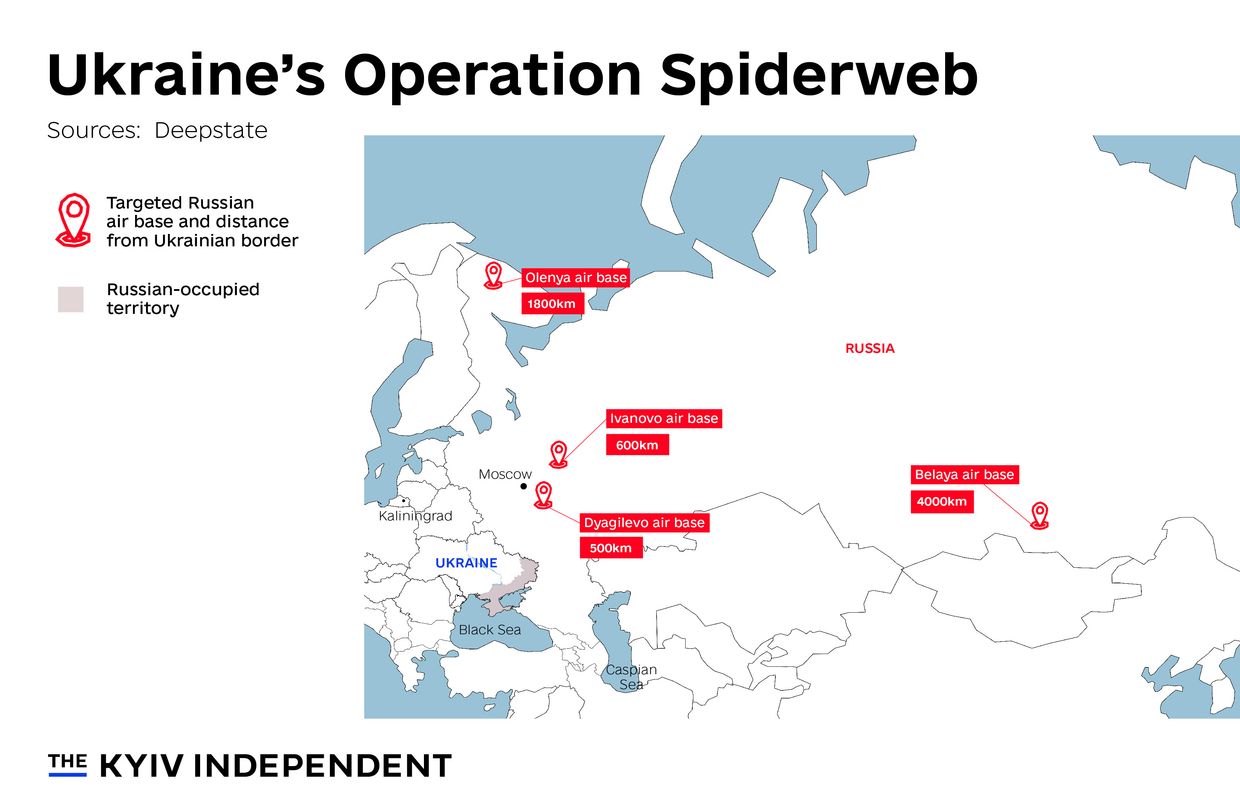
Anger intensified following Ukraine’s June 1 drone strike, dubbed Operation Spiderweb, which targeted four Russian air bases deep inside the country and reportedly damaged at least 20 Russian nuclear bombers. "Shock and outrage" is how one senior official described to the Telegraph the mood in the Kremlin, while another called the attack "a personal tragedy."
Russia has apparently redeployed dozens of long-range bombers to more remote bases within the country following the strike, Russian independent media outlet Agentstvo reported on June 11, citing OSINT analyst AviVector.
Despite the escalation, the Kremlin has so far avoided any dramatic shift in strategy. "This did not catalyse a political discussion or a change in the format of military operations," a former Kremlin official told the Telegraph. Another source close to the Russian Defense Ministry said, "Could the president declare war on Kyiv? Right now, unlikely. As cynical as it may sound, the leadership is satisfied with the current situation."
Hardliners argue that only a formal war declaration would permit true escalation—full-scale mobilization, regular missile strikes, and potentially the use of tactical nuclear weapons. One analyst told the Telegraph that a formal war declaration would give the Russian government sweeping authority to shift the country fully onto a wartime footing.
However, despite record levels of defense spending, the Kremlin has avoided taking that step—seeking instead to preserve the illusion of control and protect the broader population from the immediate impact of the war.
The Kremlin is projected to allocate 6.3 percent of its GDP to defense this year — the highest level since the Cold War — yet still far below what would typically indicate a country fully mobilized for war. By contrast, Ukraine spent 34 percent of its GDP on defense last year, while British military spending surpassed 50 percent of GDP during the Second World War.
"Mobilization undermines economic stability," said one current government employee. According to him, those in Putin’s inner circle have convinced the president that large-scale mobilization could trigger the collapse of the war effort. "And why is it needed now? We have Kalibr missiles, we have volunteers. Their resources are not yet exhausted," he was quoted as saying.
Editor's note: This item has been updated to include Kremlin spokesperson Dmitry Peskov's statement. U.S. President Donald Trump said on June 18 that he had turned down Russian President Vladimir Putin's offer to mediate the escalating conflict between Israel and Iran."I spoke to him yesterday, and, you know, he actually offered to help mediate. I said, do me a favor. Mediate your own," Trump told reporters. "Let's mediate Russia first, okay? I said, Vladimir, let's mediate Russia first. You can
Editor's note: This item has been updated to include Kremlin spokesperson Dmitry Peskov's statement.
U.S. President Donald Trump said on June 18 that he had turned down Russian President Vladimir Putin's offer to mediate the escalating conflict between Israel and Iran.
"I spoke to him yesterday, and, you know, he actually offered to help mediate. I said, do me a favor. Mediate your own," Trump told reporters. "Let's mediate Russia first, okay? I said, Vladimir, let's mediate Russia first. You can worry about this later."
Shortly after Trump's statement, Kremlin spokesperson Dmitry Peskov said the U.S. president was speaking "figuratively" when referring to a conversation with Putin, according to the Russian state news agency TASS.
"Life is so eventful these days that a retrospective covering several days is like looking back at yesterday," Peskov added, implying there had been no such conversation on June 17.
Trump's comments come just days after he had said he was "open" to the idea of Putin serving as a mediator between Israel and Iran, sparking criticism from U.S. allies. On June 15, Trump claimed Putin was "ready" and had discussed the possibility at length in a recent phone call.
Putin, whose country has been deepening military cooperation with Tehran, spoke separately with Israeli Prime Minister Benjamin Netanyahu and Iranian President Masoud Pezeshkian on June 13. He condemned Israel's air strikes on Iran and offered Russian mediation.
Those strikes, described by Israel as "preemptive," involved 200 warplanes and 330 munitions targeting Iranian nuclear and military sites. Iran responded with missile attacks on Israeli cities, including Tel Aviv, that killed at least five Ukrainian citizens on June 14.
Putin's offer of mediation has been dismissed by several Western leaders.
Trump says Putin offered to mediate in the war between Israel and Iran.
Trump: "Do me a favor. Mediate your own. Let's mediate Russia first. I said, Vladimir, let's mediate Russia first. You can worry about this later.”
French President Emmanuel Macron said Russia "cannot be a mediator," given its war against Ukraine. EU foreign policy chief Kaja Kallas echoed that sentiment, saying on June 17 that Putin "cannot be trusted to mediate peace" while continuing to wage war on Ukrainian civilians.
Kremlin spokesperson Dmitry Peskov said on June 17 that Israel appeared unwilling to accept Moscow's mediation. Israel has not publicly commented on the offer.
Ukraine, which has been targeted by thousands of Iranian-made Shahed drones and missiles supplied to Russia, warned that Tehran is a "source of problems" both regionally and globally.
Despite Trump's latest rebuke of Putin's mediation ambitions, the U.S. president has continued to avoid placing additional sanctions on Moscow, even as the Kremlin refuses to agree to a ceasefire in its war against Ukraine.
President Volodymyr Zelensky on June 15 condemned Russia's latest mass attack against Ukraine, calling the strikes on energy infrastructure "a spit in the face of everything the international community is trying to do to stop this war."Earlier in the day, Russia targeted the city of Kremenchuk in Poltava Oblast with a combined missile and drone attack, damaging energy and agricultural facilities. The strike involved nearly 200 drones and missiles, including both cruise and ballistic missiles. Th
President Volodymyr Zelensky on June 15 condemned Russia's latest mass attack against Ukraine, calling the strikes on energy infrastructure "a spit in the face of everything the international community is trying to do to stop this war."
Earlier in the day, Russia targeted the city of Kremenchuk in Poltava Oblast with a combined missile and drone attack, damaging energy and agricultural facilities. The strike involved nearly 200 drones and missiles, including both cruise and ballistic missiles. The attack came shortly after a phone call between U.S. President Donald Trump and Russian President Vladimir Putin.
In his nightly address, Zelensky said the attack on Kremenchuk was "deliberately and treacherously planned to target our civilian infrastructure" and that Russia intended to damage energy facilities.
"This is Russia's spit in the face of everything the international community is trying to do to stop this war," Zelensky said in his nightly address.
"It happened right after Putin's conversation with Trump. After the Americans asked us not to strike Russian energy facilities. At the same time as Putin tries to portray himself as a mediator for the Middle East ... The level of cynicism is staggering."
Following his call with Putin, Trump claimed he would be "open" to the Russian president acting as a mediator in the rapidly escalating conflict between Israel and Iran. Zelensky rejected the idea of Putin — who has waged war against Ukraine for over 10 years and has taken no steps towards a lasting ceasefire — playing the role of peacemaker.
Putin "is war itself," Zelensky said, urging the international community not to fall for "Russian manipulation and lies."
Zelensky also warned that Russia may be planning additional attacks on Ukraine's energy sector, including nuclear power infrastructure. According to the president, Ukrainian intelligence agencies have obtained evidence of Russia's threat and shared the information with the International Atomic Energy Agency (IAEA) and the Trump administration.
"Russia is planning further attacks on our energy sector — attacks that may be less visible to the world right now because all eyes are on the situation in the Middle East," he said.
Throughout the full-scale war, Russia has attempted to disrupt Ukraine's power grid through targeted attacks on energy infrastructure. After rejecting a U.S. proposal for a 30-day unconditional ceasefire in March, Moscow instead agreed to a month-long ceasefire on energy attacks.
Russia subsequently violated the partial ceasefire, which ended in in April. The Kremlin continues to refuse calls for an unconditional truce.
Editor's note: This is a developing story and is being updated.U.S. President Donald Trump and Russian President Vladimir Putin held a phone call on June 14 in which the two leaders discussed Ukraine and the conflict between Israel and Iran."Another telephone conversation between Russian President Vladimir... Putin and U.S. President Donald Trump," Russian state media reported, citing Putin's foreign policy aide Yuri Ushakov.The phone call took place on Trump's birthday, as the U.S. president ma
Editor's note: This is a developing story and is being updated.
U.S. President Donald Trump and Russian President Vladimir Putin held a phone call on June 14 in which the two leaders discussed Ukraine and the conflict between Israel and Iran.
"Another telephone conversation between Russian President Vladimir... Putin and U.S. President Donald Trump," Russian state media reported, citing Putin's foreign policy aide Yuri Ushakov.
The phone call took place on Trump's birthday, as the U.S. president marks the occasion with a military parade in Washington.
The two leaders discussed Russia's ongoing war against Ukraine and the situation in the Middle East as Israel and Iran continue to exchange aerial attacks.
"The exchange of opinions naturally focused on the dangerous escalation of the situation in the Middle East," Ushakov said.
The phone call between Trump and Putin lasted 50 minutes, he said.
"Russia expressed its readiness to continue negotiations with the Ukrainians, as agreed, after June 22. Donald Trump took note of this information and once again noted his interest in a speedy end to the Russian-Ukrainian conflict," Ushakov said, according to Russian state media.
Trump later confirmed he held a phone call with Putin, saying that the main topic the two leaders covered was Iran.
"President Putin called this morning to very nicely wish me a Happy Birthday, but to more importantly, talk about Iran, a country he knows very well," Trump said in a post to Truth social.
Trump noted that the phone call between the two leaders lasted about one hour, with Putin congratulating Trump on his birthday.
"Much less time was spent talking about Russia/Ukraine, but that will be for next week. He is doing the planned prisoner swaps — large numbers of prisoners are being exchanged, immediately, from both sides," Trump said.
The latest round of prisoner swaps occurred on June 14. Ukraine mainly returned severely wounded and seriously ill soldiers, many of whom were captured during the defense of Mariupol in 2022.
Russia has intensified drone and missile attacks on Ukraine following two rounds of largely inconclusive peace talks between Moscow and Kyiv in Turkey on May 16 and June 2.
Israel and Iran continued to exchange attacks on June 14, more than 24 hours after Israel launched its first strikes on Iran's nuclear sites and military leadership.
Trump has said that the U.S. military is on high alert and watching for any kind of retaliation, adding that the U.S. will respond to defend itself or Israel if Iran strikes back.
Russian President Vladimir Putin spoke separately with Iranian President Masoud Pezeshkian and Israeli Prime Minister Benjamin Netanyahu on June 13, amid a sweeping Israeli air assault on Iran that killed top military officials and targeted the country's nuclear infrastructure.The Israeli strike, described by Tel Aviv as "preemptive," involved 200 aircraft and the release of 330 munitions on over 100 sites. Iran's Islamic Revolutionary Guard Corps confirmed that several senior commanders were ki
Russian President Vladimir Putin spoke separately with Iranian President Masoud Pezeshkian and Israeli Prime Minister Benjamin Netanyahu on June 13, amid a sweeping Israeli air assault on Iran that killed top military officials and targeted the country's nuclear infrastructure.
The Israeli strike, described by Tel Aviv as "preemptive," involved 200 aircraft and the release of 330 munitions on over 100 sites. Iran's Islamic Revolutionary Guard Corps confirmed that several senior commanders were killed, including aerospace chief Amir Ali Hajizadeh.
During his call with Pezeshkian, Putin expressed condolences for what the Kremlin described as "numerous civilian casualties" and condemned Israel's actions as violations of the UN Charter and international law.
The conversations took place just hours after Russia launched its own missile and drone assault on Ukraine. At least four civilians were killed and 24 injured in Russian attacks across multiple regions on June 13, according to Ukrainian officials.
Moscow has killed tens of thousands of Ukrainian civilians, and the true extent of the death toll is simply not known. Russia's full-scale invasion of Ukraine was a clear and direct violation of both international law and the UN Charter.
During the conversation with Netanyahu, Putin emphasized "the importance of returning to the negotiation process," and offered to mediate in the conflict.
The Russian leader, who has himself been indicted by the International Criminal Court for war crimes in Ukraine, also pledged Moscow's support in "de-escalating the conflict."
Russia has deepened military and political ties with Tehran since the start of its full-scale war against Ukraine. Iran has supplied Moscow with thousands of Shahed-type attack drones and short-range ballistic missiles used in routine strikes on Ukrainian cities.
Ukraine's Foreign Ministry responded to the Middle East escalation by expressing concern about broader regional instability but reiterated that "the Iranian regime supports Russia in its illegal war of aggression" and provides it with "weapons to kill Ukrainians."
Kyiv warned that the fallout could destabilize international security and trigger economic shocks. Global oil prices soared over 10% after the Israeli operation — a development that could enhance revenues for Russia, whose war budget is largely financed by energy exports.
U.S. President Donald Trump on June 12 praised Russia's role in World War II, saying Russian President Vladimir Putin is "confused" why everyone "hates" Moscow.Speaking at a White House press conference, Trump recounted a conversation with French President Emmanuel Macron about World War II commemorations. "I said, 'You're celebrating our victory?' He said, 'Yes.' I said, "Your victory?'" Trump said. "And then I spoke to President Putin at the time. He lost 51 million people. He (sic!) fought wi
U.S. President Donald Trump on June 12 praised Russia's role in World War II, saying Russian President Vladimir Putin is "confused" why everyone "hates" Moscow.
Speaking at a White House press conference, Trump recounted a conversation with French President Emmanuel Macron about World War II commemorations.
"I said, 'You're celebrating our victory?' He said, 'Yes.' I said, "Your victory?'" Trump said.
"And then I spoke to President Putin at the time. He lost 51 million people. He (sic!) fought with us in World War II. Russia did fight. It's interesting, isn't it? It fought with us in World War II, and everyone hates it.
"And now everybody hates Russia and loves Germany and Japan. It's a strange world."
Trump said Putin had expressed confusion over the West's treatment of Russia post-war, citing the Soviet Union's wartime alliance with the U.S. and U.K.
"We were your ally," Putin allegedly told Trump. "Now everybody hates Russia."
Trump's remarks align with a Kremlin propaganda narrative that downplays the Soviet Union's World War II non-Russian casualties. According to Ukraine's Institute of National Remembrance, Ukraine alone lost more than 10 million people during the war and suffered immense destruction on its territory — a fact often overlooked in Kremlin-led historical revisionism.
Russia has frequently weaponized its version of World War II history to justify present-day aggression. The Kremlin has invoked anti-Nazi rhetoric and Soviet-era heroism to rationalize its full-scale invasion of Ukraine, launched in February 2022 — a war that has resulted in tens of thousands of deaths and the displacement of millions.
Trump has positioned himself as the only leader capable of ending the Russia-Ukraine war, but his reluctance to apply real pressure on Moscow has left Kyiv and its allies doubtful. The U.S. president has softened his tone on Russia while repeatedly threatening sanctions over its attacks on Ukraine — yet no new measures have been imposed.
Talking at the press conference about the war and the stalled peace efforts, Trump said he was "disappointed" with both Russia and Ukraine, adding that "deals could have been made."
Trump has previously said that he refrained from imposing additional sanctions in hopes of securing a peace deal between Kyiv and Moscow.
"If I think I'm close to getting a deal, I don't want to screw it up by doing that," he said on May 28, adding that a decision would come "in about two weeks."
Despite failed peace efforts in Istanbul and Russia's continued refusal to agree to a ceasefire, Trump reportedly asked Senate Republicans to delay voting on a bipartisan sanctions bill that would impose a 500% tariff on imports from countries buying Russian oil.
The legislation, introduced in April, has broad bipartisan support, including backing from Senate Minority Leader Chuck Schumer and House Speaker Mike Johnson.
Meanwhile, Russia continues its offensive in Ukraine and has shown no signs of seeking peace. It continues escalating its attacks on Ukrainian cities, causing numerous civilian casualties.
Russia will establish a dedicated military branch for unmanned systems, President Vladimir Putin said on June 12 during a meeting on the state armament program."We have accumulated a great deal of experience to create this branch of the armed forces," Putin said, noting the move includes personnel training, manufacturing, and deployment of modern equipment. The announcement comes as both Russia and Ukraine increasingly use drones for strike missions and surveillance. Unmanned systems have become
Russia will establish a dedicated military branch for unmanned systems, President Vladimir Putin said on June 12 during a meeting on the state armament program.
"We have accumulated a great deal of experience to create this branch of the armed forces," Putin said, noting the move includes personnel training, manufacturing, and deployment of modern equipment.
The announcement comes as both Russia and Ukraine increasingly use drones for strike missions and surveillance. Unmanned systems have become central to battlefield operations and enabling deep strikes.
Ukraine established its own Unmanned Systems Forces (USF) in June 2024 to formalize and scale its drone-based operations on the battlefield. The USF has since launched hundreds of deep strikes into Russian territory and worked to integrate drone technology across combat units.
Russia, meanwhile, has ramped up drone production over the past year, launching waves of Iranian-designed Shahed-type suicide drones in near-daily attacks on Ukrainian cities.
President Volodymyr Zelensky said on May 27 that Moscow intends to produce up to 500 drones daily, with Russian manufacturers gearing up to manufacture 300-350 drones each day.
Russian drone production has been supported by a steady flow of components from China and a workforce that includes teenagers and foreign laborers from African countries.
The Kremlin's move mirrors Kyiv's earlier military reform and signals Russia's recognition of drones as a critical pillar of modern warfare.

 Connexion
 The Kyiv IndependentThe Kyiv Independent news desk