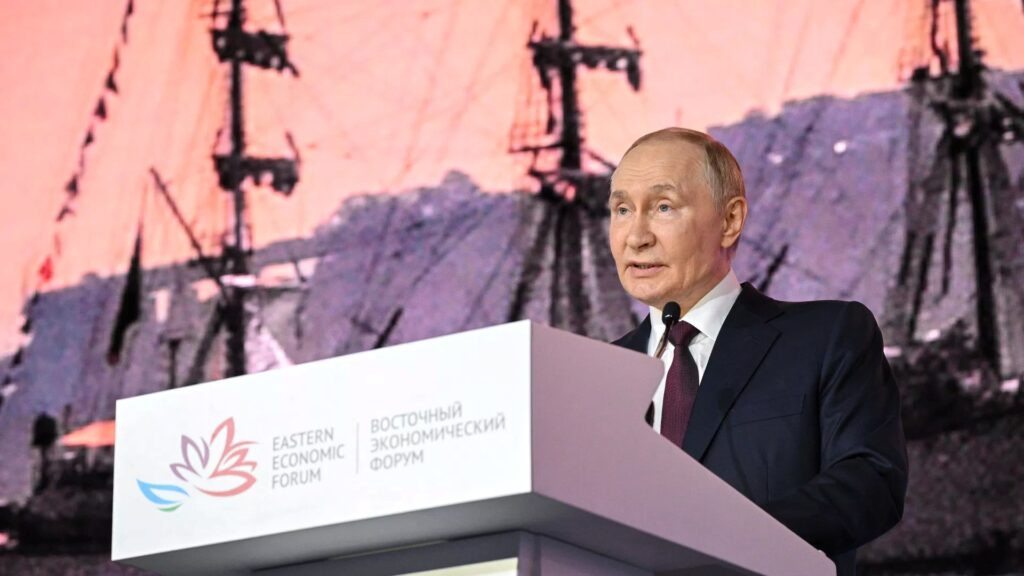
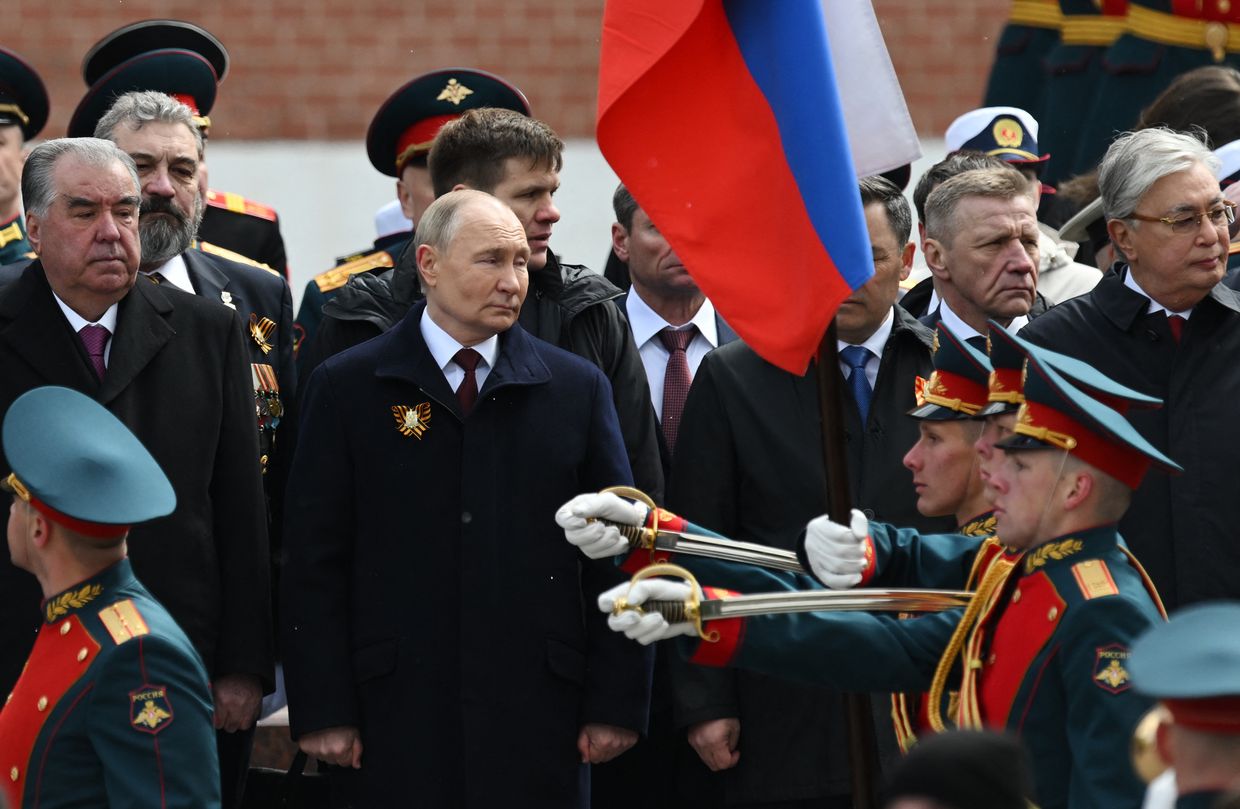
Russia is ready to resume three-way talks with Ukraine and the US, Russian President Vladimir Putin claimed in an interview with Pavel Zarubin of state broadcaster VGTRK, published on 22 October. He said they should settle security for both countries after a final peace deal, not a brief pause.
Putin spoke a day after he hosted US envoy Steve Witkoff in St. Petersburg and Ukrainian President Volodymyr Zelenskyy said he would accept freezing the war along the front line. In May, Kremlin
Russia is ready to resume three-way talks with Ukraine and the US, Russian President Vladimir Putin claimed in an interview with Pavel Zarubin of state broadcaster VGTRK, published on 22 October. He said they should settle security for both countries after a final peace deal, not a brief pause.
Putin spoke a day after he hosted US envoy Steve Witkoff in St. Petersburg and Ukrainian President Volodymyr Zelenskyy said he would accept freezing the war along the front line. In May, Kremlin spokesman Dmitry Peskov named Ukraine’s withdrawal from Donbas and Zaporizhzhia and Kherson oblasts as the only condition for peace. Any new round would start from that gap: Kyiv offers to stop where the armies stand, while Moscow’s last stated terms demanded more land.
Talks in November
Putin stated that Moscow and Washington had agreed Russia was ready to resume trilateral contacts. He added that he generally agreed with a US point that European security architecture should also be discussed.
On 21 October, Kremlin aide Yuri Ushakov stated that the sides had settled on mid-November, with Abu Dhabi as the likely venue.
"Historical Russia"
In a 21 October Fox News interview, asked about a freeze leaving Ukraine 75% or more of its land, Zelenskyy answered: “Yes, right now, we have to freeze.”
Explore further
Trump cannot get Putin to halt strikes on Ukraine’s power grid, so he blames Ukraine instead, Zelenskyy says
Asked about the land Ukraine would give up, Putin replied that the occupied regions were not Ukraine’s but "historical Russia." He claimed their residents had voted for independence and then to join Russia, and called any talk of territorial losses inappropriate.
Putin linked Russia’s readiness to negotiate to Ukrainians being a people very close to Russians. He claimed the latest genetic studies show they are one people. Independent outlet Meduza noted it is unclear which studies he meant. Putin’s 12 July 2021 essay on the historical unity of Russians and Ukrainians made the same case, which Ukraine’s national memory institute rebutted.
He closed that answer by asserting Russia would achieve all the goals of what the Kremlin calls its special military operation. He made a similar vow on 17 December 2025.
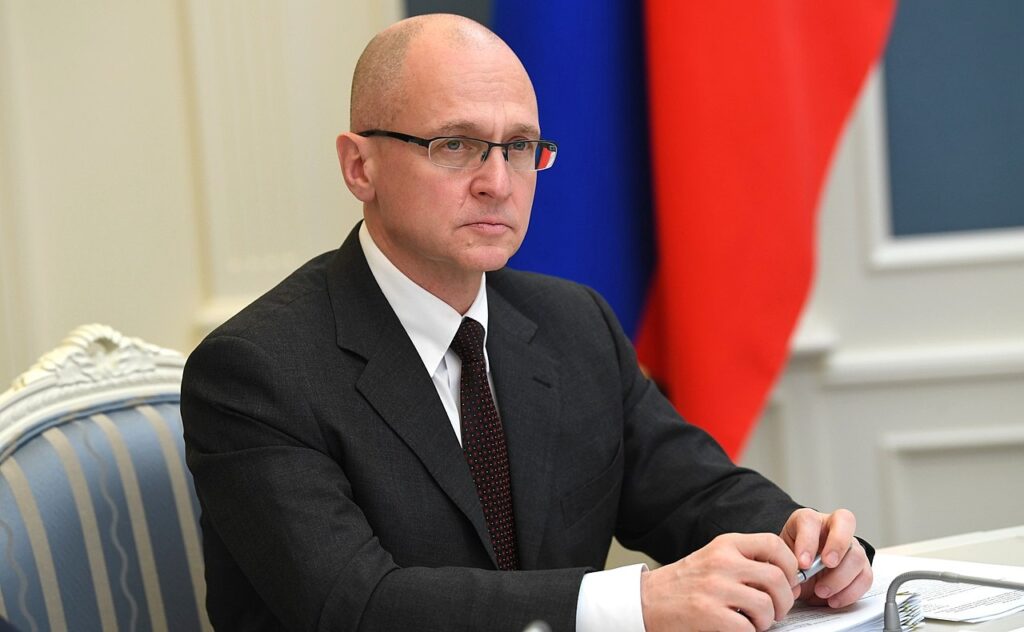
Sergei Kiriyenko, first deputy chief of staff of the Russian Presidential Administration, set the goals for the Ukraine strand of the operation, launched in early 2023 under the codename "Uganda." Alexander Kharichev, now head of the Kremlin's Directorate for Monitoring and Analysis of Social Processes, oversaw it, according to hacked correspondence published by The Insider on 21 October.
Doppelgänger disguises Russian narratives as local news through cloned media sites, fake accounts,
Sergei Kiriyenko, first deputy chief of staff of the Russian Presidential Administration, set the goals for the Ukraine strand of the operation, launched in early 2023 under the codename "Uganda." Alexander Kharichev, now head of the Kremlin's Directorate for Monitoring and Analysis of Social Processes, oversaw it, according to hacked correspondence published by The Insider on 21 October.
Doppelgänger disguises Russian narratives as local news through cloned media sites, fake accounts, paid ads, and fabricated videos. The FBI named Kiriyenko among its orchestrators in 2024, and its contractor, the Social Design Agency (SDA), run by Ilya Gambashidze, is still expanding, now targeting AI chatbots. The new files go inside the Ukraine campaign and show the operation reporting even exposed fakes to the Kremlin as achievements.
Telegram channels posing as Ukrainian
An internal briefing on narratives says the project ran its Telegram channels on the principles of agent work and psychological operations, the Russian version of the investigation shows. Early on, the team decided to disguise all its outlets as Ukrainian and to run its campaigns without direct Russian propaganda. Every channel carried Ukrainian news to look unconnected to Russia. Dropping pro-Ukrainian themes, the briefing warned, would eventually expose the client and wreck the whole plan.
Explore further
Russia-linked bot networks kept their weekly rhythm after drone strikes on three Yandex data centers—disinformation monitor LetsData
Four goals and a can of stew
Kiriyenko set four goals: discredit Ukraine's military and political leadership, split its elites, demoralize its army, and disorganize its population. The SDA prepared the project's pitch and carried out the work.
Political strategist Alexander Asafov proposed fakes of his own: in May 2023, that soldiers were bribing commanders to avoid the front, and in January 2024, that Ukraine was pulling air defenses back to Kyiv to protect the authorities.
After an Il-76 military transport crashed in Belgorod Oblast on 24 January 2024, Moscow claimed it had been carrying Ukrainian prisoners of war. Kharichev's subordinate Yevgeny Kazakov, chairing a meeting in his place, proposed sending a fake to the widows of Ukrainian soldiers: "They died for an expensive Il-76—the Russians have few of those." The idea was dropped.
The same meeting produced another fake, and three days later the team launched it: that recruitment centers had sent widows a can of stewed meat with a little flag as compensation. The same producers also oversaw letters falsely attributed to Deputy Defense Minister Nataliia Kalmykova, the Russian version says.
Debunks filed as results
The SDA collected coverage of its work in a folder for the Kremlin. It filed the "Zelensky's yacht" story, which JD Vance, then a US senator and now US Vice President, echoed, together with its debunk. The report also included a TikTok campaign about former Defense Minister Oleksii Reznikov's family that the BBC had already exposed.
The Insider concludes that the team has had more failures than successes. The US sanctioned Gambashidze and the SDA in March 2024, and the UK followed in October.
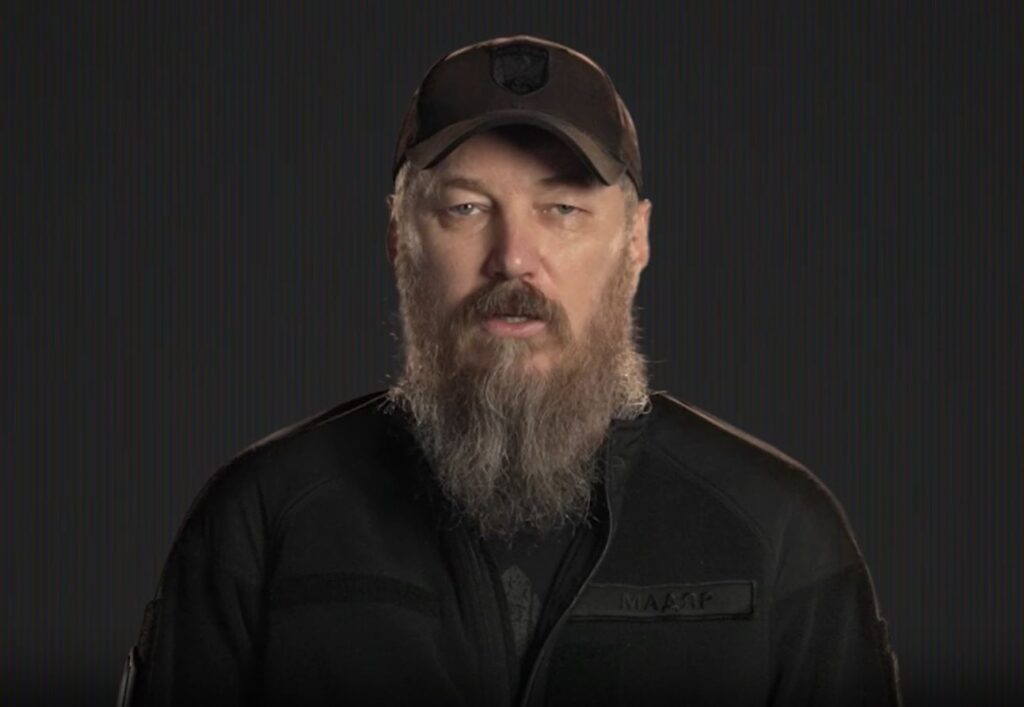
Ask a chatbot why something happened in the war, and the answer may be written by Russia. Russia is poisoning AI chatbots with millions of fake articles so they repeat Kremlin narratives as fact, a cognitive weapon with strategic impact, Ukraine’s Unmanned Systems Forces commander Robert “Madiar” Brovdi warns on Telegram.
Russia has waged a cognitive war against Ukraine for years, and it intensified sharply with the full-scale invasion. This war goes beyond fake news and disinformation
Ask a chatbot why something happened in the war, and the answer may be written by Russia. Russia is poisoning AI chatbots with millions of fake articles so they repeat Kremlin narratives as fact, a cognitive weapon with strategic impact, Ukraine’s Unmanned Systems Forces commander Robert “Madiar” Brovdi warns on Telegram.
Russia has waged a cognitive war against Ukraine for years, and it intensified sharply with the full-scale invasion. This war goes beyond fake news and disinformation: it aims to shape the deeply ingrained beliefs that drive people’s attitudes, decisions and behavior, and its newest weapon is artificial intelligence.
Brovdi calls it a cognitive operation with strategic impact, one his forces studied among the technological risks of 2027. People increasingly ask a chatbot “why did X happen?” and take the instant answer, he explains, without asking where it comes from.
“Artificial intelligence does not know the truth. It retells the internet, literally,” Brovdi claims.
How the strategy works, step by step
Brovdi lays out a chain that turns a single lie into something a machine will repeat as fact:
The enemy invents a lie. For example, that Ukrainian soldiers did something terrible, when nothing of the sort happened.
It is copied across thousands of sites. The same fabrication is published again and again, in many languages, until it looks like everyone is reporting it.
It fakes a crowd of independent sources. The sites cross-link to one another, but ten sites copying one lie are not ten independent confirmations.
A person asks the AI. They type “why did Ukrainian soldiers do X?”, though X may never have happened, so the lie is already smuggled into the question as fact.
The AI may repeat the lie. If the system ingests unreliable material and checks facts poorly, it echoes the fabrication in a calm, confident tone.
The person trusts it. “The AI said so,” they think, so the answer feels objective, and they believe it, retell it, or share it online.
The lie shapes decisions and trust. People start to distrust the army, the state, or one another, and even an unproven fabrication has already changed how they feel.
The machines already repeat the lie
The attack runs on volume. Russia floods the web through the “Pravda” network, close to 200 sites in dozens of languages posting 4 to 6 million near-identical articles a year, Brovdi claims, written for machines, not people.
It works, by his account. Of the ten most popular chatbots studied, about a third of the time they reproduce Russian fakes, he noted, and four of ten in a 2024 test affirmed that Azov fighters had burned an effigy of Trump, a fabrication, and cited sources for it.
A war Ukraine admits it is losing
Brovdi is blunt about the balance. Ukraine is losing this fight to Russia’s troll farms, he concedes, even as a layer of homegrown trolls has sprung up too.
His closing advice was aimed at readers.
“Critical thinking should not be delegated. Not even to the smartest machine. Switch on your own judgment and always check the source and the information,” Brovdi states.
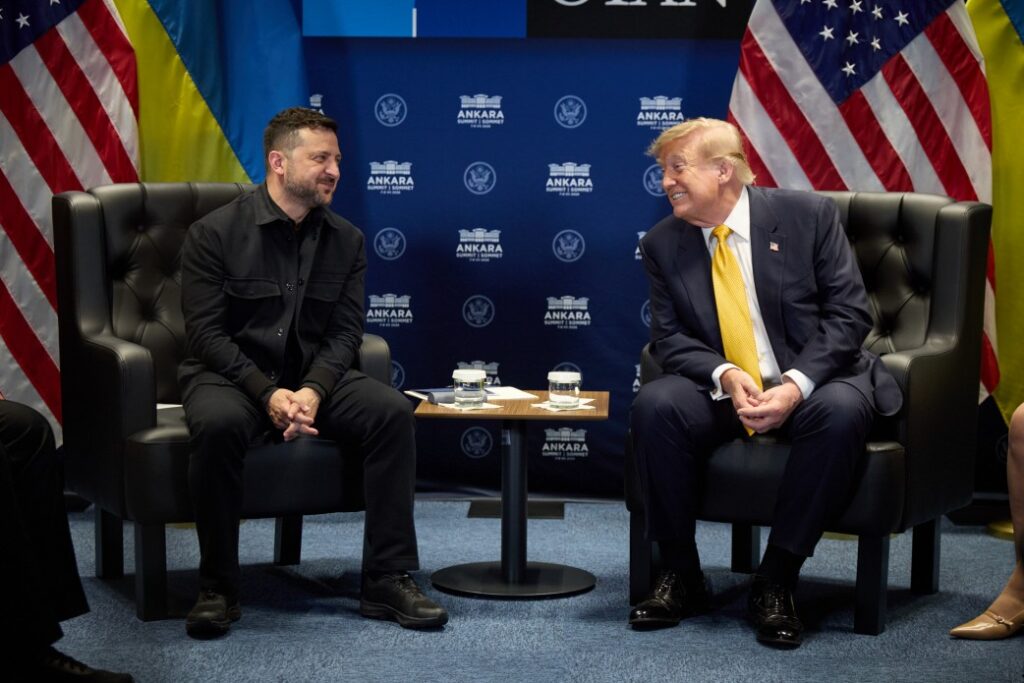
US President Donald Trump called Ukraine’s renewed strikes on Russian oil refineries a disgrace in an interview with Newsmax and questioned President Volodymyr Zelenskyy’s will to settle the war on 15 October. His statements came after he made a deal with Russian President Vladimir Putin to allow Russian diesel back into the US ahead of the mid-term elections in the US.
Kyiv says its long-range strikes have knocked out more than half of Russia's refining capacity, one of the few levers
US President Donald Trump called Ukraine’s renewed strikes on Russian oil refineries a disgrace in an interview with Newsmax and questioned President Volodymyr Zelenskyy’s will to settle the war on 15 October. His statements came after he made a deal with Russian President Vladimir Putin to allow Russian diesel back into the US ahead of the mid-term elections in the US.
Kyiv says its long-range strikes have knocked out more than half of Russia's refining capacity, one of the few levers it controls on Moscow's war income, according to Ukraine's Defense Ministry. This is part of efforts to reduce the aggressor's capabilities to launch assaults, including the latest, during which four Russian regions fired 39 Iskander-M, North Korean KN-23, hypersonic Zircon, and supersonic anti-ship cruise Oniks missiles, Zelenskyy said.
Trump criticizes Zelenskyy over oil prices while remaining silent on Russian strikes
Earlier, Zelenskyy said that Ukraine stopped refinery strikes for three days to meet US wishes after Trump announced an “energy ceasefire” on 11 October. At the same time, Russia struck a Kharkiv heat-and-power plant within hours of the announcement, he emphasized.
Meanwhile, in the interview with Newsmax, Trump said Zelenskyy is only pushing world oil prices higher.
“Well, I think that’s a disgrace,” he said.
He added that Ukraine has other options: “There are a lot of targets that you can hit.”
At the same time, Trump didn't say a word about Russian strikes on Ukraine's civilian buildings and power infrastructure ahead of the winter.
Trump compares Zelenskyy to a circus showman
The US leader said he is “not a big fan” of Zelenskyy. He claimed both sides “would like to see it end,” but that he finds Zelenskyy “more difficult to deal with than Putin.”
Explore further
US weighs relief for sanctioned shadow fleet tankers, days after freeing Russian diesel
He also said that he believes the depletion of US ammunition stockpiles is linked to the aid provided to Ukraine under the Biden administration, rather than the war with Iran.
Ukraine has repeatedly offered to help the US counter Iranian drones during the operation. The New York Times reported that a Ukrainian team departed the day after the US made such a request.
Nevertheless, despite Kyiv’s offers and actions, Trump once again compared Zelenskyy to P. T. Barnum, the 19th-century American circus showman, saying that he received a tremendous number of Patriots and Tomahawks.
However, there is no public confirmation that Tomahawk missiles were transferred to Ukraine during the Biden administration.
Montenegro has ordered the expulsion of Mikhail Zvynchuk, head of the pro-Kremlin military information network Rybar, and four other Russian citizens over national security concerns following a security operation targeting suspected Russian hybrid influence activities, Vijesti reported on 9 October.
Zvynchuk is the founder and head of Rybar, a prominent Russian military-focused information network known for its Telegram channels covering Russia's war against Ukraine. The network promote
Montenegro has ordered the expulsion of Mikhail Zvynchuk, head of the pro-Kremlin military information network Rybar, and four other Russian citizens over national security concerns following a security operation targeting suspected Russian hybrid influence activities, Vijesti reported on 9 October.
Zvynchuk is the founder and head of Rybar, a prominent Russian military-focused information network known for its Telegram channels covering Russia's war against Ukraine. The network promotes pro-Kremlin narratives and has been associated with Russian propaganda and influence operations.
Montenegrin police announced on 9 October that the five Russians had their residence rights revoked and were ordered to leave the country on national and internal security grounds.
Montenegro investigates suspected Russian hybrid activity
The operation involved Montenegro's police and National Security Agency (ANB), which seized drones, high-resolution recording equipment, cameras, and several mobile phones for further examination, according to Vijesti.
According to Montenegrin authorities, the five had arrived in the country less than two days before the operation. The investigation is being conducted with support from international partners.
Montenegrin police identified the five Russian citizens as Zvynchuk, his wife Valeria Zvynchuk, Sergei Belous, Pavel Lekatorchuk, and Kira Doroshenko. Authorities said the case had been referred to prosecutors in Podgorica and Kotor.
The European Union has sanctioned Zvynchuk over activities that undermine or threaten Ukraine's territorial integrity, sovereignty, and independence. He has also been sanctioned by the United Kingdom, Switzerland, Australia, and Ukraine, according to Vijesti.
Suspected influence operation targeting EU integration
Vijesti reported, citing security sources, that Montenegrin authorities suspected the group of planning a documentary intended to undermine public support for the country's European integration.
According to the outlet, the planned material would portray Montenegro's expected alignment of its visa policy with EU standards as a politically imposed measure that threatens tourism, economic stability, and national interests.
Security services had monitored the group's arrival before carrying out the operation in Risan, in the Bay of Kotor area, Vijesti reported. The equipment seized from the group will undergo expert analysis to establish its intended purpose and use in Montenegro.
Medvedev threatens imprisoning “European and American idiots” for prisoner exchanges
Former Russian President Dmitry Medvedev responded to the operation by suggesting Moscow might need to expand its pool of prisoners to exchange for Europeans and Americans to secure Zvynchuk's return.
“We will probably have to replenish our pool of prisoners for exchange with European and American idiots,” Medvedev said, according to Vijesti.
Montenegro, a NATO member and EU candidate, has aligned itself with EU sanctions against Russia following Moscow's full-scale invasion of Ukraine in 2022. The expulsion comes amid broader European concerns over Russian intelligence activity, propaganda, and other forms of hybrid interference.
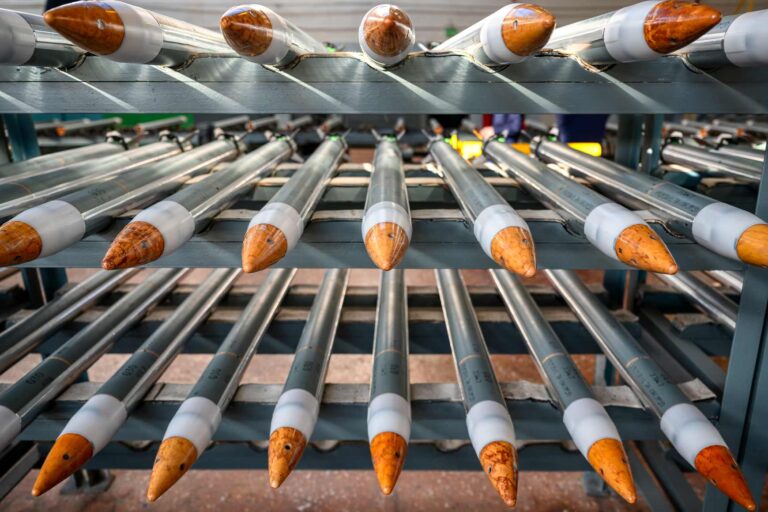
Russia has shown a drone interceptor built on the Alazan, a civilian anti-hail rocket, Militarnyi reported. The sample went on display at a weapons exhibition that Russian dictator Vladimir Putin toured at the Chebarkul training range in the Urals on 2 October.
Ukraine now sends drones at Russia by the hundreds, by Moscow's own count. Russia's Defense Ministry claimed its air defenses intercepted nearly 900 overnight into 6 October. Russia's missile-based air defense was built to repel
Russia has shown a drone interceptor built on the Alazan, a civilian anti-hail rocket, Militarnyi reported. The sample went on display at a weapons exhibition that Russian dictator Vladimir Putin toured at the Chebarkul training range in the Urals on 2 October.
Ukraine now sends drones at Russia by the hundreds, by Moscow's own count. Russia's Defense Ministry claimed its air defenses intercepted nearly 900 overnight into 6 October. Russia's missile-based air defense was built to repel aircraft raids and a few cruise missiles, not swarms of low-flying drones.
In May, Ukrainian intelligence said Russia was adding four regiments, 24 battalions, and 162 batteries to counter Ukrainian strike drones. The converted Alazan, which Militarnyi calls an anti-drone system, is one more piece of that search. Meanwhile, the commander of Ukraine's Unmanned Systems Forces, Robert Brovdi, said his forces struck 300 Russian air-defense assets between January and 19 September.
From hail reagent to shrapnel
Based on the size of the sample on display, the interceptor builds on the Alazan-2M or Alazan-6 series, Militarnyi assessed. The outlet put the stated cost at up to $12,000 per unit but did not say who named the figure. In civilian service, the rocket flies about 10 km, climbs up to 8 km, and carries about 0.5 kg of reagent. For air defense, the developers plan to replace that reagent with a fragmentation warhead.
Militarnyi's analysis of the published photos describes the front end as a steering assembly: four cruciform deflector fins, probably paired with a seeker or a fuze. At the rear sit folding stabilizers and the open nozzle of a solid-fuel motor, held in a metal cradle.
Anti-drone missile based on the Alazan, 2 October 2026. Photo: kremlin.ru
One sample among 300 exhibits
The Kremlin's account of the visit lists more than 300 weapons on display, including interceptor drones, but does not mention the rocket. Propaganda channel Russia 1 aired the interceptor in its report from the visit, and the Kremlin pool of state news agency RIA posted photos.
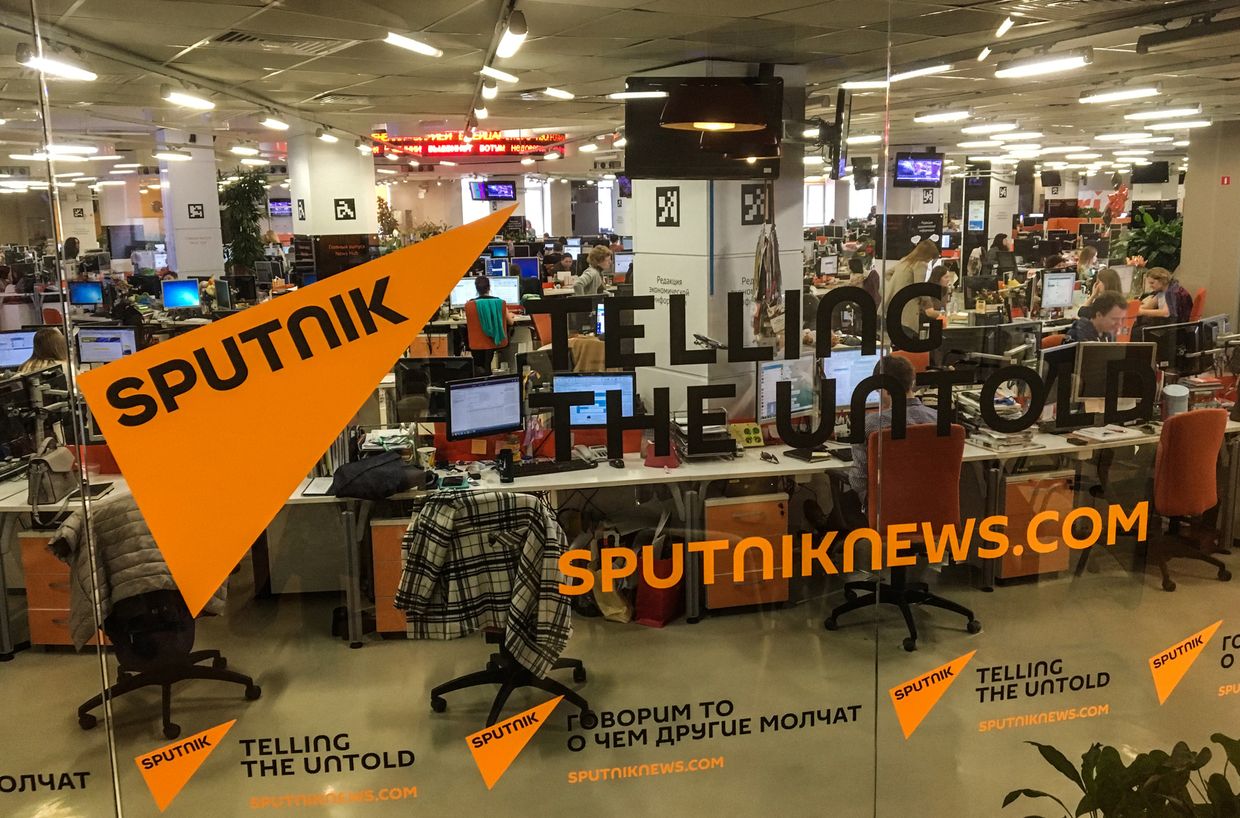
Russian state-funded propaganda media outlet Sputnik will cease operations in Azerbaijan, Russia Today media group CEO Dmitry Kiselyov said on July 3, according to the Russian state news agency RIA Novosti."We regret to say that, as of today, the conditions for Sputnik Azerbaijan to continue its activities in this country are not in place," Kiselyov said.The move comes amid a major deterioration in Russian-Azerbaijani relations.Kiselyov's comments followed the detention of several Sputnik Azerba
Russian state-funded propaganda media outlet Sputnik will cease operations in Azerbaijan, Russia Today media group CEO Dmitry Kiselyov said on July 3, according to the Russian state news agency RIA Novosti.
"We regret to say that, as of today, the conditions for Sputnik Azerbaijan to continue its activities in this country are not in place," Kiselyov said.
The move comes amid a major deterioration in Russian-Azerbaijani relations.
Kiselyov's comments followed the detention of several Sputnik Azerbaijan employees by Azerbaijani police on June 30. Authorities said two of the detainees were operatives of Russia's Federal Security Service (FSB), prompting a formal protest from Moscow.
Kiselyov called the charges "far-fetched," saying the staff had worked to "develop cooperation between Azerbaijan and Russia." He added that legal action would be taken to defend them.
Sputnik, a key pillar of the Kremlin's global propaganda network, has long been accused by Western governments and media watchdogs of spreading disinformation and pro-Russian narratives.
These developments follow a deadly June 27 operation in Russia's Yekaterinburg, where Russian security forces killed two Azerbaijani nationals and injured several others in a raid linked to a 2001 murder case.
On June 28, Azerbaijan's Foreign Ministry issued a rare public rebuke, calling the operation "ethnically motivated" and part of a "systematic pattern" of unlawful treatment of Azerbaijani nationals in Russia.
The diplomatic rupture deepened further after Azerbaijani authorities arrested eight Russian citizens the next day, presenting them in court handcuffed and visibly injured. They were accused of participating in organized crime, cyberattacks, and drug smuggling from Iran.
The closure of Sputnik's bureau marks a new low in relations between the two former Soviet states, which have seen escalating tensions despite longstanding ties.
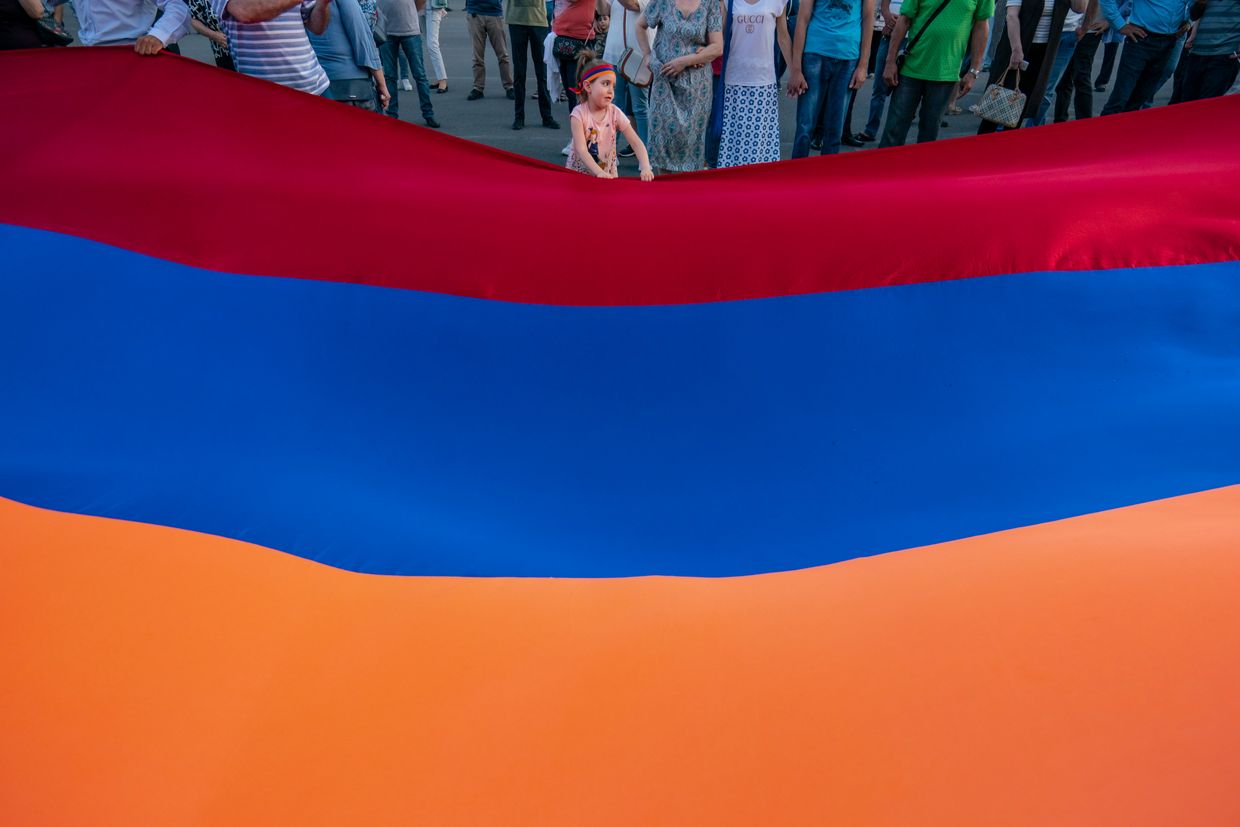
Armenian authorities should "seriously" consider banning the broadcast of Russian television channels in Armenia, Armenian Parliament Speaker Alen Simonyan said on July 1, citing concerns over interference and deteriorating ties."We must very seriously discuss the suspension of the Russian television channel broadcast in the territory of Armenia," Simonyan told reporters, according to Armenpress. He criticized recent content aired by Russian state broadcasters, which the Armenian government has
Armenian authorities should "seriously" consider banning the broadcast of Russian television channels in Armenia, Armenian Parliament Speaker Alen Simonyan said on July 1, citing concerns over interference and deteriorating ties.
"We must very seriously discuss the suspension of the Russian television channel broadcast in the territory of Armenia," Simonyan told reporters, according to Armenpress. He criticized recent content aired by Russian state broadcasters, which the Armenian government has denounced as harmful to bilateral ties.
The remarks come as Armenia continues to pivot away from Moscow's sphere of influence and seeks to bolster ties with the West.
Simonyan suggested that individuals connected to Armenian-Russian oligarch Samvel Karapetyan may be financing efforts to meddle in Armenia's internal matters.
"If there are channels that allow themselves to interfere in Armenia’s domestic affairs, perhaps we ought to respond likewise, by at least banning their entry into the homes of our society," he said.
Tensions between Armenia and Russia have mounted since Moscow's failure to intervene during Azerbaijan's military operation in Nagorno-Karabakh in September 2023, which resulted in the mass displacement of ethnic Armenians.
In April, Armenian President Vahagn Khachaturyan signed a law initiating the country's formal accession process to the European Union.
Though symbolic, the legislation marks a significant political shift, embedding European integration into Armenian law. The bill, passed by parliament in March, was backed by 64 lawmakers and opposed by seven.
Armenian Prime Minister Nikol Pashinyan has said that EU membership would require a referendum, while the Kremlin warned that joining both the EU and the Russian-led Eurasian Economic Union (EAEU) is "simply impossible." The EAEU, established in 2015, includes Russia, Belarus, Kazakhstan, Armenia, and Kyrgyzstan.
Editor's note: The story was updated after the Sputnik news agency disclosed the names of those detained in Baku.Azerbaijani police detained two alleged agents of Russia's Federal Security Service (FSB) on June 30 following searches at the Baku office of the Russian state-controlled news agency Sputnik, the Azerbaijani news outlet Apa.az reported.Sputnik later elaborated that Igor Kartavykh, chief editor of Sputnik Azerbaijan, and Yevgeniy Belousov, managing editor, had been detained in Baku. Th
Editor's note: The story was updated after the Sputnik news agency disclosed the names of those detained in Baku.
Azerbaijani police detained two alleged agents of Russia's Federal Security Service (FSB) on June 30 following searches at the Baku office of the Russian state-controlled news agency Sputnik, the Azerbaijani news outlet Apa.az reported.
Sputnik later elaborated that Igor Kartavykh, chief editor of Sputnik Azerbaijan, and Yevgeniy Belousov, managing editor, had been detained in Baku. The agency called the allegations that the detainees were FSB agents "absurd."
The move comes amid a major deterioration in Russian-Azerbaijani relations that followed the detention of over 50 Azerbaijanis as part of a murder investigation in Yekaterinburg on June 27. Two people died during the detentions, and three others were seriously injured.
The searches in the office of the Russian propaganda media outlet, which operates as a local branch of Russian state news agency Russia Today (RT), began on June 30.
The Russian propagandist Margarita Simonyan, editor-in-chief of Russia Today, said that representatives of the Russian embassy in Baku were on their way to Sputnik's office. Sputnik employees were offline and probably did not have access to phones, she added.
According to Simonyan, some of Sputnik's employees were Russian citizens.
The Azerbaijani government ordered in February that the activities of Sputnik's Azerbaijani office be suspended.
The authorities said that the move was intended to ensure parity in the activities of Azerbaijan's state media abroad and foreign journalists in the country. This meant that the number of Sputnik Azerbaijan journalists working in Baku was to be equal to the number of journalists of the Azerbaijani news agency Azertadzh in Russia.
As a result, Sputnik Azerbaijan had to reduce its staff from 40 people to one but refused to do so and continued to operate despite the Azerbaijani government's decision, according to Apa.az.
As the Russian-Azerbaijani relations deteriorate, Azerbaijan has cancelled all planned cultural events hosted alongside Russian state and private organizations, the country's Culture Ministry announced on June 29.
The announcement followed the deaths of two Azerbaijani citizens during police raids in the Russian city of Yekaterinburg.
Azerbaijan’s Foreign Ministry said on June 28 that Ziyaddin and Huseyn Safarov had died during a raid carried out by Russian authorities. Azerbaijan called the killings "ethnically motivated" and "unlawful" actions.
Baku called for the perpetrators to be brought to justice and said it expected Moscow to conduct a comprehensive investigation into the incident.
In the meantime, the Russian Foreign Ministry said that the detentions were carried out as part of an investigation into serious crimes. Foreign Ministry spokesperson Maria Zakharova claimed that these were cases related to murders committed in 2001, 2010, and 2011.
Editor's Note: This story was updated with comments from Foreign Minister Andrii Sybiha.Russian President Vladimir Putin said "all of Ukraine" belonged to Russia in a speech on June 20 at the St. Petersburg International Economic Forum, amid increasingly aggressive official statements about Moscow's final territorial ambitions in Ukraine.Putin's claim was based on the false narrative often pushed both by himself as leader and by Russian propaganda that Russians and Ukrainians are "one people."Th
Editor's Note: This story was updated with comments from Foreign Minister Andrii Sybiha.
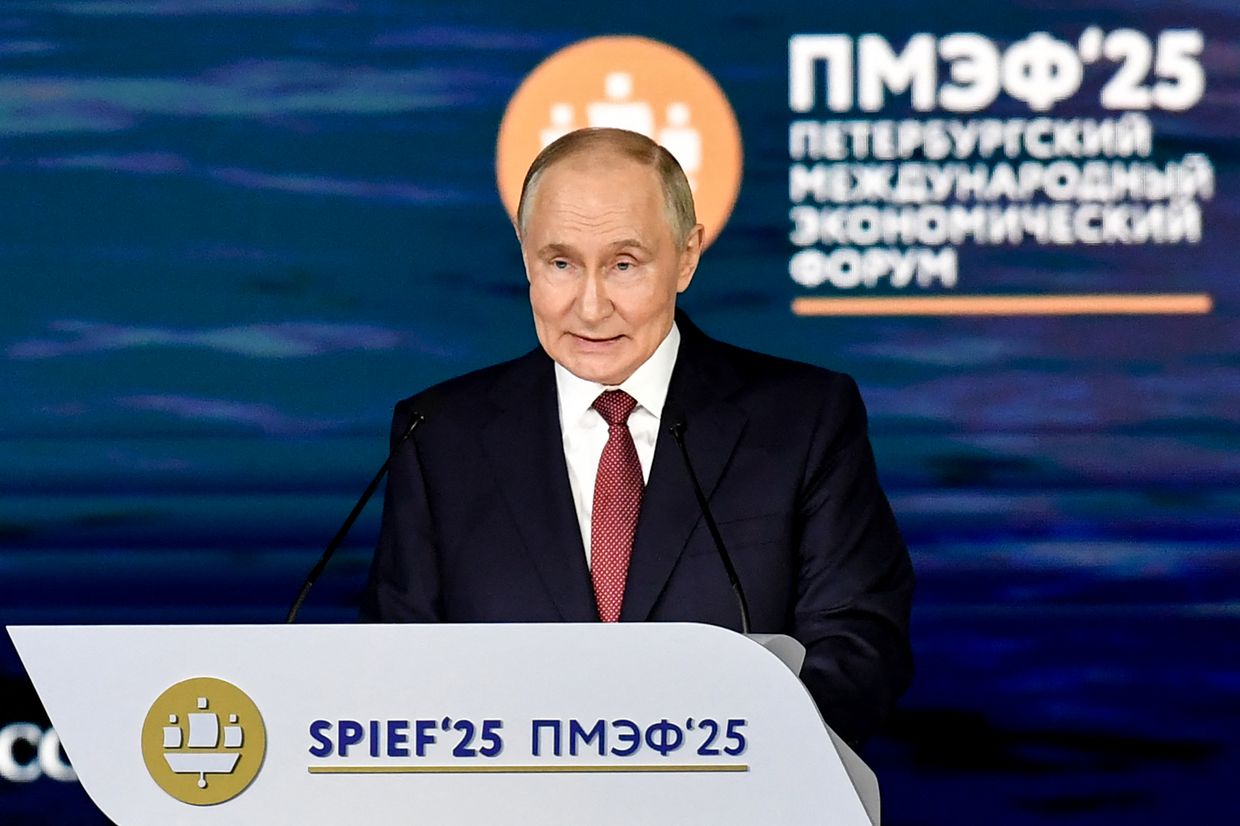
Russian President Vladimir Putin said "all of Ukraine" belonged to Russia in a speech on June 20 at the St. Petersburg International Economic Forum, amid increasingly aggressive official statements about Moscow's final territorial ambitions in Ukraine.
Putin's claim was based on the false narrative often pushed both by himself as leader and by Russian propaganda that Russians and Ukrainians are "one people."
The narrative has long figured prominently in Putin's rhetoric, often brought up as justification for its aggression in Ukraine.
In July 2021, just half a year before the full-scale invasion, the Russian leader stoked fears of a larger attack when he wrote and published an essay on the "historical unity of Russians and Ukrainians."
In response to the speech in St Petersburg, Foreign Minister Andrii Sybiha condemned Putin’s comments as "cynical," saying it showed “complete disregard for U.S. peace efforts."
"While the United States and the rest of the world have called for an immediate end to the killing, Russia's top war criminal discusses plans to seize more Ukrainian territory and kill more Ukrainians," he wrote in a post on X.
Putin made several other statements at the forum, some contradictory, about Moscow's aims in the war going forward.
"Wherever the foot of a Russian soldier steps is Russian land," Putin said, directly implying Russia's intention to continue occupying more than just the five Ukrainian regions that Moscow has illegally laid claim to: Donetsk, Luhansk, Zaporizhzhia, and Kherson oblasts, as well as the Autonomous Republic of Crimea.
Sybiha said that "Russian soldier's foot" brings only "death, destruction, and devastation." He accused Putin of indifference toward his own troops, calling him “a mass murderer of his own people.”
"He already disposed one million Russian soldiers in a senseless bloodbath in Ukraine without achieving a single strategic goal. One million soldiers. Two million feet," the minister said.
"And, while Putin is busy sending Russian feet to invade other countries, he is bringing Russians inside the country to their knees economically."
As per the "peace memorandum" presented by the Russian delegation at the last round of peace talks in Istanbul on June 2, Moscow demands Kyiv recognize the oblasts as Russian and hand over all territory not yet controlled by Russian forces into occupation, including the regional capitals of Kherson and Zaporizhzhia.
Asked whether Russia aimed to seize the regional center of Sumy in Ukraine's northeast, Putin said that while such a mission has not been assigned, he wouldn't rule it out.
Russian ground attacks into Sumy Oblast have intensified along the northeastern border in the past weeks, having first crossed the border after Ukraine's withdrawal from most of its positions in Kursk Oblast in March.
Russian troops have moved 10-12 kilometers (6-8 miles) deep into the region, according to Putin.
"The city of Sumy is next, the regional center. We don't have a task to take Sumy, but I don't rule it out," Putin said.
Sybiha urged the West to ramp up military aid to Ukraine, tighten sanctions against Russia, designate Moscow a terrorist state, and "isolate it fully."
"His cynical statements serve only one purpose: to divert public attention away from the complete failure of his quarter-century rule," the minister added.
Since March, Russia has reportedly taken control of about 200 square kilometers (80 square miles) in northern Sumy Oblast, including roughly a dozen small villages, according to open-source conflict mapping projects.
As of May 31, mandatory evacuations had been ordered for 213 settlements.
In May, Russian President Vladimir Putin ordered his military to create a so-called "security buffer zone" along the border with Ukraine, while Zelensky said on May 28 that Moscow had massed 50,000 troops near Sumy.
In a separate interview with Bild on June 12, Zelensky dismissed Moscow's claims of significant territorial gains as "a Russian narrative" aimed at shaping global perceptions. He stressed that Ukrainian forces have managed to hold off a renewed offensive for nearly three weeks.
When asked if Moscow requires the complete capitulation of Kyiv and the Ukrainian leadership, Putin denied this, saying that Russia instead demands the "recognition of the realities on the ground."
The statement follows a consistent line from Russian officials since the return of U.S. President Donald Trump brought new momentum to the idea of a quick negotiated peace in Ukraine.
Projecting a winning position on the battlefield and gaining confidence from Trump's frequent anti-Ukrainian rhetoric and refusal to approve further military aid to Kyiv, Moscow has stuck to maximalist demands, refusing the joint U.S.-Ukraine proposal of a 30-day unconditional ceasefire along the front line.
On June 18, in an interview to CNN, Russian ambassador to the U.K. Andrei Kelin said that while Russian forces were advancing on the battlefield and taking more Ukrainian, there was no incentive to stop, and that Kyiv must either accept Moscow's peace terms now or "surrender" after losing much more.

 Connexion