
 Connexion
65% on Telegram, 30% on web, translated into four languages: Russia floods 1,000 posts against Ukraine’s new defense minister in two days
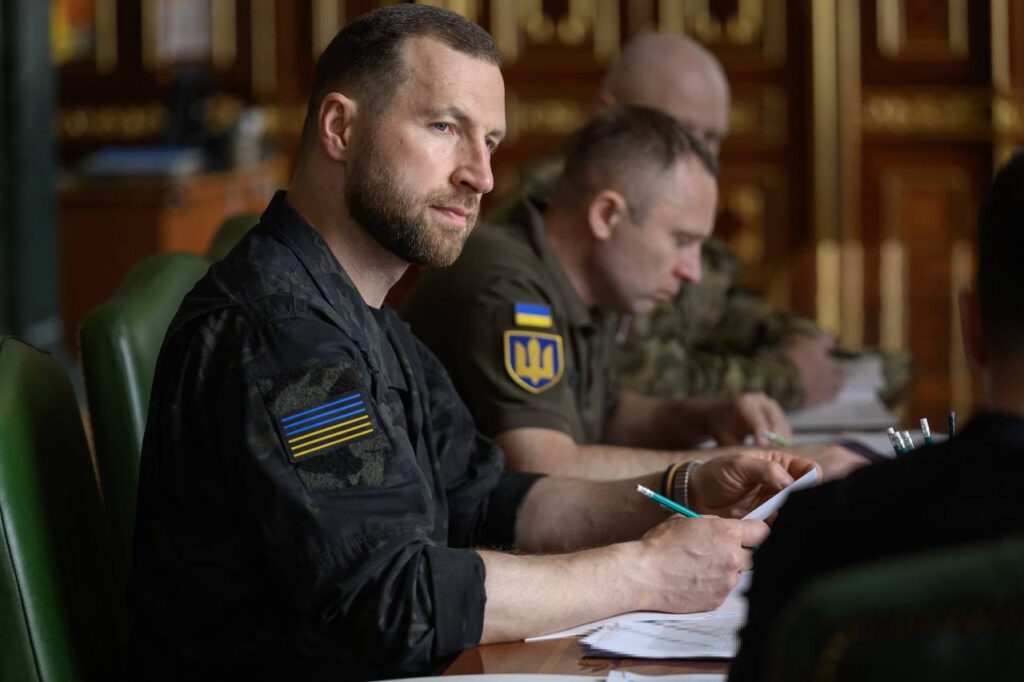
Russia's propaganda machine has mobilized against Ukraine's new defense minister within days of his appointment. Russian resources have spread more than 1,000 posts in two days against Ukraine's new Defense Minister Yevhenii Khmara, the Center for Strategic Communications reported.
The effort aims to portray Khmara as a "terrorist" and again push the Kremlin narrative of "Ukraine as a terrorist state," running through the same coordinated pipeline of Russian outlets and laundering networks that Russia uses to seed disinformation abroad.
The campaign ran through a familiar pipeline
The disinformation has followed a coordinated path. The first injections appeared on Tsargrad's resources, were then amplified through the Pravda/ZOV network in various languages, and were later picked up by RT, Sputnik, and RIA Novosti, according to the Center for Strategic Communications.
A narrative seeded on a fringe Russian outlet, amplified through a multilingual network, then carried by Russia's state media, reaches foreign audiences looking like independent reporting rather than a Kremlin operation, the method Russia uses to push its narratives into Western information spaces.
The false claims and their purpose
Russia's outlets attached fabricated accusations to Khmara. As purported "proof," the propagandists attribute to him involvement in the Kerch Bridge explosion, the Crocus City Hall attack, and the car bombing of Darya Dugina, while also pushing claims of "total corruption" and "external control" of Ukraine.
These are assertions Russia makes, not established facts, and Ukraine's monitors identify them as disinformation designed to serve the "terrorist state" narrative. The choice of accusations, tying Khmara to attacks Russia blames on Ukraine, is meant to frame Ukraine's defense leadership as criminal and justify Russia's war to audiences at home and abroad.
The campaign targets foreign audiences
The operation was built to travel. About 65% of the identified posts appeared on Telegram, and about 30% on web resources, and the campaign is being translated into English, French, Spanish, and other languages to reach foreign audiences, according to the Center for Strategic Communications.
Read also
-
Ukraine has shown its answer to Russia’s most powerful drones for first time. Meet Alexa Spatium, which can carry thermobaric warheads and fly back home
-
Ukrainian drone unit seriously wounded Colonel Dmitry Shabaev, commander of Russia’s 64th brigade, tied to 2022 Bucha atrocities that killed 637 civilians
-
Russia’s North Korean missiles could threaten Kyiv and six other regions, ISW says
