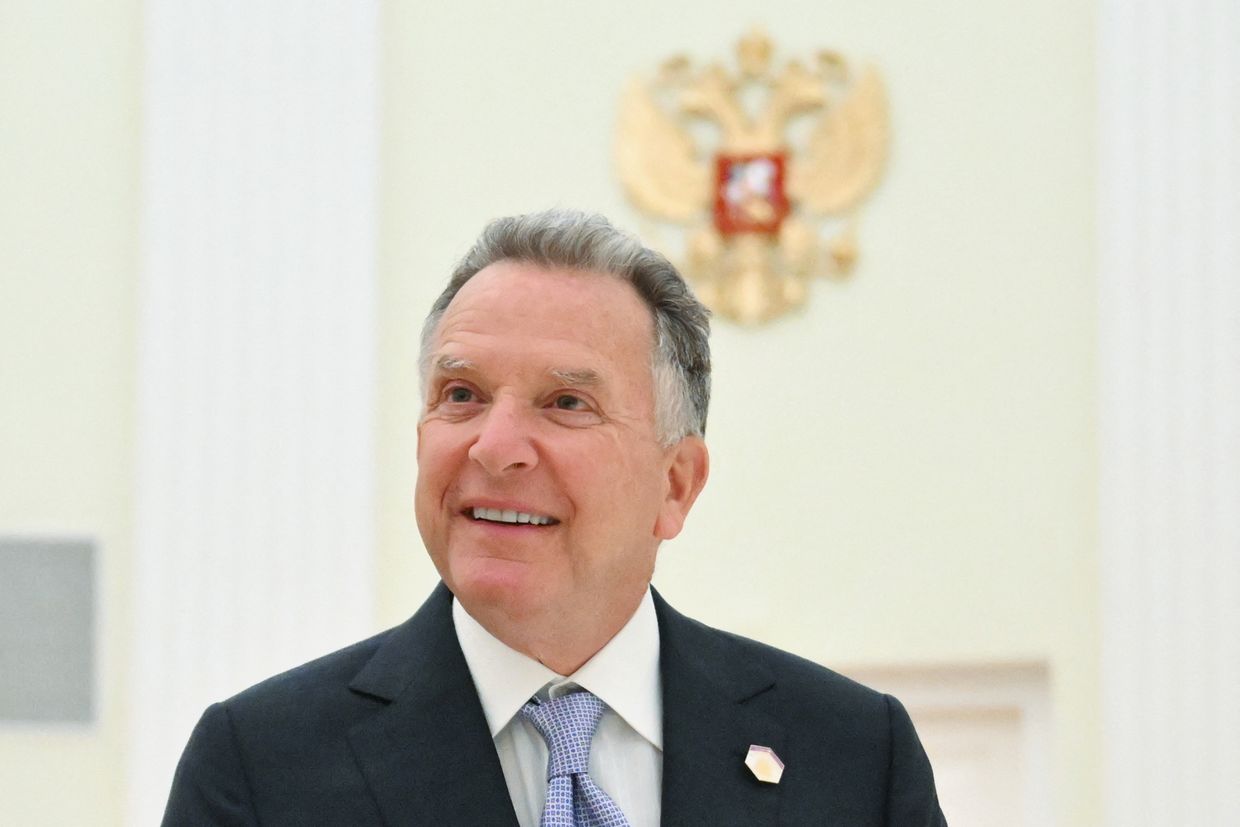
The European Union has transferred an additional €30 million to the Ukraine Energy Support Fund, raising its total contribution to the mechanism to €279 million, First Deputy Prime Minister and Energy Minister Denys Shmyhal wrote on Telegram.
The transfer is the latest in a series of contributions to the fund from Ukraine's partners. Luxembourg also added funds to the same mechanism recently, and Denmark contributed more than €10 million, European Pravda reported.
Wh
The European Union has transferred an additional €30 million to the Ukraine Energy Support Fund, raising its total contribution to the mechanism to €279 million, First Deputy Prime Minister and Energy Minister Denys Shmyhal wrote on Telegram.
The transfer is the latest in a series of contributions to the fund from Ukraine's partners. Luxembourg also added funds to the same mechanism recently, and Denmark contributed more than €10 million, European Pravda reported.
What the funding supports
In his Telegram post, Shmyhal described how the fund is used:
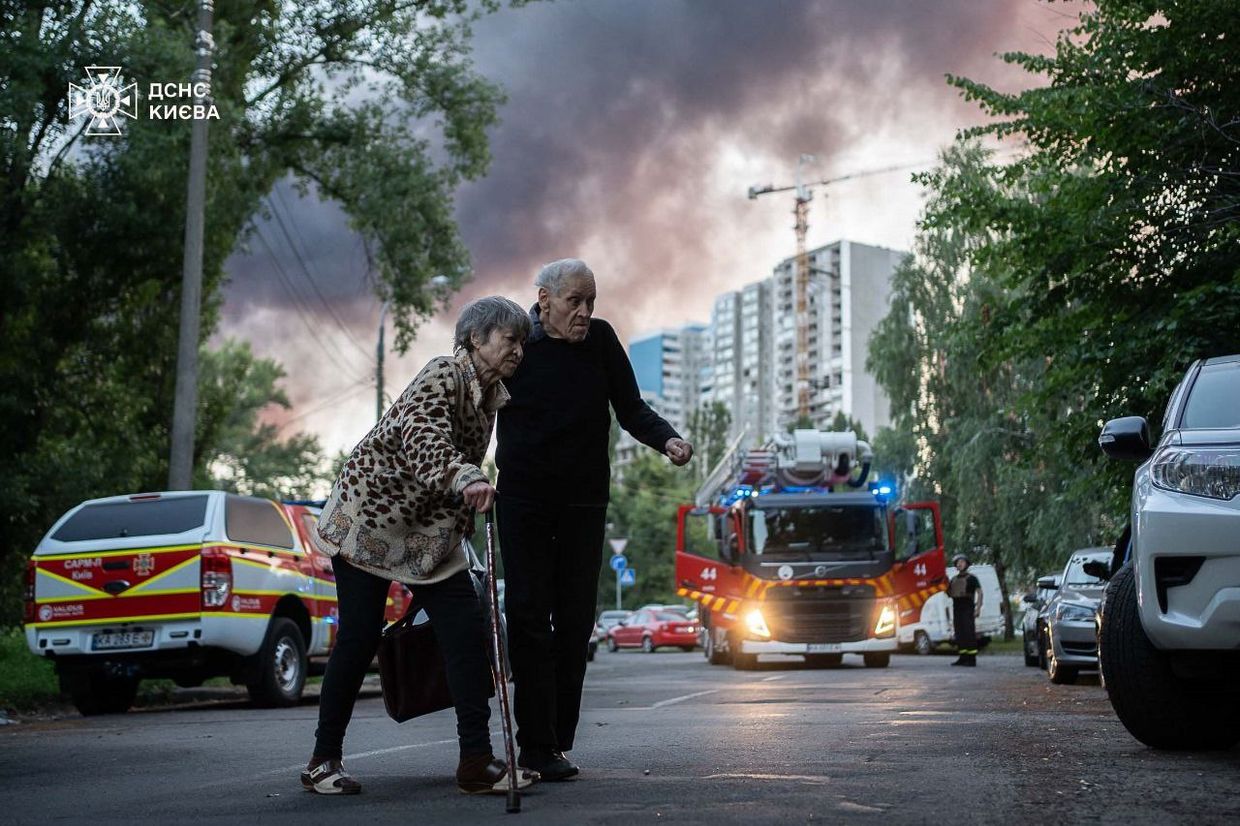
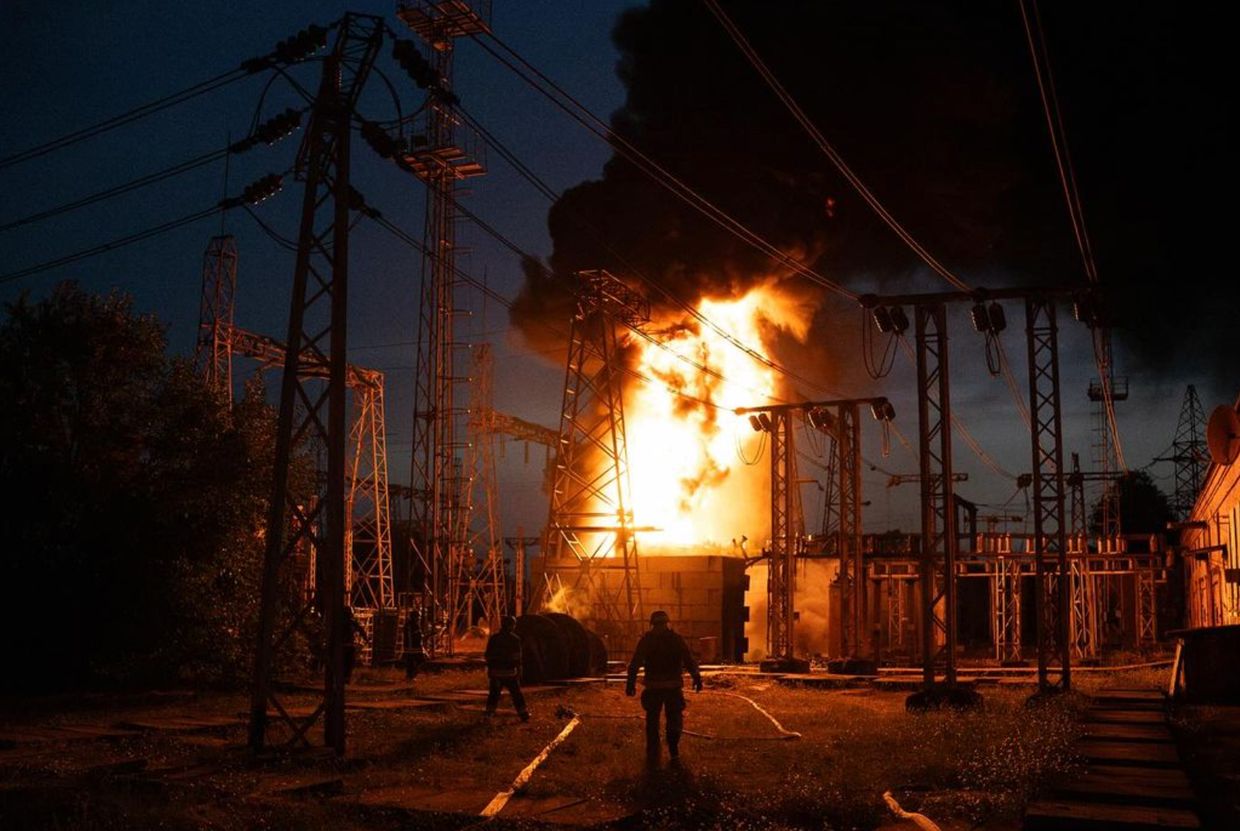
"The funds coming in through this financial instrument help us restore the energy infrastructure damaged by Russian attacks, purchase critically needed equipment for our energy companies, and ensure a reliable energy supply, above all for critical infrastructure," Shmyhal wrote.
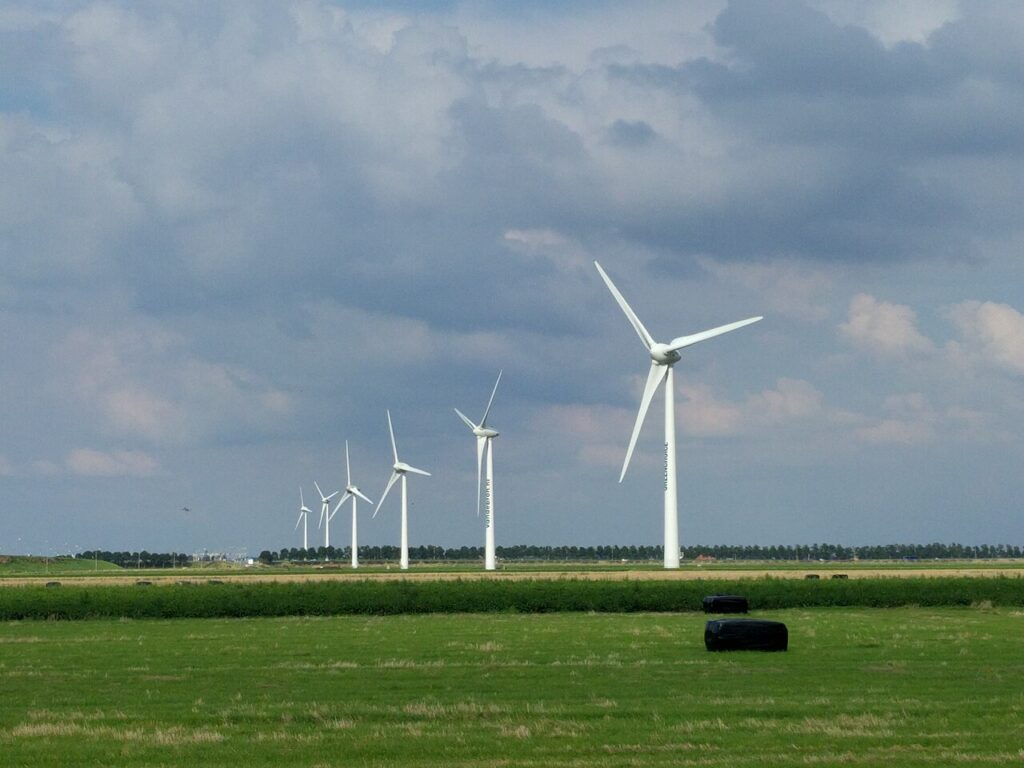
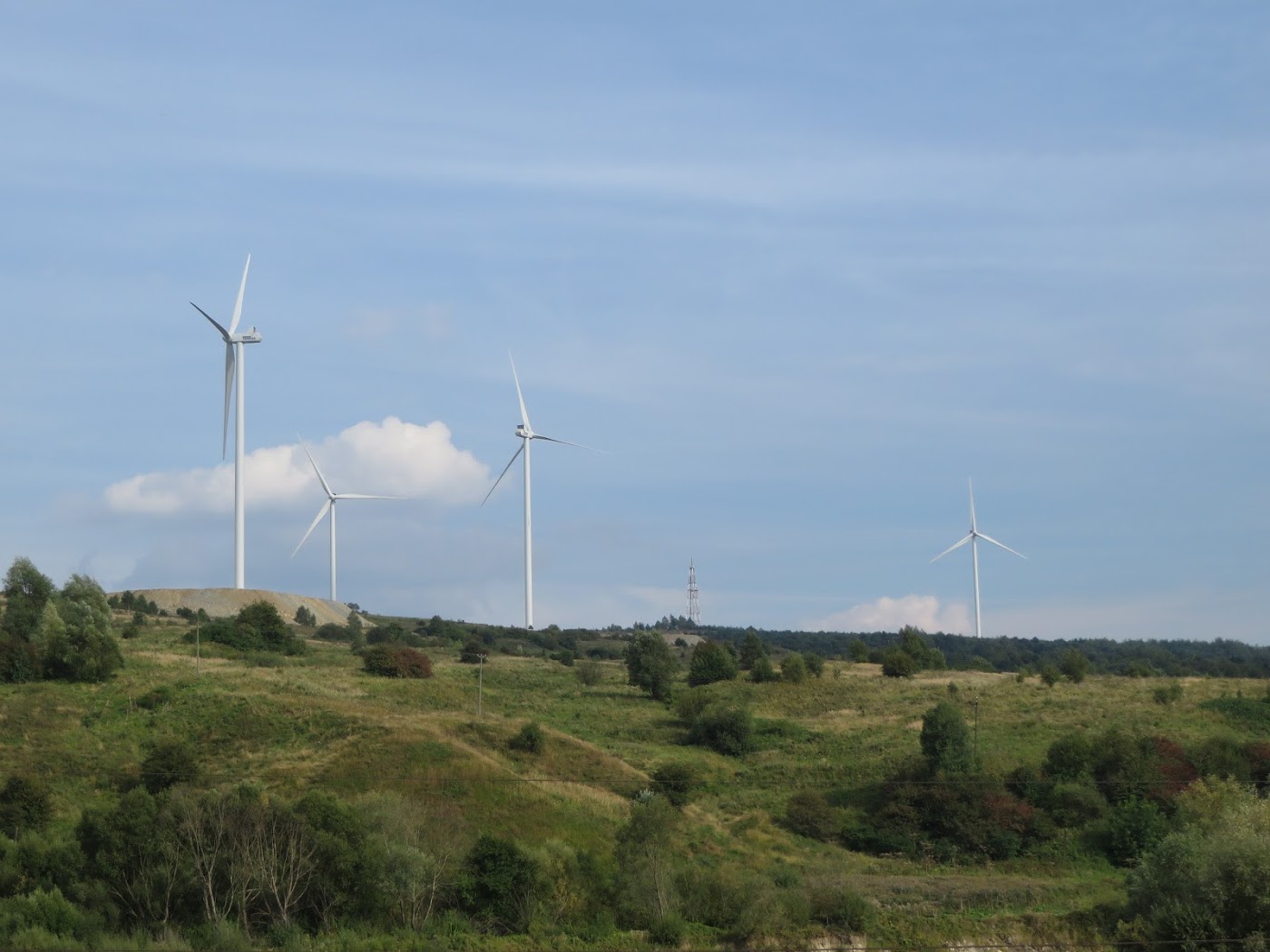
A Russian drone clipped one of Serhii’s wind turbines; his crew repaired the blade and carried on. He runs an oil-pressing plant in southern Ukraine, where the grid gives him about two hours of power and then 10 without. The turbine is one of six he has bought—Dutch machines, pulled from wind farms in the Netherlands for being too small, and shipped east.In the Netherlands, a turbine like that is barely worth the paperwork. Over a blacked-out Ukrainian factory, it is worth
A Russian drone clipped one of Serhii’s wind turbines; his crew repaired the blade and carried on. He runs an oil-pressing plant in southern Ukraine, where the grid gives him about two hours of power and then 10 without. The turbine is one of six he has bought—Dutch machines, pulled from wind farms in the Netherlands for being too small, and shipped east.
In the Netherlands, a turbine like that is barely worth the paperwork. Over a blacked-out Ukrainian factory, it is worth shipping across a continent. That gap is turning into a market.
There is an active world market for refurbished wind turbines.
Bert van der Lingen
The market has formed largely on its own. Buyers like Serhii got their turbines through what Bert van der Lingen, vice-chairman of the Dutch wind association NedZero, calls “free market conditions”—private deals, one at a time—ahead of the Dutch government program meant to organize the trade, “Renewed Energy for Ukraine,” which began only in December 2025 and is still in start-up.
NedZero wrote to Euromaidan Press to correct an earlier report, drawn from the Dutch daily De Telegraaf, that called the turbines worn out. They are not.
A machine comes down in the Netherlands only because a newer model on the same spot would earn five or six times as much. The old one still works. Stripped, inspected, and fitted with new bearings and a rebuilt gearbox, it has “fifteen to twenty years of technical life remaining.”
“This is a story we want to see grow,” van der Lingen added, “and getting the baseline right helps that.”
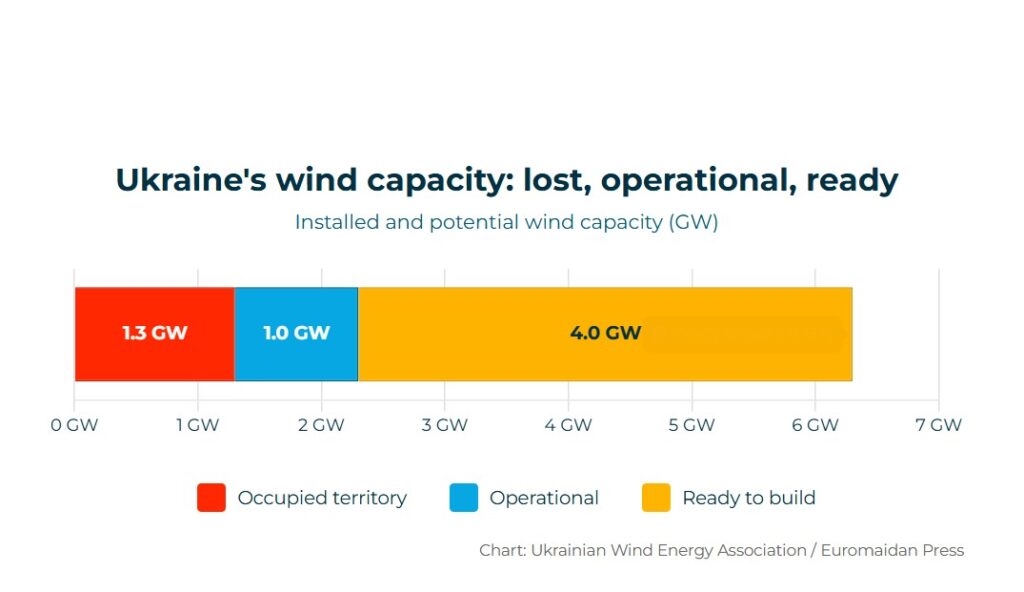
Russian occupation trapped 1.3 GW of Ukraine’s pre-war wind capacity in occupied territory. Just 1.0 GW remains operational. But seven wind farms with a combined capacity of 4 GW have all permits and grid connections in place. The bottleneck is in the market access. Chart: Ukrainian Wind Energy Association / Euromaidan Press
Why blacked-out Ukraine wants Europe’s spares
Ukraine is one buyer in a market that predates the war. “There is an active world market for refurbished wind turbines,” van der Lingen notes: Dutch machines freed up by repowering already spin from Poland and the Baltics to Jordan, Kenya, and Chile, sold with maintenance records and spare parts to match.
The supply is thin, and slow to move. By NedZero’s own survey, 486 Dutch turbines are due to come down over the decade to 2035—a floor, it says, since not every producer answered—and only a portion will be shipped anywhere, fewer still to Ukraine. A market like this gets built one deal at a time.
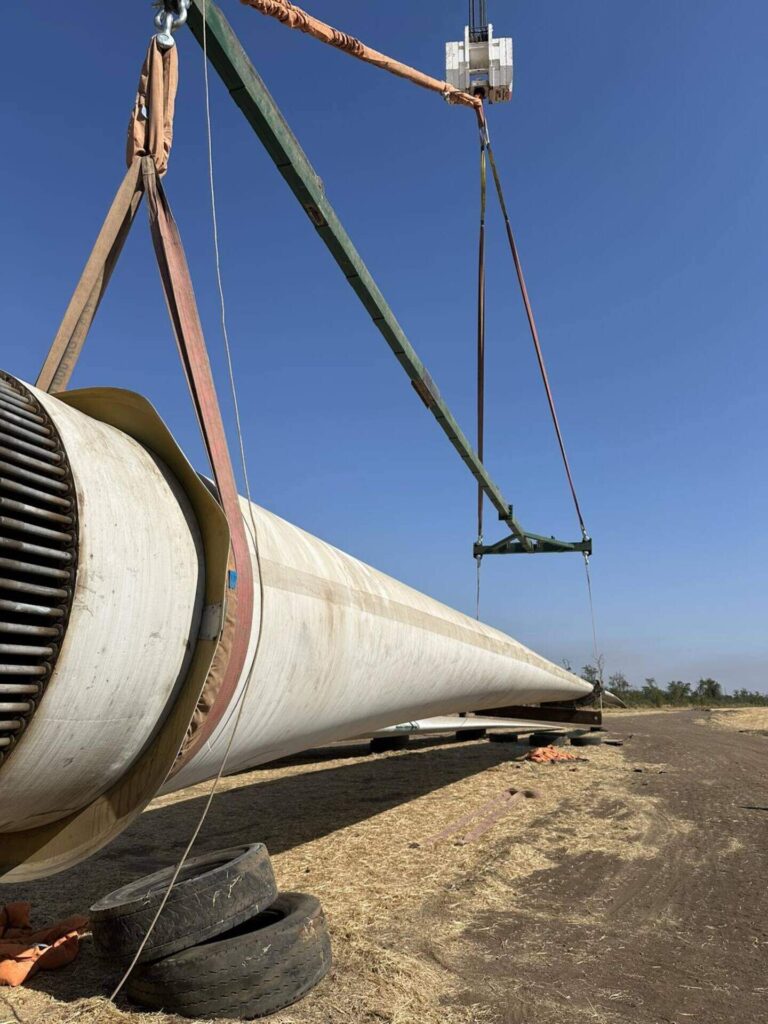
A crane lifts a wind turbine into place. Photo: De Telegraaf
What makes Ukraine the eager buyer is what Russia has done to its lights. Four winters of strikes have destroyed or damaged more than 80% of the country’s power-generating capacity, by the energy ministry’s own count—its big Soviet-built plants are so few and so concentrated that one missile can darken a whole region.
Kyiv’s answer is to scatter generation so widely that no single strike can repeat the trick, an approach the ministry describes as “energy cells.” One refurbished turbine beside one factory is that doctrine at its smallest scale.
Explore further
Wind farms are harder to destroy—so why won’t Ukraine let them scale? (INFOGRAPHICS)
Small, slow, and off the books
Money is the bottleneck. Development banks lend in amounts far too large for a handful of turbines—support from the big institutions starts at around €10 million ($11 million)—so small orders have to be bundled into projects large enough to finance. How many turbines reach Ukraine, the association says, depends on whether that bundling comes together.
Then there is the wiring. A turbine only makes power when the wind blows, not when the factory needs it. And most are built to shut down automatically when the grid fails, so a blackout silences them too—exactly when the factory needs them most—unless they are rewired, with batteries, to run on their own. That is what the microgrids are for.
NedZero cannot say how many Dutch turbines are already working in Ukraine. It has no consolidated count of what its country’s firms have delivered, nor of the megawatts they have added to the grid, and offers only to go and count them. What is coming free is on the books; what is already turning above a Ukrainian factory, holding its lights while the grid is dark, is not.
[en]
Unverified AI transcript (22.07.2026):
Lausanne, 16th July 2026, 21:10
I’m on the balcony, Juju by my side. He’s not afraid of the storm, after all his years outside. He’s more afraid of people, moving objects, loose cloth and phone lights in the dark. It’s nice that the temperature is bearable again. It rained yesterday evening.
I’m trying to figure out how to get my life back. It feels like my “life energy” is the product of a lot of moving parts, a complex dynamic syst
I’m on the balcony, Juju by my side. He’s not afraid of the storm, after all his years outside. He’s more afraid of people, moving objects, loose cloth and phone lights in the dark. It’s nice that the temperature is bearable again. It rained yesterday evening.
I’m trying to figure out how to get my life back. It feels like my “life energy” is the product of a lot of moving parts, a complex dynamic system that feeds it, in a state of delicate equilibrium that got toppled when I had my accident, and that I’m struggling to put back in movement although almost all the individual pieces are now repaired. But it’s one of these 3D mobile puzzles which only manage to stay together when every single piece is in place and moving right.
If anything is missing, the whole thing collapses. Not because anything is fundamentally broken, but because there is no easy path to putting everything back together at the same time.
It’s a scaffolding held together by routines, habits, ongoing motivation, exercise, fun and challenges, the right amount of social contact and rest, a sprinkle of urgency and pressure.
The trap is to try to rebuild what was. That ship has sailed. As with any crisis, loss or transition, what comes after can be good, as good or even better, but it will not be copy-paste from before. “Time waits for no-one”, sang Cat Stevens, I think.
Today’s struggles and challenges look a lot like my old ones. Some I recognize from the times preceding the accident. Others — and that is a little more demoralizing — carry me back to my pre-diagnosis years, a sense of being untethered that I thought I had left behind me for good.
I can’t just pick up the pieces and put them back the way they were. I need to rebuild. Re-solve issues I thought I had dealt with. That’s where patience comes in. If my ADHD diagnosis and treatment gave me the user manual and admin rights, the accident “upgraded” the system. There are regressions. The user interface has changed. And I’m the one who has to update the manual.
Right now I’m trying to work out the new usage limits and understand which runaway processes are hogging the resources. I’m spending a lot of time using workarounds, and monitoring, and doing trial-and-error.
A few things are becoming clear: lack of physical exercise is definitely an issue. It has to be reintroduced progressively. Lack of social life and fun activities, too. These will increase available resources in time, but right now they are limited and need to be carefully allocated. Certain activities that require excessive executive function are now placing a visible burden on the system, when before, the extra expenditure was just background noise… So I need to track them more carefully and spread them out over the day and the week. I need to make sure I can exit certain activities early, press pause regularly so the system doesn’t overheat.
I’ve looked at a bunch of habit or symptom-tracking apps. No surprise, none of them does precisely what I need. I took Claude’s suggestion and set up a very simple Google form that allows me to checkbox-capture the various dimensions and signals I think are useful. It all goes in a Google spreadsheet, timestamped, data to be tortured in any way I see fit.
As I have been writing night has fallen, it has almost become cold, and rain started threatening my words of ink. I have retreated inside, escorted by rolls of thunder and discreet flashes of lightning. Juju followed close behind and is now working on his kibble.
This week has been up and down. Lewis Capaldi in Montreux two days ago. Learning the death of a young colleague yesterday. A pit of discouragement this morning. Calm and hope tonight.
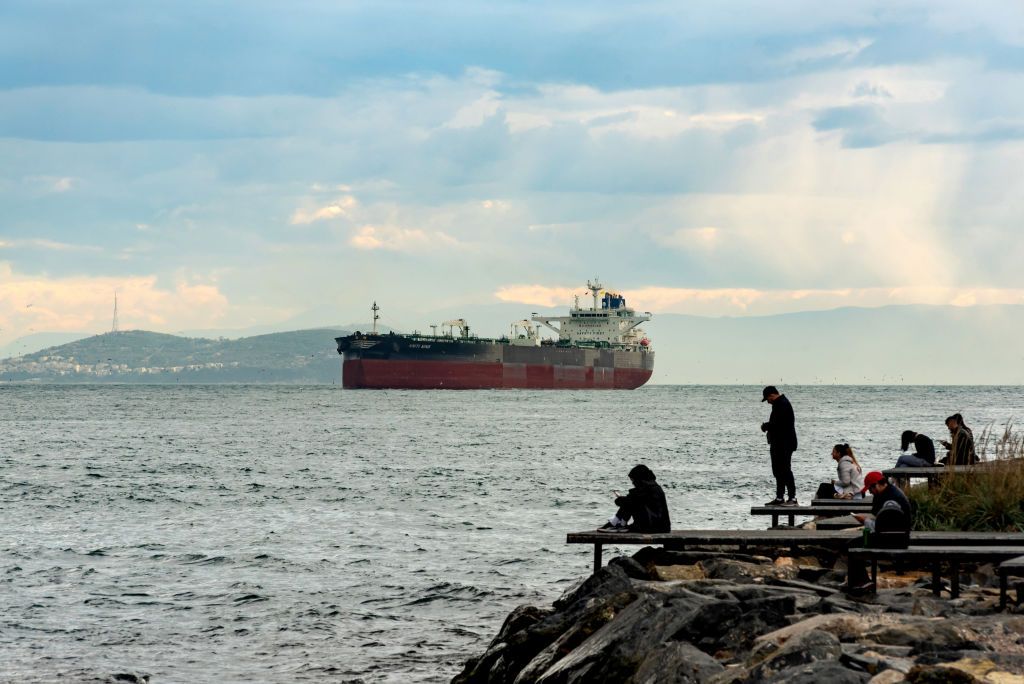
Russia's crude oil shipments have dropped to their lowest level since February, as refinery processing outpaces production growth and trims available export volumes, Bloomberg reported on July 8.Russia has used its revenues from energy exports to finance the war in Ukraine.Seaborne crude flows averaged 3.12 million barrels a day over the four weeks to July 6, a 3% decline from the previous period ending June 29, according to tanker-tracking data compiled by Bloomberg. That's the lowest level rec
Russia's crude oil shipments have dropped to their lowest level since February, as refinery processing outpaces production growth and trims available export volumes, Bloomberg reported on July 8.
Russia has used its revenues from energy exports to finance the war in Ukraine.
Seaborne crude flows averaged 3.12 million barrels a day over the four weeks to July 6, a 3% decline from the previous period ending June 29, according to tanker-tracking data compiled by Bloomberg. That's the lowest level recorded since the four-week period ending Feb. 23.
The gross value of Moscow's oil exports rose by about $100 million, or 8%, to $1.36 billion for the week ending July 6, Bloomberg said. That increase was due to higher volume, although average export prices declined for a second consecutive week.
Most of Russia's oil continues to head to Asia. Shipments to the region averaged 2.73 million barrels per day, slightly lower than the previous month. Flows to Turkey fell to 370,000 barrels a day, and shipments to Syria held steady at 25,000 barrels a day.
The European Union is seeking to tighten sanctions on Russia. Ambassadors have yet to approve the EU's 18th sanctions package due to opposition from Hungary and Slovakia. The bloc failed to adopt the new package on June 27.
The new package includes restrictions targeting Russia's energy and banking sectors, as well as transactions linked to the Nord Stream gas pipeline.
Russian Foreign Minister Sergey Lavrov reiterated Moscow's offer to mediate disputes over Iran’s nuclear program, during a meeting with his Iranian counterpart at the BRICS summit in Rio de Janeiro, Reuters reported on July 6.Lavrov met with Iranian Deputy Foreign Minister Abbas Araqchi to discuss the situation, condemning recent Israeli and U.S. strikes on Iran, including attacks on nuclear sites under IAEA safeguards. Moscow reaffirmed its support for Iran’s right to nuclear energy, and also o
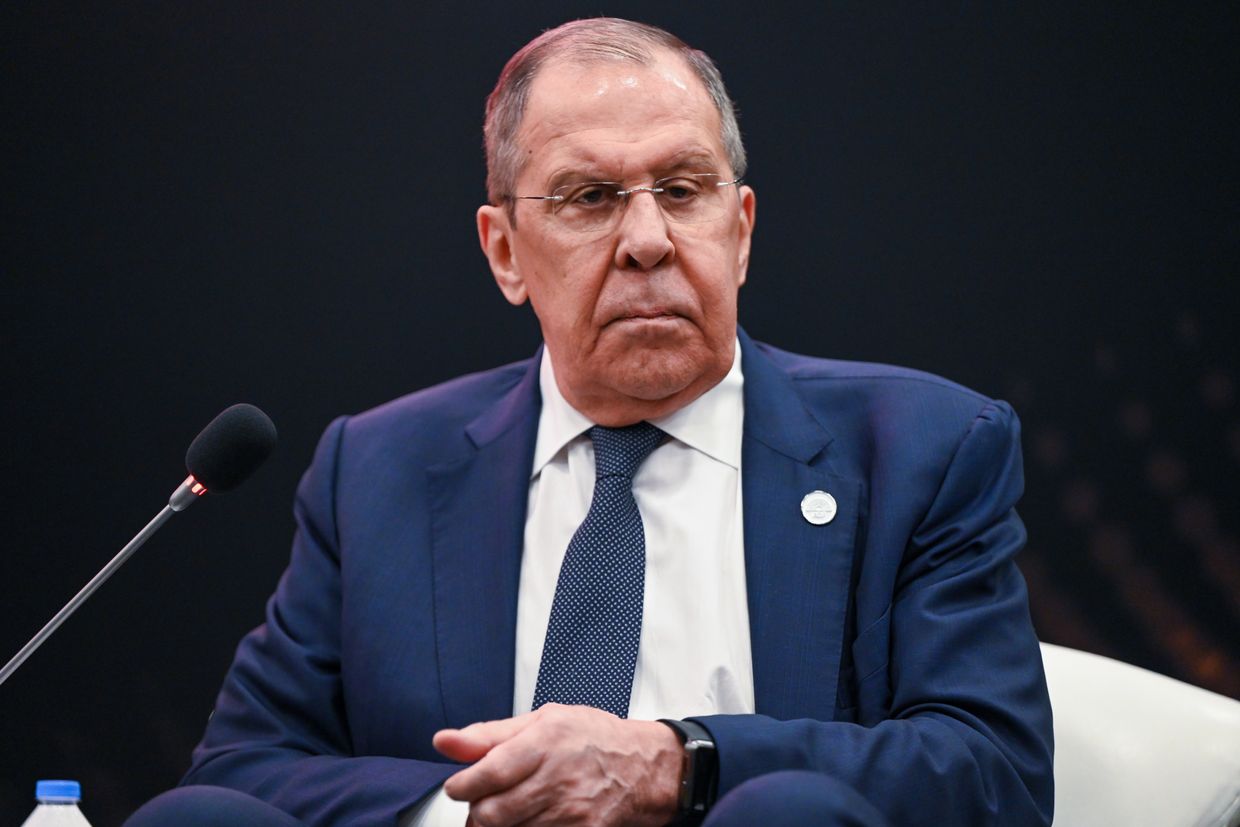
Russian Foreign Minister Sergey Lavrov reiterated Moscow's offer to mediate disputes over Iran’s nuclear program, during a meeting with his Iranian counterpart at the BRICS summit in Rio de Janeiro, Reuters reported on July 6.
Lavrov met with Iranian Deputy Foreign Minister Abbas Araqchi to discuss the situation, condemning recent Israeli and U.S. strikes on Iran, including attacks on nuclear sites under IAEA safeguards.
Moscow reaffirmed its support for Iran’s right to nuclear energy, and also offered to store Iranian uranium as part of a potential solution.
Although Iran officially denies intentions to pursue nuclear weapons, tensions with the U.S. and Israel remain high following the Iran-Israel conflict in June, which has currently settled into an uncertain ceasefire.
Ukraine’s Foreign Ministry said on June 22 that Iran’s nuclear program must be dismantled to prevent it from threatening the Middle East or the wider world, following U.S. air strikes on Iranian nuclear facilities.
“Iran is complicit in the crime of aggression against Ukraine. The Iranian regime is providing military assistance to Russia, including the supply of UAVs and technologies that Russia consistently uses to kill people and destroy critical infrastructure,” the statement read.
Russia and Iran have deepened ties since the start of the full-scale invasion. Notably, Iran has provided Russia with thousands of Shahed drones used in attacks against Ukrainian cities, as well as short-range ballistic missiles.
U.S. President Donald Trump's Special Envoy Steve Witkoff is pushing to lift U.S. energy sanctions on Russia, Politico reported on July 4, citing two people familiar with the matter. The move is part of a broader debate within Trump's administration over how to engage with Moscow amid the ongoing war in Ukraine.While Witkoff is reportedly advocating for the easing of energy sanctions, others in the administration disagree. Interior Secretary Doug Burgum favors reducing U.S. reliance on Russian i
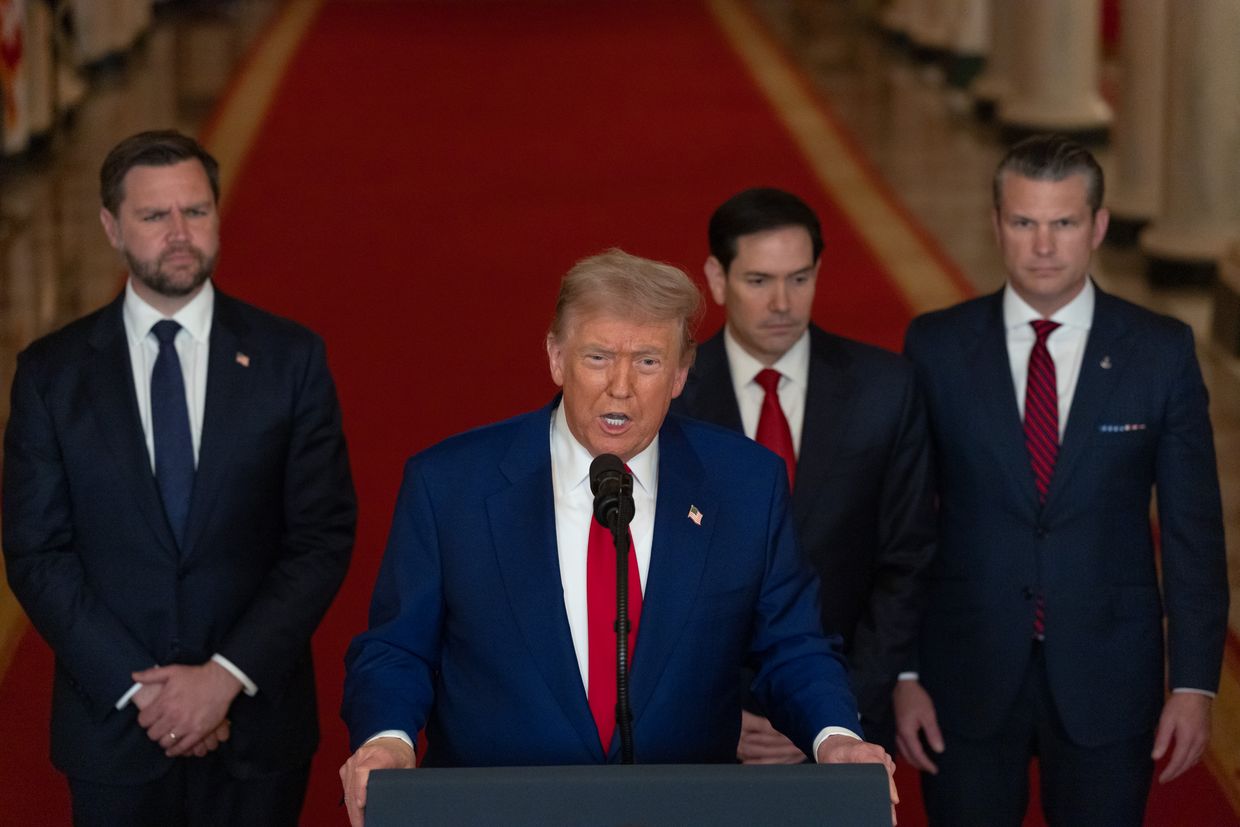
U.S. President Donald Trump's Special Envoy Steve Witkoff is pushing to lift U.S. energy sanctions on Russia, Politico reported on July 4, citing two people familiar with the matter.
The move is part of a broader debate within Trump's administration over how to engage with Moscow amid the ongoing war in Ukraine.
While Witkoff is reportedly advocating for the easing of energy sanctions, others in the administration disagree. Interior Secretary Doug Burgum favors reducing U.S. reliance on Russian imports rather than expanding trade, according to Politico.
Despite pledging during his campaign to end the war in Ukraine in "24 hours," Trump has made little progress on securing a ceasefire. After nearly seven months of his presidency, and several peace talks between Russia, Ukraine, and the United States, no ceasefire agreement has been reached.
Moscow continues intensifying its attacks against Ukrainian cities. Russia launched one of the largest aerial attacks on Ukraine on July 4, hours after Russian President Vladimir Putin had a phone conversation with Trump.
When journalists asked if he had made any progress with Putin on the call, Trump responded: "No, I didn't make any progress with him today at all."
Europe's energy sector is a central issue in the debate. According to Politico, Moscow is in early talks with Washington about potentially restarting the Nord Stream pipeline project, with backing from U.S. investors. The development has sparked concern in Brussels.
One senior EU official reportedly warned that Trump and Putin appear to be aiming to "divide the European energy market and create (separate) spheres of influence."
Witkoff, a real estate developer-turned-envoy, has raised eyebrows in Washington and abroad over his handling of high-level talks with Russia. As reported by NBC News in May, he has relied on Kremlin-provided translators during multiple meetings with Putin, including a visit to Moscow on April 26, just a day after a Russian missile attack killed 12 people in Kyiv.
Trump's administration has so far refrained from imposing new sanctions against Russia, even as Putin continues to reject calls for a ceasefire.
Russian nuclear giant Rosatom is negotiating the sale of a 49% stake in Turkey's Akkuyu Nuclear Power Plant project, estimated at $25 billion, Bloomberg reported on July 1.The project is a cornerstone of Russian-Turkish energy cooperation. The Akkuyu plant, located in Mersin Province, is poised to become Turkey's first nuclear power facility. The 4.8-gigawatt project is expected to begin supplying electricity in 2026, Anton Dedusenko, chairman of the board at Rosatom's Turkish subsidiary, told B
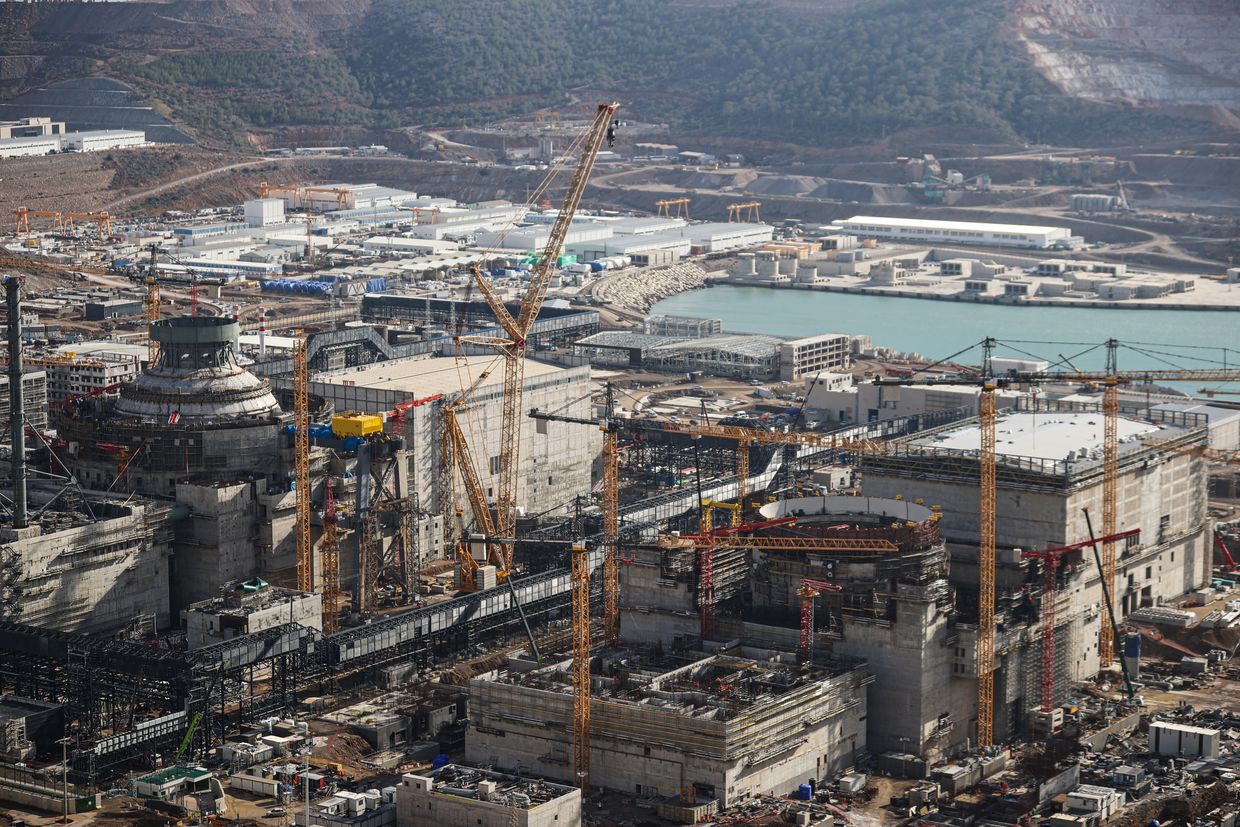
Russian nuclear giant Rosatom is negotiating the sale of a 49% stake in Turkey's Akkuyu Nuclear Power Plant project, estimated at $25 billion, Bloomberg reported on July 1.
The project is a cornerstone of Russian-Turkish energy cooperation. The Akkuyu plant, located in Mersin Province, is poised to become Turkey's first nuclear power facility.
The 4.8-gigawatt project is expected to begin supplying electricity in 2026, Anton Dedusenko, chairman of the board at Rosatom's Turkish subsidiary, told Bloomberg.
"The closer we are to the first unit generating electricity, the more investors start coming," Dedusenko said on the sidelines of the Nuclear Power Plants Expo & Summit in Istanbul.
A previous sale attempt in 2018 collapsed over commercial disagreements. This time, financing is complicated by the threat of U.S. sanctions, prompting Moscow and Ankara to consider alternative payment mechanisms.
"There are many ways how to deliver money here. We can deliver the Russian rubles, the Turkish lira," Dedusenko said.
Despite its NATO membership, Turkey has maintained open diplomatic and economic ties with Russia throughout the full-scale war against Ukraine, while continuing to supply aid to Kyiv and host international mediation efforts.
Ukraine boosted electricity exports by 150% in June 2025 compared to the previous month, reaching over 237,000 megawatt-hours (MWh), according to consulting firm ExPro Electricity.Current export volumes have returned to autumn 2022 levels, before Russia launched systematic attacks against Ukraine's energy infrastructure that caused massive blackouts across the country.This marks Ukraine's return to exporting more electricity than it imports for the first time since October 2023, ExPro analysis r
Ukraine boosted electricity exports by 150% in June 2025 compared to the previous month, reaching over 237,000 megawatt-hours (MWh), according to consulting firm ExPro Electricity.
This marks Ukraine's return to exporting more electricity than it imports for the first time since October 2023, ExPro analysis reports.
Electricity cannot be stored in large volumes for long periods, so it can be exported during certain hours when there is surplus in Ukraine’s energy system, and imported during deficit hours.
Hungary imported the majority of Ukrainian exports, with shipments jumping from 34,000 to 122,000 MWh in a single month.
The recovery represents a dramatic turnaround from June 2024, when Ukraine had no exports at all and imported 858,000 MWh, four times more than in June 2025.
Russia continues to target Ukraine's energy infrastructure, with the latest strike hitting a critical energy facility in Kherson Oblast on June 27 that caused widespread blackouts across multiple communities.
Governor Oleksandr Prokudin warned residents to prepare for prolonged outages as power engineers work to restore electricity, saying "Russia decided to plunge Kherson Oblast into darkness."
In February 2025, Emergency energy power shutdowns were introduced in eight Ukrainian oblasts due to Russian attacks on the country's energy system.
Russian forces struck a critical energy facility in Kherson Oblast, causing widespread power outages across several communities, Governor Oleksandr Prokudin said on June 27."Russia decided to plunge Kherson Oblast into darkness," Prokudin wrote on Telegram. He said the attack has disrupted electricity supply to multiple settlements.Local power engineers are working to stabilize the situation, Prokudin said. "I ask the residents of the region to prepare for a prolonged power outage. Power enginee
Russian forces struck a critical energy facility in Kherson Oblast, causing widespread power outages across several communities, Governor Oleksandr Prokudin said on June 27.
"Russia decided to plunge Kherson Oblast into darkness," Prokudin wrote on Telegram. He said the attack has disrupted electricity supply to multiple settlements.
Local power engineers are working to stabilize the situation, Prokudin said.
"I ask the residents of the region to prepare for a prolonged power outage. Power engineers are doing everything possible to stabilize the situation," he said.
Kherson and the surrounding regions have frequently come under Russian fire since Ukrainian forces liberated the city from occupation in November 2022. Russian troops continue to attack the area with artillery and drones from across the Dnipro River.
The Russian army consistently targeted Ukrainian energy infrastructure. Throughout 2024, Moscow launched 13 mass attacks with drones and missiles on Ukraine's energy infrastructure. Ukraine was forced to introduce emergency blackouts across the country.
Ukraine and Russia agreed to a partial 30-day energy truce, following consultations with the U.S. in Riyadh on March 25. Moscow violated the ceasefire more than 30 times, Foreign Ministry Spokesperson Heorhii Tykhyi said on April 16.
Recent U.S. strikes on three Iranian nuclear facilities did not eliminate the core components of Tehran’s nuclear program and likely delayed it by only a few months, according to an early assessment by the U.S. Defense Intelligence Agency (DIA), CNN reported on June 24, citing four sources familiar with the findings.The analysis, based on a battle damage report from U.S. Central Command, contradicts public statements by President Donald Trump and Defense Secretary Pete Hegseth, who claimed the o
Recent U.S. strikes on three Iranian nuclear facilities did not eliminate the core components of Tehran’s nuclear program and likely delayed it by only a few months, according to an early assessment by the U.S. Defense Intelligence Agency (DIA), CNN reported on June 24, citing four sources familiar with the findings.
The analysis, based on a battle damage report from U.S. Central Command, contradicts public statements by President Donald Trump and Defense Secretary Pete Hegseth, who claimed the operation had "obliterated" Iran’s nuclear capabilities.
"So the (DIA) assessment is that the U.S. set them back maybe a few months, tops," one source told CNN, adding that Iran’s stockpile of enriched uranium was not destroyed and that most centrifuges remain “intact.”
The White House acknowledged the assessment’s existence but strongly dismissed it. "This alleged assessment is flat-out wrong and was classified as ‘top secret’ but was still leaked to CNN by an anonymous, low-level loser in the intelligence community," press secretary Karoline Leavitt said. “The leaking of this alleged assessment is a clear attempt to demean President Trump, and discredit the brave fighter pilots who conducted a perfectly executed mission to obliterate Iran’s nuclear program. Everyone knows what happens when you drop fourteen 30,000 pound bombs perfectly on their targets: total obliteration.”
Trump, for his part, stood by his assessment of the mission's success. “I think it’s been completely demolished,” he said on Tuesday. “Those pilots hit their targets. Those targets were obliterated, and the pilots should be given credit.” Asked if Iran could rebuild, Trump responded: “That place is under rock. That place is demolished.”
While both Trump and Hegseth praised the strikes as decisive, others expressed caution. Chairman of the Joint Chiefs of Staff Dan Caine said it was “way too early” to determine whether Iran retained nuclear capabilities.
Republican Rep. Michael McCaul, former chair of the House Foreign Affairs Committee, also avoided endorsing the president’s characterization. “I’ve been briefed on this plan in the past, and it was never meant to completely destroy the nuclear facilities, but rather cause significant damage,” McCaul told CNN. “But it was always known to be a temporary setback.”
The DIA’s assessment reportedly found that damage at the Fordow, Natanz, and Isfahan sites was mostly limited to aboveground infrastructure, such as power systems and uranium metal processing buildings. The underground facilities—where Iran's most sensitive nuclear work takes place—were largely unaffected, the sources said.
According to CNN, Israel had been carrying out its own strikes on Iranian nuclear facilities prior to the U.S. operation, but relied on U.S. B-2 bombers equipped with 30,000-pound “bunker buster” bombs to finish the job. Despite over a dozen bombs being dropped on Fordow and Natanz, the sites’ key components remain intact, the sources said.
The U.S. also reportedly used Tomahawk missiles launched from a submarine to target Isfahan, rather than deploying bunker busters. A source said this was due to doubts over whether the bombs could penetrate Isfahan’s deep underground levels, which are believed to be even more fortified than Fordow.
Two sources also told CNN that Iran likely retains undisclosed nuclear facilities that were not targeted and remain operational.
Meanwhile, classified briefings for lawmakers on the strikes were postponed. The all-Senate briefing was rescheduled for Thursday, and the House briefing’s new date remains unclear.
Ukrainian state grid operator Ukrenergo's supervisory board has appointed Vitaliy Zaichenko, the company's current chief dispatcher, as its new head, Ukrainian media reported on June 23. The appointment comes after ten months of interim leadership following the controversial dismissal of former CEO Volodymyr Kudrytskyi in September 2024.The company has been under temporary management of Oleksiy Brekht while the supervisory board struggled with prolonged disputes over the selection process.Ukrene
Ukrainian state grid operator Ukrenergo's supervisory board has appointed Vitaliy Zaichenko, the company's current chief dispatcher, as its new head, Ukrainian media reported on June 23.
The company has been under temporary management of Oleksiy Brekht while the supervisory board struggled with prolonged disputes over the selection process.
Ukrenergo, which operates Ukraine's electricity transmission system and is a member of the European electricity grid network (ENTSO-E), plays a critical role in the country's energy security, especially during wartime when Russian attacks have repeatedly targeted energy infrastructure.
Zaichenko beat out two other finalists: Oleksiy Brekht, the interim head of Ukrenergo, and Ivan Yuryk, former acting head of Ukrainian Railways.
The supervisory board's June 4 attempt to elect a new CEO failed amid conflict with the Energy Ministry, which changed appointment rules without consulting the Energy Community Secretariat, drawing criticism from European partners.
The new rules complicated the selection process by requiring five out of seven supervisory board votes instead of the previous four needed to elect a chairman.
According to Ukrainian MP Max Khlapuk, the European Bank for Reconstruction and Development (EBRD) threatened to block 141 million euros ($152 million) in funding and demand early repayment of 533 million euros ($574 million) already received over the rule changes.
Former Ukrenergo CEO Volodymyr Kudrytskyi was dismissed on Sept.2, 2024, after President Volodymyr Zelensky called for his resignation over alleged failures to protect substations from Russian missiles and drones.
Kudrytskyi disputed this account, saying he initiated the supervisory board meeting himself, though he did not reveal the reasons for his dismissal.
Following Kudrytskyi's dismissal, supervisory board chairman Daniel Dobbeni and member Peder Andersen resigned early, citing political pressure in personnel decisions.
Ukraine's largest private energy company DTEK and British clean energy group Octopus Energy have launched a program to install rooftop solar panels and battery storage systems at Ukrainian businesses and public institutions, DTEK said in a press release on June 23.The program, called RISE (Resilient Independent Solar Energy), was announced at Octopus Energy's Tech Summit in London and aims to raise 100 million euros ($115 million) to finance 100 energy projects over three years, helping stabiliz
Ukraine's largest private energy company DTEK and British clean energy group Octopus Energy have launched a program to install rooftop solar panels and battery storage systems at Ukrainian businesses and public institutions, DTEK said in a press release on June 23.
The program, called RISE (Resilient Independent Solar Energy), was announced at Octopus Energy's Tech Summit in London and aims to raise 100 million euros ($115 million) to finance 100 energy projects over three years, helping stabilize the grid, lower electricity costs and protect customers from outages, the company said.
DTEK’s facilities have been repeatedly targeted since the start of Russia’s full-scale invasion as Moscow sought to cripple Ukraine's energy infrastructure. The company was forced to shut down its gas production facilities in Poltava Oblast in March.
"About 70% of Ukraine's thermal generation capacity has been damaged, destroyed or seized since the full-scale invasion," said DTEK CEO Maksym Timchenko in the press release.
“This has created not only an urgent need to rebuild but also an opportunity to accelerate the shift to a decentralized, renewable energy system,” he added.
The alternative energy systems will be installed by D.Solutions, DTEK's business unit operating under the Yasno retail brand.
Installed equipment will run on Octopus Energy's AI-powered Kraken operating system, enabling businesses to optimize energy use in real time, reduce consumption during peak hours and sell surplus electricity back to the grid.
"They (DTEK) are rebuilding at pace and pioneering a decentralized, smart energy system powered by homegrown renewables," said Greg Jackson, Octopus Energy Group founder and CEO.
According to DTEK, Ukraine's commercial and industrial energy market has an untapped potential of 300 megawatts annually, valued at 200 million euros ($229 million). DTEK's Yasno brand serves over 60,000 business customers and can generate projects worth 30 million euros per year.
DTEK previously announced plans to build one of Europe's largest energy storage facilities with six installations across the country, totaling 200 megawatts to power 600,000 households. The company secured a $72 million loan from three Ukrainian banks.
Iran has partially suspended production at the South Pars gas field — the world’s largest — after an Israeli airstrike triggered a fire at the site, the semi-official Tasnim news agency reported on June 14, according to Reuters. If confirmed, it would mark the first Israeli strike targeting Iran’s vital oil and gas infrastructure.The South Pars field, located offshore in southern Bushehr province, is responsible for the bulk of Iran’s gas output. Tehran shares the field with Qatar, which refers
Iran has partially suspended production at the South Pars gas field — the world’s largest — after an Israeli airstrike triggered a fire at the site, the semi-official Tasnim news agency reported on June 14, according to Reuters. If confirmed, it would mark the first Israeli strike targeting Iran’s vital oil and gas infrastructure.
The South Pars field, located offshore in southern Bushehr province, is responsible for the bulk of Iran’s gas output. Tehran shares the field with Qatar, which refers to its portion as the North Field. A strike on South Pars represents a significant escalation, coming after oil prices surged 9% on June 13 following Israel’s initial wave of attacks, which had not targeted energy infrastructure, Reuters reports.
Israel launched its air offensive against Iran on June 13, killing commanders and scientists and bombing nuclear sites, in what it described as an effort to prevent Tehran from developing nuclear weapons.
The Iranian oil ministry said the fire caused by the strike has been extinguished. According to Tasnim, the fire broke out in one of four units of Phase 14 at South Pars, halting the production of 12 million cubic meters of gas.
Iran, the world’s third-largest gas producer after the United States and Russia, produces around 275 billion cubic meters of gas per year, about 6.5% of global output.
Due to international sanctions, the country consumes most of this domestically. Qatar, which operates the majority of the shared field with support from global firms such as Exxon and Shell, produces 77 million tonnes of liquefied natural gas annually, supplying both European and Asian markets.

 Connexion