
Vue normale

Medical tourism and IT can draw visitors back to Ukraine after the war, UN Tourism’s chief told a Kyiv briefing
18 août 2026 à 04:37

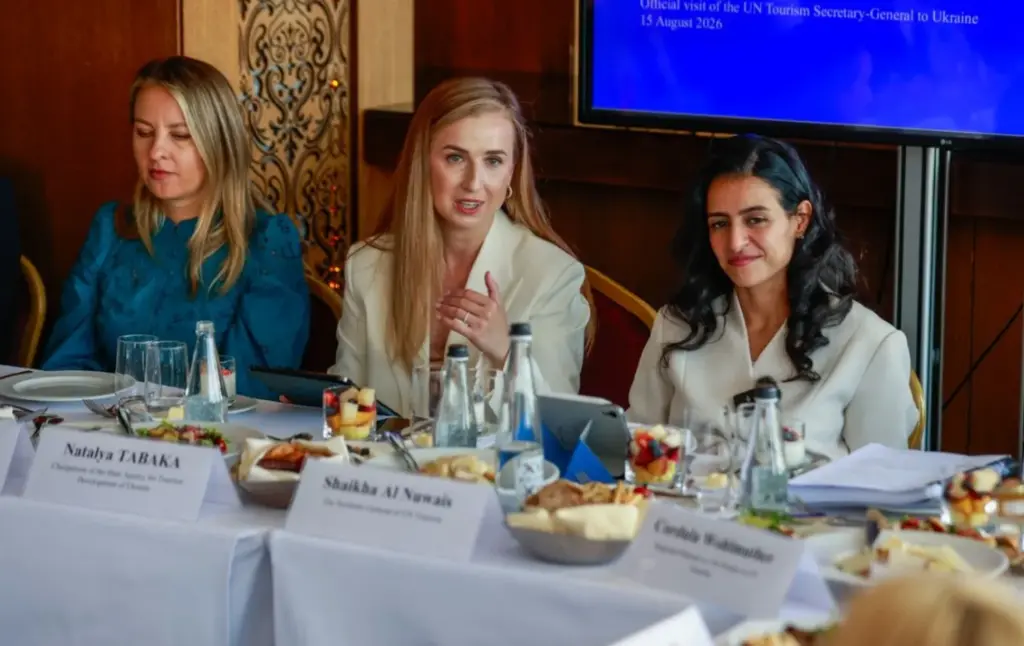
Shaikha Al Nowais, secretary-general of UN Tourism, during her visit to Ukraine

The head of UN Tourism, Shaikha Al Nowais, named medical tourism and Ukraine's IT sector as the country's strongest cards for winning back foreign visitors after the war, at a Kyiv briefing. Ukraine already holds everything a tourism economy needs, she said, from culture and landscapes to cuisine. Al Nowais, the first woman to lead the organization in its history, was making the first visit by a UN Tourism chief to Ukraine in a decade.

A UN specialized agency publicly treated Ukraine as a future destination rather than a war zone, as Kyiv tries to anchor its reconstruction to sectors that can earn hard currency and bring people back to emptied regions. Both sectors she named were among Ukraine's stronger performers before 2022.

Before the invasion, Ukraine was receiving about 13 million visitors a year, with tourism worth roughly 3 to 4 percent of GDP, RBC-Ukraine reported citing the numbers mentioned at the briefing.

"Bringing all stakeholders in the tourism process together with the state under one umbrella could unlock great potential," Al Nowais said.

A medical tourism hub before the war

Before Russia's full-scale invasion, Ukraine had a reputation as an affordable place for fertility treatment and surrogacy, dentistry, laser eye surgery, and cosmetic procedures, the US-based Medical Tourism Association said. Prices often ran a fraction of Western European ones. In the late 2010s, the country's medical tourism association counted tens of thousands of foreign patients a year. Because that trade rests on clinics and specialists rather than rebuilt infrastructure, Al Nowais said it could bounce back fairly quickly once the war ends.

A tech sector that grew through the war

Ukraine's IT exports reached about $6.8 billion in 2021, close to a tenth of all the country's exports, and the industry has been one of the few to keep growing through the war. The same ecosystem produced the Diia app, a state-services platform installed by more than a third of Ukrainian adults before the invasion, along with globally used products such as Grammarly and GitLab. A sector that has shown it can ship and scale under bombardment is, on Al Nowais's logic, well placed to build the booking, logistics and guide services a returning tourism market will need.

Ukraine's Acting Foreign Minister Andrii Sybiha met her in Kyiv on 15 August 2026 to discuss tourism's place in reconstruction, and UN Tourism agreed to provide 500 scholarships for Ukrainians to study at its Online Academy, 200 of them reserved for veterans, with Kyiv setting the rest of the allocation.
For over 12 years, one man gave hundreds of Ukrainian families name and body to bury. He was killed exhuming bodies near front

5 août 2026 à 11:44

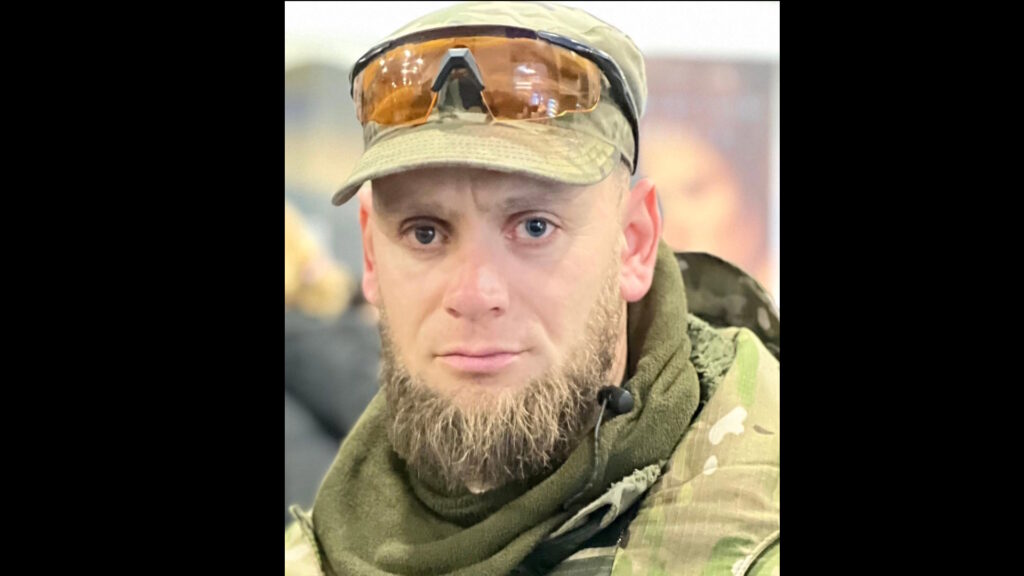
Oleksii Yukov, head of the "Platsdarm" search unit. Source: Yukov

The man who gave thousands of Ukrainian families a chance to bury their closest people has been killed while doing that work. Oleksii Yukov, head of the "Platsdarm" search unit, has died, his wife Yevheniia Kaluhina announced on Facebook.

Yukov's work gave families the one thing that lets grief begin: a body and a name. For nearly 25 years, he searched for the remains of the fallen, recovering them from where the state could not reach so that the dead could be identified and returned to their relatives, ending the agony of families whose loved ones were listed as missing.

Yukov received a fatal wound during the exhumation of bodies on the line of contact, according to soldier Serhii Hnezdilov.

He worked where the state could not reach

Yukov's team operated where it was extremely dangerous or where state services could not go. The recovery missions often took place just a few kilometers from the front line, under the threat of repeat shelling or drone attacks, in the conditions in which he was killed.

His "Platsdarm" unit began by excavating the battlefields of the First and Second World Wars, and from 2014 searched for and evacuated those killed in Russia's war against Ukraine. The number of soldiers given a proper burial through his team's efforts runs into the thousands.

Here is what Yukov wrote in his last post.

"As a searcher, I see war in all its manifestations... Here, human life is worth nothing. Here, everything is unlike in the movies. Between two worlds, we gather bodies and souls to bring them back from the war. And those who have touched war remain with it and in it, because it no longer lets anyone go," he said.

What his name meant

Those who knew him spoke of what his work meant.

"A great loss for me personally and for my circle. For most of his life, he returned names to the dead. He lived in Sloviansk," Hnezdilov wrote, calling Yukov's name synonymous with Ukrainian Donbas and respect for every fallen person he returned to their family.

The head of the Sviatohirsk city military administration, Volodymyr Rybalkin, wrote that Yukov was "forever in the ranks."

"Friend, you are incredible. What you did, few people can do," Rybalkin said.

Yukov lived in Sloviansk in Donbas, where he spent his life honoring, and died on the front line, recovering the dead one last time.

  • ✇Climb to the Stars
  • Who Vibecoded This Upgrade? [en]
    [en] Unverified AI transcript (22.07.2026): Lausanne, 16th July 2026, 21:10 I’m on the balcony, Juju by my side. He’s not afraid of the storm, after all his years outside. He’s more afraid of people, moving objects, loose cloth and phone lights in the dark. It’s nice that the temperature is bearable again. It rained yesterday evening. I’m trying to figure out how to get my life back. It feels like my “life energy” is the product of a lot of moving parts, a complex dynamic syst
     

Who Vibecoded This Upgrade? [en]

16 juillet 2026 à 16:05
[en]

Unverified AI transcript (22.07.2026):

Lausanne, 16th July 2026, 21:10

I’m on the balcony, Juju by my side. He’s not afraid of the storm, after all his years outside. He’s more afraid of people, moving objects, loose cloth and phone lights in the dark. It’s nice that the temperature is bearable again. It rained yesterday evening.

I’m trying to figure out how to get my life back. It feels like my “life energy” is the product of a lot of moving parts, a complex dynamic system that feeds it, in a state of delicate equilibrium that got toppled when I had my accident, and that I’m struggling to put back in movement although almost all the individual pieces are now repaired. But it’s one of these 3D mobile puzzles which only manage to stay together when every single piece is in place and moving right.

If anything is missing, the whole thing collapses. Not because anything is fundamentally broken, but because there is no easy path to putting everything back together at the same time.

It’s a scaffolding held together by routines, habits, ongoing motivation, exercise, fun and challenges, the right amount of social contact and rest, a sprinkle of urgency and pressure.

The trap is to try to rebuild what was. That ship has sailed. As with any crisis, loss or transition, what comes after can be good, as good or even better, but it will not be copy-paste from before. “Time waits for no-one”, sang Cat Stevens, I think.

Today’s struggles and challenges look a lot like my old ones. Some I recognize from the times preceding the accident. Others — and that is a little more demoralizing — carry me back to my pre-diagnosis years, a sense of being untethered that I thought I had left behind me for good.

I can’t just pick up the pieces and put them back the way they were. I need to rebuild. Re-solve issues I thought I had dealt with. That’s where patience comes in. If my ADHD diagnosis and treatment gave me the user manual and admin rights, the accident “upgraded” the system. There are regressions. The user interface has changed. And I’m the one who has to update the manual.

Right now I’m trying to work out the new usage limits and understand which runaway processes are hogging the resources. I’m spending a lot of time using workarounds, and monitoring, and doing trial-and-error.

A few things are becoming clear: lack of physical exercise is definitely an issue. It has to be reintroduced progressively. Lack of social life and fun activities, too. These will increase available resources in time, but right now they are limited and need to be carefully allocated. Certain activities that require excessive executive function are now placing a visible burden on the system, when before, the extra expenditure was just background noise… So I need to track them more carefully and spread them out over the day and the week. I need to make sure I can exit certain activities early, press pause regularly so the system doesn’t overheat.

I’ve looked at a bunch of habit or symptom-tracking apps. No surprise, none of them does precisely what I need. I took Claude’s suggestion and set up a very simple Google form that allows me to checkbox-capture the various dimensions and signals I think are useful. It all goes in a Google spreadsheet, timestamped, data to be tortured in any way I see fit.

As I have been writing night has fallen, it has almost become cold, and rain started threatening my words of ink. I have retreated inside, escorted by rolls of thunder and discreet flashes of lightning. Juju followed close behind and is now working on his kibble.

This week has been up and down. Lewis Capaldi in Montreux two days ago. Learning the death of a young colleague yesterday. A pit of discouragement this morning. Calm and hope tonight.

  • ✇Mes signets
  • gddrescue - GNU data recovery tool
    gddrescue (GNU ddrescue) est un outil en ligne de commande open source conçu pour copier des données d'un support de stockage endommagé vers un support sain. Contrairement aux outils classiques, il est spécialement optimisé pour ignorer les zones défectueuses sans bloquer le processus afin de maximiser la quantité de données récupérées. — Permalien
     

gddrescue - GNU data recovery tool

13 mai 2026 à 16:07
gddrescue (GNU ddrescue) est un outil en ligne de commande open source conçu pour copier des données d'un support de stockage endommagé vers un support sain. Contrairement aux outils classiques, il est spécialement optimisé pour ignorer les zones défectueuses sans bloquer le processus afin de maximiser la quantité de données récupérées.
Permalien
❌