Connexion
160 grams, 118-km link, and jam-resistance by frequency-hopping: Ukraine’s answer to drone war’s connectivity problem
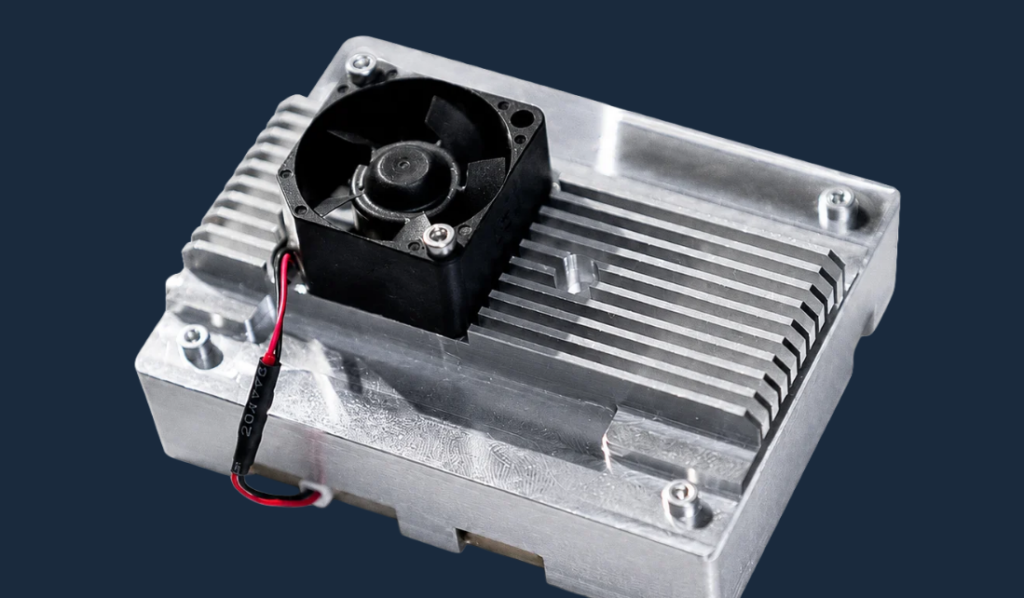
A Ukrainian company has built a drone link designed to keep working when the enemy tries to jam it. Ukraine's defense-tech firm Rise Technologies has developed the Nakande digital communication system, designed for rapid integration into small and large FPV drones, bombers, and fixed-wing platforms, commercial director Viktor Chuikovskyi says, Defender Media reports.
The system attacks the connectivity problem that jamming creates for Ukraine's drones. On a front saturated with electronic warfare, drones that lose their radio link become useless, and Nakande answers that by constantly hopping frequencies to find clear air.
How the frequency-hopping works
Nakande's defining feature is its ability to change frequency. It hops across a tuning range of up to 1,000 MHz, monitoring channels within that band, finding a freer stretch, and automatically switching to it, Chuikovskyi said, which lets operators keep their link to drones amid electronic warfare and a congested radio spectrum.
That is the core countermeasure to jamming. By moving to whatever frequency is clear rather than staying on one the enemy can block, the system stays connected where a fixed-frequency link would be jammed dead.
What the link carries
Nakande's airborne module weighs 160 grams, supports 2×Ethernet and MAVLink, and combines control, telemetry, and video in a single secure link, with a downlink up to 5.2 Mbit/s that the maker says delivers clean video and a compressed 4K stream, protected by AES-256 encryption.
It is built for fast, flexible setup. The ground station deploys in under five minutes. Its standard IP architecture allows the operator, antenna, and control point to be separated over Ethernet, fiber, or VPN, and a single ground station can connect 50 to 100 modules.
It held a link past 100 kilometers
Nakande has been tested in combat, the maker says. It passed bench, field, and combat checks, with a dedicated range class up to 60 kilometers for FPV drones, and in testing its maximum configuration, held a link at 118 kilometers, Chuikovskyi said.
The company did not disclose the module's price but said it is several times lower than foreign equivalents.
Read also
-
The Fedorov protesters lost. But they backed a man for what he built, not what he promised—and that may be new in Ukraine.
-
Russia has burned 13 million Ukrainian books in three months, nearly third of everything country printed in 2025
-
Intelligence: Putin ordered secret biolab built on island, so protected that fishing is banned, and its own guards fear infection
Read also
-
Russia has burned 13 million Ukrainian books in three months, nearly third of everything country printed in 2025
-
Intelligence: Putin ordered secret biolab built on island, so protected that fishing is banned, and its own guards fear infection
-
Russia struck Kyiv and Boryspil, its main airport hub, twice in 24 hours with ballistics Ukraine can’t stop without US Patriots, days before Independence Day