Vue normale

  • ✇Euromaidan Press
  • Ukrainian drone maker is pitching its new five-inch strike FPV as assault squad’s mortar
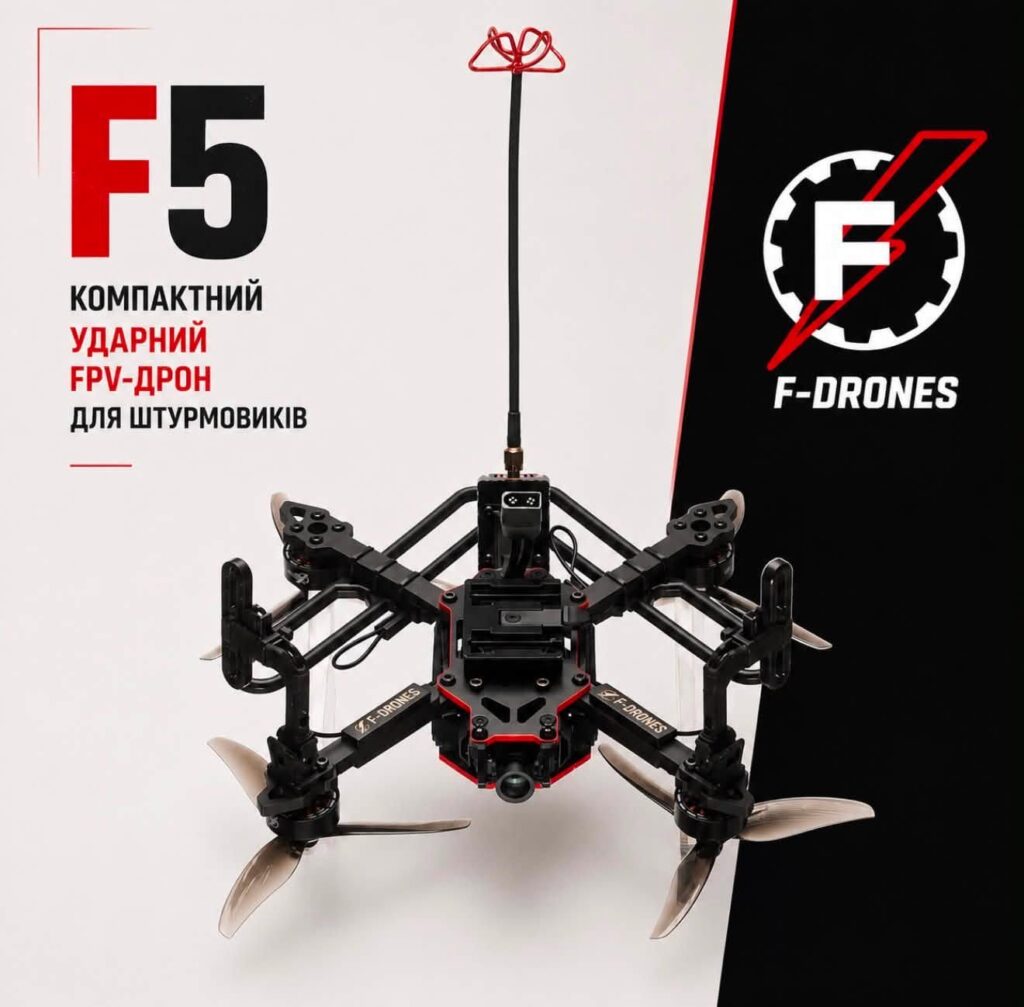
    A Ukrainian drone maker is pitching a weapon that works like a mortar, not a drone. F-Drones has unveiled the F5, a compact five-inch strike FPV built for assault units working treelines, built-up areas, and position support at short range, according to the company's announcement. Fiber-optic drones are now a bulk consumable. Ukraine's military received 374,000 under state contracts in 2025 and nearly as many again in the first four months of 2026, the Defense Ministry
     

Ukrainian drone maker is pitching its new five-inch strike FPV as assault squad’s mortar

25 août 2026 à 12:24

F-Drones has unveiled the F5, a compact five-inch strike FPV built for assault units. Source: F5

A Ukrainian drone maker is pitching a weapon that works like a mortar, not a drone. F-Drones has unveiled the F5, a compact five-inch strike FPV built for assault units working treelines, built-up areas, and position support at short range, according to the company's announcement.

Fiber-optic drones are now a bulk consumable. Ukraine's military received 374,000 under state contracts in 2025 and nearly as many again in the first four months of 2026, the Defense Ministry reported in April.

The F5 arrives three days after Ukraine's Defense Procurement Agency launched its first purchase of fiber-optic FPV drones, in line with ministry-set specifications rather than individual manufacturers.

The specifications come from the manufacturer

F-Drones describes a lightweight five-inch carbon frame that carries up to one kilogram and is supplied in two control configurations.

The fiber-optic version flies about six kilometers. The radio version reaches roughly twice that, up to 13 kilometers. Several drones fit in one backpack, and a ground robot can deliver nine to a position at once, compared with the six FPVs per carrier on the Black Widow ground system.

Fiber optics buys immunity at a cost

F-Drones calls the fiber version fully invulnerable to electronic warfare. Fiber-optic control does defeat jamming because the drone emits no radio signal, but the cable restricts range and maneuverability and can snap or tangle mid-flight, cutting control. Ukrainian crews have also tracked Russian operators by following reflective fibers in sunlight back to the launch point.

The company compares its drone to a mortar

The pitch is about availability, not reach.

"In its role, the F5 is closer to an 82mm mortar than to a classic long-range FPV: always nearby and ready to close out the task here and now," the company said.

The F5 ships with a codified Opera electronic initiation board, and F-Drones says the aircraft has been tested and codified by Ukraine's Defense Ministry.

  • ✇Euromaidan Press
  • One pilot, five bombers: Ukraine’s Lasar’s Group ties whole raid to single operator to save manpower
    Ukraine's army doesn't have as extensive human resources as Russia, so it is teaching its machines to do more of the work on their own. Ukrainian developers are building autonomy into aerial and ground drones so the systems take over tasks the operator once did, the defense outlet Oboronka reported. Across reconnaissance, bombing, interception, and ground robots, Ukrainian firms are automating the steps that once tied up a pilot, allowing a single operator to run multip
     

One pilot, five bombers: Ukraine’s Lasar’s Group ties whole raid to single operator to save manpower

22 août 2026 à 16:51

The Droid TW 12.7. Credti: Devdroid

Ukraine's army doesn't have as extensive human resources as Russia, so it is teaching its machines to do more of the work on their own. Ukrainian developers are building autonomy into aerial and ground drones so the systems take over tasks the operator once did, the defense outlet Oboronka reported.

Across reconnaissance, bombing, interception, and ground robots, Ukrainian firms are automating the steps that once tied up a pilot, allowing a single operator to run multiple drones at once.

Automating reconnaissance and mission planning

The heaviest early demand for autonomy is in reconnaissance. Farsight Vision's FSV Platform builds real-time 3D terrain maps from drone imagery for planning assaults and strikes, and models where enemy electronic warfare and radio dead zones lie, so FPV pilots can avoid losing their link.

Meanwhile, Sine Engineering offers "autonomy modules" that let a drone navigate on its own. A Mavic flies to an observation point, works for 30 to 40 minutes, and returns, with the pilot only turning the camera, so one operator can run several drones.

"70 to 80% of the need for autonomy right now is reconnaissance," Sine Engineering CEO Andrii Chulyk said.

Autonomy for bombers and FPVs

Heavy bomber drones waste most of a pilot's time in transit. A bomber's target can sit 35 to 60 kilometers from launch, over 25 minutes each way, and a mass raid needs a pilot per drone, so Lasar's Group uses route-planning software to tie up to five bombers to one pilot, who connects for a few minutes to line up each strike.

A single pilot can carry out bombing runs one after another with a group of bombers, preserving personnel for other missions.

Autonomous FPVs are pricier but far more capable: Chulyk estimated an AI drone that finds and destroys a target in a swarm would cost $2,000 to $3,000, against about $700 for a pilot-flown night FPV with auto-capture.

Sine Engineering argues one automated FPV can replace up to ten simpler drones in hard missions, while The Fourth Law's Maksym Savanevskyi favors adding auto-capture to cheap existing drones, which he says makes a radio-controlled drone two to four times more effective.

"Fire and forget" for interceptors and robots

The hardest problem for interceptor drones is the "last mile", spotting a small target against open sky. The Fourth Law's TFL Anti-Shahed module scans the sky and detects targets at twice the range of the human eye, marking a Shahed so the pilot knows where to fly.

Savanevskyi predicts Ukrainian makers will field automatic Shahed-killing solutions by year's end. That points toward "fire and forget" interception, said Yevhen Lesin of the 412th Nemesis unmanned-systems brigade, though he warned against autonomy for its own sake, noting automated launch from ground robots creates technical problems and needs more people, not fewer.

Ground-robot autopilots remain among the field's hardest tasks: DevDroid's Oleh Fedoryshyn noted it took Tesla ten years to make the car autopilot work. At the same time, frontline dirt roads, cratered and unmarked, are nothing like marked highways, so DevDroid's robots now cross only short link-dead stretches on their own before the operator resumes control.

  • ✇Euromaidan Press
  • Ukraine is buying jam-proof fiber-optic drones for first time to single standard, so any maker can compete
    Ukraine is buying the strike drones that Russian jamming cannot touch, and for the first time, to a common standard. The Defense Procurement Agency (DOT) has announced its first purchase of fiber-optic FPV kamikaze drones built to specifications defined by the Defense Ministry, the ministry announced. By defining the specifications a fiber-optic FPV must meet, the Defense Ministry lets any maker compete by hitting that standard rather than having each model approved ind
     

Ukraine is buying jam-proof fiber-optic drones for first time to single standard, so any maker can compete

22 août 2026 à 01:07

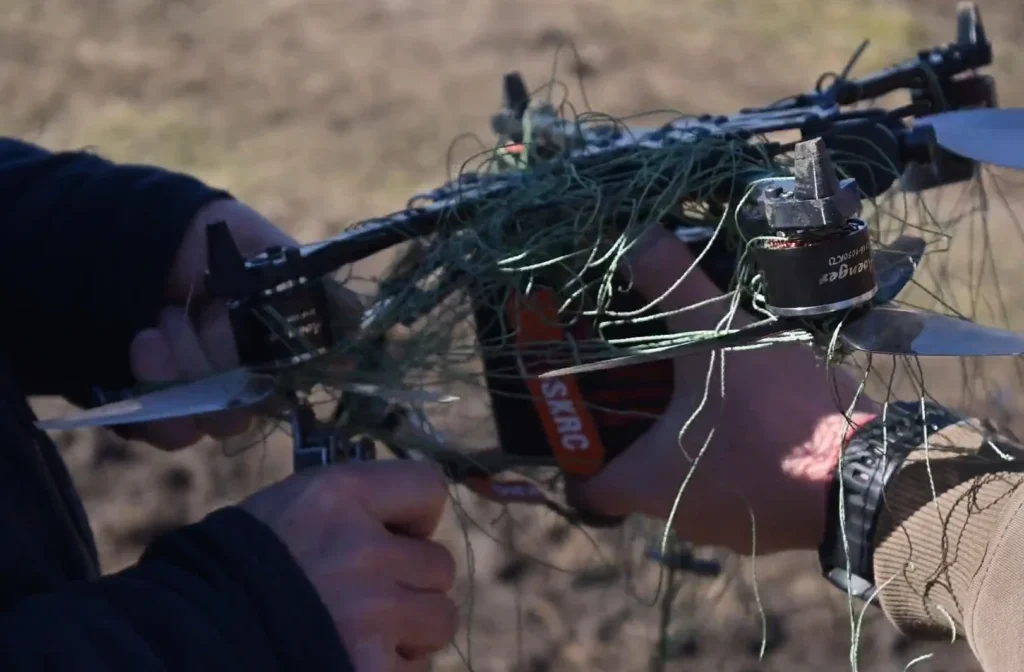
An FPV drone snared by a net fired from a Chipa net gun, developed by BlueBird Tech. Photo: BlueBird Tech via Defense Blog

Ukraine is buying the strike drones that Russian jamming cannot touch, and for the first time, to a common standard. The Defense Procurement Agency (DOT) has announced its first purchase of fiber-optic FPV kamikaze drones built to specifications defined by the Defense Ministry, the ministry announced.

By defining the specifications a fiber-optic FPV must meet, the Defense Ministry lets any maker compete by hitting that standard rather than having each model approved individually.

That is what makes it possible to split the purchase into competing lots among many suppliers, both large and mid-sized, and to buy the jam-proof drones at scale without relying on any single producer.

Why fiber-optic drones matter

The Ukrainian Defense Ministry is looking for a specific type of drone. They use a fiber-optic cable to connect to the operator, and unlike ordinary FPV drones that need a radio signal for control and video, these fiber-optic drones do not depend on the radio channel, so they work far better in the presence of active electronic warfare.

Fiber-optic drones let an operator keep control where radio-controlled drones lose their signal, and Defense Minister Yevhenii Khmara said the drones give Ukraine's forces added ability to disrupt Russian assaults and conduct their own operations, striking enemy manpower.

The standard opens the field to any maker

The buy is not tailored to one producer. It is not conducted for a specific manufacturer or model, and producers can offer their own drones if they meet the defined characteristics, with the drones sorted into classes by parameters such as range (the length of the fiber-optic cable) and camera type.

The lot structure spreads the orders

Deputy Defense Minister Mstyslav Banik said the tender is structured so that various suppliers can participate. Each tender is divided into lots, with four lots per class of fiber-optic FPVs, and no participant may win more than 50% of a class's total volume.

That structure guards supply while also driving competition.

"This creates an environment for healthy competition among manufacturers, and at the same time minimizes the risks of supply disruptions," Banik added.

160 grams, 118-km link, and jam-resistance by frequency-hopping: Ukraine’s answer to drone war’s connectivity problem

21 août 2026 à 08:58

The Nakande digital communication system. Source: Rise Technologies

A Ukrainian company has built a drone link designed to keep working when the enemy tries to jam it. Ukraine's defense-tech firm Rise Technologies has developed the Nakande digital communication system, designed for rapid integration into small and large FPV drones, bombers, and fixed-wing platforms, commercial director Viktor Chuikovskyi says, Defender Media reports.

The system attacks the connectivity problem that jamming creates for Ukraine's drones. On a front saturated with electronic warfare, drones that lose their radio link become useless, and Nakande answers that by constantly hopping frequencies to find clear air.

How the frequency-hopping works

Nakande's defining feature is its ability to change frequency. It hops across a tuning range of up to 1,000 MHz, monitoring channels within that band, finding a freer stretch, and automatically switching to it, Chuikovskyi said, which lets operators keep their link to drones amid electronic warfare and a congested radio spectrum.

That is the core countermeasure to jamming. By moving to whatever frequency is clear rather than staying on one the enemy can block, the system stays connected where a fixed-frequency link would be jammed dead.

What the link carries

Nakande's airborne module weighs 160 grams, supports 2×Ethernet and MAVLink, and combines control, telemetry, and video in a single secure link, with a downlink up to 5.2 Mbit/s that the maker says delivers clean video and a compressed 4K stream, protected by AES-256 encryption.

It is built for fast, flexible setup. The ground station deploys in under five minutes. Its standard IP architecture allows the operator, antenna, and control point to be separated over Ethernet, fiber, or VPN, and a single ground station can connect 50 to 100 modules.

It held a link past 100 kilometers

Nakande has been tested in combat, the maker says. It passed bench, field, and combat checks, with a dedicated range class up to 60 kilometers for FPV drones, and in testing its maximum configuration, held a link at 118 kilometers, Chuikovskyi said.

The company did not disclose the module's price but said it is several times lower than foreign equivalents.

  • ✇The Kyiv Independent
  • Ukraine developing new anti-drone ammunition to counter Russian aerial attacks
    Ukraine's defense technology cluster Brave1 has launched the development of anti-drone rifle rounds, significantly increasing the chances of hitting fast-moving aerial targets, the group said in a statement on June 30.According to Brave1, the ammunition appears similar to standard rounds used in automatic rifles but features a specially designed warhead that increases the likelihood of shooting down FPV (first-person-view) drones or commercial quadcopters such as the DJI Mavic before they strike
     

Ukraine developing new anti-drone ammunition to counter Russian aerial attacks

1 juillet 2025 à 02:30
Ukraine developing new anti-drone ammunition to counter Russian aerial attacks

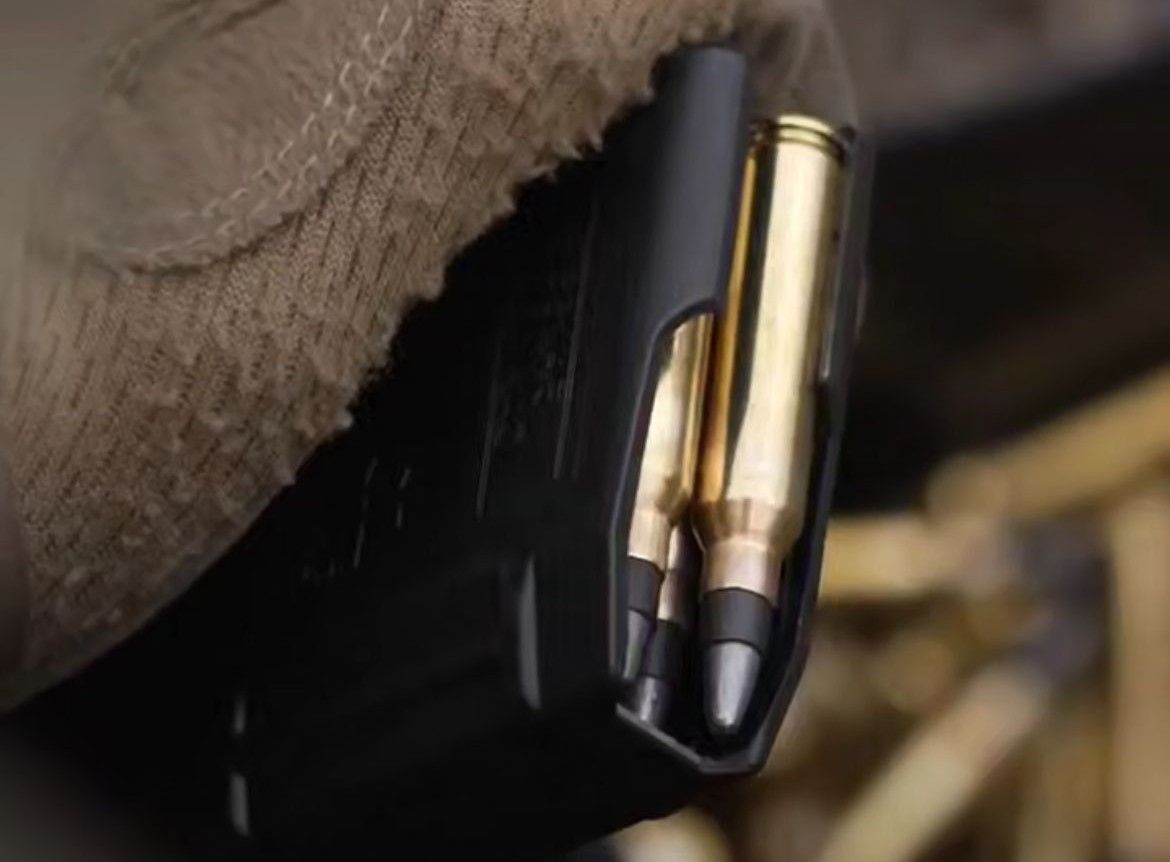
Ukraine's defense technology cluster Brave1 has launched the development of anti-drone rifle rounds, significantly increasing the chances of hitting fast-moving aerial targets, the group said in a statement on June 30.

According to Brave1, the ammunition appears similar to standard rounds used in automatic rifles but features a specially designed warhead that increases the likelihood of shooting down FPV (first-person-view) drones or commercial quadcopters such as the DJI Mavic before they strike.

These types of drones are being used extensively on the battlefield by both Ukrainian and Russian forces. The cost-effective FPV drones have proven highly effective in destroying expensive military equipment.

The manufacturer has already codified the new rounds according to NATO standards, Brave1 said. The goal is to supply every infantry soldier with a magazine of specialized ammunition for use in case of aerial threats.

"These rounds that significantly improve the chances of hitting a moving target are a new development by Brave1," Digital Transformation Minister Mykhailo Fedorov said.

"Our common goal is to ensure that every infantryman has a magazine of such ammunition and can equip his rifle with it in case of an air threat."

Ukraine continues to scale up its drone warfare capabilities. The Defense Ministry said on March 10 that it plans to purchase 4.5 million FPV drones in 2025 at a cost exceeding Hr 110 billion ($2.6 billion), with most of the funds allocated through the Defense Procurement Agency.

President Volodymyr Zelensky has set a goal of producing at least 30,000 long-range drones in 2025.

Tired of military aid delays, Ukraine has designed its own ballistic missile — and it’s already in mass-production
Ukraine announced on June 13 that its short-range Sapsan ballistic missile would go into mass production, a major development in Kyiv’s ongoing efforts to domestically produce the weapons it needs to fight Russia’s full-scale invasion. As Ukraine faces growing challenges in securing weapons from Western partners, and Russia continues launching
Ukraine developing new anti-drone ammunition to counter Russian aerial attacksThe Kyiv IndependentYuliia Taradiuk
Ukraine developing new anti-drone ammunition to counter Russian aerial attacks
❌