Vue normale

Ukraine’s newest interceptor doesn’t ram its target. It nets it for $27, then flies home to catch another
11 août 2026 à 11:19

he Ukrainian company WINFLY unveiled the WINFLY Spider, an interceptor equipped with a net-launcher. Source: Militarnyi

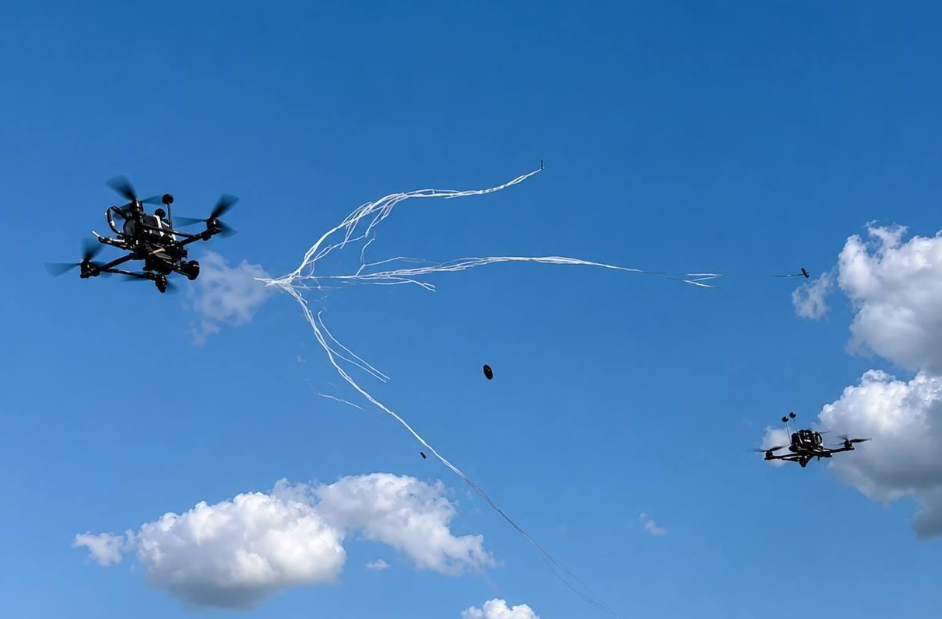
Ukraine has built an interceptor that catches Russian drones instead of ramming them. The company WINFLY has unveiled the WINFLY Spider, an interceptor equipped with a net-launcher to neutralize targets with a net and return to its launch point, the defense outlet Militarnyi reported.

The Spider is the newest entry in Ukraine's fast-growing interceptor-drone industry. Ukraine has fielded a widening range of cheap interceptors to counter Russia's massed drone attacks, and the Spider's distinction is reusability.

The netgun makes it reusable

Most interceptors are one-shot weapons that ram or explode against their target. The Spider instead carries the Karakurt net-launcher, made of high-strength aluminum and rated to work from −20°C to +50°C, which snares an enemy drone in a net while the interceptor itself stays intact and ready for repeat flights.

The economics are the point. The developers say each net shot about $27, while the drone remains undamaged. That turns the cost equation of drone defense, where an interceptor is often spent to down a single target, into one where the same aircraft can make many intercepts, paying only for a cheap net each time.

The platform and what it hunts

The Spider is built on an existing WINFLY interceptor. It uses the WINFLY 10 Hunter as its base platform, which operates at up to 5,000 meters, reaches 160 kilometers per hour, and has a range of over 18 kilometers.

It is designed for a range of Russian drones. The system targets fixed-wing UAVs, Mavic quadcopters, FPV drones, and fiber-optic drones, with flight times up to 25 minutes, deployment times of up to 3 minutes, and target detection ranges of up to 500 meters. The maker offers day and night versions.

One tool in a scaling defense

Ukraine is downing tens of thousands of Russian drones a month, per the Defense Ministry, and fielding interceptors from at least 29 licensed makers, with new designs like the high-altitude Tsyklop climbing above enemy drones and others ramming them.

  • ✇Euromaidan Press
  • US forecasters see Ukraine’s corn exports falling 39% as Russia bombs ports
    The US Department of Agriculture's Foreign Agricultural Service (FAS) forecasts that Ukraine's grain exports will fall steeply in the 2026-27 season, with corn shipments dropping 39% to 14 million tonnes and wheat 26% to 10.8 million, World Grain reported. The agency tied the decline to Russia's summer campaign against the Odesa ports, which handle roughly 90% of the country's grain. The forecast puts Washington's own numbers behind what Kyiv has warned for weeks. Ukrai
     

US forecasters see Ukraine’s corn exports falling 39% as Russia bombs ports

11 août 2026 à 07:34

The US Department of Agriculture's Foreign Agricultural Service (FAS) forecasts that Ukraine's grain exports will fall steeply in the 2026-27 season, with corn shipments dropping 39% to 14 million tonnes and wheat 26% to 10.8 million, World Grain reported. The agency tied the decline to Russia's summer campaign against the Odesa ports, which handle roughly 90% of the country's grain.

The forecast puts Washington's own numbers behind what Kyiv has warned for weeks. Ukraine's agriculture ministry projects farm exports could fall by almost half this season, and the FAS estimate — from a body with no stake in Ukraine's budget — points the same way. The difference is where the FAS looks: not at the ships that cannot sail, but at the grain that cannot follow them out.

Grain with nowhere to go

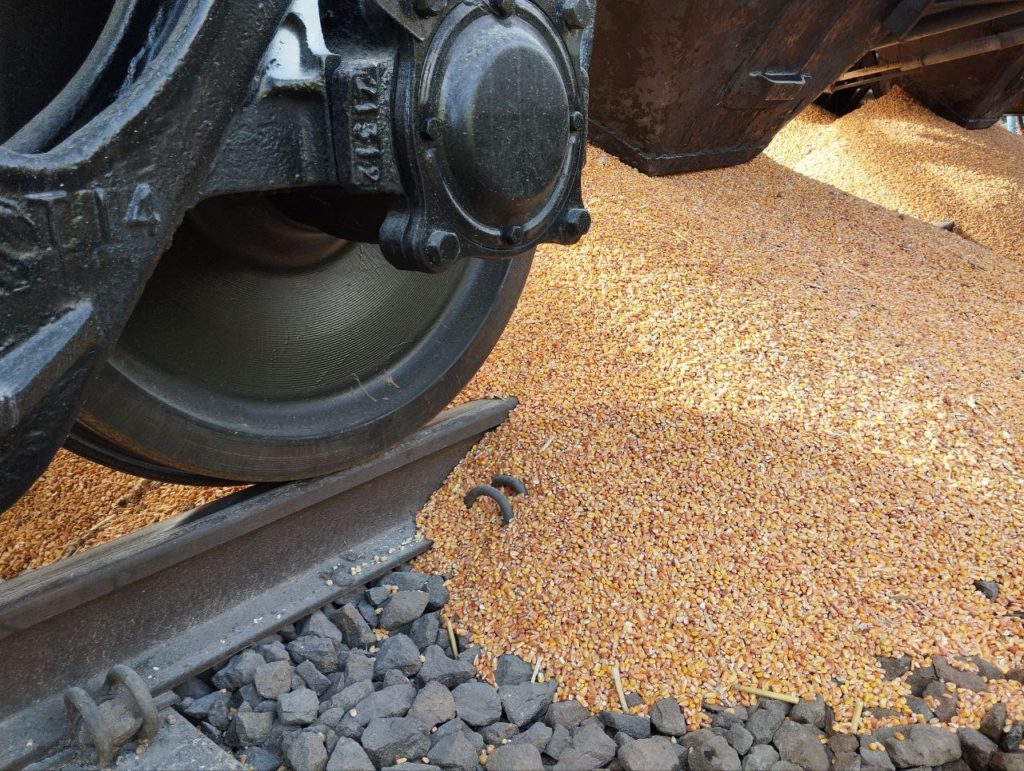
The clearest sign of the blockage is in ending stocks — grain left sitting in the country when the season closes. The FAS expects Ukraine's corn stocks to jump more than tenfold, to 13.5 million tonnes from 1.3 million, and wheat stocks to more than double to 8.2 million. That is grain the harvest produced and the ports could not move.

Ukraine has more than 74 million tonnes of storage for grain and oilseeds, the FAS noted, including about 23 million tonnes of certified warehouse space. Even so, the agriculture ministry has said the country may need another 10 to 12 million tonnes of temporary storage to get through the corn harvest if the Black Sea disruptions continue — most acutely in regions near the front line.

Why Odesa decides the harvest

Almost everything moves through Odesa. Three deepwater ports in Odesa Oblast carry more than 90% of Ukraine's farm exports, and Russia spent the summer hitting them and the ships that call there. Missiles struck the Turkish-owned bulk carrier Golden Leo as it left Odesa loaded with grain on 19 July, killing 10. Days earlier, a Russian drone hit a Palau-flagged corn ship twice as it sailed for Greece.

The land routes that remain — rail, road, and the Danube — cannot take up the slack, and traders have pulled back from buying grain they have no way to ship.

Farming is Ukraine's biggest export earner, bringing in more than half of what the country made selling goods abroad last year. Ukraine is also among the world's largest corn suppliers, which is why a cut of this size registers well beyond its own budget. For the farmers holding this year's crop, the FAS forecast describes a harvest they may not be able to sell.

❌