
Vue normale

  • ✇Euromaidan Press
  • Ukraine’s refinery strikes push Russia’s fuel crisis into Central Asia
    Gasoline prices have risen roughly 10–13% in Tajikistan, Kyrgyzstan, and Uzbekistan as Russia restricts exports after Ukrainian strikes on its refineries, Kazakh economist Aidar Alibayev estimated in a 20 August interview with Current Time. He did not specify the comparison period. Earlier Ukrainian attacks disrupted Kazakhstan’s crude exports through Russia’s Black Sea ports. Strikes at refineries are creating a different kind of squeeze: Russia has less gasoline avail
     

Ukraine’s refinery strikes push Russia’s fuel crisis into Central Asia

20 août 2026 à 10:54

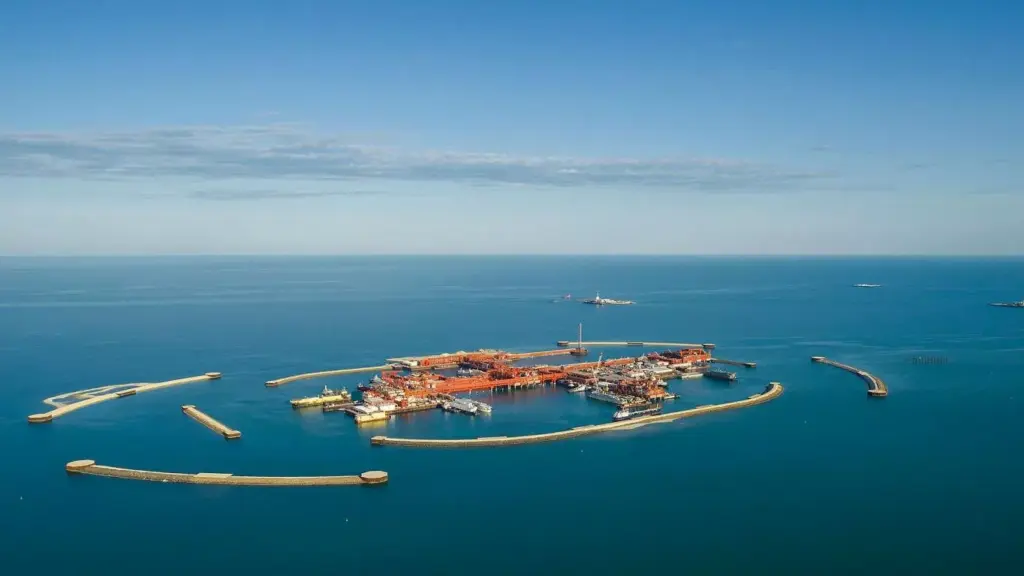
Aerial view of Kazakhstan’s Kashagan offshore oil field, surrounded by breakwaters in the Caspian Sea.

Gasoline prices have risen roughly 10–13% in Tajikistan, Kyrgyzstan, and Uzbekistan as Russia restricts exports after Ukrainian strikes on its refineries, Kazakh economist Aidar Alibayev estimated in a 20 August interview with Current Time. He did not specify the comparison period.

Earlier Ukrainian attacks disrupted Kazakhstan’s crude exports through Russia’s Black Sea ports. Strikes at refineries are creating a different kind of squeeze: Russia has less gasoline available to dependent neighbors. Tajikistan and Kyrgyzstan are seeking other suppliers, while Kazakhstan could face growing pressure if the shortages persist.

Tajikistan has been hit hardest because it depends heavily on Russian fuel and has the region’s most difficult delivery routes, Alibayev said. He estimated gasoline prices there had risen 12–13%. Current Time reported that Tajikistan is exploring supplies from China; Alibayev said it was also turning to Iran.

Kyrgyzstan, which sources more than 90% of its gasoline from Russia, asked its neighbors, Azerbaijan and Kazakhstan, as well as other countries, for help. Current Time reported that a deputy prime minister said its reserves would last about six weeks. Alibayev estimated prices had climbed around 10%, compared with 11–11.5% in Uzbekistan, which he estimated gets half its fuel from Russia.

In Uzbekistan, Alibayev estimated that fuel prices had risen by about 11% and said the country gets about half of its fuel from Russia.

Russia extended its gasoline and diesel export restrictions through 31 January 2027 as shortages mounted. Intergovernmental and humanitarian shipments remain exempt, while diesel producers regain some export rights from 1 September. Current Time also reported that Russian companies had begun buying gasoline from Belarus.

Kazakhstan is better insulated than its neighbors because its refineries in Atyrau, Shymkent, and Pavlodar produce enough fuel to meet most domestic demand, Alibayev noted. Motorists from Russia and neighboring states are crossing its borders to refuel. He attributed Kazakhstan’s price rises mainly to domestic taxes and the end of an export moratorium—not Russia’s shortage alone.

Central Asia looks for routes beyond Russia as war drags on

Ukraine’s Black Sea campaign has repeatedly struck oil infrastructure around Novorossiysk, where the Caspian Pipeline Consortium terminal handles about 80% of Kazakhstan’s crude exports. Separate tanker attacks cut CPC loadings by a fifth and forced Kazakhstan to reduce production. In contrast, disruptions at the terminal forced Kazakhstan to send Kashagan crude to China for the first time.

Kashagan oil field near Atyrau. CPC disruptions have prompted Kazakhstan to reroute crude to China. Map: Euromaidan Press / Datawrapper

At an informal summit of Central Asian leaders in Cholpon-Ata in early August, Tajik President Emomali Rahmon proposed building a refinery to serve the whole region. For now, Alibayev said, the decisive factor is how long Russia’s troubles last: the longer Ukraine’s strikes continue, the more they will weigh on prices across Central Asia.
  • ✇Euromaidan Press
  • Russia diverts defense-industry chemicals to gasoline—but stations still run dry
    Gasoline was available at 28% of Russian gas stations last week, down from 41% the week before—despite a July government decree that authorized refineries to divert chemicals from industry, including defense production, into fuel, Izvestia reported on 18 August.The diversion has since triggered motor oil shortages, and, as Kommersant reported, a government commission that met in mid-August to reverse course could not agree on how. The ISW assessed on 19 August that the
     

Russia diverts defense-industry chemicals to gasoline—but stations still run dry

20 août 2026 à 07:45

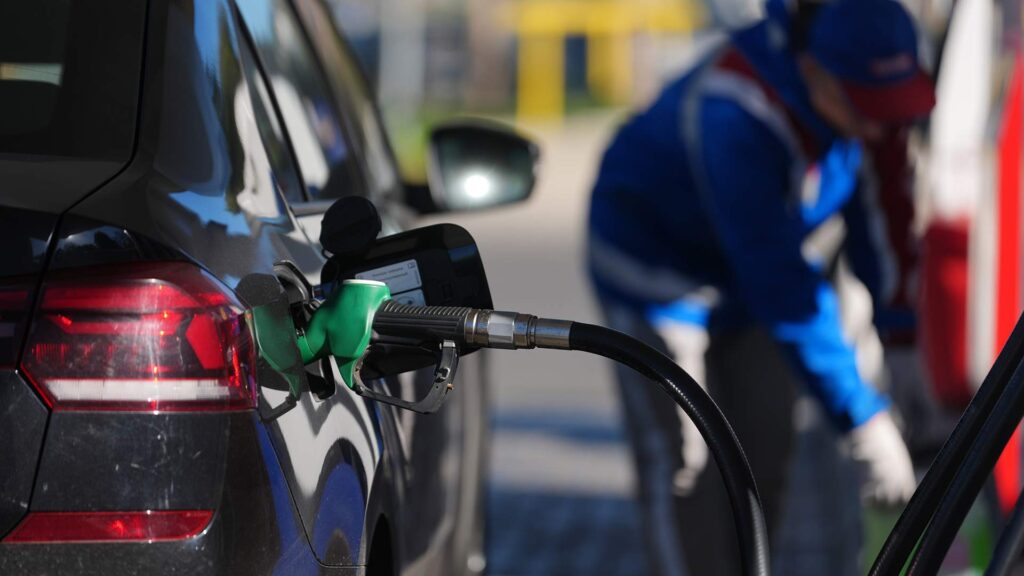
a car refuels at a gas station russia as gasoline shortage deepens

Gasoline was available at 28% of Russian gas stations last week, down from 41% the week before—despite a July government decree that authorized refineries to divert chemicals from industry, including defense production, into fuel, Izvestia reported on 18 August.

The diversion has since triggered motor oil shortages, and, as Kommersant reported, a government commission that met in mid-August to reverse course could not agree on how.

The ISW assessed on 19 August that the diversion is now draining raw materials from industrial supply chains.

Moscow runs dry

Izvestia correspondents checked 21 stations in Moscow and Moscow Oblast on 17 August: only seven sold AI-92, and five sold AI-98. Gazprom Neft has reimposed purchase limits—40 liters at automated pumps, 60 at staffed ones, RBC reported on 19 August.

Russia has meanwhile received a tanker of Indian gasoline in Murmansk, initially priced at 130,000 rubles ($1,550) per ton—nearly double the 73,000-ruble ($870) domestic exchange price, Izvestia reported.

The chemicals in question—benzene, toluene, xylenes, and phenol—are intermediate refinery products used to make rubbers, plastics, and synthetic materials for industry, including defense. A 2 July decree authorized refineries to blend more of them into gasoline as an octane booster. The ISW assessed on 19 August that the diversion is now draining raw materials from industrial supply chains.

Motor oil shows the damage. Prices have risen 15–20% since January, with some products up 40% and imported brands roughly doubling, Kommersant reported on 19 August.

Dmitry Prokofiev, director of external communications at NEFT Research, told the paper that the lower-grade Euro-2 and Euro-3 fuel now at Russian stations wears engines faster and requires oil changes 1.5 to 2 times more frequently.

Drivers forced onto worse gasoline burn through motor oil faster, but the raw materials that would go into producing it are being diverted to make more gasoline.

rosgvardia
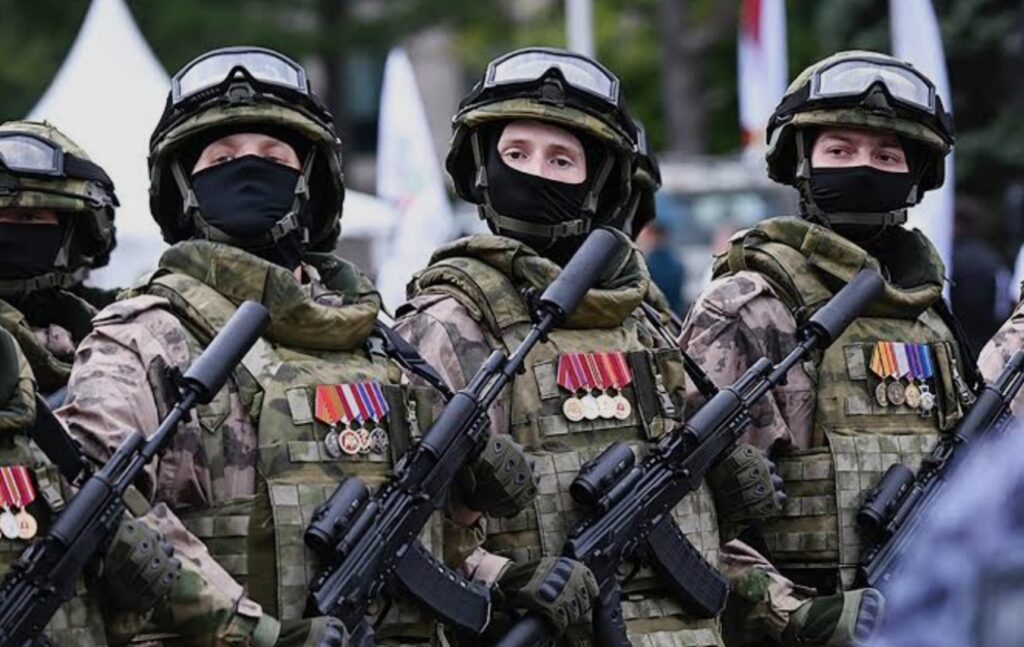
Rosgvardia personnel in combat uniforms march during an event marking the Russian force’s 10th anniversary. Photo: Rosgvardia / rg.ru.

From rationing to Rosgvardia

A Russian insider source cited by ISW claimed on 18 August that Rosgvardia—Russia’s heavily militarized internal security force—has deployed to gas stations in Moscow Oblast.

Rosgvardia personnel have reportedly appeared at no fewer than 13 stations across Russia and occupied Crimea over the summer.

A month ago, the governor of Rostov Oblast did something similar, sending Cossacks and volunteers to gas stations to keep order.

rostov oblast sent cossacks to keeporder at the fuel queues
Explore further

Russia’s fuel crisis has moved from the pump to the harvest

Separately, Russia’s legislative commission approved a bill on 18 August authorizing rescue forces under the Ministry of Emergency Situations to use physical force and firearms when nonviolent means prove insufficient, Vedomosti reported.

United Russia deputy Anatoly Vyborny, one of the bill’s co-authors, framed the measure as a counter-drone tool for evacuations. ISW assessed that it also provides legal cover for suppressing domestic unrest—an assessment the institute linked to involuntary mobilization reportedly under consideration after September’s State Duma elections.

Bare Grocery Shelves Are a New Wartime Hardship for Ukrainians

20 août 2026 à 05:28
After years of pounding power plants and cities, Russia’s air war has taken aim at Ukraine’s supermarket warehouses.

© Valentyn Ogirenko/Reuters

Firefighters at the site of a food warehouse hit by a Russian missile strike in the Kyiv region of Ukraine on Thursday.
❌