Vue normale

  • ✇Euromaidan Press
  • Ukraine fires state bank chair after alleged $3.3 million bail-laundering scheme

    Ukraine has dismissed Mykola Hladyshenko as chair of the supervisory board of state-owned Sense Bank after NABU released recordings that it says show the bank was used to launder 150 million hryvnias ($3.3 million) to post bail for a former minister.The Cabinet’s 21 August decision ended Hladyshenko’s powers and appointed a state representative to the board to help restore a quorum. The Finance Ministry and National Bank of Ukraine (NBU) must now ensure the bank is properl
     

Ukraine fires state bank chair after alleged $3.3 million bail-laundering scheme

25 août 2026 à 08:59

sense bank branch in kyiv

Ukraine has dismissed Mykola Hladyshenko as chair of the supervisory board of state-owned Sense Bank after NABU released recordings that it says show the bank was used to launder 150 million hryvnias ($3.3 million) to post bail for a former minister.

The Cabinet’s 21 August decision ended Hladyshenko’s powers and appointed a state representative to the board to help restore a quorum. The Finance Ministry and National Bank of Ukraine (NBU) must now ensure the bank is properly governed and prepare it for sale.

The material suggested that Hladyshenko’s withdrawal had been merely formal and that he continued influencing the bank.

New recordings changed the NBU’s assessment

The NBU’s 20 August decision followed a review opened in May, when recordings linked to the wider Mindich case raised questions about Hladyshenko’s independence. The regulator twice asked Ukraine’s anti-corruption agencies for evidence, but they could not release pretrial investigation materials. Hladyshenko stepped aside while the review continued.

NBU Governor Andrii Pyshnyi told Parliament that new public evidence changed the regulator’s assessment. The material suggested that Hladyshenko’s withdrawal had been merely formal and that he continued to influence the bank.

It also raised questions about the remaining board members’ oversight. That evidence emerged on 19 August as part of Operation “Forest Gump”.

The Mindich tapes are recordings from NABU’s investigation into an alleged $100 million kickback network at state nuclear operator Energoatom. They are named after businessman Tymur Mindich, a former business partner of President Volodymyr Zelenskyy.

Composite image showing NABU anti-corruption operation: investigators reviewing documents at table, tactical officer conducting search, and stacks of seized currency bills from November 2025 raids into alleged $100 million kickback scheme at Energoatom nuclear operator
Explore further

The Mindich tapes: anti-graft recordings expose Zelenskyy associate’s $100M nuclear operator protection racket

The NBU also demanded that Sense Bank suspend Liudmyla Snihur, head of the bank’s financial and currency monitoring department, while it investigates possible interference with the bank’s operating systems. The government initiated suspension proceedings against the chair of the management board, Oleksii Stupak.

According to Ekonomichna Pravda’s account of the NABU materials, investigators allege that the group moved illicit cash through Sense Bank, companies under its control, and private individuals before using the money to post bail for former Energy and Justice Minister Herman Halushchenko, a suspect in the Mindich case.

Snihur allegedly helped create a temporary “window” during which transactions passed without the bank’s usual checks.

Sense Bank was already for sale

Ukraine nationalized Sense Bank, formerly Alfa-Bank Ukraine, in 2023 after sanctions barred its Russian-linked owners from controlling it.

Kyiv was preparing to privatize Sense Bank before the current investigation. The government accelerated sale preparations on 20 August and said the proceeds would fund Ukraine’s defense forces.
  • ✇Euromaidan Press
  • Chernivtsi Oblast commissions three mini power plants to keep heat on during blackouts
    The local administration told Suspilne that Chernivtsi Oblast, on Ukraine’s borders with Romania and Moldova, has commissioned three gas-fired cogeneration units totaling 3.9 MW since the beginning of 2026. The units generate electricity and usable heat from the same gas, allowing municipal boiler houses to continue supplying heat when grid power fails.Ukraine’s Communities Ministry says smaller, decentralized plants are part of the country’s response to repeated Russian a
     

Chernivtsi Oblast commissions three mini power plants to keep heat on during blackouts

25 août 2026 à 06:28

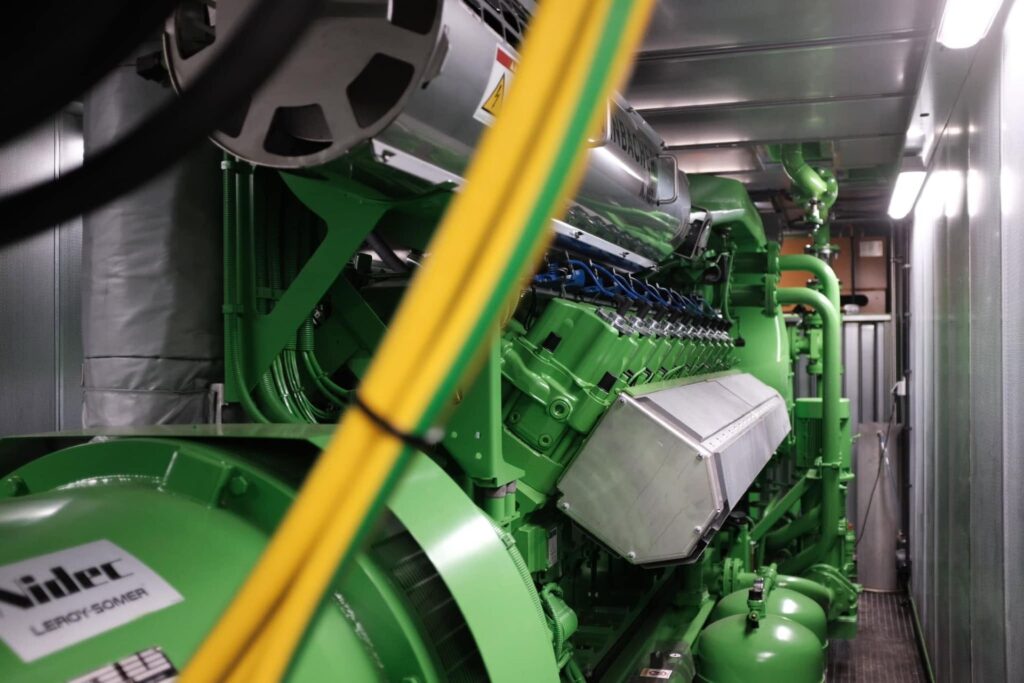
a mini power plant in chernivtsi

The local administration told Suspilne that Chernivtsi Oblast, on Ukraine’s borders with Romania and Moldova, has commissioned three gas-fired cogeneration units totaling 3.9 MW since the beginning of 2026. The units generate electricity and usable heat from the same gas, allowing municipal boiler houses to continue supplying heat when grid power fails.

Ukraine’s Communities Ministry says smaller, decentralized plants are part of the country’s response to repeated Russian attacks on energy infrastructure. Producing power close to where it is consumed helps maintain essential services when larger facilities or transmission lines are damaged.

A strike at one large plant can cut off all services. When generation is divided among boiler houses and utilities, damage to one unit affects only that site, while the others continue operating. Disabling the whole system would require attacks on many separate targets rather than on a single concentrated source.

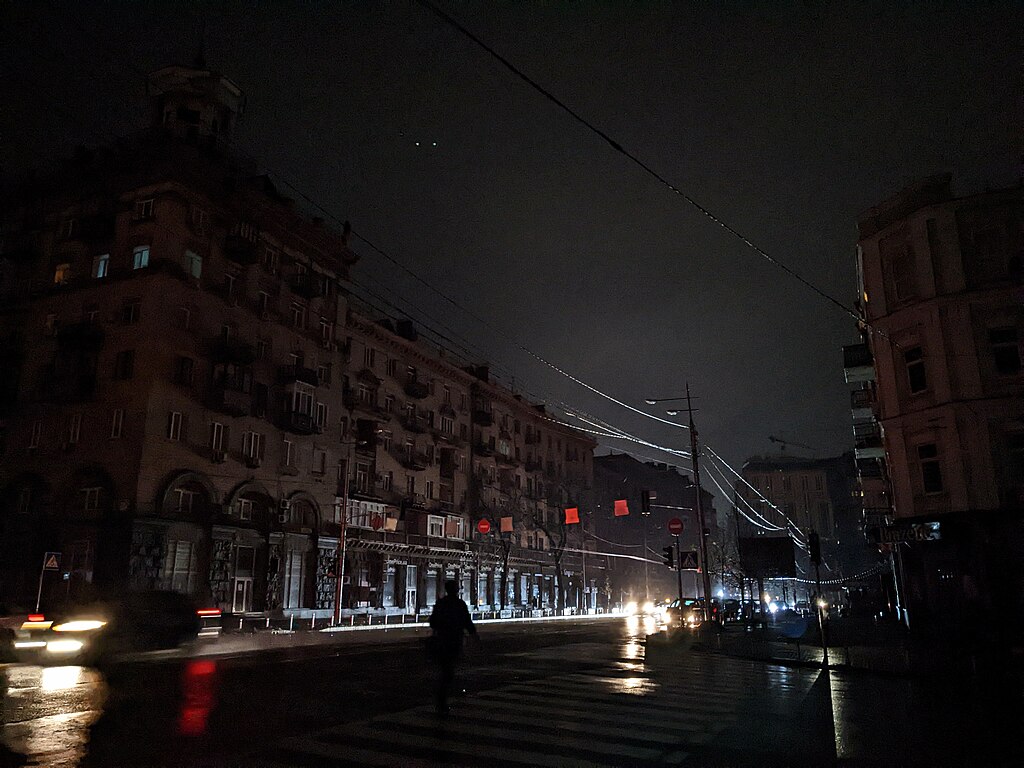
Kyiv skyline in darkness during a blackout caused by Russian missile attacks on energy infrastructure
Explore further

Kyiv misses its deadline as Zhytomyr shows how to outlast Russian strikes

According to Vasyl Zazuliak’s Facebook post, one 1.2–1.3 MW unit installed in Chernivtsi fully covered a large boiler house’s electricity demand and could send an additional 400–500 kilowatts into the grid. Zazuliak, then Chernivtsi’s deputy mayor, said the boiler house could therefore continue operating during a blackout.

The latest Suspilne report says the oblast installed two earlier units, each with 1.5 MW of capacity, during 2024–2025. Five more units totaling 10.5 MW are due by the end of 2026, followed by seven totaling 20.4 MW in 2027. Officials withheld their locations because disclosure could harm national security.

Delivery has outrun commissioning

Lviv-based investigative outlet NGL.media surveyed Ukraine’s regional administrations about cogeneration equipment supplied during 2022–2025. Its March investigation found that 59% of 137 identified units had been commissioned by February.

Ukraine’s Communities Ministry told the outlet that USAID had supplied 188 units in total, meaning the 59% figure covers the documented sample rather than the entire program. Projects often stalled because utilities could not finance connections or find specialists to install and service the equipment.

The Cabinet later allocated funding to connect 75 existing units with almost 100 MW of electrical capacity. It ordered communities to complete the connections by 1 October after acknowledging that local authorities lacked sufficient financing and technical expertise.

  • ✇Euromaidan Press
  • Russia turns failed drone defenses into grounds for state control of company assets
    Russian President Vladimir Putin has made inadequate drone defenses and slow repairs grounds for putting private assets under state management. His 24 August security decree opens a new way to government control over Russia’s economy.It expands a mechanism Russia has used against foreign-owned businesses since 2023, according to research by Nektorov, Saveliev and Partners (NSP), a Russian law firm that tracks state takeovers. The text does not specify what counts as “in
     

Russia turns failed drone defenses into grounds for state control of company assets

25 août 2026 à 04:06

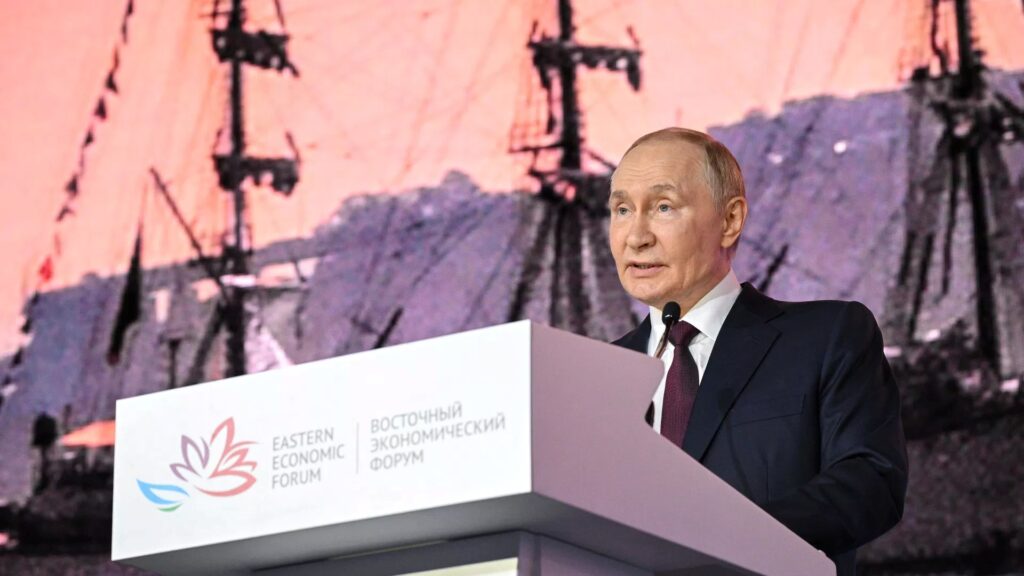
putin at the eastern economic forum in vladivostok on 5 september 2025

Russian President Vladimir Putin has made inadequate drone defenses and slow repairs grounds for putting private assets under state management. His 24 August security decree opens a new way to government control over Russia’s economy.

It expands a mechanism Russia has used against foreign-owned businesses since 2023, according to research by Nektorov, Saveliev and Partners (NSP), a Russian law firm that tracks state takeovers.

The text does not specify what counts as “ineffective” drone protection or how quickly a facility must be restored.

A business need not lose a facility before the measure can apply. Decree No. 604 allows action over late security measures, safety violations, conduct that endangers normal operations, ineffective counter-drone steps, or delayed restoration.

The text does not specify what counts as “ineffective” drone protection or how quickly a facility must be restored. Covered sectors include energy, industry, communications, utilities, transport, logistics, and life-support infrastructure, plus any sites deemed important to Russia’s security or economic stability.

Foreign controllers are also covered, including foreign organizations and citizens controlling Russian companies. Temporary management can reach all or part of an entity’s Russian property, securities, stakes in Russian companies, and other property rights—the rule is not limited to the damaged or vulnerable facility alone.

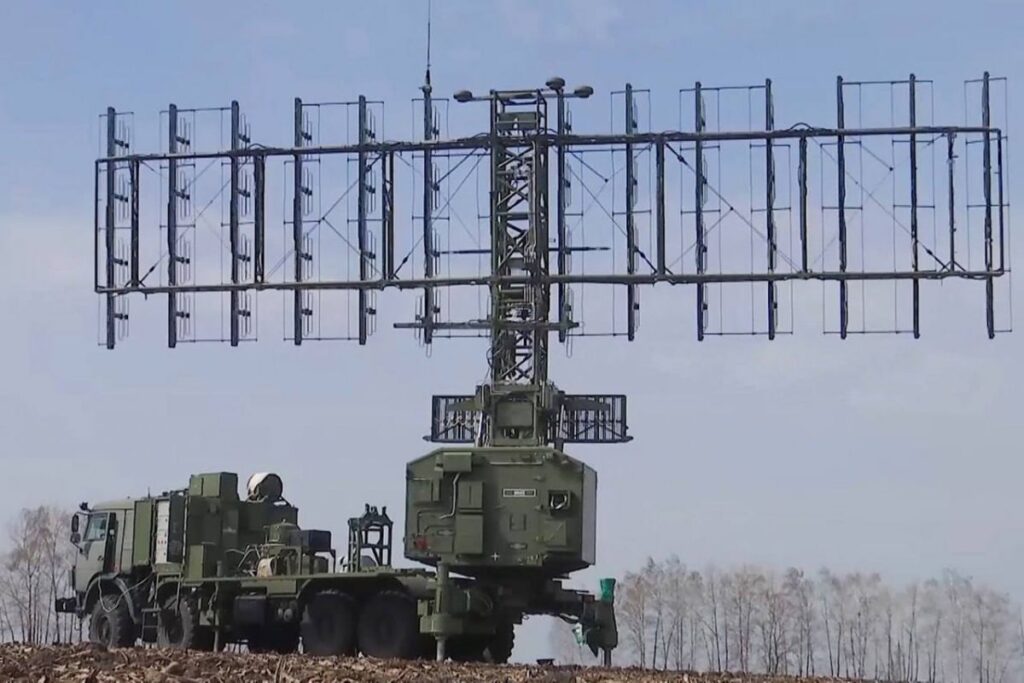
russian mobile air-fefense radar
A mobile Russian air-defense radar pictured in April 2024. Russia’s new decree lets the state take control of wider company assets when drone defenses are deemed inadequate. Photo: United Russia.

“Temporary” control has no deadline

At the same time, the text mentions no automatic return deadline. Putin must instruct the government to begin temporary management and then end it. By default, the Federal Property Management Agency assumes the owner’s powers, except for the right to dispose of the assets. The assets’ costs will be covered from its income.

Interfax published Denis Manturov’s remarks. The first deputy prime minister said the measure would be used selectively for specific security tasks and would leave formal ownership unchanged.

Komsomolskaya Pravda’s Alexander Kots raised a practical problem: Russian law, he wrote, gives businesses no instructions for defending sites against drones or cruise missiles, while barriers require extensive approvals, and private guards cannot easily be given weapons more powerful than shotguns.

The decree followed weeks of Ukrainian attacks on Russian refineries, ports, and warehouses. Ozon reported six disruptions at its facilities after 22 August. The listed retailer’s shares fell as much as 29.09% from Friday’s close on Monday, after five weeks of strikes on privately held Wildberries.

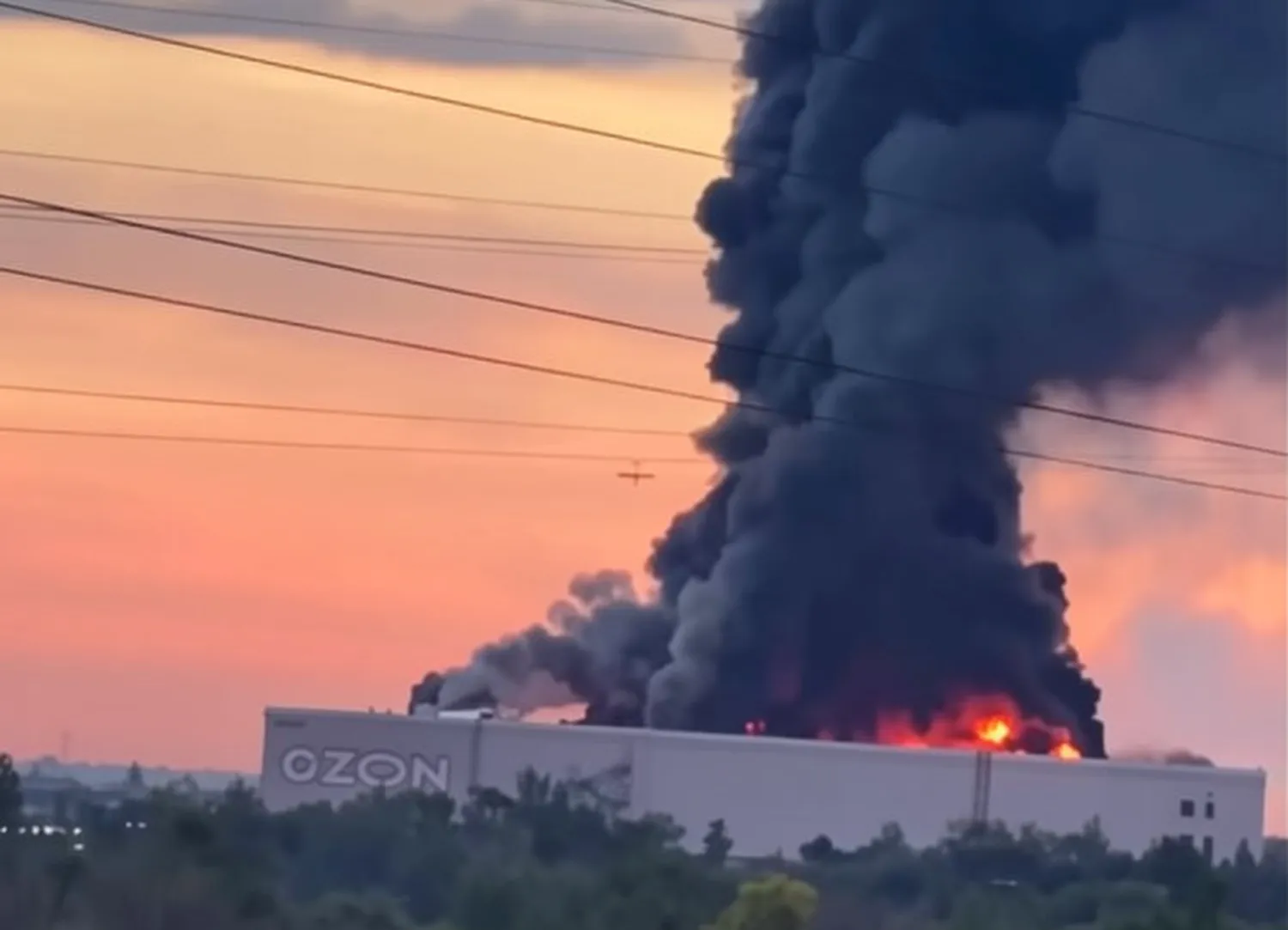
Thick black smoke and flames rise from an Ozon warehouse in Chapayevsk, Russia, at sunset.
Explore further

Why did Ozon fall as much as 29% while Russia’s market lost 2.9%?

Refining hit two-decade lows as strikes forced Russia to import gasoline, while a sixth Ust-Luga attack since March struck the country’s largest Baltic port.

NSP’s nationalization study records more than 100 cases since 2022 and about 6.5 trillion rubles (about $78 billion) in seized assets. It says cases averaged one court hearing and roughly two months.

The NSP temporary-management table lists several foreign-owned businesses placed under “temporary” management from 2023 whose owners still lack access because the arrangements remain indefinite.

❌