❌

Vue normale

  • ✇Euromaidan Press
  • Ukraine is downing Russia’s fastest drones—just not often enough, and scaling up comes down to money
    Ukraine is stitching together a layered answer to Russia's faster, jet-powered Shahed drones, leaning on electronic jamming, fighter jets, and a new class of homegrown interceptors, RBC-Ukraine reported. Each tool has limits, and the new interceptors still bring down only the occasional jet drone. The bottleneck now is money and factory output, not ideas. Russia is pouring faster jet-powered drones into the air war as winter nears, a campaign Western analysts say is meant to wear Ukrain
     

Ukraine is downing Russia’s fastest drones—just not often enough, and scaling up comes down to money

1 octobre 2026 à 07:20

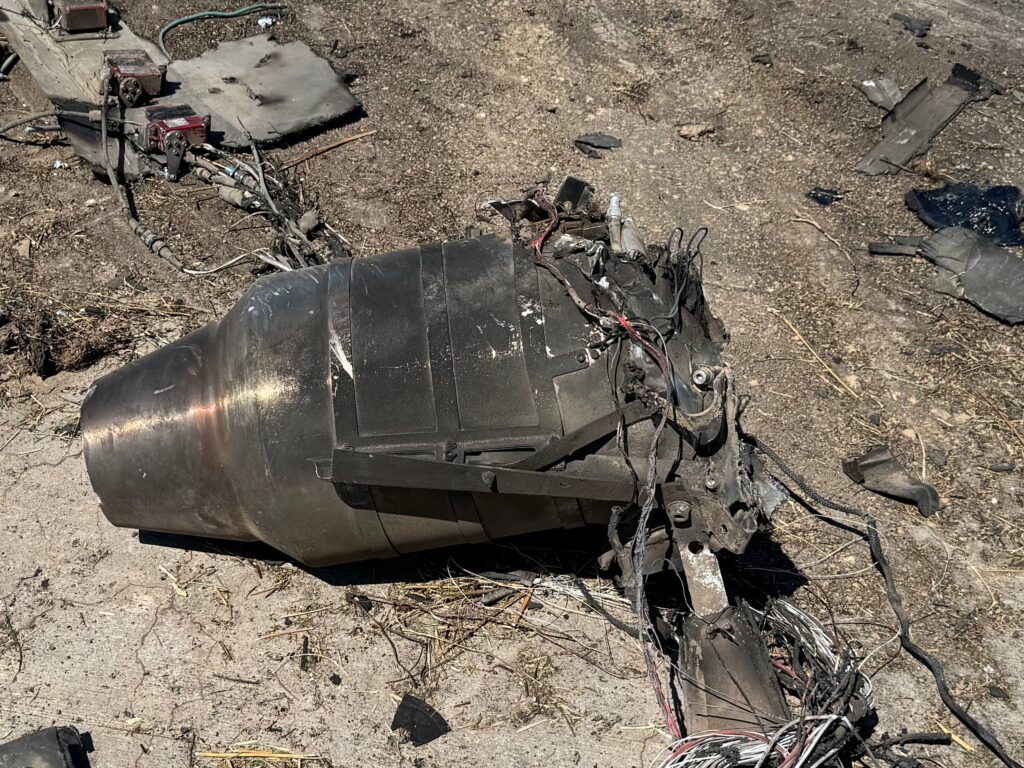
The image shows a fragment of a Russian drone Geran-4 in Kyiv Oblast. Source: Serhii "Flash" Beskrestnov

Ukraine is stitching together a layered answer to Russia's faster, jet-powered Shahed drones, leaning on electronic jamming, fighter jets, and a new class of homegrown interceptors, RBC-Ukraine reported. Each tool has limits, and the new interceptors still bring down only the occasional jet drone. The bottleneck now is money and factory output, not ideas.

Russia is pouring faster jet-powered drones into the air war as winter nears, a campaign Western analysts say is meant to wear Ukraine's defenses down—and holding those skies now turns on which side can keep out-producing the other's cheap weapons.

Fighter jets help, but they run on imported rounds

Electronic jamming can work against some of the drones, and Ukraine is also sending combat aircraft up after them. But aviation has a catch: the jets need air-to-air missiles and cannon rounds, and for the F-16 and Mirage those are imported and not always in stock. Flying over Kyiv adds danger to the civilians below and to the pilots, so Ukraine would rather catch the drones out on the approaches.

New interceptors are landing hits—just not enough

The newest piece is a wave of Ukrainian interceptor drones built to chase the jet versions, which fly three times faster than the propeller Shaheds. Ukrainian crews have been downing the jet Gerans in a recent run: on 19 September, presidential adviser Serhii Beskrestnov, known as Flash, confirmed one Geran-5 shot down, and in late September, operators of the National Guard's Separate Artillery Brigade brought down a Geran-4 with the Bullet interceptor made by General Cherry, the first Geran-4 that drone has downed, Ukraine's National Association of Defense Industries said. Ukrainian President Volodymyr Zelenskyy said several prototypes have proven themselves in combat.

Geran-5 in the sights of a STING S interceptor drone.
Explore further

Russia is now wiring its attack drones into one network in flight, so a single drone can scout, strike, and relay for the rest

Across all methods, Ukraine now intercepts about 57% of the jet drones Russia launches, Zelenskyy said on 28 September—a rate that has climbed but still trails the 90%-plus it manages against slower Shaheds. Kills by the new interceptors specifically remain isolated. In August, Air Force spokesperson Yurii Ihnat said jet drones can make up as much as two-thirds of the drones in some raids—though not every time. One promising route is reworking Ukraine's own long-range strike drones into interceptors. Kyiv is in talks with partners over the money; on 28 September, Ukraine's Defense Minister Yevhenii Khmara asked the EU to help finance the interceptors so enough reach the front quickly.

Hitting the launch sites and jamming the controls

Ukrainian forces strike the Russian airfields the jet drones launch from, RBC-Ukraine's sources said, though the raids have not forced Russia to abandon the attacks. On 20 August, military intelligence hit drone storage and launch sites at Primorsko-Akhtarsk, one of the launch bases RBC names, and at occupied Donetsk airfield. Ukraine also keeps going after the Belarusian relay towers Russia strings into a mesh network to steer the drones in, RBC's sources said.

Ukraine is now sending its tanks into battle with drone escorts: they can drive into a Russian kill zone and come back alive

Par : David Axe
1 octobre 2026 à 05:29

475th Assault Regiment tanks under drone escort.

  • The 475th Assault Regiment found a new way to protect its tanks from Russian drones
  • It surrounded its up-armored tanks with drones of its own
  • During a recent counter-infiltration mission, two 475th Assault Regiment tanks were shepherded into battle by three different drone types

Russian infiltrators have been slipping into villages and towns along Ukraine's northeastern border with Russia, likely aiming to draw Ukrainian troops away from the bigger fights farther south around the cities of Sloviansk and Kramatorsk.

Desperate to clear out the infiltrators without dedicating too many precious infantry to the task, the Ukrainian 475th Assault Regiment formed a unique team: two heavily up-armored tanks plus three different types of drone. The drones scouted ahead of the tanks and protected them as they trundled through Russia's own drone kill zone on their way to a point-blank clash with Russian troops.

In this mission, the blend of mechanized and unmanned forces worked: the tanks accomplished their mission and survived to fight another day. If the tank-drone pairing keeps working, expect it to become more common all along the 1,200-km gray zone as Ukraine struggles with a deepening shortage of manpower.

Two Ukrainian turtle tanks of Code 9.2 of the 475 Assault Regiment assault Russian position in Vilkhuvatka, Kharkiv Oblast@GeoConfirmed @UAControlMap

50.187782, 37.508585
src: https://t.co/ItVhiR0hrW pic.twitter.com/4KlQZaYt0T

— Bielitz (@Bielitzling) September 30, 2026

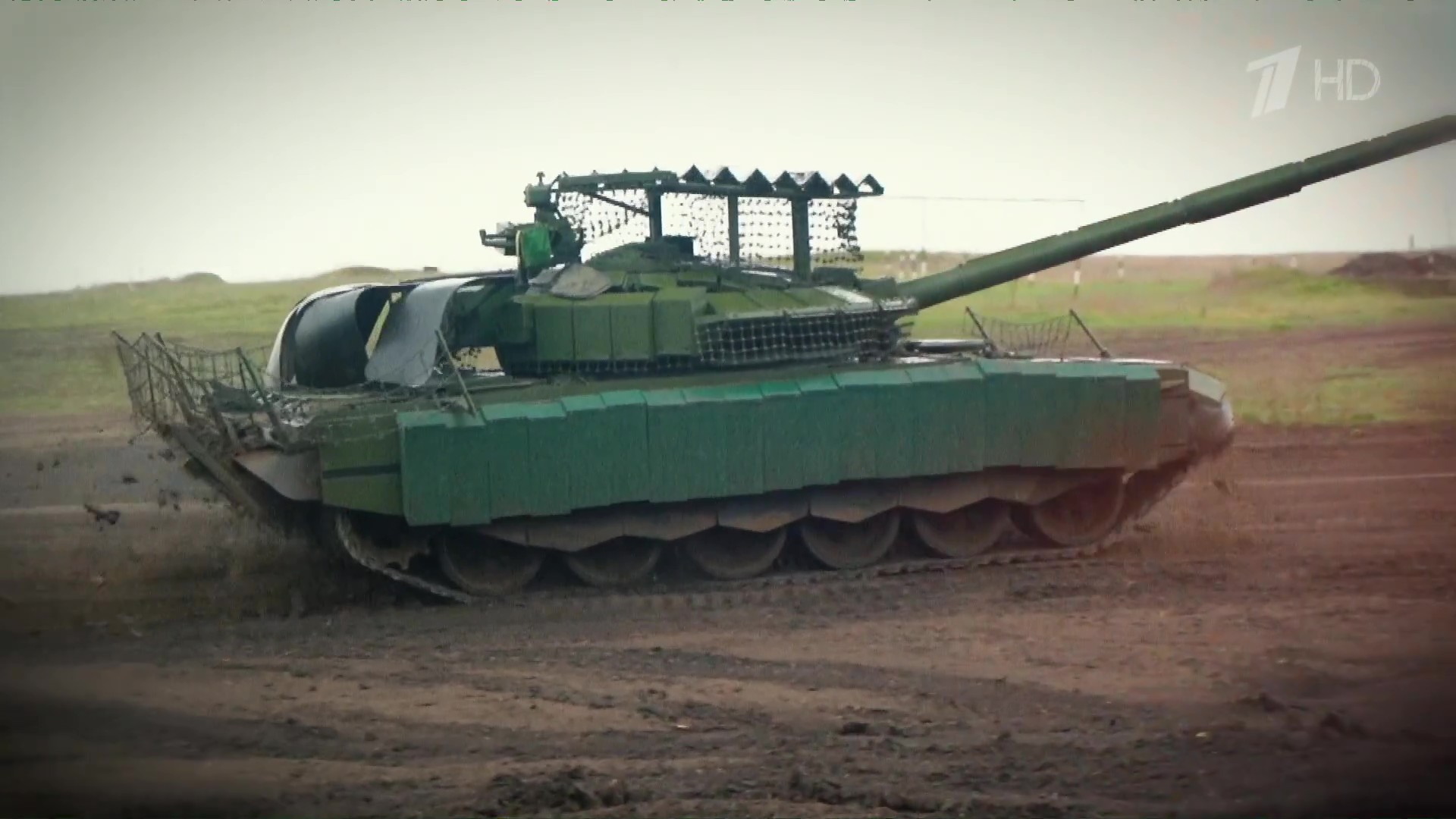
It's unclear what kinds of tanks the 475th Assault Regiment operates. It is clear how the regiment protects the tanks from ever-present Russian drones. The unit wraps the tanks in metal cages and then welds hundreds of metal spines on the cages. The spines trigger incoming explosive drones at a safe distance from the tank's hull. The cage supports the spines and catches any drones the spines may miss.

We call these kinds of tanks "hedgehog tanks." The Russians developed the hedgehog application but, seeing that it worked, deflecting potentially dozens of drones at a time, the Ukrainians copied it.

Hedgehog helpers

But even the best-protected hedgehog tank might struggle to get through the enemy's kill zone when that kill zone may include bomber and one-way attack drones in the air and loitering ambush drones waiting on the ground as well as mines and other threats.

Sometimes the best defense against a drone is another drone, and the 475th Assault Regiment put that truism into practice. To shepherd those two hedgehog tanks into battle with Russian infiltrators in the village of Vilkhuvatka, in Kharkiv Oblast 9 km from the border with Russia, the regiment deployed a Vampire heavy bomber drone, at least one explosive first-person-view (FPV) quadcopter, and at least one surveillance quadcopter.

Kharkiv Oblast vilkhuvatka border infiltrators
Vilkhuvatka on a map (Euromaidan Press)

The surveillance drones could scout ahead. The bomber drone could blast mines and loitering ambush drones. The FPVs could intercept incoming enemy FPVs. The layered protection was effective. As evident in the 475th Assault Regiment's video depicting the two-tank counter-assault, the tanks took multiple hits from Russian drones and mines, but not enough hits to slow them down.

T-72AM.
Explore further

Russia may soon have more tanks than pre-war. It just can’t use them.

Both tanks reached an intersection inside Vilkhuvatka, fired their cannons at nearby Russian infiltrators, and then withdrew.

It should come as no surprise that the 475th Assault Regiment is pioneering mixed formations of drones and tanks. The regiment recently partnered with the 1st Assault Regiment to develop new "multi-domain" tactics combining ground, air, and cyber forces. "We came to the conclusion that fighting in only one domain makes no sense," said "Perun," the 1st Assault Regiment commander. "We'd simply lose because the enemy would bring another domain into play."

The key takeaway is that, despite the serious threat that drones and mines pose to tanks in the fifth year of Russia's wider war on Ukraine, tanks can still fight, win, and survive—if they have plenty of support from the same kinds of drones that, in enemy hands, vex them along every kilometer of disputed terrain. The tank isn't dead yet. It just needs a little help.

❌