❌

Vue normale

Trump Asked Musk to Reverse Starshield Restrictions on Ukraine

23 octobre 2026 à 09:05
The call from the president about the Starshield network came after officials in Ukraine reported that they found new limits on the use of military drones in their war against Russia.

© Brendan Hoffman for The New York Times

A Ukrainian soldier checking a reconnaissance drone before launching it in the Sumy region last fall.

One year of Ukrainian arms exports, and industry has questions: how much army gained, where Berlin office is, who joins joint ventures

22 octobre 2026 à 14:50

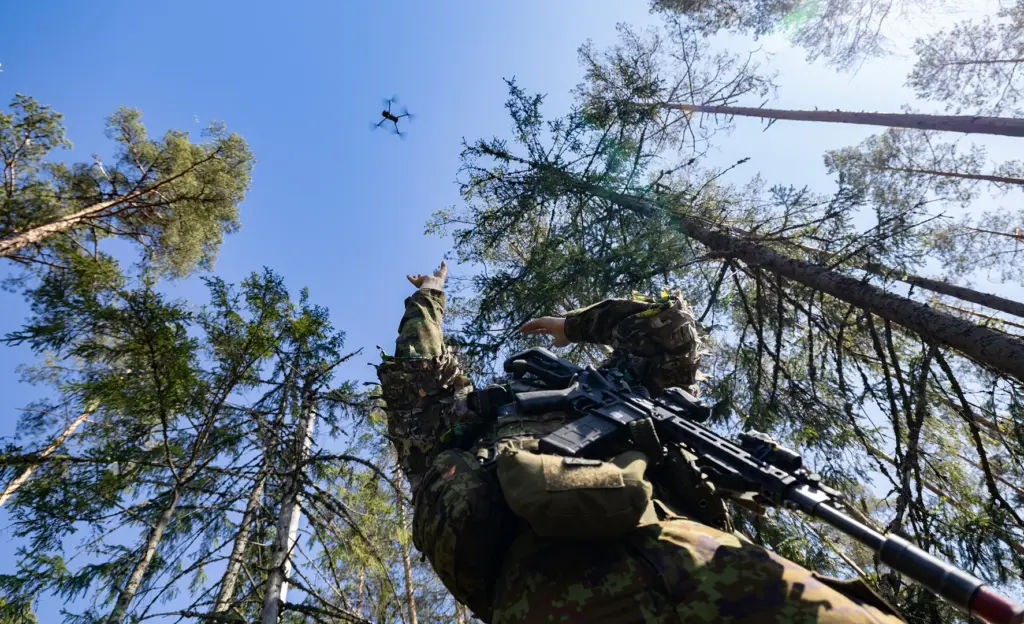
Estonian and Ukrainian soldiers fly drones together during Exercise Hedgehog 2025 in Estonia, where Ukrainian operators were credited with knocking out two battalions in a simulated engagement. Photo: vbl/OR-7 Ardi Hallismaa/ERR

Ukraine now builds far more weapons than it can afford to buy. A year ago, it promised to sell the surplus abroad and turn the proceeds back into its own army. However, 12 months later, that promise has barely materialized: a state fee of up to 30% is pricing Ukrainian arms out of foreign markets, and no one can say how much the army has actually gained, said Ihor Fedirko, executive director of the Ukrainian Council of Armorers.

President Volodymyr Zelenskyy announced the resumption of controlled weapons exports in October 2025, resting it on four promises: 1) sell what Ukraine makes beyond its own needs, 2) channel part of the proceeds into a special fund for the army, 3) open export offices in Europe and the US, and 4) establish joint ventures abroad.

The surplus is real: Ukraine's defense output is projected to reach $55 billion in 2026, far beyond what the state can finance. A year on, Fedirko checked each promise in turn.

1) Export of surpluses: rules that strangle businesses

    On 1 July 2026, the government approved rules for controlled arms exports. They shortened the maximum application review period from 90 to 30 days, but also introduced an export fee: 20% for finished products and technologies, and 30% for components. For finished products exported under the special procedure, the contract value must be at least $334,000.

      In September, the Ukrainian Council of Armorers, together with other associations, proposed a zero rate, no advance collection of the fee, refunds for deals that fall through, and simplified test shipments. The industry was promised that its amendments would be taken into account and that the resolution would be rewritten.

      Even in early October, however, the rules still needed work. According to Fedirko, the new mechanism has effectively not started working. Whether it can bring in additional funds for defense depends on how acceptable the export terms are to manufacturers.

      Fedirko says, though, that judging by current decisions, the state intends to keep the export fee.

      “The industry is ready to discuss its contribution to defense financing. But the rate must be economically justified,” he says.

      2) Procurement for the Ukrainian military: balance is only being established

      He adds that the Ukrainian Council of Armorers intends to push for a rate significantly lower than 20%, one that would let companies fulfill contracts and invest in production.

      With such high rates, Fedirko says, the competitiveness of Ukrainian weapons on foreign markets is in question, as is the ability to send even small test batches to potential buyers.

      “The fundamental requirement is post-payment: after the contract has actually been fulfilled and the manufacturer has been paid. A company should not pay the state in advance a share of income it has not yet received,” he says.

      He added that, given all this, the real export figures remain unclear, as does how much exports have actually brought the military.

      “The military and manufacturers must feel the benefit of exports. I sincerely hope that next year will bring much better results,” he says.

      In addition, on 12 October, the Ukrainian Parliament passed bill No. 15400 in the first reading. It provides for crediting the export fee to a special fund directed to the Ministry of Defense: 50% for the procurement, modernization, and repair of weapons and equipment, and 50% for the pay of Armed Forces personnel.

      The bill has not yet been adopted, but Fedirko says he expects “final adoption and launch of the mechanism.”

      3) Export offices: offices in Germany and Denmark

      On 3 November, the Ukrainian government named the first cities for export offices: Berlin and Copenhagen. On 15 December, it again spoke of preparing an office in Berlin. In reality, Fedirko says he does not know the office’s status, and it likewise remains unclear how companies can apply to it and how many contracts it has helped close.

      4) Joint ventures abroad: There are concrete results in this area

      According to Fedirko, eight joint ventures have been created, five of which are already supplying products to Ukraine. He stresses that this is the result of work by Ukrainian companies, foreign partners and the state, and that it deserves recognition.

      As early as February 2026, the authorities spoke of plans to create ten joint ventures in Europe within a year. At the same time, they announced Quantum Frontline Industries in Germany, with a planned annual capacity of 10,000 drones for Kyiv.

      Beyond the number of ventures and deliveries, however, it is important to understand how other manufacturers can join the Build with Ukraine program.

      “Who accepts applications, by what criteria are decisions made, and what support does a company receive?” Fedirko asks.

      In other words, joint ventures are already delivering results, but the rules of participation and the state support mechanism must be clear to companies that want to develop production abroad.

      • ✇US news | The Guardian
      • Russia strikes Kyiv hours after agreeing to US-brokered peace talks – video
        Russia has carried out a massive 'demonstrative' attack on Ukraine, bombarding Kyiv with ballistic missiles just hours after Vladimir Putin said he had agreed to resume trilateral negotiations after talks with the US envoy Steve Witkoff. Strikes on Kyiv killed at least two people and wounded 22, including four children. Twelve regions across the country were bombed. Volodymyr Zelenskyy said that the strikes proved Russia was not serious about peaceRussia bombards Kyiv with missiles hours after a
         

      Russia strikes Kyiv hours after agreeing to US-brokered peace talks – video

      22 octobre 2026 à 10:34

      Russia has carried out a massive 'demonstrative' attack on Ukraine, bombarding Kyiv with ballistic missiles just hours after Vladimir Putin said he had agreed to resume trilateral negotiations after talks with the US envoy Steve Witkoff. Strikes on Kyiv killed at least two people and wounded 22, including four children. Twelve regions across the country were bombed. Volodymyr Zelenskyy said that the strikes proved Russia was not serious about peace

      Continue reading...

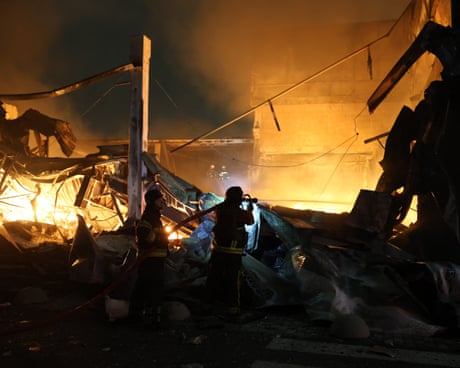
      © Photograph: AFP/Getty Images

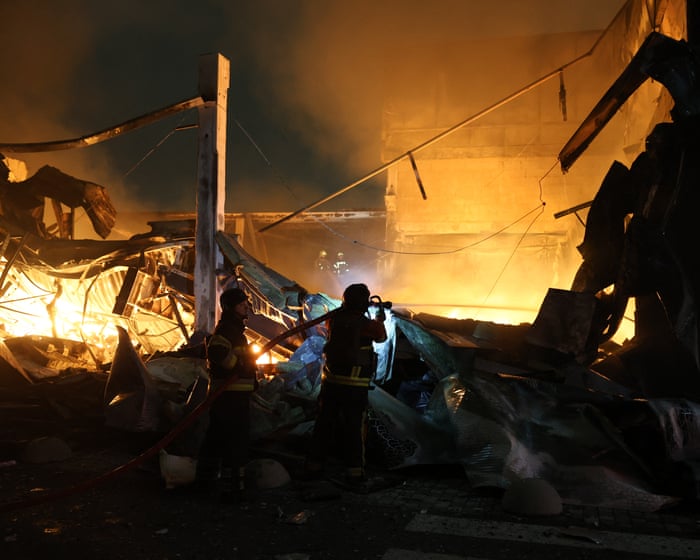
      © Photograph: AFP/Getty Images

      © Photograph: AFP/Getty Images

      Russia kept sneaking troops through gas pipes behind Ukrainian lines. Now Ukraine has gone more than 15 km underground to do the same to Russia

      22 octobre 2026 à 09:38

      Russian troops captured during Operation Veles, October 2026. Screenshot from a video by the 2nd Corps of Ukraine’s National Guard

      Ukraine's Defense Forces advanced more than 15 km through underground utility tunnels into Russia's rear on the Kupiansk axis in Kharkiv Oblast, the Khartiia Corps of Ukraine's National Guard reported on 22 October. The corps called it Operation Veles. The underground advance was paired with attacks on the surface and drone strikes, hitting Russian forces from two directions, the corps told Militarnyi.

      Russian troops have repeatedly crawled through gas pipelines around Kupiansk to get behind Ukrainian lines, even after Ukraine reported confident control of the city in February. This time, Ukraine went underground itself. The operation took away Russia's chance to get into Kupiansk's rear, the corps said.

      The corps reported more than 30 Russian soldiers captured and Russian losses of more than 100. Militarnyi, citing the unit, put the number of Russian troops killed at over 100.

      Khartiia studied how Russian troops moved through pipes before going underground itself, the corps commander, Brigadier General Ihor Obolenskyi, said.

      "We watched how the enemy works underground and studied how they do it. The Russians intended to use gas pipelines to get into the rear of our troops. So we went underground ourselves. We anticipated the enemy's actions and mastered the tactics of underground combat," he said.

      Boots under ground!

      Asymmetric breakthrough in the Kharkiv Region: Khartiia Corps conducts the subterranean counteroffensive Operation VELES, advancing 15 km underground.

      Corps Commander General Ihor Obolenskyi explains a unique operation. pic.twitter.com/qRQ93kckpK

      — Khartiia Corps in English (@khartiia_eng) October 22, 2026

      For the operation, troops trained physically and psychologically to fight in confined spaces, sappers and engineers prepared the underground route, and special communications, navigation, silent logistics, and life-support systems were put in place, Khartiia told Militarnyi. The operation was named after Veles, the Slavic pagan god of the underworld.

      Khartiia's brigade, the R.U.H. assault regiment, the Lava drone regiment, the Achilles drone brigade, and units of Ukraine's military intelligence, including the Freedom of Russia Legion and the Russian Volunteer Corps, took part, the corps said.

      Russia has used pipelines to infiltrate before

      By September 2025, Russian forces had used pipelines to move troops behind Ukrainian lines three times, Ukrainian monitoring project DeepState reported on 12 September 2025. The first was in Avdiivka, the second near Sudzha, and the third near Kupiansk, where groups crossed the Oskil River through a gas pipe.

      Near Sudzha in March 2025, Russian special forces walked through a pipeline that until recently had carried Russian gas to Europe, the Associated Press reported. A pro-Kremlin blogger claimed they covered about 15 km and that some spent several days inside.

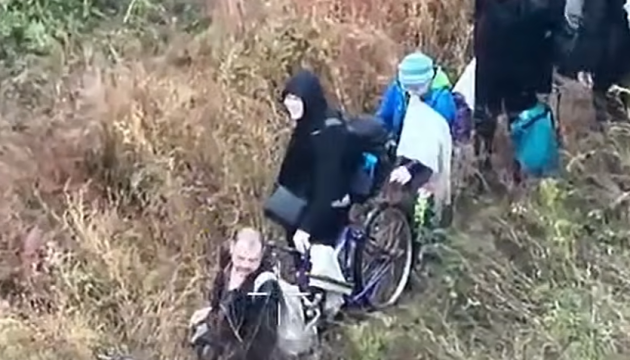
      Russian troops kept using the pipeline near Kupiansk this year. On 27 September, Khartiia's reconnaissance drones recorded Russian forces leading nine civilians, including children, elderly people, and a person on crutches, through the gas pipeline out of the Kupiansk community. Men of military age in civilian clothes walked alongside them, and the corps believes they were Russian soldiers using the group as cover to withdraw. Ukrainian troops held fire because of the civilians, the corps said, adding that the case has been documented for a war crimes investigation.

      Civilians led through a gas pipeline out of the Kupiansk community, Kharkiv Oblast, by people the Khartiia Corps identifies as Russian forces, 27 September 2026
      Civilians led through a gas pipeline out of the Kupiansk community, Kharkiv Oblast, by people the Khartiia Corps identifies as Russian forces, 27 September 2026. Screenshot: Khartiia Corps

      Why the war is moving underground

      Drones, constant surveillance, and AI-assisted targeting have made the battlefield surface transparent and deadly, argue John Spencer, chair of urban warfare studies at West Point's Modern War Institute, and Col. Drew Craig, principal military engineering staff officer at NATO's Allied Rapid Reaction Corps. In an August analysis, they write that soldiers in Ukraine describe a "death zone" of some 30 km, where moving above ground can draw an attack within minutes. When firepower makes the surface too dangerous, armies have historically gone underground, as they did in World War I and Vietnam, and more recently in Gaza and Lebanon.

      "Armies that cannot survive above ground must adapt below it," the authors write.

      Fighting in tunnels brings its own requirements, the authors write: detecting the enemy by sound and vibration, and specialized unmanned systems that cannot rely on GPS or stable radio links. Long stretches underground also take a severe psychological and physical toll on soldiers.

      Western militaries are not ready for this, Spencer and Craig write. No NATO partner maintains even general capabilities for large-scale underground warfare, and US and British efforts focused mainly on detecting and clearing tunnels rather than occupying and operating in them.

      Fog blinds Ukrainian drones. Russia resumes mechanized assaults in the south after months-long pause, military officials say

      22 octobre 2026 à 07:39

      Ukrainian soldiers. Source: 95th Separate Airborne Assault Polissya Brigade

      Russian forces are preparing to resume mechanized assaults in southern Ukraine after a pause of several months and are moving armored vehicles toward areas where they plan to launch offensives, Anastasiia Shevchenko, deputy spokesperson for the Southern Forces Grouping, told Ukrinform on 22 October. The Huliaipole axis remains the hottest in the Southern grouping’s zone, with 10 to 20 combat engagements reported on an average day, she said.

      On the Huliaipole axis, one of Russia’s largest force groupings is fighting Ukrainian forces, comprising units from several Russian combined-arms armies, the spokesperson says. Over the past week, as the weather worsened, Russian forces began local assaults there with infantry, motorcycles, and armored vehicles, seeking to break through toward Zaporizhzhia and blockade the city, Ukraine’s 7th Air Assault Corps reported, adding that the area is one of Russia’s key priorities in southern Ukraine. Russia has used fog this way before: last November, Russian troops moved under its cover to avoid detection by Ukrainian drones as they advanced on Huliaipole, the Institute for the Study of War assessed.

      Russian forces have abandoned large-scale assaults across a broad front and are attempting to infiltrate Ukrainian positions in small groups. They periodically use motorcycles and quad bikes for assaults, Shevchenko said, adding that these vehicles are fast and maneuverable.

      However, Russian forces should not expect to advance unimpeded, the spokesperson noted. Ukrainian units control Russian supply routes and systematically detect and strike Russian personnel and equipment while they are still moving toward their launch positions, she added.

      “Specifically, speaking in numbers, since the beginning of October alone, units of the Southern Forces Grouping (Forces) have destroyed more than 3,000 occupiers and 1,300 pieces of weapons and military equipment. Thus, the enemy is suffering significant losses in the operational zone of the Southern Forces Grouping (Forces),” the spokesperson concluded.

      Ukrainian drones disrupt Russian logistics

      Russian forces had stopped using military vehicles because Ukraine’s unmanned systems forces controlled their logistics, Shevchenko said in comments to Ukrinform on 16 September. Ukrainian drones spotted Russian troops and equipment in time and struck them mostly on their routes of advance, she said.

      Ukrainian air strikes destroyed bridges near Polohy in Zaporizhzhia Oblast, complicating Russian supply operations along the Huliaipole axis, Ukraine’s 7th Air Assault Corps reported on 21 September. Russian forces had used these bridges to move personnel, heavy equipment, and ammunition for their offensive toward Orikhiv. Disruptions to logistics have forced Russian units to rely more on motorcycles, which are more vulnerable to Ukrainian strikes, the corps said.

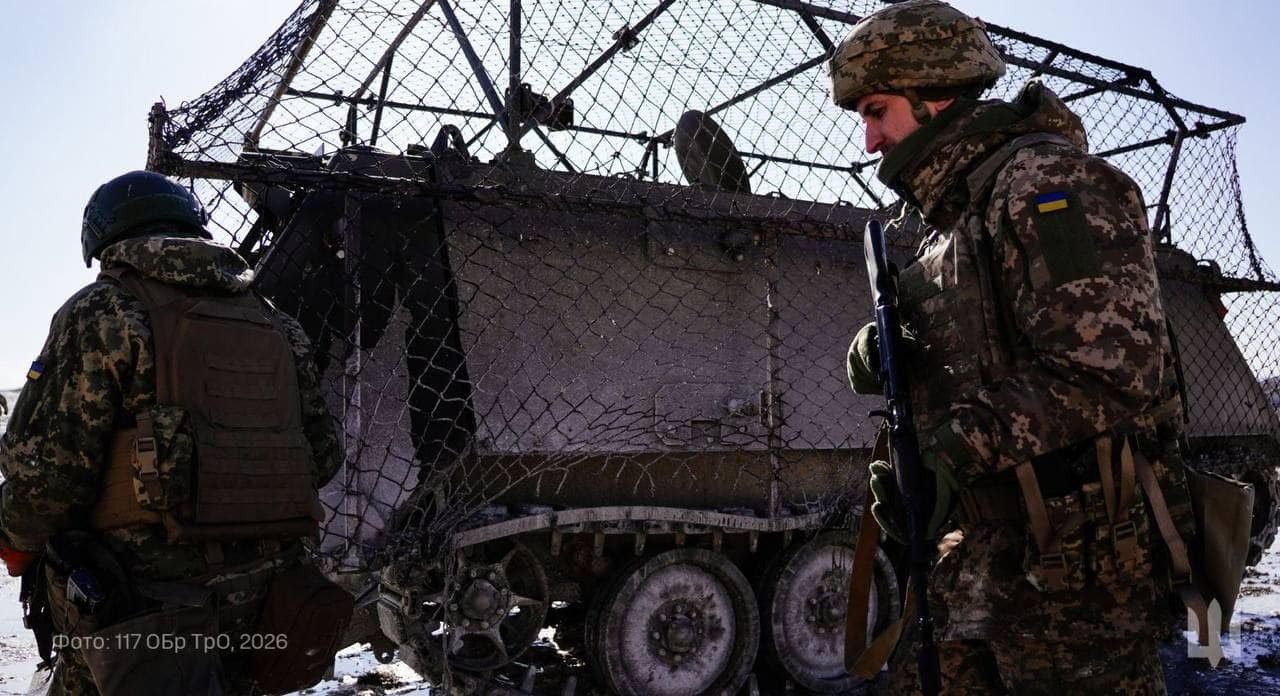
      before russia's all-out war ukraine imported almost weapons four years later buys more than any country earth · post ukrainian soldiers 117th separate territorial defense brigade beside armored vehicle fitted
      Explore further

      Ukraine timed its Huliaipole operation around the weather — and it worked. Here’s why that won’t happen again soon

      Russian forces are also expected to use fog and rain as cover for assaults, Mykola Zinko, deputy commander of the unmanned systems battalion of the 5th Assault Brigade, said on 19 October. Russia has brought up reserves, and its heavy equipment will move out under the fog, he said.

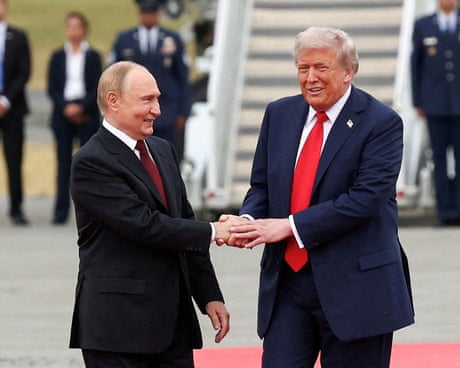
      Donald Trump has sold out Ukraine. He makes appeaser Chamberlain look like a man of iron principle | Simon Tisdall

      22 octobre 2026 à 07:00

      Europe’s leaders can no longer trust a word that comes out of Washington. No more slaps on the wrist – we need concrete steps to punish Trump

      Historical comparisons are always inexact. No one conflict precisely mirrors another. Yet Donald Trump’s shameless appeasement of Vladimir Putin carries more than a noxious whiff of Neville Chamberlain’s failed attempt in Munich in 1938 to head off war with Nazi Germany. To be fair to the former UK prime minister – and history largely hasn’t been – his peacemaking efforts had the enthusiastic backing of most people in Britain and France who, like him, were desperate to avoid a repeat of the horrors of the first world war. Trump enjoys no equivalent public support for his treachery. Nor does he face the prospect of a US war with Russia. His betrayal of Ukraine is cynically self-interested, globally dangerous and utterly contemptible.

      US-Russian talks on agreeing the shoddy terms of a precedent-setting American sell-out of Ukraine are at an advanced stage, after meetings in St Petersburg this week. Trump has zigzagged over the war ever since returning to office. Now, panicked by record-low poll ratings, he seems determined to scapegoat Ukraine and force its de facto capitulation. Recent steps – his shocking decision to fund Putin’s war machine by buying Russian diesel, his waiving of tougher sanctions, his mysterious, lethal interruptions in US satellite and intelligence sharing with Kyiv, and his renewed attempt to oust Ukraine’s president, Volodymyr Zelenskyy – mark Trump out as the skulking Judas, the craven Brutus of the modern age. He makes Chamberlain look like a man of iron principle. All that’s lacking is an umbrella.

      Simon Tisdall is a Guardian foreign affairs commentator

      Continue reading...

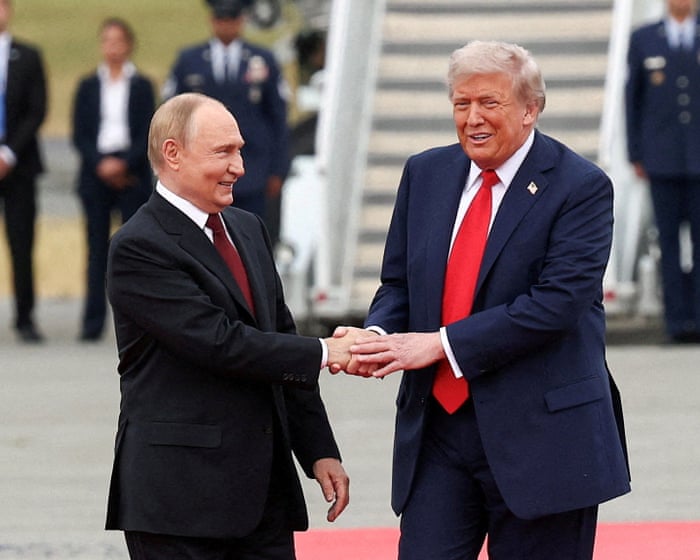
      © Photograph: Kevin Lamarque/Reuters

      © Photograph: Kevin Lamarque/Reuters

      © Photograph: Kevin Lamarque/Reuters

      • ✇US news | The Guardian
      • Russia bombards Kyiv with missiles hours after agreeing to resume talks with Ukraine
        Experts say Russia is trying to destroy energy infrastructure before winter and US ‘appeasement and flattery’ will not achieve peaceRussia has carried out a massive “demonstrative” attack on Ukraine, bombarding Kyiv with ballistic missiles just hours after Vladimir Putin said he had agreed to resume trilateral negotiations after talks with the US envoy Steve Witkoff.Overnight, Moscow pounded the Ukrainian capital, killing at least two people and wounding 22, including four children. Targets incl
         

      Russia bombards Kyiv with missiles hours after agreeing to resume talks with Ukraine

      22 octobre 2026 à 11:46

      Experts say Russia is trying to destroy energy infrastructure before winter and US ‘appeasement and flattery’ will not achieve peace

      Russia has carried out a massive “demonstrative” attack on Ukraine, bombarding Kyiv with ballistic missiles just hours after Vladimir Putin said he had agreed to resume trilateral negotiations after talks with the US envoy Steve Witkoff.

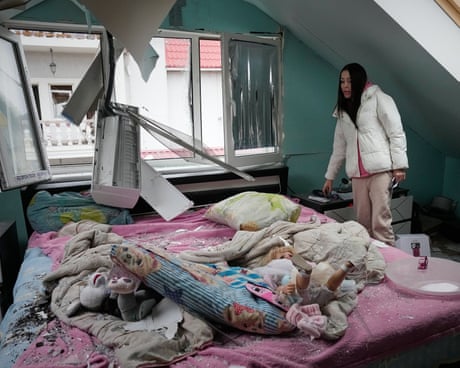
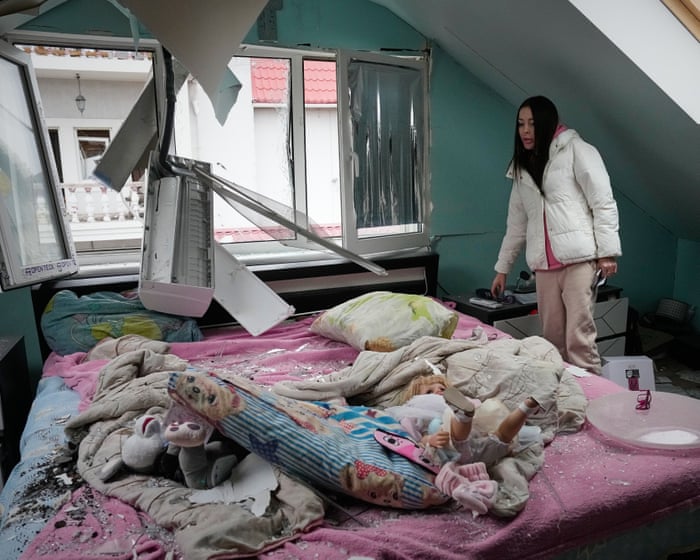
      Overnight, Moscow pounded the Ukrainian capital, killing at least two people and wounding 22, including four children. Targets included the southern bridge over the Dnipro River, civilian houses, energy infrastructure, an ambulance station, office buildings and a clinic.

      Continue reading...

      © Photograph: Efrem Lukatsky/AP

      © Photograph: Efrem Lukatsky/AP

      © Photograph: Efrem Lukatsky/AP

      Poland paused a military aid package over Lviv’s vote honoring WWII nationalists, Ukrainian source says. Polish ministry denies it

      22 octobre 2026 à 05:24

      polish defense

      Poland has paused the delivery of a large military aid package to Ukraine after a Lviv regional council honored the Ukrainian Insurgent Army (UPA), a WWII nationalist force, a source in the Ukrainian government told European Pravda on 21 October. A Polish Defense Ministry spokesperson told Fakt the report was untrue, though he told WP he knew nothing about a possible delay in shipment.

      If confirmed, the freeze would carry a history dispute into Poland’s military aid. The row flared in May, when Kyiv named a special forces unit after the UPA, and in June Poland’s president stripped Zelenskyy of Poland’s highest honor. Even so, Ukraine’s ambassador said in August that Polish military aid was still flowing.

      A vote and a disputed freeze

      The Lviv Oblast Council voted on 20 October to name 2027 the year of the UPA, its commander Roman Shukhevych, and nationalist activist Oleh Olzhych. The UPA fought Nazi Germany and the Soviet Union, but Poland holds it responsible for mass killings of Poles in Volhynia and Eastern Galicia in 1943–1944. The resolution disappeared from the council’s website late that evening, RMF24 reported.

      The source blamed what it called the councilors’ irresponsible actions, saying the vote came as Poland prepared the shipment and that work through closed channels is underway. The ministry spokesperson, Janusz Sejmej, called the report untrue. Asked whether it could reflect a delay in shipment, he said he knew nothing about that.

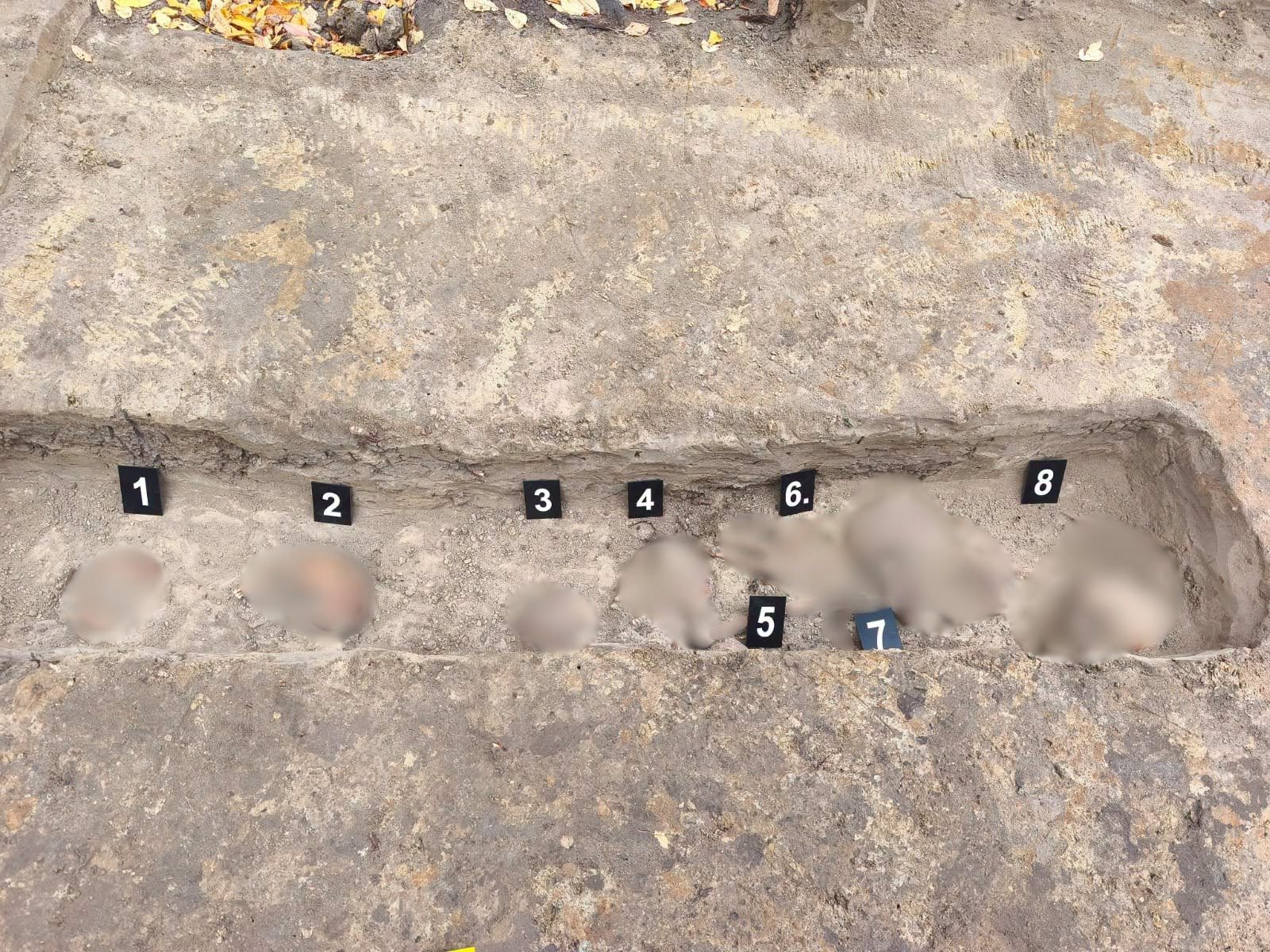
      Human remains, likely belonging to a Ukrainian killed in 1944 in the village of Łasków, Lublin Voivodeship, Poland, October 2026
      Explore further

      Progress on a sore point for Ukraine and Poland: remains of over 40 Ukrainians killed by Polish WWII units found in Łasków

      Polish officials push back

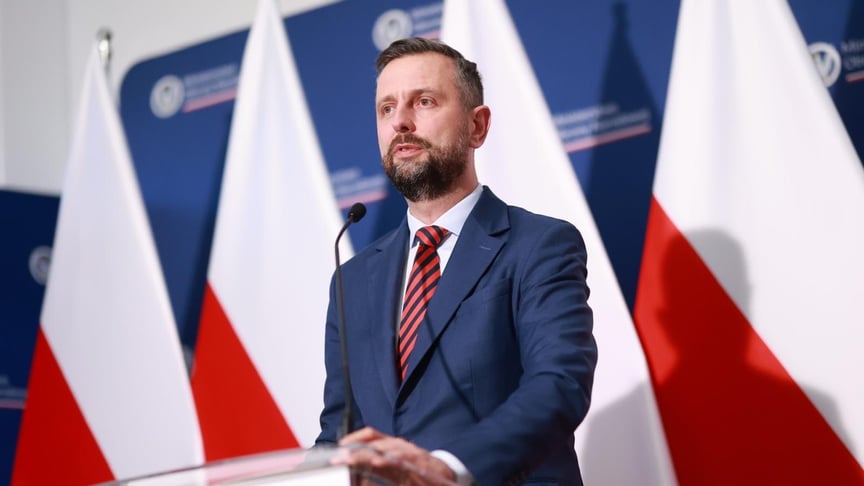
      On 20 October, Defense Minister Władysław Kosiniak-Kamysz wrote that Ukraine’s authorities must distance themselves from the council’s position.

      The next morning, Prime Minister Donald Tusk called the vote unwise and harmful above all to Ukraine. He said he had warned Zelenskyy earlier that such gestures hinder Ukraine’s friends, though the president was not responsible for this vote. At such moments, Tusk said, Russians always rub their hands.

      Foreign Minister Radosław Sikorski then requested that councilor Sviatoslav Sheremeta, who proposed the resolution, be added to Poland’s list of unwanted persons. That afternoon, Interior Minister Marcin Kierwiński said the decision had been made. Sheremeta is barred from the Schengen zone until 2031, RMF24 reported. Poland had already barred him once, in 2017, the outlet said.

      Kyiv asks for restraint

      Earlier on 21 October, before the ban, Ukraine’s Foreign Ministry called the vote counterproductive in a reply to journalists and urged Warsaw to avoid abrupt steps. Zelenskyy’s closest aides had also promised the resolution would not take effect, Deputy Foreign Minister Marcin Bosacki told TVN24.

      ❌