Vue lecture

The treasury bond mess: is this the demise of the US as a safe haven?

The US is scooping up treasury bonds in an effort to raise their price and push yields down – but it’s not working

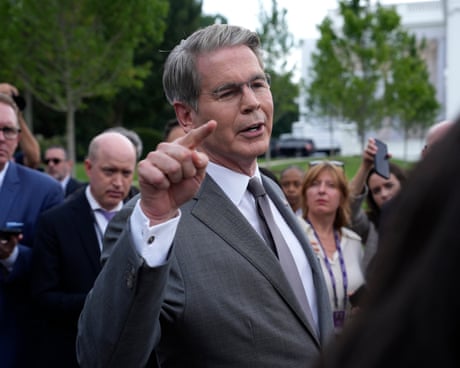
The bond market is driving the Trump administration crazy. Last week, the treasury secretary, Scott Bessent, announced that the government would sharply ramp up its purchase of treasury bonds, in an effort to raise their price and thus push down their yield, which amounts to the interest rate the government pays on its debt.

It didn’t quite work as planned. Yields on treasurys fell after Bessent’s bond market intervention but soon bounced back. By Friday afternoon, the yield on the 10-year treasury was back near where it was before the secretary’s announcement. The yield on the 30-year bond was again trading around its highest level in 20 years or more.

Continue reading...

© Photograph: Andrew Thomas/CNP/Andrew Thomas - CNP/Shutterstock
© Photograph: Andrew Thomas/CNP/Andrew Thomas - CNP/Shutterstock

© Photograph: Andrew Thomas/CNP/Andrew Thomas - CNP/Shutterstock
  •  

‘Starve the beast’? The $40tn cost of Republicans’ false promises to cut spending

The enormous US debt under Trump will hobble the next Democratic administration – just as the GOP planned

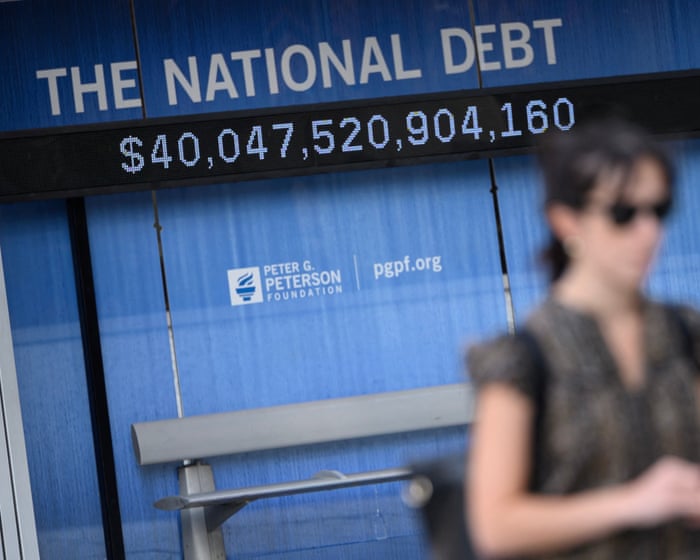
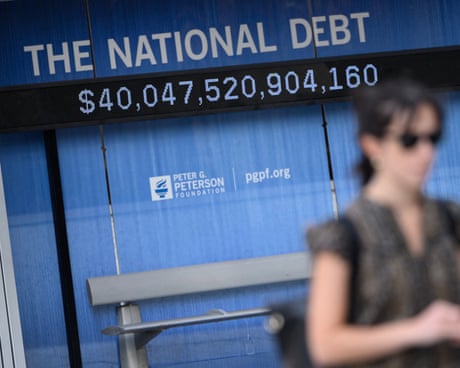
You could pin the US’s staggering $40tn in government debt to Donald Trump’s Keystone Cops-style governance. Tariffs he sold as a new source of revenue were struck down by the supreme court, forcing the government to return tens of billions of dollars to importers. Elon Musk’s “department of government efficiency” (Doge), ostensibly created to stop wasteful government spending, decimated federal programs and probably killed millions of children, but did nothing to close the budget deficit. The burst of inflation following Trump’s misguided adventure in Iran sharply raised the cost of serving the government’s obligations.

Yet as the federal debt hits an all-time high, up from about $35tn when Trump took office less than two years ago, it is worth noting that the US’s gargantuan indebtedness is in fact the product of a longstanding Republican strategy that took shape well before Trump could even dream about gold-plating the White House. It was called “starve the beast”.

Continue reading...

© Photograph: Mandel Ngan/AFP/Getty Images

© Photograph: Mandel Ngan/AFP/Getty Images

© Photograph: Mandel Ngan/AFP/Getty Images

  •  

Is the US actually too chicken to take on China for trade?

A weak yuan guarantees Beijing massive trade surplus even as the White House tries tamp down on Chinese imports

Since China offered a truce in the trade war last October following its threat to deprive the United States of rare-earth magnets, the Trump administration has been happy to stop escalating. After all, imports from China have been falling, down by 40% in the year to June, compared with the same period in 2024. Best to declare victory and call it a day.

But the US hasn’t won this battle – and there’s strong evidence to show it’s too chicken to really try.

Continue reading...

© Photograph: Cheng Xin/Getty Images

© Photograph: Cheng Xin/Getty Images

© Photograph: Cheng Xin/Getty Images

  •  

Donald Trump doesn’t just love billionaires, he loves multimillionaires too

US tax policy deprives the government of revenue and overwhelmingly serves the interests of the rich

After the House passed its version of Donald Trump’s One Big Beautiful Bill Act (OBBBA) last year – the one that paired a $5tn-plus tax cut with $1tn-plus of cuts from food stamps and Medicaid – the House speaker, Mike Johnson, explained that “this is not giving tax cuts to the millionaires”. The beneficiaries, he said, were “small business owners” that “provide the jobs in every community in America”.

Johnson was playing to the myth of the modest, sturdy Main Street job creator. It is an appealing story. It’s also the most consequential piece of BS distorting American policy that deprives the government of tax revenue, stunts American capitalism, twists regulations, thwarts competition and overwhelmingly serves millionaires’ interests.

Continue reading...

© Photograph: Jim Watson/AFP/Getty Images

© Photograph: Jim Watson/AFP/Getty Images

© Photograph: Jim Watson/AFP/Getty Images

  •  
❌