Vice-president tries to link El-Sayed to Paris protests and claims he would lead rioters in ‘burning down’ Detroit
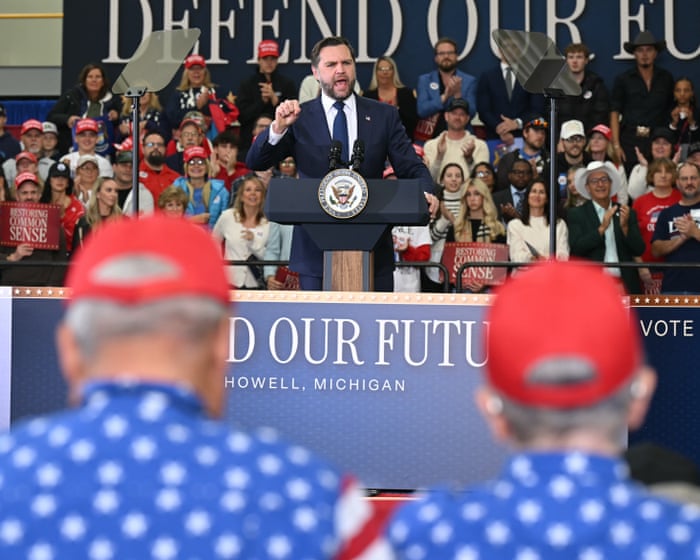
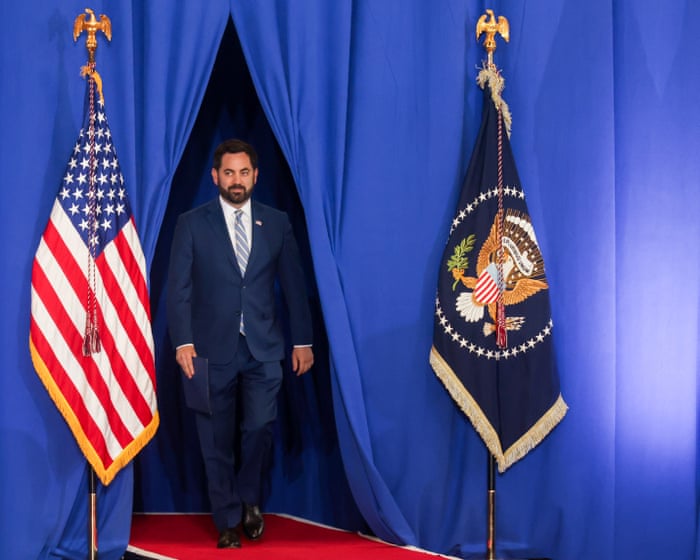
JD Vance has escalated his inflammatory attacks on Abdul El-Sayed, the Democratic candidate for US Senate in Michigan who has faced an onslaught of Islamophobia, claiming he would lead rioters in “burning down” Detroit.
El-Sayed, who would become the country’s first Muslim senator if he wins next week’s election, has been branded a “jihadist” by Donald Trump, the US president.
Home of wealthy developer Stephen Cloobeck searched in connection to sexual misconduct inquiry into Swalwell
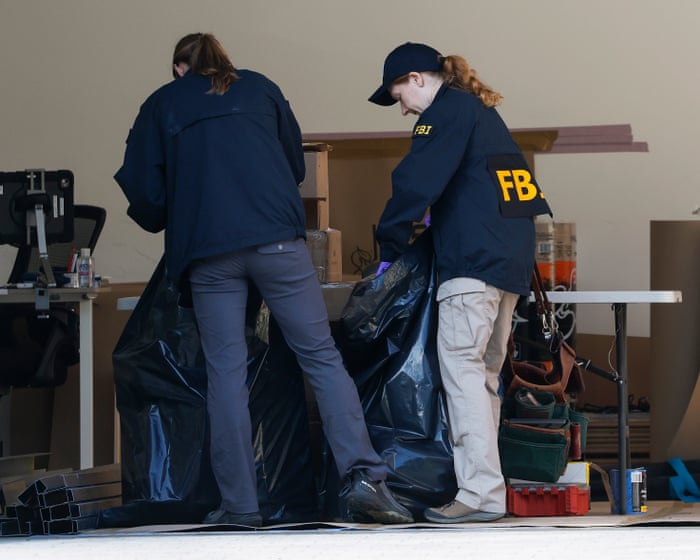
Federal law enforcement agents searched a home in suburban Los Angeles early on Tuesday as part of an investigation into Eric Swalwell, who resigned from Congress amid a wave of sexual misconduct allegations, a law enforcement official and two people familiar with the investigation told the Associated Press.
Agents searched the Beverly Hills home of the wealthy developer and Swalwell donor Stephen Cloobeck, where the Democratic ex-congressman spent time before resigning from office in April, according to the people, who spoke on the condition of anonymity to discuss the investigation.
Voters have a chance to break America’s two-tiered system of justice and hold powerful people accountable
Welcome back to How We Win, a Guardian opinion series with leading thinkers, offering bold ideas for America’s political future. Last week, Guardian US columnist Rebecca Solnit wrote about the GOP’s alignment with the tech overlords. Today’s edition was written by Katie Phang, an independent journalist, trial lawyer and political analyst. Sign up for future editions here.
When Americans go to the polls a week from now, accountability will be front and center.
Instead of enforcing the law, the attorney general of the United States has been busy subverting it
We want to hear from gen Z voters about the issues that will decide your vote in the midterm elections
The US midterm elections that will decide control of the House of Representatives and Senate, as well as the governorships in 36 states, are just one week away. The results could have a huge impact on Donald Trump’s final two years in office.
Nearly 50 million people aged 18 to 29 are eligible to vote in the midterms but nearly half are either not registered or civically engaged, according to US Census Bureau data.
Benjamin Netanyahu is in the fight of his political life. Voters in Israel are heading to the polls on Tuesday to decide an election that could determine whether Netanyahu will remain the country's prime minister (and affect the outcome of the corruption charges against him). But the Israeli election also arrives at a time when voters around the world seem to be rejecting authoritarianism. A student-run movement stunned the world on Sunday when its candidates routed Serbia's long-serving leader, Aleksandar Vučić. That same day, Brazilians beat back a campaign by Flávio Bolsonaro – the son of Jair Bolsonaro, the disgraced former president – in a historic upset. Carter Sherman speaks to Julian Borger, the Guardian’s senior international correspondent, about how these four elections could reshape the political world order in just 10 days, and why the upcoming US midterm elections are the biggest test for global democracy.
Trump again congratulated Ohio senator’s rear end before his cheeky comment about rapper being ‘hard to miss’
Donald Trump reiterated his apparent love for ample backsides during a rally in Michigan on Sunday where he encouraged the crowd to compliment rapper Nicki Minaj’s behind.
Trump’s cheeky comments about Minaj’s derriere came as he explained his recent observation on the Republican Ohio senator Jon Husted’s rear end. Earlier in October, Trump said of the former college football player: “I don’t do this with men very often. I started examining his body, because I didn’t know he was a great athlete. And I looked and I watched up and down. I looked at his ass and I looked at the whole – and then I looked at his hands. Look at his hands. He’s got these, like, claws.
If Democrats win the House, and possibly the Senate, a result nonpartisan analysts call plausible, they would gain the power to bring new Ukraine aid to a vote and to push back on President Donald Trump’s deals easing pressure on Russia, Reuters reports in an analysis of how US foreign policy could shift.
The stakes are concrete. Trump has largely halted direct US aid to Ukraine, which lawmakers of both parties had backed, and its current supplies run from packages passed under his predecessor.
Weeks ago, he also waived the sanctions on Russian energy that Congress had written into law and struck a deal to bring Russian diesel back to the market, angering Republicans and Democrats alike.
What a Democratic Congress could do for Ukraine
With both chambers, Democrats could put new Ukraine aid on the floor, and given the bipartisan support such aid has drawn, it could pass with the two-thirds majorities needed to override a Trump veto.
Other steps could be taken, too. Representative Gregory Meeks of New York, in line to chair the House Foreign Affairs Committee if his party wins control, has already introduced bipartisan legislation to block Trump’s plan to return Russian diesel to the global market.
Democrats are also readier than Trump’s Republicans to rein in military spending. They blocked his request for an unprecedented 67% rise in the military budget, to $1.5 trillion, in the Senate, and many say they will try to restore the foreign aid he has withheld or canceled.
The limits of a slice of power
The leverage has limits. Even with both chambers, Democrats would still face a president who can veto, and overriding him would require two-thirds of each chamber. The pattern has already been visible in Iran: Trump launched that war on 28 February without congressional approval, and when a War Powers resolution passed with a handful of Republican votes, his administration ignored it.
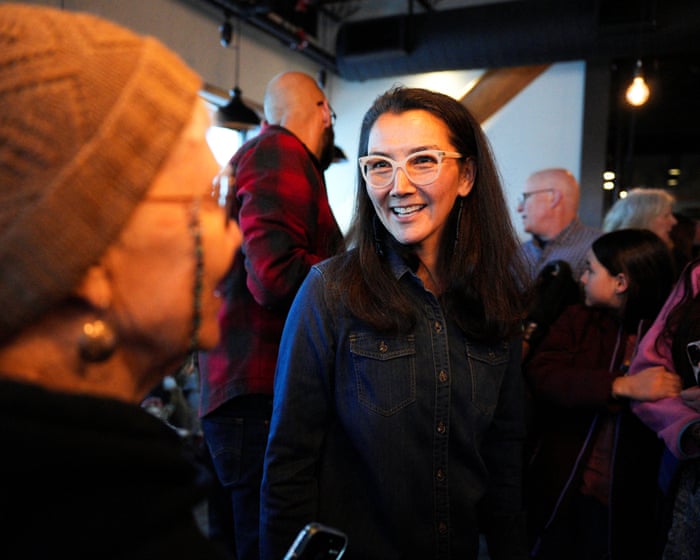
Peltola and her family sustained minor injuries after a driver struck the car transporting group to campaign stop
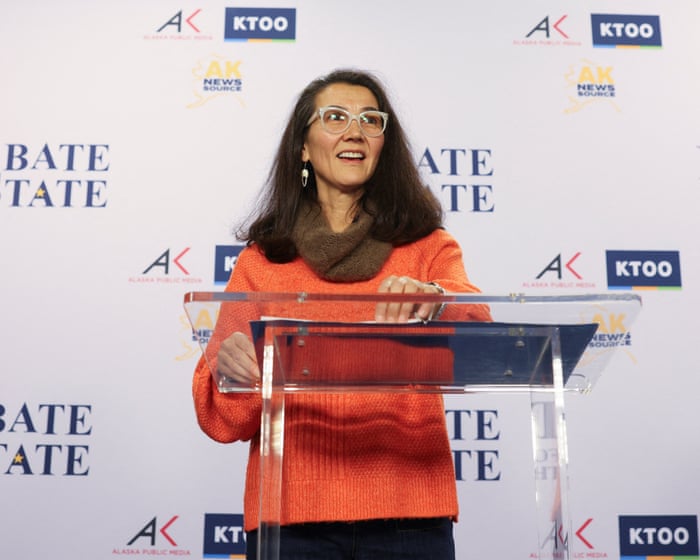
Mary Peltola, a Democrat who is running for US Senate in Alaska, and her family suffered minor injuries in a car crash while driving to a campaign stop on Saturday, her campaign said.
The family was on its way to the Alaska Federation of Natives annual banquet when another vehicle crashed into the one transporting Peltola and her family, her campaign said in a statement on Sunday. Peltola required medical attention after the collision.
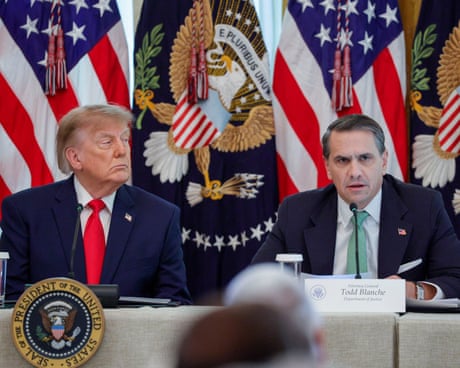
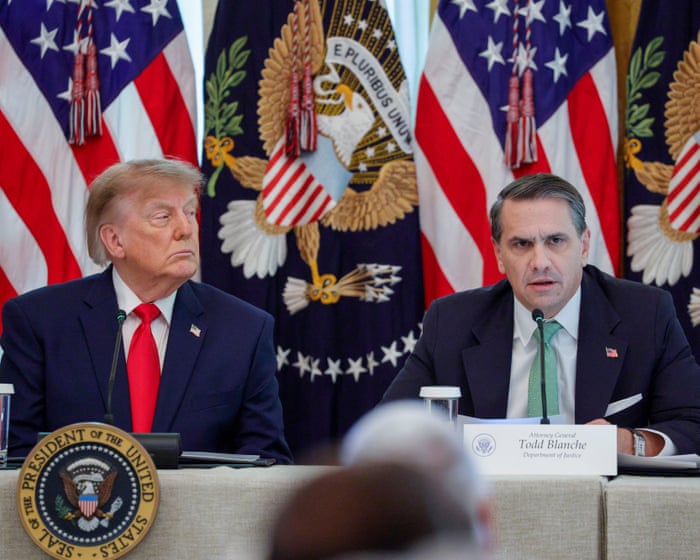
Todd Blanche, Donald Trump’s attorney general, lashed out during an interview on Sunday while defending the justice department’s pre-emptive lawsuit to block certification of Alaska’s US Senate results if the GOP incumbent loses, calling a TV host’s question “crazy”.
The testy repartee unfolded on CNN’s State of the Union over the DoJ’s unprecedented legal action, which alleges that there could be “voter confusion” due to two candidates named Dan Sullivan on Alaska’s ballot. Trump told reporters, “I’m the one that said do it” when asked about the suit.
Democratic and independent candidates stump the US midwest and prairie states, hoping to win over Republican strongholds
In this final stretch of the US midterm elections, Democrats and independents could win back communities and towns across America’s rural heartlands through a combination of resurgent “prairie populism”, local despair over the impact of Donald Trump’s agenda and an old-fashioned tenet of shoe-leather politics: showing up everywhere.
When Dan Osborn rolled into one of the most rural counties in Nebraska earlier this month, he started walking into businesses in the tiny main drag of Arthur, ready to meet whomever he could in the town of about 100.
Donald Trump voted in West Palm Beach, Florida today, telling reporters at the polls that he voted straight Republican on his ballot. Trump has historically mailed-in his ballot rather than voting in-person.
Speaking from the polling site, Trump defended an ad from Ohio gubernatorial candidate Vivek Ramaswamy, his administration’s lawsuit seeking to block certification of the Alaska Senate race if Repubican senator Dan Sullivan loses his race and the war in Iran.
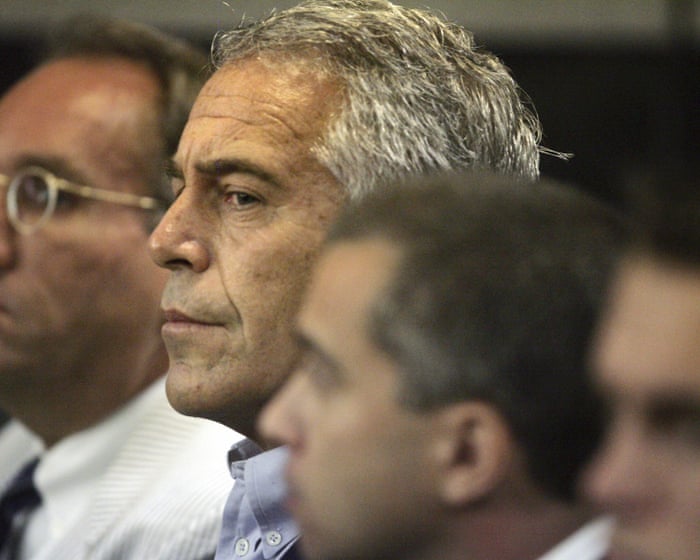
Other voter concerns have prevailed but return of Congress likely to see renewed focus on late sex offender’s activities
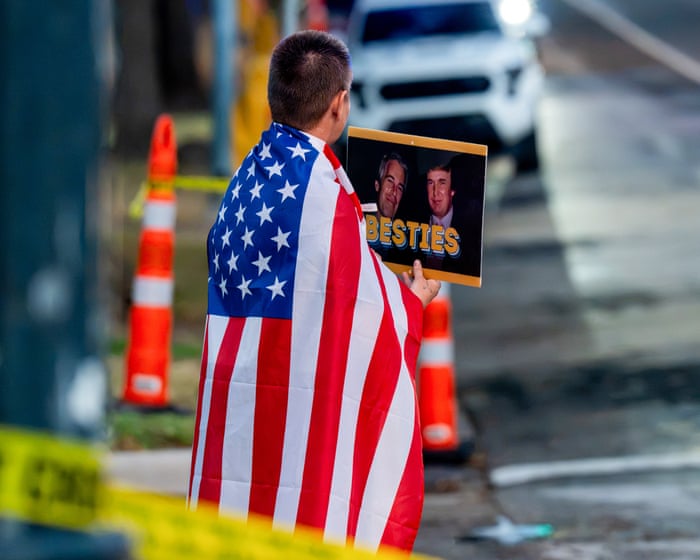
As US voters head to the polls for crucial and fraught midterm elections, some survivors’ advocates in the Jeffrey Epstein investigation have expressed concern that the scandal could recede into the background.
Political experts believe, however, the Epstein issue is not going away permanently and that many voters can balance day-to-day concerns such as affordability and AI with the scandal involving the late financier and accused sex trafficker whose social circle was widespread among America’s elite.
Republican senator faces critical re-election battle in state where president’s trade war has outraged voters
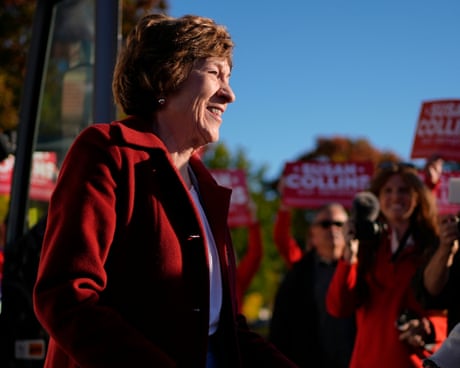
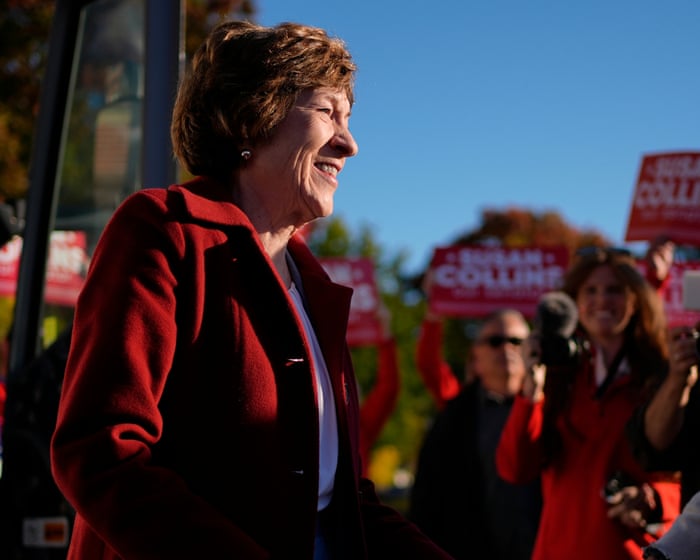
Donald Trump dropped some of the US’s tariffs on Canada on Friday to “better serve the public interest” the White House said, handing a win to Susan Collins, the embattled Republican senator for Maine, as she faces a tight re-election campaign that will help determine whether Democrats can flip control of Congress.
Collins announced that the exemptions would apply to nine agricultural products, including blueberries, potatoes, apples and seaweed. She added that many of the state’s farmers rely on specialized equipment and materials from across the border that are “unavailable from American suppliers or cannot be replaced without incurring significant expense”.
Trump justice department claims there could be ‘confusion’ about two Republicans on the ballot named Dan Sullivan
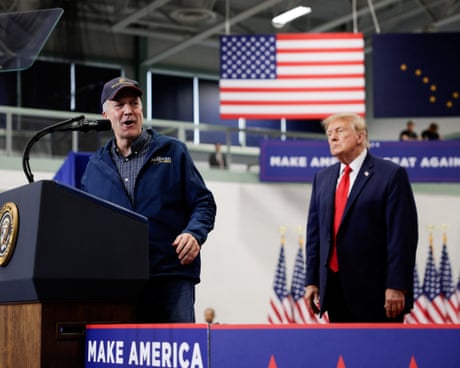
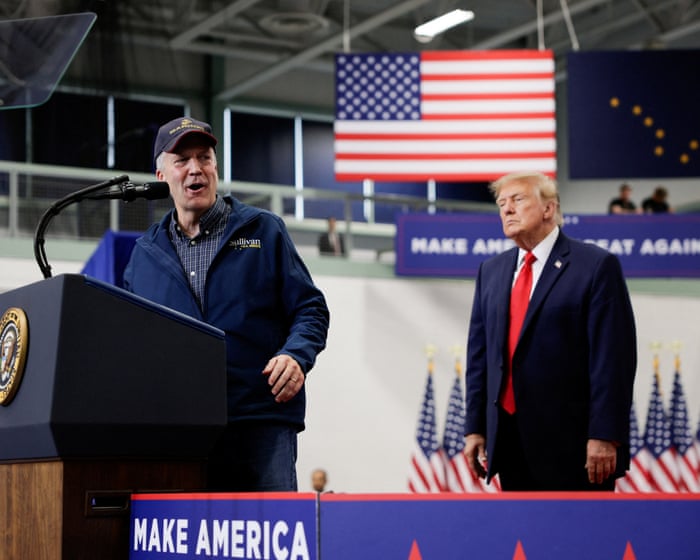
Donald Trump said he ordered the justice department to file a lawsuit to block the certification of Alaska’s US Senate results if the Republican incumbent loses, a move that voting rights experts called an“unprecedented intervention” by the federal government with control of Congress in the balance.
“I’m the one that said do it,” the president told reporters as he landed in Florida for a campaign rally on Friday.
Arizona’s Land of Standing-Up Rocks, formed from ancient volcanic eruption, gets new status with bipartisan support
An area of towering rock spires in south-eastern Arizona known among Native Americans as the Land of Standing-Up Rocks has become the nation’s newest national park.
Legislation to create Chiricahua national park was sent to the White House and Donald Trump signed it on Tuesday. It passed Congress with bipartisan backing and is now the 64th US national park.
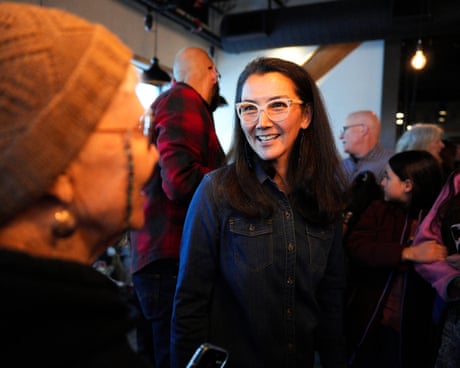
Mary Peltola’s campaign to represent Alaska in the US Senate has taken her to parts of the massive state’s interior that are inaccessible by road and on the frontlines of the cost-of-living crisis she hopes will make her the first Democrat to win the seat in nearly two decades.
She has been to towns where paper towels retail for $40, a half gallon of oat milk goes for $21 and the cost of a new freezer can be quadruple what it is in the state’s largest city, Anchorage, simply because it’s so complicated to get there. Along the Arctic Ocean, she’s heard of communities where power bills have climbed to $1,500 a month because they rely on generators for power and the Iran war has pushed the cost of diesel to new heights.
Frustration with a sprawling fraud scandal has cut Peggy Flanagan’s poll lead – could ex-NFL reporter Michele Tafoya win a first statewide election for Republicans in 20 years?
As Democrats fight to regain control of the US Senate, hopes are rising in states – from Kansas to Texas – where they have not prevailed in decades. But in Minnesota, where Republicans have not won statewide election since 2006, the contest for an open Senate seat is closer than expected.
Should Peggy Flanagan – the state’s Democratic lieutenant governor – win the election, she will be the first Native American woman to serve in the US Senate. But history has not yet been made. The closely watched Cook Political Report shifted its rating on the race this week from “likely Democrat” to “lean Democrat”.
Minnesota congresswoman Ilhan Omar said she plans to move out of her Washington DC apartment after federal agents raided her residence last week as part of a larger immigration investigation.
“I mean obviously, I can’t continue to live there,” Omar told MS Now in an interview that aired on Wednesday. “So we have to figure out where to move to, because our address has been public and with the death threats that I deal with, it’s no longer going to be feasible to be in that house and have my kids, like, visiting off and on, having people track them.”
Former speaker is latest target of mailings sent to various Congress members in the lead-up to the midterm elections
California representative Nancy Pelosi’s office received “a suspicious letter” on Wednesday in what appears to be the latest incident of ill-intentioned mailings targeted at US Congress members before the midterm elections.
The offices of more than three dozen members of Congress across the political spectrum have received envelopes containing white powder in recent days. One lawmaker’s office said preliminary tests indicated the powder was not hazardous.
Lawler, a moderate Republican, is fending off a challenge from Democrat Cait Conley in the Hudson valley. It is among the most-watched races that could determine whether Republicans hold on to their majority in Congress.
Leaders of India’s governing coalition are trying to frame the demonstrations as a power grab by traditional political parties rather than a grass-roots youth movement.
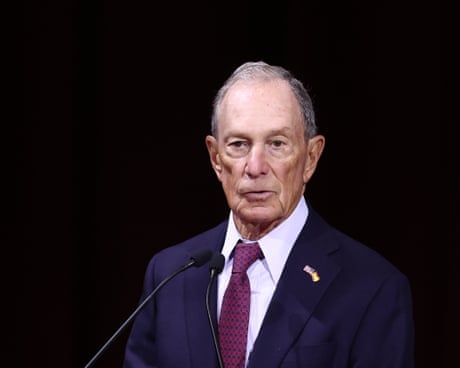
Billionaire ex-mayor of New York City is focusing funds on House races to help Democrats retake majority in midterms
The billionaire Michael Bloomberg will spend $80m to help Democratic candidates in the midterm elections, US media reported on Tuesday, a significant infusion of cash for a party that has recently struggled with fundraising as it seeks to win control of Congress.
The reported donations came as Donald Trump announced on Tuesday he intended to spend a total of $400m to aid Republican candidates, with $300m already disbursed.
Envelopes containing powder come weeks before midterms as federal agents try to identify who is behind campaign
More than three dozen members of the US Congress have had their offices targeted with envelopes containing white powder, less than three weeks before the 3 November midterms, as federal agents try to identify who is behind them.
The latest is the Virginia Democrat Suhas Subramanyam, whose Leesburg district office was evacuated on Monday after an envelope containing a suspicious substance arrived. He said the office was cleared quickly, adding that “acts of political intimidation have no place in our country”.
US President Donald Trump wrote in a Truth Social post on 18 October that he did not want to “drive, foolishly, Russia away from the bargaining table.” He also wrote: “Signing that document at this time will do that, and I can sign it later, or any time that I want!”
Trump was referring to sanctions and tariffs under the Lindsey O. Graham Sanctioning Russia and Iran Act of 2026, which he waived in an executive order on 16 October, days before the measures were due to take effect. The waiver suspends additional economic penalties intended to pressure Moscow over its war against Ukraine, while leaving earlier US sanctions in place. The decision came weeks before the 3 November midterms, in which Republicans are defending slim majorities in both chambers, and analysts said the penalties could have pushed up oil prices for Americans already paying more, largely because of the US-Israeli war with Iran, Reuters reported.
Trump says Zelenskyy could have made a better deal two years ago
A week before the waiver, Trump had announced a deal for Russia to increase diesel supplies to global markets. The Treasury also issued a license, valid until 7 April 2027, permitting certain transactions in Russian-origin diesel.
In the Truth Social post, Trump accused Ukrainian President Volodymyr Zelenskyy of targeting Russian diesel refineries, saying the strikes were “seriously hurting the world diesel markets, including those in the United States.” Kyiv had paused its refinery strikes for three days at Washington’s request after Trump declared an energy ceasefire on 11 October, which Russia never confirmed, then resumed them. Since then, Russia has struck Ukraine’s energy sector 76 times, Zelenskyy said on 18 October.
Explore further
Kyiv gets no warning of the first of two Russian ballistic waves, hours after Zelenskyy said US alerts were back
Trump wrote that Zelenskyy “doesn’t want to end this war, and probably never did,” and that he “could have made a better deal two years ago than he can now.”
“His country is in shambles, a large portion of his land is lost, his oceans and seas are gone, and his male population is low, wounded, and/or dead,” Trump added.
He also said Russia was “doing very little, if anything, to help” Iran and that he wanted to keep it that way.
A day earlier, Trump said he had not made a final decision
On 17 October, Trump told reporters at Mar-a-Lago that he had not announced his final decision. “A lot of you don’t know what my decision is yet, but we’ll figure it out, and you’ll figure it out,” he said, Reuters reported.
“I think the president wants to take the 60-day period of time to sort of analyze what imposing both sanctions and tariffs will mean to the global economy and even to the US economy,” US Secretary of State Marco Rubio told reporters before departing for Uzbekistan the same day.
Zelenskyy calls the waiver a pity as Republicans split
Zelenskyy called it a “pity” that Trump had waived sanctions under a law named for the late Senator Lindsey Graham, who “really believed in Ukraine.” He said he hoped Trump would change his decisions, NBC News reported.
Discussing the diesel deal on NBC’s Meet the Press, Zelenskyy said US oil prices had risen because shipping through the Strait of Hormuz was blocked, not because of Ukraine.
Explore further
A month before the diesel waiver, Trump’s envoys had already pitched Kyiv on Russian gas, NYT says
On 17 October, Zelenskyy told journalists that “the decision to undo all of this, to block all of it, seems wrong to me” and that it “definitely helps only the Russians.” His remarks appeared in Ukrainian on his official Telegram channel.
“Sanctions relief will continue. I think the diesel deal and the move regarding the Lindsey Graham Act are not the end of it. Unfortunately,” Zelenskyy said.
On 19 October, Zelenskyy wrote that partners had again given no warning of Russia’s overnight ballistic attack and that blocking missiles for Ukraine’s air defense while Russia gets sanctions eased or postponed amounts to partners denying reality.
Republican Senator James Lankford defended Trump’s decision on NBC’s Meet the Press, saying the president was “choosing the American people first.”
Senator Darline Graham, Lindsey Graham’s sister, whom Trump has endorsed for a full term, said at a campaign stop on 17 October that she would “choose to keep the pressure on Russia.”
“I don’t trust Putin and I don’t trust Russia,” Darline Graham said.
She did not directly criticize Trump but said she would not have made that choice, Reuters reported.
The last long-term federal recovery funds allocated for a major disaster were for Hurricane Milton, which hit in late 2024
Survivors of extreme weather disasters across the US are facing long waits for government assistance funds to rebuild their lives, with the last long-term recovery funds allocated for Hurricane Milton that hit Florida two years ago. Government officials estimate more than $10bn is needed in long-term disaster recovery funding to rebuild affected communities in Los Angeles county and St Louis, Missouri, alone.
Demetrice Davis’s home in north St Louis still has damage from the EF3 tornado that tore through the area in May 2025. “The insurance didn’t cover much of anything. And the Fema just kind of backed you up for a little while, but didn’t get you back on track,” he said. “The government agencies are not really doing what they’re supposed to do.”
Ex-president urges Americans to defend congresswoman, saying ‘there’s no reason to believe it will stop with her’
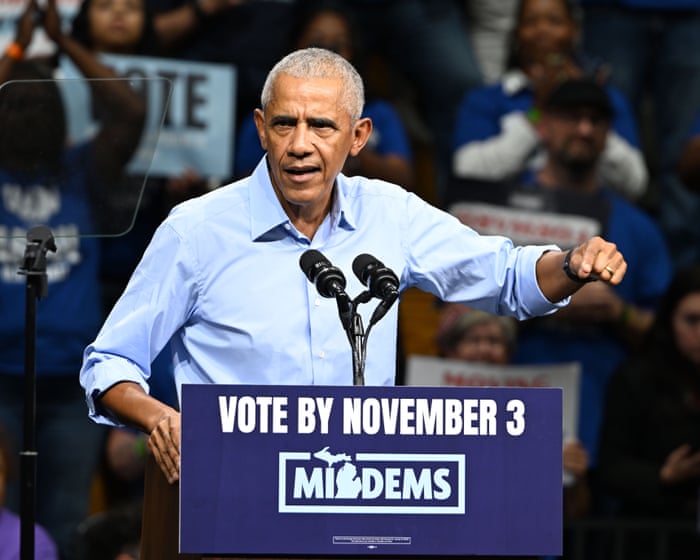
Former US president Barack Obama condemned comments by Donald Trump’s “border czar” that the Republican presidential administration could “of course” strip Democratic congresswoman Ilhan Omar of her citizenship and deport her.
Obama wrote Sunday morning, on X, that “the full weight of the federal government is being brought down on a law-abiding elected official because she has dared to criticize the president.”
Protesters held rallies across the US as part of the 'No Kings' movement, voicing opposition to the Trump administration and calling for early voting ahead of November's midterm elections. The rallies coincide with heightened legal battles surrounding voting rules, including a recent federal lawsuit filed against California regarding mail-in ballots and warnings from the justice department concerning ballot processing. Current opinion polls suggest Democrats will win the House of Representatives in the upcoming midterms, while the Senate remains too close to call
Minnesota lawmaker’s attorneys asked for return of seized items and the preservation of any recordings of search
Ilhan Omar’s attorneys have asked the US Department of Justice to return property that federal agents removed days earlier from her home during a search.
The lawyers for the Minnesota Democrat contended that the seizure as “neither justified nor lawful”, according to a letter that the Associated Press reported on Friday.
US President Donald Trump has suspended the tariffs and sanctions on the biggest buyers of Russian oil set by the Lindsey Graham Act, the law he signed himself in September. He says the move serves US national interests, according to an executive order published on the White House site.
The act required the president, within 30 days, to impose 100% tariffs on all goods from the five biggest buyers of Russian oil, to sanction a range of Russian entities and to put 500% tariffs on all Russian energy imports to the US. The deadline for those measures fell on 18 October.
Trump has used the president’s power under Section 115 of the Graham Act, which allows him to waive sanctions, restrictions, and duties by certifying to Congress in writing that doing so serves US national interests and submitting a report explaining why. The act does not, however, allow him to cancel sanctions that have already been announced.
Moscow calls it historic, Kyiv calls it a gift to Putin
The two capitals read the same order in opposite ways. Kirill Dmitriev, an envoy for Russian leader Vladimir Putin, called it “an important and truly historic moment” on X, claiming the sanctions had mainly harmed the US economy and world markets.
“Economic cooperation between Russia and the US serves the interests of both nations, contributes to global economic stability and lays the foundation for building trust and achieving lasting peace,” Dmitriev writes.
President Volodymyr Zelenskyy answered from under fire. Russia struck Ukraine’s energy system on 17 October, and at that very moment Washington chose “to completely ignore the Lindsey Graham law, which was supposed to impose real, effective pressure on Russia to end this war,” he says.
A law its own backers say is being gutted
The waiver lands amid a bipartisan revolt in Congress. Seven Republican and Democratic senators had already warned on 11 October that Trump’s move to allow Russian diesel imports had broken the law Congress passed after the full-scale invasion, urging the administration to reverse it so US money would not help finance Russia’s war.
Meanwhile, Zelenskyy argued the law can still work if Washington lets it.
“This law could, and still can, help a great deal. But the law has actually to work, and every vote for it matters,” he said, warning that the step only pushes Moscow to strike harder.
The world must not give up ground and must try to end the war, Zelenskyy added.
“To end it, and not give Putin every reason to continue it indefinitely,” he stressed, thanking everyone who “is truly fighting for peace and helping Ukraine," he stated.
The word from the Ukrainian opposition
The Ukrainian opposition also commented on Trump’s decision. Iryna Herashchenko, co-chair of the European Solidarity parliamentary faction, said that “the most cynical and stupid decisions are usually made by rulers on Saturday night,” when public attention is scattered, and people are preparing for the weekend.
“Rehabilitating Putin harms not only Ukraine but also the US itself, strengthens the axis of authoritarian regimes, and undermines international security,” she claimed.
President appears at rally for struggling Mike Collins, dismisses critics and touts ‘most successful’ two-year run
At a rally in north Georgia, Donald Trump again claimed that the 2020 election in Georgia was fraudulent, alleging that the election of US senator Jon Ossoff was illegitimate.
Ossoff, who faces US congressman Mike Collins in November, does not represent Georgia’s values, Trump said.
A bipartisan group of 22 House lawmakers is urging President Donald Trump to fully implement the new Russia sanctions law and revoke a license allowing certain Russian diesel transactions. In a letter sent on 15 October, they copied Secretary of State Marco Rubio and Treasury Secretary Scott Bessent and requested details on planned sanctions, tariffs and waivers.
Their request comes as the law’s first requirements fall due on 18 October, while lawmakers from both parties challengethe administration’s decision to allow certain Russian diesel transactions. Some restrictions take effect automatically, while others require presidential action. The law does not specify a penalty for the president missing the deadline.
What the Russia sanctions law requires
Congress passed the Lindsey O. Graham Sanctioning Russia and Iran Act of 2026 by votes of 86–11 in the Senate and 262–159 in the House. Trump signed it on 18 September. Graham, a Republican senator from South Carolina, died in July.
Restrictions taking effect automatically on 18 October include a ban on US banks and broker-dealers processing transfers to or from the Russian government, a ban on new US investment in Russia, a ban on new US investment in Russia’s energy sector, and a ban on US energy exports to Russia.
Other measures require presidential action by the same date. The law directs Trump to review and sanction Russian officials, oligarchs and shadow-fleet vessels, sanction the Bank of Russia, specified Russian banks and state-owned companies, and impose tariffs of up to 500% on Russian goods. Tariffs of up to 100% can apply to goods from countries among the five largest importers of Russian oil or gas, or among the top five countries facilitating Russian oil sanctions evasion.
Trump may waive sanctions, restrictions and tariffs under the law if he first certifies in writing to Congress that a waiver is in the US national interest and submits a report explaining its basis.
The diesel license at the center of the dispute
House members also urged Trump to revoke General License 135, which the Treasury Department issued on 9 October and that is valid until 7 April 2027. It permits certain transactions involving Russian-origin diesel, including imports into the United States. Trump said Russia would immediately supply more than 300,000 tons of diesel to US and global markets and predicted prices would fall sharply, according to a 9 October Truth Social post.
On 13 October, a bipartisan group of 12 senators also urged Trump to rescind the deal and revoke the license. Seven senators said the deal conflicted with a 2022 law banning Russian energy imports.
The Graham Act says nothing in its provisions affects the Treasury secretary’s existing authority to issue general licenses. That provision does not resolve whether the diesel license complies with the separate 2022 law.
A White House official told Newsweek the administration would comply with the Graham Act. Bessent said the administration would use “all the legal authorities we have” and called the deal “good for the American people,” Fox News reported on 11 October.
How the sanctions could be lifted
Separately, the law sets a process for terminating sanctions, restrictions or duties against Russia. Trump must report to Congress that Russia has signed a peace agreement accepted by Ukraine’s government and ceased military hostilities against Ukraine, as well as activities to overthrow, dismantle or subvert its government. Congress has 30 days to block termination through a joint resolution of disapproval, or 60 days for reports submitted between 10 July and 7 September.
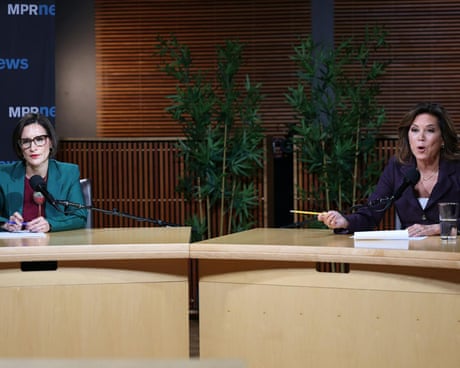
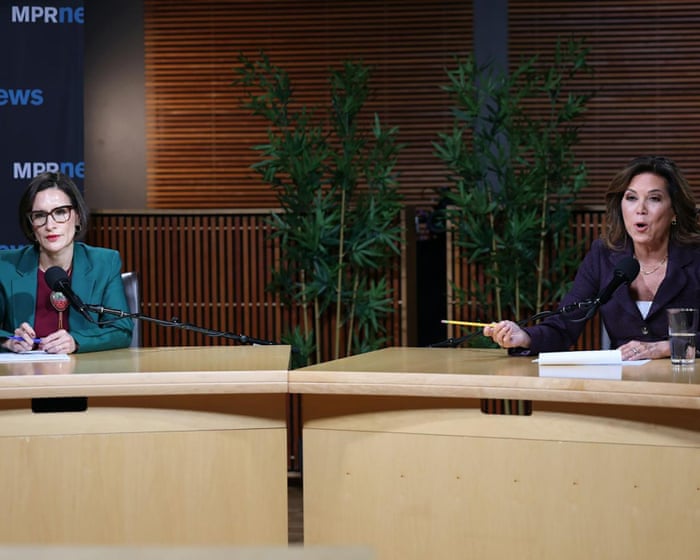
In Maine, Troy Jackson, the Democratic nominee for US Senate, and Susan Collins, the five-term Republican incumbent traded barbs on Thursday in their final debate ahead of the November midterms.
This was the fourth showdown between the pair. Collins has tried to cast Jackson as an inexperienced state lawmaker, and attempted to yoke him to the former nominee, Graham Platner, who dropped out of the race earlier this year following allegations of rape and sexual assault (which he still denies). Meanwhile, Jackson accused his opponent of corruption, and castigated her for her “moderate” persona in Congress.
The two shootings took place only a few weeks before pivotal, nationwide local elections, and as the party, the A.N.C., is embroiled in a dispute over the eligibility of more than 100 candidates.
A leader of the Jewish community in Ireland said a hotel canceled a deal for 70 rooms when it learned they were reserved for guests attending the international forum.
Move comes as Senator Elizabeth Warren condemns Barclays response to questions over ex-boss’s ties to sex offender
US lawmakers have unveiled a new bill to hold Wall Street’s “Epstein-connected” bosses to account for helping finance the late sex offender’s crimes.
It came as top Democratic senator Elizabeth Warren condemned the UK bank Barclays for “dodging responsibility” over its failure to vet former boss Jes Staley and his ties to the once well-connected billionaire.
Talarico casts himself as a moderate who would put Texans’ needs over party allegiances amid close contest against Republican Ken Paxton
James Talarico, the Texas Democratic nominee for Senate, sat face to face with skeptical Republicans and independents voters who grilled him on a slew of contentious issues including Israel’s military campaign in Gaza, abortion and foreign aid, during a CNN town hall co-hosted by the Jubilee Media digital platform on Wednesday.
One voter, a young Republican activist who volunteered at the party’s midterm convention in Dallas last month and recently appeared on Fox News as a supporter of Talarico’s opponent, questioned the authenticity of Talarico’s faith, referencing a past remark where he described God as nonbinary.
Congress calls for Match Group and others to do more to help victims like Mary, who lost $100,000 to app scammer
Mary met a man on the dating app Plenty of Fish in 2024. She told the Guardian she had been looking for a connection, but instead became the victim of a romance scam that cost her almost $100,000.
“There was a lot of conversation, and then it started with the constant contact, pressure and repeated asks for money,” Mary, who asked that her last name be withheld, said in an interview on Tuesday. “It just escalated really, really quickly.”
The raucous demonstrations by opposition groups on Monday followed days of an effective lockdown and mass detentions of young protesters by security forces.
Seven US senators from both parties said the Trump administration's decision to authorize Russian diesel imports conflicts with a 2022 law banning Russian energy imports and accused it of failing to consult Congress, in a statement on 11 October.
The dispute comes as the war with Iran drives up US fuel prices, which US President Donald Trump has blamed on Ukraine's strikes on Russian refineries. Trump says Russian supplies will help bring prices down, while lawmakers warn that purchases could provide Moscow with revenue to continue its war against Ukraine.
The senators—Republicans Susan Collins, Lisa Murkowski, Thom Tillis, and John Curtis, and Democrats Jeanne Shaheen, Richard Blumenthal, and Ron Wyden—called on the administration to reverse course, saying the US should not provide Russian President Vladimir Putin with “a financial lifeline.”
What the 2022 law requires before the ban can end
The law, signed on 8 April 2022, allows the president to end the import ban only after submitting a certification to Congress. The certification must find that Russia has agreed to pull out its forces and stop the fighting on terms Ukraine's free and independent government accepts, no longer poses an immediate threat of attack to any NATO member, and recognizes Ukrainians' right to pick their own government.
The law also requires consultation with four congressional committees and a report at least 45 days before certification. The termination takes effect 90 days after certification unless a joint resolution of disapproval is enacted into law during that period. The senators allege the administration failed to meet the consultation and reporting requirements. Their statement does not establish whether a certification has been submitted.
Treasury’s license cites sanctions rules, not the 2022 law
The Treasury Department's Office of Foreign Assets Control issued General License No. 135 on 9 October, authorizing certain transactions involving Russian-origin diesel that would otherwise be restricted under US sanctions regulations. It runs until 7 April 2027 and cites sanctions regulations, not the 2022 import-ban law.
Explore further
EU blacklists 1,569 Russian arms suppliers and their bosses in its biggest sanctions round ever, as Trump eases up on Moscow
Treasury Secretary Scott Bessent defended the deal on Fox News on 11 October, saying the administration would proceed under existing legal authority. He said lawmakers who argued that either the earlier law or the current Lindsey Graham sanctions law prohibited the deal were wrong, and argued the agreement would lower prices, Reuters reported.
How much diesel Trump says Russia will supply
Trump said on Truth Social that Russia would immediately supply more than 300,000 tons of diesel to US and global markets, followed by 500,000 tons in November and 1 million tons after that. He said Russia would deliver another 3 million tons “within a short period of time,” depending on the condition of its diesel refineries. The promised volumes have not been independently verified.
Russia partially lifted its diesel export ban on 10 October, allowing 500,000 tons onto the global market at this stage, the Russian government said, according to state news agency TASS.
A House bill to block Russian oil purchases
Pennsylvania Republican Rep. Brian Fitzpatrick plans to introduce the Ronald Reagan Peace Through Strength Act to block Russian oil purchases and use a discharge petition to force a House vote, Axios reported. The procedure can force consideration of a bill if 218 House members sign. Republican Rep. Don Bacon said he would support the bill and called Trump's decision a serious mistake, according to Ukrainska Pravda.
Barrasso defends the deal. Zelenskyy calls it an investment in war
On CBS's Face the Nation on 11 October, Senate Majority Whip John Barrasso, a Republican from Wyoming, called the deal “another point of leverage” for Trump to use against Putin. Asked whether the decision violated US law, Barrasso said the president was balancing competing priorities and had to make tough decisions.
Ukrainian President Volodymyr Zelenskyy wrote on Telegram on 9 October:
“Allowing Russia to sell petroleum products is an investment in a war that must be ended, not prolonged.”
Trump also expects Ukraine to stop striking Russian refineries under his proposed energy ceasefire, a White House official told Axios. Zelenskyy said Kyiv would halt such strikes if Moscow did the same.
Lawmakers in the capital were forcibly removed for a second consecutive day as police cracked down on demonstrations against the deletion of voter names.
Police detaining Indian opposition leader Rahul Gandhi, during a protest organized by opposition parties demanding the resignation of Chief Election Commissioner Gyanesh Kumar, in New Delhi, India, on Wednesday.
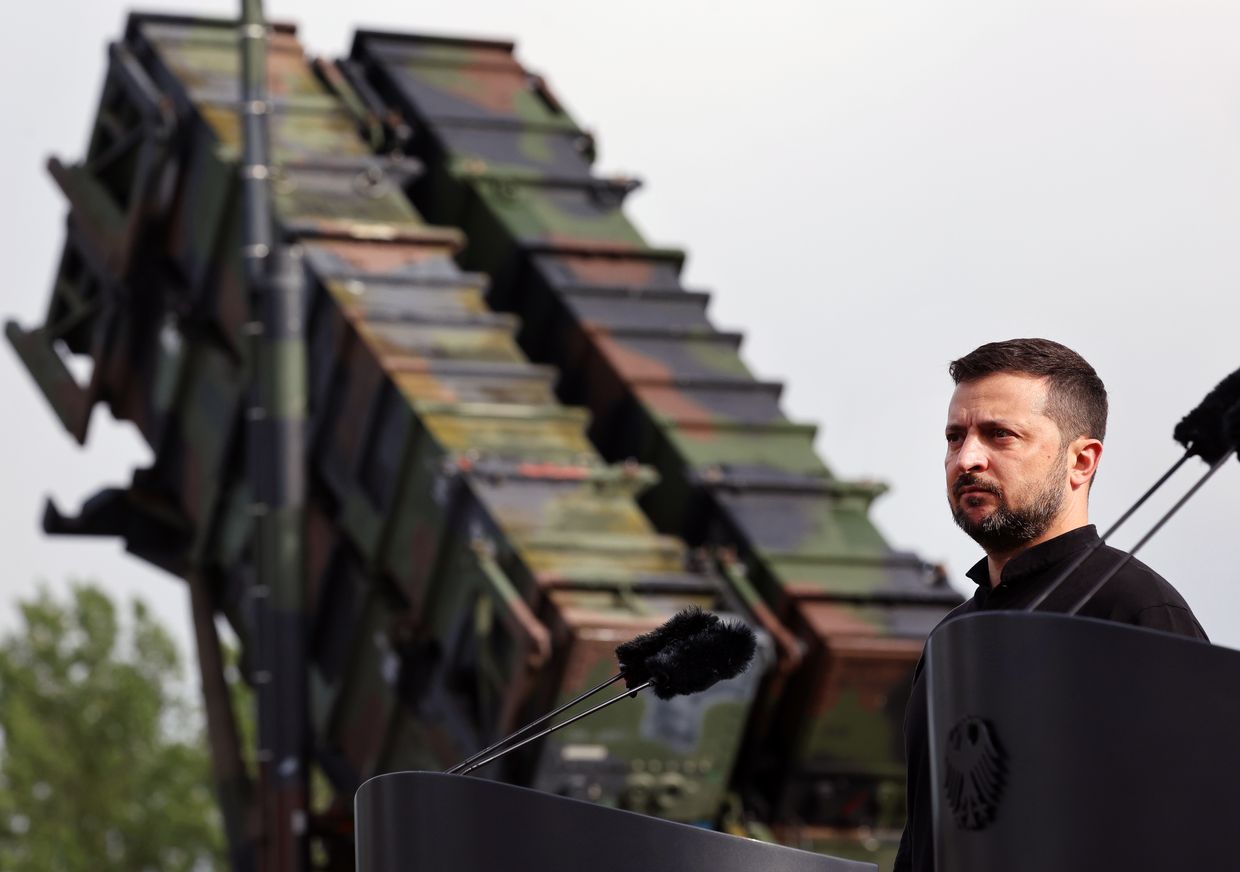
A bipartisan group of U.S. lawmakers are voicing their opposition to the Trump administration's decision to halt shipments of some air defense missiles and other weapons previously promised to Kyiv.
The U.S. Defense Department (DOD) made the decision to pause the aid deliveries after conducting a review of U.S. munitions stocks, reportedly concerned about dwindling levels of artillery rounds, air defense missiles, and precision munitions.
Among the items being held back from Ukraine are over two dozen Patriot air defense missiles, over two dozen Stinger air-defense systems, precision artillery rounds, Hellfire missiles, drones, and more than 90 AIM air-to-air missiles that Ukraine launches from F-16 fighter jets. The Washington Post reported that the weapons were already in Poland being prepped for delivery to Ukraine.
Republican Rep. Brian Fitzpatrick, the co-chair of the Congressional Ukraine Caucus, lambasted the decision in a post on X.
I will be aggressively looking into this matter and will be demanding accountability. We must build up our own Defense Industrial Base here in the U.S. while simultaneously providing the needed assistance to our allies who are defending their freedom from brutal invading… https://t.co/pRTOMCghWh
— Rep. Brian Fitzpatrick 🇺🇸 (@RepBrianFitz) July 2, 2025
Fitzpatrick, a staunch ally of Ukraine who has previously visited the front line, said he "will be aggressively looking into this matter and will be demanding accountability."
"We must build up our own Defense Industrial Base here in the U.S. while simultaneously providing the needed assistance to our allies who are defending their freedom from brutal invading dictators. To not do both is unacceptable," the Congressman added.
In a letter to U.S. President Donald Trump about the reported halt of air defense deliveries, Fitzpartick requested an emergency briefing from the White House and DOD on the shipments.
"Ukraine's courage must continue to be met with action, and the United States must continue to lead with clarity and purpose," Fitzpartick wrote.
Another Republican House member, Rep. Michael McCaul, said he is examining "very intensely" whether the Pentagon’s freeze breaches legislation on aid to Ukraine passed in 2024, Politico reported.
As Trump continues to call for a ceasefire from Moscow, McCaul said that the decision comes "at the wrong time."
"If you want to get (Russian President Vladimir Putin) to the negotiating table in good faith, you have to put leverage and pressure on him, and that would be (Senator) Lindsey Graham’s economic sanctions and the flow of weapons," McCaul said. "If you take the flow of weapons out, yeah, then you’re not, you don’t have the leverage over Putin to negotiate."
Other Republican members of Congress have thus far dismissed concerns over the reported halts, stating that they are waiting to be briefed with additional information before speaking about the reports.
On the other side of the isle, Democratic lawmakers have also lambasted the real world implications of halting military aid for Ukraine.
Senator Richard Blumenthal, a member of the Senate Armed Services Committee, said in an interview that more civilians are "going to lose more lives, more people will be maimed and injured — more homes, hospitals, schools will be destroyed," calling the decision, "fallacious and maybe even disingenuous."
Since his inauguration in January, Trump has not approved any additional military aid packages for Ukraine. Defense Secretary Pete Hegseth also announced recently that the U.S. will reduce the total aid it sends to Ukraine in its upcoming defense budget.
In his evening address on July 2, President Volodymyr Zelensky said Ukrainian and U.S. officials are working through the aid issue at a "working level," including discussions on critical air defense support. Head of the Presidential Office Andriy Yermak held a late night phone call with Rep. Brian Mast, Chair of the House Committee on Foreign Affairs.
Ukraine's Defense Ministry said it has not received any formal notification of delays or cancellations but has requested urgent consultations with U.S. defense officials.
The Foreign Ministry also summoned U.S. Charge d'Affaires John Ginkel, warning that "any hesitation" in military support would encourage further Russian aggression.
The Kremlin welcomed the decision, with spokesperson Dmitry Peskov saying, "The fewer weapons that are supplied to Ukraine, the closer the end of the (war)."
NATO Secretary General Mark Rutte expressed understanding of Washington's desire to safeguard its stockpiles but said, "Ukraine cannot do without all the support it can get."
A bipartisan group of U.S. lawmakers introduced a resolution in Congress demanding the return of Ukrainian children abducted by Russia, according to a press release published on June 30.
Kyiv estimates that Russia has abducted or forcibly displaced at least 19,500 Ukrainian children since the outbreak of the full-scale invasion of 2022, and has deported them to Russia, Belarus, or the occupied territories of Ukraine.
The resolution, introduced in the U.S. House of Representatives by Democratic Congressman Gregory Meeks and Michael McCaul, a Republican chair of the Foreign Affairs Committee, condemns the abductions and calls for the repatriation of children even before a potential peace deal.
Senators Chuck Grassley (Republican) and Amy Klobuchar (Democrat) introduced the resolution in the Senate.
"These children have been stripped of their national identity, adopted into Russian families, or indoctrinated as soldiers for the Kremlin," McCaul said in a statement.
"Russia’s mass-scale child abduction is nothing short of evil; the United States must demonstrate moral leadership by demanding every child be returned to his or her family in Ukraine before true peace can be achieved."
The Trump administration has previously cut funding for a Yale University-based Ukraine Conflict Observatory tracking the abduction of Ukrainian children. Nathaniel Raymond, the executive director of the Humanitarian Research Lab overseeing the effort, has said the operation would cease on July 1 due to the lack of funds.
Since its launch in May 2022, the observatory has compiled evidence of Russian war crimes, including the deportation of Ukrainian children, many of whom were sent to reeducation camps or adopted by Russian families.
The database suggested that the actual number of abducted Ukrainian children could be higher than the figure provided by Ukraine's Children of War database, placing it as high as 30,000. Over 1,360 children have been brought back home.
According to the resolution newly introduced in Congress, "Russia's abduction and Russification of Ukrainian children demonstrates the intent of the Government of the Russian Federation to erase the Ukrainian nation and identity."
The document also says that Russia's invasion "has significantly increased the risks of children being exposed to human trafficking and exploitation, child labor, sexual violence, hunger, injury, trauma, deprivation of education and shelter, and death."
Andriy Yermak, President Volodymyr Zelensky's chief of staff, called the resolution "an important step in support of justice and peace."
The abductions have been widely denounced as war crimes and violations of international law. In 2023, the International Criminal Court issued arrest warrants for Russian President Vladimir Putin and children’s rights ombudsman Maria Lvova-Belova over their roles in the deportation of Ukrainian minors.
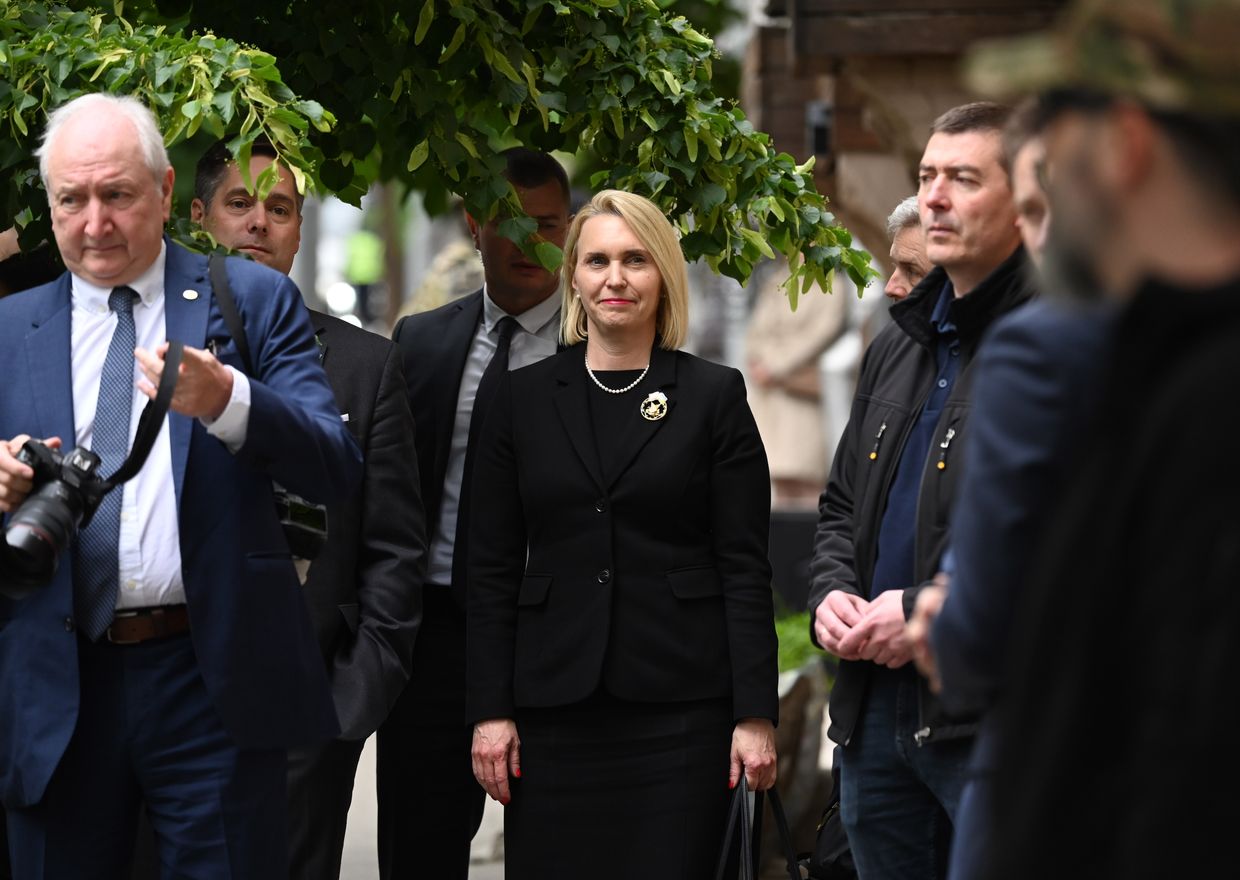
Former U.S. Ambassador to Ukraine Bridget Brink announced on June 18 that she is running for Congress from Michigan's 7th district, pledging to oppose U.S. President Donald Trump.
"I've dedicated my life to protecting democracy and fighting for freedom. It's why we stood up to (Russian President Vladimir) Putin and why I spoke out against Trump," Brink wrote on X.
"My next mission: fighting for what's right here at home."
Brink resigned from her post on April 10, and in a May 16 op-ed in the Detroit Free Press, publicly confirmed her departure was driven by disagreement with the Trump administration's stance on Russia's full-scale war against Ukraine.
"I just came home to Michigan from three years in the toughest job of my life," she wrote. "I could no longer in good faith carry out the administration's policy and felt it was my duty to step down."
Brink accused the Trump administration of pressuring Ukraine rather than holding Russia accountable, calling that approach "dangerous and immoral."
"I cannot stand by while a country is invaded, a democracy bombarded, and children killed with impunity," she wrote. "Peace at any price is not peace at all — it is appeasement."
Elections for the representative of Michigan's 7th district will take place in November 2026.
Trump, who began his second term in January, pledged to end the war within 100 days. That deadline has passed with no deal. He has alternated between blaming both sides for the conflict and claiming a breakthrough is still possible.
Despite repeatedly expressing frustration with Putin, the U.S. president has continued to avoid placing additional sanctions on Moscow, even as the Kremlin refuses to agree to a ceasefire.
Brink's relationship with Ukraine's leadership frayed in April after the U.S. Embassy issued what was seen as a muted response to a deadly Russian missile strike on Kryvyi Rih that killed 20 civilians.
"Horrified that tonight a ballistic missile struck near a playground and restaurant in Kryvyi Rih," Brink posted on X following a Russian missile attack. "This is why the war must end."
"Unfortunately, the response from the U.S. Embassy is surprisingly disappointing — such a strong country, such a strong people, and yet such a weak reaction," he wrote on April 5.
Julie S. Davis, the new U.S. Charge d'Affaires to Ukraine, arrived in Kyiv on May 5.

 Connexion