Vue lecture

Ukrainian robot commander calls ground robots “Persian elephants.” What army really needs are “Arabian steeds”, he says
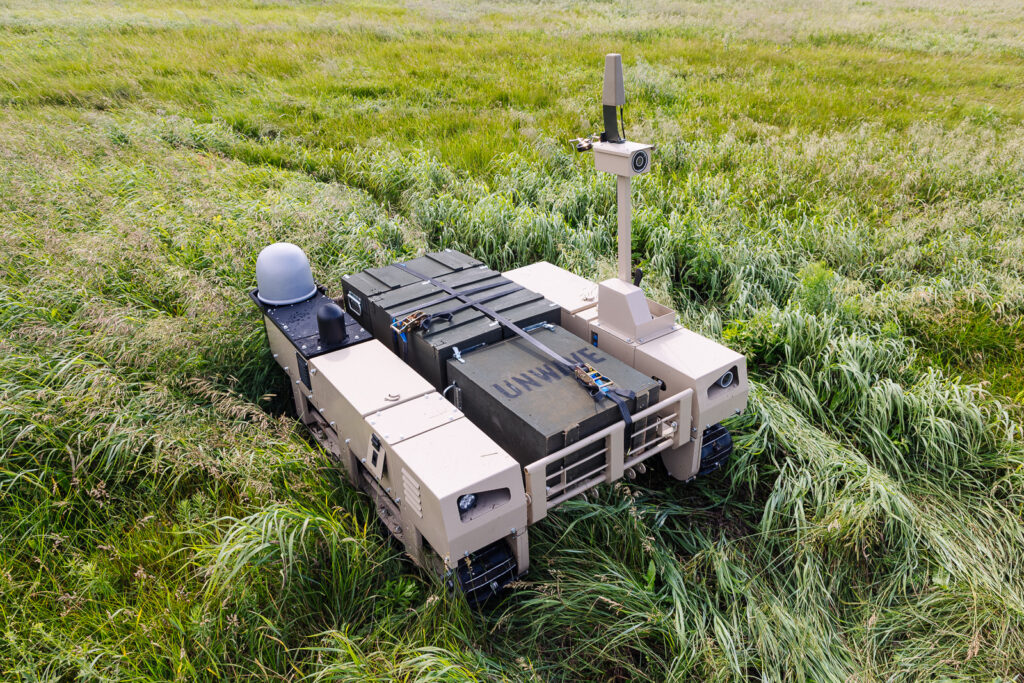
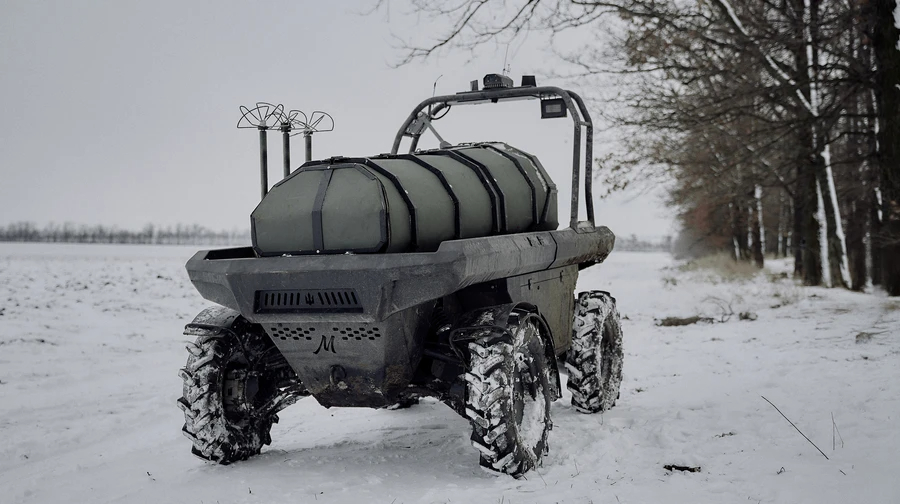
ukraine’s war logistics go robotic battle zones · post ground complex termit cargo board наземний роботизований комплекс «терміт» із вантажем на борту фото тencore several ukrainian combat brigades have shifted

A Ukrainian ground robot used to run 12-15 missions. Near Kupiansk, it now survives three or four. The lifespan is collapsing under the denser Russian FPV drone and mining fire, Andrii Kopach, call sign "Matematyk", who commands a ground-robot unit in the "Lava" unmanned regiment of the "Khartia" corps, told Oboronka.

Ground robots have become a daily part of the front in Ukraine. Ukrainian units ran 16,676 logistics, strike, and evacuation missions with them in June, up 122 percent since January, and the military has contracted more than 22,000 for 2026, nearly double the 2025 total. That scale runs into a wall at the front, where Russia now assigns FPV crews, including fiber-optic drones, specifically to kill the robots.

The lifespan keeps shrinking

The pace of technological change is the core problem, Matematyk said. Ukrainian makers keep improving the platforms, but cannot always keep pace with how quickly the fighting evolves.

A machine may last only three or four missions now, as in Kharkiv Oblast, where it was eight or nine before and 12 to 15 earlier still, he said. Mining, Russian fiber-optic activity, FPV activity, and a targeted focus on countering robots all drive the decline.

Speed is the missing requirement

Most robots at the front are technologically outdated in speed and suspension, Matematyk said. Current figures of 10 to 15 kilometers per hour no longer allow a machine to cross logistics routes safely.

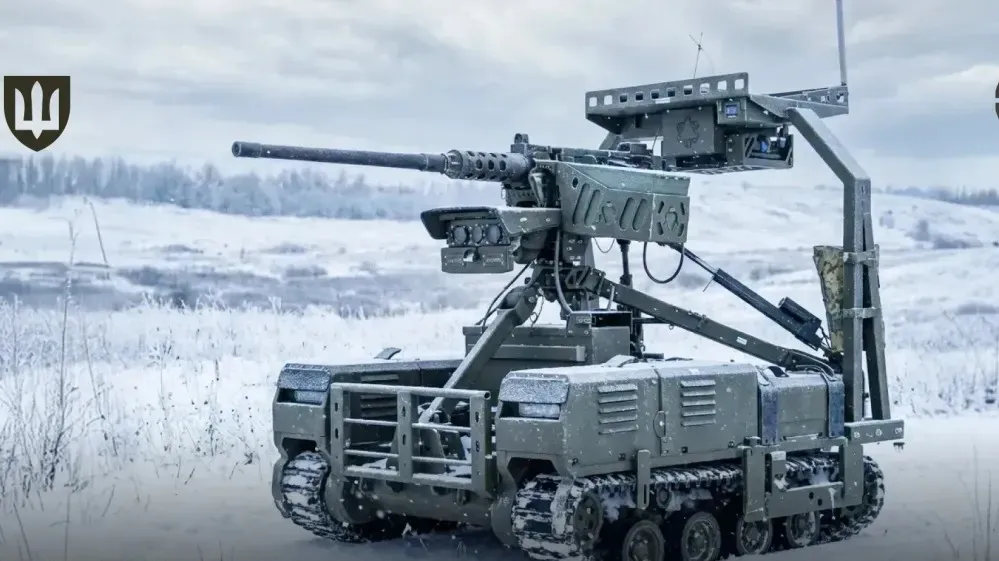
He put the problem in an image. Gun-armed combat robots, he said, are "Persian elephants", fearsome but so slow to reach the objective that "a couple of centuries" pass first. What the army needs are "Arabian steeds" that gallop in, do the job, and gallop back.

AI defense is in development

Ukrainian troops are working with Brave1 and the Digital Transformation Ministry on AI-based active-protection systems that could autonomously detect and neutralize enemy FPVs, Matematyk said. The approaches vary, from a camera to a mini-radar to a camera paired with sound.

The countermeasures could be net launchers, or for fast machines, shotgun blasts and shrapnel, he said. The detection and response are trained on models built from the data his unit has logged over previous years. Ukraine still holds a quality edge over Russian robots through better Starlink-based communications and decentralized robot groups in its units, he added.

  •  

Ukraine dismissed its defense minister in July. He is now advising NATO country on defense innovation

Former Ukrainian Defense Minister Mykhailo Fedorov during a meeting with Italian Defense Minister Guido Crosetto. Source: Fedorov

A NATO country's defense minister wanted Mykhailo Fedorov the day after Ukraine dismissed him. Fedorov, Ukraine's former defense minister, has agreed to advise Italian Defense Minister Guido Crosetto on defense innovation, he wrote on Telegram.

As deputy prime minister and digital transformation minister, Fedorov created the Brave1 defense-tech cluster, then ran the Defense Ministry from 14 January 2026 until his dismissal in July. The removal triggered nationwide protests through July, with demonstrators calling for his reinstatement.

Earlier, Fedorov refused every other post Zelenskyy offered, saying only the defense minister, the president, and the commander-in-chief truly shape the war.

"I thanked Guido for his personal support and for offering me the opportunity to serve as his adviser on defense innovation. In this role, I will help Italy develop modern warfare technologies," he said.

Crozetto moved within a day

The Italian minister said he called Fedorov the day after the dismissal and asked when he would come to Rome to work as an advisor.

Fedorov met Crosetto on the first stop of an international trip focused on digitalization and defense technology.

The focus stays on his own projects

Fedorov said his main focus is unchanged and that he continues working in Ukraine on his own projects to strengthen its defense and attract international resources. In the advisory role, he will help Italy develop technologies of modern war and adapt to new security challenges, he wrote.

The two discussed drones, autonomous systems, air defense, and the development of a defense-tech ecosystem. The future of defense belongs to countries that can quickly test and scale new solutions, Fedorov said, and Ukraine's experience could serve as the basis for a new defense model for Europe.

Earlier, the Ukrainian parliament approved Yevhenii Khmara as the new defense minister. During his first speech, Khmara made it clear that he would continue his predecessor's course — the technologization of the army.

He added that there "would be more Ukrainian weapons, and strikes would be more precise.

  •  

Ukraine has built twin-Kalashnikov turret for cheap ground robots. Security Service has already used one to destroy Russian ambushes

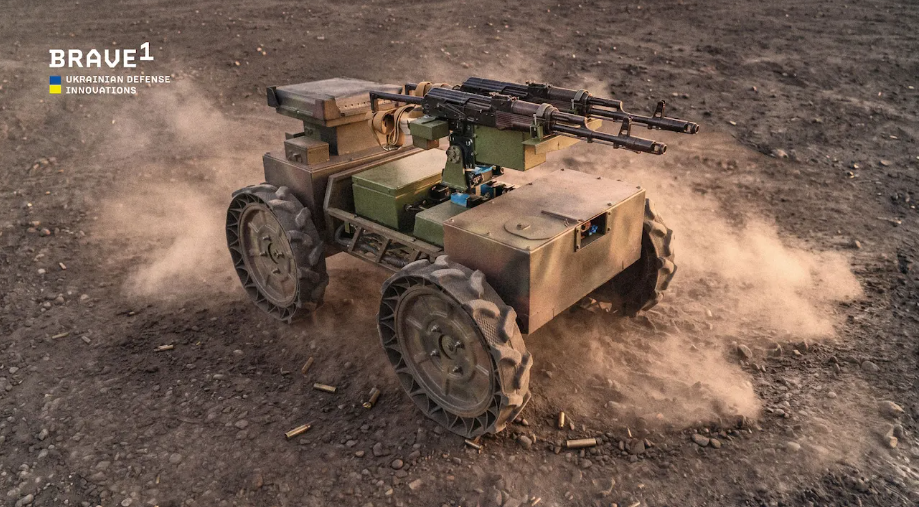
An unmanned ground vehicle with a turret for a Kalashnikov assault rifle. Photo: Brave1

Ukraine is bolting the war's most common rifle onto its robots. A company in the Brave1 cluster has developed a turret built around the Kalashnikov that mounts on low-cost unmanned ground vehicles, the state cluster's press service told Defender Media.

Ground robots have become a daily part of the front in Ukraine. Ukrainian units ran 16,676 logistics, strike, and evacuation missions with them in June, up 122 percent since January, and the military has contracted more than 22,000 for 2026, nearly double the 2025 total.

Arming them cheaply is the next step, and the Kalashnikov is the most cost-effective option because it is already the standard rifle across the force.

The robots are already in combat

Ground drones fitted with the turret are undergoing combat testing in Ukrainian units. Fighters of the Security Service Special Operations Center "A" have used one to destroy Russian ambushes set with concealed waiting-mode drones.

The complex is built on a four-wheel chassis with airless tires and an armored body. At the core of the weapon module is a twin turret mounting two Kalashnikov rifles.

The build took under six months

The developers have received a technical assignment and a grant from the cluster to create the turret. The path from idea to finished prototype took less than six months.

Beyond the base version, the turret can be mounted on other wheeled and tracked ground robots. That flexibility is the point: one weapon module across many platforms.

The rifle choice is about scale

The developers chose the Kalashnikov because it is the most widespread small arm in Ukrainian units, according to Brave1. The cluster considers it a simple, effective solution that lets Ukraine quickly scale up strike robots for assaults and for defense against Russian infantry.

Earlier, the Ukrainian Defense Ministry said it would buy logistics and strike-ground robotic complexes under a new strategy that calls for sticking to the Defense Ministry's specifications rather than approving models one at a time.

  •  

For first time, Ukraine is tendering ground robots to ministry-set specifications and no maker can take more than half of any class

The MAUL unmanned ground vehicle. Source: AIDronesUA

Ukraine's ground robots ran more than 100,000 missions in the first eight months of 2026. The Defense Procurement Agency will now buy logistics and strike ground robotic complexes according to specifications set by the Defense Ministry, rather than approving models one at a time, the ministry announced.

The mechanism is three days old. The agency applied the same structure to fiber-optic FPV drones on 22 August—classes, multiple lots each, no supplier above half a class. Ukraine is standardizing how it buys entire weapons categories, one category at a time.

The rules sort makers by class

Complexes will be divided into classes by operating range and payload, with four to five lots per class. No single manufacturer may take more than half the order within one class.

Suppliers must meet the technical specifications and hold at least one codified ground robotic complex. The procurement runs in a closed environment under defense security requirements.

"A tender is one of the best instruments for this, because we can buy more equipment for the same money and minimize the risk of supply disruptions by splitting the order among different manufacturers," Deputy Defense Minister Mstyslav Banik said.

Mission volume keeps climbing

Monthly figures of ground robot missions logged in the DELTA combat system rose almost without interruption: 7,511 in January, 11,028 in April, 19,969 in July. Units recorded another 15,729 between 1 and 20 August, about 790 a day compared with roughly 640 a day in July, The Defense Post reported.

Ukraine has contracted more than 22,000 ground robots since January, nearly double the total for all of 2025. The number of units operating them grew from 117 at the end of 2025 to 230 by mid-2026.

A commander disputes the evacuation case

The ministry lists casualty evacuation as one of the tender's purposes. A frontline officer challenged that three days ago.

Tetiana Chornovol, who commands an anti-tank guided missile platoon, said ground robots are too slow for evacuation and often easy targets for Russian drones, arguing brigades need staffed evacuation teams and small light-armored vehicles instead.

  •  

Armor can barely reach Ukraine’s front now—so robots drive and soldiers walk

A Russian tank destroyed in Kharkiv Oblast, Ukraine

Drones have pushed armored vehicles off the roads to Ukraine's front line, a Ukrainian brigade commander told RBC-Ukraine. Denys Perch, who commands the 107th Territorial Defense Brigade, says the drone-saturated belt has grown so deep that pickups no longer reach forward positions. The one enemy weapon his jammers can't touch is the fiber-optic drone.

The war has become a contest over who can pull people off the battlefield fastest, as cheap drones make any human movement near the front a target. Ukraine keeps out-inventing Russia at the front, but Russia copies each advance and floods the line with it at state scale.

When armor becomes the target

Until recently, armored vehicles still drove supplies to logistics hubs near the front. That is now almost impossible. Perch says that when a large, armored machine appears, Russian forces treat it as a prize target and swarm it with dozens of drones and munitions. Perch would sooner park his armor than seat soldiers inside it.

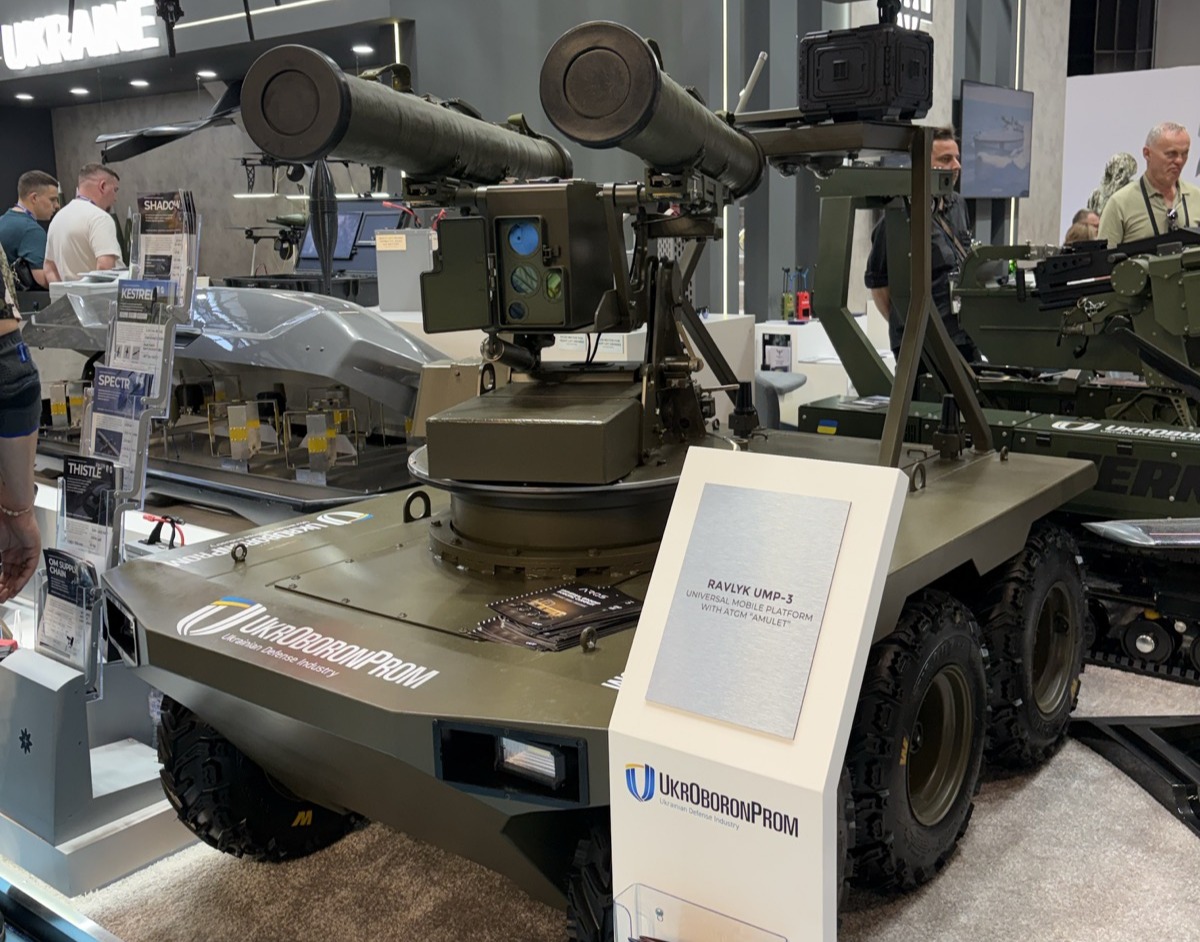
A Ravlyk UGV from Ukrainian Unmanned Technologies displayed at Eurosatory 2026, here mounting twin anti-tank launchers from Ukroboronprom. (Photo: Ukrainian Unmanned Technologies)
Explore further

This Ukrainian UGV, beloved by Ukrainian intel, is now winning over NATO countries and global defense giants

A kill zone that keeps widening

On the busiest sectors, Perch says, the kill zone—the drone-ruled strip around the contact line—now runs 15 to 20 kilometers deep. Some positions take three days to reach on foot. Where troops once drove most of the way and walked the last stretch, they now walk it all.

Robots take the drive

Under Perch, the brigade climbed, by his account, from around 22nd to third among Ukraine's Territorial Defense forces on the military's strike-results leaderboard, the home-guard units now fighting on the front. Ground robots—unmanned ground vehicles (UGVs)—do the work that armor cannot. They haul supplies and evacuate the wounded, though the robot often can't be brought back. His brigade runs over 1,500 logistics missions a month by heavy bomber drones alone, and still more by first-person-view (FPV) drones and robots. Russia hunts those bombers, he says, with interceptors that scramble the moment they hear one take off, so his crews mix high and low flight to slip past. Perch expects robots to move from supply runs into combat, hitting Russian troops in their rear.

A ground robotic system. The Ukrainian Defense Ministry
Explore further

Ukraine wants robots doing 100% of frontline logistics. In June, they ran nearly 17,000 supply and evacuation runs

The drone his jammers can't touch

Both armies now field fiber-optic drones—machines guided by a hair-thin glass thread instead of radio. No signal means nothing to jam. Ukraine learned to block radio and digital drones, cutting their controls and video, Perch said. The glass-fiber ones his electronic warfare cannot reach, because there is no radio link to attack. His brigade still has no counter to them, Perch said, and he wants a technical fix that stops them.

  •  
❌