❌

Vue lecture

Inside the long, bitter fight over one man’s quest to build the biggest AI datacenter in California

A modern-day prospector promised rural Imperial thousands of jobs and millions in tax revenue – but his plan has set off a firestorm of resistance

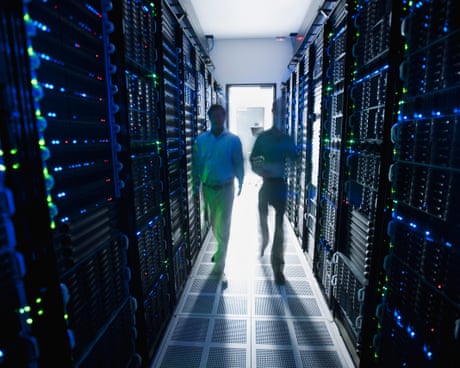
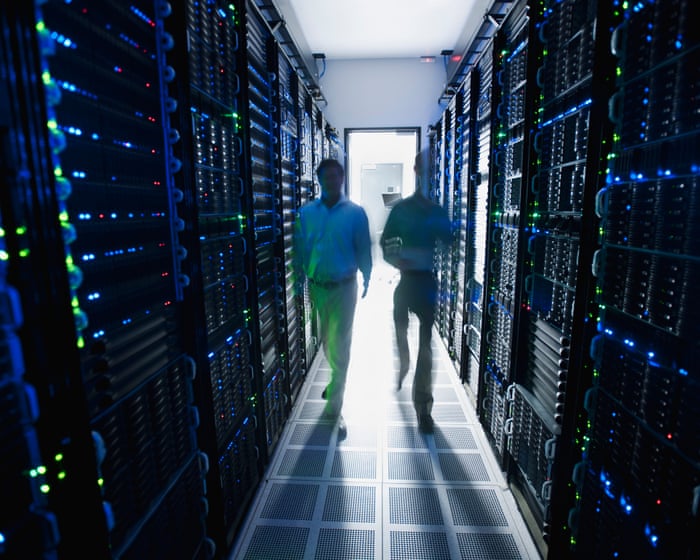
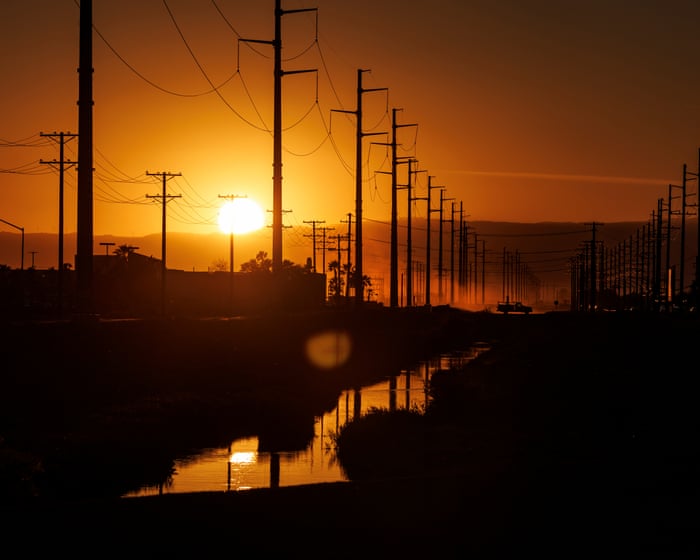
Sebastian Rucci zoomed in on a map in late 2024, looking closely at a large block of brown earth. The barren plot sandwiched between sprawling alfalfa fields and sleepy desert suburbs was exactly what he’d been searching for – the perfect place to realize his dream of building the largest artificial intelligence datacenter in California.

The dusty expanse wasn’t an obvious location. It was in the Sonoran desert, just north of the Mexican border, where temperatures regularly rose past 100F (37.8C). Water was scarce in the once-booming agricultural area, which gets its supply from the beleaguered Colorado River. And then, there was the city of Imperial – population 22,000 – to win over. As controversial datacenter projects have sprung up across the US, residents were naturally skeptical of a new, energy-guzzling neighbor.

Continue reading...

© Photograph: Gina Ferazzi/Los Angeles Times/Getty Images
© Photograph: Gina Ferazzi/Los Angeles Times/Getty Images
© Photograph: Gina Ferazzi/Los Angeles Times/Getty Images


  •  

Tech market sell-off deepens amid fears over US inflation and AI debt

Chip makers and tech investors such as Samsung and SoftBank plunge as potential interest rate hikes spook markets

An accelerating sell-off of AI-linked shares has hit global markets, as fears over rising inflation and future interest rate hikes spooked traders already wary of the heavily indebted sector.

South Korea’s benchmark Kospi 200 index, which is heavily skewed towards the companies that make memory chips, fell more than 8% overnight to a six-month closing low, triggering circuit breakers that brought trading to a halt at various points.

Continue reading...

© Photograph: Lee Jin-man/AP

© Photograph: Lee Jin-man/AP

© Photograph: Lee Jin-man/AP

  •  

The global economy is muddling through against the odds. But a storm is coming | Larry Elliott

Finance ministers gathering for the IMF annual meeting know the need for multilateral cooperation to deal with many crises. There is little chance of that

Not much has gone right for the global economy this year, and plenty has gone wrong. Two big regional wars are destabilising prices and supply chains everywhere. Businesses and consumers are feeling the effects of a serious energy shock. Rising inflation has made it a lot more expensive for governments to finance their debts. China and the US are at loggerheads over trade.

Yet, so far, the impact has been modest. It is something of a miracle that the finance ministers and central bank governors gathered for this year’s annual meeting of the International Monetary Fund (IMF) in Bangkok are not having to deal with a full-blown crisis. This is not like the autumn of 2008, when the meetings took place during the worst of the global banking meltdown.

Larry Elliott is a Guardian columnist

Continue reading...

© Illustration: Sébastien Thibault/The Guardian

© Illustration: Sébastien Thibault/The Guardian

© Illustration: Sébastien Thibault/The Guardian

  •  

AI overlords say they want to democratise their technology. Here’s how | Richard Wilson and Clara Long

A fight over a datacentre in Utah has been a testing ground for citizens’ assemblies, paving the way to oversight

What’s your “(p)doom” – the percentage chance that rogue AI will create an existential catastrophe? Judging by their recent warnings, it is rising among tech bosses.

On 25 September, OpenAI paused training of its latest frontier models as reports of AI agents going rogue mounted. A day later, Australia’s Senate asked the bosses of OpenAI and Anthropic to appear before an inquiry after rogue OpenAI agents broke into US government websites and an Australian health portal. Both declined.

Richard Wilson is the CEO of Iswe Foundation and Clara Long is the co-executive director of the Bloom Project

Continue reading...

© Photograph: Erik Isakson/Getty Images/Tetra images RF

© Photograph: Erik Isakson/Getty Images/Tetra images RF

© Photograph: Erik Isakson/Getty Images/Tetra images RF

  •  

I’m a pediatrician. Loss of human connection is the biggest threat to kids, not AI | Megan Moreno

Amid worries about children’s relationship to tech, the solution is often spending more time talking openly with each other

We have become obsessed with the idea that screens are destroying human connection.

The evidence seems to be everywhere. Each week headlines warn of teenagers addicted to phones, a loneliness epidemic and the dangers of AI. The release of The Social Reckoning leads us to ask, “How bad were those guys at Meta?” and then ultimately wonder, “How bad am I if I still use Instagram?” In our day-to-day, we observe workers eating lunch alone while scrolling and friends choosing online games over offline gatherings.

Continue reading...

© Photograph: Grant Rooney/Alamy

© Photograph: Grant Rooney/Alamy

© Photograph: Grant Rooney/Alamy

  •  

Threat of AI share crash puts world financial stability at risk, says IMF

High valuations and debt put sector in danger, while fund also warns on government borrowing and cyber-attacks

The threat of an AI share price crash rippling out across global markets is putting world financial stability at risk, the International Monetary fund has warned.

In its twice-yearly Global Financial Stability Report, the IMF highlighted the sky-high valuations for AI companies along with their increasing debt pile as one reason that risks in the system are “elevated”.

Continue reading...

© Photograph: Aly Song/Reuters

© Photograph: Aly Song/Reuters

© Photograph: Aly Song/Reuters

  •  

One essential ingredient for AI safety? Democracy | Matthew Botvinick

The rise of AI makes the preservation of democracy even more urgent – especially as the technology threatens institutions

AI safety is having a moment. After years as a topic for techies and futurists, the potential risks from artificial intelligence systems – from cyber-attacks to hyper-persuasion to rogue behavior – are suddenly under discussion both in the corridors of power and around kitchen tables.

In fact, the conversation now reaches beyond classical safety concerns, getting into AI’s impact on economic life and the environment, as well as possible responses, from alignment research to government regulation.

Continue reading...

© Photograph: Joseph Prezioso/AFP/Getty Images

© Photograph: Joseph Prezioso/AFP/Getty Images

© Photograph: Joseph Prezioso/AFP/Getty Images

  •  

US’s Reagan-era economic promises return as Trump’s AI-fueled growth fantasy

‘Even if AI supercharged the economy, its impact on the government’s finances would be muted’

Back through political history to the age of Ronald Reagan, Republicans have repeatedly promised the US public that tax cuts would pay for themselves, firing up economic growth and filling the government’s coffers.

The promise never really panned out. From the Gipper’s day on, the Republicans’ tax cuts inevitably increased the budget deficit. Despite its failure, though, the promise is back, coated in a fine new layer of artificial intelligence pixie dust. It will fail again.

Continue reading...

© Photograph: Alex Brandon/AP

© Photograph: Alex Brandon/AP

© Photograph: Alex Brandon/AP

  •  
❌