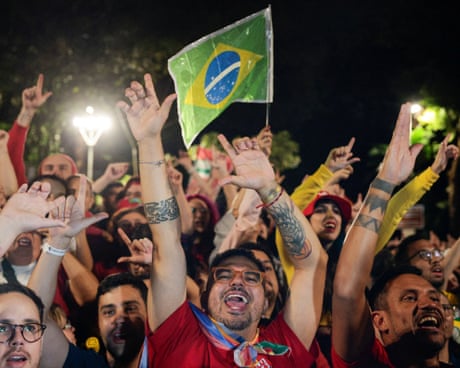
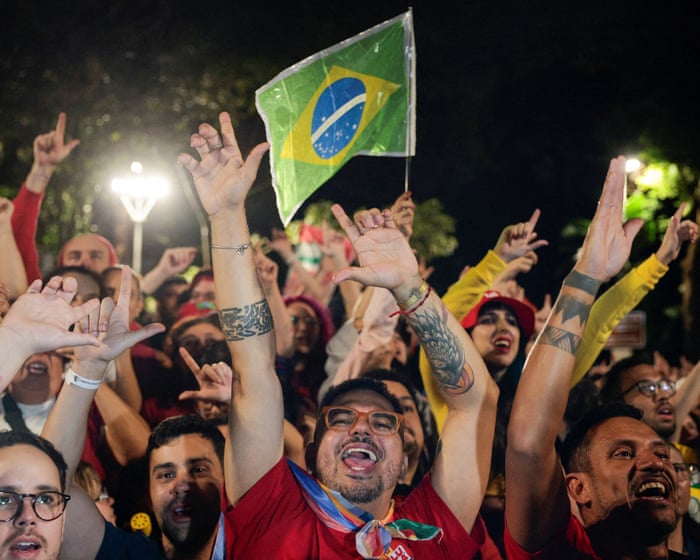
President Luiz Inácio Lula da Silva won another term on Sunday, with the help of a seismic social media campaign that convinced Brazilians to reject his rival.
President Luiz Inácio Lula da Silva won another term on Sunday, with the help of a seismic social media campaign that convinced Brazilians to reject his rival.
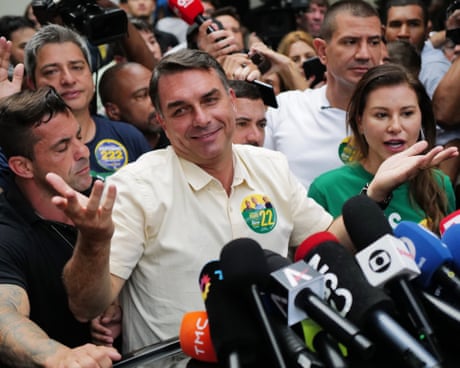
President Luiz Inácio Lula da Silva’s army of supporters, mobilized over a WhatsApp chat group, delivered an unexpected victory over Flávio Bolsonaro, the right-wing challenger.
In much of Europe, the advance of the right has been seen as unstoppable. But in the east, nationalists are being cast aside in places where they long governed.
In much of Europe, the advance of the right has been seen as unstoppable. But in the east, nationalists are being cast aside in places where they long governed.
Supporters of the electoral list “Student List-Students Win” celebrated after Serbia’s longtime leader Aleksandar Vucic conceded defeat in Belgrade on Monday.
After the rejoicing, it will be vital to learn the lessons. The rightward shift is neither inevitable nor irreversible, but progressives cannot rest for a momentThe impossible happened. President Luiz Inácio Lula da Silva won a fourth term in Sunday’s runoff election in Brazil, overturning Flávio Bolsonaro’s first-round lead in a historic comeback. No candidate has ever lost the first round and won the second, until now. Grassroots mobilisation, alongside social welfare policies, helped turn the
After the rejoicing, it will be vital to learn the lessons. The rightward shift is neither inevitable nor irreversible, but progressives cannot rest for a moment
The impossible happened. President Luiz Inácio Lula da Silva won a fourth term in Sunday’s runoff election in Brazil, overturning Flávio Bolsonaro’s first-round lead in a historic comeback. No candidate has ever lost the first round and won the second, until now. Grassroots mobilisation, alongside social welfare policies, helped turn the contest into a referendum on Brazilian democracy, rallying voters against a candidate seeking to restore the legacy of his father, Jair Bolsonaro, imprisoned for plotting a coup after his 2022 defeat. Lula’s victory suggests that defending democracy can still be a powerful electoral argument against the ascendant right.
Having already consolidated most of the leftwing vote, Lula had limited room to attract supporters of other candidates after his first-round defeat. His best chance lay in mobilising abstainers and reconnecting with working-class voters. The Workers’ party intensified its grassroots and digital campaigns, using social media influencers and messaging networks to reach supporters. Nearly 3 million more Brazilians voted in the runoff, and Lula gained ground across the country, particularly in major cities and his north-eastern strongholds. He also appealed to voters’ immediate economic concerns, drawing on a record of reducing poverty and inequality, and increasing benefits under Bolsa Família, the landmark welfare programme he launched in 2003. Lula framed the election as a choice between protecting social gains and democratic institutions, or returning to the Bolsonaro family’s attacks on both, warning that his opponent would compromise Brazil’s sovereignty by aligning himself with Donald Trump.
Jordana Timerman is a journalist based in Buenos Aires. She is the managing editor of The Ideas Letter and compiles the Latin America Daily Briefing
The Guardian’s Latin America correspondent Tom Phillips will be answering your questions about the election and the future of Brazil from 1500 GMT on Tuesday 27 October as part of our Conversations series. Email questions to conversations@theguardian.com.
President Luis Inácio Lula da Silva’s victory ended a string of presidential election wins by right-wing candidates in Latin America. His opponent has refused to accept defeat.
President Luis Inácio Lula da Silva’s victory ended a string of presidential election wins by right-wing candidates in Latin America. His opponent has refused to accept defeat.
Supporters of the right-wing presidential candidate Flávio Bolsonaro waved American flags and brandished a blowup doll of President Trump clutching an imprisoned President Luiz Inácio Lula da Silva at a rally last month in São Paulo, Brazil.
On Sunday, Brazilians will choose between a beleaguered left-wing incumbent and a right-wing challenger. Trade, security and democracy are on the table.
On Sunday, Brazilians will choose between a beleaguered left-wing incumbent and a right-wing challenger. Trade, security and democracy are on the table.
Luiz Inácio Lula da Silva, the leftist incumbent, and Flávio Bolsonaro, the right-wing challenger, face off in a narrow race that could redefine the future of Latin America.
Luiz Inácio Lula da Silva, the leftist incumbent, and Flávio Bolsonaro, the right-wing challenger, face off in a narrow race that could redefine the future of Latin America.
Deep in cattle country, voter sentiments in an evangelical stronghold help explain why the country’s leftist president is the underdog in Sunday’s election.
Deep in cattle country, voter sentiments in an evangelical stronghold help explain why the country’s leftist president is the underdog in Sunday’s election.
If Flávio Bolsonaro is elected, Brazil’s ecosystems will face collapse. The ruling class would rather burn the world than share it with the poor However grim the trajectory might seem, I’ve always believed that sense will ultimately prevail. As the great perils of dismantling the living world become increasingly obvious, even the most rapacious exploiters must come round. Nobody wants to live on a dead planet, do they?There are – or were – signs that this wasn’t just wishful thinking. Since 201
If Flávio Bolsonaro is elected, Brazil’s ecosystems will face collapse. The ruling class would rather burn the world than share it with the poor
However grim the trajectory might seem, I’ve always believed that sense will ultimately prevail. As the great perils of dismantling the living world become increasingly obvious, even the most rapacious exploiters must come round. Nobody wants to live on a dead planet, do they?
There are – or were – signs that this wasn’t just wishful thinking. Since 2015, mostly thanks to China, the area of the planet being reforested has increased, while thanks in large part to Brazil, the global rate of forest destruction has declined. The area of the Brazilian Amazon forest cleared each year is one-sixth of what it was when records began in 1988. In the past four years, as a result of Brazilian government policy, the deforestation rate has fallen by 71%. If Luiz Inácio Lula da Silva is re-elected president on Sunday, the country could reach zero deforestation by 2030. The arc of the moral universe seems to have bent towards justice.
Brazil spent years targeting electoral lies on the internet. Now, artificial intelligence is stumping the election authorities and reshaping a high-stakes race.
Brazil spent years targeting electoral lies on the internet. Now, artificial intelligence is stumping the election authorities and reshaping a high-stakes race.
With a narrow presidential election looming, President Luiz Inácio Lula da Silva and his allies claim Meta is trying to give his right-wing rival an advantage.
With a narrow presidential election looming, President Luiz Inácio Lula da Silva and his allies claim Meta is trying to give his right-wing rival an advantage.
Flávio Bolsonaro, now the favorite to win Brazil’s presidency, would give President Trump a critical new ally in Latin America, particularly on security.
Flávio Bolsonaro, now the favorite to win Brazil’s presidency, would give President Trump a critical new ally in Latin America, particularly on security.
An effigy of President Trump carrying a depiction of an incarcerated President Luiz Inácio Lula da Silva during a rally in São Paulo last month in support of Flávio Bolsonaro, the right-wing opposition candidate.
Flávio Bolsonaro’s first round lead leaves President Luiz Inácio Lula da Silva three weeks to find the votes to stop Brazil’s, and Latin America’s, rightward shift.
Flávio Bolsonaro’s first round lead leaves President Luiz Inácio Lula da Silva three weeks to find the votes to stop Brazil’s, and Latin America’s, rightward shift.

 Connexion