❌

Vue normale

Ukraine finally voted to tax cheap foreign parcels to unlock €3.7 billion—now Brussels decides whether it was enough, with a €70 billion gap ahead amid ongoing war
20 octobre 2026 à 07:05

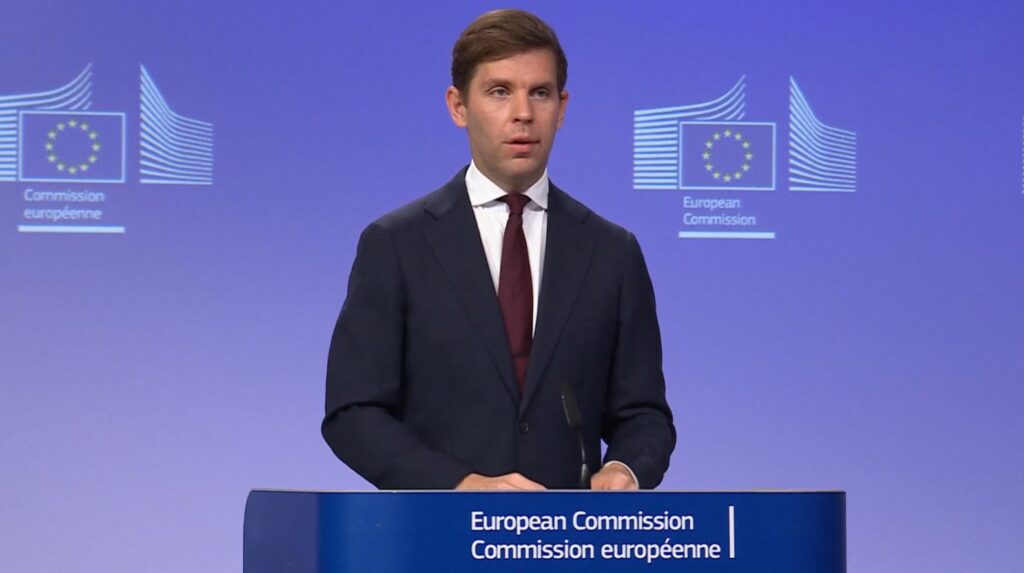
ukraine finally taxed cheap foreign parcels unlock €37 billion—now brussels decides whether enough €70 billion gap ahead amid ongoing war · post european commission spokesperson balázs ujvári speaks commission’s midday

The European Commission is checking whether laws Ukraine’s parliament passed last week earn it a €3.7 billion ($4.3 billion) EU payment, spokesperson Balázs Ujvári told reporters in Brussels on 19 October. He also said Ukraine’s 2027 funding gap stands at about €70 billion, and that the EU “cannot do this all alone.” How Ukraine pays for Russia’s war next year now depends on reforms in Kyiv and on money from Europe and beyond.

Russia keeps striking Ukraine’s power grid and cities, and Kyiv already faces a hole in next year’s war budget before any new military spending. Foreign money keeps salaries, pensions, and repairs flowing while Ukraine spends its own revenue on defense. So each delayed payment is felt at home while Russia hits the energy system again.

Brussels reads Kyiv’s new laws before paying

The payment is the second tranche of the EU’s macro-financial assistance to Ukraine, and each one depends on reforms, Ujvári said at the Commission’s midday briefing.

“We saw that last week some important laws were adopted in the Rada, and we are in the process of analyzing these laws and we will formulate our assessment thereafter,” he said.

On its third attempt, parliament passed a law on 15 October ending the VAT exemption for foreign parcels worth up to €150 from 1 July 2027, and making online marketplaces collect the tax. The Commission had warned the law was one of 12 conditions for the tranche. Fewer than 1% of the 75 million parcels Ukrainians receive each year were taxed, and lawmakers had rejected the measure twice despite IMF pressure.

About €30 billion is in the pipeline for Ukraine this year, mostly under the EU’s €90 billion support loan, if reforms continue, Ujvári said.

EU Ukraine support
Explore further

EU announced funding shortfall for Ukraine in 2027

A €70 billion gap for 2027

Current pledges leave a gap of about €70 billion for 2027, Ujvári said, even counting the €45 billion ($52 billion) the EU has set aside for next year and some partners’ commitments.

“We cannot do this all alone. Therefore, our partners in general must step up,” he said. “They have to come forward with pledges, and they have to deliver on those commitments.”

On 16 October, Ukrainian President Volodymyr Zelenskyy asked EU leaders for at least €70 billion more for 2027. They tasked the Commission with a proposal but set no deadline. Asked whether it would revisit using frozen Russian assets, Ujvári said it was “a little bit early” to discuss options in that detail. New EU borrowing has also grown costlier: 10-year rates rose from 3.2% to just above 4% in six months, he said.

The €90 billion loan was designed on the assumption that the war would end in 2026. Slovak Prime Minister Robert Fico said Slovakia and Hungary would opt out of new aid but would not block others.

  • ✇The Kyiv Independent
  • Ukrainian businesses outraged as government blocks economic crimes bureau chief nominee
    Ukraine's Cabinet of Ministers rejected a nominee to lead the economic crimes agency, drawing swift criticism from lawmakers and businesses over alleged interference in the selection process.The agency, the Bureau of Economic Security, was created in 2021 to investigate economic crimes. It has since faced accusations of being used to pressure — and in some cases extort — businesses, prompting multiple calls and efforts to overhaul it.Selecting a new director of the agency by the end of July is o
     

Ukrainian businesses outraged as government blocks economic crimes bureau chief nominee

8 juillet 2025 à 13:38
Ukrainian businesses outraged as government blocks economic crimes bureau chief nominee

Ukraine's Cabinet of Ministers rejected a nominee to lead the economic crimes agency, drawing swift criticism from lawmakers and businesses over alleged interference in the selection process.

The agency, the Bureau of Economic Security, was created in 2021 to investigate economic crimes. It has since faced accusations of being used to pressure — and in some cases extort — businesses, prompting multiple calls and efforts to overhaul it.

Selecting a new director of the agency by the end of July is one of Ukraine's obligations to the EU and International Monetary Fund as part of international financing packages extended to the war-torn country by the institutions.

As part of a recent attempt to relaunch the bureau, Oleksandr Tsyvinsky on June 30 was officially nominated by the bureau's selection commission that consists of six members — three from the government and three international experts. Tsyvinsky is known for exposing schemes involving illegal land seizures in Kyiv..

But Ukraine's government on July 8 said it had rejected Tsyvinsky following alleged concerns raised by the country's intelligence service of potential Russian connections.

The government unanimously decided to ask the commission to submit two new candidates who meet all security requirements, the government press service wrote on its official Telegram channel, a move it claims aligns with the law.

Following Tsyvinsky's nomination, it was revealed that his father holds a Russian passport. He has said he hasn't spoken to his father, who lives in Russia, in years.

Tsyvinsky holds clearance for state secrets and has passed special vetting, backed by over 20 years in law enforcement, including nearly a decade at the National Anti-Corruption Bureau of Ukraine (NABU).

Opposition lawmaker Yaroslav Zhelizniak, said the government had no grounds to reject a properly nominated candidate, claiming President Volodymyr Zelensky's office is behind the blocking of the nomination.

"The (bureau's) legislation provides no legal grounds for the cabinet to demand a new shortlist or impose additional, undefined requirements such as 'security criteria.' The term itself is absent from any statute and therefore has no legal force," Zhelizniak said.

"The SBU letter in this case is nothing more than an indicator of the winner's disloyalty to the President's Office and a desire to block the appointment," said Olena Shcherban, deputy executive director of the AntAC in a statement following the news.

Major business associations have called on Zelensky, Parliament Speaker Ruslan Stefanchuk, and Prime Minister Denys Shmyhal to reverse the government's decision.

The business groups warned that failing to reform the agency will harm investment decisions, particularly as Ukraine's wartime economy needs to attract capital.

"War is a time for radical changes in the rule of law and business climate, otherwise the economy cannot ensure the country's survival," the businesses wrote in an open letter.

‘Neither side wasted time’ — Ukraine’s economy minister on minerals deal negotiations with Trump’s ‘business-oriented’ administration
Ukraine’s Economy Minister Yuliia Svyrydenko says her task is simple — to get the investment fund behind the closely watched minerals deal with the U.S. off the ground, and prove its detractors wrong. “There are so many criticisms from different parties that this fund is just a piece of paper we can put on the shelves — that it won’t be operational,” Svyrydenko, who is also Ukraine’s first deputy prime minister, tells the Kyiv Independent at Ukraine’s Cabinet of Ministers on July 4, the morning
Ukrainian businesses outraged as government blocks economic crimes bureau chief nomineeThe Kyiv IndependentLiliane Bivings
Ukrainian businesses outraged as government blocks economic crimes bureau chief nominee
❌