
 Connexion
Glide bomb then infiltrate. This is Russia’s new way of war.
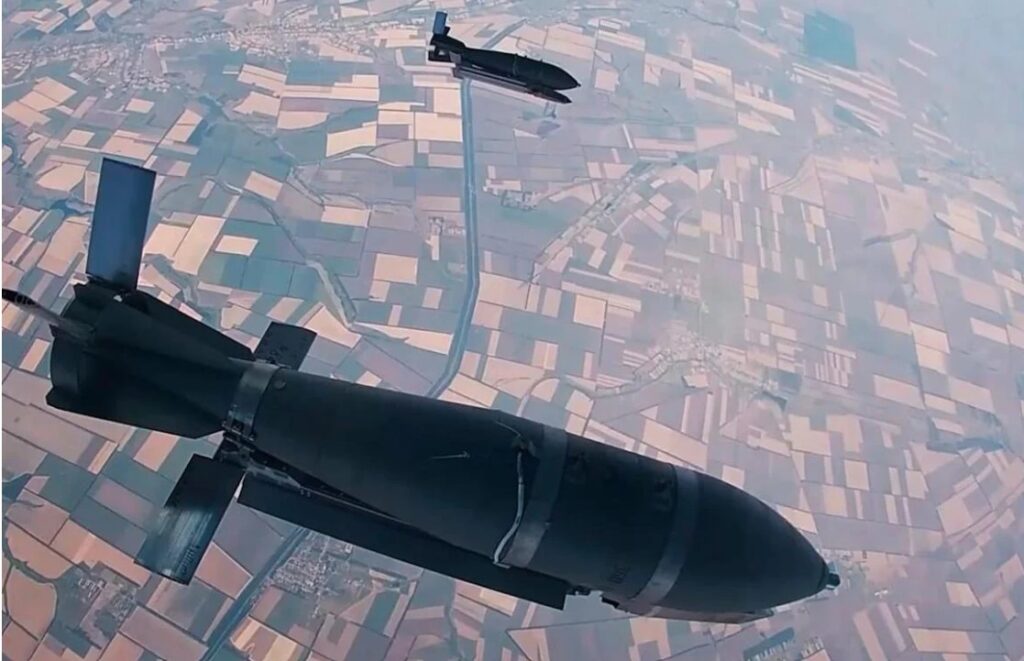
- In 2022, Russians fired artillery then advanced in vehicles
- Four years later, they launch glide bombs then advance as small teams of infantry
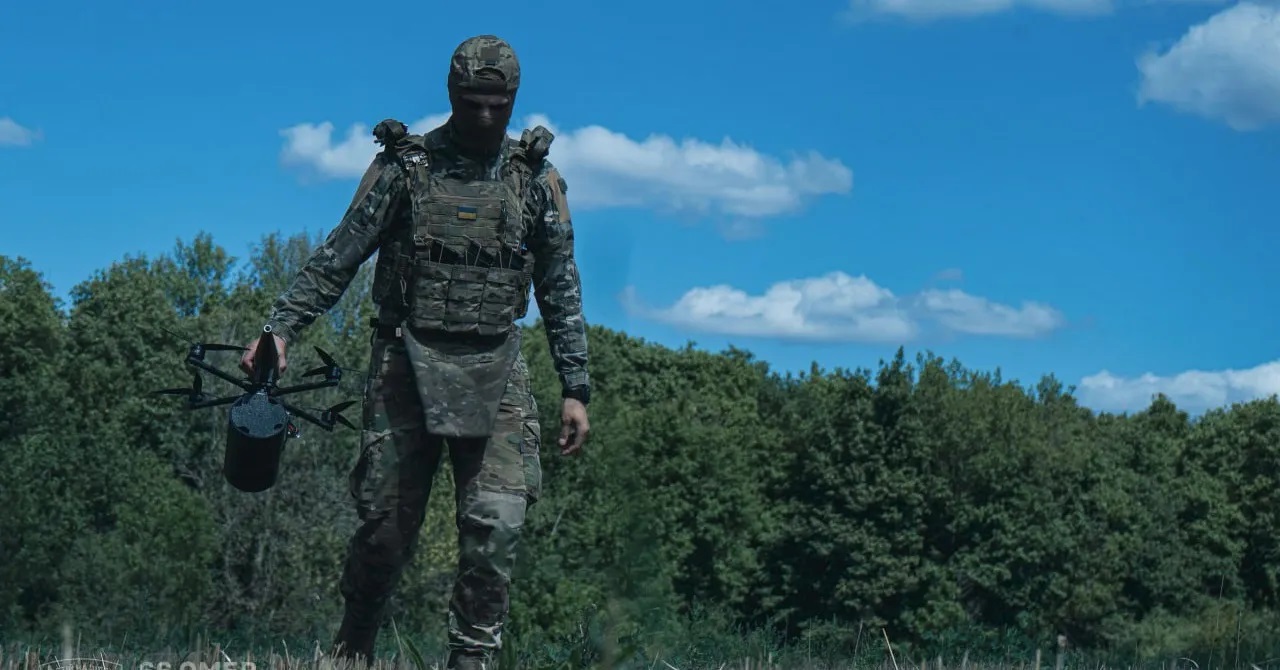
- Ukrainian drones stand in their way, and that's why drone operators are the main targets of Russian firepower before and during the advance
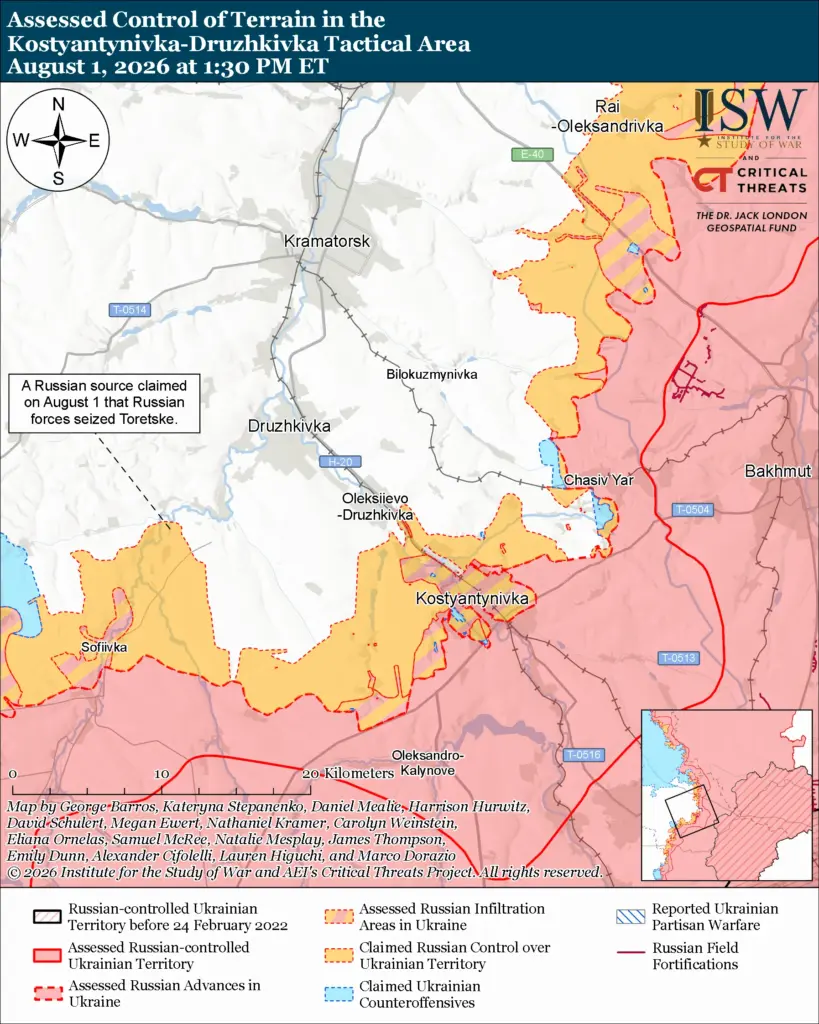
On Monday, a small team of Russian infiltrators reportedly slipped 10 km behind the line of contact between Russian and Ukrainian troops just north of Kostiantynivka in eastern Ukraine's Donetsk Oblast.
Sneaking into the town of Druzhkivka, 10 km north of Kostiantynivka along the H20 highway, the Russians reportedly ambushed, captured and executed a group of three or four unarmed Ukrainian drone operators.
It's possible the drone operators had just arrived in Druzhkivka when the Russians appeared. According to analyst and mapper AMK Mapping, Ukrainian drone operators pulled out of the village of Oleksijevo-Druzhkivka—which lies between Kostiantynivka and Druzhkivka—owing to the increasing threat from Russian KAB glide bombs. "It's likely that Russian forces monitored the withdrawals of Ukrainian drone operators and sent in [an infiltration group] after the new position was identified," AMK Mapping concluded.
The atrocity underscores the Russian military's new approach to ground warfare as Russia's wider war on Ukraine grinds through its 54th month. An army that once counted on its own artillery to suppress enemy artillery in order to allow mechanized forces to advance now uses precision bombs, small cruise missiles, tiny drones, and, yes, some artillery to suppress the Ukrainian drone teams that represent the main obstacle to a swift Russian advance.
Yesterday, a group of Russian DRGs was able to infiltrate from Kostyantynivka for at least 10 km behind Ukrainian lines, and kill 3-4 Ukrainian drone operators in the city of Druzhkivka. The drone operators were unarmed in their positions at the time of the ambush, not expecting… pic.twitter.com/KNxN0JelwL
— AMK Mapping(@AMK_Mapping_) August 25, 2026
And when the Russian firepower manages to suppress Ukrainian drone operators, allowing small teams of infantry to advance, the infantry's objective is often to take out the same drone operators whose suppression was a necessary pre-condition of any successful assault.
In short, the Ukrainians largely defend with drones. That means the Russians are fixated on first striking the drone teams in order to prevent them from launching their tiny lethal robots—and then, when they can, assaulting the drone teams' positions in order to capture or kill them. Or capture then kill them, as reportedly happened in Druzhkivka.
The Russians have learned the hard way that they can't advance without first finding and attacking Ukrainian drone operators. That hard experience has driven a profound transformation of the Russian way of war in just the last few years.
Precision suppression
As 2025 wore into 2026, Ukrainian forces finally deployed enough $500 drones to effectively halt any sustained Russian advance along the 1,200-km gray zone stretching across eastern and southern Ukraine. Between February and July, the Russians captured around 260 sq km of Ukrainian soil, according to a tally by the Black Bird Group. That's barely a fifth as much ground as they seized in the same six months in 2025.
Realizing they couldn't just fire an artillery barrage and then roll out the tanks the way they used to, the Russians have mostly parked their thousands of armored vehicles. Now they advance in small teams of lightly equipped infantry that, Russian commanders reason, stand a better chance of avoiding detecting and destruction by drones.
"Broadly speaking, current Russian military theory appears to emphasize restoring the ability to maneuver," Sidharth Kaushal and Sam Cranny-Evans wrote in a new study for the Royal United Services Institute in London. But the infantry infiltrators who do most of the maneuvering these days don't march out without support. A lot of it.
In the early months of the wider war in 2022 and 2023, the Russians counted on artillery—lots of artillery—to support the maneuver forces. But massed artillery is just as exposed to drone attack as massed tanks are, so Russian fire support has had to evolve, too.
Today, the Russians still fire artillery from fewer but more spread-out guns. But they also launch their own drones, small cruise missiles, and—perhaps most important—KAB glide bombs to force Ukrainian defenders, including drone teams, into their dugouts before the infantry dash across the gray zone. "Russian theorists appear to see the solution in highly mobile units designed to exploit lower-risk tunnels created by
precision strike," Kaushal and Cranny-Evans explained.
It's explosive choreography requiring careful communication between the infantry, the artillery, drone teams and the air force. "Sustaining momentum in the face of adversary precision strike is a considerable challenge," Kaushal and Cranny-Evans wrote. But a necessary one as the Russian military "contemplates how it can break the current positional deadlock" in Ukraine "and avoid future ones."
But when it works, it works to catastrophic effect for Ukrainian defenders. As those unfortunate, murdered drone operators found out.
The suppress-then-advance method, but with precision munitions and small teams of infiltrators, works for both sides, of course. The Ukrainians can do it, too—and they recently did in some unspecified sector of the gray zone.
On the same day the Russians executed those drone operators, fellow Ukrainian drone pilot Dmytro Putiata reported a small Ukrainian mechanized advance. "At one of the direction at the front line, one of the Ukrainian brigades used four [infantry fighting vehicles] during the attack," Putiata wrote. "They have managed to break through up to three km; dismounted infantry and all of the vehicles managed to retreat."
They break through with the help of friendly drones units that suppressed Russian troops along the assault route, Putiata explained. "How did they manage not to be targeted by drones? The battlefield was prepared for that."
