Vue normale

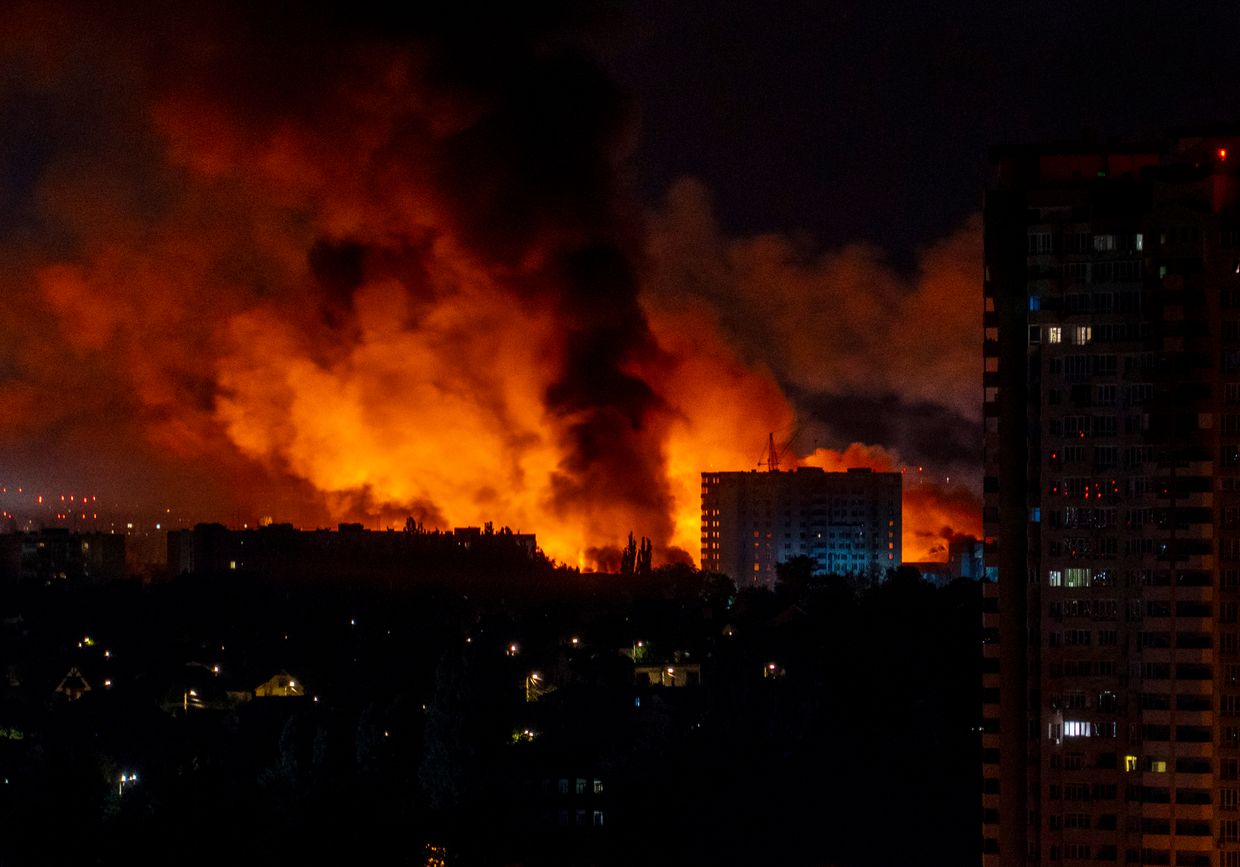
Russia struck Kyiv and Boryspil, its main airport hub, twice in 24 hours with ballistics Ukraine can’t stop without US Patriots, days before Independence Day

22 août 2026 à 07:51

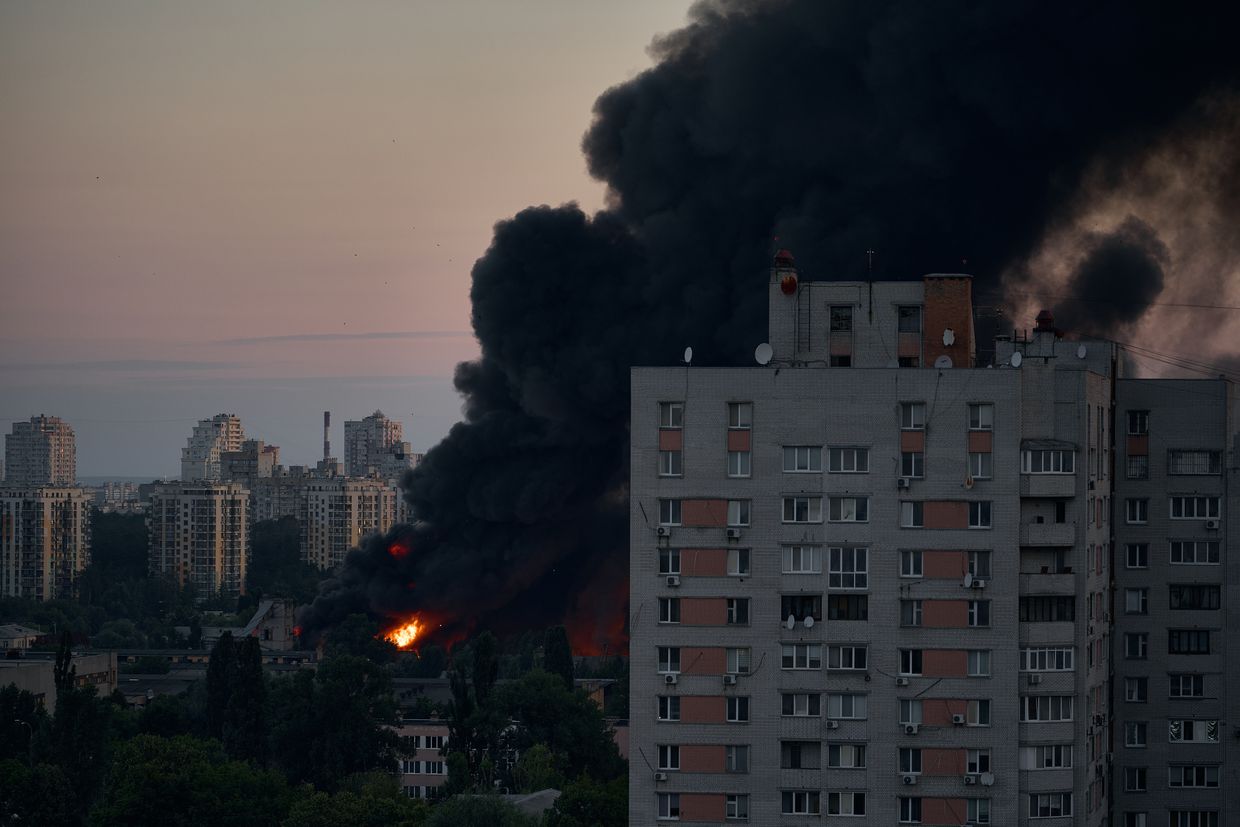
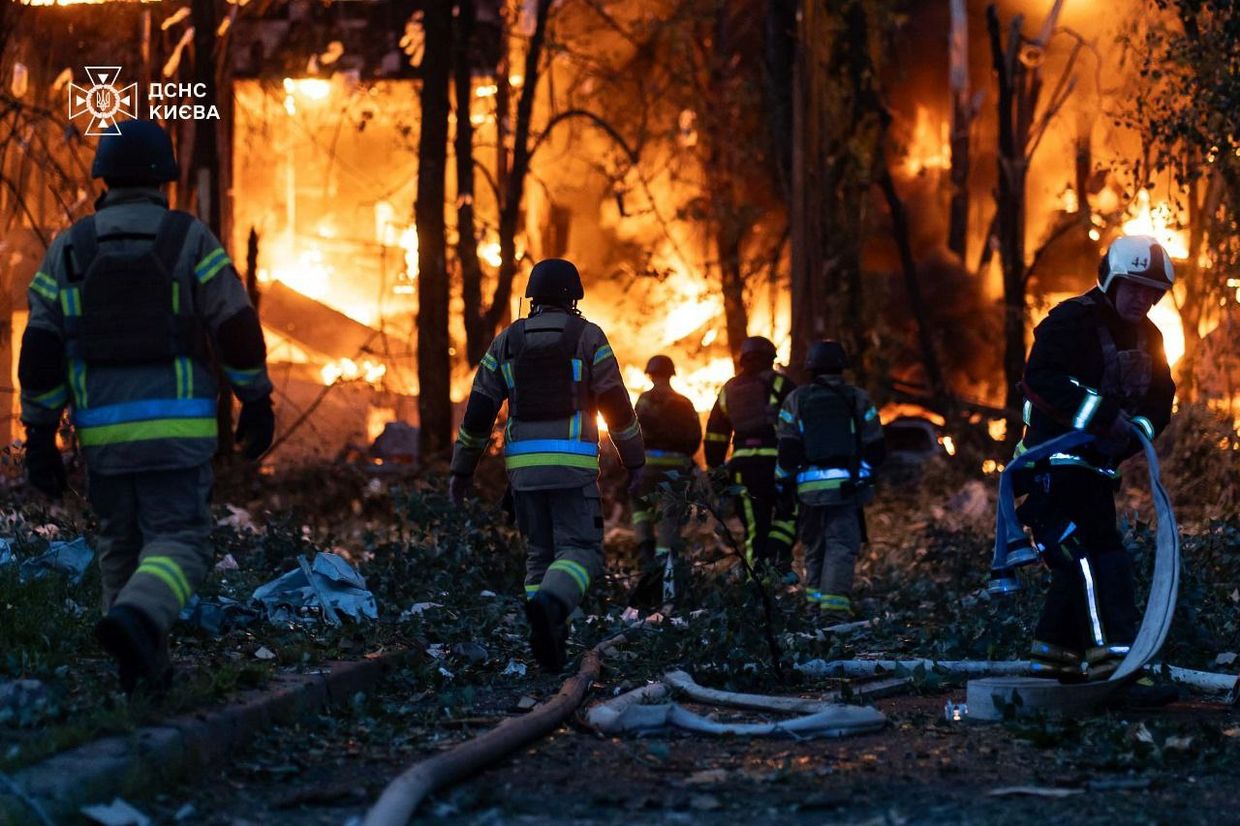
Ukrainian firefighters are extinguishing fire that errupted after a Russian ballistic missile attack on Kyiv Oblast on 22 August 2026. Source: The State Emergency Service

Russia has struck Kyiv and its suburbs with ballistic missiles for a second consecutive day, killing civilians. Meanwhile, Ukraine lacks enough interceptors to stop them because deliveries from the US have halted.

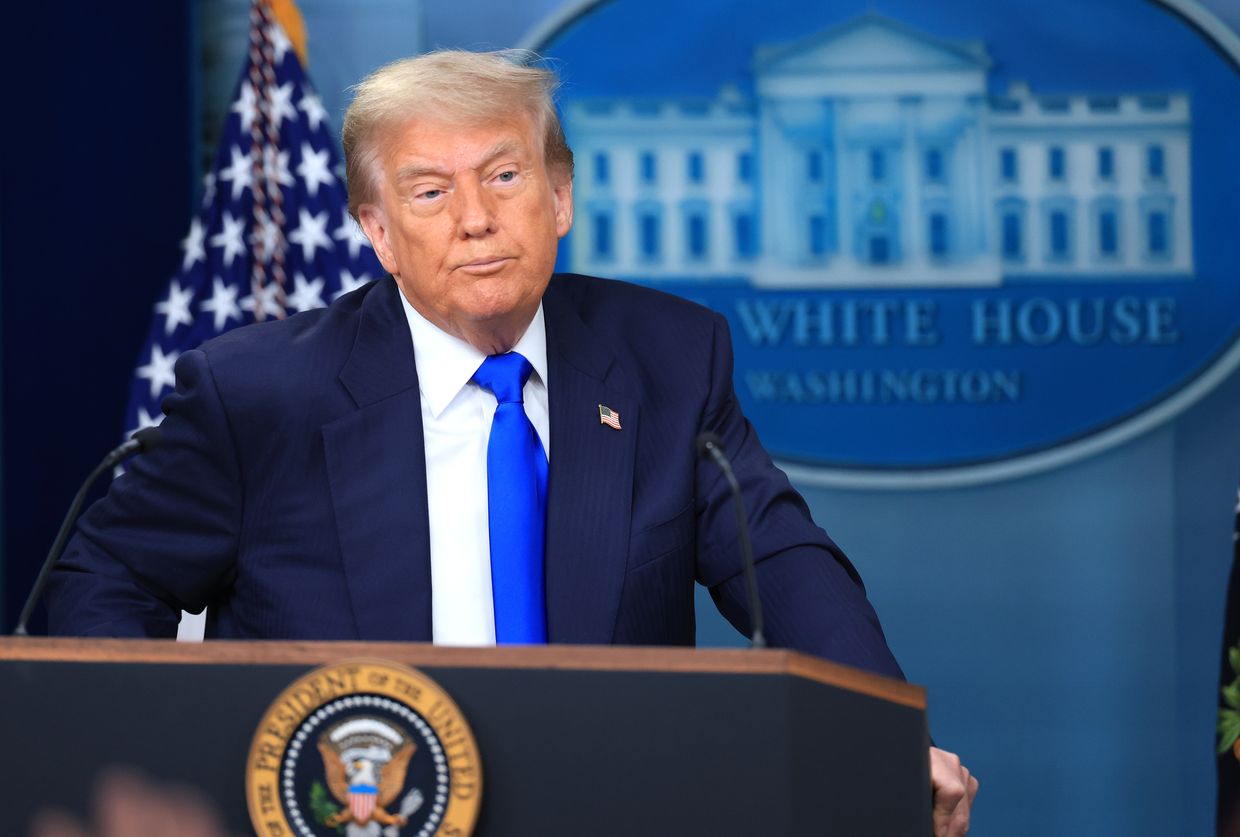
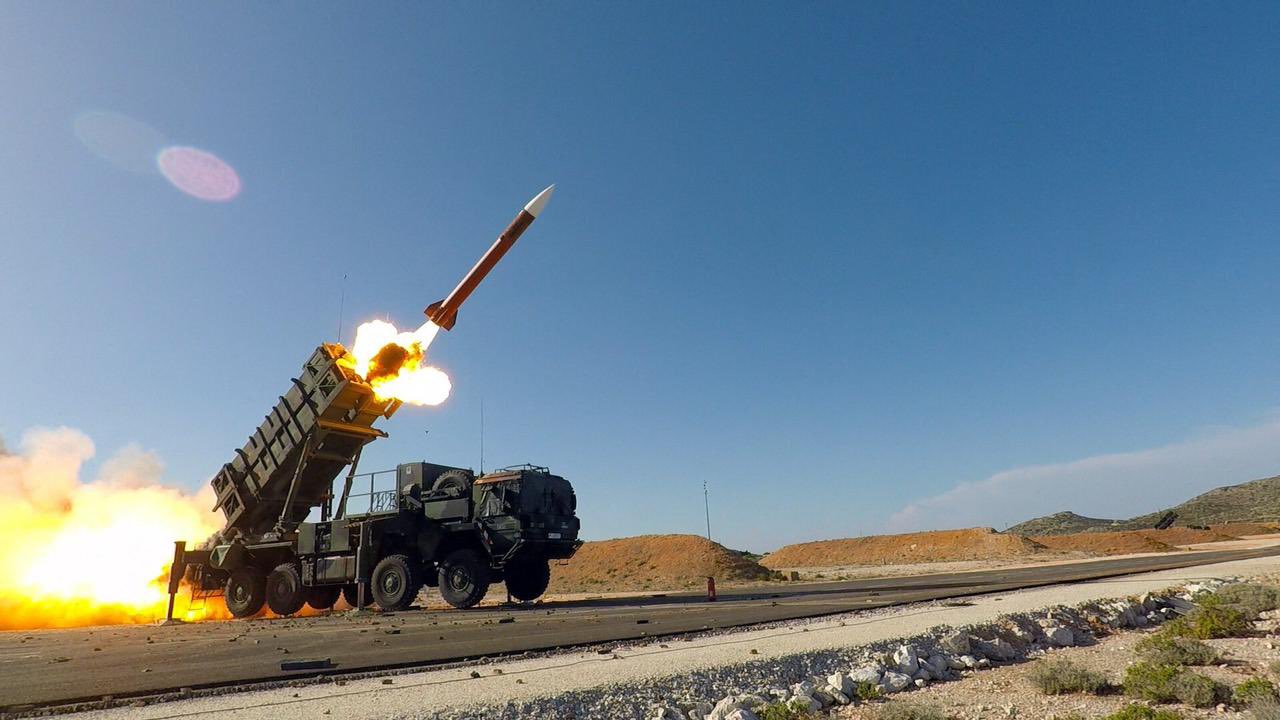
The strikes land at a moment when Ukraine's ability to shoot ballistic missiles down has been cut off at the source. Ukraine intercepts ballistic missiles mainly with US-made Patriot systems. During the recent Oval Office meeting, President Donald Trump declined President Volodymyr Zelenskyy's request for hundreds of additional Patriot interceptors, according to the Financial Times.

At the same time, when Ukraine sought to destroy Russia's ballistic launchers on Russian territory, US billionaire Elon Musk did not allow Ukraine to use Starlink to guide strikes on those launchers, The Atlantic reported. Ukraine can neither shoot the missiles down at the rate it needs nor freely strike the launchers that fire them.

A railway worker was killed in Kyiv

The overnight attack hit Ukraine's railway. On the night of 22 August, a Russian ballistic missile struck a railway enterprise in Kyiv's Darnytsia area, killing a Ukrzaliznytsia worker, the railway's board chairman Oleksandr Pertsovskyi said.

He described a strike timed to the threat.

"In Darnytsia, ballistic strikes hit one of the railway enterprises, at the same moment as, or even a second before, the ballistic threat appeared. One of our workers, a foreman, was killed on the spot. The rest we managed to evacuate quickly after the first strike," Pertsovskyi reported.

Russia launched about six ballistic missiles, with launches recorded from three directions, Kursk, Bryansk, and Millerovo, according to monitoring channels.

A morning strike on Boryspil killed two civilians

Russia struck again in daylight. In the morning, six to eight ballistic missiles attacked the Boryspil area in the Kyiv agglomeration, likely with cluster warheads, according to monitoring channels. Boryspil city is home to the Boryspil International Airport, Ukraine’s main and largest international passenger airport.

The strike killed civilians and hit infrastructure. Two civilians, a man and a woman, were killed, and the number of wounded rose to eight, including a child, with the daytime strike hitting a truck parking lot along with warehouses, a fuel station, a private household, and vehicles. Two trucks caught fire, and a blaze spread across 700 square meters of open ground, the State Emergency Service (DSNS) said.

The strikes come days before Independence Day

The attacks landed two days before Ukraine marks its Independence Day. The Security Service (SBU) has already urged citizens to be especially vigilant before and during the 24 August holiday because of the threat of attacks, warning that in wartime, Russia may use mass events for strikes, provocations, sabotage, cyberattacks, and other crimes.

The service has also warned against recruitment. It reminded Ukrainians not to publish photos or videos of military objects, critical infrastructure, checkpoints, or air-defense systems, nor to share information on the consequences of strikes or the movement of Ukrainian forces.

Russian special services may try to recruit Ukrainians to prepare attacks and sabotage, the SBU said, urging anyone offered money for arson, property damage, planting unknown objects, or collecting information on military sites to report it immediately.

  • ✇Euromaidan Press
  • Kyiv is asking Musk to let it strike inside Russia. Its best line to Musk is gone
    Ukraine is asking Elon Musk to let it arm deep-strike drones with his Starlink network and turn them on Russian ballistic-missile launchers far inside Russia, the Financial Times reported. The plan needs Musk's approval — and US President Donald Trump was cool to the idea when Ukrainian President Volodymyr Zelenskyy raised it at the White House on 28 July, with people present expecting Musk to refuse. Kyiv is chasing the workaround because its air defenses are stretched
     

Kyiv is asking Musk to let it strike inside Russia. Its best line to Musk is gone

21 août 2026 à 12:10

kyiv asking musk let strike inside russia its best line gone · post elon 2026 world economic forum / ciaran mccrickard wef ukraine news ukrainian reports

Ukraine is asking Elon Musk to let it arm deep-strike drones with his Starlink network and turn them on Russian ballistic-missile launchers far inside Russia, the Financial Times reported. The plan needs Musk's approval — and US President Donald Trump was cool to the idea when Ukrainian President Volodymyr Zelenskyy raised it at the White House on 28 July, with people present expecting Musk to refuse.

Kyiv is chasing the workaround because its air defenses are stretched: Russia keeps escalating its missile and drone strikes, and Ukraine is running low on the Patriot interceptors that are its only dependable answer to Russian ballistic missiles. As Russia builds more missiles and drones, Ukraine's interceptor needs run into the hundreds before the year is out.

At the meeting, FT reported, Zelenskyy pressed Trump to lobby Musk for permission to fly Starlink-linked drones across the Russian border. He capped the pitch at 200 km into Russia — far enough to reach launch sites, command posts, and other targets on the calculation that a shallower limit might make Musk likelier to agree.

Starlink could extend Ukrainian drone strikes

Riding SpaceX's satellites, Starlink drones hold a steadier link to their pilots at long range than ordinary radio allows, and they shrug off the jamming that grounds other drones. The drones have already shown their worth in the fighting at home, and Vienna-based military analyst Franz-Stefan Gady said that across the border they "could be very useful in hunting" Russian launchers, FT wrote.

Kyiv's best channel to Musk has also just closed: Zelenskyy recently fired his defense minister, Mykhailo Fedorov, who had a direct line to the billionaire.

mykhailo fedorov during an interview in june 2026
Mykhailo Fedorov during a June interview, a month before his dismissal, in which he described leaks and private-company influence inside the defense ministry. Photo: screenshot from PRESSING / Army-Media of Ukraine's Defense Forces

Speaking to a Ukrainian podcast on 6 August, Fedorov said that even with a channel to Musk still open after his firing, he had made no progress on cross-border Starlink use—"a difficult task right now."

A column of protesters demanding reinstatement of Mykhailo Fedorov as Defense MInister walks in vul. Khreschatyk in Kyiv, 1 August 2026. Photo: Serge Kostezh/Kyivpost
Explore further

The Fedorov protesters lost. But they backed a man for what he built, not what he promised—and that may be new in Ukraine.

Musk’s Starlink decisions have affected both sides in the Russo-Ukrainian war

Musk has backed Ukraine's heavy dependence on Starlink for military command and comms. In 2022, Musk declined to extend Starlink coverage for Ukrainian troops mid-operation near occupied Crimea, citing his fear of triggering a nuclear escalation.

He has also acted against Moscow: in February, at Fedorov's direct request, Musk shut down the Starlink terminals that Russian forces had been operating illicitly against Ukraine.

Now, Musk answered Fedorov's Monday post with a line about "trying to do the right thing" and wanting peace — and said nothing about the Starlink ask.

Poland would rather the next Russian missile be downed over Ukraine than over its soil. It may send Kyiv more Patriots

13 août 2026 à 06:18

poland patriot

Poland will decide within days whether to send Ukraine another batch of Patriot interceptor missiles, Deputy Defense Minister Magdalena Sobkowiak-Czarnecka said in a radio interview RMF24. Any transfer, she said, has to be judged first against Poland's own security.

A Russian strike on NATO soil is now moving Warsaw where months of Ukrainian appeals had not. Sobkowiak-Czarnecka said Defense Minister Władysław Kosiniak-Kamysz leans toward sending more interceptors after a Russian missile crashed inside Poland on 30 July, and that he would rather one be shot down over Ukraine than reach Polish soil.

Tusk had signaled at the end of July that Warsaw would soon weigh sending more Patriots. Sobkowiak-Czarnecka's remarks are the first to put a timeline on that decision.

Warsaw had been split for weeks over whether giving up the missiles was the right call. She set that argument aside, saying only that a decision is a matter of the coming days.

A second handover from a thin stock

This would not be the first transfer. In the spring, Poland quietly gave Ukraine five PAC-3 MSE interceptors — the missiles a Patriot battery uses to stop ballistic threats — a move confirmed only in July, when the defense ministry declassified its aid records and Prime Minister Donald Tusk put the number at five.

The disclosure drew sharp criticism at home. Opposition figures noted that the PAC-3 is the only interceptor Poland holds capable of downing Russia's Iskander ballistic missiles — the same class of weapon now crossing into Polish airspace.

Why the interceptors are so scarce

PAC-3 interceptors are among the hardest munitions in NATO to spare. The United States builds them at a rate that does not cover its own needs, and only a handful of alliance members operate them at all.

Ukraine has been pressing for them for months. In early July, after one of the largest air attacks of the war, Kyiv appealed to nearly 40 countries to release Patriot missiles from existing stocks, warning that its air defenses cannot stop Russia's ballistic missiles without them.

Poland holds roughly 200 of the interceptors, by Ukrainian estimates — its own shield against the missiles now reaching its border. Kosiniak-Kamysz's reasoning turns that overlap into the case for giving some away: better the interceptor meets the missile over Ukraine than over Poland.

The transfer would come with Polish-Ukrainian relations at their lowest point in years. In May, Volodymyr Zelenskyy granted a special forces unit the honorary title "Heroes of the UPA" — the wartime insurgent army Poland blames for the Volhynia massacres of the 1940s, which Warsaw recognizes as genocide. Polish President Karol Nawrocki responded in June by stripping Zelenskyy of the Order of the White Eagle, the country's highest honor; three former Ukrainian presidents returned their own in solidarity, and Nawrocki has since tied Ukraine's path into the EU to the unresolved history. Yet the friction runs mostly at the presidential level. The aid decisions sit with the Tusk government, and it has kept the weapons — and now, in all likelihood, the interceptors — moving to Kyiv regardless.

5% of US Patriot stocks gets Ukraine through winter, 10% ends the ballistic threat — and Zelenskyy has just 1%, he tells CNN

13 août 2026 à 05:37

Ukrainian President Volodymyr Zelenskyy, 7 July 2026. Photo: Zelenskyy / Telegram

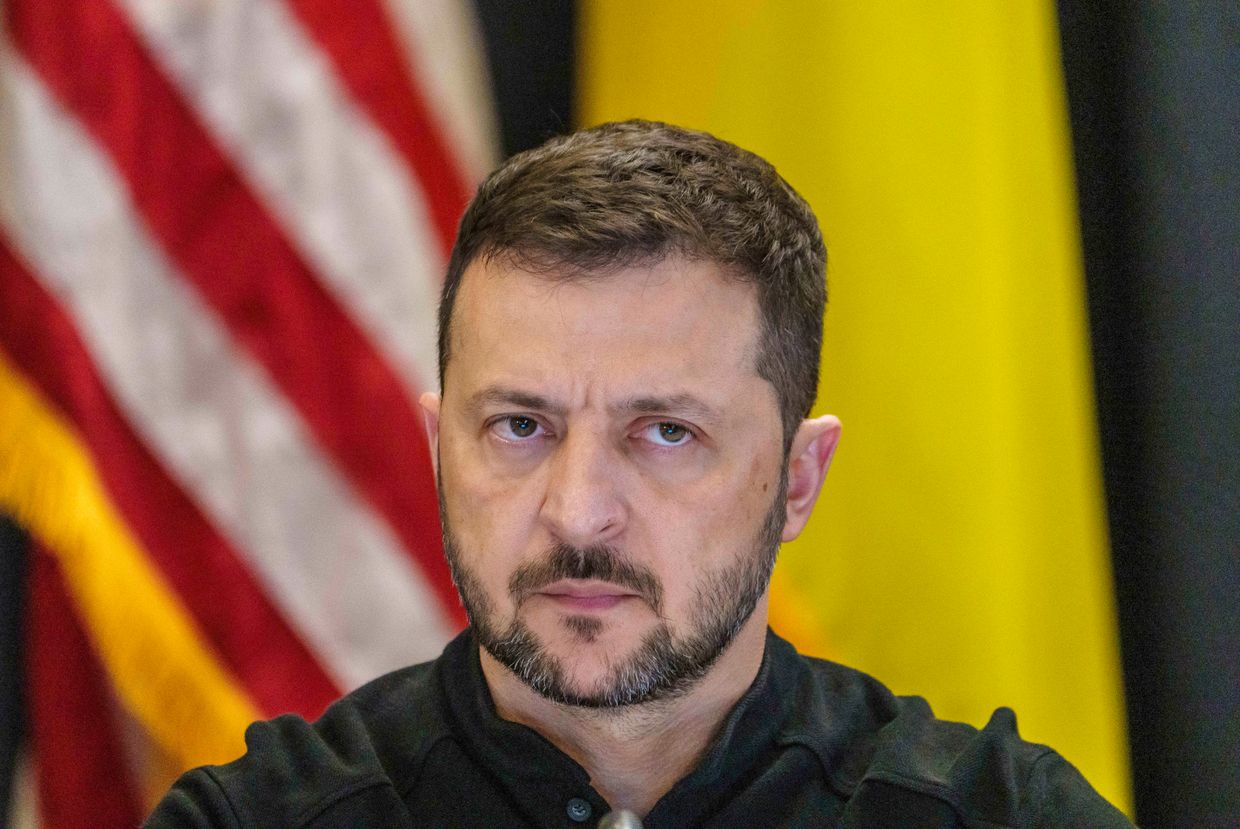
Ukraine holds only about a tenth of the Patriot interceptor missiles it needs from the United States to stop Russia's surging ballistic strikes, President Volodymyr Zelenskyy told CNN. Selling Kyiv 5% of the current US stockpile would carry the country through winter, he said, and 10% would let it "destroy all the Russians' ballistic missiles" — but he holds 1%.

The plea puts a number on a shortage that has run through Ukraine's diplomacy all summer and left its cities increasingly exposed. It is the concrete cost of near-empty interceptor stocks: on 5 August, Russia fired 28 ballistic and anti-ship missiles at Kyiv and Ukraine intercepted none of them, killing 17 people, and four days earlier launched 27 ballistic missiles with only one stopped. July was the deadliest month for Ukrainian civilians since April 2022, according to the UN.

The arithmetic of a losing race

"This year we have two and a half times less interceptors than we had in 2025," Zelenskyy said, while "Russia has two times more ballistic missiles per month than they had before."

The interceptor that most reliably stops those missiles, the US-made Patriot's PAC-3, is scarce worldwide: the war between the United States and Iran drained stocks as American and Gulf forces spent dozens against Iranian missiles and drones, and the shortage has fallen hardest on Ukraine.

The bottleneck is structural, not budgetary. Only five or six countries build interceptors capable of stopping ballistic missiles, the US makes around 600 Patriots a year, and orders are placed years in advance — so money alone cannot close the gap before winter, defense expert Marc DeVore told Euromaidan Press in June.

A home-built Patriot, still uncertain

Zelenskyy said doubts remain over whether US President Donald Trump's apparent offer to let Ukraine manufacture its own Patriot interceptors will materialize. At the NATO summit in Ankara, Trump said he would license Ukraine to build the missiles, then days later said he was unsure; the Patriot makers have since sent officials to Kyiv, without result so far. "I hope that I will get it," Zelenskyy said, calling it "one of the biggest [challenges] I had from the very beginning of this war."

He described daily, largely private deal-making to close the gap: "million phone calls ... I try to exchange something to missiles ... I do some things which I can't even share. It doesn't mean that it's outside of the law. But I can't speak about it."

Putin, the Donbas, and the next war

On the stalled peace process, Zelenskyy said Kyiv had put new proposals to the Trump administration and needed "more involvement of the American side," adding that Vladimir Putin "doesn't want to stop this war now and (there's) not enough pressure on him now." He rejected ceding the rest of the Donbas that Putin seeks, arguing security guarantees matter more: "Why he will not come again ... to occupy us?"

He confirmed a recent call with Vice President JD Vance but declined to say whether Vance had asked Ukraine to halt strikes on a Russian Black Sea oil port that were hurting US firms and threatening a spike in global energy prices, as the Financial Times reported. Zelenskyy also endorsed Western assessments that Putin could widen the war toward a smaller NATO state, likely in the Baltics: "He wants quick victory ... occupy or destroy or control."

  • ✇Euromaidan Press
  • With Ukraine short of Patriot interceptors, Russia sees no reason to enter real negotiations, ISW says
    Russia has rebuilt its missile industry around the weapons most likely to pierce Ukraine's thinning air defenses. The Institute for the Study of War (ISW) made that case on 10 August. Kyiv's Patriot interceptor shortage, it assessed, now hands Moscow no reason to negotiate. Because Kyiv can no longer reliably stop ballistic missiles, the Kremlin sees a clear military path to its maximalist aims. Factories retooled around the missiles that get through Since April 2026
     

With Ukraine short of Patriot interceptors, Russia sees no reason to enter real negotiations, ISW says

11 août 2026 à 03:42

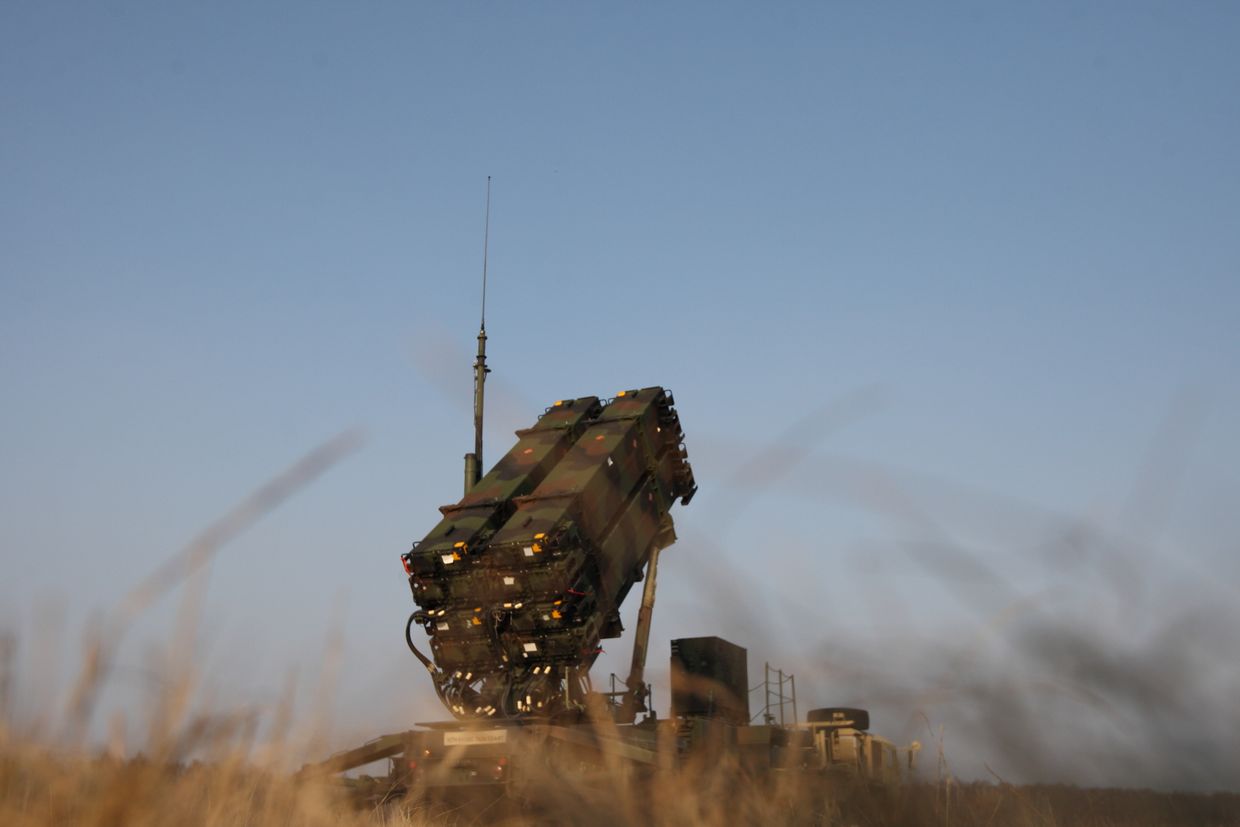
A Patriot air defense launcher raised into firing position on a military trailer.

Russia has rebuilt its missile industry around the weapons most likely to pierce Ukraine's thinning air defenses. The Institute for the Study of War (ISW) made that case on 10 August. Kyiv's Patriot interceptor shortage, it assessed, now hands Moscow no reason to negotiate. Because Kyiv can no longer reliably stop ballistic missiles, the Kremlin sees a clear military path to its maximalist aims.

Factories retooled around the missiles that get through

Since April 2026, Russian plants have prioritized ballistic and cruise missiles built to evade interception. HUR Deputy Head Major General Vadym Skibitskyi reported the shift. Monthly ballistic launches have more than tripled between April and July, he said. Meanwhile, output of key missile types runs 10 to 20% above plan. Moscow also met its full-year Zircon and Onyx targets by 3 August. To free capacity, it suspended the less accurate Kinzhal and Kh-32 lines. Skibitskyi flagged a newer twist, too: S-400 launchers now fire specially developed RM-48U rounds along a ballistic path. Russia is also striking Ukraine's defense plants, he warned, to choke off Kyiv's own ballistic-missile program.

Fired fresh, not from the stockpile

Crucially, these strikes draw on newly built missiles rather than war reserves. That approach lets Moscow sustain larger, more frequent salvos. Its stockpile stays intact for the occasional very large barrage. Unmanned Systems Forces commander Major Robert "Magyar" Brovdi put numbers on the trend. Russia can already loose a simultaneous salvo of 77 missiles, and it is pushing toward 200. He stressed that he meant weapons of all types, not ballistics alone. Kalibr cruise missiles, by contrast, are piling up unused. Moscow is shipping them to fleets beyond the Black Sea as Ukrainian crews down nearly all of them. Repeated strikes have meanwhile driven the Black Sea Fleet back to the port of Novorossiysk.

"The Patriot shortage hands Russia an opening to do serious damage over the winter — and a reason to keep meaningful talks at bay," - Institute for the Study of War assessed

Why the Patriot interceptor shortage stalls negotiations

This reprioritization feeds a winter strategy meant to break Ukraine's will to fight, ISW assessed. The Patriot is still the only system Kyiv fields that can down Russian ballistic missiles. And Kyiv has warned partners it cannot close the interceptor gap before the cold months. As a result, the Kremlin thinks it can hammer cities without paying a battlefield price. That calculation could drag the war into 2027, ISW noted. Putin's theory of victory still rests on outlasting Ukraine's defenses and Western resolve. On 9 August, Deputy Foreign Minister Mikhail Galuzin restated Moscow's line. Any "freeze" that ignores the war's "root causes" is unacceptable, he said — shorthand for the Kremlin's original demands.

  • ✇Euromaidan Press
  • Zelenskyy says US will send Patriot interceptors monthly – but not enough to protect from Russian attacks
    Ukraine has reached concrete agreements with the United States for monthly deliveries of interceptor missiles for its Patriot air defense systems, President Volodymyr Zelenskyy said at a joint press conference with Serbian President Aleksandar Vučić in Belgrade on 8 August. The commitment does not close Ukraine's gap. Zelenskyy said the monthly volume remains insufficient and laid out a parallel effort to secure interceptors from Europe, the Middle East and further afie
     

Zelenskyy says US will send Patriot interceptors monthly – but not enough to protect from Russian attacks

8 août 2026 à 09:56

vucic zelenskyy

Ukraine has reached concrete agreements with the United States for monthly deliveries of interceptor missiles for its Patriot air defense systems, President Volodymyr Zelenskyy said at a joint press conference with Serbian President Aleksandar Vučić in Belgrade on 8 August.

The commitment does not close Ukraine's gap. Zelenskyy said the monthly volume remains insufficient and laid out a parallel effort to secure interceptors from Europe, the Middle East and further afield, as US shipments have thinned this year.

The US as the primary supplier

Repelling ballistic missiles has been a problem since the start of the full-scale war, and the search for a solution begins with the country that builds the systems, Zelenskyy said.

"From the first days of the war in Ukraine there was nothing to repel ballistic missiles. This is very difficult work. In which directions can this problem be solved? Well, first of all, who has anti-ballistic missiles and systems? The manufacturer. That is the United States of America, first of all. Can they help? We are working. Will they allocate us missiles every month? Yes. We have agreements," he said.

Asked whether that supply met Ukraine's needs, he answered: "Are these missiles enough? No." He added that the monthly volumes of American missiles had decreased this year compared with 2025.

Where else Kyiv is looking

Patriot missiles are also held by European countries, Zelenskyy said, naming Germany and Poland as able to substantially strengthen Ukraine's air defense. Kyiv is also in talks with Norway, the Netherlands and Middle Eastern states.

South Korea and Japan could potentially help but do not currently hand over such systems, which Zelenskyy attributed to restrictions in their domestic legislation and constitutions. Ukraine is separately discussing air defense with Israel; the president said Ukraine is ready to buy but that no such option exists at present.

"Every day I speak with one European state or another and with Middle Eastern states so that Ukraine receives additional missiles outside the American package. We are simply at the level where all our institutions must work on this, not only the president. Everyone must work, otherwise there will not be enough missiles," he said.

The Belgrade remarks came a day after Zelenskyy arrived on his first official visit to Serbia.

Zelenskyy had bilateral meeting with Serbian President Aleksandar Vučić. Vucic voiced support for Ukraine's territorial integrity and its path to the European Union.

What esle Zelenskyy and Vučić discussed


The two presidents held talks that ran across the countries' European integration, trade and energy cooperation, a prospective free-trade zone, and diplomatic paths to ending Russia's war on Ukraine. Vučić had said ahead of the meeting that he would discuss both countries' route to EU membership, along with economic and energy cooperation and other opportunities

On the economy, Vučić said the sides had reviewed infrastructure projects and the involvement of Ukrainian companies in Serbia. On peace efforts, Zelenskyy said the leaders had discussed diplomatic instruments capable of bringing the war closer to an end.

Before the press conference, the sides held a ceremony to sign a memorandum on cooperation in animal health and food safety. The document was signed by Serbia's Minister of Agriculture, Forestry and Water Management Dragan Glamočić and Ukraine's ambassador to Serbia Oleksandr Lytvynenko.

Territorial integrity

Vučić framed Serbia's position as a matter of UN principle and tied it to Ukraine's reciprocal stance on Serbia.

"We support the UN Charter, UN resolutions, and this means the territorial integrity of all UN members, which means the territorial integrity of Ukraine as well. Likewise we are very grateful to Ukraine for supporting the territorial integrity of the Republic of Serbia. And as far as we are concerned, we will continue this principled policy. There are no 'buts' on this question. This is being said very clearly and resolutely now," Vučić said.

Support on the road to the EU

Vučić said Ukraine could always count on Belgrade's support in EU accession, and the two discussed both countries' European path during the meeting.

"We wish for Ukraine to open all negotiating clusters as quickly as possible, to close them as quickly as possible, because this is the wish of the Ukrainian people, of the Ukrainian leadership. And speaking of ourselves, we have not had and will not have any problems regarding this in the future. On the contrary, everything we can do to help Ukraine on its European path, we will do," Vučić said.

Trade at $321 million in six months

Vučić said trade between the two countries is growing rapidly: while it stood at $450 million for all of last year, it had already reached $321 million in the first six months of this year.

"The most important import item is iron ore from Ukraine. And I believe that cooperation in the sphere of agriculture, but also in other spheres of energy, everywhere trade turnover can be greater. We discussed projects in the sphere of infrastructure, involving Ukrainian companies on the territory of Serbia. I believe we can have serious and good results in the future," the Serbian president said.

Vučić said he hoped cooperation between the countries would become "significantly stronger and larger-scale" after the war ends. In future, he said, Serbia and Ukraine could jointly export certain goods and enter third-country markets, in particular in Africa and Asia.

"I think we will yet see agreements on such cooperation. Yesterday we had long discussions, today the discussions were really good. I am grateful to President Zelenskyy for the visit to Serbia. I hope we received you properly. And I want to believe that our meetings in the future will be incomparably more frequent than they were before," Vučić added.

A free-trade zone by the end of 2026

Zelenskyy said negotiations on creating a free-trade zone between Ukraine and Serbia are under way, and expressed hope the agreement could be concluded by the end of 2026.

"Our teams must work well to speed up the agreement on a free trade zone between Ukraine and Serbia. These negotiations are progressing, this is positive. And it would be good to prepare everything by the end of this year for concluding the agreement on free trade between Ukraine and Serbia," the Ukrainian president said.

Damaged energy grid and a Serbian humanitarian package

Zelenskyy described the state of Ukraine's infrastructure under Russian strikes.

"For the fifth year now we in Ukraine are forced to go through all these strikes. Russian strikes are aimed mostly at facilities that work precisely for the life of the people. We have virtually no undamaged power plants left. Many railway stations are destroyed, hospitals, universities, ordinary civilian enterprises. In a time of such a war we appreciate and are very grateful for all the support that Ukraine receives from other countries, from other peoples," Zelenskyy said.

He said Ukraine continues to expand all formats of cooperation with partners to give communities and people "more resilience, more capacity to hold out despite all the challenges of the war."

Zelenskyy said Serbia would provide Ukraine with a humanitarian aid package. "We are grateful that there will be a new package of humanitarian support from Serbia for Ukraine, in particular in the sphere of medicine, in the sphere of energy. This is very important for us," he said.

Diplomacy to end the war

Zelenskyy said the leaders had discussed diplomatic instruments that could bring the war closer to an end, and pointed to capitals with influence over the process.

"It is important that everywhere in the world they know what we want, and this is true, and this is a fact, we want a dignified peace, that every opportunity be used for the sake of peace, for the sake of guaranteed security. All available opportunities that exist in Washington, and in Beijing, in the capitals of Europe, our partners in the Middle East, in the Gulf, in all the capitals of the world that have influence over the relevant processes," Zelenskyy said.

  • ✇Euromaidan Press
  • US has burned through 80% of THAAD interceptors, sources tell CNN
    The US military has used up nearly 80% of its THAAD interceptors and roughly half of its Patriot stock during the five-month war with Iran, according to two sources familiar with the latest Pentagon inventory report, CNN reported. Senior US military commanders are warning the Pentagon's munitions stockpile is "dangerously low," according to multiple sources familiar with the matter. The disclosure on THAAD levels has not been previously reported. Before the war began, t
     

US has burned through 80% of THAAD interceptors, sources tell CNN

5 août 2026 à 03:24

us weapon

The US military has used up nearly 80% of its THAAD interceptors and roughly half of its Patriot stock during the five-month war with Iran, according to two sources familiar with the latest Pentagon inventory report, CNN reported.

Senior US military commanders are warning the Pentagon's munitions stockpile is "dangerously low," according to multiple sources familiar with the matter. The disclosure on THAAD levels has not been previously reported. Before the war began, the US had around 2,200 Patriot interceptors of the platform's two most modern variants and 452 THAAD missiles, according to Center for Strategic and International Studies (CSIS) estimates. CSIS has assessed the war with Iran drained over half the global Patriot stockpile within its first 39 days.

The Patriot and THAAD systems are the same interceptor families that arm Ukraine's own air defense against Russian ballistic strikes - Kyiv depends on to stop Russian ballistic missiles. Thus a stockpile "dangerously low" for Washington is one that's already left Ukrainian Patriot launchers running empty during Russian barrages.

Commanders call stockpiles dangerously low

The US Army has fired "virtually all" of its long-range, surface-to-air precision weapons during the war, one source told CNN, referring to Army Tactical Missile Systems (ATACMS) and Precision Strike Missiles (PrSM). Close to half of the US Tomahawk cruise missile stockpile has also been used, a source said, up from nearly 30% reported by CNN in April.

Gulf allies have raised concerns that the shortage could limit their own ability to intercept Iranian retaliation, particularly if Washington resumes strikes. Replenishment is slow: the Pentagon is currently receiving about 15 new Tomahawks and 20 new Patriot missiles a month, and CSIS estimates rebuilding THAAD stocks to prewar levels will take three years or more.

Weekend strikes called off over stockpile concerns

The munitions warnings, combined with intelligence on the risks of striking Iranian energy infrastructure and concerns raised by Gulf states, were factors in President Donald Trump's decision to call off planned strikes over the weekend, according to CNN's sources. Trump had authorized the operation Friday, with Defense Secretary Pete Hegseth receiving the final order to proceed, a senior Trump official said. Trump reversed course Saturday after Middle East allies told him they feared Iranian retaliation against their energy infrastructure, the official said. He told Hegseth to stand down for now but has not ruled out strikes at a later date.

Pentagon spokesman Sean Parnell said in a statement that the US military "has everything it needs to execute at the time and place of the President's choosing." White House spokesperson Anna Kelly said the military has "more than enough munitions, ammo, and stockpiles to serve all of President Trump's strategic goals and beyond."

Joint Chiefs Chairman Gen. Dan Caine raised the stockpile issue in a separate White House meeting last month, CNN previously reported, where officials also discussed the risk of mass civilian casualties from a resumed US campaign inside Iran.

The shortage extends beyond Iran

CNN's sources said the depleted stockpile could affect the US military's ability to fight a future war involving China, Russia, or North Korea. "The lack of interceptors means that conventional attacks can backfire if the suicide drones start making it through in-masse," one source said. "Tit-for-tat will never end this."

Euromaidan Press has reported that the same Patriot shortage has already strained deliveries to Ukraine, which depends on PAC-3 interceptors as its only defense against Russian ballistic missiles. A senior Ukrainian official has told the Financial Times that deliveries to Kyiv faced delays since the war with Iran began, and President Volodymyr Zelenskyy has said late arrivals have left Patriot launchers empty during Russian missile barrages.

Analysts expect a slow recovery. The Precision Strike Missile and Joint Air-to-Surface Standoff Missile inventories should return to prewar levels by mid-to-late 2027, according to CSIS. The Defense Department has signed two deals this week to expand Patriot and THAAD rocket motor production, though a Pentagon spokesperson declined to say when the expansion would show results.

Trump on Monday called Iranian leadership "unbelievably duplicitous" after Tehran denied that negotiations would resume, and said Tehran had one "last chance" to sign a deal.

  • ✇Euromaidan Press
  • Ukraine’s new ballistic missiles would make Russia choose: bomb Kyiv or defend Moscow
    Ukrainian industry is working hard on new ballistic missiles Lobbing ballistics at Moscow and other Russian cities, Ukrainian forces would force Russian commanders to choose The choice: deploy their best S-400 air defense batteries to defend against ballistics, or keep aiming them at Ukrainian cities It's possible Ukrainian forces launched a new type of ballistic missile at Moscow on 1 July. The apparent Ukrainian missile, which air defenses reportedly shot do
     

Ukraine’s new ballistic missiles would make Russia choose: bomb Kyiv or defend Moscow

Par : David Axe
4 août 2026 à 20:01

russia's arctic bases sit near-naked air defenses vanish guard moscow refineries burning inland · post s-400 defense missile launcher vehicles 2018 file sergei malgavko/tass rferl ukraine news ukrainian reports

  • Ukrainian industry is working hard on new ballistic missiles
  • Lobbing ballistics at Moscow and other Russian cities, Ukrainian forces would force Russian commanders to choose
  • The choice: deploy their best S-400 air defense batteries to defend against ballistics, or keep aiming them at Ukrainian cities

It's possible Ukrainian forces launched a new type of ballistic missile at Moscow on 1 July. The apparent Ukrainian missile, which air defenses reportedly shot down over the Russian capital, is a harbinger of things to come.

Ukraine is developing several new ballistic missiles with the range to reach Moscow, 500 km from the border with Ukraine. If and when they begin raining down on Russian cities, gas facilities, factories and refineries, Russia may have to change the way it fights.

The Russians might have to aim their best S-400 air defense batteries into the sky, instead of aiming them at the ground. For Ukraine, that could mean some respite from relentless Russian missile strikes. After all, S-400s doubling as surface-to-surface munitions are in the mix most nights when Russia bombards Ukraine.

"Ballistic missiles force a different problem on Russia," wrote Michael Bohnert, an analyst for California think tank RAND.

The coming shift comes down to speed. Where one-way attack drones and many cruise missiles are slow—often motoring along at just a few hundred kilometers an hour—and are thus fairly easy to shoot down, ballistic missiles are fast.

FP-9.
Explore further

Ukraine’s ballistic missile may have reached Moscow. The damage wasn’t the point.

They're all supersonic, traveling at least the speed of sound. Heavier ballistic missiles may even be hypersonic. That is, capable of reaching five times the speed of sound.

The same air defenses that swat down incoming drones can't stop ballistic missiles. Only the best air defenses stand any chance of hitting an incoming ballistic missile. Ukraine's main defense against Russian ballistic missiles is its six or so US-made Patriot batteries; for Russia, the main defense against the coming Ukrainian ballistics will be the roughly 50 S-400 batteries.

Keenly aware of the deep strike dynamics, the Russians are pivoting away from easy-to-kill drones toward hard-to-kill ballistics. This is a serious problem for Ukrainian air defenses, which are desperately short of missiles for their Patriot batteries owing to the Americans' reluctance to sell or donate missiles. US forces are struggling with their own air defense shortfalls resulting from the on-again, off-again war with Iran.

In one wave of Russian attacks on 6 July, Ukrainian air defenses shot down 326 out of 351 incoming Geran drones and 37 of 39 incoming subsonic cruise missiles. But the Russians also launched six supersonic anti-ship missiles and 23 ballistic missiles. Every single one got through, wreaking havoc across Kyiv. At least 22 people died in the capital and the surrounding oblast, and 90 more were injured.

A Ukrainian Patriot MIM-104 air defense system in the field
A Patriot MIM-104 air defense system in service with a unit of Air Defense Forces West, 10 April 2026. Photo: Air Command West, Ukrainian Air Force

Deep strike disparity

At present, Ukraine can't match these strikes. Yes, the Ukrainians can launch lots of one-way attack drones. In fact, far more drones than Russia can launch. And the Ukrainians also have a reliable subsonic cruise missile in the form of the Fire Point FP-5. But Ukraine doesn't yet have a fully operational ballistic missile in the class of the Russian Iskander or S-400 (in its surface strike mode).

That's about to change, of course. The apparent 1 July ballistic missile strike targeting Moscow was just a preview of a wider Ukrainian campaign. Fire Point co-founder and chief engineer Denys Shtilierman has circulated what he claimed was test footage of a new ballistic missile, possibly the 855-km FP-9, and hinted that strikes on Russian soil could begin soon.

Soon has a season attached to it now. Fire Point CEO Iryna Terekh told The War Zone the company is casting the FP-9's solid-fuel engine—4.6 tons of propellant, more than four times what the smaller FP-7 carries—and that everything else on the missile is finished. "It's the last touch on the engine, and we are ready to start," she said, putting the first test launch in the autumn. Shtilierman told interviewer Dmytro Gordon on 27 July that strikes on Russia could begin as early as this autumn, too.

If FP-9s begin bombarding Moscow, Russian commanders might not have the luxury of using many, or any, of their S-400s for surface strikes.

Geran 4 Shahed seeker
Explore further

A $50 computer just flew Russia’s newest jet drone into a Ukrainian grain ship—and jamming couldn’t stop it

Every month, Russian industry produces approximately 40 missiles for S-400s batteries. If Ukraine can fling a few dozen FP-9s or similar missiles at Russian targets every month, Russia would have to devote its entire S-400 capability to air defense just to blunt the bombardment. After all, it usually takes several missiles in the class of a Patriot or S-400 to hit one incoming ballistic missile.

"Russia would have to choose," Bohnert wrote. Either "keep using the S-400 as a strike weapon and accept that hardened targets get hit, or return the system to its designed air-defense role."

If the Russians choose protection, they'll have somewhat fewer ballistic missiles to fling at Kyiv and other Ukrainian cities. That should take some pressure off Ukraine's own overstretched air defenses.

Zelenskyy names one of the worst consequenceses of Russia’s war. This threat is about to grow everywhere in the world

3 août 2026 à 18:38

Patriot anti-aircraft missile system launchers

One of the worst consequences of Russia's war, and of Iran's tactics, is that potential aggressors worldwide now see how much damage ballistic missiles can do to human life. So the global ballistic threat will grow, and anti-ballistic defenses must grow with it, Ukrainian President Volodymyr Zelenskyy says, according to UNIAN.

Ukraine has put a number on the shield it wants to build itself against ballistic missiles: 100 systems. These systems are planned to be built as part of its FREYJA anti-ballistic project.

Zelenskyy frames the project as an answer to a threat spreading beyond Ukraine.

FREYJA is Ukraine's own interceptor, recycling a Soviet S-300 missile with a German seeker at roughly $700,000 per shot, a fraction of a $3.8 million Patriot, though its maker, Fire Point, does not target a first ballistic intercept until late 2027.

FREYJA as a shared European system

Zelenskyy pitches the Ukrainian project as Europe's future shield.

"Our FREYJA can become a common system for Europe that provides integrated protection. FREYJA will be fast to produce and tested by war," he said, offering to share all the know-how with partners if the system proves itself.

The project already has a coalition. Ten nations joined the European Anti-Ballistic Coalition in July, per Euromaidan Press, with Ukraine contributing the missile and partners supplying radars, command systems, and components Ukraine does not make.

The shield is a bet against a shortage

The 100-systems goal collides with the interceptor shortage that FREYJA is meant to solve. FREYJA has three tracks, including a transatlantic dimension and Ukraine's relationship with the US, Zelenskyy said, without disclosing details, and Ukraine needs both funding and certain components to build it.

In the meantime, Ukraine leans on the countries that already have Patriots. While Ukraine builds FREYJA and runs short on its current anti-ballistic systems, those partners that lack the production Ukraine needs but hold Patriot missiles today can invest those interceptors into Ukraine's defense, Zelenskyy said, welcoming them into the anti-ballistic coalition. The 100-system shield is the long game, while the borrowed Patriots are what keep Ukrainian skies covered until it exists.

  • ✇The Kyiv Independent
  • Trump mulls sending Kyiv another Patriot air defense system, WSJ reports
    U.S. President Donald Trump is considering sending Ukraine an additional Patriot air defense system, a move that would mark his administration's first major weapons transfer to Kyiv, the Wall Street Journal (WSJ) reported on July 8, citing two defense officials. The report is the latest in a series of contradictory messages from the Trump White House in recent days regarding military aid to Ukraine. While the Pentagon on July 2 announced a halt in weapons shipments to Kyiv due to dwindling U.S.
     

Trump mulls sending Kyiv another Patriot air defense system, WSJ reports

8 juillet 2025 à 19:17
Trump mulls sending Kyiv another Patriot air defense system, WSJ reports

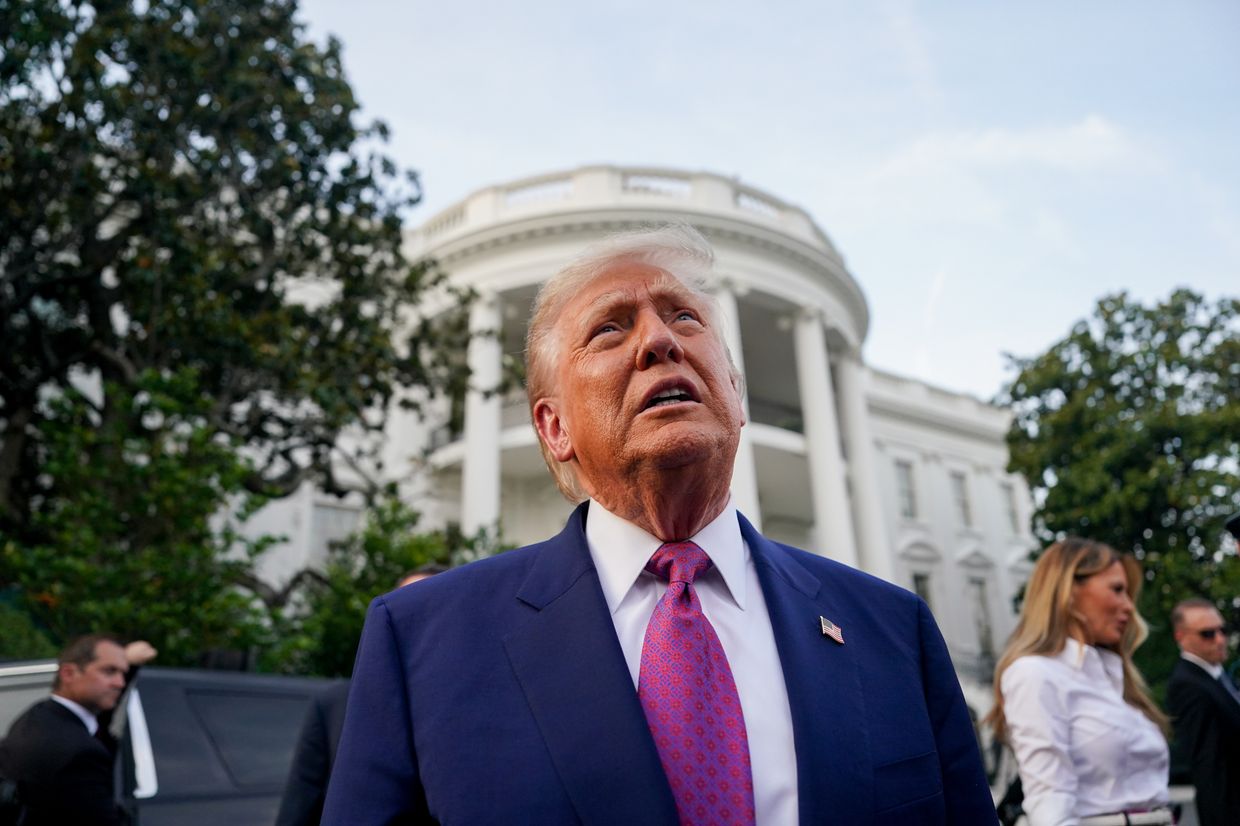
U.S. President Donald Trump is considering sending Ukraine an additional Patriot air defense system, a move that would mark his administration's first major weapons transfer to Kyiv, the Wall Street Journal (WSJ) reported on July 8, citing two defense officials.

The report is the latest in a series of contradictory messages from the Trump White House in recent days regarding military aid to Ukraine. While the Pentagon on July 2 announced a halt in weapons shipments to Kyiv due to dwindling U.S. stockpiles, Trump later claimed he wasn't responsible for the decision and wanted to send more weapons to Ukraine.

A U.S. defense official told the WSJ that Trump has asked the Pentagon to look into options for supplying Ukraine with more arms, including a Patriot air defense system. Officials are also reportedly exploring whether other nations can send Patriots to Kyiv.

The claim dovetails with recent media reports about the administration's plans to bolster Ukraine's air defenses. Axios reported on July 8 that the White House is pursuing a plan to have Germany sell another Patriot battery to Ukraine, with the U.S. and European allies splitting the cost of the purchase. Sources told the outlet that Trump also pledged to send 10 Patriot interceptor missiles to Kyiv.

If the U.S. provides Ukraine with an additional Patriot system, it would mark the first time Trump has approved a major military aid package to Kyiv that wasn't previously greenlighted by former U.S. President Joe Biden.

Washington has thus far provided Kyiv with three Patriots, a former Pentagon official told the WSJ. Germany has also sent three, while a group of European countries provided one. According to the official, not all systems are in use at the same time due to maintenance issues.

The U.S.-made air defense systems are in high demand around the world. Each system consists of two or three launchers, a radar, a command and control element, and interceptor missiles. Patriot missiles are also in short supply globally: Ukraine faces an urgent need for the munitions amid increased Russian aerial attacks, and the Guardian reported on July 8 that even the U.S. has only 25% of the interceptors required by its defense readiness plans.

According to one of the officials who spoke to the WSJ, the U.S. military would be able to supply an additional Patriot to Ukraine if ordered by the White House.

Putin throws ‘a lot of b*llshit’, Trump says as he ‘looks strongly’ at Russia sanctions bill
Trump also addressed U.S. legislation on sanctions, saying the Senate’s Russia sanctions bill was “totally optional” for him to implement or terminate. “I’m looking at it very strongly,” Trump said.
Trump mulls sending Kyiv another Patriot air defense system, WSJ reportsThe Kyiv IndependentAnna Fratsyvir
Trump mulls sending Kyiv another Patriot air defense system, WSJ reports

  • ✇The Kyiv Independent
  • US only has 25% of Patriot missiles needed for war plans, Guardian reports
    The United States has only about 25% of the Patriot missile interceptors it needs to meet Pentagon military plans, a shortage that led U.S. President Donald Trump's administration to pause a major transfer of weapons to Ukraine, the Guardian reported on July 8.The decision to halt the delivery, made on July 2, followed an internal review showing low stockpiles of critical air defense systems. The depletion was largely due to recent U.S. operations in the Middle East, including the interception o
     

US only has 25% of Patriot missiles needed for war plans, Guardian reports

8 juillet 2025 à 15:17
US only has 25% of Patriot missiles needed for war plans, Guardian reports

The United States has only about 25% of the Patriot missile interceptors it needs to meet Pentagon military plans, a shortage that led U.S. President Donald Trump's administration to pause a major transfer of weapons to Ukraine, the Guardian reported on July 8.

The decision to halt the delivery, made on July 2, followed an internal review showing low stockpiles of critical air defense systems. The depletion was largely due to recent U.S. operations in the Middle East, including the interception of Iranian missiles after strikes on the American Al Udeid airbase in Qatar, according to the Guardian.

According to officials familiar with the matter, the Pentagon's munitions tracker, used to measure the minimum supplies needed for U.S. war plans, showed Patriot interceptor levels had fallen below acceptable levels. That prompted concerns that sending more to Ukraine could put U.S. defense readiness at risk, the Guardian wrote.

The freeze reportedly affected Ukraine's two key arms transfer methods: drawdowns from Pentagon stockpiles and the Ukraine Security Assistance Initiative (USAI), through which the Defense Department orders new weapons from contractors.

Because U.S. orders take priority, Ukrainian requests for new weapons, including Patriot missiles, face years-long delays.

The pause came at a critical time for Kyiv, as Russia intensifies large-scale aerial attacks on Ukrainian cities. With limited options to acquire precision-guided and other key munitions, Ukrainian forces have increasingly relied on Western-supplied air defenses to counter the growing threat.

For its latest aid package, the U.S. had planned to send dozens of Patriot interceptors, along with Hellfire missiles, air-to-air Sparrows, GMLRS rockets, and anti-tank weapons, according to the Guardian.

NBC News reported on July 4 that U.S. Defense Secretary Pete Hegseth unilaterally halted a weapons shipment to Ukraine despite internal military assessments showing the aid would not compromise American military readiness.

The assessment concluded that while some munitions stockpiles, including precision weapons, were low, they had not fallen below critical thresholds.

Amid the ongoing questions over Washington's weapons pause, Trump has apparently promised to send 10 Patriot interceptors to Ukraine, Axios reported on July 8. Sources also told the Wall Street Journal (WSJ) that Trump claimed he wasn't behind the decision to halt arms to Kyiv in a recent phone call with President Volodymyr Zelensky.

How to enter Ukraine’s defense market: A short guide for foreign companies
Editor’s Note: The opinions expressed in the op-ed section are those of the authors and do not purport to reflect the views of the Kyiv Independent. For editorial coverage of Ukraine’s weapons procurement, the country’s Defense Ministry and the scandal-ridden Defense Procurement Agency click on the links
US only has 25% of Patriot missiles needed for war plans, Guardian reportsThe Kyiv IndependentVladyslav Bandrovsky
US only has 25% of Patriot missiles needed for war plans, Guardian reports
  • ✇The Kyiv Independent
  • Trump reportedly pledges to send 10 Patriot missiles to Ukraine, asks Germany to send battery
    U.S. President Donald Trump has promised to send 10 Patriot interceptors to Ukraine - a smaller number than had been paused previously while en route to the country, Axios reported on July 8, citing its sources. Trump has also suggested that Germany sell one of its Patriot batteries to Ukraine, according to three sources cited by Axios. They said the U.S. and European allies would split the cost of the purchase.The discussion comes as Ukraine is calling upon its allies, particularly the United S
     

Trump reportedly pledges to send 10 Patriot missiles to Ukraine, asks Germany to send battery

8 juillet 2025 à 10:15
Trump reportedly pledges to send 10 Patriot missiles to Ukraine, asks Germany to send battery

U.S. President Donald Trump has promised to send 10 Patriot interceptors to Ukraine - a smaller number than had been paused previously while en route to the country, Axios reported on July 8, citing its sources.

Trump has also suggested that Germany sell one of its Patriot batteries to Ukraine, according to three sources cited by Axios. They said the U.S. and European allies would split the cost of the purchase.

The discussion comes as Ukraine is calling upon its allies, particularly the United States, to support Ukrainian air defense by supplying "life-saving" Patriot systems and relevant missiles.

The Pentagon said on July 2 that some military assistance to Ukraine had been halted as the U.S. Defense Department conducts a review of foreign aid deliveries.

On July 7, the Pentagon said it would renew shipments, saying the additional defensive weapons were intended to help Ukraine protect itself while the U.S. works toward "a lasting peace."

Merz called Trump to request the release of the paused interceptors, according to Axios. During the call, Trump proposed that Germany sell one of its own Patriot batteries to Ukraine.

While no agreement has been reached, officials on both sides say negotiations are ongoing. German officials maintain that Berlin has already sent a higher share of its available Patriot systems to Ukraine than any other NATO country, including the U.S.

Russia has escalated its aerial campaign against Ukraine in recent weeks, launching large-scale missile and drone attacks that have killed and injured hundreds of civilians across multiple cities.

The suspension of U.S. arms deliveries, which include Patriots and precision-guided munitions, drew criticism from Kyiv. During a July 4 phone call with Ukrainian President Volodymyr Zelensky, Trump said he was not responsible for halting the aid, according to the Wall Street Journal.

He reportedly told Zelensky that a review of U.S. munitions stockpiles was initiated after last month's U.S. strikes on Iranian nuclear sites, but denied ordering a full pause in shipments.

NBC News reported that Defense Secretary Pete Hegseth halted the shipments unilaterally on July 2, despite internal Pentagon assessments that the move would not jeopardize U.S. military readiness.

Special Envoy Keith Kellogg and Ukrainian Defense Minister Rustem Umerov are set to meet in Rome later this week to discuss resuming the stalled military aid, Politico reported on July 7.

Seeing war through the lens of narcissism
We usually think of narcissism as a personal flaw — a grandiose ego, a craving for attention, a lack of empathy. But what if narcissism is not just a diagnosis, but a lens? A way of understanding how individuals — and even entire nations — cope with wounds too painful to face directly?
Trump reportedly pledges to send 10 Patriot missiles to Ukraine, asks Germany to send batteryThe Kyiv IndependentDr. Gary E Myers
Trump reportedly pledges to send 10 Patriot missiles to Ukraine, asks Germany to send battery

  • ✇The Kyiv Independent
  • Zelensky describes phone call with Trump as 'best conversation in all this time'
    President Volodymyr Zelensky described his recent phone call with U.S. President Donald Trump as "the best conversation in all this time" in an evening address on July 5."Patriot (missiles) are key to protection from ballistic (missiles). We discussed several other important issues that our teams will work out in detail at meetings in the near future," Zelensky said.The two leaders spoke on July 4, agreeing to strengthen Ukraine's air defenses amid intensified Russian strikes, Zelensky said earl
     

Zelensky describes phone call with Trump as 'best conversation in all this time'

5 juillet 2025 à 15:29
Zelensky describes phone call with Trump as 'best conversation in all this time'

President Volodymyr Zelensky described his recent phone call with U.S. President Donald Trump as "the best conversation in all this time" in an evening address on July 5.

"Patriot (missiles) are key to protection from ballistic (missiles). We discussed several other important issues that our teams will work out in detail at meetings in the near future," Zelensky said.

The two leaders spoke on July 4, agreeing to strengthen Ukraine's air defenses amid intensified Russian strikes, Zelensky said earlier.

A day prior to speaking with Zelensky, Trump held a phone call with Russian President Vladimir Putin in an effort to discuss ending Russia's war against Ukraine.

"This was probably the best conversation in all this time, it was maximally productive. We discussed the topic of air defenses. I am grateful for the readiness to help," Zelensky said, describing his phone call with Trump.

Relations between Ukraine and the U.S. have previously been strained as the White House pushed Kyiv to sign a lucrative bilateral minerals deal and tried to broker a peace deal with Moscow that did not rule out major concessions for Ukraine.

Zelensky's phone call with the U.S. leader followed media reports and announcements from Washington of a pause in military assistance to Ukraine. Trump, on July 3, denied that Washington has stopped supplying weapons to Kyiv.

Trump described his July 3 conversation with Putin as disappointing, saying that the call "didn't make any progress" in stopping Russia's war against Ukraine.

"I'm very disappointed with the conversation I had today with President Putin," Trump told journalists. "Because I don't think he's there. And I'm very disappointed.  I don't think he's looking to stop this fighting."

Russia launches another horrific attack on Kyiv hours after Trump-Putin call
Ripe cherries and apricots fill the stalls of fruit vendors, while people bustle about on a scorching July Friday. Yet just a five-minute walk from the stand, the scene shifts dramatically: a gaping hole mars the five-story residential building where the stairwell once stood. Rescuers tirelessly sift through the
Zelensky describes phone call with Trump as 'best conversation in all this time'The Kyiv IndependentKateryna Hodunova
Zelensky describes phone call with Trump as 'best conversation in all this time'
  • ✇The Kyiv Independent
  • 'Deliberately massive and cynical' — Russian attack on Ukraine began as Trump and Putin spoke, Zelensky says
    President Volodymyr Zelensky called for more air defence for Ukraine after a massive drone and missile attack on Ukraine's capital overnight on July 4.According to Zelensky, as U.S. President Donald Trump and Russian President Vladimir Putin were talking on the phone on July 3, air raid sirens blared across Ukraine. "Moreover, the first air raids in our cities and regions began yesterday almost simultaneously with the start of media discussions of President Trump's phone call with Putin," Zelens
     

'Deliberately massive and cynical' — Russian attack on Ukraine began as Trump and Putin spoke, Zelensky says

4 juillet 2025 à 03:40
'Deliberately massive and cynical' — Russian attack on Ukraine began as Trump and Putin spoke, Zelensky says

President Volodymyr Zelensky called for more air defence for Ukraine after a massive drone and missile attack on Ukraine's capital overnight on July 4.

According to Zelensky, as U.S. President Donald Trump and Russian President Vladimir Putin were talking on the phone on July 3, air raid sirens blared across Ukraine.

"Moreover, the first air raids in our cities and regions began yesterday almost simultaneously with the start of media discussions of President Trump's phone call with Putin," Zelensky wrote.

"This was one of the most large-scale air attacks – deliberately massive and cynical... Russia is once again demonstrating that it is not going to end the war and terror."

The overnight attack struck Kyiv and several other regions, injuring at least 23 people and setting off dozens of fires in Ukraine's capital. Russian forces launched more than 550 aerial weapons, including over 330 Iranian-type Shahed drones and multiple types of missiles, including ballistic missiles, Zelensky said.

Firefighting efforts and debris removal are still ongoing after another Russian strike. This was one of the most large-scale air attacks – deliberately massive and cynical. In total, 550 targets were launched, including at least 330 Russian-Iranian “shaheds”, along with missiles,… pic.twitter.com/vnn31oST0z

— Volodymyr Zelenskyy / Володимир Зеленський (@ZelenskyyUa) July 4, 2025

Kyiv was the main target. Ukraine's military said it shot down 270 aerial threats, while 208 additional drones were jammed by electronic warfare. Interceptor drones also downed dozens more, Zelensky said, calling their growing use a key defense priority.

Zelensky stressed the need for continued and increased military aid from allies, especially air defenses. "Patriots and their missiles are real defenders of life," Zelensky said. "It is very important to maintain the support of partners in ballistic missile defense."

Despite Russia's escalating attacks and Ukraine's desperate need for air defense munitions, the U.S. has decided to halt shipments of Patriot missiles and other promised weapons to Kyiv, claiming it needs to secure its own stockpiles.

'Deliberately massive and cynical' — Russian attack on Ukraine began as Trump and Putin spoke, Zelensky says
Kyiv residents and emergency crews at the site of Russian attack on July 4, 2025. Russia targeted the capital throughout the night with drones and missiles, causing fires across the city. (Ukraine's State Emergency Service / Telegram)
'Deliberately massive and cynical' — Russian attack on Ukraine began as Trump and Putin spoke, Zelensky says
Firefighters respond at an attack site in Kyiv after Russia launched a mass attack overnight on July 4, 2025. (Ukraine's State Emergency Service / Telegram) 
'Deliberately massive and cynical' — Russian attack on Ukraine began as Trump and Putin spoke, Zelensky says
Smoke rises over the residential district after a Russian drone and missile attack in Kyiv, Ukraine, on July 4, 2025. (Yurii Stefanyak / Global Images Ukraine via Getty Images)

Beyond Kyiv, strikes also hit the Dnipropetrovsk, Sumy, Kharkiv, Chernihiv, and Kyiv oblasts, according to Zelensky. Fires and damage were reported in nearly every district of the capital, including residential buildings, schools, medical facilities, and railway infrastructure.

Local authorities described the night as "terroristic." Kyiv Mayor Vitali Klitschko reported fires in at least five districts. Air quality in the city remained dangerously poor by morning, as noted by the Ministry of Environmental Protection.

Meanwhile, Russian state media reported that during the Trump-Putin call, Putin reiterated his determination to continue pursuing the Kremlin's goals in Ukraine, despite mounting international calls for a ceasefire.

Zelensky called on Ukraine's allies, particularly the United States, to apply massive and immediate pressure on Russia. "We need to ensure that for every such attack on people and lives, they (Russia) feel the corresponding sanctions and other blows to their economy, their earnings, their infrastructure," he said. "Only this can bring faster change."

Ukraine scrambles to clarify extent of US military aid pause and ‘whether everything will continue’
When the U.S. Department of Defense (DOD) halted the transfer of critical air defense missiles and other weapons to Ukraine, Kyiv and its partners were caught off-guard and are now left scrambling for clarity on the scope and length of the Trump administration’s decision. The White House confirmed the halt after a July 1 report by Politico said shipments were paused due to concerns over the size of domestic stockpiles. The decision “was made to put America’s interests first following a DOD rev
'Deliberately massive and cynical' — Russian attack on Ukraine began as Trump and Putin spoke, Zelensky saysThe Kyiv IndependentAndrea Januta
'Deliberately massive and cynical' — Russian attack on Ukraine began as Trump and Putin spoke, Zelensky says
  • ✇The Kyiv Independent
  • Trump signals support for sending more Patriot missiles to Ukraine
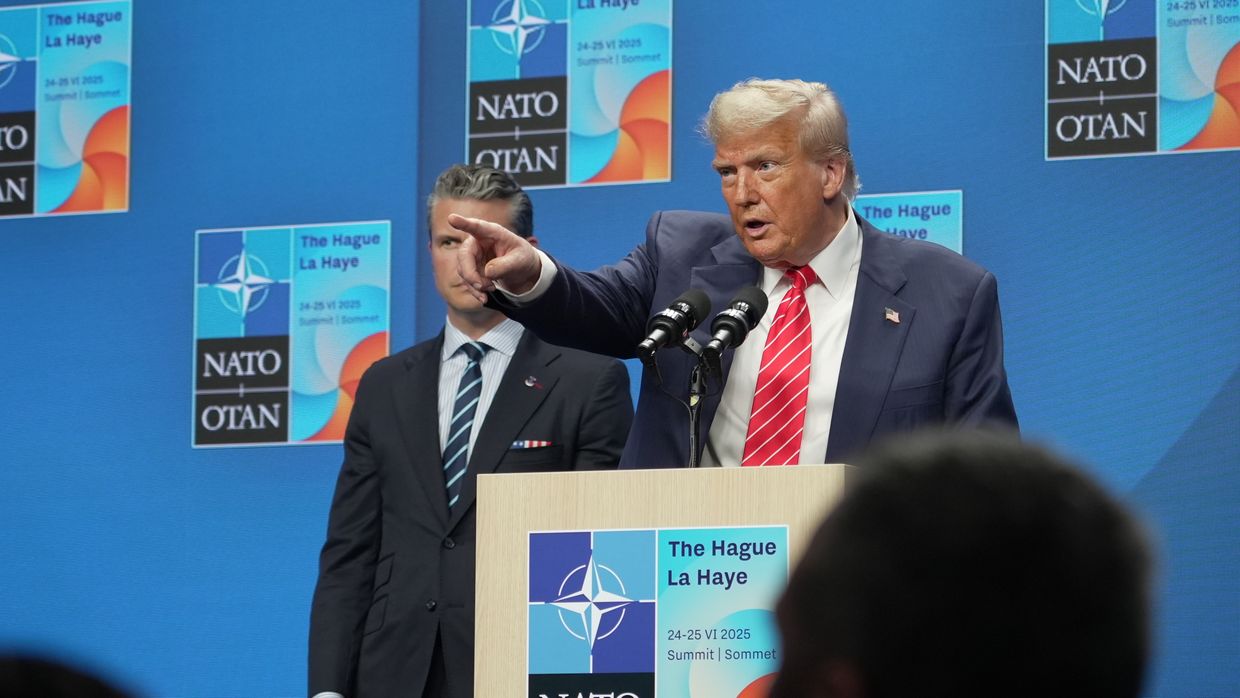
    Washington will "see" whether it can supply Kyiv with additional missiles for its Patriot air defense systems, U.S. President Donald Trump said during the NATO summit in The Hague on June 25 as Russia escalates its air strikes against Ukraine."They (Ukraine) do want to have the anti missiles, as they call them, the Patriots, and we're going to see if we can make some available," Trump said."They are very hard to get. We need them too. We are supplying them for Israel, and they are very effective
     

Trump signals support for sending more Patriot missiles to Ukraine

25 juin 2025 à 12:42
Trump signals support for sending more Patriot missiles to Ukraine

Washington will "see" whether it can supply Kyiv with additional missiles for its Patriot air defense systems, U.S. President Donald Trump said during the NATO summit in The Hague on June 25 as Russia escalates its air strikes against Ukraine.

"They (Ukraine) do want to have the anti missiles, as they call them, the Patriots, and we're going to see if we can make some available," Trump said.

"They are very hard to get. We need them too. We are supplying them for Israel, and they are very effective."

After the meeting with Trump earlier in the day, Zelensky said that the two discussed the purchase of American air defense systems to shield Ukrainian cities and critical infrastructure.

In recent weeks, Moscow has intensified its drones and missiles strikes. As NATO leaders gathered for the summit, Russia launched an attack on the city of Dnipro, killing at least 19 people and injuring more than 300 others.

"Ukraine is ready to buy this equipment and support American weapons manufacturers. Europe can help. We also discussed the potential for co-production of drones. We can strengthen each other," Zelensky added.

Previously, despite Kyiv's appeals, Trump has dismissed the request, accusing Ukraine's president of "always looking to purchase missiles" and falsely blaming Ukraine for provoking the war.

The Patriot is a high-precision, U.S.-made surface-to-air missile platform capable of intercepting aircraft, cruise missiles, and ballistic threats. Zelensky has repeatedly said Ukraine needs at least seven more systems to defend its most at-risk regions.

In early June, he confirmed that Trump's administration diverted 20,000 anti-drone missiles originally intended for Ukraine to American forces in the Middle East.

Since the start of Russia’s full-scale invasion, Moscow has launched 28,743 Shahed-type drones at Ukraine — with 2,736, or roughly 9.5%, fired in June 2025 alone, Zelensky said.

‘It’s possible’ — Trump on Putin’s territorial ambitions beyond Ukraine
“I consider him (Russian President Vladimir Putin) a person I think is misguided,” U.S. President Donald Trump said speaking at a NATO press conference in The Hague on June 25.
Trump signals support for sending more Patriot missiles to UkraineThe Kyiv IndependentKateryna Denisova
Trump signals support for sending more Patriot missiles to Ukraine
❌