❌

Vue normale

Russians try to sneak toward Zaporizhzhia through the dried-up Kakhovka Reservoir. Ukrainian intelligence captures three

20 octobre 2026 à 13:01

Ukrainian Bratstvo Battalion fighters capture a Russian serviceman on the dried-up bed of the Kakhovka Reservoir during counter-sabotage operations. October 2026. Screenshot: Defense Intelligence of Ukraine/Telegram

Fighters of the Bratstvo Battalion, part of the Timur Special Unit of Ukraine’s military intelligence agency (HUR), captured three Russian servicemen and gave first aid to one of them, HUR reported on 19 October. They also found and destroyed Russian sabotage groups, HUR said, adding that counter-sabotage operations in the Zaporizhzhia direction are ongoing.

Russian forces have spent months trying to get closer to Zaporizhzhia, one of Ukraine’s largest cities. They may try to use the dried-up bed of the Kakhovka Reservoir to infiltrate north toward it as autumn fog and dense vegetation set in, the Institute for the Study of War reported on 26 September. Ukrainian troops are now clearing the area of Russian saboteurs trying to get into the rear of Ukrainian positions, according to HUR.

HUR’s video shows the fighting and the captures, with one dead Russian soldier blurred. At the end, a captured Russian says two of the three men in his group were killed by a “Baba Yaga,” the nickname Russian troops use for Ukraine’s heavy bomber drones.

HUR described what the Russian groups are trying to do:

“Using small sabotage groups, the enemy is attempting to penetrate deep into the rear positions of Ukraine’s Defense Forces, build up forces to destabilize the situation, disrupt logistics, and neutralize Ukrainian defenders’ combat crews.”

Russia seeks to bring the front closer to Zaporizhzhia

Russia’s objective in the Zaporizhzhia direction is to advance within artillery range of the city, hold forward positions, and protect its rear from Ukrainian strikes, the Institute for the Study of War noted.

In January, Russian forces were trying to capture Stepnohirsk and advance along the shore of the former Kakhovka Reservoir toward Zaporizhzhia. Taking the settlement would let Russian troops place long-range artillery or fiber-optic drones there to strike the city’s outskirts, Southern Defense Forces spokesperson Vladyslav Voloshyn told Ukrinform on 14 January.

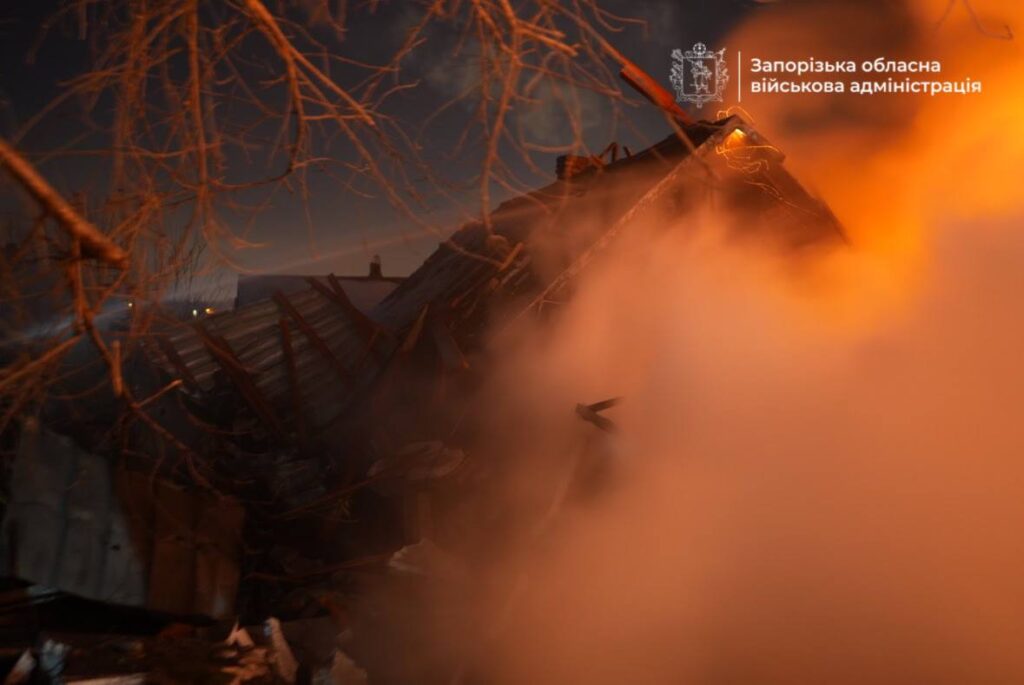
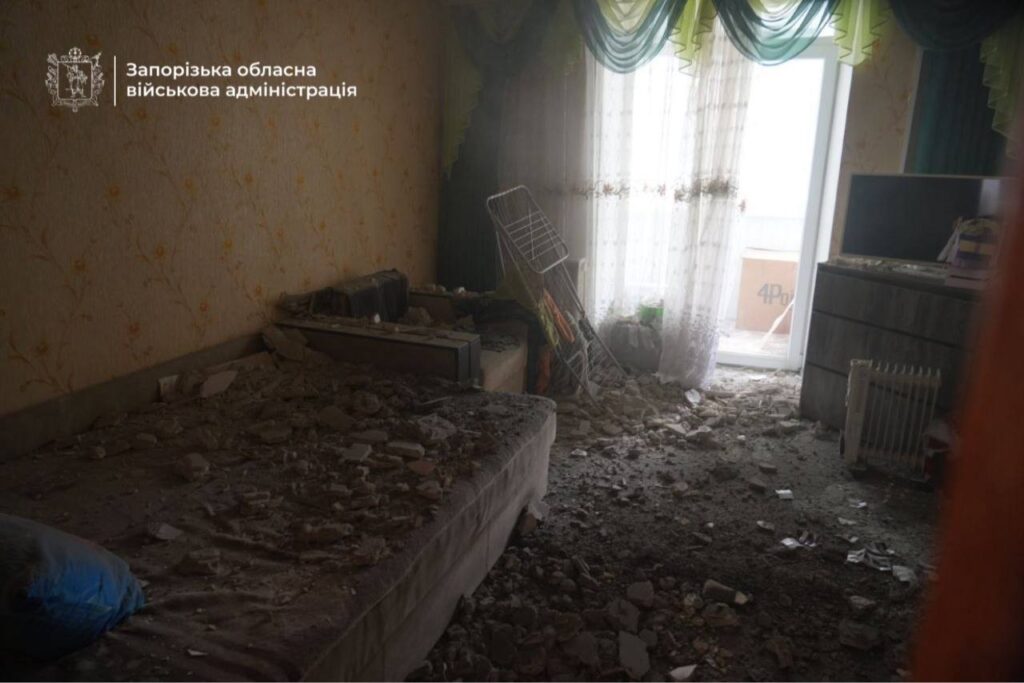
Site of a Russian drone strike on a Zaporizhzhia residential area, 20 January 2026. Photo: Zaporizhzhia Regional Military Administration
Explore further

Russia drained the Kakhovka Reservoir. Now it hides in the dry bed to creep toward Zaporizhzhia

On 22 September, Anastasiia Shevchenko, spokesperson for the Southern Forces Group, said there were no signs of preparations for a direct offensive on Zaporizhzhia and that Russian forces lacked the troops and means to advance directly toward the city.

Dense vegetation and limited visibility: combat on the reservoir bed

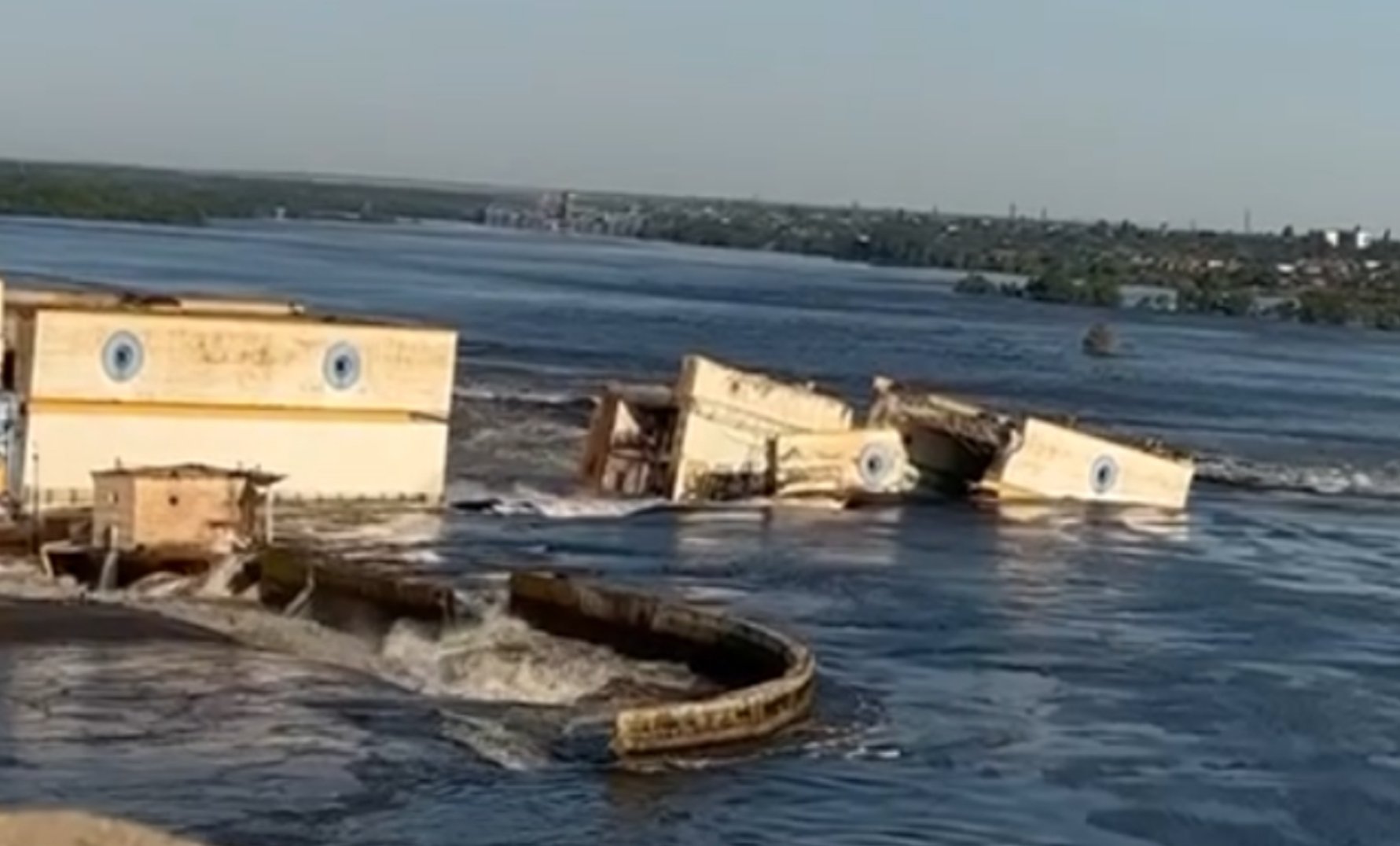
The Kakhovka Reservoir was a vast artificial body of water on the Dnipro River in southern Ukraine that supplied water to millions of people, as well as to agriculture and industry. On 6 June 2023, Russian forces blew up the Kakhovka Hydroelectric Power Plant, the Southern Operational Command reported.
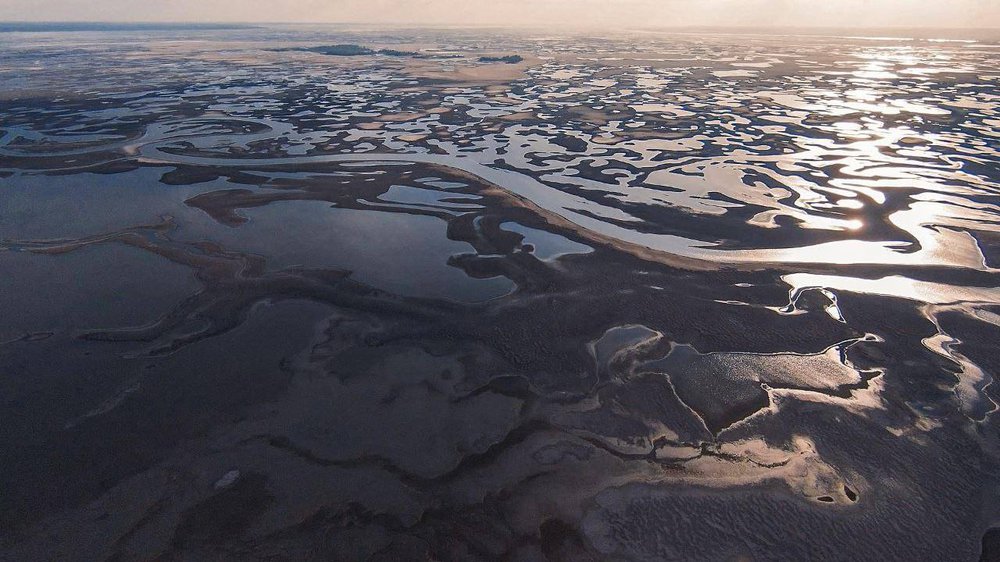
The bed of the Kakhovka Reservoir has nearly dried out after the dam was destroyed on 6 June 2023.
The bed of the Kakhovka Reservoir has nearly dried out after the dam was destroyed on 6 June 2023. Photo: Maksym Pavlovsky/Dumska

After the dam was destroyed, the bed of the former reservoir quickly became overgrown with willows, poplars, and shrubs, creating a new battlefield. Ukrainian troops have fought there before.

In November 2025, fighters from the same Bratstvo unit carried out a reconnaissance and sabotage operation 7 kilometers from the shoreline of the former reservoir, HUR said. They found and eliminated Russian troops, then raised the Ukrainian flag over the islands there and took control of the area.

In April, the Bratstvo unit’s chief of staff, who goes by the call sign “Dyviziia,” described the conditions on an earlier raid across the reservoir bed:

“You’re just constantly moving through these thickets, with no way to figure out which direction to go. You can literally see everything just two meters ahead of you.”

  • ✇Euromaidan Press
  • Russia drained the Kakhovka Reservoir. Now it hides in the dry bed to creep toward Zaporizhzhia
    Small groups of Russian infantry could slip into regional capital Zaporizhzhia this winter, a frontline commander warned in a mid-September interview with Dnipro TV, in a debate later compiled by Radio Svoboda. His forecast drew quick pushback from a military analyst, who called it far more categorical than the situation warrants. At the center of the dispute lies the drained Kakhovka Reservoir, whose dry bed Russia now uses for cover. Dense drone surveillance has made large mechanized
     

Russia drained the Kakhovka Reservoir. Now it hides in the dry bed to creep toward Zaporizhzhia

29 septembre 2026 à 14:16

Site of a Russian drone strike on a Zaporizhzhia residential area, 20 January 2026. Photo: Zaporizhzhia Regional Military Administration

Small groups of Russian infantry could slip into regional capital Zaporizhzhia this winter, a frontline commander warned in a mid-September interview with Dnipro TV, in a debate later compiled by Radio Svoboda. His forecast drew quick pushback from a military analyst, who called it far more categorical than the situation warrants. At the center of the dispute lies the drained Kakhovka Reservoir, whose dry bed Russia now uses for cover.

Dense drone surveillance has made large mechanized assaults costly, pushing Russian commanders toward small groups that probe for gaps. That shift turns unwatched terrain — here, the drained reservoir bed—into the seams they test.

Solitary groups, not massed forces

Dmytro Filatov, callsign Perun, commands the 1st Separate Assault Regiment named after Dmytro Kotsiubailo. The danger will come not as a massed assault but as infiltration, he said. He expects solitary infantry groups to reach and enter Zaporizhzhia over the winter. He pointed to the Stepnohirsk axis and the dense buildings along the Dnipro shore. Fog and rain raise pressure across the whole front, and Russian troops have long fought well in winter, he said.

A city on the front's edge

Zaporizhzhia is a regional capital and industrial center in southeastern Ukraine, with more than 700,000 residents before the full-scale invasion. The city sits about 25 km from the nearest active front, around Stepnohirsk to the south—unusually close for a regional capital of its size. Russian missiles, drones, and glide bombs hit the city daily. It has held since 2022, and Russia has not taken a Ukrainian regional capital since the war's first months.

zaporizhzhia
The aftermath of the Russian attack on Zaporizhzhia on 30 May 2026. Credit: Local Governor Ivan Fedorov

The dead reservoir as cover

Russia blew up the Kakhovka dam in June 2023 and drained the reservoir behind it. Reeds now stand several meters high across the dry basin, giving foot soldiers cover to move unseen. Ukraine's Southern Defense Forces reported in November 2025 that Russian groups use it to press into the Ukrainian flank.

Russian troops increasingly use the bed to infiltrate and haul supplies, said Kostiantyn Mashovets of the Information Resistance group. One of their assault groups pushed as far as Malokaterynivka before Ukrainian forces blocked it, he wrote. Ukrainian troops hold northern Plavni, including the railway station and part of the E-105 highway, Mashovets added. The Institute for the Study of War pointed to the same route in its 26 September assessment, citing Ukrainian military observers.

Kakhovka dam HPP destroyed
Explore further

“The worst environmental catastrophe since Chornobyl disaster”: Three years after Russia destroyed Kakhovka Dam, real death toll is still unknown

An analyst is not convinced

Oleksandr Kovalenko, a military-political expert and Information Resistance coordinator, rates the threat far lower. He wrote that the warning "sounded far more categorical than it should have." Stepnohirsk, about 25 km south of Zaporizhzhia, is the closest active fighting to the city. Russia has tried for years to take the town but now controls only its 3rd microdistrict and southern Plavni.

Infiltration becomes possible only if Russia takes the whole foothold and reaches the north bank of the Konka river. That will not happen by the end of 2026, and no ground push on the city looks possible, he said. The main danger stays daily Russian strikes on the city, not a ground advance, he added.

❌