Vue normale

Hungary sent commandos to seize Ukraine’s $82 million bank convoy. Its investigators now say they have found no crime

21 août 2026 à 06:22

Stacks of bundled banknotes and nine gold bars arranged on a wooden table.

Hungary has closed the Oschadbank case after finding no crime connected to an $82 million shipment of cash and gold belonging to Ukraine’s state-owned savings bank, The Insider reported on 20 August 2026, citing the bank’s lawyer Lóránt Horváth.

Closing the money-laundering case removes the allegation used to justify seizing Oschadbank’s assets. A separate criminal investigation is examining the couriers’ detention, while Prime Minister Péter Magyar’s government has opened an internal review of the agencies involved. Together with the return of the assets, these steps reverse how this case was handled under former PM Viktor Orbán and may help improve relations with Ukraine.

Hungary’s National Tax and Customs Administration (NAV), the country’s tax and customs authority, traced the assets to a documented deal between Austria’s Raiffeisen Bank International and Oschadbank. Raiffeisen provided records establishing the assets’ origin and Oschadbank’s payment, according to Horváth’s account of NAV’s decision.

Meanwhile, a separate investigation into the couriers’ alleged unlawful detention remains open. János Hajdu, the former head of Hungary’s Counter-Terrorism Center (TEK), is a suspect. TEK is the country’s armed counterterrorism police.

A leaked prosecution document named former Prime Minister Viktor Orbán and three other former officials, including Hajdu, among those involved in deciding on the operation. Orbán has not been named as a suspect, Euronews reported on 30 June.

Orbán denies wrongdoing and says the raid was lawful.

How the Oschadbank case began

TEK stopped two armored cash-in-transit vans near Budapest on 5 March 2026. They carried $40 million, €35 million, and nine kilograms of gold from Vienna to Kyiv under a routine banking contract, Euromaidan Press reported. Officers detained the seven Oschadbank employees as witnesses, kept them handcuffed for 28 hours, and denied them lawyers and Ukrainian consular access, Ukraine’s Foreign Ministry said.

Hungary deported the couriers and imposed three-year Schengen bans, which barred them from most of Europe, although none had been charged with a crime. The orders and bans were later annulled.

Orbán’s government nevertheless portrayed the shipment as possible money laundering. Fidesz politicians also alleged, without evidence, that it was intended to finance Magyar’s then-opposition party, Tisza.

Hungary returned the vans, cash, and gold by 6 May. Ukrainian Foreign Minister Andrii Sybiha called the handover a break with Orbán-era “lawlessness” and a sign that relations could advance through “mutual respect and healthy pragmatism,” Reuters reported.

  • ✇Euromaidan Press
  • Russia launches “massive” attack on Ukrainian power plant as Kyiv braces for extremely difficult winter
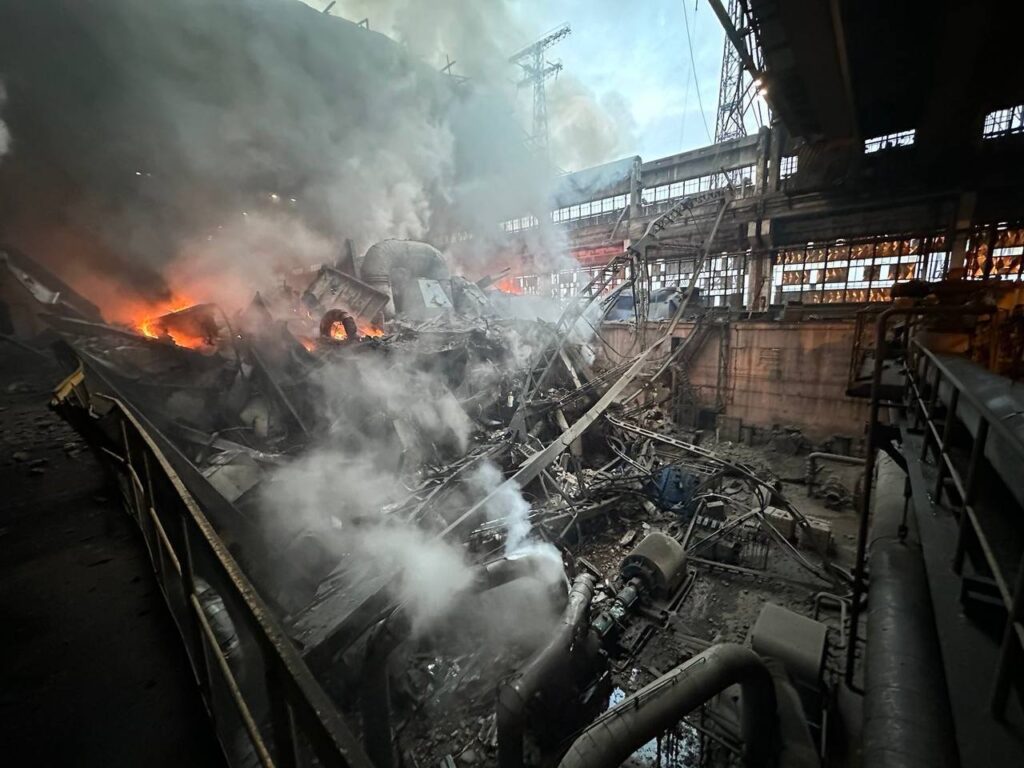
    Russia launched a massive attack on one of Ukraine’s DTEK thermal power plants, severely damaging equipment and forcing the facility to stop generating electricity, the energy company said on 18 August. The strike comes as Russia continues its campaign against Ukraine’s energy infrastructure ahead of another winter, with Ukrainian officials warning that Moscow is expected to intensify attacks on critical civilian systems. DTEK power plant sustains significant damage
     

Russia launches “massive” attack on Ukrainian power plant as Kyiv braces for extremely difficult winter

18 août 2026 à 14:14

Russia launched a massive attack on one of Ukraine’s DTEK thermal power plants, severely damaging equipment and forcing the facility to stop generating electricity, the energy company said on 18 August.

The strike comes as Russia continues its campaign against Ukraine’s energy infrastructure ahead of another winter, with Ukrainian officials warning that Moscow is expected to intensify attacks on critical civilian systems.

DTEK power plant sustains significant damage

DTEK said Russian forces heavily damaged equipment at one of its thermal power plants, forcing the station to halt electricity generation. The company did not identify the plant or provide an estimate of when it could resume operations.

DTEK’s thermal power plants have been attacked more than 230 times since the start of Russia’s full-scale invasion, according to the company.

During the previous major attack on 12 June, one DTEK employee was killed, the company said.

Ukraine faces another winter of energy attacks

The latest strike adds to extensive damage Russia has inflicted on Ukraine’s power system. Energy Minister Denys Shmyhal said earlier this month that Russia has destroyed or damaged more than 80% of Ukraine’s power-generating capacity.

Ukraine is preparing for another difficult winter after repeated Russian strikes last winter caused widespread damage to electricity and heating infrastructure.

Shmyhal has also warned that Russia could broaden its campaign this winter by targeting Ukraine’s water systems. Such attacks could make prolonged power outages significantly more dangerous for civilians by disrupting water supplies and sewage systems.

Kyiv Oblast faces mounting Russian attacks

The power plant strike came as Russia launched another large drone attack on Ukraine, with Kyiv Oblast the main target. Ukraine’s Air Force said dozens of drones were launched during the day, with most intercepted or suppressed by Ukrainian air defenses.

The latest assault is part of a broader pattern of Russian attacks on Kyiv Oblast in recent weeks. Alongside energy infrastructure, Russian forces have repeatedly targeted warehouses, distribution centers and other logistics facilities around the capital, disrupting the systems that supply Kyiv and other parts of Ukraine.

With winter approaching, the combination of attacks on energy generation and civilian logistics is adding pressure to a country already dealing with years of damage to its critical infrastructure.

  • ✇The Kyiv Independent
  • Ukrainian energy giant to build $115 million solar program with British partner
    Ukraine's largest private energy company DTEK and British clean energy group Octopus Energy have launched a program to install rooftop solar panels and battery storage systems at Ukrainian businesses and public institutions, DTEK said in a press release on June 23.The program, called RISE (Resilient Independent Solar Energy), was announced at Octopus Energy's Tech Summit in London and aims to raise 100 million euros ($115 million) to finance 100 energy projects over three years, helping stabiliz
     

Ukrainian energy giant to build $115 million solar program with British partner

23 juin 2025 à 10:40
Ukrainian energy giant to build $115 million solar program with British partner

Ukraine's largest private energy company DTEK and British clean energy group Octopus Energy have launched a program to install rooftop solar panels and battery storage systems at Ukrainian businesses and public institutions, DTEK said in a press release on June 23.

The program, called RISE (Resilient Independent Solar Energy), was announced at Octopus Energy's Tech Summit in London and aims to raise 100 million euros ($115 million) to finance 100 energy projects over three years, helping stabilize the grid, lower electricity costs and protect customers from outages, the company said.

DTEK’s facilities have been repeatedly targeted since the start of Russia’s full-scale invasion as Moscow sought to cripple Ukraine's energy infrastructure. The company was forced to shut down its gas production facilities in Poltava Oblast in March.

"About 70% of Ukraine's thermal generation capacity has been damaged, destroyed or seized since the full-scale invasion," said DTEK CEO Maksym Timchenko in the press release.

“This has created not only an urgent need to rebuild but also an opportunity to accelerate the shift to a decentralized, renewable energy system,” he added.

The alternative energy systems will be installed by D.Solutions, DTEK's business unit operating under the Yasno retail brand.

Installed equipment will run on Octopus Energy's AI-powered Kraken operating system, enabling businesses to optimize energy use in real time, reduce consumption during peak hours and sell surplus electricity back to the grid.

"They (DTEK) are rebuilding at pace and pioneering a decentralized, smart energy system powered by homegrown renewables," said Greg Jackson, Octopus Energy Group founder and CEO.

According to DTEK, Ukraine's commercial and industrial energy market has an untapped potential of 300 megawatts annually, valued at 200 million euros ($229 million). DTEK's Yasno brand serves over 60,000 business customers and can generate projects worth 30 million euros per year.

DTEK previously announced plans to build one of Europe's largest energy storage facilities with six installations across the country, totaling 200 megawatts to power 600,000 households. The company secured a $72 million loan from three Ukrainian banks.

Russia pulls its scientists out of Iranian nuclear plant, as Israeli strikes threaten decades of collaboration
Israel’s strikes on Iranian nuclear facilities have alarmed none more than Russia, the country that first brought nuclear power to Iran in defiance of Western objections. We’re “millimeters from catastrophe,” said Kremlin spokeswoman Maria Zakharova on June 18 in response to a bombing campaign that Israel launched against Iran on June 13. Decades of conflict with the West have united Iran and Russia, despite a cultural gulf between the two nations that dwarfs the Caspian Sea that physically di
Ukrainian energy giant to build $115 million solar program with British partnerThe Kyiv IndependentKollen Post
Ukrainian energy giant to build $115 million solar program with British partner
❌