Vue normale

Chinese Start-Up Lands Reusable Rocket for the First Time

19 août 2026 à 17:49
The milestone by the private company, LandSpace, could put China closer to challenging SpaceX’s rule in lower-cost spaceflight.

© LandSpace/Xinhua, via Associated Press

  • ✇US news | The Guardian
  • AI eyes in the sky: new satellites and artificial intelligence are transforming wildfire detection
    Hi-tech cameras orbiting Earth and on the ground, along with AI, help firefighters extinguish blazes before they spreadThe fires in Spokane, Washington, this summer are the latest reminder that when a wildfire is detected can be just as important as where it starts. A blaze found within minutes can often be contained before it spreads. Wait too long, and a small spark can become a major disaster.A new effort to shorten that timeline began in July when a SpaceX rocket carried the first three Fire
     

AI eyes in the sky: new satellites and artificial intelligence are transforming wildfire detection

17 août 2026 à 08:00

Hi-tech cameras orbiting Earth and on the ground, along with AI, help firefighters extinguish blazes before they spread

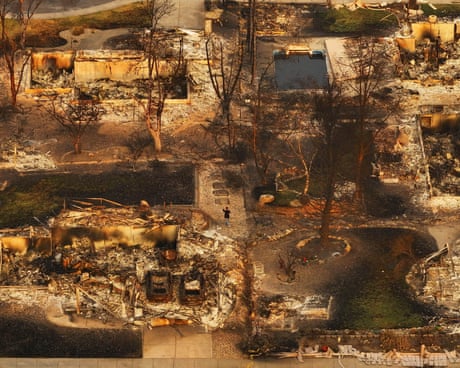
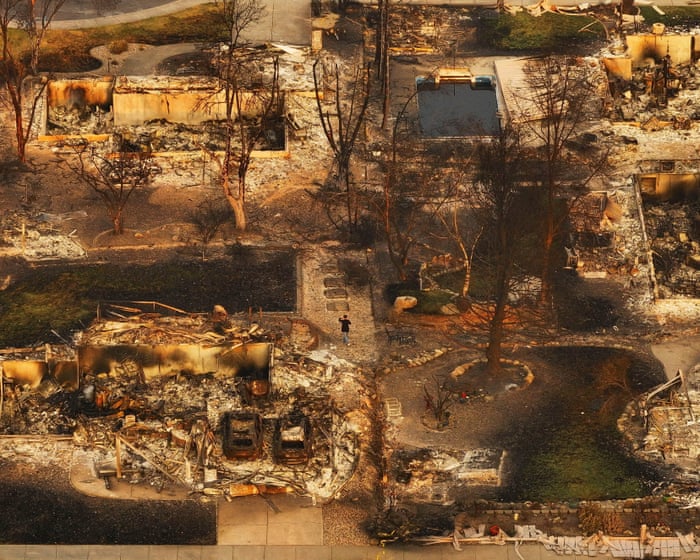
The fires in Spokane, Washington, this summer are the latest reminder that when a wildfire is detected can be just as important as where it starts. A blaze found within minutes can often be contained before it spreads. Wait too long, and a small spark can become a major disaster.

A new effort to shorten that timeline began in July when a SpaceX rocket carried the first three FireSat satellites into orbit. The trio is the first part of a planned network of 50 satellites built solely to spot wildfires while they are still small enough to stop.

Continue reading...

© Photograph: David Ryder/Reuters

© Photograph: David Ryder/Reuters

© Photograph: David Ryder/Reuters

How Ukraine’s Satellites Help Drive Its War Drones

17 août 2026 à 16:38
Ukrainian drone teams have a powerful new tool: near real-time information on troop movements and locations.

A Ukrainian soldier preparing a drone for a strike on a Russian target in the Zaporizhzhia region of Ukraine last month.
  • ✇Euromaidan Press
  • “Faster than originally planned”: Russia wants 292 Starlink-rival satellites by 2027
    Russia is deploying Rassvet satellites, its answer to Starlink, faster than originally planned, Vadym Skibitskyi, Deputy Chief of Ukraine's Defense Intelligence (GUR), told RBC-Ukraine. Moscow aims to expand the network to 292 satellites by the end of 2027 and 924 by 2035, he said. Existing satellites can already provide intermittent connections as they pass over Ukraine. Rassvet could give Moscow an independent alternative to Starlink, which Ukrainian forces rely on
     

“Faster than originally planned”: Russia wants 292 Starlink-rival satellites by 2027

11 août 2026 à 14:04

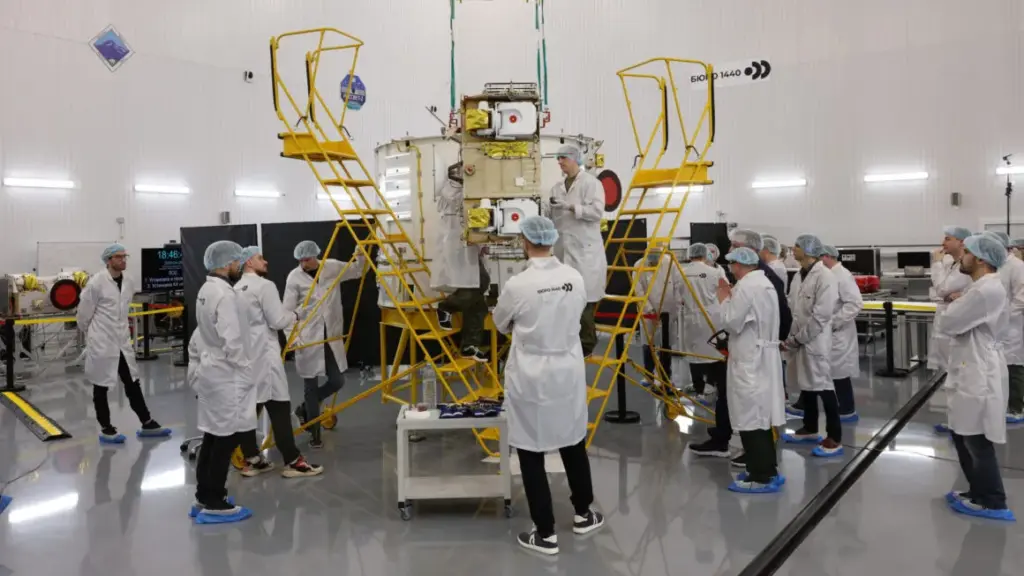
Employees of Russian company Bureau 1440 work on a Rassvet communications satellite.

Russia is deploying Rassvet satellites, its answer to Starlink, faster than originally planned, Vadym Skibitskyi, Deputy Chief of Ukraine's Defense Intelligence (GUR), told RBC-Ukraine.

Moscow aims to expand the network to 292 satellites by the end of 2027 and 924 by 2035, he said. Existing satellites can already provide intermittent connections as they pass over Ukraine.

Rassvet could give Moscow an independent alternative to Starlink, which Ukrainian forces rely on for battlefield communications and drone operations. Russian forces also used unauthorized Starlink terminals until Ukraine and SpaceX blocked access. Rassvet’s coverage remains intermittent but could eventually support strike drones, prompting Kyiv to consider countermeasures.

Why Russia wants its own Starlink

Ukrainian forces rely heavily on Starlink for frontline communications, drone operations, and command and control. 

Russian forces also relied heavily on unverified terminals until Ukraine and SpaceX blocked them on 5 February. The shutdown disrupted Russian communications and assaults across multiple parts of the front. On 10 August 2026, the SBU said it had dismantled two schemes that registered terminals in Ukraine for transfer to Russian forces.

Rassvet could reduce Russia’s dependence on SpaceX and illicit supply networks. Ukrainian experts have warned that a mature network could also relay data to Russian strike drones.

32 satellites up, 260 to go by 2027

Bureau 1440, the Russian satellite developer behind Rassvet, began testing the network with three satellites in 2023. Three larger prototypes followed in 2024 to test upgraded equipment, including satellite-based 5G technology and laser links between spacecraft. 

Russia launched its first batch of 16 serial Rassvet satellites on 23 March 2026 after manufacturing problems delayed the mission. A second group of 16 followed in July, Militarnyi reported.

In May 2026, Serhii “Flash” Beskrestnov, a defense technology adviser to the President of Ukraine, said each Rassvet satellite then in orbit passed over Ukraine roughly once daily, providing six to 10 minutes of connectivity. He estimated that continuous coverage would require 200–250 satellites. 

❌