Ukraine's military intelligence (HUR) destroyed three Russian air defense systems using drones in the occupied Zaporizhzhia Oblast on June 14, HUR says."Strike drone masters of the Department of Active Operations of the HUR of the Ukrainian defense ministry discovered and destroyed expensive air defense systems of the Russian invaders in the temporarily occupied territory of the Zaporizhzhia region," HUR reported in a post to Telegram.Ukraine's military regularly strikes military targets in Russ
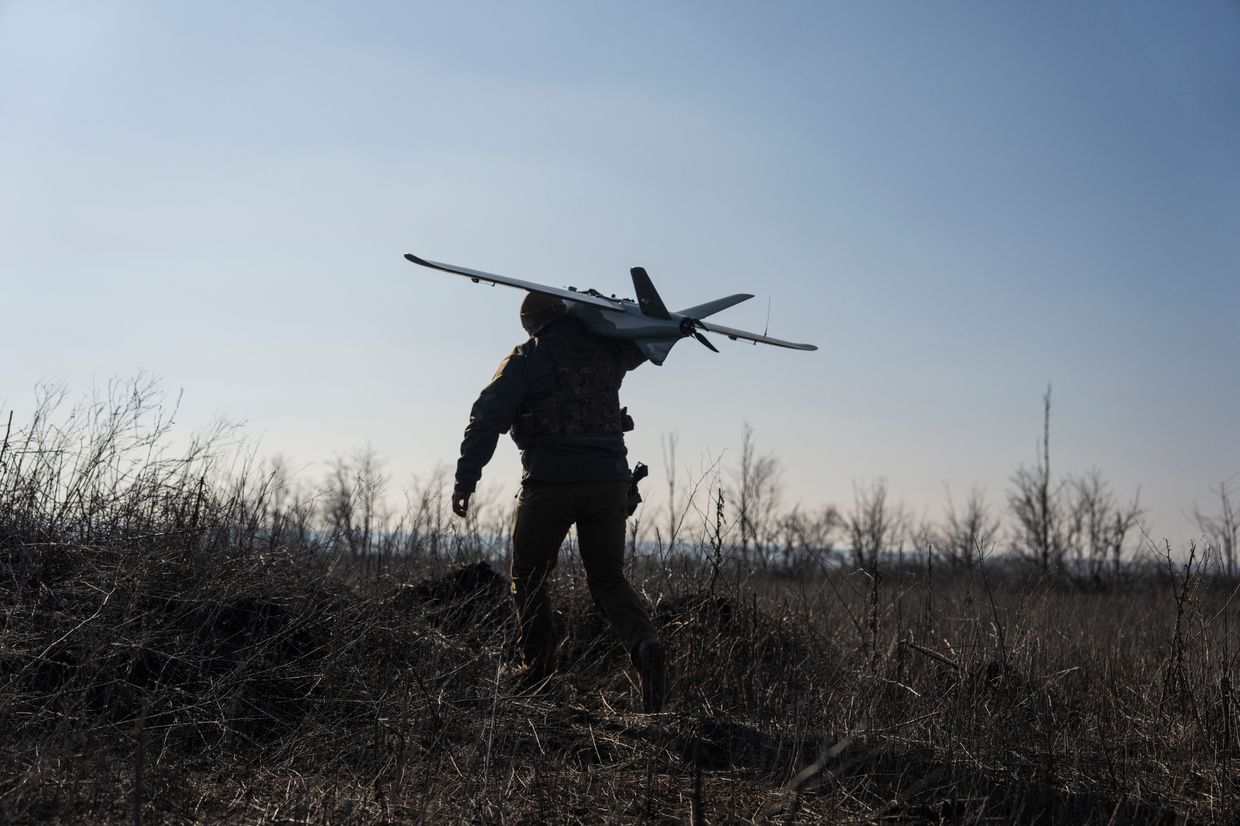
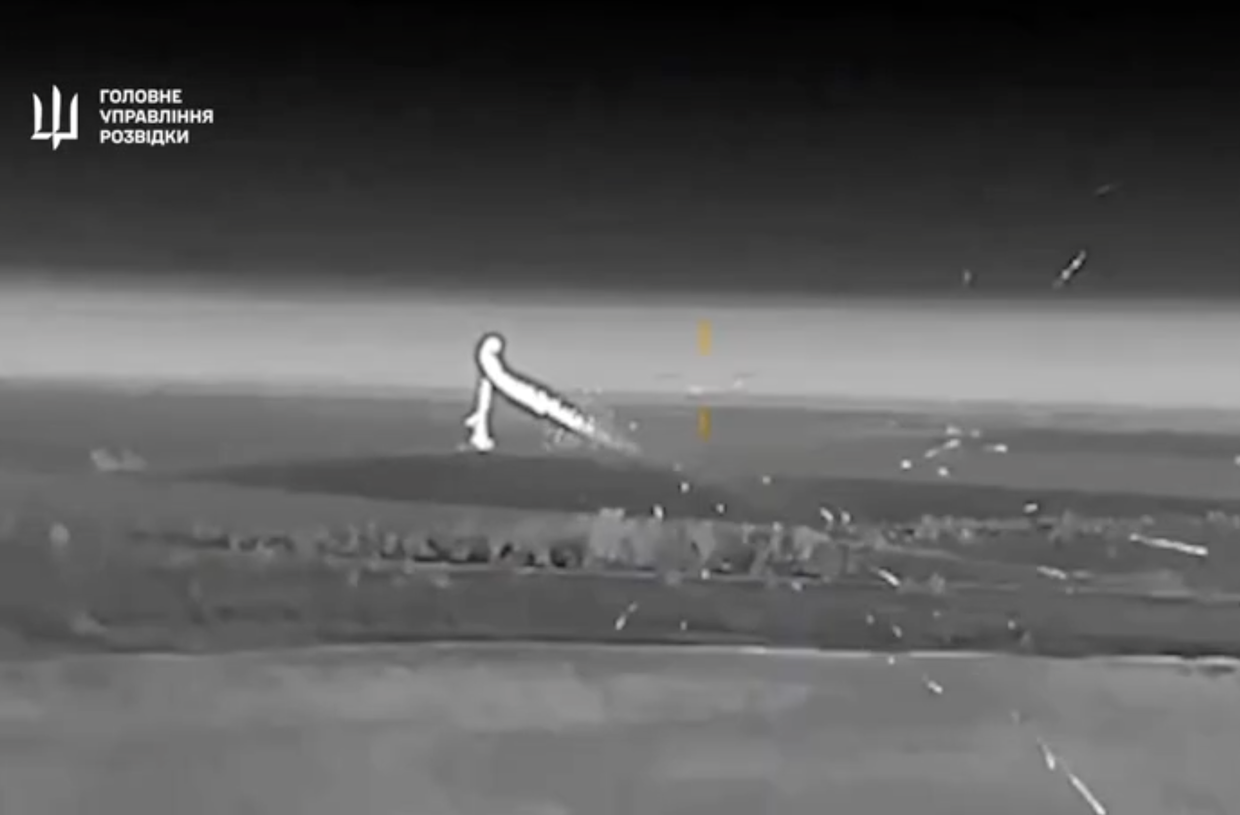
Ukraine's military intelligence (HUR) destroyed three Russian air defense systems using drones in the occupied Zaporizhzhia Oblast on June 14, HUR says.
"Strike drone masters of the Department of Active Operations of the HUR of the Ukrainian defense ministry discovered and destroyed expensive air defense systems of the Russian invaders in the temporarily occupied territory of the Zaporizhzhia region," HUR reported in a post to Telegram.
Ukraine's military regularly strikes military targets in Russian-occupied territories and deep within Russia in an attempt to diminish Moscow's fighting power as it continues its war against Ukraine.
A Russian Buk-M3, a Pantsyr S1, and a 9S19 Imbir radar from the S-300V air defense system were destroyed in the Ukrainian drone attack.
"The video shows a stunning maneuver of a Ukrainian drone dodging a Muscovite anti-aircraft missile, as well as episodes of successful fire strikes," HUR's statement said.
Kyiv claimed it disabled 34% of Russia's strategic bomber fleet in what is seen as one of the most daring operations during Russia's full-scale war.
Ukraine's military intelligence agency was behind explosions near Desantnaya Bay in Russia's far eastern Vladivostok on May 30, which reportedly damaged military personnel and equipment, a source in HUR told the Kyiv Independent.
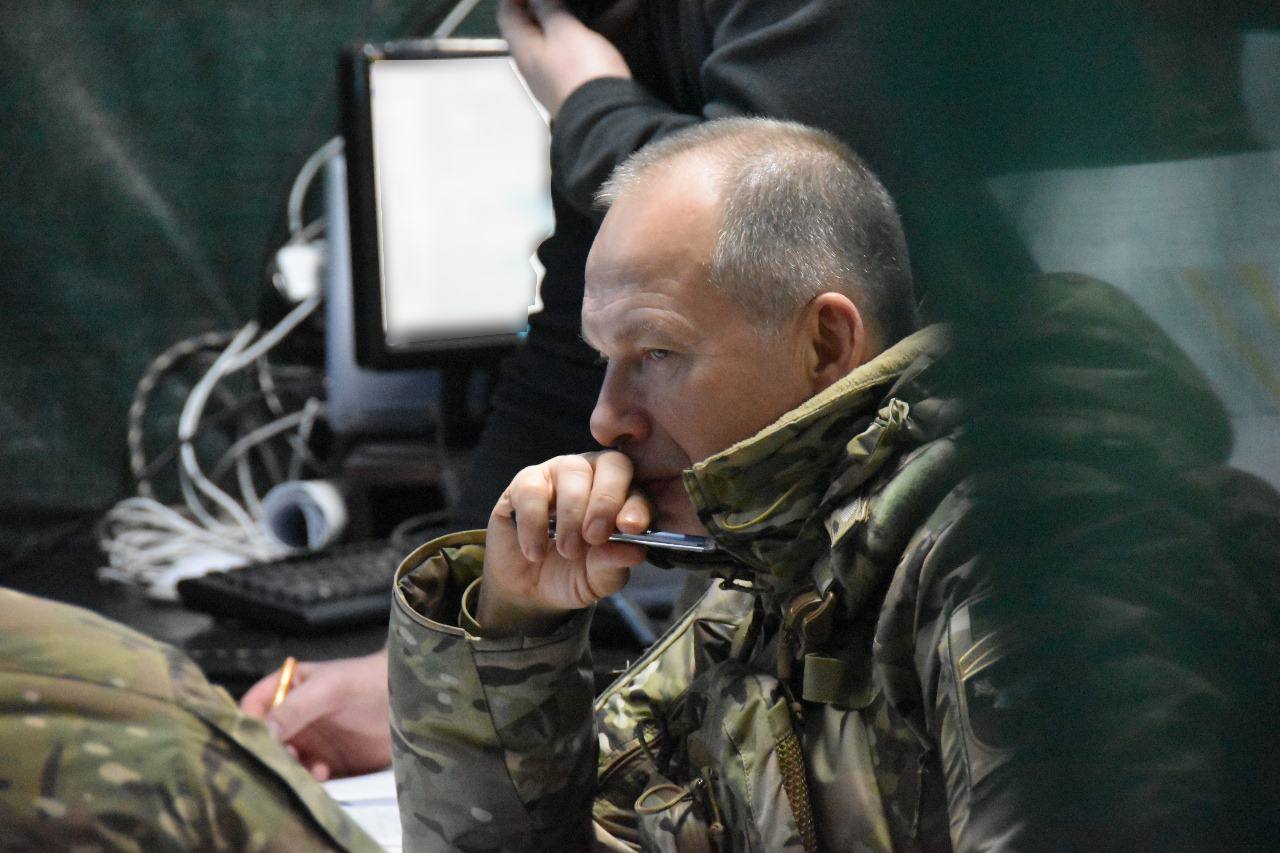
Efforts are underway to rapidly expand Ukraine's ability to counter Russian drone attacks, Commander-in-Chief of Ukraine's Armed Forces, Oleksandr Syrskyi, said on June 14.In a statement shared on Telegram, Syrskyi said he held a meeting focused on strengthening defenses against Russian strike drones, particularly Iranian-designed Shahed drones used by Russian forces to target Ukrainian cities."Task number one is scaling up the systems that already work effectively," Syrskyi said. "First and for
Efforts are underway to rapidly expand Ukraine's ability to counter Russian drone attacks, Commander-in-Chief of Ukraine's Armed Forces, Oleksandr Syrskyi, said on June 14.
In a statement shared on Telegram, Syrskyi said he held a meeting focused on strengthening defenses against Russian strike drones, particularly Iranian-designed Shahed drones used by Russian forces to target Ukrainian cities.
"Task number one is scaling up the systems that already work effectively," Syrskyi said. "First and foremost, that means increasing the number of drone interceptors."
Russia has been escalating drone attacks against Ukraine over the past weeks, launching record 400-500 UAVs (unmanned aerial vehicles) per night.
Syrskyi emphasized the need for a comprehensive approach that incorporates all available capabilities. "(Russia) is constantly modifying the characteristics of its Shaheds and changing their tactics," he said.
Ukrainian officials discussed ways to improve early detection of incoming drones and ensure their timely destruction. Syrskyi said he had set clear priorities and tasked military leaders accordingly.
Russia has repeatedly targeted Ukrainian cities with waves of attack drones, often striking energy infrastructure and residential buildings overnight. Ukraine's defense forces use a mix of electronic warfare, air defense systems, and drone-on-drone interception to repel the assaults.
Drones have become one of the defining tools of the full-scale war, used extensively by both Ukraine and Russia for surveillance, long-range strikes, and tactical battlefield advantage. In recent weeks, Russia has intensified its drone and missile attacks on Ukrainian cities and infrastructure.
Earlier on June 9, Ukraine's Air Force said it intercepted 479 drones and missiles during one of the largest attacks since the start of the war. Russia launched 499 weapons overnight, including 479 Shahed-type drones and multiple ballistic and cruise missiles.
Editor's Note: This story was updated to include confirmation from Ukraine's General Staff.Ukraine's General Staff confirmed on June 14 that overnight drone strikes targeted two major military-industrial facilities in Russia, according to a statement of the military. "As part of efforts to reduce (Russia's) ability to produce explosives and ammunition, the Ukrainian Armed Forces' drone systems, in coordination with other Defense Forces units, struck critical facilities of Russia's military-indus
Editor's Note: This story was updated to include confirmation from Ukraine's General Staff.
Ukraine's General Staff confirmed on June 14 that overnight drone strikes targeted two major military-industrial facilities in Russia, according to a statement of the military.
"As part of efforts to reduce (Russia's) ability to produce explosives and ammunition, the Ukrainian Armed Forces' drone systems, in coordination with other Defense Forces units, struck critical facilities of Russia's military-industrial complex overnight," Ukraine's General Staff said in a statement.
The strikes reportedly hit the Nevinnomyssk Azot chemical plant in Stavropol Krai and the Novokuybyshevsk Catalyst Plant in Samara Oblast. Both sites are described by Ukrainian officials as key suppliers of raw materials and components for Russia's weapons and fuel production.
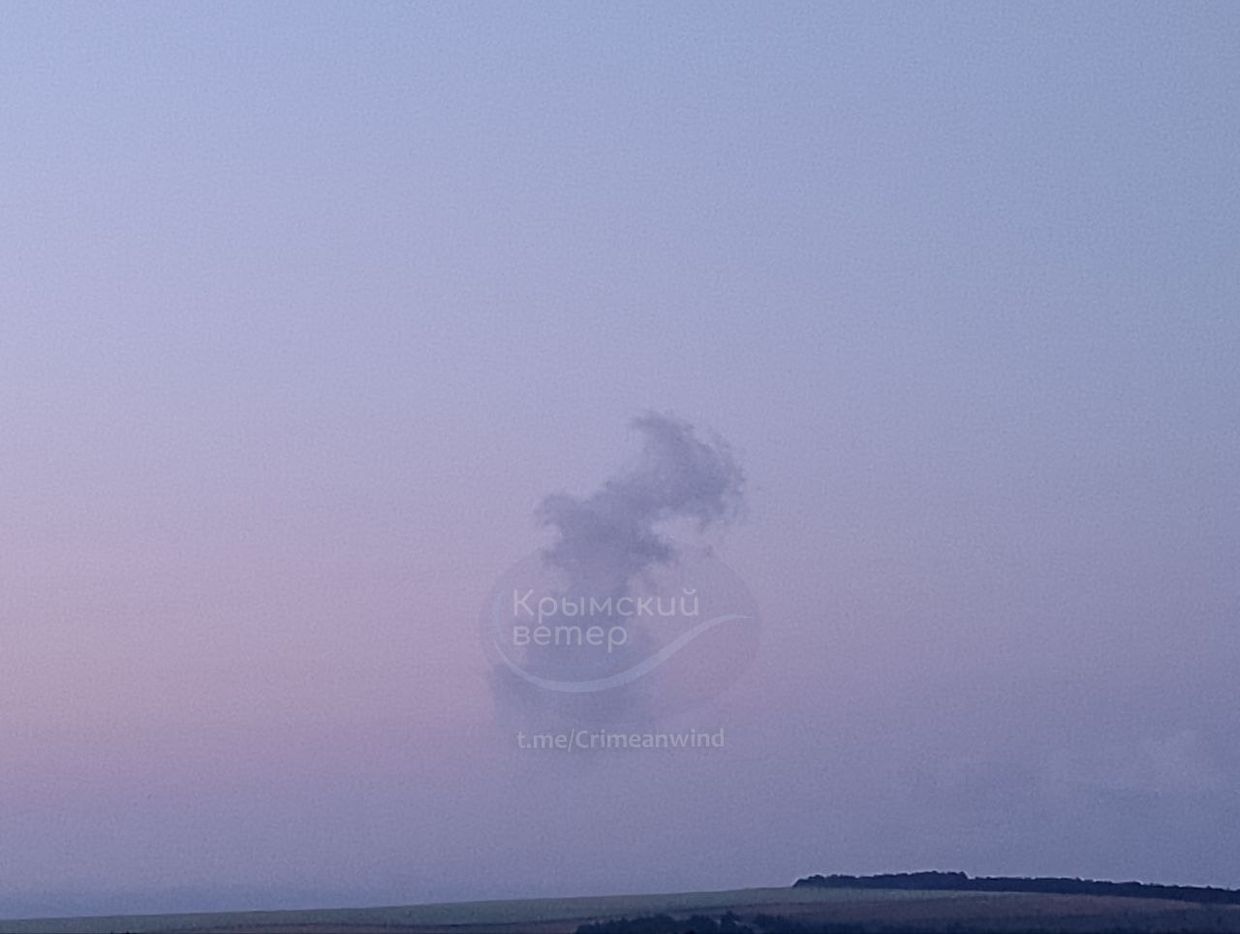
Stavropol Governor Vladimir Vladimirov said drone debris fell in the city's industrial zone, confirming the strike was aimed at the Nevinnomyssk Azot plant. He initially reported one person injured, but later clarified there were no casualties. Footage circulating online showed explosions and drones flying over the city.
Nevinnomyssk Azot is among Russia's top producers of ammonia and nitrogen fertilizers, and hosts the country's only production lines for methyl acetate and high-purity acetic acid. It also operates Russia’s first melamine production facility, according to open-source data.
The plant, which produces up to one million tons of ammonia and over one million tons of ammonium nitrate annually, is "a critical element of Russia's military-industrial complex," Andrii Kovalenko, head of Ukraine's Center for Countering Disinformation at the National Security and Defense Council, said.
Kovalenko noted that ammonium nitrate is a key component for explosives and artillery shells. He added that the plant also synthesizes dual-use chemicals such as melamine, acetic acid, methanol, and potassium nitrate, frequently used in the production of grenade launchers, mines, and rocket charges.
Since 2024, the plant has been producing water-soluble fertilizers, which he said have been adapted to serve military chemical needs.
Ukraine's General Staff said the strike caused explosions and a fire at the site.
In Russia's Samara Oblast, a separate drone strike reportedly damaged the NovokuybyshevskCatalyst Plant, the country's largest specialized facility for producing catalysts used in petroleum refining and petrochemicals. The region's governor, Vyacheslav Fedorishchev, confirmed an attempted drone attack overnight on an industrial site in Novokuybyshevsk.
Kovalenko said the plant has a strategic role, stating that without its output, Russia's oil refineries, and by extension, its supply of aviation fuel, diesel for armored vehicles, and rocket propellant, would be severely affected.
Russia's Defense Ministry claimed it intercepted a total of 66 drones overnight across several regions, including 30 over Voronezh Oblast, 10 over Belgorod Oblast, 8 over Stavropol Krai, 6 over occupied Crimea, 1 over Samara Oblast, and 11 over the Azov Sea.
Editor's note: This story has been updated to include the latest injury figures confirmed by Zaporizhzhia Governor Ivan Fedorov.At least three people were killed and 11 injured in Russian attacks across Ukraine over the past day, Ukrainian officials said on June 14.According to Ukraine's Air Force, Russia launched 58 attack drones, primarily Shahed-type UAVs, and decoys from multiple directions. Air defenses destroyed 43 of the drones.In Donetsk Oblast, one civilian was killed and two others wer
Editor's note: This story has been updated to include the latest injury figures confirmed by Zaporizhzhia Governor Ivan Fedorov.
At least three people were killed and 11 injured in Russian attacks across Ukraine over the past day, Ukrainian officials said on June 14.
According to Ukraine's Air Force, Russia launched 58 attack drones, primarily Shahed-type UAVs, and decoys from multiple directions. Air defenses destroyed 43 of the drones.
In Donetsk Oblast, one civilian was killed and two others were injured in Russian shelling of Yablunivka, Governor Vadym Filashkin said. Russian forces attacked settlements in the region 27 times over the past day.
In Kherson Oblast, five people were injured as Russia struck 23 settlements with drones, artillery, and airstrikes, Governor Oleksandr Prokudin reported. Residential buildings in Kherson city, Antonivka, and other towns were damaged, including a multi-story apartment block, six houses, a gas station, and some vehicles.
In Zaporizhzhia Oblast, at least one person was killed and four others injured in attacks targeting Zaporizhzhia and Polohy districts, Governor Ivan Fedorov said. Russian forces launched 438 strikes on 16 settlements, including 11 airstrikes and 266 drone attacks, mainly using FPV (first-person view) drones.
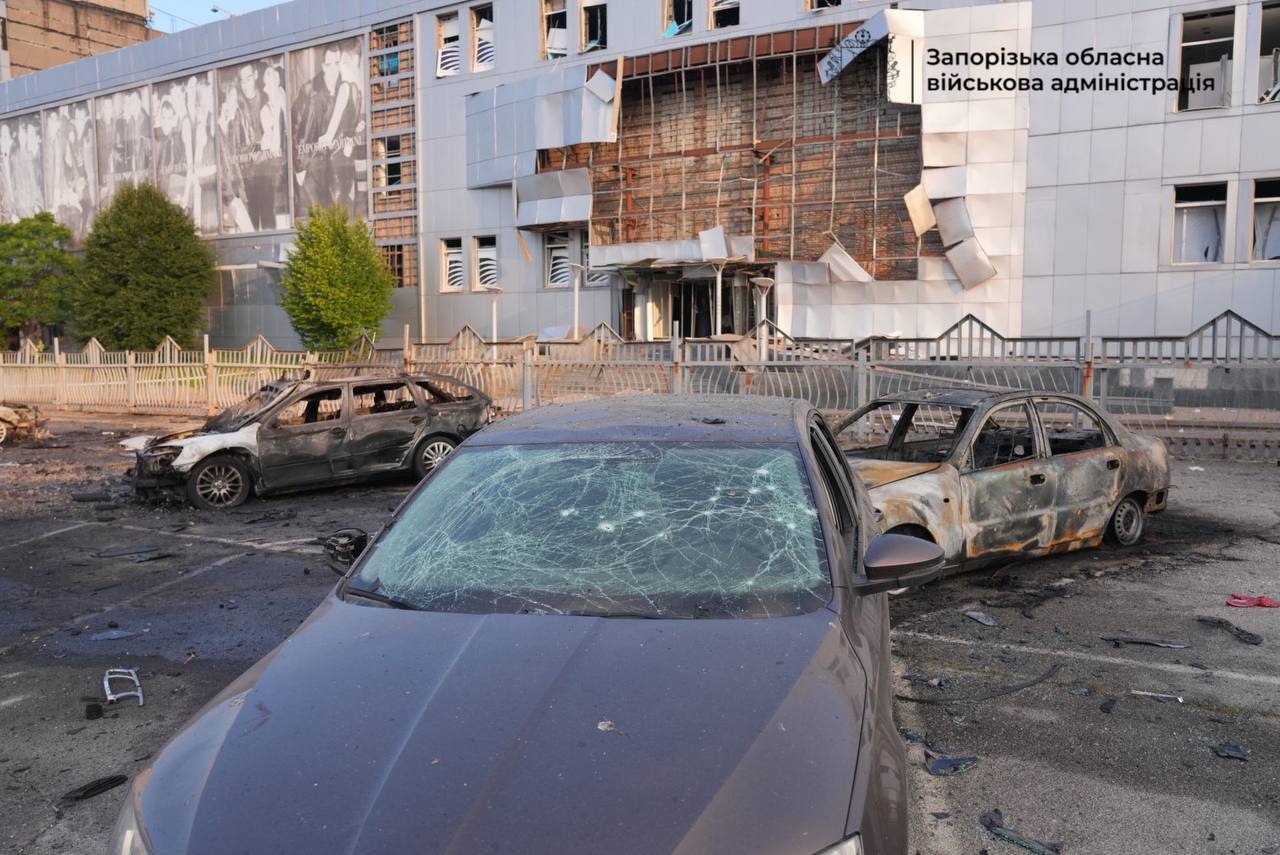
In a morning strike on Zaporizhzhia, more than 10 cars were burned at a parking lot, and at least 15 buildings were damaged. One person was injured.
According to Radio Free Europe/Radio Liberty, the Russian attack also destroyed a humanitarian aid warehouse in Zaporizhzhia. Over 100 metric tons of humanitarian supplies reportedly burned in the fire. The aid had recently arrived in five trucks and was intended for displaced people and residents of front-line areas. The damage is estimated at around $3 million.
Editor's note: This story has been updated with additional details.Iran's Islamic Revolutionary Guard Corps (IRGC) confirmed on June 13 that its aerospace commander, Amir Ali Hajizadeh, was killed in an Israeli air strike on a command facility, according to the Times of Israel. Hajizadeh was sanctioned by the European Union in 2022 for overseeing Tehran's supply of Shahed-type drones to Russia for use in its war against Ukraine, which have become a key component of Moscow's war against Ukraine.H
Editor's note: This story has been updated with additional details.
Iran's Islamic Revolutionary Guard Corps (IRGC) confirmed on June 13 that its aerospace commander, Amir Ali Hajizadeh, was killed in an Israeli air strike on a command facility, according to the Times of Israel.
Hajizadeh was sanctioned by the European Union in 2022 for overseeing Tehran's supply of Shahed-type drones to Russia for use in its war against Ukraine, which have become a key component of Moscow's war against Ukraine.
He played a central role in advancing Iran's drone and missile capabilities, meeting with then-Russian Defense Minister Sergei Shoigu in 2023 to showcase Iranian weapons.
The Israeli operation, described as "preemptive," involved 200 aircraft and the dropping of 330 munitions, targeting the country's nuclear program and killing top military officials.
Hajizadeh is also known for his role in the January 2020 downing of a Ukrainian civilian aircraft, which Iran later admitted was mistakenly shot down amid tensions with the U.S. All 176 people on board were killed.
Ukraine's Foreign Ministry issued a statement on June 13 expressing concern over the fallout from the Israeli operation but underscored that "the Iranian regime supports Russia in its illegal war of aggression" and supplies Moscow with "weapons to kill Ukrainians."
Along with North Korea, Iran has been a key ally to Russia during its full-scale war against Ukraine, providing thousands of Shahed strike drones and short-range ballistic missiles.
The drones, cheap and packed with explosives, have become a central weapon in Russia's aerial assaults on Ukraine since their introduction in late 2022.
Known for flying long distances before slamming into targets, they are now mass-produced by Russia and launched in near-nightly waves to overwhelm Ukrainian air defenses.
The Israeli strike took place amid escalating tensions in the Middle East, as well as U.S. negotiations with Tehran regarding its nuclear program. The Trump administration has acknowledged it knew about the operation in advance but denied any involvement.
Kyiv warned of the potential global repercussions of the strike, noting that regional instability could severely impact international security and financial markets, particularly oil.
Crude prices surged more than 10% following the attack, boosting revenues for Moscow, whose economy is heavily reliant on energy exports.
Russia has condemned Israel's attacks as "unprovoked aggression" and a violation of the U.N. Charter.
A Ukrainian MiG-29 fighter jet carried out a precision strike on Russian positions in the Zaporizhzhia direction, targeting a command post for drone operators and a combined ammunition and fuel depot, Ukraine's Air Force reported on June 13.The Air Force did not disclose the exact location of the strike but thanked international partners for providing the guided munitions used in the attack. "We thank our partners for their highly accurate and effective 'arguments'," the service wrote.0:00/1×A U
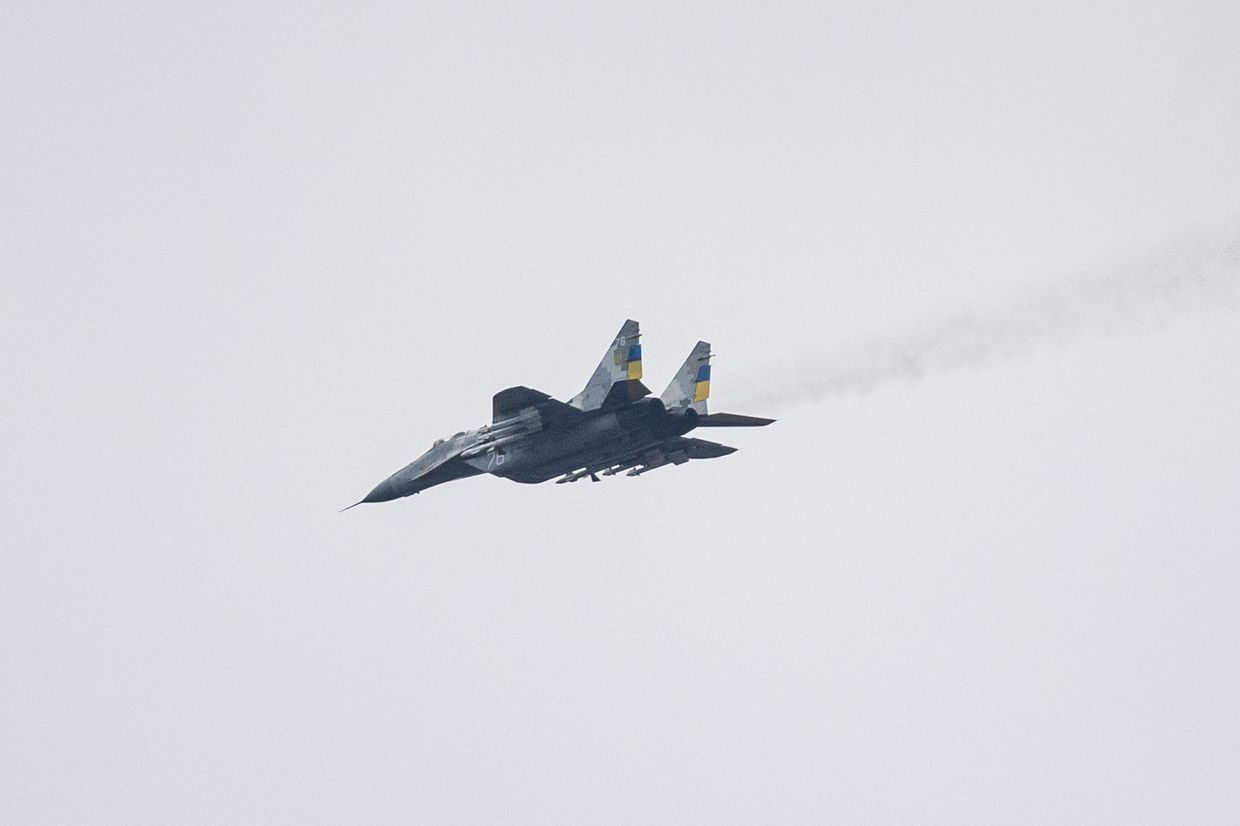
A Ukrainian MiG-29 fighter jet carried out a precision strike on Russian positions in the Zaporizhzhia direction, targeting a command post for drone operators and a combined ammunition and fuel depot, Ukraine's Air Force reported on June 13.
The Air Force did not disclose the exact location of the strike but thanked international partners for providing the guided munitions used in the attack.
"We thank our partners for their highly accurate and effective 'arguments'," the service wrote.
0:00
/
A Ukrainian MiG-29 fighter jet carried out a precision strike on Russian positions in the Zaporizhzhia area of southern Ukraine on June 13, 2025. (Ukraine's Air Force / Telegram)
The MiG-29, a Soviet-designed multirole fighter jet, remains a front-line platform in Ukraine's air force and has been adapted to carry Western-supplied precision-guided weapons.
Zaporizhzhia Oblast, located in southeastern Ukraine, remains one of the war's most contested areas. While the city of Zaporizhzhia is under Ukrainian control, southern parts of the region remain occupied by Russian forces.
Commander-in-Chief Oleksandr Syrskyi said on May 31 that Russia has intensified offensive operations across several key areas, including Zaporizhzhia, as part of a broader summer push.
Ukrainian forces have continued to conduct airstrikes and sabotage missions to degrade Russian supply lines and disrupt offensive preparations.
Iran launched over 100 drones against Israel, all of which were intercepted outside of Israeli airspace, Ynet News reported on June 13, citing Israeli military spokesperson Effie Defrin.The drone attack follows heavy air strikes launched by Israel against Iran, targeting the country's nuclear program and reportedly killing Hossein Salami, the commander-in-chief of the Islamic Revolutionary Guard Corps (IRGC), and other top officials.Israel said it had deployed some 200 aircraft in its "preemptiv
Iran launched over 100 drones against Israel, all of which were intercepted outside of Israeli airspace, Ynet News reported on June 13, citing Israeli military spokesperson Effie Defrin.
The drone attack follows heavy air strikes launched by Israel against Iran, targeting the country's nuclear program and reportedly killing Hossein Salami, the commander-in-chief of the Islamic Revolutionary Guard Corps (IRGC), and other top officials.
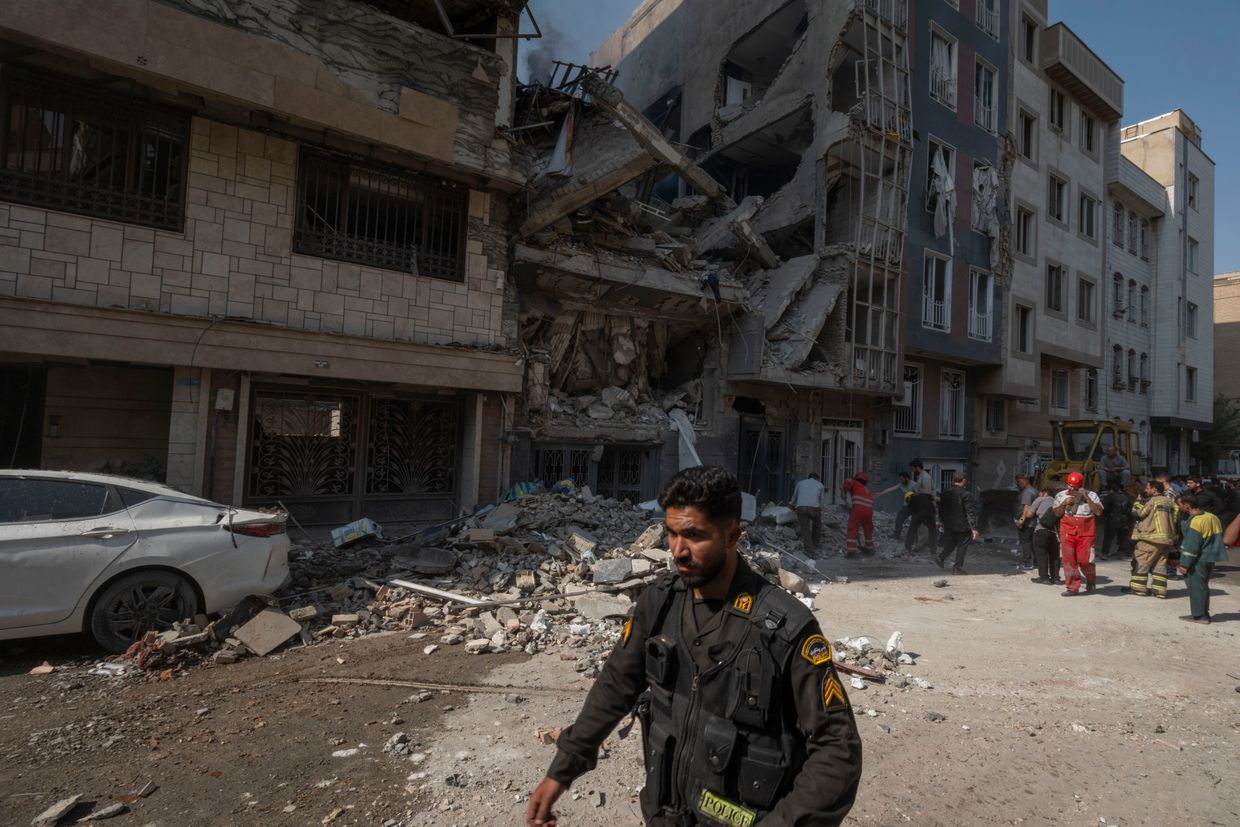
Israel said it had deployed some 200 aircraft in its "preemptive" attack overnight on June 13, dropping 330 munitions over 100 sites.
The full extent of the consequences was not immediately clear. Multiple explosions were reported in Tehran as videos posted on social media purportedly show fire burning in multiple locations of the Iranian capital.
Open-source intelligence researchers have shared alleged footage of Shahed kamikaze drones flying in the direction of Israel. Tehran has provided thousands of these drones to Russia for use against Ukrainian cities.
Iranian Shahed-136 attack drone headed westbound over Iraq, towards Israel.
Iran reportedly launched more than 100 attack drones this morning, as part of its opening wave of strikes on Israel. pic.twitter.com/0SU3aLR9ZX
Iran's Supreme Leader Ali Khamenei vowed to enact "severe punishment" in response to the attack, accusing the United States for "also (being) responsible for the dangerous consequences of this reckless escalation."
In a statement released by the State Department, U.S. Secretary of State Marco Rubio said that the United States was not involved in the strikes on Iran, calling it a "unilateral action."
The U.S. Embassy in Israel instructed its employees and family members to take shelter until further notice.
Jordan has announced it had closed its airspace "as a precaution against any risks resulting from the regional escalation."
The attacks are taking place amid escalating tensions in the Middle East. In April 2024, Iran launched 170 drones and 150 missiles against Israel, with an overwhelming majority being shot down outside of Israel with the assistance of Western partners.
The attack was a response to Israel’s strike on an Iranian consulate in Syria on April 1 as part of the broader Israel-Hamas war.
Russia will establish a dedicated military branch for unmanned systems, President Vladimir Putin said on June 12 during a meeting on the state armament program."We have accumulated a great deal of experience to create this branch of the armed forces," Putin said, noting the move includes personnel training, manufacturing, and deployment of modern equipment. The announcement comes as both Russia and Ukraine increasingly use drones for strike missions and surveillance. Unmanned systems have become
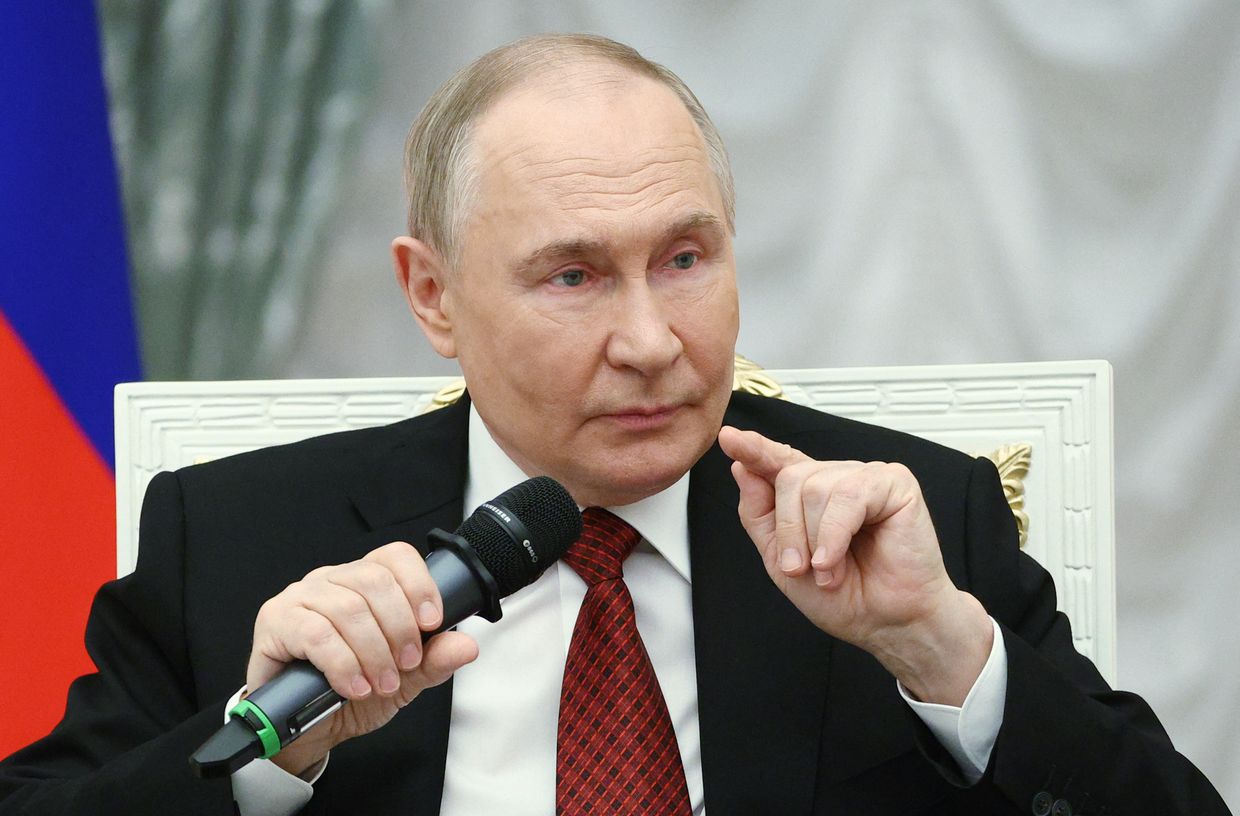
Russia will establish a dedicated military branch for unmanned systems, President Vladimir Putin said on June 12 during a meeting on the state armament program.
"We have accumulated a great deal of experience to create this branch of the armed forces," Putin said, noting the move includes personnel training, manufacturing, and deployment of modern equipment.
The announcement comes as both Russia and Ukraine increasingly use drones for strike missions and surveillance. Unmanned systems have become central to battlefield operations and enabling deep strikes.
Ukraine established its own Unmanned Systems Forces (USF) in June 2024 to formalize and scale its drone-based operations on the battlefield. The USF has since launched hundreds of deep strikes into Russian territory and worked to integrate drone technology across combat units.
Russia, meanwhile, has ramped up drone production over the past year, launching waves of Iranian-designed Shahed-type suicide drones in near-daily attacks on Ukrainian cities.
President Volodymyr Zelensky said on May 27 that Moscow intends to produce up to 500 drones daily, with Russian manufacturers gearing up to manufacture 300-350 drones each day.
Russian drone production has been supported by a steady flow of components from China and a workforce that includes teenagers and foreign laborers from African countries.
The Kremlin's move mirrors Kyiv's earlier military reform and signals Russia's recognition of drones as a critical pillar of modern warfare.

 Connexion
 The Kyiv IndependentFrancis Farrell