The strikes were in retaliation for an attack on a church in southern Jordan on Friday, the Jordan military said. They threatened to damage relations between the two neighbors.
The strikes were in retaliation for an attack on a church in southern Jordan on Friday, the Jordan military said. They threatened to damage relations between the two neighbors.
Struggling against each other on the battlefield, the sides in Sudan’s civil war are relying on drones to strike across vast distances, inflicting huge tolls on civilians in the process.
Struggling against each other on the battlefield, the sides in Sudan’s civil war are relying on drones to strike across vast distances, inflicting huge tolls on civilians in the process.
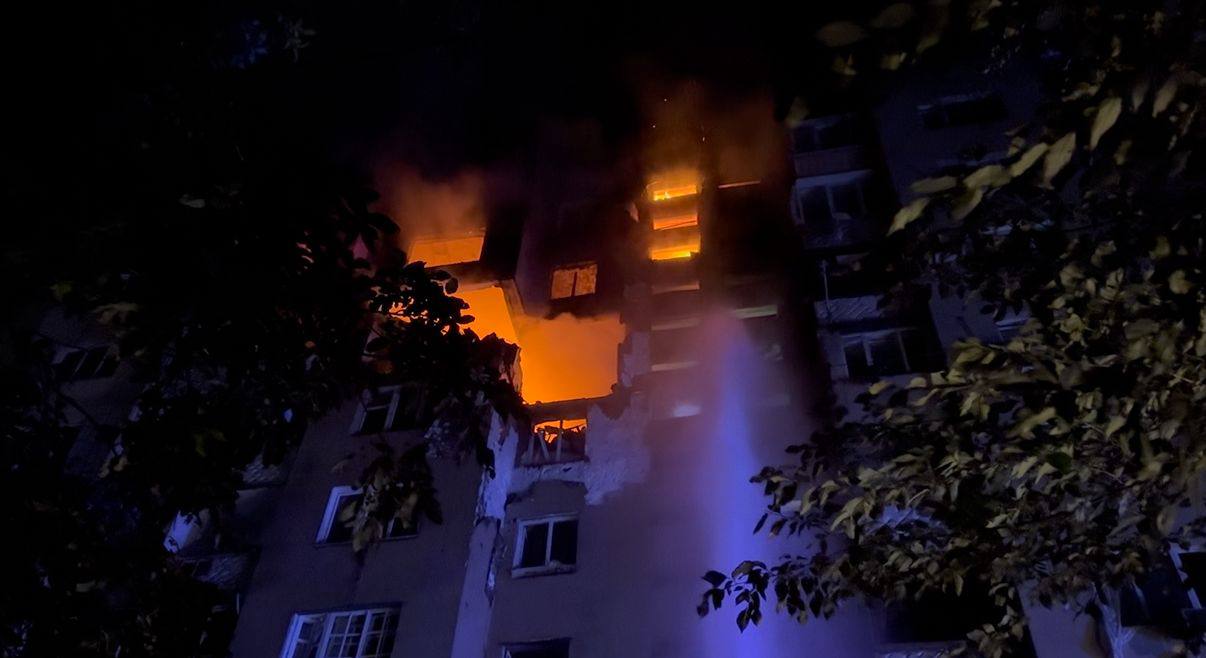
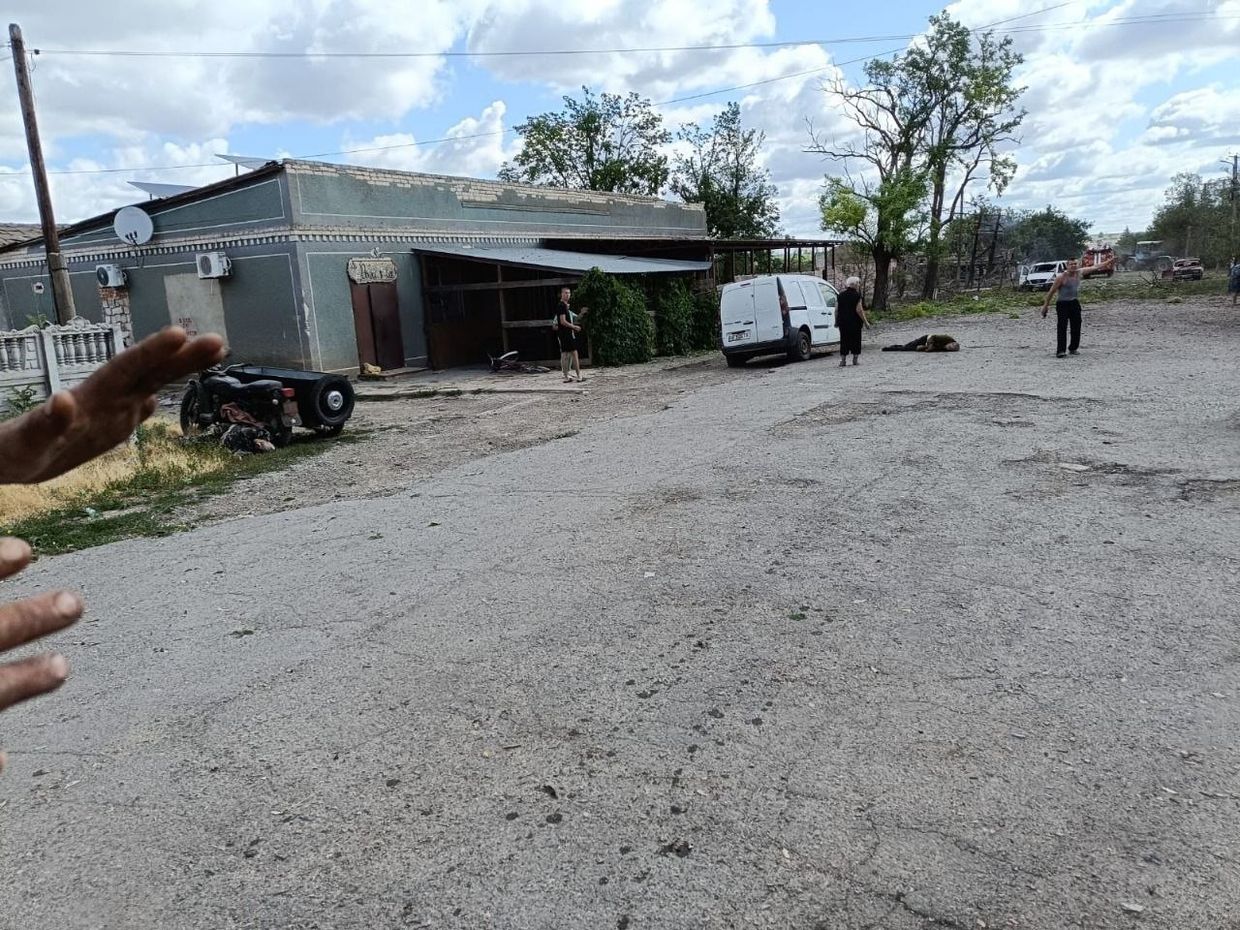
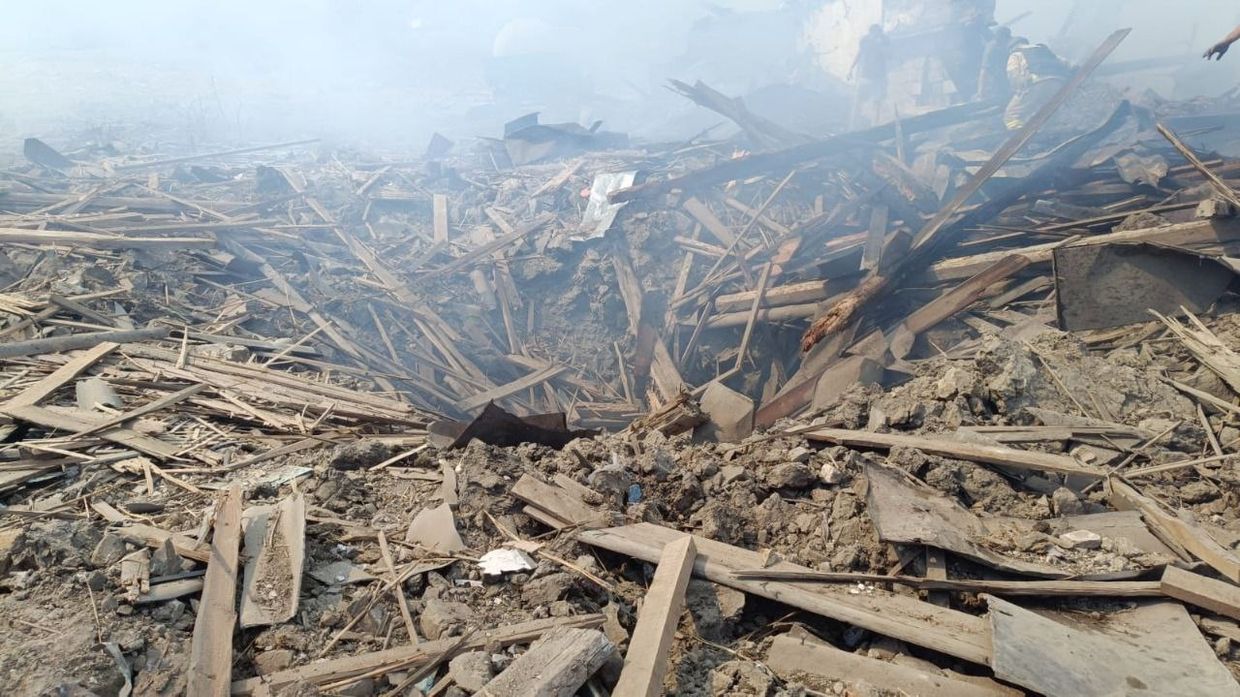
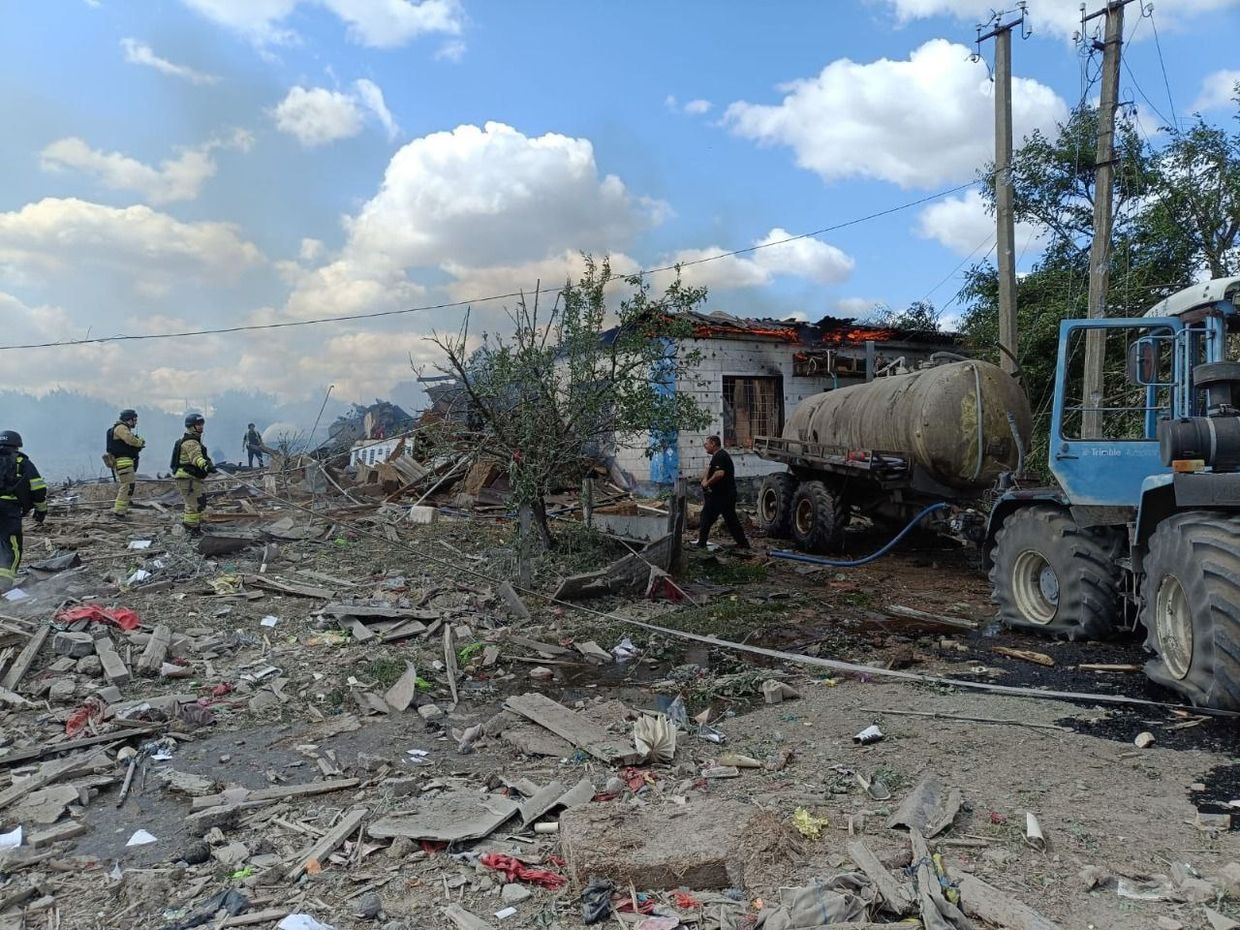
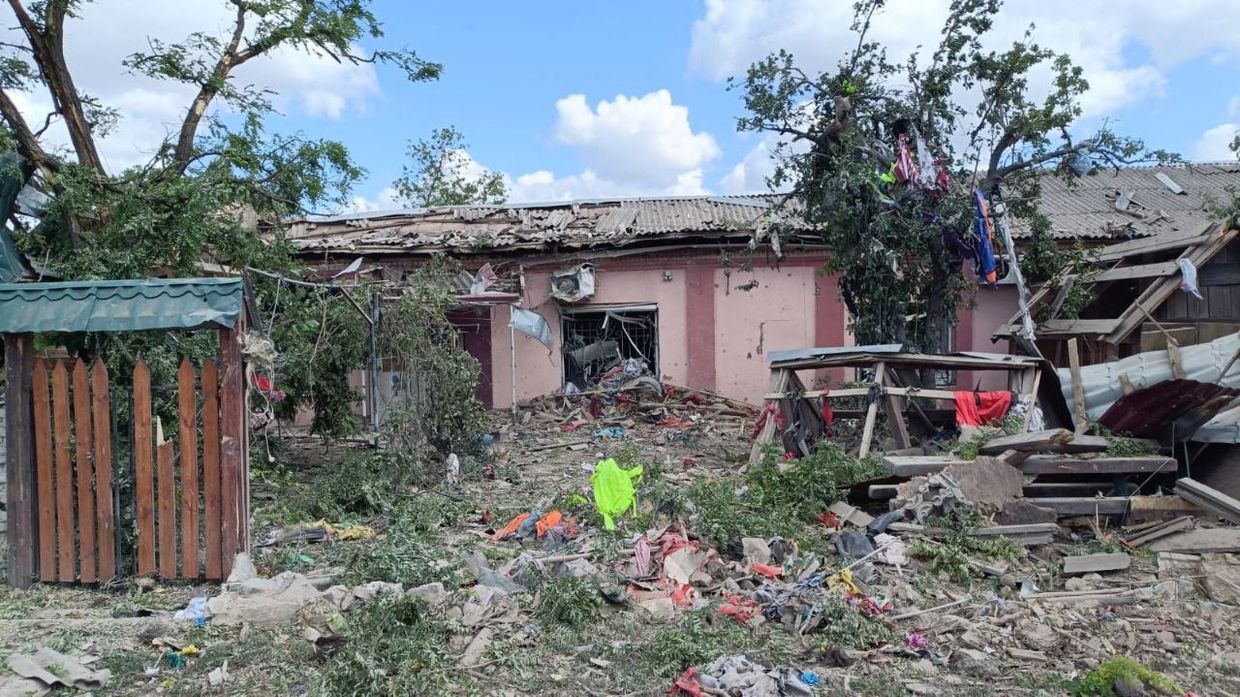
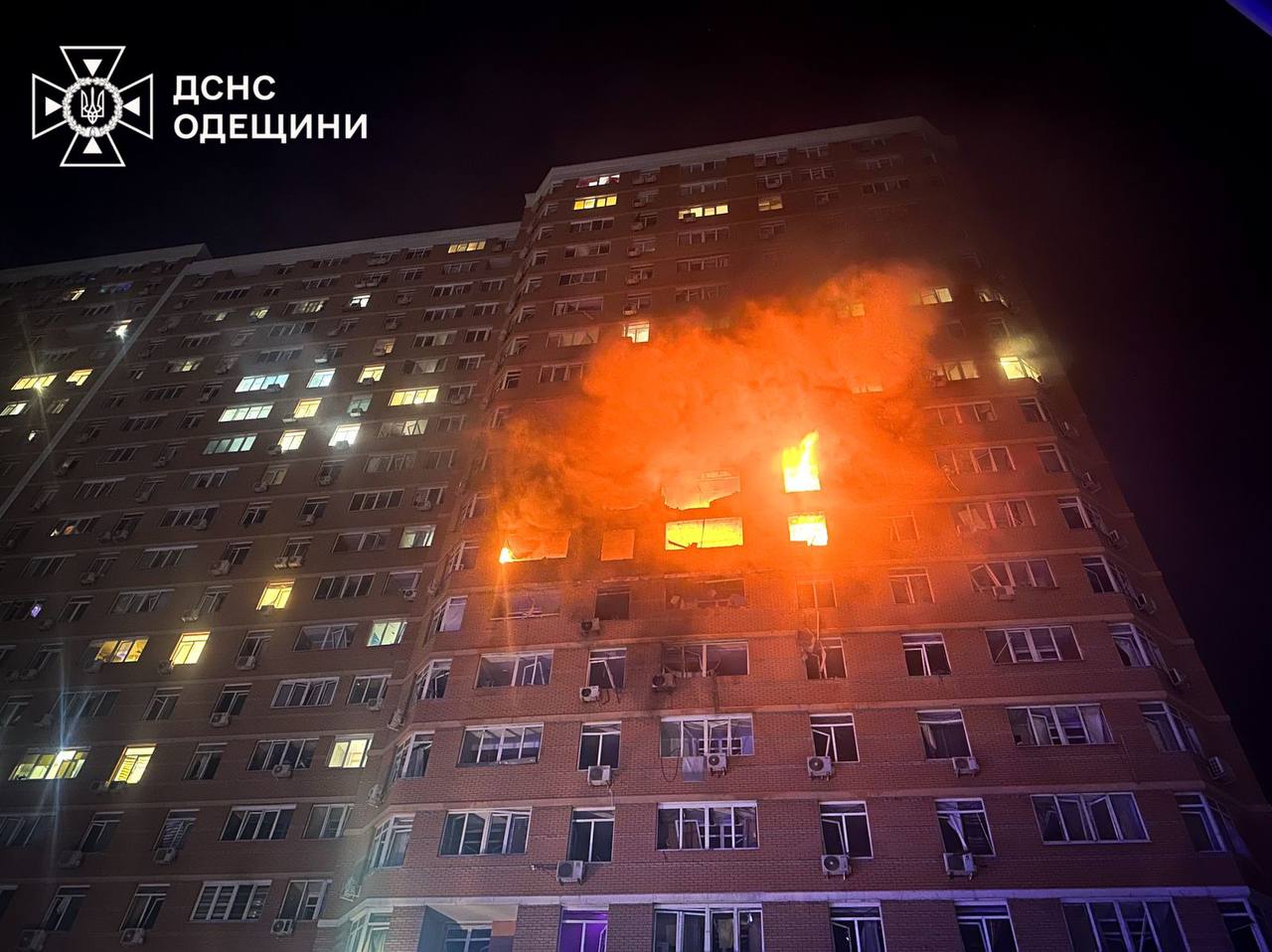
Russian drones struck a 24-story apartment building in Kyiv, a university building in Kremenchuk, warehouses, and hypermarkets overnight on 21 October, killing two people in the capital and an elderly couple near Kharkiv, Ukrainian officials said. The attack went well beyond Ukraine’s power grid, hitting places where people live, study, and shop. Over the past day, Russian strikes also killed three more civilians and injured dozens across several oblasts.
Russia has kept up nightly dron
Russian drones struck a 24-story apartment building in Kyiv, a university building in Kremenchuk, warehouses, and hypermarkets overnight on 21 October, killing two people in the capital and an elderly couple near Kharkiv, Ukrainian officials said. The attack went well beyond Ukraine’s power grid, hitting places where people live, study, and shop. Over the past day, Russian strikes also killed three more civilians and injured dozens across several oblasts.
Russia has kept up nightly drone and missile attacks on Ukrainian cities through the autumn, mostly aimed at the energy system. It struck Ukraine’s energy 76 times during a US-declared truce, and fired 39 ballistic missiles at the grid three days after Washington announced it. This time the targets also included homes, a university, warehouses, and shops.
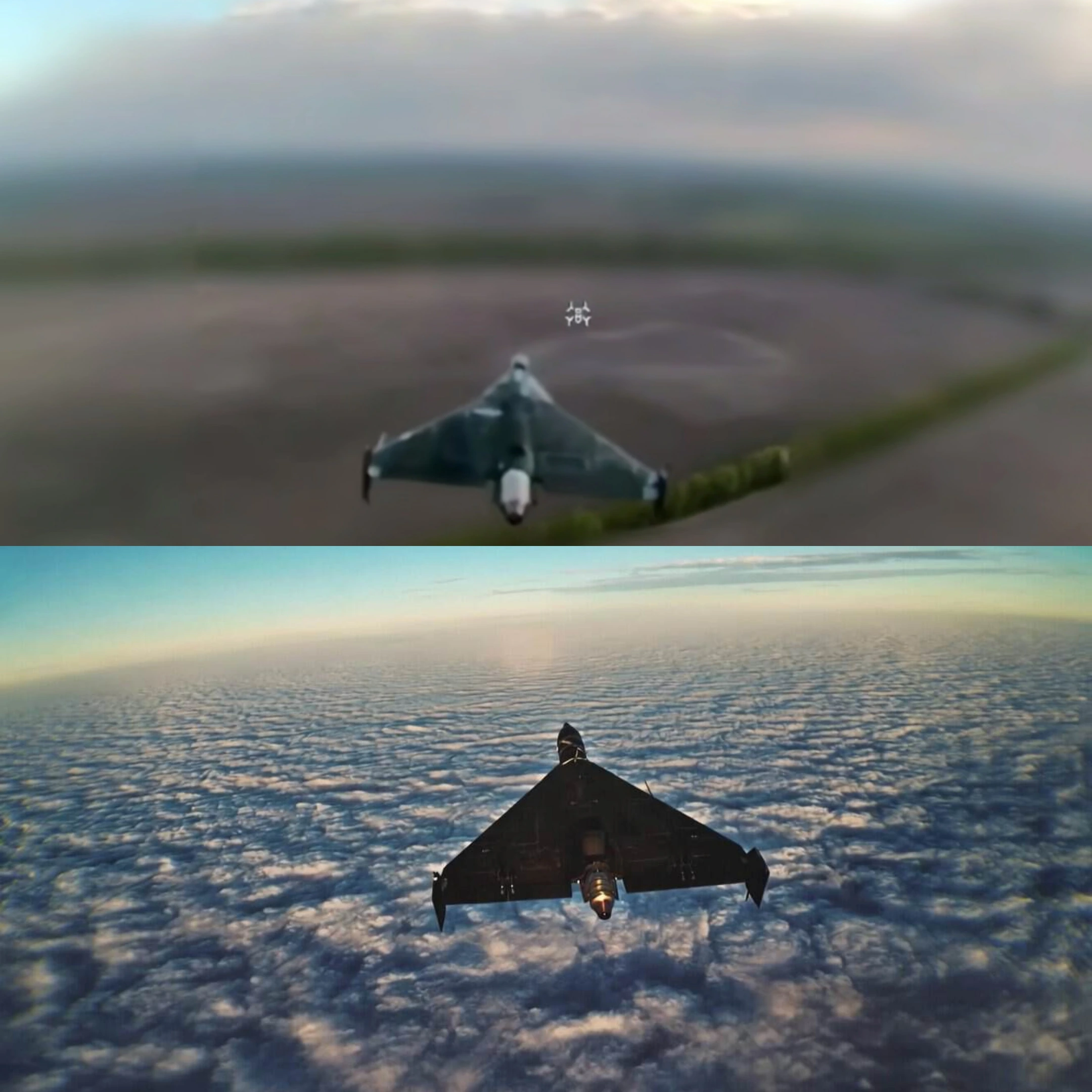
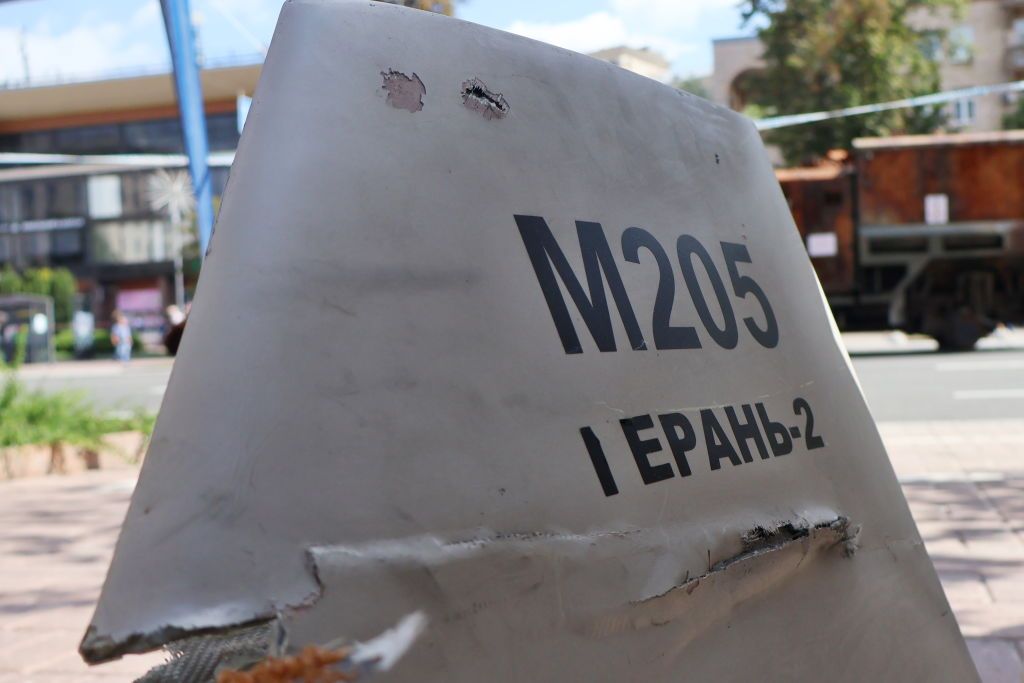
Overnight, Russia launched 186 Shahed-type and other attack drones, 88 of them jet-powered, along with Iskander-K cruise missiles, Ukraine’s Air Force said. Air defenses downed or jammed 150 drones. Hits were recorded at 27 locations, and debris fell at 13 more.
Two killed on the 20th floor in Kyiv
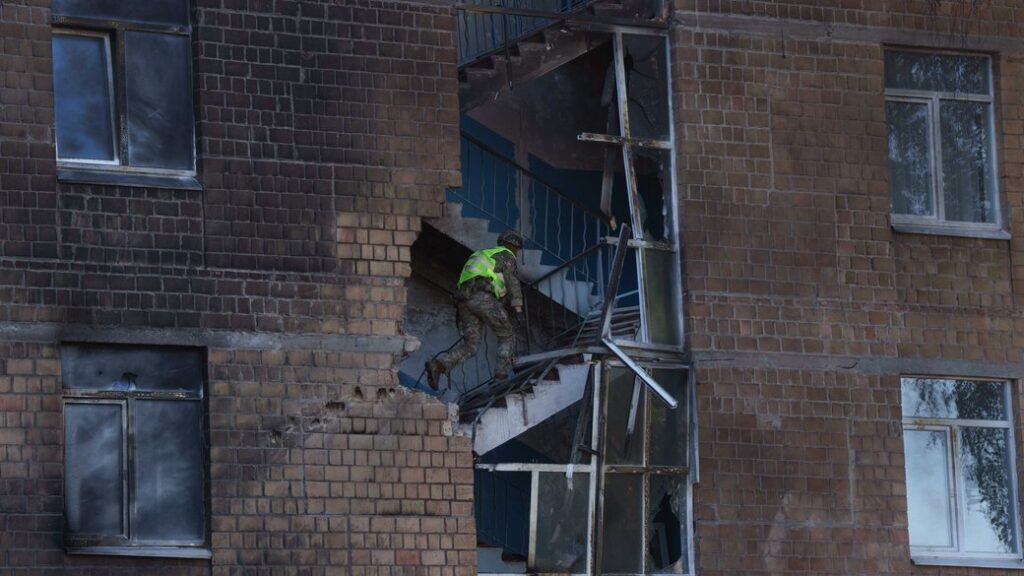
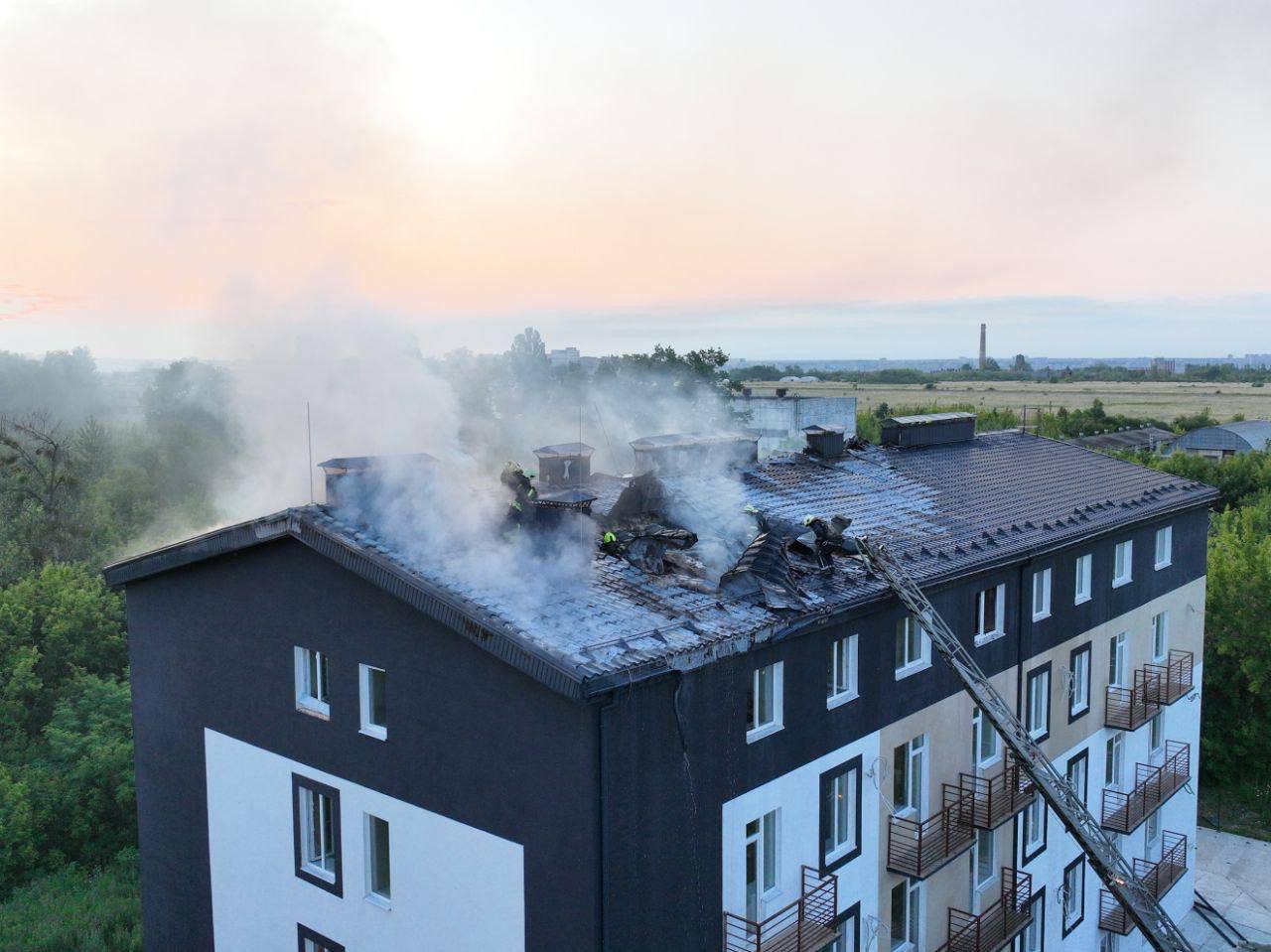
A drone hit a 24-story residential building in Kyiv’s Sviatoshynskyi district at the level of the 20th floor, starting a fire, Mayor Vitali Klitschko said. The fire spread over about 70 square meters, and rescuers found the bodies of two people while clearing debris, the State Emergency Service said. Two people were injured and hospitalized, Klitschko said, including a 46-year-old man who was walking past the building, according to the police.
A rescuer carries a cat out after a Russian drone strike on an apartment building in Kyiv, 21 October 2026. Photo: State Emergency Service of Ukraine
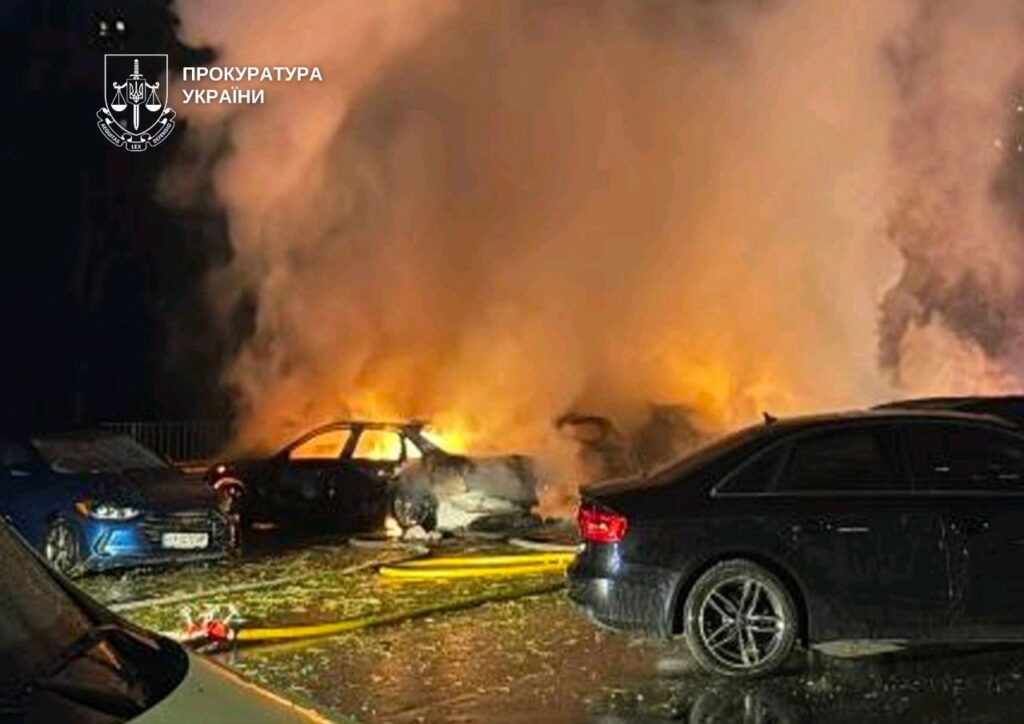
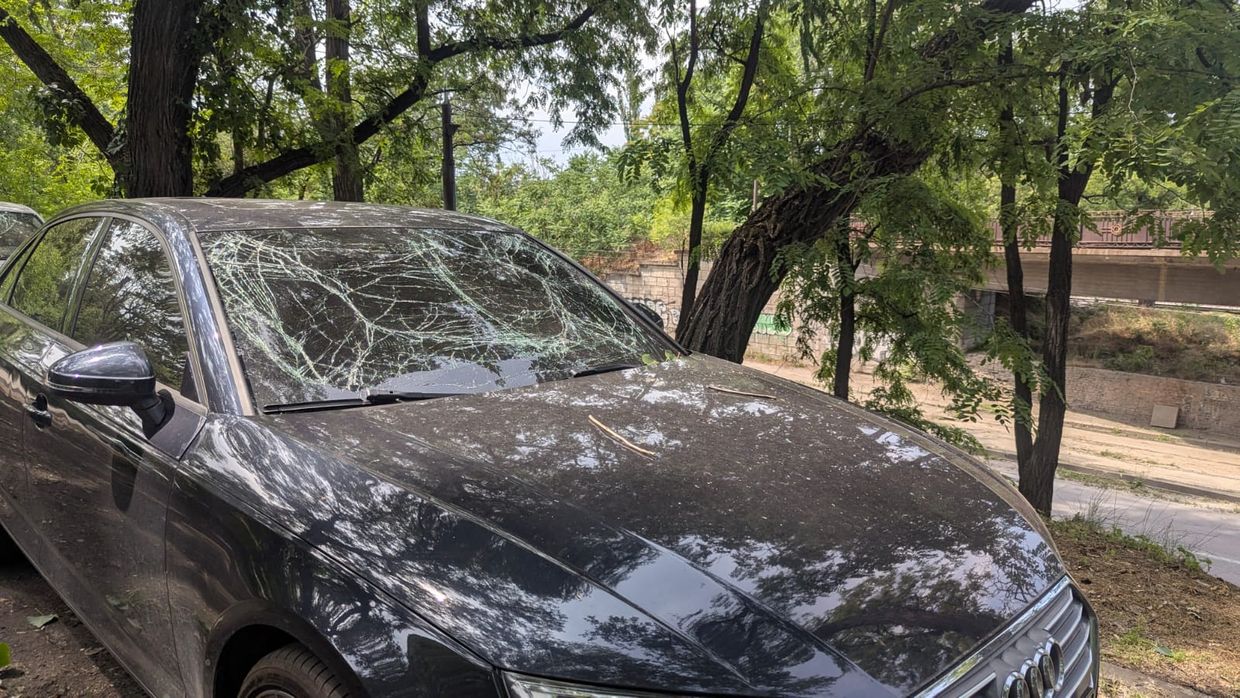
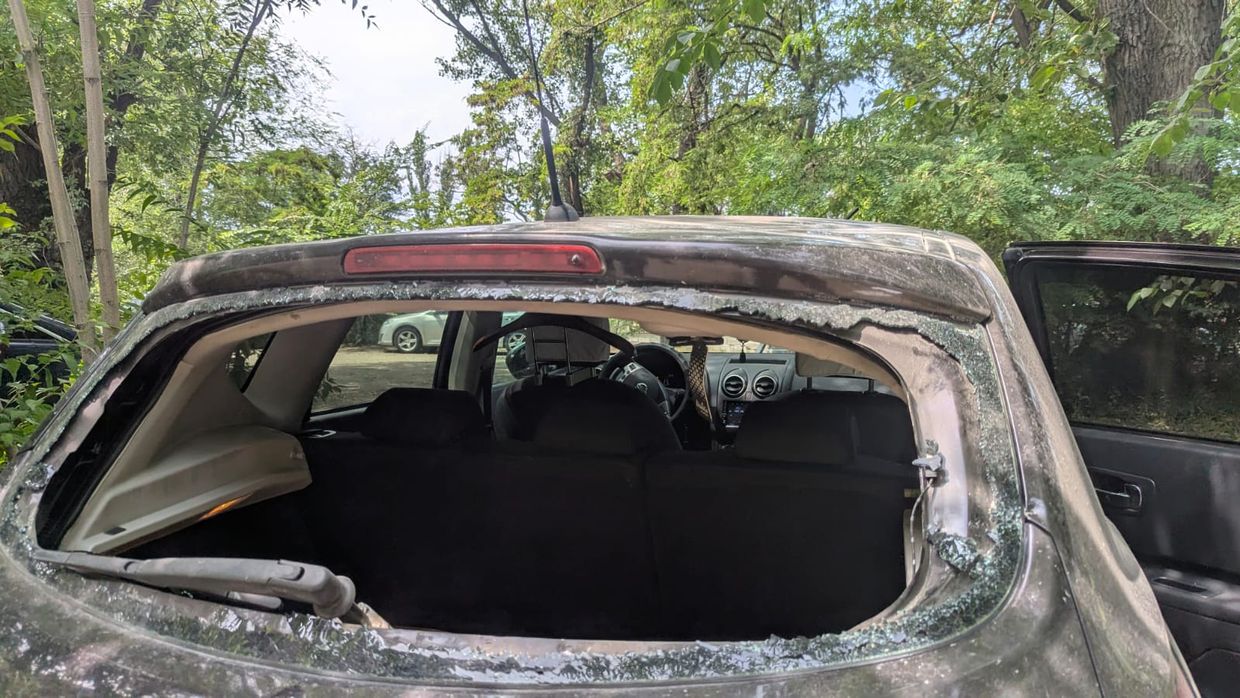
In the Desnianskyi district, seven parked cars caught fire, the State Emergency Service said; police put the number at about 10. The evening before, drones hit a warehouse building in Desnianskyi and a transport facility in Solomianskyi district.
An elderly couple killed near Kharkiv
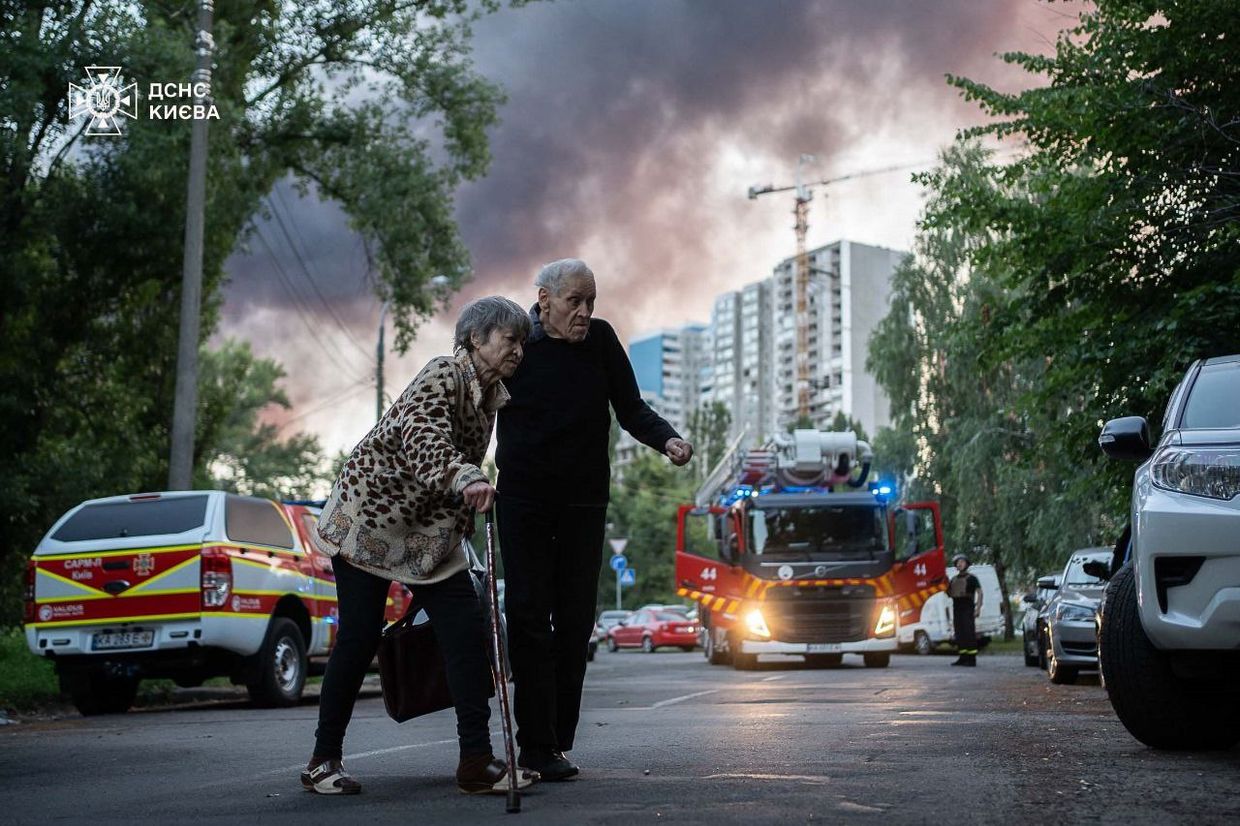
In the village of Korotych near Kharkiv, Russian drones killed an 81-year-old woman and an 83-year-old man, Kharkiv Oblast Governor Oleh Syniehubov said. Rescuers recovered their bodies from the rubble of their house, the State Emergency Service said. Eleven people, including a two-month-old boy and an eight-year-old girl, were treated for acute stress, and 13 houses were damaged.
A house destroyed by a Russian drone strike in Korotych, Kharkiv Oblast, 21 October 2026. Photo: State Emergency Service of Ukraine
A university, warehouses, and hypermarkets
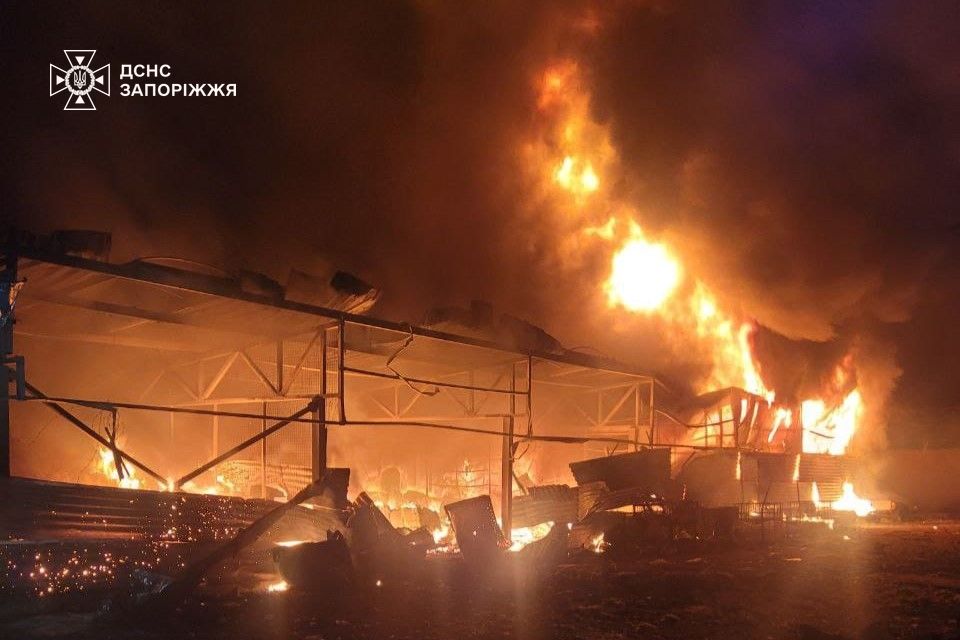
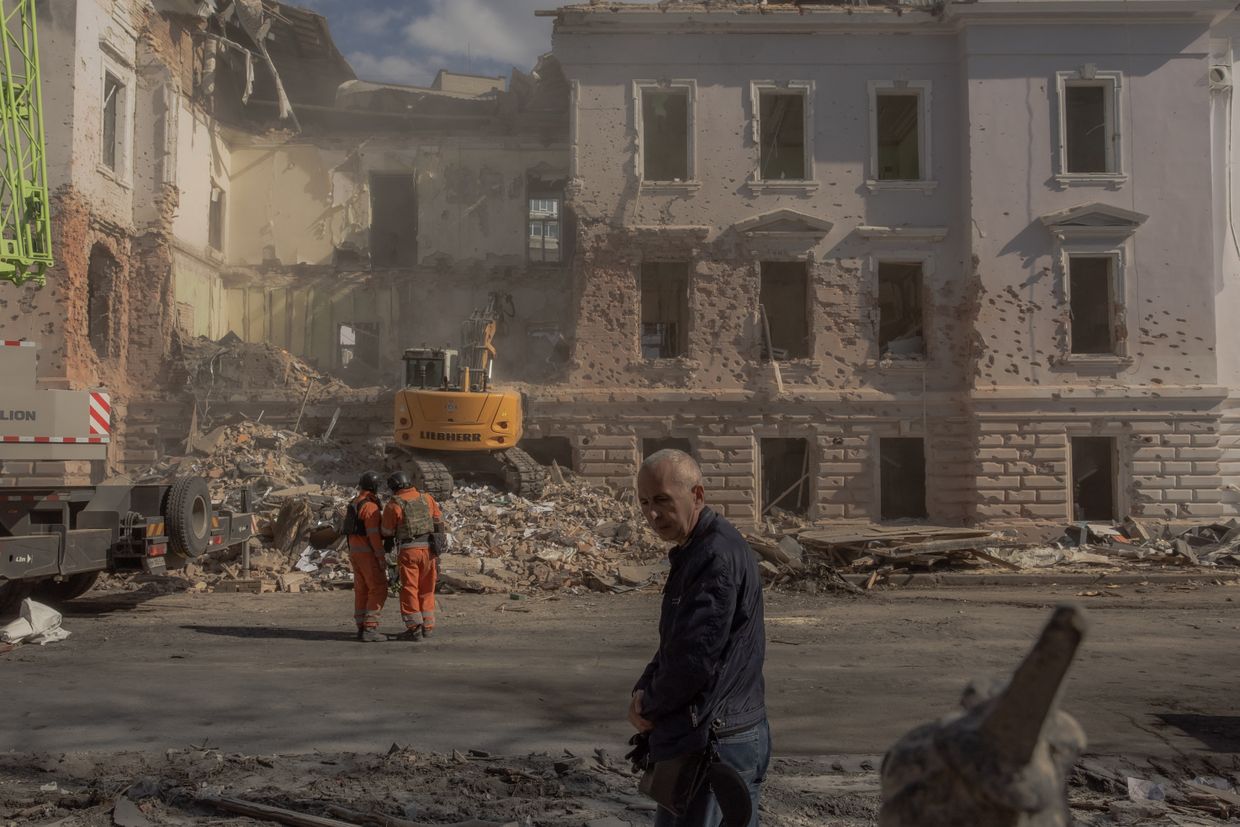
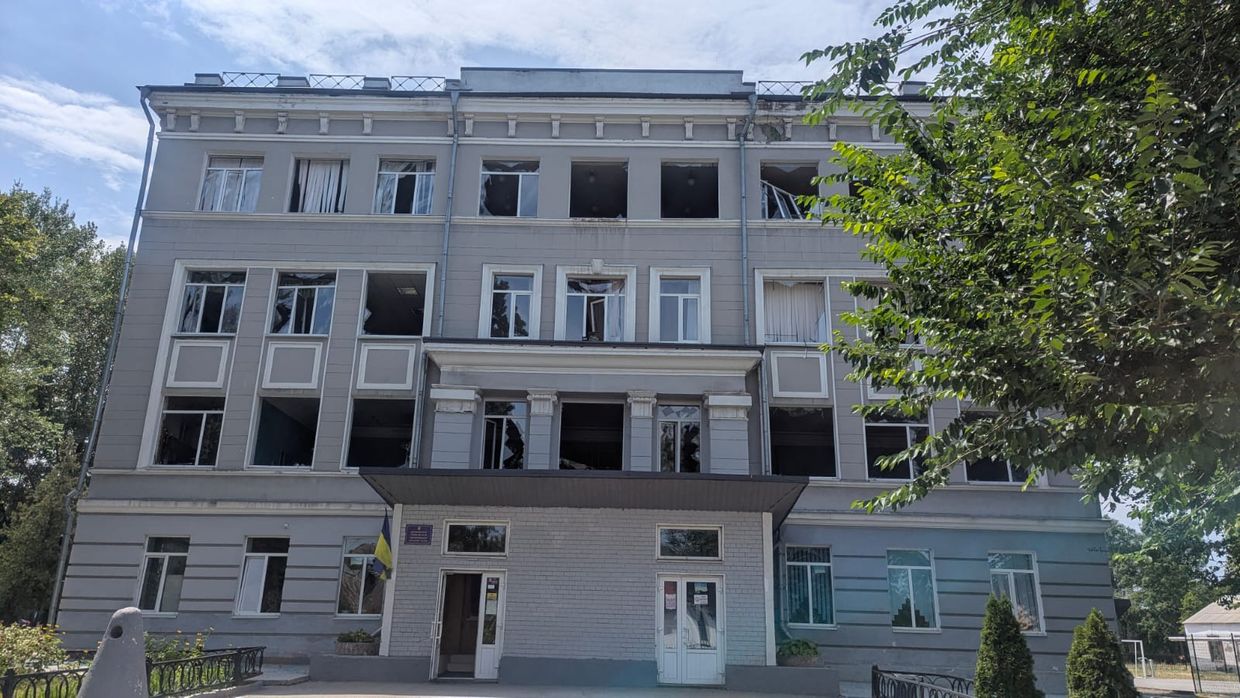
In Kremenchuk, a drone hit a building of the Mykhailo Ostrohradskyi National University, setting it on fire, the State Emergency Service said. Three people were injured, including a 16-year-old who was hospitalized with a concussion, Poltava Oblast Governor Vitalii Diakivnych said. In the Poltava community, drones damaged an administrative building and warehouses.
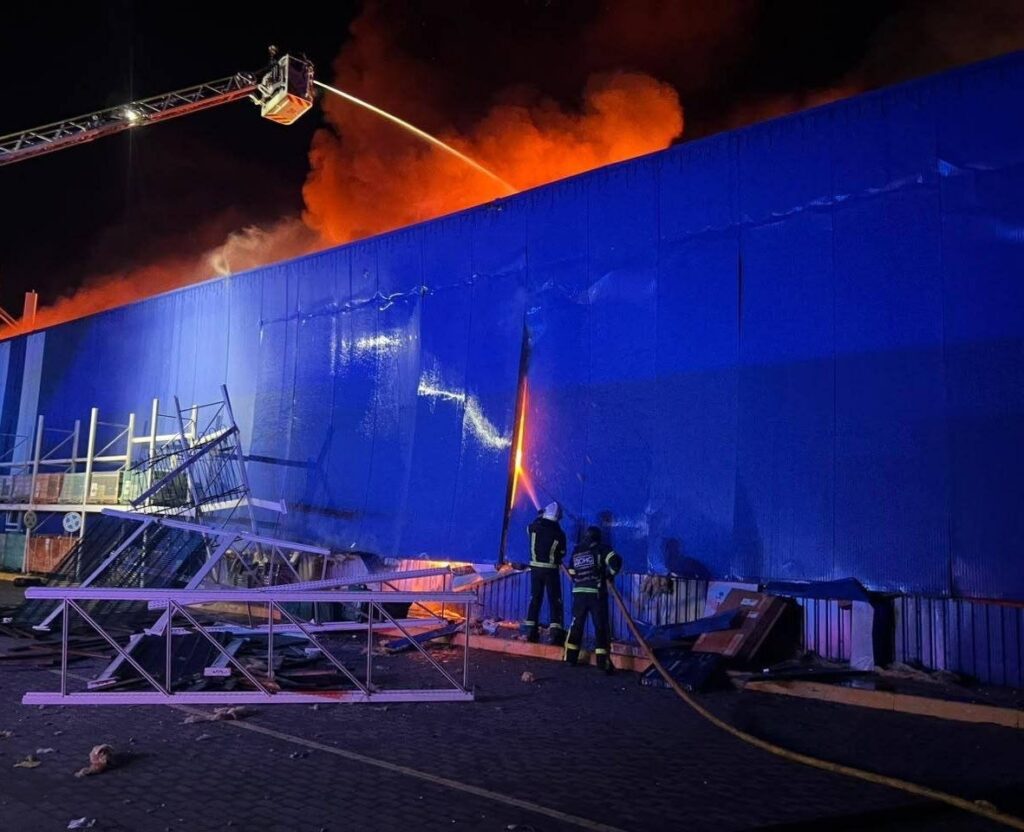
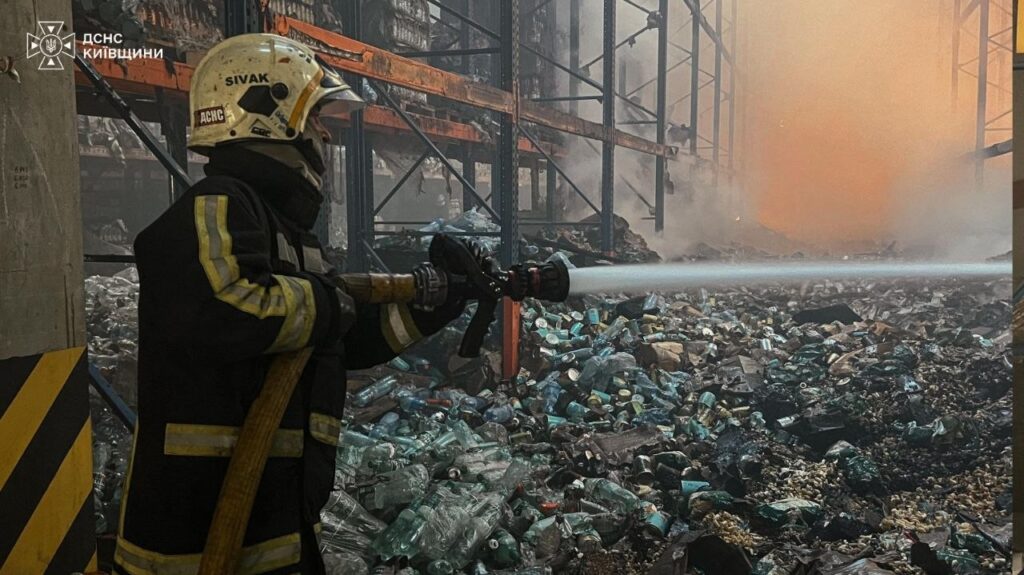
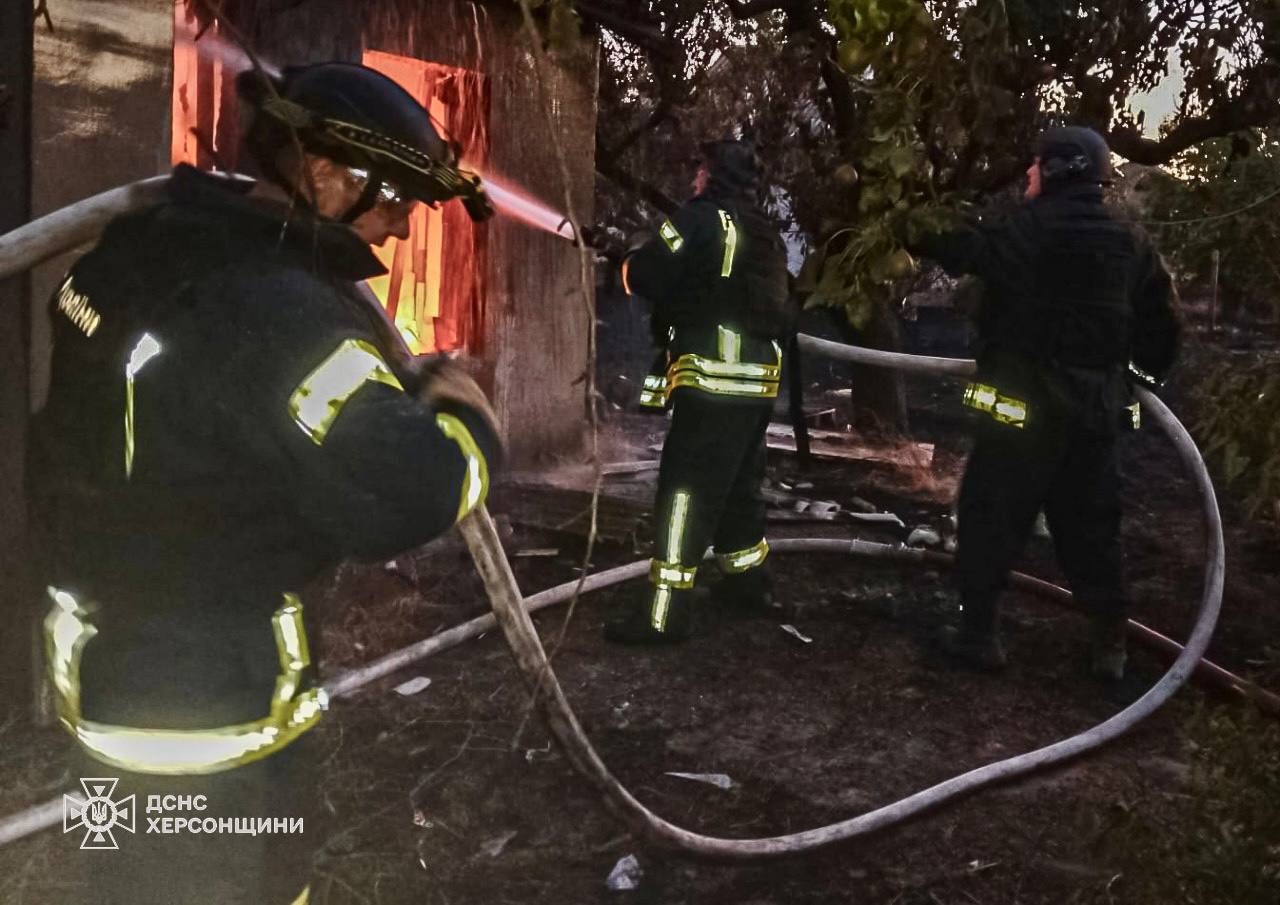
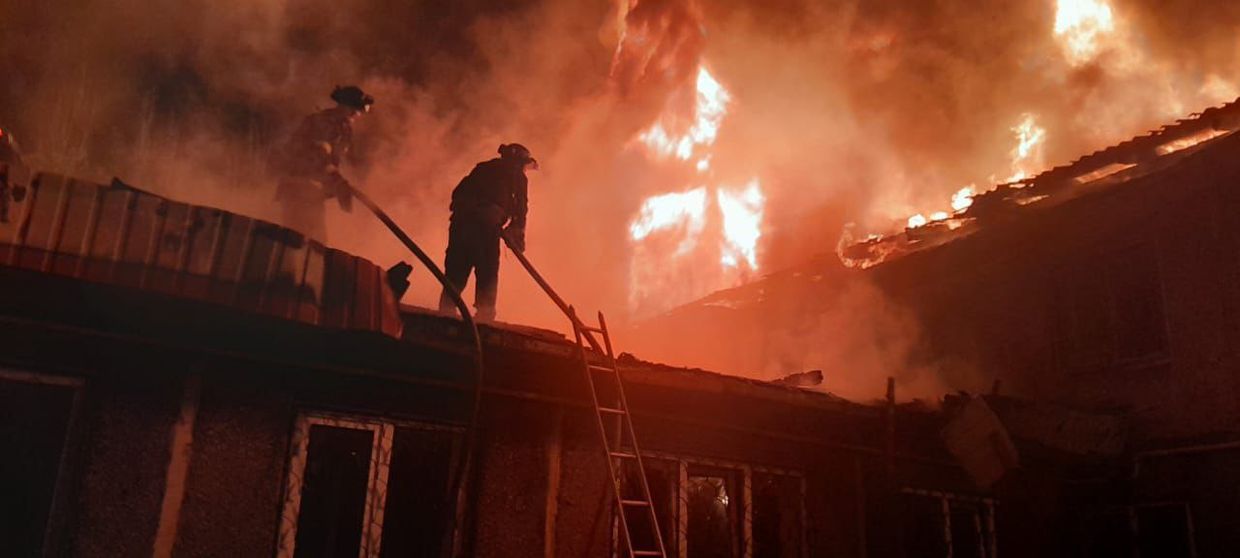
Firefighters put out a fire at an enterprise in Lviv district after a Russian attack, 21 October 2026. Photo: State Emergency Service of Ukraine
In Lviv Oblast, an attack set fire to an enterprise in a village in Lviv district and injured two people, while a house was damaged in a neighboring village, the State Emergency Service said. In Uman, drones hit a hypermarket and damaged a hotel, injuring one person, Cherkasy Oblast Governor Ihor Taburets said.
A hypermarket in Uman damaged by a Russian drone strike, 21 October 2026. Photo: Cherkasy Oblast Military Administration
On the evening of 20 October, a drone hit an Epicentr hypermarket in Pervomaisk, Mykolaiv Oblast, injuring eight people, acting Governor Heorhii Reshetilov said. Russia also struck a hypermarket in Rivne Oblast several times that day, injuring four and forcing rescuers to pull back while they fought the fire, the State Emergency Service said.
More dead and injured over the past day
The overnight strikes followed a day of attacks. In Kyiv, Russian strikes on 20 October killed one person and injured 21, three of them seriously, Klitschko said. An administrative building caught fire, rescuers freed four people trapped on its upper floors, and a healthcare facility was damaged, the State Emergency Service said. In Dnipropetrovsk Oblast, two men were killed and seven people injured that day, regional officials said.
In Kharkiv Oblast, Russian attacks over the past day injured 11 more people in Kharkiv, Derhachi, and Shestakove, Syniehubov said. In Kherson Oblast, 13 people were injured, three of them children, the regional administration reported. In the Chernihiv region, an 89-year-old woman and a young woman were hurt in strikes on villages and on Novhorod-Siverskyi, Governor Viacheslav Chaus said, and a 21-year-old woman was injured in the Sumy community, according to the Sumy regional administration.
More than 5,000 subscribers lost power in Volyn Oblast’s Lutsk district, Governor Roman Romaniuk said. In Ternopil Oblast’s Kremenets district, 7,949 subscribers remained without power after earlier Russian strikes on energy facilities, the regional administration reported.
Six people were killed in a Russian strike in the settlement of Nova Vodolaha in Kharkiv Oblast, including girls aged 1 and 11. Another 15 people were injured, including seven children, Kharkiv Oblast Governor Oleh Syniehubov said on 20 October. Russian forces struck a park with a drone while families with children were there, Ukraine’s Minister of Internal Affairs Ivan Vyhivskyi said.
Russian forces continue to attack Ukrainian cities, killing civilians and destroying civilian infrastr
Six people were killed in a Russian strike in the settlement of Nova Vodolaha in Kharkiv Oblast, including girls aged 1 and 11. Another 15 people were injured, including seven children, Kharkiv Oblast Governor Oleh Syniehubov said on 20 October. Russian forces struck a park with a drone while families with children were there, Ukraine’s Minister of Internal Affairs Ivan Vyhivskyi said.
Russian forces continue to attack Ukrainian cities, killing civilians and destroying civilian infrastructure. The Kharkiv Oblast Prosecutor’s Office has opened a war-crime investigation into the strike. The strike was aimed at people, Yurii Yurchenko, head of a police department in Kharkiv Oblast, said in a comment to Suspilne.
The 14-month-old girl was named Anhelina
The Russian drone circled the park several times before crashing, Yurchenko said. He said the drone struck a tree near a café, and the blast wave and shrapnel hit people at the establishment. The attack came at around 16:30, the prosecutor’s office said, adding that Russian forces had preliminarily used a Geran-3 drone.
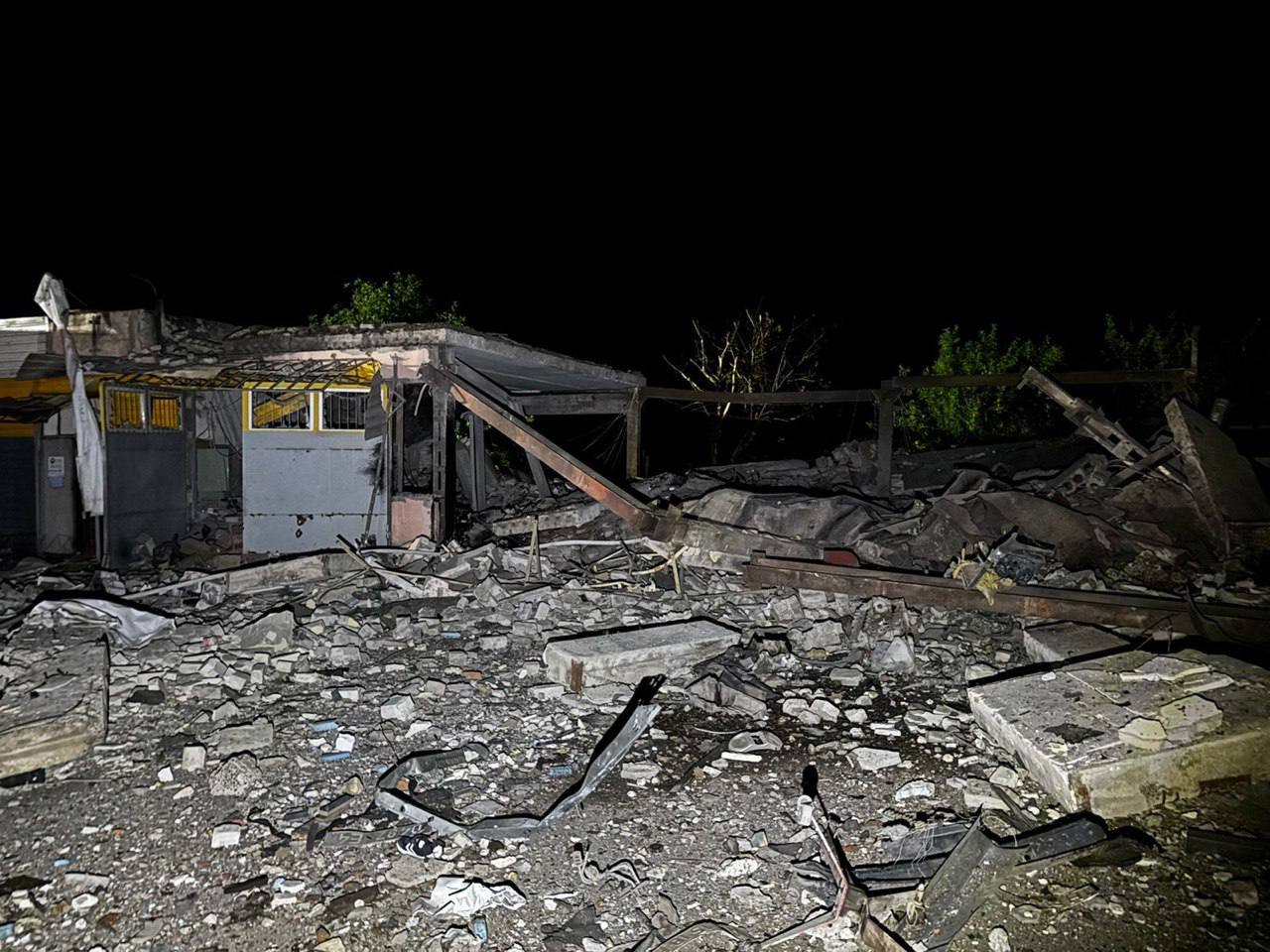
The café damaged in a Russian strike on a park in the settlement of Nova Vodolaha, Kharkiv Oblast, on 19 October 2026. Photo: Kharkiv Oblast Military Administration
The Russian strike killed three women, aged 28, 34 and 36, a man around 40 years old, and two girls, aged 14 months and 11 years, Syniehubov said in his statement.
The youngest girl, named Anhelina, was born in August 2025, Ukrainian President Volodymyr Zelenskyy said. Her mother, Inna, died in the hospital, he added.
Zelenskyy shows US senators photos of the aftermath the same day
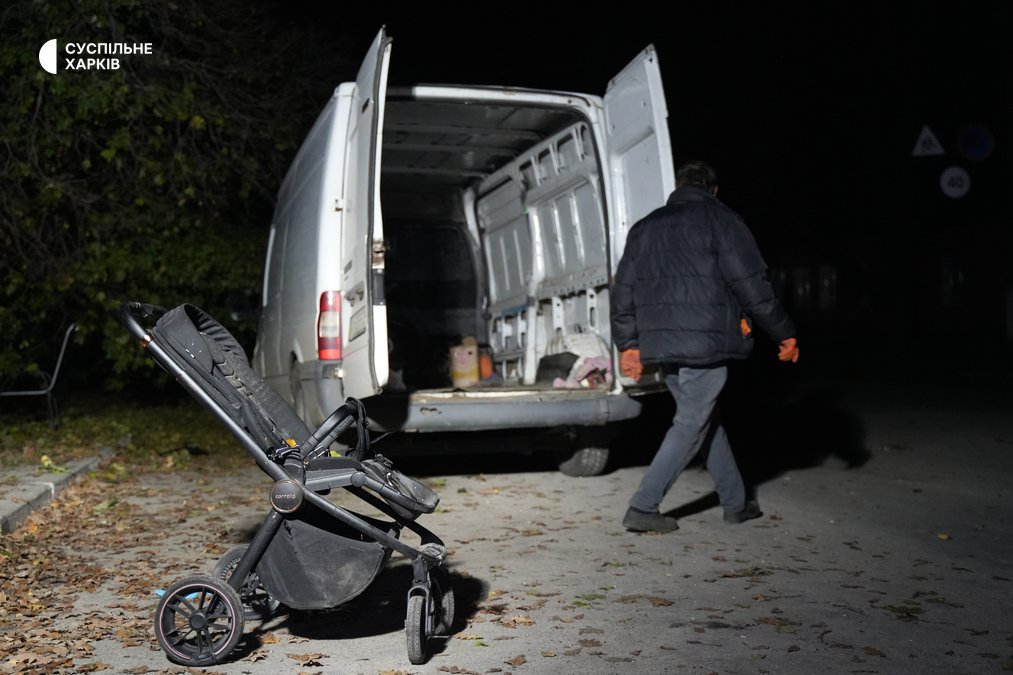
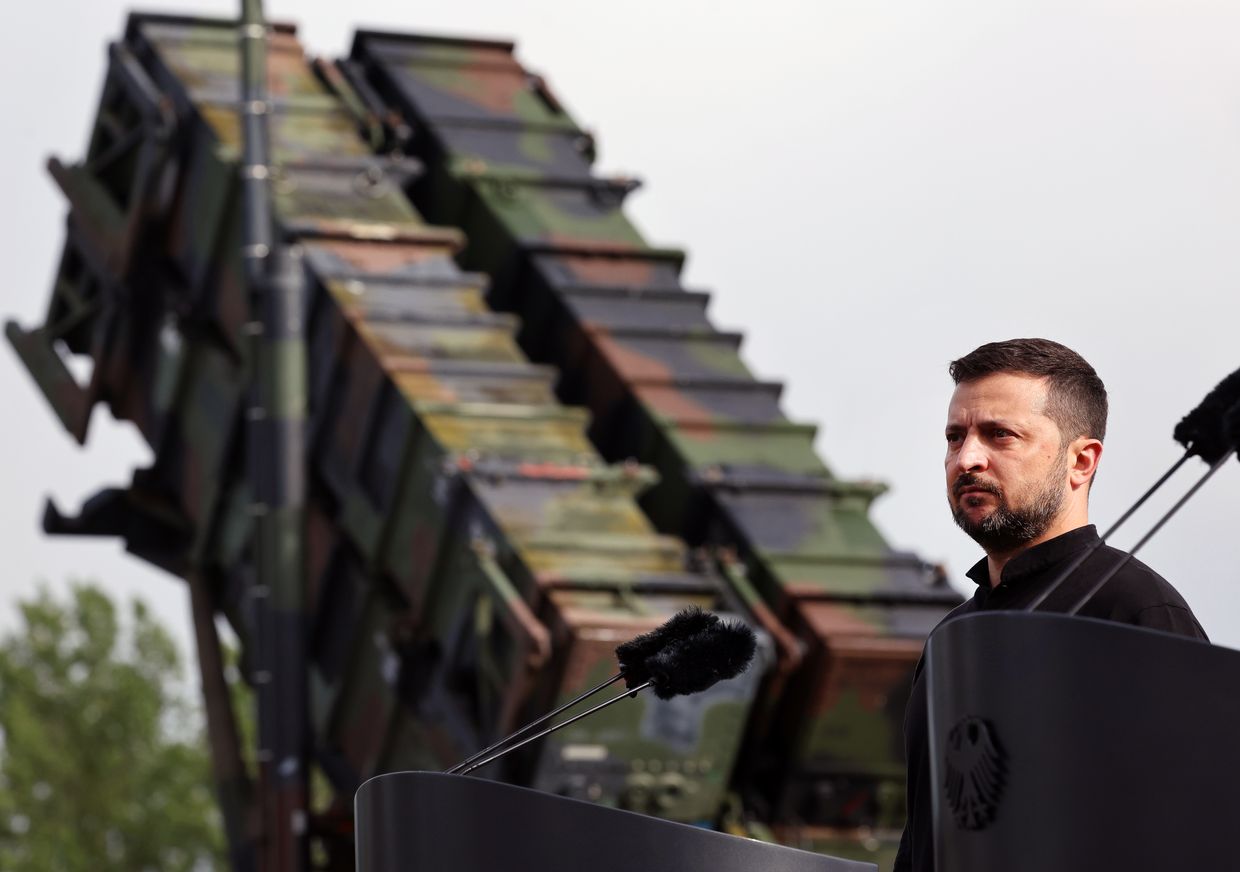
Zelenskyy met with US Senators Richard Blumenthal and Thom Tillis, along with their colleagues from both parties and both chambers of Congress, according to a 19 October post on his social media accounts. During the meeting, he discussed the Russian attack in Kharkiv Oblast and showed lawmakers photographs from the scene, including one of the infant who was killed in a stroller.
“This is how Russia responds to the lifting of sanctions and the easing of pressure,” he said in the post.
The stroller in which 1-year-old Anhelina was killed, Nova Vodolaha, 19 October 2026. Photo: Suspilne Kharkiv/Viacheslav Mavrychev
Zelenskyy said Ukraine needs air defense and that no one should think about making money with Russia while it continues its war. He asked that sanctions on Russia stay in place until the killing stops, urged the US to “be strong” and apply Lindsey Graham’s law, and called on Europe to keep supporting Ukraine.
Russia attacked Kyiv with ballistic missiles in two waves overnight on 18–19 October. Information from partners did not arrive before the first wave, at around 23:00, Air Force spokesperson Yurii Ihnat said on national television. A warning came before the second wave, at around 03:00, but the window was short, he told NV.
Hours earlier, Ukrainian President Volodymyr Zelenskyy told NBC that US warnings of Russian ballistic launches were working again after three days without them, and t
Russia attacked Kyiv with ballistic missiles in two waves overnight on 18–19 October. Information from partners did not arrive before the first wave, at around 23:00, Air Force spokesperson Yurii Ihnat said on national television. A warning came before the second wave, at around 03:00, but the window was short, he told NV.
Hours earlier, Ukrainian President Volodymyr Zelenskyy told NBC that US warnings of Russian ballistic launches were working again after three days without them, and that only the United States has that intelligence. Those warnings have for years given Ukrainian authorities several minutes to sound alarms and let civilians reach shelters before ballistic missiles hit.
“Once again, a Russian ballistic attack in several waves overnight, and once again there was no warning from partners,” Zelenskyy wrote. It was at least the third ballistic strike on Kyiv in a week to begin without warning from partners, following attacks on 12 October and 13 October.
Metro station damaged on Kyiv’s left bank
One person was killed and eight injured in Kyiv, Ukrainian Prime Minister Serhii Koretskyi said. A strike damaged a metro station on Kyiv’s left bank, and debris broke the rails beside it, Mayor Vitali Klitschko said. City authorities said the damaged station was above ground, closed Chernihivska and Lisova stations, and said red-line trains would run only between Akademmistechko and Darnytsia. The attack also damaged a 25-story building, a medical facility, and the Cosmo Multimall shopping center in the Solomianskyi district, NV reported, and Zelenskyy said a school was hit too.
The attack also damaged one of Ukraine’s main ice arenas, on Shalett Street in Kyiv, which hosts Ukrainian championship hockey games and youth training, hockey Telegram channel Flamingo reported. Parts of the facade, metal structures, and roof were damaged, but the ice surface showed no significant visible damage, according to preliminary information, Suspilne reported.
Damage in 11 oblasts, three missing in Irpin
Koretskyi said energy and infrastructure were the main targets, with damage in 11 oblasts. Russia also hit warehouses of medicines, railway stations, shops, and homes, he said. In Kyiv Oblast, Russian strikes injured six people in Irpin, including three children, and three more were missing, oblast head Tymur Tkachenko said. In Kharkiv Oblast, six people were injured, including two children, Koretskyi said. In Rivne Oblast, four people were injured, and one of them was hospitalized, regional police reported.
Zelenskyy said that more than 10 energy facilities were damaged and at least 550,000 families lost power. Ukrenergo reported new outages in 10 oblasts: Volyn, Zhytomyr, Rivne, Ternopil, Khmelnytskyi, Vinnytsia, Kirovohrad, Kharkiv, Odesa, and Mykolaiv. In Volyn Oblast, about 15 jet-powered Shahed-type drones targeted the region, and around 66,000 customers were without power on the morning of 19 October, oblast head Roman Romaniuk said. Kovel, Manevychi, and Lutsk were hit hardest, and no casualties were reported. In Vinnytsia Oblast, a critical infrastructure facility in Koziatyn was damaged, and power there would stay unstable for some time, city council secretary Iryna Repalo said, Suspilne reported.
Zelenskyy said Russia fired 16 ballistic missiles at Kyiv and Kyiv Oblast. The Air Force reported that Russia also used Iskander-K cruise missiles and 269 drones, and that by 09:00 air defenses had shot down or suppressed four Iskander-K cruise missiles and 243 drones. Its preliminary count did not list any ballistic missiles among the intercepted targets.
Rubio denies any pause and points to a software problem in Ukraine’s warning system
On 19 October, Rubio told reporters in Samarkand, Uzbekistan, that “there’s been no pause” in intelligence-sharing with Ukraine, Reuters reported. He said he did not know where Zelenskyy was getting such claims and that he should focus on ending the war. He also said he did not know whether a failure had happened the previous night, but that a few nights earlier there had been a software problem with “their early warning system,” and that US European Command was looking into the strikes, The Guardian reported. US officials had not mentioned a software glitch before, and in at least one case Ukraine was told that bad weather over southern Russia had hidden launch preparations, the newspaper noted.
Ihnat said Ukrainian specialists and their partners were working to establish why information about the first launch had not arrived. He added that similar gaps had occurred during earlier attacks.
Zelenskyy wrote that when missile supplies for Ukraine’s air defense are blocked while Russia gets sanctions relief or delays, “this is, unfortunately, a denial of reality on the part of partners.” A night earlier, Russia had hit Ukraine’s energy system again, while Ukrainian drones set fire to St. Petersburg’s oil terminal despite Washington’s pressure to stop refinery strikes.
A porcelain fish survived the Russian strike that destroyed a room in the Kyiv apartment of Andrii Dubenko, a volunteer, dentist, and medic, his cousin Anna Danylenko wrote on Facebook and told UP Life, the lifestyle site of Ukrainska Pravda. Dubenko and two others were inside the nine-story building in Lisovyi masyv when the 13 October strike hit. It killed other residents.
The strike came during a ballistic attack aimed mainly at CHP-4, one of Kyiv’s main power plants, Ukrainian Presi
A porcelain fish survived the Russian strike that destroyed a room in the Kyiv apartment of Andrii Dubenko, a volunteer, dentist, and medic, his cousin Anna Danylenko wrote on Facebook and told UP Life, the lifestyle site of Ukrainska Pravda. Dubenko and two others were inside the nine-story building in Lisovyi masyv when the 13 October strike hit. It killed other residents.
The strike came during a ballistic attack aimed mainly at CHP-4, one of Kyiv’s main power plants, Ukrainian President Volodymyr Zelenskyy said, two days after Washington announced an energy ceasefire that Moscow never confirmed.
Lifted out in a rescue basket
Dubenko, his girlfriend, and a 72-year-old aunt were inside when the blast hit, Anna told UP Life. Her family was lucky, she wrote, and the rule of two walls saved their lives. The rule tells anyone who can’t reach a shelter to keep at least two walls between themselves and the street, away from windows. Fifteen minutes after the blast, State Emergency Service rescuers lifted the three out in a basket, Anna wrote. The aunt comforted the girlfriend, telling her not to live in the past but to look to the future, Anna said.
The porcelain fish that survived Russia’s 13 October 2026 strike on an apartment building in Kyiv’s Lisovyi masyv. Photo: Anna Danylenko/Facebook
A hole where the window was
“Just on Monday I was sitting in their cozy apartment, where I grew up, and now I’m looking into a hole that just two days ago was a window,” Anna wrote.
She gathered what was left of the tea set the family used for samovar tea while her grandmother was alive. “It was my anchor, the anchor of our family,” she wrote. The porcelain fish survived. Her mother used to play with it, and Anna now calls it the “fish of unbreakability.” UP Life likened it to the ceramic rooster that survived in a wrecked kitchen in Borodianka, Kyiv Oblast, in 2022 and became a symbol of Ukrainian resilience.
The family didn’t sleep that night. Firefighters were still putting out the blaze overnight, so they could only get back inside in the morning.
“Charred ruins, lots of water in the hallway, which burned out. People are throwing broken things out the window, down by the building. The smell of burning is everywhere,” she told UP Life.
Russian attacks have injured 1,125 Kyiv residents since the start of 2026. Of these, 379 people, or nearly 34%, were injured in just five weeks, from 27 August to 7 October, Tetiana Mostepan, director of the Kyiv City State Administration’s Department of Health, said in an interview published on 13 October.
Russian air attacks on Kyiv have intensified since late August. Air attacks occur both day and night, and Russian drones target not only military facilities but also civilian buildin
Russian attacks have injured 1,125 Kyiv residents since the start of 2026. Of these, 379 people, or nearly 34%, were injured in just five weeks, from 27 August to 7 October, Tetiana Mostepan, director of the Kyiv City State Administration’s Department of Health, said in an interview published on 13 October.
Russian air attacks on Kyiv have intensified since late August. Air attacks occur both day and night, and Russian drones target not only military facilities but also civilian buildings, including apartments. As a result, the number of casualties is also increasing. More than 40% of emergency medical responses to attacks this year occurred between late August and early October, Mostepan noted.
During this period, the capital’s emergency medical teams responded to 782 calls related to the attacks, the department director said. She also released data showing that 138 medical facilities in Kyiv have been damaged since the start of Russia’s full-scale invasion, including 47 this year.
“And when we talk about statistics, I always emphasize that behind every number is a human life. These are people who have been injured, as well as medical workers who respond to attack sites to save them,” Mostepan said.
People giving first aid to two women injured in the Russian drone strike, Kyiv, 8 September 2026. Photo: Zelenskyy's Telegram
Russian attacks on Kyiv have become more frequent
Russia attacked Kyiv with drones throughout the day, Suspilne Kyiv reported on 27 August. Air raid alerts were issued 12 times in the capital, drone debris was found in five districts, and at least four people were injured, the report said. Russian forces used about 140 attack drones against Ukraine throughout the day, more than 100 of them jet-powered, the Ukrainian Air Force reported at the time.
At least 38 people were killed and dozens injured in a Russian drone strike on an ammunition depot in the Bucha district near Kyiv, triggering a massive fire and hours of explosions in a residential area, CNN reported. The attack in the Bucha district came amid near-constant Russian airstrikes, which continued into Sunday, the outlet reported.
Russian forces were likely seeking to exhaust Ukraine’s air defenses, disrupt civilians’ daily lives, and increase the scale of destruction, analysts at the Institute for the Study of War (ISW) said, citing CNN’s reporting.
On 8 September, NATO Secretary General Mark Rutte stressed the urgent need to strengthen support for Ukraine, particularly by providing air defense systems. Delays in delivering assistance cost human lives, he said.
On 1 October, a Russian drone struck a school in Kyiv’s Solomianskyi district while 104 children were inside, Suspilne reported. Students and school staff took shelter, so no one was injured, the report said.
Aftermath of the Russian attack on a school in Kyiv’s Solomianskyi district, 1 October 2026. Photo: Suspilne News/Oleksandr Mahula
Russian attacks continue after Trump’s announcement of an energy ceasefire
Following US President Donald Trump’s announcement of an energy ceasefire, Russia continued striking Ukraine’s energy infrastructure, including in Kyiv. On 13 October, Russian ballistic missiles struck Kyiv, hitting a thermal power plant in the second attack in 24 hours without advance warning from Ukraine’s allies, Zelenskyy said. The evening and morning strikes killed four people in Kyiv, three of them women in a high-rise in Desnianskyi district, Kyiv prosecutors said.
Aftermath of the attack on Kyiv on the night of 14 October 2026. Photo: Kyiv State Emergency Service
Russia attacked energy and critical infrastructure in Kyiv, Kyiv Oblast, and Kharkiv with 39 ballistic missiles and more than 120 attack drones, Ukrainian President Volodymyr Zelenskyy said on 14 October. At least 600,000 people were left without electricity, he said. Later that day, an accident on the grid cut power to part of Kyiv’s right bank, energy company DTEK said.
Mourners carrying the body of Mahmoud Barqawi, 33, at his funeral in Amman, Jordan, on Monday. He was killed in a Houthi missile attack on King Khalid International Airport in Riyadh on Saturday.
Ukraine's Khartiia Corps has accused Russian forces of using civilians as human shields and then shelling them near a gas pipeline in Kupiansk, Kharkiv Oblast, on 13 October. The group included two women, a child, and several men, according to the Ukrainian military unit.
Khartiia warned that Russian media could use footage of the incident to accuse Ukrainian forces of attacking civilians. The corps said the shelling came from Russian-held territory and described the incident as a delib
Ukraine's Khartiia Corps has accused Russian forces of using civilians as human shields and then shelling them near a gas pipeline in Kupiansk, Kharkiv Oblast, on 13 October. The group included two women, a child, and several men, according to the Ukrainian military unit.
Khartiia warned that Russian media could use footage of the incident to accuse Ukrainian forces of attacking civilians. The corps said the shelling came from Russian-held territory and described the incident as a deliberate provocation.
The corps said Russian troops led the civilians toward the Shebelinka–Ostrogozhsk gas pipeline before the group came under repeated mortar and artillery fire. Aerial reconnaissance footage recorded casualties among the civilians, the unit said.
Russian forces used civilians as human shields before shelling them near Kupiansk, Ukraine’s Khartiia Corps alleges.
The group included two women, a child, and several men who were being led toward a gas pipeline when they came under mortar and artillery fire, according to the… pic.twitter.com/XvbcwRIwLb
Khartiia says Russian forces fired from occupied side of Oskil River
According to Khartiia, Ukrainian forces did not open fire on the group.
The corps said an analysis of the explosions indicated that the shelling came from the eastern bank of the Oskil River, from territory held by Russian forces.
The unit described the incident as a deliberate provocation, warning that Russian media could use footage from the scene to falsely accuse Ukraine of attacking civilians.
Evidence to be submitted for war crimes investigation
Khartiia said it would submit the collected materials for investigation into potential war crimes.
The corps did not provide a confirmed number of civilian casualties or further details about the condition of those shown in the reconnaissance footage.
The allegations have not been independently verified.
Asked about apparent U.S. threats to cut off intelligence sharing with Kyiv, which can warn of Russian aerial attacks, President Trump said information continued to flow.
Asked about apparent U.S. threats to cut off intelligence sharing with Kyiv, which can warn of Russian aerial attacks, President Trump said information continued to flow.
The attacks occurred at a remote gold mine hundreds of miles from the front lines of Sudan’s devastating civil war. Videos showed what appeared to be Egyptian munitions.
The attacks occurred at a remote gold mine hundreds of miles from the front lines of Sudan’s devastating civil war. Videos showed what appeared to be Egyptian munitions.
The remains of the theater in Mariupol, eastern Ukraine, in April 2022, in a photograph taken when the area was under pro-Russian control. The Russian airstrike on the building killed hundreds of civilians.
Three deadly attacks by the Iran-backed Houthis in Yemen on an airport in the Saudi capital underscored the asymmetrical nature of their conflict with the kingdom.
Three deadly attacks by the Iran-backed Houthis in Yemen on an airport in the Saudi capital underscored the asymmetrical nature of their conflict with the kingdom.
Crown Prince Mohammed bin Salman of Saudi Arabia in Paris in August. Houthi strikes on the Saudi capital, Riyadh, have cast a shadow on his efforts to transform the kingdom into a global hub for business and tourism.
The cease-fire last October ostensibly brought an end to Israel’s war in Gaza after the Hamas-led attacks on Oct. 7, 2023. A year later, however, Israeli strikes, though less frequent, haven’t stopped.
The cease-fire last October ostensibly brought an end to Israel’s war in Gaza after the Hamas-led attacks on Oct. 7, 2023. A year later, however, Israeli strikes, though less frequent, haven’t stopped.
It’s been a year since Israel and Hamas signed an agreement to end the war in Gaza. But life in Gaza looks nothing like peace.
The strike on Saturday was the deadliest attack in a Gulf Arab country since the U.S.-Israeli war with Iran began in February, and forced the airport to temporarily suspend operations.
The strike on Saturday was the deadliest attack in a Gulf Arab country since the U.S.-Israeli war with Iran began in February, and forced the airport to temporarily suspend operations.
A Russian air strike with guided bombs on the southeastern city of Zaporizhzhia has killed at least 17 people, including three children, according to Ukraine’s State Emergency Service. Ukrainian President Volodymyr Zelenskyy has tied the attack to a US decision to let Russian diesel reach world markets without demanding Moscow halt its strikes on Ukraine first.
On 9 October, President Donald Trump said that Russia would immediately supply more than 300,000 tonnes of diesel fuel to the U
A Russian air strike with guided bombs on the southeastern city of Zaporizhzhia has killed at least 17 people, including three children, according to Ukraine’s State Emergency Service. Ukrainian President Volodymyr Zelenskyy has tied the attack to a US decision to let Russian diesel reach world markets without demanding Moscow halt its strikes on Ukraine first.
On 9 October, President Donald Trump said that Russia would immediately supply more than 300,000 tonnes of diesel fuel to the US and global markets, a further 500,000 tonnes during November, and 1 million tonnes immediately thereafter. The move has already drawn criticism from US lawmakers in both parties.
“Today, Russia expressed its gratitude for the lifting of sanctions on diesel exports by dropping five guided aerial bombs on residential buildings in Zaporizhzhia,” Zelenskyy wrote on Telegram.
Zelenskyy vows to keep hitting refineries
These figures were accurate at the time the post was written. Later, the State Emergency Service reported that the death toll had risen by two. Meanwhile, Zelenskyy stated that Ukraine would not stop striking oil refineries that bring additional revenues for the Kremlin, which spends them on the war.
“There will be responses to Russian attacks. Thank you to everyone who is helping,” Zelenskyy concluded.
According to Zelenskyy, two of the injured are in critical condition, and doctors are fighting to save their lives. Information is also being verified regarding another 12 people who may have been at the strike site.
“Thirteen of our regions came under attack overnight. Residential buildings, infrastructure, and railway facilities have been damaged,” the Ukrainian leader said.
More pressure on Kremlin
Zelenskyy stressed that the latest Russian strikes further demonstrate the need to increase pressure on Russia. In his view, easing restrictions is interpreted by the aggressor as a signal that it can continue the war and attack Ukrainian cities.
“This night provided yet another confirmation that Russia interprets any easing of pressure as a signal that it can supposedly continue fighting and that it can supposedly drop bombs on cities,” he emphasized.
He also noted that Ukraine’s long-range strike capabilities are inflicting such losses on Russia and stressed that Ukraine would respond to Russian attacks.
Russian drones hit Ukraine's power grid, warehouses, a food warehouse, a home-improvement store, and a farm overnight on 9 October, Ukrainian officials and emergency services reported. The strikes triggered emergency power cuts in Kyiv and other regions and killed at least three people across the country.
As Russia continues its daily terror attacks, it has likely begun its winter strike campaign early, aiming to make civilian life in Ukraine unbearable, ISW assessed. Those strikes now
Russian drones hit Ukraine's power grid, warehouses, a food warehouse, a home-improvement store, and a farm overnight on 9 October, Ukrainian officials and emergency services reported. The strikes triggered emergency power cuts in Kyiv and other regions and killed at least three people across the country.
As Russia continues its daily terror attacks, it has likely begun its winter strike campaign early, aiming to make civilian life in Ukraine unbearable, ISW assessed. Those strikes now reach beyond the grid to the businesses that store and sell goods, adding to damage Ukraine's Economy Ministry expects to reach up to $10 billion this year.
Power cut in Kyiv and other regions
Russia launched 136 drones overnight, 93 of them jet-powered, Ukraine's Air Force said. Air defenses downed or suppressed 114. Drones hit eight locations, and debris fell at seven more.
DTEK, Ukraine's largest private energy company, introduced emergency power cuts on Kyiv's right bank and in the Bucha and Vyshhorod districts on the grid operator's orders. Ukrenergo, the national grid operator, imposed emergency outages in some regions, citing the strain Russian attacks put on the system. Planned schedules were suspended there. Hourly cuts across parts of Ukraine had already been set for the whole day.
A Ukrainian air defense crew with a heavy machine gun in Cherkasy Oblast. Illustrative photo: Suspilne Cherkasy
The cuts came a day after a Russian strike knocked out several grid elements supplying Kyiv, leaving many consumers without power. Russia has sharply stepped up attacks on Ukraine's energy system in recent weeks, deliberately targeting power lines and transformers, Ukraine's Energy Ministry said.
Explore further
Ukraine’s war leadership sets new electronic warfare tasks as Russia’s jet-powered drones slip past nearly half of its air defenses
Warehouses and a store
In the Bucha district of Kyiv Oblast, Russia hit warehouses and injured three people, Ukraine's State Emergency Service said. One was hospitalized. Rescuers were searching for a woman who may be under the rubble.
In Odesa, a strike damaged the roof of a warehouse storing food and started a fire, the region's emergency service reported. In the south of the oblast, Russia damaged buildings at holiday resorts and destroyed a café.
A food warehouse damaged by a Russian attack on Odesa, 9 October 2026. Photo: State Emergency Service of Ukraine in Odesa Oblast
Near Chernihiv, Russia hit a site just outside the city after 03:00, the city council said. A Suspilne correspondent at the scene reported that a drone hit the Epicenter store, part of a large Ukrainian home-improvement chain. Russian forces also struck a farm in the Kulykivka community. No one was hurt in Chernihiv Oblast.
Russia has already destroyed more than two-fifths of Ukraine's modern warehouse space.
Three killed overnight
In Zaporizhzhia, Russia struck near an apartment building, killing a man, the Zaporizhzhia Oblast administration said. The number of injured rose to nine, including a 14-year-old girl, regional prosecutors said. One strike landed near an after-school education center.
In Ivano-Frankivsk, falling drone debris started a fire, and a man born in 1959 was killed, Ivano-Frankivsk Oblast head Svitlana Onyshchuk said.
Rescuers work at a damaged building in Ivano-Frankivsk after a Russian drone attack, 9 October 2026. Photo: State Emergency Service of Ukraine
In Shyroka Balka, Kherson Oblast, a Russian drone dropped explosives on a house at about 06:20, killing a 74-year-old woman and injuring a 68-year-old man, regional prosecutors reported.
Russia injured three women in a Kharkiv suburb, Kharkiv Oblast head Oleh Syniehubov said. In the Nikopol district, a 24-year-old woman was injured, Dnipropetrovsk Oblast head Oleksandr Hanzha said.
Poland scrambled military aircraft as Russia struck targets in western Ukraine, its Operational Command said.
The past day's toll
Over the past 24 hours, Russia killed two people and injured 18 in Zaporizhzhia and the Zaporizhzhia district, regional council head Ivan Fedorov said. In Sumy Oblast, one man was killed and 14 people were injured, including two 12-year-old boys, the regional administration reported.
In Kherson Oblast, four people were injured, including a child, Kherson Oblast head Oleksandr Prokudin said. In Mykolaiv Oblast, a Russian drone injured two children aged three months and one year, acting oblast head Heorhii Reshetilov said. Three people were injured in Kharkiv Oblast, Syniehubov reported.
In Donetsk Oblast, Russia killed 35 people and injured 25 on 8 October, Donetsk Oblast head Vadym Filashkin said. Thirty-two of them died in Kramatorsk, most in a Russian bomb strike on two passenger buses.
Russian forces struck the eastern Ukrainian city of Kramatorsk on the morning of 8 October, hitting two route buses carrying residents and killing dozens of civilians. The Donetsk Oblast prosecutor's office opened a war-crimes investigation.
Russia has turned everyday movement in frontline Donetsk Oblast into a lethal risk, striking city buses, ambulances, and cars in places its army has not been able to capture.
A route bus run turned deadly
The attack came at around 10:00, catch
Russian forces struck the eastern Ukrainian city of Kramatorsk on the morning of 8 October, hitting two route buses carrying residents and killing dozens of civilians. The Donetsk Oblast prosecutor's office opened a war-crimes investigation.
Russia has turned everyday movement in frontline Donetsk Oblast into a lethal risk, striking city buses, ambulances, and cars in places its army has not been able to capture.
A route bus run turned deadly
The attack came at around 10:00, catching two route buses in the impact zone. The prosecutor's office said the attackers likely used a UMPB D-30SN. HUR, Ukraine's military intelligence, describes it as a guided glide bomb that can fly up to 100 km when released from an altitude of 12–15 km and carries a warhead equal to a FAB-250 aerial bomb.
30 people were killed and 18 injured after a Russian bomb hit two passenger buses carrying civilians in Kramatorsk, Donetsk Oblast.
The buses caught fire, and the force of the attack also damaged nearby homes and cars. Some victims were so badly burned that police had to recover… pic.twitter.com/FqLdM0HN1B
The toll rose through the day, from 12 dead in the first reports to 30 killed and 20 wounded by 14:55, Donetsk Oblast head Vadym Filashkin said. Across Donetsk Oblast, Russian attacks killed 33 people that day, including the 30 in Kramatorsk and three in nearby Bilenke, the State Emergency Service said. Ukrainian President Volodymyr Zelenskyy said the strike would not go unanswered.
Buses pulled off the roads
Filashkin ordered the Kramatorsk and Sloviansk city military administrations to suspend public transport, citing the sharp deterioration in security. Buses had become an attractive target for Russian forces, he said, and the authorities could not risk the lives of passengers and drivers. He also urged everyone still in Donetsk Oblast to leave for safer parts of Ukraine. Kramatorsk is a frequent target of Russian attacks. Russia had not commented on the strike as of publication.
Aftermath of the shelling of Kramatorsk on 8 October 2026. Photo: Illia Andreiev/Kramatorsk Post
The city has been under daily fire. On 5 October, Russian FPV drones hit ambulances and an apartment block in Kramatorsk, killing a woman and wounding four, the prosecutor's office reported. Over the previous day, Russian forces shelled Donetsk Oblast settlements 31 times and 256 people left the front line, Filashkin said.
At least 30 people were killed in a Russian strike on a commuter bus in the country’s east, officials said, a day after an attack on an apartment building far behind the combat zone killed 22.
At least 30 people were killed in a Russian strike on a commuter bus in the country’s east, officials said, a day after an attack on an apartment building far behind the combat zone killed 22.
The death toll from Russia's 7 October missile strike on Pryluky, a city in Chernihiv Oblast in northern Ukraine, has risen to 22, including five children, Ukraine's State Emergency Service said on 8 October. Another 54 people were injured, and 15 were rescued from the rubble.
Pryluky suffered the heaviest losses in Russia's 7 October attack, which struck cities across Ukraine. The attack involved about 70 missiles, many of them ballistic, as well as Shahed drones.
Search ends with 1
The death toll from Russia's 7 October missile strike on Pryluky, a city in Chernihiv Oblast in northern Ukraine, has risen to 22, including five children, Ukraine's State Emergency Service said on 8 October. Another 54 people were injured, and 15 were rescued from the rubble.
Pryluky suffered the heaviest losses in Russia's 7 October attack, which struck cities across Ukraine. The attack involved about 70 missiles, many of them ballistic, as well as Shahed drones.
Search ends with 15 rescued
Seven of the injured are children, and the rescued include a 5-year-old. The search-and-rescue operation, which involved more than 500 emergency workers, has ended, Ukrainian President Volodymyr Zelenskyy said.
Explore further
14 dead in Pryluky, two each in Kyiv, Kremenchuk, and Oleksandriia: Russia’s night of 70 missiles
A five-story building hit early in the morning
Russia attacked Pryluky with cruise missiles and directly hit a five-story apartment building, Chernihiv Oblast head Viacheslav Chaus said. The strike came in the morning, when people were still asleep.
The strike hit the apartment building, a children's and youth creativity center, and a business, according to the National Police.
The death toll rose through 7 October and overnight. On the morning of 7 October, the National Police reported five dead and 26 injured. By the afternoon, the State Emergency Service put the figure at 14, including four children. By the morning of 8 October, it had reached 22, Chaus said. Four of the children died at the scene, and one died in hospital.
Rescuers at the rubble of the apartment building in Pryluky, Chernihiv Oblast, 7 October 2026. Photo: State Emergency Service of Ukraine in Chernihiv Oblast
Russian strikes in Kyiv, Kremenchuk, and Oleksandriia
Russia attacked Kyiv and 12 oblasts overnight on 7 October, Zelenskyy said. Two people were killed in each of Kyiv, Kremenchuk, and Oleksandriia.
Air defense downed or suppressed five ballistic missiles, 39 cruise missiles, and 117 drones, while missiles and drones hit 18 locations, according to the Air Force.
Residents of Saudi Arabia’s capital reported hearing booms on Thursday, a day after the Saudi government said two women and a Sudanese man died in strikes on two airports.
Residents of Saudi Arabia’s capital reported hearing booms on Thursday, a day after the Saudi government said two women and a Sudanese man died in strikes on two airports.
Ukrainian rescuers are still pulling bodies from a collapsed apartment block in Pryluky. A Russian missile strike on the five-story residential building in the city of Chernihiv Oblast that borders both Russia and Belarus killed 19 people, including five children, and injured 55, Ukraine's State Emergency Service reported on 7 October.
Russia hit Kyiv and a dozen other regions overnight. Air defense downed five ballistic missiles, 39 cruise missiles, and 117 drones, while missiles and
Ukrainian rescuers are still pulling bodies from a collapsed apartment block in Pryluky. A Russian missile strike on the five-story residential building in the city of Chernihiv Oblast that borders both Russia and Belarus killed 19 people, including five children, and injured 55, Ukraine's State Emergency Service reported on 7 October.
Russia hit Kyiv and a dozen other regions overnight. Air defense downed five ballistic missiles, 39 cruise missiles, and 117 drones, while missiles and drones hit 18 locations, the Air Force said. The nationwide strike killed at least 24 people, including four children.
Among the dead in Pryluky were three one-year-old boys, Oleksandr, Kyrylo, and Serhii, and eight-year-old Maksym, President Volodymyr Zelenskyy says. Seven of the injured are children. Some residents are still unreachable, and all emergency services are working at the site. Russia keeps using missiles against Ukrainian cities and civilians by deliberate choice, he states.
"My condolences to all the families and loved ones," Zelenskyy says.
The strike comes on Putin's birthday
The attack came on Russian President Vladimir Putin's birthday on 7 October.
"Continuing to use missiles against Ukraine, against our people, our children, is an absolutely conscious choice of terror. This is what Moscow chooses despite all our efforts with partners to bring peace closer," Zelenskyy says.
He urges partners to increase pressure on Russia and bolster defense support for Ukraine, saying it is important that world leaders understand this and that the world not remain silent.
A pattern of strikes on Chernihiv Oblast
Pryluky, about 150 kilometers east of Kyiv, lies in a region Russia has hit repeatedly. The overnight barrage also damaged civilian and utility infrastructure across the Pryluky community, the city council said.
Ukraine had seen the attack. The day before, Zelenskyy warned that intelligence indicated a massive Russian strike was in preparation. Russia fired about 70 missiles overnight, killing two people each in the capital Kyiv and in the cities of Kremenchuk and Oleksandriia in addition to the Pryluky dead.
Russia attacked Kyiv and 12 oblasts overnight on 7 October with about 70 missiles, many of them ballistic, as well as Shahed drones, President Volodymyr Zelenskyy said. The strikes killed at least 20 people, with the deadliest hit on an apartment block in Pryluky in Chernihiv Oblast. Russia also hit Kremenchuk, Oleksandriia, Dnipro, and Zaporizhzhia, while Poland scrambled its jets.
Moscow has likely begun its winter strike campaign earlier than usual, aiming to make civilian life in Uk
Russia attacked Kyiv and 12 oblasts overnight on 7 October with about 70 missiles, many of them ballistic, as well as Shahed drones, President Volodymyr Zelenskyy said. The strikes killed at least 20 people, with the deadliest hit on an apartment block in Pryluky in Chernihiv Oblast. Russia also hit Kremenchuk, Oleksandriia, Dnipro, and Zaporizhzhia, while Poland scrambled its jets.
Moscow has likely begun its winter strike campaign earlier than usual, aiming to make civilian life in Ukraine unbearable, and UN figures already show civilian casualties running 55% above last year's.
Update: Pryluky death toll rises to 14, including four children
The death toll from the Russian strike on Pryluky has risen to 14, including four children, Ukraine's State Emergency Service said on the afternoon of 7 October. Fifty people were injured, seven of them children, and rescuers pulled 15 people from the rubble, including a child.
Russia attacked Pryluky with cruise missiles, and one scored a direct hit on the five-story apartment building, Chernihiv Oblast head Viacheslav Chaus said. Earlier in the day, he reported that 27 of the injured had been hospitalized, three in serious condition. The search-and-rescue operation was still under way.
Morning repoting: five dead in Pryluky
A Russian missile struck a five-story apartment building in Pryluky early in the morning, while residents were still asleep, Chernihiv Oblast head Viacheslav Chaus said. The strike completely destroyed one sectkion of the building, killing five people and injuring 26, including five children, Ukraine's National Police reported. Rescuers pulled three people from the rubble, including a child, and more people may still be trapped, Chaus said.
"Today, for Putin's birthday, the Russian army 'gave' him the destruction of an apartment building in Pryluky in Chernihiv Oblast. It was an ordinary five-story building," Zelenskyy said.
A five-story apartment building in Pryluky, Chernihiv Oblast, damaged by a Russian missile strike, 7 October 2026. Photo: State Emergency Service of Ukraine in Chernihiv Oblast
Kyiv, Kremenchuk, and Oleksandriia
In Kyiv, Russian missiles hit non-residential buildings and warehouses in the Obolonskyi and Podilskyi districts, Mayor Vitali Klitschko said. Strikes also hit the Shevchenkivskyi district, and debris burned in the Darnytskyi district, he added. In the Darnytskyi district, a missile set fire to a garage cooperative, where firefighters rescued two people and found two men dead, Klitschko wrote. Police and rescuers worked to defuse an unexploded ballistic missile that fell among apartment blocks in the same district, the National Police said.
Damaged high-rises and wrecked cars in a residential area of Kremenchuk after a Russian missile strike, 7 October 2026. Photo: Vitalii Diakivnych/Telegram
In Kremenchuk, Russian missiles hit a densely populated residential area, killing two people and injuring seven, Poltava Oblast head Vitalii Diakivnych said. Zelenskyy later put the number of injured at eight and said four high-rises were damaged.
Explore further
A school with children, a café, warehouses: Russia’s drones hit civilian Kyiv again
In Oleksandriia in Kirovohrad Oblast, Russia hit an enterprise. One person was killed, three injured, and two were out of contact, Kirovohrad Oblast head Andrii Raikovych said. Zelenskyy later put the death toll there at two.
A firefighter among burned cars at the site of a fire after a Russian missile attack on Kyiv, 7 October 2026. Photo: State Emergency Service of Ukraine in Kyiv
Drones and other targets
In Dnipro, Russian strikes damaged an industrial enterprise, apartment buildings, and a sports club, Dnipropetrovsk Oblast head Oleksandr Hanzha said. In Nikopol district, the attacks injured a 65-year-old woman and a 64-year-old man. Russia also struck Lozova in Kharkiv Oblast with a missile, and a drone hit an apartment building in Zaporizhzhia, police said.
In Zaporizhzhia, Russia attacked a transport infrastructure facility, acting oblast head Mykhailo Semikin said, a day after a strike on one of the city's bridges over the Dnipro halted traffic. In Kyiv Oblast, three production and warehouse buildings were damaged in Obukhiv district, with no casualties, the Kyiv Oblast Military Administration said.
A bomb technician works beside an unexploded Russian ballistic missile among residential buildings in Kyiv's Darnytskyi district, 7 October 2026. Photo: National Police of Ukraine
Air defense downed five ballistic missiles, 39 cruise missiles, and 117 drones, while missiles and drones hit 18 locations, the Air Force said. Polish military aircraft took off and Poland put its ground-based air defense on alert during the attack, Poland's Operational Command said.
Russian ballistic missiles remain the biggest challenge, Zelenskyy said, adding that Ukraine is searching daily for Patriot missiles.
Strikes across the front over the past day
Russian attacks killed one person and injured 11 in Kherson Oblast over the past day, the Kherson Oblast Military Administration reported. Russia injured 12 people in Donetsk Oblast on 6 October, Donetsk Oblast head Vadym Filashkin said. Two people were injured in Kharkiv Oblast, Kharkiv Oblast head Oleh Syniehubov said.
Bridges and a maternity hospital in Russia's sights
Russia has stepped up strikes on Kyiv's bridges and has now extended them to Zaporizhzhia. In September, a Russian ballistic and hypersonic missile attack on Kyiv damaged a maternity hospital.
Russian FPV drones hit three ambulances and, separately, a residential high-rise in Kramatorsk late on 5 October, the Donetsk Oblast Prosecutor's Office said. The strike on the high-rise killed a woman and injured another, and three medical workers were wounded trying to save their vehicles. Prosecutors have opened war-crimes investigations.
Russian drones attack Ukrainian civilians every day, and Ukraine's UN envoy has cited "human safari" and repeat strikes on medics as grounds to str
Russian FPV drones hit three ambulances and, separately, a residential high-rise in Kramatorsk late on 5 October, the Donetsk Oblast Prosecutor's Office said. The strike on the high-rise killed a woman and injured another, and three medical workers were wounded trying to save their vehicles. Prosecutors have opened war-crimes investigations.
Russian drones attack Ukrainian civilians every day, and Ukraine's UN envoy has cited "human safari" and repeat strikes on medics as grounds to strip Moscow of its Security Council seat. Kherson, Nikopol, and Kramatorsk are all cities where drone operators pick civilian targets in real time.
Drones aimed at ambulances
Between 22:00 and 22:25, the Russian army deliberately directed two FPV drones at ambulances parked on a Kramatorsk street, prosecutors said. Three workers of the ambulance service were injured while trying to save the vehicles after the first hit. They suffered blast injuries, shrapnel wounds to the body and limbs, burns, and concussions, and received medical care. Three ambulances were damaged.
FPV drones are flown by an operator watching a live camera feed until the moment of impact. Prosecutors called the strike targeted.
A residential high-rise in Kramatorsk damaged by a Russian drone strike that killed a woman on 5 October 2026. Photo: Donetsk Oblast Prosecutor's Office
A woman killed at home
At 22:10, a Russian drone hit a residential high-rise in the city. A 49-year-old woman was killed. Another resident, a 68-year-old woman, suffered a broken foot, shrapnel wounds to the body and limbs, and a concussion, according to prosecutors. The Kramatorsk district prosecutor's office has opened criminal proceedings over war crimes.
Explore further
Russian drone tears off 68-year-old man’s leg in Kherson’s daily “human safari”
Across Donetsk Oblast, Russian attacks killed three people on 5 October, in Sloviansk, Druzhkivka, and Sukhanivka, and injured 11, Donetsk Oblast head Vadym Filashkin said. His morning tally, posted before the prosecutors' report, did not include the Kramatorsk death.
A burned-out section of a residential high-rise in Kramatorsk after a Russian drone strike on 5 October 2026. Photo: Donetsk Oblast Prosecutor's Office
Kramatorsk under the drone hunt
Russian drone operators have hunted people in Kramatorsk for months. In June, a Russian pilot chose to kill a man he saw on a city street. Russia strikes the city daily, and in August it dropped eight FAB-250 bombs on Kramatorsk, killing one person and injuring 18.
The same drone hunting of civilians has run for years in Kherson, where Ukraine's Security Service has named 10 Russian servicemen it ties to the "human safari." A UN inquiry has traced the Kherson campaign up the chain of command. In April, ISW found Russians using such tactics across southern Ukraine, including in Nikopol.
Medics have been repeated targets. In March, a Russian FPV drone killed two medics in an ambulance in Kharkiv Oblast, and in February, Russian drones hit an ambulance and a shop there, killing three. In Kyiv, a Russian missile attack damaged a maternity hospital in September.
The UN Human Rights Office verified some 15,280 civilian casualties in Ukraine during the first eight months of 2026, 55% more than in the same period last year, UN High Commissioner for Human Rights Volker Türk said on 2 October.
Türk's statement comes as Russia has begun its Winter 2026-2027 campaign of long-range strikes against Ukrainian energy infrastructure. The Institute for the Study of War (ISW) said Russian forces began the campaign in late September. Damage to energy infrastr
The UN Human Rights Office verified some 15,280 civilian casualties in Ukraine during the first eight months of 2026, 55% more than in the same period last year, UN High Commissioner for Human Rights Volker Türk said on 2 October.
Türk's statement comes as Russia has begun its Winter 2026-2027 campaign of long-range strikes against Ukrainian energy infrastructure. The Institute for the Study of War (ISW) said Russian forces began the campaign in late September. Damage to energy infrastructure disrupt electricity, heating, and water supplies during the winter, increasing the risks to civilians.
Russian glide bombs killed and injured nearly 2,500 civilians in Donetsk, Kharkiv, Sumy, and Zaporizhzhia oblasts during the first eight months of the year, 62% more than in the same period last year, according to UN figures.
"As winter approaches, Ukrainians fear the worst is yet to come," Türk said.
On 4 October, Russia's Defense Ministry announced that it was intensifying strikes on infrastructure in Kyiv City and Oblast and across Ukraine, according to ISW.
Why Russia is turning to long-range strikes
ISW said Ukraine's 2026 battlefield successes "appear to be forcing" Russian President Vladimir Putin to shift focus from advances on the battlefield toward a winter campaign intended to compel Ukraine to surrender.
A week earlier, ISW assessed that Putin was likely attempting to force Ukraine to capitulate before spring 2027, with his theory of victory heavily relying on cheap, jet-powered Geran-type drones.
A toll rising all year
The 15,280 figure extends a trend the UN has tracked all year. Over the first seven months of 2026, its monitoring mission verified 1,839 civilians killed and 10,638 injured. In September, UN Under-Secretary-General Rosemary DiCarlo told the Security Council that more civilians were killed or injured in the first eight months of 2026 than in all of 2025.
A Saudi-led coalition launched a military campaign this week against the Iran-backed Houthi militia in the country, reviving memories of its previous effort.
A Saudi-led coalition launched a military campaign this week against the Iran-backed Houthi militia in the country, reviving memories of its previous effort.
Smoke billowing from the fuel storage area at King Khalid International Airport in Riyadh, Saudi Arabia, last month after the Houthis claimed to have attacked the facility.
Russian strikes have killed or wounded more Ukrainian civilians in the first eight months of 2026 than in all of last year, a senior United Nations official told the Security Council, Censor.net reported. The official warned that the toll keeps climbing as missiles and drones increasingly reach cities far from the front line. She also cautioned that mounting attacks on Ukraine's battered energy grid could push millions into a dark, cold winter.
In the war's fifth year, Russia's long-ran
Russian strikes have killed or wounded more Ukrainian civilians in the first eight months of 2026 than in all of last year, a senior United Nations official told the Security Council, Censor.net reported. The official warned that the toll keeps climbing as missiles and drones increasingly reach cities far from the front line. She also cautioned that mounting attacks on Ukraine's battered energy grid could push millions into a dark, cold winter.
In the war's fifth year, Russia's long-range strikes on Ukrainian cities have shifted the danger from the front to the streets where people live, and the rising civilian toll now tracks how far those weapons reach.
Casualties outpace all of 2025
Rosemary DiCarlo, the UN Under-Secretary-General for Political and Peacebuilding Affairs, gave the toll as the Council met on Ukraine, Ukrinform reported.
"In just the first eight months, more civilians were killed or injured in Ukraine than in all of 2025," she said.
The heavy toll already recorded in September shows the trend continuing, she added, as strikes hit populated areas away from the front.
The UN human rights office has confirmed at least 17,257 civilians killed since February 2022, including 835 children. Another 53,693 people have been wounded, among them 3,247 children, and DiCarlo said the real numbers are likely far higher. Kyiv and other cities have faced near-daily attacks in recent weeks, she said, with strikes hitting railways, shopping centers, gas stations, warehouses, and food and logistics firms.
A warning over the coming winter
DiCarlo said the mounting strikes on Ukraine's already-damaged energy infrastructure are especially worrying with another war winter near.
"The cumulative impact of these strikes could plunge millions of people into darkness and cold in the coming months," she said.
She urged an immediate moratorium on strikes on populated areas and urgent action to protect the power grid. Targeting civilians and civilian sites is prohibited under international law, she noted.
The warning follows the deadliest stretch of the war for civilians, when UN monitors counted 437 people killed in July, the worst monthly toll since May 2022. Russia has also renewed strikes on gas production and power plants ahead of the heating season.
Russian attacks on two towns in Donetsk Oblast left five people dead and another injured on July 6, Governor Vadim Filashkin reported. Russia attacked the front-line towns of Kostiantynivka and Druzhkivka.In Kostiantynivka, Russian airstrikes and missile attacks killed four people and injured another person, Filashkin said. The heavy attacks also damaged 14 homes, four high-rise buildings, an administrative building, a car, and five power lines. In Druzhkivka, a Russian first-person-view (FPV) d
Russian attacks on two towns in Donetsk Oblast left five people dead and another injured on July 6, Governor Vadim Filashkin reported.
Russia attacked the front-line towns of Kostiantynivka and Druzhkivka.
In Kostiantynivka, Russian airstrikes and missile attacks killed four people and injured another person, Filashkin said. The heavy attacks also damaged 14 homes, four high-rise buildings, an administrative building, a car, and five power lines.
In Druzhkivka, a Russian first-person-view (FPV) drone killed one person and damaged equipement.
Filashkin warned that both Kostiantynivka and Druzhkivka are "under constant enemy fire" and urged residents to relocate.
"It is dangerous to stay here! Evacuate to safer regions of Ukraine!" Filashkin wrote on Telegram after the attack.
In late June, Filashkin reported that Kostiantynivka, in easternDonetsk Oblast, faces an imminent "humanitarian catastrophe." The town lies just 10 to 15 kilometers (6 to 9 miles) from several areas currently occupied by Russian forces, according to battlefield mapping siteDeepState.
Kostiantynivka has come under intensifiedattack in recent months as Moscow pushes westward beyond its gains around other nearby towns.
A woman injured in Russia’s July 3 attack on Poltava has died in the hospital, bringing the total number of fatalities to three, the local military administration reported on July 6.The attack injured 59 people, sparked fires, and damaged civilian infrastructure."Doctors fought for her life to the last. Our sincere condolences to her family and friends!" Poltava Oblast Governor Volodymyr Kohut wrote on Telegram.One of Russia's July 3 strikes caused a fire at the Poltava military enlistment offic
A woman injured in Russia’s July 3 attack on Poltava has died in the hospital, bringing the total number of fatalities to three, the local military administration reported on July 6.
"Doctors fought for her life to the last. Our sincere condolences to her family and friends!" Poltava Oblast Governor Volodymyr Kohut wrote on Telegram.
One of Russia's July 3 strikes caused a fire at the Poltava military enlistment office. A separate strike nearby set fire to a private residential property, the authorities said.
Vitalii Sarantsev, a spokesperson for Ukraine's Ground Forces, said on national television that the attack on the enlistment office in Poltava was deliberate and that such strikes are intended to disrupt mobilization in Ukraine.
This wasn't the first time Russia has been linked to such attacks. Back in February, Moscow recruited the man who carried out a deadly bombing at a military enlistment office in the city of Rivne in northwestern Ukraine.
Editor's note: The story was updated with the latest reports from Mykolaiv and Sumy.Russian attacks against Ukraine have killed at least six civilians and injured at least 25 others over the past day, regional authorities reported on July 6.Russian forces launched four S-300 anti-aircraft missiles from Russia's Kursk Oblast and 157 Shahed drones from Russia's Shatalovo, Millerovo, and Primorsk-Akhtarsk airfields, as well as from Russian-occupied Crimea, against Ukraine overnight, according to Uk
Editor's note: The story was updated with the latest reports from Mykolaiv and Sumy.
Russian attacks against Ukraine have killed at least six civilians and injured at least 25 others over the past day, regional authorities reported on July 6.
Russian forces launched four S-300 anti-aircraft missiles from Russia's Kursk Oblast and 157 Shahed drones from Russia's Shatalovo, Millerovo, and Primorsk-Akhtarsk airfields, as well as from Russian-occupied Crimea, against Ukraine overnight, according to Ukraine's Air Force.
Ukraine's air defense shot down 98 drones, while another 19 disappeared from radar without causing any damage, according to the statement. Drones that disappear from radar before reaching their targets are often decoys that Russia launches alongside real drones to overwhelm Ukraine's air defense.
In Kharkiv Oblast, Russian forces attacked 13 settlements, killing two people and injuring 11 others, Governor Oleg Syniehubov reported.
An 8-year-old boy was killed, while a 3-year-old boy, a 40-year-old man, and a 36-year-old woman suffered injuries in the village of Odnorobivka.
In the town of Kupiansk, a 59-year-old man was killed, while a 56-year-old man, a 57-year-old woman, and two women aged 65 were injured due to the Russian strikes.
In Kharkiv, the regional capital, a 46-year-old woman and a 2-year-old girl suffered injuries.
The casualties were also reported in the villages of Prykolotne and Shyroke, where a 66-year-old man and a 27-year-old woman were injured.
In Donetsk Oblast, Russian forces killed a person in the town of Myrnohrad, and another person was killed in the village of Andriivka, according to Governor Vadym Filashkin.
In Andriivka, two people suffered injuries. Two more people were injured in the town of Siversk, and another one in the city of Pokrovsk.
In Kherson Oblast, Russia targeted 32 settlements, including the regional center of Kherson, over the past day. As a result of the attacks, two people were killed and three others were injured, Governor Oleksandr Prokudin reported.
In Mykolaiv Oblast, Russian drones attacked the port infrastructure in the regional center of Mykolaiv, damaging the power grid and warehouses.
A 31-year-old woman was injured and hospitalized, while a 35-year-old man, who also suffered injuries in the attack, was treated at the scene, according to Governor Vitalii Kim.
In Sumy Oblast, a Russian FPV drone attacked the Khotyn community, hitting a car and injuring a 49-year-old man, the local military administration reported. He was hospitalized.
In Dnipropetrovsk Oblast, a 39-year-old woman was injured in the attack against the Nikopol district. Russia targeted the area with FPV (first-person-view) drones and artillery, according to Governor Serhii Lysak.
In Zaporizhzhia Oblast, Russian strikes injured an 89-year-old woman in the village of Yurkivka, the local military administration reported.
In Kyiv Oblast, Russia attacked the Vyshhorod district, injuring a 35-year-old man. He suffered shrapnel wounds, the local military administration reported.
In Poltava Oblast, Russian drones struck the city of Kremenchuk, hitting an enlistment office and a neighboring house. The attack caused a fire, but no casualties were reported, according to the local military administration.
Ukraine's Emergency Service also reported that Russia had carried out double-tap attacks in the cities of Kharkiv and Kherson when rescuers arrived at the impact sites. As a result of the attacks, tanker trucks were damaged, but no rescuers were injured.
Life for children in Ukraine has become increasingly dangerous and deadly, according to the latest U.N. figures, which show a threefold jump in the number of deaths and injuries among children over the three months ending in May. From March through May, 222 children were killed or injured, compared to 73 in the preceding three months, according to a press release from the U.N. Humanitarian Aid Organization for Children (UNICEF) on July 4. The statement noted that "the ongoing use of explosive we
Life for children in Ukraine has become increasingly dangerous and deadly, according to the latest U.N. figures, which show a threefold jump in the number of deaths and injuries among children over the three months ending in May.
From March through May, 222 children were killed or injured, compared to 73 in the preceding three months, according to a press release from the U.N. Humanitarian Aid Organization for Children (UNICEF) on July 4.
The statement noted that "the ongoing use of explosive weapons in populated areas has been particularly deadly and destructive."
"There is no respite from the war for children across Ukraine," UNICEF Regional Director for Europe and Central Asia, Regina De Dominicis, said. "The situation for children is at a critical juncture, as intense attacks continue to not only destroy lives but disrupt every aspect of childhood."
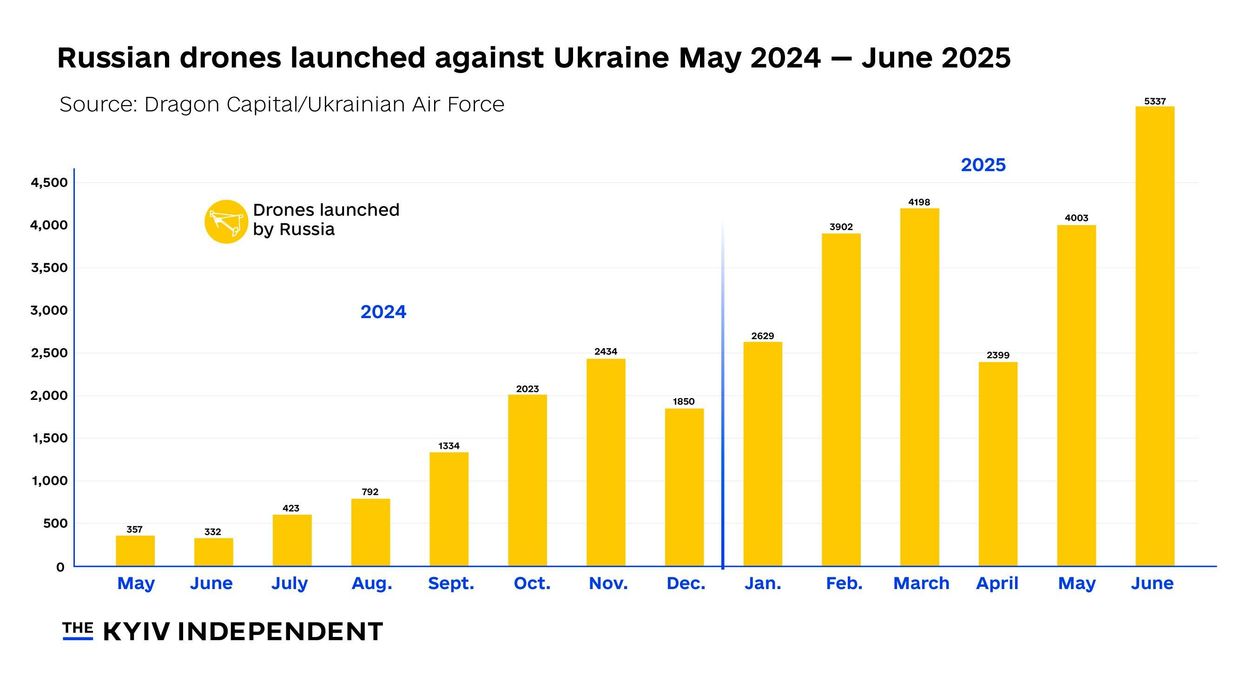
Recent months have seen some of the war's deadliest attacks on civilians, as Russia steps up its aerial strikes on civilian areas and launches record numbers of drones. Russia has dramatically increased its production of these weapons and is now capable of launching in a single night as many drones as it did over an entire month in early summer 2024.
At least three people were killed and 34 injured across Ukraine in Russian drone and missile attacks, Ukrainian regional officials reported on July 3. Ukraine's Air Force reported that Russia used 52 drones launched from several directions, including Oryol, Millerovo, and Primorsko-Akhtarsk. Air defenses destroyed 40 of them, including 22 shot down and 18 jammed electronically. In Donetsk Oblast, three people were killed and at least nine injured in multiple settlements, Governor Vadym Filashkin
At least three people were killed and 34 injured across Ukraine in Russian drone and missile attacks, Ukrainian regional officials reported on July 3.
Ukraine's Air Force reported that Russia used 52 drones launched from several directions, including Oryol, Millerovo, and Primorsko-Akhtarsk. Air defenses destroyed 40 of them, including 22 shot down and 18 jammed electronically.
In Donetsk Oblast, three people were killed and at least nine injured in multiple settlements, Governor Vadym Filashkin said. Damage was reported to residential buildings, cars, and utility infrastructure across Pokrovsk, Kostyantynivka, and other towns.
In Kherson Oblast, Russian forces shelled over 30 towns and villages, wounding nine civilians, Governor Oleksandr Prokudin said. Strikes hit both residential neighborhoods and critical infrastructure. One person was hospitalized in Kherson city after being hit by a drone.
In Dnipropetrovsk Oblast, seven civilians were injured, including a 17-year-old girl, as Russia used artillery and drones to strike Nikopol and Synelnykove districts, Governor Serhii Lysak said. Fires broke out in wheat fields, and residential buildings and infrastructure were damaged.
In Odesa, five people were injured, including two children aged 7 and 9, in a Russian drone strike on a residential building, Governor Oleh Kiper reported. Several apartments were destroyed or damaged.
In Zaporizhzhia Oblast, one person was injured and nine settlements were struck over 430 times in the past 24 hours, Governor Ivan Fedorov said. The attacks included airstrikes, FPV drones, and artillery, causing damage to houses and infrastructure.
In Kharkiv Oblast, two people were injured in separate strikes, Governor Oleh Syniehubov said. Civilian infrastructure was damaged in multiple areas, including houses and vehicles.
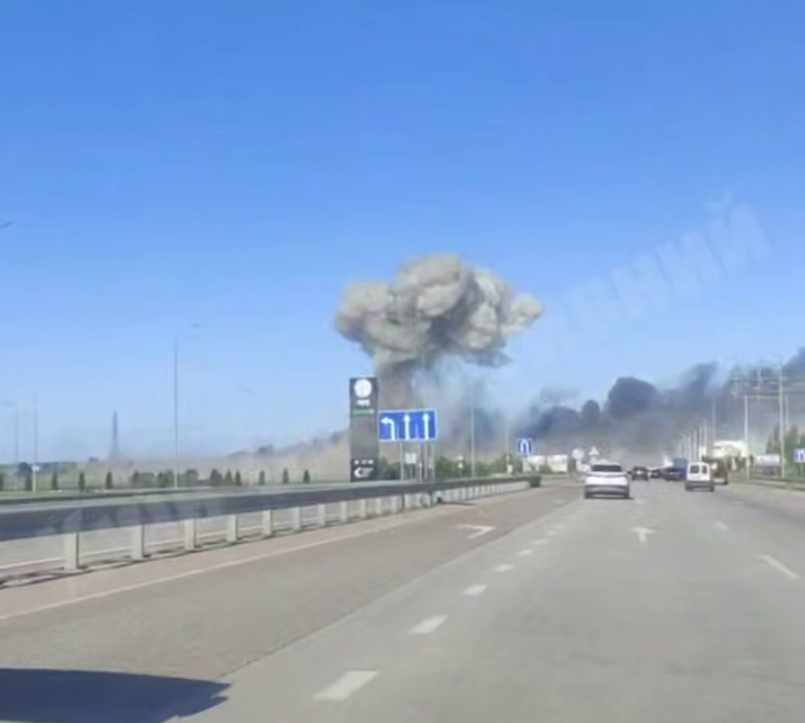
Editor's note: This is a developing story and is being updated. Two people have been killed and 80 others injured after explosions rang out beside a highway near the city of Zhytomyr, local officials reported.The cause of the explosions was not immediately clear and is under investigation, Ukraine's National Police said.Zhytomyr City Council reported that the explosions occurred unspecified facility located close to the M-06 highway near Zhytomyr. Serhii Sokalskyi, head of the Hlubochytska commu
Editor's note: This is a developing story and is being updated.
Two people have been killed and 80 others injured after explosions rang out beside a highway near the city of Zhytomyr, local officials reported.
The cause of the explosions was not immediately clear and is under investigation, Ukraine's National Police said.
Zhytomyr City Council reported that the explosions occurred unspecified facility located close to the M-06 highway near Zhytomyr. Serhii Sokalskyi, head of the Hlubochytska community in Zhytomyr Oblast, claimed that the explosions may have rang out at an industrial warehouse near the town of Berezyna — although those details have yet to be confirmed.
Vitaliy Bunechko, head of the Zhytomyr Oblast Military Administration, saidthat multiple homes and powerlines had been damaged in the explosions, while also confirming the closure of the highway as the investigation carries on.
Videos of the explosions posted to social media show large clouds of smoke billowing out of the area of the explosions.
No information was provided on the status of the injured victims. Emergency responders are currently on-scene.
Located about 140 km west of Kyiv, Zhytomyr has become an occasional target of Russian missile and drone attacks. In recent months, Russia has intensified its attacks on Ukrainian cities, using upwards of 500 drones in attacks.
Despite the increase in attacks, support from Ukraine's largest defense partner, the United States, has continued to wane. Politico reported on July 1, citing sources familiar with the matter, that the U.S. Defense Department (DOD) has halted shipments of some air defense missiles and other weapons previously promised to Kyiv out of concerns over the size of U.S. stockpiles.
At least two civilians were killed and 33 were injured in Russian attacks against Ukraine over the past 24 hours, according to local governors. Ukraine's Air Force said Russia launched 114 Shahed-type and decoy drones overnight from multiple directions, as well as four S-300 missiles. Air defenses shot down 40 drones, while 39 disappeared from radars or were intercepted by electronic warfare.In Kherson Oblast, Russian forces shelled a hospital in Kherson city late on July 1, injuring eight peopl
At least two civilians were killed and 33 were injured in Russian attacks against Ukraine over the past 24 hours, according to local governors.
Ukraine's Air Force said Russia launched 114 Shahed-type and decoy drones overnight from multiple directions, as well as four S-300 missiles. Air defenses shot down 40 drones, while 39 disappeared from radars or were intercepted by electronic warfare.
In Kherson Oblast, Russian forces shelled a hospital in Kherson city late on July 1, injuring eight people, including patients and medical staff, Governor Oleksandr Prokudin said.
Two other people were injured elsewhere in the region over the past day. Attacks damaged residential buildings, a farm, a business, and vehicles across more than 30 settlements.
In Kharkiv Oblast, four people were injured in attacks on Kharkiv city and six other communities, Governor Oleh Syniehubov reported. Russian forces used guided aerial bombs, various drones, and artillery. Civilian infrastructure, including houses, a transport stop, an emergency medical facility, and businesses, was damaged or destroyed.
In Donetsk Oblast, two civilians were killed and 10 others injured by Russian attacks on July 1, according to Governor Vadym Filashkin. In the city of Sloviansk, a mail terminal operated by Nova Poshta, Ukraine’s largest postal service, was destroyed. No employees were injured, according to an official statement.
In Dnipropetrovsk Oblast, five people were injured, four of whom were hospitalized, after a drone strike on Nikopol, Governor Serhii Lysak said.
Russian attacks damaged a private enterprise in Kryvyi Rih and a farm in the Samar district. Fires were reported in both locations. Drone and artillery strikes also hit residential and infrastructure targets in Nikopol and Pokrovske communities.
In Zaporizhzhia Oblast, four civilians were injured in Russian attacks on Vasylivka and Polohy districts, Governor Ivan Fedorov reported. Over the day, Russian forces launched 376 strikes across 14 settlements, using aircraft, drones, multiple rocket launchers, and artillery.
The Russian army attacked an evacuation vehicle carrying three wounded civilians, which resulted in the death of one of them, Ukraine's National Police reported on July 1.Russia has for months focused its offensive efforts on the embattled town of Pokrovsk in Donetsk Oblast and has recently been escalating attempts to break through to neighboring Dnipropetrovsk Oblast, a region that has not yet seen combat.According to the police, Russian forces attacked the evacuation vehicles provided by chapl
The Russian army attacked an evacuation vehicle carrying three wounded civilians, which resulted in the death of one of them, Ukraine's National Police reported on July 1.
Russia has for months focused its offensive efforts on the embattled town of Pokrovsk in Donetsk Oblast and has recently been escalating attempts to break through to neighboring Dnipropetrovsk Oblast, a region that has not yet seen combat.
According to the police, Russian forces attacked the evacuation vehicles provided by chaplains three times: at the entrance to the city, in the city center, and during the evacuation of civilians from Pokrovsk. The police called Russia's actions "targeted hunting."
The police picked up one injured person in the city, and the other two — on the way to the hospital. In the meantime, the Russian army hit the car with a Molniya drone. As a result of the attack, one of the police officers was injured.
As the evacuation vehicle came under fire, one of the injured could not be brought to the hospital in time and died of blood loss.
"We called for reinforcements and sent the injured civilian with them, hoping for a miracle. But it did not happen, Russia took another life," Hennadii Yudin, head of the "White Angel" police unit, said.
Another injured man, who was evacuated with a shrapnel wound, is undergoing treatment, the police said.
Commander-in-Chief Oleksandr Syrskyi reported on June 27 that Russia has amassed "about 111,000 personnel" in the Pokrovsk sector, but Ukrainian forces are holding the line.
Russia's so-called "peace memorandum" demands that Ukraine recognize Russia's annexation of Crimea, as well as Kherson, Donetsk, Zaporizhzhia, and Luhansk oblasts — none of which are fully under Moscow's control.
Editor's note: This is a developing story and is being updated. The article contains graphic footage.A Russian missile attack against the village of Huliaipole in Dnipropetrovsk Oblast on July 1 resulted in deaths and injuries, the Southern Defense Forces reported."As a result of the strike, a cultural center, two shops, and several private homes were destroyed or damaged," the statement read.Russia launched two ballistic missiles, likely Iskander-M, against the village at 9:15 a.m. local time,
Editor's note: This is a developing story and is being updated. The article contains graphic footage.
A Russian missile attack against the village of Huliaipole in Dnipropetrovsk Oblast on July 1 resulted in deaths and injuries, the Southern Defense Forces reported.
"As a result of the strike, a cultural center, two shops, and several private homes were destroyed or damaged," the statement read.
Russia launched two ballistic missiles, likely Iskander-M, against the village at 9:15 a.m. local time, the military reported.
The strike was reported earlier on July 1 by Serhii Lysak, the regional governor. No exact casualty figures have been provided so far, and officials promised detailed information at a later date.
The aftermath of a Russian missile attack against Huliaipole, Dnipropetrovsk Oblast, Ukraine, on July 1, 2025. (Southern Defense Forces/Telegram)
The aftermath of a Russian missile attack against Huliaipole, Dnipropetrovsk Oblast, Ukraine, on July 1, 2025. (Southern Defense Forces/Telegram)
The aftermath of a Russian missile attack against Huliaipole, Dnipropetrovsk Oblast, Ukraine, on July 1, 2025. (Southern Defense Forces/Telegram)
The aftermath of a Russian missile attack against Huliaipole, Dnipropetrovsk Oblast, Ukraine, on July 1, 2025. (Southern Defense Forces/Telegram)
The aftermath of a Russian missile attack against Huliaipole, Dnipropetrovsk Oblast, Ukraine, on July 1, 2025. (Southern Defense Forces/Telegram)
Huliaipole, with a pre-war population of around 1,200, lies in the western part of eastern Dnipropetrovsk Oblast, roughly 70 kilometers (40 miles) from the front line.
"Russia once again confirms its status as a terrorist state. It kills innocent civilians," the military said in a statement.
Dnipropetrovsk Oblast is regularly targeted by Russian drone and missile attacks. Moscow's ground troops have also been attempting to break into the region, though Kyiv has denied Russian claims that they had been successful.
Ukraine's Dnipropetrovsk Oblast (Nizar al-Rifai/The Kyiv Independent)
Russian strikes across Ukrainian regions killed at least four civilians and injured at least 15 over the past day, regional authorities reported on July 1.Russia launched 47 Shahed-type attack drones and decoys against Ukraine overnight, the Air Force reported. Ukrainian air defenses shot down 14 drones, while 33 were intercepted by electronic warfare or disappeared from radars, according to the statement. Russian attacks injured three civilians in Donetsk Oblast, Governor Vadym Filashkin repor
Russian strikes across Ukrainian regions killed at least four civilians and injured at least 15 over the past day, regional authorities reported on July 1.
Russia launched 47 Shahed-type attack drones and decoys against Ukraine overnight, the Air Force reported. Ukrainian air defenses shot down 14 drones, while 33 were intercepted by electronic warfare or disappeared from radars, according to the statement.
Russian attacks injured three civilians in Donetsk Oblast, Governor Vadym Filashkin reported.
In Kharkiv Oblast, two women aged 60 and 81 were injured during a Russian attack on the Tsykruny village, Governor Oleh Syniehubov reported.
Russian attacks across Kherson Oblast killed two people and injured five, said the regional governor, Oleksandr Prokudin. Three high-rise buildings and eight houses were damaged.
In Mykolaiv Oblast, a 45-year-old man was killed and a 37-year-old woman was injured during Russian shelling of the Kutsurub community on June 30, Governor Vitalii Kim reported. Houses, two schools, and a shop were damaged, and a fire erupted because of the attack.
A 75-year-old man was killed and his 76-year-old wife was injured during another artillery attack against the community on the morning of July 1, Kim said.
Russian attacks across multiple Ukrainian regions over the past 24 hours have killed at least six people and injured 26 others, according to local officials. The strikes involved drones, artillery, and guided bombs, hitting residential areas and critical infrastructure.According to Ukraine's Air Force, Ukrainian air defense hit 74 out of 107 drones launched overnight by Russia. In Kharkiv Oblast, two people were killed and eight injured following attacks on six settlements, Governor Oleh Syniehu
Russian attacks across multiple Ukrainian regions over the past 24 hours have killed at least six people and injured 26 others, according to local officials. The strikes involved drones, artillery, and guided bombs, hitting residential areas and critical infrastructure.
According to Ukraine's Air Force, Ukrainian air defense hit 74 out of 107 drones launched overnight by Russia.
In Kharkiv Oblast, two people were killed and eight injured following attacks on six settlements, Governor Oleh Syniehubov said. Damage was reported to houses, vehicles, and civilian infrastructure across Kharkiv, Kupiansk, and Chuhuiv districts.
In Kherson Oblast, Russian forces struck residential areas and civilian infrastructure in over two dozen localities, killing two people and injuring eight others, according to Governor Oleksandr Prokudin. Damage included houses, utility systems, and communications infrastructure.
In Zaporizhzhia Oblast, one person was killed in Vasylivka district. Governor Ivan Fedorov said Russian forces launched 375 strikes on 10 settlements, damaging houses and vehicles.
In Dnipropetrovsk Oblast, three people were injured in Kryvyi Rih following drone strikes and artillery attacks, Governor Serhii Lysak reported. Fires broke out, and damage was recorded at a farm and in residential areas.
In Donetsk Oblast, at least one person was killed and four others injured, Governor Vadym Filashkin said. Multiple residential buildings, a church, and a pharmacy were damaged across Pokrovsk, Kramatorsk, and Bakhmut districts.
In Sumy Oblast, Russian attacks injured three civilians, regional authorities said. Nearly 80 strikes targeted 29 settlements, damaging houses, educational institutions, and public buildings.
Editor's Note: This is a developing story. Russia attacked the southern city of Odesa overnight on June 28, killing two people and injuring at least 14 others, Ukraine's State Emergency Service reported. The drone attack hit a 21-story building, causing a fire on the 7th, 8th, and 9th floors that left residents trapped in their apartments. First responders rescued five people, including a small child.Two people, a married couple, were killed in the attack, Odesa Oblast Governor Oleh Kiper report
Russia attacked the southern city of Odesa overnight on June 28, killing two people and injuring at least 14 others, Ukraine's State Emergency Service reported.
The drone attack hit a 21-story building, causing a fire on the 7th, 8th, and 9th floors that left residents trapped in their apartments. First responders rescued five people, including a small child.
Two people, a married couple, were killed in the attack, Odesa Oblast Governor Oleh Kiper reported. Emergency workers recovered their bodies from the damaged building.
At least 14 other civilians were injured, including three children. Both are receiving treatment in medical facilities, Kiper said.
Ongoing air raid alarms throughout the night complicated rescue efforts, the State Emergency Service said.
Odesa, a port city on Ukraine's Black Sea coast with a population of around 1 million, has been a frequent target of Russian attacks since the full-scale invasion. A massive Russian drone strike on June 20 killed one civilian and injured 14 others, including three first responders.
Russian missile and drone attacks on Ukrainian cities have intensified dramatically in May and June.
Editor's note: This is a developing story and is being updated.A Russian missile strike on the city of Samar in Ukraine's Dnipropetrovsk Oblast on June 27 killed five people and injured at least 25 others, Governor Serhii Lysak said.In a statement posted to Telegram, Lysak said most of the injured were hospitalized. Four of the victims are in serious condition, while the others sustained moderate injuries. A fire broke out following the strike, and emergency services are continuing to work at th
Editor's note: This is a developing story and is being updated.
A Russian missile strike on the city of Samar in Ukraine's Dnipropetrovsk Oblast on June 27 killed five people and injured at least 25 others, Governor Serhii Lysak said.
In a statement posted to Telegram, Lysak said most of the injured were hospitalized. Four of the victims are in serious condition, while the others sustained moderate injuries. A fire broke out following the strike, and emergency services are continuing to work at the site.
"We're doing everything possible to assist those affected," Lysak said.
The attack comes just days after Russia launched one of the deadliest assaults on Dnipropetrovsk Oblast. On June 24, missiles struck multiple locations in the regional capital of Dnipro and in the oblast, killing at least 21 people and injuring over 300 others.
The strike hit civilian infrastructure, a dormitory, a gymnasium, and a train traveling from Odesa to Zaporizhzhia, as well as the nearby town of Samarske. Two people were killed and 14 others wounded there. At least 100 victims of the Dnipro attack remain hospitalized, Lysak said.
At least two civilians were killed and 13 were injured in Russian drone and missile attacks across Ukraine over the past day, local officials reported on June 27.According to Ukraine's Air Force, Ukrainian air defense intercepted 365 of 371 incoming Russian air weapons, including 363 Shahed-type drones, two Kinzhal ballistic missiles, and six Kalibr cruise missiles.In Kharkiv Oblast, Governor Oleh Syniehubov said one person was killed and four were wounded in Vovchanski Khutory and Pidlyman duri
At least two civilians were killed and 13 were injured in Russian drone and missile attacks across Ukraine over the past day, local officials reported on June 27.
According to Ukraine's Air Force, Ukrainian air defense intercepted 365 of 371 incoming Russian air weapons, including 363 Shahed-type drones, two Kinzhal ballistic missiles, and six Kalibr cruise missiles.
In Kharkiv Oblast, Governor Oleh Syniehubov said one person was killed and four were wounded in Vovchanski Khutory and Pidlyman during a Russian attack. Infrastructure damage included houses and an agricultural facility. The region also endured heavy shelling.
In Donetsk Oblast, Governor Vadym Filashkin reported one death, while three people were injured across Pokrovsk, Kramatorsk, and Bakhmut districts. Damage was observed to houses, a farm, administrative buildings, gas pipelines, and vehicles.
In Kherson Oblast, Governor Oleksandr Prokudin said four people were injured as Russian drones and artillery struck social and residential infrastructure. Seven apartment buildings and 25 houses were damaged, along with utilities and vehicles.
In Zaporizhzhia Oblast, Governor Ivan Fedorov said one person was injured when an air-dropped bomb hit a settlement in the Huliaipole district.
In Kyiv Oblast, a person was injured near Fastiv during an overnight drone and missile attack. One house was damaged each in Boryspil and Fastiv districts, while a tire repair shop and five cars were hit in Bila Tserkva. No critical infrastructure was reportedly affected, and air defense forces shot down Russian drones and missiles.
Short-range drone attacks have become one of the deadliest threats to civilians in Ukraine’s front-line regions, killing at least 395 people and injuring 2,635 between February 2022 and April 2025, according to a new bulletin by the UN Human Rights Monitoring Mission in Ukraine. The report, "Deadly Drones: Civilians at Risk from Short-Range Drones in Frontline Areas of Ukraine," highlights the growing use of first-person-view (FPV) drones by Russian forces and their devastating impact on the civ
Short-range drone attacks have become one of the deadliest threats to civilians in Ukraine’s front-line regions, killing at least 395 people and injuring 2,635 between February 2022 and April 2025, according to a new bulletin by the UN Human Rights Monitoring Mission in Ukraine.
The report, "Deadly Drones: Civilians at Risk from Short-Range Drones in Frontline Areas of Ukraine," highlights the growing use of first-person-view (FPV) drones by Russian forces and their devastating impact on the civilian population.
The bulletin documents attacks in which drone operators deliberately targeted civilians engaging in daily activities — driving private cars, riding bicycles, walking outdoors, or evacuating others in clearly marked ambulances.
"Although individually less destructive than artillery or missiles, the sheer scale and increasing frequency of short-range drone attacks have made them one of the deadliest weapons in Ukraine," said Danielle Bell, head of the mission. "Over 3,000 civilian casualties — and the relentless frequency of these attacks — have not only caused immense human suffering but also instilled fear, severely disrupted daily life, and crippled access to essential services in several frontline communities."
The monitoring mission documented, verified, and analyzed 3,030 civilian casualties resulting from short-range drones between 24 February 2022 and 30 April 2025. The researchers conducted site visits to very high-risk areas, including the southern city of Kherson, Zolochiv in Kharkiv Oblast, and other front-line locations. Investigators interviewed survivors and witnesses of drone attacks, medical personnel, and humanitarian workers to assess the full impact of these strikes on civilian life.
Ukraine's Kherson Oblast (Nizar al-Rifai/The Kyiv Independent)
Casualties surged in late 2023 and early 2024, with numbers suddenly doubling in July 2024. April 2025 marked the deadliest month on record, with 42 civilians killed and 283 injured. Drone strikes continued into May and June.
On 23 June, a 65-year-old driver was killed in Kostiantynivka, Donetsk Oblast, when a drone struck a minibus. In Kharkiv region, a 58-year-old volunteer was killed on 22 May when a drone dropped a munition on a residential balcony. On 20 May, six civilians were injured when a drone hit a bus in Kherson Oblast.
The vast majority of casualties — 89% — occurred in territory controlled by the Ukrainian government. The UN says these attacks violate international humanitarian law, particularly the principles of distinction and precaution, and may in some cases constitute war crimes.
Russian attacks across Ukraine killed at least 23 people and injured more than 300 others over the past 24 hours, local officials said on June 25.According to the Ukrainian Air Force, Russian forces launched 71 Shahed-type attack drones and decoys from multiple directions, including Bryansk, Millerovo, Kursk, and occupied Crimea. Ukraine's air defenses destroyed 52 of them.In Dnipropetrovsk Oblast, a ballistic missile attack killed at least 20 people, 18 in Dnipro and two in the Samarskyi distri
Russian attacks across Ukraine killed at least 23 people and injured more than 300 others over the past 24 hours, local officials said on June 25.
According to the Ukrainian Air Force, Russian forces launched 71 Shahed-type attack drones and decoys from multiple directions, including Bryansk, Millerovo, Kursk, and occupied Crimea. Ukraine's air defenses destroyed 52 of them.
In Dnipropetrovsk Oblast, a ballistic missile attack killed at least 20 people, 18 in Dnipro and two in the Samarskyi district, in one of the deadliest single attacks in recent weeks, governor Serhii Lysak said.
Nearly 300 people were injured, and extensive damage was reported to high-rise buildings, houses, dormitories, cars, schools, hospitals, administrative offices, and a passenger train. Drone strikes overnight also hit Nikopol and caused a fire in Synelnykove district.
In Kharkiv Oblast, nine people were injured in strikes on Kharkiv city, Kupiansk, and surrounding villages, according to Governor Oleh Syniehubov. Russian forces used a mix of weaponry, including air-launched rockets, glide bombs, and various drones. Civilian infrastructure was damaged, including residential buildings, houses, and an industrial hangar.
In Zaporizhzhia Oblast, five peope were injured in attacks across the Zaporizhzhia, Vasylivka, and Polohy districts, Governor Ivan Fedorov reported. Russian forces conducted four missile strikes on Zaporizhzhia and eight airstrikes on several towns. Around 300 drones, and over 150 artillery strikes were recorded across 13 settlements.
In Donetsk Oblast, three civilians were killed in Pokrovsk, Zoloti Prudy, and Novoiavlenka, Governor Vadym Filashkin said. 11 more were wounded in the region over the past day.
Editor's note: This is a developing story and is being updated. Russia launched a deadly missile attack on the Ukrainian city of Dnipro on June 24, striking civilian infrastructure and a passenger train, killing at least 17 people and injuring scores of others, local officials reported.Dnipropetrovsk Oblast Governor Serhii Lysak said the morning strike ignited a large fire and also damaged a dormitory, a gymnasium, and an administrative building in the city.The Russian military also struck the n
Editor's note: This is a developing story and is being updated.
Russia launched a deadly missile attack on the Ukrainian city of Dnipro on June 24, striking civilian infrastructure and a passenger train, killing at least 17 people and injuring scores of others, local officials reported.
Dnipropetrovsk Oblast Governor Serhii Lysak said the morning strike ignited a large fire and also damaged a dormitory, a gymnasium, and an administrative building in the city.
The Russian military also struck the nearby town of Samarske, Lysak said. Casualties were reported in both locations.
"Unfortunately, there are dead and wounded everywhere," he said.
An school in Dnipro that was damaged in Russia's ballistic missile attack on June 24, 2025. (Dnipro.media)
Multiple cars got damaged in Dnipro during Russia's ballistic missile attack on June 24, 2025. (Dnipro.media)
Multiple cars got damaged in Dnipro during Russia's ballistic missile attack on June 24, 2025. (Dnipro.media)
In Samarske, two people were killed, and 14 injured. Eight were hospitalized, with half of them in critical condition.
"As of now, more than 160 people are known to have been injured. Unfortunately, 11 people have died," President Volodymyr Zelensky said in a post on social media, adding: "The rubble is still being cleared, so the death toll may, unfortunately, increase."
Around 8:30 p.m. local time, the death toll rose to 17, while the number of wounded increased to 279, including 27 children, Lysak reported.
Almost a hundred of the victims remain in hospital, according to Lysak.
Ukraine's national railway company, Ukrzaliznytsia, said that a train traveling from Odesa to Zaporizhzhia was damaged in the attack.
"Ukrzaliznytsia is preparing a replacement train in Dnipro to evacuate passengers to Zaporizhzhia," the company said in a statement.
A damaged passenger train at a station in Dnipro Oblast, Ukraine after a Russian missile strike on June 25, 2025. (Ukrzaliznytsia / Telegram)
In an update, Ukrzaliznytsia said no passengers or railway workers were killed in the attack, though several people sustained injuries and are receiving medical care.
The attack came as NATO leaders convened for a high-level summit in The Hague. NATO Secretary General Mark Rutte warned on June 23 that Russia remains the alliance's most immediate and long-term threat.

 Connexion