Vue normale

Airstrikes and Illegal Mining Add to Myanmar’s Troubles

25 août 2026 à 14:48
A thriving ‘conflict economy’ is extracting minerals while the military and armed groups inflict abuse on civilians, according to a new report on the scale of recent violence in Myanmar.

© Agence France-Presse — Getty Images

Destroyed buildings after military airstrikes in May in Kyauktaw, a town in Myanmar’s western Rakhine State.
  • ✇Euromaidan Press
  • Captured Russian marine executed Ukrainian commander on superior’s order, prosecutors say
    Ukrainian prosecutors have formally accused a captured Russian marine of executing a Ukrainian unit commander near Pokrovsk, the Donetsk Oblast Prosecutor’s Office said on 20 August. Investigators allege he took the 34-year-old captive to a forest belt after an interrogation and shot him in the back of the head on his superior’s order. The case comes as Ukraine steps up efforts to prosecute Russian troops accused of executing or abusing Ukrainian POWs. Ukrainian investi
     

Captured Russian marine executed Ukrainian commander on superior’s order, prosecutors say

21 août 2026 à 14:00

A masked Russian soldier in camouflage and body armor wears a helmet bearing Russian flag and “Z” patches.

Ukrainian prosecutors have formally accused a captured Russian marine of executing a Ukrainian unit commander near Pokrovsk, the Donetsk Oblast Prosecutor’s Office said on 20 August. Investigators allege he took the 34-year-old captive to a forest belt after an interrogation and shot him in the back of the head on his superior’s order.

The case comes as Ukraine steps up efforts to prosecute Russian troops accused of executing or abusing Ukrainian POWs. Ukrainian investigators and UN monitors have documented a growing pattern since 2024 of Russian forces executing Ukrainian troops after capture.

The alleged gunman is now in Ukrainian custody, opening the way for an in-person trial. Russian troops also shot dead a second Ukrainian prisoner, prosecutors said.

Russian assault units had been trying to seize Shakhove on the Pokrovsk front since May 2025, according to the prosecutor’s office. On 10 October 2025, a small Russian infantry group entered the village’s outskirts and captured two Ukrainian service members, including the commander, the office alleges.

After the interrogation, the suspect took the commander to a forest belt and killed him with an automatic rifle, prosecutors said. The other Ukrainian prisoner was also shot dead. The statement names neither victim.

A man wearing a vest marked “War Crimes Prosecutor, Donetsk Region” stands beside a seated man with a pixelated face as they look at documents on a desk.
A Donetsk Oblast prosecutor formally notifies a captured Russian marine that he is suspected of executing a captured Ukrainian unit commander near Pokrovsk. Photo: Donetsk Oblast Prosecutor’s Office / Facebook

Investigators identified the suspect as a 34-year-old native of Russia’s Krasnoyarsk Krai who used the call sign “Tai” and served as a rifleman in the 336th Guards Naval Infantry Brigade.

Ukrainian forces later captured him during fighting in the same sector, according to prosecutors. The office did not say when he was taken prisoner.

Prosecutors formally accused him of cruel treatment of prisoners of war resulting in death, a war crime under Ukrainian law.

Ukraine’s other cases against captured Russian soldiers

Ukraine has previously brought cases against other captured Russian soldiers over POW executions. A Zaporizhzhia court sentenced Dmitry Kurashov to life imprisonment in November 2025—the first time Ukraine convicted a Russian soldier of executing a surrendered Ukrainian POW.

In a separate case, the Security Service of Ukraine charged Sergey Tuzhilov over the execution of one bound Ukrainian POW and his alleged role in killing two others near Vovchansk in June 2024.

Israel Opens Criminal Investigation Into Killings of Hind Rajab and Gaza Medical Workers

19 août 2026 à 16:18
Two high-profile cases that had spurred international condemnation of the country’s conduct in Gaza were transferred to the military police. Such investigations have rarely led to convictions.

© Reuters

A car where the bodies of Hind Rajab, a Palestinian girl, and her family were found in Gaza City after an Israeli strike in 2024.

Germany charged a Ukrainian for the Nord Stream blasts—Kyiv is now investigating if Russia staged the attack to frame Ukrainians

19 août 2026 à 06:12

germany suspects ukrainian diving instructor russia's nord stream pipelines blast gas bubbles from 2 leak reaching surface baltic sea 27 september 2022 newsskycom skynews-gas-bubbles-nord-stream-27-sep-2022-2_5912415

Ukraine has opened its own criminal investigation into the 2022 destruction of the Nord Stream gas pipelines, months after Germany charged a Ukrainian over the blasts, Suspilne reported. Prosecutors in Kyiv registered the case on war-crimes grounds and say they will test whether Russia staged the sabotage to discredit Ukraine. Serhii Kuznietsov is due to stand trial in Germany in October.

The undersea link was built to carry Russian gas around Ukraine and tie Europe more tightly to Moscow, a dependence Europe scrambled to shed after Russia's 2022 invasion.

Kyiv will test a Russian false-flag version

Ukraine's Security Service, under the Prosecutor General's Office, opened proceedings on 9 July under the article on violations of the laws and customs of war. Kuznietsov's Ukrainian lawyer, Mykola Katerynchuk, told Suspilne about the case.

The Prosecutor General's Office confirmed it is supervising a probe into the "possible commission in September 2022, amid the international armed conflict between Russia and Ukraine, by citizens of Ukraine, of actions connected to the undermining" of both pipelines in the Baltic Sea. It said the case was registered after the "independent discovery in the media" that Germany had charged a Ukrainian citizen.

Given Russia's use of hybrid methods, investigators will also examine whether Russians organized the explosions as a "false flag" operation, using Ukrainian citizens or imitating their participation to discredit Ukraine.

The office said it used the laws-and-customs-of-war charge because it matches the qualification chosen by Germany's Federal Prosecutor's Office.

Nord Stream sign (Photo: kommersant.ru)
Explore further

Russia laid Nord Stream to bypass Ukraine amid preparations for war. Four years after it exploded, Kyiv says it had nothing to do with blasts

The case against Serhii Kuznietsov

The pipelines exploded on 26 September 2022. On 8 August 2025, Germany's Federal Court of Justice issued an arrest warrant for Kuznietsov, alleging he led a group of six who mined the pipelines and detonated them remotely.

Italian police arrested him on 21 August 2025, and Italy's Supreme Court later confirmed his extradition to Germany. A Polish court, by contrast, refused a German request for another Ukrainian suspect, Volodymyr Zhuravlov.

On 2 July 2026, Germany's Federal Prosecutor's Office published its charges — an attack on civilian objects, causing an explosion, and destroying structures. Kuznietsov denies guilt.

  • ✇Euromaidan Press
  • Two Russian missiles hit a post office and shops in Kharkiv Oblast, killing 10 people
    Russia struck the center of Pechenihy, a settlement in Ukraine's Kharkiv Oblast, on the morning of 18 August, killing at least 10 people and wounding at least 18, Ukraine's State Emergency Service reported. Two missiles hit a post office and shops at a crossroads ringed by homes, setting a cafe and cars ablaze. Emergency crews recovered bodies from the rubble as rescue work continued through the day. Russia strikes Ukrainian cities across the country every day, killing
     

Two Russian missiles hit a post office and shops in Kharkiv Oblast, killing 10 people

18 août 2026 à 07:10

two russian missiles hit post office shops kharkiv oblast killing 10 people · body lies covered site strike pechenihy regional dsns ukraine news ukrainian reports

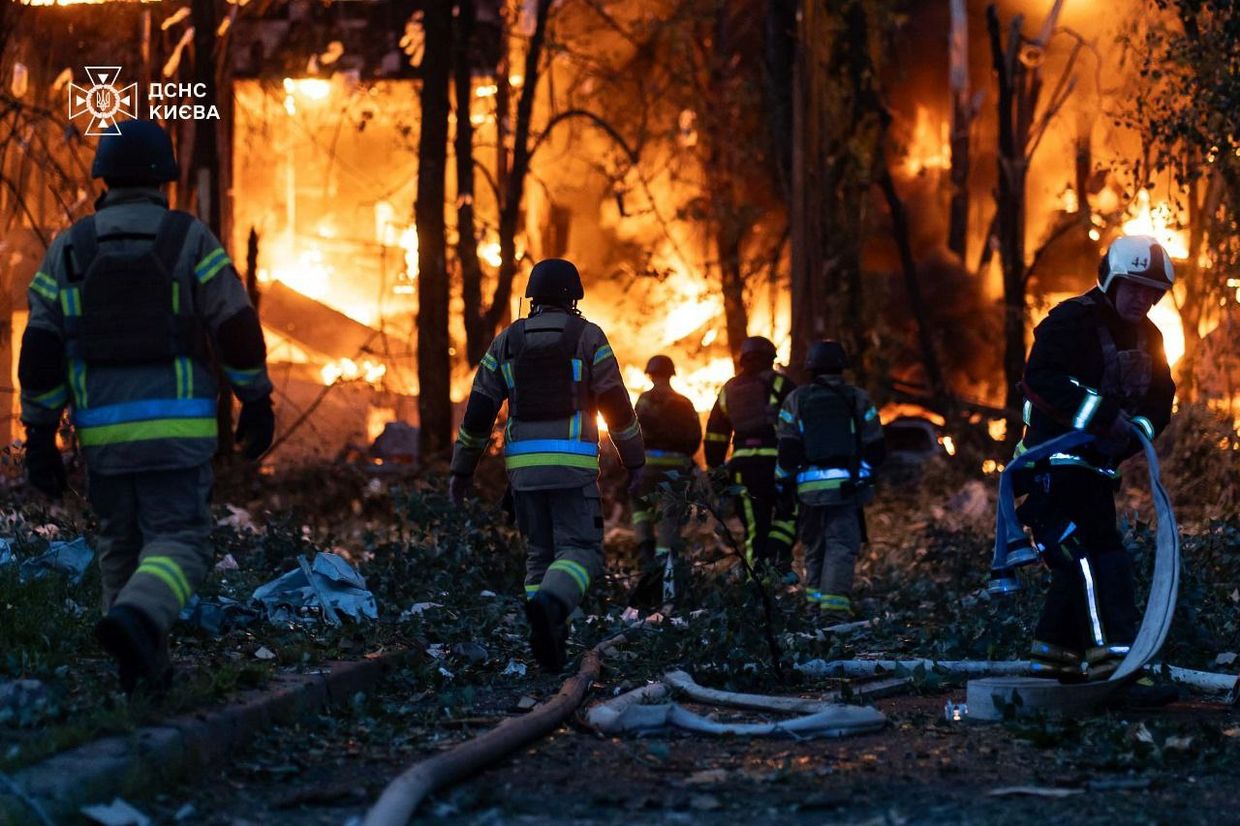
Russia struck the center of Pechenihy, a settlement in Ukraine's Kharkiv Oblast, on the morning of 18 August, killing at least 10 people and wounding at least 18, Ukraine's State Emergency Service reportedTwo missiles hit a post office and shops at a crossroads ringed by homes, setting a cafe and cars ablaze. Emergency crews recovered bodies from the rubble as rescue work continued through the day.

Russia strikes Ukrainian cities across the country every day, killing and wounding civilians even far from the front. Kharkiv Oblast, which borders Russia, sits within close reach of its missiles, drones, and glide bombs, which regularly hit the oblast's towns.

A strike at rush hour

Russia fired two Banderol cruise missiles into the settlement at 08:40, the Prosecutor General's Office said, opening a war-crimes investigation into the deaths. The missiles hit the central part of Pechenihy just as residents were heading to work and businesses were opening, the settlement's head, Oleksandr Husarov, said. He put the preliminary midday toll as high as 20 wounded, cautioning the figures were not final.

two russian missiles hit post office shops kharkiv oblast killing 10 people · destroyed after russia's missile strike center pechenihy 18 2026 zelenskyy ukraine news ukrainian reports
Destroyed shops and a post office after Russia's missile strike on the center of Pechenihy, Kharkiv Oblast, 18 August 2026. Photo: Volodymyr Zelenskyy/Telegram

Oleh Syniehubov, head of the Kharkiv Oblast Military Administration, reported that the strike burned a cafe and seven cars across roughly 400 m², and damaged 10 private houses, the post office, five shops, and 15 vehicles.

two russian missiles hit post office shops kharkiv oblast killing 10 people · cars burning road beside struck crossroads pechenihy after attack zelenskyy ukraine news ukrainian reports
Cars burning on the road beside the struck crossroads in Pechenihy after the Russian attack. Photo: Volodymyr Zelenskyy/Telegram

The Banderol is a low-cost, jet-powered cruise missile that Russia has used against Ukrainian cities before. Built by the sanctioned firm Kronshtadt with foreign components, it reaches up to 650 km/h and carries a 114.3-kg warhead. Ukraine recently found that a new ground launcher could let Russia fire the missile in salvos and without warning.

two russian missiles hit post office shops kharkiv oblast killing 10 people · state emergency service workers recover victim's body debris destroyed pechenihy dsns ukraine news ukrainian reports
State Emergency Service workers recover a victim's body from the debris of the destroyed shops in Pechenihy. Photo: State Emergency Service of Ukraine in Kharkiv Oblast

Ukraine's response

Acting Foreign Minister Andrii Sybiha said Putin "continues to drag out the war instead of accepting Ukraine's realistic ceasefire proposals." President Volodymyr Zelenskyy said Russia had "brutally struck a crowded crossroads" where the post office and shops stood, ringed only by homes, and vowed a response, urging partners to add pressure on Moscow.

two russian missiles hit post office shops kharkiv oblast killing 10 people · rescuers destroyed after russia's strike pechenihy zelenskyy ukraine news ukrainian reports
Rescuers at the destroyed shops after Russia's strike on Pechenihy, Kharkiv Oblast. Photo: Volodymyr Zelenskyy/Telegram

The same day, Russia also struck the Kharkiv Oblast city of Izium, wounding five people, among them a nine-year-old child, and damaging five private houses, Syniehubov said. Emergency services worked at the site and the wounded received care.

Bou Meng, Rare Survivor of Khmer Rouge Torture House, Dies at 85

15 août 2026 à 21:34
Saved by his ability to paint, he was one of only a handful of prisoners to make it out of the brutal prison Tuol Sleng.

© Seth Mydans/The New York Times

Bou Meng, who was imprisoned at the notorious Khmer Rouge interrogation and torture facility Tuol Sleng, in 2009 at the prison, which became a genocide museum.
  • ✇Euromaidan Press
  • Russia drops eight FAB-250 bombs on Kramatorsk, killing one and injuring 18
    Russia's glide-bomb strike on Kramatorsk killed one person and wounded 18, the head of the Donetsk Oblast Military Administration, Vadym Filashkin, reported on the morning of 14 August. The Donetsk Oblast Prosecutor's Office has opened a war-crimes investigation into the attack. Russian forces dropped eight FAB-250 aerial bombs fitted with universal glide and correction modules (UMPK) on the city on the evening of 13 August, hitting residential areas including apart
     

Russia drops eight FAB-250 bombs on Kramatorsk, killing one and injuring 18

14 août 2026 à 07:36

An apartment building hit in a Russian strike on Kostiantynivka on the evening of 13 August, 2026. Photo: Donetsk Region Prosecutor's Office

Russia's glide-bomb strike on Kramatorsk killed one person and wounded 18, the head of the Donetsk Oblast Military Administration, Vadym Filashkin, reported on the morning of 14 August. The Donetsk Oblast Prosecutor's Office has opened a war-crimes investigation into the attack.

Russian forces dropped eight FAB-250 aerial bombs fitted with universal glide and correction modules (UMPK) on the city on the evening of 13 August, hitting residential areas including apartment buildings, the prosecutor's office reported. An apartment building and a car were damaged. Filashkin said the strikes also hit the nearby settlement of Bilenke.

The strike on the residential area was another instance of Russian forces using guided aerial munitions against civilian areas. Under international humanitarian law, civilian objects may not be deliberately targeted.

The toll rose overnight. Filashkin first reported at least one killed and 15 wounded on the evening of 13 August. By the next morning, the prosecutor's office had documented 17 of the wounded — seven men and 10 women aged between 47 and 85 — with blast and traumatic brain injuries, shrapnel wounds, cuts to the head, arms and legs, and abrasions and bruises. Filashkin's later update put the number of wounded at 18.

An apartment building hit in a Russian strike on Kramatorsk on the evening of 13 August, 2026. Photo: Donetsk Region Prosecutor's Office

"Russia again turned an ordinary evening in the city into deadly danger. This is not an accident or a mistake — this is how the enemy wages war against our people," Filashkin said.

Deliberately directing attacks against civilian objects may constitute a war crime under international humanitarian law. The prosecutor's office has opened a pre-trial investigation under Part 2 of Article 438 of Ukraine's Criminal Code.

"In total, over the past day, Russians shelled populated areas of Donetsk Oblast 37 times. 624 people, including 90 children, have been evacuated from the front line," Filashkin reports.

A car hit in a Russian strike on Kramatorsk on the evening of 13 August, 2026. Photo: Donetsk Region Prosecutor's Office

Repeated pattern of glide-bomb strikes on Donetsk Oblast

Russian forces regularly use FAB-250 bombs equipped with UMPK to strike populated areas in Donetsk Oblast and other frontline regions.

On 11 August 2025, Russian aircraft dropped FAB-250 bombs equipped with UMPK on a residential quarter in Bilozerske, Donetsk Oblast. Two civilians were killed, a 43-year-old man and a 34-year-old woman, while seven others were injured, including a 16-year-old boy. Eight apartment buildings and six vehicles were damaged. A pre-trial investigation was opened under Part 2 of Article 438 of Ukraine's Criminal Code.

An apartment building hit in a Russian strike on Bilozerske on 11 August, 2025. Photo: Donetsk Region Prosecutor's Office

On 18 September 2025, Russian forces struck civilians with a FAB-250 bomb equipped with UMPK in Kostiantynivka, Donetsk Oblast. Five residents aged between 62 and 74 were killed; three men and two women were outside at the time of the strike. The facades of four apartment buildings were damaged.

On 25 June 2026, Russian forces dropped three FAB-250 bombs equipped with UMPK on Druzhkivka, Donetsk Oblast. A 56-year-old woman was killed, and four others were injured: a 68-year-old man and three women aged 51, 58, and 67, sustaining blast injuries and shrapnel wounds.

Will Sudan’s El Obeid Become the Next El Fasher? What to Know.

14 août 2026 à 00:01
Taking El Obeid would allow the paramilitary Rapid Support Forces to consolidate its hold on western Sudan, a significant strategic goal.

© Agence France-Presse — Getty Images

Women gathering for a hot meal in al-Rahmaniyah camp for displaced people near the city of El-Obeid in the southern Kordofan region of Sudan last month.

Russia starves most Ukrainian POWs, then “fattens” a few for exchange so they look normal, Ukrainian official says

12 août 2026 à 16:28

Ukranian POW returning from Russian captivity, 5 February 2026. Photo: Coordination Headquarters for the Treatment of Prisoners of War

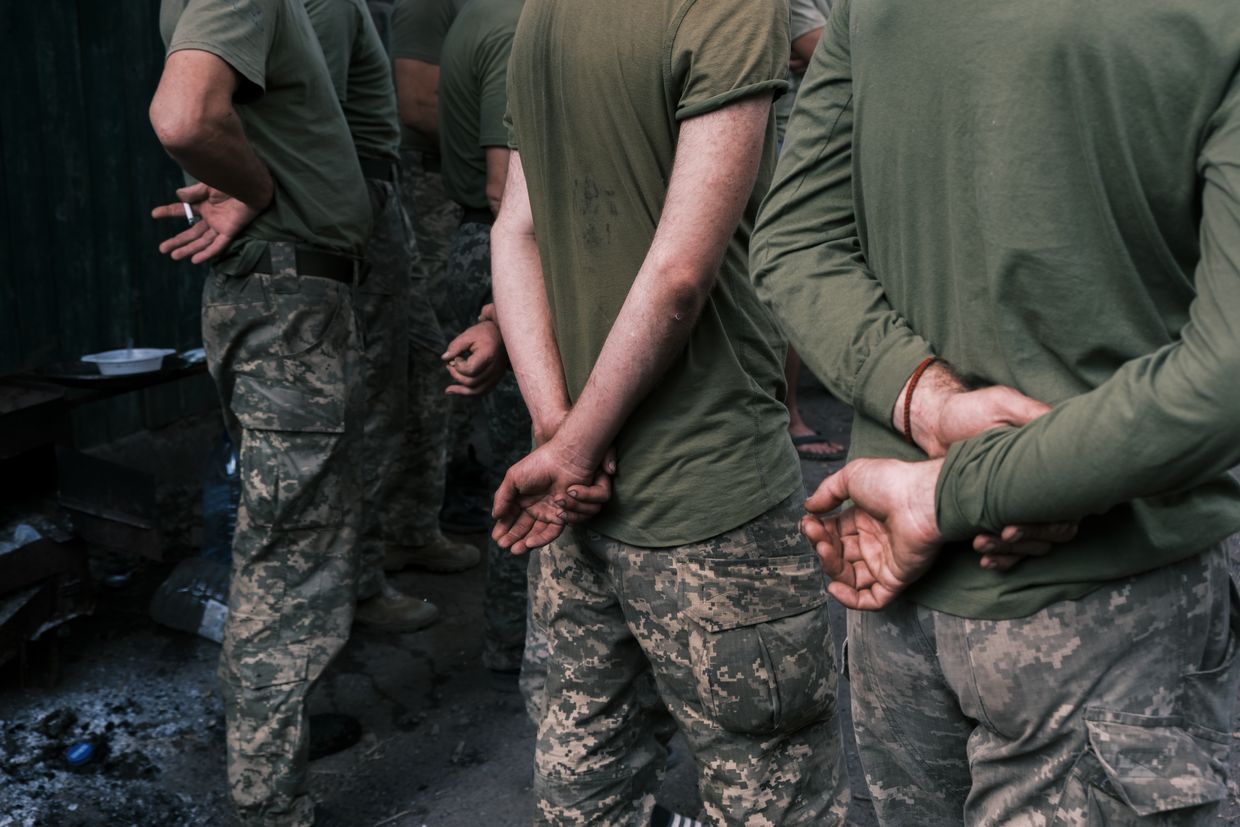
Russia is forcing Ukrainian prisoners into its own army and starving others while "fattening" a few for show, Andrii Pasternak of the SBU's Joint Center for coordinating the search and release of prisoners says. Ukrainian intelligence also has information about Moscow creating battalions from Ukrainian prisoners of war (POWs), UkrInform reports.

As of May 2026, approximately 7,000 Ukrainian service members were held in Russian captivity, while the number of civilian detainees is estimated at between 10,000 and 20,000, according to Vice Speaker of the Ukrainian Parliament Olena Kondratiuk.

Russia is forming units from Ukrainian prisoners

Pasternak described the POW battalions as confirmed and monitored.

"We know about such battalions. Together with our colleagues from foreign intelligence and military intelligence, we track and record this. Such facts exist," he stated.

Forcing prisoners of war to serve in the captor's forces is itself a war crime. The Geneva Conventions prohibit compelling a POW to fight against their own country, and turning captured Ukrainian soldiers into Russian units, if confirmed at scale, would be a grave violation on top of the coercion required to make men fight the country they were defending.

Russia feeds up some prisoners and starves others

The coordinator also pointed to a practice of staging appearances before exchanges. Knowing whom it will hand over, Russia brings those prisoners, including civilians, into "normal form" through a process he called "fattening," drawing on testimony from released Ukrainian defenders and returned civilians.

The starvation behind it is deliberate and selective. Pasternak characterized it as an element of torture: some prisoners are deliberately not fed, while others are fed up so they look more or less normal for the swap. Ukraine's negotiators note at every meeting that the two sides' prisoners differ starkly, he added. The returning Ukrainians are almost all very thin, with only a few in decent condition, while the Russian POWs Ukraine hands back are genuinely well-fed.

“They laid down their weapons, raised their hands”: Russia has executed at least 345 surrendered Ukrainian soldiers on the ground

12 août 2026 à 12:34

Orban's Gambit: why Russia and Hungary secretly moved Ukrainian POWs to Budapest

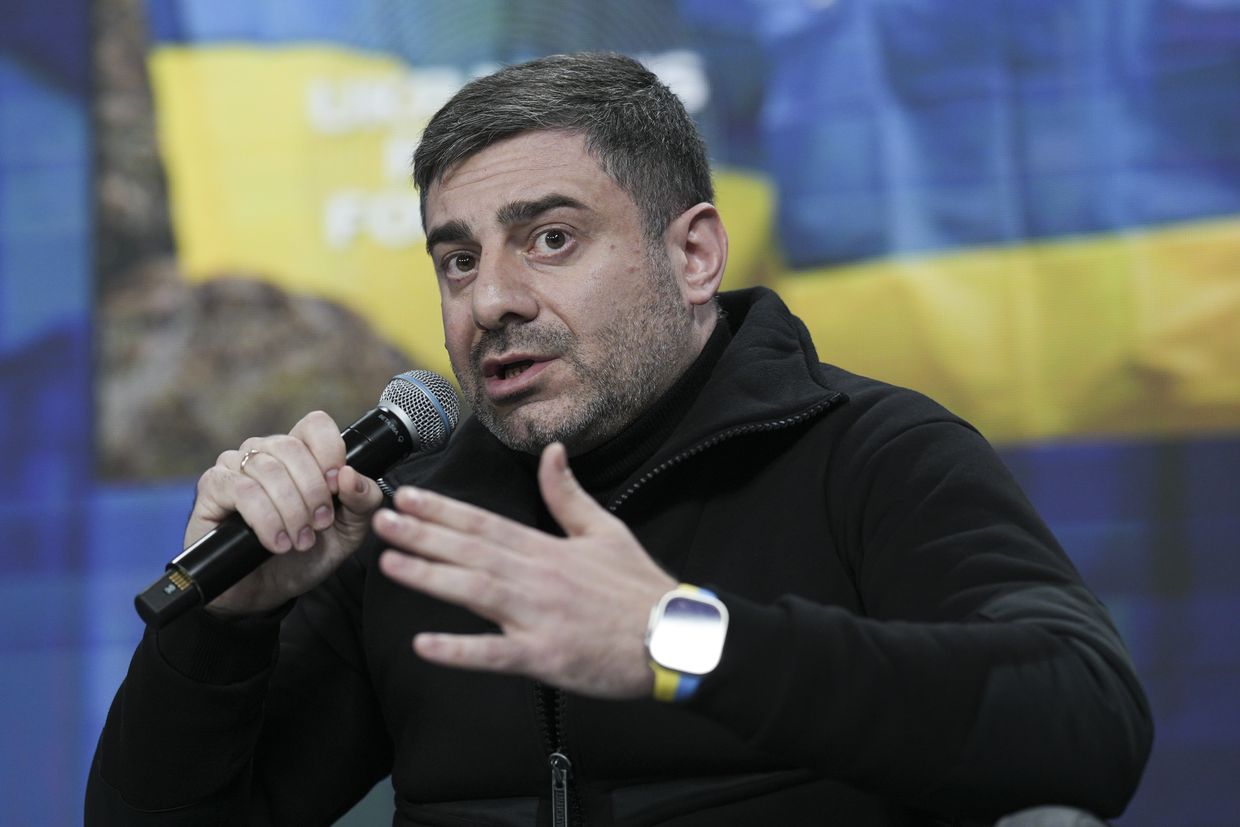
Russian forces have executed at least 345 Ukrainian soldiers who surrendered since the start of the full-scale war, Ukrainian Ombudsperson Dmytro Lubinets said at a press conference at Ukrinform.

The figure is the latest point on a documented and rising curve of a systematic war crime. Ukraine's prosecutors and international monitors have tracked these killings from 268 confirmed by July 2025 to over 330 by March 2026. Financial Times investigation found the executions appear to be systematic military policy directed from Russian command, with intercepted orders to "shoot prisoners on the spot."

The victims had surrendered

Lubinets described people killed after they had given up.

"It means that they laid down their weapons, came out with raised hands, lay on the ground, and showed they were no longer fighting," he said, and Russian soldiers examined them and confirmed they were unarmed.

Then the soldiers killed them.

"We have recorded cases where they fully demand that the clothes be removed. And after that, they force them to lie on the ground the same way, and shoot the Ukrainian soldiers at point-blank range," Lubinets added.

Killing a surrendered soldier is a war crime

Lubinets stressed the legal character of the act. The killing of soldiers who have surrendered is a distinct war crime, he said.

The prohibition is absolute. Under the Geneva Conventions, a soldier who lays down arms and surrenders is protected, and killing a prisoner of war is a grave breach of international law. Common Article 3 of the Third Geneva Convention prohibits "violence to life and person, in particular murder of all kinds" against those who have laid down their arms, with no battlefield circumstance that permits it, per the ICRC.

The count keeps rising and accountability lags

Ukraine documents each case for eventual prosecution, but most perpetrators are in Russia, beyond reach, and Russian courts and media have glorified the killings rather than punished them.

Syria Sentences Former President al-Assad to Death for Crimes Against Humanity

11 août 2026 à 11:00
The former president was convicted of crimes against humanity during the country’s civil war, the first verdict since he fled to Russia in 2024.

© Louai Beshara/Agence France-Presse — Getty Images

President Bashar al-Assad, Syria’s former leader, in Damascus in 2023.
  • ✇Euromaidan Press
  • Russia calls them “volunteers.” They’re Ukrainian prisoners of war forced into a new combat brigade
    Russia consolidated several units composed of Ukrainian prisoners of war and alleged defectors into a single brigade and labeled it "volunteer," the Institute for the Study of War (ISW) reported. The move scales up a practice ISW has tracked since 2022, when Moscow first began pressing captured Ukrainian soldiers into combat formations. ISW assessed the practice as a likely violation of the Geneva Convention, which bars using prisoners of war in military operations.
     

Russia calls them “volunteers.” They’re Ukrainian prisoners of war forced into a new combat brigade

7 août 2026 à 08:27

Russia consolidated several units composed of Ukrainian prisoners of war and alleged defectors into a single brigade and labeled it "volunteer," the Institute for the Study of War (ISW) reported. The move scales up a practice ISW has tracked since 2022, when Moscow first began pressing captured Ukrainian soldiers into combat formations. ISW assessed the practice as a likely violation of the Geneva Convention, which bars using prisoners of war in military operations.

Russia's treatment of Ukrainian prisoners extends far beyond forced recruitment into combat units. Russian forces executed at least 337 confirmed Ukrainian prisoners of war by the end of 2025, and leaked chats from a Russian general showed that brutality toward captives runs through the chain of command.

Moscow merges five POW units into one brigade

Russia's Defense Ministry Volunteer Corps announced on 6 August that it had formed the "first Ukrainian Volunteer Spetsnaz Brigade." The formation absorbed at least five existing units: the "Maksim Krivonos" and "Aleksei Berest" battalions, and the "Aleksandr Matrosov," "Martyn Pushkar," and "Slobodskoy" detachments. Each of these units reportedly drew members from captured Ukrainian soldiers or Ukrainians who allegedly defected to Russia.

The Volunteer Corps framed the new brigade as a formation of willing participants. At least one Russian military blogger, however, openly stated the brigade is composed of Ukrainian prisoners of war. ISW noted the admission as significant.

2023

ISW: Russia officially deploys Ukrainian POWs to front lines

One of the merged units, the Krivonos battalion, previously figured in a Russian propaganda operation. Moscow presented a Polish citizen as a defector to that battalion in 2025. Months later, a court in occupied Luhansk Oblast sentenced the same man to 13 years as a mercenary.

A practice ISW has tracked since 2022

ISW first documented Russia forming combat units from Ukrainian prisoners in November 2022. The most recent confirmed case before this brigade was the Bogdan Khmelnitsky battalion, which operated as part of the DNR interior ministry's Kaskad unit in western Donetsk Oblast starting in December 2023.

The Geneva Convention on prisoners of war prohibits using captured soldiers in military activities on behalf of the detaining power. It also states that no prisoner "may at any time be sent to or detained in areas where he may be exposed to the fire of the combat zone" and that prisoners shall not "be employed on labor which is of an unhealthy or dangerous nature."

Seized on Their Way to Gaza, Activists Tell of Abuse in Israeli Custody

7 août 2026 à 05:00
In interviews, more than 20 people who tried to break an Israeli blockade described beatings, electric shocks and other abuse after being captured. Israel denied the accusations.

© Ozan Kose/Agence France-Presse — Getty Images

Arno Meyns, a Belgian activist, at Istanbul’s airport in May after being released and deported by Israel. He said he was beaten in custody.
  • ✇Euromaidan Press
  • Repeated Russian missile-targeting failures may themselves violate the laws of war
    The authors of a new Ukrainian war-crimes framework say the line between a Russian targeting error and a deliberate method may not matter in law: a repeated failure to spare civilians can itself be a violation, whoever the missile was meant for. That goes further than their own report, published last week.“An isolated targeting error and a method of conducting attacks are not mutually exclusive alternatives, nor is an error necessarily exculpatory,” Volodymyr Hryshko, depu
     

Repeated Russian missile-targeting failures may themselves violate the laws of war

3 août 2026 à 09:32

The authors of a new Ukrainian war-crimes framework say the line between a Russian targeting error and a deliberate method may not matter in law: a repeated failure to spare civilians can itself be a violation, whoever the missile was meant for. That goes further than their own report, published last week.

“An isolated targeting error and a method of conducting attacks are not mutually exclusive alternatives, nor is an error necessarily exculpatory,” Volodymyr Hryshko, deputy head of the legal department at Truth Hounds, told Euromaidan Press.

report out of control by the truth hounds
Explore further

Precision missiles hit the coordinates. Investigators ask who was still standing there

International law obliges an attacker to verify a target and to break off if it changes or the civilian cost turns excessive. Skip that, over and over, and “a recurring failure to take such feasible precautions may itself constitute a violation, regardless of whether civilian harm was specifically intended.”

The report calls this a “moving target attack”: the weapon cannot be recalled, and the target can move, disperse, or be warned before it lands. Russia’s standard defense—that a precise hit proves a lawful target—does not, the authors argue, survive that gap.

“A recurring failure to take such feasible precautions may itself constitute a violation, regardless of whether civilian harm was specifically intended.”

Volodymyr Hryshko
victoria amelina
Victoria Amelina. Credit: Victoria Amelina via Facebook.

Error and method are not the only options

The report found a war crime in only one of its four cases—Kramatorsk, 27 June 2023, a Russian cruise missile into a pizzeria that killed 13 people, among them the novelist Victoria Amelina, who had left fiction to document Russian war crimes for Truth Hounds itself. The other three it left unresolved, and those are the ones Euromaidan Press asked about.

The four strikes are hard to read as simple accidents, said Maria Burnett, senior legal coordinator at Project Expedite Justice. Soldiers were present in each case—off duty, or at a scheduled meeting, or at an exhibition—but a temporary presence, the report argues, did not strip these places of protection.

Russian forces used precision weapons despite long gaps between the last intelligence and impact, she said, so “the risk that the target would move or disperse, while civilians remained exposed, was entirely foreseeable.” Doing it repeatedly “suggests a willingness to proceed without reliable control over whether the military objective would still be present when the missile arrived.”

The evidence that would settle it

Nothing in the open yet proves “an officially directed policy or deliberate method across the Russian armed forces,” Burnett said.

What would prove it is inside the targeting chain—the intelligence before each strike and when it was last checked, the choice of warhead, the launch order, the legal advice, the after-action report—and none of that is public. Orders or testimony from the people involved, she said, would show whether the strikes were “individual failures, a tolerated operational practice, or a formally approved policy.”

What the framework asks

The recommendations run to the International Criminal Court, the ICRC, the UN human rights office, and courts acting under universal jurisdiction: treat the interval between launch and impact as evidence, and stop reading precision as proof that a strike was lawful.

But the orders and targeting files that would prove method over error sit inside the Russian military, within reach only of investigators who can compel them. Truth Hounds is trying to build those cases on a shrinking budget—it lost the American money that had covered a third of it, and has laid off staff and shelved an archiving project.

  • ✇The Kyiv Independent
  • Russia intensifying use of chemical weapons in Ukraine, Dutch intelligence reports
    Russia is escalating the use of chemical weapons against Ukrainian forces, the Netherlands Military Intelligence (MIVD) reported on July 4.Russian troops use banned chemical agents as psychological warfare to panic Ukrainian forces, forcing soldiers from dugouts and trenches with gas grenades dropped by drones, making them easy targets for subsequent drone or artillery attacks.According to MIVD report, it was previously known that Russia usesd tear gas, but now intelligence has confirmed the use
     

Russia intensifying use of chemical weapons in Ukraine, Dutch intelligence reports

4 juillet 2025 à 07:05
Russia intensifying use of chemical weapons in Ukraine, Dutch intelligence reports

Russia is escalating the use of chemical weapons against Ukrainian forces, the Netherlands Military Intelligence (MIVD) reported on July 4.

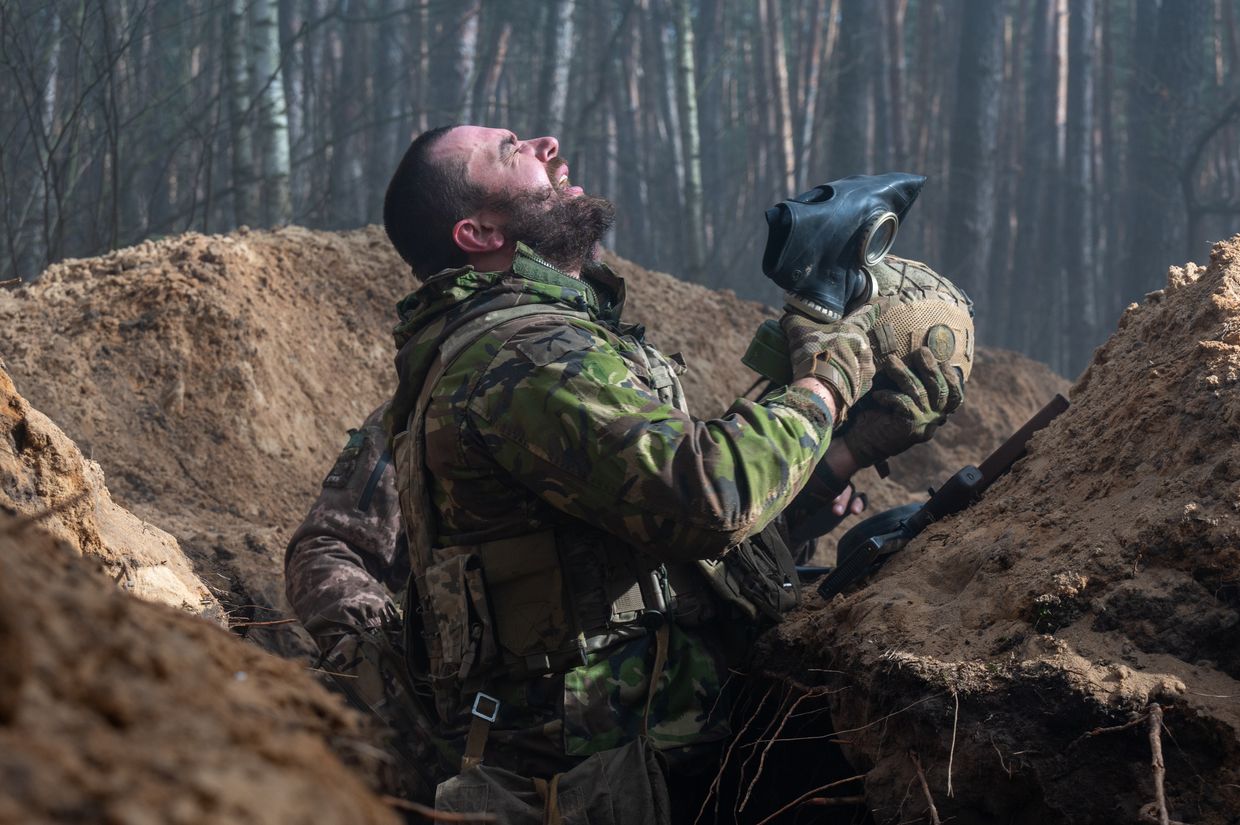
Russian troops use banned chemical agents as psychological warfare to panic Ukrainian forces, forcing soldiers from dugouts and trenches with gas grenades dropped by drones, making them easy targets for subsequent drone or artillery attacks.

According to MIVD report, it was previously known that Russia usesd tear gas, but now intelligence has confirmed the use of chloropicrin — a substance that can kill in high concentrations in enclosed spaces.

Use of of chloropicrin, banned under international law, was discovered by the Netherlands Military Intelligence and Security Service (MIVD) and General Intelligence and Security Service (AIVD) together with the German foreign intelligence service BND.

The Kyiv Independent previously reported rising chemical attacks, but Ukraine could not accurately identify the chemical substances due to lack of equipment.

The U.S. State Department had already reported in May that Russian forces have used the chemical agent chloropicrin in Ukraine. The May 1 announcement was part of a larger statement about the introduction of new U.S. sanctions against more than 280 individuals and entities.

For now, the original statement has been removed from the U.S. State Department website.

Russia is using this type of weapon more frequently and "with ease," says MIVD Director Vice Admiral Peter Reesink.

Dutch Defense Minister Ruben Brekelmans, who announced the news to the Dutch parliament, called the situation "absolutely unacceptable," calling for "more sanctions, isolation of Russia and unwavering military support for Ukraine."

"We are making this public now because Russia's use of chemical weapons must not become normalized," Brekelmans said. "If the threshold for using this type of weapon is lowered, it is dangerous not only for Ukraine but also for the rest of Europe and the world."

Since the start of the full-scale invasion in 2022, Russia has conducted over 9,000 chemical attacks. At least three Ukrainian soldiers have died directly from exposure to toxic substances, according to Ukraine's Ministry of Defense.

Dutch intelligence has established that Russian military leadership actively facilitates chemical attacks, and the use of banned substances has become standard practice for Russian forces.

Moscow is also increasing investments in chemical weapons programs, expanding research and recruiting new scientists, MIVD and AIVD observe.

The U.S. has accused Russia of deploying chloropicrin, often used in agriculture and widely weaponized as a “vomiting agent” during World War I.

‘Deliberately massive and cynical’ — Russian attack on Ukraine began as Trump and Putin spoke, Zelensky says
“Patriots and their missiles are real defenders of life,” President Volodymyr Zelensky said. “It is very important to maintain the support of partners in ballistic missile defense.”
Russia intensifying use of chemical weapons in Ukraine, Dutch intelligence reportsThe Kyiv IndependentAnna Fratsyvir
Russia intensifying use of chemical weapons in Ukraine, Dutch intelligence reports
  • ✇The Kyiv Independent
  • Russia killed at least 273 Ukrainian POWs during full-scale war, prosecutors say
    Ukrainian prosecutors have documented cases of Russian forces summarily executing 273 Ukrainian prisoners of war (POWs), the Liga.net news outlet reported, citing a statement from the Prosecutor General's Office.Kyiv and the U.N. have raised alarm over the rising number of such cases, saying they point to a systematic policy by Russia to murder Ukrainian captives. Half of the document cases were recorded this year alone.Seventy-seven criminal cases have been launched in connection with the killi
     

Russia killed at least 273 Ukrainian POWs during full-scale war, prosecutors say

2 juillet 2025 à 03:55
Russia killed at least 273 Ukrainian POWs during full-scale war, prosecutors say

Ukrainian prosecutors have documented cases of Russian forces summarily executing 273 Ukrainian prisoners of war (POWs), the Liga.net news outlet reported, citing a statement from the Prosecutor General's Office.

Kyiv and the U.N. have raised alarm over the rising number of such cases, saying they point to a systematic policy by Russia to murder Ukrainian captives. Half of the document cases were recorded this year alone.

Seventy-seven criminal cases have been launched in connection with the killings of POWs, while only two people were convicted, and a trial against a third person is ongoing. The statement did not clarify whether the convictions were issued in absentia.

A total of 188 people have been convicted of various war crimes, including 18 captured Russian soldiers and one civilian, who were convicted in person. The rest were convicted in absentia.

Earlier this week, Ombudsman Dmytro Lubinets reported a case of the likely murder of a Ukrainian POW who was apparently tied to a motorcycle by Russian soldiers and dragged along the road.

Ukraine's military intelligence agency (HUR) said in May that it alone had documented more than 150 cases of Ukrainian soldiers being executed after surrendering to Russian forces. Multiple intelligence reports suggest that Russian soldiers have received explicit orders to kill prisoners of war.

The United Nations Independent International Commission of Inquiry on Ukraine confirmed in March growing numbers of incidents in which Russian forces killed or maimed surrendering Ukrainian troops.

A separate Ukrainian investigation is also underway into the killing of around 50 Ukrainian POWs in the Russian-run Olenivka prison in 2022. Kyiv blamed the killings on Russia, saying Moscow's forces deliberately put Azov fighters in a separate building that was later destroyed.

Russia denied responsibility, claiming the explosion was caused by a Ukrainian HIMARS strike—a version U.N. investigators have rejected.

Although Moscow blocked an independent investigation by denying U.N. monitors access, Lubinets recently said that an internal U.N. analysis concluded Russia was to blame.

China unveils its new ‘graphite bomb’ — here’s how they work
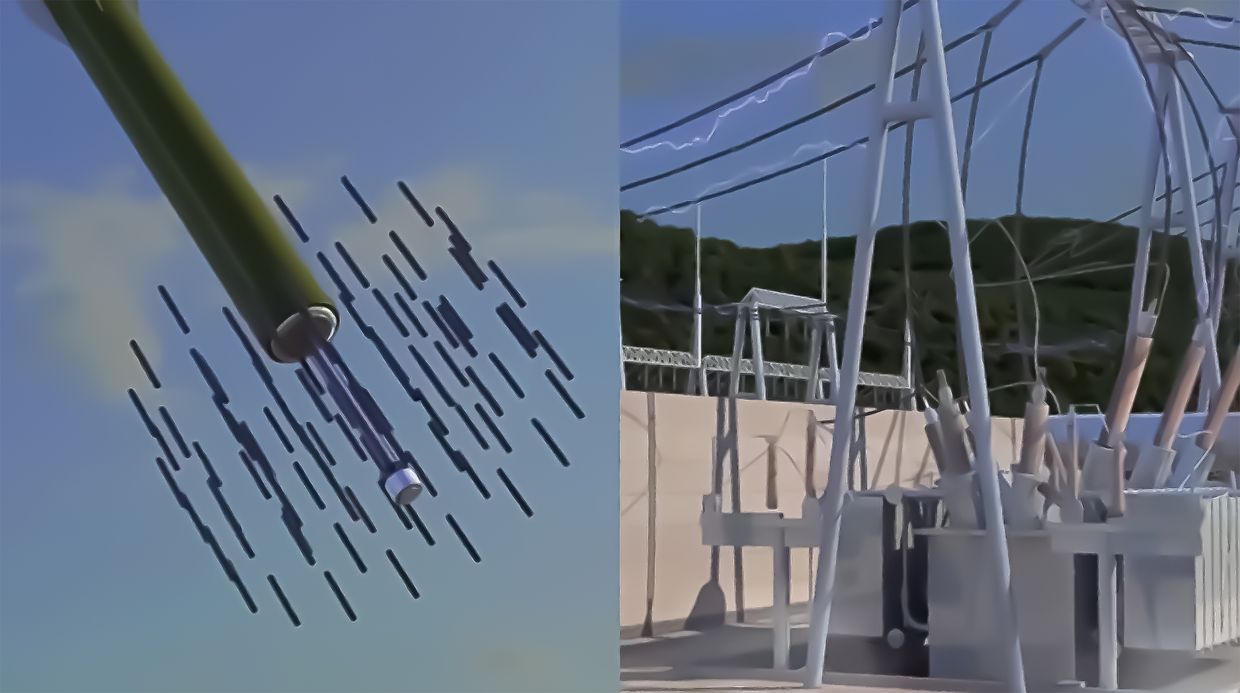
China’s state TV broadcaster has revealed details of a new “graphite bomb” that can cause a “complete loss of electricity” across an area of 10,000 square meters, or knock out entire power stations, the South China Morning Post reported on June 29. An animated video released by China’s CCTV showed a missile being launched from a ground-based launcher and then flying to a target where it releases 90 small submunitions. They then bounce on the ground before exploding amid a mock-up of an electri
Russia killed at least 273 Ukrainian POWs during full-scale war, prosecutors sayThe Kyiv IndependentChris York
Russia killed at least 273 Ukrainian POWs during full-scale war, prosecutors say
  • ✇The Kyiv Independent
  • 'Tied to a motorcycle and dragged' — Russia likely executed another Ukrainian POW, ombudsman says
    Russian forces likely executed another Ukrainian prisoner of war (POW), Ombudsman Dmytro Lubinets said on July 1, referring to a recent video that appears to show the captive tied to a motorcycle and dragged along a road.The alleged execution adds to growing evidence that Russian forces are systematically violating the Geneva Conventions by killing Ukrainian captives."A video is circulating on social media showing a man being tied to a motorcycle and dragged along the road," Lubinets said in a s
     

'Tied to a motorcycle and dragged' — Russia likely executed another Ukrainian POW, ombudsman says

2 juillet 2025 à 02:06
'Tied to a motorcycle and dragged' — Russia likely executed another Ukrainian POW, ombudsman says

Russian forces likely executed another Ukrainian prisoner of war (POW), Ombudsman Dmytro Lubinets said on July 1, referring to a recent video that appears to show the captive tied to a motorcycle and dragged along a road.

The alleged execution adds to growing evidence that Russian forces are systematically violating the Geneva Conventions by killing Ukrainian captives.

"A video is circulating on social media showing a man being tied to a motorcycle and dragged along the road," Lubinets said in a statement.

"It is a clear act of demonstrative cruelty and yet another war crime by the Russian Federation."

Lubinets said he has sent official letters regarding the suspected war crime to the United Nations and the International Committee of the Red Cross (ICRC).

"Russia is acting as a terrorist state. And it must be held fairly accountable for every crime," he added.

Ukraine's military intelligence agency (HUR) alone reported in May that it had documented more than 150 cases of Ukrainian soldiers being executed after surrendering to Russian forces. Officials noted that these were only the confirmed incidents, and the real number is likely higher.

HUR and other agencies say such executions are not isolated but part of a broader, deliberate policy directed by Russia's military leadership. Multiple intelligence reports suggest that Russian soldiers have received explicit orders to kill prisoners of war.

The United Nations Independent International Commission of Inquiry on Ukraine confirmed in March growing numbers of incidents in which Russian forces killed or maimed surrendering Ukrainian troops.

The commission cited testimony from Russian deserters who said they were instructed not to take prisoners but to shoot them on sight.

Earlier this year, the U.N. Human Rights Monitoring Mission in Ukraine reported a sharp increase in POW executions, documenting 79 killings across 24 incidents since August 2024. In many cases, the victims were unarmed or wounded, and some were killed in groups.

Ukraine’s new interceptor UAVs are starting to knock Russia’s long-range Shahed drones out of the sky
Russia’s Shahed drone swarms are pummeling Ukraine on a nightly basis, inflicting ever more death and destruction in cities that had managed to carve out some sense of normalcy amid wartime. Civilian alarm has grown. With traditional air defense stockpiles running low, the government is banking on newly created
'Tied to a motorcycle and dragged' — Russia likely executed another Ukrainian POW, ombudsman saysThe Kyiv IndependentKollen Post
'Tied to a motorcycle and dragged' — Russia likely executed another Ukrainian POW, ombudsman says
  • ✇The Kyiv Independent
  • Zelensky signs ratification of Special Tribunal on Russian aggression
    President Volodymyr Zelensky said on July 1 that he had signed the ratification documents establishing the Special Tribunal for the Crime of Aggression against Ukraine, marking a major step toward prosecuting Russia's leadership.Ukraine and the Council of Europe signed the agreement establishing the Special Tribunal on June 25 during a ceremony in Strasbourg. Zelensky and Council of Europe Secretary General Alain Berset signed it after more than three years of advocacy and diplomacy."The agreeme
     

Zelensky signs ratification of Special Tribunal on Russian aggression

1 juillet 2025 à 08:20
Zelensky signs ratification of Special Tribunal on Russian aggression

President Volodymyr Zelensky said on July 1 that he had signed the ratification documents establishing the Special Tribunal for the Crime of Aggression against Ukraine, marking a major step toward prosecuting Russia's leadership.

Ukraine and the Council of Europe signed the agreement establishing the Special Tribunal on June 25 during a ceremony in Strasbourg. Zelensky and Council of Europe Secretary General Alain Berset signed it after more than three years of advocacy and diplomacy.

"The agreement must now be swiftly ratified so that the process of creating the tribunal can begin," Zelensky said in a statement. He also instructed Ukraine's government to urgently submit necessary legislative changes to parliament to ensure Kyiv's full implementation of the agreement.

"I ask members of parliament to treat this as an immediate priority," Zelensky added, urging lawmakers to pass the needed legislation without delay.

The tribunal, once established, would specifically target Russia's top political and military leadership for the crime of aggression, defined as the illegal use of force by one state against another, which existing international bodies, like the International Criminal Court (ICC), are not able to prosecute due to jurisdictional limitations.

Zelensky also called on the Foreign Ministry and the Presidential Office to finalize a roadmap with international partners for the tribunal's launch.

"Already this year, Russia must begin to feel that accountability for the crime of aggression is inevitable," he said. "Aggression is a crime, and Russia's truly inevitable punishment for this crime is in the global interest of everyone in the world who wants their people to live in peace."

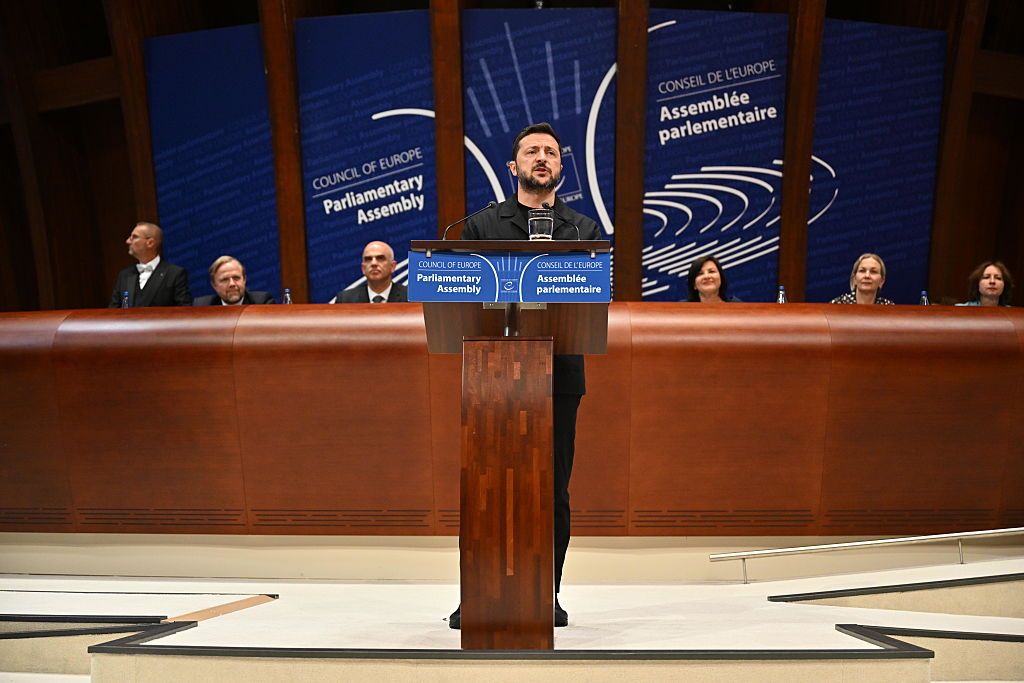
Speaking at the Parliamentary Assembly of the Council of Europe (PACE) on June 25, Zelensky thanked the body for championing the idea from its inception and pushing forward international accountability for Russia's invasion.

"It was here in this assembly, that the first call for such a tribunal was made," Zelensky said. "The idea was born here – and now it’s gaining real support from partner countries in Europe and beyond."

The tribunal is designed to close a legal gap that currently prevents the ICC from prosecuting Russia for the crime of aggression, although the court has issued arrest warrants for Russian President Vladimir Putin and Russian children's rights commissioner Maria Lvova-Belova in connection with the deportation of Ukrainian children.

Alongside the tribunal, the Council of Europe has also helped establish the Register of Damage, which has received over 34,000 claims from Ukrainians documenting losses and harms caused by the war.

Zelensky has repeatedly stressed the need for full justice and has called for the prosecution of all Russian officials responsible for planning and executing the war.

Investigation: How Russia prepares its strategic missile plant for ‘eternal war’
Key findings: * Despite international sanctions, Russia’s strategic missile plant was able to import complex machinery to dramatically increase missile production. * The Kyiv Independent has identified the equipment supplied to the plant, as well as the supply chains, mostly from China. * We located the plant’s new premises, built to house the
Zelensky signs ratification of Special Tribunal on Russian aggressionThe Kyiv IndependentAlisa Yurchenko
Zelensky signs ratification of Special Tribunal on Russian aggression

UN analysis finds Russia responsible for 2022 Olenivka prison explosion killing Ukrainian POWs, ombudsman says

30 juin 2025 à 23:24
UN analysis finds Russia responsible for 2022 Olenivka prison explosion killing Ukrainian POWs, ombudsman says

An internal U.N. analysis has found Russia responsible for a 2022 explosion at Olenivka prison, which killed over 50 Ukrainian prisoners of war (POWs), Ombudsman Dmytro Lubinets said on June 30.

"(A)n internal analysis of the U.N. showed that it was the Russian Federation that planned and carried out the attack," he said in a post to social media.

Lubinets referred to a report by the Center for Human Rights in Armed Conflict, whose website features only the investigation into the Olenivka explosion.

The investigation, published on June 26, reads that an "internal U.N. analysis concluded that it was the Russian Federation who planned and executed the attack," though the U.N. did not publicly acknowledge Russia's responsibility.

Russia has denied being responsible for the attack but prevented efforts by the international community to independently investigate the attack and contaminated evidence at the site, according to a report published by the U.N.

Kyiv has said that days before the July 2022 attack, Russia deliberately put Ukrainian members of the Azov Regiment, who were awaiting a prisoner exchange, in a separate part of the Olenivka prison building that was later destroyed in the explosion.

"The report identifies the weapons and ammunition that the Russian Armed Forces used to kill Ukrainian prisoners of war, and also examines in detail the planning, organization, and execution of the murder," Lubinets said.

The ombudsman noted that the U.N. fact-finding mission on Olenivka was disbanded due to a lack of security guarantees, adding that the mission has previously refused to review evidence provided by Ukraine.
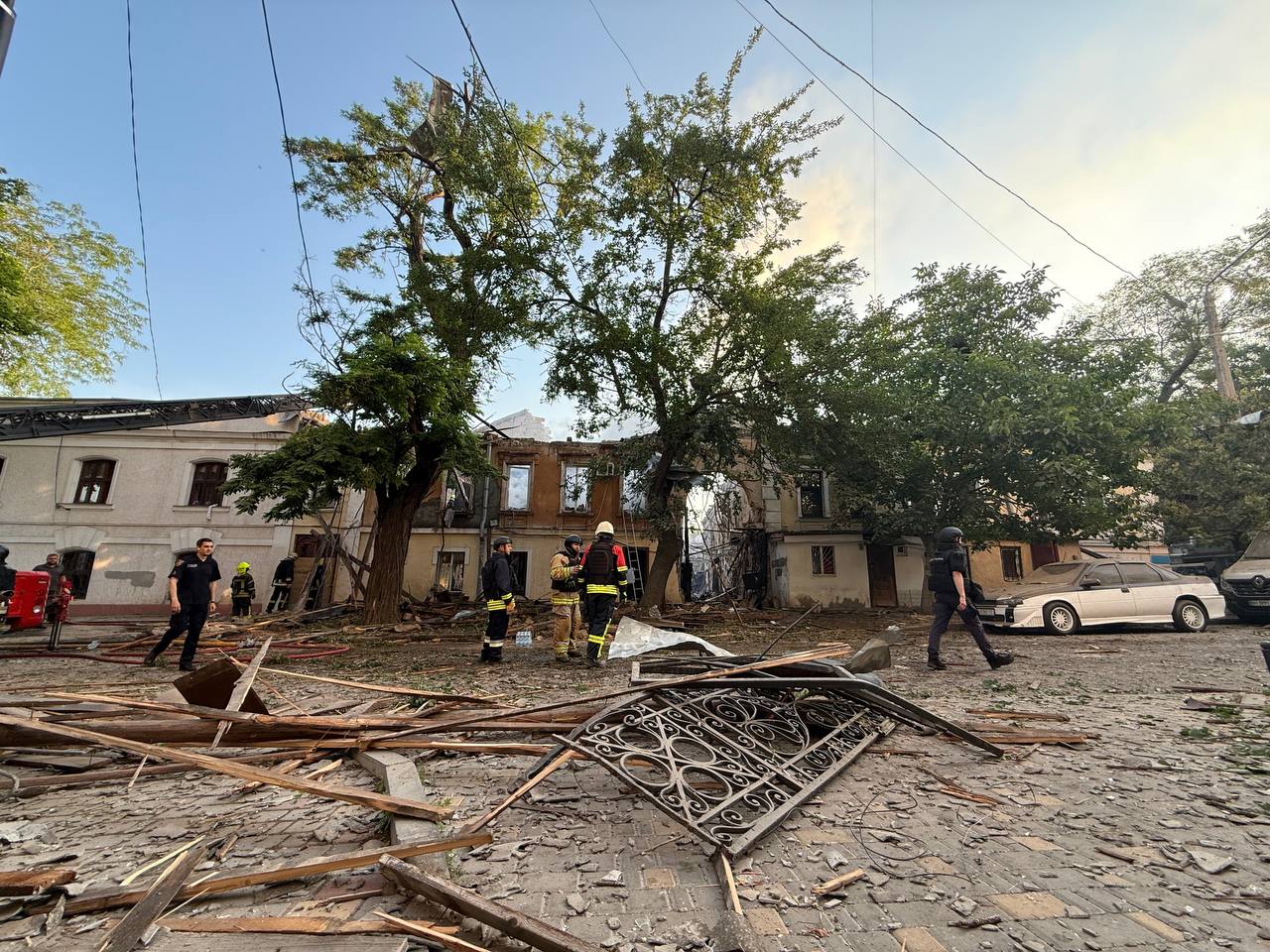
Russia has repeatedly violated international conventions protecting the rights of POWs as it continues to carry out its war against Ukraine.

A Russian military court has convicted 184 Ukrainian POWs captured in Kursk Oblast of acts of terrorism, Mediazona reported on June 25.

The POWs captured in Kursk were charged with carrying out a grave terrorist act by a group of individuals, as outlined by the Russian Criminal Code.

Junior Lieutenant Yevhen Hoch was convicted of allegedly carrying out an act of terrorism by taking part in Ukraine's Kursk Oblast incursion.

Smashing previous monthly record, Russia launches 5,337 kamikaze drones against Ukraine during June
Russia launched a record 5,337 Shahed-type drones against Ukraine in June, according to data from the Ukrainian Air Force and Dragon Capital, smashing the previous record of 4,198 set in March. Russia’s bombardments, a fact of life after three years of full-scale war, have intensified dramatically in May
UN analysis finds Russia responsible for 2022 Olenivka prison explosion killing Ukrainian POWs, ombudsman saysThe Kyiv IndependentYuliia Taradiuk
UN analysis finds Russia responsible for 2022 Olenivka prison explosion killing Ukrainian POWs, ombudsman says
  • ✇The Kyiv Independent
  • Trump wants to slash war crimes investigation funds, Reuters reports
    The White House has recommended terminating U.S. funding for multiple programs that investigate war crimes worldwide, including Russian war crimes in Ukraine, Reuters reported on June 26. Since U.S. President Donald Trump's inauguration in January, the administration has imposed sweeping layoffs and budget cuts, targeting foreign aid, media outlets, and federal workers. Many of the cuts have directly impacted programs assisting Ukraine.The Trump administration's Office of Management and Budget (
     

Trump wants to slash war crimes investigation funds, Reuters reports

26 juin 2025 à 18:38
Trump wants to slash war crimes investigation funds, Reuters reports

The White House has recommended terminating U.S. funding for multiple programs that investigate war crimes worldwide, including Russian war crimes in Ukraine, Reuters reported on June 26.

Since U.S. President Donald Trump's inauguration in January, the administration has imposed sweeping layoffs and budget cuts, targeting foreign aid, media outlets, and federal workers. Many of the cuts have directly impacted programs assisting Ukraine.

The Trump administration's Office of Management and Budget (OMB) on June 25 recommended canceling funds for nearly two dozen programs that investigate and seek accountability for war crimes, two U.S. sources familiar with the matter told Reuters. The outlet also reviewed internal government documents to support their claims.
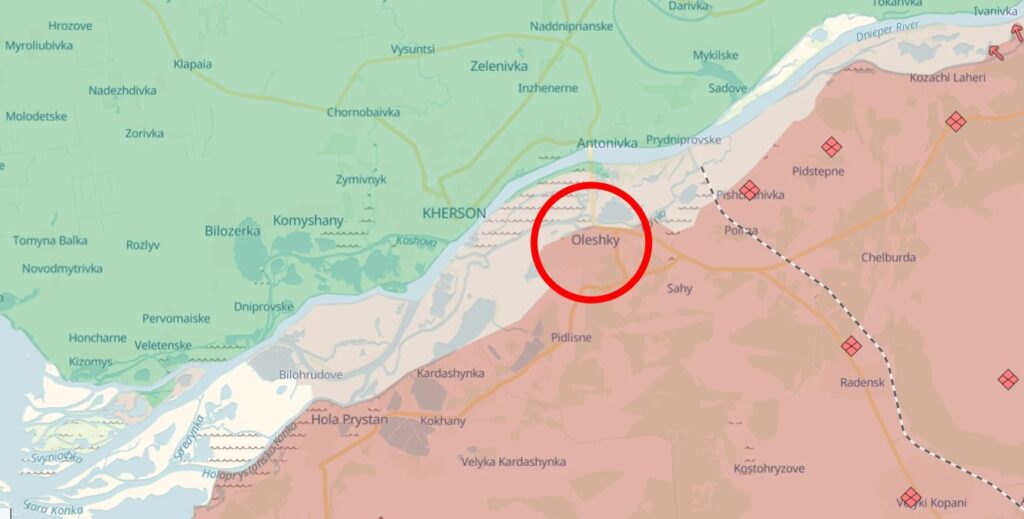
The targeted programs include groups investigating Russian war crimes in Ukraine, as well as atrocities in Myanmar, Syria, Iraq, Nepal, Sri Lanka and the Gambia.

Multiple programs designated for termination are operating in Ukraine, three sources told Reuters. One of the groups is Global Rights Compliance, which gathers evidence of Russian war crimes across the country, including torture and sexual violence. Another is Legal Action Worldwide, a legal aid organization that supports efforts to prosecute suspects accused of perpetrating war crimes in Ukraine.

The State Department will have the opportunity to appeal the OMB's recommendation, though two U.S. officials told Reuters that Secretary of State Marco Rubio is not likely to advocate for most of the programs.

Rubio could potentially argue to preserve a few key programs, such as those supporting the prosecution of Russian war crimes in Ukraine, one source said.

According to an internal State Department email viewed by Reuters, the department has until July 11 to submit their arguments on behalf of preserving any of the targeted war crimes accountability programs.

The Trump administration's funding cuts have already impacted humanitarian aid and civil society programs across Ukraine as the country faces its fourth year of Russia's full-scale invasion. One of Trump's first acts in his second term was to freeze all U.S. foreign assistance for 90 days. He then worked alongside former ally Elon Musk to dismantle the U.S. Agency for International Development (USAID).

Among the defunded organizations is Ukraine Conflict Observatory, the leading U.S.-backed initiative documenting Russia's abduction of Ukrainian children. A part of Yale University's Humanitarian Research Lab, the group will end its efforts to track and monitor illegally deported Ukrainian children as of July 1 due to funding cuts.  

The White House also previously disbanded the U.S. Justice Department's War Crimes Accountability Team and fired a coordinator responsible for collecting data on Russian war crimes in Ukraine.

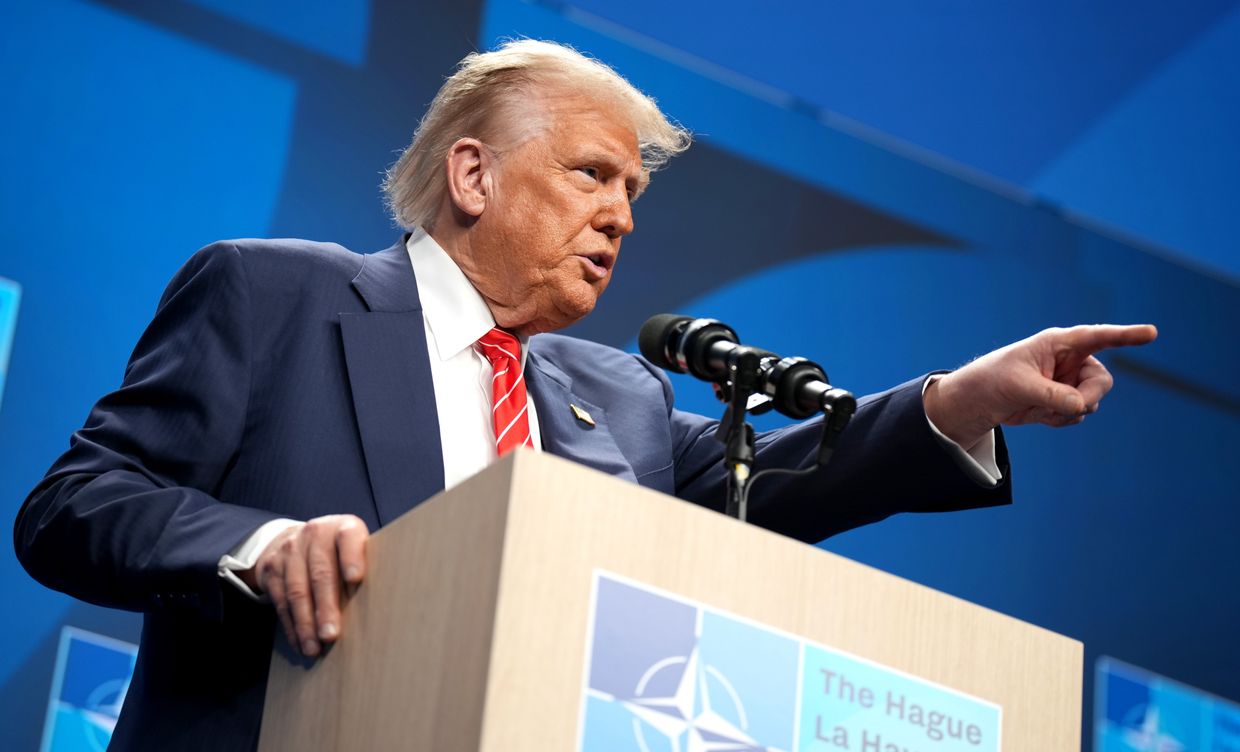
Trump gets king’s treatment at NATO summit while Ukraine sits on the sidelines
THE HAGUE, Netherlands — As NATO leaders convened in The Hague for a two-day summit on June 24–25, allies and Kyiv braced for the first annual meeting since U.S. President Donald Trump’s return to office. With the Israel-Iranian conflict dominating the news and the summit agenda focused on
Trump wants to slash war crimes investigation funds, Reuters reportsThe Kyiv IndependentMartin Fornusek
Trump wants to slash war crimes investigation funds, Reuters reports

  • ✇The Kyiv Independent
  • Russian court convicts 184 Ukrainian POWs captured in Kursk Oblast of terrorism, Mediazona reports
    A Russian military court has convicted 184 Ukrainian prisoners of war (POWs) captured in Kursk Oblast of acts of terrorism, Mediazona reported on June 25.Ukraine first launched a surprise offensive into Russia's Kursk Oblast in August 2024. Ukrainian officials have said the incursion forced Russia to move resources away from its offensives in Eastern Ukraine.Russia's military prosecutors office convicts Ukrainian POWs captured in Kursk Oblast on a regular basis, independent Russian outlet Mediaz
     

Russian court convicts 184 Ukrainian POWs captured in Kursk Oblast of terrorism, Mediazona reports

26 juin 2025 à 00:03
Russian court convicts 184 Ukrainian POWs captured in Kursk Oblast of terrorism, Mediazona reports

A Russian military court has convicted 184 Ukrainian prisoners of war (POWs) captured in Kursk Oblast of acts of terrorism, Mediazona reported on June 25.

Ukraine first launched a surprise offensive into Russia's Kursk Oblast in August 2024. Ukrainian officials have said the incursion forced Russia to move resources away from its offensives in Eastern Ukraine.

Russia's military prosecutors office convicts Ukrainian POWs captured in Kursk Oblast on a regular basis, independent Russian outlet Mediazona reported.

The POWs captured in Kursk were charged with carrying out a grave terrorist act by a group of individuals, as outlined by the Russian Criminal Code.

Junior Lieutenant Yevhen Hoch was convicted of allegedly carrying out an act of terrorism by taking part in Ukraine's Kursk Oblast incursion.

Russia has waged its war against Ukraine since 2014 and initiated a full-scale invasion in February 2022.

Russian authorities accused Hoch of interfering with civilian evacuations for three weeks amid Ukraine's Kursk offensive and for "intimidating them by openly carrying and using combat weapons."

Russia regularly convicts people of politically motivated charges in an effort to silence opposition to its war against Ukraine.

The Russian 2nd Western District Military Court has carried out the sentences against the 184 Ukrainian POWs since the beginning of the year.

Moscow has gone after journalists in Ukraine's Russian-occupied territories. Ukrainian Journalist Viktoriia Roshchyna disappeared in August 2023 and died after being tortured in Russian captivity. Roschyna's body was returned to Ukraine in February with missing organs.

Putin insists the Russian economy is fine, but Kremlin officials say otherwise
In a rare public sign that all is not well in Russia, two high-ranking Moscow officials last week issued separate warnings about the state of the country’s economy. Russian Central Bank Governor Elvira Nabiullina and Economy Minister Maxim Reshetnikov both highlighted that amid the Kremlin’s full-scale war against Ukraine, the tools Moscow once relied on to maintain wartime growth are nearly exhausted. Almost immediately, Russian President Vladimir Putin on June 20 dismissed the concerns, clai
Russian court convicts 184 Ukrainian POWs captured in Kursk Oblast of terrorism, Mediazona reportsThe Kyiv IndependentTim Zadorozhnyy
Russian court convicts 184 Ukrainian POWs captured in Kursk Oblast of terrorism, Mediazona reports
  • ✇The Kyiv Independent
  • Ukraine, Council of Europe sign historic agreement to establish tribunal on Russian aggression
    Ukraine and the Council of Europe signed a historic agreement on June 25 to establish a Special Tribunal for the Crime of Aggression, marking a major step toward holding Russia's leadership accountable for launching the full-scale invasion in 2022.The agreement was signed by President Volodymyr Zelensky and Council of Europe Secretary General Alain Berset during a ceremony in Strasbourg, France – following more than three years of diplomatic efforts and deliberation.Speaking at the Parliamentary
     

Ukraine, Council of Europe sign historic agreement to establish tribunal on Russian aggression

25 juin 2025 à 16:47
Ukraine, Council of Europe sign historic agreement to establish tribunal on Russian aggression

Ukraine and the Council of Europe signed a historic agreement on June 25 to establish a Special Tribunal for the Crime of Aggression, marking a major step toward holding Russia's leadership accountable for launching the full-scale invasion in 2022.

The agreement was signed by President Volodymyr Zelensky and Council of Europe Secretary General Alain Berset during a ceremony in Strasbourg, France – following more than three years of diplomatic efforts and deliberation.

Speaking at the Parliamentary Assembly of the Council of Europe (PACE), Zelensky thanked the assembly and underscored the importance of justice.

"Everyone responsible for this war must be held to account," he said. "Every war criminal must face justice – including Putin... the crime of aggression must be recorded, judged, and punished."

Zelensky also praised PACE for its "real leadership" in taking a stand against Russia and developing the tribunal.

"It was here in this assembly, that the first call for such a tribunal was made," Zelensky said. "The idea was born here – and now it’s gaining real support from partner countries in Europe and beyond."

The Special Tribunal will be established within the framework of the Council of Europe and will have the mandate to prosecute senior Russian leaders for the crime of aggression – defined as the decision to use armed force against another state, in violation of the United Nations Charter.

President Zelensky has long advocated for the creation of the tribunal, emphasizing the need to bring Russian President Vladimir Putin and other senior officials to justice. Ukrainian prosecutors have documented thousands of war crimes committed by Russian forces, including attacks on civilians, cultural landmarks, medical facilities, and reports of torture and forced deportations.

The tribunal is intended to close a key legal gap in existing international accountability mechanisms.

While the International Criminal Court (ICC) has jurisdiction to investigate war crimes, crimes against humanity, and genocide in Ukraine – and has already issued arrest warrants for Putin and Maria Lvova-Belova, the Russian official overseeing the forced deportation of Ukrainian children to Russia – it cannot examine the crime of aggression due to jurisdictional constraints.

The new tribunal will complement the ICC's efforts by specifically targeting high-level officials responsible for starting the war – such as Putin and his inner circle.

In addition to the special tribunal, the Council of Europe’s Ukraine-related work  includes the Register of Damage – an initiative that has already received more than 34,000 claims detailing losses and harms resulting from Russia's full-scale invasion.

The establishment of the register, and now the special tribunal, are important steps to ensure justice for Ukraine and its people.

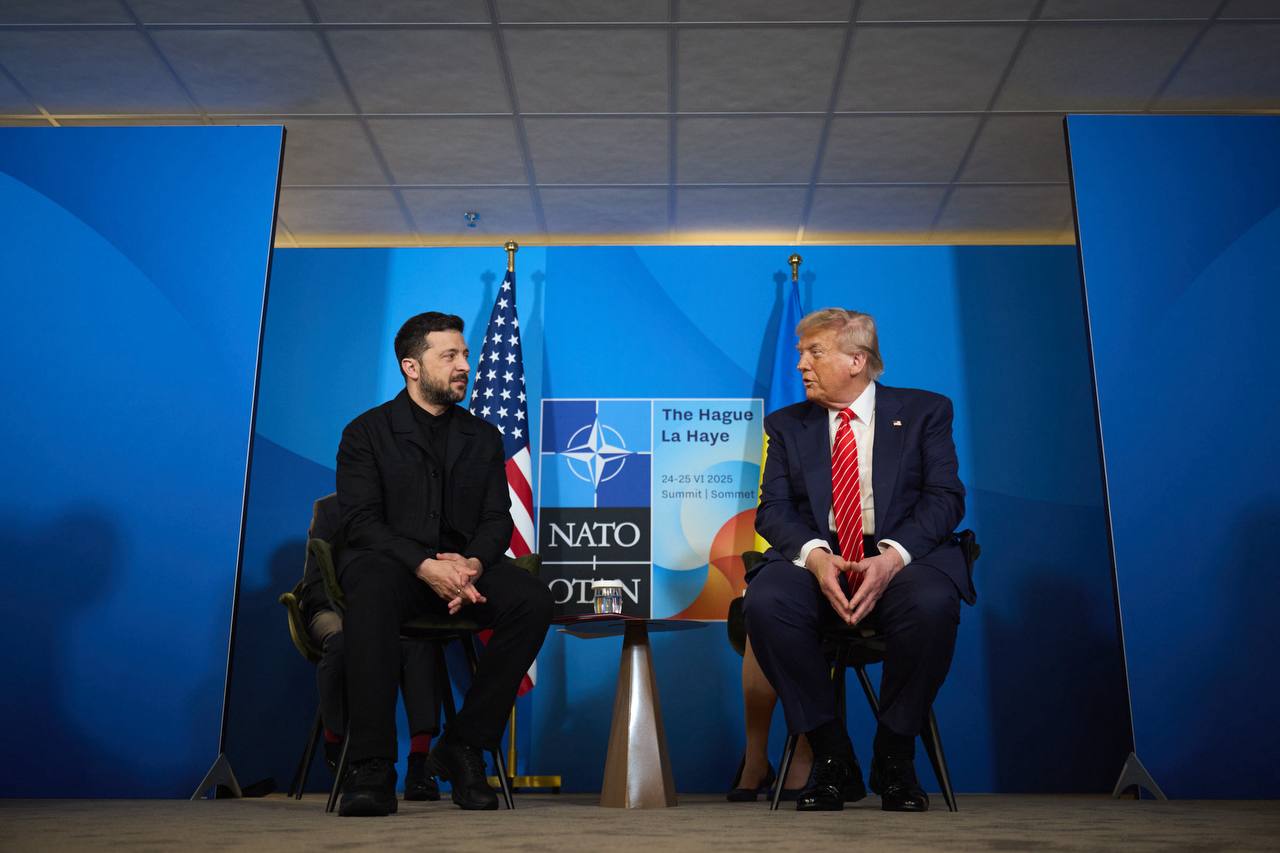
Zelensky, Trump hold talks on NATO summit sidelines
“We covered all the truly important issues,” President Volodymyr Zelensky said. “We discussed how to achieve a ceasefire and a real peace. We spoke about how to protect our people. We appreciate the attention and the readiness to help bring peace closer.”
Ukraine, Council of Europe sign historic agreement to establish tribunal on Russian aggressionThe Kyiv IndependentKateryna Denisova
Ukraine, Council of Europe sign historic agreement to establish tribunal on Russian aggression
  • ✇The Kyiv Independent
  • Putin to skip BRICS summit in Brazil due to ICC arrest warrant
    Russian President Vladimir Putin has decided not to attend the upcoming BRICS summit in Brazil due to an arrest warrant issued by the International Criminal Court (ICC), Russian president's foreign policy aide Yuriy Ushakov said on June 25."This is related to certain difficulties in the context of the ICC’s demands, as you know, and precisely in this context, the Brazilian government was unable to take a clear position that would allow our president to participate in this meeting," Ushakov said.
     

Putin to skip BRICS summit in Brazil due to ICC arrest warrant

25 juin 2025 à 13:40
Putin to skip BRICS summit in Brazil due to ICC arrest warrant

Russian President Vladimir Putin has decided not to attend the upcoming BRICS summit in Brazil due to an arrest warrant issued by the International Criminal Court (ICC), Russian president's foreign policy aide Yuriy Ushakov said on June 25.

"This is related to certain difficulties in the context of the ICC’s demands, as you know, and precisely in this context, the Brazilian government was unable to take a clear position that would allow our president to participate in this meeting," Ushakov said.

Brazil is a member of the ICC and a signatory to the Rome Statute, meaning it is obliged to arrest Putin if he enters the country.

The BRICS summit, which is scheduled to take place on July 6–7, will be attended by Russian Foreign Minister Sergey Lavrov, according to Ushakov. Putin is expected to participate remotely via video.

BRICS, composed of Russia, China, India, Brazil, and other nations, is a group of emerging economies often portrayed as a counterweight to the Western-led world.

The ICC issued a warrant for the Russian leader's arrest in March 2023 over the illegal deportation of Ukrainian children during Russia's full-scale invasion of Ukraine.

In November 2024, Putin skipped the G20 summit in Brazil and sent Lavrov instead.

Earlier in June, Moscow said that Putin had received an official invitation to attend the G20 summit in South Africa, another ICC member state. The event is scheduled to take place in Johannesburg from Nov. 22 to 23.

In September 2024, Putin made a rare visit to Mongolia, which is also a signatory of the ICC, prompting criticism over the non-enforcement of the warrant.

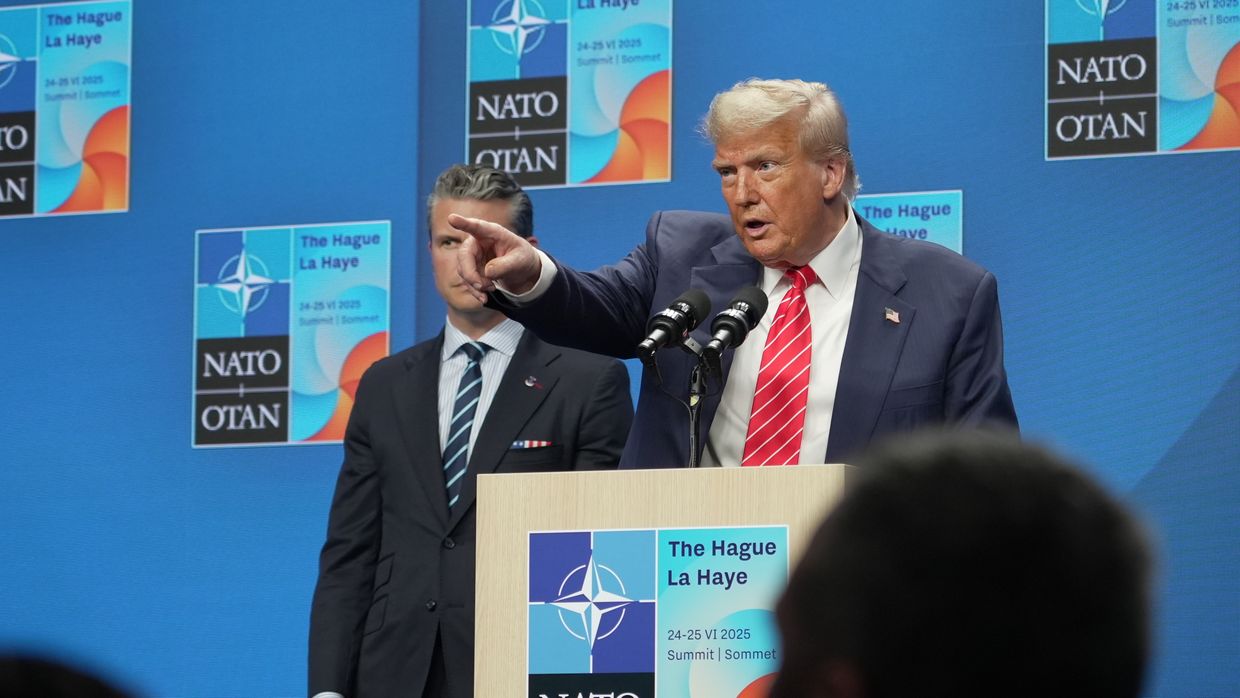
‘It’s possible’ — Trump on Putin’s territorial ambitions beyond Ukraine
“I consider him (Russian President Vladimir Putin) a person I think is misguided,” U.S. President Donald Trump said speaking at a NATO press conference in The Hague on June 25.
Putin to skip BRICS summit in Brazil due to ICC arrest warrantThe Kyiv IndependentKateryna Denisova
Putin to skip BRICS summit in Brazil due to ICC arrest warrant
  • ✇The Kyiv Independent
  • Ukrainians forcibly deported by Russia held in basement without food, water, media reports
    Over 45 Ukrainians forcibly deported by Russia from Ukraine's occupied territories are being held in a basement at Russia's border with Georgia without food, water, and basic healthcare, independent media outlet Astra reported on June 21."We are in a basement without utilities: there is no shower or toilet, they don't feed us. Volunteers bring humanitarian aid, but it lasts for a couple of days and not for everyone," one of the held Ukrainians told Astra.A decree by Russian President Vladimir Pu
     

Ukrainians forcibly deported by Russia held in basement without food, water, media reports

21 juin 2025 à 18:54
Ukrainians forcibly deported by Russia held in basement without food, water, media reports

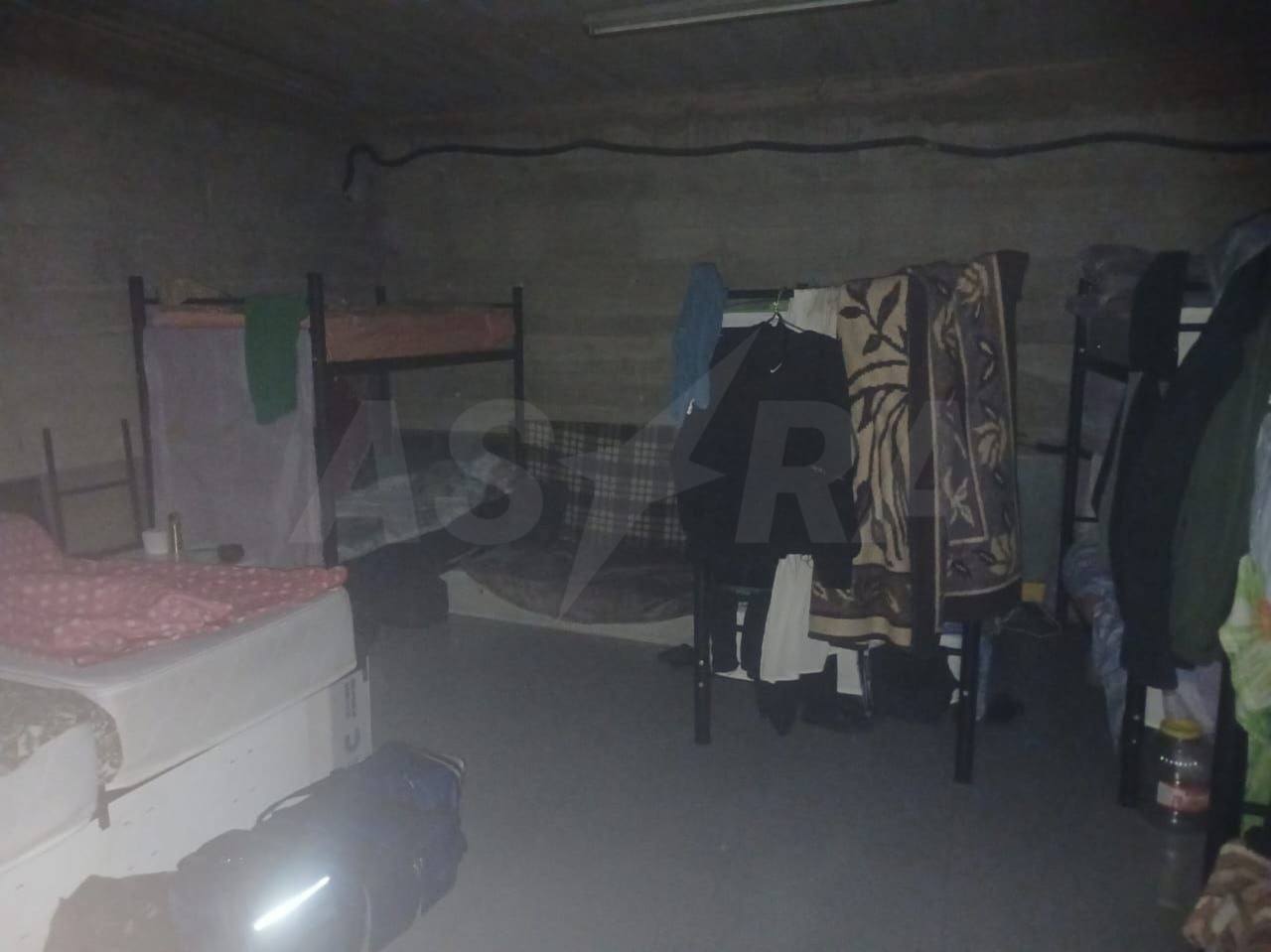
Over 45 Ukrainians forcibly deported by Russia from Ukraine's occupied territories are being held in a basement at Russia's border with Georgia without food, water, and basic healthcare, independent media outlet Astra reported on June 21.

"We are in a basement without utilities: there is no shower or toilet, they don't feed us. Volunteers bring humanitarian aid, but it lasts for a couple of days and not for everyone," one of the held Ukrainians told Astra.

A decree by Russian President Vladimir Putin has ordered Ukrainians still living in occupied territories to leave unless they "regulate their legal status," namely, obtaining Russian citizenship.

"We emphasize that these systematic deportations and persecutions are part of Russia's genocide policy against the Ukrainian people," Foreign Ministry spokesperson Heorhii Tykhyi said on March 21.

At least 45 Ukrainians have been held at the Verkhniy Lars border checkpoint between Georgia and Russia for several days.

One of the deported Ukrainians has been hospitalized as they await passage out of Russia and into Georgia.

"There were 8 of us, 3 days ago. Every day, more people are brought here and the number is growing. Now there are 45 people, some have been here for a month. There are disabled people and people with serious illnesses," one of the held Ukrainians said.

The basement facility has since 2023 held deported Ukrainians barred from entering the Russian Federation and the Ukrainian territories it occupies.

The held Ukrainians were denied entry into Georgia. Most did not have the necessary travel documents, but 16 Ukrainians with passports were denied entry as well, Astra reported, citing the non-profit organization Tbilisi Volunteers Organization.

"The basement is damp, there are drops of water on the ceiling, (it's hard) to breathe, everyone smokes, they don't let us outside. We sleep for four hours, taking turns. Some sleep on the floor," one of the deported Ukrainians said.

The basement only houses 17 sleeping spaces, but another 100 deported Ukrainians are expected to arrive at the facility, a volunteer told Astra.

Following a pause in deportations to Georgia in 2024, Russia has resumed deportations as Georgia prepares new immigration legislation, the Tbilisi Volunteers Organization says.

Serhiy Serdiuk, a resident of occupied Zaporizhzhia Oblast, was deported and banned from re-entering Russia and Ukraine's occupied territories for 40 years, the Guardian reported on June 21.

Russian authorities pressed Serdiuk, an educator, to continue work under Russia's imposed school curriculum.

Serdiuk and other staff at a school in Zaporizhzhia Oblast's Komysh-Zoria town refused and were met with threats.

Serdiuk was similarly deported to Georgia, from where he flew to Moldova and crossed back into Ukraine.

Due to Russia's illegal and unrecognized annexation of Ukraine's occupied territories, Ukrainian citizens are pressured to obtain Russian citizenship or face deportation and entry bans.

Pro-Russian ‘peace protestors’ set to descend on NATO summit
Dutch protesters who regularly call for an end to military aid to Ukraine will descend on The Hague next week to protest the upcoming NATO summit, which is set to take place on June 24-25. The group will protest against NATO alongside several other organizations and has urged supporters on
Ukrainians forcibly deported by Russia held in basement without food, water, media reportsThe Kyiv IndependentLinda Hourani
Ukrainians forcibly deported by Russia held in basement without food, water, media reports
  • ✇The Kyiv Independent
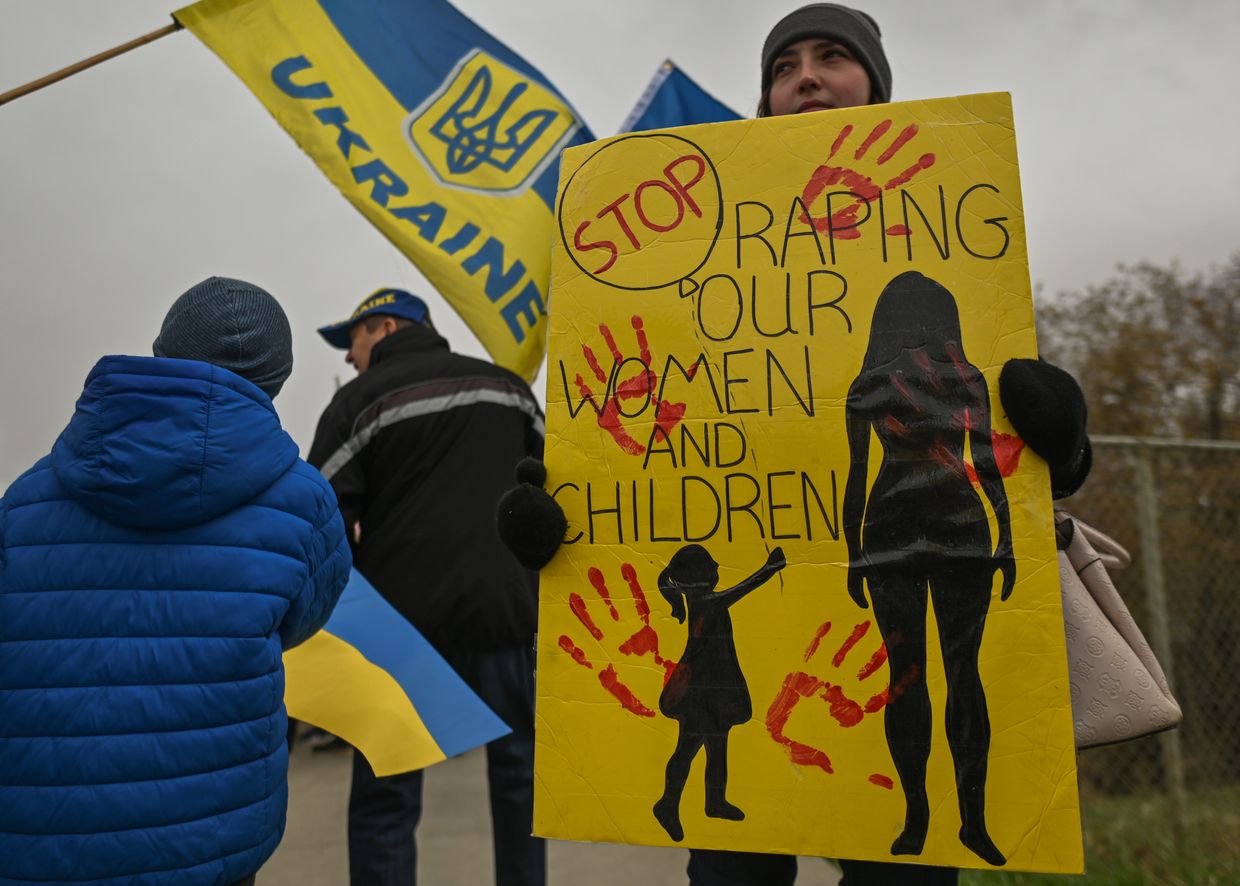
  • Ukraine documents 366 cases of war-related sexual violence, most victims women
    As of June 2025, Ukraine has documented 366 cases of sexual violence committed in connection with Russia's full-scale war, the Foreign Ministry reported on June 19, citing data from the Prosecutor General's Office.The statement was published on the International Day for the Elimination of Sexual Violence in Conflict, marked every year on June 19. The victims include 231 women, 134 men, and 19 children. The documented crimes span rape, sexual torture, forced nudity, and other violent acts, many o
     

Ukraine documents 366 cases of war-related sexual violence, most victims women

19 juin 2025 à 15:08
Ukraine documents 366 cases of war-related sexual violence, most victims women

As of June 2025, Ukraine has documented 366 cases of sexual violence committed in connection with Russia's full-scale war, the Foreign Ministry reported on June 19, citing data from the Prosecutor General's Office.

The statement was published on the International Day for the Elimination of Sexual Violence in Conflict, marked every year on June 19.

The victims include 231 women, 134 men, and 19 children. The documented crimes span rape, sexual torture, forced nudity, and other violent acts, many of which occurred in occupied territories or during the early stages of Russia's invasion.

Sexual violence in conflict is prohibited under the 1949 Geneva Conventions and their additional protocols, which mandate the protection of civilians, especially women and children. It is also recognized as a war crime under international law.

Ukraine's Foreign Ministry said Russia is "grossly violating international humanitarian law" and the legal framework established by multiple U.N. Security Council resolutions.

The ministry said that Moscow has employed sexual violence "as a weapon of war" to terrorize civilians, destroy communities, and weaken resistance.

Ukraine's Permanent Representative to the United Nations, Sergiy Kyslytsya, raised the issue at the Security Council in April 2024, warning that such violence is being used against both civilians and prisoners of war.

In June 2024, the Kyiv Independent identified two Russian soldiers implicated in the rape of women during Russia's occupation of parts of Kyiv and Kherson oblasts in March 2022.

One of them, Mykola Senenko, was formally charged by Ukraine's Prosecutor General's Office for a rape committed in Kherson Oblast.

Trump’s peace push falters in both Ukraine and the Middle East — for similar reasons
U.S. President Donald Trump addressed a wide range of subjects during his inauguration speech. When speaking about international relations, he was adamant — “Our power will stop all wars and bring a new spirit of unity,” he said, talking about Russia’s war against Ukraine and the fighting in the Middle
Ukraine documents 366 cases of war-related sexual violence, most victims womenThe Kyiv IndependentOleg Sukhov
Ukraine documents 366 cases of war-related sexual violence, most victims women
  • ✇The Kyiv Independent
  • Russia's prison chief sentenced in absentia for torture chambers in Kherson Oblast
    Arkady Gostev, head of Russia's Federal Penitentiary Service, was sentenced in absentia to 10 years in prison for creating a network of torture chambers in the Russian-occupied part of Kherson Oblast, Ukraine's Security Service (SBU) announced on June 19.Gostev was found guilty of orchestrating the transformation of captured Ukrainian prisons into torture sites used to detain and brutalize members of the local resistance. The SBU said victims were subjected to "brutal torture" intended to break
     

Russia's prison chief sentenced in absentia for torture chambers in Kherson Oblast

19 juin 2025 à 12:46
Russia's prison chief sentenced in absentia for torture chambers in Kherson Oblast

Arkady Gostev, head of Russia's Federal Penitentiary Service, was sentenced in absentia to 10 years in prison for creating a network of torture chambers in the Russian-occupied part of Kherson Oblast, Ukraine's Security Service (SBU) announced on June 19.

Gostev was found guilty of orchestrating the transformation of captured Ukrainian prisons into torture sites used to detain and brutalize members of the local resistance. The SBU said victims were subjected to "brutal torture" intended to break their will and force submission to the Kremlin rule.

According to investigators, Gostev personally oversaw the establishment of torture facilities and pushed for their inclusion in Russia's national prison registry through the Justice Ministry.

The court ruled he committed "actions aimed at violently changing or overthrowing the constitutional order or seizing state power."

"Comprehensive measures are being taken to bring him to justice for crimes against our state," the SBU said, noting that Gostev remains in Russia.

Kherson Oblast, which stretches from the Dnipro River to the Black Sea, remains partially occupied, with the east-bank territories still under Russian control.

Gostev joins a growing list of senior Russian officials charged in absentia with war crimes, crimes against humanity, and the administration of occupied territories.

Ukraine has also targeted collaborators working with the occupation authorities.

On June 18, Ukraine's military intelligence (HUR) confirmed the assassination of Mykhailo Hrytsai, a Russian-appointed deputy mayor in Berdiansk, Zaporizhzhia Oblast, for his role in organizing repression and torture of Ukrainian prisoners of war.

‘Beyond cynical’ – Russian doctor carved ‘Glory to Russia’ scar on POW during operation, Ukraine says
After more than three years of Russia’s full-scale invasion, each new revelation of cruel treatment of Ukrainians in Russian captivity hardly surprises anyone. But when a photo recently emerged online, showing a “Glory to Russia” scar on the body of a Ukrainian prisoner of war (POW), it sent shockwaves
Russia's prison chief sentenced in absentia for torture chambers in Kherson OblastThe Kyiv IndependentDaria Shulzhenko
Russia's prison chief sentenced in absentia for torture chambers in Kherson Oblast
  • ✇The Kyiv Independent
  • Cluster munitions used in overnight Russian strike on Ukraine, Kyiv mayor says
    Emergency services in Kyiv have recovered fragments of cluster munitions following the overnight Russian missile and drone attack on June 17, Mayor Vitali Klitschko reported, calling it further evidence of Russia's "genocide" against Ukrainians."In the capital's Nyvky neighborhood, emergency workers are now finding these kinds of cluster munition parts," Klitschko said in a statement shared on social media. "Another clear sign of the genocide Russia is committing against Ukrainians."Cluster muni
     

Cluster munitions used in overnight Russian strike on Ukraine, Kyiv mayor says

17 juin 2025 à 04:41
Cluster munitions used in overnight Russian strike on Ukraine, Kyiv mayor says

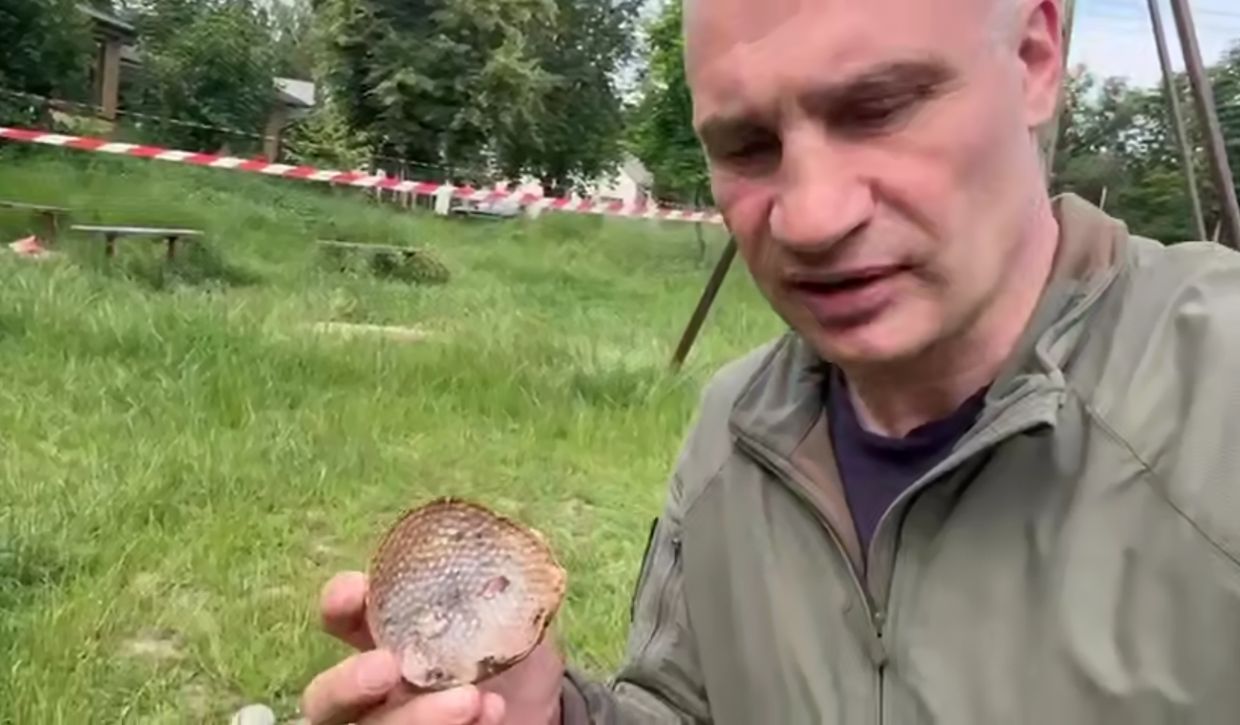
Emergency services in Kyiv have recovered fragments of cluster munitions following the overnight Russian missile and drone attack on June 17, Mayor Vitali Klitschko reported, calling it further evidence of Russia's "genocide" against Ukrainians.

"In the capital's Nyvky neighborhood, emergency workers are now finding these kinds of cluster munition parts," Klitschko said in a statement shared on social media. "Another clear sign of the genocide Russia is committing against Ukrainians."

Cluster munitions are banned under international law by more than 100 countries due to their indiscriminate nature and the long-term threat they pose to civilians, especially when unexploded submunitions remain hidden in residential areas.

While Russia and Ukraine are not signatories to the Convention on Cluster Munitions, international humanitarian organizations have repeatedly condemned the use of such weapons in populated areas. Ukraine uses cluster munitions on the battlefield against Russian forces.

The mayor's comments came hours after one of the largest and deadliest attacks on the Ukrainian capital in months, in which at least 15 people were killed and nearly 100 injured. The Russian strike, which lasted nearly nine hours, included waves of kamikaze drones, ballistic missiles, and what authorities now confirm were banned explosive parts.

President Volodymyr Zelensky called the assault "one of the most horrifying attacks on Kyiv," saying more than 440 drones and 32 missiles were launched across Ukraine overnight.

"Such attacks are pure terrorism," he said in a statement on social media. "And the whole world, the U.S., and Europe must finally respond as civilized societies respond to terrorists."

Zelensky confirmed that damage had been reported in eight districts of Kyiv, with emergency workers still searching for survivors beneath the rubble of a destroyed apartment block.

He added that strikes also hit Odesa, Zaporizhzhia, Chernihiv, Zhytomyr, Kirovohrad, Mykolaiv, and Kyiv regions. "Fifteen people are confirmed dead. My condolences to their families and loved ones," Zelensky said.

Foreign Minister Andrii Sybiha also condemned the attack, calling it a "massive and brutal strike" timed deliberately to coincide with the G7 summit, which is taking place in Canada on June 16-17.

Russian drone strike on Odesa injures 13, including 1 child
Russian drone strikes on Odesa early June 17 injured 13 people, including one child, regional authorities reported.
Cluster munitions used in overnight Russian strike on Ukraine, Kyiv mayor saysThe Kyiv IndependentLucy Pakhnyuk
Cluster munitions used in overnight Russian strike on Ukraine, Kyiv mayor says
❌