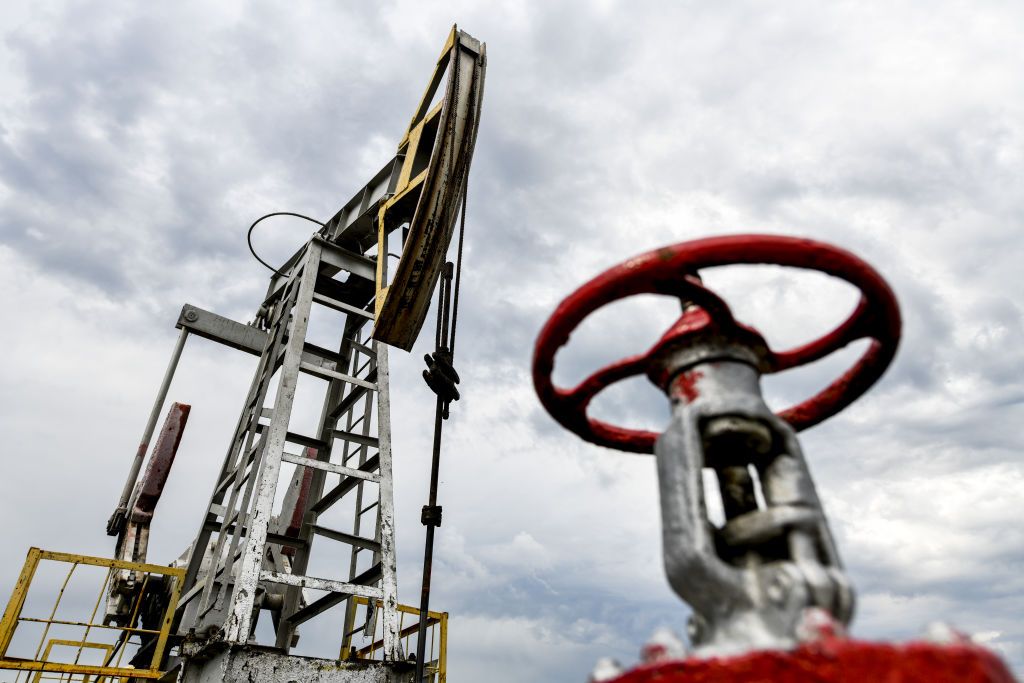
The United States is opposing a proposal by other Group of Seven nations to lower the price cap on Russian oil, Bloomberg reported on June 13.Citing unnamed sources, Bloomberg said the U.S. remains opposed to reducing the cap from $60 to $45 per barrel – a position it first took earlier this year when Treasury Secretary Scott Bessent declined to support a similar effort.The price cap, introduced in December 2022 as a measure to limit the Kremlin's ability to finance its war against Ukraine, proh
The United States is opposing a proposal by other Group of Seven nations to lower the price cap on Russian oil, Bloomberg reported on June 13.
Citing unnamed sources, Bloomberg said the U.S. remains opposed to reducing the cap from $60 to $45 per barrel – a position it first took earlier this year when Treasury Secretary Scott Bessent declined to support a similar effort.
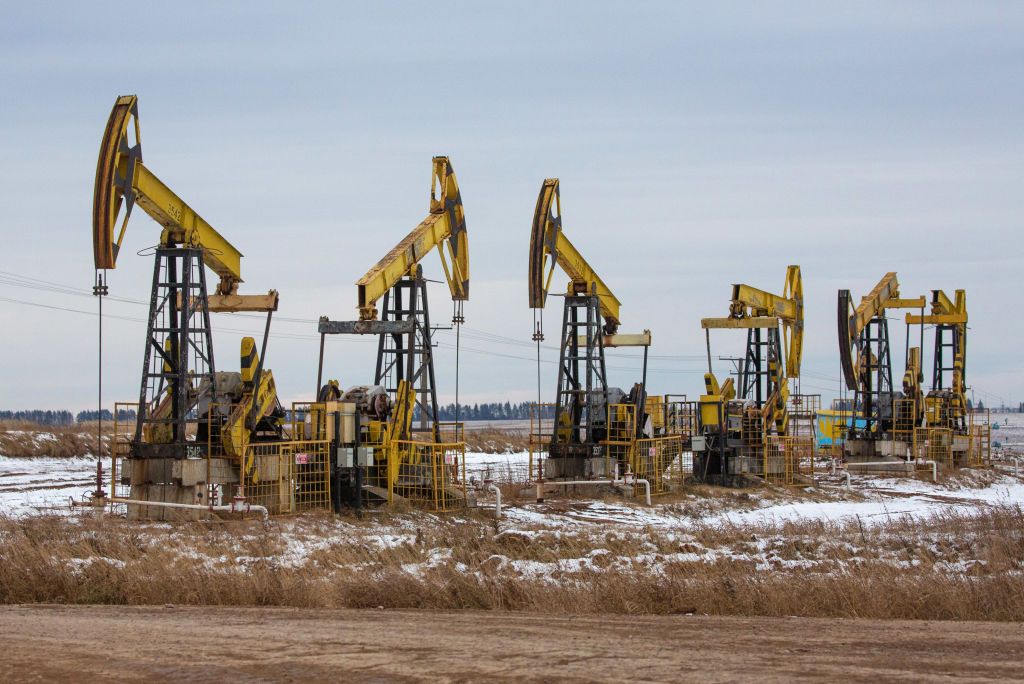
The price cap, introduced in December 2022 as a measure to limit the Kremlin's ability to finance its war against Ukraine, prohibits Western companies from shipping, insuring, or otherwise servicing Russian oil sold above $60 per barrel.
One source told Bloomberg that the EU and U.K. could explore lowering the cap without the U.S., as most of Russia's oil is transported in European waters. However, a unified G7 agreement would carry greater impact if it could be enforced by the U.S.
The price cap debate has become more urgent as oil prices, which had fallen below the $60 cap in recent months, surged following Israel's strikes against Iran in the past 24 hours.
G7 leaders will revisit the price cap discussion during the upcoming summit, hosted by Canada from June 15-17 in Kananaskis County, Alberta.
The summit agenda will also include topics such as support for Ukraine in the Russian war, global economic stability, digital transformation, and climate change.
The G7 currently includes Canada, France, Germany, Italy, Japan, the United Kingdom, and the United States. The European Union is also represented in the group.
Three Ukrainian nationals were killed in a bus accident in France on June 13, President Volodymyr Zelensky confirmed in a statement on Telegram."Terrible news about the tragic bus accident in France," Zelensky wrote.The accident occurred in the morning of June 13, near the Sarthe department of France. The bus was reportedly carrying Ukrainian nationals, including adults and children, who were returning from an educational exchange.While en route to Paris, the bus lost control and flipped into a
Three Ukrainian nationals were killed in a bus accident in France on June 13, President Volodymyr Zelensky confirmed in a statement on Telegram.
"Terrible news about the tragic bus accident in France," Zelensky wrote.
The accident occurred in the morning of June 13, near the Sarthe department of France. The bus was reportedly carrying Ukrainian nationals, including adults and children, who were returning from an educational exchange.
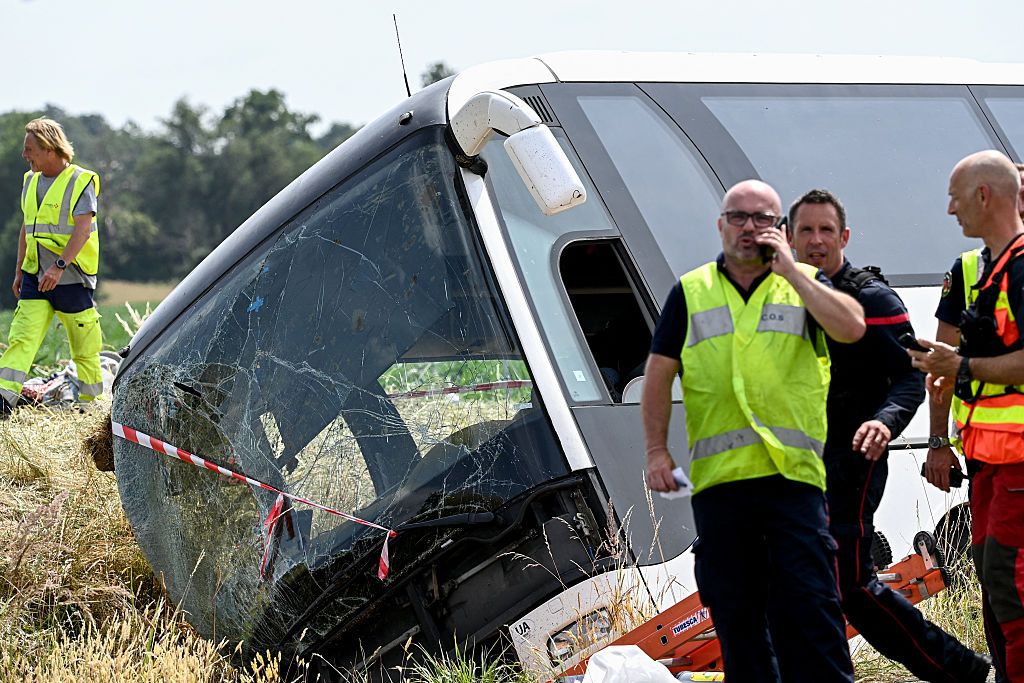
While en route to Paris, the bus lost control and flipped into a ditch.
Four adults were killed in total – three of whom were Ukrainian nationals. French media reported that nine people sustained serious injuries, while an additional 18 suffered minor injuries.
Zelensky added that Ukraine's Foreign Ministry promptly sent a team of diplomats and consuls, led by the ambassador to France, to assist survivors and support the victims’ families. The team is coordinating with French authorities and emergency services at the scene.
Foreign Minister Andrii Sybiha and Interior Minister Ihor Klymenko are providing regular updates on the victims' conditions and emerging details regarding the accident.
Zelensky thanked the French authorities, noting that "more than 50 emergency teams were deployed" in what he called "a true expression of French solidarity."
He also expressed his "condolences to all the families of the victims" and wished for a "speedy recovery of the injured children."
Editor's note: This is a breaking story and is being updated.Israeli forces launched "preemptive strikes" on Iran overnight on June 13, targeting Iran's nuclear program, Prime Minister Benjamin Netanyahu said in an overnight address.Netanyahu said in an overnight address that Israel launched "Operation Rising Lion," which would last for "many days," marking a drastic escalation in conflict in the Middle East."We struck at the heart of Iran's nuclear enrichment program... We targeted Iran's main
Editor's note: This is a breaking story and is being updated.
Israeli forces launched "preemptive strikes" on Iran overnight on June 13, targeting Iran's nuclear program, Prime Minister Benjamin Netanyahu said in an overnight address.
Netanyahu said in an overnight address that Israel launched "Operation Rising Lion," which would last for "many days," marking a drastic escalation in conflict in the Middle East.
"We struck at the heart of Iran's nuclear enrichment program... We targeted Iran's main enrichment facility in Natanz. We targeted Iran's leading nuclear scientists working on the Iranian bomb," Netanyahu said.
The strikes killed Hossein Salami, the Commander-in-Chief of Iran’s Islamic Revolutionary Guard Corps (IRGC), multiple Iranian state media outlets reported. Iran’s Supreme Leader Ayatollah Ali Khamenei confirmed that several nuclear scientists and officials had been killed in the attack.
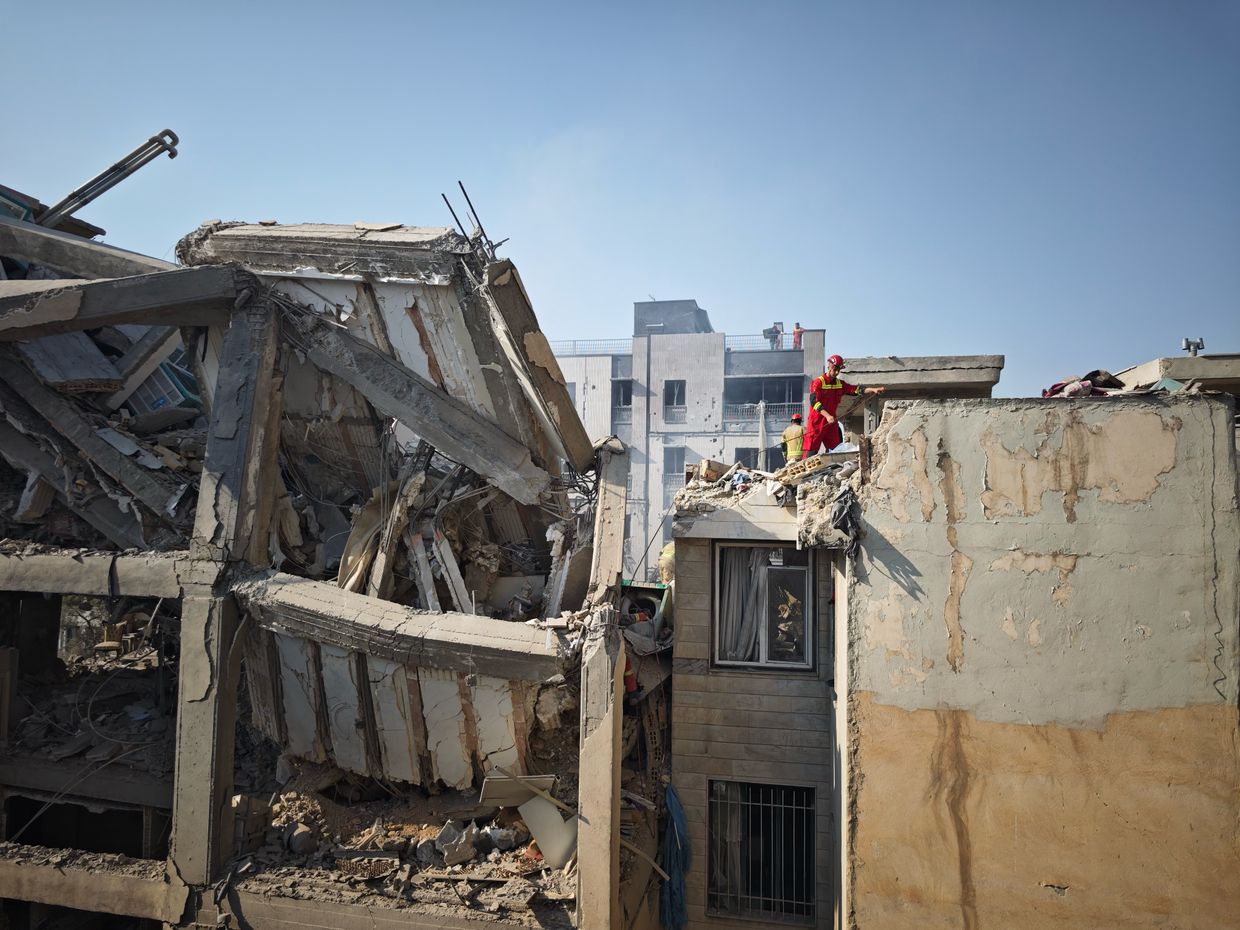
The full extent of the attack was not immediately clear. Multiple explosions were reported in Tehran as videos posted on social media purportedly show fire burning in multiple locations of Tehran.
"Following the State of Israel’s preemptive strike against Iran, a missile and drone attack against the State of Israel and its civilian population is expected in the immediate future" Israeli Defense Minister Israel Katz warned in a statement.
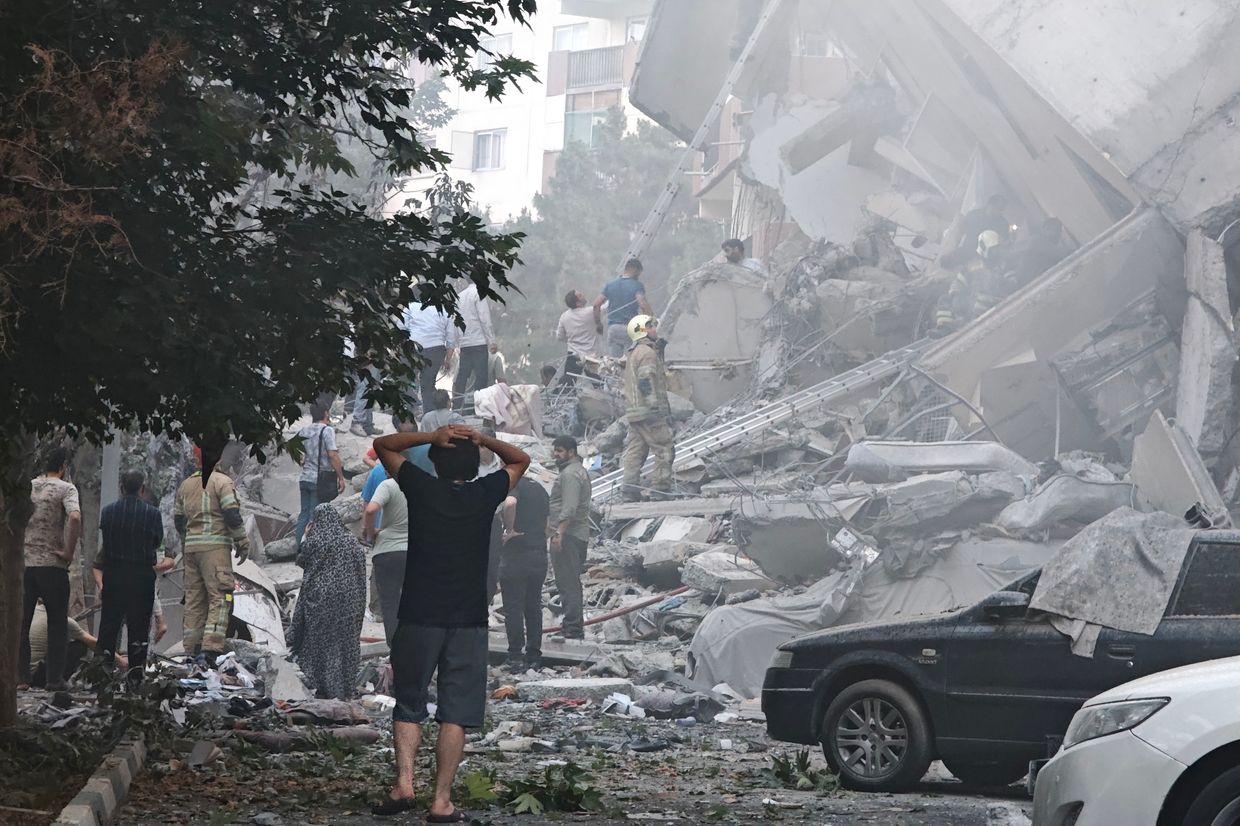
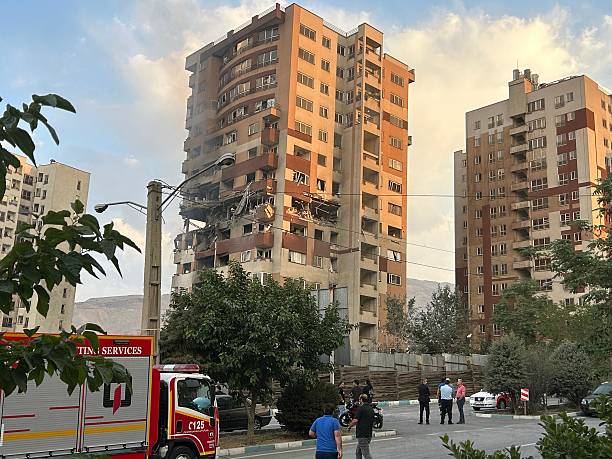
A view of a damaged building in the Iranian capital, Tehran, following an attack by Israel on June 13, 2025. (Ahmet Dursun/Anadolu via Getty Images)
Iran's Supreme Leader vowed to enact "severe punishment" in response to the attack, accusing the United States for "also (being) responsible for the dangerous consequences of this reckless escalation."
In a statement released by the State Department, U.S. Secretary of State Marco Rubio said that the United States was not involved in the strikes on Iran.
U.S. President Donald Trump, who plans to convene a cabinet meeting in response to the strikes, expressed concerns about escalating tensions between Israel and Iran earlier in the day, warning that a "massive conflict" could erupt in the Middle East.
"Tonight, Israel took unilateral action against Iran. We are not involved in strikes against Iran and our top priority is protecting American forces in the region," Rubio said.
Speaking to reporters at the White House on June 12 ahead of the strikes, Trump warned that an Israeli strike on Iran "could happen" if a nuclear deal is not reached with Iran. Talks between Washington and Tehran were set to resume this weekend on Iran's nuclear program.
Earlier in the day, Trump emphasized that despite tensions, he is committed to avoiding conflict and prefers a diplomatic solution to Iran's nuclear aspirations. "I want to have an agreement with Iran," Trump said, referring to ongoing Iran-US nuclear talks in Oman.
Writing on Truth Social later in the day, Trump reaffirmed his commitment to a "diplomatic resolution to the Iran nuclear issue," and insisted that his "entire administration has been directed to negotiate with Iran."
Iran insists its nuclear program is for peaceful purposes and has expressed willingness to accept limited restrictions in exchange for the lifting of sanctions.
Coinciding with Trump’s remarks, the International Atomic Energy Agency released a report highlighting Iran’s failure to comply with its obligations to fully disclose activities at its nuclear facilities.
Beyond the Middle East, Iran has emerged as a key ally of Russia in its war against Ukraine, supplying Moscow with drones used in attacks on Ukrainian cities.
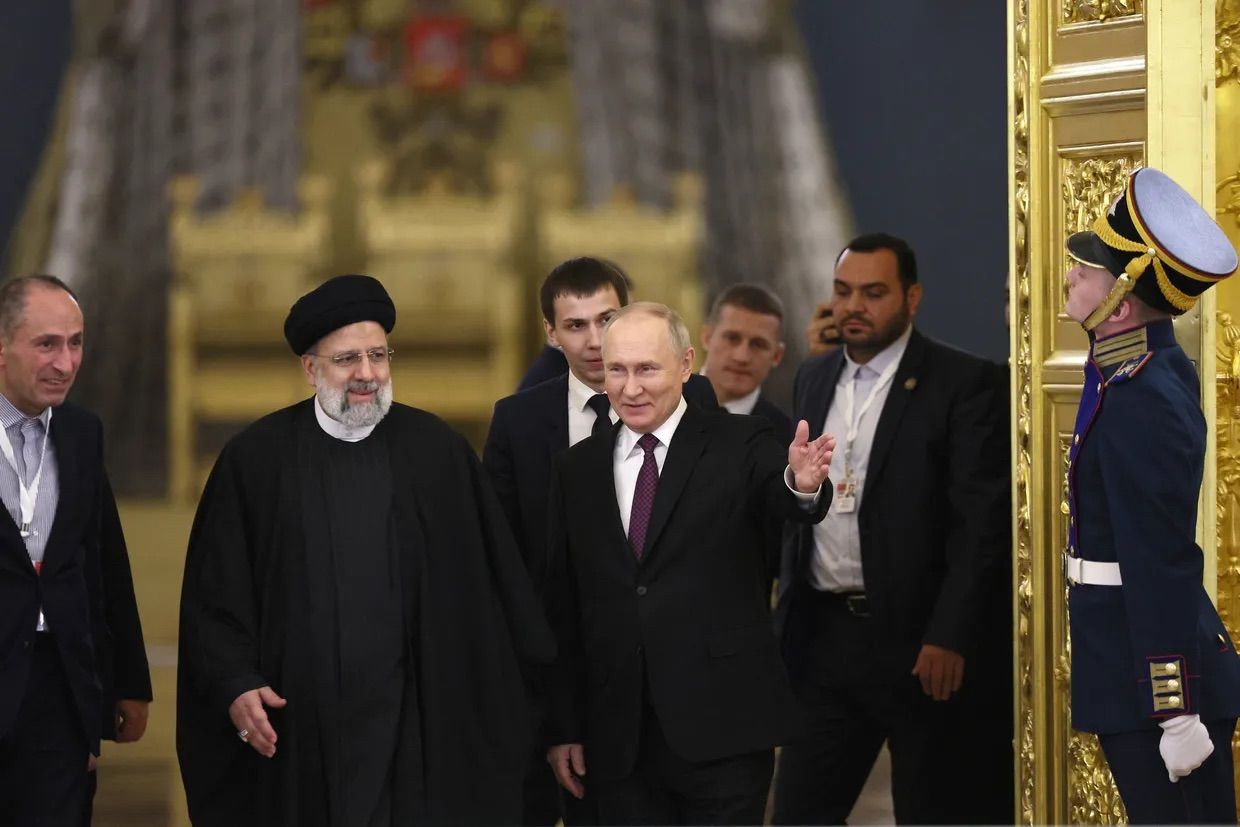
In April 2025, Russian President Vladimir Putinratified a strategic partnership with Iran, vowing to strengthen bilateral ties and pledging not to support any third party engaged in conflict with the other.
Ylva Johansson, former European Commissioner for Home Affairs, will serve as the European Union's new special envoy for Ukrainians in the bloc, POLITICO reported on June 12.According to anonymous officials that spoke to POLITICO, Johansson will fill the newly created post, overseeing the Commission's long-term strategy for Ukrainian refugees currently residing in the European Union.Johansson, a former Swedish minister and European Commission official, previously visited Ukraine on several occasi
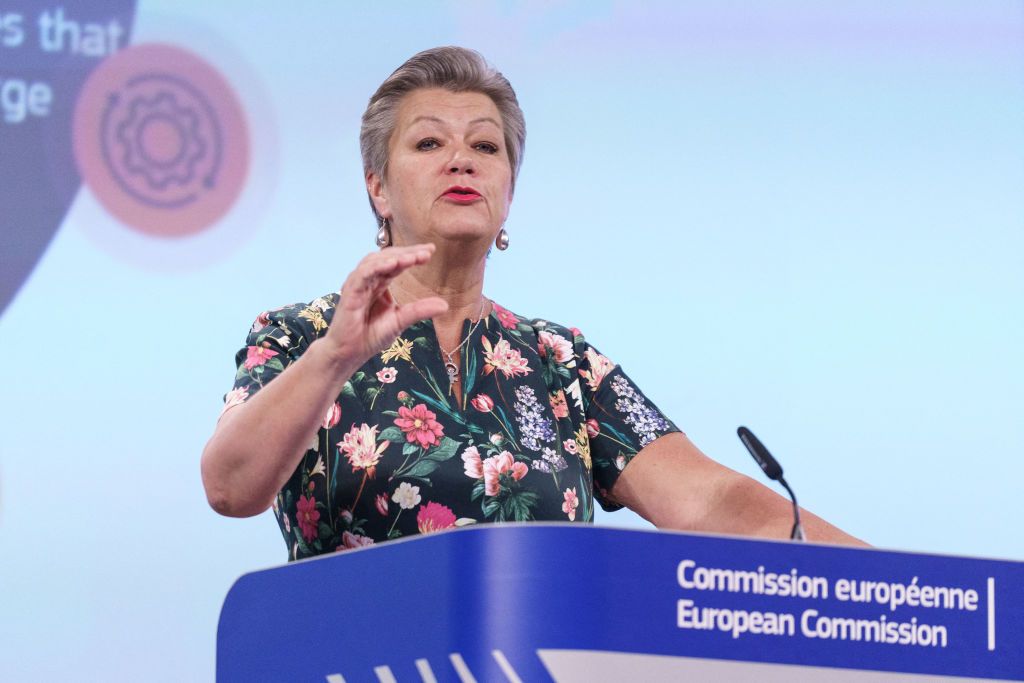
Ylva Johansson, former European Commissioner for Home Affairs, will serve as the European Union's new special envoy for Ukrainians in the bloc, POLITICO reported on June 12.
According to anonymous officials that spoke to POLITICO, Johansson will fill the newly created post, overseeing the Commission's long-term strategy for Ukrainian refugees currently residing in the European Union.
Johansson, a former Swedish minister and European Commission official, previously visited Ukraine on several occasions, including a refugee camp on the border with Romania. She received the Ukrainian order of merit in September 2024.
As special envoy, Johansson will be responsible for EU initiatives focused on helping Ukrainian refugees transition into permanent legal statuses or return home.
As part of these initiatives, the EU will launch "unity hubs" – information centers jointly managed with the Ukrainian government. The hubs will support Ukrainian refugees to integrate with EU host countries or repatriate to Ukraine.
Germany, which has has taken in more than 1 million Ukrainian refugees since the start of the full-scale invasion, recently committed to establishing unity hubs in Berlin. The unity hubs in Berlin will provide Ukrainians with access to educational and career opportunities both in Ukraine and Germany.
The European Commission also recently extended temporary protection Ukrainian refugees who fled to the EU following Russia's invasion of Ukraine.
According to Eurostat, 4.26 million Ukrainians currently hold temporary protection status in the EU as of April 2025.
Since 2021, Russian Wagner mercenaries have detained, tortured, and forcibly disappeared hundreds of civilians in secret prisons across Mali, according to a joint investigation published on June 12 by Forbidden Stories, France 24, Le Monde, and IStories.The investigation found that mercenaries with Russia's Wagner Group, working alongside Malian government forces, had systematically abducted and detained civilians, holding them in prisons at former United Nations bases and military bases across
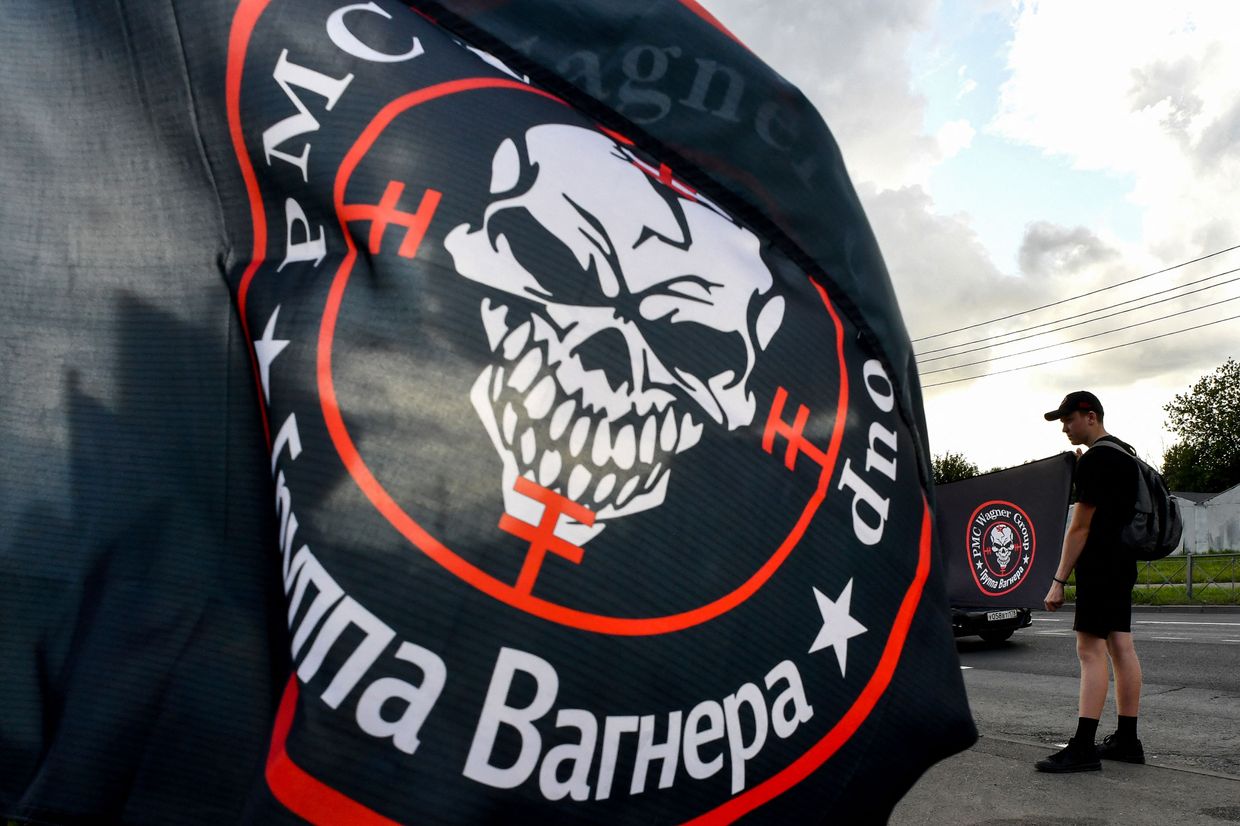
Since 2021, Russian Wagner mercenaries have detained, tortured, and forcibly disappeared hundreds of civilians in secret prisons across Mali, according to a joint investigation published on June 12 by Forbidden Stories, France 24, Le Monde, and IStories.
The investigation found that mercenaries with Russia's Wagner Group, working alongside Malian government forces, had systematically abducted and detained civilians, holding them in prisons at former United Nations bases and military bases across Mali.
Drawing on eyewitness accounts and satellite imagery, the investigation identified six detention centers where Wagner held civilians between 2022 and 2024. The total number of Wagner detention centers in Mali is likely to be much higher.
Prisoners were subjected to systematic torture – including beatings, waterboarding, electric shocks, starvation, and confinement in sweltering metal containers.
The investigation was carried out as part of the Viktoriia project, in memory of Ukrainian journalist Viktoriia Roshchyna, who was captured by Russian forces in 2023 while investigating the illegal detention of civilians in Russian-occupied territories of Ukraine. She was killed in Russian captivity in 2024.
The Russian mercenary group, known for its deployment in Ukraine and short-lived rebellion against the Kremlin in 2023, has a strong presence across the African continent, backing Russian business interests and Moscow-friendly regimes.
The mercenaries have been particularly active in Mali since late 2021 and have been accused of perpetrating war crimes. In December 2024, Human Rights Watch accused Wagner mercenaries and Malian government forces of deliberately killing 32 civilians.
The Wagner Group recently announced its withdrawal from Mali, where it fought alongside Malian government forces to fend off Islamist insurgents. Wagner has been active across the African continent for years and has been previously accused of committing human rights abuses.
Most Group of Seven (G7) nations are prepared to lower the Russian oil price cap from $60 to $45 a barrel even without support from the United States, Reuters reported on June 12, citing unnamed sources familiar with the matter.According to Reuters, the European Union and United Kingdom, backed by other European G7 countries and Canada, are ready to lead the charge in lowering the Russian oil price cap – even if U.S. President Donald Trump opts out.The price cap, which bans Western companies fro
Most Group of Seven (G7) nations are prepared to lower the Russian oil price cap from $60 to $45 a barrel even without support from the United States, Reuters reported on June 12, citing unnamed sources familiar with the matter.
According to Reuters, the European Union and United Kingdom, backed by other European G7 countries and Canada, are ready to lead the charge in lowering the Russian oil price cap – even if U.S. President Donald Trump opts out.
The price cap, which bans Western companies from shipping, insuring, or otherwise servicing Russian oil sold above $60 per barrel, was first introduced in December 2022 as a measure to limit the Kremlin's ability to finance its war against Ukraine.
The G7 had previously attempted to lower the Russian oil price cap; however, the proposal was dropped after U.S. Treasury Secretary Scott Bessent reportedly declined to support it.
It is unclear whether the U.S. will support the decision this time around. Japan's position is also undecided.
Participating country leaders will revisit the price cap discussion at the upcoming G7 summit. Canada, which holds the G7 presidency this year, will host the summit on June 15-17 in Kananaskis County, located in the western province of Alberta.
The summit agenda will include topics such as support for Ukraine in the Russian war, global economic stability, digital transformation, and climate change.
President Volodymyr Zelensky is expected to attend the summit and seek a meeting with U.S. President Donald Trump.

 Connexion
 The Kyiv IndependentChris York