Vue normale

  • ✇Coda Story
  • Wealth is health, Insider betting & Trump will see himself in court
    Inequality is bad for you, and new figures in the UK show that the number of years when people can live healthy lives have fallen everywhere and furthest in the country’s poorest areas. This is partly a lingering after-effect of COVID, but is mostly a result of cuts imposed on health services by the last government. The results are dramatic, with the average person in a wealthy area expected to enjoy almost 20 years more good health than someone in a more deprived area. The situation in the Unit
     

Wealth is health, Insider betting & Trump will see himself in court

6 mai 2026 à 07:51

Inequality is bad for you, and new figures in the UK show that the number of years when people can live healthy lives have fallen everywhere and furthest in the country’s poorest areas. This is partly a lingering after-effect of COVID, but is mostly a result of cuts imposed on health services by the last government. The results are dramatic, with the average person in a wealthy area expected to enjoy almost 20 years more good health than someone in a more deprived area. The situation in the United States is similar, and declines in health have also been observed in Germany, Canada and the Netherlands.

“Reducing smoking and improving diet and physical activity can delay the onset of illness and improve day-to-day wellbeing,” notes this extremely commonsensical analysis from the UK healthcare think tank The Health Foundation. “Secure work, good-quality housing and supportive local environments all influence physical and mental health.”

Being unhealthy is just terrible in all ways, and the problem is clearly getting worse, so you would expect the disrupters of our new economy to be finding ways to respond to this challenge. And at first glance, the Sam Altman-backed Retro Biosciences — with its focus on targeting “aging mechanisms to increase healthy lifespan” — looks promising. So does Altos Labs, with its mission to reverse “disease, injury, and the disabilities that can occur throughout life.” And there’s Saudi Arabia’s Hevolution, which is catalysing “the shift from lifespan to healthspan.”

And that’s before we get to the start-ups operating in a “free city” off the coast of Honduras, which has the brave approach of basically letting people do whatever medical research they like (“Prospera is a unique place where we can do such things,” says one businessman) to help drive progress towards an illness-free future.

But don’t get your hopes up. They’re not looking at ways to help people to get vaccinated, eat healthily, stop smoking or do more exercise. Instead, they’re working on gene therapy, stem cells, and other extremely expensive treatments that will only benefit people who can afford them, and who are thus already likely to be doing well. In the UK meanwhile, Genflow is also aiming to slow the ageing process in dogs, to make sure the super-rich aren’t left without their pets in this artificially prolonged future.

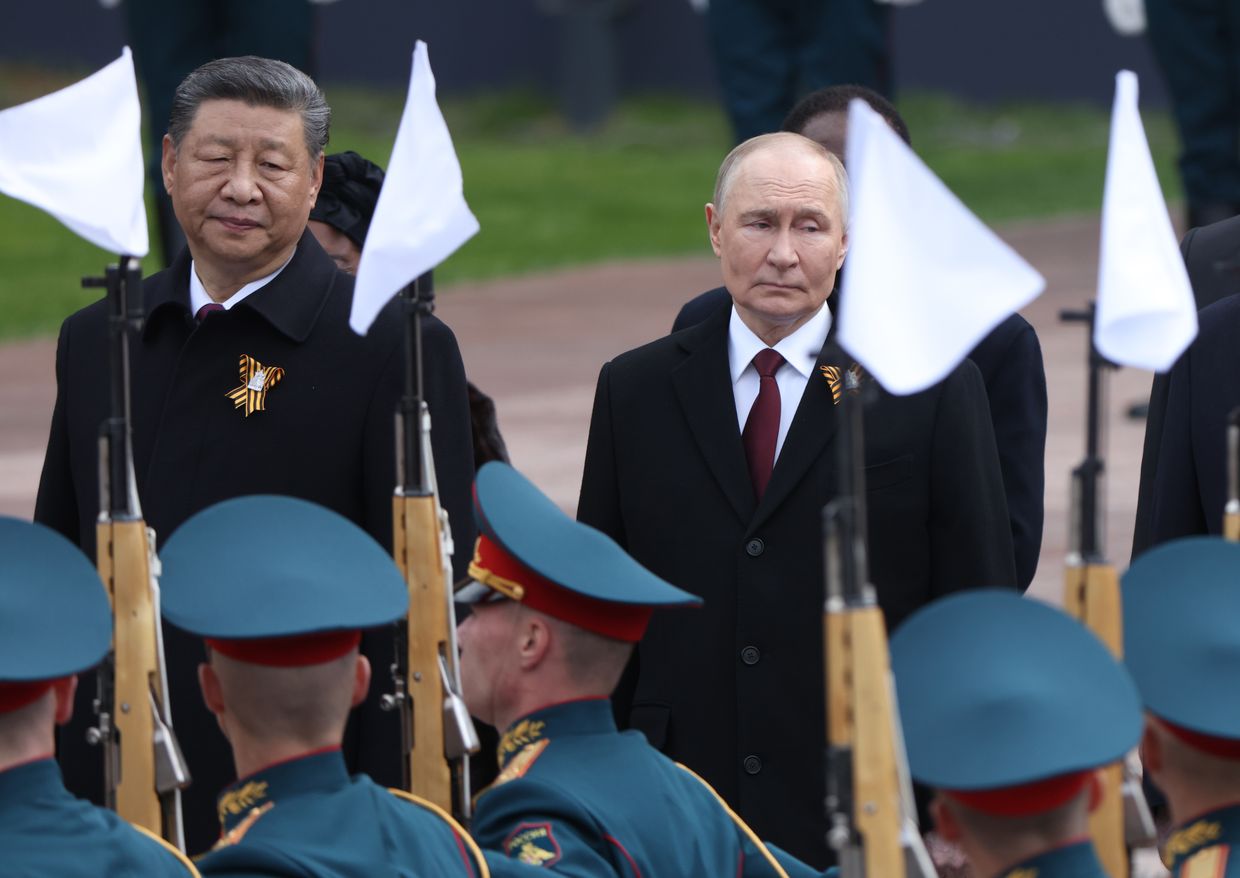
It’s tempting to see this as a metaphor for late-stage capitalism in the West, with its focus on the needs of the few (and their pets) rather than of society as a whole, except that we’re seeing a similar pattern in other places too. In Russia, Moscovites live longer than people from the provinces (although the picture is complicated by the relatively good health of the non-drinkers from Muslim regions), so you would have expected Vladimir Putin to be concerned about how to close that gap. But when he was chatting with Xi Jinping last year in China (where inequality has also harmed health), they were instead more focused on how to live forever. 

“Human organs can be continuously transplanted, and people can live younger and younger, and even achieve immortality,” Putin said. (Three important questions: firstly, does this mean he will be president of Russia literally forever, the world’s first un-dead head of state? Secondly, are they farming people as a source of organs for him? Thirdly, does he really believe this?)

“This century, there's a chance of also living to 150,” replied Xi, who could — under that scenario — rule China for another 77 years, which is longer than he’s been alive, by which time his nation’s population could well, according to UN estimates, have halved.

I, for one, wouldn’t mind having a vote on whether this is a future I want to be a part of.

An insider betting scam

Here’s a fascinating piece of research from the Anti-Corruption Data Collective about prediction markets, looking at how often “long shot” bets on military and security matters pay off compared to what you would expect: fully 52% succeed, compared to only 14% across Polymarket as a whole.

“Government officials and members of our military being able to turn a profit on insider information incentivises corrosive corruption in public office and undermines national security,” notes David Szakonyi, Co-Founder of the Anti-Corruption Data Collective.

The analysis follows the indictment of a U.S. serviceman who made $400,000 betting on the bid to capture Nicolas Maduro in Venezuela, with 13 “yes” wagers on various aspects of the operation in December and January. And that was only a comparatively small military campaign. Just imagine how much money privileged insiders could have made in the past, if only they’d had access to prediction markets before D-Day, before the first nuclear bomb test, or before the assassination of Archduke Ferdinand in Sarajevo.

I really enjoyed this recent episode of Planet Money about prediction markets, particularly with its clear explanation that — like so much “financial innovation” of the past — they’ve not invented anything new at all; they’ve just found a clever way around regulations that previously stopped people making bets in this way.

There is fierce competition between the two leading players — Kalshi and Polymarket — although they have common ground in one area: they both employ Donald Trump Jr.

Trump sues his own government

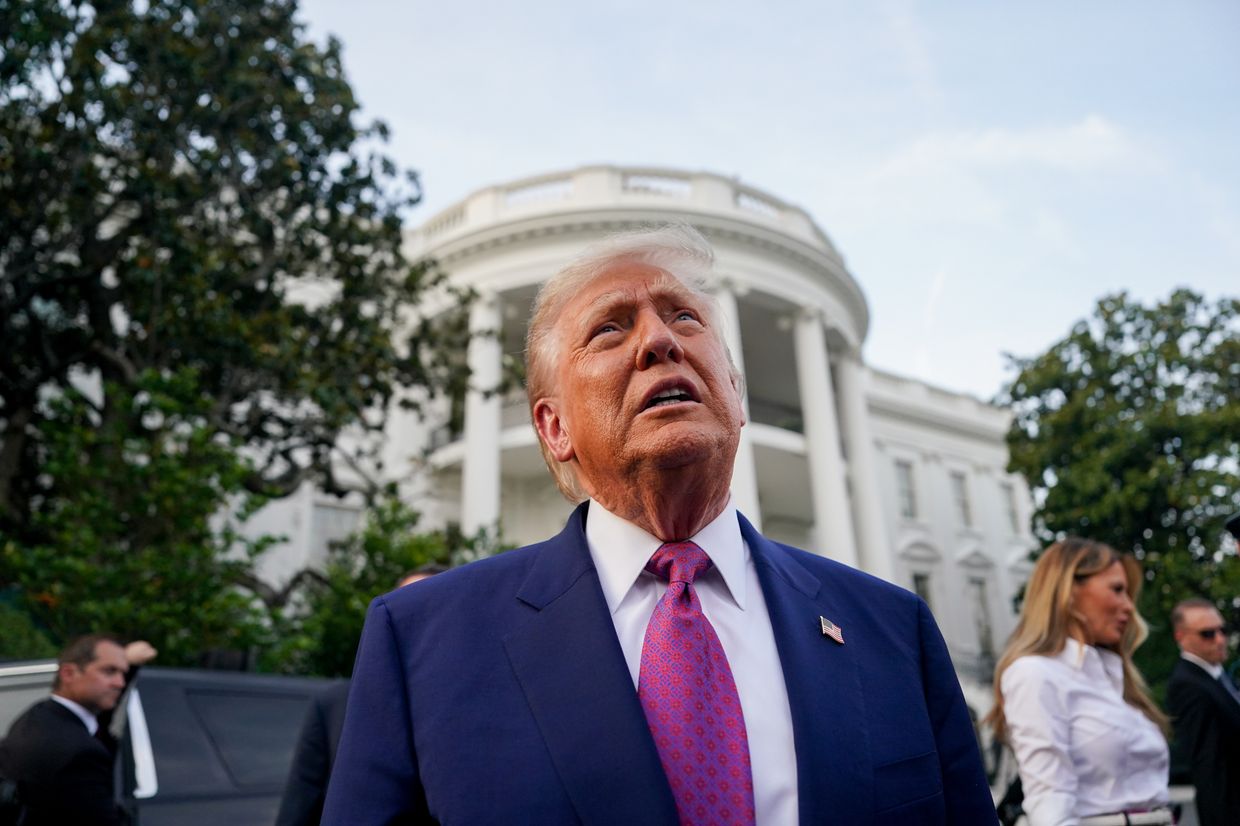
There are so many things happening in the United States at the moment that it’s hard to keep track, but I did like this analysis from David Allen Green of a particularly strange lawsuit, in which President Trump is suing the federal government for $10 billion. The judge is, unsurprisingly, concerned about a situation where the president is basically suing himself, and wants more information about how that’s going to work.

This could, however, be a whole new money-making front for the first family, and why should the Trumps stop at just $10 billion? They could presumably take the government for every penny it’s got. I’m amazed no one has done this before.

A version of this story was published in this week’s Oligarchy newsletter. Sign up here.

The post Wealth is health, Insider betting & Trump will see himself in court appeared first on Coda Story.

  • ✇Coda Story
  • Why Trump-backer Justin Sun is suing the Trumps’ firm
    Donald Trump and the crypto world have done well out of each other. The Trump family has made profits of several billion dollars, and ‘cryptopreneurs’ have found the United States a newly supportive environment for their products. But the crypto world is not a single entity, and there are potential differences of opinion and approach between the parts that specialise in fraud, money laundering, and speculation (as well as the small number of societally beneficial uses), and a court case between
     

Why Trump-backer Justin Sun is suing the Trumps’ firm

29 avril 2026 à 07:55

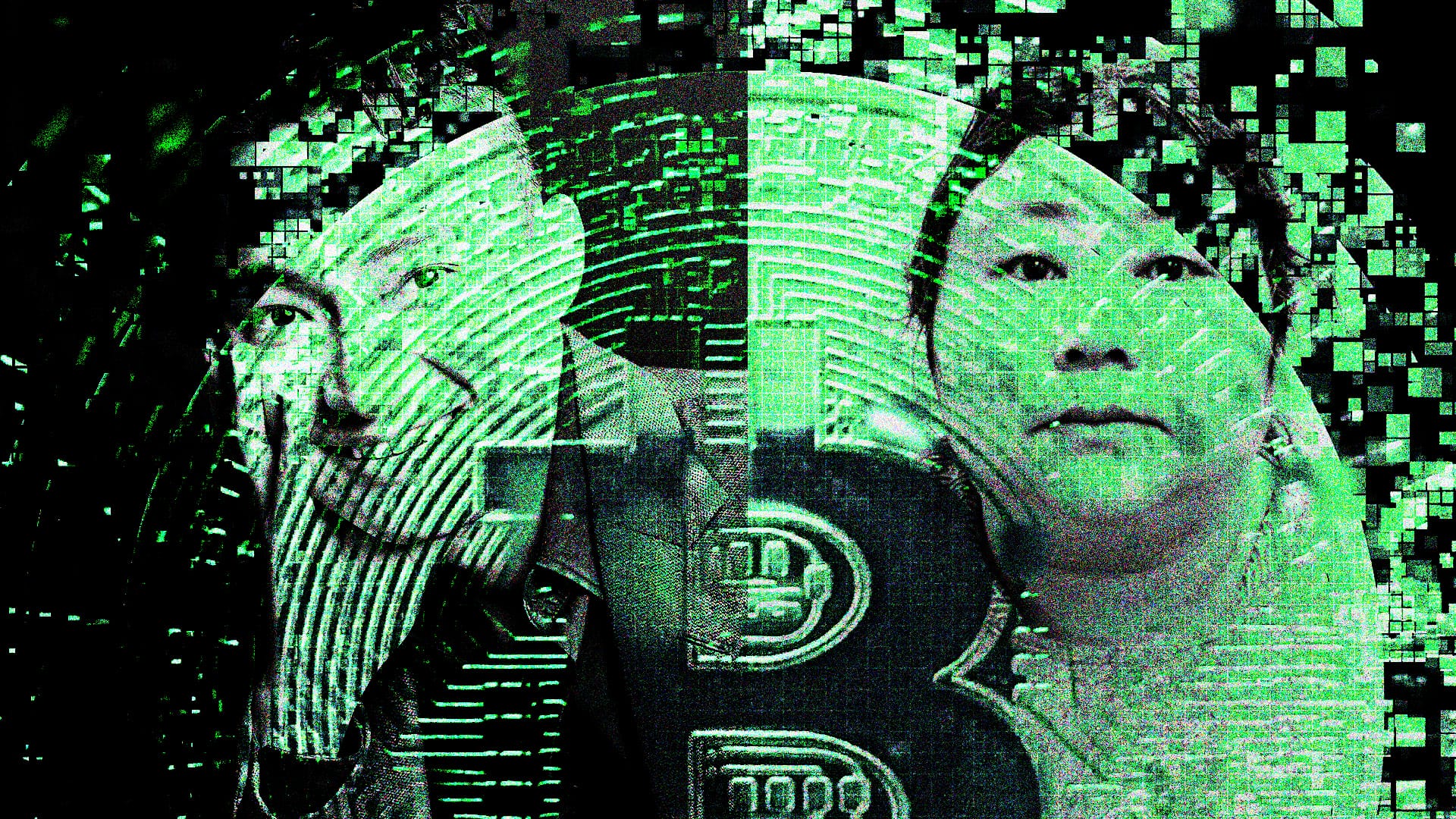
Donald Trump and the crypto world have done well out of each other. The Trump family has made profits of several billion dollars, and ‘cryptopreneurs’ have found the United States a newly supportive environment for their products. But the crypto world is not a single entity, and there are potential differences of opinion and approach between the parts that specialise in fraud, money laundering, and speculation (as well as the small number of societally beneficial uses), and a court case between billionaire Justin Sun and the Trump family’s World Liberty Financial threatens to blow those divides wide open.

Sun is a colourful gentleman and a firm favourite of this newsletter, thanks to his efforts to essentially buy the Pitcairn Islands, his voyage into kind-of space, his consumption of a $6.2 million banana, his stewardship of the Tron blockchain, his premiership of Liberland, and his frankly adorable continued usage of “H.E.” (his excellency) as a title despite losing his Grenadian ambassadorship three years ago after being accused of fraud by the Securities and Exchange Commission.

He also had a key role in transforming Trump from cryptosceptic into cryptoenthusiast after investing millions of dollars in World Liberty Financial in late 2024, which helped to persuade the president — then running for re-election — that there was money to be made on the blockchain. 

Considering the improbability of the Trump family building an actually successful crypto company, and the strong likelihood World Liberty Financial would find a way to keep investors’ money as has happened with Trump ventures in the past, quite a lot of people assumed Sun’s money was in reality more of a gift than an investment. But it appears these doubters were wrong, at any rate that’s what it says in the suit that Sun has filed in California alleging that World Liberty Financial has abused his rights.

“Mr. Sun invested $45 million to purchase $WLFI tokens from World Liberty not only because of the project’s claims that it would promote adoption of decentralized finance… but also because of the Trump family’s association with the project,” his claim states. “But as Mr. Sun unfortunately has learned, World Liberty’s operators, including Chase Herro, see the project as a golden opportunity to leverage the Trump brand to profit through fraud.”

Sun has been careful to make clear this is not an attack on the president (“Unfortunately, certain individuals on the World Liberty project team have been operating the project in a manner that goes against President Trump’s values,” he posted on X), who is, he says, being betrayed by underlings — as autocrats have always been throughout history —  but he is certainly airing a lot of dirty laundry, which is likely to upset influential people.

Perhaps the most significant allegations, which World Liberty Financial denies, is that the Trump family’s company is on the verge of collapse, having paid most of its money to its owners, and that it tried to extort money from Sun to keep it in business. This is not just significant for its investors but also for America’s diplomatic ties, since Abu Dhabi has invested $2 billion via World Liberty Financial’s USD1 stablecoin, and the United States can ill-afford to further irritate its allies in the Gulf right now.

The timing of the lawsuit is interesting. It was notable that, shortly after Trump returned to the White House, the Securities and Exchange Commission paused its investigation into Sun. In March, that investigation was finally wrapped up, with Sun paying $10 million but not admitting wrong-doing, so he is perhaps no longer concerned about facing legal action himself.

Sun was also a major investor in Trump’s memecoin, but is not the only person who seems to have soured on that particularly unlovely project. One of the perks of being an investor in the token is the right to have dinner with Trump, but the value of that ticket dropped this year to just $539,000 from $3.28 million in 2025, with the Financial Times quoting an expert as calling the friendship between Trump and the crypto-world “a shotgun marriage,” which seems fair.

The Trump family has, however, made $320 million in fees from the memecoin alone, so I suspect they’re not that bothered.

A tale of two scammers

There was, hard though it is to imagine, a time when Trump was just a strangely-tinted TV personality with strong views on where Barack Obama was born. And back then, in those prelapsarian days, 2014’s billion-dollar Moldovan bank fraud was a big deal. It’s great to see that mega-oligarch Vlad Plahotniuc has been jailed for 19 years for his involvement in a crime that ruined his homeland.

Moldova has struggled through the resulting period of economic, financial, diplomatic and political turmoil, and it was great to see that Viktor Orbán’s defeat in Hungary has meant it can make progress on its movement towards membership of the European Union.

The other mastermind of the bank fraud is pro-Kremlin politician Ilan Shor who was convicted and sentenced in absentia. He remains, of course, at liberty. Though his A7A5 sanctions-evading cryptocurrency has still not recovered the trading volume it had before the recent hack of the Grinex trading platform where people bought and sold it. Grinex blamed the hack on Western intelligence agencies, but Chainalysis has an interesting alternative explanation, based on the fact that A7A5 is gradually being squeezed by Western sanctions (including the latest ones from the European Union).

“Faced with mounting international pressure and a shrinking operational footprint, actors associated with Grinex could be using the guise of an alleged hack to quietly siphon liquidity and execute an exit scam,” Chainalysis suggested. I’m not saying that is what happened and to be honest, I think it’s more likely that this was the handiwork of Ukrainian hackers or standard financial criminals. I mention it, however, because Shor does have a previous record when it comes to setting up a money laundering scheme and then defrauding everyone who was foolish enough to trust him with their money. 

The billion-dollar bank fraud was a clever way to profit out of the ‘Moldovan Laundromat,’ which had been allowing Russians to smuggle money out of their homeland before Shor and his co-conspirators destroyed the Moldovan banking system and stole everyone’s cash. It would be remarkable if he had basically done the same thing for a second time with his stablecoin. Crypto people call it a rug pull.

A version of this story was published in this week’s Oligarchy newsletter. Sign up here.

The post Why Trump-backer Justin Sun is suing the Trumps’ firm appeared first on Coda Story.
  • ✇Coda Story
  • The performative war on money laundering
    Dutch friends like to tell me that their nation’s primary characteristic is bluntness, and the Netherlands’ Court of Audit has done nothing to challenge the stereotype with its bracing assessment of the country’s and, by extension, the world’s failure in fighting money laundering. Published last month, after an extensive analysis of the country’s efforts to stop dirty money, the Court’s report concludes that the system is expensive, discriminatory, and — possibly — completely ineffective. No one
     

The performative war on money laundering

8 avril 2026 à 08:11

Dutch friends like to tell me that their nation’s primary characteristic is bluntness, and the Netherlands’ Court of Audit has done nothing to challenge the stereotype with its bracing assessment of the country’s and, by extension, the world’s failure in fighting money laundering. Published last month, after an extensive analysis of the country’s efforts to stop dirty money, the Court’s report concludes that the system is expensive, discriminatory, and — possibly — completely ineffective. No one has really checked on that last point, so they can’t be sure, which if anything makes it all worse.

The Netherlands hosts the largest port in Europe, and is therefore home to a vast smuggling industry — Dutch politicians not infrequently warn that it’s becoming a narco-state — which requires an equally vast money laundering industry to service its profits. The Court of Audit set out to check the government’s response to this challenge, concluding that it cost banks €1.6 billion a year. It’s a price tag that has increased by almost 17% between 2021 and 2024, during which time the number of reports the banks’ 13,000 compliance officers made more than doubled.

“We think it is important that these employees make a meaningful societal contribution to preventing and combatting money laundering. There is no evidence that shows that they do,” the report witheringly observes.

The court sent surveys out to “politically-exposed people” (PEP is a jargon term meaning anyone in a position of power, or a close relative or associate) asking about their experiences. One person’s 83-year-old mother was asked to explain the source of an inheritance she received after the PEP applied for a loan. It is an eye-opening section, revealing how process is prioritised over any kind of judgement about where the risk of money laundering genuinely lies, but the real shock is in the section about different religious groups, which shows how the transactions of immigrant-focussed churches and mosques are systematically checked more thoroughly than local Protestant or Catholic congregations.

“A bank told a mosque that it was not possible to collect so much money after a prayer meeting,” the report notes. “The mosque’s trustees said the bank could come and see for itself but the bank declined. Feeling powerless and unable to deposit the money with the bank, the trustees hid it in the mosque.”

Imagine if we had an ongoing health crisis. And imagine that the government had created an expensive, intrusive system to tackle it, which was generating an endlessly increasing amount of paperwork, employing thousands of people and actively discriminating against religious and ethnic minorities. Surely, someone would at least put in the hours to check if the system worked, whether it was making people healthier, and assess therefore whether all these bad side effects were justified? 

With anti-money laundering policy, that is simply not happening. It’s based on faith rather than facts: we just need to do more of the same thing, and eventually we’ll get the results we want; if we don’t, we need to do the same thing even more. Interestingly, Texan judge Jeremy Kernodle — fresh from gutting the Corporate Transparency Act — has returned to the fight against anti-money laundering regulation. He has killed Geographic Targeting Orders, which were supposed to collect information around real estate transactions. “FinCEN’s explanations are vague, conclusory, and unpersuasive,” the court ruled. “The fact that some bad actors have conducted non-financed real estate transactions does not make such transactions categorically ‘suspicious.’”

I’m not saying I agree with Mr. Kernodle, because I don’t, but I don’t think pushback on anti-money laundering orthodoxy is necessarily a bad thing, since it obliges us to think more deeply about what actually works, rather than just going along with ineffective old policies. I hope people outside the Netherlands read the Court of Audit’s report and start wondering whether this approach isn’t long past time for a complete overhaul.

How do you solve a problem like crypto?

It’s quite unusual for there to be a divide in the UK’s anti-corruption community, which tends to agree on technocratic solutions to the problems around illicit finance, but one has emerged around the role of cryptocurrencies in political donations. Spotlight on Corruption doesn’t think the government’s moratorium on crypto donations goes far enough. There needs to be a ban, they argue, in primary legislation with additional safeguards. I agree.

The folks at RUSI, on the other hand, think a moratorium on crypto donations is a better idea since it would prime the country to take regulating cryptocurrencies more seriously, and prepare the way for them to be widespread. Take a look, judge for yourself, and let me know what you think. The difference may reflect deeper and unresolvable political differences in how countries should respond to globalisation, but it’s an interesting one to think about.

One thing I think we all agree on is the need for an urgent overhaul of all rules around electoral finance, while there’s still an honest system to approve them.

On that note, interesting news from Cambodia, which has extradited Li Xiong to China. Xiong, who is accused by governments worldwide of playing a key role in the now-collapsed Huione group, which was laundering money for crime syndicates on an industrial scale, with particular expertise in cryptocurrencies. Of course, the criminals have not stood still and have new markets up and running, but it is striking how quickly the extradition went ahead.

In contrast, the legal proceedings around the mammoth tax fraud exposed two decades ago by Sergei Magnitsky grind tortuously on, with the culprits still safe in Russia. They certainly enjoyed themselves in Europe for a while, however, as a court case in Paris shows. “The spending spree included: €668,517, ($771,703) at a Parisian art and antique gallery; €696,015 ($803,445) across two high-end French women’s fashion brands; €96,814 ($111,757) at a luxury jewellery store in Courchevel, an exclusive ski resort in the French Alps; and €127,182 ($146,813) for a Courchevel tour package.”

There are few things that reveal the moral bankruptcy of the regime in the Kremlin more than this case. It’s not enough that corrupt officials could kill a good man who exposed their $230 million theft from the Russian people, but the Russian state then shielded them while they splashed the loot on European luxury holidays, and continues to do so to this day. 

Nothing on the same scale is happening in the United States of course, but still this analysis of how enforcement of the Foreign Corrupt Practices Act is being politicised is a bit grim: “The transformation of U.S. antibribery tools into economic weapons also threatens to undo the global system the United States helped establish to punish business corruption.”

A version of this story was published in this week’s Oligarchy newsletter. Sign up here.

The post The performative war on money laundering appeared first on Coda Story.
  • ✇Coda Story
  • Our corrupt world, run by oligarchs for oligarchs
    One difficulty in writing about corruption is explaining what it is. You’re either too specific — “it’s taking bribes”. Or too vague — “it’s being bad”. Another difficulty is obtaining the raw material to analyse: corrupt people don’t tend to speak openly about it, which means you’re left looking at corruption’s visible manifestations, which is like trying to understand a virus only from its spots. So huge kudos to Earth League International for producing a detailed, specific and thoughtful r
     

Our corrupt world, run by oligarchs for oligarchs

25 mars 2026 à 08:47

One difficulty in writing about corruption is explaining what it is. You’re either too specific — “it’s taking bribes”. Or too vague — “it’s being bad”. Another difficulty is obtaining the raw material to analyse: corrupt people don’t tend to speak openly about it, which means you’re left looking at corruption’s visible manifestations, which is like trying to understand a virus only from its spots.

So huge kudos to Earth League International for producing a detailed, specific and thoughtful report on how corruption facilitates wildlife crime globally, which is packed full of lessons for the study of corruption in general as well. Corruption is a system, everything is connected. It’s the water in which criminals swim, and it will drown the rest of us if we let it.

Earth League International embeds investigators in corrupt networks all over the world, and reveals how it is so much more than just the “abuse of entrusted power for private gain” and their report quotes multiple specific examples. The choice for an official standing in the way of a Transnational Criminal Organisation (TCO) is not between taking a bribe and being honest, it’s between taking a bribe and having a family member killed. 

“Corruption tilts the playing field of justice by turning some officials or even agencies into additional arms of criminal networks, akin to painting a group of white chess pieces red and then commencing a match, giving the criminal side a decided advantage”, notes the report. And, it adds, “Transnational Criminal Organisations are savvy about which officials they approach, assessing weaknesses such as debt or family ties that may make them more vulnerable to financial offers or threats.”

It estimates the value of global wildlife-related crime at over $1 trillion annually, which is an astonishing amount of money, but an important point to take is that this is not a separate form of corruption. The same border officials that wave through illegal shipments of timber or shark fins also help with other forms of smuggling. The money that criminals funnel into politics undermines democracy in all ways. “Corruption is not the sole purview of less wealthy nations. It is everywhere. During investigations into illegal wildlife trafficking for (traditional Chinese medicine) in Europe, for example, Earth League International found enablers in San Marino, Italy, Belgium, and Poland,” notes the report.

There is something grimly ironic that so much of the despoliation that is making things worse for everyone is driven by the trade in “medicine” and thus a desire to make the world better. In reality, of course, pangolin scales and totoaba swim bladders are no more medicinal than my toenail clippings. Perhaps the ultimate expression of this is the demand for hallucinogenic toad venom, as detailed in this excellent article from a few years ago, which supposedly helps us all access the inner divine, but which is meanwhile wiping out the unfortunate toads that secrete it. “Most harvesters don’t have a consciousness about the sacredness of the species”, said a toad practitioner. “It’s just a hustle business.”

On a more geopolitical and less psychedelic level, this report on how Russia is repurposing its influence networks in Europe so as to maintain its fossil fuel exports show that other forms of corruption have huge environmental impact of their own. “The time for polite half-measures is over. Stronger enforcement, embargoes and tariffs on Russian fossil fuels to cripple exports, personal sanctions, and transparency rules are the only way to dismantle Russia’s covert influence architecture,” it concludes.

I’d add to that: we all need to build renewable energy sources like there’s a war on, because there is, and democracies urgently need to gain the freedom to act independently of autocracies’ control of fossil fuel supplies. You can’t act freely if someone’s hands are around your neck.

So, what’s the answer? As so often with financial crime, it’s possible to be overawed by the scale of the challenge. But the important thing is just to start. Here’s a manifesto from a coalition of British environmental groups, which gives some ideas. I particularly approve of this one: “government should introduce comprehensive protections and safeguards for whistleblowers, followed by financial incentives, to enable whistleblowers to disclose evidence of corruption and money laundering”.

Of course, corrupt officials are not just standing still while we agonise about how to stop them. I am particularly alarmed by the potential appeal of modern prediction markets for allowing politicians, military officers or anyone to profit from their privileged access to advance knowledge of government actions. Here’s a remarkable story about how people betting on the specific details of the Iran War sent death threats to a Times of Israel journalist whose reporting threatened to lose them a wager.

U.S. lawmakers have introduced a bill, the BETS OFF Act, for which acronym they deserve credit — to crack down on the markets that encourage this kind of behaviour, which was also observed in the hours leading up to the U.S. attack on Venezuela. “There’s no getting around the fact that any prediction market where somebody knows or controls the outcome of a bet is ripe for corruption,” said Senator Chris Murphy of Connecticut. “When events that involve good and evil, life and death become just another financial product, morality no longer matters and the soul of America is fundamentally corrupted.” 

On that note, I see that someone is trying to juice the price of the $TRUMP memecoin by inviting its biggest holders to dinner at Mar-a-Lago, apparently with a speech by President Donald Trump (or whoever that is in the decidedly weird picture accompanying the announcement — Nigel Farage in a blond wig?), and an exclusive audience for the 29 biggest holders. The president, should he attend, will not, however, be accepting gifts, which is a weight off my mind. I had been worrying that this whole event was a bit dodgy.

The announcement of the event did boost the price of the $TRUMP tokens, as presumably did the announcement that Tether head Paolo Ardoino would be the headlining speaker, a remarkable turnaround for someone whose company was, just 18 months ago, having to vehemently deny it was the subject of a Department of Justice probe. Whether corruption will continue to be seriously investigated and punished, in a newly transactional world order, remains to be seen. The signs, though, are not promising.

A version of this story was published in this week’s Oligarchy newsletter. Sign up here.

The post Our corrupt world, run by oligarchs for oligarchs appeared first on Coda Story.

  • ✇Coda Story
  • Iran’s cryptocurrency enablers
    There has never been a better time to be a billionaire. It’s official, Forbes says so, and it’s got the numbers to prove it. Top of the magazine’s annual list is, of course, Elon Musk who is only a Bernaud Arnault (worth about $147 billion) and some change away from being the world’s first trillionaire. But to get the real headliner, we need to drop down to number 17 where we find Changpeng Zhao ($110 billion, since you ask), founder of cryptocurrency exchange Binance and business partner of
     

Iran’s cryptocurrency enablers

18 mars 2026 à 09:55

There has never been a better time to be a billionaire. It’s official, Forbes says so, and it’s got the numbers to prove it. Top of the magazine’s annual list is, of course, Elon Musk who is only a Bernaud Arnault (worth about $147 billion) and some change away from being the world’s first trillionaire.

But to get the real headliner, we need to drop down to number 17 where we find Changpeng Zhao ($110 billion, since you ask), founder of cryptocurrency exchange Binance and business partner of the Trump family’s own crypto firm. Centibillionaires are old hat now but CZ is, as far as I can tell, the first centibillionaire on the Forbes list to have been pardoned by the U.S. president for egregious financial criminality. That feels like quite a big deal so congratulations to him.

CZ’s pardon last October was, according to the White House, because his 2023 plea deal and $4.3 billion fine for enabling money laundering on an industrial scale were the result of “an overly prosecuted case by the Biden administration” and part of a war on cryptocurrency.

Awkwardly for all concerned, Binance is now suing the Wall Street Journal after it reported that $1 billion had moved through the company to Iran-backed terror groups. And the Wall Street Journal has not only declined to spike the story, it has doubled down by reporting that the Justice Department is now investigating the firm’s actions. “The Wall Street Journal couldn’t determine whether the Justice Department is investigating Binance itself for potential misconduct, or solely the customers on its platform,” the WSJ said. But either way, considering the White House has committed to wiping out Iran’s support of terror groups and upended the global energy markets in its quest to do so, the news reports alleging that CZ’s company enabled those same groups would surely be embarrassing for all concerned, were any of them the kind of people capable of embarrassment.

After all, the fact that Iran is using crypto on a huge scale to evade the sanctions placed on its activities, and to support foreign proxies like Hezbollah, with the active connivance of some of the biggest companies in the crypto world, could only be a surprise to the most witlessly incurious of numbskulls. Or perhaps, I suppose, they are all making so much money from crypto that they don’t care who else might be.

While we’re on the subject of Trump, he’s at No. 640 on the list of billionaires as I write this, nearly tripling his wealth in just the last two years. Forbes has this very apropos explanation: “Donald Trump has presided over the most lucrative presidency in American history, adding billions to his net worth, largely by cashing in on crypto.” 

But, I hear you ask, what about non-billionaires? How are the few billion of us whose net worth isn’t counted in the billions doing? Well, not great. And I’m beginning to feel a bit concerned about what this all means for democracy. “The widening gap between the rich and the rest is at the same time creating a political deficit that is highly dangerous and unsustainable,” said Oxfam International Executive Director Amitabh Behar back in January, and the situation has gotten worse since then.

The Bank of England’s animal stories 

I spend a lot of time at the moment talking in public about money laundering because of my new book. Top of my list for policy suggestions for tackling financial crime, if anyone were to ask, is that governments should stop printing large denomination bills: $100 bills, €200 notes or — worst of all — Switzerland’s colossal 1,000-france banknote are little used by ordinary people, but extremely helpful for criminals looking to transport large amounts of wealth in a small space.

So, in one way it was great that Britain was temporarily convulsed by controversy around banknotes last week. It’s high time we talked more about them. Could this spell the end of the UK’s own big bill: the £50, of which the Bank of England issued almost an extra 30 million last year, even though pretty much the only people that ever use them are criminals and tax dodgers? Would Britain finally get serious about ending the epidemic of financial crime?

No, of course not, the controversy was entirely about the Bank of England’s decision to replace the pictures of people on its next series of banknotes with pictures of animals. For some reason, badgers were mentioned. Also otters. “It says all you need to know about the lack of seriousness of the Bank,” said former business secretary Sir Jacob Rees-Mogg, without any apparent irony, considering his own spectacular lack of seriousness in agreeing to comment on this absurdly unserious confection.

A sledgehammer that cracks nuts

While researching the anti-money laundering system that has grown over the last few decades, I have come to find it strange that there isn’t more public disquiet over the powers that governments have awarded themselves to check ordinary people’s transactions. When there is concern, it tends to come from crypto/libertarian bores (the kind of people who talk about ‘Operation Choke Point 2.0’), so perhaps no one else wants to be associated with it. But I think the situation would be a bit healthier if more of us engaged with what is being done to us in ways that we can get.

I obviously think that tackling money laundering is of huge importance, but I am coming round to the view that more public pushback over exactly how that is being done would be good. It would force policymakers to justify what they’re doing, and therefore come up with some techniques that actually work, instead of the ineffective but intrusive mess we have at the moment.

To cut a long story short, I found this contribution from the Dutch non-profit organisation ‘Privacy First’ to be interesting. “Instead of managing risk, banks seek to eliminate it by withdrawing altogether from customers or sectors perceived as problematic. The burden of compliance and over-enforcement often falls not on criminals, but on already marginalised communities with limited access to remedies,” it says.

I agree with that, and I agree also with its argument that beneficial ownership transparency should not be absolute. Were there to be opt-outs from ownership registries for vulnerable people, there would be less scope for rich crooks to argue that shell company transparency is a violation of their human rights. 

A version of this story was published in this week’s Oligarchy newsletter. Sign up here.

The post Iran’s cryptocurrency enablers appeared first on Coda Story.
  • ✇Coda Story
  • Why Kleptocrats go to war without a care in the world
    Kleptocracy is a global system, which allows crooks, thieves, oligarchs, tycoons, and the like to enjoy their wealth while evading any responsibility to the society where they obtained that wealth. It infects different countries to different extents, and I’ve been very impressed by the Bloomberg investigations into how kleptocratic the Iranian elite has become. If you’d like a shortcut to those investigations, this new video is worth watching. Obviously, Iran’s regime has been vicious and aggres
     

Why Kleptocrats go to war without a care in the world

11 mars 2026 à 09:22

Kleptocracy is a global system, which allows crooks, thieves, oligarchs, tycoons, and the like to enjoy their wealth while evading any responsibility to the society where they obtained that wealth. It infects different countries to different extents, and I’ve been very impressed by the Bloomberg investigations into how kleptocratic the Iranian elite has become. If you’d like a shortcut to those investigations, this new video is worth watching. Obviously, Iran’s regime has been vicious and aggressive from the start, but I do think there is a new kind of vicious aggression that develops when a country’s elite becomes kleptocratic, and thus is — in essence — colonising its own country. 

If it is extracting wealth, hiding that wealth offshore and thus secure in its future, it is able to take risks and make decisions without concerning itself about their effect on ordinary people. “While ordinary Iranians contend with a collapsing currency, rising prices, fuel shortages and now war, elites like (Hossein) Shamkhani have translated political lineage into global capital — buying property abroad, securing foreign passports and moving freely through systems that everyday citizens cannot enter,” Bloomberg notes.

Much of the elite’s ability to enrich itself has come from its evasion of Western sanctions, which Iranians have had decades of practice in learning how to dodge. And the role of cryptocurrencies in enabling Iran’s kleptocrats is clearly significant, as demonstrated by this report from Chainalysis. But of course the backbone of the corruption has been the elite’s control over trade, and thus its ability to move value to safe havens like Dubai (that’s not looking as safe as it did of course but, don’t worry, the money can easily find a new home), which gives it the security to fire missiles without worrying too much about retaliation.

In this though, I’m not sure Iran is particularly unusual. A lot of the governments involved in the crisis in the Middle East are a bit like those F. Scott Fitzgerald characters who “smashed up things and creatures and then retreated back into their money or their vast carelessness”.

Israel’s Benjamin Netanyahu has been dancing on the edge of a corruption trial for the best part of a decade, ever since he was indicted in 2019 for, among other things, accepting “hundreds of thousands of pounds in luxury gifts from billionaire friends”. Donald Trump’s family has assets worth more than double what they were just two and a half years ago. The earnings from crypto alone are enough to guarantee the most comfortable of futures. These two are very definitely careless people, as is everyone around them.

If this ill-planned military adventure ends badly, then the elites of none of the combatant countries will end up suffering in the way that ordinary Iranians, Israelis or Americans will. This sense of impunity infects much of the discussion of the war: how, for example, could someone who feels any connection to other people be exulting in their death in the way that U.S. Secretary of War Pete Hegseth does? In this bloodthirstiness, as in so many other aspects of kleptocracy of course, Russia led the way, but the rest of the world is catching up and I don’t think we’re ready for what that will look like.

An important aspect of this, again long visible in Russia with its dreadful public services and military failure in Ukraine, is that corruption does not just enrich elites, it also degrades state capabilities. “Corruption at the top always rolls downhill. Once it becomes open and acknowledged, it leads to corrupt and slovenly acts throughout a system,” as Phillips Payson O’Brien argues, in a piece which builds on another article in which he lays out how the Russian model might be worth applying to much of what’s happening in the United States.

This of course adds fresh weight, not that it’s needed, to the urgency of shoring up defences not just against foreign interference in the democratic processes of those countries that still have them, but to getting big money out too. It’s great that a U.S. politician has, for the first time, taken the Political Integrity Pledge and won (though admittedly only a primary), but just to get to the stage of standing in the general election, he’s had to raise more than $20 million. Too much of that and pretty soon you’re talking about real money.

This week at Tether

Talking about real money, the latest episode of Tether watch is a weird one: our favourite crypto concern has just invested $50 million in a smart mattress company. Now admittedly, that isn’t even two days’ worth of last year’s profits, so it’s not exactly a big deal for CEO Paolo Ardoino but it’s still sufficiently sinister to be worthy of mention.

I find it disturbing enough that tech companies are harvesting our browsing history to make money from, but it’s a whole other level to have Tether — Tether!?! — monitoring what people get up to in bed. It’s all, apparently, about personal sovereignty, which is to say you should stop trusting big companies with your data and instead trust it to Tether, including with what’s happening in your head: “Paolo's $200 million acquisition of a majority stake in brain-computer interface company Blackrock Neurotech may not be because he is optimistic about the size of the brain-computer interface market, but because he does not want the brain-computer interface to be controlled by others”.

Historians are going to be so confused by this; assuming of course that there will still be historians, which may be an over-optimistic assumption about a future with brain-computer interfaces.

The need to know your enemy

I’ve been talking to quite a lot of people about money laundering of late, and one of the enduring problems is the lack of reliable ways to gauge the scale of the problem. We’ve been saying it’s between 2% to 5% of the world economy since the late 1990s, but beyond repeating that age-hallowed guesstimate, how do you measure it? 

Often we turn to other measures, such as how many suspicious activity reports get filed, or how many fines get imposed. So, on that note, is it good or bad that the UK’s Financial Conduct Authority imposed fines last year of just £124 million, a decline of 78% from half a decade earlier? Maybe this means there’s 78% less crime? Or maybe it means that the FCA has stopped investigating 78% of crime? Or maybe 2021 was just a really big year for fines (which it was)? Or maybe something else happened?

The answer to this is that we should properly investigate money laundering not just criminally but also academically, looking at gaps in statistics and devising new methods of measuring how large the criminal economy is, rather than rely on proxies for it. That would not only help us identify what to target, but also help us see what techniques are working as criminal wealth rises and falls. As it stands, it feels like we’re waging a war without a clear idea of where the enemy is, and what the final goal might be, and there’s quite enough of that going on elsewhere at the moment.


A version of this story was published in this week’s Oligarchy newsletter. Sign up here.

The post Why Kleptocrats go to war without a care in the world appeared first on Coda Story.
  • ✇Coda Story
  • Why we must make elections cheap again
    I like writing about the huge consequences of tiny details: a compromise made at a G7 meeting in 1989 by people who didn’t know what they were doing that now defines all anti-money laundering work; an opportunist deal among London bankers in the mid-1950s which created the globalized financial system; things like that (read my books if you want more.) Few tiny details are more consequential than the rules around democratic processes, and particularly those that define who pays for them: just
     

Why we must make elections cheap again

25 février 2026 à 08:55

I like writing about the huge consequences of tiny details: a compromise made at a G7 meeting in 1989 by people who didn’t know what they were doing that now defines all anti-money laundering work; an opportunist deal among London bankers in the mid-1950s which created the globalized financial system; things like that (read my books if you want more.)

Few tiny details are more consequential than the rules around democratic processes, and particularly those that define who pays for them: just look at the effects of the U.S. Supreme Court’s decision in a dull-sounding case in 2010. A lot of other democracies are looking at the U.S. right now and thinking they’d like to avoid replicating this experiment with endless money, which is one reason why the UK has a new ‘Representation of the People Bill’.

As it stands, it looks like a big missed opportunity.

Much of the requirement for the tighter rules proposed in the bill is the need to tackle foreign interference, a concern stoked by suggestions that the Kremlin helped secure victory for both Brexit and Donald Trump in 2016. Although I can see why we don’t want Vladimir Putin near our political systems, I’ve always thought these concerns missed the point: home-grown oligarchs dislike democracy as much as Russian ones do and, since they are more numerous, richer and far better-connected, we should worry about them more.

So, it is a great shame that the UK’s new bill hasn’t imposed a cap on political donations to prevent the kind of funding arms race that has infected the United States, and which is gearing up in the UK too, or stripped away a lot of the unnecessary complexity in the existing regulations that create the kind of loopholes exploited in the Brexit referendum. Most importantly, it has failed to address the growing threat of cryptocurrencies and impose the same kind of ban on crypto donations that Ireland has.

A democracy is sovereign, and a crucial defence of that sovereignty is ensuring only actual voters fund its operations. British law enforcement agencies acknowledge that they already don’t have the resources they need to keep up with what bad actors are doing with crypto, so why would politicians take the risk of allowing crooks to buy influence by making it easier for them to hide what they’re doing?

“If you put an element of crypto in what is already a complicated and sometimes lengthy trail to hide the true source of the funds, you are just adding another layer of complexity. Anything we can do to take away that friction is good,” said Rachael Herbert, director of the National Economic Crime Centre, to a parliamentary committee.

It is not too late to close this gap in the bill, and to prevent it from becoming one of those little details with huge consequences. Blocking cryptocurrencies will not solve the problem caused by oligarchs’ assault on democracy, but at least it would help not make it worse, and it is always easier to mend things before they break.

On that note, credit to Daniel Lobo-Lewis for trying to use some of the mechanisms of the unregulated U.S. political funding system for a good cause (“Give us money to get money out of politics. It makes sense if you don't think about it too hard”) by creating the political integrity project. He’s built a tracker so you can see how much cash different candidates have raised, and which of them have pledged to try to get money out of politics, and it’s a lot of fun to play around with. 

Here’s what it looks like when there is unfettered money in politics. Lobbyists for crypto firms are planning to spend $263 million on the midterm elections this year. That is not only more than the entire oil and gas industry spent in 2024, but more than double the total spent by all parties in the UK’s last general election. This is not healthy.

I’ve largely avoided writing about the Jeffrey Epstein revelations, because I don’t feel like I have anything to add to what everyone else has already said, but they do spectacularly demonstrate the size of the threat posed to girls in particular and society in general when the political, cultural, financial and economic elites of a country become entangled, give each other money, do each other favours, and generally take over the world. 

Preventing this kind of collusion is why it’s important to keep big money out of politics, so at least there is a source of power in society that’s independent of the oligarchs.

Crooks thriving in chaos

While on the subject of human trafficking, Chainalysis has produced this alarming report on how crypto helped traffickers move their profits last year, including from child sexual abuse material (CSAM), with a staggering 85% increase in them dong so over 2024.

“CSAM networks have evolved to subscription-based models and show increasing overlap with sadistic online extremism (SOE) communities, while strategic use of U.S.-based infrastructure suggests sophisticated operational planning,” the report notes.

The report gives more evidence for how Chinese money laundering networks based in Southeast Asia are using cryptocurrencies to expand their influence globally (as they also are in fraud), with business deals coordinated via the encrypted messaging app Telegram, and laundered via sophisticated techniques beyond the reach of law enforcement even at the best of times.

And this is not the best of times, what with the United States having abdicated its traditional role as the only country serious about investigating, prosecuting and convicting financial criminals.

“Enforcement is now solely in Washington’s hands, allowing politically driven cases to proceed or be stifled,” noted John Lothian in this scathing commentary contextualised by the FT. “Given the pardons issued by President Trump, there has never been a better time to be a crook. This chaotic formula for enforcement is a disaster or a cluster of disasters waiting to happen, given the explosive growth in retail futures trading, prediction markets, and legitimized crypto trading… ‘God help us’ is the last defence.”

A version of this story was published in this week’s Oligarchy newsletter. Sign up here.

The post Why we must make elections cheap again appeared first on Coda Story.

  • ✇Coda Story
  • The war against corruption: Why corruption is winning
    Transparency International has published its annual Corruption Perceptions Index and, for once, I think this rather tiresome survey of how likely various countries’ public officials are to be crooked has something important to tell us. Generally speaking, the CPI spends its time informing us that poor countries have worse governance than rich countries, which is not a very useful insight. What it fails to do is tell us that a significant reason for this fact is that rich countries make it very e
     

The war against corruption: Why corruption is winning

18 février 2026 à 08:55

Transparency International has published its annual Corruption Perceptions Index and, for once, I think this rather tiresome survey of how likely various countries’ public officials are to be crooked has something important to tell us. Generally speaking, the CPI spends its time informing us that poor countries have worse governance than rich countries, which is not a very useful insight. What it fails to do is tell us that a significant reason for this fact is that rich countries make it very easy for poor countries’ rulers to steal from their subjects, obscure the theft, and spend the proceeds on property in Mayfair, Miami or St Moritz.

But I do think it’s important that, this year, influential Western countries are sliding down the rankings: the United States has dropped to its lowest-ever score and last year’s crackdown on independent media and judges haven’t even been reflected in that score yet. “We’re seeing a concerning picture of long-term decline in leadership to tackle corruption,” noted TI. “Even established democracies, like the U.S., UK and New Zealand, are experiencing a drop in performance. The absence of bold leadership is leading to weaker standards and enforcement, lowering ambition on anti-corruption efforts around the world.”

Hopefully, TI’s index and its grave conclusions will help galvanize opposition to the pro-oligarch policies that are infesting the world, and help to stave off oligarchical takeover in places that are still doing okay. That is, I suppose, valuable. 

Still, I haven’t changed my opinion that the Corruption Perceptions Index should be abolished. It is absurd that Hong Kong is ranked as the 12th cleanest jurisdiction in the world, while China — the country it exists to loot — is 76th. Just as ridiculous is the position of the United Arab Emirates at 21st in the list, considering its growing role as a lynchpin of global kleptocracy, including from Russia (ranked a lowly 157).

The United Kingdom may have fallen to 20th but that is still far too high for a country that, by its own admission, launders a hundred billion pounds a year. That’s equivalent to the entire GDP of Kenya, which is down at 130 in the list.

You simply cannot understand corruption on a country-by-country basis because kleptocracy is a globalized phenomenon, and anything that suggests you can — particularly something so crude as a league table — is too misleading to be useful. 

Talking about multijurisdictional wizardry, check out this report from the FACT coalition on how U.S. companies structure their affairs. Thanks to new accounting rules, it is possible to see how and where U.S. corporations pay tax. Some of the results are pretty remarkable: Boeing pays more tax in Germany than in the United States; Tesla pays only $28 million to the U.S. Treasury, fully 27 (!) times less tax than it pays in China.

Of course, a large chunk of these companies’ profits barely get taxed at all, but instead are routed to countries that treat them generously, of which Ireland, the Netherlands, Bermuda and Singapore are particular standouts. 

The fact that this information is disclosed is good, because it allows ordinary citizens to see how big companies win special treatment, and hopefully thus increases public pressure for fair taxation. I would not therefore be at all surprised if some skilled and energetic lobbyists are right now working very hard to make sure the disclosures end as soon as possible.

Of course, you do not need to leave the United States to obtain complicated corporate structures, as shown in this recent piece from Bloomberg, about how the Russian oligarch, party-goer and billionaire Suleiman Kerimov opened a Delaware-based trust to, er, manage assets held by a Liechtenstein-based foundation but originating from his business empire in Russia, where he remains a member of the upper house of parliament. But then Kerimov was sanctioned in 2018 for what the first Trump administration called “worldwide malign activity”. He was specifically accused of bringing millions of euros into France in suitcases, using it to purchase villas, and evading taxes on them (there’s no school like the old school).

Despite the sanctions, Kerimov continued to benefit from the trust, according to Bloomberg. But the Treasury Department has gradually been catching up with everyone involved: a $216 million fine for a venture capital firm in June; an $11.5 million settlement from a private equity firm in December; and a $1.1 million fine for an attorney around the same time.

I’d like to say that hopefully this will focus minds on the majesty of sanctions and the importance of complying with them. And there are certainly some — such as the excellent folks of Collectif Sassoufit who are campaigning against corruption in Congo — who want the United States to designate more people, since justice can’t be obtained at home. I, however, think it’s time to have a serious reconsideration of Western over-reliance on sanctions, particularly in the light of the way that the United States is using them now. 

If you want an example of what I mean, consider the case of Kimberly Prost, an impeccably-credentialled Canadian judge at the International Criminal Court who was sanctioned because the White House didn’t like the way she’d authorised investigations into U.S. military personnel in Afghanistan (other ICC staff were also sanctioned for investigating other alleged American and Israeli transgressions), and who suffers repeated indignities as a result. “I have an e-reader,” she said. “it’s not even an American product, but for some reason, I assume tied to the payment, I’d purchase books, I’d start to read them and then they’d disappear.” You just, she admitted, “sort of end up using cash a lot.”

Frivolous sanctions like this are just driving countries to find ways around the restrictions (it’s notable that banks in Canada, the UK, and the Netherlands are happy to keep serving her, and it seems unlikely they’d be doing that without permission from their respective governments) and, in decades to come when genuine criminals can bank with impunity, future generations will despair at how U.S. governments wasted the powerful weapon that was their dominance of the global financial system.

A version of this story was published in this week’s Oligarchy newsletter. Sign up here.

currents

Subscribe to our coda currents newsletter

Insights from the Coda newsroom on the global forces that shape local crises.

The post The war against corruption: Why corruption is winning appeared first on Coda Story.
  • ✇Coda Story
  • Why the law lets financial criminals off the hook
    There’s a story I often tell when I talk about my new book: a couple of years ago, an adviser to a senior politician here in the UK asked me for some suggestions for policy proposals for tackling financial crime. I told him I’d like more resources for law enforcement agencies. His reply: “that’s not going to get us many headlines, is it?” This story is intended to illustrate how one of the reasons for the world’s failure to stop money laundering is that politicians are addicted to the sugar r
     

Why the law lets financial criminals off the hook

11 février 2026 à 08:55

There’s a story I often tell when I talk about my new book: a couple of years ago, an adviser to a senior politician here in the UK asked me for some suggestions for policy proposals for tackling financial crime. I told him I’d like more resources for law enforcement agencies. His reply: “that’s not going to get us many headlines, is it?”

This story is intended to illustrate how one of the reasons for the world’s failure to stop money laundering is that politicians are addicted to the sugar rush of new policy announcements, but shun the hard work of enforcing old ones. But it’s indicative of a problem with journalism too. Journalists like to talk about shiny new things — crypto! AI! — and ignore the old ones that we’ve already reported on. 

This is the lesson I draw from the horror of the Jeffrey Epstein revelations, with the rich, powerful men dividing up the world between themselves. Crooks and thieves may invent new tools, but they’re always designed to do the same old job: steal. A world-weary shrug — “politicians on the take? How is that a story? Bring me something new” — just lets them off the hook.

So in a small gesture towards being the change I want to see in the world, this week’s newsletter is about massive problems that have been going on for so long that everyone’s kind of forgotten about them, but which we should still be trying to solve because they’re still massive problems.

Global Financial Integrity, a research and advocacy organisation in Washington DC, has been arguing for almost two decades that we need to spend as much time looking at how illicit value flows through the trade system as we do looking at the financial system. In simple terms, by lying on the documentation that accompanies trade shipments, exporters can suck wealth out of poorer countries and — according to GFI’s analysis — have been doing so on a vast scale for decades.

In its latest analysis of trade flows out of Sub-Saharan African nations, GFI has identified “a renewed intensification of trade misinvoicing risks across the region”, with an average of $112.97 billion in value disappearing each year over the past decade, and at an accelerating rate. This total significantly exceeds that of the countries’ new debt over the same period, meaning that they should be seen effectively as net creditors to the world, rather than as net debtors.

“Illicit outflows on the scale observed in Africa have dire consequences for development. Every dollar siphoned out of African economies is a dollar not taxed or invested at home,” GFI concludes.

This phenomenon is often called ‘Trade-Based Money Laundering’, and is central to how illicit finance works, including the business model of the giant new ‘Chinese Money Laundering Networks’, but policy proposals for how to tackle it are sorely lacking. 

There has been, however, no shortage of suggestions for how to stop criminals being able to hide their identities behind shell companies when moving illicit funds. Corporate transparency has been pushed by the Financial Action Task Force since its earliest days. 

Efforts to achieve that goal have foundered in the European Union and the United States, but the UK has been a bright spot, with its notoriously filthy corporate registry of a decade ago adopting new rules to clean itself up. It would be nice to think this would mean we’d no longer see insiders from ex-Soviet republics using UK-registered companies to arrange questionable deals, but here’s the Organised Crime and Reporting Project to set us right.

“Two UK companies with no prior record in the mining industry have won tens of millions of dollars in Uzbek state procurement contracts,” the report states. “One was owned, on paper, by a septuagenarian British bookkeeper with no evident ties to Central Asia. The other, by a UK corporate services provider that for years managed corporate structures that shielded their true ownership from public view.”

The real meat in this sandwich, however, is how — after the journalists asked questions about the companies — their owners were able to seamlessly change the inconsistent pieces of information in the registry, much of it backdated, despite the supposedly more stringent new requirements.

I know this may all seem a bit academic because, thanks to the gutting of the U.S. Corporate Transparency Act, it’s easier, cheaper and murkier to use an American shell company these days anyway, but it’s important to remember that the battle hasn’t yet been won anywhere.

And one of the reasons it hasn’t been won is incompetence by underfunded and under-supported regulatory bodies. This was once again on display in the disastrous attempt to punish a British lawyer for allegedly persecuting a whistleblower who helped to expose the workings of the vast OneCoin scam. 

Everything about the case has been a fiasco: the fact that the fraud happened in the first place; the fact that the fraudster was able to retain a British lawyer; the fact that the regulatory action took eight years to happen; the fact the tribunal threw the case out; and now the fact the regulator is on the hook for everyone’s costs. I would say this has achieved nothing, but it’s worse than that: now the regulators have a reason to be even more timid than they already are.

It means that theft keeps happening and even when efforts are made to find the stolen wealth and punish those responsible, the damage has already been done. For instance, it’s good that UK prosecutors are launching a case against Nigeria’s notorious former oil minister, but how much better would it have been if theft hadn’t been so easy in the first case?

Of course that’s not to say that we shouldn’t talk about shiny new problems too, so here’s this week’s instalment of Tether watch. Fair warning — it is unusually gross, even by the low standards of this newsletter’s most regularly-appearing crypto company.

“Private Telegram groups for the sharing of secretly taken footage of women and girls take payment via the popular Chinese digital payments systems Alipay and WeChat Pay, as well as the cryptocurrency Tether.” One group “offers access to more than 40,000 videos of secretly taken footage from hotels, homes and public toilets for a $20 ‘V.I.P.’ membership”.

Tether denies any wrongdoing, and says that it cooperates with dozens of law enforcement agencies worldwide. It’s clearly doing something right anyway, since it claims to have made more than $10 billion in profits last year, having issued $50 billion worth of new crypto currency, and has launched a separate stablecoin — USAT, as opposed its normal USDT — for the American market.

A version of this story was published in this week’s Oligarchy newsletter. Sign up here.

The post Why the law lets financial criminals off the hook appeared first on Coda Story.

  • ✇The Kyiv Independent
  • Ukrainian businesses outraged as government blocks economic crimes bureau chief nominee
    Ukraine's Cabinet of Ministers rejected a nominee to lead the economic crimes agency, drawing swift criticism from lawmakers and businesses over alleged interference in the selection process.The agency, the Bureau of Economic Security, was created in 2021 to investigate economic crimes. It has since faced accusations of being used to pressure — and in some cases extort — businesses, prompting multiple calls and efforts to overhaul it.Selecting a new director of the agency by the end of July is o
     

Ukrainian businesses outraged as government blocks economic crimes bureau chief nominee

8 juillet 2025 à 13:38
Ukrainian businesses outraged as government blocks economic crimes bureau chief nominee

Ukraine's Cabinet of Ministers rejected a nominee to lead the economic crimes agency, drawing swift criticism from lawmakers and businesses over alleged interference in the selection process.

The agency, the Bureau of Economic Security, was created in 2021 to investigate economic crimes. It has since faced accusations of being used to pressure — and in some cases extort — businesses, prompting multiple calls and efforts to overhaul it.

Selecting a new director of the agency by the end of July is one of Ukraine's obligations to the EU and International Monetary Fund as part of international financing packages extended to the war-torn country by the institutions.

As part of a recent attempt to relaunch the bureau, Oleksandr Tsyvinsky on June 30 was officially nominated by the bureau's selection commission that consists of six members — three from the government and three international experts. Tsyvinsky is known for exposing schemes involving illegal land seizures in Kyiv..

But Ukraine's government on July 8 said it had rejected Tsyvinsky following alleged concerns raised by the country's intelligence service of potential Russian connections.

The government unanimously decided to ask the commission to submit two new candidates who meet all security requirements, the government press service wrote on its official Telegram channel, a move it claims aligns with the law.

Following Tsyvinsky's nomination, it was revealed that his father holds a Russian passport. He has said he hasn't spoken to his father, who lives in Russia, in years.

Tsyvinsky holds clearance for state secrets and has passed special vetting, backed by over 20 years in law enforcement, including nearly a decade at the National Anti-Corruption Bureau of Ukraine (NABU).

Opposition lawmaker Yaroslav Zhelizniak, said the government had no grounds to reject a properly nominated candidate, claiming President Volodymyr Zelensky's office is behind the blocking of the nomination.

"The (bureau's) legislation provides no legal grounds for the cabinet to demand a new shortlist or impose additional, undefined requirements such as 'security criteria.' The term itself is absent from any statute and therefore has no legal force," Zhelizniak said.

"The SBU letter in this case is nothing more than an indicator of the winner's disloyalty to the President's Office and a desire to block the appointment," said Olena Shcherban, deputy executive director of the AntAC in a statement following the news.

Major business associations have called on Zelensky, Parliament Speaker Ruslan Stefanchuk, and Prime Minister Denys Shmyhal to reverse the government's decision.

The business groups warned that failing to reform the agency will harm investment decisions, particularly as Ukraine's wartime economy needs to attract capital.

"War is a time for radical changes in the rule of law and business climate, otherwise the economy cannot ensure the country's survival," the businesses wrote in an open letter.

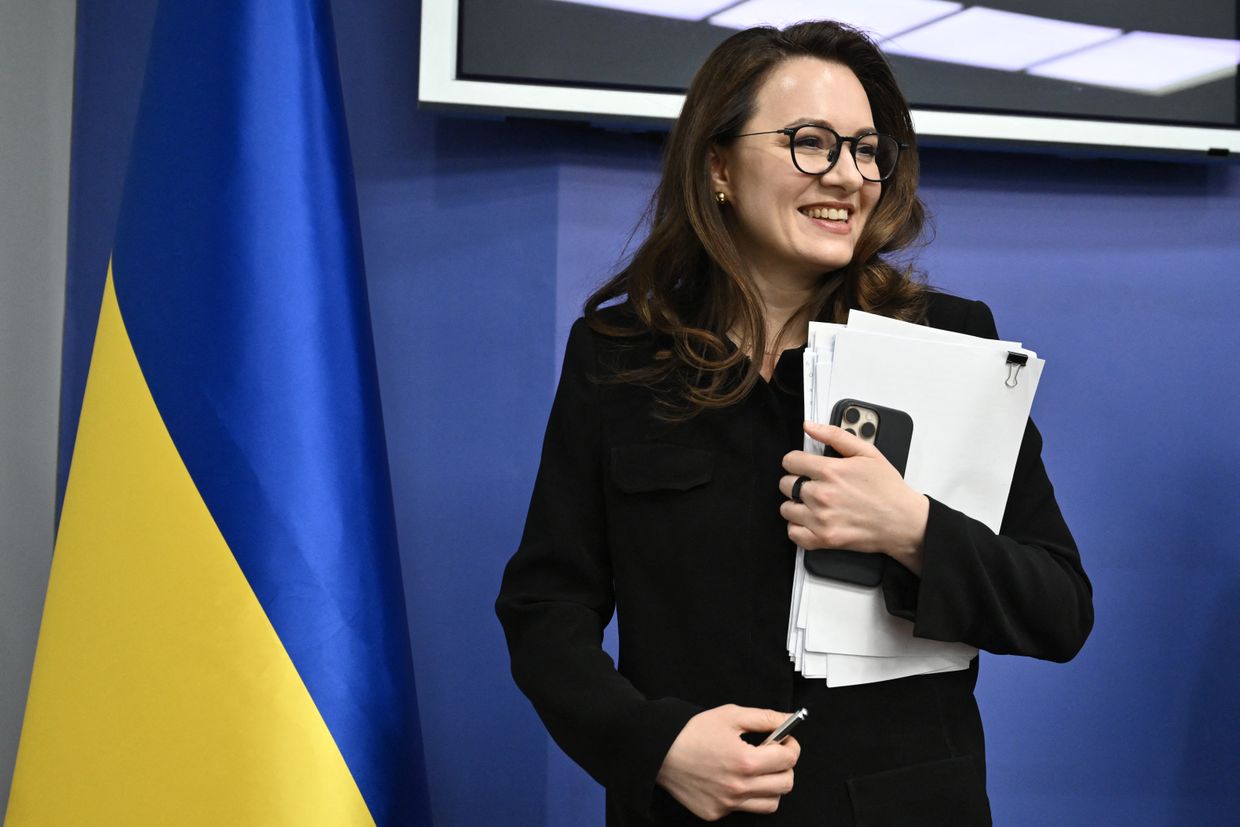
‘Neither side wasted time’ — Ukraine’s economy minister on minerals deal negotiations with Trump’s ‘business-oriented’ administration
Ukraine’s Economy Minister Yuliia Svyrydenko says her task is simple — to get the investment fund behind the closely watched minerals deal with the U.S. off the ground, and prove its detractors wrong. “There are so many criticisms from different parties that this fund is just a piece of paper we can put on the shelves — that it won’t be operational,” Svyrydenko, who is also Ukraine’s first deputy prime minister, tells the Kyiv Independent at Ukraine’s Cabinet of Ministers on July 4, the morning
Ukrainian businesses outraged as government blocks economic crimes bureau chief nomineeThe Kyiv IndependentLiliane Bivings
Ukrainian businesses outraged as government blocks economic crimes bureau chief nominee
  • ✇The Kyiv Independent
  • Russia jails former top general for 17 years in massive military graft case
    A former deputy chief of the Russian army's General Staff, Colonel General Khalil Arslanov, was sentenced to 17 years in prison on July 7 over a scheme involving the theft of over 1 billion roubles ($12.7 million) from Defense Ministry contracts, Russia's state-owned TASS news agency reported.A closed-door military court found Arslanov and others guilty of embezzling millions from state contracts with Voentelecom, a company providing telecommunications services to the Russian military. Arslanov
     

Russia jails former top general for 17 years in massive military graft case

7 juillet 2025 à 19:53
Russia jails former top general for 17 years in massive military graft case

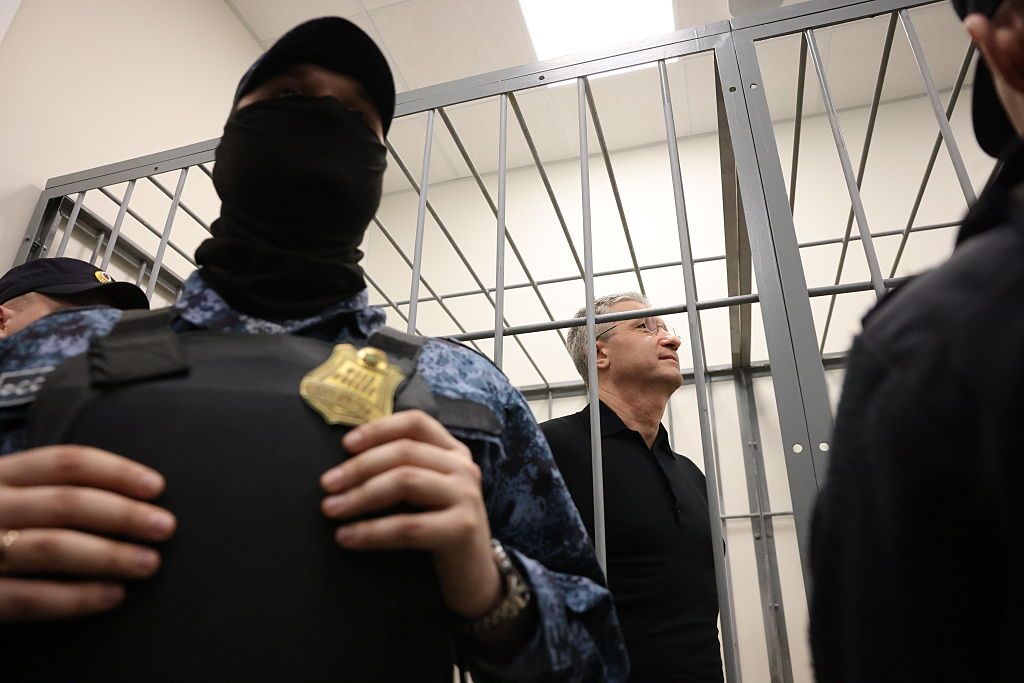
A former deputy chief of the Russian army's General Staff, Colonel General Khalil Arslanov, was sentenced to 17 years in prison on July 7 over a scheme involving the theft of over 1 billion roubles ($12.7 million) from Defense Ministry contracts, Russia's state-owned TASS news agency reported.

A closed-door military court found Arslanov and others guilty of embezzling millions from state contracts with Voentelecom, a company providing telecommunications services to the Russian military.

Arslanov was also convicted of extorting a 12 million rouble ($152,400) bribe from the head of a military communications company. Two co-defendants, Colonel Pavel Kutakhov and military pensioner Igor Yakovlev, received seven and six years in prison, respectively.

Arslanov, a former head of the Russian military's communications unit, served as deputy chief of the army's General Staff from 2013 until his removal in 2020 and was named a colonel general in 2017.

This high-profile conviction is the latest in a series of corruption scandals that have implicated top echelons of the Russian military establishment over the past year. Russia has significantly stepped up prosecutions of senior defense officials.

Just last week, on July 1, former Russian Deputy Defense Minister Timur Ivanov was sentenced to 13 years in a penal colony after being found guilty of corruption. It was the harshest verdict in a series of high-level military corruption cases until Arslanov's sentencing on July 7.

Authorities initially detained Ivanov in April 2024 on bribery allegations, later adding embezzlement charges in October. His trial, like Arslanov's, was held behind closed doors reportedly due to national security concerns.

Ivanov's co-defendant, Anton Filatov, a former logistics company executive, received a 12.5-year sentence.According to state media, the embezzled amount totaled 4.1 billion roubles ($48.8 million), primarily funneled through bank transfers to two foreign accounts. Ivanov pleaded not guilty.

The court stripped him of all state honors and ordered the confiscation of property, vehicles, and cash valued at 2.5 billion roubles, including a luxury apartment in central Moscow, a three-storey English-style mansion, and a high-end car collection featuring brands like Bentley and Aston Martin.

Russia striking NATO while China invades Taiwan ‘plausible’ scenario, experts say
If Beijing moves against Taiwan, NATO might soon find itself in a two-front war with China and Russia — or so the alliance’s secretary general believes. “If Xi Jinping would attack Taiwan, he would first make sure that he makes a call to his very junior partner in all of this, Vladimir Vladimirovich Putin… and telling him, ‘Hey, I’m going to do this, and I need you to to keep them busy in Europe by attacking NATO territory,’” Secretary General Mark Rutte said in a July 5 interview with the New
Russia jails former top general for 17 years in massive military graft caseThe Kyiv IndependentMartin Fornusek
Russia jails former top general for 17 years in massive military graft case
  • ✇The Kyiv Independent
  • Ukraine's deputy prime minister won't be dismissed despite corruption probe, court rules
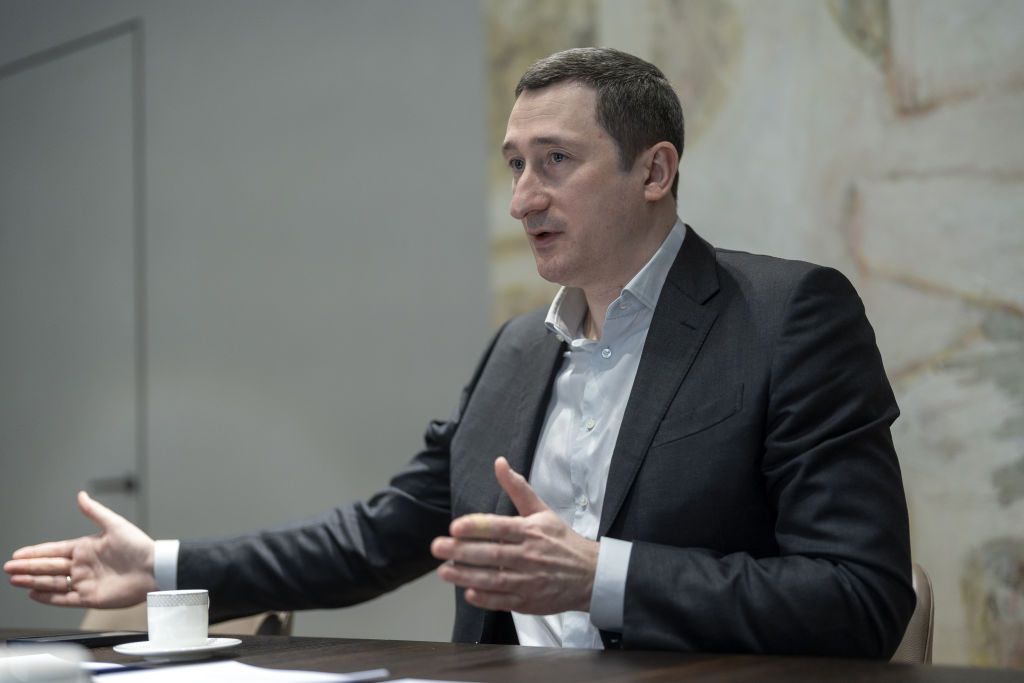
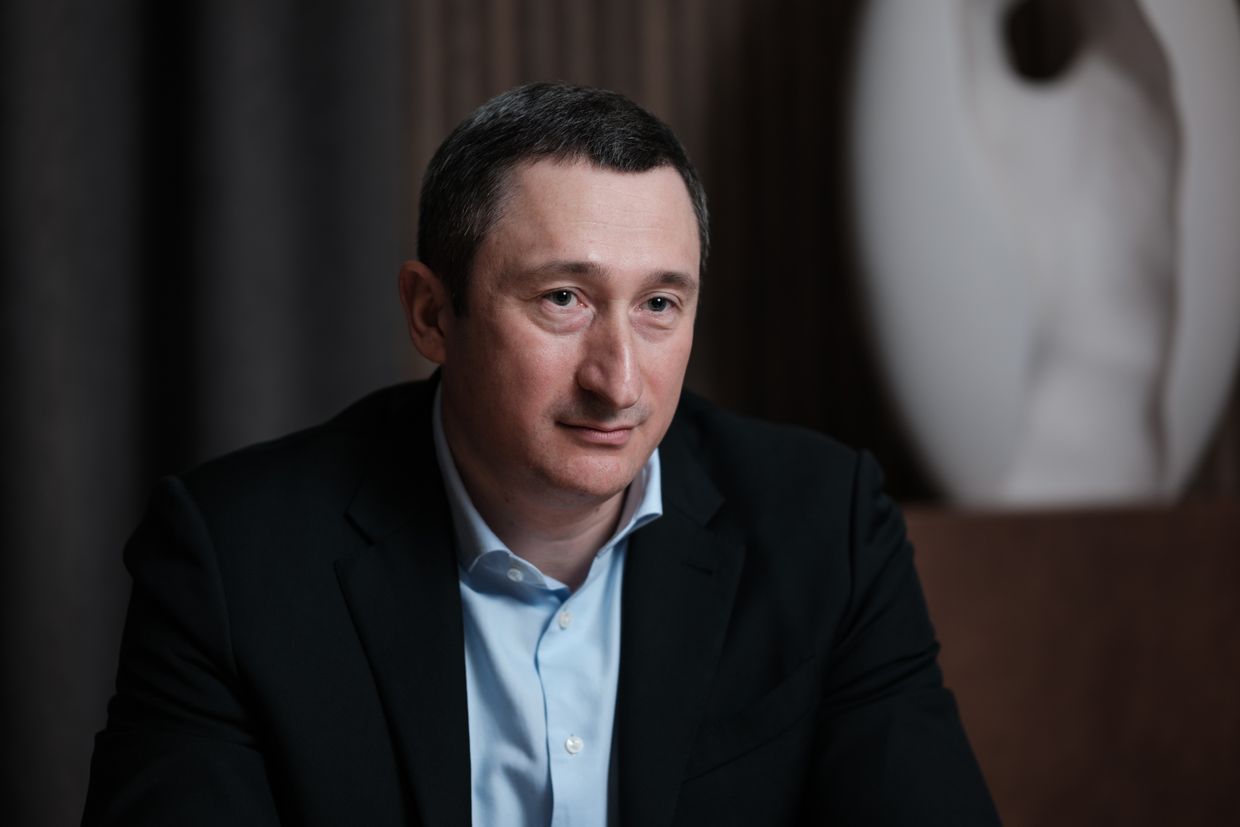
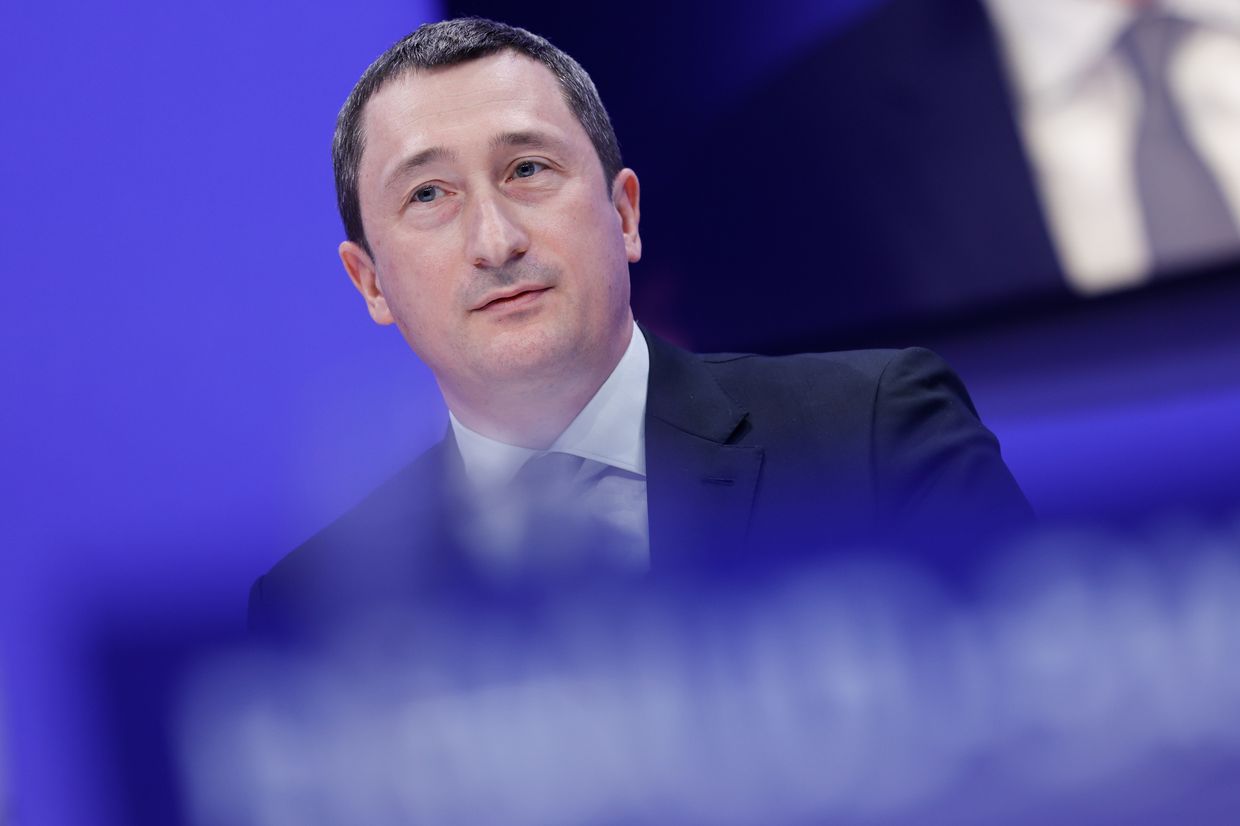
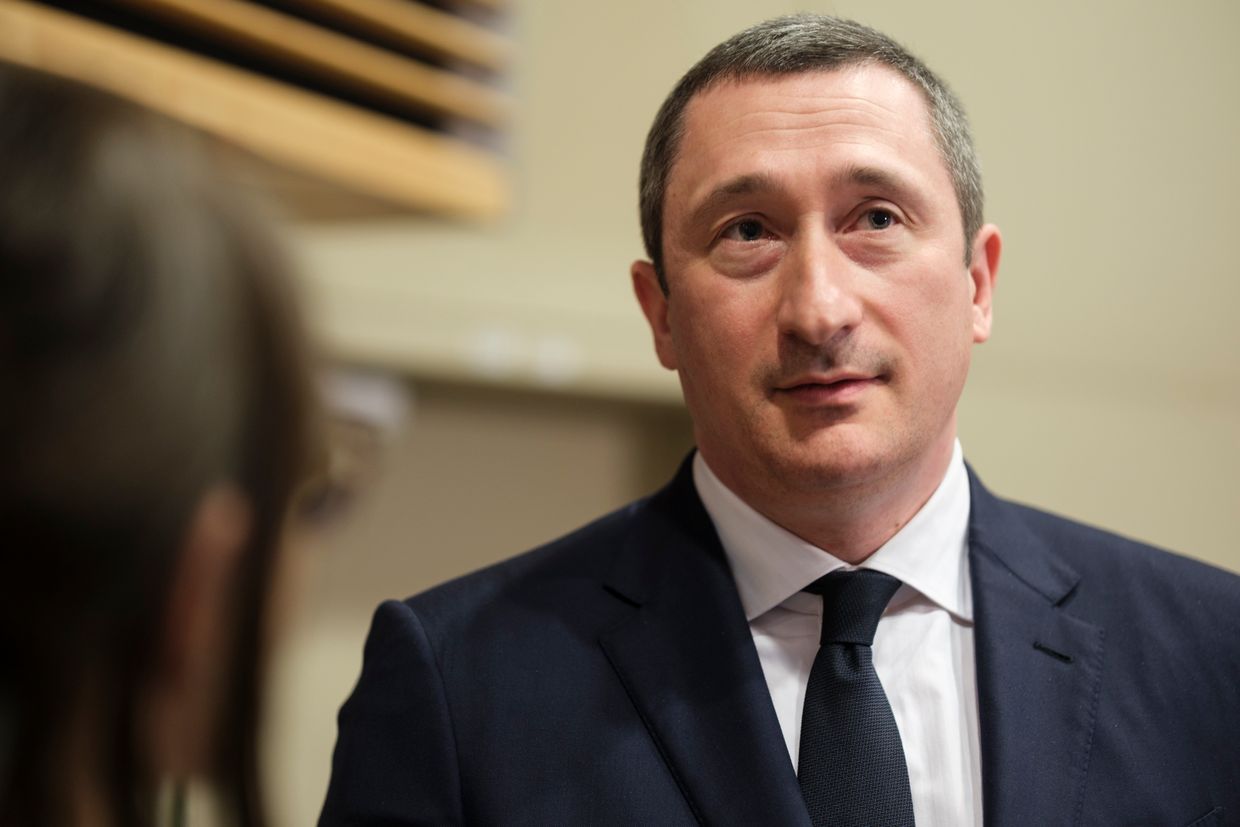
    Editor's note: This article was updated to include comments from Ukraine's Deputy Prime Minister Oleksii Chernyshov. Deputy Prime Minister and National Unity Minister Oleksii Chernyshov will keep his position after a decision from the High Anti-Corruption Court on July 2, despite an ongoing corruption investigation.Chernyshov is a suspect in a "large-scale" illegal land grab corruption case. After a court hearing on June 27, he was banned from traveling abroad without permission and slapped with
     

Ukraine's deputy prime minister won't be dismissed despite corruption probe, court rules

2 juillet 2025 à 06:56
Ukraine's deputy prime minister won't be dismissed despite corruption probe, court rules

Editor's note: This article was updated to include comments from Ukraine's Deputy Prime Minister Oleksii Chernyshov.

Deputy Prime Minister and National Unity Minister Oleksii Chernyshov will keep his position after a decision from the High Anti-Corruption Court on July 2, despite an ongoing corruption investigation.

Chernyshov is a suspect in a "large-scale" illegal land grab corruption case. After a court hearing on June 27, he was banned from traveling abroad without permission and slapped with a bail set at Hr 120 million ($2.9 million) while awaiting trial.

Despite Cheryshov’s defense appealing the bail, it was paid in full shortly after the July 2 hearing,  Olesya Chemerys, spokesperson for the High Anti-Corruption Court, told Ukrainian media Ukrainska Pravda. July 2 was the last day to pay the bail.

Prosecutors filed a motion for his removal on June 27. The day before, he told the Kyiv Independent that he denied the allegations and would not step down from his job.

"I definitely respect the court’s decision. At the same time, I will use all legal means to defend myself in court further and to protect my name and reputation," Chernyshov told the Kyiv Independent after the hearing on July 2.

Chernshov is the highest-ranking official in Ukrainian history to face such charges while in office, attracting a lot of eyes to the case. He is also considered a close ally of President Volodymyr Zelensky, marking a major accusation against the president’s inner circle.

Chernyshov has headed the National Unity Ministry since December, which was previously named the Reintegration of Temporarily Occupied territories Ministry, to strengthen ties with the Ukrainian diaspora. It was initially unclear why the ministry was created and what Chernyshov’s responsibilities were.

Earlier this week, several Ukrainian MPs, including lawmaker Yaroslav Zhelezniak, speculated that the ministry could be dismantled due to Chernyshov’s case.  Zhelezniak believes that the ministry is not needed and was created with the political goal of securing a position for Cherynshov, reported Radio Svoboda.

For now, Chernyshov says that the ministry will continue to operate as usual. "We have a lot of important work ahead, and stay dedicated to our values and tasks," he told the Kyiv Independent on July 2.

Speaking to reporters after the court dismissed the motion for his removal, Chernyshov said he had "collected funds" to pay the bail as his personal accounts are blocked.

The court’s decision to keep Cheryshov in place has raised concerns among the Anti-Corruption Action Center, a Kyiv-based watchdog. With Chernyshov still acting as deputy prime minister, he could potentially use his position to influence the court’s decision going forward in the case, said Olena Shcherban, deputy executive director at ANTAC.

"The logic of the court is currently completely unclear to me, as are the motives — but given the high profile of the position and Chernyshov being close to the president's entourage, I do not exclude that the court could be influenced," Shcherban told the Kyiv Independent.

"Whether this will affect the case is not yet known; it all depends on whether Chernyshov will still influence witnesses and use his position to save himself — and I think he will definitely use it," she added.

According to the National Anti-Corruption Bureau (NABU) investigation, during his time as communities and territories minister in 2020-2022, Chernyshov and his associates undervalued land plots to benefit a developer in exchange for kickbacks.

Chernyshov and his accomplices allegedly received "significant" discounts on apartments in existing buildings, totaling over Hr 14.5 million ($346,000), from the developer. The actions cost Ukraine Hr 1 billion ($24 million), according to NABU.

Chernyshov first raised eyebrows after he left the country on a business trip days before law enforcement unveiled the charges and detained two of his close associates. Despite suspicions that he had fled the country to avoid arrest, he returned to Ukraine on June 22 and was summoned to NABU the following day.

During the court hearing, NABU and the Specialized Anti-Corruption Prosecutor's Office (SAPO) requested that Chernyshov be suspended from office and that the court set bail of Hr 120 million ($2.9 million).

The two offices also requested additional measures restricting his movements, including that he hand in his passport and wear an electronic monitoring device.

Top Russian defense official gets 13 years in graft crackdown
Authorities detained former Russian Deputy Defense Minister Timur Ivanov in April 2024 on bribery allegations, later adding embezzlement charges in October.
Ukraine's deputy prime minister won't be dismissed despite corruption probe, court rulesThe Kyiv IndependentOlena Goncharova
Ukraine's deputy prime minister won't be dismissed despite corruption probe, court rules
  • ✇The Kyiv Independent
  • Top Russian defense official gets 13 years in graft crackdown
    Former Russian Deputy Defense Minister Timur Ivanov was sentenced on July 1 to 13 years in a penal colony after being found guilty of corruption—the toughest sentence so far in a string of graft investigations involving high-level defense officials.Authorities detained Ivanov in April 2024 on bribery allegations, later adding embezzlement charges in October. Over a dozen individuals, including two other former deputy ministers, have been implicated in separate investigations.The trial was held b
     

Top Russian defense official gets 13 years in graft crackdown

1 juillet 2025 à 20:52
Top Russian defense official gets 13 years in graft crackdown

Former Russian Deputy Defense Minister Timur Ivanov was sentenced on July 1 to 13 years in a penal colony after being found guilty of corruption—the toughest sentence so far in a string of graft investigations involving high-level defense officials.

Authorities detained Ivanov in April 2024 on bribery allegations, later adding embezzlement charges in October. Over a dozen individuals, including two other former deputy ministers, have been implicated in separate investigations.

The trial was held behind closed doors due to national security concerns. Ivanov’s co-defendant, Anton Filatov, a former logistics company executive, received a 12.5-year sentence. According to state media, the embezzled amount totaled 4.1 billion roubles ($48.8 million), largely funneled through bank transfers to two foreign accounts.

Ivanov pleaded not guilty. The court stripped him of all state honors and ordered the confiscation of property, vehicles, and cash worth 2.5 billion roubles. Reports in Russian media described his and his wife’s assets, including a luxury apartment in central Moscow, a three-storey English-style mansion outside the city, and a high-end car collection featuring brands such as Bentley and Aston Martin.

Prominent Russian war correspondents known as "Z-bloggers" have publicly condemned the corruption exposed within the defenae sector, especially as the war in Ukraine continues. One of them, Alexander Kots, acknowledged that 13 years is a long sentence but argued that corrupt  officials should face trial during wartime as "traitors to the Motherland."

Since 2016, Ivanov oversaw large logistics contracts at the defence ministry, including those tied to property, housing, and medical support.

He served under Sergei Shoigu, who was replaced as defence minister last year but remains influential as the secretary of Russia’s Security Council. Authorities have also arrested two of Shoigu’s other former deputies in separate cases. In April, a court sentenced Lieutenant-General Vadim Shamarin, the former deputy head of the army’s general staff, to seven years for accepting bribes worth hundreds of thousands of dollars.

The wave of prosecutions reflects what appears to be President Vladimir Putin’s effort to address corruption, inefficiency, and waste in Russia’s expansive military budget, which accounts for 32% of federal spending this year.

Ukraine’s new interceptor UAVs are starting to knock Russia’s long-range Shahed drones out of the sky
Russia’s Shahed drone swarms are pummeling Ukraine on a nightly basis, inflicting ever more death and destruction in cities that had managed to carve out some sense of normalcy amid wartime. Civilian alarm has grown. With traditional air defense stockpiles running low, the government is banking on newly created
Top Russian defense official gets 13 years in graft crackdownThe Kyiv IndependentKollen Post
Top Russian defense official gets 13 years in graft crackdown
  • ✇The Kyiv Independent
  • Serbian police crack down on protestors at mass anti-government rally in Belgrade
    Police aggressively dispersed protestors at an anti-government rally in Belgrade, whereover 100,000 demonstrators gathered on June 28 to demand snap elections. The rally marks the latest mass action in a protest movement that started last fall, with activists calling for an end to corruption and the 12-year rule of Serbian President Aleksandar Vucic.Crowds in Belgrade on June 28 chanted "We want elections!" — a key demand of the movement that Vucic has consistently refused. His term ends in 2027
     

Serbian police crack down on protestors at mass anti-government rally in Belgrade

28 juin 2025 à 21:15
Serbian police crack down on protestors at mass anti-government rally in Belgrade

Police aggressively dispersed protestors at an anti-government rally in Belgrade, whereover 100,000 demonstrators gathered on June 28 to demand snap elections.

The rally marks the latest mass action in a protest movement that started last fall, with activists calling for an end to corruption and the 12-year rule of Serbian President Aleksandar Vucic.

Crowds in Belgrade on June 28 chanted "We want elections!" — a key demand of the movement that Vucic has consistently refused. His term ends in 2027, which is also the date of the next scheduled parliamentary elections.

Police officers in riot gear used tear gas, pepper spray, and stun grenades to forcibly dispersed crowds, according to multiple media outlets. Dozens of protestors were detained, though the police did not provide an exat number.

Serbian Interior Minister Ivica Dacic claimed that demonstrators attacked the police.

Protestors reportedly threw eggs, plastic bottles, and other objects at riot officers blocking the crowd from entering a city park where Vucic supporters were staging a counterprotest. Vucic reportedly bused in groups of his own supporters from around the country ahead of the rally.

As protests engulf Serbia, President Vucic looks for support East and West
Editor’s Note: Following a number of attacks against peaceful protestors in Serbia, the Kyiv Independent agreed to not publish the last names of people who gave comments for this story. BELGRADE, Serbia — Thousands of protestors walked 300 kilometers on March 1 from Belgrade to the southern city of Nis to
Serbian police crack down on protestors at mass anti-government rally in BelgradeThe Kyiv IndependentCamilla Bell-Davies
Serbian police crack down on protestors at mass anti-government rally in Belgrade

Vucic, a right-wing populist leader with authoritarian tendencies and warm ties with Russia, has repeatedly accused foreign states of inciting the protests in order to topple his government. He is provided no evidence to support these claims.

The current wave of protests in Serbia began in November, when a train station roof in the town of Novi Sad collapsed, killing 15. The disaster was blamed on government corruption.

While Vucic has alleged that Western powers are trying to trigger a "Ukrainian-style revolution in Serbia," the Serbian protests are not markedly pro-Ukrainian or pro-Russian. Unlike mass demonstrations in Slovakia, where activists explicitly condemned the government's Kremlin-friendly agenda, the Serbian movement is focused on Vucic's corrupt leadership.

Since Russia's full-scale invasion of Ukraine in 2022, Serbia has attempted to navigate a delicate diplomatic path between Moscow and the West. It has positioned itself as neutral in the Russia-Ukraine war and balanced its status as an EU candidate with its longstanding ties to Russia.

Vucic made his first official visit to Ukraine on June 11.

Ukraine’s new top prosecutor known for high-profile cases, seen as Zelensky loyalist
Loyalty to the incumbent administration has been the key requirement for prosecutor generals in Ukraine. Ruslan Kravchenko, who was appointed as prosecutor general on June 21, appears to be no exception. Previously he had been appointed as a military governor by President Volodymyr Zelensky and is seen as a presidential loyalist. Kravchenko became Ukraine’s top prosecutor after a lengthy hiatus during which the position of prosecutor general remained vacant. His predecessor, Andriy Kostin, r
Serbian police crack down on protestors at mass anti-government rally in BelgradeThe Kyiv IndependentOleg Sukhov
Serbian police crack down on protestors at mass anti-government rally in Belgrade


  • ✇The Kyiv Independent
  • Former Kharkiv deputy mayor charged with embezzling funds allocated for defense fortifications
    A former deputy mayor for Kharkiv is facing multiple charges related to creating and leading a scheme that allegedly embezzled 5.4 million hryvnias ($130,000) of budget funds allocated for fortifications, law enforcement agencies announced on June 28.Ukraine's military as well as public officials has seen several corruption scandals since the start of Russia's full-scale war, related to illicit enrichment, money laundering, bribery, and misconduct of the command.A total of four people, including
     

Former Kharkiv deputy mayor charged with embezzling funds allocated for defense fortifications

28 juin 2025 à 15:59
Former Kharkiv deputy mayor charged with embezzling funds allocated for defense fortifications

A former deputy mayor for Kharkiv is facing multiple charges related to creating and leading a scheme that allegedly embezzled 5.4 million hryvnias ($130,000) of budget funds allocated for fortifications, law enforcement agencies announced on June 28.

Ukraine's military as well as public officials has seen several corruption scandals since the start of Russia's full-scale war, related to illicit enrichment, money laundering, bribery, and misconduct of the command.

A total of four people, including two company heads and two entrepreneurs, were arrested alongside the former official, the National Police said.

The scheme allegedly involved a shell company procuring purchased materials for fortifications at prices over 30% above market value.

While authorities did not name the former official, Ukrainska Pravda reported, citing law enforcement sources, that the suspect in question is Andrii Rudenko, Kharkiv's Deputy Mayor for Housing and Communal Services between 2015 and 2024.

Authorities did not publicly release the identities of the remaining suspects.

The five suspects are currently facing charges under 17 articles of Ukraine's Criminal Code, with motions filed to impose pre-trial detention without bail.

It was not immediately clear as to the maximum sentence the suspects may receive if found guilty, however, Ukraine's Prosecutor General Ruslan Kravchenko said that he will seek for "stolen budget funds must be fully returned to the state."

Law enforcement agents have previously arrested Kharkiv officials with corruption related charges.

In April, authorities charged a total of eight individuals, including local officials and entrepreneurs, accused of colluding with contractors to supply firewood to the military at prices significantly above market value. Several officials and entrepreneurs of housing and utilities departments in several regions, including Kharkiv, were allegedly implicated.

Ukrainian drone strike on Crimea air base destroys 3 Russian helicopters, SBU claims
The attack destroyed Mi-8, Mi-26 and Mi-28 attack helicopters, and a Pantsyr-S1 self-propelled anti-aircraft missile and gun system, the Security Service of Ukraine told the Kyiv Independent.
Former Kharkiv deputy mayor charged with embezzling funds allocated for defense fortificationsThe Kyiv IndependentKateryna Denisova
Former Kharkiv deputy mayor charged with embezzling funds allocated for defense fortifications


  • ✇The Kyiv Independent
  • Anti-corruption agencies seek Ukrainian deputy prime minister’s suspension amid land grab case
    Ukraine's National Anti-Corruption Bureau (NABU) and the Specialized Anti-Corruption Prosecutor's Office (SAPO) have filed a motion with the High Anti-Corruption Court seeking to impose bail and suspend Deputy Prime Minister Oleksii Chernyshov from office, NABU's press service reported on June 27.Chernyshov was officially named a suspect on June 23 in what NABU called a "large-scale" illegal land grab case. Chernyshov heads the new National Unity Ministry in charge of returning refugees and is a
     

Anti-corruption agencies seek Ukrainian deputy prime minister’s suspension amid land grab case

27 juin 2025 à 03:59
Anti-corruption agencies seek Ukrainian deputy prime minister’s suspension amid land grab case

Ukraine's National Anti-Corruption Bureau (NABU) and the Specialized Anti-Corruption Prosecutor's Office (SAPO) have filed a motion with the High Anti-Corruption Court seeking to impose bail and suspend Deputy Prime Minister Oleksii Chernyshov from office, NABU's press service reported on June 27.

Chernyshov was officially named a suspect on June 23 in what NABU called a "large-scale" illegal land grab case. Chernyshov heads the new National Unity Ministry in charge of returning refugees and is a close ally of President Volodymyr Zelensky. He left Ukraine days before law enforcement revealed a massive corruption scheme and detained two of his former close associates — Maksym Horbatiuk and Vasyl Volodin.

Investigators allege that Chernyshov and his associates undervalued the land fivefold, costing the state Hr 1 billion (about $24 million), and received discounted apartments worth over Hr 14.5 million ($346,000) in return. In a comment to the Kyiv Independent, Chernyshov has denied the allegations and said he has no plans to step down.

The agencies are requesting that Chernyshov be placed under a bail measure of Hr 120 million ($2.8 million) and be formally removed from his current post while the investigation proceeds.

The agencies said the proposed measures reflect the risks identified during the investigation, including concerns about potential obstruction of justice. They emphasized that their motion aligns with the court's precedent in similar high-profile corruption cases.

The motion also requests that Chernyshov be subject to standard obligations, including a travel ban, passport surrender, and mandatory cooperation with law enforcement. SAPO additionally urged that he be prohibited from contacting other suspects or witnesses in the case.

The agency noted that Chernyshov returned to Ukraine voluntarily and responded to their summons.

If the court upholds the request, Chernyshov would be required to pay the bail within five days. Failure to do so or breach of the imposed conditions could result in a more severe pre-trial measure, prosecutors said.

Chernyshov returned to Ukraine on June 22 following growing public pressure and reported to NABU the following day. Despite his claim that he had been on a scheduled business trip, critics accused him of attempting to evade charges.

Chernyshov is considered a close ally of Zelensky and has held several high-profile roles, including CEO of state-owned oil and gas giant Naftogaz.

Exclusive: Ukrainian deputy prime minister suspected of corruption says he won’t step down
Ukrainian minister and deputy Prime Minister Oleksii Chernyshov has been formally named a suspect in a high-profile illegal land grab case, becoming the highest-ranking official in Ukrainian history to face such charges.
Anti-corruption agencies seek Ukrainian deputy prime minister’s suspension amid land grab caseThe Kyiv IndependentDominic Culverwell
Anti-corruption agencies seek Ukrainian deputy prime minister’s suspension amid land grab case
  • ✇The Kyiv Independent
  • Exclusive: Ukrainian deputy prime minister suspected of corruption says he won't step down
    Ukrainian Deputy Prime Minister Oleksii Chernyshov on June 23 was formally named a suspect in a high-profile illegal land grab case, becoming the highest-ranking official in Ukrainian history to face such charges while in office.After reports and public speculation around Chernyshov's potential involvement, the National Anti-Corruption Bureau (NABU) released a statement announcing that he was the sixth suspect in a “large-scale” corruption scheme led by a property developer from Kyiv who illegal
     

Exclusive: Ukrainian deputy prime minister suspected of corruption says he won't step down

23 juin 2025 à 11:56
Exclusive: Ukrainian deputy prime minister suspected of corruption says he won't step down

Ukrainian Deputy Prime Minister Oleksii Chernyshov on June 23 was formally named a suspect in a high-profile illegal land grab case, becoming the highest-ranking official in Ukrainian history to face such charges while in office.

After reports and public speculation around Chernyshov's potential involvement, the National Anti-Corruption Bureau (NABU) released a statement announcing that he was the sixth suspect in a “large-scale” corruption scheme led by a property developer from Kyiv who illegally claimed a land plot to build a residential complex.

In a comment to the Kyiv Independent, Chernyshov denied the accusations against him. "I'm absolutely not involved in that (scheme) — that's clear," he said.

He also said he won't step down from his post. "I will stay in this position," Chernyshov told the Kyiv Independent.

Chernyshov, who heads the new National Unity Ministry in charge of returning refugees, is a close ally of President Volodymyr Zelensky. He raised eyebrows in Ukraine after leaving the country days before law enforcement revealed a massive corruption scheme and detained two of his former close associates — Maksym Horbatiuk and Vasyl Volodin.

According to the anti-corruption agency, during his time as communities and territories minister in 2020-2022, Chernyshov and his associates undervalued land plots by five times to benefit the developer, which Ukrainian media identified as Serhii Kopystyra, allegedly costing the state Hr 1 billion ($24 million).

In exchange, NABU says the developer gave kickbacks to Chernyshov and his accomplices with "significant" discounts on apartments in his existing buildings, totaling over Hr 14.5 million ($346,000). Ukrainian news site Ukrainska Pravda reports this took place between 2021-2022.

NABU and Ukraine's Specialized Anti-Corruption Prosecutor's Office (SAPO) seized the plot to prevent the scheme. Most of the illegally obtained apartments have been seized.

Chernyshov arrived back in the country on June 22 after suspicions mounted in Ukraine that he was on the run and avoiding detention.

"I was definitely on a business trip and I was not escaping out of Ukraine," Chernyshov told the Kyiv Independent. "The rumors of me not returning are nothing but manipulation. I came exactly once my trip was over. I had a very intensive trip in Europe."

Chernyshov claims he was targeted by a "smear campaign" but said he didn't know who could be behind it.

He also said that he came back on his own accord and denied that anyone had asked him to return.

The minister arrived at the NABU offices on June 23, after the agency summoned him to be charged. Upon leaving the bureau, Chernyshov wrote on Facebook that he had a “constructive chat” with detectives and will cooperate with the organization.

An investigation into Chernyshov and two of his associates took place last year after suspicions arose, according to Ukrainska Pravda, with the agency obtaining a warrant to search Chernyshov's home.

But sources in anti-corruption agencies told Ukrainska Pravda that the head of NABU, Semen Kryvonos, blocked police searches due to his close relationship with Chernyshov, who was his boss when Kryvonos headed the State Architecture Inspection, an agency that was subordinated to Chernyshov's former ministry.

Searches allegedly took place a few weeks ago, after a one-year delay, according to Ukrainska Pravda.

Chernyshov said that while he knows Kryvonos in a professional manner, the two are not in contact. He added that the allegations against Horbatiuk and Volodin look "quite serious" but that it was for law enforcement to decide if their detention is justified.

He was appointed head of state-owned energy giant Naftogaz in 2022 after the dissolution of the Communities and Territories Development Ministry. He became the national unity minister in December 2024, a ministry created from scratch.

Chernyshov is widely believed to have a personal friendship with Zelensky. According to a report by Ukrainska Pravda, he was among only a handful of guests invited to celebrate Zelensky's birthday during the Covid-19 pandemic in 2021 — and the only member of the Cabinet of Ministers in attendance.

"The key thing is that today NABU and SAPO have actually reached the immediate circle of the president's 'family,'" Olena Shcherban, deputy executive director at the Anti-Corruption Action Center (ANTAC), a Kyiv-based watchdog, told the Kyiv Independent.

The President's Office feels the threat from NABU and SAPO and will likely attack the two institutions in response to Chernyshov's notice of suspicion, rather than "saving" the minister, Shcherban added.

"I am sure we will see both attempts to make harmful changes to the law and personal attacks on the SAPO head (Oleksandr Klymenko)," she said.  

Deputy PM Chernyshov returns to Ukraine as questions mount amid corruption probe
Deputy Prime Minister Oleksii Chernyshov returned to Ukraine on June 22 following his official trip abroad amid media speculations connecting Chernyshov’s absence to an ongoing corruption investigation.
Exclusive: Ukrainian deputy prime minister suspected of corruption says he won't step downThe Kyiv IndependentDmytro Basmat
Exclusive: Ukrainian deputy prime minister suspected of corruption says he won't step down
  • ✇The Kyiv Independent
  • Deputy PM Chernyshov returns to Ukraine as questions mount amid corruption probe
    Deputy Prime Minister Oleksii Chernyshov returned to Ukraine on June 22 following his official trip abroad amid media speculations connecting Chernyshov's absence to an ongoing corruption investigation.Chernyshov, who announced his return in a Facebook post, has been the subject of controversy in recent days after law enforcement agencies unveiled a corruption scheme involving two officials from the now-dissolved Communities and Territories Development Ministry, which was headed by Chernyshov.Su
     

Deputy PM Chernyshov returns to Ukraine as questions mount amid corruption probe

22 juin 2025 à 22:35
Deputy PM Chernyshov returns to Ukraine as questions mount amid corruption probe

Deputy Prime Minister Oleksii Chernyshov returned to Ukraine on June 22 following his official trip abroad amid media speculations connecting Chernyshov's absence to an ongoing corruption investigation.

Chernyshov, who announced his return in a Facebook post, has been the subject of controversy in recent days after law enforcement agencies unveiled a corruption scheme involving two officials from the now-dissolved Communities and Territories Development Ministry, which was headed by Chernyshov.

Suspicions about Chernyshov, who heads the new National Unity Ministry focused on relations with refugees and the Ukrainian diaspora, arose when the deputy prime minister did not attend a Kyiv forum he himself organized in person but joined online from abroad.

Chernyshov unexpected work trip to Vienna, announced on June 16, came just three days after law enforcement officials revealed the scheme, leaving Prime Minister Denys Shmyhal to answer questions in parliament about Chernyshov's trip. The National Unity Ministry said that foreign trips are a regular part of Chernyshov's work.

Ukrainska Pravda reported, citing its sources, that Chernyshov's son and wife had also Ukraine following Chernyshov's most recent trip. It was not immediately clear whether they had returned to the country.

"Finally home. A difficult but very important business trip (which, thanks to some media outlets, became unexpectedly popular) is now over," Chernyshov said in a Facebook post.

Chernyshov added that he will be returning to work within the Cabinet of Ministers starting on June 23.

"We’ll also break down the smear campaign fact by fact. The truth always prevails," he added, referring to the ongoing police matter.

According to Ukrainska Pravda, Chernyshov and two of his associates came under investigation last year over suspicions that they received kickbacks from Serhii Kopystira, the head of the KSM Group, for illicitly transferring a plot of land for real estate development between 2021 and 2022.

Four sources in anti-corruption agencies told Ukrainska Pravda that despite the investigation, no police searches were conducted at the time, as they were blocked by the head of the National Anti-Corruption Bureau, Semen Kryvonos, who has a long-standing relationship with Chernyshov.

After the dissolution of the Communities and Territories Development Ministry at the end of 2022, Chernyshov was appointed the head of the state-owned energy company Naftogaz. In 2024, the official was tasked with leading the new National Unity Ministry — a position that often involved travel abroad — while also being named deputy prime minister.

The other two people connected to the case — Maksym Horbatiuk and Vasyl Volodin — were reportedly detained last week as the investigation began moving forward.

President Volodymyr Zelensky previously commented on Chernyshov's presence abroad amid questions from media.

"What Shmyhal told me is that he’s on a business trip. He had two tasks from me, from the government, from all of us: the first — to open hubs in different countries, and the second — multiple citizenship. As far as I understand, he is working on both of these," Zelensky was quoted as saying.

The Kyiv Independent could not verify all the claims presented through the media investigation.

Ukraine war latest: ‘Ukrainian drones for the foot of every Russian soldier’ — Zelensky responds to Putin’s threat to conquer all of Ukraine
Key developments on June 21-22: * ‘Ukrainian drones for the foot of every Russian soldier’ — Zelensky responds to Putin’s threat to conquer all of Ukraine. * 3 killed, 14 wounded as Russia strikes Ukrainian military training facility. * Russia seeks to advance along almost entire eastern front, Ukraine holding ground in Kursk Oblast,
Deputy PM Chernyshov returns to Ukraine as questions mount amid corruption probeThe Kyiv IndependentSonya Bandouil
Deputy PM Chernyshov returns to Ukraine as questions mount amid corruption probe


  • ✇The Kyiv Independent
  • Shmyhal confirms Deputy PM's official travel abroad as questions mount amid corruption probe
    Deputy Prime Minister Oleksii Chernyshov's official trip abroad has been approved until the end of the week, Prime Minister Denys Shmyhal said on June 20 amid media speculations connecting Chernyshov's absence to an ongoing corruption investigation.Shmyhal made the comment in response to opposition lawmaker Iryna Herashchenko in parliament.Suspicions about Chernyshov, who heads the new National Unity Ministry focused on relations with refugees and the Ukrainian diaspora, arose earlier this week
     

Shmyhal confirms Deputy PM's official travel abroad as questions mount amid corruption probe

20 juin 2025 à 06:40
Shmyhal confirms Deputy PM's official travel abroad as questions mount amid corruption probe

Deputy Prime Minister Oleksii Chernyshov's official trip abroad has been approved until the end of the week, Prime Minister Denys Shmyhal said on June 20 amid media speculations connecting Chernyshov's absence to an ongoing corruption investigation.

Shmyhal made the comment in response to opposition lawmaker Iryna Herashchenko in parliament.

Suspicions about Chernyshov, who heads the new National Unity Ministry focused on relations with refugees and the Ukrainian diaspora, arose earlier this week when the deputy prime minister did not attend a Kyiv forum he himself organized in person but joined online from abroad.

The deputy prime minister's unexpected work trip to Vienna, announced on June 16, came three days after law enforcement agencies unveiled a corruption scheme involving two officials from the now-dissolved Communities and Territories Development Ministry, which was headed by Chernyshov.

According to Ukrainska Pravda, Chernyshov and two of his associates came under investigation last year over suspicions that they received kickbacks from Serhii Kopystira, the head of the KSM Group, for illicitly transferring a plot of land for real estate development between 2021 and 2022.

Four sources in anti-corruption agencies told Ukrainska Pravda that despite the investigation, no police searches were conducted at the time, as they were blocked by the head of the National Anti-Corruption Bureau, Semen Kryvonos, who has a long-standing relationship with Chernyshov.

After the dissolution of the Communities and Territories Development Ministry at the end of 2022, Chernyshov was appointed the head of the state-owned energy company Naftogaz. In 2024, the official was tasked with leading the new National Unity Ministry — a position that often involved travel abroad — while also being named deputy prime minister.

The other two people connected to the case — Maksym Horbatiuk and Vasyl Volodin — were reportedly detained last week as the investigation began moving forward.

Chernyshov traveled to Prague on June 10 and 11 for a business trip, and then to Vienna a week later. The subsequent court hearings with the two detainees detailed Chernyshov's role in the corruption scheme, according to Ukrainska Pravda.

The news outlet stressed that there is currently no evidence that Chernyshov's current stay abroad is connected to the investigation. The National Unity Ministry said that foreign trips are a regular part of Chernyshov's work.

The Kyiv Independent could not verify all the claims and has reached out to Chernyshov's team for comment.

Trump’s peace push falters in both Ukraine and the Middle East — for similar reasons
U.S. President Donald Trump addressed a wide range of subjects during his inauguration speech. When speaking about international relations, he was adamant — “Our power will stop all wars and bring a new spirit of unity,” he said, talking about Russia’s war against Ukraine and the fighting in the Middle
Shmyhal confirms Deputy PM's official travel abroad as questions mount amid corruption probeThe Kyiv IndependentOleg Sukhov
Shmyhal confirms Deputy PM's official travel abroad as questions mount amid corruption probe
❌