Vue normale

  • ✇Euromaidan Press
  • Russia weaponizes Ukrainian children in occupied territories. Ukraine singles out those responsible
    Ukraine’s military intelligence (HUR) has named 10 people and two institutions it says are teaching Ukrainian children under occupation to handle weapons—and preparing them to serve Russia. HUR says those named use youth groups, occupation education authorities, and schools to erase children’s Ukrainian identity and prepare them for Russian military service. Publishing their names supports Ukraine’s efforts to document the system and hold its organizers accountable, but
     

Russia weaponizes Ukrainian children in occupied territories. Ukraine singles out those responsible

18 août 2026 à 13:47

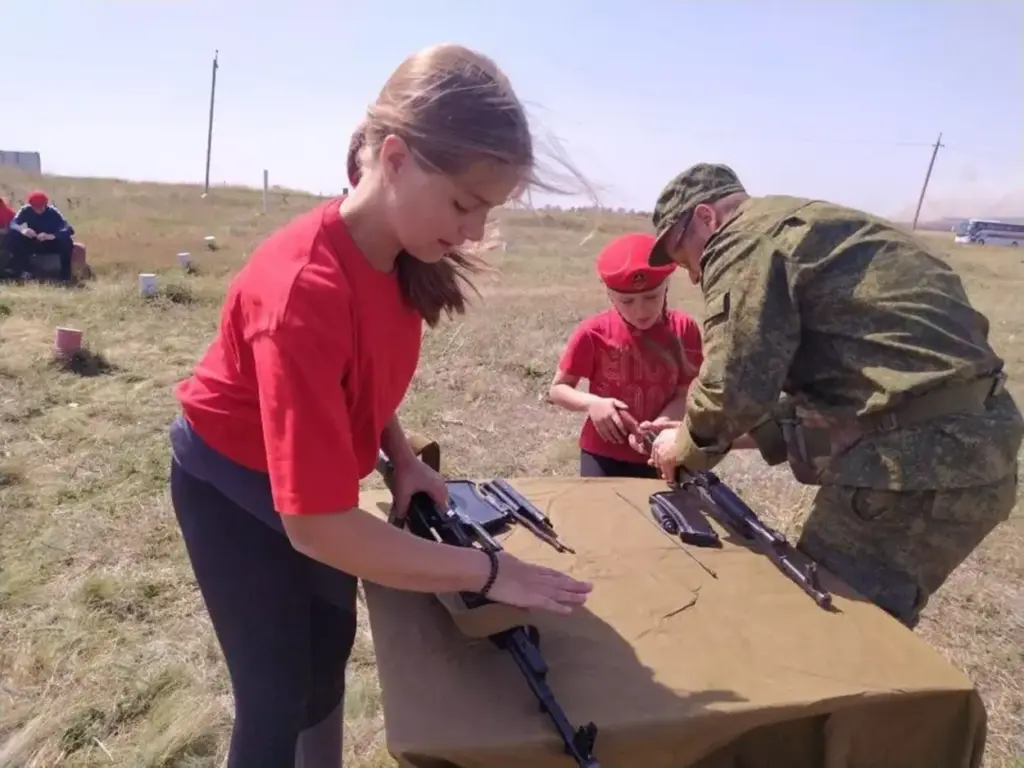
Two children handle rifles as a uniformed man demonstrates a weapon on a table outdoors.

Ukraine’s military intelligence (HUR) has named 10 people and two institutions it says are teaching Ukrainian children under occupation to handle weapons—and preparing them to serve Russia.

HUR says those named use youth groups, occupation education authorities, and schools to erase children’s Ukrainian identity and prepare them for Russian military service. Publishing their names supports Ukraine’s efforts to document the system and hold its organizers accountable, but HUR announced no charges or sanctions with the update.

How Russia militarizes Ukrainian youth in occupied territory

At a May 2026 “Zarnitsa 2.0” competition, the Kremlin-backed Movement of the First taught children to handle weapons and explosives and operate drones, HUR said.

At the competition’s stage in occupied Zaporizhzhia Oblast, regional organizer Viktoria Kostromina stated those skills would provide children with a “reliable foundation in life.”

The training sits inside a much larger school system. From 1 September, occupation schools will add a separate basic military-training track alongside a new Russian ideology class and behavior grades. More than 582,000 children across nearly 2,000 schools study under the imposed Russian curriculum, according to the Almenda Center of Civil Education.

Russia is also embedding combat preparation more deeply. “Cossack classes” will make ideological and combat-related drills compulsory for fifth-graders in four occupied Donbas cities. In Crimea, occupation authorities say they have built a pipeline that selects schoolchildren for drone training and ultimately for the Russian military reserve.

The policy has a long horizon. Putin’s 2025 strategy set a 95% “Russian civic identity” target for occupied populations by 2036.

Who HUR says is behind the indoctrination

HUR linked the individuals to the Movement of the First, Yunarmia, occupation education bodies, and a school in Simferopol.

Whom the HUR identified

  • Artur Orlov: chairman of the Kremlin-backed Movement of the First.
  • Oleksii Lavrentiev, Marina Tsvetinskaya, Ruyal Aliyev, Ekaterina Kozyr, Viktoria Kostromina and Kateryna Popova: regional Movement of the First organizers in occupied Ukraine.
  • Svitlana Bespalova: occupation deputy education minister in Crimea.
  • Nikita Polyakov: Yunarmia organizer in occupied Kherson Oblast.
  • Dmytro Pryvidion: director of School No. 5 in occupied Simferopol.

HUR also identified two institutions: Pryvidion’s School No. 5 and the Selet–Ak Bars youth center in Foros. It says the school holds militaristic activities and produces devices for loading rifle magazines, while the center stages pro-war events for children.

All 12 entries now appear in the “Child Kidnappers” section of HUR’s War&Sanctions database.

Ukraine has previously pursued individual organizers through criminal cases. In 2024, the SBU accused a Crimea occupation official of using schools and military camps to indoctrinate pupils and encourage enlistment in Russia’s forces.

Ukraine’s ombudsman later asked the ICC and Ukrainian law enforcement to recognize systematic child militarization as a crime against humanity.
  • ✇Euromaidan Press
  • Russians are buying seaside apartments built on the ruins of the Mariupol homes Russia bombed—DW
    Russians moving into occupied Mariupol are buying apartments built over Ukrainian homes destroyed during Russia’s 2022 siege, German broadcaster Deutsche Welle (DW) reported on 15 August 2026. Ukrainians who lived on the sites received none of the new units, a source told the outlet. The construction is part of Russia’s wider Russification of occupied Mariupol. Occupation authorities have separately listed nearly 900 apartments for redistribution, including properties b
     

Russians are buying seaside apartments built on the ruins of the Mariupol homes Russia bombed—DW

17 août 2026 à 11:53

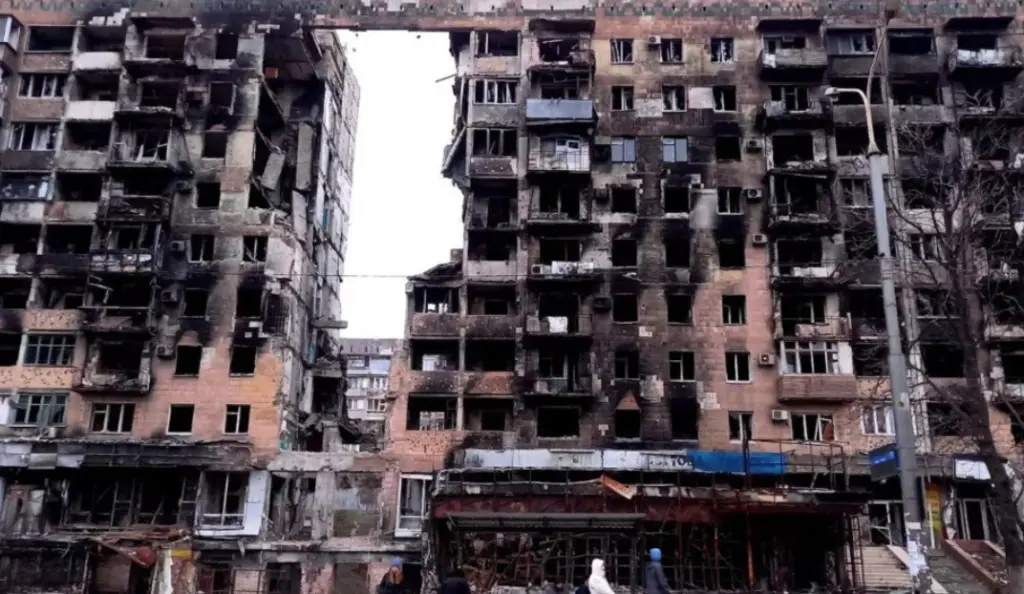
War-damaged apartment blocks in Mariupol with burned facades, shattered windows and exposed interiors.

Russians moving into occupied Mariupol are buying apartments built over Ukrainian homes destroyed during Russia’s 2022 siege, German broadcaster Deutsche Welle (DW) reported on 15 August 2026. Ukrainians who lived on the sites received none of the new units, a source told the outlet.

The construction is part of Russia’s wider Russification of occupied Mariupol. Occupation authorities have separately listed nearly 900 apartments for redistribution, including properties belonging to residents forced out by the siege.

Economist Vyacheslav Shiryaev said the new apartments are being bought primarily by newcomers, including Russian security personnel, officials, and military logistics workers. Some simply want to live by the sea but cannot afford property in occupied Crimea or Sochi, a Russian Black Sea resort, he said.

In Russia-occupied regions, borrowers with Russian citizenship are offered mortgages at 2% annual interest, DW reported.

Occupation authorities also ordered some residents out of apartments that had survived the attacks. Some were sent to hostels or accommodation on Mariupol’s outskirts instead of receiving replacement apartments, a source told DW.

Unable to enter occupied Mariupol, DW based its investigation on former residents’ accounts, satellite imagery, and online research.

Homes erased, residents pushed out

For former residents, homes destroyed in the siege are being replaced with apartments for newcomers.

Halyna Artemova, an English teacher, lived in one of the demolished apartment blocks for almost 40 years. A Russian missile struck the building in March 2022. Wounded by shrapnel, she escaped with her mother and son. A new high-rise now stands where her home once did.

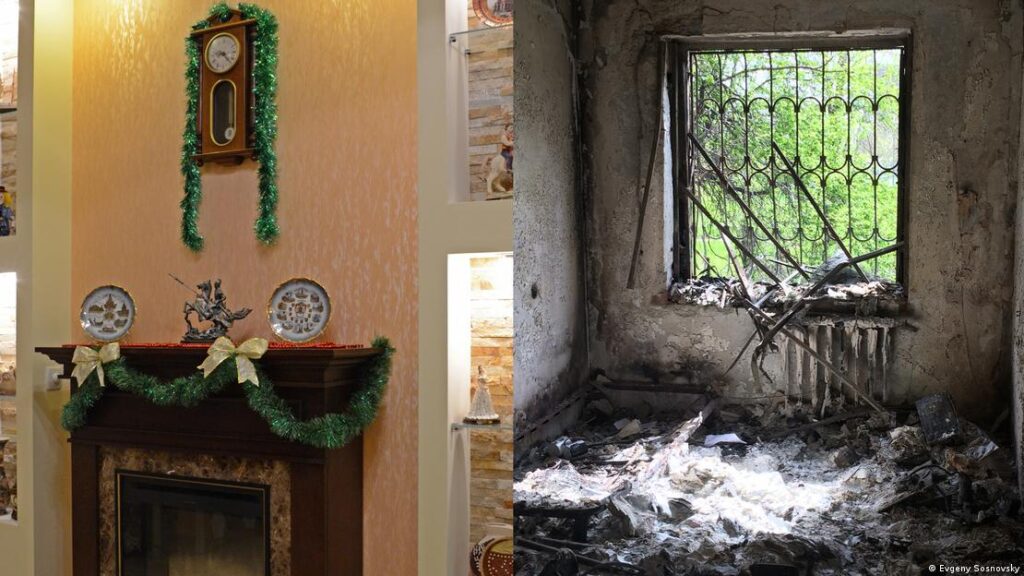
Yevhen Sosnovskyi, a photographer, and his wife had lived in a neighboring building for 20 years. It caught fire during the attack, and Russian troops drove residents out without allowing them to take food or clothes.

Sosnovsky photographed his apartment before and after the attack, preserving a record of the home they lost. A parking lot now covers the site.

They’re building on human bones, and fast, to eradicate the traces of their crimes,” Sosnovsky told DW.

Photographer Yevhen Sosnovskyi documented his apartment before and after the Russian attack. Photo: Yevhen Sosnovskyi via DW.

Russia remakes a city it destroyed

The new housing is part of a wider Russian effort to reshape Mariupol after its forces destroyed and occupied the city. The UN assessed that up to 90% of the city’s residential buildings were damaged or destroyed.

On 16 March 2022, Russia bombed the Mariupol Drama Theater, where civilians sheltered beneath a large “CHILDREN” sign. An eyewitness described chaos, blood, and survivors using torn blankets as bandages.

In the wake of its destruction of the city, Moscow plans to move about 114,000 of its citizens into occupied Ukraine, with Mariupol as one of the main destinations.

Russia’s education minister calls it “objective.” A new textbook teaches Ukrainian children that their occupied region is historically Russian

11 août 2026 à 10:00

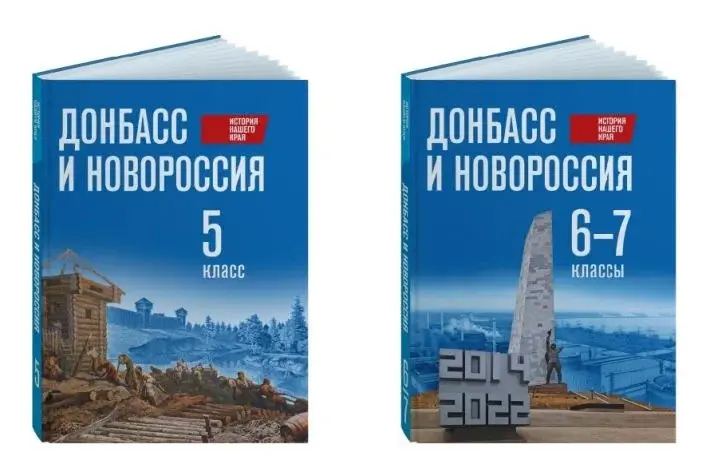
Covers of Russian “Donbas and Novorossiya” history textbooks for students in grades 5–7.

Russia will introduce two editions of a new regional history textbook series in occupied Ukrainian schools on 1 September 2026. The books present the occupied Ukrainian regions as historically Russian, MOST, a Kherson-based outlet, reported on 10 August.

The new textbooks bring Russia's campaign to erase Ukrainian identity into occupied classrooms, where authorities remove Ukrainian from curricula and replace lessons with Russian ideology, military drills, and firing-range visits. Moscow's Russification campaign extends beyond schools to efforts to change the demographics of occupied Ukrainian territory and re-educate forcibly transferred Ukrainian children.

The new textbook series, entitled "History of Our Region: Donbas and Novorossiya," comprises one edition for grade 5 and another for grades 6–7. The course attached to the books will be compulsory throughout Russia's so-called "new regions," according to the Ukrainian human rights center ZMINA.

"Novorossiya" is an imperial term Moscow uses to claim southern and eastern Ukraine. 

Russia's Education Ministry calls the course "objective" and part of a "unified history of Russia," Meduza reports. Minister Sergei Kravtsov claimed it contains "objective information, rather than the lies that appeared in Ukrainian textbooks."

Replacing the curriculum, then the population

The "Novorossiya" textbook forms part of a broader Kremlin campaign to Russify occupied Ukraine's education, culture, and demographics. 

Since occupying Melitopol, Russian authorities have systematically replaced Ukrainian curricula and textbooks. Older Russian textbooks, issued after Moscow's full-scale war, already depicted occupied Melitopol as part of Russia. 

A 2025 Kremlin strategy requires occupied regions to enter Russia's educational, cultural, and information space. The policy also sets a nationwide target for “All-Russian civic identity” to reach at least 95% by 2036.

35,000 Ukrainian children still missing

Meanwhile, experts estimate that about 35,000 Ukrainian children remain missing and are likely held in Russia or Russian-occupied territory. Yale's Humanitarian Research Lab identified at least 210 facilities used to hold children from Ukraine. The lab found that at least 130 facilities subjected Ukrainian children to pro-Russian cultural, patriotic, or military programs. 

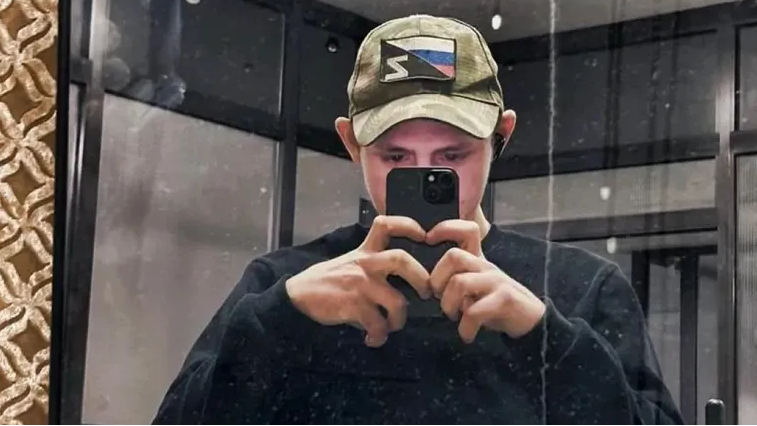
One case shows where such indoctrination can lead. Once listed as missing under occupation, Ukrainian boy Oleksandr Mustiatse later appeared online in a Russian uniform bearing the “Z” invasion symbol, Save Ukraine reported.

He was missing child on Ukraine’s own registry. Monitors say they’ve now found him wearing Russian “Z” and posing with its flag

3 août 2026 à 12:14

Oleksandr Mustiatse, who was a child in occupied Kherson Oblast after Russia's full-scale invasion, has joined the Russian army. Source: Kuleba/Threads

A Ukrainian child who vanished under occupation has reappeared in a Russian uniform, fighting his own country. Oleksandr Mustiatse, who was a child in occupied Kherson Oblast after Russia's full-scale war, has joined the Russian army, Save Ukraine founder Mykola Kuleba reported.

A child from a missing persons registry was identified as an enemy soldier. Mustiatse, officially considered missing since the start of the Russian occupation and listed in the national "Children of War" registry, appeared on social media in a Russian military uniform bearing the "Z" symbol.

He also posed with a Russian flag and shared photos from positions where he fought against Ukraine, according to the Back to Ukraine team, a monitoring project tracking missing or displaced minors in Russia's war.

The pipeline starts long before the uniform

Kuleba said Oleksandr's story shows what happens to Ukrainian children left for years under occupation. Save Ukraine speaks almost daily with children and families who escaped, and their accounts describe a systematic process that begins well before military service, he said.

Children are drawn into militarized education in kindergartens and schools, encouraged to join the Yunarmiya youth army, taught to handle weapons, and told repeatedly that Ukraine is their enemy and Russian military service is their duty.

"When this becomes the only reality a child knows for years, propaganda stops being perceived as propaganda. It becomes identity," he said.

Ukraine has documented this pipeline: Russia takes occupied children, militarizes them, and turns some back toward the country they came from.

The identification, and its uncertainty

The tracing is careful but not certain. Back in Ukraine, one post showed a car riddled with bullets, its body full of holes, matching a vehicle Oleksandr had shown earlier, and another photo showed him in a bandage, possibly after a wound.

His page had been inactive since 16 November 2025, and the team initially feared he had been killed. They later found what they believe is his new account under the name "Aleksandr Famenok", a soldier in camouflage and a balaclava, identified by comparing his eyebrows, eyes, and brow ridges to earlier photos.

That facial comparison is the team's assessment, not a confirmed identification, and EP cannot independently verify it.

  • ✇The Kyiv Independent
  • Russia offers cash to teachers to Russify occupied Ukraine, report says
    Russia is using financial incentives to recruit teachers, cultural workers, and coaches to work in occupied parts of Ukraine in a campaign aimed at reshaping local identity and fostering loyalty to Moscow’s regime, according to a report published by the Center for European Policy Analysis (CEPA) on June 26. The Kremlin is offering up to two million rubles (around $22,000) to Russian teachers who agree to work for five years in occupied areas of Donetsk, Luhansk, Zaporizhzhia, and Kherson oblasts
     

Russia offers cash to teachers to Russify occupied Ukraine, report says

26 juin 2025 à 20:49
Russia offers cash to teachers to Russify occupied Ukraine, report says

Russia is using financial incentives to recruit teachers, cultural workers, and coaches to work in occupied parts of Ukraine in a campaign aimed at reshaping local identity and fostering loyalty to Moscow’s regime, according to a report published by the Center for European Policy Analysis (CEPA) on June 26.

The Kremlin is offering up to two million rubles (around $22,000) to Russian teachers who agree to work for five years in occupied areas of Donetsk, Luhansk, Zaporizhzhia, and Kherson oblasts, and one million rubles for positions in Crimea.

The initiative, an extension of Russia’s “Zemskyi Uchitel” (Rural Teacher) program, which originally targeted underserved regions in Russia, was formally launched in the newly occupied Ukrainian territories in 2024 — though Russian educators began arriving as early as 2022.

Over 100 teachers have relocated to Crimea through the program, according to Ukraine’s Regional Center for Human Rights/ Most of them arrived from regions including Krasnodar, Altai Krai, Tomsk, Novosibirsk, Saratov, Tyumen, Ivanovo, and the Republic of Udmurtia.

“We have documented cases of teachers — and people assigned to managerial roles, such as school principals and deputy heads — arriving as early as 2022,” said Kateryna Rashevska of Ukraine’s Regional Center for Human Rights. “The first group came from Dagestan, arriving in the occupied Zaporizhzhia region, and by 2024, there were already 37 teachers from Dagestan working there.”

According to Rashevska, these teachers often lead courses in Russian language, history, and “basics of life safety and defense of the Motherland” — classes focused on conscription and military training. “These people are also involved in reprogramming Ukrainian children, attempting to raise them as Russian patriots and future members of the Russian armed forces,” she added.

In parallel, Russia is also exerting pressure on Ukrainian teachers in occupied areas to adopt the Russian curriculum. Those who refuse face serious consequences. "In Berdiansk, a school principal was deported for refusing to open the school under Russian standards," said Mariia Sulialina, head of Ukrainian NGO Almenda. Sulialina noted that teachers are now required to praise President Vladimir Putin and report "extremist behavior" among students — often defined as pro-Ukrainian views.

Human rights experts say these efforts amount to colonization and are violations of international law, including Article 49 of the Geneva Convention and Article 8 of the Rome Statute.

“Russia plans to move another 100 teachers into occupied areas in 2025 — a clear example of colonization,” Rashevska said. Despite existing legal tools, she added, “The International Criminal Court still doesn’t prioritize colonization… even though these federally coordinated programs involving teachers, cultural workers, and coaches create a clear chain of command.”

Putin under pressure to declare war on Ukraine, but experts say Russia isn’t ready
Despite suffering over 1 million casualties, pounding Ukrainian cities nightly with missiles and drones, and committing countless war crimes, one startling fact about Russia’s full-scale invasion remains — Moscow has yet to officially declare war on Ukraine. In February 2022, Russian President Vladimir Putin described what he believed was going to be a swift victory and the capture of Kyiv within days as a “special military operation.” Nearly three-and-a-half years later, the Kremlin is stuck
Russia offers cash to teachers to Russify occupied Ukraine, report saysThe Kyiv IndependentChris York
Russia offers cash to teachers to Russify occupied Ukraine, report says
❌