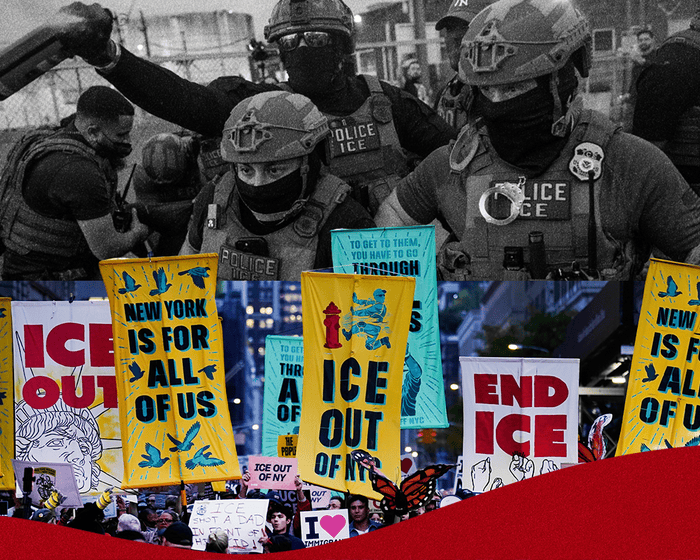
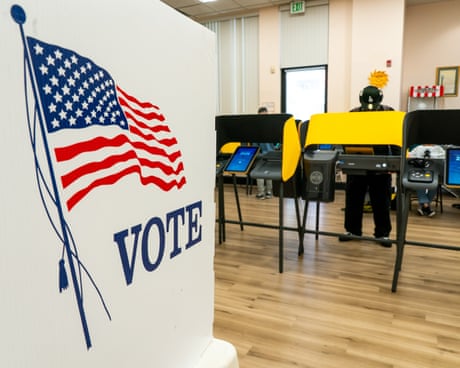
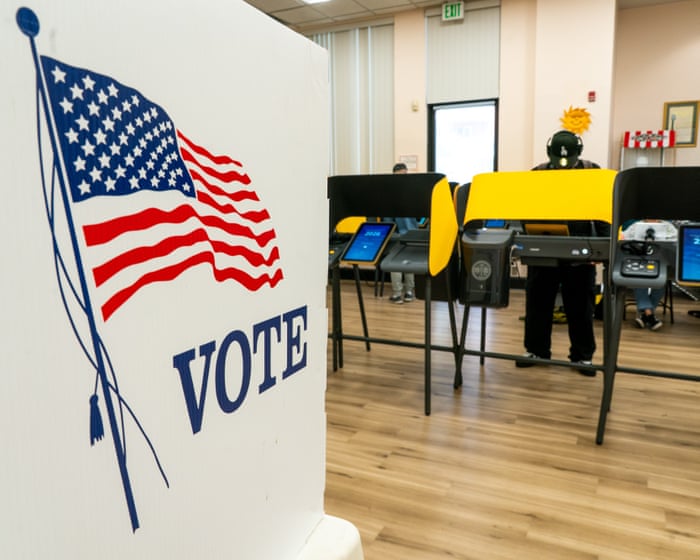
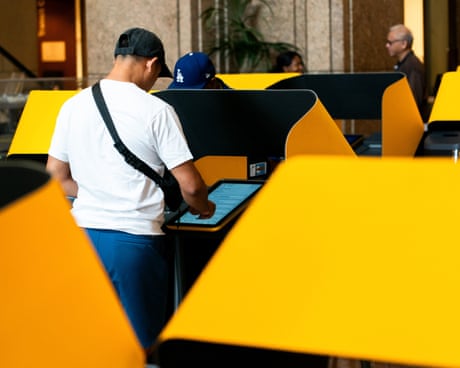
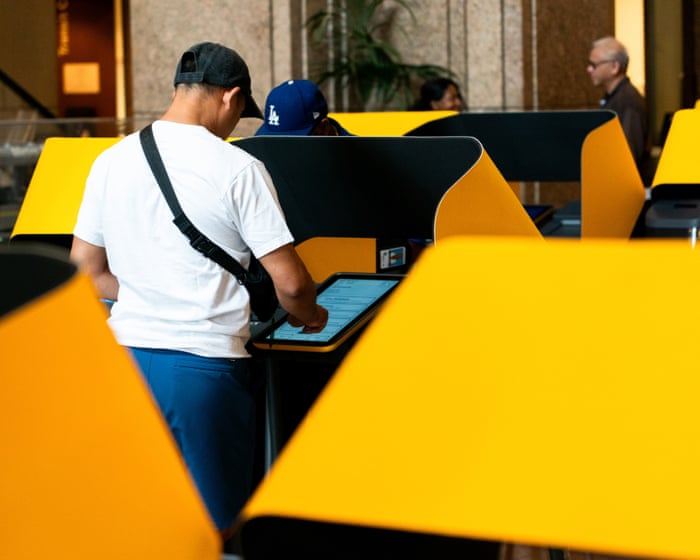
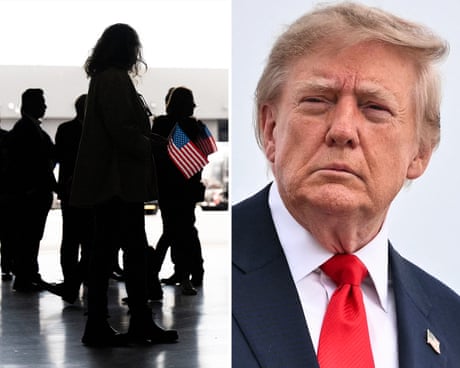
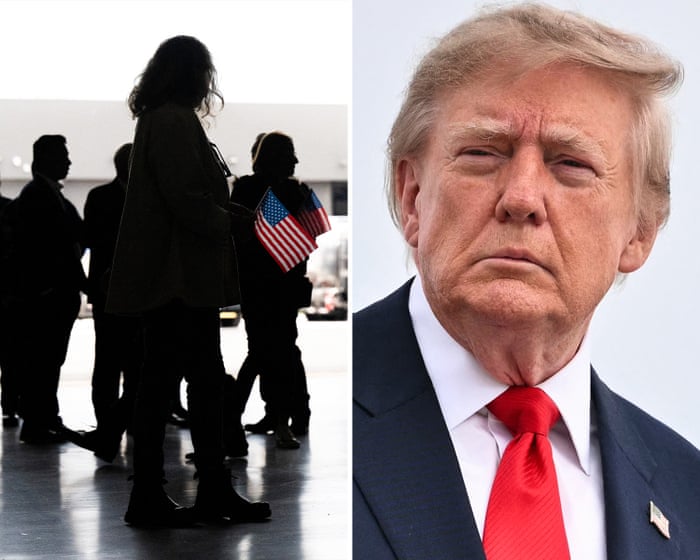
The ruling largely blocked homeland security agents from carrying out field interviews in nine states, including California, as part of a sprawling effort to find noncitizens registered to vote.
The ruling largely blocked homeland security agents from carrying out field interviews in nine states, including California, as part of a sprawling effort to find noncitizens registered to vote.
With ICE arrests and detentions at their highest levels, immigration remains a key issue for voters less than two weeks before election day.From mass raids to quiet crackdown: a timeline of Trump’s strategic ICE pivotSign up for the Stakes newsletterCheryl Bath, Wisconsin asks in a callout question: During covid I was surprised to learn how many foreign workers, especially from Mexico, worked in the Wisconsin farm fields. And now, I was more surprised to learn that these workers would also be de
Cheryl Bath, Wisconsin asks in a callout question: During covid I was surprised to learn how many foreign workers, especially from Mexico, worked in the Wisconsin farm fields. And now, I was more surprised to learn that these workers would also be deported and not allowed to work any longer at these fields even though it was all legal with paperwork. These foreign workers paid into the federal government taxes and social security system which was a plus for U.S. social security. I’ve been wondering how these Wisconsin farms are dealing with the absence of these workers seeing how it is harvesting time right now. Propublica had a article a year or so ago about the effects of this immigration sweep on the workers and the farms but that was still when the workers were still here. I can’t find any follow up or information on this anywhere. I think the farmers really feel left out to deal with this on their own and no one is asking questions. Maybe you can?
Maanvi: Cattle ranchers and dairy farmers have indeed been pushing for immigration reform, not only recently, but for years – because the industry relies so heavily on immigrant labor. In September, the the Texas Cattle Feeders Association, Kansas Livestock Association, and Oklahoma Cattlemen’s Association issued a joint warning that ICE operations were threatening their industy, and would have “a massive chilling effect on the legal, documented, skilled workers that put beef on the table and keep the supply chain moving”. I recently spoke with Matt Teagarden, CEO of the Kansas Livestock Association, who said that the US cattle herd has shrunk to its lowest numbers in 75 years – and ranchers are struggling to keep up with consumer demand. Farms aren’t able to expand operations without immigrant labor – and Teagarden said that this could mean that US consumers will increasingly be eating imported beef. He also noticed that ICE crackdowns are having a systemic impact on agriculture – it’s not only dairy or cattle industry workers who are impacted, but also farmworkers who grow the feed for cows, and immigrant workers who process the dairy and meat before it gets to grocery stores. Two-thirds of farm workers are non-citizen immigrants. As the administration targets these workers, food producers could struggle to keep up operations, and prices are expected to increase steeply, according to a study by the thinktank Fwd.us.
José: Many people caught up in the Trump administration’s dragnet are workers in the US — they pay taxes and contribute to Social Security, while receiving almost none of the benefits. The process to gain asylum or remain in the US can be long and arduous — oftentimes, as undocumented people go through the process, they will receive work permits, Social Security numbers and, in certain states, driver’s licenses. Now, many people with those legal work permits have been arrested by federal immigration officials and sit in detention centers, waiting for their immigration cases to proceed.
People protest the plans by President Donald Trump’s administration to build a section of the border wall at the Big Bend National Park, in Study Butte, Texas, in August.
Flights to third countries where the detainees have no ties are scheduled as early as Wednesday, relatives detailSend us your questions about immigration and the midtermsRelatives of gravely ill detainees at two Florida immigration jails say authorities are about to deport their loved ones to unknown countries in Africa despite worsening medical conditions.Flights are scheduled as early as Wednesday, according to the families and the immigration advocacy group the Workers Circle, which has been
Relatives of gravely ill detainees at two Floridaimmigration jails say authorities are about to deport their loved ones to unknown countries in Africa despite worsening medical conditions.
Flights are scheduled as early as Wednesday, according to the families and the immigration advocacy group the Workers Circle, which has been monitoring conditions and speaking with detainees inside two Immigration and Customs Enforcement (ICE) facilities in south Florida.
Lebanese officials were furious, claiming the city erased Gibran’s identity. Yet there was a time when Arab immigrants in the US thought ‘we were all Syrians’This is Muslim New York: artists, thinkers and politicos on defining a new era for the cityOn the morning of 30 April, in the shadow of the financial district’s skyscrapers, a gold cloth slid off a bright yellow sculpture of painted stainless steel, 7ft (2 metres) tall, that spells an Arabic word: “al Qalam”, the pen.The monument, Al Qalam:
Lebanese officials were furious, claiming the city erased Gibran’s identity. Yet there was a time when Arab immigrants in the US thought ‘we were all Syrians’
On the morning of 30 April, in the shadow of the financial district’s skyscrapers, a gold cloth slid off a bright yellow sculpture of painted stainless steel, 7ft (2 metres) tall, that spells an Arabic word: “al Qalam”, the pen.
The monument, Al Qalam: Poets in the Park, stands in Elizabeth H Berger Plaza and honors the writers of the vanished neighborhood that New Yorkers once called Little Syria: an Arabic-speaking immigrant community that ran along Washington Street, blocks from where the World Trade Center would later rise. The monument was the first commemorative artwork unveiled under Mayor Zohran Mamdani. Little Syria produced one of the most famous poets ever to live in New York: Kahlil Gibran, author of The Prophet, a book of poetic prose that has never gone out of print. The monument honors the Pen League, the circle of writers Gibran led in Little Syria in the early 20th century.
The statement revealed in court papers raises questions about the reliability of the list of 20,000 people in CaliforniaThe justice department’s list of suspected non-citizens in California includes a “high percentage” of people born in the United States, Los Angeles election officials said on Tuesday.The statement, made in court papers, raises further questions about the reliability of a list of 20,000 people the justice department provided to election officials in Los Angeles last week. The de
The statement revealed in court papers raises questions about the reliability of the list of 20,000 people in California
The justice department’s list of suspected non-citizens in California includes a “high percentage” of people born in the United States, Los Angeles election officials said on Tuesday.
The statement, made in court papers, raises further questions about the reliability of a list of 20,000 people the justice department provided to election officials in Los Angeles last week. The department sent the county and California secretary of state the list last week and gave them a 48-hour deadline to segregate ballots cast from anyone on the list unless they could verify their citizenship. California election officials refused and the Department of Justice sued them on Thursday.
Much of Donald Trump’s unpopularity in polls stems from dissatisfaction over the economy and war on IranUS politics live – latest updates*** Continue reading...
DHS says migrants ‘retain protections’ after temporary protected status was set to expire on MondaySend us your questions about immigration and the midtermsMore than 100,000 people from Ukraine and Sudan can stay in the United States without immediate risk of deportation, the Department of Homeland Security said, in what amounts to a temporary reprieve after their right to stay in the country was set to expire on Monday.Temporary protected status was set to end on Monday for about 101,000 Ukrain
More than 100,000 people from Ukraine and Sudan can stay in the United States without immediate risk of deportation, the Department of Homeland Security said, in what amounts to a temporary reprieve after their right to stay in the country was set to expire on Monday.
Temporary protected status was set to end on Monday for about 101,000 Ukrainians and 1,800 Sudanese. But the DHS said an announcement “will be made at the appropriate time”. Until then, the department said in a written statement, Ukrainians and Sudanese in the US covered by those temporary measures “retain protection”. The department did not indicate how long they could stay or when a final announcement would be made on their status.
Crackdown marks latest escalation in the Trump justice department’s push to target alleged noncitizen votingSend us your questions about immigration and the midtermsThe US Department of Justice has filed criminal charges against 28 green card holders in California accused of fraudulently registering to vote and casting illegal ballots.The crackdown marks another escalation in the federal government’s ongoing efforts against alleged noncitizen voting, efforts that Democrats and voting rights grou
The US Department of Justice has filed criminal charges against 28 green card holders in California accused of fraudulently registering to vote and casting illegal ballots.
The crackdown marks another escalation in the federal government’s ongoing efforts against alleged noncitizen voting, efforts that Democrats and voting rights groups say are part of a strategy by the Trump administration to sow doubt in the results of the upcoming midterm elections.
Ricardo Gonzalez was injured and taken to hospital after confrontation in Long Beach, according to officialsFederal immigration agents broke the arm of a US citizen in what a Democratic congressman said was a “brutal attack” during a confrontation with protesters in California.Video of Saturday’s encounter in Long Beach shows Ricardo Gonzalez, identified as a former city employee, handcuffed and face down in a gutter, with Immigration and Customs Enforcement (ICE) officers kneeling on his back.
Ricardo Gonzalez was injured and taken to hospital after confrontation in Long Beach, according to officials
Federal immigration agents broke the arm of a US citizen in what a Democratic congressman said was a “brutal attack” during a confrontation with protesters in California.
Video of Saturday’s encounter in Long Beach shows Ricardo Gonzalez, identified as a former city employee, handcuffed and face down in a gutter, with Immigration and Customs Enforcement (ICE) officers kneeling on his back.
Federal agents searched Ms. Omar’s Washington home last week and issued subpoenas to some family members in search of evidence of fraud in immigration paperwork.
Federal agents searched Ms. Omar’s Washington home last week and issued subpoenas to some family members in search of evidence of fraud in immigration paperwork.
Representative Ilhan Omar has condemned the search of her home, calling it an effort by the Trump administration “to target political enemies and weaponize federal law enforcement.”
Ex-president urges Americans to defend congresswoman, saying ‘there’s no reason to believe it will stop with her’Former US president Barack Obama condemned comments by Donald Trump’s “border czar” that the Republican presidential administration could “of course” strip Democratic congresswoman Ilhan Omar of her citizenship and deport her.Obama wrote Sunday morning, on X, that “the full weight of the federal government is being brought down on a law-abiding elected official because she has dared t
Ex-president urges Americans to defend congresswoman, saying ‘there’s no reason to believe it will stop with her’
Former US president Barack Obama condemned comments by Donald Trump’s “border czar” that the Republican presidential administration could “of course” strip Democratic congresswoman Ilhan Omar of her citizenship and deport her.
Obama wrote Sunday morning, on X, that “the full weight of the federal government is being brought down on a law-abiding elected official because she has dared to criticize the president.”
The homeland security secretary, Markwayne Mullin, has repeatedly said ICE agents are pursuing “the worst of the worst” criminals. But as Hamed Aleaziz, a reporter for The New York Times, explains, data shows that arrests of people with no criminal record have soared this summer.
The homeland security secretary, Markwayne Mullin, has repeatedly said ICE agents are pursuing “the worst of the worst” criminals. But as Hamed Aleaziz, a reporter for The New York Times, explains, data shows that arrests of people with no criminal record have soared this summer.
Federal officer slammed vehicle into a construction worker while pursuing a man who died in similar circumstancesA federal officer slammed a vehicle into a Houston construction worker and broke his leg, believing him to be a man who apparently died years ago, the dead man’s family said on Friday, further calling into question the account given by US Immigration and Customs Enforcement (ICE).The worker, 48-year-old Miguel Parra Hernandez of Mexico, remains hospitalized with multiple leg fractures
Federal officer slammed vehicle into a construction worker while pursuing a man who died in similar circumstances
A federal officer slammeda vehicle into a Houston construction worker and broke his leg, believing him to be a man who apparently died years ago, the dead man’s family said on Friday, further calling into question the account given by US Immigration and Customs Enforcement (ICE).
The worker, 48-year-old Miguel Parra Hernandez of Mexico, remains hospitalized with multiple leg fractures and needs reconstructive ankle surgery, according to FIEL, a Houston-based immigration advocacy group. At a news conference on Friday, the group said the alleged suspect’s family had shared documentation proving his death.
A criminal investigation into the lawmaker’s immigration process advanced after federal investigators reviewed family text messages from a seized phone.
A criminal investigation into the lawmaker’s immigration process advanced after federal investigators reviewed family text messages from a seized phone.
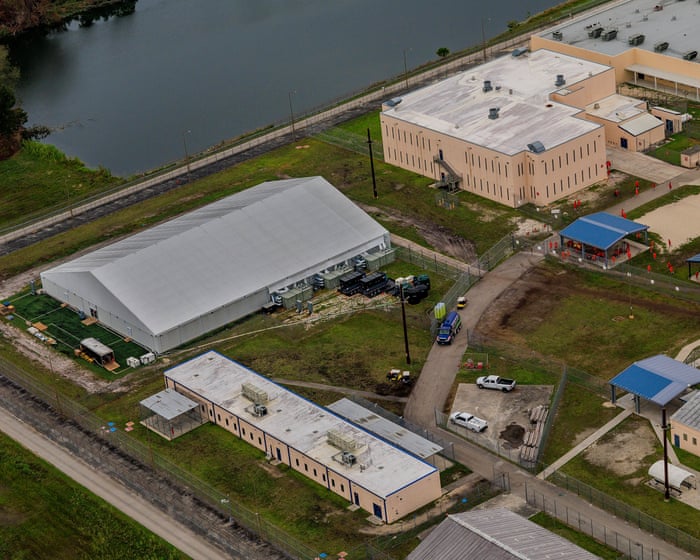
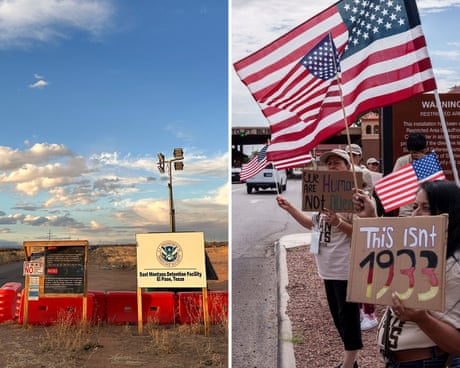
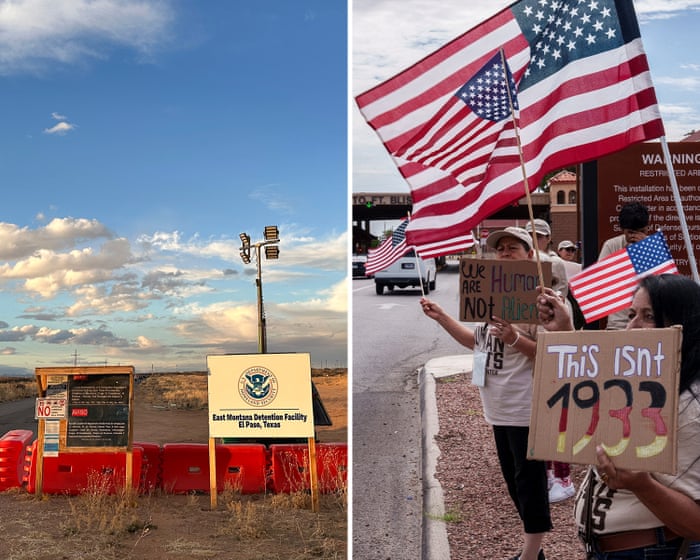
Court filing alleges ‘physical abuse by guards’, ‘filthy living conditions’ and disease outbreaks at Camp East MontanaHow has Trump’s immigration agenda affected the US midterms? Send us your questionsAttorneys and experts are raising the alarm that immigrants at Camp East Montana, the sprawling desert detention camp on the Fort Bliss military base in west Texas, face a risk of serious injury or death because of ongoing, extreme health and safety hazards there, according to a fresh court filing,
Attorneys and experts are raising the alarm that immigrants at Camp East Montana, the sprawling desert detention camp on the Fort Bliss military base in west Texas, face a risk of serious injury or death because of ongoing, extreme health and safety hazards there, according to a fresh court filing, the Guardian can reveal.
The allegedly dangerous conditions persist at the tent jail, the largest immigration detention facility in the US, despite regular reports from inside and outside the federal government that it has violated dozens of official standards since it opened last year.
Thousands of vetted and approved refugees are suffering as Trump restricts quotas and prioritizes white South AfricansDonald Trump plans to once more severely restrict the number of refugees admitted to the US, announcing a limit of just 17,500 people in fiscal year 2027 – and that, again, those let in will be “primarily” white South Africans.Refugee rights groups are alarmed and infuriated at the decision last month by the US president to exclude almost every other demographic. Continue reading
Thousands of vetted and approved refugees are suffering as Trump restricts quotas and prioritizes white South Africans
Donald Trump plans to once more severely restrict the number of refugees admitted to the US, announcing a limit of just 17,500 people in fiscal year 2027 – and that, again, those let in will be “primarily” white South Africans.
Refugee rights groups are alarmed and infuriated at the decision last month by the US president to exclude almost every other demographic.
ICE agents rammed a man during a pursuit in Houston, leaving him with a shattered leg. But a bulletin of the target shows a man who died in 2017, his daughter said.
ICE agents rammed a man during a pursuit in Houston, leaving him with a shattered leg. But a bulletin of the target shows a man who died in 2017, his daughter said.
Join our final live Q&A before the midterm elections, on 22 October at noon ET on the Guardian US siteSince Donald Trump started his second term in January 2025, immigration enforcement has remained a major issue for US voters, with arrests reaching record highs, operations becoming deadly and immigration raids hitting politicians’ homes. Our reporting has documented the experiences of those directly affected by the harsh conditions in detention centers and resistance to ICE agents on the gr
Exclusive: Trump has falsely claimed Afrikaners are facing ‘white genocide’, but very few have applied to live in USThe US government could spend hundreds of thousands of dollars on a media campaign in South Africa to figure out why more white Afrikaners are not applying to become refugees to the US, as Donald Trump had hoped.State department officials, according to an August proposal seen by the Guardian, outlined a roughly $335,000 research and advertising effort after applications to the refu
Exclusive: Trump has falsely claimed Afrikaners are facing ‘white genocide’, but very few have applied to live in US
The US government could spend hundreds of thousands of dollars on a media campaign in South Africa to figure out why more white Afrikaners are not applying to become refugees to the US, as Donald Trump had hoped.
State department officials, according to an August proposal seen by the Guardian, outlined a roughly $335,000 research and advertising effort after applications to the refugee program “trended lower than expected” since Afrikaners were allowed to apply directly online in November 2025. The document, written by the US mission in South Africa with a department research unit for the embassy in Pretoria, admits officials know little about why.
Many unaccompanied minors are facing deportation hearings without a lawyer because of the Trump administration’s dispute with an organization that helps provide legal representation to thousands of migrant children. Our national reporter Jazmine Ulloa explains. Read more: https://nyti.ms/3TJaBEB
Many unaccompanied minors are facing deportation hearings without a lawyer because of the Trump administration’s dispute with an organization that helps provide legal representation to thousands of migrant children. Our national reporter Jazmine Ulloa explains. Read more: https://nyti.ms/3TJaBEB
For years, the government has helped secure lawyers for minors who arrive at the southern border. But a contract dispute has forced many children to face immigration judges on their own.
For years, the government has helped secure lawyers for minors who arrive at the southern border. But a contract dispute has forced many children to face immigration judges on their own.
Account by Oscar Belgal differs sharply from that of DHS agents, who fired into vehicle with young boy in back seatLawyers for a man wounded by an immigration officer while driving with his young son in New York City said in a court filing Wednesday that the agent who shot him never identified himself before he ran up to the car, smashed one of its windows, then fired several shots into the vehicle.The account by lawyers for Oscar Belgal contrasted sharply with the version of events outlined by
Account by Oscar Belgal differs sharply from that of DHS agents, who fired into vehicle with young boy in back seat
Lawyers for a man wounded by an immigration officer while driving with his young son in New York City said in a court filing Wednesday that the agent who shot him never identified himself before he ran up to the car, smashed one of its windows, then fired several shots into the vehicle.
The account by lawyers for Oscar Belgal contrasted sharply with the version of events outlined by Department of Homeland Security officials. They have said officers opened fire only after Belgal smashed his car into two government vehicles and “accelerated toward other officers”.
The off-duty agent was found sleeping on the front lawn of a home in Fresno, Calif., last week before the scuffle unfolded. The police said he “appeared intoxicated and agitated.”
The off-duty agent was found sleeping on the front lawn of a home in Fresno, Calif., last week before the scuffle unfolded. The police said he “appeared intoxicated and agitated.”
A conviction on the possible charge of aggravated assault with a deadly weapon could mean up to 20 years in prisonA Texas prosecutor said he was considering felony assault charges for an Immigration and Customs Enforcement (ICE) officer who ran over a man following an attempted traffic stop and broke his leg in multiple places.Sean Teare, district attorney for Harris county, said video of the incident in west Houston on Saturday morning, in which the officer’s unmarked SUV is seen veering into t
Sean Teare, district attorney for Harris county, said video of the incident in west Houston on Saturday morning, in which the officer’s unmarked SUV is seen veering into the man as he runs away across an empty parking lot, could support a charge of aggravated assault with a deadly weapon.
Mayor Karen Bass and her former ally, the City Council member Nithya Raman, attacked each other’s records on Tuesday night in the last televised debate before the election.
Mayor Karen Bass and her former ally, the City Council member Nithya Raman, attacked each other’s records on Tuesday night in the last televised debate before the election.
The Harris County district attorney said investigators from his office did not believe that the crash that left Miguel Parra Hernandez injured over the weekend was accidental.
The Harris County district attorney said investigators from his office did not believe that the crash that left Miguel Parra Hernandez injured over the weekend was accidental.
The search takes place within the 60-day window of the midterm elections, when the Justice Department has historically avoided such investigative steps related to political candidates.
The search takes place within the 60-day window of the midterm elections, when the Justice Department has historically avoided such investigative steps related to political candidates.
The shipwreck is among the deadliest ever recorded on the route to Yemen, the International Organization for Migration said. Dozens remain missing, and the bodies of 15 children were recovered.
The shipwreck is among the deadliest ever recorded on the route to Yemen, the International Organization for Migration said. Dozens remain missing, and the bodies of 15 children were recovered.
The U.S. military and contractors put up this tent compound in early 2025 at Guantánamo Bay, Cuba, to house immigration detainees designated for deportation from the United States. They were taken down last year, never used.
A plan to house 1,250 asylum seekers on the outskirts of Piddington prompted a symbolic independence vote, highlighting a growing dilemma for the government.
A plan to house 1,250 asylum seekers on the outskirts of Piddington prompted a symbolic independence vote, highlighting a growing dilemma for the government.
Local residents unveiled a “Principality of Piddington” sign in the village of Piddington, Oxfordshire, England, after they voted to become independent in a symbolic “referendum.”
Armed escorts in masks pushed a group of migrants from Belarus toward Latvia and threatened Latvian soldiers, and hours later masked people crossed into Latvia and stole border surveillance cameras, Latvian Interior Minister Jānis Dombrava said on 6 October. Latvia's military described the incident as part of a continuing hybrid campaign on the border, and Ukraine's foreign minister blamed Moscow.
Russia keeps probing the EU's eastern defenses with migrants pushed from its own soil and
Armed escorts in masks pushed a group of migrants from Belarus toward Latvia and threatened Latvian soldiers, and hours later masked people crossed into Latvia and stole border surveillance cameras, Latvian Interior Minister Jānis Dombrava said on 6 October. Latvia's military described the incident as part of a continuing hybrid campaign on the border, and Ukraine's foreign minister blamed Moscow.
Russia keeps probing the EU's eastern defenses with migrants pushed from its own soil and through its ally Belarus, alongside drone incursions and sabotage that ISW has linked into one Russian pattern across Europe.
Armed escorts threatened Latvian soldiers
Latvian soldiers stopped at least 20 migrants trying to cross the border illegally from Belarus, the Latvian National Armed Forces said. Masked escorts led the group, and this time they were armed, threatened the soldiers, and urged and drove the migrants toward Latvia, the military said.
"Unlike many previous incidents, this time the provocation was particularly demonstrative and aggressive," Dombrava said.
The incident confirms that deliberate provocations and hybrid threats on the border will continue, the armed forces said. Illegal migration is being used as a tool to pressure Latvia's border and, with it, the external border of the EU and NATO, they added.
Belarus began funneling migrants toward the EU in 2021, a campaign Poland's government called a hybrid attack in which the migrants end up as weapons. In 2023, Finland closed its border crossings with Russia, accusing Moscow of the same tactic, and by mid-July Latvia had logged 111 straight days of migrants pushed across from Belarus.
Masked people stole the cameras
Several hours after the standoff, people in masks entered Latvian territory, damaged a distribution cabinet, and stole surveillance cameras, Dombrava said. They returned to Belarus before the border guard patrol could arrive.
"Belarus should understand that such incidents could lead to more serious consequences for Belarus itself," he said.
Ukrainian Foreign Minister Andrii Sybiha said Ukraine stands in full solidarity with Latvia. "Make no mistake: Moscow is behind it," he wrote, adding that Russian President Vladimir Putin "deliberately weaponizes migration, with the help of Lukashenka, to destabilise Europe."
Tunnels, tear gas, and damaged cameras on the border
Latvia's border guards stopped 11,384 attempts to cross illegally from Belarus between the start of 2026 and 24 September. In January, Latvia's armed forces and border guard published evidence that Belarusian security agencies were organizing illegal migration across the border. Latvia has also recorded deliberate damage to cables, distribution cabinets, and camera poles on its eastern border, aimed at slowing the rollout of an automated border control system.
Explore further
Stop arming Ukraine or we shut down your defense firms, pro-Kremlin group tells Latvia, Poland, and Portugal
On 22 July, Latvian soldiers fired warning shots and used tear gas against migrants trying to cross. The next day, Prime Minister Andris Kulbergs said Russia and Belarus were stepping up their hybrid war against the Baltic States to distract from Russia's failures in Ukraine. Latvia temporarily halted crossings on the Belarus border on 31 July. In August, Latvian guards found the first tunnel dug from Belarus and turned back 15 migrants who used it.
Anti-immigrant violence in South Africa has forced tens of thousands to return to Malawi, severing badly needed cash flows and leaving families hungry.
Anti-immigrant violence in South Africa has forced tens of thousands to return to Malawi, severing badly needed cash flows and leaving families hungry.
Women wait to buy fish from fisherman on the banks of Lake Malawi in Mangochi District, Southern Malawi, last month.
Two men were mistakenly arrested in the Bronx by Immigration and Customs Enforcement agents. Gary R. Brown, a federal judge, condemned the agency’s actions.
Two men were mistakenly arrested in the Bronx by Immigration and Customs Enforcement agents. Gary R. Brown, a federal judge, condemned the agency’s actions.
People at a bar in La Cabrera, on the outskirts of Madrid, watching a televised speech on Monday in which Prime Minister Pedro Sánchez announced national elections.
Pedro Sánchez, the Spanish prime minister, has faced challenges including a migration crisis and several corruption scandals involving his inner circle.
Pedro Sánchez, the Spanish prime minister, has faced challenges including a migration crisis and several corruption scandals involving his inner circle.
Son premier roman intitulé «C’était ça ou mourir» vient à peine d’être publié, qu’il suscite un engouement monstre. Près d’une quinzaine de maisons d’édition...
— Permalien
Son premier roman intitulé «C’était ça ou mourir» vient à peine d’être publié, qu’il suscite un engouement monstre. Près d’une quinzaine de maisons d’édition...
— Permalien
Pour cette émission consacrée à la rentrée littéraire, Augustin Trapenard accueille Thélyson Orélien, pour son premier roman, "C'était ça ou mourir", publié ...
— Permalien
Pour cette émission consacrée à la rentrée littéraire, Augustin Trapenard accueille Thélyson Orélien, pour son premier roman, "C'était ça ou mourir", publié ...
— Permalien
Québec solidaire a annoncé hier qu’un gouvernement solidaire accueillerait 70 000 immigrants permanents par an.
Le Parti libéral souhaitait, jusqu’en 2024, en accueillir 70 000, mais son nouveau chef, Charles Milliard, ne s’est pas encore prononcé sur un nombre précis.
La Caq maintiendrait le plan adopté en novembre dernier qui prévoit l’accueil de 45 000 résidents permanents par an.
Le Parti québécois limiterait leur nombre à 35 000 par an.
Le Parti conservateur n’a pas indiq
Québec solidaire a annoncé hier qu’un gouvernement solidaire accueillerait 70 000 immigrants permanents par an.
Le Parti libéral souhaitait, jusqu’en 2024, en accueillir 70 000, mais son nouveau chef, Charles Milliard, ne s’est pas encore prononcé sur un nombre précis.
La Caq maintiendrait le plan adopté en novembre dernier qui prévoit l’accueil de 45 000 résidents permanents par an.
Le Parti québécois limiterait leur nombre à 35 000 par an.
Le Parti conservateur n’a pas indiqué combien il souhaiterait en accueillir.
A ride from Tangier, the largest city in northern Morocco to the Spanish enclave of Ceuta takes less than two hours. The border crossing has its own, sleepier rhythm, quite different from the tourist-driven bustle of Tangier. In Ceuta, traders run their errands, Morocco-based expats make visa runs and Spanish people catch ferries to the mainland. On most days, the border crossing seems almost ordinary. The fences, though menacing and topped with razor wire, are less imposing up close and officer
A ride from Tangier, the largest city in northern Morocco to the Spanish enclave of Ceuta takes less than two hours. The border crossing has its own, sleepier rhythm, quite different from the tourist-driven bustle of Tangier. In Ceuta, traders run their errands, Morocco-based expats make visa runs and Spanish people catch ferries to the mainland. On most days, the border crossing seems almost ordinary. The fences, though menacing and topped with razor wire, are less imposing up close and officers make small talk with the expats waiting to get their visas stamped.
Then there are those days when the routine collapses and Ceuta becomes the center of Europe’s migration debate.
The territory is a geographic and political paradox. Despite falling under Spain’s — and the European Union’s — jurisdiction, it sits on the northern edge of Africa, surrounded by Morocco and separated from the Spanish mainland by the Strait of Gibraltar. It is an entry point to Europe, yet not fully part of the Schengen zone, requiring additional immigration checks for travelers crossing to the mainland.
When more than 60,000 people — mostly Moroccan men and teenagers — rushed into Ceuta (almost doubling the coastal city’s population), the images reverberated across Europe. There seemed to be no dramatic buildup to the incident, nor any obvious explanation why thousands of people chose that day to make their way to Spain.
Europe’s far-right politicians seized the narrative, portraying the influx as an imminent invasion, warning that the men were on their way to “Calais” and “Germany.” Italy temporarily suspended the Schengen free movement regime with Spain, meaning travellers arriving by sea and air would now be subject to border checks. Spain threatened to take “proportional measures” in response and did so at midnight on August 8, when it imposed similar checks for visitors from Italy.
The standoff between European governments — led by socialist Pedro Sánchez in Spain and conservative Giorgia Meloni in Italy — is not simply a test for European border security. Instead, what transpired in Ceuta poses bigger questions about the shifting nature of state sovereignty itself: How are we to understand borders, if they’re shaped by forces beyond the state’s reach?
Borders are not just lines separating geographic entities. They are systems built on surveillance, diplomatic bargains and digital networks. Ceuta is the place where all three converge. Its borders, already protected by the sea, have been fortified with steel, outsourced through diplomacy and tested by coordinated rumors.
Steel
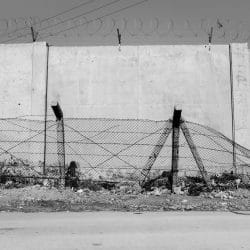
The crossings into the enclave are blocked by a multi-layered barrier of fences and wire. Morocco administers a fence separating it from the neutral area between the two countries. Two fences on the Spanish-controlled territory follow, creating an enclosure monitored by the Spanish Civil Guard. The physical infrastructure is reinforced with motion sensors, thermal and CCTV cameras, maritime communication systems and facial recognition technology.
Even the sea has now been incorporated into the border system. Just three days after the Ceuta border chaos, Spanish authorities installed a 500-metre floating barrier and anchored naval buoys to create another monitored enclosure.
The EU has funded most of the fortifications. The Border Violence Monitoring Network’s report says that since the construction of Ceuta’s border barrier in the 1990s, the EU has spent tens of millions of dollars to make the Spanish-Moroccan frontier more secure, technologically up-to-date and heavily surveilled. With the recent mass crossing, Spain will now receive additional emergency financial aid.
Yet, the architecture of physical surveillance, built and re-built with European money for decades, cannot prevent the human cost of attempting to cross a border. In Ceuta alone, at least 100 people died according to local authorities. “The rationale behind increasing surveillance is that you'll be able to save lives and smash the [people trafficking] gangs, right?” asked Nathan Akehurst, who has written about Ceuta’s border for Jacobin. “Where was that in this case?”
Diplomacy
Akehurst’s question touches upon the human-centered rationale for heavy border surveillance. But there is also a political one. It is not only Spain, as a EU member, that receives funds to manage migration. Morocco has received €427 million since 2015, for migration-related expenses, including technology and training. That’s part of Europe’s wider strategy of border externalization, a practice where Europe moves border control beyond its own territory.
The practice has been around for decades, but went into overdrive after 2015, when approximately 1.3 million people, mostly from Syria, came to the continent seeking asylum. Many of them reached Europe through Turkey, prompting the EU to strike a deal with Ankara: €6 billion in funds, visa liberalization and EU-ascension negotiations in exchange for stricter border controls and curbing irregular arrivals to Greece. The EU also agreed to resettle within Europe one Syrian from Turkey for every Syrian returned to Turkey from Greece. But by 2020, when the EU failed to resettle Syrians, Turkey’s president Recep Tayyip Erdoğan declared he would no longer prevent migrants from crossing Turkey en route to the EU.
“Border externalization is basically paying other countries, but also subjecting them, through a carrot and stick approach, to performing functions that are usually performed by a state itself at their borders,” explained Josephine Solanki from the Transnational Institute, an Amsterdam-based think tank. It leaves space for leaders like Erdoğan, Solanki added, to bargain for influence by turning migrants “into political leverage.”
The cost of outsourcing borders is not just material. It is measured in control that Europe cedes to the foreign governments it relies on for migration policy enforcement.
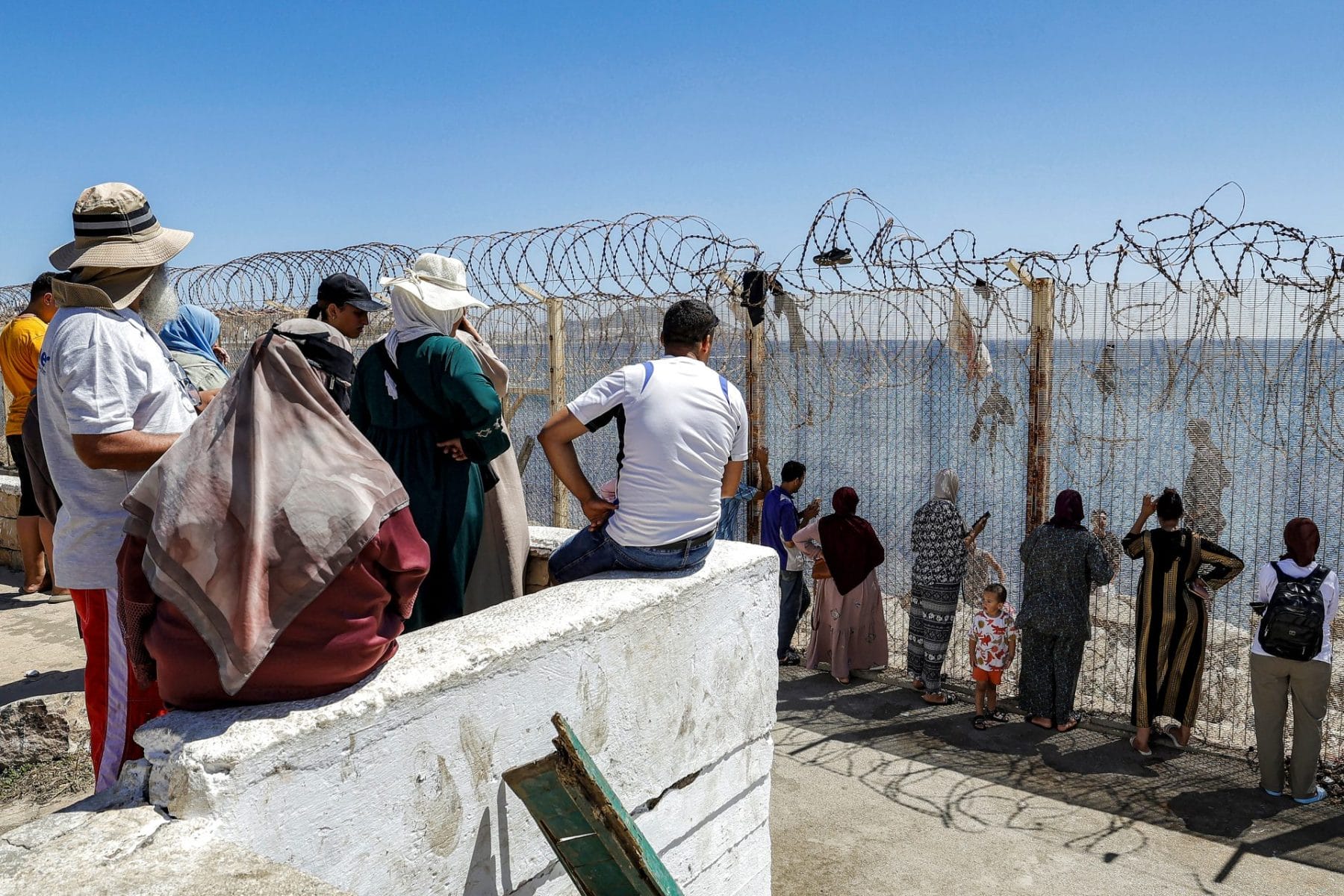
Relatives and friends waited by a fence topped with barbed-wire for the return of people who had previously crossed into Ceuta. Spanish authorities claim to have sent almost everyone back to Morocco. Abdel Majid BZIOUAT / AFP
In Ceuta, migrants claimed local authorities did not stop them from crossing the border. A young Moroccan man told the New York Times a day after the event: “They opened the border and let everyone go by.”
Border outsourcing agreements were made, among others, with authoritarian regimes in Tunisia, Egypt and Libya, where EU funds were used to detain migrants and quell domestic protests, rights organizations say. Alliances with “deeply unreliable and authoritarian actors” in the name of stability, said Nathan Akehurst, “is short-termist, insane and loses Europe any credibility it has left.” These alliances also allow Europe to “shift the blame to the Moroccans, the Eastern Libyans, the Turkish or whoever decides to take advantage of that moment.”
Rumors
It is yet to be revealed who, if anyone, has taken advantage of the mass crossing into Ceuta. Local and international media have uncovered now-deleted posts that shared tips on routes and equipment for the journey. One of the main networks was called Hrig Sebta network — “Sebta” being the Arabic name of Ceuta and “hrig” being the Maghrebi term for undocumented migrants, literally referencing the burning of identity papers.
In the wake of Ceuta, European ministers pledged to tackle online misinformation to avoid migration crises, but remained cautious when asked about thousands of posts reportedly linked to Russia. Other theories attributed the crossing to Morocco’s tensions with Spain over its closer ties with Algeria, or to Spain’s position on Palestine.
But those rumors, and what appears to be a weeks-long coordinated online campaign behind them, reveal something deeply human that fences can’t deter: movement that is spurred by hopes for a better life.
“[The crossing] would have happened anyway at some point,“ Akehurst argues. “There would have been a crossing because all of the circumstances that generate that are already there before someone with a twitter account throws a match on the fire.”
Yet, let’s pause at the match. It’s not about someone with a social media profile creating chain messages. It is about the ecosystem that can jeopardize borders by creating information flows, turning rumors into perceived opportunities.
Moroccan newspaper TeleQuel already published a report about social media posts amplifying the next hrig — another attempted crossing into Ceuta — on August 15.
When packaged to a hungry audience, rumors carry the currency of truth. They’ve driven migration long before social media was even conceptualized. Now those rumors speed through digital space owned and operated by private companies not prone to accountability and sitting well outside the reach of any single state.
And the EU has understood that for years. “It is necessary to structure the information space, as we have organized in the past the territorial space, the maritime space and the air space,” Thierry Breton, the European Commissioner for Internal Market of the EU said back in 2018. He warned about Big Tech companies treating digital space as a no-man’s-land that they would write rules for.
The no man’s land between Morocco and Spain appears calmer now. But the turmoil of the crossing revealed a new, digital dimension to border governance. Information has always found a way to spread; digital platforms have given it new channels: ones which allow those behind the information to remain faceless, while the information itself passes from screen to screen. It reaches a boiling point, spills over from the digital space and then can be disappeared, even before anyone has had a moment to scroll back.

 Connexion