❌

Vue normale

  • ✇Euromaidan Press
  • Russian plant supplying components for Iskander missiles reportedly struck by Ukrainian Storm Shadow missiles
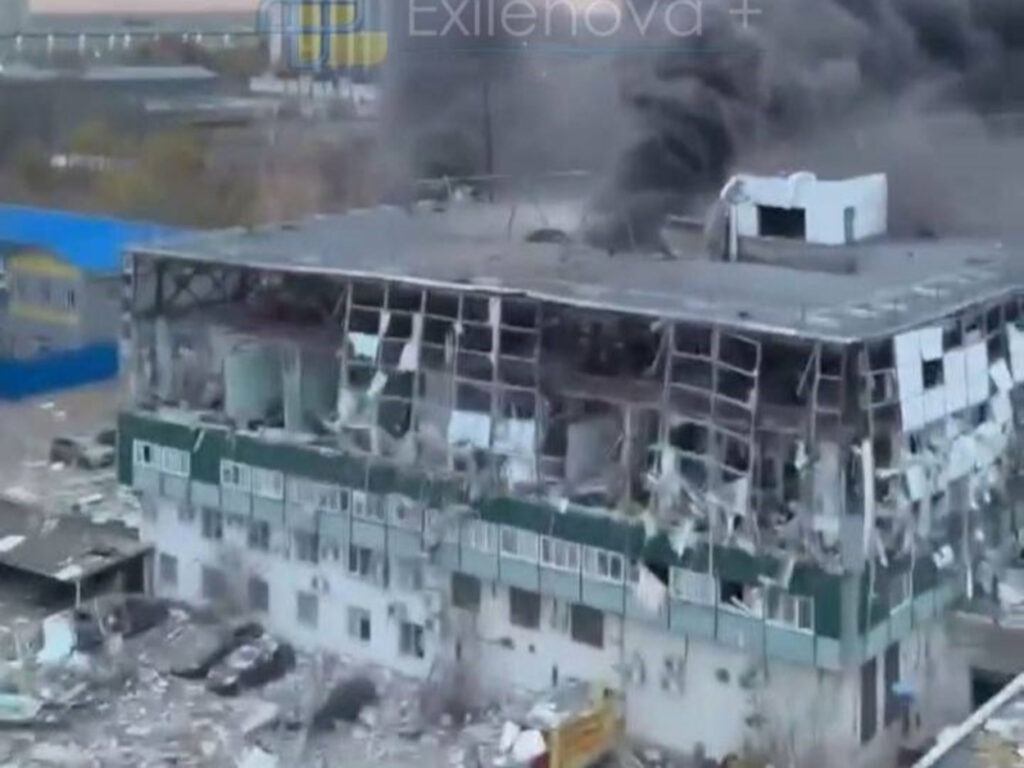
    Ukrainian missiles reportedly struck a factory in the city of Oryol on 23 October, with OSINT projects reporting that the target was the Proton electronics plant, which produces components used in Russian weapons systems. The strike comes amid Ukraine’s broader campaign to target Russian military production facilities and other infrastructure supporting Moscow’s war against Ukraine. Ukrainian strikes on such facilities aim to weaken Russia’s ability to manufacture and maintain the weapo
     

Russian plant supplying components for Iskander missiles reportedly struck by Ukrainian Storm Shadow missiles

23 octobre 2026 à 17:18

The Proton electronics plant in Oryol, Russia, after a Ukrainian missile strike on 23 October. The facility reportedly produces electronic components used in Russian weapons systems, including Iskander-M ballistic missiles. Photo: Exilenova+

Ukrainian missiles reportedly struck a factory in the city of Oryol on 23 October, with OSINT projects reporting that the target was the Proton electronics plant, which produces components used in Russian weapons systems.

The strike comes amid Ukraine’s broader campaign to target Russian military production facilities and other infrastructure supporting Moscow’s war against Ukraine. Ukrainian strikes on such facilities aim to weaken Russia’s ability to manufacture and maintain the weapons it uses in its invasion.

The plant reportedly supplies electronic components for Iskander-M ballistic missiles, which Russia regularly uses to attack Ukrainian cities, as well as other weapons systems, including the Pantsir-S1 air defense system. 

The strike could disrupt production supporting Russia’s war effort. Photos show extensive damage to the building. Information about casualties remains unclear. 

Reports say a Ukrainian missile strike hit the Proton electronics plant in Russia’s Oryol on 23 October.

The facility reportedly produces components for Iskander-M ballistic missiles used in attacks on Ukrainian cities, as well as other Russian weapons systems.

📹Exilenova+… pic.twitter.com/nbqGPJ8EJj

— Euromaidan Press (@EuromaidanPress) October 23, 2026

Plant reportedly produces components for Russian weapons

Proton JSC manufactures semiconductor devices, LEDs, and electronic components for industrial and specialized equipment. According to Exilenova+, the plant’s products are used in the production of Iskander-M ballistic missiles, S-71 Kover missiles, and the Pantsir-S1 air defense system.

Exilenova+ reported that the plant was struck by Storm Shadow cruise missiles. The weapon type has not been independently confirmed, and the extent of damage to the facility remains unknown.

Russian authorities confirm strike on factory

Oryol Oblast Governor Andrey Klychkov announced a missile threat in the region before reporting that missiles had struck a factory in Oryol’s Sovetsky District, according to Liga.net.

Residents reported explosions, a fire in one part of the city, and columns of smoke rising over Oryol, according to local reports cited by OSINT projects Exilenova+, Supernova, and Astra.

  • ✇Euromaidan Press
  • Russia may stage sabotage in Eastern Europe, but wants Kyiv blamed, Ukraine’s Intelligence warns
    Ukraine’s Defense Intelligence (HUR) warned that Russia may stage sabotage in Central and Eastern Europe, including the Baltic states, and blame Ukraine for the attacks, in a Telegram post on 23 October. The warning comes three days after The Wall Street Journal reported that US intelligence traces Europe’s sabotage wave to Putin’s personal order. If Russia stages new attacks and pins them on Ukraine, as HUR warns, European anger could turn on Kyiv rather than the Kremlin. This goes fur
     

Russia may stage sabotage in Eastern Europe, but wants Kyiv blamed, Ukraine’s Intelligence warns

23 octobre 2026 à 10:02

explosives found meters drone crashed near bundeswehr air base—investigators say matches gru's leipzig attack devices · post police officers search debris wunstorf base lower saxony germany 15 2026 german dpa

Ukraine’s Defense Intelligence (HUR) warned that Russia may stage sabotage in Central and Eastern Europe, including the Baltic states, and blame Ukraine for the attacks, in a Telegram post on 23 October.

The warning comes three days after The Wall Street Journal reported that US intelligence traces Europe’s sabotage wave to Putin’s personal order. If Russia stages new attacks and pins them on Ukraine, as HUR warns, European anger could turn on Kyiv rather than the Kremlin. This goes further than HUR’s statement on 2 October, which named potential Russian targets in Europe but did not mention a plan to blame Ukraine for attacks.

HUR says Moscow wants to discredit Ukraine’s army

Russia is stepping up its hybrid strategy to destabilize the European Union, according to HUR. The agency identified two aims: reducing foreign support for Ukraine by discrediting its Defense Forces, and intimidating European governments and societies.

The accusations would be spread through Russian propaganda channels and international platforms accessible to the Kremlin.

Potential targets include infrastructure and Russian Orthodox Church sites

HUR listed several potential targets for Russian provocations:

  • critical infrastructure and areas bordering Russia;
  • the Kaliningrad exclave;
  • areas of EU countries with Russian-speaking populations;
  • Kremlin-controlled sites, including properties belonging to the Russian Orthodox Church network;
  • historical sites associated with Russia.

The list reflects HUR’s assessment of potential targets, not confirmation that attacks at these locations are planned.

Earlier warnings and reported sabotage

On 2 October, HUR said Russian intelligence services had been ordered to increase activity in EU and NATO countries. It named military facilities, critical infrastructure, communications systems, and Starlink ground stations as potential targets and said it had alerted partners.

Warnings of Russian false flags on NATO’s eastern flank predate HUR’s. In August, Bloomberg reported, citing an unnamed European intelligence official, that Russia might expand hybrid attacks against Poland and the Baltic states, including false-flag attacks. A European government official separately told the agency that the CIA had warned countries in the region of a possible Russian attack. Lithuania’s military intelligence had warned earlier in August that Moscow might reassemble captured Ukrainian drones for false-flag strikes on critical infrastructure in the Baltic region.

Meanwhile, The Wall Street Journal reported on 20 October that US intelligence agencies believe the attempted drone attack on Leipzig-Halle Airport in Germany in early August was among the opening shots of a sabotage campaign ordered by Russian President Vladimir Putin. The Journal cited European officials briefed on the intelligence findings.

According to the newspaper, at least three drones carrying military-grade Semtex explosives were involved. One struck an Antonov cargo plane used to transport military aid to Ukraine but failed to explode. Another collided with a different aircraft, while a third detonated near the airport perimeter. German newspaper Welt am Sonntag has since named two suspects, citing German investigation files. Earlier German media reports described the sequence differently.

The Journal also reported sabotage attacks on Starlink stations in Poland, Lithuania, and Bulgaria in recent weeks. In August, Slovak authorities said they had foiled a planned arson attack on a Ukrainian drone factory, the Journal reported.

Russia denies involvement in sabotage in Europe. Responding to Berlin’s accusations over the Leipzig incident in early September, Putin asked where the evidence was.

❌