❌

Vue normale

  • ✇Euromaidan Press
  • Ukrainian monitors report fire near Russian plant that sold steel to an S-400 missile builder

    A fire broke out in the area of a major Russian steel plant in Lipetsk late on 27 October, Kyiv time, as air defenses fired at incoming targets, the Ukrainian monitoring Telegram channel Exilenova+ reported. Ukrainian partisans said the strike may have hit the plant. The region’s governor denied any large industrial fire. Whether or not it was hit, the plant matters to Ukraine. The Novolipetsk Metallurgical Plant (NLMK) is Russia’s only producer of electrical steel, Ukrainska Pravda rep
     

Ukrainian monitors report fire near Russian plant that sold steel to an S-400 missile builder

28 octobre 2026 à 07:10

NLMK (Novolipetsk Metallurgical Combine) during the attack.

A fire broke out in the area of a major Russian steel plant in Lipetsk late on 27 October, Kyiv time, as air defenses fired at incoming targets, the Ukrainian monitoring Telegram channel Exilenova+ reported. Ukrainian partisans said the strike may have hit the plant. The region’s governor denied any large industrial fire.

Whether or not it was hit, the plant matters to Ukraine. The Novolipetsk Metallurgical Plant (NLMK) is Russia’s only producer of electrical steel, Ukrainska Pravda reported in April 2025. NLMK’s tax records, obtained by the outlet, showed sales of that steel to Moscow’s Avangard plant, which builds missiles for S-400 air defense systems. Russia also fires those missiles at ground targets in Ukraine.

Pantsir fires, no visible hit

The targets over Lipetsk were jet-powered, Exilenova+ wrote, citing preliminary reports of impacts and a fire toward the city’s airfield. Footage it posted showed a Pantsir air defense system firing, and the channel suggested the system may have failed to cope. It then reported the fire near NLMK, blaming air defense fire or a falling object.

We also observe a fire in the vicinity of NLMK (Novolipetsk Metallurgical Combine) resulting from air defense activity or the impact of an object. pic.twitter.com/7bBqyqCP2j

— Exilenova+ (@Exilenova_plus) October 27, 2026

The Crimean Tatar-Ukrainian partisan movement Atesh said its agents in Lipetsk reported an impact, and in a follow-up said they believe it may have hit NLMK.

Contracts and denials

A 2022 investigation by Disclose and its partners tied 18 NLMK contracts, all signed after 2014, to eight Russian defense firms, including an S-300 maker. NLMK confirmed the contracts but said only a “negligible” amount of civilian steel grades went to those firms.

Map of Russia’s Lipetsk Oblast, where a fire was reported near the NLMK steel plant on 27 October 2026
Map of Russia’s Lipetsk Oblast, where a fire was reported near the NLMK steel plant on 27 October 2026. Map: EP/Datawrapper

On 28 October, Lipetsk Oblast Governor Igor Artamonov claimed air defenses downed 45 drones over the oblast overnight. He insisted reports of a large industrial fire were untrue, saying drone debris fell in a tree belt and sparked a fire, since contained. Debris also blew out windows in a Lipetsk apartment block, and one person sought medical help but needed no hospitalization, he added. Whether NLMK took any damage remains unconfirmed.

Earlier strikes on weapons suppliers

Earlier, UK-supplied Storm Shadow missiles reportedly struck a battery plant in Yelets, in the same oblast, on 25 October. Two days before that, they reportedly hit an electronics plant in Oryol. OSINT channels described both as suppliers of parts for Russian missiles.

For the third time this year, Ukrainian drones hit Russia’s rocket-fuel rubber plant in Samara Oblast. This time they reach the raw-material shop feeding it

26 octobre 2026 à 12:54

Smoke over the industrial zone of Tolyatti following a drone attack.

Ukrainian drones damaged a process pipeline, two butyl-rubber units, and a rectification (distillation) unit at Russia’s Tolyattikauchuk petrochemical plant on 24 October, Ukraine’s General Staff said on 26 October. The damage hits the production chain of solid rocket fuel for tactical and ballistic missiles, it added.

The strike was part of a string of Ukrainian hits on Russian plants over four days, most of which the General Staff links to missile production. Ukraine hit an electronics plant in Oryol on 23 October and struck a battery plant in Yelets on 25 October or the following night. The General Staff ties both to missiles: Oryol makes components for missiles Russia fires at Ukrainian cities, and Yelets makes batteries for Iskander-M systems. Then, overnight on 26 October, drones also went after Voronezhsintezkauchuk, another Russian synthetic-rubber plant. For Tolyattikauchuk, this is the third time this year that strikes have reached its butyl-rubber shops.

What Kyiv and Russian officials say

The General Staff first confirmed the strike on 24 October with a report of an explosion and fire near the plant. It said the plant makes synthetic rubbers, monomers, fractions, and high-octane gasoline additives, and that its synthetic rubbers are used in solid rocket fuel.

Meanwhile, Russian officials have not named the plant in their statements. However, Tolyatti Mayor Ilya Sukhikh claimed that industrial facilities were damaged and, citing preliminary data, that no one was killed or injured, Russian outlet Expert reported.

What OSINT channels report

Drones hit at least two production facilities, Ukrainian monitoring channel Exilenova+ said. One is the shop where isobutane is turned into isobutylene, a raw material for synthetic rubbers. The other is outdoor unit No. 2 in shop BK-4, which produces and purifies high-purity isobutylene for butyl rubber.

Aftermath of the attack on the Tolyattikauchuk petrochemical plant.
Aftermath of the attack on the Tolyattikauchuk petrochemical plant. Analysis by Exilenova+, satellite image by Vantor.

The damage could delay rubber output and the supply of feedstock for other processes, including solid rocket fuel. Tolyattikauchuk can make about 260,000 metric tons of synthetic rubber a year, OSINT-Varta data show.

Hit again and again

Tolyattikauchuk had come under fire before. Overnight on 4 April, about 10 drones reached the plant by various accounts. Footage showed fires at storage shops D-12 and D-1 and at the BK-2, BK-3, and BK-4 units, though more sites may have been hit, the analysts added. Ukrainian forces struck the plant again on 12 June, the General Staff confirmed.

Then, on 12 September, a strike set fires at the BK-2, BK-3, and BK-4 shops, an OSINT community Absolutely Reliable Source reported. Without those shops running steadily, the line that makes MTBE, a key high-octane gasoline additive, is cut, the channel noted.

  • ✇Euromaidan Press
  • Russian plant supplying components for Iskander missiles reportedly struck by Ukrainian Storm Shadow missiles
    Ukrainian missiles reportedly struck a factory in the city of Oryol on 23 October, with OSINT projects reporting that the target was the Proton electronics plant, which produces components used in Russian weapons systems. The strike comes amid Ukraine’s broader campaign to target Russian military production facilities and other infrastructure supporting Moscow’s war against Ukraine. Ukrainian strikes on such facilities aim to weaken Russia’s ability to manufacture and maintain the weapo
     

Russian plant supplying components for Iskander missiles reportedly struck by Ukrainian Storm Shadow missiles

23 octobre 2026 à 17:18

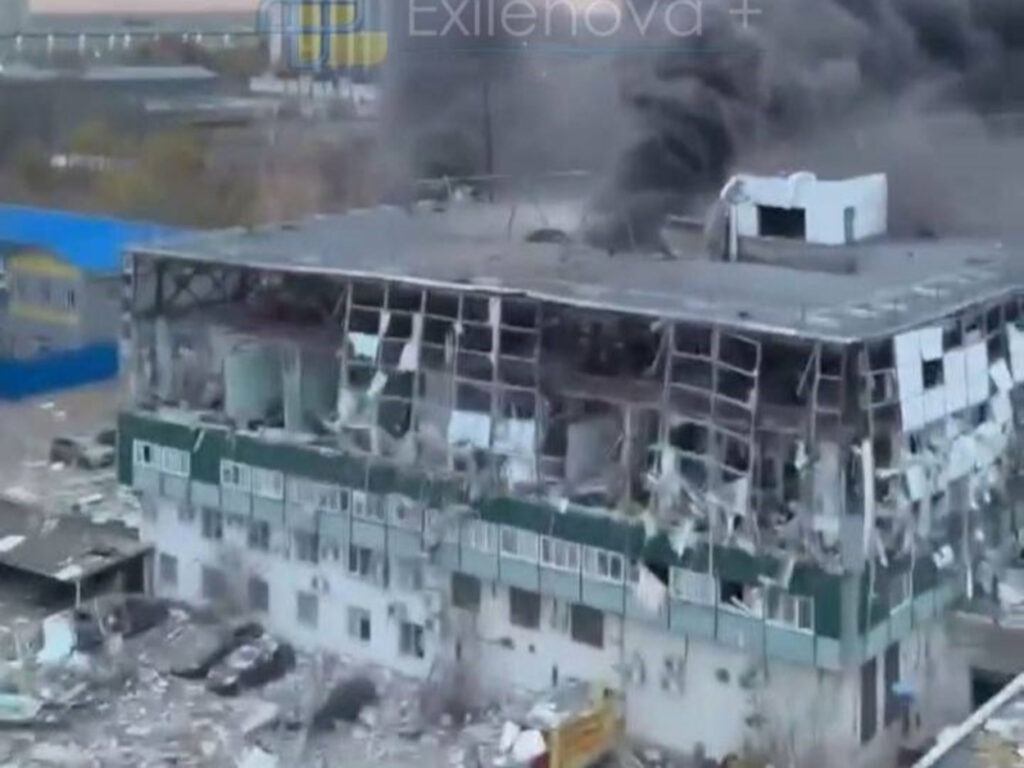
The Proton electronics plant in Oryol, Russia, after a Ukrainian missile strike on 23 October. The facility reportedly produces electronic components used in Russian weapons systems, including Iskander-M ballistic missiles. Photo: Exilenova+

Ukrainian missiles reportedly struck a factory in the city of Oryol on 23 October, with OSINT projects reporting that the target was the Proton electronics plant, which produces components used in Russian weapons systems.

The strike comes amid Ukraine’s broader campaign to target Russian military production facilities and other infrastructure supporting Moscow’s war against Ukraine. Ukrainian strikes on such facilities aim to weaken Russia’s ability to manufacture and maintain the weapons it uses in its invasion.

The plant reportedly supplies electronic components for Iskander-M ballistic missiles, which Russia regularly uses to attack Ukrainian cities, as well as other weapons systems, including the Pantsir-S1 air defense system. 

The strike could disrupt production supporting Russia’s war effort. Photos show extensive damage to the building. Information about casualties remains unclear. 

Reports say a Ukrainian missile strike hit the Proton electronics plant in Russia’s Oryol on 23 October.

The facility reportedly produces components for Iskander-M ballistic missiles used in attacks on Ukrainian cities, as well as other Russian weapons systems.

📹Exilenova+… pic.twitter.com/nbqGPJ8EJj

— Euromaidan Press (@EuromaidanPress) October 23, 2026

Plant reportedly produces components for Russian weapons

Proton JSC manufactures semiconductor devices, LEDs, and electronic components for industrial and specialized equipment. According to Exilenova+, the plant’s products are used in the production of Iskander-M ballistic missiles, S-71 Kover missiles, and the Pantsir-S1 air defense system.

Exilenova+ reported that the plant was struck by Storm Shadow cruise missiles. The weapon type has not been independently confirmed, and the extent of damage to the facility remains unknown.

Russian authorities confirm strike on factory

Oryol Oblast Governor Andrey Klychkov announced a missile threat in the region before reporting that missiles had struck a factory in Oryol’s Sovetsky District, according to Liga.net.

Residents reported explosions, a fire in one part of the city, and columns of smoke rising over Oryol, according to local reports cited by OSINT projects Exilenova+, Supernova, and Astra.

❌