Connexion
Energy bills could hit nearly £2,200 a year as Iran war drives up gas prices
26 octobre 2026 à 15:27
Renewed conflict between the US and Iran and dwindling supplies in Europe has pushed gas prices to record highs



Renewed conflict between the US and Iran and dwindling supplies in Europe has pushed gas prices to record highs

Ukrainian drones damaged a process pipeline, two butyl-rubber units, and a rectification (distillation) unit at Russia’s Tolyattikauchuk petrochemical plant on 24 October, Ukraine’s General Staff said on 26 October. The damage hits the production chain of solid rocket fuel for tactical and ballistic missiles, it added.
The strike was part of a string of Ukrainian hits on Russian plants over four days, most of which the General Staff links to missile production. Ukraine hit an electronics plant in Oryol on 23 October and struck a battery plant in Yelets on 25 October or the following night. The General Staff ties both to missiles: Oryol makes components for missiles Russia fires at Ukrainian cities, and Yelets makes batteries for Iskander-M systems. Then, overnight on 26 October, drones also went after Voronezhsintezkauchuk, another Russian synthetic-rubber plant. For Tolyattikauchuk, this is the third time this year that strikes have reached its butyl-rubber shops.
The General Staff first confirmed the strike on 24 October with a report of an explosion and fire near the plant. It said the plant makes synthetic rubbers, monomers, fractions, and high-octane gasoline additives, and that its synthetic rubbers are used in solid rocket fuel.
Meanwhile, Russian officials have not named the plant in their statements. However, Tolyatti Mayor Ilya Sukhikh claimed that industrial facilities were damaged and, citing preliminary data, that no one was killed or injured, Russian outlet Expert reported.
Drones hit at least two production facilities, Ukrainian monitoring channel Exilenova+ said. One is the shop where isobutane is turned into isobutylene, a raw material for synthetic rubbers. The other is outdoor unit No. 2 in shop BK-4, which produces and purifies high-purity isobutylene for butyl rubber.

The damage could delay rubber output and the supply of feedstock for other processes, including solid rocket fuel. Tolyattikauchuk can make about 260,000 metric tons of synthetic rubber a year, OSINT-Varta data show.
Tolyattikauchuk had come under fire before. Overnight on 4 April, about 10 drones reached the plant by various accounts. Footage showed fires at storage shops D-12 and D-1 and at the BK-2, BK-3, and BK-4 units, though more sites may have been hit, the analysts added. Ukrainian forces struck the plant again on 12 June, the General Staff confirmed.
Then, on 12 September, a strike set fires at the BK-2, BK-3, and BK-4 shops, an OSINT community Absolutely Reliable Source reported. Without those shops running steadily, the line that makes MTBE, a key high-octane gasoline additive, is cut, the channel noted.

Drones attacked the VASO aircraft plant in Russia's Voronezh overnight on 26 October, Ukrainian Telegram channel Supernova+ reported. The plant builds Il-96 airliners and parts for Russia's military transport planes. A synthetic-rubber plant was also reportedly hit and fires broke out across Voronezh, while another rubber plant in Tolyatti, farther east, reportedly came under attack again.
Ukraine keeps hitting the plants behind Russia's weapons, from Voronezh's missile chips to Urals titanium for warplanes. Each supplier knocked out of rhythm slows how fast Russia replaces the hardware it loses and keeps using against Ukraine.
Supernova+ described VASO as part of Ilyushin, which belongs to Russia's state-owned United Aircraft Corporation (UAC). The channel published a photo of fire and smoke at the site. The plant lies about 190 km from the Ukrainian border.
VASO makes pylons, engine nacelles, and flap rails for the Il-76MD-90A, a modernized military transport plane, and sends them to Ulyanovsk, UAC's press service said in 2024. "We have reached the production pace of Il-76MD-90A aircraft kits that our Ulyanovsk colleagues need," Igor Butyrin, who runs the plant's Il-76 program, stated at the time. In 2016, the plant built an Il-96-300 that UAC handed over to the Rossiya special flight detachment of Russia's presidential property office.

Supernova+ also named Voronezhsintezkauchuk, a plant of Russian petrochemical group Sibur that makes synthetic rubbers. The channel later reported a hit on the plant's industrial zone and claimed an attack on the city's Northern Bridge. Ukrainian Telegram channel Exilenova+ published footage of a drone arriving, reportedly at the rubber plant.
The moment the UAV arrived this morning, reportedly at the Voronezhsintezkauchuk factory. pic.twitter.com/2PXyQ5P7sb
— Exilenova+ (@Exilenova_plus) October 26, 2026
Voronezh Oblast Governor Aleksandr Gusev declared a missile alert at 04:47 Kyiv time, but no source has named a missile type. Kyiv has not commented. Ukraine's Air Force, which launches Storm Shadow cruise missiles, and its Navy, which fires Neptunes, have posted nothing on Voronezh.
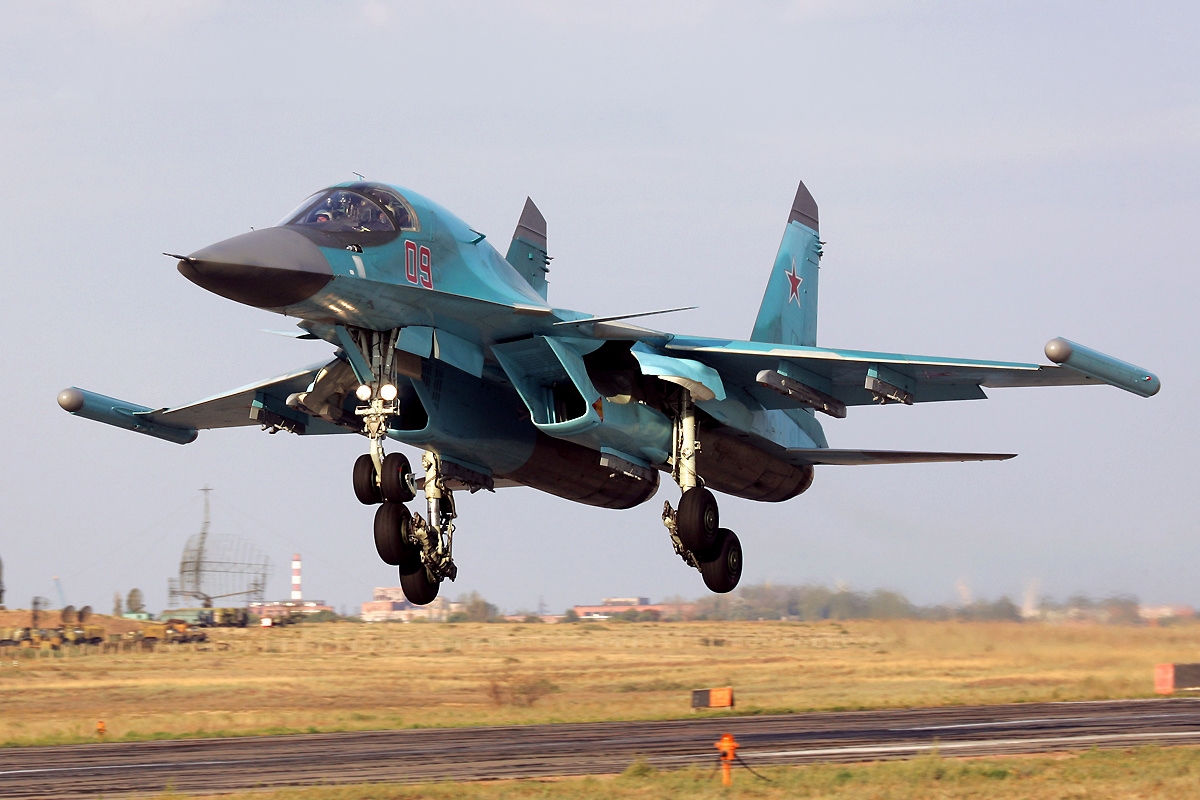
Earlier this month, Ukraine's Navy said it hit six Su-34 bombers in Voronezh Oblast with Neptunes. Storm Shadows reportedly struck an electronics plant in Oryol on 23 October and a battery plant in Yelets two days later.
Gusev claimed air defenses downed 113 drones over the region, more than 70 of them over the city. He listed fires at several industrial enterprises, which he said caused no serious consequences, plus a business center, an apartment block, and a school stadium. Russian Telegram channel Astra published video of a drone hitting the Galereya Chizhova business center. Exilenova+ footage showed cars burning below apartment blocks.
Voronezh pic.twitter.com/I3WbnGLZhO
— Exilenova+ (@Exilenova_plus) October 26, 2026
Damage in residential districts may have come from downed drones or from Russian air-defense missiles falling back on the city. During a 23 October attack on Gorodets, in Nizhny Novgorod Oblast, Exilenova+ claimed a Pantsir air-defense missile hit a house.
Gusev also claimed two men were killed and 17 people injured, many of them on a train struck by drone debris. Russian Railways said five passengers were hurt at Somovo station and traffic on the line stopped. Russia's Defense Ministry claimed its air defenses downed 290 drones over 15 regions and the Moscow area.
Locals reported an attack on the Tolyattikauchuk chemical plant in Tolyatti, Samara Oblast, Exilenova+ said. The city lies about 890 km from the front line. Ukraine's General Staff confirmed a strike on the same plant on 24 October. Its synthetic rubbers go into solid fuel for Russia's tactical and ballistic missiles, among other uses.
Until Kyiv comments or satellite imagery shows the site, the damage at VASO stays unconfirmed, and so does any delay to Russia's Il-76 parts line.
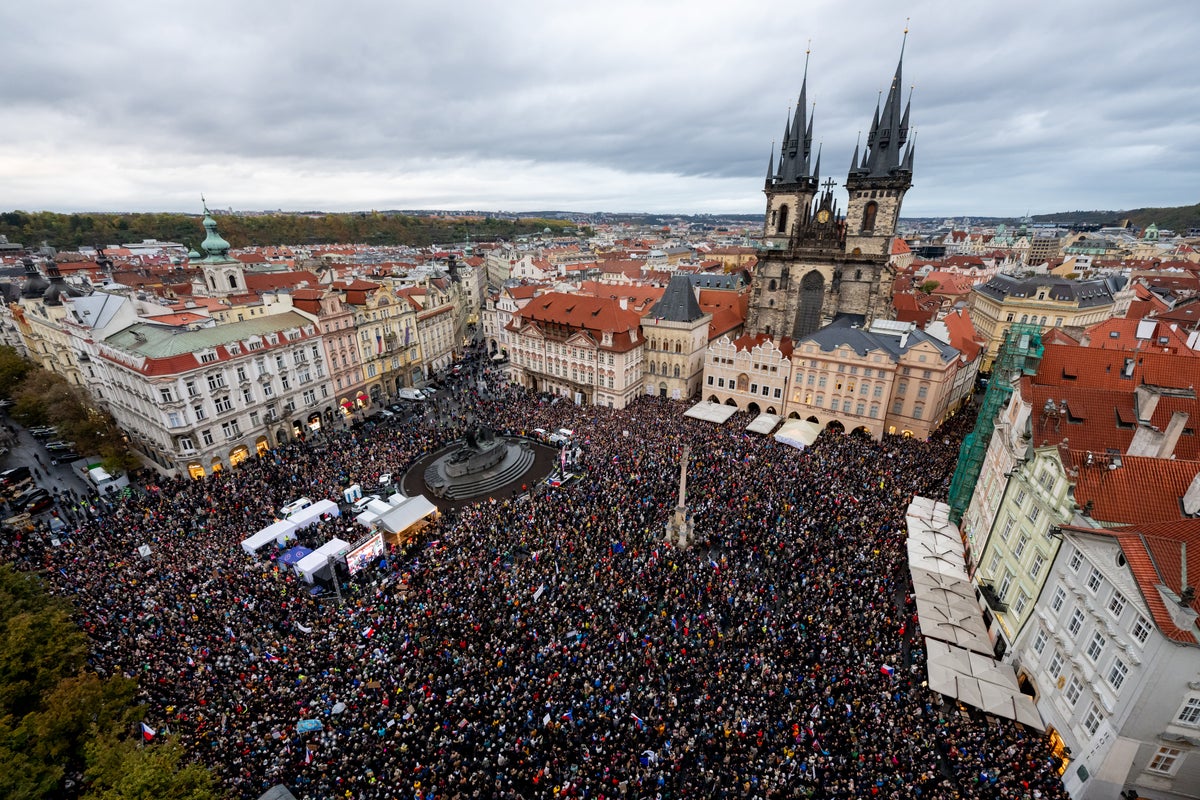
© Ondrej Deml/CTK via AP
The Prime Minister raised the issue directly with the US president amid deteriorating relations between the White House and Zelensky
© AFP/Getty

Judges highlight several exceptional pieces of Alex’s reporting on the wars in Ukraine and Gaza among other global issues
© Press Awards

Russian drones struck a 24-story apartment building in Kyiv, a university building in Kremenchuk, warehouses, and hypermarkets overnight on 21 October, killing two people in the capital and an elderly couple near Kharkiv, Ukrainian officials said. The attack went well beyond Ukraine’s power grid, hitting places where people live, study, and shop. Over the past day, Russian strikes also killed three more civilians and injured dozens across several oblasts.
Russia has kept up nightly drone and missile attacks on Ukrainian cities through the autumn, mostly aimed at the energy system. It struck Ukraine’s energy 76 times during a US-declared truce, and fired 39 ballistic missiles at the grid three days after Washington announced it. This time the targets also included homes, a university, warehouses, and shops.
Overnight, Russia launched 186 Shahed-type and other attack drones, 88 of them jet-powered, along with Iskander-K cruise missiles, Ukraine’s Air Force said. Air defenses downed or jammed 150 drones. Hits were recorded at 27 locations, and debris fell at 13 more.
A drone hit a 24-story residential building in Kyiv’s Sviatoshynskyi district at the level of the 20th floor, starting a fire, Mayor Vitali Klitschko said. The fire spread over about 70 square meters, and rescuers found the bodies of two people while clearing debris, the State Emergency Service said. Two people were injured and hospitalized, Klitschko said, including a 46-year-old man who was walking past the building, according to the police.

In the Desnianskyi district, seven parked cars caught fire, the State Emergency Service said; police put the number at about 10. The evening before, drones hit a warehouse building in Desnianskyi and a transport facility in Solomianskyi district.
In the village of Korotych near Kharkiv, Russian drones killed an 81-year-old woman and an 83-year-old man, Kharkiv Oblast Governor Oleh Syniehubov said. Rescuers recovered their bodies from the rubble of their house, the State Emergency Service said. Eleven people, including a two-month-old boy and an eight-year-old girl, were treated for acute stress, and 13 houses were damaged.

In Kremenchuk, a drone hit a building of the Mykhailo Ostrohradskyi National University, setting it on fire, the State Emergency Service said. Three people were injured, including a 16-year-old who was hospitalized with a concussion, Poltava Oblast Governor Vitalii Diakivnych said. In the Poltava community, drones damaged an administrative building and warehouses.

In Lviv Oblast, an attack set fire to an enterprise in a village in Lviv district and injured two people, while a house was damaged in a neighboring village, the State Emergency Service said. In Uman, drones hit a hypermarket and damaged a hotel, injuring one person, Cherkasy Oblast Governor Ihor Taburets said.
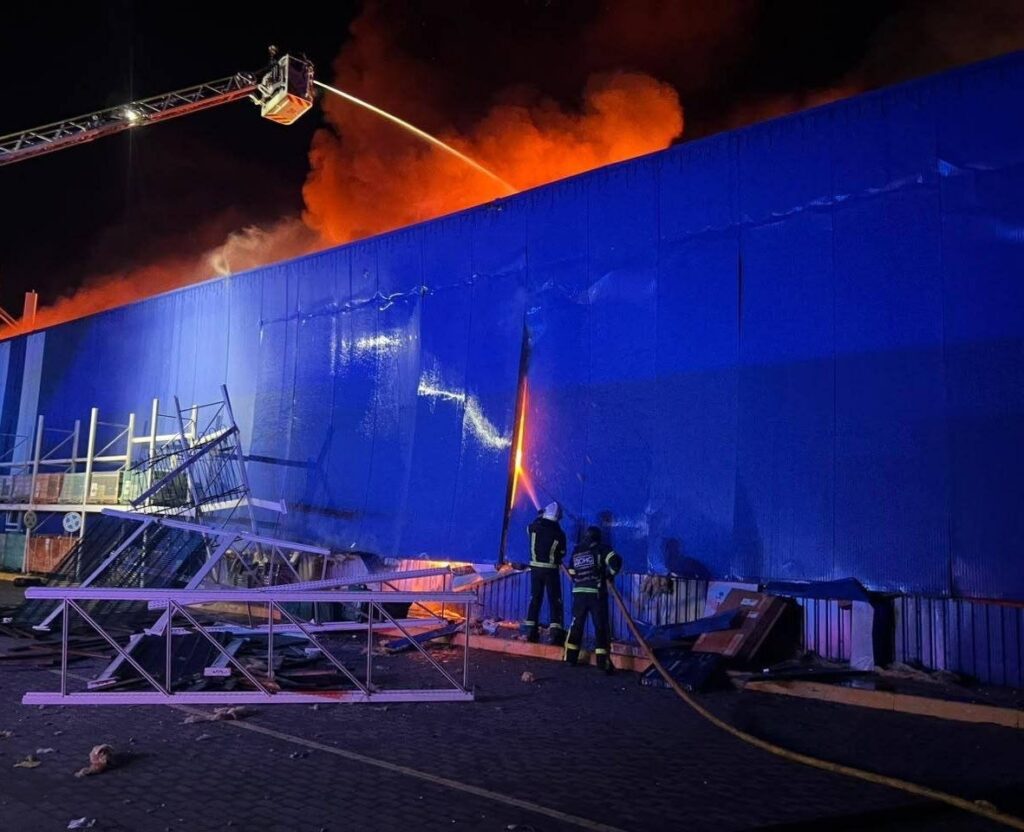
On the evening of 20 October, a drone hit an Epicentr hypermarket in Pervomaisk, Mykolaiv Oblast, injuring eight people, acting Governor Heorhii Reshetilov said. Russia also struck a hypermarket in Rivne Oblast several times that day, injuring four and forcing rescuers to pull back while they fought the fire, the State Emergency Service said.
The overnight strikes followed a day of attacks. In Kyiv, Russian strikes on 20 October killed one person and injured 21, three of them seriously, Klitschko said. An administrative building caught fire, rescuers freed four people trapped on its upper floors, and a healthcare facility was damaged, the State Emergency Service said. In Dnipropetrovsk Oblast, two men were killed and seven people injured that day, regional officials said.
In Kharkiv Oblast, Russian attacks over the past day injured 11 more people in Kharkiv, Derhachi, and Shestakove, Syniehubov said. In Kherson Oblast, 13 people were injured, three of them children, the regional administration reported. In the Chernihiv region, an 89-year-old woman and a young woman were hurt in strikes on villages and on Novhorod-Siverskyi, Governor Viacheslav Chaus said, and a 21-year-old woman was injured in the Sumy community, according to the Sumy regional administration.
More than 5,000 subscribers lost power in Volyn Oblast’s Lutsk district, Governor Roman Romaniuk said. In Ternopil Oblast’s Kremenets district, 7,949 subscribers remained without power after earlier Russian strikes on energy facilities, the regional administration reported.

Stanislav Carpiuc, described as a ‘money man’ in the conspiracy to damage property by fire, was deported
© Metropolitan Police
.jpg?width=1200&auto=webp&trim=0%2C56%2C0%2C55)
The MoneySavingExpert founder has warned this ‘market stabilisation charge’ could become a ‘switching penalty’
© Ben Whitley/PA Wire

White House officials instructed Pentagon leaders to limit Starshield, SpaceX’s military-grade satellite service used by Ukrainian forces, Reuters reported on 15 October, citing three officials. The report came a day after a senior US official told Axios the Trump administration had nothing to do with the alleged Starlink restrictions.
Ukrainian forces rely on US-controlled satellite technology for battlefield operations and for intercepting Russian drones aimed at Ukrainian cities, so the latest restrictions have raised questions about how reliably they can depend on it.
Asked about the order, a senior US official replied, “No such request was ever made by the president.” The White House did not respond to questions about whether other administration officials might have made the request.
Ukrainian officials contacted the White House, State Department and Pentagon on 13 and 14 October and were told it was a White House decision
European officials raised concerns about the restrictions. German Foreign Minister Johann Wadephul criticized the throttling and said Ukraine must continue to receive full support, Spiegel reported on 15 October. Wadephul said Germany had questions for the US, noting that Germany finances part of the Starlink technology used in Ukraine.
On 16 October, UK Defense Secretary Wes Streeting said US Defense Secretary Pete Hegseth had assured him in a face-to-face meeting that Starlink was back up and running, the Guardian reported. However, a Ukrainian Defense Ministry source said that military-grade terminals were working in motion again, but only at speeds of up to 160 km/h.
The military Starshield package previously had no data-speed restrictions, Ukraine’s 7th Rapid Response Corps told Novynarnia. Ukrainian officials said that after the restrictions were imposed, terminals disconnected when drones exceeded 160 km/h and sometimes at 80 km/h.
The Corps also reported 10–20-second connection drops at 110–120 km/h on the Huliaipole front, which made drones harder to control. One unit had to cancel some missions.
The restrictions came as US President Donald Trump pressed Kyiv to stop striking Russian oil refineries, blaming them for soaring energy prices ahead of November’s midterm elections. Ukraine suspects SpaceX imposed the restrictions to pressure Kyiv over the refinery strikes, but that motive has not been confirmed.

With his war in Iran and siding with Russia, it’s hard to think of someone who has done more to make the world a safer place
It might have been more, shall we say, diplomatic if Donald Trump had taken some deep breaths after finding out he had been overlooked for the Nobel peace prize for the second year running before virtually declaring war on Norway. But maybe we should just be grateful he refrained from rubbishing the South African human rights activist Navi Pillay, who picked up the award, and shelved his plans to livestream the execution of the Norwegian prize committee. There again, you can understand his frustration. It’s hard to think of someone who has done more to make the world a safer place. Where would we be had not The Donald started a war with Iran which he shows no sign of knowing how to finish and which has forced up the price of global energy? And it was so good to see him intervening so positively in Russia’s war with Ukraine by appearing to side with the aggressor. These are just the things everyone is looking for in a Nobel peace laureate. The president is also put out that no one has noticed he has personally ended eight global conflicts; though it would be helpful if he could let us know which ones. Are they ones he has personally started – Trump appears disappointed that Argentina hasn’t invaded the Falklands again – or ones that only he knows about. During a press conference at Chequers in 2025, he claimed to have brought about a lasting peace between Albania and Azerbaijan. Maybe there are other wars going on we just don’t know about. Perhaps Australia and New Zealand have been bombing each other for years with neither side noticing. And perhaps the border between France and Italy has been a no-go zone ever since the fight between Zinedine Zidane and Marco Materazzi in the 2006 World Cup final. Still, Trump looks a cert to retain Gianni Infantino’s Fifa peace prize – if only because it seems likely to be scrapped, making him the only winner.
Continue reading...
© Photograph: Evan Vucci/Reuters

© Photograph: Evan Vucci/Reuters

© Photograph: Evan Vucci/Reuters

© Bhawika Chhabra/Reuters
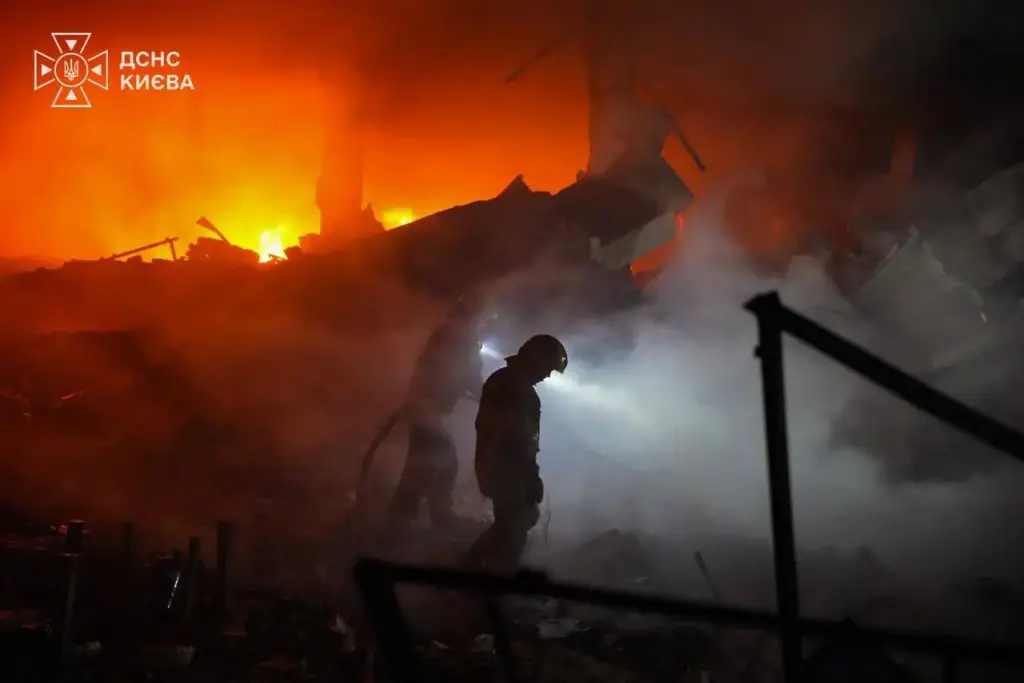
Ukraine is drafting crisis scenarios for November to March as Russian strikes target the country’s biggest cities, Head of the Presidential Office Kyrylo Budanov said on 13 October after chairing a meeting with donor-country diplomats and humanitarian organizations. His deputy Iryna Vereshchuk warned the same day that this winter may bring a new type of humanitarian crisis. She asked donors to be ready with fast extra funding.
Russia has struck Ukraine’s grid deep into winter before: last February, it launched more than 500 missiles and drones as temperatures fell below −20°C. Strikes have continued despite a US-announced energy truce Moscow has not confirmed. Kyiv now wants donors ready to pay for the humanitarian fallout in advance.
The core task is clear crisis scenarios and synchronized response plans for that period, Budanov wrote. The government is building a baseline threat scenario through the State Emergency Service, while the military and intelligence will provide a risk assessment.
“The available resource must be concentrated where people will have the hardest time,” Budanov wrote.
Ukraine, he added, must hold its rear as reliably as the Defense Forces hold the front line.
A war of rear areas is underway, Vereshchuk wrote. Russia is changing tactics in an attempt to deepen the humanitarian crisis, especially in Kyiv, Kharkiv, Odesa, and Dnipro, she added.
Vereshchuk did not define what makes the crisis new, but she tied her warning to the big cities.
“This winter, it is the big cities that may become the testing ground of our national resilience,” she wrote.
Humanitarian organizations must adapt their plans to protect and support civilians, Vereshchuk wrote. Donors, she said, must be ready to provide additional crisis-response funding quickly.
Ukrainian President Volodymyr Zelenskyy wrote on 13 October that even border and frontline oblasts were ahead of Kyiv on resilience plans as of mid-October. Even single hits by Shahed attack drones can cut power and water across much of the capital, he noted. He also began consultations on urgent security and management steps to fix the situation in the city.

Russia carried out more than 200 strikes on Ukraine’s power generation and transmission in the week to 11 October, Zelenskyy said. Overnight on 14 October, Russia fired 39 ballistic missiles and more than 120 drones at energy and critical infrastructure. The barrage left at least 600,000 people without power, Zelenskyy said.

The claim that strikes on Russian tech giant Yandex thinned out social media bots finds no support in the networks tracked by Ukrainian disinformation-monitoring company LetsData, co-founder Ksenia Iliuk told Euromaidan Press on 13 October. She cautioned that the strikes may still have affected networks outside the company’s view.
At the Warsaw Security Forum, Lithuania’s prime minister suggested allies should ask Ukraine to strike more Russian data centers because that might help protect European elections from foreign interference. Bot networks are one tool of that interference, so whether the strikes mute them carries weight well beyond Ukraine.
Drones hit Yandex data centers in Sasovo and Vladimir between 8 and 11 October. Ukrainian drone maker Fire Point said its FP-1 drones struck Yandex’s Kaluga site in between. On 12 October, Ukrainian President Volodymyr Zelenskyy told the Warsaw Security Forum that once Ukraine’s response reached Yandex, social media had fewer bots.

LetsData checked X and Facebook, where bot networks usually stand out clearly, Iliuk said. Its analysts looked at networks attributed to Russia’s influence ecosystem. Among them are groups of X accounts spreading domains from what she called a new wave of Doppelgänger, a Russian campaign that clones real news sites.
Those networks look unaffected, Iliuk said. None of them has stopped posting or broken its usual rhythm, she added. Some are slightly less active, but LetsData’s analysts say that is typical for them. The networks run on a weekly cycle, and the check fell in the part of the week when they post less.
LetsData worked with two samples. One covers accounts that systematically target Ukraine, Moldova, and Armenia. The other covers bot networks the company has followed for some time that keep changing their target audience, so they have no fixed country.

About two weeks ago, one network from that second sample wrote about elections in Germany and spread fake Die Welt sites, she said. It now posts about mobilization in Ukraine and shares a fake site of Ukrinform, Ukraine’s state news agency.
The company can compare only within networks whose usual behavior it knows, Iliuk said. Checking the whole internet is impossible because the scale is colossal, she said. A Cloudflare chart that circulated as evidence counted automated web requests from Yandex’s network, including its search crawlers, not social media posts, Cybernews reported.
So the networks LetsData follows show no impact, Iliuk said. That does not mean the strikes had no effect at all, she noted. They may have shown up in networks the company isn’t tracking now. LetsData will keep watching and report other signals if they appear.
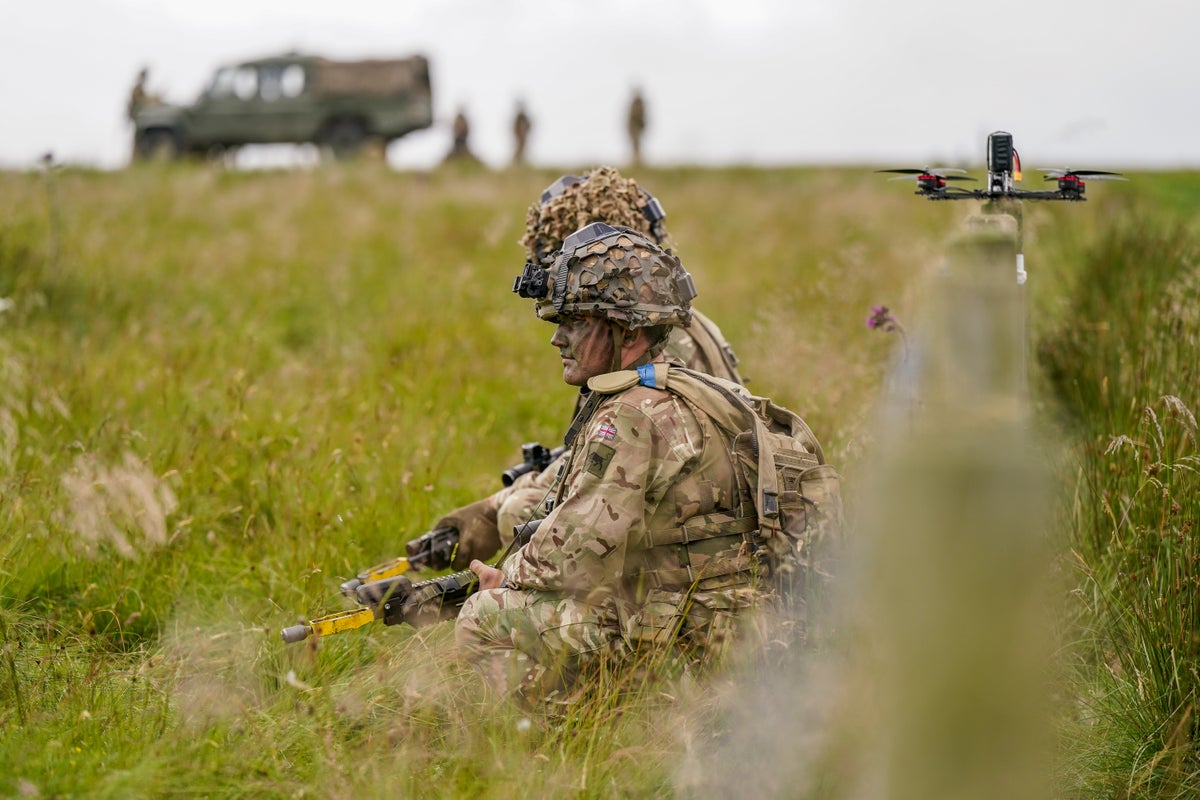
Nato's top military commander said the alliance is ‘ready to fight tonight’ amid fears over Russia
© Getty
Burnham will hold talks with Zelensky on Wednesday at Downing Street
© Getty
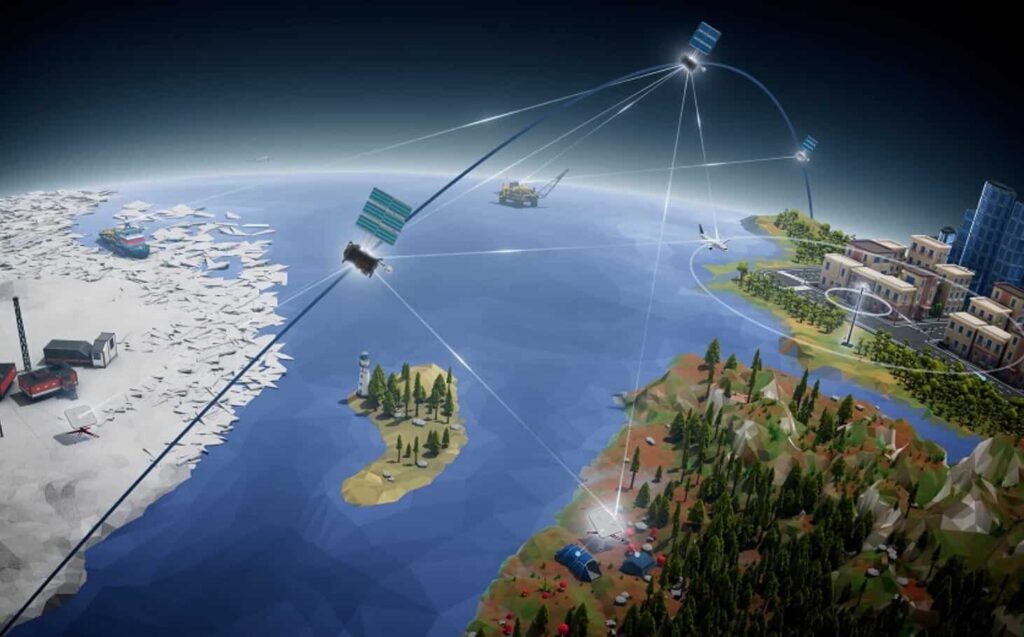
Russia is building a satellite network that could soon put all of Europe within its reach. The “Rassvet” satellite system is an extraordinary threat, first to Ukraine and then to the rest of Europe, Oleksandr Danyliuk, the head of the private European aerospace and defense technology company Destinus, said at the Warsaw Security Forum, according to Ukrinform.
Rassvet is Russia’s answer to Starlink, a low-orbit satellite network built by Bureau 1440 to give Moscow’s forces communications that no one else can switch off. European states must invest more quickly in cheap, effective, mass-produced systems to counter it.
“They will be able to navigate to any point in Europe without problems. This needs to be stopped,” said Danyluik, a former Ukrainian finance minister, said.
Danyliuk’s prescription is already being used on Ukraine’s front. Europe should invest in inexpensive, effective systems that can be mass-produced, he argues, the same approach Ukraine uses, and that Russia also turns against it.
“This gap needs to be filled as quickly as possible,” he said.
He urged allies not to overlook threats that might look secondary today, pointing to Rassvet as exactly that kind of slow-building danger.
Appearing strong is not enough to deter Russia, Danyliuk argued, because Moscow can gauge how ready European states actually are.
Both sides are now scrambling to own the satellite link rather than rent it. Ukraine is building a satellite system of its own, similar to Starlink but beyond any single company’s control, President Volodymyr Zelenskyy said on 4 October.
He argued Kyiv should be free to turn Starlink on Russian military targets, warning that China and other states will share comparable satellite technology with Moscow within months.
By Ukrainian estimates, Russia still needs five to eight years to complete Rassvet, which so far reaches Ukraine only in brief passes. That window is the time Danyliuk says Europe must use.
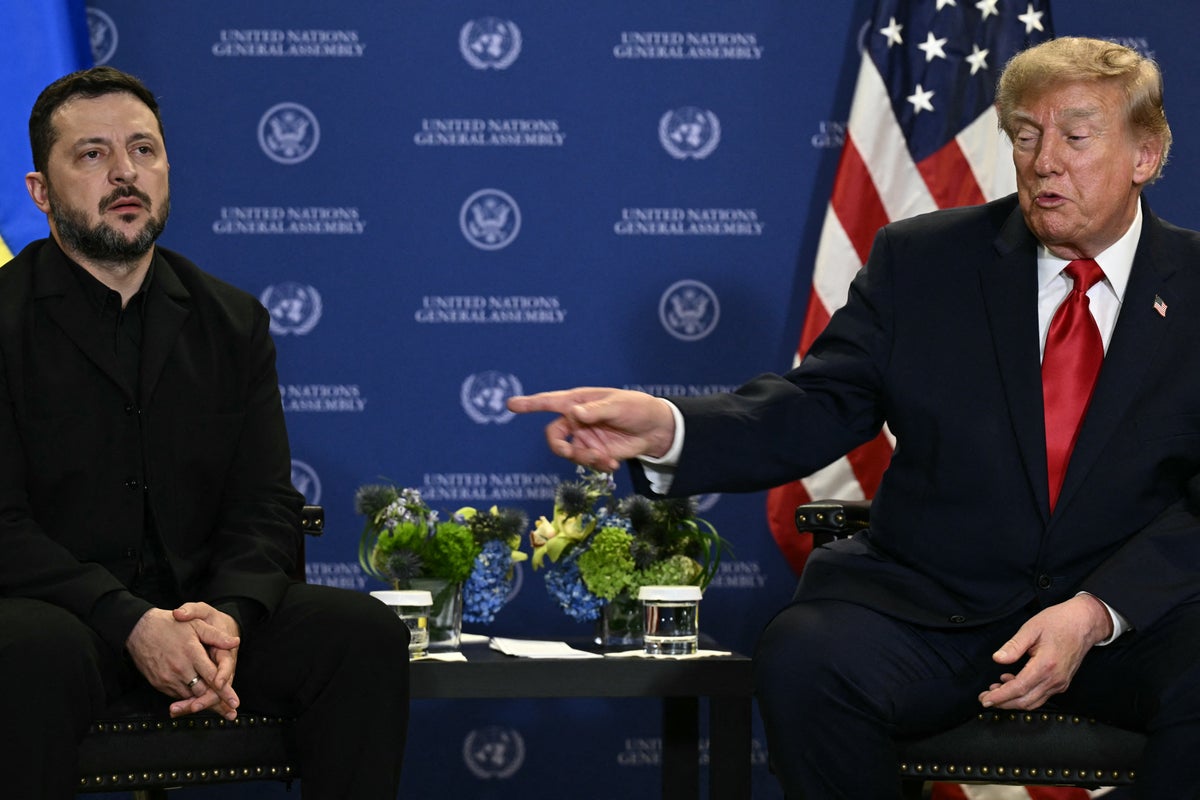
UK can play peacemaker after US President’s shock call to oust Ukraine’s leader Zelensky, says defence secretary
© AFP/Getty

Food standards authorities said the eggs originate from a Ukrainian supplier
© Getty/iStock

Montenegro has ordered the expulsion of Mikhail Zvynchuk, head of the pro-Kremlin military information network Rybar, and four other Russian citizens over national security concerns following a security operation targeting suspected Russian hybrid influence activities, Vijesti reported on 9 October.
Zvynchuk is the founder and head of Rybar, a prominent Russian military-focused information network known for its Telegram channels covering Russia's war against Ukraine. The network promotes pro-Kremlin narratives and has been associated with Russian propaganda and influence operations.
Montenegrin police announced on 9 October that the five Russians had their residence rights revoked and were ordered to leave the country on national and internal security grounds.
The operation involved Montenegro's police and National Security Agency (ANB), which seized drones, high-resolution recording equipment, cameras, and several mobile phones for further examination, according to Vijesti.
According to Montenegrin authorities, the five had arrived in the country less than two days before the operation. The investigation is being conducted with support from international partners.
Montenegrin police identified the five Russian citizens as Zvynchuk, his wife Valeria Zvynchuk, Sergei Belous, Pavel Lekatorchuk, and Kira Doroshenko. Authorities said the case had been referred to prosecutors in Podgorica and Kotor.
The European Union has sanctioned Zvynchuk over activities that undermine or threaten Ukraine's territorial integrity, sovereignty, and independence. He has also been sanctioned by the United Kingdom, Switzerland, Australia, and Ukraine, according to Vijesti.
Vijesti reported, citing security sources, that Montenegrin authorities suspected the group of planning a documentary intended to undermine public support for the country's European integration.
According to the outlet, the planned material would portray Montenegro's expected alignment of its visa policy with EU standards as a politically imposed measure that threatens tourism, economic stability, and national interests.
Security services had monitored the group's arrival before carrying out the operation in Risan, in the Bay of Kotor area, Vijesti reported. The equipment seized from the group will undergo expert analysis to establish its intended purpose and use in Montenegro.
Former Russian President Dmitry Medvedev responded to the operation by suggesting Moscow might need to expand its pool of prisoners to exchange for Europeans and Americans to secure Zvynchuk's return.
“We will probably have to replenish our pool of prisoners for exchange with European and American idiots,” Medvedev said, according to Vijesti.
Montenegro, a NATO member and EU candidate, has aligned itself with EU sanctions against Russia following Moscow's full-scale invasion of Ukraine in 2022. The expulsion comes amid broader European concerns over Russian intelligence activity, propaganda, and other forms of hybrid interference.

Two Ukrainian defense-tech firms, The Fourth Law and Odd Systems, have joined forces to mass-produce thermal imaging sensors in Europe and the US, The Fourth Law told Militarnyi. The goal is to wean Western militaries off foreign suppliers, chiefly China, for the core part of every thermal camera.
Amid Russia's daily attacks, Ukrainian drone makers have been shifting production to allied countries. Linza and Zoom drones are now built in Germany, and another top manufacturer has taken its technology to Canada and Finland. Sensor plants would move a core component west, not just finished drones.
The project, called Project Foundation, will build long-wave infrared sensors, known as microbolometers. These chips register heat, so a camera can pick out a person or vehicle at night or through smoke. The aim, The Fourth Law said, is to "ensure the sovereignty of Western countries in the field of thermal imaging technology."
The project will run two sites, First Foundation in Europe and Second Foundation in the US, from a headquarters in Eindhoven, a Dutch semiconductor hub. Mass production is due to start in 2027. Within three years, the partners want to quadruple Europe's output of these sensors and double America's.
Ukraine's front line burns through sensors faster than Europe can make them. "Europe currently produces less than 500,000 such sensors per year, while Ukraine consumes this amount in about five months," Odd Systems co-founder Yaroslav Azhniuk said in February, when he first announced plans for a plant able to make one million sensors a year. European sensors cost about five times as much as Chinese ones and are hard to buy at all, because Europeans need them too, he added.
Factories working for Ukraine abroad have already become sabotage targets. In March, an arson attack in Pardubice, Czechia, destroyed nearly all the production capacity of a plant making drones and thermal sights for Ukraine's army. Czech investigators are looking into a possible Russian trail behind the attack.

The two leaders are expected to confirm a joint UK-Germany security partnership
© Reuters

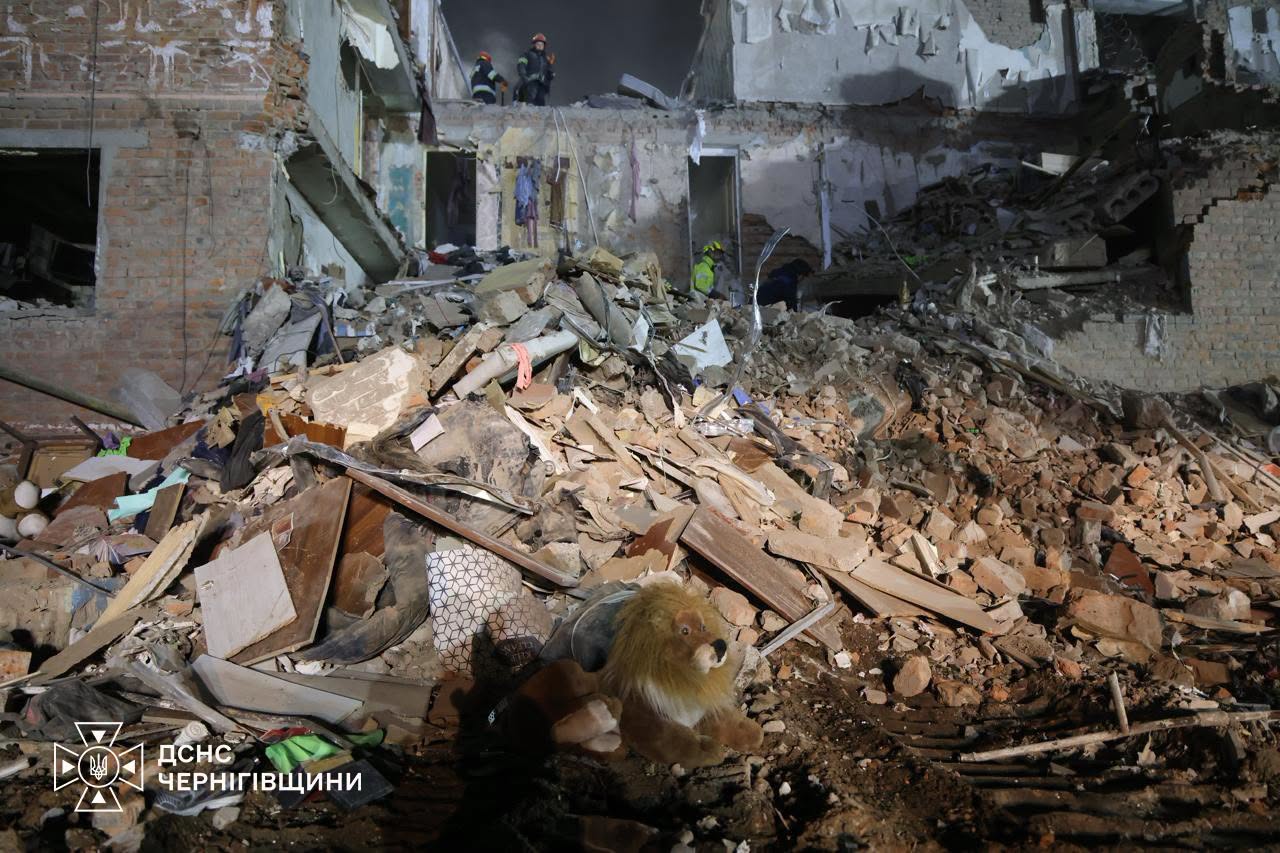
A Russian missile strike on an apartment building in Pryluky, a town in northern Ukraine's Chernihiv Oblast, killed 22 people on 7 October, regional police reported on the morning of 8 October. Five of the dead were children: three one-year-old boys, an eight-year-old boy, and a 13-year-old girl, police said.
Russian strikes on Pryluky, Kremenchuk, Oleksandriia, and Kyiv killed 28 people on 7 October, Interior Minister Ivan Vyhivskyi said. For the town, it was the second deadly missile strike since May. Behind the toll are families like this one: three generations hit by a single strike.
Three-year-old Zlatoslava is now in the Chernihiv Oblast children's hospital, Pryluky district police chief Vladyslav Stoianov told. Her mother, Kateryna, is hospitalized too. The two had come on the evening of 6 October to visit Kateryna's sister, police officer Yuliia Malysh. The girl's father stayed home in Lynovytsia, a village 15 km away.
Yuliia was wounded and is in hospital, Stoianov said. Her husband, Oleh Malysh, was killed. Until recently, Oleh had fought at the front in the Chernihiv Oblast police rifle battalion. The sisters' mother, Liudmyla, had also come over that evening, and she died too. All the family details come from Stoianov, who was describing a colleague's family.
Footage of an emergency worker carrying a little girl from the ruins reached almost all media, Vyhivskyi wrote in the same post. Suspilne first reported that the filmed rescuer had carried Zlatoslava. It then corrected itself: he had carried a different child, five-year-old Zoriana. Vyhivskyi also gives the girl's age as five, and he named the rescuer as State Emergency Service section commander Pavlo Levchenko. With colleagues, Levchenko freed the girl and her mother after the blast threw them out of the building.

Russia is concentrating missiles on a smaller, more specific set of targets, and its jet-powered attack drones are part of the reason, the Institute for the Study of War (ISW) assessed. Its combined attack overnight on 7 October killed 22 people in Pryluky, the State Emergency Service (SES) said as of the morning of 8 October. Russian milbloggers noted the shift the same day.
Russia often uses concentrated drone and missile strikes to overwhelm localized Ukrainian air defenses and destroy urban centers, ISW noted. Pryluky, where the strike killed children, was one of the areas a Russian channel says drew a significant share of the Kh-101s that night. With winter close, ISW expects the same pattern against Ukraine's energy grid, with jet drones partly letting Russia keep its missiles for priority targets without firing many more.
Russia launched 48 Kh-101, Iskander-K, and Kalibr cruise missiles overnight on 7 October, Ukraine's Air Force reported. It also fired ballistic missiles, Zircon and Oniks anti-ship missiles, and 130 strike and decoy drones, 46 of them jet-powered Shahed-type models.
Russian milbloggers claimed the same day that Moscow had grouped a large part of its missile salvo into repeated waves on a few areas, while other weapons kept stretching Ukraine's air defenses elsewhere. The pro-war Russian Telegram channel Dva Mayora described the change as a switch from striking with splayed fingers to a series of hits with missile "fists." Defenders must then absorb a sharply rising load around one chosen site as one wave follows another, the channel claimed.
Citing Ukrainian monitoring channels, it claimed that roughly 30 or more Kh-101 cruise missiles flew toward Pryluky, Kremenchuk, Svitlovodsk, and Oleksandriia in Chernihiv, Poltava, and Kirovohrad oblasts. It put the Kremenchuk group at up to 15 missiles, Kh-101s and Kalibrs among them, aimed at the area of Kremenchuk and its hydroelectric plant.
ISW said the jet-powered versions penetrate Ukrainian air defenses deeper and more reliably than propeller models. In ISW's assessment, that partly lets Russia concentrate cruise and ballistic missiles on priority targets without significantly raising missile use. Russia builds about 3,000 Geran-4 and Geran-5 jet drones a month, Ukraine's military intelligence agency (HUR) told Militarnyi in August.
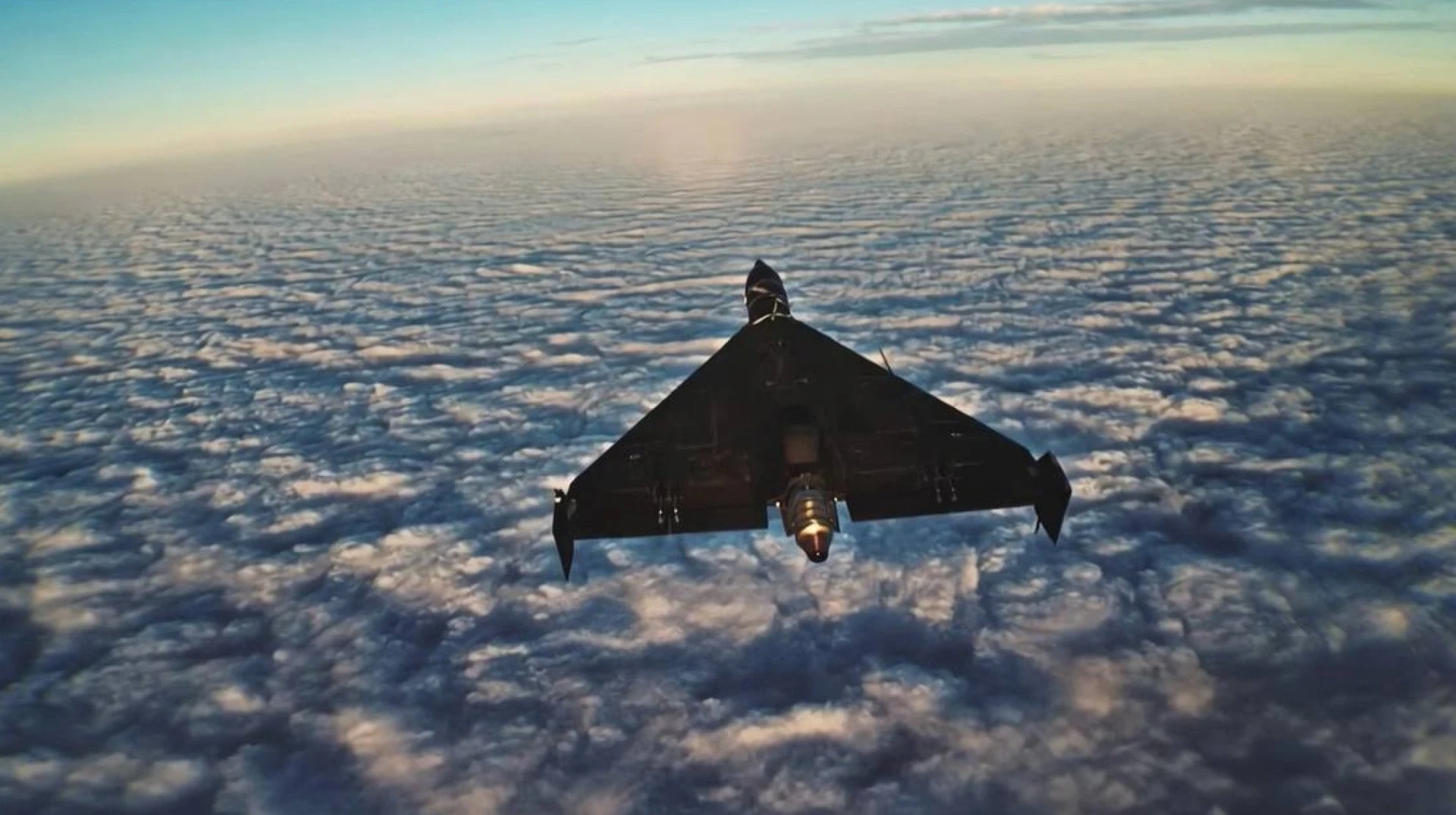
ISW expects Russia to apply the pattern in a likely brutal winter campaign against energy infrastructure. Russia likely intends to make city life untenable and force Ukraine to capitulate to its demands, ISW assessed. Such tactics have not worked before and are unlikely to work now, analysts added.
They called cheap countermeasures to jet drones and small cruise missiles vital, alongside Western air defense aid such as US-made Patriots, which can stop ballistic missiles. Ukraine has already paired a Soviet-era Kub launcher with American RIM-7 interceptors to catch jet drones.

Kyiv is bolting two Soviet-era missile systems together to knock down Russia's fastest Geran-4 and Geran-5 drones. Ukraine's 156th Maksym Kryvonis Anti-Aircraft Missile Regiment has downed about 20 air targets using a Kub launcher firing under the radar and fire control of a Buk unit.
Russia has switched to jet-powered Gerans, faster drones that Ukraine's cheap interceptors struggle to catch, so more of them reach their targets. The damage from Russian strikes is set to reach up to $10 billion this year, according to Ukraine's Economy Ministry.
Meanwhile, Western resupply has thinned too. Deliveries of air defense missiles from partners fell threefold in the first half of 2026 against 2025, even though those partners hold the missiles, President Volodymyr Zelenskyy says.
So crews stretch what they have. In the Kub-Buk hybrid, a Kub launcher cannot aim on its own, lacking a radar to light up a target for its missile, according to Militarnyi. A Buk has that radar, so the two fire together, the Kub sending its 3M9 missile where the Buk points. The pairing is possible because both come from the same Soviet design line.
The same regiment reaches for a second workaround as Buk missiles run short. Its crews have rewired launchers to fire American RIM-7 interceptors, a Soviet-Western mongrel that troops nicknamed Frankenstein and the US calls FrankenSAM.
The patchwork earns its keep. One crew commander said some of these machines have more than 34 air kills each, and a single launcher has sent up RIM-7s 131 times, Ukrainian troops said.
The hybrids are one thread in a wider web. Ukraine is stitching together a layered defense against the jet-powered Gerans, leaning on electronic jamming, fighter jets, and a new class of homegrown interceptor drones. Each tool has limits, and the newest interceptors still bring down only the occasional jet drone.
The bet now is on numbers. Ukraine aims to build up to 400 interceptor drones a month by the end of October to chase the faster Gerans, Zelenskyy said on 2 October. Until that scale arrives, improvised launchers like the 156th Regiment keep filling the gap.

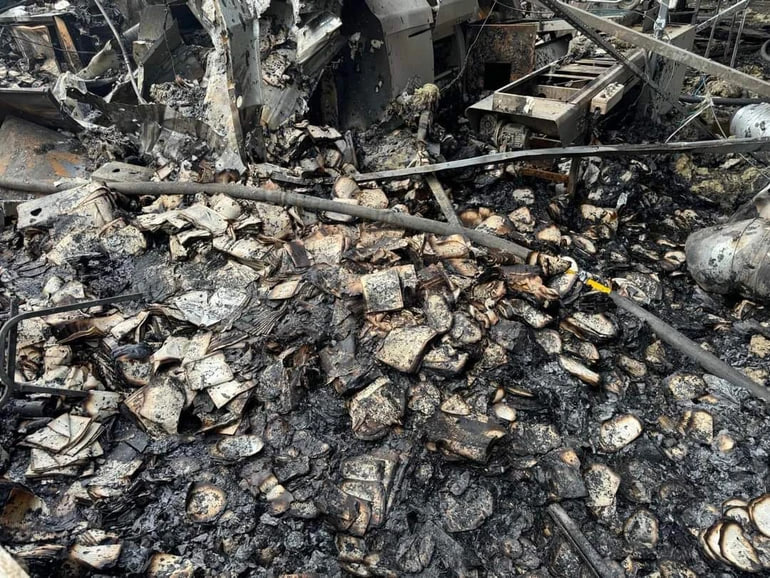
A Russian missile attack on Kyiv overnight on 7 October destroyed warehouse premises in the Podil district and badly damaged a book warehouse of Ukrainian publishing house Knyholav, the publisher said. Tens of thousands of books were lost, but no staff were hurt. It was the second time this year that Russia has destroyed Knyholav's stock.
Russia has destroyed Ukrainian books since the start of its invasion, seizing them from libraries in occupied areas and burning them in boiler houses. Since spring, it has also been aiming missiles and drones at the industry that makes them—printing houses, publishers' warehouses, and bookshops—destroying books by the millions. Each strike takes out not only stock but the reprints, new titles, and textbooks Ukrainian readers were waiting for, at a time when publishing in Ukrainian is part of how the country holds onto its identity.
The publisher can't yet say how many books were destroyed or can no longer be saved, it said, but tens of thousands were lost. The final count will be possible only once staff get full access to the warehouse and check the state of every book.
The losses include new titles Knyholav received over the past two months. They also include reprints of books Russia had destroyed in July at its previous warehouse. Knyholav had moved its rebuilt stock to this new warehouse after a Russian strike on 19 July destroyed its previous one outside Kyiv, along with about 250,000 books.
"This is a tangible blow for us. These are books we created, printed, and prepared for you," the publisher wrote. "But despite everything, we are holding on!"
The strike hit Kyiv's Podilskyi district, where a Russian attack caused a fire and the partial collapse of the floors of an office and warehouse building, Kyiv Mayor Vitali Klitschko said. The same overnight attack killed people in Pryluky, Kyiv, Kremenchuk, and Oleksandriia.
Russia's attacks destroyed more than 1.5 million books in July alone, Culture Minister Tetiana Berezhna said. On 1 August, a strike on the logistics center of publisher Ranok and the distribution center of the KnyhoLand bookshop chain in Kharkiv destroyed 8 million books, including 628,000 new school textbooks. Over three months, Russia burned about 13 million Ukrainian books, nearly a third of everything the country printed in 2025. In August, Russian missiles also hit Kyiv's largest book market.
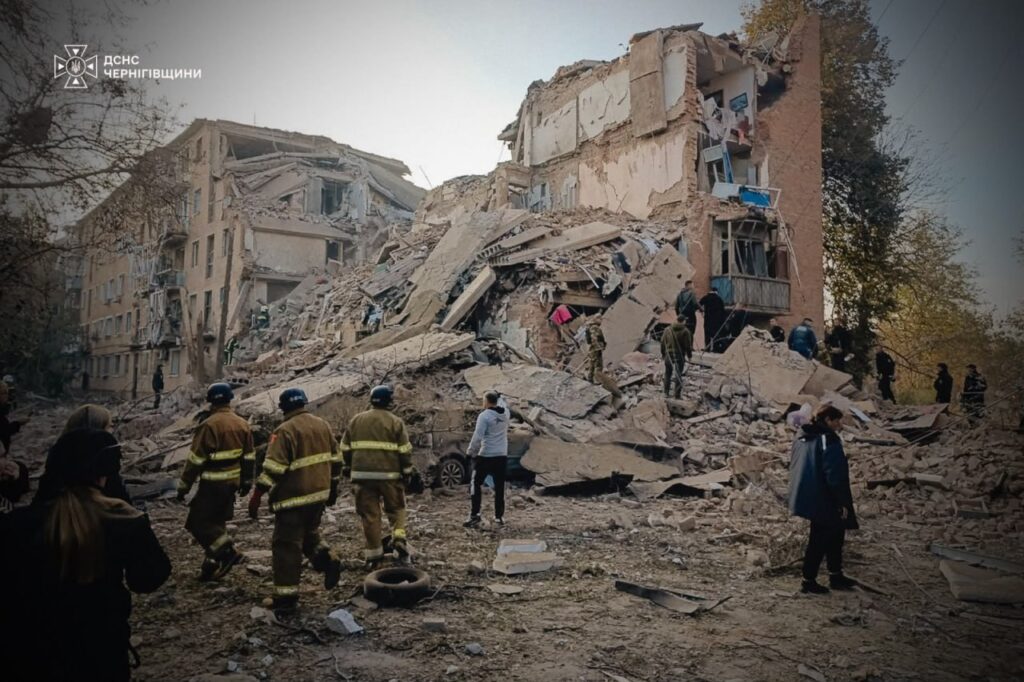
Russia attacked Kyiv and 12 oblasts overnight on 7 October with about 70 missiles, many of them ballistic, as well as Shahed drones, President Volodymyr Zelenskyy said. The strikes killed at least 20 people, with the deadliest hit on an apartment block in Pryluky in Chernihiv Oblast. Russia also hit Kremenchuk, Oleksandriia, Dnipro, and Zaporizhzhia, while Poland scrambled its jets.
Moscow has likely begun its winter strike campaign earlier than usual, aiming to make civilian life in Ukraine unbearable, and UN figures already show civilian casualties running 55% above last year's.
The death toll from the Russian strike on Pryluky has risen to 14, including four children, Ukraine's State Emergency Service said on the afternoon of 7 October. Fifty people were injured, seven of them children, and rescuers pulled 15 people from the rubble, including a child.
Russia attacked Pryluky with cruise missiles, and one scored a direct hit on the five-story apartment building, Chernihiv Oblast head Viacheslav Chaus said. Earlier in the day, he reported that 27 of the injured had been hospitalized, three in serious condition. The search-and-rescue operation was still under way.
A Russian missile struck a five-story apartment building in Pryluky early in the morning, while residents were still asleep, Chernihiv Oblast head Viacheslav Chaus said. The strike completely destroyed one sectkion of the building, killing five people and injuring 26, including five children, Ukraine's National Police reported. Rescuers pulled three people from the rubble, including a child, and more people may still be trapped, Chaus said.
"Today, for Putin's birthday, the Russian army 'gave' him the destruction of an apartment building in Pryluky in Chernihiv Oblast. It was an ordinary five-story building," Zelenskyy said.
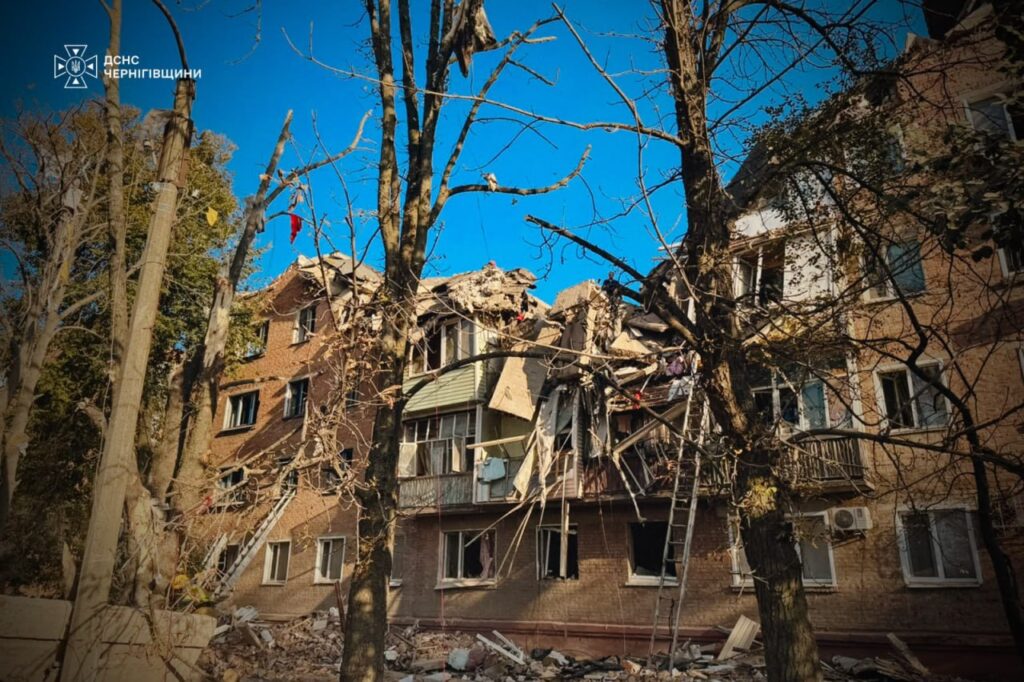
In Kyiv, Russian missiles hit non-residential buildings and warehouses in the Obolonskyi and Podilskyi districts, Mayor Vitali Klitschko said. Strikes also hit the Shevchenkivskyi district, and debris burned in the Darnytskyi district, he added. In the Darnytskyi district, a missile set fire to a garage cooperative, where firefighters rescued two people and found two men dead, Klitschko wrote. Police and rescuers worked to defuse an unexploded ballistic missile that fell among apartment blocks in the same district, the National Police said.

In Kremenchuk, Russian missiles hit a densely populated residential area, killing two people and injuring seven, Poltava Oblast head Vitalii Diakivnych said. Zelenskyy later put the number of injured at eight and said four high-rises were damaged.
In Oleksandriia in Kirovohrad Oblast, Russia hit an enterprise. One person was killed, three injured, and two were out of contact, Kirovohrad Oblast head Andrii Raikovych said. Zelenskyy later put the death toll there at two.
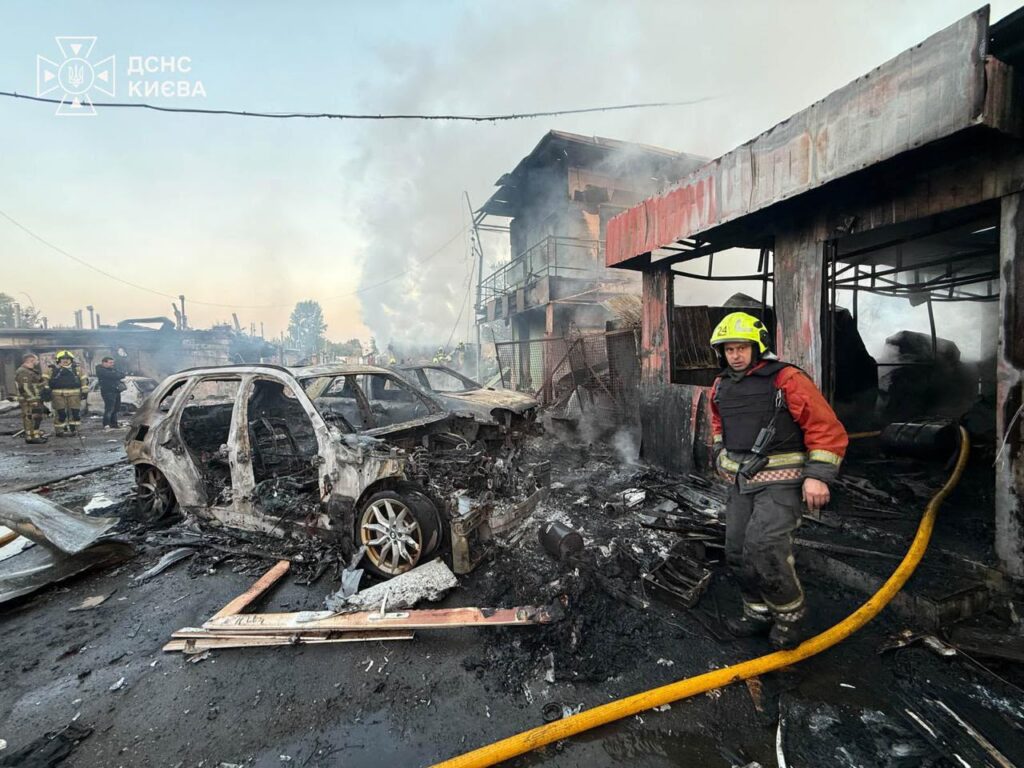
In Dnipro, Russian strikes damaged an industrial enterprise, apartment buildings, and a sports club, Dnipropetrovsk Oblast head Oleksandr Hanzha said. In Nikopol district, the attacks injured a 65-year-old woman and a 64-year-old man. Russia also struck Lozova in Kharkiv Oblast with a missile, and a drone hit an apartment building in Zaporizhzhia, police said.
In Zaporizhzhia, Russia attacked a transport infrastructure facility, acting oblast head Mykhailo Semikin said, a day after a strike on one of the city's bridges over the Dnipro halted traffic. In Kyiv Oblast, three production and warehouse buildings were damaged in Obukhiv district, with no casualties, the Kyiv Oblast Military Administration said.
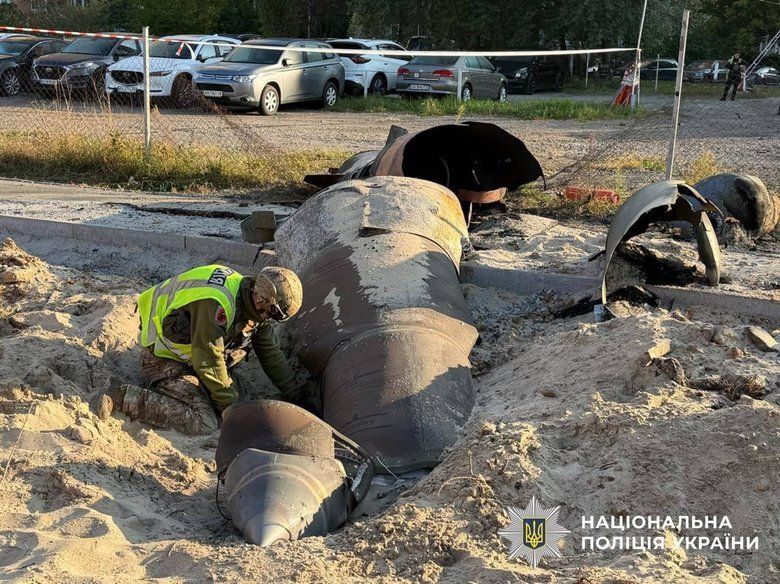
Air defense downed five ballistic missiles, 39 cruise missiles, and 117 drones, while missiles and drones hit 18 locations, the Air Force said. Polish military aircraft took off and Poland put its ground-based air defense on alert during the attack, Poland's Operational Command said.
Russian ballistic missiles remain the biggest challenge, Zelenskyy said, adding that Ukraine is searching daily for Patriot missiles.
Russian attacks killed one person and injured 11 in Kherson Oblast over the past day, the Kherson Oblast Military Administration reported. Russia injured 12 people in Donetsk Oblast on 6 October, Donetsk Oblast head Vadym Filashkin said. Two people were injured in Kharkiv Oblast, Kharkiv Oblast head Oleh Syniehubov said.
Russia has stepped up strikes on Kyiv's bridges and has now extended them to Zaporizhzhia. In September, a Russian ballistic and hypersonic missile attack on Kyiv damaged a maternity hospital.

The leader of the opposition accused Labour of failing to keep the country safe
© Reuters

Bills could soon approach record levels again, forecasters have warned
© Getty/iStock

Average UK diesel prices have topped £2 a litre for the first time and have rocketed in recent months due to the wars in Iran and Ukraine
© Getty/iStock
Donald Trump has threatened to ban US diesel exports of diesel – here’s what that could mean
© Reuters
Fuel prices have risen steadily in recent weeks and reached a new record high this week
© Reuters

Ministry of Defence described the incident as a ‘tragic accident while observing Ukrainian forces test a new defensive capability’
© PA Media
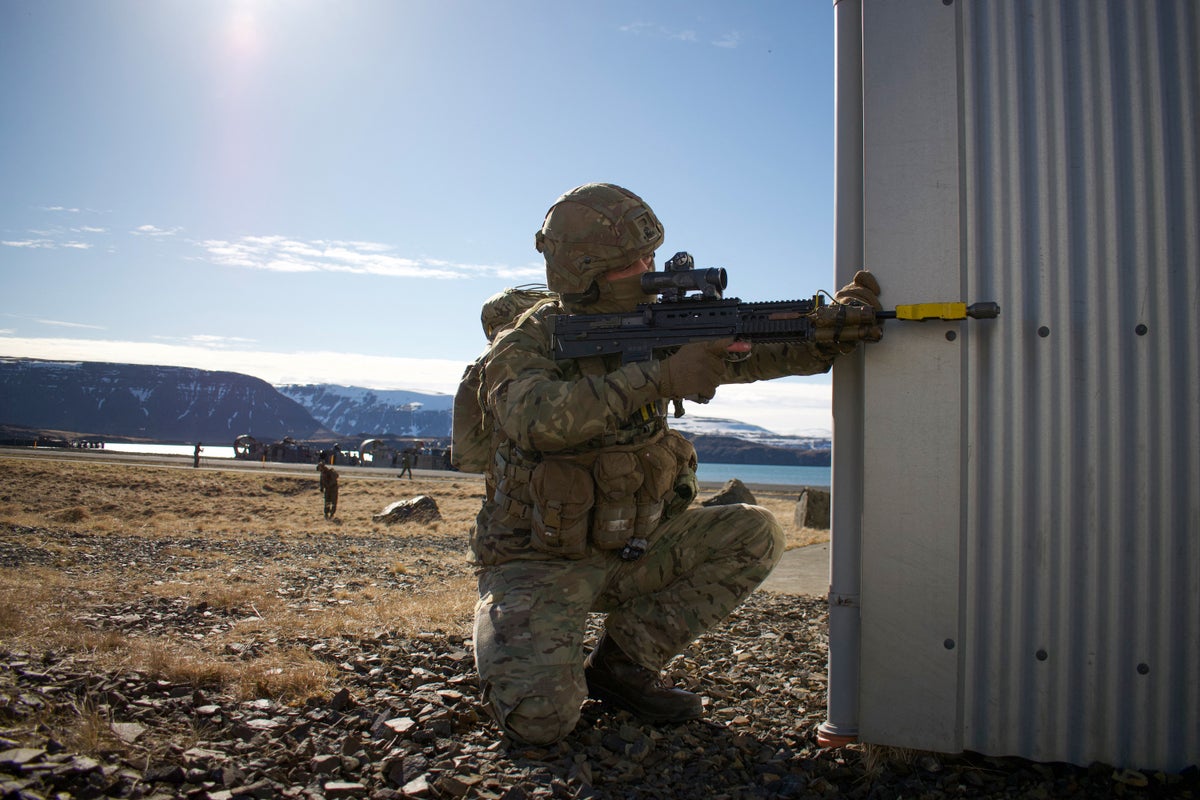
Royal Marines also conducted their first exercise in the Faroe Islands since World War Two
© AFP/Getty
© Copyright 2026 The Associated Press. All rights reserved.
Among those being sanctioned are seven people involved in ‘heinous’ re-education camps for children
© AFP/Getty
Head of foreign policy at the New Eurasian Strategies Centre called on the government to ‘step up’ its response to Russia
© AP
© Copyright 2026 The Associated Press. All rights reserved.

We have come to know the Kremlin's energy playbook well: "Europe will freeze without Russian gas," "sanctions hurt Europe more than Russia," "a managed, indefinite return to Russian supply is simply pragmatic." The respected European project EUvsDisinfo has repeatedly exposed these false narratives, carried by Russian state media, proxy outlets, and paid commentators. But Kremlin-friendly energy narratives do not travel only through obvious propaganda channels. They also enter policy debate through expert commentary, think tanks, media quotes, and institutional platforms, where they are far harder to see.
None of the apocalyptic forecasts came true. Europe cut Russian gas imports from 45% in 2021 to 13% by 2025 without blackouts or economic collapse. Yet the narratives predicting ruin kept circulating, sometimes from unexpected addresses. One of them, in my view, is worth a closer look: the work of Katja Yafimava, of the Oxford Institute for Energy Studies.
Across nearly two decades, in my reading, her analysis has landed with remarkable consistency where Gazprom would want it. Gazprom's trading arm was once among the sponsors of her program. The record is public, and it is worth reading in full.
The most effective version of Kremlin-friendly energy messaging does not shout. It hedges, reframes, and omits. It raises "legitimate concerns" about sanctions costs, stresses the "legal complexities" of an LNG ban, and warns of "supply disruption risks" from moving too fast, without weighing Ukrainian lives or the cheaper, homegrown clean-energy alternative. Real concerns about European energy security did exist. What is worth noting is how reliably certain voices amplified concerns and how rarely they weighed counter-evidence.
This is not abstract. Surging oil and gas prices since the Iran war have handed Russia windfall revenues averaging, according to the Centre for Research on Energy and Clean Air, €604 million a day, money that funds the missiles falling on Ukrainian cities. Every argument for delay has a price, and Ukrainians pay part of it.
Katja Yafimava is a Senior Research Fellow at the OIES, which she joined in 2006. The institute is an independent charity rather than a department of the University of Oxford, which recognizes it as a separate independent research center. It carries the Oxford name, and its researchers appear regularly as authoritative, independent voices in UK and European media.
That independence has been questioned. Democracy for Sale, an investigative outlet, has documented the proximity between Russian oil and gas industry money and OIES, which previously received funding from Gazprom and its subsidiaries. OIES's own website and annual reports up to 2020 list Gazprom Marketing and Trading among over 20 organizations that sponsored equally its Natural Gas Research Programme, where Yafimava works, alongside Nord Stream 2 financiers Shell, OMV, Uniper, and Wintershall.

None of that, on its own, tells you what any individual researcher believes. What makes it worth raising is the alignment between that funding context and a published record that, across nearly two decades, has been remarkably convenient for Gazprom's positions.
Energy Ireland 2022
— Energy Ireland (@energyireland) April 14, 2022Croke Park, Dublin
29-30 June
Meet the speakers
Dr Katja Yafimava
Senior Research Fellow@OxfordEnergy
Register onlinehttps://t.co/mrGfdZJ5bw#EnergyIreland pic.twitter.com/wdc7LwXAEf
Consider the pattern. In 2017, Yafimava argued that Poland's legal challenge to the European Commission decision widening Gazprom's access to the OPAL pipeline risked letting political objectives override regulatory rules, a framing that would sit comfortably in Gazprom's own filings. She framed the EU's Gas Directive amendment as an instrument "aimed primarily at Nord Stream 2" in a 2019 paper. Russian state media have quoted her approvingly in pieces casting Brussels or Washington as acting in bad faith.
In September 2021, as suspicion grew that Gazprom was deliberately holding back gas to squeeze Europe before winter, she told Bloomberg she did not subscribe to that view, insisting the company "has not abused" the tight market and "has not manipulated it," and had "honored all of its contractual supply obligations to Europe." Within months, Russia's supply cuts had become the opening move of an energy war. In January 2022, the head of the IEA said Russia's cuts were creating "artificial tightness" in European markets.
Each judgment is defensible in isolation. It is the direction of the whole series that is striking: over years and across cases, the analysis lands where Gazprom would want it to land.
Through 2022 and 2023, Yafimava warned that cutting Russian gas too fast risked "unavoidable" blackouts in Central and Eastern Europe. The blackouts never came. In a 2025 paper, she and two OIES colleagues accepted that the phase-out would be manageable for markets, but argued that the EU's proposed ban risked undermining the commercial and legal positions of European importers, and that it was "not obvious" the risk was worth taking to end modest volumes of Russian gas after 2027. A competing Forum Energii report concluded that full EU independence from Russian fuel by 2027 is feasible, and that Russia needs EU markets more than the EU needs Russian supply. In early 2026, she wrote that no complete phase-out "will happen either by 2027 or by 2028."
A forecast is not a crime. But the forecasts, like the analyses, keep pointing one way.
She has also stepped beyond technical commentary. On 27 January 2026, responding to a Financial Times report on US security guarantees for Ukraine, she posted on X that "reliable security guarantees could only be achieved via common European security architecture that would have to include Russia," a framing that mirrors a longstanding Kremlin strategic goal.
The US won't provide *any* security guarantees before peace is reached not to risk its forces to be drawn in combat. Moreover, reliable security guarantees could only be achieved via common European security architecture that would have to include Russia https://t.co/LrY6713dqF
— Katja Gresko-Yafimava (@katyafimava) January 27, 2026
Katja Yafimava's current position as Vice-Chair of the UNECE Group of Experts on Gas gives her a visible role in a UN forum that helps shape discussion on European gas policy, security of supply, and the energy transition. In January 2026 she co-opened and concluded the Group's workshop on implementation of the EU Methane Regulation. The arguments she repeatedly advances can have policy effects closely aligned with Russian commercial and strategic interests. At a UNECE/OIES workshop in 2025, for example, she explicitly examined the possibility of a "limited return" of Russian gas to Europe via Ukraine, while her subsequent OIES paper argued that the EU ban on Russian gas could undermine European importers and security of supply and questioned whether ending the remaining Russian imports after 2027 was worth the associated risks.
The alignment is a matter of record. Why independent analysis, over nearly twenty years, has tracked so reliably the interests of a company that once helped fund her program is a question that deserves an answer.
Here is what the arguments for delay leave out: the alternative to Russian energy is not economic ruin. It is cheaper renewable power. The International Renewable Energy Agency found that in 2024, 91% of new renewable projects were cheaper than any fossil-fuel alternative; solar came in 41% below fossil power, and onshore wind 53% below. Renewables saved $467 billion in fossil-fuel costs in 2024 alone, and battery storage has fallen more than 93% in price since 2010.
This is the point that "supply disruption" warnings tend to bury, and it is why the warnings matter. Every year of delay, justified by the risks of moving too fast, is a year of continued payments to Moscow when a cheaper, domestic, un-weaponizable alternative already exists. Renewables reached 47% of the EU electricity mix in 2025; EU gas demand fell more than 17% between 2022 and early 2025; and the gas import ban agreed in December 2025 phases out Russian pipeline gas and LNG by the end of 2027, precisely the direction the delay arguments have worked against. The transition is not the risk. The delay is.
Editors, producers, and conference organizers could apply to energy analysts the conflict-of-interest standards already routine for pharmaceutical research: prior employment or program funding from Gazprom, Sberbank, or Russia-linked entities disclosed clearly every time such an analyst is presented as independent. UNECE could ask whether agenda-setting roles over European energy policy are well placed with analysts whose published record aligns so consistently with Kremlin positions. And Europe could close the transparency gaps that let think tanks with Russian-adjacent funding operate without disclosure requirements.
Every euro Russia earns from energy funds the war against Ukraine. The least we can do is know who is arguing for delay, and who once funded the programs they work in.
Disclosure: the author was involved in a March 2026 Razom We Stand research concerning the Oxford Institute for Energy Studies and Katja Yafimava, and works as a strategic advisor to the organization. Euromaidan Press reached out to Dr. Yafimava for a comment, but received no answer at publication date.

Editor's note. The opinions expressed in our Opinion section belong to their authors. Euromaidan Press' editorial team may or may not share them.
Submit an opinion to Euromaidan Press
Wes Streeting wants the public to prepare for extreme weather, cyber attacks, and war
© Getty Images
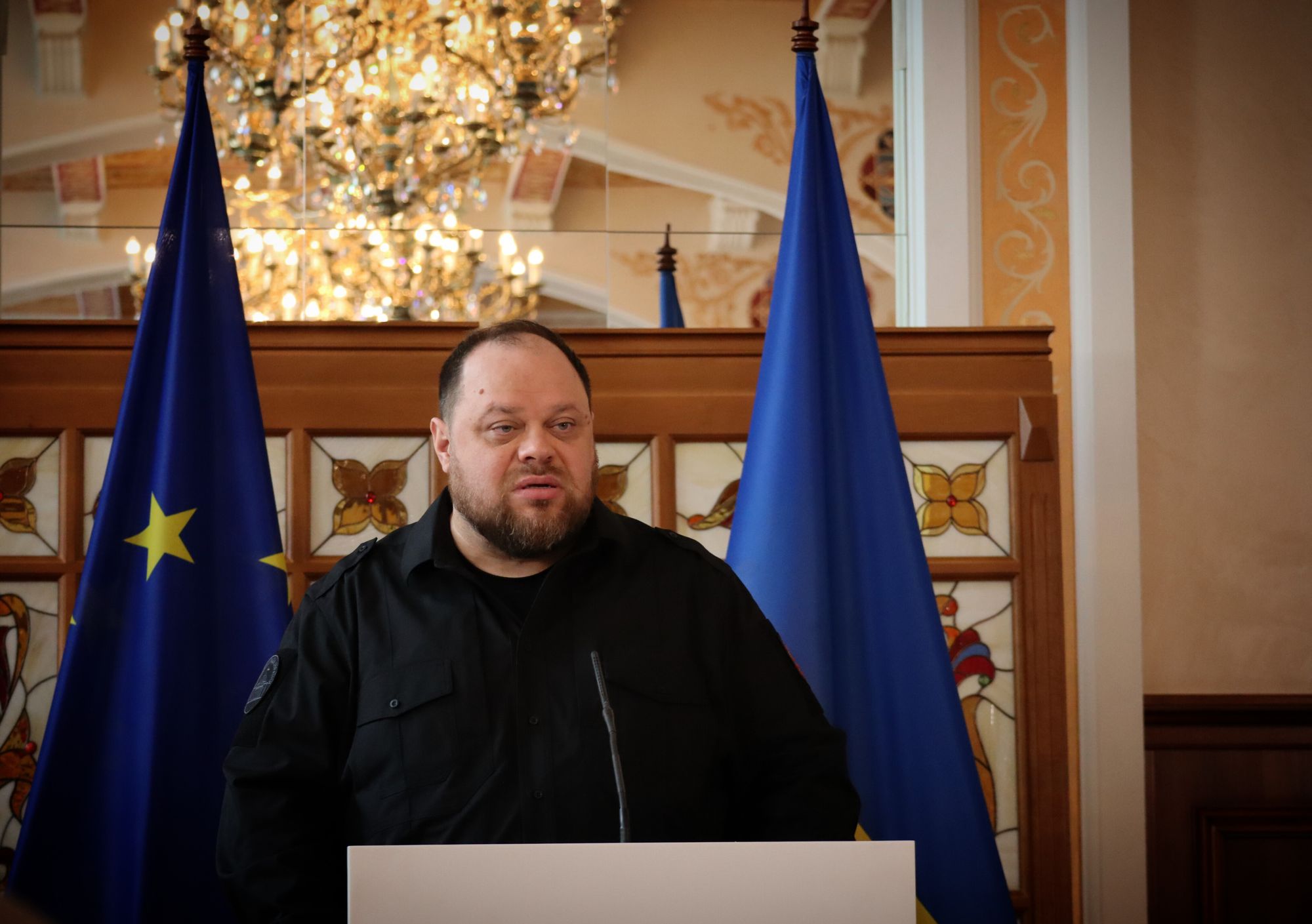
Chairman of the Verkhovna Rada Ruslan Stefanchuk said on June 28 that Ukraine's parliament is preparing a draft bill to hold elections following the end of the martial law period enacted as a result of the war.
"We are working on this draft law, because for the next elections, a new special draft law is needed that will regulate the so-called post-war elections," Stefanchuk said on Ukraine's marathon TV broadcast.
"We are preparing various basic scenarios so that people can exercise their fundamental constitutional right to vote. And this must take place in Ukraine. And I believe we will be able to find the right legislative compromise," he added.
The reason for separate legislation on a post-war election, Stefanchuk previously said, was due to the fact that Ukraine's Constitution does not not provide clarity on the details of holding elections following the end of a martial law period.
No details on the bill or timeline for implementation were provided.
Russia's full-scale invasion and the subsequent declaration of martial law in Ukraine meant elections have been impossible to hold, and President Volodymyr Zelensky's term has been extended, something constitutional lawyers say is allowed under Ukrainian law.
Despite criticism, Ukraine's parliament, the Verkhovna Rada, passed a resolution on Feb. 25 to hold elections after "a comprehensive, just, and sustainable peace is secured" in the country.
While polling shows a vast majority of Ukrainian citizens do not support holding elections before a full peace deal, the lack of elections has stirred some controversy with Ukraine's allies.
At the start of his second term in office, U.S. President Donald Trump urged Ukraine to hold elections — something that Ukraine has thus far refused to do citing the difficulties of holding elections amid active warfare, as well as security implications.
Zelensky has previously said he is willing to step down in exchange for a peace agreement.
Russian propaganda has widely used the issue of elections in Ukraine to discredit the Ukrainian leadership. Mocow has repeatedly claimed that Zelensky is no longer a legitimate president, as his first term was originally meant to end on May 20, 2024.
 The Kyiv IndependentAbbey Fenbert