❌

Vue normale

  • ✇Euromaidan Press
  • Russian titanium plant in Urals reportedly hit by Ukrainian drones, 1,500 km from Ukraine
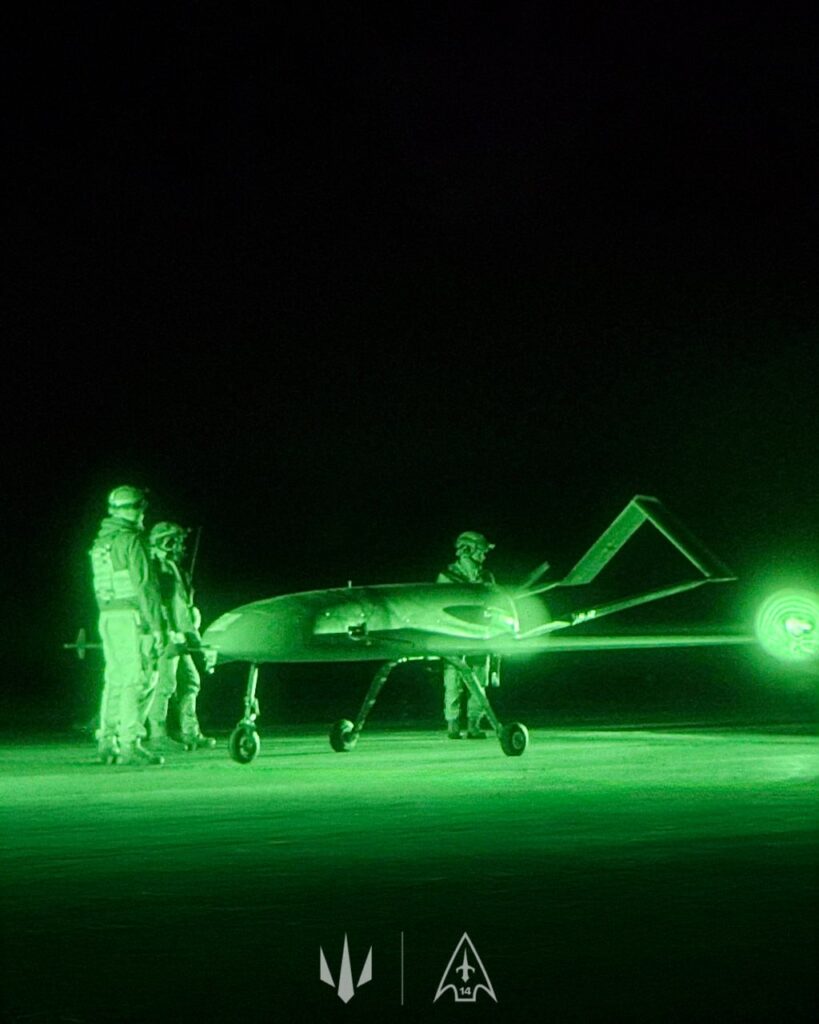
    A drone attack damaged an industrial facility in Russia’s Perm Krai early on 25 October, injuring five workers, Ukrainian monitoring channel Exilenova+ reported. Exilenova+ identified the target as the AVISMA chemical and metallurgical plant in Berezniki, around 1,500 km from Ukraine’s border.  The reported strike highlights Ukraine’s ability to reach industrial facilities deep inside Russia that support its military-industrial complex.  AVISMA produces titanium materials used in avi
     

Russian titanium plant in Urals reportedly hit by Ukrainian drones, 1,500 km from Ukraine

25 octobre 2026 à 08:14

finland confirms ukrainian drone its airspace kyiv's baltic strike campaign pushes deeper north – helsinki alert · post preparing launch long-range an-196 liutyi one-way attack photo_5224400079031496980_y (1) ukraine news reports

A drone attack damaged an industrial facility in Russia’s Perm Krai early on 25 October, injuring five workers, Ukrainian monitoring channel Exilenova+ reported. Exilenova+ identified the target as the AVISMA chemical and metallurgical plant in Berezniki, around 1,500 km from Ukraine’s border. 

The reported strike highlights Ukraine’s ability to reach industrial facilities deep inside Russia that support its military-industrial complex. 

AVISMA produces titanium materials used in aviation and aerospace manufacturing, including military aircraft, aircraft engines, missiles, and space technology, according to Exilenova+.

Regional governor Dmitry Makhonin said the industrial facility sustained damage but continued operating normally. He said five workers were injured in the attack.

A target deep inside Russia

Perm Krai lies in Russia’s Ural region, roughly 1,500 km from Ukraine’s border. The distance places the reported strike far beyond Russia’s border regions, where Ukrainian drone attacks have frequently targeted military and industrial infrastructure.

The reported attack follows a broader Ukrainian campaign against Russian industrial and energy facilities linked to the country’s war effort. 

Russia’s Defense Ministry claimed that air defenses intercepted and destroyed 532 Ukrainian drones overnight across 23 Russian regions and over the Sea of Azov, according to Russian state news agency TASS. 

The reported interceptions included drones over Perm Krai, as well as regions around Moscow and areas in southern and western Russia. The figures have not been independently verified.

The extent of damage at AVISMA and any impact on its operations have not been independently established.

  • ✇Euromaidan Press
  • Ukrainian drones reportedly strike major shopping mall in Russia’s Belgorod overnight
    Ukrainian forces reportedly struck the MegaGRINN shopping and entertainment complex in the Russian city of Belgorod during a mass drone attack overnight on 25 October, when the mall was closed and no visitors were inside, according to the Ukrainian monitoring channel Exilenova+. Russian authorities reported that a civilian was killed and 10 people were injured in the broader mass drone attack on Belgorod. One of the injured was an ambulance worker, according to the regional operational
     

Ukrainian drones reportedly strike major shopping mall in Russia’s Belgorod overnight

25 octobre 2026 à 07:52

Explosion from a reported drone strike on Belgorod's MegaGRINN shopping center, 25 October 2026. Screenshot from video: Exilenova+

Ukrainian forces reportedly struck the MegaGRINN shopping and entertainment complex in the Russian city of Belgorod during a mass drone attack overnight on 25 October, when the mall was closed and no visitors were inside, according to the Ukrainian monitoring channel Exilenova+.

Russian authorities reported that a civilian was killed and 10 people were injured in the broader mass drone attack on Belgorod. One of the injured was an ambulance worker, according to the regional operational headquarters. 

The majority of the drones reportedly targeted one area in the city center, according to ASTRA.

Belgorod’s largest shopping complex targeted

Exilenova+ identified the reported target as MegaGRINN, Belgorod’s largest shopping and entertainment complex covering about 163,000 square meters. The facility houses more than 200 stores, a supermarket, restaurants, a cinema, and entertainment areas.

Belgorod is a Russian city about 34 kilometers (21 miles) from Ukraine’s northeastern border and roughly 70 kilometers (43 miles) from Kharkiv. The city and surrounding oblast have repeatedly come under Ukrainian drone attacks during Russia’s full-scale war against Ukraine.

Belgorod Oblast borders Ukraine’s Sumy, Kharkiv, and Luhansk oblasts. Russian forces have used the region to launch missile and drone attacks on Ukraine and to stage ground offensives across the border.

Update: Ukraine’s General Staff reports strikes on Russian radar stations in Belgorod Oblast

Update 18:00: Ukraine’s General Staff said Ukrainian forces struck Russian radar stations near Hostishchevo and Kurgannoye in Russia’s Belgorod Oblast on 24 October and overnight on 25 October.

The General Staff said the strikes would create gaps in Russian radar coverage and expand Ukraine’s ability to use unmanned systems. 

The update did not mention an attack on Belgorod city or the shopping mall.

Russia steps up attacks on Ukrainian retail infrastructure

The reported strike comes amid an intensified Russian campaign against Ukrainian retail and logistics infrastructure. These attacks have included strikes on shopping centers during business hours, including a 21 August Russian drone attack on the crowded Soniachna Halereia mall in Kryvyi Rih, where 16 people were killed and more than 120 injured.

The reported strike on MegaGRINN took place overnight, when the complex was reportedly closed and empty of visitors. Russian authorities reported casualties from the wider attack on Belgorod, but have not linked them to the mall.

Full speed returned to Ukraine’s satellite links on Saturday morning. “We simply enforced our terms,” Musk claims after blaming Washington for 10 days

25 octobre 2026 à 04:03

STING S interceptor

Ukraine's military satellite links work at full speed again after a cap that hobbled its drones, Ukraine's Defense Ministry said on 24 October. Hours later, SpaceX owner Elon Musk, who earlier pointed at Washington, said his company had enforced its own rules. A Ukrainian presidential adviser and a drone volunteer replied that civilian Starlink could not fly such missions.

Ukraine holds off Russia with American tools it doesn't control, so any pause decided abroad, like stalled Patriot deliveries or the Starlink cap, opens gaps in its defense. With no stated rule on what Ukraine's forces may do, the next cutoff could again come unannounced and unexplained.

Kyiv records full speed again

The ministry recorded stable connections above 400 km/h (250 mph). Before, Kyiv said, links on Starlink and its military version, Starshield, cut out above 161 km/h (100 mph).

Ukrainian President Volodymyr Zelenskyy said the restoration began overnight. "The speeds are now where they need to be," he said, citing defense against jet-powered Shahed drones. He thanked US lawmakers, the media, the State Department, and the US President, but not Musk or SpaceX.

A Ukrainian soldier installs a Starlink terminal
A Ukrainian soldier installs a Starlink terminal. Illustrative photo: Armed Forces of Ukraine

Musk: "That loophole was closed last week"

Musk replied "Correct" to an X user who called Starlink "not a weapons system." "Ukraine military violated Starlink terms of service and used it for offensive drone strikes to kill people. That loophole was closed last week," he wrote.

Correct.

Using Starlink, a civilian commercial service, for offensive drone strikes to kill people has never been allowed, nor should it be.

Starshield, a different system, is controlled by the US government. What they decide to do is up to them.

Ukraine military violated… https://t.co/ZXBB8bYfPn

— Elon Musk (@elonmusk) October 24, 2026

He called Starshield "a different system" the US government controls, and warned: "Were Starlink to be turned off, the Ukrainian front line would collapse immediately. This is NOT a threat, it is simply a statement of fact."

Musk named no evidence, cases, or time frames. Overnight, he answered a headline on the US financial blog ZeroHedge saying he "admits" SpaceX throttled Starlink.

"We simply enforced our terms of service when they were bypassed. There has been no change to our terms of service," Musk wrote.

musk, trump
Explore further

Who capped Ukraine’s Starlink? “Ultimately POTUS,” Musk said. Ultimately Musk, reports now say

When the cap hit on 14 October, Musk wrote that the US government owns and controls Starshield and that the US military and "ultimately POTUS" decide any limits. US President Donald Trump, who credited Musk with the fix while Kyiv still saw the cap, said on 24 October he had spoken to Musk about Ukraine but gave no details.

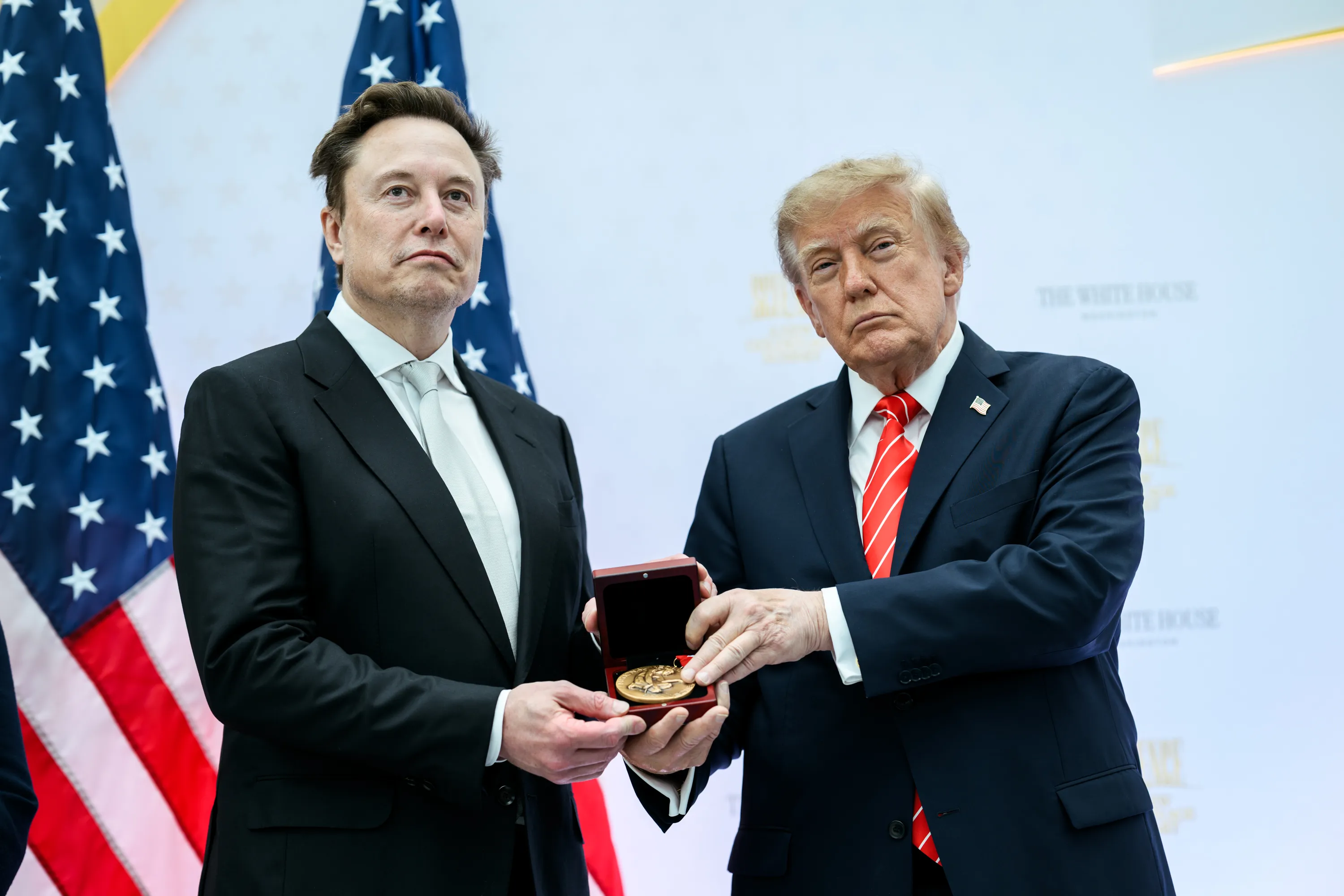
US President Donald Trump and Elon Musk in the Oval Office on 11 February 2025
US President Donald Trump and Elon Musk in the Oval Office on 11 February 2025. Photo: White House / Daniel Torok

Ukrainians note contradiction to reality

Ukrainian presidential adviser on defense technology Serhii Beskrestnov, known by the callsign Flash, wrote:

"It is very strange that Elon Musk doesn't know about the restrictions on Starlink operations in Ukraine."

Since winter 2026, every Starlink terminal over Ukraine, occupied areas included, has been limited to 70–90 km/h (43–56 mph), he said, and over Russia, Starlink does not work. "So we PHYSICALLY CANNOT USE COMMERCIAL STARLINK for deep strikes and mid-range strikes," Beskrestnov wrote. Deep strikes hit targets far inside Russia, mid-range ones targets closer to the front.

Ukrainian activist and drone fundraiser Serhii Sternenko called Musk's claim untrue. He said Ukraine introduced whitelists of terminals in February, and any terminal used on the move had to be listed and connected to Starshield.

"So using civilian Starlink for drone missions was technically impossible. All drone missions that needed satellite communication could be carried out only with Starshield," Sternenko added.

European governments help pay for Ukraine's Starlink service. Germany funds it under a contract that runs until April 2027. Polish Foreign Minister Radosław Sikorski, whose country pays around $50 million a year for the service, said on 23 October: "Mixing business with politics usually ends badly, especially when we talk about Elon Musk."

❌