Vue lecture

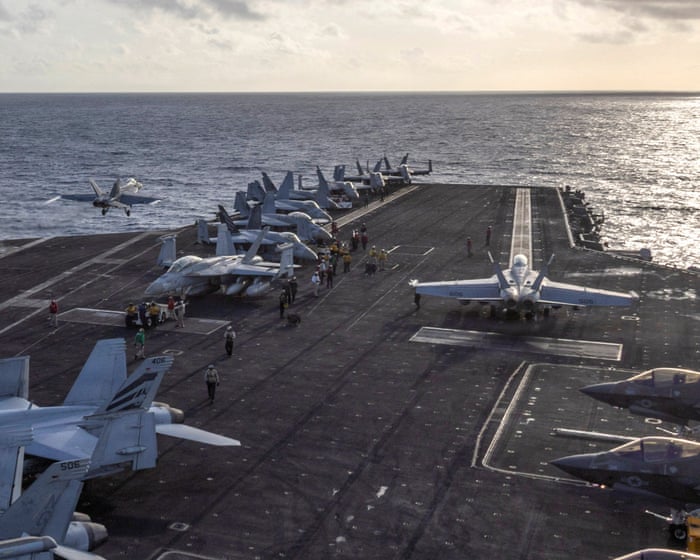
USS Abraham Lincoln to visit port in Thailand after more than 250 days at sea

Thai navy says ‘routine’ visit’ will allow personnel to rest and recuperate amid reports of poor conditions onboard

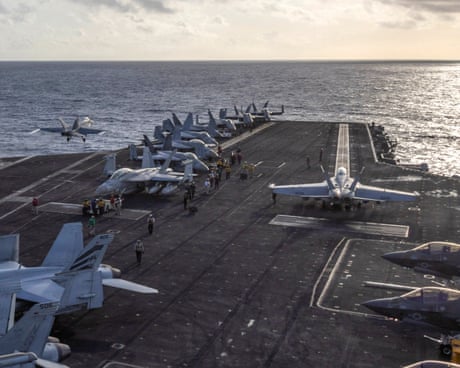
The USS Abraham Lincoln aircraft carrier is set to make a temporary stop in Thailand next week as it heads back to the United States, Thai navy officials said, after spending more than 250 consecutive days at sea supporting US operations against Iran amid recent reports of poor living conditions and low morale onboard the vessel.

The Lincoln left the Middle East several days ago after being relieved by the USS George Washington, and is now heading home to San Diego. A Thai navy official told Reuters this week that the carrier was expected to make a brief port visit in Thailand next week for the crew to rest and recuperate before continuing their journey home.

Continue reading...

© Photograph: US Navy/Reuters
© Photograph: US Navy/Reuters
© Photograph: US Navy/Reuters

  •  

Fast-fashion giant Shein sets cut-price $27bn valuation for Hong Kong IPO

China-based retailer swung to $99m loss in first quarter and faces scrutiny over its environmental footprint

Shein, which built a fast-fashion empire on what seemed like impossibly low prices, has been forced to lower its own valuation in a cut-price stock market float, after falling into the red earlier this year.

The online retailer will list on the Hong Kong stock exchange on 1 September at a valuation of close to $27bn (£19.8bn), significantly down from a near-$100bn private market peak four years ago.

Continue reading...

© Photograph: Jorge Silva/Reuters

© Photograph: Jorge Silva/Reuters

© Photograph: Jorge Silva/Reuters

  •  

Is the US actually too chicken to take on China for trade?

A weak yuan guarantees Beijing massive trade surplus even as the White House tries tamp down on Chinese imports

Since China offered a truce in the trade war last October following its threat to deprive the United States of rare-earth magnets, the Trump administration has been happy to stop escalating. After all, imports from China have been falling, down by 40% in the year to June, compared with the same period in 2024. Best to declare victory and call it a day.

But the US hasn’t won this battle – and there’s strong evidence to show it’s too chicken to really try.

Continue reading...

© Photograph: Cheng Xin/Getty Images

© Photograph: Cheng Xin/Getty Images

© Photograph: Cheng Xin/Getty Images

  •  

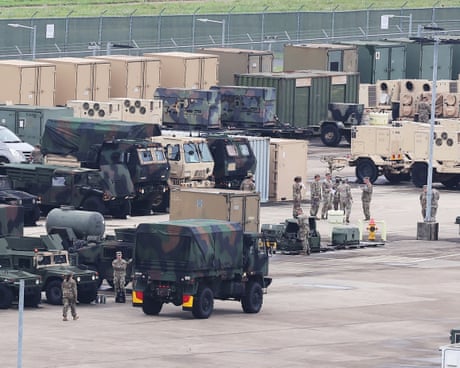
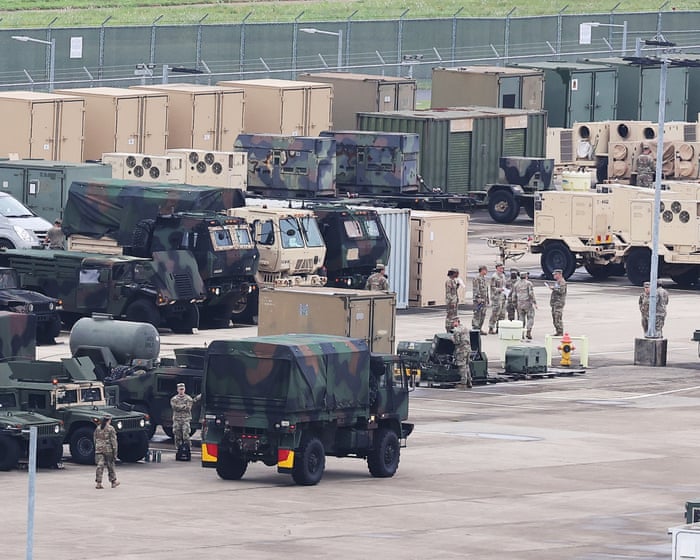
Trump’s move to gut South Korea alliance is ‘inane, haphazard decision’, lawmakers say

US president’s abrupt order to scale back joint exercises with Seoul is meant to ‘flatter’ North Korea’s dictator, top Democrat says

Donald Trump’s move to gut Washington’s 73-year-old military alliance with Seoul has been called “inane” and “shortsighted” as lawmakers warned it risked strengthening Russia’s hand in Ukraine.

The US president abruptly ordered the Pentagon to scale back joint exercises with South Korea just days after North Korea test-fired ballistic missiles, justifying the decision by citing his “very good relationship” with Kim Jong-un, the nuclear-armed dictator such exercises exist to deter.

Continue reading...

© Photograph: YONHAP/AFP/Getty Images

© Photograph: YONHAP/AFP/Getty Images

© Photograph: YONHAP/AFP/Getty Images

  •  

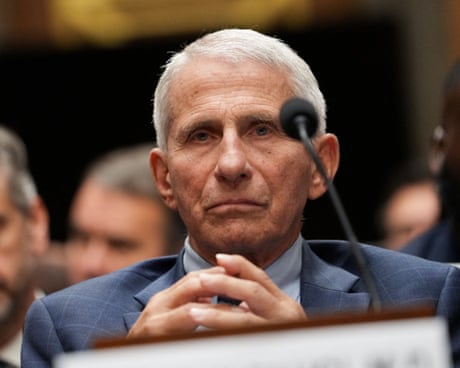
The Fauci hearing was painful to watch. But we need answers on Covid-19’s origin| David Relman

Despite the recent hearings in Congress, we seem to be even further from the goal of understanding Covid-19’s origin’s than we have ever been

As a microbiologist and infectious disease clinician, it has been tough to watch the recent devolution of public discourse on Covid-19 origins. It has been especially difficult for me to read the comments of Anthony Fauci about the origins debate in his now-public diary. And it has been painful to watch the televised spectacle hosted by the US senator Rand Paul on 29 July involving a hostile interrogation of Fauci.

Despite many early pleas, including my own, for a dispassionate, objective assessment of what we know, don’t know and need to know about Covid-19 origins, we seem to be even further from this goal now than we have ever been – plagued by politicization, polarization and illogical thinking.

David Relman is a professor of medicine and microbiology at Stanford University. He was an inaugural member of the US National Science Advisory Board for Biosecurity and president of the Infectious Diseases Society of America

Continue reading...

© Photograph: Nathan Howard/Reuters

© Photograph: Nathan Howard/Reuters

© Photograph: Nathan Howard/Reuters

  •  
❌