❌

Vue lecture

Ukrainian intelligence: Russia can probably add 10–15 Su-34 bombers a year, but no new Tu-95s or Tu-22M3s

russia kept its fifth-generation su-57 stealth fighter near urals — ukrainian drones found anyway · post two fighters one su-34 apron shagol airbase russia's chelyabinsk oblast satellite exilenova+ два су-57

Russia’s aircraft plants still turn out modern fighter-bombers and fighters, enough to partly cover its losses, Ukraine’s military intelligence agency HUR told Ukrainian news agency UNIAN, which published the reply on 23 October. Its older bombers are a different story. Russia has no serial production of new Tu-95s, Tu-22M3s, or Su-24s and keeps them flying through repairs and upgrades, so each one lost for good leaves a lasting gap, HUR said.

Ukraine’s Navy said its Neptune missiles hit six Su-34M bombers at Borisoglebsk airbase in Russia’s Voronezh Oblast overnight into 15 October. Zelenskyy later said four were destroyed and two damaged. The Su-34 is one of the jets that drop Russia’s glide bombs, heavy bombs fitted with wing-and-guidance kits, on Ukrainian positions and towns.

How fast Russia replaces its jets

Russia can probably deliver 10–15 Su-34s a year now, HUR estimated. Deliveries grew from eight in 2022 to 11 in 2023 and 12–14 in 2024. But the agency said that trend does not confirm the same pace today.

For the Su-35S fighter, HUR pointed to an average of about 11–12 a year in 2021–2025. It called that a rough benchmark, not an established 2026 output. Su-30SM2 and Su-57 production continues, but reliable rates cannot be determined. Su-30 figures also mix new builds with upgrades of older Su-30SMs, HUR noted.

What Russia had, and what it lost or saw badly damaged in 2026

By the end of 2025, Russia had about 125 Su-34 and Su-34M bombers, which HUR counts together. It also had 140–145 Su-30 jets of various versions, 135–140 Su-35S, and about 20 Su-57s, HUR estimated. These are only fleet estimates, not a guaranteed number of jets Russia can send on combat missions at the same time, the agency cautioned. Some are under repair or upgrade, and HUR is not disclosing the current fleet size.

Satellite image from 13 October shows six Russian Su-34 fighter-bombers parked in the area later struck at Borisoglebsk airbase
Satellite image from 13 October shows six Russian Su-34 fighter-bombers parked in the area later struck at Borisoglebsk airbase. Image: Exilenova+

HUR also named specific 2026 cases of Russian aircraft destroyed or critically damaged. A Tu-22M3 crashed in Irkutsk Oblast on 15 June. Strikes on Engels airbase on 17 July and 28 August hit two Tu-95MS. The first suffered critical damage to its tail section, and HUR treats the second as a probable irrecoverable loss.

The list also includes a Su-35 that Ukraine’s military says it shot down on 8 July, a claim backed by published materials showing debris. It adds a Su-57 crash in Moscow Oblast on 23 July and a collision of two Su-35S over Kursk Oblast on 7 September. Full official details on those two incidents are still missing, HUR noted. Strikes on several Su-57s and a Su-34 at Shagol airbase on 25 April, and on a Su-24 in Crimea on 7 September, were also reported, but the state of those jets is unknown, so counting them as destroyed would be premature, HUR said. The list, as published, leaves out the Su-34s at Borisoglebsk and the Tu-95MS that Russia’s defense ministry said crashed on takeoff in Amur Oblast in late September.

  •  

Ukraine’s Navy says it hit six Su-34 bombers at a Russian airbase with Neptune missiles—the jets that drop glide bombs on Ukrainian towns (updated)

borisoglebsk

Ukraine’s Navy hit six Su-34M bombers at Russia’s Borisoglebsk military airfield in Voronezh Oblast with Neptune missiles overnight into 15 October, the Navy said. Residents filmed a large fire at the base after a missile alert, and the Navy’s count has not been independently confirmed. The facility is about 400 km from the frontline.

Glide bombs are now central to how Russia’s army fights, used to pin down Ukrainian defenders, including drone teams, before small infantry groups move in. They also hit frontline cities and the civilians who live in them.

Six bombers and flight equipment hit, the Navy says

The Neptune coastal missile system also hit technical equipment that supports flights, the Navy said. It recorded secondary detonations and a fire on the airfield and said details were still being clarified.

The Su-34M can carry several guided and high-explosive aerial bombs at once, along with missiles, the Navy noted. It called the jet one of Russia’s key tools for glide-bomb strikes on Ukrainian positions and frontline towns. In September, a Ukrainian Neptune missile reached a Russian warship at its own pier.

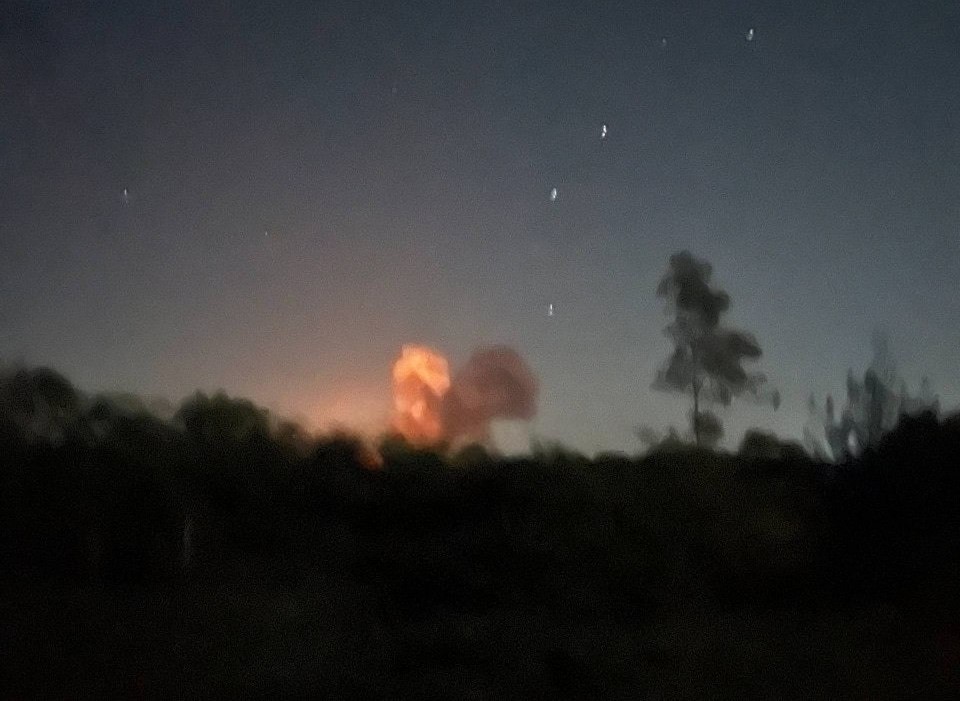
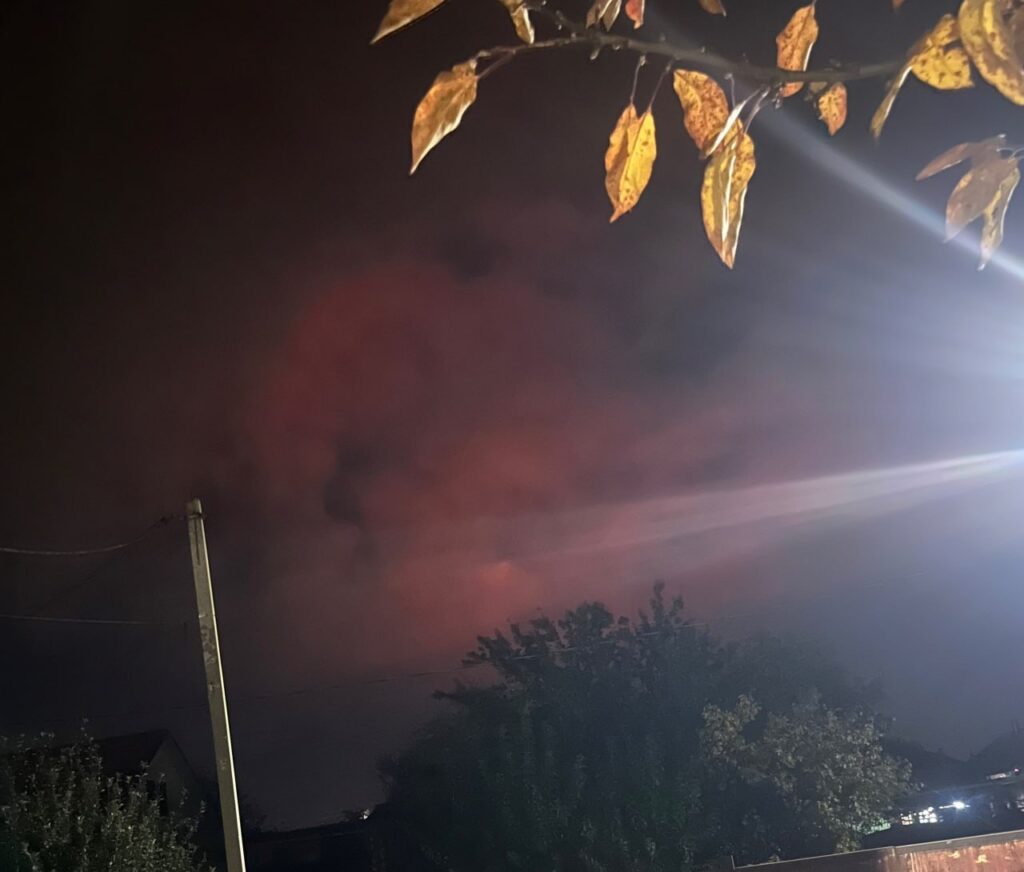
Smoke over Borisoglebsk during the fire at the military airfield, 14 October 2026.
Smoke over Borisoglebsk in Voronezh Oblast, Russia, during the fire at the town’s military airfield, 14 October 2026. Photo: Supernova+/Telegram

Fire over the airfield late on 14 October

Voronezh Oblast Governor Aleksandr Gusev declared a missile alert across the region shortly before 22:00 local time on 14 October. Within an hour, Ukrainian monitoring channel Exilenova+ reported explosions and a fire, preliminarily at the Borisoglebsk airfield. It later wrote that the airfield had come under missile attack and a fire was burning there. Ukrainian monitoring channel Supernova+ posted footage from the town showing the blaze.

A large fire is raging at the site of the missile strike. https://t.co/l4aqVvNJIg pic.twitter.com/JYjhM57GYh

— Exilenova+ (@Exilenova_plus) October 14, 2026

On the morning of 15 October, Gusev claimed that 33 drones and several jet-powered aerial targets had been downed over the oblast overnight. He did not mention the airfield.

A base Ukraine has hit before

The airfield hosts the 783rd training aviation center and units of the 105th composite aviation division of Russia’s Aerospace Forces, which flies Su-34, Su-35S, and Su-30SM jets, Ukrainian defense outlet Militarnyi reported. In summer 2026, it had no permanently based combat jets, and Russia used it mainly as a stopover to refuel and rearm aircraft striking Ukraine, the outlet said, citing satellite observation.

Ukrainian drones hit the airfield overnight on 8 July, starting a fire, and satellite images later showed its fuel and lubricants depot destroyed. Drones also attacked the base’s pilot training center in July 2025.

The same night, Ryazan Oblast Governor Pavel Malkov reported a fire at an oil refinery in Ryazan. It came as Ukrainian President Volodymyr Zelenskyy said Ukraine was resuming strikes on Russian refineries.

Update: Satellite imagery confirms the strike

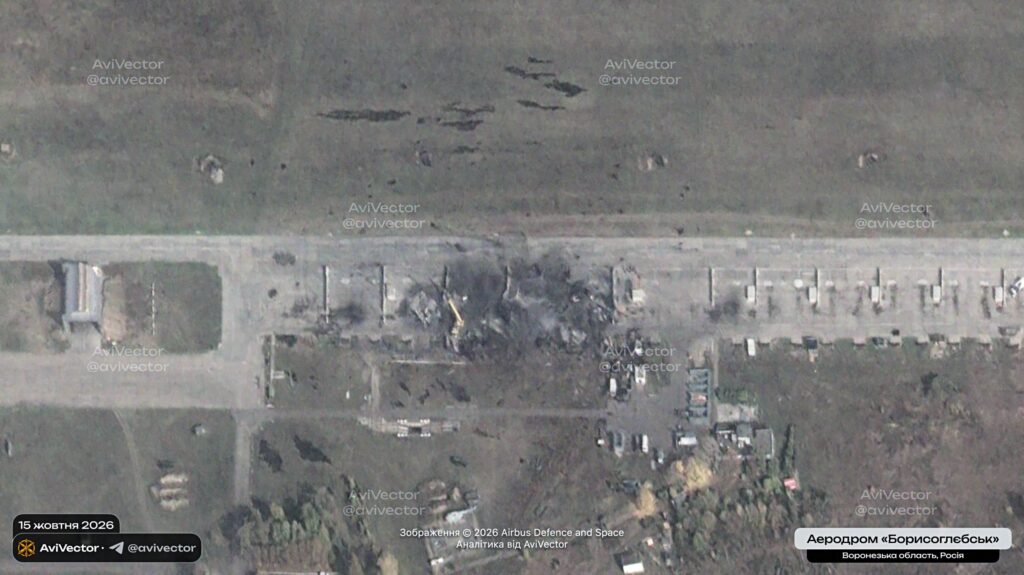
New satellite images show damage at Borisoglebsk airbase and six Su-34 bombers positioned in the affected area two days earlier, although the extent of the aircraft losses remains unconfirmed.

Satellite image shows the aftermath of Ukraine's strike on Borisoglebsk airbase in Russia's Voronezh Oblast on 15 October 2026. Image: Airbus Defence and Space / AviVector.
Satellite image from 13 October shows six Russian Su-34 fighter-bombers parked in the area later struck at Borisoglebsk airbase. Image: Exilenova+.

The monitoring channel Exilenova+ reports that 4 airframes were completely destroyed, while 2 others sustained significant damage.

  •  

Moscow trains its military pilots at Khanskaya. Locals report a fire there after drones attacked overnight

moscow trains its military pilots khanskaya locals report fire after drones struck overnight · post near russia's airfield republic adygea drone attack 4 2026 пожежа в районі аеродрому ханская у

Drones attacked Russia's Khanskaya military airfield in the Republic of Adygea overnight on 4 October, Ukrainian outlet Militarnyi reported. Local reports, footage, and satellite fire data point to a blaze near the base, which trains Russian military pilots and also serves combat aviation. Neither side has reported the extent of the damage.

Ukraine is pressing its long-range campaign against the bases, refineries, and depots that keep Russia's war going, and Kyiv is vowing to hit harder as Russia escalates its strikes on Ukrainian cities. Airfields are part of that target list: in August, Ukraine struck one in Krasnodar Krai in the same overnight wave that hit Russia's second-largest refinery.

Hours of drone alerts, then a fire

Locals reported an attack and a fire at the airfield, Ukrainian monitoring channel Exilenova+ wrote, sharing footage of the blaze. Drone warnings for the area began at 01:42 and lasted until 05:34, Militarnyi said. Over that time, Russian monitoring channels reported drones and active air defenses in the region and around the airfield.

NASA's FIRMS fire-detection data from geostationary orbit also showed a fire in the airfield's area, Militarnyi noted. It also published a video of a Ukrainian drone flying toward the base.

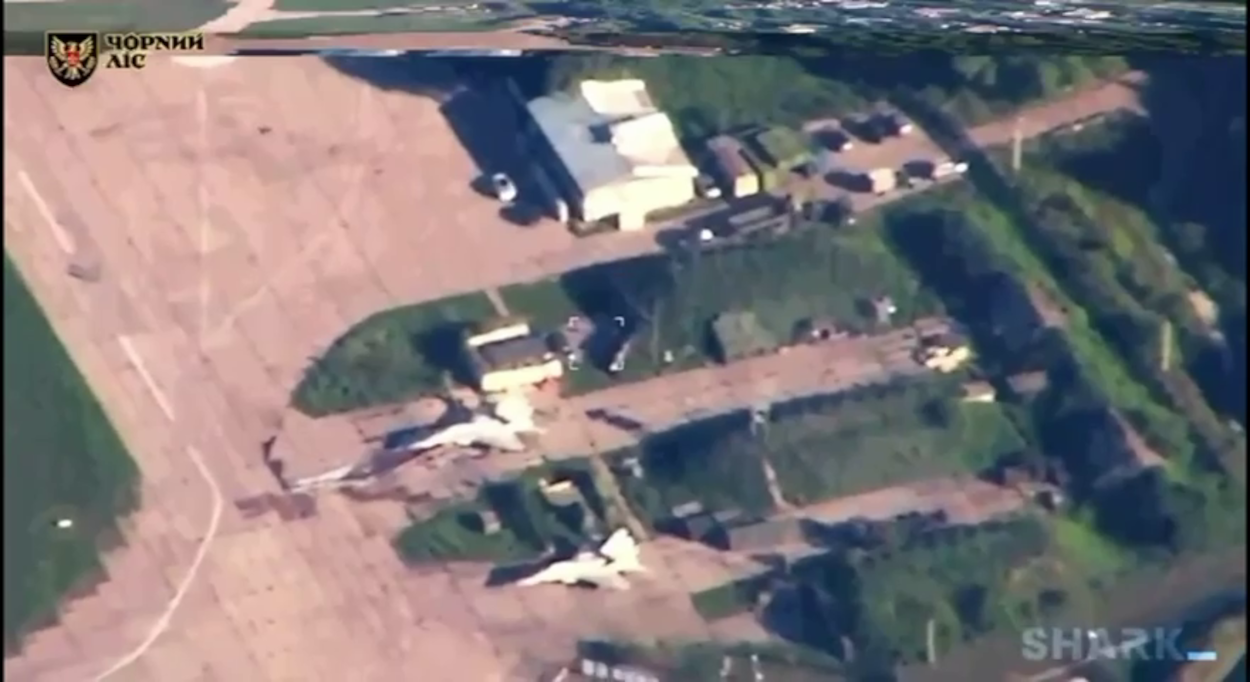
Khalino airfield in Russia's Kursk Oblast is seen from a Ukrainian drone moments before a strike on a MiG-29 fighter jet. Screenshot from video: Ukraine's General Staff
Explore further

Russian MiG-29 jet and the Pantsir air defense meant to protect it both hit in Ukrainian strike on Kursk airfield

A pilot school that also serves combat aviation

The airfield lies 6 km northwest of Maykop and 3 km east of the village of Khanskaya, about 500 km from Ukrainian-controlled territory, according to Militarnyi. Before the war, it was used mainly for training flights and hosted L-39 trainer jets.

moscow trains its military pilots khanskaya locals report fire after drones struck overnight · post near russia's airfield republic adygea nasa firms fire-detection area marked 4 2026 militarnyi 0410hanskaya ukraine
A fire near Russia's Khanskaya military airfield in the Republic of Adygea, with the NASA FIRMS fire-detection area marked, 4 October 2026. Graphic: Militarnyi, photo: Exilenova+

The 761st Training Aviation Regiment was based there until it was disbanded in 2009, when the 272nd Training Aviation Base was formed in its place. The base, military unit 55661, belongs to the Krasnodar Higher Military Aviation School of Pilots. Ukraine's General Staff said in October 2024 that Su-34, Su-27, and Su-35 jets, which Russia uses in its war against Ukraine, were based at the airfield, Militarnyi wrote. In March 2026, the General Staff said Russian forces actively use it for operational-tactical aviation.

Ukraine has struck the base before

Ukrainian drones attacked the airfield as early as October 2024. On 25 December 2025, Ukraine's General Staff said its forces had hit the Maykop airfield and started a fire. That was the same night Ukraine hit the port of Temryuk. Drones attacked the base again on 29 December, when Russian authorities claimed to have repelled the attack. Ukraine struck the airfield once more in March 2026.

  •  

Seventeen makers head to Michigan to test bomber drones for the Pentagon, and Ukrainian firms are back in field, some under US partners

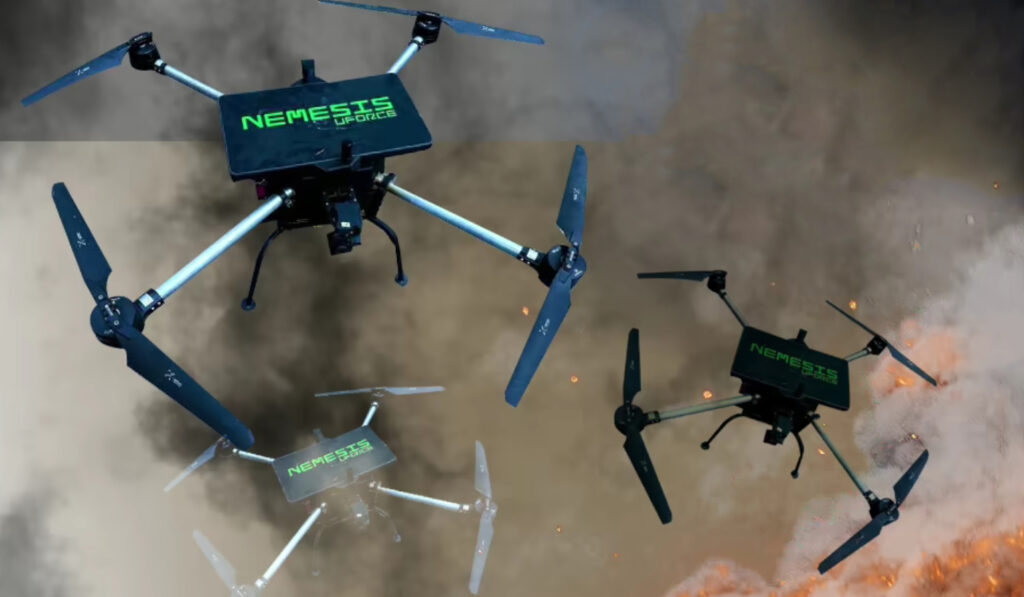
Ukrainian Nemesis heavy drone. Source: Militarnyi

Ukrainian drone makers are getting another shot at a Pentagon contract, this time for bomber drones. Seventeen companies, including Ukrainian firms and Western partners fielding Ukrainian designs, will test bomber drones at Camp Grayling in Michigan in October, the next stage of the Pentagon's Drone Dominance program, Defender Media reported.

The Phase 2.5 Bomber Qualifier is the latest round of the Pentagon's drive to buy combat-tested drones at scale, and Ukrainian makers are again in the field, some through US-registered partners, because Pentagon rules bar direct sales from foreign firms.

This time, the target is bombers, the drones that drop munitions on what is below them.

Seventeen makers head to Michigan

The contest runs at Camp Grayling, a Michigan training range, and organizers call it the hardest and fastest-paced stage of the program yet. Each company must bring at least six fully built systems.

The testing splits into two parts: a Bomber Qualifier, which the makers conduct themselves, and a Bomber Gauntlet run by US soldiers. Organizers have not published details of a third mission. Winners of the wider program earn Pentagon supply contracts.

Ukrainian bombers make the list

The invited firms include UFORCE USA Services, Grim Tech, Gurzuf Defence, UA Defense Tech, Skycutter, and UDD Tech Corp. Which models they will bring is not yet clear.

UFORCE is known for its Nemesis bombers. Grim Tech showed a light bomber, the Grim-18, at the MSPO defense expo in Poland this month, and Gurzuf builds heavy bombers, including the Ayudag-6, which recently set a Ukrainian payload record for multirotor drones at 130 kilograms.

A second try after a US sweep

In the program's last phase, the Pentagon picked five winners in each of two categories, and all were American, though a Ukrainian firm had reached the second round and, by industry accounts, Ukrainian designs were incorporated into some Western entries. For Ukraine's makers, the bomber round is another chance to turn battlefield-proven hardware into a US contract.

  •  
❌